Category Archives: NZ author

Poetry Shelf Spring Season’s poetry fan: Marion Castree picks Louise Wrightson

Wood

(for Dave Russell)


I have lived on this quarter-acre

of clay longer than the trees.


The tī kōuka are the exception

and they are crumbling inside

their long reptilian trunks.


The elderly kowhai still

conjure up their gold nuggets

but the wood is moody; it sulks

and smolders in the fireplace.


It’s the wood from the big gum

that warms and entertains us;

every night is Guy Fawkes,

all flare, crackle and spicy scent.


Twelve cubic metres of Mac

keep us warm in winter;

there are stashes under the trees

among the pop-up seedlings.


The red eye of the fire

transforms us; we soften

under its gaze, swap news,

try to make sense of things.


Our house started as a cottage

that was sawn in half.


The four rooms were trundled

across paddocks, two at a time,

and dumped here on a slope.


The floors were tawa boards,

the walls were lined with scrim

and newspapers from 1886.


I won’t get started on the renos

but one of our many builders

came from Bucharest.


Dave thought he was a con

because his apron was so new

it creaked and his tools

were sharp and oiled (like him).


He muttered pisses of vood,

bluddy selly pisses of vood

because the houses in Romania

are made of brick or concrete.


He didn’t show for work

one day: he just rang and said

vood is too much feedle.


It can be—but when we ripped

up the cork tiles in the kitchen

and found the floor was matai

a friend said wistfully;

I’ve always wanted

to be that sort of person.


I’ve lived here forty years—

Forty years and not yet found 

a cure for being human—

James Keir Baxter wrote that;

he lived next door for a while.


This table I write on is rimu;

it hosts a kauri salad bowl,

steak knives with olive handles

and ironwood salad servers.


At a very posh party I saw

a woman help herself to some

decorative, coloured wood

shavings in a bowl and scatter

them over her chicken salad.


I watched, mesmerized,

while she chewed them up.


I should have told her the truth

but she had eaten them

by the time I remembered—

Better a cruel truth than a

comfortable delusion—

Edward Abbey said that;

I wish he’d lived next door.


Anyway, here is the thing;

when I am fed into the flames

(inside a plain plywood box)

please think of trees and vood;

they mean the world to me—


Breathe out and in.

Keep warm.


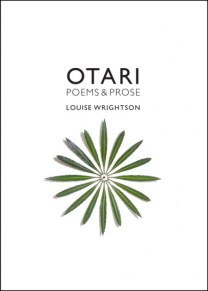
©Louise Wrightson Otari Poems & Prose Otari Press, 2014


cv_otari.jpg


Note from Marion: This poem is for Dave Russell and also a love poem to wood and all that it can mean to us in our world, particularly in our home patch. The wood in all it’s manifestations is a pleasure to behold.

I have allowed this poem to idealise home for me. Home of course requires give and take from its people but the presence of wood offers so much unconditionally. This is a magnificent poem, perfect in form and also in parts, very funny.

Marion Castree is a Wellington bookseller, NZ book buyer and staff manger at Unity Books.

Louise Wrightson has an MA with Distinction in Creative Writing from the IIML (The International Institute of Modern Letters) Victoria University, Wellington. She lives and writes near Otari-Wilton’s Bush, a 100-hectare reserve of regenerating forest. Her work has appeared in numerous anthologies and journals.


Louise Wrightson has an MA with Distinction in Creative Writing from the IIML (The International Institute of Modern Letters) Victoria University, Wellington. She lives and writes near Otari-Wilton’s Bush, a 100-hectare reserve of regenerating forest. Her work has appeared in numerous anthologies and journals.

Poetry Shelf Spring Season’s poetry fans: Elizabeth Caffin picks Allen Curnow


A Busy Port

I

My turn to embark. A steep gangplank
expects me. An obedient child,
I follow my father down.

It happens that the sun will have topped
a black hill beside the time-ball tower,
and found the spot of a fresh

tear on Bob Hempstalk’s cheekbone, whose wet
red eyes blink back seaward where he leans
for’ard at the wheel-house glass;

one hand wipes an eye, the other shakes
a half-hitch loose, unlashing the wheel.
A man’s tears, obscene to me

caught looking. Too late now. The time-ball
drops. Quayside voices (not for my ears)
discuss the dead, bells repeat

ding-ding across the wharf. Brightwork traps
the sun in brass when I next look up,
following my father down,

who made the trip himself many years
past. The old rust-bucket gets up steam.
Frequent sailings from where we live.

II

Winched aboard still warm over the for’ard
hatch the morning’s bread hangs by a breath
of its own. It smells of bed.

An enriched air. The urinal under
the wharf drip-feeds, the main steam below
sweats. Darky Adams, deckhand

engineer stoker bangs his firebox
open, slings in a shovelful, slams
the insulted flame back home,

thick acrid riddance topples the way
smoke rolls by its own weight, in an air
that barely lifts, off the stack.

One jump clear of the deck the plank dips
with a short uneasy motion, deep-
sea talk to the paddler’s foot

out of my depth, deeper yet, off the Heads,
our Pillars. Pitching like a beer-can.
I’m hanging on tight, can’t hear

clashes from the stokehole for the wind
yelling, crossed on the wheel he’s yelling
back, ‘Ay, bit of a stiff breeze’.

Eyes that last I saw in tears can read
abstruse characters of waves, on course
between them, our plunging bows.


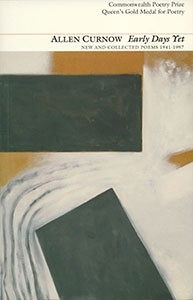
©Allen Curnow Early Days Yet (Auckland University Press, 1997) published with kind permission from the Curnow Estate.


1448418925728.jpg


Note from Elizabeth: This is one of the wonderful poems recalling moments of his childhood that Allen Curnow wrote in the last years of his life. They move me especially because I too had a Canterbury childhood and can also remember sailing out from Lyttelton through the Heads, ‘our Pillars’. Curnow captures the excited anticipation of this birthday treat with his father but at the same time the child’s perplexed and disturbed glimpses of grief and death. (It seems the skipper’s wife has just died.) The voyage becomes the voyage we all make from birth to death; he ‘follows [his] father down’ not only into the bowels of  ‘the old rust bucket’ but also towards death, ‘who made the trip himself many years/ past’.  The famous time ball drops as it always did at 1pm but also to signal the passing of time, the course of his life and of his father’s. The two perspectives of small boy and elderly poet merge; precise details of sight, smell, sound blend with an almost mythic vision in this great poem.

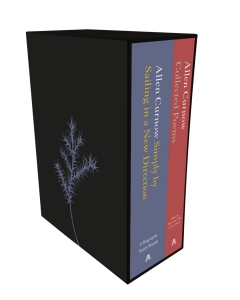
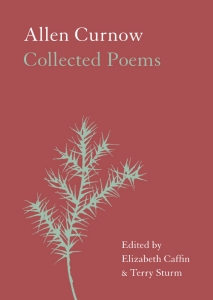
Terry Sturm’s biography of Allen Curnow, Simply by Sailing in a New Direction, and Curnow’s Collected Poems were published at the end of September.


Elizabeth Caffin was formerly director of Auckland University Press, which
published Allen Curnow’s poetry over many years. She is also the co-editor,
with Terry Sturm, of the recently published Collected Poems of Allen Curnow (Auckland University Press, 2017).

Allen Curnow (1911 – 2001) published numerous poetry collections – from his debut with Valley of Decision (1933) to The Bells of St Babel (2001). He also produced criticism, plays and anthologies that contributed at both national and international levels. Among numerous awards, he received the Commonwealth Prize for Poetry and the Queen’s Gold Medal for Poetry.

1505692801947.jpg    1506300705951.jpg

Poetry Shelf Spring Season’s poetry fans: Dionne Christian picks Bernard Gadd


birches

for the fortieth season
three silver birches
one after the other
suddenly turn
sun’s light green

all evening
between silver birch leaves
firework trails
and in the quiet house
a smell of smoke

luckily birch
bark or leaves
are useless
for writing on
and later regret

ah comrade
Odysseus, you and I
forever stare
through birch branches
at Sirens and seas

will we fell the brich
taking sun
from the house,
the huge tree
old as us?

we keep a big yard:
lawns where infants run,
“forests” of shrubs,
birch trees for cats
and children to climb

each pulse
is a triumph
just when encouragement’s
needed the silver birch
shows green hearts

catching my breath
watch layers of clouds
behind the tree
rush this way or that
or drift in icy calm​

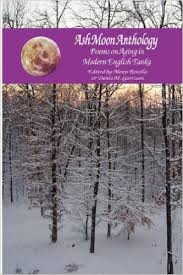
©Bernard Gadd, Ash Moon Anthology, Eds. Alexis Rotella and Denis M Garrison (Baltimore, Maryland: Modern English Tanka Press, 2008.


images.jpeg


Note from Dionne: This is a poem which might not, at first, speak of spring. It talks of being old and melancholy, watching the world pass by through windows, and yet each spring the birch trees come to life and renew your own spirit. these birch trees were outside the study where my father-in-law worked and kept his extensive collection of poetry books. When the house was sold, the first thing the new owners did was to chop them down.


Dionne Christian is the arts and books editor at the New Zealand Herald newspaper. She has worked for 30 years as a journalist on staff and as a contributor for magazines and newspapers; she has a keen interest in literature, history and the arts.

Bernard Gadd wrote poetry, fiction, plays, and was a reviewer. He was also a teacher, editor, anthologist, and publisher known for his pioneering work in the classroom, championing the use of local stories to inspire students.

Poetry Shelf Spring Season’s poetry fans: Lydia Wevers picks Jenny Bornholdt

Then Murray came


It was the morning for

selling the car, but

when I went out to start it,

it wouldn’t go. Greg went

to get petrol on the bike. I

rang the A.A. Then Ray

arrived. I said I’m sorry, he

said don’t worry and looked at

the car and at the wheels and

in the boot and said she’s a lovely

old thing. He tapped the coil

and the fuel pump to try to

make it go. Greg came back

with petrol, but that didn’t help.

Then, because there was nothing else

to do, we went inside and had coffee

and Ray smoked and talked about

going to Outward Bound and sleeping

and losing a stone.


Then Murray came.

He drove up the hill in his yellow

A.A. car, shaking his head. Got out and said

I was sure you were having me on. Last time I was

here you said you were selling it

and the other day I saw you walking

through town and I thought ‘thank god she’s

sold that thing’. He cleaned the carburettor

and laughed. Put more petrol in, replaced a

filter. I said I wasn’t joking, there’s

someone here who wants to buy it. Murray

laughed and said sure. No, no, I said, it’s

true. Ray. See, there he is, up at the

window. Murray looked up and Greg and Ray

waved. How much is he paying for it? asked

Murray. I started to say and he stopped

me. Said no, on second thoughts, don’t tell

me. I don’t want to hear about this.

Ray came down and took over

holding up the bonnet of the car.

What’s your name? he asked Murray.

Murray, said Murray. Well I’m

Ray, this is Greg and this is

Jen. Hello Murray, we said.

And then the car started.


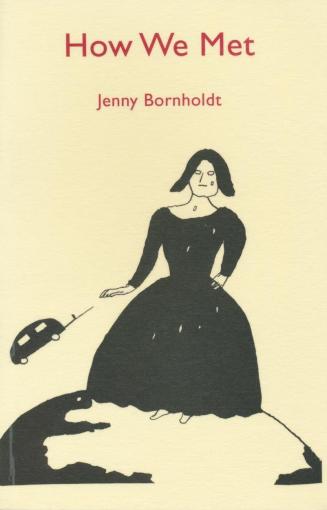
©Jenny Bornholdt from How We Met, Victoria University Press, 1995


met_001__04716.1399604422.jpg


Note from Lydia: I laughed aloud when I first read this poem. Selling a car which won’t start, Greg getting petrol on the bike, Ray smoking and talking about Outward Bound, it is a micronarrative of intense suburban familiarity and yet… also heroic (‘then Murray came’), touching about relationships (‘ I thought thank god she’s sold that thing’ ) and an acute register of local idiom while also suggesting the Pinteresque deeps that lie behind what is said. How much is he paying for it?  asked Murray…no, on second thoughts don’t tell me’.

‘Then Murray came’ has lodged in my head. It shows me the world I live in, but freshly, deeply, newly, wittily. And at the end, after Murray has come (I’d like to know Murray) the car starts.


Lydia Wevers has recently retired as the Director of the Stout Research Centre at Victoria. She is a lifelong reader of New  Zealand writing and a literary historian.


Jenny Bornholdt has published ten books of poems, the most recent of which is Selected Poems. Her collection The Rocky Shore was a made up of six long poems and won the Montana New Zealand Book Award for Poetry in 2009.

She is the co-editor of My Heart Goes Swimming: New Zealand Love Poems and the Oxford Anthology of New Zealand Poetry in English.

Jenny’s poems have appeared on ceramics, on a house, on paintings, in the foyer of a building and in letterpress books alongside drawings and photographs. She has also written two children’s books.


New editor appointed for Landfall journal


Emma Neale.credit Abe Baillie.jpeg

Emma Neale has been appointed as the new editor of Landfall, published by Otago University Press.

Neale, who lives in Dunedin, has published six novels and five poetry collections, and edited several anthologies.


She is a former Robert Burns fellow (2012) and has received numerous awards and grants for her writing including the Janet Frame/NZSA Memorial Prize for Literature (2008), the University of Otago/Sir James Wallace Pah Residency (2014), and she was Philip and Diane Beatson/NZSA Writing Fellow in 2015.

Neale was awarded the Kathleen Grattan Award for 2011 for her poetry collection The Truth Garden, and was a finalist for the Acorn Foundation Fiction Prize at the Ockham New Zealand Book Awards 2017 for her novel Billy Bird.

She has extensive experience as a literary editor and reviewer, and holds a PhD in New Zealand Literature from University College London (UK).

In making the announcement, Otago University Press publisher Rachel Scott says the role of Landfall editor is one that is at the heart of New Zealand arts and literature.

“Otago University Press is pleased to entrust this position to a writer and editor of such distinction and talent.”

Landfall is New Zealand’s foremost and longest-running arts and literary journal. Published biannually, it showcases new fiction and poetry, as well as biographical and critical essays, cultural commentary and visual arts.


Landfall was founded in 1947 by the Dunedin writer, critic and arts patron Charles Brasch.

Retiring editor David Eggleton was editor between 2009 and 2017 (from issues 218 to 234), one of the longest tenures of any Landfall editor. An award-winning poet and critic, Eggleton was recently awarded a Fulbright-Creative New Zealand Pacific Writers’ Residency.

Poetry Shelf interviews Anna Livesey – ‘Every time I have published a book I have felt a part of myself caught in amber’


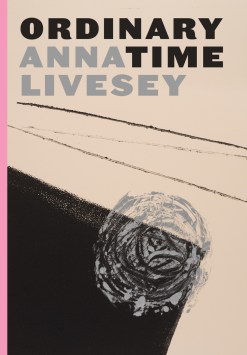
Ordinary_Time__59860.1501624161

Ordinary Time Victoria University Press, 2017


‘I want a little quiet, a piece of the day

where the baby and I soak in our own silent language.’


from ‘Speech and Comprehension’


Anna Livesey has published two previous poetry collections, Good Luck (2003) and The Moonmen (2010). She graduated with an MA in Creative Writing from Victoria University and was the Schaeffer fellow at Iowa Writers’ Workshop in 2003.  Her new collection, Ordinary Time has just been published by Victoria University Press. With these new poems, personal experience is paramount because this book, with its roots and wings in the miracles and challenges of parenting, is an intimate exposure. Lines are agile, things pulse, gaps pollinate, and the glorious, challenging, curvatures of motherhood are brought searingly close.


 The interview


Paula:


‘Having not been out for days I have very little to add—

save that the house is sweet and clean, the baby safe and fed.’


from ‘Synthetic Thinking’


Before I enter your new collection of poems, I stall on the title: Ordinary Time. Poets have often used ordinary things as a gateway to the less ordinary, as a way of refreshing little patches of the world about us, whether experience, sensation or physical object. Yet the title goes deeper for me, particularly having read the word ‘parenthood’ in Jenny Bornholdt’s quote on the back cover. It feels like you are boldly staking the domestic space and the mothering role as a necessary and fertile springboard for writing. How does the title resonate for you?

Anna: One of the things I think about a lot (for whatever use it is), is our moral responsibility to the world we live in – who we should care about, who we should care for. What events – horrors and wonders –  should we allow to get under our daily carapace and work on us? Especially in this world where the news of disaster is never far away. There’s that phrase about extreme weather events: “the new normal”. Hurricane Irma – the new normal. Degradation of democracy in the States, Spain, parts of Latin America where it was once thought it be bedded in – the new normal. The end of Francis Fukuyama’s “the end of history” – the new normal.

The book starts with Peter Singer, a moral philosopher who basically says – “we are all equally valuable so we are wrong to value ourselves, our families, our tribe above those who are ‘other’…”.  And I believe that, but I also believe it is an impossible and inhuman doctrine. To me this is the puzzle at the heart of this book and the title. My beautiful, blessed, mundane life of glorious domesticity and early motherhood with my children, husband, friends and family and warm dry house with full cupboards exists in the same reality as Syria. Where children as beautiful and as beloved as mine are dying. Both of these realities are “ordinary”.

To survive and function and care for those who are most immediately our responsibility we need (or at least I need) to take refuge in the shared human mendacity of closing up our carapace and giving an emotional shrug. And in fact I think this is not really the “new” normal, but just normal – the Hobbesian description of the human condition – “solitary, poor, nasty, brutish and short” – continues to hold true. (And as I type this I think – and what is the point of poetry in all this anyway?)

And then on the other hand – the title poem talks about the late winter time when the magnolias all around Auckland are covered in their magical flowers. They look like aliens or supermodels, all lanky grace and outrageous decoration. Then the flowers fade and the “green leaves of ordinary time” appear and the magnolias just look like normal trees for another year. So yes, the title is also a nod to the magic and mania of those first early weeks with a new baby, and how they refine and change one, as a parent and inevitably as a writer.


‘(…) Across the road two magnolias, one pink, one white. In the days

since we came home I’ve watched their stark flower-spiked branches

soften and go pastoral—the green leaves of ordinary time climbing out

of the wood.’


from ‘Ordinary Time’


Paula: That nagging doubt about the value of writing poetry is a tough one. What difference does it make to the Syrian crisis, the ordinary families there that love their babies, eat, sleep, celebrate and mourn? Perhaps one response is that in translating your experience you contribute to a global poetry conversation that opens windows on how we live with our different hungers, failures, connections, kindnesses.


‘I am a person in love with nostalgia

and this unfits me for every moment of living but the one just past.’


from ‘I Am a Person in Love with Nostalgia’


You record the early weeks of motherhood and the poems undulate through fatigue and joy, routine and insistent questions. I love the way you pull things from the past into the patterns of the present. I particularly love ‘I Am a Person in Love with Nostalgia.’ It feels like there is nostalgia for former selves, but you also make a precious baby moment glow that might be a future nostalgic memory hub. What kind of returns does poetry represent for you?


Anna: The returns of poetry. Let me first be contrary and take returns in the sense of “what you get back”. In my previous book, The Moonmen, there is a poem called “Bonsense”. Bonsense means “good sense” – ‘bon’ as in the French “bonne”, for good (and indeed the Scots “Bonnie” – beautiful, cheerful – which is my daughter’s name). The poem is about the returns of poetry, and of art, the non-essential, in general. It is addressed to a dear poet friend who had a job caring for a very very small library in a small town in Montana, and ends:


“From the chest of your books

you enjoin belief

in outposts of minature sense or nonsense,

or going further, antonym, bonsense—

the elaborate folly of the heart and brain,

built curlicued, baroque.


What bonsense is this, a tiny horse, a tiny library?

The great iced cake of relationships,

the ornamental pony of compassion,

the perennial shout (SHOUT) of shared exclamation.”


The central idea here is that compassion and art spring from the same core impulse. Imagination/transportation/identification/recognition/the marvellous… these are human characteristics and lead to our greatest baroqueries – the welfare state, poetry, breeding horses too tiny for any purpose but to be admired. I don’t feel that poetry needs to “do” or “contribute to a conversation”. I think the return of poetry is merely for it to be.

And the returns in the sense of nostalgia. Every time I have published a book I have felt a part of myself caught in amber. And through my three books the amount of “me” that is there like an insect in the settled gum is greater than before. And in this book, as you observe, “me” has expanded out and encompasses my babies. As I am writing this to you, it is day one of Bonnie being fully weaned. Yesterday she had her last ever feed and five years of being pregnant, breastfeeding or both came to an end for me. So to have that moment at the early cusp of our relationship captured and kept in a way that I love, that moves me back into that moment perfectly, is infinitely precious. A memory outside myself. That is the personal return of poetry.


Paula: I loved that. For me, it is exactly why poems that venture into the domestic or the personal are utterly productive for reader and writer.


‘When my mother died she had spent

a long time in darkness.


When my grandmother died she had spent

a medium time in darkness.


When my daughter was born she had spent

a short time in darkness.’


from ‘Quotation’


That phrase ‘caught in amber’ really resonates, and that poems can be an intimate way of catching a present moment to savour the future. Is there a poem in the collection that particularly resonates with you? I found myself haunted and, as that word rightly implies, returning to ‘Quotation’. I was entranced by the generations of women and by the distinctive dark and light.

Anna: That’s like asking if I have a favourite child! I’m pleased you asked about “Quotation”. It’s a funny little poem – the opening lines include a quotation from William Calos Williams, of course — “Danse Russe”. In that poem, Williams is talking of himself, dancing naked, singing (go and read the poem now…! Such an image it is), waving his shirt around his head. His poem ends “Who shall say I am not/ the happy genius of my household?”.  My grandma was a brave woman (a WREN, among the first five WRENS to be choosen to go on a troop transport as decoders), but also a modest, genteel, English/Irish Catholic of her time. And so the image of her secretly dancing naked, admiring herself as Williams does, is part of the joy of that poem for me. And then there is the word “genius”. In my poem, as in Danse Russe, it means, essentially, “the soul of a place” – the genius loci, the ancient Roman concept that all places have a soul. So my poem is saying… who shall say that this modest woman, looking like a snuggly grandmother to me, her little grand-daughter, was not in fact a wild dancing creature, the secret, gleeful soul of the old farmhouse.

And then I just miss her so. And the farmhouse that had every aspect of a fairytale farm – my Grandpa made all the bread, there were hens and herbs and a sheepdog, a shy white cat, treasures from India (war service), a dressing table with mirrors that folded out and could be made to reflect themselves into infinity. Winegums in the pantry for story time. Easter in the garden. Woollen blankets. Grandpa’s blue farming overalls. Sunday roast – “from our own sheep”. I want every single part of it back, including and especially them.

(I should note here my family have a terrible weakness for writing books. My mother was a published historian with several books to her credit. My Grandpa wrote several local histories of the Wairarapa and a five volume self-published autobiography (Yes. Five volumes. And very interesting they are, at least to me). My grandma trained as a speech teacher in her 60s and then wrote plays which her students performed in the garden at Perrymead. She also wrote short stories for us, her grandchildren, and several of them were read on radio. So I am not just missing the rural idyll and the unstinting love of Grandparents, but also missing a formative place, where books and language and storytelling and performance were part of everyday life.)

In this poem, and in ‘Privacy’, and several other poems in the book, I was thinking about a passage from Simone de Beauvoir’s memoir of her mother’s death, A Very Easy Death. In the book she is looking for keepsakes for her mother’s friends, after her mother has died. She writes: “Everyone knows the power of things: life is solidified in them, more immediately present than in any one of its instants.” (C.f. Williams: “no ideas but in things”). So that’s the desire behind taking their house and putting it in my house — I want to “quote” their life in my life through their things.

The poem ends with another quotation, from Yeats, “John Kinsella’s Lament for Mrs Mary Moore”. Again, if you don’t know the poem, go and read it. It’s a song of grief for a witty, wise, sexy old woman (I have always loved this poem and it continues to appeal as I grow a little older myself and hope to be appreciated in the round, (even and despite my flaws), as John Kinsella appreciates Mrs Mary Moore). The repeated refrain is “What shall I do for pretty girls/ now my old bawd is dead?”. Mrs Mary Moore is, literally, a bawd. And so again this is a naughty joke on my part. My grandmother was a witty, wise, sexy older woman. She absolutely die to see that written down! But I love having that thought about her.


Paula:

‘is this how my mother felt

this fear, this,

bewilderment?

I want to mother better than I was mothered.

I can say this because she is dead.’


from ‘Bay Leaves’


I like the idea of a poem as keepsake. A way of preserving familial relations in the manner of a photograph album, a daily journal or a shoebox of mementos.

The collection offers myriad rewards for the reader. It is a bit like peeling back layers of living to expose the challenges along with the miracles or joys. I am drawn to the way the world rubs into the private life: the child washed up on the beach makes the mother hold her child that much closer. Perhaps the poems that struck deepest faced the mother, the mother no longer here, the mother who prompted the poet to look at her own mothering. Were these difficult poems to write?

Anna: No they weren’t. The difficulty was in the long years of decline. My mother was a writer, so writing feels like a very real way to honour her. Making art felt like salvaging something.


Paula: Do you think, in this move to the overtly personal, other things such as musicality, changed a little too?

Anna: I deliberately wanted some of these poems to be clumsy. Awkward subjects deserve an awkward sound. That’s not something I would have been comfortable with in my earlier work.


Paula: Were you tempted to include endnotes as some poets do? I can go either way. Endnotes open up poems in ways I don’t necessarily anticipate, adding avenues of delight, but conversely might limit my own freedom to explore and delve within the myriad possibilities of a poem.

Anna: My first book, Good Luck, had endnotes.  There was a lot of found poetry and I wanted to reference where it had come from.  With this book I thought about end notes, very briefly. And then I thought: who has the time??? And also I didn’t want to explain the poems – either they do their own work or they don’t.


Paula: Did you read any books while writing this that affect how and what you were writing?

Anna: Czeslaw Milsolz’s Roadside Dog – a little book of prose poems, limpid, narrative, engaged, straightforward, complicated, personal and full of the world. The best bits of Ordinary Time are really just a crib of Roadside Dog. Raymond Carver – again, the direct voice of his poetry. The beautiful poem, “The Haircut”, of his referenced in “Because I’m a Human”. Kate Atkinson’s Life After Life is the book that “Reading Books About the War” lifts off from. Tove Jannsen, the Moomintrolls – moments of recognition in literature affect me profoundly, especially when they are parent/child, and Tove Jannsen does these so beautifully. I am always reading Janet Frame’s poetry, and hoping for a little of her perfectly awkward insight to rub off. And then also the manuscript of my dear friend Lauren Levin. Her work is quoted in the last poem in the book. She has just had a truly wonderful book published – The Braid. If you care about poetry and about women and about the world and about justice and about beauty you should order it. And Heather Tone’s Likenesses. There are several poems for Heather in The Moonmen, and she and her luminous, curious, outsider-mind writing are a constant inspiration to me – how to live, how to write.


Victoria University Press page


Poetry Shelf Spring Season’s poetry fans: Laurence Fearnley picks Rhian Gallagher


Smartest Buttercup in the World

Mt Cook Lily


You cup rain in your leaves

(sometimes a tramper will drink from you)

when the rocks heat up

you close each underside shutter

so as not to lose a drop

– there’s a whole brain inside your leaves –

opening below, closing above.


Tall as a small tree and what a flower you make:

pearl set off by your intelligent leaves

more brilliant than snow –

you do not melt in the day but hold sway

in the lethal alpine terrain

born of rock dust and the furnace summers

and the deep-minus winters.


They called you a lily but you are

buttercup; they put your portrait on postcards

and stamps and the side of planes –

fame has not gone to your head,

you are an altitude above it all

– the largest buttercup in the world

the smartest buttercup in the world.


©Rhian Gallagher, Freda du Faur: Southern Alps 1909 -1913 (Otakou Press, 2016)


Note from Laurence: Dunedin-based poet Rhian Gallagher was selected for the 2016 Printer in Residence programme run by the University of Otago’s Otakou Press. Rhian produced a suite of poems based on Australian mountaineer Freda du Faur, the first woman to reach the summit of Aoraki/Mount Cook, in December 1910. She was not the first female mountaineer in New Zealand but she was young and single and this created problems because she lacked a husband or chaperone – and therefore spent days and nights alone in the company of her male guides. Freda may have been a ‘lady’ climber but she was also the greatest amateur mountaineer in this country during the summer seasons she spent at Cook, and she became famous.

‘The Smartest Buttercup’ – the opening poem in Rhian’s collection – has also faced problems with identity, representation and fame. Called the Mt Cook Lily by most, this buttercup grows in the alpine regions and has adapted a unique way of surviving the freezing cold and summer heat. Anyone walking up the Hooker Valley in early summer will know the Mount Cook Buttercup: it’s a beautiful flower that stands its ground.

Laurence Fearnley lives in Dunedin. In 2016 she was the recipient of the Janet Frame Memorial Award and the NZSA Auckland Museum Grant and she is currently researching and writing a book of essays and stories based on landscape and scent, divided into top notes, heart notes and base notes. For the past year she has also been co-editing an anthology of New Zealand mountaineering writing with Paul Hersey. This work has been generously funded by the Friends of the Hocken Collections and will include non-fiction, archival material, fiction and poetry and will be published by Otago University Press in 2018.

Rhian Gallagher first collection, Salt Water Creek (Enitharmon Press, 2003), was shortlisted for the Forward Prize for First Collection. Her second collection, Shift, (Auckland University Press 2011; Enitharmon Press, UK, 2012) won the 2012 New Zealand Post Book Award for Poetry. Gallagher’s most recent work Freda: Freda Du Faur, Southern Alps, 1909-1913 was produced in collaboration with printer Sarah M. Smith and printmaker Lynn Taylor (Otakou Press 2016).

Poetry Shelf Spring Season’s poetry fans: Nicola Strawbridge picks Dinah Hawken


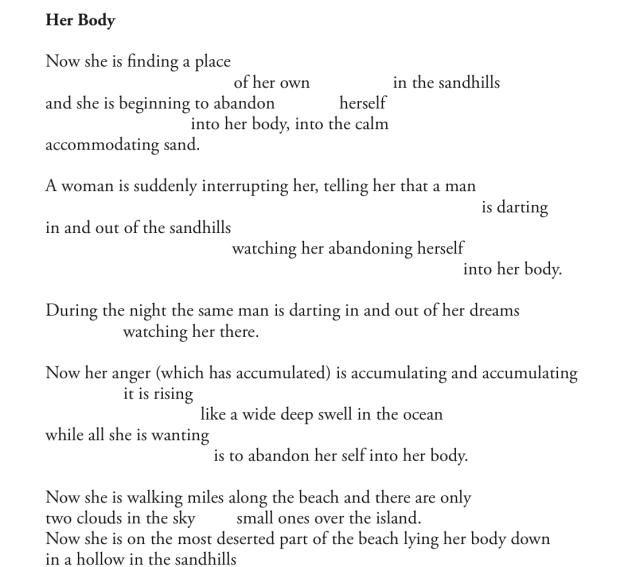
Screen Shot 2017-10-14 at 1.31.02 PM.png


Screen Shot 2017-10-14 at 1.32.00 PM.png

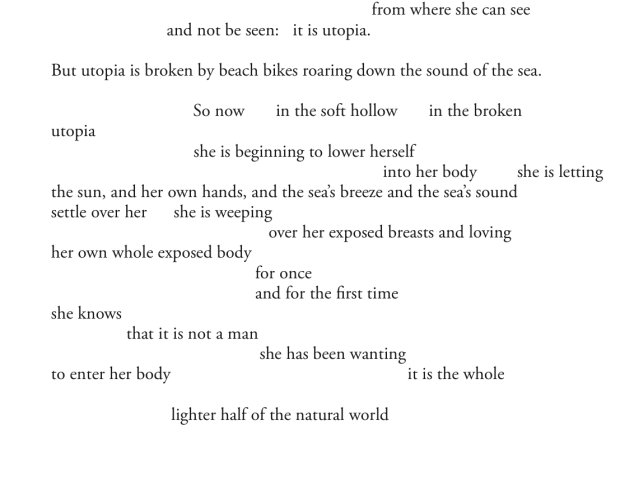
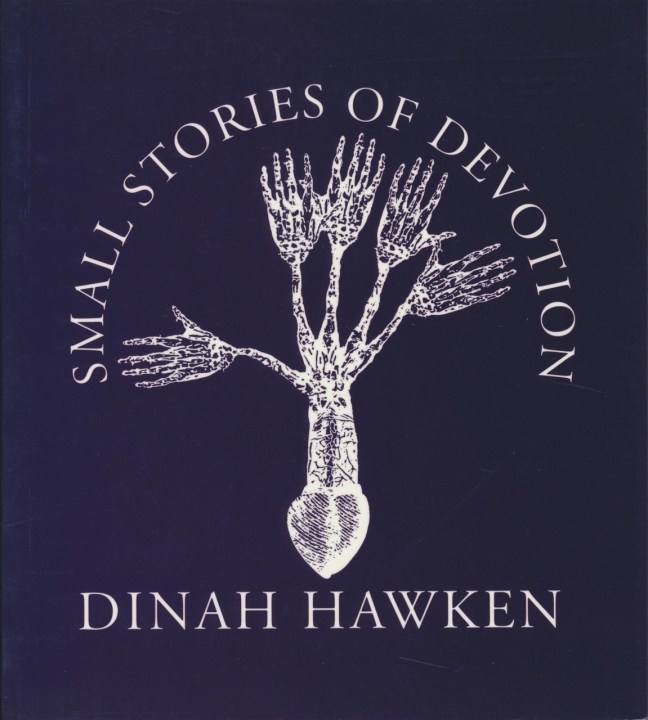
©Dinah Hawken Small Stories of Devotion Victoria University Press, 1991


Small_Stories_of_Devotion__14354.1401159901.jpg

Note from Nicola:

Dinah Hawkin’s Small Stories of Devotion was the first collection of contemporary NZ poems that had a big impact on me as a young woman. The collection was published the year I went flatting for the first time.  My flatmate had a copy, and I was attracted to this beautiful small blue book and it’s pocket-sized format. I hadn’t been exposed to much contemporary poetry, and it was a revelation to find work that spoke to me so directly. ‘Her Body’ is all tangled up with that time in my life where I was emerging and coming into myself as an adult. A time when I was encountering lots of new ideas about how to live, how to be in myself and in my body. This poem in particular spoke to those themes, as well as being a gateway into the world of NZ poetry. Now I read it and appreciate a layer of memory folded into its mix including a fondness for that younger woman and her questioning self. I love the poem’s rhythm, the place of the poem playing itself out, that long beach, those sandhills, the island and its two clouds. It surges and retreats, echoing the waves and the words lapping up the beach and across the page.

I enjoyed its anger (“accumulating & accumulating”), its passion and release.  I was spending a lot of time myself walking on beaches while having big existential conversations with my new friends about the world we wanted to live in, and about our sexuality and gender politics in particular. ‘Her Body’ encapsulated that exploration and the feminism that was so often at the heart of our conversations. I was she, the powerful sensual voice of the poem, the woman abandoning herself into her body. And alongside all that, entwined, the natural world, informing everything, settling on everything. A potent combination and one I’ve continued to enjoy in Dinah’s work.


Nicola Strawbridge is Programme Director of the Going West Books & Writers Festival.

Dinah Hawken is a poet who lives in Paekakariki on the Kapiti Coast. Her seventh collection of poems, Ocean and Stone, was published by Victoria University Press in 2015.


Poetry Shelf Spring Season’s poetry fans: Philip Matthews picks C. K. Stead

Without

Crossing Cook Strait
going home to be
ordained in the

parish of his
father, while seas wished
by and the wind

had its say in the
wires, it came to
him there was no

God. Not that
God was sulking or had
turned His back—that

had happened
often. It was that God
wasn’t there, was

nowhere, a Word
without reference or
object. Who was

God? He was the
Lord. What Lord was
that? The Lord God. Back

and forth it went while
stern lifted, screw
shuddered, stars glowed

and faded. The
universe was losing
weight. It was

then he threw his
Bible into the
sea. He was a

poet and would
write his own. Happiness
was nothing

but not being
sad. It was your
self in this one and

only moment
without grief or
remorse, without God

or a future—sea,
sky, the decks
rolling underfoot.


CK Stead from The Red Tram (Auckland University Press, 2004)


Note from Philip:

‘Without’ takes a true story of a crisis of faith and makes it a founding myth of New Zealand literature. Allen Curnow had intended to follow in the footsteps of his father, an Anglican priest, and started his theological training at St John’s in Auckland. Curnow tells the story in Shirley Horrocks’ 2001 documentary Early Days Yet, as Horrocks follows the poet through the wooden Canterbury churches he had not seen since childhood. “I changed my mind about being ordained in the middle of Cook Strait,” he says. “It was rather a stormy night, and I was on my way back from north to south.”

Stead’s poem appeared in The Red Tram in 2004, three years after Curnow died. One of the great legends of New Zealand poetry is that Stead and Curnow lived on opposite sides of the same street in Parnell. They passed each other messages. Sometimes, Stead says in the documentary, they stood and talked in the middle of the road. Maybe Curnow told Stead this story during one of those times, when he popped out to get the mail or a newspaper. I like the idea that the poem is a personal tribute wrestled out of what must have been a time of doubt, disappointment and personal confusion for Curnow. It suggests that literature is worth the personal sacrifices that writers make, and that a kind of destiny drove his decision.
Stead is a rationalist who would view the loss of faith as a personal gain. I don’t know if Curnow’s doubt was as simple or complete as switching from God to no God, but the drama of the poem required something that decisive, as though we are reading a description of the closing scene in the first of three movies about the life of a great writer. It is the origin story. The final shot in that movie would be the black Bible sinking into the dark water. By now it is day, and you can see the emerging outlines of Lyttelton, where his own father had been the local priest. Now everything around him, familiar as it is, seems more present somehow: “This world’s the one you’re in,” as Curnow says in a poem about those times, also titled ‘Early Days Yet’.


Philip Matthews is a journalist and reviewer who works for The Press and Stuff. He lives in Christchurch.

C. K. Stead‘s tenure as New Zealand Poetry Laureate ended August 2017. To mark the occasion, Fernbank Studio, with support from The Alexander Turnbull Library Endowment Trust, published his new poetry collection: In the mirror, and dancing. The limited edition was designed and printed by Bendan O’Brien with drawings by Douglas MacDiarmid. His new novel, The Necessary Angel, was recently published by Allen & Unwin NZ.


1400026620222.jpg       cv_the_necessary_angel.jpg

Poetry Shelf Spring Season’s poetry fans: Pip Adam picks Charlotte Simmonds


Giant Invisible Grandma God


God enters the room as a grandma, a Southern Jewish grandma.

His grandma aroma fills every space.


God enters the room as a grandma and His heavy weight fills the corner

with a wide whump! God is large after all                          these years.


When He is around there is so little room in this place for anyone else.

He takes up all the space but you can hear the swish from the corner seat


that calls all the grandchildren chicky, pats their heads while saying,

There, chicky, there now, chickling chickpea chickaree-dee-bee,


and the click-click of the crochet needle against the knitting loom

as He clicks out hats for all the grandkiddies and I am not


one of those feminists that writes poetry about the goddess within

and ruptures up all this performance art from my menstruations,


no, this is the same patriarchal God you’ve always railed against,

except today He is a grandma and His grandma perfume fills the room


and he says to all His granddaughters,

Chicky, what colour yarn you want for your hat? You choose, dearie.


and when they tell him what colour yarn is them most preferable,

He smiles,

takes a different colour and goes on calmly knitting hats, and


now the granddaughters begin to rail against Him, and

with them, me, and all the feminists too,


we all rail and everyone is crying, yelling, all at once,

No, Savtush! No! I didn’t want the blue one!


I didn’t ask for that! Saaav-TUSH!

I said a yellow one! You’re not listening to me!


You’re not listening! That’s not what I told you,

Savtush! You never listen to me!” and


while the railing rails on, Grandma God is calmly

clicking out hats, smiling sweetly from His corner chair and

His grandma perfume is warm and comforting, and


when He clicks out your hat, chicky, why, isn’t that just

the darlingest hat you ever set your head beneath and


doesn’t it just look so much better than the yarn that was you preferable and

aren’t you just so peacified to be sitting on God in the corner chair


there, your head inside His warm grandma perfume sniffing

His large breasted chest instead of kicking in the middle of the floor and


His smile never changes, it’s the same smile he clicked out his hats with and

He’s calm and warm and Savtush and He never changes because


He’s your great big giant invisible Grandma God.


©Charlotte Simmonds


Note from Pip: Charlotte Simmonds is one of the funniest people I know. I always laugh heartily when we are together. One of her super-powers is puns. For me, puns work because I have to hold two ideas in my head at the same time and there is something destabilising to reality about that state – the horse has a long face and a long face, the socks are holy and holy, the man who swallowed the eight plastic horses is in a stable condition and a stable condition. I have this theory that only language can do this, because a lot of other art forms (film, theatre) unfold in a particular order – one thing following another. But language has this ability to mean two things at once and cause this shimmering effect as the two things come in and out of focus. Which is a long-winded way of saying, this is what I love about ‘Giant Invisible Grandma God’ by Charlotte.

Throughout the poem I have to hold the two ideas of God and Grandma in my head, so it has this volatility to it, this energy. God is knitting hats, grandma is knitting hats. So I find it a very funny poem. I get a lot of joy out of it and that joy opens me up to the ideas in it. The idea of the way God takes up so much space that there is not a lot of room for anyone else. Also, the child in me loves the idea of a huge grandmother squashed into a regular sized world. Another amazing artist Rachel O’Neill once raised the idea that humour is cultural, that it’s one of the ways we enact cultural belonging. Charlotte speaks many languages and I often think that her writing and her sense of humour has this kind of multi-lingualism to it. That it can call on many places and languages for a laugh. That it is performed from a comedy club in the multiverse.


Pip Adam‘s second novel, The New Animals, was released this year. Her debut novel, I’m Working on a Building appeared in 2011, and her short story collection, Everything We Hoped For, won NZ Post Best First Book Award for Fiction. She makes the Better Off Read podcast.

Charlotte Simmonds is a Wellington writer, translator and PhD student who spends her time reading the news and her tears on the elections.