Category Archives: NZ author

Poetry Shelf Monday Poem: Ruby Solly’s ‘Dedication’


Dedication


This one’s for the aunty

that taught me

how to knead bread

properly.

Not with love,

but like you hate it.

The warm skin

of someone whose skin

doesn’t deserve it.

The aunty who calls out;

Beat it down girl

when the air bubbles

gasp through the dough.

And so you beat them

so far down

that you beat them

all the way out.


This one’s for

the girl in the tutu

and gumboots.

Shit covered

and tractor riding.

Pāpā doing her hair in loose braids,

those old farm ropes

swinging.

Tug of war fighting

to the sugar plum fairy.


This one’s for

the boy who thinks himself magic

then throws himself off

the top of the monkey bars

then doesn’t fly

but falls.

For the smashed nose,

for the freckles falling

from the face

in patterned rain.

Salt water cleaning the eyes

of a not special boy.


This one’s for

the girl with white skin

but black everything else

Pig dog! Pig dog!”

They say,

pulling her hair

until she barks.

Reaching out

from behind black eyes

to find nothing.

The ladder out

already pulled up

to a light that emanates

from everywhere

but below.


This one’s

for the man

who speaks not with words

but with hands in the soil.

Roots coiling down

towards magma core.

Digging to Rangiatea,

he knows he’ll get there

if he just digs and digs.


And now

you are all here

and we are ready

to begin.


Ruby Solly


Ruby Solly is a Kai Tahu / Waitaha writer and musician living in Pōneke. She has had poetry and creative non-fiction published in Landfall, Sport, Poetry NZ, Starling, Mimicry, Minarets, E-Tangata, The Spinoff, and Pantograph Punch amongst others. Victoria University Press will be publishing her debut book of poetry ‘Tōku Pāpā’ in early 2021. Ruby is also a scriptwriter and her film ‘Super Special’ which aims to share knowledge around traditional Māori views and practices around menstruation has been featured in film festivals within New Zealand and the US. As a musician, she has played with artists such as Yo-yo Ma as part of his Bach Project, Trinity Roots, Whirimako Black, Rikki Gooch, and Ariana Tikao. Ruby is a taonga puoro (traditional Māori musical instruments) player and therapist with a first-class master’s in music therapy where she conducted kaupapa Māori research into the use of taonga puoro in acute mental health.


Ruby Solly premieres a video for her new album Pōneke and a wānanga with essa may ranapiri


Poetry Shelf lounge: Rata Gordon celebrates her debut poetry collection Second Person


https://player.vimeo.com/video/441946690


Rata Gordon is a poet, dance teacher, mother and arts-therapist in training. Second Person is her first collection of poetry, and was published in June 2020 by Victoria University Press. She is currently based in Raglan. Her website


Poetry Shelf interviews Kay McKenzie Cooke


IMG_3044.jpg


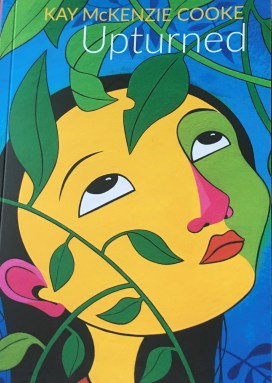
Kay McKenzie Cooke, Ngāti Tahu, Pākehā, is an award winning poet and short story writer. Her debut collection Feeding the Dogs was awarded the 2003 Jessie Mackay Best First Book Award for Poetry at the Montana NZ Book Awards. She lives in Dunedin, and spends part of her year in Berlin. Kay’s new collection with The Cuba Press Upturned is an evocative tribute to family, place, childhood, nature. The poems address attachment and kinship, love and grief. Some poems are southern based while others navigate Berlin. The poetry is a celebration of life and that celebration is of great reading comfort.


Paula What were the first poetry books that mattered to you?

Kay  The first poet that comes to mind is Dylan Thomas. I have this idyllic memory of me at thirteen years old sitting under a silver birch tree reading his poetry. It was on a particularly sunny day at Wendon Primary School in Northern Southland. This may well be a false memory! But the delicious revelation, surprise and impact of Thomas’s particular brand of poetry, is not.

Enid Blyton was an early influence (typical 1950’s-60’s child I guess.) I also loved Walter de la Mere and I remember a book of poems by Christina Rossetti featuring in my childhood. And A.A. Milne.

Dare I confess that Rod McKuen was a poet I adored for a (very) short time in the early ‘70’s?


Paula  What poetry books are catching your attention now?

Kay  Another Confession: Lately I have been so buried in my own poetry I haven’t been able to really take a look at what else is out there. There is such a rich seam of recent poetry to be mined. I would not know where to start. I have a lot (a lot!) of books and poets to catch up on. Both from new poets and from established favourites. And that’s just in Aotearoa.

Wild Honey is one I’ve been enjoying as a treasure to dip into. And the latest Landfall (239) as well.

Oh. Does Joni Mitchell’s beautiful book, Morning Glory on the Vine, count? That’s the book I got for my birthday recently and which I’m also dipping into at present.


Paula What else do you like to read?

Kay Autobiographies, biographies, modern novels, murder mysteries, non-fiction books about nature. Historical books. The classics.


Paula  Any standout poetry events you have attended either as an audience member or as a participant? Do you enjoy performing your work?

Kay  Jenny Powell and I have formed a poetry reading duo called J&K Rolling. We take poetry out into southern rural areas and discover what poetry is to be found in these places.

After five years of us travelling to many varied rural areas, I have a heap of memories of poetry readings performed in halls, art galleries, libraries, show grounds and even a restored, historical bake house. I enjoy performing poetry in such venues and at these low-key events with a small, attentive audience. It’s deeply satisfying.

The Bluff ‘06 organised by nzepc is a standout. Twenty-two poets from all over Aotearoa took part in poetry readings in Motupōhue / Bluff and in Rakiura / Stewart Island.

Reading in Paris at the Chat Noir in 2013 is a poetry reading I will always remember and treasure.

Another more recent reading organised by Jim Gedddes at the beginning of this year with David Eggleton, Cilla McQueen, Richard Reeve, Jenny Powell and myself reading in the Eastern Southland Gallery, is another memorable occasion.

Again – too many to list here. They’re all wonderful events. I feel privileged to have taken part in so many.
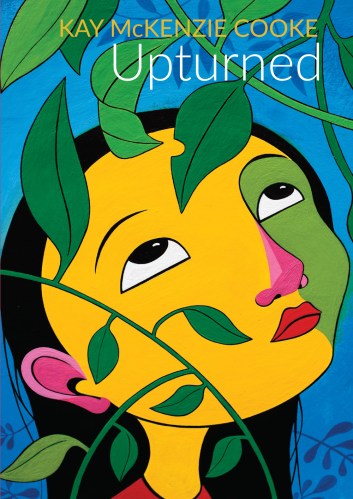
 

Upturned-cover-web.jpg


One day, back when

everything was only as big

as the span of my forthright steps,

the world shattered into hailstones.


from ‘Hail’


Paula Your new collection Upturned is assured, pitch perfect on the line, multilayered yet runs with sweet economy. What matters to you when you write a poem?

Kay  Thank you!

I guess where and how the line ends is important to me. I like each line to chime. Also how a poem begins and ends matters to me. I guess that it does for all poets.

I favour shorter poems. I used to write haiku. Maybe this is where my love of the succinct and economical comes from. Redundancy is something I try to avoid. I like to write tight poems, but not corset-tight.


Paula In the poetry of others?

Kay  For me, poetry needs to have music that I can pick up as a tune. A consonance. And I do like poems to, in some way, tell a story.

I like poems that surprise me, with unexpected imagery. Poems that take me somewhere; that go somewhere.

It’s important, personally speaking, that they make sense even if that’s not on the first reading. There needs to be some point at which the real poem emerges from any ‘camouflage.’ This revelation always feels like a special treat.

Some poems I’ve read recently are tending to the lengthy, the clever, startling, oft-times irreverent and angry or edgy and crude. They’re sometimes surreal streams of consciousness with lines that dance, burst, curse, swirl, meander, fly, divert and segue. Sometimes these scattered lines are safely tethered to a subject – sometimes dangerously free-falling. I’m left startled. Is it good? It’s different. To use an old-fashioned term, even rather fetching. Taking off in new directions. Poetry as performance. Poetry using 21st century vernacular. I can’t keep up. Then again, I don’t need to. It’s all good. All is well.


The cotton dress Mum made for me, purple daisies

on black, with puff sleeves, was not the ballgown I longed for

in real satin, electric-blue. And my hair. Too high. Too

stiff. Set with hairspray.

My partner, Maurice, with no idea how to dance,

was not the partner I preferred.


from “Many moons ago, Maurice’


Paula I kept musing on the idea of poet as gardener, memoirist, musician, traveller, daydreamer, archivist as I read. What were you as you wrote this collection?

Kay   I think you may have covered it, Paula.

I guess I was me being all of those at different times … plus chronicler. I like the word chronicler with its connotations of recording time.

I am aware that my poetry falls into poems about memory, place, childhood, whanau, tīpuna / ancestors, grief, daily life, ageing …

I think I am most pleased at your idea of ‘musician’. It’s a nice thought to think of my poetry as a kind of music.


I visit her iron-fenced bones

as the sea thumps

below the cliffs of the cemetery,


and I name her: Mary Frances Reilly,

my great-great-grandmother,

and use whatever is left of her


in me

to picture first the girl,

then the woman.


from ‘Name her’


Paula Poetry as keepsake? Family is so important in these poems.

Kay   Keepsake is another word I like. It makes me think of a locket. Something treasured and kept safe; kept close.

When one experiences, as I have, the sudden death of a parent at a young age, keeping hold of memories becomes a way of surviving that brutal shock. It’s a way of holding on to a life that has seemingly (or literally) instantly disappeared into some unattainable, unreachable void.

To think someone leaves this world without any trace or memory of their place in it, is an unacceptable thought for me. I just can’t abide the thought of ‘no trace’. Of time itself sweeping away all aspects of a life or valued experiences. And so in my poetry I record. I chronicle. I keep.


I’d sat and read a whole book.

Time-wise we are all losers,

fooled back into memory.

Back then, eating a blackberry’s beaded cushion,

my tongue, my teeth, boring down

to its core,

its tiny wooden heart.


from ‘Blackberry days’


Paula I love the structure of the book. Can you tell me about that?

Kay   The poems are divided into four sections. The ones about Berlin were of course easy to place into the one section. However, in order to prevent having too many nature, landscape or place poems together; or bunching-up childhood memories, grief poems, or family poems; it seemed pertinent to switch and mix them around a little. To a certain extent, chronological aspects also had to be taken into account – poems from before and after the Berlin experience for example.

The team at The Cuba Press (especially Mary McCallum) helped me with the structure. The result is pleasing. I like how the different poems speak to each other and how one poem often leads naturally on to the next – sometimes just by the natural extension of an image, key word, idea or impression.


Sing old kettle of slung light

that spins on through

this backyard

that could be the last kitchen

or the first. Old kettle, singing kettle,

let the heat of the days rock you.


from ‘Sing,sing, sing’


Paula Reading your poetry is a sensory experience. Do you have motifs you are particularly fond of?

Kay  Yes! I do. And I have to watch that I don’t over-use these favourite motifs.

Mary helped me with that as well. She asked if I realised how many times I use the motifs of air, sun, sky, water … and I also realised that I needed to take out a few too many stones, grasses …

I am perhaps a little too fond of nature’s motifs. Birds are a motif for me as well. They, along with deer and horses, are members of my spirit-animal world.


For days now

the unpegged washing of snow

has lain in the mud of Dunedin’s hills


where a giant hawk of cloud

lifts off, its talons

Mount Cargill, a sag of grey.


from ‘Nor’esterly’


Paula I am reminded of Ruth Dallas’s attachment to the land in her poems, she made herself at home in her beloved south as she looked through an urban window. I have seen it in Sue Wootton’s poetry too. How does the land matter? Do you have go-to places?

Kay   As a child brought up in the country way down in the same beloved south, I believe the spirit of that southern rural landscape is in my blood and firmly rooted in my innermost being. As deep as it can go. Even living happily as a city dweller for nearly fifty years has not diminished this relationship I have with this land; this integral part of my being.

Despite its buried streams running underground, Otepoti / Dunedin (as I believe is the case with all cities in Aotearoa) has never lost its relationship with the land. A strong identification with nature is part of its character as a city.

Being tangata whenua has its influence on my relationship with the land too – especially with Murihiku. Nothing needs to be conjured. It’s just there. Even on those days where I don’t leave my house – or even my writing room – my relationship with the land is still a beating heart.

Of course, actually going to places is a helpful and enjoyable top-up of the actual. There is nothing to match looking at a mountain close up, or smelling the seaweed smell of a favourite beach or hearing a mean sou’westerly whining in power lines.


I am eating the language of the ocean

on this last day of summer, Sommer,

eating the language

my granddaughter speaks.

She does not care

what they are, foxes of squirrels, Fuchs or Eichhörnchen –

it is simply her favourite dress


for now anyway, as she eats potato cake

with apple sauce and hardly ever looks at me

drinking her in with my eyes.


from “Foxes or squirrels’


Paula Home is so important but so too is the wider world in your writing. What changes when you write about or from elsewhere?

Kay  When I am somewhere unfamiliar, it can manifest as dislocation. This is reflected most in the poems about Berlin which I wrote during and after lone trips there to stay with my son, his wife and their two small children.

While there, I felt something that was akin to homesickness. Keeping a journal helped to chronicle what was happening, both internally and externally. Then once I was back home again, the material in the journal with all its ramblings, jottings and sketches, was what I drew from for the Berlin poems. The many photos I’d taken also triggered poems and helped me to remember cityscapes, trees, pavements, people, sensations and emotions.


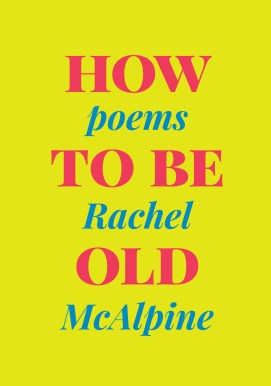
Paula The Cuba Press has published Upturned along with two others written by poets at an older age (Rachel McAlpine’s How to Be Old and John Tāne Christeller’s Fragments from an Infinite Catalogue). What has changed for you as a poet across the decades (if anything?)? How does age change things?

Kay  As a young child I wrote poems about fairies. As an adolescent and young adult, about coffee and rain. As a young woman, descriptive pieces about what I could see in front of me – some of which were written as haiku.

Then in my late thirties, I started to study poetry, reading nothing but poetry for ten years.

Writing-wise, this stage was excruciating. I remember often being brought to tears because I couldn’t properly put down on paper what was in my head. Then one day – or so it seems – I hit my stride. I found my voice and I was away.

Age-ing is certainly a weird experience. Some part of me thinks it’s all backwards. The older we grow, the younger we feel. We don’t look the age we feel inside. I can’t explain. Maybe it’s time to write some poems about it.

I remember when I was young, I loved reading personal accounts about what it was like to reach the age of eighty. This gives me hope that there may be a younger audience interested in reading about what it’s like to be old.

I am sometimes tempted to feel out of step with younger writers. Doubt threatens to creep in, until I remind myself that everyone is relevant. One of the features that make the regular Dunedin poetry readings so valuable, is the lively cross section of ages and stages of those that attend and read. All are accepted. All are represented. No-one is made to feel redundant or irrelevant, no matter the age.


Paula Were there poems you found hard to write? In terms of doubt or of subject matter – you do face grief and loss, along with joy?

Kay  They are not hard poems to write, the ones about grief and loss. They seem to emerge from a place in me that is never empty. Rather than being hard to write, it’s almost like it’s hard to stop writing about these subjects. Poetry heals. And as long as we have stuff to heal from, poetry is there to help with that. Of course it needs to be achieved without maudlin or sentimental cliches. Isn’t there a saying about when describing a funeral, you don’t describe the tears mourners are weeping, but instead you describe the flowers on the casket? Something like that.


Daughter


My daughter told me about how Ace got run over.

She said that all along she knew it wasn’t a good idea

to let the dog run along beside the car,

but that Kris told her he’d seen his mates do it

and it’d be okay. ‘He should’ve listened to me,’ my daughter said,

‘but he’s too “she’ll be right”. Always with the “she’ll be right”.

Said I’m just being paranoid.’

Then, of course, what she thought would happen

happened: the dog’s leg slipped under the car’s wheel.


She asked me to help her take him to the vet

and carried him to the car like a baby.

‘A twenty-kilo baby at that,’ she said,

‘equivalent to twenty bottles of milk.’

The dog sat in the back seat

with a tartan rug draped over his head

like a Highland shawl, underneath, his face

all screwed up like an old person

trying to remember something.


In the waiting room, my granddaughter and I

decided that from underneath, the turtle in the tank

looked like a grenade with legs,

its cake-rack-patterned

tummy the shade of milky custard,

its head a thumb. The vet’s X-ray showed

that Ace’s injury was just a sprain.

Afterwards we had a cup of coffee at Rhubarb.


‘What’s more,’ my daughter said, referring back,

‘he hasn’t said sorry nearly hard enough.’

On the way home, from the top of Roslyn,

the sea is distant, kidney-shaped,

and my daughter said, ‘Don’t you just hate it

with the sky all white like it is today and no sun?

We may as well all be locked inside

a chilly bin.’ And I think: Daughter, it has to be

one of the most beautiful words.


Kay McKenzie Cooke


Paula Is there a poem that has particularly worked or mattered to you?

Kay  The poem about my daughter. She is extra-precious to me because she was adopted out as a baby and we reconnected – or found each other – twenty-three years ago now. (I write more about this in my third book, Born to a Red Headed Woman.)

The poem, called ‘Daughter’, is a slice of life that highlights for me the relationship my daughter and I now have. A relationship I treasure at a very deep level.


Paula  Has Covid 19 affected you as either reader or writer? Did you write any poems in lockdown?

Kay  I wrote about four poems – mostly about birds. Birds became highlighted for me during that time of lockdown. Possibly because they were symbolic of a freedom to fly or rise above all the fuss, worry and fear.

I thought I’d write screeds. But I was too busy editing Upturned with Mary to write new stuff. Too busy to even take notes from which to write poems from later.

Whatever I write about this strange time may not even be in the form of poetry. We’ll see after I’ve processed it all.


Paula  What do you like to do apart from writing?

Kay   Watch Netflix and listen to true crime podcasts.

I like to walk and take photos. Spend time with whanau. Go on roadies south.

Watch birds. Pick up stones and shells. I like reading – can’t wait to fully start reading again, to catch up on new poets and read new books from established poets. And add to my murder mystery reading. I’ve spent a whole year just on writing. It’s time to read. It’ll be my summer project.


Paula  If you could curate a festival poetry reading, drawing upon any time or place who would you invite?

Kay   I would invite: John Keats. Dylan Thomas. Gerald Manly Hopkins. Marianne Moore. Diane Wakoski. John Dolan. Wendy Cope. Fleur Adcock. Cilla McQueen. Ruth Dallas. Talia Marshall. Jeanne Bernhardt. Nick Ascroft. Richard Reeve. David Eggleton. Jenny Powell. Tony Beyer. Matsuo Basho.


 The Cuba Press page

Kay reads and responds to a poem


Poetry Shelf Monday Poem: Tim Upperton’s ‘Nobody knows’


Nobody knows


Many things make me sad these days,

the days make me sad, how they fade

into night so soon, how today

becomes yesterday, and then

last year, then seven years ago

when my mother died. She never

minded the passing of time,

getting old. Such a beauty she was.

Divorcing at seventy was a surprise.

She used to sing, sometimes, in a high voice,

‘Nobody knows – the troubles I’ve seen,’

and towards the end she’d sing,

‘Nobody knows …’ and then trail away,

and we knew and didn’t know.


Tim Upperton’s second poetry collection, The Night We Ate The Baby, was an Ockham New Zealand Book Awards finalist in 2016. He won the Caselberg International Poetry Competition in 2012 and again in 2013. His poems have been published in many magazines including Agni, Poetry, Shenandoah, Sport, Takahe, and Landfall, and are anthologised in The Best of Best New Zealand Poems (2011), Villanelles (2012), Essential New Zealand Poems (2014), Obsession: Sestinas in the Twenty-First Century (2014), and Bonsai (2018).


Poetry Shelf Friday talk spot: Ash Davida Jane’s ‘An Ecopoetics of the Future’


An Ecopoetics of the Future


Lately, a lot of people seem to be turning to poetry to work through their thoughts and feelings around the climate crisis. There’s a very specific way nature has been used in poetry for a long time, which is very symbolic and focused on the aesthetics of the natural world as some kind of perfect, untouched source of images. This feels to me like an appropriation of sorts, which ignores the reality of the natural world and our responsibilities towards it, as well as the fact that we’re complicit in a very calculated and systematic destruction of the very places we romanticise.

Of course, there’ve been poets writing with environmental themes for a long time, but the school specifically dubbed ‘eco-poetry’ has only been around since the early 2000s, with a few key works of ecocriticism and anthologies of poems claiming the term. Some ecopoets insist on a very rigorous set of criteria for the subgenre, such as John Shoptaw in his essay in Poetry, “Why Ecopoetry?”: “The second way in which an ecopoem is environmental is that it is ecocentric, not anthropocentric.” To earn the label, he says, a poem must not prioritise human interests. The distinction seems small, but it makes a big difference. If a poem can only be an ecopoem if it disregards human interests, it sets us apart as Other to the environment. It suggests that the devastation we inflict moves in one direction only, outwards from ourselves, and that the impacts are all in non-human spaces.

The reality is that we live within the environment. We are not separate from nature, no matter how much it can sometimes seem like it when you live in a city. The perpetuation of that idea is incredibly dangerous, as it allows us to believe that, in the years to come, as the earth warms, we’ll be fine. It’s become clear that sympathy for the planet’s other inhabitants is not enough to inspire change within our (colonial, capitalist) human systems. For us to implement other, less damaging ways to live, we have to recognise that within our lifetimes, our lives will be worsened—some far more than others, but everyone’s in some way. So, what’s the point of an ecopoetics that focuses only on human action and non-human consequences? It is too late for that.

It also shows a blatant and dangerous disregard for the indigenous peoples who live with the land rather than just on the land. It’s important to recognise the necessity of work like Stacey Teague’s poem “toitū te whenua”, which is a decolonisation poem and a climate justice poem, because the two things are inseparable:


sacred soil                               settler guilt

the past speaks grief                             the water speaks pollution

the public sings                       in the colonial landscape

the womb of the earth is full of protest


As essa may ranapiri writes in their poem from the same collection (Te Rito o te Harakeke, edited by Rangatahi o te Pene, Hana Pera Aoake, Sinead Overbye, Michelle Rahurahu Scott and essa may ranapiri), “where we stand is where we will always / stand / on the whenua that we are / and are one with.” Tangata whenua are part of the land, and so there can be no ecopoetics without tangata whenua.

With the current trend towards environmental poetry, it seems important to ask what we want from this kind of work. One of my favourite poems about the environment is Vanessa Crofskey’s “There’s Real Manuka Honey in Heaven” from issue 7 of Starling, which includes this brilliant image:


a global conference of bees will be livestreamed strapping on

army helmets khaki stripes and matching jet packs

then flying off into the stratosphere in tiny astronautical booties


The poem ends with “the tuatara [singing] a eulogy to the end of the anthropocene” and the cockroaches, who we all know can live through anything, “[waiting] for spring.” It’s the perfect mix of humour and very real devastation, without just saying the same things that everybody else has already said. The world in Crofskey’s poem is the complete opposite from the idyllic landscape of the Romantic or pastoral poets, and humans are very much present. Otherwise how could we take any kind of responsibility for the damage?

Another approach is that of Joy Harjo, whom I doubt James Shoptaw would call an ‘ecopoet’, though hers is some of the most moving writing about the natural world I’ve ever come across. In “For Calling the Spirit Back from Wandering the Earth in Its Human Feet”, Harjo tells us to “Be respectful of the small insects, birds and animal people / who accompany you. / Ask their forgiveness for the harm we humans have brought / down upon them.” In “Talking with the Sun”, she writes, “Humans are vulnerable and rely on the kindnesses of the / earth and the sun; we exist together in a sacred field of meaning.” Harjo isn’t only writing about non-human interests, because in her poems human and non-human interests are one and the same.

I’m interested in a school of poetry that doesn’t restrict or close off possibilities for writing about the environment, while also acknowledging that every piece of writing being written or read now exists in a world in crisis. Like humans, poems do not exist in a vacuum. Everything we read is informed in some way by our lived experiences, and the writer’s lived experiences, and since everybody shares the very big experience of living on Earth, it seems vital to recognise that in the poems we read and write. Moving forward, as we continue to make sense of the natural world through poetry, we must keep asking the question—what do we want from this work?


Ash Davida Jane


Ash Davida Jane is a poet and bookseller from Pōneke. Some of her recent work can be found in Starling, Peach Mag, Scum, The Spinoff, and Stasis. Her second book, How to Live with Mammals, is due to be published by VUP in 2021.


Poetry Shelf video spot: Rebecca Hawkes’s ‘Perendale Princess’


Rebecca Hawke’s ‘Perendale Princess’


Rebecca Hawkes is a poet and painter. She’s from a high country farm near Methven and is now living in Wellington. Rebecca’s poems have appeared in various journals, including Starling, Sport, and Sweet Mammalian – and on her website. A collection of her writing was published in August 2019 in the revival issue of the AUP New Poets series, alongside the work of Carolyn DeCarlo and Sophie van Waardenberg.


Poetry Shelf Monday Poem: Simone Kaho’s ‘Crane Fly’


Crane Fly


I’ve been in the bathroom with a flying daddy-long-legs thing locked in a battle for its life.
I saw it on a shower floor tile when I was showering.
A leggy bug fossil, squashed flat by water.
I told myself it was dead but couldn’t resist checking and it grabbed the toothbrush handle I held over its body.
So, I flicked it out of the shower and told myself It’ll sort itself out.
I checked when I got out.
It was lying in a wing and leg jumble, glued together with an iridescent water drop.
Still alive though, because it grabbed at the toothbrush again.
So I lifted it up to the windowsill, and it staggered upright-ish.
I saw it only had one back leg on the right, jabbing down to steady itself.
Three legs in total. It should have six.
But its struggles made it seem saveable, so I ripped off a single toilet paper square and touched the wings lightly and quickly.
That sucked the wetness up, but they were stuck together along its back, like wet cellophane but infinitely more fragile.
It wiggled its abdomen and wing joints like it was trying to fly.
That made me sad, that it wanted to fly, and couldn’t, and didn’t know why.
So, I separated the wings by running closed tweezers between the veiny transparent panels, then gently letting them open.
Oil glistened in my fingerprint troughs, which were larger than the wing veins.
If you try this yourself – don’t grab and pull the wings with tweezers.
I never closed the tweezers on a wing – it was all very indirect and slow.
After a few passes, its wings sprung apart.
It buzzed them and flew haphazardly back into the shower.
Which was clearly not a safe space.
So I walked it onto some toilet paper and put it on top of the mirror cabinet to calm down.
Later, in the middle of the night, I checked, and it was gone.
I bet it’s flown into a spider web I thought and looked in a corner of the room.
Sure enough, there it was, hanging in a web.
I counted the legs to be sure. Two fronts, one back.
There was no spider in the web so I pulled it out and laid it on the window beside the toilet in a cobwebby pile.
My cat thought about eating it but didn’t.
Its legs were stuck together, so I got the tweezers again and separated each leg, pinching cob web strands and slowly pulling, aware the web may be stronger than the legs.
Each time I pulled, I thought This leg might snap.
It’s not like there were legs to spare.
We got lucky.
After several minutes of tweezing the legs got free and it could even lift them and they didn’t stick to the window ledge.
I set it on a piece of toilet paper outside the window – thinking – Hey man, the bathroom isn’t safe. Go die outside.
It was pretty cold outside.
After I did my business, I noticed the toilet paper had blown away.
So, I mouthed Goodbye and Goodluck.
But when I went to shut the window the dude was quivering there, on the window frame, standing the right way up on his front two legs, the back one propped under like a lopsided tripod.
I shut the window and left him there.
Maybe he wants to die and I’m getting in the way.
Maybe none of the ways he’s been dying has been fast enough.
There’s too much waiting to die in an awkward tangle, so he battles to live, to find a better, quicker way.
Or maybe this is just how life is for a flying-daddy-long-legs in the bathroom.
How could I know?
I know I felt great success each time he made it through.
He’s a tough little bugger, although unspeakably vulnerable, directionless, and with no clue how to stay safe.


Simone Kaho


Simone Kaho is a Tongan / Pākehā poet who writes discontinuous narratives in poetry. She has a Masters from Victoria University of Wellington’s International Institute of Modern Letters. Her first book, Lucky Punch, was published by Anahera Press in 2016, The second will hopefully arrive in 2021.


Poetry Shelf connections: John Gallas’s Unscythed’


Unscythed


By Paparahi Flat, just past the droving bridge,

a vasty field of uncut corn rattles, torn,

sere and straggle-flapping, up to Bonners Ridge.


It’s Winter now. I don’t know why, in ragged rot,

this tall and stalky race were left uncropped, bereft

of use or profit, bluntly clattering, forgot


and draggled-pale, their shreddy leaves like flags,

their cracked confusion like a beaten, huddled troop,

abandoned, standing still, in August’s rimey rags.


Their neighbour-whispers, nods and anxious wags betray,

it seems to me, some shabby incredulity

at some long luck, some higher husbandry that stays


their felling and their muddy end, some shrunk surprise

that they are left alone. I watch them gasp and click.

Their green-time gone, their salad-days long passed, they rise,


a little blankly, yes, a little like a crowd

achatter when the show is done and all the darkling

auditorium of earth an empty shroud


of wind and cold, but standing still. Perhaps this way

of dying, atom-slow, defying expectation

and the time, this easeful progress downwards, may,


with distant busyness, and blindness in the dark,

be mine. I leave the gate and cross the mudded bridge.

Above the track two slapping kahu wheel and cark.


I follow them to Brackall, past the flooded farm,

across the ice at Denham’s Dip to Birthday Creek,

and then the rimu’s shelter, and its sudden calm.


John Gallas


John Gallas is a NZ poet published by Carcanet. His 20 collections include The Song Atlas, Star City, The Little Sublime Comedy and 52 Euros. The Extasie (60 love poems) and Rhapsodies 1831 (translation of French poet Petrus Borel) to be published January and March 2021. He presently lives in Leicestershire. His a librettist, St Magnus Festival Orkney poet, Saxon Ship Project poet, Fellow of the English Association, tramper, biker and merry ruralist. Presently working on two sets of poem-prints (’18 Paper Resurrections’ and ‘Wasted by Whitemen’). ‘Unscythed’ written in Sefton, near Rangiora: home of bro.

Poetry Shelf poets on poems: Kay McKenzie Cooke and Rachel McAlpine read and respond to new poems


Kay McKenzie Cooke reads ‘No Longer Applies’ from Upturned, The Cuba Press, 2020


Kay McKenzie Cooke, Kai Tahu, Kati Mamoe, lives in Dunedin. Her fourth poetry collection Upturned has just been released from The Cuba Press. Her website and blog can be found here.


Upturned cover.jpg   How-to-Be-Old-cover


Rachel McAlpine reads ‘Reading a paper book’ from How to Be Old The Cuba Press 2020


Poet Rachel McAlpine lives in Wellington and is 80. She blogs, podcasts and draws (badly) as well as writing poems. How To Be Old, her latest collection of poems, will be launched by Fiona Kidman at Unity Books on Tuesday 21st July at 12.30 pm.


The Cuba Press


Poetry Shelf interview with Natalie Morrison


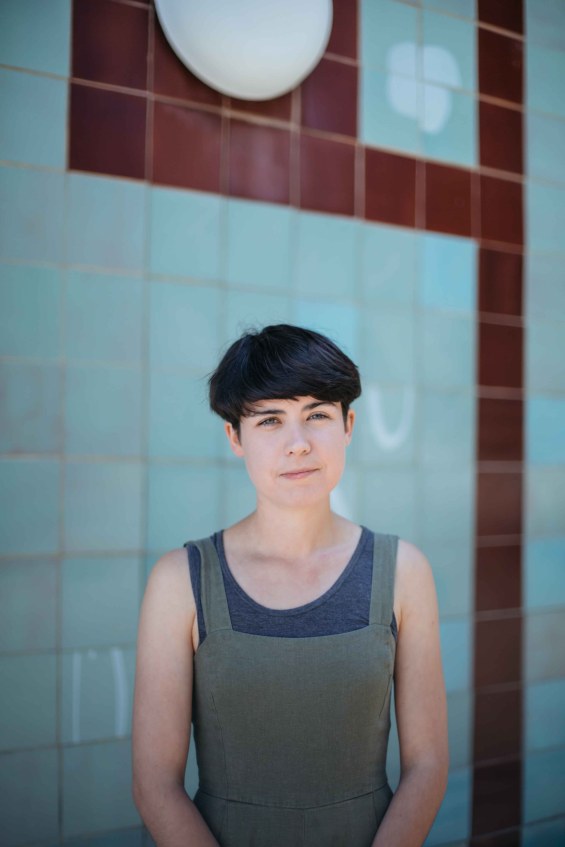
natalie-morrison-2020-ebony-lamb-photographer-8.jpg

Photo credit: Ebony Lamb


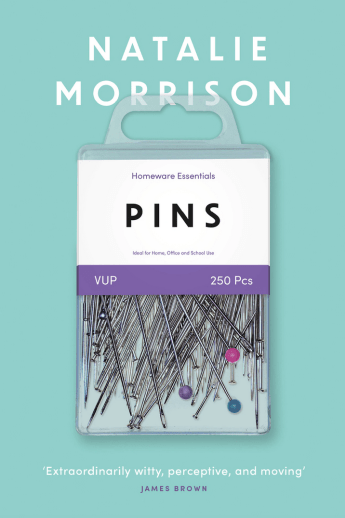
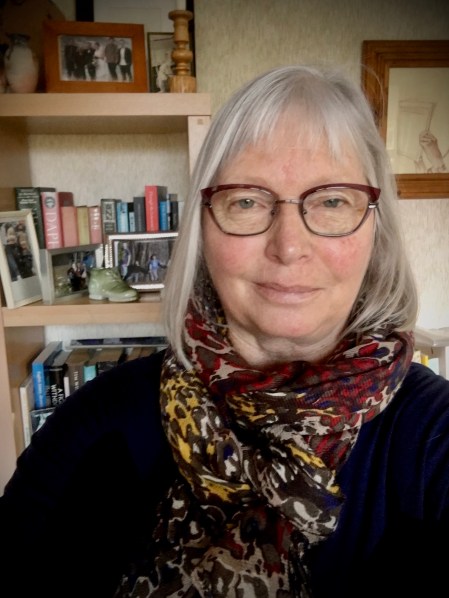
Natalie Morrison has an MA in Creative Writing from the Institute of Modern Letters, where she received the Biggs Family Prize for Poetry in 2016. She lives and works in Wellington. Victoria University Press recently published Pins, Natalie’s debut collection. The book is most definitely poetry, the kind of poetry that affects your breathing patterns because it is so good, so original, so addictive. But it also resembles a letter, as the speaker addresses her missing sister, and a catalogue of fascinations, as she tracks an obsession with pins. The collective result is book that centres upon family, and then radiates out into pocket-book narratives of loss, curiosity, yearnings, attachment. The title itself ‘pins’ sends me in multiple directions before I even open the book, and then vital movement continues as I read. This is a book to treasure.


I can just about trace the birth of your fascination.

We were cordoned off from the fireplace with a moveable

copper façade. Nana was stitching one of Grandad’s

socks. We didn’t have any clothes on,

were still dripping slightly from the bath.

You picked up a pinch of metal

and in the dim light tried to see what it was

you were holding. I continued reading Beatrix Potter

with a damp index finger. Nana told you to be careful:

What you have in your hand is very sharp.


Caution: where there is a pin

there will be puns.


One must love a sister in the same way one must love

jabbing oneself in the foot halfway up a flight of carpeted stairs.

Our parents told you I would be a nice surprise.


from Pins


Paula  What were the first poetry books that mattered to you?

Natalie  Not a whole book really, but I remember my mum reading us ‘The Rime of the Ancient Mariner’ and being really taken with it. Gotta love the drama.

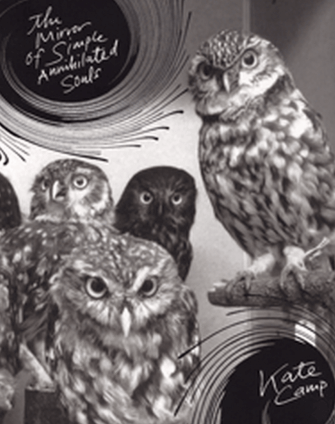
Then in high school ‘The Love Song of J. Alfred Prufrock’ by T.S. Eliot really resonated with me for some reason, and I still get parts of it stuck in my head. A few memorable books a bit later on were Kate Camp’s The Mirror of Simple Annihilated Souls (I always think of the owls on the cover) and a collection of W.S. Merwin’s, both of which I became attached to and didn’t want to return to the library. But don’t worry, I did.


Screen Shot 2020-07-13 at 1.04.03 PM


Paula  What poetry books are catching your attention now?

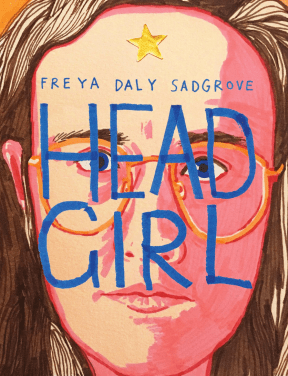
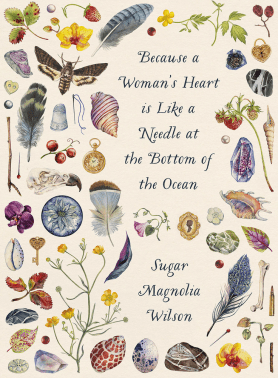
Natalie Freya Daly Sadgrove’s Head Girl was super kick-ass. I adored Sugar Magnolia Wilson’s Because a Woman’s Heart if Like a Needle at the Bottom of the Ocean, particularly the epistolary sequence. I’m very in awe of Gregory O’Brien at the moment – something just snaps into place. Also looking forward to reading Second Person by Rata Gordon. I’m a hopeless sucker for a good cover and I had a peep at the first few pages the other day…intrigued!


Screen Shot 2020-07-13 at 1.06.17 PM.png     Screen Shot 2020-07-13 at 1.07.14 PM


 Drop one pin into a glass of clear

cold water for several minutes.

Then immerse your hand in the language

of the water until you find it.


from Pins


Paula  Your debut collection is exquisite, both melodious and tactile, economical and rich. What do you hope from a poem or a book-length sequence such as this?

Natalie  Thank you! Mostly I hope it behaves itself. Or that I can keep it in line with the shape of itself, being so long and fragmented. It’s nice when the pieces start interacting with each other and when they move through moods/sounds/scenes.


Screen Shot 2020-07-13 at 12.58.52 PM.png


Paula  Does this change for you as reader? What attracts you in poems by others?

Natalie  I’m attracted to the usual things; the sounds a poem creates, the voice(s) it uses and the way the words fall together. But I love love love it when the poem is also kinda mischievously fun and cracks that sly-sideways smile at you. Quirky also does it for me, and a bit of classic sass.


Paula  Your book does just that! Wit is a vital ingredient. James Brown likened Pins to Anne Kennedy’s 100 Traditional Smiles, and I see the connections. There is both a quirkiness and a crafted musicality, yet perhaps a key link is that of narrative. Narrative is such a fertile option for the poet. What drew you to it?

Natalie  I’m not sure exactly. A bit to do with what I was reading at the time? I was also lucky to be surrounded by such beautiful narrative-making from my classmates that year, it was relatively contagious.


Paula  Would you ever want to write a novel?

Natalie  So tempted to go for the pun… Well, that would be pretty cool. People who are able to sustain a whole novel have my absolute admiration. It would take a gazillion years though; I’m fairly distractable, which is why I think Pins is so bitsy.


Paula  I love the degree of white space in the collection – resonant for me on so many levels. It is both a visual and aural pause, a silent beat for eye and ear, a place to savour what you have just read. It also acknowledges the missing sister. Can you comment on the white space?

Natalie  That’s a really awesome way of looking at it. For sure, I think the in-between spaces echo the little gaps the missing sister leaves in the narrative.

With poetry in general, I enjoy the blanks that we draw tiny conclusions about. It’s like staring at old floral wallpaper – you start to see all sorts of faces and figures.


But I will always have you in the back of my mind,

unwinding like the coil pin in the body of a bright,

jittery, copper toy.


from Pins


Paula Staring at anything! I also love the way the missing sister is the family hub, but you don’t explain and you don’t resolve. Although I do feel like I am moving through fictions – what is true? – as though I am playing with a set of Russian dolls. If I had written this, I would want to leave it in the hands of the reader. No explanations. Do you agree?

Natalie  Sort of? I would say there needed to be just enough to nudge the narrative along, but I’m not into overloading a piece with the whys and wherefores either. Especially this piece; it felt right for there to be spaces left. For me personally, the poem orbits around the longing created by the little absences. Maybe a part of longing is piecing together what we can from hints, and hints of hints? That’s how it is in my mind anyway – but yes, very onboard with leaving some of the work with the reader. Partly because I really enjoy the hugely varying assumptions people make about it, or is that too wicked of me? I’ve confounded at least one uncle….whoops!


Hail:

walking into a downpour of a thousand brisk pins.


from Pins


Paula  I agree – the poetry is a lace-like arrival of longing around the white space – actual and implied. So much to adore about the book – especially the pivotal presence of pins. You catch them in so many surprising ways. I love nana and the sunsets, the barcode pin, acupuncture and voodoo, the downpour. Do you have a few favourites?

Natalie  Thanks so much, Paula. Trying to dredge for ‘pins’ around the place morphed into an obsession in itself. I still have pin-themed dreams which is pretty ouch!

As to favourites, hmmm… the futuristic surgical pin for the brain, the bobby pin trail, the pin-filled swimming pool and the pigeons are probably my faves. The pin sonnet was quite satisfying too.


Because of your early attachment with fairy stories,

I wasn’t surprised to pick up your trail of bobby pins

along the footpaths of Wellington’s suburbs. I imagined

finally arriving at your gingerbread destination.


from Pins


Paula I was filled with joy as I read this book, so it felt like you filled with joy as you wrote it. But that might be far from the truth of writing it. Was it joyful? Did you struggle and were plagued with doubt?

Natalie  Yay, I love that it’s had that effect on you reading it.

All of the above! Plagued by doubt is definitely my resting state in most of what I do, and I’m probably not alone there? It was certainly joyous at times, especially when something falls into place – that’s quite exhilarating.


If all the pins in the world were gathered together

you would be very much pleased.

But all the pins in the world

cannot be gathered

together.


from Pins


Paula  My Wild Honey research exposed a catalogue of doubt – my doubts in my ability to create the book but, more importantly, across a century of woman writing and doubting and finding their way into a public spotlight. Some women were kneecapped and roadblocked by the attitudes of the men in charge to their work.

Has Covid 19 affected you as either reader or writer? Did you write any poems in lockdown?

Natalie  I don’t think any of us get away without being affected by Covid 19 and everything that’s happening right now. I imagine it having all sorts of impacts on writing and art-making that we might only notice after the fact maybe? When we were in lockdown, I finished up reading a few of the books I had started and then it was quite nice to return to some old comforting favourites around the flat. I didn’t write as much as I had hoped. It seemed like everyone had lofty goals for their lockdown which didn’t necessarily get realised. My grandma says ‘you can only do what you can do.’


Paula  Wise grandmothers! What do you like to do apart from writing?

Natalie  Anything to do with making odds and ends. At the moment, I’m knitting like a fiend in a race to finish a sleep sack for my nephew before he gets too big. I have a bad habit of thinking of new projects before the old ones are finished, ah! Overall, it’s a comforting thing to do.

When the stars align, I really love going tramping with friends, usually in the Tararua ranges. It doesn’t happen as often as I’d like, but it’s really special to me.


Pigeons know nothing about pins.

Literally nothing.


from Pins


Victoria University Press page