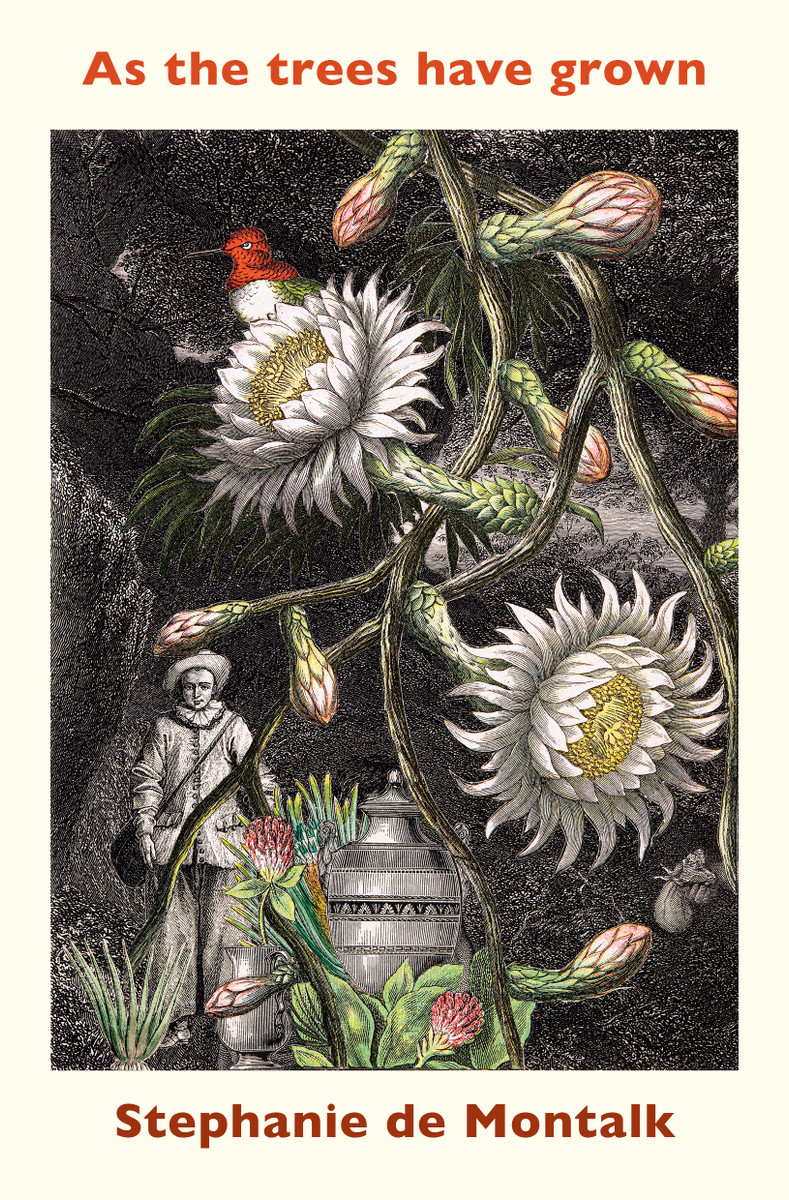
As the trees have grown, Stephanie de Montalk Te Herenga Waka University Press, 2023
We heard neither
gasps of admiration nor ecstatic interpretations
of radiance that afternoon— only the sighs
of wind-blown sand awakening our
desert thirsts to the marvellous
from ‘Trance’
Many of the poetry collections I read, reinvigorate the idea of writing, plural rather than singular, expanding and refreshing the scope of what poems can do. Stephanie de Montalk’s new collection, As the trees have grown, is no exception. Writing becomes memory, elevation, diversion, celebration, uplift, grounding. Writing becomes heart, and all heart’s embedded words resonate within the poems: art, ear, tear, hearth, health, earth.
Art vibrates on the cover in the form of Brendan O’Brien’s terrific artwork, a collage made using 19th-century engravings with pencil and ink additions, with its intricate detail of bloom and mysterious dark. He created it after revisiting her poetry, having created covers for her first two collections. Inside, the art of the poet laces plants and wildlife, weather and luminosity with subterranean pain. It’s heart. It’s the allure of a physical moment that is transcendental in its physicality. In ‘Allurement’, you move from cobalt skies and bright hills to lawn sleeping cats to:
and all day there was a deep, white light
and everything with an edge to it.
A significant current, a vital skein, is that of health, as the poet negotiates physical challenges, ‘limitations’ as it states in the blurb, the tear and pain in daily equilibrium. Critical illness is an undercurrent, understated, there in signposts whiffs and analogies, as much as it is admitted, referenced, factored in. The opening poem, ‘Heartfelt’, lays down the threshold admission, introduces the impaired heart and its skew whiff music. Everything proceeds from this point. The writing. The absorbing. The living.
The rolling slopes and groves of my lissom, evergreen heart,
struck by the dysfunction of left ventricular damage—were at risk
of fatal erosion.
A poem, ‘Amor fati’, features a brown trout that allegedly accompanied a Scottish steam train driver on his daily trips between London and Edinburgh. I am musing how this found narrative stands in for the love of fate, amor fati, an embrace of the cards dealt, whether good or bad. And I am drawn back to the exquisite ‘Allurement’, and its pulsing beauty of an outdoor scene. Elsewhere an ailing lemon tree is watered to offer relief, or in ‘Events’, under the threat of flood and storm and power lost, plans are made: ‘What to do but bake bread and brew tea / before the occurrences peak’. Ah, how the doing is reinforcing the being. The imperative of trees and butterflies, sunsets and sunrises, earth in all its marvel and magnificence, is so vital.
Now I come to ear, the arrival of music, the longer lines, the shorter lines, the propensity for melody. Some poems favour length, but many accumulate short phrasings, a puff-breath syncopation, white space to savour, the measured beat, an economy that builds image, physical presence, nourishment. In ‘Imperium’, the poet bends her ear to the music of the bush, the pitch of tree, the operatic score of a physical view, and it is opening and it is open, as is the whole collection:
Massed choir
or spot-lit solo performance?
The grace of long gliding strides
or a glissandi of light, rapid steps?
Stephanie de Montalk’s As the trees have grown is a rejuvenating map of bush tracks through living and breathing, seeing and sensing, where hospital ward becomes garden and garden becomes hospital ward, where each poem holds out ‘space and weight’, where the joy of words becomes the joy of unpackaging each day. The poetry so resonant. The poetry heart a marvel. The reading a gift of ‘hope and possibility’. This is a book to savour.
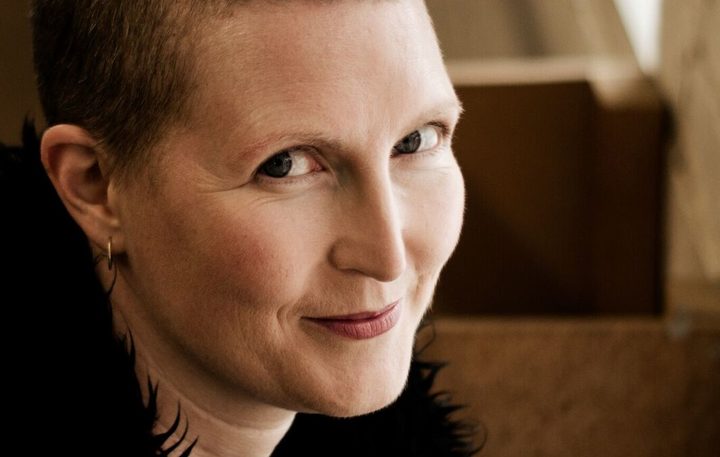
Stephanie de Montalk is the award-winning author of four collections of poems, including Animals Indoors, which won the 2001 Best First Book Award, the novel The Fountain of Tears, the biography Unquiet World: The Life of Count Geoffrey Potocki de Montalk, and How Does It Hurt?, a memoir and study of chronic pain. Described by Damien Wilkins as ‘groundbreaking and riveting and beautiful’, How Does It Hurt? was published to critical and medical acclaim, and received a Nigel Cox Award at the 2015 Auckland Writers’ Festival. It was published as Communicating Pain: Exploring Suffering through Language, Literature and Creative Writing by Routledge in 2018. Stephanie was the 2005 Victoria University Writer in Residence, and she lives in Wellington.
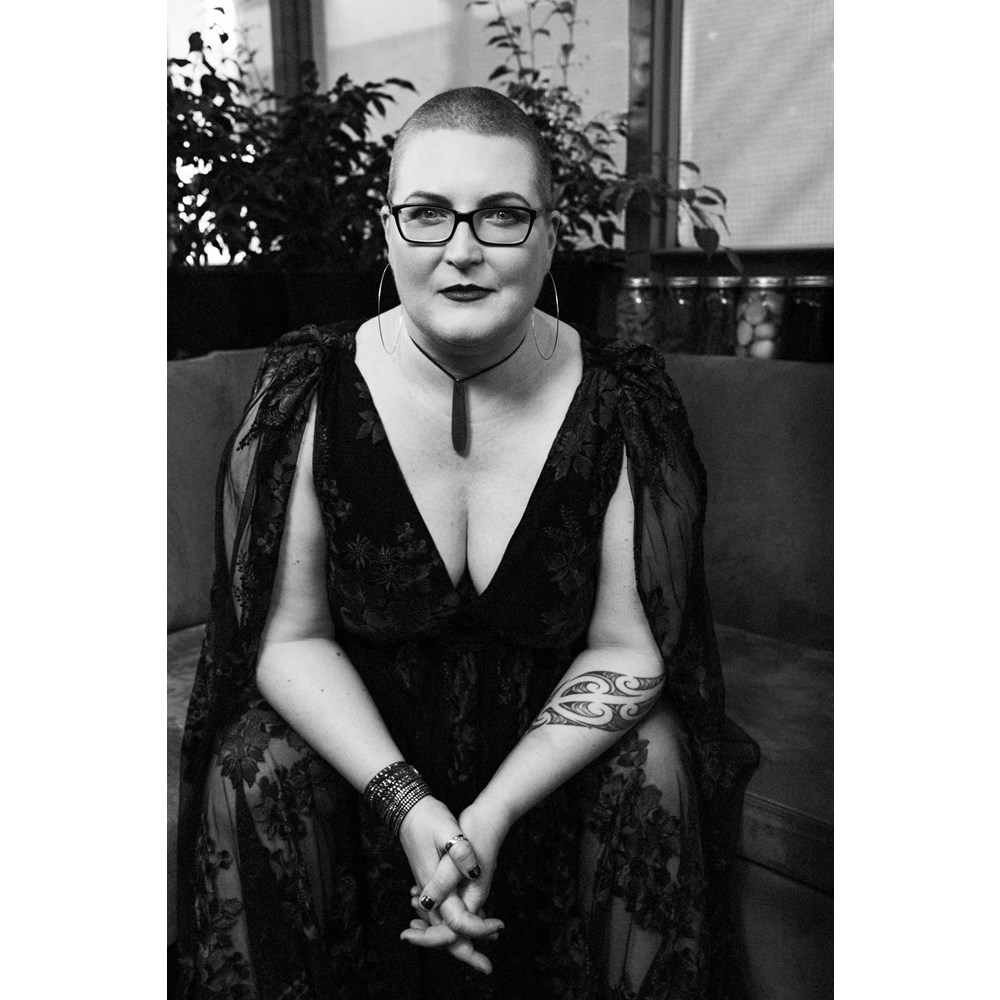
We, the poetry communities in Aotearoa, are heart-smacked, gut-punched, unbearably sad, at the news that Paula Harris is no longer with us. Poets and friends are sharing personal heartbreak and pain on social media. It is a time to remember a woman whose poetry touched us, whose ongoing struggles with depression touched us, who wrote and spoke publicly of her illness, whose wit and sense of humour touched us.
Paula won the 2018 Janet B. McCabe Poetry Prize and the 2017 Lilian Ida Smith Award. Her writing was published in various journals, including Hobart, Berfrois, New Ohio Review, SWWIM, Diode, Poetry NZ Yearbook, The Spinoff and Aotearotica. Her essays have been published in The Sun, Passages North, The Spinoff and Headlands: New Stories of Anxiety (Victoria University Press).
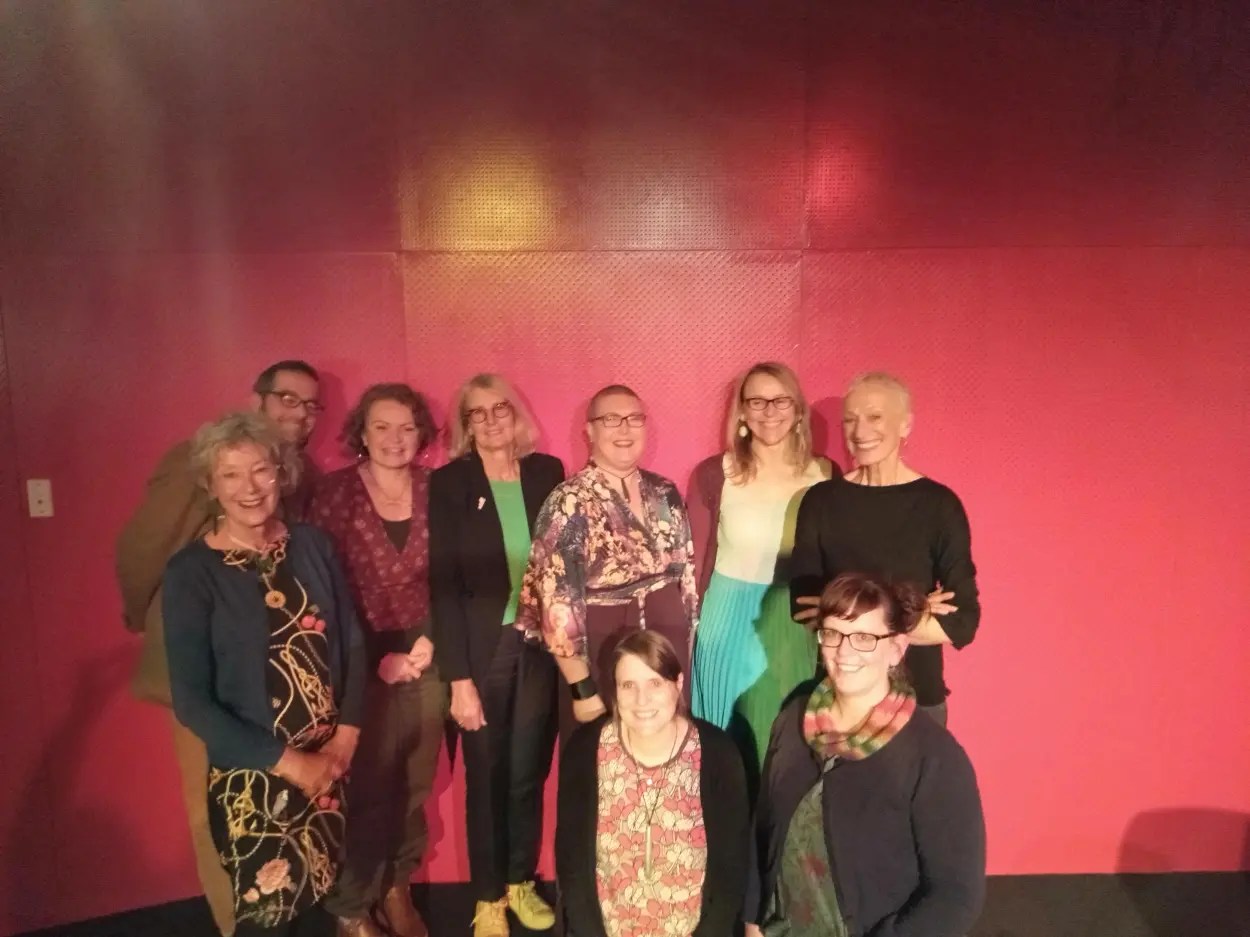
Poetry Shelf is offering some of Paula’s poetry as a tribute. I hold out her words as a way to remember. I am mindful of a need to support each other, to open a space for connection, and it feels like poems have the power to do this. In 2019 I hosted an event at Palmerston North Library, where a bunch of local poets came together to celebrate Wild Honey, and more importantly, the writing of women across decades, across communities. It reminded me that poetry is always a cause for celebration. Even when it is laying down challenges, speaking of tough things, getting complex and difficult, opening up self. It is sound and it is heart and it is interlaced. Paula Harris was part of this poetry embrace. I am remembering this. Today I am holding her poetry close. In grief and in aroha.
everything changing
I never meant to want you. But somewhere between the laughter and the toast the talking and the muffins somewhere in our Tuesday mornings together I started falling for you. Now I can’t go back and I’m not sure if I want to.
from woman, phenomenally
If you love me you’ll buy Bluff oysters and cook asparagus. Even though I don’t like either.
for Kirsten Holst, for feeding me many good things and for Alison and Peter, for their Bluff oysters and asparagus
When I am no longer who I was I can only hope that I will be loved by someone so much that every day during Bluff oyster season they will buy me a dozen Bluff oysters.
Even though they don’t like Bluff oysters they will buy them for me and every day I will exclaim “I can’t even remember the last time I had Bluff oysters!”; they will nod at the extreme length of time it has been.
When I am no longer who I was and when Bluff oyster season is over I can only hope that I will be loved by someone so much they will cook me freshly picked asparagus every day.
Even though they don’t like asparagus they will grow it for me and pick it for me and lightly steam it so that I can relish it served with hollandaise sauce (although some days more lazily served with butter and lemon).
I will eat it with my fingers and let the sauce (or butter) dribble down my chin; no one will mind or tell me to be less messy it will just be moments of edible joy.
In reality I don’t like Bluff oysters (or any oysters) and I can’t stand asparagus (the taste and texture are disturbing); I can only hope that maybe someone will love me enough to buy and cook me the things that I love even though they hate them, even though I won’t remember.
First published on Poetry Shelf
Our House
The roof drips rain beside my bed The shower curtain hangs torn from a ring The gate creaks unprotected from the wind
No drawers in the kitchen A gap in the toilet window A half-painted rainbow on my wardrobe
Our house is beautiful
First published in Spin 31 (1998)
Herakles phones the depression helpline at 1am, exhausted from crying and the inside of his head
it is easier to fold a fitted sheet than to get help from the depression helpline easier to fold a fitted sheet with a partner who doesn’t listen to instructions easier to fold a fitted sheet with one hand easier to fold a fitted sheet made of damp tissue easier to fold a fitted sheet while balancing one-legged on the end of a crocodile’s snout easier to arrange finance and buy a fitted sheet factory and deal with the folding en masse of fitted sheets than to get help from the depression helpline
they tell him to take up a hobby to have a cup of tea to get some sleep
he folds into himself, holding the corner of a sheet in one hand folds into himself and balances one-legged on the end of a crocodile’s snout
The wise woman sits in the shade With stuffing peeping out from her chair, Looking like a watercolour of the writer In her wide-brimmed straw hat Dark glasses And flower-laden dress, While a black kitten plays In her tossed aside straw bag. Watching her through an open window, With bees playing in the lavender bush And spiders weaving their homes, This is where she belongs At the bottom of the garden In full bloom.
today an editor told me that what I write isn’t poetry and so maybe I don’t know how to write a poem but I was thinking about you and wanted to write something; so here is your something
you are the bath filled with green marbles I slip into at night to wash myself
you are the letterbox overflowing with sleeping ladybirds I check compulsively for mail
you are the curtains of pink candyfloss I pull closed after the moon comes up
you are the couch made of turnips I lie on as I wait
you are the carpet made of ripe figs I dance over on summer mornings
none of this makes sense so it’s possibly a poem none of this makes sense so
you are the wheelbarrow full of silver bullets I feed to the garden to make it grow
First published in Leon Literary Review 2020
2019 Palmerston North Library and the writers: Johanna Aitchison, Paula Harris, Thom Conroy, Paula King, Helen Llehndorf, Marty Smith, Hannah A Pratt, Jo Thorpe, Janet Newman, Paula Green and Tina Makereti.
2019 Palmerston North Library: Paula Harris, Paula Green and Paula King
sharing the good stuff
my mother always told me i had to save my good stuff keep it for another day
so my prettiest colouring books went uncoloured my toys sat on their shelf
her best dresses stayed in plastic her engagement ring hidden in its box
what my mother never learned was that if you save your good stuff for too long one day there’ll be no one to share it with you
First published in Spin 32 (1998)
chamomile and lemon balm
in need of some healing i drive and drive until i reach a brick pathway lined with lavender gently waving and bobbing as i pass by. i sit on a bench resting my feet on the chamomile floor and i breathe. a honey coloured angel lays her head on my knee while i scratch behind her ears and i breathe. and when i have breathed enough i walk back the sea of lavender parting before me my angel loping behind me and i smile.
First published in Spin 33 (1999) Also published in Poems in The Waiting Room (2012)
The Twelve Lightbulbs of Janet Frame
I saw her in the supermarket driving a runaway trolley that dodged and charged imaginary opponents
I wonder if she was writing, paused in the frozen foods between the chicken legs and the harassed mothers
people want to know – what was she buying microwave lasagna, toilet paper, mouldy French cheese, canned spaghetti and sausages, sugary cereal, green tomatoes?
a dozen lightbulbs was all she had; maybe they were on sale super coupon special, maybe she only buys them once a year, maybe they all just blew at once like mine do
in 1945 Dr Lorand Julius Bela Gluzek of Cleveland, Ohio developed a dolorimeter which could measure pain in grams so maybe the weight I gained on antidepressants wasn’t from sadness and an increased appetite but my organs and glands – thyroid, pancreas, lungs, adrenal glands, ovaries, stomach, hypothalamus – each getting heavier from the consumption of black bile
the weight of the water inside the mouth of a blue whale can weigh more than the whale itself so if I dive into the ocean and convince a blue whale to swallow me I will leave my sadness on its tongue and be weightless
First published in Anomaly 2021
home
even though the sign says there’s still 27 kilometres to go on the horizon i can see a halo at the bottom of storm clouds
through the driver’s window the halo spreads into a line of orange light
closer now until the line becomes disjointed into orange street lights and white house lights and one of those is home
You can find a number of essays by Paula at The Spinoff
Paula’s friend Anna Sophia remembers her extraordinary talent, wit, bravery and heart at The Spinoff.
Read this poem: “when I was fucking a lot of men when I was 19 and 20 (and 18, and 21) I was fully aware that it was partly because I love sex and partly because–having grown up being told I am unlovable–I crave that feeling of being wanted, even for a few hours” at Passage North 2023
This is a story about your mother, Louise Wallace Te Herenga Waka University Press, 2023
Think of something you know about me. Something you know for sure. Step on it with both feet. Make sure it can hold your weight in water. Make sure it can hold you for a long time.
from ‘Vessel’
I adore poetry books that exude a love of poetry and what words can do. I also adore poetry books that get me thinking. Poetry can generate so much as you read, whether you enter roadmaps of experience, imagination, or combinations of both. For decades I have been fascinated by how the ink in our pens (or pencils or keyboards) is infused with the personal, the recalled, the scavenged, the political, writing trends, writing regulations, societal trends, societal regulations, hierarchies, biases, ideology that circulates immunity, open challenges, open hearts and roving minds.
Louise Wallace’s new collection, This is a story about your mother, gets me thinking. I am in awe of what her poems can do, the way we might delight in a poem for the sake of its poemness. I am also personally stitched into the weave of poetry that places motherhood and pregnancy, the anticipation and the actuality, centre stage. It is to be back in the thick and thrill and fatigue, the endless questions and precious epiphanies, the physicality of both becoming and being a mother.
Some critics continue to denigrate writing that favours a domestic focus, yet I continue to argue it is an enduring and rewarding subject for poetry with its multiple rhythms and rhymes, its myriad melodies and repetitions. It might be personal, political, physical, nurturing, mood or idea-generating, fortifying.
Louise’s collection begins with the poem ‘fact’, a sequence of declarations that are rich in possibilities. Already I am hooked. Read the phrase, “life is not a bed”, and hit the pause button, savour the sweet gap on the line. I want to put ofroses in the gap but I make the poem’s leap to “of white paper”. Then I spin and spiral on the “bed of white paper”, the reverberating rose. Ah. I keep reading the poem’s punctuated flow, leaping over the spaces on the line to the next fact, the next rose.
I am breaking up with difficult poetry using a comprehensive guide to my biggest childhood crushes then & now thanks people
life is not a bed of white paper don’t forget to stop and smell a white piece of paper by any other name
Begin with pregnancy, the mystery and miracle of birth and new babies, the how to put into words such experience. The larger section of the book is entitled ‘like a heart’, while the second slender section, ‘vessel’ contains a single poem, an epistolary poem, like a gift addressed to the baby, whether still in the womb or out in the world.
Questions permeate. How to be a mother? How to be mother lover writer woman? How to negotiate the bombardment of images and ideas that promote an ideal woman – the ideal body image, the ideal mother, partner, writer. Louise performs a resistance through her writing – there is no singular maternal rhythm or composition or thread or place to stand or sleep.
it’s hard to be completely yourself while being beaten around the ears with leafy greens. you can see freedom swinging further away as you try to relax daily and not lift heavy things, blitzing vegetables and exposing your mood, poking out your chin and the no-good nose, your hair constantly increasing in volume so that everything feels like it might do you harm.
from ‘cumbersome repetitions with friends’
I hold this glorious book out to you as an example of poetry as hinge. Poems offer continuity and flow but they also create invent juxtapose. The richness of the poetic hinge establishes connection, the pause, the gap. Louise uses numerous “hinges” that affect visual and aural effects as you read. A poem might be fractured and conversely connected by the use of an x, a blank space, a comma, a full stop, or slash /.
The opening poem ‘fact’ compiles a series of ands. Writing becomes a way of measuring and marking a life, the time, the day, what we must to do, what we might do. There are echoes and there are repetitions, but each arrival is nuanced. A word might be a musical note, a gesture, a thought, a feeling – it might be different keys, a chord, a swelling, a gathering, a recognition. There might be connection and there might be disruption.
Ah. The title of the collection offers us entry points. A way into the comfort of lists. A way into joy and pain. Ah yes. The way mothers might be invisible. The way self-doubt is a plague and the burnt chop is mother’s choice.
this is the sound of waves / of no preference / of low-fuss mothering / or working and staying reputable / the sound of being undercover / this is what it sounds like to be secretly terrified / and this is the sound of washing / drying flatly / in heat / the sound of a booster seat / being installed / this is sound of intent / of planning / and preparation / for something for which you can’t prepare / this is the sound of size / the sound of a guarantee / and of hope / this is the sound / found / in a library / this is the sound of a screen / in the dark / the sound of
from ‘talk you your baby’
When I reach the final poem, the long gift letter to the baby, it feels as though I am trespassing on something utterly intimate, so exquisitely private. But how this poem resonates; the way motherhood is both familiar and unfamiliar, with recognitions and misrecognitions. It is the most breathtaking sequence I have read from a mother’s point of view in ages.
There are many different scales of pain. Some are songs. Some linen
with white lace trim.
As you read, you enter a realm where poetry is “like a heart” and like “vessel”. Where poetry is a sublime rendition of what poems can be, where poetry pulsates, and poetry holds. Such is the glorious terrain of This is a story about your mother.
There are some things you cannot know. There are some places I cannot go.
from ‘Vessel’
Louise Wallace is the author of three previous collections of poems. She is the founder and editor of Starling, an online journal publishing the work of young writers from Aotearoa, and the editor of Ōrongohau | Best New Zealand Poems 2022. She completed an MA in Creative Writing at the International Institute of Modern Letters in 2008, winning the Biggs Prize for Poetry, and was the Robert Burns Fellow at the University of Otago, Dunedin in 2015. She grew up in Gisborne and now lives on the Otago Peninsula in Ōtepoti with her husband and their young son.
Te Herenga Waka University Press page Louise reads at Poetry Shelf Chris Tse launch speech for Louise Wallace and Jane Arthur at Good Books
Past Lives, Leah Dodd, Te Herenga Waka University Press, 2023
last night I locked eyes with a possum its gaze moon-dark and gleaming through the bedroom window
it trying to get in me trying to get out
from “soulmates”
I am writing this review with Pink Floyd’s Ummagumma on repeat. The last time I had the album on repeat was in the 1970s. Having an album on repeat is a habit I have never discarded and it is a habit I apply to poetry collections. I highly recommend it. Leah Dodd’s Past Lives is a collection to put on repeat, and yes, it is there in a poem, the impetus for me to play Pink Floyd: “one night seventeen / got high listened to Ummagumma on repeat / then fell in a pool and floated away” (from “masterclass”).
Reading Past Lives is exhilarating, the poetry moving between the supercharged and the intimate. I have made a music playlist, a first while reading a poetry book, because the music references are so enticing: Miles Davis, Leonard Cohen, Big Thief, Joni Mitchell, Schumann, Jim Morrison, Fleetwood Mac, Nick Shoulder covering Blondie’s “Heart of Glass”, Cristina Aguilera, Shocking Blue. Throw in a youth group singing gospel songs, piano lessons, and you are in the heart of a collection steeped in music, that lifts you out of the thickness of daily routine and sets you afloat on a pool of reading bliss. Kind of like a version of high.
As I read, I am pulled between the domestic (a new baby, staying in, doing the washing, “kitchen scissor haircuts”) and the beyond: a history of reading, viewing, listening, going out, falling in love. The physicality of writing is mouthwatering, whether food or baby, whether “stale curry” or “too-bright billboards”.
in poems, babies are like snacks – doughy loaves, apple-cheeked, sweet as pie, sausage-toed
victim to the metaphor, I call my peach-fuzzed baby yummy because he is so tasty I could just toss him in olive oil and roll him into a kebab
from “clucky”
Here I go setting controls for the heart of the sun and I am back in the weave of the book. I am laughing out loud and I am holding back the tears. I would love to hear Leah read “the things I would do for a Pizza Hut Classic Cheese right now” because it is fast paced, a rollercoaster pitch of pang and laugh: “I would strip down to my knickers & slither around / on a backyard Warehouse waterslide coated / with cheap detergent on the coldest day of the year”. OR: “I would forgive the person / who hurt me when I was thirteen”. Ah, what you would do for a Pizza Hut classic cheese pizza!
Turn the page and fall into the sweet humour of conversing with the snails who insist on eating letters left in the letterbox before “shitting [them] out in long ribbons” (from “snails”). The poet and the snails get to talk TV, to talk Twin Peaks and Special Agent Dale Cooper, and what creamed corn stands for, and to ask if Josie is ok.
Put the collection on replay and you can hear music simmering in the bones of its making. This from “tether”:
I am a moonscape of blood and kitchen grit ultraviolet bone & blotted sleep one day we will be separate creatures I will give kitchen scissor haircuts tether balloons on a string to a wrist wrap birthday presents in the witching hour and become a different animal altogether
Sometimes I feel like I’m holding on with fingertips, legs outstretched, hair streaming behind, as the poem and I move along a blistering stream-of-consciousness trail and it is so darn thrilling. Take “this night’s a write-off” for example, a poem that riffs on the notion of ideas, on writing on the passion lip of inspiration where ideas get away on you. All I know is I yearn to hear Leah read this poem out loud too!
my ideas are full bunches of marigolds they are like a flock of Polish-Jew ghosts all set to haunt the local supermarket, spitting OY VEY on single-use plastic and individually wrapped organic energy bars they are like if canned meat was a person they get all dressed up in Brokeback Mountain cosplay just to sit around the house smoking and thinking about Linda Cardellini they are strong teas and dancing to Miles Davis in the kitchen
Fresh! So very fresh! That is what Past Lives is. Every poem and every line refreshes the page of what poetry can do – of how we move between what was and what is and what might be. It is bold and eclectic and full of verve. It is a single moment on the first page that sticks with you while it is your turn to hang the washing out or put an album on replay, say Lucinda Williams or Anoushka Shankar or Bach. Because there in the first poem is the way a particular moment can flip you up and over, and become poetry, and be physical and confessional and full of heart-yearn and self-awareness. The speaker in the opening poem, “soulmates”, is eyeballing a possum at the window and it as though she’s eyeballing herself. The poem is unexpected, visceral, with the unsaid as potent as the said.
Ah, gloriously happy poetry head zone! Set your sights on this book and let go. Let yourself go into the joy of reading poetry.
Leah Dodd lives in Pōneke. Her poetry has appeared in Starling, Stasis, Mayhem, Sweet Mammalian and The Spinoff. In 2021 she won the Biggs Family Poetry Prize from the International Institute of Modern Letters at Te Herenga Waka—Victoria University of Wellington.
for the Heberley Family Reunion, Pipitea marae, Easter 1990
1
I remember the pohutukawa’s summer crimson and the smell of two stroke fuel and the sandflies above the Waikawa mudflats whose bites as a kid I found cruel.
At night and with gunny-sack muffled oars when the sandflies were asleep with a hissing Tilley lamp we’d go fishing above the seagrass deep
—a-netting for the guarfish there where the nodding seahorses graze and the startled flounders all take fright stirring the muddy haze.
And who cared about the hungry sandflies when a-codding we would go my blue-eyed old man Chick Wedde and me where the Whekenui tides do flow.
It’s swift they run by Arapaoa’s flanks, and they run strong and deep, and the cod-lines that cut the kauri gunwale reach down to a whaler’s sleep.
When the tide was right and the sea was clear you could see the lines go down and each line had a bend in it that told how time turns round.
The line of time bends round my friends it bends the warp we’re in and where the daylight meets the deep a whaler’s yarns begin.
I feel a weight upon my line no hapuku is here but a weight of history swimming up into the summer air.
Oil about the outboard motor bedazzles the water’s skin and through the surge of the inward tide James Heberley’s story does begin.
2
In 1830 with a bad Southerly abaft soon after April Fool’s Day on big John Guard’s Waterloo schooner through Kura-te-au I made my way.
And I was just a sad young bloke with a sad history at my back when I ran in on the tide with mad John Guard to find my life’s deep lack.
Seaspray blew over the seaward bluffs the black rocks ate the foam my father and my mother were both dead and I was looking for home.
But what could I see on those saltburned slopes but the ghosts of my career: my father a German prisoner from Wittenburg my grand-dad a privateer
my mother a Dorset woman from Weymouth, I her first-born child, and my first master was called Samuel Chilton whose hard mouth never smiled.
He gave me such a rope-end thrashing that I left him a second time, I joined the Montagu brig for Newfoundland, though desertion was reckoned a crime —
and me just a kid with my hands made thick from the North Sea’s icy net, eyes full of freezing fog off the haddock banks and the North Sea’s bitter sunset.
And master Chilton that said when your mother dies you can’t see her coffin sink you can only blink at the salt mist about the far land’s brink.
And in the fo’c’sle’s seasick haven where a lamp lit the bulkhead’s leak you’d share your yarn with the foremast crew your haven you would seek.
Where you came from the rich ate kippers or if they chose, devilled eggs. They didn’t blow on their freezing paws they favoured their gouty legs.
And if you pinched an unripe greengage from their tree they’d see you in the gallows or if you were dead lucky wading ashore through Botany Bay shallows.
But I was even luckier, as they say, those who tell my tale: they tell how my tale was spliced and bent about the right whale’s tail.
And how poor young James Heberley fresh from South Ocean’s stench and the foretop’s winching burden of blubber his great good fortune did wrench.
In autumn I came ashore at Te Awaiti on Arapaoa Island. ‘Tangata Whata’ the Maori called me— now ‘Worser’ Heberley I stand.
‘Ai! Tangata whata, haeremai, haeremai mou te kai!’ Food they gave me, and a name, in the paataka up high.
My name and my life I owe that place which soon I made my home. From that time, when Worser Heberley went forth, I didn’t go alone.
I raised a considerable family there, with Ngarewa I made my pact: from him I got my summer place at Anaho, my home from the bush I hacked.
I summered there in the mild weather and in autumn I went a-whaling from the boneyard beach we called Tarwhite where Colonel Wakefield’s Tory came sailing.
And I guessed from the moment I saw their rig that we had best take care: not the Maori, nor Worser Heberley’s mob stood to gain from this affair.
With fat Dick Barrett I went as pilot on the Tory to Taranaki. From Pukerangiora and Te Motu descended Te Atiawa’s history —
a history already made bitter once in the bloody musket wars, that might be made bitter yet again for Colonel Wakefield’s cause.
Worser Heberley was never a fool else I’d not have lived that long: I could see the Colonel meant to do business, I could hear the gist of his song.
He was singing about the clever cuckoo that lays her egg elsewhere and fosters there a monstrous chick too big for the nest to bear
so the other chicks must be all cast out for the greedy cuckoo’s sake. The Colonel sang this song I heard as he watched the Tory ‘s wake
tack up the South Taranaki Bight with Kapiti falling astern, and I, James Heberley, stayed close to see what I could learn.
And what I learned has since been written in many a history book: that you’ll find little enough of our record there however hard you look.
3
And now Worser Heberley’s story ceases, I hear his voice no more though my line still bends by the notched gunwale as it had done before
when I was just a kid gone fishing in my old man’s clinker boat and hadn’t learned that it’s history’s tide that keeps our craft afloat.
And now I see as I look about in Pipitea marae at the multitude here assembled that your line didn’t die —
and though old Worser Heberley was right to fear Colonel Wakefield’s song, he didn’t have to worry about the family which multiplies and grows strong.
I thank you for your kind attention the while my yarn has run. I wish you all prosperity and peace. Now my poem is done.
Ian Wedde from The Drummer (Auckland University Press, 1993) also appears in Ian Wedde: Selected Poems (Auckland University Press, 2017)
In 1986 my novel Symmes Hole was launched at Unity Books in Wellington. An historical character I appropriated for the book is James ‘Worser Heberley’, a whaler who came ashore in Tōtaranui Queen Charlotte Sound in 1829. He married into local iwi and at the book launch tuhanga of James Heberley introduced themselves and suggested it would be appropriate, given my borrowing of their ancestor, if I could donate some copies of the book and also write and share something for their upcoming hui at Pipitea marae in Wellington. This is that poem, a favourite of mine for diverse reasons.
Ian Wedde
Ian Wedde’s latest poetry book was The Little Ache — A German notebook. Victoria University of Wellington Press, 2021. The poems were written while he was in Berlin researching his novel The Reed Warbler.
It’s Valentine’s Day at this far edge of the Pacific Clouds hang heavy, obscuring the shape of the land
Cook never made it here But, according to Wikipedia, he made all of this possible:
I now live in the most livable city in the world Named after a man who, they say, died in obscurity
One Of Those White Men whose names are all most of us know about places they barely touched
Vancouver Vancouver Vancouver
Whose names have become lines we are forced to repeat to repent of our sins
Vancouver who was born in Norfolk (Pauline soaks aute on an Armidale afternoon – her work and her veins tying her family via Norfolk Island via Pitkern to Tahiti) Vancouver who forty years later died in Petersham (my Sydneysider Ngāpuhi friend Carleen lived near Petersham on Gadigal country) which is in Surrey there’s a Surrey here too – home of the fourth largest Indo-Fijian community in the world)
Vancouver mapped this Eastern edge of Oceania, Becoming one of those white men who will never be obscure or forgotten
From here, when I look back towards home, Hawai’i is in the middle distance –
Those complex supple islands where I repaired my waka the other time I fled from home
Those staunch expansive islands where love put Cook where he belonged
It’s already the fifteenth of February in Aotearoa And the annual jokes about Cookery and love for Hawaiians are day-old tweets
While here, today, it’s still the fourteenth – The day to march downtown for lives and deaths of Indigenous women
But we’ve moved too recently with a daughter too young to be kept safe in a pandemic (As if this colony has ever been safe for Indigenous girls)
So I sit, scrolling, in a hired car and read that New Zealand’s sixth highest mountain is also called Vancouver.
I am trying to guess which maunga his name has smothered and for how long,
I am undone, again –
By how much I have yet to learn about the place I am from
And how much I have yet to learn about this lovely drizzly place
With all these names that hang heavy, obscuring the shape of the land.
Alice Te Punga Somerville
Alice Te Punga Somerville (Te Āti Awa, Taranaki) is a scholar, poet and irredentist. She researches and teaches Māori, Pacific and Indigenous texts in order to centre Indigenous expansiveness and de-centre colonialism. Alice is a professor in the Department of English Language and Literatures and the Institute for Critical Indigenous Studies at the University of British Columbia. She studied at the University of Auckland, earned a PhD at Cornell University, is a Fulbright scholar and Marsden recipient and has held academic appointments in New Zealand, Canada, Hawai‘i and Australia. Her first book Once Were Pacific: Māori Connections to Oceania (University of Minnesota Press, 2012) won Best First Book from the Native American & Indigenous Studies Association. A recent book is Two Hundred and Fifty Ways to Start an Essay about Captain Cook (BWB, 2020). Alice’s debut poetry collection, Always Italicise: How to Write While Colonised (Auckland University Press), is shortlisted for the 2023 Ockham NZ Book Awards.
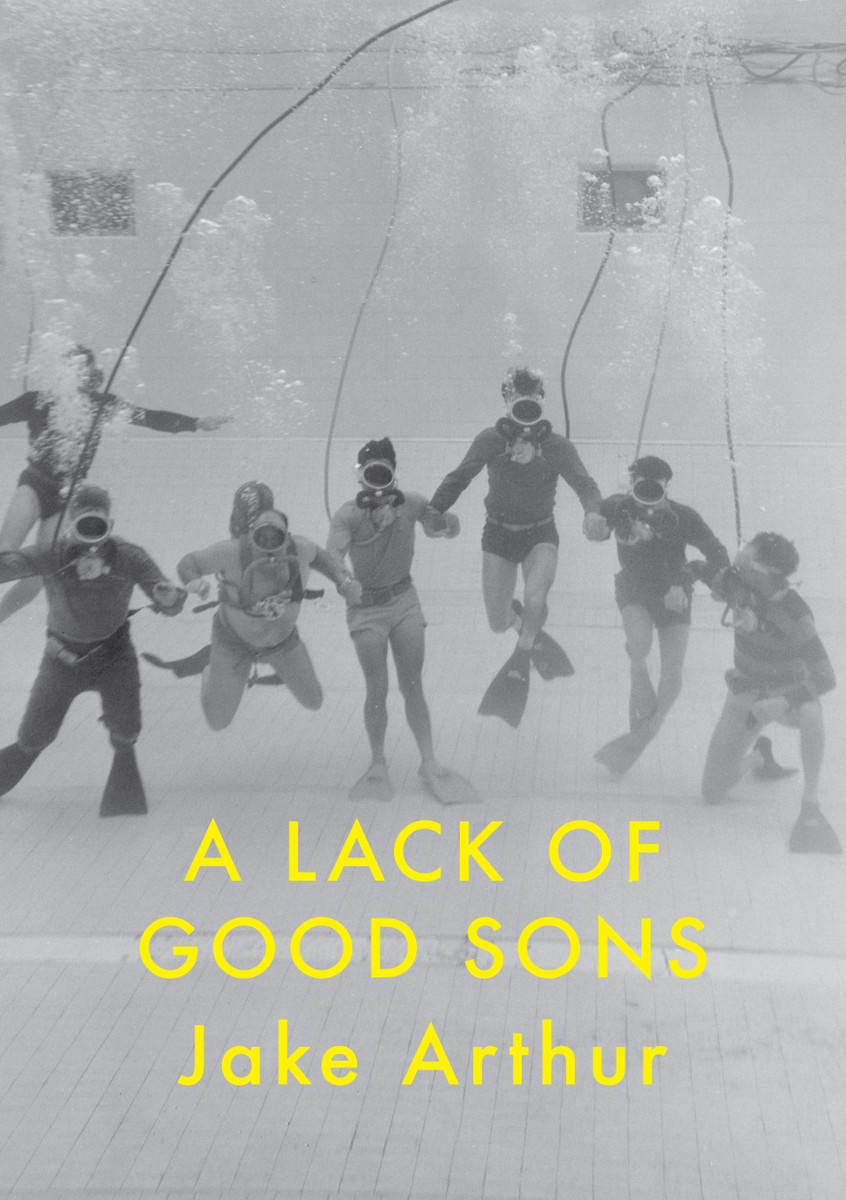
A Lack of Good Sons, Jake Arthur, Te Herenga Waka University Press, 2023
I cavorted through the Gobi Desert I fell in love with a camel in Saudi I poured pints in Kraków.
If anecdotes are a life, I have lived. Otherwise, I’ve urgently wasted my time.
from “Peregrination”
The opening poem of Jake Arthur’s debut poetry collection, A Lack of Good Sons, is wow! A young boy witnesses a bizarre and startling sight through his bedroom window: the farmer who lives next door, stands naked in his gumboots, back to the window. Even more surprising is the mother who says the boy did that when he was younger. The poem is a perfect threshold into a collection that startles and twists, that is honey fluent, detail sharp, physically grounded and metaphysically sailing.
For me this is a travel collection – poetry as a means of travel through time, space, location, voice, perhaps memory. I could say “prismatic” which would make Nick Ascroft squirm with his abhorrence of the word “luminous” in reviews. But this is the collection’s effect on me. It is poetry that glints and hues variously, from dark to edge to light to edge to dark to softness to searing colour and more light. There is a fluidity of voice and representation, epitomised in an “I” that is on the move, third person pronouns that skate and shuffle, a symposium of characters that Luigi Pirandello might fall in love with, or Italo Calvino.
This is the kind of book you need to immerse yourself in without being dampened down by the expectations and limits a review might offer. I offer you a mini tasting platter of poem extracts. Some stanzas are so sticky you keep hold of them for ages. I love the weave and startle turns. In the multilayered “Confessional”, the poem navigates both an external world and internal consumption. The last verse is sublime:
On a pew I rest my head and look up, the colonnade a forest to a stone ceiling; in me, too, an awful lot of rock.
The speaking voice might be man woman son or daughter, but at other times it is object. I particularly loved the shifting perspective (a trademark of the book as a whole) of the tree that becomes boat mast in “Bare choirs”. Again I loved the final stanza:
The flap and licking thrump of the sail is a beat, the slapping waves an uneven melody, but it is more dirge than music and not a tune to sing too.
I ask myself whether I will locate a connective tissue across the collection as a whole, a link beyond recurring motifs and devices. I wondered, for example, if there is “sameness” embedded in all the difference, then I read this in “1588”:
Everything was animated. It spun on a dime. It was umami.
Now I know better. There is a sameness in everything.
Physicality is a lure. It is there in the earth and soil that appear and reappear. In a deft subject sidestep in the poem “Encounter”, a gardener becomes springboard to a sci-fi anecdote, and is abducted by aliens.
(…) I’m used to getting soil out of my clothes, being green-fingered, but first I looked up in the hope of spotting their craft and I did see a little black shape but probably it was just a bird oh well, I thought, from a distance everything’s unidentified.
Reading this sublime book, I am reminded of the wit and humour, the economy and richness of a James Brown collection – and heck, there is James Brown, endorsing Jake’s book on the back cover. Jake takes us on a multi-dimensional, electrifying tour that holds human to the light and then keeps twisting and turning so can we absorb human from different vantage points. So satisfying as reader. I have barely scratched the surface of Jake’s fabulously haunting poetry. Read it!
Jake Arthur’s poetry has appeared in journals including Sport, Mimicry, Food Court, Turbine, Return Flight and Sweet Mammalian. He has a PhD in Renaissance literature and translation from Oxford University.
Letter to ‘Oumuamua, James Norcliffe, Otago University Press, 2023
In these uncertain times I gravitate towards quiet poetry. It may sound corny but it is like sitting on the edge of a mountain embracing silence as a form of retreat, and then savouring the way the world is alive with sound. I find myself retreating into poetry collections as a form of balm, relishing the solitude, the complications, the edges.
James Norcliffe, recently awarded the 2023 Margaret Mahy Medal, writes with a pen fuelled by the physical world, and a sense of interiority that allows both confession and piquant ideas. His writing is witty, thoughtful, fluid and rich in movement. The opening poem, ‘Letter to ‘Oumuamua’ nails it. Dedicated to “the first known interstellar object to pass through the solar system”, the letter is as much about where it is written from, as where it is written towards. The rural scene is balm – with its hint of spring and new leaves. Yet the layers prickle as I hold onto the embedded notion that the scene is both beloved and under threat.
Poetry can be the heightened awareness of a moment, of a particular place or experience. James offers many such poems and it is impossible to hold them at arm’s length. This is a form of poetry as retreat. Take ‘The Coal Range’ for example. The poem ventures back in time to pay tribute to an aunt and a location. James slowly builds the scene with acute detail, and I am breathing in the smells, tasting the baking, and back in the embrace of my grandmothers.
The burning coal and smoke smell of Auld Reekie, of far-away home. Pinned on the Pinex walls are calendars: Scottie dogs, pipers and Greyfriars Bobby.
Sentiment sweetens distance, as drop scones, ANZAC biscuits and peanut brownies sweeten the sour pervading presence of damp coal, smoke and tea-tree.
I love the way the collection offers drift and movement, resistance to fixture. Nothing is as it seems. Everything is as it seems. “Knowing What We Are” is a gloriously haunting rendition of movement, of oscillation. The birds gather on the “shining mudflats”. I’ll share a couple of stanzas with you – then you can track down the book and read the whole poem.
Any day soon, the birds will fly far beyond the red-rimmed horizon.
Much later they will return. Neither here nor there is home, yet both are.
Knowing what you are, I take your hand. Neither here nor there, I try to count the days.
‘Insomnia’ navigates the knottiness of a sleepless night; a restless mind grappling with big questions and small diversions as it fixes upon turning points in life. The what-ifs and T intersections. I muse upon the way the collection offers myriad movements from loop to overlap, from twist to slide, from spiral to scatter.
That path is no more real now than the trees on the bed. The pigeon recovered and flew away. The child was found and lost and found again. The woman died. The man makes you laugh and makes you weep and makes you laugh.
He makes you weep and makes you laugh and makes your weep, but nothing can make you sleep.
Ah, so many poems I want to share with you in this slender tasting platter. There is a sequence dedicated to Vivaldi’s Four Seasons. There is a return to childhood by way of Granity Museum. There is love and tenderness such as in the exquisite “Sauerkraut”:
(…) One pace at a time: take care of the steps so that the miles take care of themselves; conserving ourselves, preserving, avoiding pretty prickles, but still pressing the white cabbage that will be sauerkraut into a bright green crock.
There are multiple pathways through Letter to ‘Oumaumau. Numerous nooks and crannies for extended sojourn. Reading this was both solace and restoration. I picked up my pen and wrote a poem. I opened the book and returned to poetry that haunts and sticks. It’s James’s best book yet. Glorious.
James Norcliffe is a poet, children’s writer and editor. He has published 11 collections of poetry and 14 novels for young people. His first adult novel, The Frog Prince (RHNZ Vintage), was published in 2022 and his most recent poetry collection, Deadpan (Otago University Press), was published in 2019. He has co-edited major collections of poetry and short fiction, including Essential New Zealand Poems: Facing the Empty Page (RHNZ Vintage, 2014), Leaving the Red Zone (Clerestory Press, 2016), Bonsai: Best small stories from Aotearoa New Zealand (Canterbury University Press, 2018) and Ko Aotearo Tatou: We Are New Zealand (Otago University Press, 2020). He has had a long association with the Canterbury Poets’ Collective, takahē, the ReDraft annual anthologies of writing by young New Zealanders and, more recently, Flash Frontier.
if it is a fire then i know it is a fire if there is warmth coming from that fire then it is warmth in my mouth if my mouth is really there and i know it is because it is open it is open with fire streaming through my teeth with heat lining my gums if my tongue is moving in my mouth then sound is coming out if sound is coming out and surely i know this because it is my mouth and my sound it is a fire and i know it is a fire because of how it burns
essa may ranapiri (Ngaati Raukawa, Te Arawa, Ngaati Pukeko, Clan Gunn) is a poet who lives on Ngaati Wairere whenua on the island of Te Ika a Maaui. Author of ransack (VUP, 2019) and ECHIDNA (THWUP, 2022). They have a great love for language, LAND BACK and hot chips. They will write until they’re dead.




 NZ Poetry Shelf