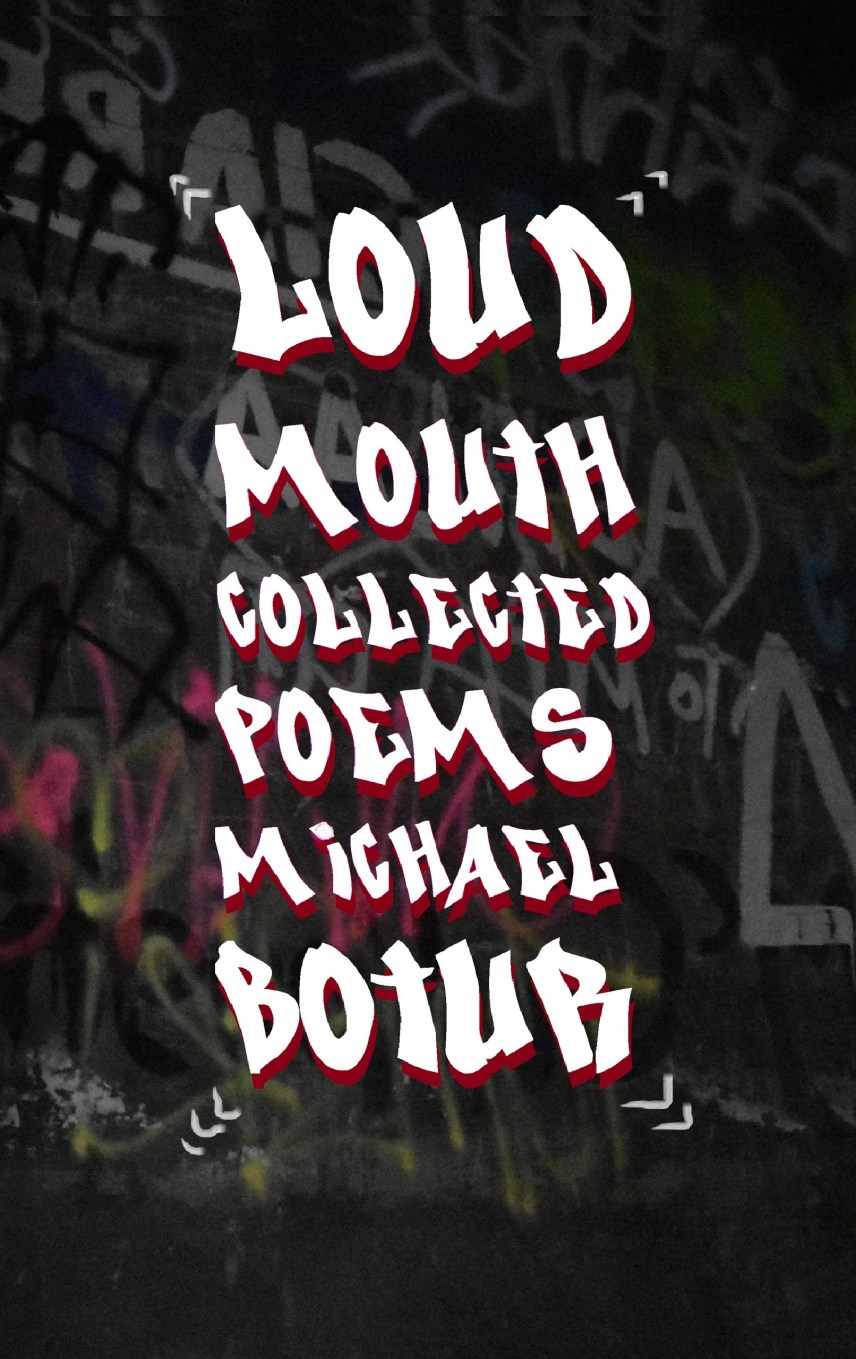
Michael is on tour in Kerikeri, Whangarei, Auckland, Christchurch and a few locations in between.
Listen to Michael here

Michael is on tour in Kerikeri, Whangarei, Auckland, Christchurch and a few locations in between.
Listen to Michael here
Read full article here
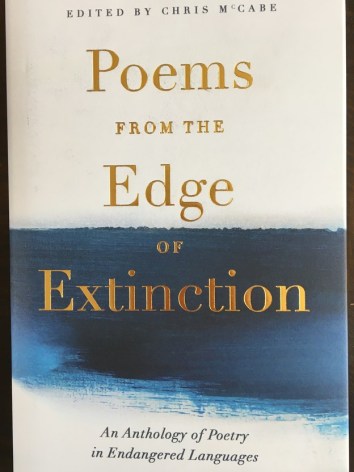
The anthology Poems from the Edge of Extinction (Chambers, UK, 2019) edited by well-known English poet, Chris McCabe, was launched at Poetry International, The Southbank Centre, London in mid-October, 2019. He was the MC on this occasion, as well as for several other events during the festival. It is an important collection of poetry written in indigenous languages — including my own, te reo Māori — which are being threatened by dominant Hydra-like languages — like English and to a lesser extent others, such as Mandarin.
My perspective on why languages are under threat:
I have written extensively previously as regards the several agencies pushing English language Hydra-like dominion over indigenous languages across the globe, for primarily cultural-power and pecuniary reasons. Agencies such as the British Council, which continue to press for a worldwide spread of the language into traditionally non-English as a first language communities — so as to seek financial and cultural benefits for Britain. An approach as exemplified in their own words from their December 2019 Request for Proposal —
‘… the organisation is seeking to investigate not merely the direct benefits of the spread of English (in terms of the direct financial benefit to the UK of the provision of English services and the improved skills and life chances of those learning it, both of which are relatively well known and have been widely explored in the past), but in particular the indirect benefits — in terms of greater knowledge of English driving the UK’s influence and attractiveness for trade, and improving the access of those learning English to opportunities, information and culture.’
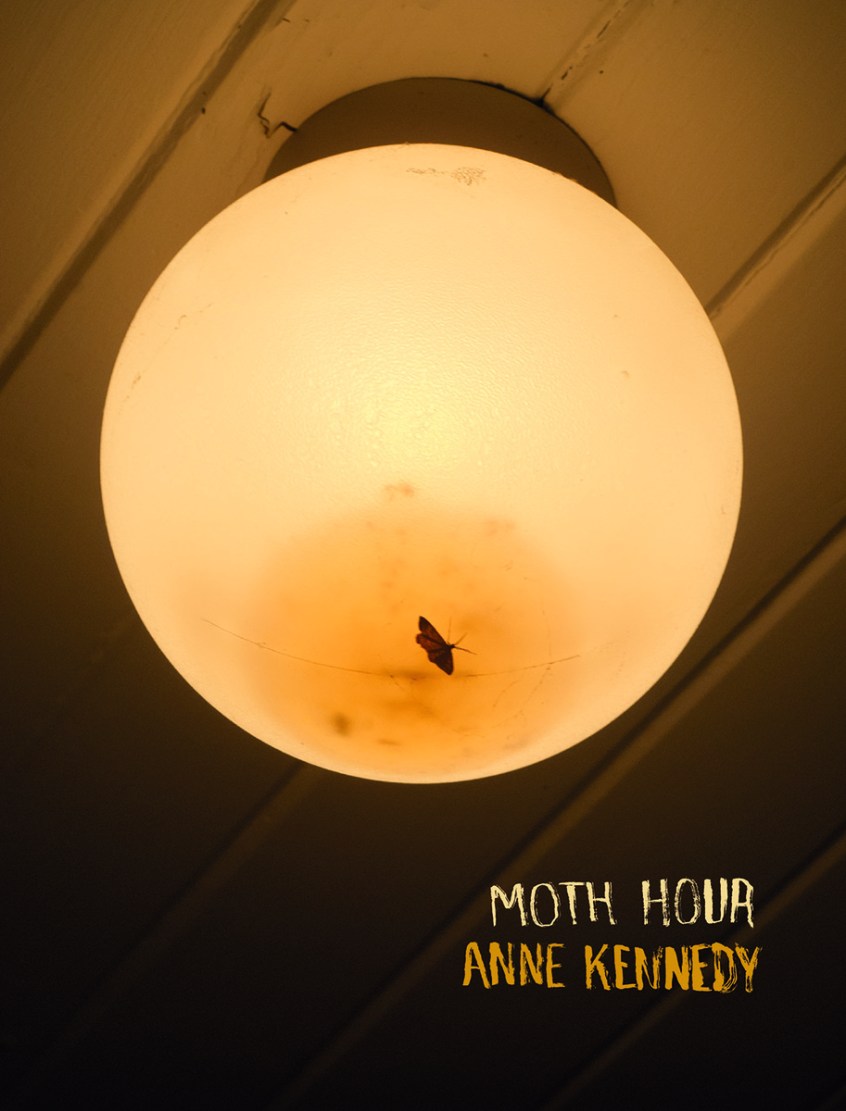
Anne Kennedy, Moth Hour, Auckland University Press, 2019
1.
The thing in the jar
always dies!
The rice cooker steams
so the sun goes down
Deep in the house
sepia gathers
The pencil has eaten
the fragile book
from ‘Thirty-Three Transformations on a Theme of Philip’
I first read Anne Kennedy’s new collection Moth Hour as a piece of music that traces the contours of grief. Words form little melodies, solo instruments sound out, there is echo, overlap, loop and patterning. Above all there is a syncopated beat that leaves room for breath, an intake of pain, an out-sigh of grief, an intake of observation, an out-breath of recognition. There is the fragile word-dance to the light.
Moth Hour responds to a family tragedy; in 1973, at the age of twenty-two, Anne’s brother, Philip, accidentally fell to his death. Anne, her seven siblings (she was the youngest and aged fourteen) and parents now lived with unbearable grief and loss, separately, diversely, as a family.
The book is in three parts: the long sequence ‘Thirty-Three Transformations on a Theme of Philip’, a coda poem ‘The Thé’ and an essay (‘Pattern/Chaos: Afterword’).
Over time Anne had read Philip’s book collection (think a 1970s gathering of books ) along with his poetry. She begins Moth Hour with one of his poems, an affecting piece that forms both the bony skeleton of her book and a fragile yet insistent pattern of echos. A voice calling out over the crevice, a voice that keeps returning. In Philip’s poem a speaker imagines being caught by a child and placed in a jar on a windowsill along with edible leaves, The Book of Tea, paper and a pen. The power of imagination is evoked.
These elements keep returning and if there is syncopation, a form of stutter, a difficulty of transmission, of speaking and retrieving, there is also fluency. The way both music and poetry can pull you into an utterly absorbing connective movement.
The second time I read Moth Hour I listened to Ludwig van Beethoven’s Thirty-Three Variations on a Waltz by Anton Diabelli because Anne had listened to this as she wrote the book. She had first listened to it over and over after Philip’s death.
Catch me little child and put me in a jar.
Ajar is small and a view of everything.
Hopefully we will always want and want for nothing.
Shall I seize you? Yes, I mean no. Please seizure.
We will live in a jar.
I will live in a jar. And the jar is a house.
Place inside a place inside.
That is how we will look out. Look out.
I am being very straight with you.
Look no hands.
In the language.
from ’19’ Thirty-Three Transformations on a theme of Philip’
The poetic fluency of Moth Hour carries so much in its momentum. There are detailed locations: a Wellington family home, the contemporary Auckland of the poet. Signs of the times (the 1970s). Surreal intrusions. Politics (again think the 1970s). There are contrasts: new / dead / breath; some / any. There are the rebounding questions. Ideas, feelings, words waver as though nothing can be fixed and certain. Such movement evokes a sense of linguistic play but it also performs the difficulty of the subject matter. Death is impossible to pin down. Grief equally so.
Such a symphonic effect means the reader participates in dis-equilibrium – the unease of unknowing along with the whoosh of connection.
If there are no air holes in the jar we cannot breathe but this book is all about breath. Breath is life sustaining and freedom. And yet this breath, this sustained breath of writing and recall, comes in gasps and puffs.
The second poem, ‘The thé’, reflects the concerns of the first – the reverberating motifs appear in a present tense of grief and observation – but now the short lines float apart on the page. A pattern of drift; the white space fractured like hicccupy breaths. Yet each line (melody) offers a moment of certainty. I am back to the music pooling inside me.
The poem burns off an hour.
We walk along the street many times.
The street is practice for death.
The chairs are aching in and out.
He staggers to his feet.
The the is ready to go through.
Ritual finally occupies the body.
Thoughts burst the shelter of the room.
The people swarm into the streets.
from ‘The Thé’
Like a mesmerising, lung-like piece of music, Moth Hour is a book of return-listening. Every time you place the poetry on the turntable of your reading you will hear something different. It blisters your skin. It touches you. But above all Moth Hour fills you with the variation and joy of what a lithe poet can do.
Anne Kennedy is a writer of fiction, film scripts and poetry. Her debut poetry collection Sing-song was named Poetry Book of the Year at the 2004 Montana New Zealand Book Awards. The Time of the Giants was shortlisted for the same award in 2006, and The Darling North won the 2013 NZ Post Book Award for Poetry. Her novles include The Last Days of the National Costume, shortlisted for the NZ Post Book Award for Fiction in 2014, and The ice Shelf was longlisted in the 2019 Ockham NZ Book Awards. She lives in Auckland.
Auckland University Press author page

Six-Pack Sound #8 is live at nzepc
16 December 2019
nzepc presents Six-Pack Sound #8. Poets Jacqueline Carter, Tim Heath, Joshua Hetherington, Cilla McQueen, Richard Pamatatau and Melanie Rands contribute dazzling audio recordings of recent work and comment on their Six Pack selections. They join a gallery of recorded performances by poets working in Aotearoa New Zealand and the Pacific region. Click, listen and browse Six-Pack Sound’s growing sampler of remarkable poetic voices.
the ocean
the ocean faces us
he stands
with his back to us
he’s not interested
he’s interested
only in his own
expansion
he watches his belly
begin to swell
he wonders
what will come of it
he cradles the feeling
and controls it
he’s not interested in us
perhaps he is interested
in our children
we step back
stumbling
we feel his rash
blooming
we track his fish
fleeing
we test
his acid reflux
we ask
is this sickness
or birth
it’s impossible to know
how he will handle this
i have no right
to call him by his name
but i can’t pretend
he doesn’t exist
i’m scared of him
i’m scared for him
i can’t conceive
of the harm we plan
and still we must think
about our children
we have to show them
how to greet him
even if it looks
like nursery rhyme
even if we don’t know
how to pray
even if we don’t know
how to change
Michaela Keeble
Michaela Keeble is an Australian writer living in Aotearoa with her partner and kids. For a living she writes about climate change but her poems (still evidence-based) are published fairly widely, including in Pantograph Punch, Westerly, Plumwood Mountain, Southerly, Not Very Quiet, Cicerone and Mimicry. She’s currently taking part in a climate science+art collaboration facilitated by TrackZero and spends a lot of time making books with a coven of women poets who live mainly in Porirua.
You might like to check this out!
Some of you may be aware that The Ministry of Business Innovation and Employment has released a review of the copyright act.
You can have a look here
I received the email below from Donovan Bixley – you might like to consider his concerns (which a number of other authors are endorsing):
1. Artists automatically own 100% of their copyright, so any review of changes to the act implies a reduction – in fact this has been being pushed by certain groups for years, unfortunately including The Green Party whom I’ve voted for for years!
2. The review consistently makes comments about how the majority of artists don’t earn a full living from copyright and instead get ‘non-monetary’ rewards – and therefore, earning from copyright is not a major concern for artists.
3. The review insulting claims that copyright creates an artistic culture of bland ‘popular’ ‘winners’ — therefore change is needed to create a superior arts community?!?? what the… by taking away our intellectual property rights?
4. It uses human rights access to arts and culture as an excuse to reduce copyright, when our work is already freely available in libraries.
… and heaps of other annoying statements that obviously don’t understand at all how the creative industries operate.
I’ve been informed that this review has been written by a 27 year old policy analyst in Wellington with support from Internet New Zealand. Through Copyright Licensing NZ I’ve been aware for at least 4 years, there has been strong government lobbying from Internet NZ and NZ Universities to reduce copyright protections. This seems basically a euphemism to provide endless free content on Google for some imagined public cultural benefit – and the Universities have been pushing an economic benefit of around $18 million to NZ as a whole if no one pays any copyright. Nice for them!
There’s no time to muck about – this is happening now, because MBIE has just short circuited a discussion process which has underway for years, and they’ve just released this Copyright Review paper.
So … I’m writing to all the MPs loudly voicing my concerns – it’s free and you can send 121 letters in one envelope and have the Beehive distribute them. You probably already knew all that!
Address your envelope:
All members of Parliament
Care of Distribution Services
Freepost Parliament
Private Bag 18 888
Parliament Buildings
Wellington 6160
But even if you just send a short note or email urging MPs not to reduce artists’ copyright.
The End
I look at the clock and expect to see something fantastic like a
man in a hat yelling “Great job!”
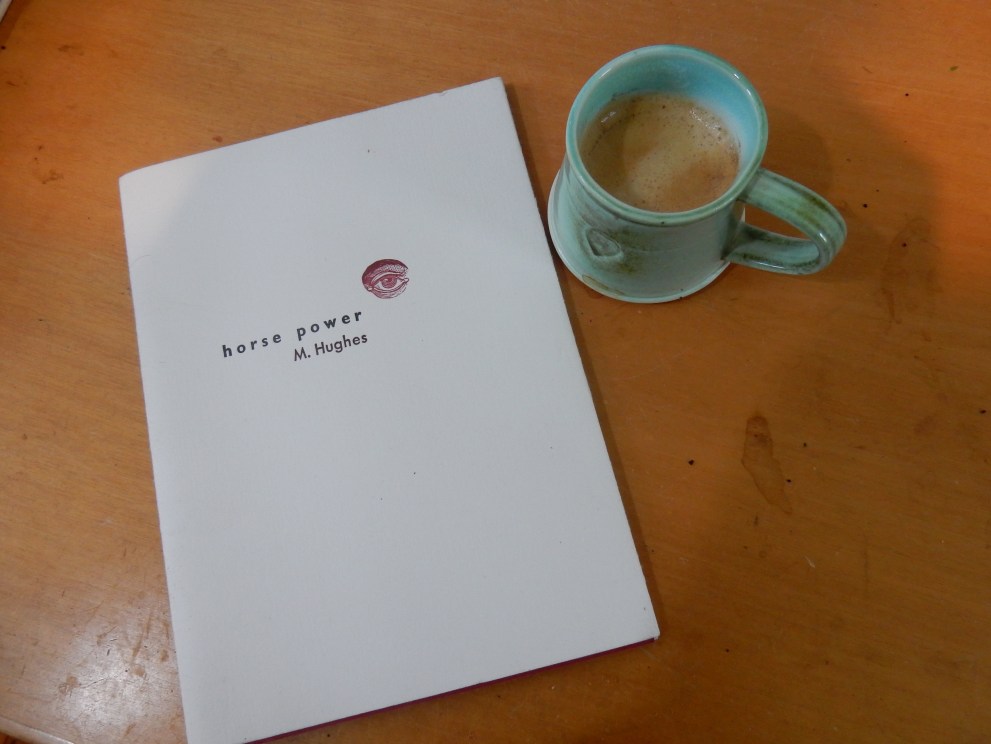
A slender chapbook arrived in my mail box – the cover is printed by Brendan O’Brien at the Fernbank Studio, Wellington. An object of beauty. Ah I treasure these arrivals.
The poetry is by M. Hughes and was launched at Book Hound in Wellington in October.
First I pivot on the title – I can’t help myself. I am thinking of movement and momentum and energy and then horse play and then poetry power and then horse poetry and then poetry play and then a poetry horse and then I am ready to start reading.
I adore this book.
horse power is lace-like, textured, tactile. The poetry surprises you with its abundance of strangeness and plethora of heart. You move through an empty house, into a kitchen or bathroom, elsewhere there is an abandoned hat and a fur coat, there are tigers and possums. Poems address a mother, a father and enter childhood. You move through glorious thickets of fiction, fable and real-life with the light spiking though.
Dad was always making toast, a tea towel
slapped over his shoulder. My mum spent
fourteen years trying to plug the holes
with her fingers, her toes, her tongue, her
nose. (…)
from ‘My Childhood in a Leaky Boat’
horse power is also the body: lungs, mouth, flesh, breath, illness, recovery, scars, sex, desire. Words become warmer, heated by breath. Flowers are carried down the street to be held aloft and then to wait ‘for when I open my nose from sleep’. The poet muses that everywhere she goes her vagina goes: ‘Most of the time in disguise / listening, breathing, waiting.’ The exquisitely sensual tactile surface of the poems gives me goosebumps.
You follow your breath through the house
to the bathroom.
You have come to close the window.
But the window has other ideas.
You reach your hand out
onto the black coat
of the night and stroke it.
from ‘sehctiW’
.
horse power blows a warm poetry breath on my skin. It feels strange and surprising and uplifting. This poetry glows.
PS: Only thing at my age I am squinting at the small font through my reading glasses and it is like I am chasing print confetti.


What struck our hearts in 2019?
With three poetry books so warmly received 2019 has been a special year for me. I loved the extraordinary poetry connections across generations, locations, styles, cultures as I toured the country. The Wild Honey events were unlike anything I have ever experienced as I lost all big-book nerves and fell into the joy of listening to poets read. Manon Revuelta pulled over to the side of the road with her mother, and a dusk view of the Southern Alps, and phoned me so she could read her poem live at my Track launch in Wellington. Mesmerising. As was meeting and reading everything Anne Michaels – Canadian poet and judge of the Sarah Broom Award, has written. Going to Show Ponies. Reading the LitCrawl programme with admiration. Working with Nicola Legat and MUP. Talking poetry with Anna Jackson and Helen Rickerby. Getting a zillion poems from Aotearoa children in my email box. For me it was a year of poetry love. And so many glorious local poetry books, from new and established poets, that I want to share with you over summer in my ongoing series of ‘fascinations’ (if I haven’t already).
But perhaps my supreme highlight was doing the Storylines Festival Tour of the East Coast of the South Island with Vasanti Unka, Eileen Merriman and Philipa Werry. It was so good to be with authors whose work I admire and whose company I enjoy – but getting into small and large rural schools to share poetry was breathtakingly good. Poetry is such an uplift for children and teachers – I can’t begin to explain how amazing it makes children feel, how it boosts self confidence and their sense of place in the world. How it makes their (and the teachers) hearts sing. I spotted this sign in a Timaru cafe and challenged children to write a poem to go with it. My heart sings!
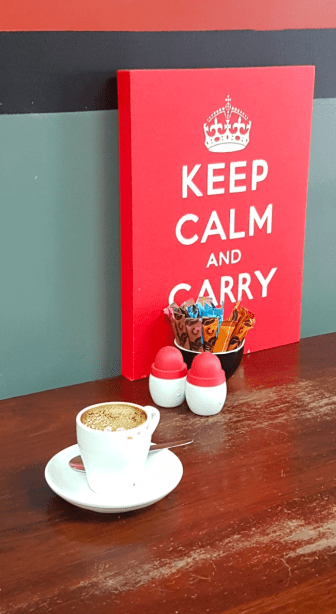
Keep calm, and carry …
Books for your sister
Shopping for your dad
Washing for your mum
Papers for your neighbour
Sports gear for your teacher
And cats, just for fun
But only carry what you can manage
If you try to carry the weight of the world
You might hurt your shoulders
Daniel L, Y6, Adventure School, Wellington
New Zealand Poet Laureate, David Eggleton
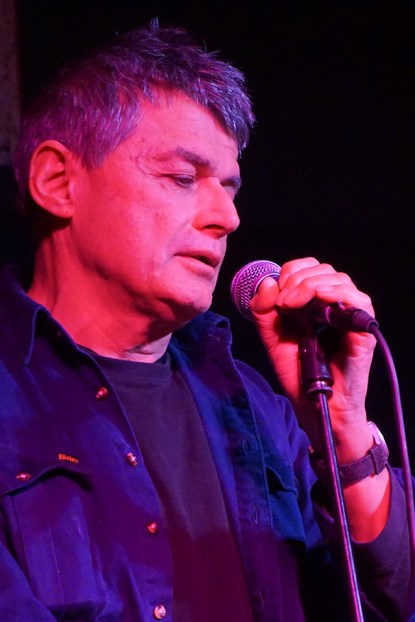
Photo credit: David Mackenzie
The whole year becomes a highlight when you return alive at the beginning of 2019, as I did, from a successful major surgical procedure to delay the inevitable. I celebrated with a year-long fiesta, attending poetry readings galore — mine, theirs, yours — where-ever and whenever possible. I presented poems at the Verb Festival in maze-like Wellington, where poetry fans congregated beneath rafters in masonic lodges, or in former office spaces and factory kitchens seemingly the size of old-fashioned phone booths that are now cafes, craft beer joints, or still-active Masonic Lodges. This was the poetry reading as inner city revitalisation, as harmonic communion with the dead.
There was the poet who read with haka-like ferocity, the poet who read like a prim missionary, the poet who read as if remembering runic graffiti from a long-lost language … there were pensive poets wrangling knotty conundrums … poets cleaving to the bosom of the muse with bitter, astringent verse, or else with Sapphic fragments of a succulent sensuality … all life was here.
I read at the Kerouac Effect in Auckland, a dramatic gathering of method-actor-type subversives immersing themselves in the metaphysics of the Beat Tradition, MC Shane Hollands swapping badinage with the lively throng and indicating he would hurl pogoing poetasters grabbing for the microphone back into the mosh pit.
At one Festival reading in a city that shall remain nameless the sound mixer made much ado about a wilting microphone stand, in an excruciatingly drawn-out Dadaist performance, while the MC stood about with saint-like forbearance and the sensible shoe brigade rest-of-us gazed on in silence.
I was filmed reciting in the middle of Baldwin Street to the scattered applause of small children and the honked horns of drivers forced to swerve. I ranted poetry on St Andrews Day in the Octagon, backed by Richard Wallis on guitar and Jay Clarkson on keyboards, in honour of the poet James K. Baxter dubbed ‘The Ranting Dog of Kilmarnock’, namely Robbie Burns. Our set was sandwiched between the plaints and squeals of bagpipes accompanying the skips and reels of Highland dancers footing it like there was no tomorrow, and the porridge speed-eating competition.
In the new Frankton Library by Lake Wakatipu in the lee of the Library’s scenic windows, I stood to read alongside poets Erik Kennedy and Annabel Wilson against the sublime splendour of the Remarkables mountain range. And I was one of a flying wedge of five poets that slid into Gore on a thundery Saturday afternoon to recite our words to an audience gathered in the architecturally-striking drum-shaped Eastern Southland Gallery. Here, the elegant economy of Cilla McQueen’s lines about the coastline around Bluff where she lives, and the clarity of her diction, stood out.
On National Poetry Day this year, having been intent on getting each of my own pop-gun poems firing a small flag with the word Bang! written on it rather than blanks, I suddenly found myself appointed Poet Laureate, an honour intended to recognise the wellsprings of poetic creation, puna wai kōrero, as a national good. And by extension this honour recognises all those who muse on mōteatea, villanelles, sonnets, haiku and the like, while seemingly staring at walls or flowerbeds and day-dreaming. All equally touched by the poetic properties of language and its sentiments, our local poetry writers bring, one way or the other, power back to the people.
Jordan Hamel
As clichéd as it is, this year has been full of poetry highlights and I could pick so many things. I’ve been lucky enough to read poetry all over Aotearoa, have words published in places I never thought I would, meet my poetry heroes, teach rangatahi about poetry and performance, sing drunken karaoke with my favourite Wellington wordsmiths (poetry friends are the best friends), cry on stage in San Diego in front of 500 people after doing a poem about depression in Aotearoa and of course get my #titsoutforsport. However, one of the things I’ve valued most this year was having the opportunity to create and curate spaces for my favourite poets to do that beautiful thing they do. Whether it was deep in the forest at Bush Bash, in my old student haunt for the NZ Young Writers’ Festival (alongside the wonderful Eliana Gray) or on a literal mountain top at Welcome to Nowhere, I’m lucky to have been trusted with the task of putting together (in my opinion) the best poetry lineups to share with the masses. It’s like making a Spotify playlist, but live and for poetry. The chance to put young and established poets together, page and performance poets together and everyone in between in a way that honours their work and enhances their mana is a privilege. I think here in Aotearoa we’re at a sneaky point where some people’s outdated ideas of what ‘poetry’ is will disappear and we’ll enter a new, more inclusive/less elitist age where we all melt together becoming one big messy poetry party everyone’s invited to.’
Emma Neale


Apart from the Wild Honey launch in Dunedin, which was the biggest, loudest, happiest poetry event I managed to attend, I’ve had multiple poetry-reading-alone highlights: essa may ranapiri’s ransack; Lynley Edmeades’ Listening In; Brigit Pegeen Kelly Poems: Song and the Orchard; re-reading Tomas Tranströmer’s the great enigma: new collected poems; Ilya Kaminsky’s Deaf Republic; Anne Michaels’ All We Saw, Alice Oswald’s Nobody; Rebecca Tamás Witch; Tracey Slaughter’s Conventional Weapons, Harry Ricketts’ Winter Eyes … although writing this has also made me sad for how many books are still sitting in my to-be-read pile.
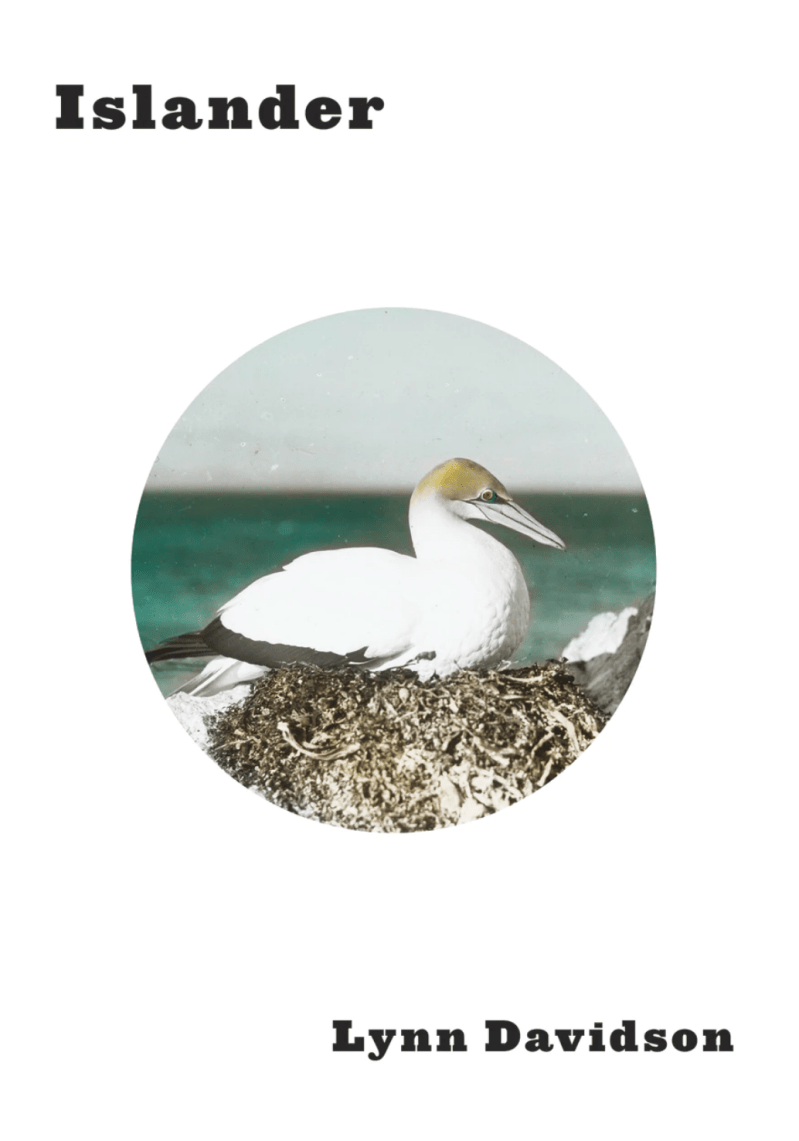
How do I carve out more hours in the day?! But the exercise is to pick just one – so for very subjective reasons, my local poetry highlight was reading Lynn Davidson’s Islander. I read it at a point when I needed the kind of carefully wrought, gently-voiced, pensive observation that it offers – it helped me to slow down and listen in harder to something more inward, something older in me than 2019’s troubles. While other books might have turned my head, or wrenched it out of its crick, or lit the inner fire of striving to improve, or scrambled my sense of direction in a happily discombobulating way, Islander felt like putting a gentle concerto on an old stereo; sitting in a drift of sunlight; watching a garden glitter with birds and ride the wind: having time to not worry about the time. If you look at the subject matter of some of the poems, that seems to be a misreading of the book: there is work about sudden death, savage instinct, separation between lovers, unthinking cruelty, the complex abiding ties between mother and children, the way loneliness can seem to mine and pillage us with a heavy, smudged blade … and yet the control of the language, the selection of phrases for their subtle play of more than one meaning – still left me feeling a masterful skipper was directing the boat – so the ride, if bracing, would still get me safely to another point of knowledge.
Tracey Slaughter
Sitting in a chapel hearing Michael Steven read ‘At Eastern Southland’ on the Day of the Imprisoned Writer. A ring of near strangers, a notebook on the table bound in duct tape, dusk through windows that echo a lake. One chair empty, to represent the silenced. I’d dreamt of my stepbrother only nights ago, so close I could smell his shirt, see his pores: ‘A euphemism: suddenly.’ A poem that knows what it is to lose, to mourn, for children to be left ‘fatherless,’ yet whose measured gravity and hard-forged control can hold the weight. A poem that speaks to the many ways we can be imprisoned: ‘Days and nights: oblivion rehearsals.’ Somehow I felt like my stepbrother walked back through those words, took his place in the seat beside me. A small moment, off the map of any poetry scene, but windows, lines, dusk, loss, a lake, a voice that had everything to say about how words can lock us away, and break us open again. ‘Your silence goes on. It sings and it sings.’
Erik Kennedy
A couple of weeks ago the New Zealand Poetry Slam final played itself out in Christchurch for the second year in a row. I have thought of it quite a few times since. For a start, it’s good to have a national-level literary event in the city. For another thing, I thought that the breadth of talent on display was truly evidence of an ever more confident and powerful spoken word scene in this country (particularly in Auckland). Finally, I often have a merry time at and after readings; this one felt especially free and exuberant, and it helped that central Christchurch is finally kicking again at night. I don’t slam myself (on the night I was the timekeeper), and I don’t think that making ‘page versus stage’ comparisons is very useful, but if I did I would say that this was exactly the kind of event that would break down the (imaginary) barriers between the two communities. Congratulations to the slam’s top three, Eric Soakai, Jessie Fenton, and Nathan Joe, and to everyone who made the decision to come out and hear them.
Ashleigh Young
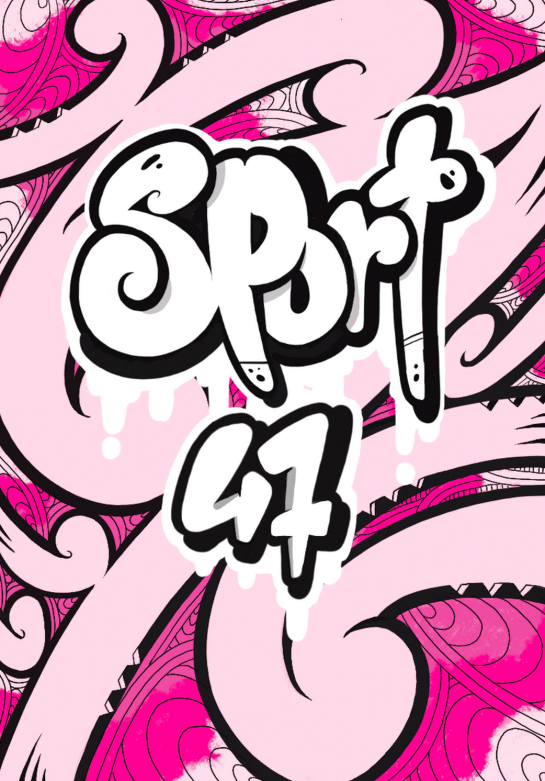
My highlight was Tayi Tibble editing SPORT 47. She is a force and we are lucky to have her. She was also hilarious and great to work with at VUP. If I can sneak in two further highlights: this poem by Charlotte Simmonds called ‘No One Doesn’t Love You Like I Do’, and these lines by Geoff Cochrane from ‘Graffito’, in The Black and the White:
I sometimes get the willies, sure, but when was I last beset
by the screaming abdabs? Have the screaming abdabs
ceased to be a thing? . . .
Fiona Farrell
Hearing many of the poems I had become so familiar with while selecting the 25 ‘Best Poems 2018’ for the IIML’s annual collection, read in performance by their writers at Te Papa. That was wonderful.
Also lovely has been receiving poems in the mail carefully printed in pencil on bits of notepaper from my granddaughter. She’s eight and trying out rhyme eg.
a beautiful creation
partly made by a whole nation
started with a little girl’s imagination
Anna Jackson


The poetry highlight of the millennium for me was the Show Ponies poetry reading with Sam Duckor-Jones, Rebecca Hawkes, Chris Tse, Freya Daly-Sadgrove, Joy Holley and Jackson Nieuwland. It was basically the life highlight of anyone there and I expect mentions of it will be scattered through this list of poetry highlights like glitter. From now on reading poetry without back-up dancers is going to seem very diminished and I can’t imagine giving lectures without back-up dancing anymore either. Sappho’s description of love putting the heart in the chest on wings is the best description of how I felt as these six luminous poets performed their work.
The publication of Helen Rickerby’s How To Live, the relaunch of the AUP New Poets series with volume 5 featuring Rebecca Hawkes, Carolyn DeCarlo and Sophie van Waardenburg, and the publication and Wellington (for me) launches of Wild Honey and poetry collection The Track, Nick Ascroft’s Moral Sloth and Amy Brown’s Neon Daze were also amongst the highest highlights of my year.
Nina Mingya Powles
Last month, I went to a poetry event at Verb Festival in Wellington and three of the writers on stage had Chinese heritage—Rosabel Tan, Greg Kan, and Chen Chen. I realised it was the first time I’d been to a literary event in Aotearoa where there were more Chinese writers than white writers, and it wasn’t a big deal at all. And then in many other events there was of course Chris Tse, Renee Liang, Rose Lu and Vanessa Crofsky. That weekend was the first time I’ve ever really felt part of a community of next generation NZ-Chinese writers and artists; a small community, but invigorating and inspiring.
Simone Kaho
My favorite poetry moment from 2019 happened in the launch of Wild Honey, when you stood up and attempted to cancel the 10-minute interview/conversation with Selina Tusitala-Marsh because the event was something like 30 minutes behind schedule and the library was closing at 8pm sharp. Selina got up and put her arm around you and said No, we’re not going to cancel. You were resisting pretty firmly, but Selina turned you around to face the room and said – just stop for 30 seconds, and everyone, send Paula your love. It was so off-script, and such a clash of energy forces, you, anxious and Selina, determined to honour you. I wondered if you’d be able to relax, during that 30 seconds. But as you faced the room, your face changed, and you smiled. The room felt very full and focussed, but gentle at the same time. I thought, this is the feeling in Wild Honey, patience and staying with a poet, pushing through all other demands, for a spot of quiet time, in the sun, together.
Fiona Kidman
What a year of poetry pleasures. The publication of Paula’s Wild Honey, celebrating women’s work has brought not only hundreds of poems together, but thrown scores of poets into each other’s company off the page at different launches. A big shout out to Nicola Legat at Massey University Press for taking on this project. Wonderful conversations at the edge of festivals, new books that just keep coming.
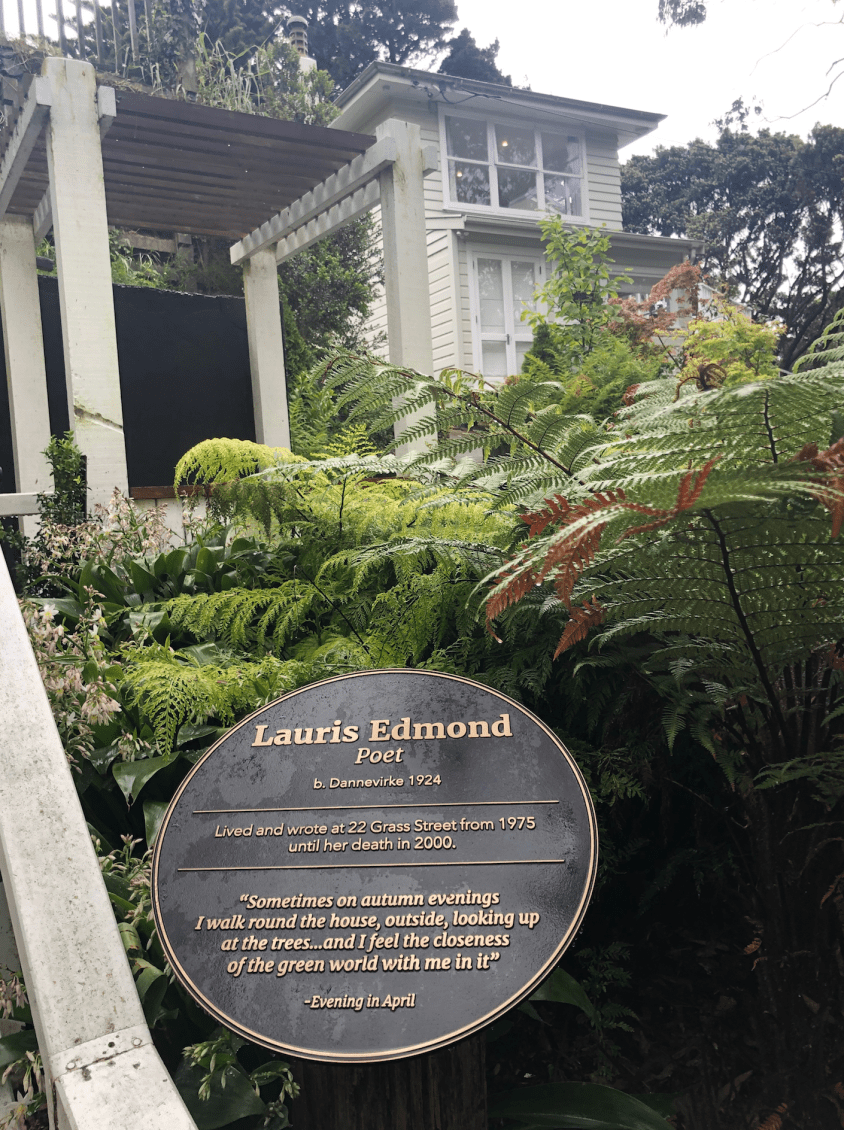
My big event was a Sunday morning during Verb Festival in Wellington when a plaque marking 22 Grass Street, the house where my dear friend Lauris Edmond lived for the last twenty-five years of her life, was unveiled. It was a house where writers gathered, talked endlessly, laughed, wept, sometimes quarrelled, but made up, the nearest we have had to a literary ‘salon’. The house is half way down a long pedestrian-only zigzag above Oriental Bay, the harbour lying beneath, the bush pressing in towards the sea in the lower reaches. Verb supported the opening of the plaque because the festival’s name is taken from another famous text sculpture in the town, designed for Lauris, quoting her poem “The Active Voice” that includes the words… this [Wellington] is the city of action, the world headquarters of the verb. The house has been restored by Tom and Sarah Horder and they threw it open for a party. It was raining and as the hour approached a sea of colourful umbrellas rose from the lower path. And then we were all there, the mayor and city councillors too, and although the house is not exactly the same, the room where Lauris held court is very much as it was and we were all back there in the moment. Frances Edmond, Lauris’s daughter and literary executor introduced the event, Harry Ricketts and Diana Bridges read poems, and so did I. And I said, ‘Lauris would so loved to have had everyone back, all her friends, and some new ones too.’ Then the plaque was unveiled and we drank champagne. Just like it was.
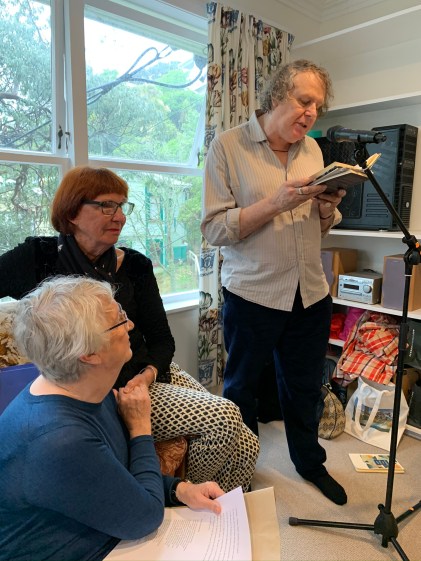
Louise Wallace


I am biased(!!) but a huge highlight has been seeing books coming out from young writers who were published in early issues of Starling. essa may ranapiri, Rebecca Hawkes, Sophie van Waardenberg, and novelist but also poet Sharon Lam… and there are more in the works for next year! It’s such a privilege to watch these powerful young writers on their path; New Zealand literature is so much stronger for their presence. If you are still on the hunt for Christmas presents for whānau, you know what to do!
Nick Ascroft
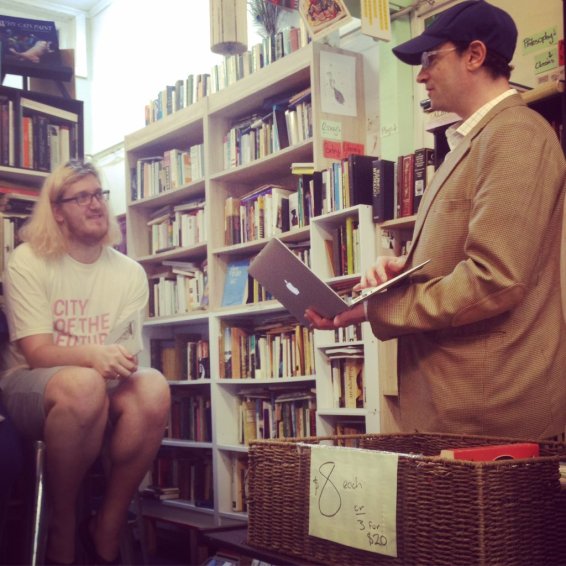
The poetical highlight is captured in the photograph. This is Seoul-based Yale UP poet Loren Goodman reading his ‘Facts about Dolphins’ poem at a reading in November at Book Hound in Newtown, Wellington. Also featured in the event (called ‘Another One’ and immortalised in a Food Court zine) were Jo Randerson, another visiting US poet James Shea, Food Court themselves (Caro DeCarlo and Jackson Nieuwland) and me. Loren’s poem was hilarious and bizarre and … educational? Jackson, to the left, is a quiet type, eh. But laughed hard and loud. I loved it, and Book Hound is a wonderful place.
Other moments of note include: seeing the line-up of a November reading in Gore (but not being able to attend): Kay McKenzie Cooke, Cilla McQueen, David Eggleton, Richard Reeve and Jenny Powell. The best of the deep south and all together. And in Gore!
and witnessing Anne Kennedy’s amazing musical performance at her Moth Hour launch at Unity Books, Wellington. It was amazing and though I filmed it on my crappy phone Anne has it under a strict embargo.
Vana Manasiasdis
I gesture towards the poetry (and prose) readings at The Open Book this year, the ones I was at and the ones I wasn’t. Reading with Courtney Sina Meredith, Simone Kaho and Makyla Curtis hours before flying to Athens meant I carried their fierce-flawless voices with me all the long way to mothersland; sitting on the mat, primary school styles, while Witi Ihimaera read from Native Son was quietly incredible; and Anna Livesey, poetess, hostess and championess extraordinaire makes mean tofu steaks.
Tim Upperton
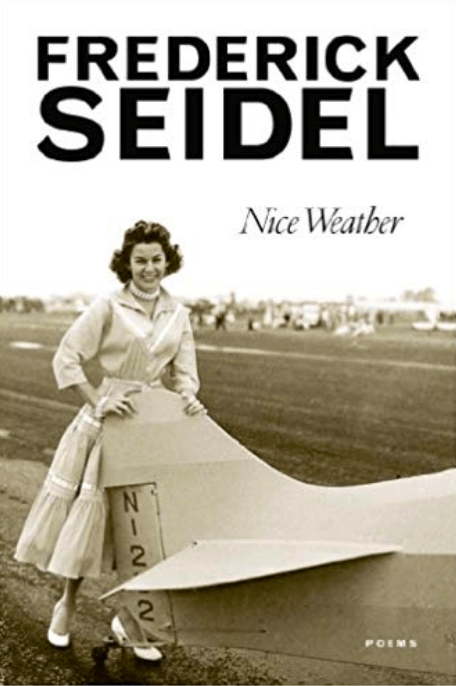
Frederick Seidel’s poetry is often abrasive, ugly, confrontational, and I wonder sometimes if the man who writes it is like this, too. His style is easy to parody, yet hard to imitate. His great subject is late capitalism, and the limited agency of the individual caught in its net. I don’t think Seidel is really very interested in looking inward, and a lot of his poetry is anti-lyrical. But every now and then he writes verse that tugs at the heart. As in this small, perfectly formed elegiac poem, from Nice Weather (2012):
Snow
Snow is what it does.
It falls and it stays and it goes.
It melts and it is here somewhere.
We will all get there.
Only one word that isn’t a monosyllable. Such a bleak little poem, yet that oddly consoling last line! As if Death gave you a conspiratorial wink. We will all get there.
Berndaette Hall
Ice, a sheet of
Strange isn’t it, or maybe not, how a shared experience plays such a part in what kind of writing we love. I say ‘we’ and of course what I really mean is myself, what I love. In December 2004 I went to Antarctica, sharing an Antarctic award with my friend and collaborator, Kathryn Madill. As well as a fond sharing, it felt political. I think we’ve been the only ones to voluntarily split the prize like that. The ticket that got us the ride was that we would produce a YA picture book, desirable also for adults, me the text and she the paintings. The trip changed both our lives, profoundly. No wonder then that when I first read Alison Glenny’s beautiful text The Farewell Tourist, for all its strangeness and its white elusiveness, it gave me what I needed straight away. An injection of Antarctica as itself and also as a metaphor for the connectedness and the distancing, the plurality and the solitude of human loving. Alison gives us the wilderness and domus as equals. How they lie down with each other like those old plastic transparencies we used to use in teaching. And there we are, peering down through the layers, enchanted and at the same time terrified.
Some afternoons a fog rolled down the hallway. On others, the staircase groaned with moisture. A finger laid carelessly on a bannister dislodged a ledge of rime. She lifted the hem of her dress to avoid the damp in the passageway, wore knitted gloves in the kitchen. She was lying in the bath when the glacier pushed through the wall. She sank deeper into the water to escape the chill that settled on her shoulders. Trying to ignore the white haze,to lose herself between the pages of her book.
The simplicity of the writing is astonishing.
Only two adjectives so it’s the stuff of reality holding itself together in a kind of purity, an innocence that’s chill and restrained yet burns with passion. The poem captures me. It gives me my Antarctica all over again and affirms my desire to be, like Alison, someone whose job it is, putting words down on a page.
PS: Fifteen years after our sojourn on The Ice, Kathryn and I have completed our assignment. ‘SUL, an Antarctic fable’ – 22 pages of text and 22 paintings – will be published in May 2020 by Scythe Press, an offshoot of Aotearotica.
The Farewell Tourist, Otago University Press 2018. Winner of the Kathleen Grattan Poetry Award in 2017.
Fleur Adcock
One of my top experiences was very recent: the BBC documentary ‘Seamus Heaney and the music of what happens’. As well as being a genius, Seamus was very much loved: one of the kindest and most generous men you could meet, always ready with praise and encouragement for other poets. In the film a number of his friends, including my good friends Michael and Edna Longley, speak movingly about him, as do members of his family: his widow Marie, his daughter Catherine and two sons, and four of his brothers. Each is asked to read a poem of his, or sometimes more than one. It was fascinating to see his ageing brothers, farming men living in an area of Northern Ireland very near where my mother’s grandparents came from, reading poems by their brilliant brother about activities that were still part of their everyday lives. There was also TV footage of the young or younger Seamus in several of his incarnations. Nostalgia for me, and illumination for serious poetry lovers.
Chris Tse


One of my poetry highlights of the year was being asked to judge the National Schools Poetry Award – a daunting task, but one that emphasised just how talented and passionate our young writers are. I can’t wait to see more of their work out in the world. Please read the finalists’ poems if you haven’t done so already.
Also, I’m very grateful to have been invited to perform at festivals and events all around Aotearoa and in the UK this year. At the Cheltenham Literature Festival I performed my poem ‘The Saddest Song in the World’ while the awesome Tongue Fu band improvised a soundtrack for it. It was without a doubt one of the most surreal and thrilling experiences I’ve ever had as a poet, which seems almost impossible given it’s same year we put on Show Ponies for National Poetry Day. More drama at poetry readings please!
And of course I’ve read a lot of wonderful poetry this year. Some of my favourite New Zealand collections included books by Jane Arthur, Gregory Kan, essa may ranapiri and Vana Manasiadis, and the AUP New Poets 5 trio of Carolyn DeCarlo, Sophie van Waardenberg and Rebecca Hawkes. Sport 47 (edited by Tayi Tibble) is a revelation – a real shock to the system and an issue we’ll be re-reading and talking about for years to come. I’ve still got so much poetry from 2019 to catch up on, which frankly is not a bad problem to have.
Marty Smith
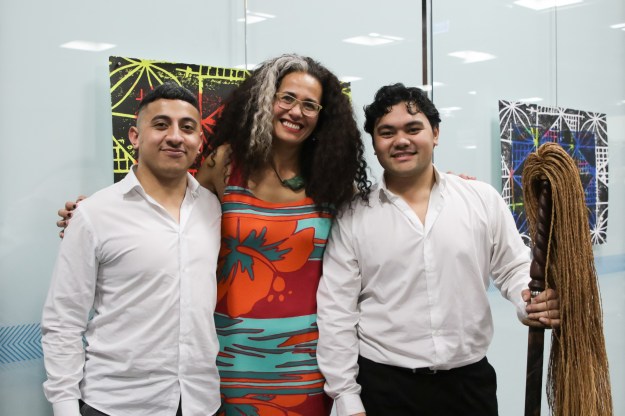
My poetic moment of the year is the one that made almost everyone cry. It was at Selina’s formal farewell, when I asked LJ to tell us what he told Anna in the car.
LJ is Lila Crichton, who sang for Selina at Matahiwi marae for her 2016 inauguration and at Poets’ Night Out in the evening. Anna is Anna Pierard, who runs Project Prima Volta, which raises funds for students like LJ who sing in church choirs, to train to sing opera. LJ is Samoan and at Poets Night Out he saw Selina,Tusiata and Serie Barford performing loud and proud, and accepted and lauded. He heard voices he knew, patterned into musical sound. Anna said when she took him home in the car, he was completely beside himself.
When Peter Ireland invited PPV to sing at Selina’s formal farewell in Wellington, I asked LJ if he would tell the audience what he said in the car to Anna. He stood up at the lectern and told everyone what that night was like for him. He said, it was the first time he understood that Pasifika artists had status, and that they were admired and respected. He said, it was like looking through the windows of a room that you’d never been allowed into, and then you were. And then he burst into tears.
That’s what it meant for all the kids Selina visited, all the hands that touched the matua tokotoko.
LJ is important to me because (with Anna) I helped him get his credits to get into uni when his school let him down. He won an Outstanding Scholarship for the School of Music at Vic in 2019. He is to the right of Selina in the photo.
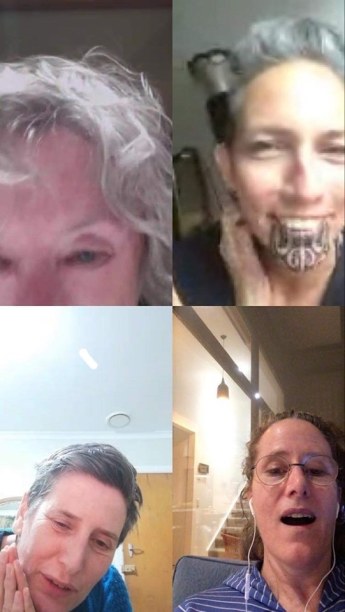
I had to split my moments because there two huge moments. The first is for the power of poetry and the second is for the power of our writing group when Hinemoana revealed her moko kauae to us online. She came in late (from Berlin) and she kept her face down so we could only see her hair. When we finished talking about Maria’s poem, she said, ‘I dropped in on my way to the university and I don’t have a poem, I wanted to show you THIS.’ And she put her chin up, and we all gasp-breathed in together. This is a second later. That’s us squinting to see the close details, and then she explained to us about the birds. After her father, she showed us first.
Vaughan Rapatahana
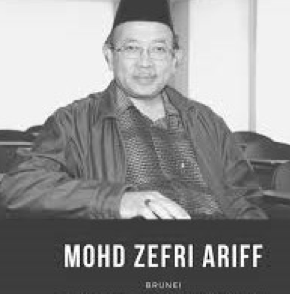
Kia ora. For me, there was more than one poetry highlight during 2019. One was performing with Patricia Smith and Chen Chen at the Southbank Centre, London, during our Incendiary Art: the power of disruptive poetry presentation. Another was seeing Md. Zefri Ariff from Brunei Darussalam perform his mighty pidato, replete with epic sound effects and lighting, during the World Poetry Recital Night readings in Kuala Lumpur. All in Bahasa Melayu, which I am proficient in, having lived in Brunei for several years myself. It was also great to meet up with Md. Haji Salleh, Poet Laureate of Malaysia, when I was reading there.
More, I was humbled and honoured to have one of my poems, tahi kupu anake, read during the United Nations Forum on Minority Issues, Geneva, by Professor Emeritus Tove Skutnabb-Kangas, in November.
Diana Bridge
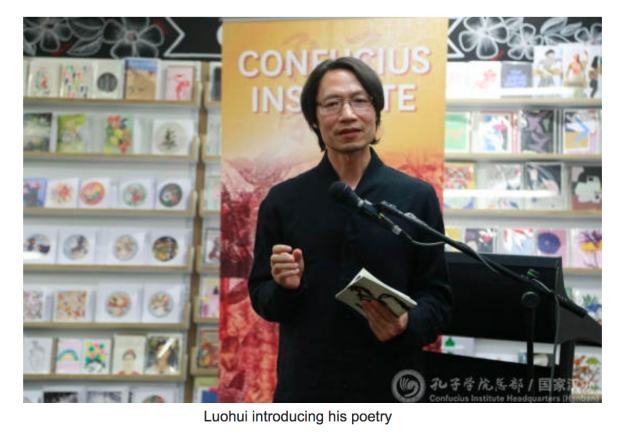
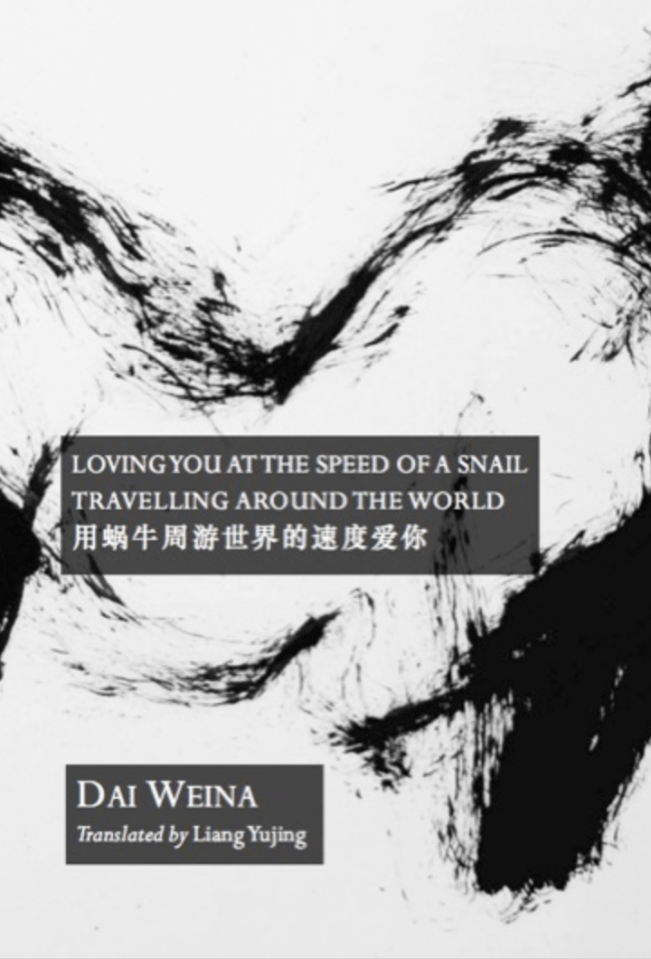
Last week saw the dual launch in Wellington of two collections of splendidly translated Chinese poems.* We are talking something of a first –bilingual texts from Chinese Millennial poets (poets born in the 1990s) translated by Chinese scholars who grew up in China and currently live in Wellington. One of them, Liang Yujing, is a PhD candidate at Victoria University. The other, Luo Hui, who lectures in Chinese, and is also the director of the New Zealand Centre for Literary Translation, is his supervisor.
The poets chosen by Luo Hui look back to the gruelling poverty of childhood and muse on generational distance; and they deal with living in the fast lane of a Chinese megacity. If they allude to the work of their classical predecessors, their hopes and disillusions remain wholly contemporary. To accommodate them they break open sentences and reach for myth. It is craft that holds their unbounded thoughts and the exaggerations of their imagery together.
The next day Dai Weina spoke at the NZASIA Conference in a session entitled ‘Inventing Chinese Millennial Poetry’. It was as if this incredibly talented young writer, translator, editor and scholar had been conjoured, a rabbit from a hat, to illustrate the very idea of the Chinese Millennial poet.
* 90后 | 30 首》 30 Poems from Chinese Millenials, Edited and translated by Luo Hui (Wai-te-ata Press)
Dai Weina’s 《用蜗牛周游世界的速度爱你》Loving You at the Speed of a Snail Travelling Around the World, Translated by Liang Yujing (Cold Hub Press)
Therese Lloyd
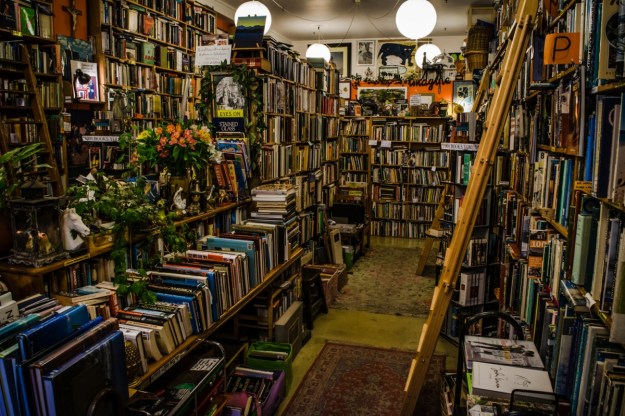
By far the highlight for me this year has been the Pegasus Books Poetry Readings in Wellington! I’m probably wildly biased here because I organised them, but still!
I’ve loved the vibe of them, the way the poets all seemed so comfortable and really owned the space.
There were so many highlights throughout the series that I wouldn’t want to single any one reading out. I loved how insanely hot and sweaty it was in the shop in February, right through to a miserably cold July where coats and scarves were piled up in a corner.
This series really confirmed for me how vibrant the poetry scene is across the country. Even though it’s a Wellington thing, it was wonderful to have some Hamilton based poets come down for it too: Tracey Slaughter, AJ Anderson-O’Connor, Stephanie Christie, essa ranipiri, and from Auckland, Jo Emeney.
Certain places just lend themselves to poetry readings, and Pegasus Books in my opinion, is absolutely ideal. The store is wonderfully packed full of books and ephemera (including a little table in the back room that the owner keeps permanently stocked with paper and string for customers to gift wrap their books).
I love literary festivals and events, but I also really like the humble simplicity of a regular reading series. You can go to them all or pick a few specific ones you fancy. You get the chance to hear poets new to you, as well as some of your favourites. I also like that they’re not subject to the vagaries of who’s current! Just a bunch of poets sharing their words with a room full of interested folks.
Perfection!
Sam Duckor-Jones
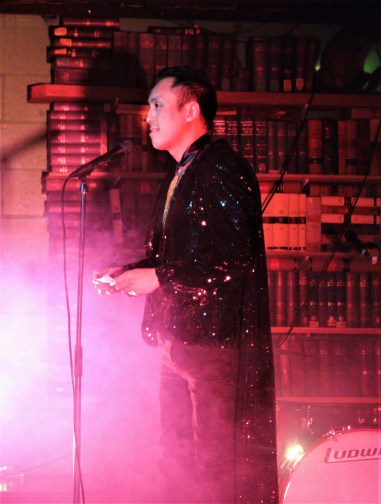
A loud highlight must be Show Ponies, obviously. I stood in the back with Kerry DB when Chris Tse read ‘Gentleman Poet in the Streets, Raging Homosexual in the Sheets’ … of course we have an agenda / how else will black sequined capes become a thing… and he snapped open that fan…to which Kerry and I turned to each other and agreed – he is our leader.
A quiet highlight was spending time with Fleur Adcock’s ’67 collection Tigers, specifically ‘Miss Hamilton in London’. Three stanzas of careful low drama, incidental tourism, errands…punctuated by these deafening final lines:
Night fell at usual seasonal hour.
She drew the curtains, switched on the electric fire, Washed her hair and read until it was dry,
Then went to bed; where, for the hours of darkness, She lay pierced by thirty black spears
And felt her limbs numb, her eyes burning,
And dark rust carried along her blood.
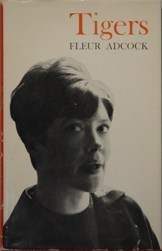
Elizabeth Smither
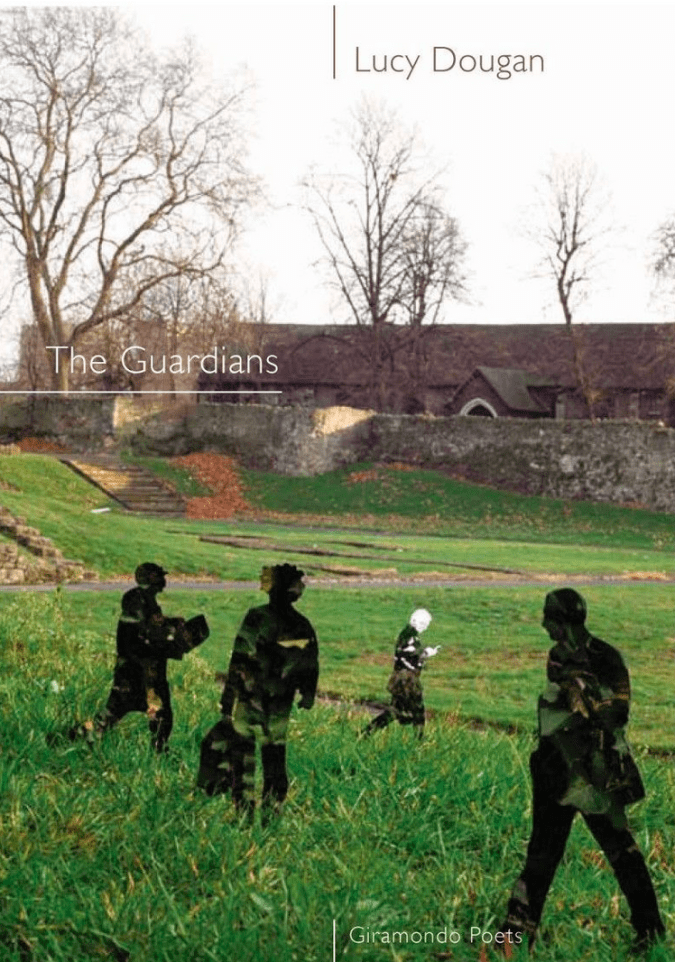
Years ago Lucy Dougan, Gail Jones and I lunched together in Perth and afterwards Gail commissioned me to write to Lucy who was recovering from an illness. We kept up a flow of letters and books and then, in 2015, at a Poetry on the Move Symposium in Canberra I was sitting on a hard chair and feeling not very engaged by a panel on the prose poem when Lucy came up behind me and put her arms around me in great hug. Instantly I felt the writers of the prose poems were remarkable, the conference was superb and I was in love with all Australian poets. But most of all Lucy. I will fetch one of Lucy’s stunning collections when I am feeling flat or jaded. There is such light in her work, such delicacy for matters historical, such reverent placing of the subject back where it came from, such seamless measuring of feeling and effect.
A renovation (Girl’s Work)
I’ve always had a fascination with the needle. The magic power of the needle.
The needle is used to repair the damage. LOUISE BOURGEOIS.
I have decided
that I will start mending
and that only my hands
will suffice.
I will, I know, get furious
with my limitations
but there is something so
beautiful about the flawed work
human hands can do.
It will hold;
for think of a time
when only this labour
covered the body.
Can you imagine the tedium,
punctuated by the bright flairs
of the company of others,
the sheer graft of it, those calloused thumbs.
Also an early memory of my mother’s:
pointless work snatched from small hands
hot with a summer’s day,
the teacher’s voice admonishing
that this girl’s work.
(look at it!)
is the worst
in the whole class.
Lucy Dougan from ‘The Guardians’, Giramondo, 2015
Olivia Macassey
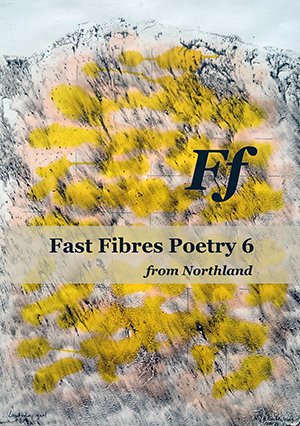
It’s hard to choose one highlight for 2019, as there’s been a lot of great stuff this year (e.g. Stephanie Christie’s illuminating guest spot in PNZ, the groundbreaking Wild Honey, or a wonderful first collection from essa may ranapiri). But I especially enjoyed the experience of watching a collection of poems I’d been reading and re-reading come to life and literally speak to one another, in readings celebrating the publication of Northland anthology Fast Fibres Poetry 6. Representing a richly diverse community of voices meant Fast Fibres spread its launch over five events in the region, in venues including a busy library, a pub, and a gallery. The ‘imagined community’ of the page became a living breathing community of the stage, as poets connected and reconnected – as did their poems: diverging, converging, interrogating, weaving together – productive, fascinating, and a lot of fun!
Elizabeth Welsh
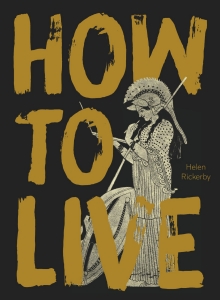
Looking back over 2019, what stood out for me was the opportunity to judge the New Voices Emerging Poets competition, the winners of which were the talented Sarah Scott and Jessie Puru (first and second place, respectively). More and more, I have come to think that the worthiest thing we can do with our time is to spend it lifting others up, and I was so honoured and excited to read these accomplished poets’ works and to be able to congratulate them in person on National Poetry Day at the 2019 Divine Muses XVI evening of poetry at the Auckland Central City Library. An added bonus was the opportunity to hear Helen Rickerby read at this event from her collection How to Live – it being, for me, the wittiest, most profound and inspiring poetry collection published in 2019.
Amy Brown
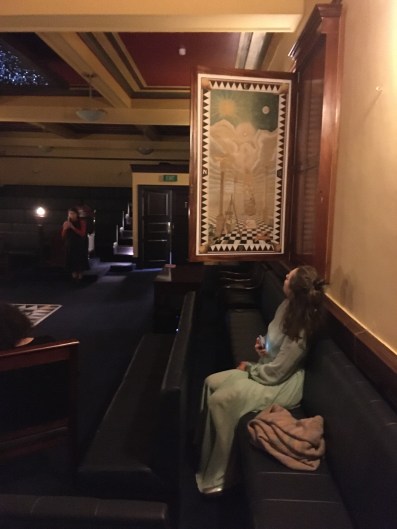
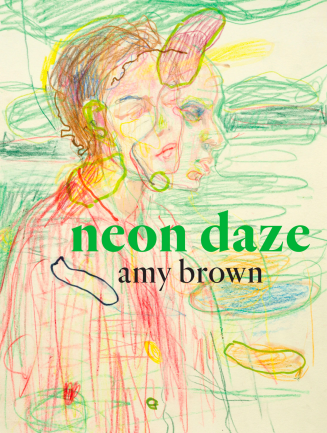
1. At the Wellesley Boutique Hotel Masonic Lodge for Verb Festival I felt both foreign and at home. This is the cult of New Zealand poetry, I thought, listening to Nina Mingya Powles read about Matt Damon, and essa may ranapiri read about bed, and Hannah Mettner (pictured sitting in front of secret Masons art) read about libraries and childhood, and Vanessa Crofskey read about swimming pool changing rooms. And, it’s brilliant! And somehow I’m included in it! I often feel distant from what I still think of as myself, in Melbourne, in a life different to the one I led twelve years ago in Wellington when I wrote my first book. As I read a bit from Neon Daze that I’d never read before, the homesickness was comfortable.
2. Corresponding with poet Joan Fleming, between Madrid and Melbourne, from each side of the motherhood divide. When I posted a photo to Instagram mentioning maternal ambivalence, she replied, That’s all I’ve been writing about! We’ve written to each other every few days since August and the conversation is now about everything. For me, it’s like keeping a diary that replies with a mind better than my own. There’s a term Jia Tolentino mentions in Trick Mirror, “affidamento” or “entrustment”: the process of two women sharing their stories with each other. Writing in this way for a truly ideal reader is making me consider my motivation for publishing further and the purposes of writing at all.
Charlotte Simmonds
I’ve felt very disconnected and isolated for a long time, and I haven’t engaged much with the literature or people of the country I have citizenship with this year. However, a highlight was sitting next to Vivienne Plumb, whose work I have admired since I was a teenager, on the train-replacement bus from Wellington to the Wairarapa one weekend. Quite intent on doing myself in as soon as I got back to Wellington, Vivienne unknowingly temporarily distracted me from such business with interesting book recommendations, the names of which I course did not write down and have consequently forgotten, and stories about travelling in China and Germany, and in doing so, showed me possible bearable futures for myself, despite isolation, alienation and loneliness.
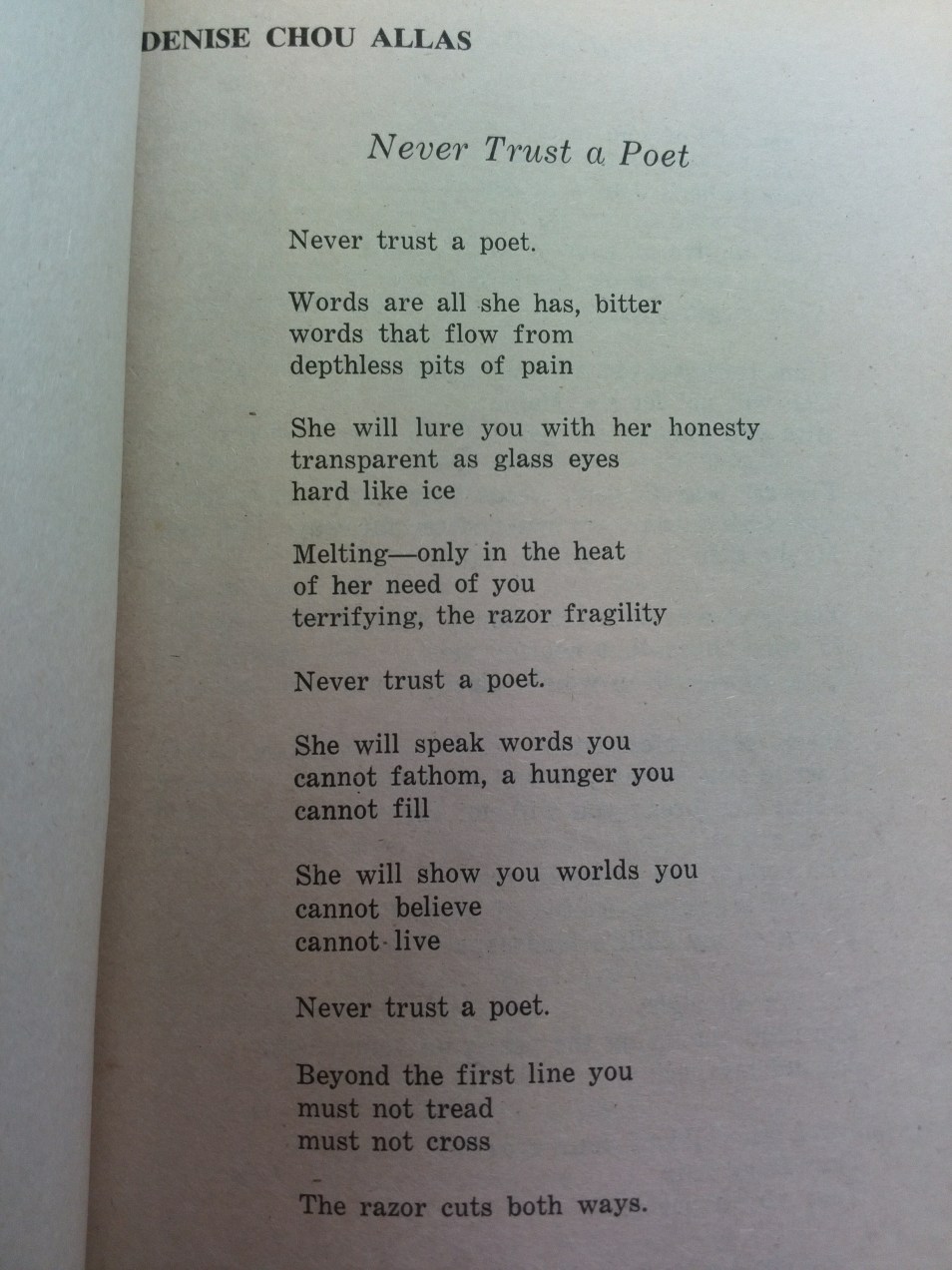
I took a picture of a poem from a 1984 anthology of women’s writing from the Philippines (Filipina I, Women Writers in Media Now) (you can read it at the VUW library). I read it in Wellington in 2019 and not in Manila in 1984, but I would have believed anyone who had told me it was written here now. It is simple, not profound, and at first read, humorous. There is the manic-pixie-dream-girl character young women poets often fit into, are fitted into or fit themselves into – but there is also the crushing, deep, enormous, overwhelming pain of an older poet, pain which must, surely, drive away all human relationships, leaving no space for friendship, family or love, and which I recognise in myself. The poet is untrustworthy for being too honest, and the poem blames and accuses the poet for her pain.
Siobhan Harvey
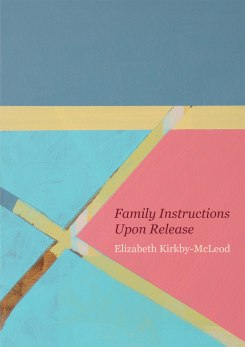
My personal poetry highlight was beginning the year longlisted for the 2019 Australian Book Review Peter Porter Poetry Prize and ending it winning the 2019 Kathleen Grattan Award for a Sequence of Poetry. As a passionate mentor of poets and their work, my professional highlight was seeing poets whom I mentored publish their new collections such as Elizabeth Kirkby-McLeod’s Family Instructions upon Release (Cuba Press) tenderly explores a father’s suicide, its futility and impact upon a daughter and her family through the author’s use of a self imposed dictionary and against the evocative backdrop of the theatre, Recommended reading.
Carin Smeaton
My highlight this year was a movie! Bellbird is a film set in Northland and it was made into a feature by Hamish Bennett and his crew after making the short film Ross and Beth. Bennett took a year off teaching to make Bellbird. It’s just a really beautiful story about a farmer who experiences sudden loss and how the community rally around to help support him and his son and each other. The brilliant detail of the characters and their quirky human ways observed by a pitch perfect cast and storytelling make this film a poetry highlight for me. Bellbird‘s also got te Reo Māori subtitles – it’s the first feature film to have so, and another highlight for me. Its cool humour, its cows vs elephants and Rachel House’s super bad-ass goddess voice spirited me away back to papatūānuku!
Maeve Hughes
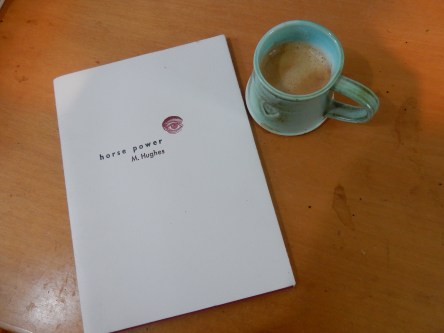
My biggest, longest poetry highlight of this year was being in Anna Jackson’s class, ENG112 Literature of Aotearoa! She invited poet after poet into our class, just about every lesson was a reading, minus the free wine and cheese. Being in Anna’s presence with poetry is a wonderful thing. She is true and free in her discussions about poetry and I love it. She is also one of the only people who I notice will give time and thought to anything that anybody puts their hand up to say. Which often took us somewhere unexpected and entrancing. So, thank you Anna! It was in this same class I properly acquainted myself with Rebecca Hawkes’ and Helen Rickerby’s poetry. Poetry which has since become top of the pops for me. This leads me to my other highlight which was having both of them + Mel Ansell read at the launch of my chat book, horse power. I considered myself on a whole new planet of lucky to have had them there and reading. They each brought a different strength to the whole shebang, so thanks to you three as well! You’ve made my year for poetry!
Tony Beyer
This has been a hard year for Aotearoa. Poetry continues, of course, but we proceed with the sorrowful knowledge of other purposes the language we must use can be directed towards. I was moved by these lines in Emily Blennerhassett’s poem ‘March 15th’, a runner-up in the 2019 National Secondary Schools Poetry Awards: “I will write a poem, but it will feel counterfeit… / because my language is beginning to feel like a weapon”. We will come to depend on this level of awareness from our writers of the future.
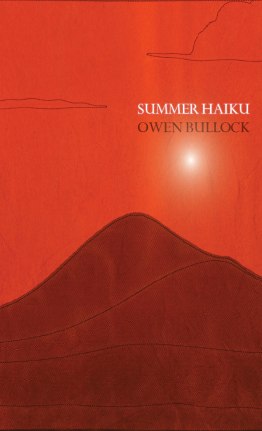
A bright spot, however, was the opportunity to review Owen Bullock’s Summer Haiku (Recent Work Press, Canberra, 2019) for Kokako. Drawn from three summers’ camping on undeveloped family land in Waihi, and concluding with a delightfully contrary section of ‘Winter Haiku’, the poems are a splendid gift to the reader, bristling with energy, rue, humour and life. Consistently, Owen’s work demonstrates the resilience and flexibility of the haiku genre in its current English-language mode:
Christmas Eve –
the neighbour comes round
to borrow some data
A fitting seasonal greeting for the twenty-first century. Owen recently migrated to Australia. We’ll miss him.
Eliana Gray
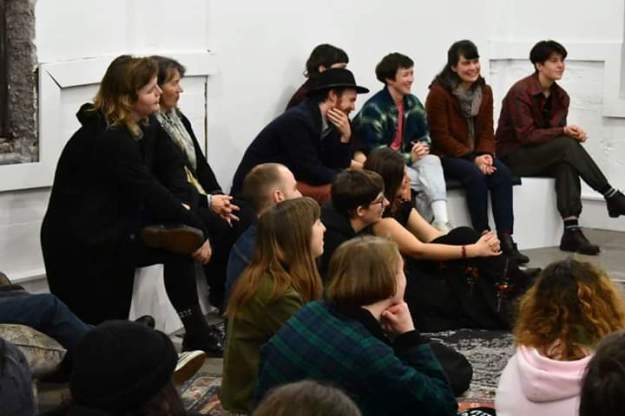
Photo credit: Melinda Payne
The Real Poetry Was The Friends We Made Along The Way
I’m not even lying, I’m a giant sentimental sap but, truly when I think back on this year, all I see are the cute cute faces of people I’m now in love with. This year was fkn packed with wild happenings and the clearing of ‘milestones’ and ‘goals’. I achieved a lot of things that I had decided to measure my success as a writer by (debut book published, book tour, overseas festivals, first residency) but, really, in a career path as non-linear and devalued as ours (where no one makes any money ever) what really made me feel GOOD GOOD wasn’t passing those milestones, it was the bevvy of absolute babes I got to fall in love with. We made funny tweets, organised cool events (Jordan, my angel, my light), wrote amazing poetry together (Jordan, essa, Rae I LOVE YOU). I made friends that helped me feel comfortable to extend my queerness into both digital and terrestrial spaces, I got to watch and perform with my idols (Chris, Freya, essa, everyone on the book tour marry me now, EVERYONE at the Wild Honey launch that goes for you too). I GOT TO READ SO MUCH GOOD POETRY AND FEEL APART OF A COMMUNITY AND NOW I’M CRYING. We are truly blessed, sweet pals. I could have filled this paragraph just with the names of poets I’m obsessed with but instead, I’ll say to you these words: SPORT, Minarets, Mayhem, Food Court, This gender is a million things that we are more than. Bring on 2020, I’m ready for love.
Janet Charman
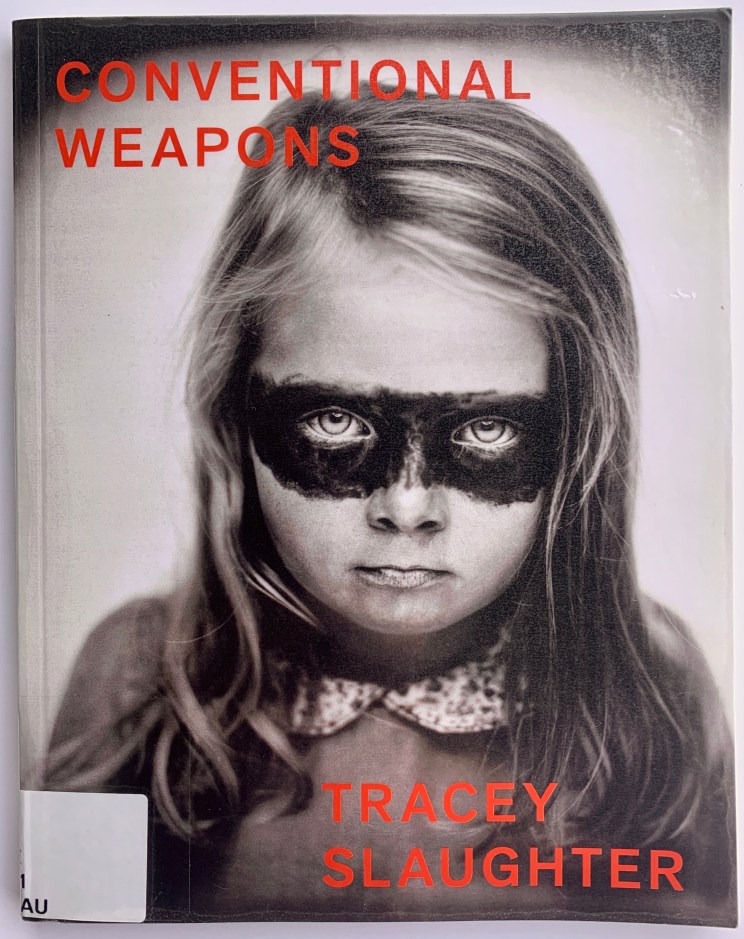
Conventional Weapons: Poems, Tracey Slaughter, VUP, 2019
This collection takes on the brutality of sexual relationships.
The She-heroes of Slaughter’s poems talk dirty, talk back, speak truth to power, and sing their hearts out in language that is as vividly lyrical as it is shocking.
Here are voices seldom heard.
Stories that might surprise men accustomed to having the last word.
Tales that will resonate with any woman buffeted by desire and then exhausted by its unintended consequences.
Throughout the text young children – siblings, offspring, step children, best friends – observe intently both what their elders say and, achingly, what they do.
essa may ranapiri
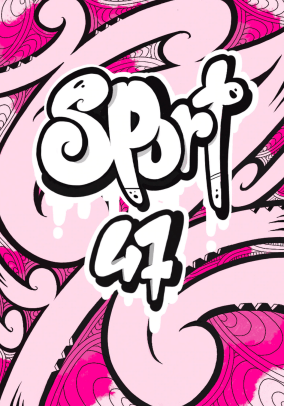
What I’ve loved this year is the level of Māori excellence on display in literature and poetry (it has and will always be there but I mean to celebrate what we’re doing now). From Cassandra Barnett’s incredible map-sized poem in Te Rito O Te Harakeke to Tayi’s humbling challenge in her editorial for Sport 47. From Sinead Overbye’s ‘The River’ poem in Starling (the way it trickles over the webpage) to Ruby Solly’s ‘Six Feet For a Single, Eight Feet For a Double’ published on the Spinoff’s Friday Poem (the rhythm in the digging). From Anahera Gildea’s workshop where she got us to think about ways in which we can make writing a Māori process; a decolonised process, to a guest lecture I gave where I got to see Alice Te Punga Somerville’s poem ‘Rākau’ really spark the imagination of the students there. From Jessie Puru’s intimate and haunting poem ‘Mirror‘ which won second place for New Voices: Emerging Poets Competition 2019, to Tori Mitchell’s ‘Txting Hine-nui-te-pō’ which was published in Mayhem 7 this year (the poem’s still desperation expressed in dialogue between tangata and atua). From Dr Tāwhanga Nopera’s ‘huka can haka’ (an incredible poem of flow and fight), published in the booklet of trans writing I edited this year called this gender is a million things that we are more than, to Te Inuwai Nathan giving a reading in the local bookstore Browsers crouched on hands and knees to share a complex piece (evoking the troubles of unhealthy relationships and their roots in colonisation) that brought the whole room to tears… I could go on and on I really could. I look at the wealth and health of our work and I am just humbled and inspired to be among such a thriving community of writers. Aroha nui!
Rachel McAlpine
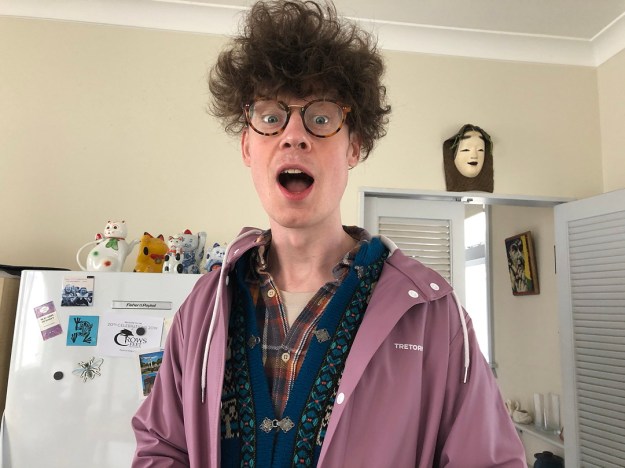
Interviewing Michael Pedersen was a poetry highlight for me. He was staying in my AirBnB suite between VERB and a South Island tour when he asked me, “Do you have guests on your podcast?” I said no, then I saw sense. His brilliant reading of ‘Gravity’ and crazy clever conversation will kickstart a new podcast next year to be called Growing Poets. That was such fun.
Gregory O’Brien
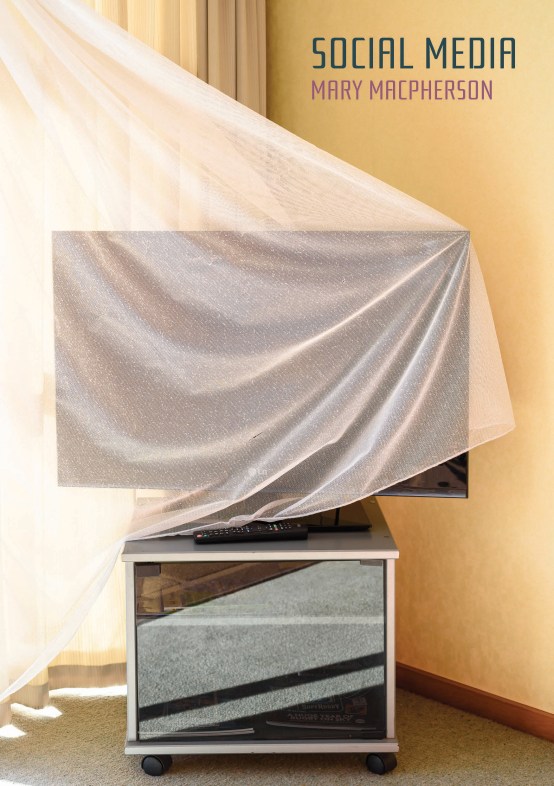
With the publication of Social Media (Cuba Press), Mary Macpherson consolidates her position as Aotearoa’s official, unassailable photographer/poet-laureate (a life-long rather than a biennial appointment, in all likelihood). Her collection begins–appropriately for a Dunedin-born writer–with a (burning) sofa in a studenty suburb:
Music from behind the hedge
rises wild over sharp leaves
saying, dance like a tree.
You imagine a leaking
leaning sofa crashing
the party: the big guest
everyone climbs on…
While not necessarily in the same key, the rest of the book is of the same calibre: immaculately crafted, sparky yet supple, finely registered–everything a book of poems or an exhibition of photographs should be.
Jeffrey Paparoa Holman

Poetry at Paparua Mens Prison, Christchurch
Just back from our prison book group where I shared a new poem there, about bees. The talk then turned to animals, after I’d mentioned Burt Lancaster in the 1962 film, The Bird Man of Alcatraz, how he fed birds from his cell. One of the prisoners told me about an inmate who fed a magpie through his cell window, and how the bird returned, daily. Another spoke of a gang member with a pet spider in a dish, that he hydrated with damp toilet tissue. Inside every criminal is a child, inside all of us is a crime, somewhere. Dog Whistler Simon Bridges has no bloody idea what human beings have to survive each day. Raptor SWAT teams? Give me strength – he’s unfit for the role of the nation’s leader, if he keeps this up. Read some poems, Simon. Try Oscar Wilde’s ‘The Ballad of Reading Gaol’.
Aimee-Jane Anderson-O’Connor


For me, poetry has been the thread that has kept 2019 from unravelling. I have been so lucky to have the freedom and funds to travel between Wellington and Hamilton this year (still pinching myself about the spinoffxrise residency I got to take up in Feb). It has been a year of highlights and I will not catch them all here. This is a cop-out and also the truth.
Five poetry books have lived on top of my bookcase and every time I try to put them away, they end up in my hands again:
AUP New Poets 5, featuring three poets I have long-admired: Carolyn DeCarlo, Sophie van Waardenberg and Rebecca Hawkes. These are the poems that are especially dog-eared: from Carolyn: ‘Redwing’, ‘Castle Point’. Sophie: ‘red brick, stamford street’ ‘it is only the morning’. Rebecca: ‘Gremlin in sundress’, ‘Overladen trellis’.
ransack, essay may ranapiri. I have read it over and over and always find something new in it. Shivers every time. essa is a genius.
How to Live, Helen Rickerby. Ars poetica, philosophy, feminist reclamation. When I finished reading this I cried in public and didn’t even try to hide it.
Conventional Weapons, Tracey Slaughter. Visceral. Tender. Electric.
Sport 47, ed. by the brilliant Tayi Tibble. This issue is an essential. Obvs.
This year I have drawn inspiration from too many dreamy poetry readings to count. Some highlights have been a reading series in our shed with my wonderful writing group: liv.id, Rebecca Hawkes’s lush ‘Chipped Teeth on Crystal Glasses’ event, the launch of Mayhem 7, the Pegasus Books poetry series, Wellington Feminist Poetry Club, Hamilton’s Queer Writers Read Things, Poetry in Motion, and everything Verb.
Zarah Butcher-McGunnigle

To be honest I’ve not been reading a lot generally, and I don’t read much poetry these days…the only book of poetry I can remember reading this year is I Love Shopping by Ren Cook, fortunately I liked it and I’ve reread it a few times. There are lots of different speakers across the prose poems but the tone overall feels sincere/sentimental/childlike (in a good way). I Love Shopping is published by glo worm press, a small indie press based in Philadelphia. They publish e-versions of their books too (I purchased I love Shopping as a pdf download).
Michele Leggott
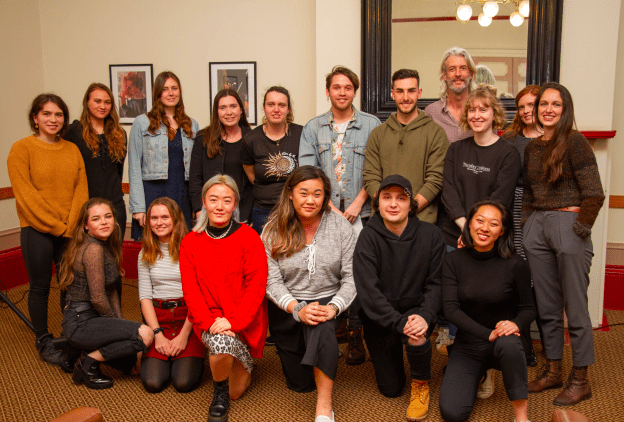
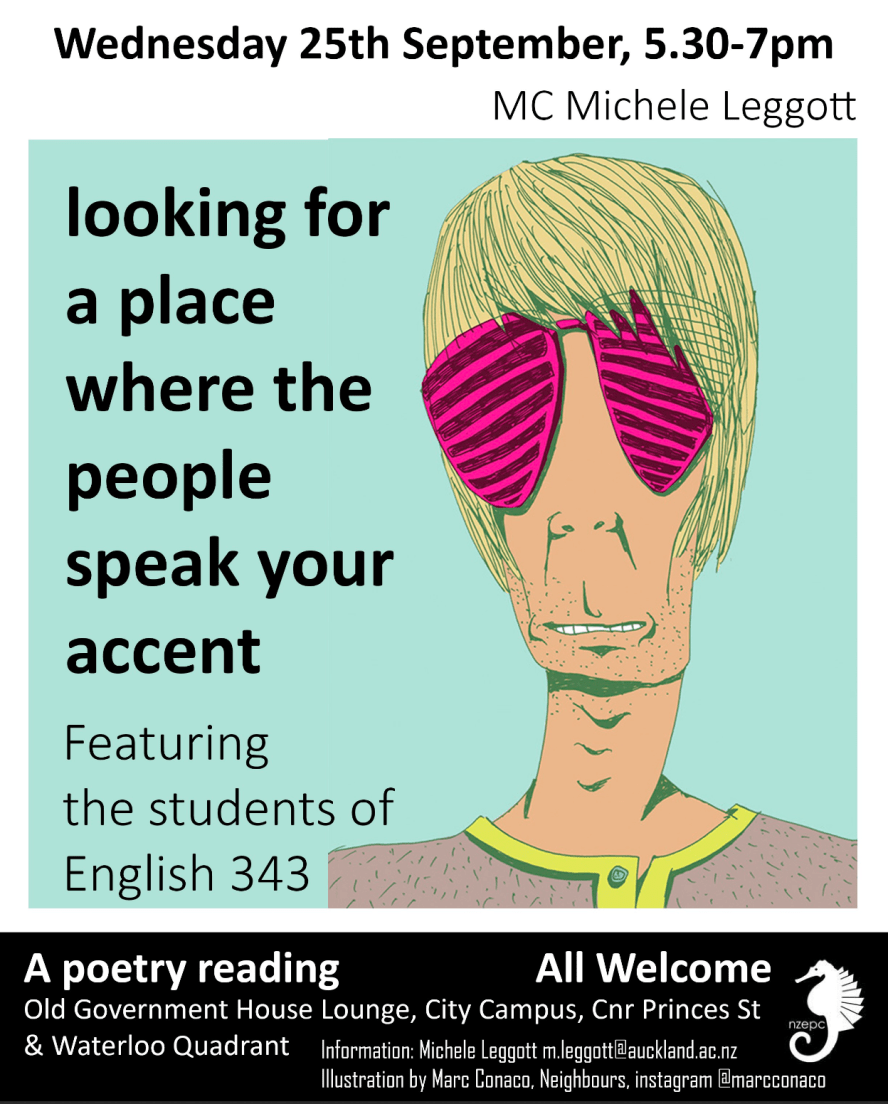
LOUNGE 70: stage 3 Writing Poetry class takes the stage, 25 September reading scripted collaborations of recent portfolio work. There are five groups, each with a theme: move-look-listen-touch; first house of memory; writing with an other: dreaming the archive; the social space of poetry. Much editing, many performance decisions, rehearsals and re-rehearsals. On the night it comes together beautifully. Janet Charman jumps up to give away a copy of her poetry book surrender and tells the class they are fabulous. She emails us next day to follow up: ‘I was simply gobsmacked by their chutzpah. It was a wonderful event. In terms of creative content, collegiality (so matrixial in terms of the structure of the performances: besidedness with “the other”) and sheer theatre. I think this lot will be a year to watch.’ We think so too. Here they are: Rachel Mawdsley, Hazel Oh, Arielle Walker and Melissa Wong; Ruby Esther, Sarah Kolver, Brooke Nicholls and Josiah Tomkins; Blaine Kelly, Sean Vartianien, Christine Tuck and Zoe Webb Sagarin; Marijke Geerkins, Lily Holloway, Emily Scopes and Tayla Westman; April Geers, Josh Hetherington, Gemma Hoyle and Sherry Zhang.
Johanna Emeney
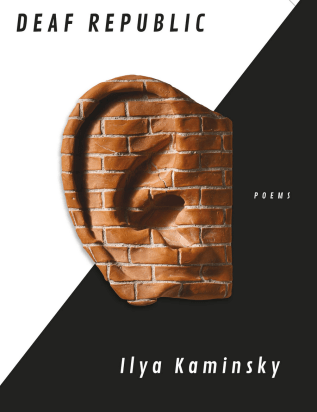
If you go to The New Yorker, you should be able to read most of the play-like poetry collection that Ilya Kaminsky has produced this year. Deaf Republic (Graywolf Press, 2019) is set in the fictitious town of Vasenka. Its inciting incident is the shooting of a deaf boy, Petya, by occupying soldiers. This catalyses an insurgent deafness among the townspeople, who, henceforth, will not speak to the soldiers; they devise a sign language among themselves by which to communicate. The book allows us to read the glossed signs. They are repeated frequently enough for us to master them by the collection’s end.
Deaf Republic is not only a compelling series of poems investigating oppression and resistance in times of political unrest, but also a work about about D/deaf experience, underlining the way in which deafness and other disabilities are at last moving from being perceived as medical issues to being understood as minority issues. The old ‘act of god’/medical models of disability are being usurped by the socio-cultural model, by which we come to understand that disability is something constructed to a large degree by the environment in which a person with impairments lives. “The deaf don’t believe in silence. Silence is the invention of the hearing,” says Kaminsky.
The universality of the collection ensures that it will endure; it will touch many, many readers. The last poem of the collection is incredibly resonant, given the world in which we now find ourselves. If I was still a classroom teacher, it would be on my must-teach list for 2020. Certainly, my university students will see it in the first semester of next year:
Inhabitant of earth for fortysomething years
I once found myself in a peaceful country. I watch neighbors open
their phones to watch
a cop demanding a man’s driver’s license. When a man reaches for his wallet, the cop shoots. Into the car window. Shoots.
It is a peaceful country.
We pocket our phones and go.
To the dentist,
to pick up the kids from school,
to buy shampoo and basil.
Ours is a country in which a boy shot by police lies on the pavement for hours.
We see in his open mouth
the nakedness of the whole nation.
We watch. Watch
others watch.
from ‘In a Time of Peace’
Rebecca Hawkes
There have been too many great poetry books this year to pick favourites (fiiiine, as a taster Ransack, Night as Day, Moral Sloth, A Woman’s Heart is like a Needle at the Bottom of the Ocean…) not to mention all the hot zine and journal action( Sport 47!!!! Te Rito o te Harakeke! Food Court!), and the festival lineups have been killer too (Featherston Booktown was such a treat and Harry Josephine Giles’ Drone in Verb/LitCrawl was a sensuous cyborg knockout).
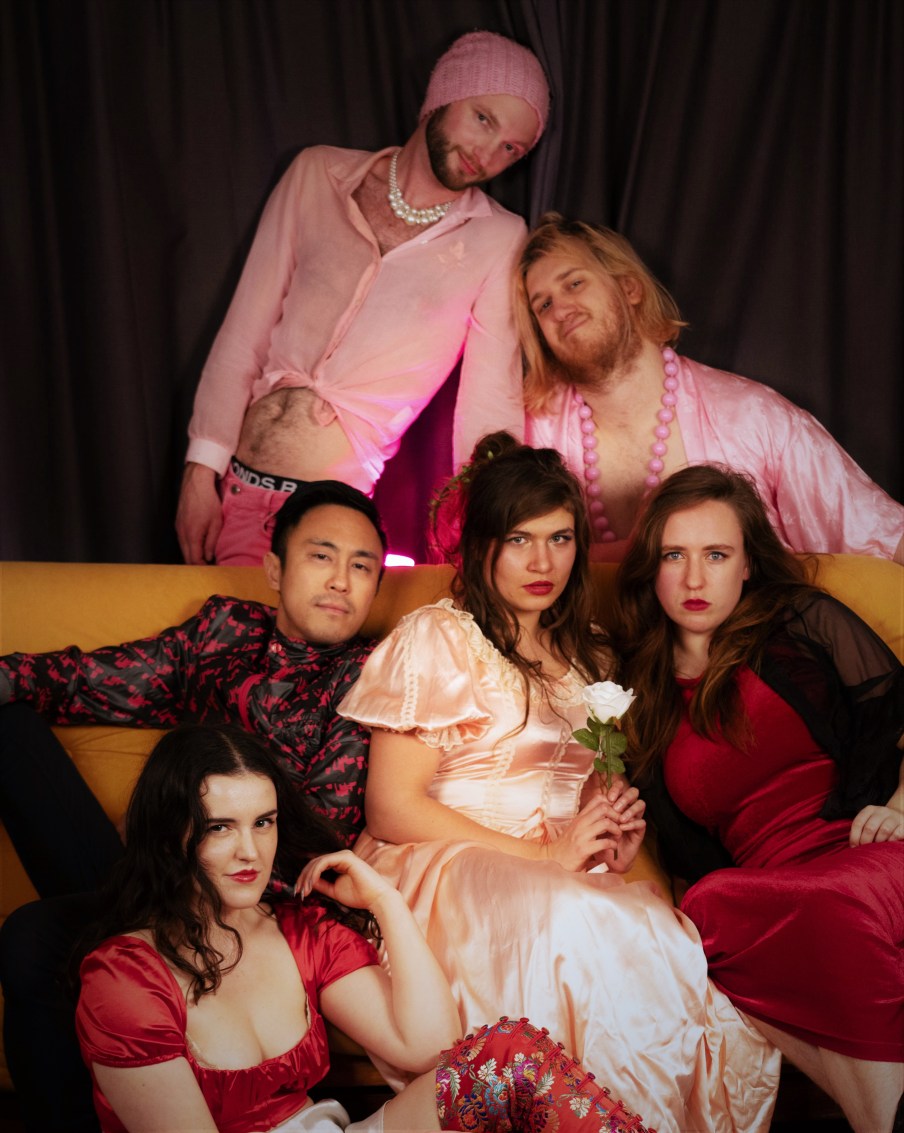
Show Ponies was one poetry event I have carried around in my heart since winter. This poetry day extravaganza saw six poets (Freya Daly Sadgrove, Chris Tse, Sam Duckor-Jones, Jackson Nieuwland, Joy Holley and I) collaborating with musicians, dancers and threatre folk under pulsing pink lights at Meow. It was a highwire performance which could have failed tragically, and a fair few people thought it would until they saw it. But if we could sing, we’d all have a crack at being rockstars instead of writers… right?
Despite my enthusiasm for ill-advised karaoke choices, I’d never really considered that poets ourselves could scream into a mic with a fully choreographed ensemble of backup dancers and bass beat throb. Show Ponies was a risky plunge, but also an opportunity to peacock and not feel like impostors on a stage. To not mumble our way through the self-deprecating banter that afflicts local writers who don’t want to come off as taking ourselves seriously… but also not to take ourselves too seriously, to work damn hard but also to play hard, ludicrous in a packed bar clad in velvet and wedding-gown satin, our feathered bonnets and sequinned cloaks. If we wanted a smoke machine, we could have a bloody smoke machine.


The show wouldn’t have happened without the tenacity and sheer creative force of Freya who shepherded the whole crew through ego and doubt, last minute venue changes, ballooning fees and re-choreographing cast switcheroos. Working with so many writers I admire on a project where the only limit was ‘well, what do you want to do?’ (+ budget + time + scheduling around everyone’s day jobs lol) was unbelievably precious. I’ve been harbouring a lil wish since then that we can one day do it all again. And it sounds like the Show Ponies will indeed be galloping back for a new gig in 2020, so stay tuned …
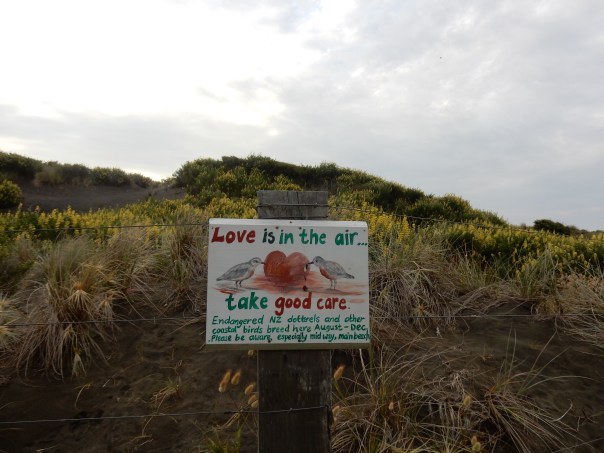
Thanks everyone! Let’s stayed tuned for more poetry at festivals, in bookshops, in cafes, in the streets, on our bookshelves, in all media, on blogs, at the beach, in the bush, from the very young to the very old, in a dazzling universe of ways (quiet is good too!).
Aroha nui
Paula
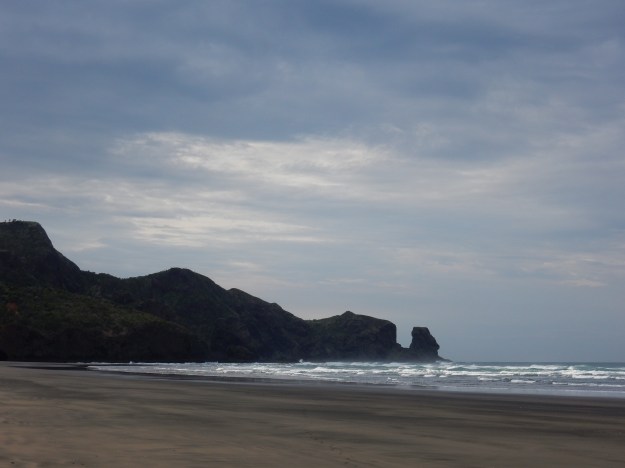
Te Henga dawn
On RNZ National this morning people found it hard to talk about other unrelated things when a terrible tragedy was unfolding. We saw the image of Whakaari White Island erupting yesterday afternoon. Now we begin to hear of the injury and the loss, and the multitude of people – individuals, iwi, communities, helicopter pilots, skippers, medical workers – who have worked, and are still working, bravely and tirelessly. At times putting their own lives at risk. And our Prime Minister is there. Our hearts go out to friends, families, co-workers, co-travellers. Such sadness at the loss and harm, such gladness and gratitude for our leaders and communities. My heart is bursting. Our hearts are bursting.
The Plotz
Phlegmatic, I’m not one to plotz or wax
nostalgic for a life that could’ve been.
I bumble forward, shuffling in my tracks
to work and back again. The kitchen’s clean.
I use Excel to calculate Kate’s tax.
I had once dreamt I’d be a libertine,
admired for simile and malaprop.
The 90s raised me up then let me drop.
Back then, each anecdote would cost you corkage,
my poems swigged on flasks, were furious
and hot with psychedelic flash and squawkage.
I blazed, affectedly bi-curious.
These days I just complain about the mortgage,
all other matters somehow spurious
and flat. I spend the evening sudsing plates
and pots, in fear of rising interest rates.
Not one to plotz, I’m private, careful, flaccid.
How did I change? One moment I wear blouses,
vinyl shoes, I’m pulverised on acid,
the next I’m at the bank discussing houses
or circling with a whiteboard marker ‘hazard
class’, a tucked-in shirt with belted trousers.
I want to understand, to tweeze this tuft.
Did I grow up? Or was my brightness snuffed?
Before I went under a nom de plume,
before the bank had made a covenant
with me to slavishly add commas to
abhorrent documents for subsequent
emolument, I lived in Oamaru.
(I still took money from the government,
the dole.) And from that opposite of Eden,
I drag the band with me down to Dunedin.
I trip the halls like velvet under
my beret, a lip-stuck elf with pointed toes.
I study language, thought, but wonder
why, in chief, so few enjoy my gigs, or prose.
A typically blind-spotted blunder:
I’m unchanged it seems. Less fresh of gill, less rosy
eyed, perhaps, but so alike in fact
of taste and dreams. My foibles are intact
at least. The years gallumph like this. I shake
songwriting off and go for verse. They’re kinder,
literary types. I’d tried to break
our demo to a label not inclined to
it. Pete from Snapper said we’re a mistake.
I graduate, am single (dumped), and find a
bookshop gig. It’s 1998.
I chase a girl, and demonstrate I’m straight
by kissing boys just to ensure we will
avoid the sin of overegging hetero.
My gender freedom is sartorial.
Free too from time, I dress embracing retro.
London is more dictatorial.
It frowns. And though years pass before I let go,
it schools me how to look more apropos,
to come across more man than man-mango.
The movie I’d self-finance of my life
(the casting option either Aquaman
or Jesse Eisenberg – and here my wife
can roll her eyeballs) would compact a span
of years into a weekend on a knife-
edge. Sleeping at a bus stop backward, fanned
around my bag, cold in PVC,
I doze, am homeless, terrified, but free.
Above, the stars are smothered by the smog.
I’m outside Heathrow, stuck until the Tubes
resume. They treat a person like a dog.
To bed, they say, till six. Go to your rooms,
you Londoners. The pubs lock up the grog.
But airports, they’re all hours, one presumes?
Two coppers sweeping shake their heads, say no.
I make it through the night outside, then go.
I stay with Andy’s friends near Glastonbury.
I have no job and live on money sponged
from Kim, back home, who’d said if drastically
required I could use her card – I lunged –
and cash from Mum as well, left spastically
behind in Wimbledon. Their flat’s implunged
in odour, but they offer me a niche
to kip in, and tobacco with hashish.
The two are always smoked together, all
day long and every day by him in whom
I see a British doppelgänger, tall
and slim, long hair. It’s not the constant fume
emitted from his lips that splits us, or will
once I partake. It’s that he bears a gloom.
That’s Britain, and its thrashing underclass.
He takes a kicking in an underpass.
The nights unfold with dramas of the poor.
A day’s work picking peas from yellow turf.
We mark the solstice drumming on the Tor.
At Argos, blag a tent, intending to return
it after camping in the mud before
the policy – ‘no questions’ – comes to term.
The festival itself is glad, we’re gladder
still we stole in with a home-made ladder.
Returning back to Wimbledon, I claw
my horde of traveller’s cheques in glee
then crash out in the sticks, a room, well, floor
some kid – the dealer of whose ecstasy
I’d met – extends an open offer for.
This stranger’s kind. I rest my neck rent-free.
One sleeps more, if turns less, when in a bed,
but cushions brace my hip and ease my head.
The weeks rotate. I get a ten-hour job,
but till I’m paid, possessing no per diem,
I can’t examine ethics like a snob.
I think, ‘They’re not as hungry’, when I see them.
‘These tourists shouldn’t miss a couple bob,’
and fleece them as they ramble the museum.
That is, the cashier does, when she miscounts
their change. I simply balance the amounts.
Asleep, the kid I stay with moans and keens.
Still dossing every evening in the sticks,
the tube and bus is just within my means
but only once perfecting certain tricks
to keep the Travelcard inside my jeans.
I search under his bed, there’s porn, the pix
are strange to me: in each the women flick
their eyes to where above there hangs a dick.
Two times I sleep at Jon’s. His place is bleaker:
Paddington, guests not allowed, and stinking.
My presence irks his girlfriend, one Tameka.
I was naive to leave New Zealand thinking
that I’d just stay with Jon, the pleasure seeker.
The cops raid our speakeasy. But a winking
dealer passing sells us . . . oregano!?
‘Race traitor!’ chirrups T like a soprano.
The lowest point before I get a proper
bedsit of my own in Saint John’s Wood,
is when I beg Tameka for a Whopper,
and she assents, annoyed to feel she should.
This is the seed. I never want to cop the
look again. And so ends childhood.
The film returns. I’m at the bus stop, cold,
inhaling in short draughts. The credits roll.
I grow I think from this. I learn the scaled
threat of non-conformance. It’s no shame
and easier to navigate regaled
as others, smart, domesticated, tame.
Another view is that in fact I’ve failed
to change a jot. That I remain the same
pretentious fool and cautious pragmatist,
and always was a dry protagonist.
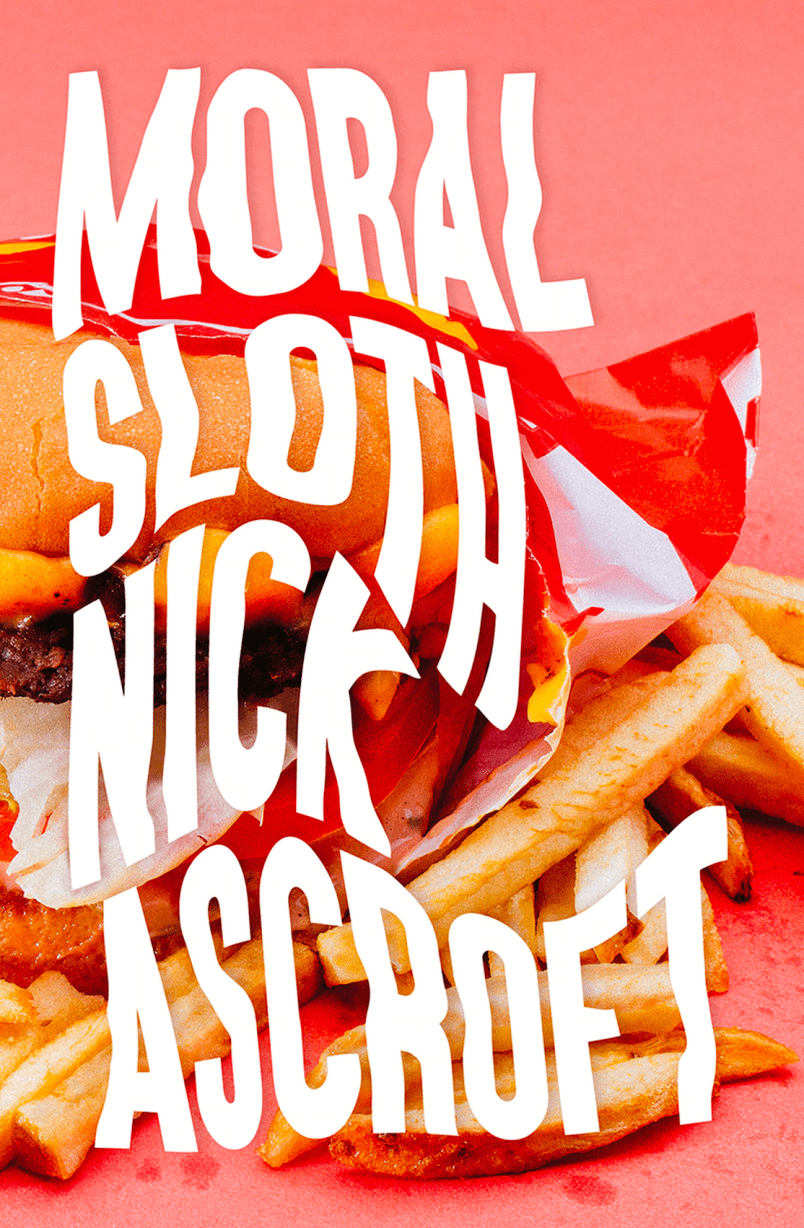
Nick Ascroft, from Moral Sloth, Victoria University Press, 2019
Nick Ascroft has released four collections of poetry through Victoria University Press. The latest, Moral Sloth, appeared in November. Kapka Kassabova once said of his face that ‘it shines through the obscurity of life like / fake gold’. Burn.
Victoria University Press author page