Author Archives: Paula Green

Poetry Shelf noticeboard: Winners of the 2019 WriteNow Dunedin Secondary Schools Poetry Competition

Screen Shot 2019-08-19 at 9.12.13 AM.png

Poems showcase rising stars of poetry
The winners of the 2019 WriteNow Dunedin Secondary Schools Poetry Competition have been chosen from a strong field of entries by judge Fiona Farrell, one of New Zealand’s most acclaimed and versatile writers.

Fiona was particularly impressed by Darcy Monteath (Year 10 Logan Park) who took out first prize in the Junior section for her poem ‘Overcoming grief in the form of birds’.

In her judge’s report Fiona said,

“This is an extraordinary poem, and far and away the best of all the poems, Junior and Senior, entered in this year’s competition.

The poet understands the power of metaphor, not just the birds but the landscapes they inhabit, beginning with the tarmac that is replaced suddenly round a corner by ‘everlasting fields’ and the kotuku with its ‘rounded shoulders’. The poem is a tangible realisation of the journey through grief to the moment where in a transcendent and utterly beautiful image, the poet faces ‘directly into the sun’ where bird that is also the father is ‘rising, singing’. The whole work is superbly structured and delivers real emotional weight.

A second poem submitted by Darcy was equally impressive. ‘Think White’ is superbly crafted. The poet shapes the work around that introductory ‘Think…’ then proceeds to elaborate on three words: ‘candescent’, ‘ailment’ and ‘gleam’. The result is a highly sophisticated work, by a writer blessed with an acute sensitivity to language and an artist’s eye. The three sections are drawn together to form a tantalisingly elusive narrative, through colour and form. This is a young poet to watch.”

First prize in the Senior section was awarded to Caitlin O’Brien (Year 11 Columba College) for her poem ‘Body bags on the beach’. Fiona said,

“The image of bags like ‘huhu grubs’ on the sand is arresting, and the sense of coming awake in the morning round a cold fire is perfectly timed, with that pause before the final word ‘conscious’. It takes a small moment in someone’s life and uses language and poetic form to make it very special.”

Second prize in the Senior section was awarded to Judah Nika (Year 11 Otago Boys) for ‘Life comes life goes’ and third prize to Abi Barton (Year 13 Logan Park) for ‘The Survival’.

Second prize in the Junior section was awarded to Ella McBride (Year 9 Queen’s) for ‘Candy floss skies’ and third prize to Jessie Avison (Year 9 Queen’s) for ‘Book Fish’.

Further details and all the winning poems visit here.


Screen Shot 2019-08-19 at 9.12.27 AM.png

Poetry Shelf noticeboard: Writers on Mondays Best NZ Poems 2018


Screen Shot 2019-08-18 at 12.51.47 PM.png


Best New Zealand Poems 2018.

Best New Zealand Poems is published annually by Victoria University of Wellington’s International Institute of Modern Letters. Get ready for Phantom Billstickers National Poetry Day (on 23 August) by coming along to hear nine of the best read work selected for Best New Zealand Poems 2018—and be sure to visit the website to view the full selection.

Join 2018 editor Fiona Farrell as she introduces Nikki-Lee Birdsey, Jenny Bornholdt, Doc Drumheller, Sam Duckor-Jones, Bernadette Hall, Anna Jackson, Therese Lloyd, Mary McCallum, and Chris Tse.

Writers on Mondays is presented by the International Institute of Modern Letters and The Museum of New Zealand Te Papa Tongarewa.

These events are open to the public and free of charge.


Poetry Shelf review: Starling 8 Winter 2019

Screen Shot 2019-07-23 at 9.10.16 AM.png


Read the journal here

I have poetry interviews on the go, poetry reviews on the go, a leaning tower of poetry books to read (this morning it toppled), questions for me to answer for my new books, a study that needs sorting after four years of intense work ( it needs to be like the clean sheet before I begin again), a house that needs spring cleaning, a veggie garden that needs weeding, fruit trees that need planting, novels that call to be read, doodles that need doodling ….. and after being awake for hours with the marine forecast and Jeffrey Paparoa Holman’s pilot memoir on RNZ National all I feel like doing is making a lemon honey and ginger drink and reading the brand new Starling.

Starling is edited by Starling founder Louise Wallace and Francis Cooke and publishes the work of writers under 25 which is a very good thing. Starling always exposes me to new voices that I am dead keen to read more from.

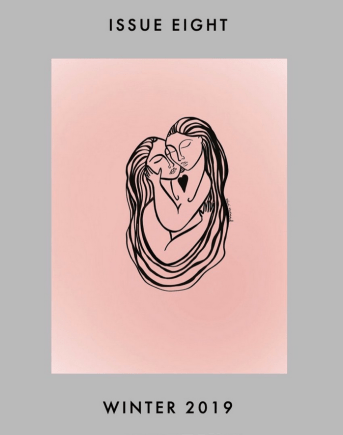
This issues includes the work of 20 writers, an eye-opening interview with Brannavan Gnanalingam and the extra cool cover art of Jessica Thompson Carr. It is women rich, there is fire and cut and lyricism. I loved every piece of writing – no dull grey spots. Just an inspired and inspiring celebration of what young writers are doing


Here are a few tastes to get you linking.

Tate Fountain is a writer, actor and student in Auckland. Her tour-de -force poem ‘Dolores’ busts up form, ‘you’,  expectation and what good is poetry. It gently kicks you in the gut with ‘ashes in the back of a car’ and shakes your heart with ‘maybe craft is love and love is attention’. The pronouns are adrift as the lines stutter and break;  F Scott Fitzgerald makes an appearance, and Kandinsky. Sheez this poem electrifies. I am now on the hunt for Tate’s Letters; she describes it ‘perhaps [..] blasphemously as an extended chapbook’.

Nithya Narayanan is currently doing a conjoint degree (BA / LLB) at the University of Auckland. Her poem ‘Hiroshima’ held me in one long gasp as the mother / daughter relationship links the title to the final ‘bomb’ stanza. This is confession at its most radioactive (excuse the pun) with a rhythm that pulls and detail that hooks.

Rose Peoples is a student at Victoria University. Her poetry has appeared in Mimicry and Cordite. Her extraordinary poem ‘The Politics of Body Heat’ begins with a woman pegging washing on a line, then moves through cold and sexism, female syndromes and disappearances. You just must read it.

Think –
Have they forgotten the fear
of a cold hand on the back of the neck?
The dread of an icy whisper?
Remember this –
It is easy to disappear in the cold.


Morgan McLaughlin is an English lit graduate and describes herself as a fierce feminist. It shows in her poem ‘1-4’, four prose-poem pieces that subvert numerical order as clearly as they lay down a challenge to patriarchy. The writing is lucid, sharp as a blade and deliciously rhythmic.  I would love to hear this read aloud. I want to read more.

Meg Doughty recently completed an Honours degree in English at Victoria University of Wellington. She says she is a reactionary writer who is fascinated by the everyday mystic. Her poem is like two heavenly long inhalations that pick up all manner of things, herbs, birds, cats, fire, and I am caught up in the idea of poetry as breath (again, see today’s Herald!!). Then I reach the end of the poem and here is the poet breathing:

I stir
hover over the steam
and breathe in
I know how to live in this world


Mel Ansell is a Wellington poet whose brocade-like poem ‘Cook, Little Pot, Cook’ (I have used this term before) shimmers and sparks with surprise arrivals as I read. Ah poetry bliss where food and love and place and home rub close together.
Rebecca Hawkes is in the recently published AUP New Poets 5 with Sophie van Waardenberg and Carolyn DeCarlo. She has a cluster of poems here that show her dazzling word play, the way images and detail build so you are swimming through the poetic layers with a sense of exhilaration (it was like that when I heard her read at the launch). Her poetry is so on my radar at the moment.

I want to read more from Danica Soich.

Joy Tong is a Year 13 student at St Cuthbert’s College. ‘Tiny Love Poem‘ is pitch perfect.

Hebe Kearney is from Christchurch but is currently studying to complete her Honours in Classics at the University of Auckland. Her poem ‘Bukit Ibam, 1968’ is so divinely spare but opens up inside me, like an origami flower that unfolds family:

a story in a cage. dad,
you recount my grandmother
through the mosquito netting baking
tiny raised cakes.


Thanks Louise and Francis. This is a terrific issue. Now I need to head back to my long list of jobs to do before I head back down to Wellington for National Poetry Day.


Poetry Shelf noticeboard: Victoria University of Wellington announces second Emerging Pasifika Writer’s Residency for 2020.

The Residency is jointly funded by the University and Creative New Zealand. It includes a writing room and a stipend of $15,000 and will run for three months during the first half of 2020. Applications are open now.

Current Resident, playwright Leki Jackson-Bourke says, ‘Where I come from, writing isn’t really a “thing”. Being here at the IIML as the inaugural Emerging Pasifika Writer in Residence dispels that myth. It has been such a luxury to have extra time, space and resources—and being away from my community has given me time to reflect on how important it is for us to champion and write our own stories. We must tell our truth, before someone else does.’

The Residency is unique in offering the chance to work in a stimulating, established community of writers, with a mentor from the Pasifika arts community. Leki’s mentor, renowned playwright Victor Rodger says, ‘As well as close involvement with his own writing, the mentorship has given Leki the chance to encounter works which have challenged, provoked and expanded his frame of reference and which, I believe, will help his development as a writer.’

The IIML welcomes applications from writers at an early stage of their careers, with a growing body of work. Applications are invited from writers in all areas of literary activity, including drama, fiction and poetry (page and performance), devised performance, creative non-fiction and graphic novels.

‘This is a fabulous opportunity for a new Pasifika writer to work on a creative project in a stimulating and supportive environment. I am very excited,’ says Assistant Vice-Chancellor (Pasifika) Dame Luamanuvao Winnie Laban.

IIML Director Professor Damien Wilkins says, ‘There are so many exciting things happening in Pasifika writing and we’re thrilled to be involved with this residency.’

The application deadline is 30 September 2019Apply here (position reference # 3012), or for further details please contact modernletters@vuw.ac.nz


Poetry Shelf Friday talk spot: Medb Charleton on The Element of Surprise

The Element of Surprise


I have a weakness for abstract metaphor and modernist imagery that probably dates back to my youthful reading where I saw the transformative power of language and was captivated by its beauty. The mysterious relationships between words and their infinite meanings and pairings seemed to me then, and still now, the most amazing thing. It taught me that all things contain shared elements in different combinations. I do try now, when I find myself working on a poem in blindfolded trepidation, to add the lightness of my own speech and thought processes, voice, to the lines and keep grand sweeping metaphors like ‘the eternal snow of stars’ (Stéphane Mallarmé) somewhat at bay.  I’m interested in ideas in poems, in poems as transportation for philosophical inquiry but also as meditation on life’s experience. It’s difficult to say what makes a poem triumph for me, but I do return (like Robert Duncan in ‘Often I am Permitted to Return to a Meadow’) to the element of surprise.  Whether it’s an unworldly tone or a perfect, new comparison or the use of unusual diction, the more outlandish, the farther out the poet has been on their journey creating. But there is also, of course, surprise in simplicity. The delivery of emotion in a weightless world. Just as in space where a feather and a hammer fall at the same pace. Perhaps poetry is the search for sacredness in places, or a pursuit of meaning, but it’s the element of surprise that catches off-guard and accesses immediately the reader’s dream.


Medb Charleton


Medb Charleton grew up in Sligo, Ireland. She did an MA in Creative writing at the IIML in Wellington and since has published poems in Landfall, Sport, JAAM and online.


Poetry Shelf audio spot: Frankie McMillan reads ‘The Honking of Ducks’

Screen Shot 2019-08-14 at 6.53.58 PM.png


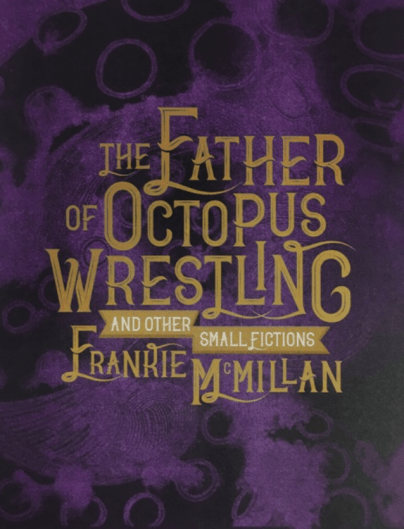
‘The Honking of Ducks’ is a prose poem from Frankie’s new collection The Father of Octopus Wrestling and other small fictions, Canterbury University Press, 2019.


Frankie McMillan is a poet and short fiction writer. She has published five books including My Mother and the Hungarians and other small fictions, long listed for the 2017 NZ Ockham awards. In 2018 she co edited Bonsai best small stories from Aotearoa New Zealand. She has won a number of awards and in 2014 held the Ursula Bethell writing residency at Canterbury University. In 2017 she held the University of Auckland/Michael King writing residency. Her forthcoming book The Father of Octopus Wrestling and other stories will be launched by Canterbury University Press on August 31st 2019.


Canterbury University press author page


Poetry Shelf noticeboard: Anna Jackson’s launch speech for Helen Rickerby’s How to Live


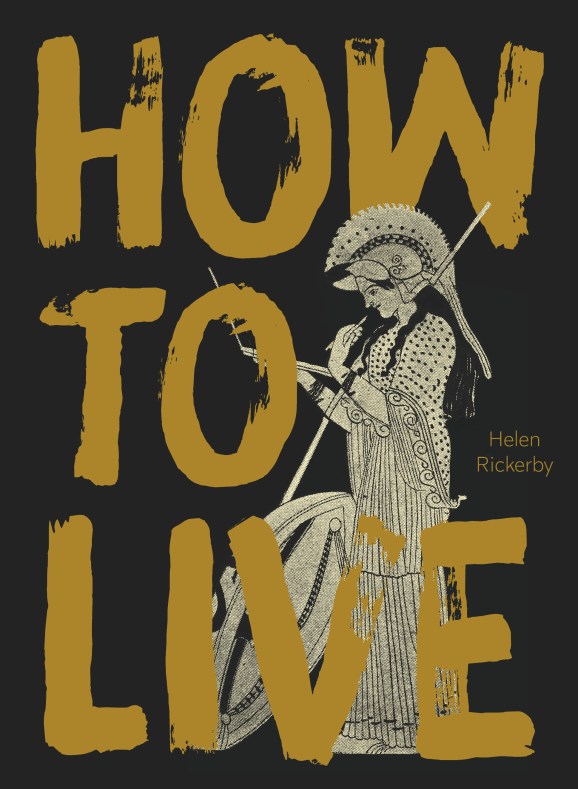
Rickerby_How to Live.jpg


Helen Rickerby, How to Live

 Helen Rickerby’s ‘Notes on the Unsilent Woman, Note 2’: ‘Perhaps the first thing you need to know is that women in ancient Athens didn’t get out much. No dinner parties, no debate, no public life. Unless you were already ruined. Or unless you were Hipparchia.’

Times have changed – and here we all are – to launch Helen Rickerby’s How to Live alongside AUP New Poets 5.

Before I talk about How to Live, I want to thank Sam Elworthy for supporting my wish to see the AUP New Poets series relaunched, for sharing my enthusiasm for poetry and projects generally, and for all he does for New Zealand poetry. I’d also like to acknowledge Elizabeth Caffin’s role in launching the series of AUP New Poets in 1999, and Anna Hodge’s support of the series under her editorship, and I’d like to thank the whole AUP team for everything they have done to support this beautiful collection of poems I love so much from Rebecca Hawkes, Sophie van Waardenberg and Carolyn DeCarlo. Most of all I want to thank the poets themselves for the extraordinary poetry which is setting this series back in motion.

I first knew Helen Rickerby when we were both fairly new poets ourselves, and I knew her poetry before I met her. I was very taken by her Theodora character in her first collection Abstract Internal Furniture, and the way the whole collection glitters with dark comedy, rapid shifts of scene, and exuberant detail. ‘I think I’ll edit out those long   silences’, she writes in one poem from that book, though even back then she was deciding to ‘leave in some of the shorter ones for effect.’

Now – several books of poetry and many years later – we have the book-length considered take on silence – and outspokenness – of How to Live: book-length because the ‘Notes on the Unsilent Woman’ which opens the book sets up questions and ideas that resonate all through the collection.

Notes on the Unsilent Woman, Note 53:

Hipparchia wrote treatises such as Philosophical Hypotheses, Epicheremas and Questions to Theodorus. Letters, jokes, philosophical refutations. All are lost. (Crates wrote Knapsack and Praise of the Lentil.)

A small note can say a lot, and it is a characteristic Rickerby move to pair the loss of intellectual history represented by Hipparchia’s lost treatises with the pointed addition of the titles of the work of Hipparchia’s more famous philosopher husband, to whose life she typically appears as a footnote, at best. His place in this note, in parentheses, after the main point is made, is just one of the many lightly undertaken total overhauls of intellectual history this book of poetry offers.

Its own title – How to Live – indicates its philosophical reach: this is a book that asks the biggest questions. The title poem references Susan Sontag, Helen Keller, Empedocles, Adorno and other philosophers and writers, alongside friends discussing the big questions in person and on facebook – ‘I am forever putting my friends in’, Helen confesses, and her friends are forever finding themselves caught up in extended conversations that take in the details, big and small, of their own lives.

The collection as a whole takes in questions such as how to choose a good fork or how to choose a house; how to read and how to listen; when we choose to suffer – ‘It all depends on / what the other choice is’ – and the question of what poetry is for, what is poetry? It is an urgent question for a poet constantly questioning her own practice, constantly experimenting with form: about the prose-like appearance of some of these poems on the page, she says, ‘I have long struggled against the tyranny of the line break. Am I afraid that if I let the words leak out, they’ll mix with oxygen and become prose?’

What happens in fact is a collection which rewrites the boundaries of poetry and prose to dazzling effect, as, for instance, the interest in portraiture that goes right back to the Theodora character of her first book now gives rise to entirely new forms of biography – the sharply comic, occasionally personal, often poignant and brilliantly illuminating verse essay on George Eliot, in thirteen numbered sections (with sub-sections); the ‘poem for three voices’ moving between the perspectives of Mary Shelley, Victor Frankenstein and the monster himself; the meditation on the life of Ban Zhao as palimpsest, pillow book and personal essay.

If Helen Rickerby is New Zealand’s most intellectually exciting writer (and I think she is), it is not although but because she writes always as a poet, with a poet’s interest always in form.  And it works just as well to turn the equation around to say she is one of the most formally innovative poets in New Zealand, because her interest in formal innovation is always driven by the intellectual ideas she grapples with.

And she’s funny. For all its formal interest and intellectual brilliance, what I really most love about the book is the voice – but for that, I can do no better than to hand over to Helen herself.


– Anna Jackson, 7 August 2019
 

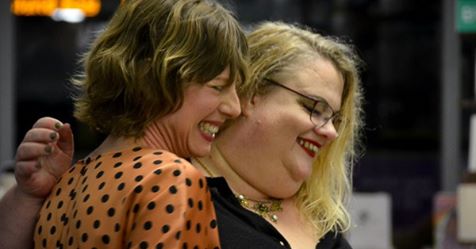
DSC_0295-7.jpg


69231481_896457350741162_5031697055056134144_n.jpg