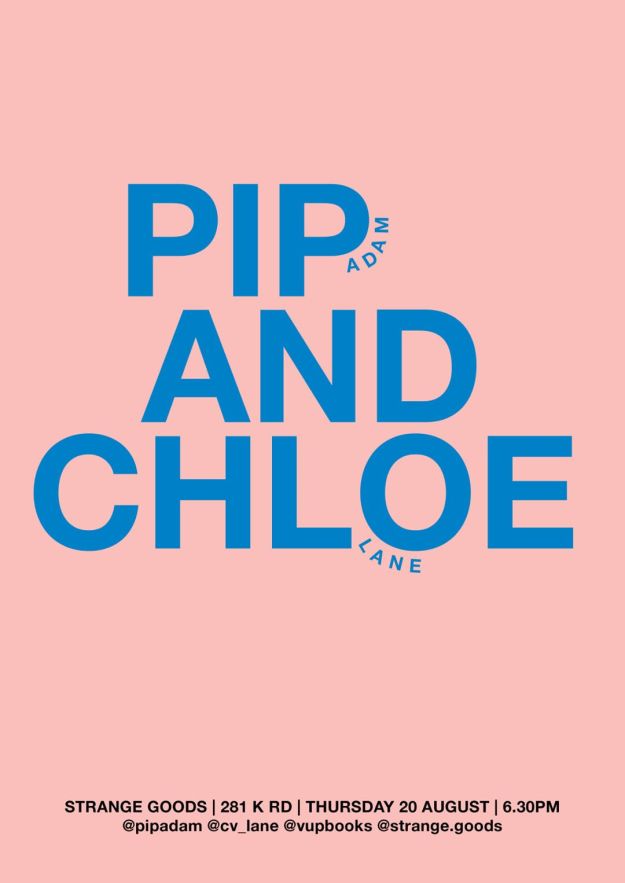
an event to celebrate Chloe’s new novel

an event to celebrate Chloe’s new novel
An Ecopoetics of the Future
Lately, a lot of people seem to be turning to poetry to work through their thoughts and feelings around the climate crisis. There’s a very specific way nature has been used in poetry for a long time, which is very symbolic and focused on the aesthetics of the natural world as some kind of perfect, untouched source of images. This feels to me like an appropriation of sorts, which ignores the reality of the natural world and our responsibilities towards it, as well as the fact that we’re complicit in a very calculated and systematic destruction of the very places we romanticise.
Of course, there’ve been poets writing with environmental themes for a long time, but the school specifically dubbed ‘eco-poetry’ has only been around since the early 2000s, with a few key works of ecocriticism and anthologies of poems claiming the term. Some ecopoets insist on a very rigorous set of criteria for the subgenre, such as John Shoptaw in his essay in Poetry, “Why Ecopoetry?”: “The second way in which an ecopoem is environmental is that it is ecocentric, not anthropocentric.” To earn the label, he says, a poem must not prioritise human interests. The distinction seems small, but it makes a big difference. If a poem can only be an ecopoem if it disregards human interests, it sets us apart as Other to the environment. It suggests that the devastation we inflict moves in one direction only, outwards from ourselves, and that the impacts are all in non-human spaces.
The reality is that we live within the environment. We are not separate from nature, no matter how much it can sometimes seem like it when you live in a city. The perpetuation of that idea is incredibly dangerous, as it allows us to believe that, in the years to come, as the earth warms, we’ll be fine. It’s become clear that sympathy for the planet’s other inhabitants is not enough to inspire change within our (colonial, capitalist) human systems. For us to implement other, less damaging ways to live, we have to recognise that within our lifetimes, our lives will be worsened—some far more than others, but everyone’s in some way. So, what’s the point of an ecopoetics that focuses only on human action and non-human consequences? It is too late for that.
It also shows a blatant and dangerous disregard for the indigenous peoples who live with the land rather than just on the land. It’s important to recognise the necessity of work like Stacey Teague’s poem “toitū te whenua”, which is a decolonisation poem and a climate justice poem, because the two things are inseparable:
sacred soil settler guilt
the past speaks grief the water speaks pollution
the public sings in the colonial landscape
the womb of the earth is full of protest
As essa may ranapiri writes in their poem from the same collection (Te Rito o te Harakeke, edited by Rangatahi o te Pene, Hana Pera Aoake, Sinead Overbye, Michelle Rahurahu Scott and essa may ranapiri), “where we stand is where we will always / stand / on the whenua that we are / and are one with.” Tangata whenua are part of the land, and so there can be no ecopoetics without tangata whenua.
With the current trend towards environmental poetry, it seems important to ask what we want from this kind of work. One of my favourite poems about the environment is Vanessa Crofskey’s “There’s Real Manuka Honey in Heaven” from issue 7 of Starling, which includes this brilliant image:
a global conference of bees will be livestreamed strapping on
army helmets khaki stripes and matching jet packs
then flying off into the stratosphere in tiny astronautical booties
The poem ends with “the tuatara [singing] a eulogy to the end of the anthropocene” and the cockroaches, who we all know can live through anything, “[waiting] for spring.” It’s the perfect mix of humour and very real devastation, without just saying the same things that everybody else has already said. The world in Crofskey’s poem is the complete opposite from the idyllic landscape of the Romantic or pastoral poets, and humans are very much present. Otherwise how could we take any kind of responsibility for the damage?
Another approach is that of Joy Harjo, whom I doubt James Shoptaw would call an ‘ecopoet’, though hers is some of the most moving writing about the natural world I’ve ever come across. In “For Calling the Spirit Back from Wandering the Earth in Its Human Feet”, Harjo tells us to “Be respectful of the small insects, birds and animal people / who accompany you. / Ask their forgiveness for the harm we humans have brought / down upon them.” In “Talking with the Sun”, she writes, “Humans are vulnerable and rely on the kindnesses of the / earth and the sun; we exist together in a sacred field of meaning.” Harjo isn’t only writing about non-human interests, because in her poems human and non-human interests are one and the same.
I’m interested in a school of poetry that doesn’t restrict or close off possibilities for writing about the environment, while also acknowledging that every piece of writing being written or read now exists in a world in crisis. Like humans, poems do not exist in a vacuum. Everything we read is informed in some way by our lived experiences, and the writer’s lived experiences, and since everybody shares the very big experience of living on Earth, it seems vital to recognise that in the poems we read and write. Moving forward, as we continue to make sense of the natural world through poetry, we must keep asking the question—what do we want from this work?
Ash Davida Jane
Ash Davida Jane is a poet and bookseller from Pōneke. Some of her recent work can be found in Starling, Peach Mag, Scum, The Spinoff, and Stasis. Her second book, How to Live with Mammals, is due to be published by VUP in 2021.
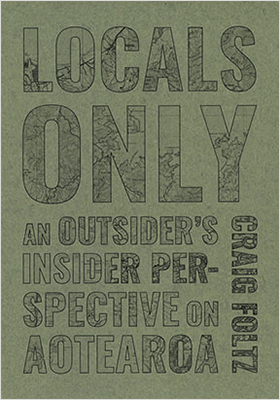
Craig Foltz Locals Only: An outsider’s insider perspective on Aotearoa
Compound Press, 2020
You could think of Craig Foltz’s poetry collection Locals Only as a guidebook to place, unlike any other guidebook you have read, that takes sustenance in small and large pieces, in continuity and fragmentation. In steps and stones, and in stepping stones to here and elsewhere.
Each poem in this book responds to a specific area or regionally significant feature—filtered through the imagined lenses of the people who would be most familiar with it. Mountain passes, rocky outcrops & headlands. Pathways that have been drawn & erased by multiple civilisations. In other words, exactly those things that are unable to be located in the drivers atlas.
The title of each poem is broken in half, half at the start and half at the end, like a broken shell revealing its interior, like a broken journey – as though any movement through place will involve an accumulation of random engagements, never seamless, rich in fascination.
The poet of this collection is both traveller and self-proclaimed outsider. Craig moved here from the States over fifteen years ago, and this book has been slow in the making. No fleeting road trip. I also see the poet as philosopher. The travelling songbird. The cartographer. The cataloguer. The memoirist. The inventor.
How fitting – when we are living with new travel limits – to take a poetry road trip through Aotearoa, north to south, east to north, west to south, coastline to plains. On the left hand side the little map, on the right hand side the poem.
How fitting in these uncomfortable times to pick a place and go travelling.
Sometimes the poet’s sentences are discrete appearances, like the flash of bird out of the corner of one’s eye, like a jumpidity mind settling on this and that when you are away from home.
The silence of language is not necessarily lemony.
At other times there is a little flurry of bouncy links whether alliteration, assonance or theme:
The vocabulary love is the vocabulary of hardware
supplies. Cotter pins. Rub screws. Tube
cutters. Soft bamboo fencing. There is a pancake
house where one cannot order pancakes. Moreover,
there is spiritual degradation & forward momentum,
but no purchase with the ground. It rains,
from ‘Wave—’
Things are porous: the landscape as blotting paper, the sentence as sponge, the eye as fickle hoarder, the maps wide open.
Pronouns are equally mobile. I love the way ‘you’ is on the move, and I feel like I’m invited to step into the active pronoun, and getting imagining and contributing. Not just a passive back-seat passenger.
(…) One of the volcanoes has
the tendency to explode unexpectedly. Whenever it does
we walk down to the harbour & join the rest of the city in
celebration. What is one to do? The poem calls for
a cheerful input at that point, so we trudge along. The sieve
of my dreams has opened up again revealing itself in pink
salts & home recording studio devices. If there is one lasting
image this is it. Snapper patrol the shores while kowhai
are in bloom. Imagine yourself floating in the water alongside
the bloated corpses of your neighbours, jabbing their torsos
to see how much elasticity the tissue of their skin retains.
from ‘Sugar—’
I love the way reading this collection mimics travel. Many of the poems host a triptych of words: three words alliterating like a picnic spot in the poem (‘Tendon. Tender. Tendrils.’). This is staccato reading. I keep stalling to peer through the windows of a poem. I gather echoes and the jumpstart my own connections. I am in the Hokianga breathing in the salty air, the hefty dunes, the deep-set spirituality.
Italo Calvino’s groundbreaking Invisible Cities is anywhere and everywhere in its openness, but it is also specifically Venezia (not that we know that as we read). I mention this, because Anna Gurton-Wachter mentions Italo’s novel and its anywhereness in her endorsement of Locals Only. Craig manages both to open up specific places for us to claim for our own personal roadmaps and also to offer physical anchors that make place a definite point on the map.
Nikki-Lee Birdsey, Ellie Ga and Alison Glenny have also written striking endorsements for the collection. As Nikki-Lee says, Locals Only suggests ‘the act of expression is still an act of hope’. As with any travel, there is wonder, awe, reflection that is as much about language as it is about geography.
Questions arise. They always do on road trips. What does ‘outsider’ status preclude? Who becomes insider? Is travel weighted towards the imagined? Does the act of expression also signpost place as threatened, built on generational narratives as much as valleys and bush?
I am reminded of the dense-thicket poetry of Lisa Samuels that demands an equal if somewhat different series of travel routes. Lyrical. Connection rich. Fractured. Complex. Self confessional. Self reserved. Visually potent. Language loving. Intellectually textured. Endlessly diverting as any good road trip ought to be. I am picturing diversion signs, because I pick up the collection and started reading, and am diverted off route, and find myself daydreaming.
Craig Foltz (US/NZ) is an artist and writer who has lived in Auckland for almost two decades. He has previously released two books on Ugly Duckling Presse.
His website is divided into parts of speech.
Compound Press page
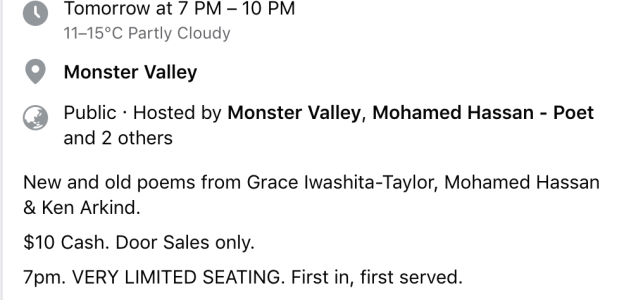
.
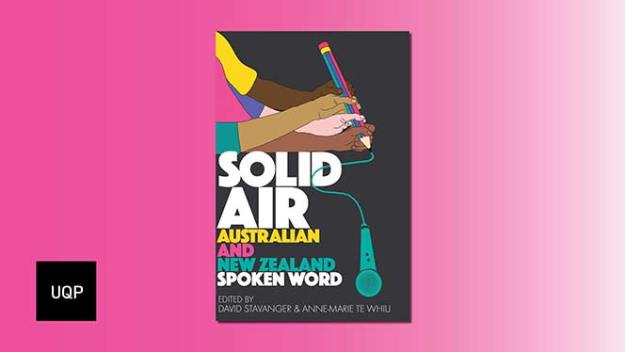
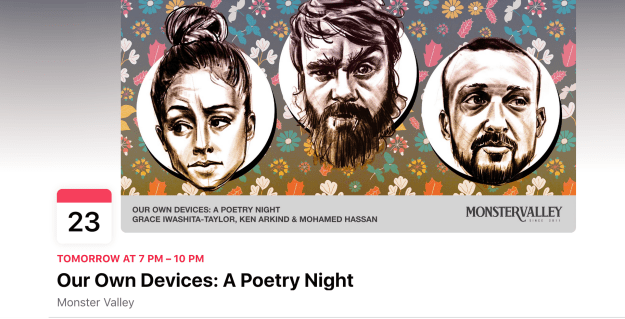
Experience a literary launch of some of Aotearoa’s most vibrant performance poets, who are all featured in the ground-breaking new spoken word anthology, ‘Solid Air – Australia & New Zealand Spoken Word’.
Celebrate the premiere NZ launch of the ground breaking ‘Solid Air: Australia & New Zealand Spoken Word’ anthology. You’re invited to experience a literary line-up launch of some of Aotearoa’s most vibrant poets and spoken word artists.
The event will be MC’d by Michaela Keeble and will feature Solid Air contributors:
Poetry Shelf review of Solid Air
David Eggleton reads ‘Heraldry’ from Time of the Icebergs (Otago University Press 2011). This poetry performance video was recorded live by musician and film-maker Richard C. Wallis on July 10, 2020 in Waikouaiti, Otago.
A Note on ‘Heraldry’
In the 1940s, while living in New Zealand, the novelist wrote of yesterday’s newspapers flapping like hooked flounder in the gutters — as if alive, but grotesque and surreal. That’s one starting point for this poem, the days when the heraldry of the printed newspaper brought messages and proclamations to the towns and farms. My poem “Heraldry’ is a kind of bricolage, assembling assorted emblems and badges of contemporary nationhood into patterns that might be hyperbolic headlines or vatic pronouncements.
In the 1960s, the North Shore poet Kendrick Smithyman characterised poetry as ‘ a way of saying’, meaning that poetry is stylised utterance, a tranced vocalising first and foremost. And so the herald, like a town crier, or street corner preacher, or any stand and deliver blowhard really, has an aspect of the orating poet.
As the poet in this video, I take my authority from its chanted measure, its off-beat rhymes, its curious images. Voicing this poem, I am the hoarse whisperer of poetic observations caught in bright sunlight, an almost transparent medium, and fluttering like a drab moth in pursuit of some elusive scent. Like a no-budget imitation version of an urbane David Attenborough or a gesticulating David Bellamy, David Eggleton delivers his dramatic monologue to camera while advancing through a mock-wilderness of vegetation and trying not to slip down any conjured-up rabbit hole: ‘Not I, but some child born in a marvellous year will learn the trick of standing upright here.’
I am deep in the cactus and prowling down the side of a house in rural North Otago, all the while orating as if I have indeed found rich pickings in the discarded totems and tokens of Kiwiana, while distant bird song burbles its native wood-notes wild and a chainsaw revs up.
This poem appeared in my collection Time of the Icebergs (Otago University Press 2011), and has also featured as a Phantom Billstickers Poster Poem.
David Eggleton is a Dunedin-based writer, critic and poet. His most recent collection of poetry is Edgeland and Other Poems, with artwork by James Robinson, published by Otago University Press in 2018. He is the current Aotearoa New Zealand Poet Laureate.
Rebecca Hawke’s ‘Perendale Princess’
Rebecca Hawkes is a poet and painter. She’s from a high country farm near Methven and is now living in Wellington. Rebecca’s poems have appeared in various journals, including Starling, Sport, and Sweet Mammalian – and on her website. A collection of her writing was published in August 2019 in the revival issue of the AUP New Poets series, alongside the work of Carolyn DeCarlo and Sophie van Waardenberg.
Crane Fly
I’ve been in the bathroom with a flying daddy-long-legs thing locked in a battle for its life.
I saw it on a shower floor tile when I was showering.
A leggy bug fossil, squashed flat by water.
I told myself it was dead but couldn’t resist checking and it grabbed the toothbrush handle I held over its body.
So, I flicked it out of the shower and told myself It’ll sort itself out.
I checked when I got out.
It was lying in a wing and leg jumble, glued together with an iridescent water drop.
Still alive though, because it grabbed at the toothbrush again.
So I lifted it up to the windowsill, and it staggered upright-ish.
I saw it only had one back leg on the right, jabbing down to steady itself.
Three legs in total. It should have six.
But its struggles made it seem saveable, so I ripped off a single toilet paper square and touched the wings lightly and quickly.
That sucked the wetness up, but they were stuck together along its back, like wet cellophane but infinitely more fragile.
It wiggled its abdomen and wing joints like it was trying to fly.
That made me sad, that it wanted to fly, and couldn’t, and didn’t know why.
So, I separated the wings by running closed tweezers between the veiny transparent panels, then gently letting them open.
Oil glistened in my fingerprint troughs, which were larger than the wing veins.
If you try this yourself – don’t grab and pull the wings with tweezers.
I never closed the tweezers on a wing – it was all very indirect and slow.
After a few passes, its wings sprung apart.
It buzzed them and flew haphazardly back into the shower.
Which was clearly not a safe space.
So I walked it onto some toilet paper and put it on top of the mirror cabinet to calm down.
Later, in the middle of the night, I checked, and it was gone.
I bet it’s flown into a spider web I thought and looked in a corner of the room.
Sure enough, there it was, hanging in a web.
I counted the legs to be sure. Two fronts, one back.
There was no spider in the web so I pulled it out and laid it on the window beside the toilet in a cobwebby pile.
My cat thought about eating it but didn’t.
Its legs were stuck together, so I got the tweezers again and separated each leg, pinching cob web strands and slowly pulling, aware the web may be stronger than the legs.
Each time I pulled, I thought This leg might snap.
It’s not like there were legs to spare.
We got lucky.
After several minutes of tweezing the legs got free and it could even lift them and they didn’t stick to the window ledge.
I set it on a piece of toilet paper outside the window – thinking – Hey man, the bathroom isn’t safe. Go die outside.
It was pretty cold outside.
After I did my business, I noticed the toilet paper had blown away.
So, I mouthed Goodbye and Goodluck.
But when I went to shut the window the dude was quivering there, on the window frame, standing the right way up on his front two legs, the back one propped under like a lopsided tripod.
I shut the window and left him there.
Maybe he wants to die and I’m getting in the way.
Maybe none of the ways he’s been dying has been fast enough.
There’s too much waiting to die in an awkward tangle, so he battles to live, to find a better, quicker way.
Or maybe this is just how life is for a flying-daddy-long-legs in the bathroom.
How could I know?
I know I felt great success each time he made it through.
He’s a tough little bugger, although unspeakably vulnerable, directionless, and with no clue how to stay safe.
Simone Kaho
Simone Kaho is a Tongan / Pākehā poet who writes discontinuous narratives in poetry. She has a Masters from Victoria University of Wellington’s International Institute of Modern Letters. Her first book, Lucky Punch, was published by Anahera Press in 2016, The second will hopefully arrive in 2021.
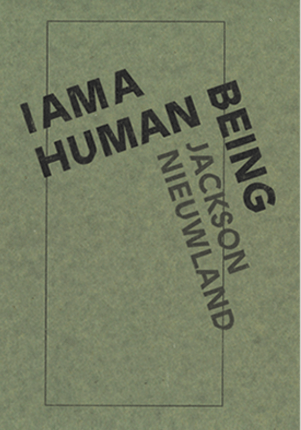
Invitation to Jackson Nieuwland’s poetry book launch hosted by Compound Press
 You thought you knew who you were, and then you attended the book launch for I Am
 Join us for an evening of transformative poetry launching the debut collection of one
 NZ Poetry Shelf