Monthly Archives: April 2023

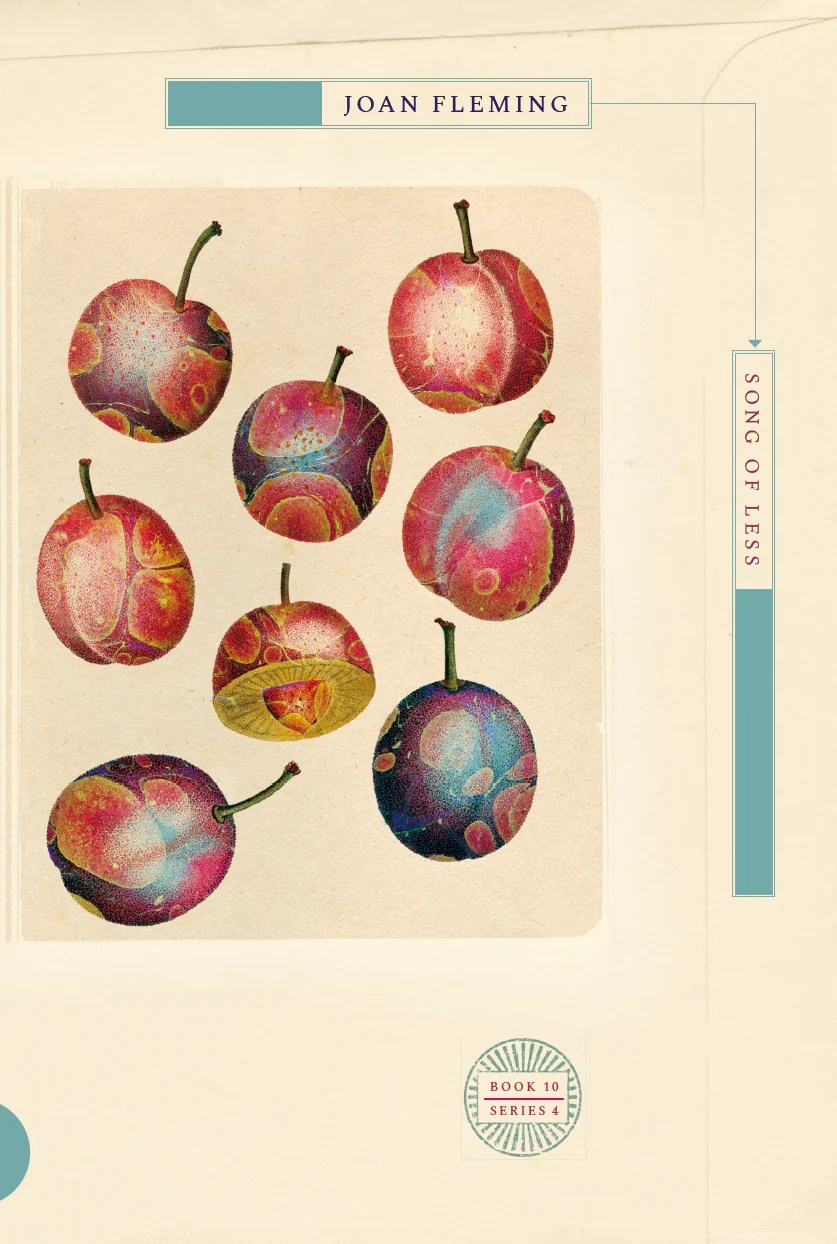
Poetry Shelf review: Joan Fleming’s Song of Less

Song of Less, Joan Fleming, Cordite Books, 2022

What does it mean to continue? Grandmother says that now is the time to ask ourselves what we are, other than ourselves. A piece. This is a moment mad for understanding. The body is a fence but it is also a wave and a thread in a fabric.

from ‘Yana’

Joan Fleming’s Song of Less is unsettling. It is extraordinary, essential, unlike anything I have read before. It is a poetry collection to feel and not to explain. Wrap yourself in the cave of its making and you will be ripped apart, go into mourning, weep for the planet.

We are not supposed to sing her songs but sometimes I catch them in
the air and put them in my mouth.

from ‘Yana’

Follow the voices. Follow the song. Follow a tiny cluster of characters, that may be a “ritual cluster”, a small nomadic family of cousins adrift, steered by the grandmother across a devastated land to the next camp or cave or hollow river. It may be physical, a way of being, an altered state. The names of the cousins are fable-like: Cousin Groundpigeon, Cousin Twig, Cousin Frogmouth, Cousin Butcher. The story may be apocalyptic-fable, post-contemporary poetry, writing that cuts deep into the tragedy of humanity. The landscape is blistered, people are blistered, language is strange and eccentric, curdled and re-formed.

Nothing is as it used to be. Language fails and falters in the grip of catastrophe. The syntax twists and splits, new words emerge as old words are jammed together. Unexpected. Unsettling. Fragile. Searching in the ruins, the debris.

Their fruitless scrape along the valley’s throat
is companied by doppel-devil fear:
in seeping through the will-dies’ paper skin,
we bring the peril of the mirror near.

from ‘Don’t-berries’

You grapple to understand Radius as you read; the event or circumstances that changed everything, the neither full light nor full dark. Or Gone; the mysterious disappearances. And then you fall upon solidarity and salvage, and above all, the grandmother’s wisdom.

This is a collection of song where you or we or I – whoever is speaking – is song, is story, and this matters. Yet song becomes less, story becomes less, and you or we or I – whoever is speaking – is under threat. Ah, the ability to make, even to hold new songs, is also under threat.

Grandmother says Story is a high and nourishing thing for which to be
scrounging. Story completes us. But what is completion? Permission to
draw a circle around something?

from ‘Yana’

There is a backwards-forwards momentum as though we must look forwards to where/what/how/why we have come from. There is a thin line between Love and Monster; what horrors ferment in the blistered surfaces of skin and earth? There is the disconcerting mind-altering don’t-berries. There is desire that is taboo, that is rape, that is the end of the road.

Ah, how to write poetry in the face and wounds and brutal edges of global loss, climate change, ignorant thinking, untethered greed? Joan has produced a collection of poetry that is the most haunting, body-aching, stomach-churning, self-turning wound. It is extraordinary. It is transformative. It is hallucinogenic. You read with your whole body and it hurts. And yet, and still imperatively yet, I want to do everything in my power to help. To tend this corrugated and corrupted planet on the edge of an abyss. To make choices that help rather than hinder. To speak even if not invited to.

This is what poetry can do. Here I go, tongue-tied, holding this precious book out to you.

Joan Fleming is the author of the books Song of Less (Cordite Books, 2022), Failed Love Poems (THWUP, 2015) and The Same as Yes (THWUP, 2011), and the pamphlets Some People’s Favourites (Desperate Literature, 2019) and Two Dreams in Which Things are Taken (DUETS, 2010). She holds a Masters in Creative Writing from Victoria University’s IIML, a Masters in English from Otago University, and a PhD in ethnopoetics from Monash University. In 2021 her manuscript Dirt was shortlisted for the Helen Anne Bell poetry bequest. Her honours include the Biggs Poetry Prize, a Creative New Zealand writing fellowship, the Verge Prize for Poetry, and the Harri Jones Memorial Prize from the Hunter Writers’ Centre. 

Cordite Books page

Joan Fleming website
Poetry Shelf favourite poems: Cilla McQueen’s ‘A Walk Upstream’

A Walk Upstream

Trout and White are walking up a stream. Sounds of rubber boots,
stones, water.

White   You could say it trembles.
Trout    With anticipation?
White    On the brink. Eggshell.
Trout     Of hope? Falling?
White    Grace? Hovering?
Trout    A dragonfly.
White     Exactly.

Trout     I debate the advantages of the one over the other, so that
              when I leap –
White    Look out – too bad. Here, give me your hand.
Trout     Thanks. Up to the knee.
White    Occupational hazard.

Crackling branches, sounds of effort.

White    Who’s this on the bank?
Trout     Neck! Well met!
Neck     Trout of Fish and Game, old boy. Good condition!
Trout     White, Egg Board.
White    Pleased to meet you.
Trout     Neck, of the racing fraternity.
Neck     Checking the watercourse.
Trout     Ensuring an even flow.
Neck      Mind if I join you?

Neck climbs down the bank. They continue upstream, occasionally
jumping stones and wading through small rapids.


Trout     Until I was joined by my friend White, who has
              distracted me with semantics.
White    Head of a pin. At a molecular –
Neck     Now you see it, now you don’t?
White    In terms of the benzene molecule for instance –
Trout     There! Over there!

They stop. Water flowing over stones, into pools. Birdsong.

Neck     Ripples? Under the water?
White    Quivering. It trembles.
Neck     Whitebait?
Trout     Give me lampreys. A surfeit. In butter.
Neck      You might find one under these banks.
Trout     Turning to bite its tail in the frying pan. Delicious.
Neck      A coiling, a succulent morsel, head to tail in a golden
               ring.
White     Exactly. Molecular, neither here nor there.
Neck      A delicacy.
White    Ouroboros.
Trout     Certainly. A taste that trembles on the brink of
              roundness.

They continue, with effort.

Neck     Heard of the Crusader, Trout.
White    Ford?
Neck     Rabbit, my friend. Very good to stir-fry. Breed them in
              Oz.
White    Are we going much further?
Trout     Public release at Oreti Beach 1863. Speeches and songs,
              toasts to the ardent new citizens of our verdant land,
              gambolling off into the sandhills.
White    Gathered here together on the occasion of the
              unconditional release of the binary tree –
Neck      Procreation, eh, Fish and Game? No telling how far it’ll go.
Trout     Nature only needs one pair of bunnies.

Fade out sounds of them going on. Somebody slips, is rescued, they
continue. Birdsong and the sound of water take over.

Cilla McQueen
from Firepenny (Otago University Press 2005) and Poeta: selected and new poems (Otago University Press 2018)

Note on ‘A Walk Upstream’

Scooped from the stream of consciousness, in a bush setting, the poem imagined itself as a radio play. The part of my mind which loves to listen to and revel in the resonances of language produced three eccentric characters, complete with names, whose desultory talk as they continue upstream, engaged in ‘checking the watercourse’, ranges from quantum physics to rabbits.

Cilla


Poet, teacher and artist CILLA McQUEEN has published 15 collections, three of which have won the New Zealand Book Award for Poetry. Her most recent work is Poeta: selected and new poems (Otago University Press 2018). She has also published a poetic memoir, In a Slant Light (Otago UP, 2016). Other titles from OUP are Markings, Axis, Soundings, Fire-penny, The Radio Room and Edwin’s Egg. In 2008 Cilla received an Hon. Litt.D. from the University of Otago, and was the New Zealand National Library Poet Laureate 2009–11. In 2010 she received the Prime Minister’s Award for Literary Achievement in Poetry. Cilla lives and works in the southern port of Motupohue, Bluff.

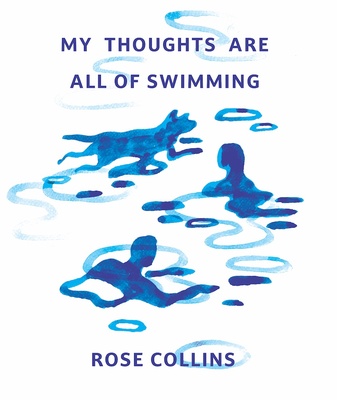
Poetry Shelf review: Rose Collin’s My Thoughts Are All of Swimming

My Thoughts Are All of Swimming, Rose Collins, Sudden Valley Press, 2022

and after, in the streak-pale sun, the welcome,

liberated hunk of sky – a tangle and comb

of wasted boughs, and still to come

the hum of absence – the loss of blue-glazed cornicing

or the blush of cupped gumnuts icing

outstretched stems – a ghost-shape for the wind to sing

from “Felling the Eucalypt”

Rose Collin’s debut collection, My Thoughts Are All of Swimming, was chosen by Elizabeth Smither as the inaugural winner of the John O’Connor Award. In conjunction with the Canterbury Poets’ Collective, the award offers publication to the best first manuscript of a local poet.

Rose’s collection is both elegant and physically present. I jotted down key words as I read, and realised they formed a provisional map of why I love reading and writing poetry. To begin, musicality. Every word-note is pitch perfect and forms a musical score for the ear: “Alan hears the / tide’s shingle-clatter, and closer in, his old dog’s chuffing / sighs” (from “Alan Recuperating on a Bed of Rabbits”). And:

Composing in this crackling southern light –

clinker lines, sail split, the hemp-warp flapping –

while you spun the anchor wider than geography,

a green-oak branch weighted with a stone

from “Returning North”

Secondly, the collection promotes breathing space. There is the space on the page in which a poem nestles, the chance for poems to breathe, for readerly pause and pivot. The internal design heightens this effect, with generous line spacing and a decent sized font.

I can catch a finger-full of salt and rub

it in the cuts: the aim is to avoid stillness.

I move like a blind woman baking sorrow cake

blindfold, following the recipe

spooning in what’s lost.

from “The Kitchen”

Thirdly, and intricately tied to “breathing space”, is the use of understatement, where room is left for the reader to navigate ellipses, semantic clearings, things held back. There are poignant references, electric traces that signal illness, challenge, danger, and more illness.

I am on the trapeze of a new cycle of investigations – I

walked here from the hospital, skirting the rim of a volcano

for my flat white.

from “Lion in Chains Outside Circus Circus Cafe, Mt Eden”

Fourthly, and I am searching for the best word here, there is an inquisitiveness on the part of the poet, as she ranges wide and deep in her curiosity and engagements; touching upon fairy stories, other modes of writing such as William Burroughs cut-up practice, a Kafka aphorism, sculptural installations, a Lydia Davis short story, music, other poets, Robert Falcon Scott’s diary.

My fifth word, and my handful of ideas could extend to become a catalogue, to a more substantial map of possibilities in this sumptuous poetry, is intimacy. I am musing on how you are drawn deep into the writing; how it feels exquisitely intimate. It feels compellingly close, as people and places resonate: from son to brother to friends, from Lyttelton to Ireland.

you are light as steam right now

high frequency, cloud-high

but when you are here, this side

of security, oh the things I have to tell you –

how your letter is the most valuable

thing I carry

how we have built a tower for the chickens

to roost in – kānuka poles frame the ceiling

from “While the radios are tuned you write letters home”

Rose has produced a debut collection to celebrate. It moves you to muse and be nourished, to inhabit and settle in poetry clearings. To dawdle and drift as you read. Close your eyes and absorb the music as though you have put on an album, a breathtaking album you want on repeat. There is darkness and there is light, there is the particular and the intangible. My Thoughts Are All of Swimming is a joy to read.

Rose Collins, born in New Zealand and of Irish descent, is a poet and short fiction writer. She worked as a human rights lawyer before completing the MA in Creative Writing at the IIML in 2010. She won the 2022 John O’Connor Award and the 2020 Micro Madness Competition, and has been shortlisted for the UK Bare Fiction Prize (2016), the Bridport Prize (2020) and the takahē Monica Taylor Poetry Prize (2020). Rose was the 2018 Writer in Residence at Hagley College. She is a some-time litigation lawyer, a beekeeper and a mother of two. She lives in Te Whakaraupō Lyttelton Harbour with her family.

Sudden Valley Press page

Poetry Shelf Monday poem: Emma Neale’s ‘Fresh’

Fresh

I open the door to the deck to get a little fresh

rooster crow / blackbird song / power saw / cat meow/

child’s lilt / father’s laughter / late autumn cicadas

ticking like they’ve all thrifted

matching gold fob watches

from a fancy second-hand store/

in absentminded rapture

at the sudden busking backyard orchestra

I pour luke-yikes! coffee down my sky blue T-shirt

as goof-struck at this thunderclap

of unlikely love for the bunged-up world

as that teenage boy who cycled past me once

in the briefest time I was green and goldening:

he smiled as he turned around to see

whether my face agreed

with his behind-view reckons

then hit the fender of a parked car

so I could just keep

awkwardly walking and blushing on

confusingly new with happeous pity,

piteous happy.

Emma Neale

Emma Neale, the author of six collections of poetry and six novels, received the Lauris Edmond Memorial Award for a Distinguished Contribution to New Zealand Poetry in 2020. Her most recent novel, Billy Bird (2016) was short-listed for the Acorn Prize at the Ockham New Zealand Book Awards and long-listed for the Dublin International Literary Award. Her first collection of short stories, The Pink Jumpsuit (Quentin Wilson Publishing, 2021, was also long-listed for the Acorn Prize. She lives in Ōtepoti/Dunedin, New Zealand, where she works as a freelance editor.

Poetry Shelf favourite poems: Ian Wedde’s ‘Ballad for Worser Heberley’

Ballad for Worser Heberley

for the Heberley Family Reunion,
Pipitea marae, Easter 1990

1

I remember the pohutukawa’s summer crimson 
and the smell of two stroke fuel 
and the sandflies above the Waikawa mudflats 
whose bites as a kid I found cruel.

At night and with gunny-sack muffled oars 
when the sandflies were asleep 
with a hissing Tilley lamp we’d go fishing 
above the seagrass deep

—a-netting for the guarfish there 
where the nodding seahorses graze 
and the startled flounders all take fright 
stirring the muddy haze.

And who cared about the hungry sandflies 
when a-codding we would go 
my blue-eyed old man Chick Wedde and me 
where the Whekenui tides do flow.

It’s swift they run by Arapaoa’s flanks, 
and they run strong and deep, 
and the cod-lines that cut the kauri gunwale 
reach down to a whaler’s sleep.

When the tide was right and the sea was clear 
you could see the lines go down 
and each line had a bend in it 
that told how time turns round.

The line of time bends round my friends 
it bends the warp we’re in 
and where the daylight meets the deep 
a whaler’s yarns begin.

I feel a weight upon my line 
no hapuku is here 
but a weight of history swimming up 
into the summer air.

Oil about the outboard motor 
bedazzles the water’s skin 
and through the surge of the inward tide 
James Heberley’s story does begin.

2

In 1830 with a bad Southerly abaft 
soon after April Fool’s Day 
on big John Guard’s Waterloo schooner 
through Kura-te-au I made my way.

And I was just a sad young bloke 
with a sad history at my back 
when I ran in on the tide with mad John Guard 
to find my life’s deep lack.

Seaspray blew over the seaward bluffs 
the black rocks ate the foam 
my father and my mother were both dead 
and I was looking for home.

But what could I see on those saltburned slopes 
but the ghosts of my career: 
my father a German prisoner from Wittenburg 
my grand-dad a privateer

my mother a Dorset woman from Weymouth, 
I her first-born child, 
and my first master was called Samuel Chilton 
whose hard mouth never smiled.

He gave me such a rope-end thrashing 
that I left him a second time, 
I joined the Montagu brig for Newfoundland
though desertion was reckoned a crime —

and me just a kid with my hands made thick 
from the North Sea’s icy net, 
eyes full of freezing fog off the haddock banks 
and the North Sea’s bitter sunset.

And master Chilton that said when your mother dies 
you can’t see her coffin sink 
you can only blink at the salt mist 
about the far land’s brink.

And in the fo’c’sle’s seasick haven 
where a lamp lit the bulkhead’s leak 
you’d share your yarn with the foremast crew 
your haven you would seek.

Where you came from the rich ate kippers 
or if they chose, devilled eggs. 
They didn’t blow on their freezing paws 
they favoured their gouty legs.

And if you pinched an unripe greengage from their tree 
they’d see you in the gallows 
or if you were dead lucky 
wading ashore through Botany Bay shallows.

But I was even luckier, as they say, 
those who tell my tale: 
they tell how my tale was spliced and bent 
about the right whale’s tail.

And how poor young James Heberley 
fresh from South Ocean’s stench 
and the foretop’s winching burden of blubber 
his great good fortune did wrench.

In autumn I came ashore at Te Awaiti 
on Arapaoa Island. 
‘Tangata Whata’ the Maori called me— 
now ‘Worser’ Heberley I stand.

‘Ai! Tangata whata, haeremai, 
haeremai mou te kai!’ 
Food they gave me, and a name, 
in the paataka up high.

My name and my life I owe that place 
which soon I made my home. 
From that time, when Worser Heberley went forth, 
I didn’t go alone.

I raised a considerable family there, 
with Ngarewa I made my pact: 
from him I got my summer place at Anaho, 
my home from the bush I hacked.

I summered there in the mild weather 
and in autumn I went a-whaling 
from the boneyard beach we called Tarwhite 
where Colonel Wakefield’s Tory came sailing.

And I guessed from the moment I saw their rig 
that we had best take care: 
not the Maori, nor Worser Heberley’s mob 
stood to gain from this affair.

With fat Dick Barrett I went as pilot 
on the Tory to Taranaki. 
From Pukerangiora and Te Motu descended 
Te Atiawa’s history —

a history already made bitter once 
in the bloody musket wars, 
that might be made bitter yet again 
for Colonel Wakefield’s cause.

Worser Heberley was never a fool 
else I’d not have lived that long: 
I could see the Colonel meant to do business, 
I could hear the gist of his song.

He was singing about the clever cuckoo 
that lays her egg elsewhere 
and fosters there a monstrous chick 
too big for the nest to bear

so the other chicks must be all cast out 
for the greedy cuckoo’s sake. 
The Colonel sang this song I heard 
as he watched the Tory ‘s wake

tack up the South Taranaki Bight 
with Kapiti falling astern, 
and I, James Heberley, stayed close 
to see what I could learn.

And what I learned has since been written 
in many a history book: 
that you’ll find little enough of our record there 
however hard you look.

3

And now Worser Heberley’s story ceases, 
I hear his voice no more 
though my line still bends by the notched gunwale 
as it had done before

when I was just a kid gone fishing 
in my old man’s clinker boat 
and hadn’t learned that it’s history’s tide 
that keeps our craft afloat.

And now I see as I look about 
in Pipitea marae 
at the multitude here assembled 
that your line didn’t die —

and though old Worser Heberley was right 
to fear Colonel Wakefield’s song, 
he didn’t have to worry about the family 
which multiplies and grows strong.

I thank you for your kind attention 
the while my yarn has run. 
I wish you all prosperity and peace. 
Now my poem is done.

Ian Wedde
from The Drummer (Auckland University Press, 1993) also appears in Ian Wedde: Selected Poems (Auckland University Press, 2017)

In 1986 my novel Symmes Hole was launched at Unity Books in Wellington. An historical character I appropriated for the book is James ‘Worser Heberley’, a whaler who came ashore in Tōtaranui Queen Charlotte Sound in 1829. He married into local iwi and at the book launch tuhanga of James Heberley introduced themselves and suggested it would be appropriate, given my borrowing of their ancestor, if I could donate some copies of the book and also write and share something for their upcoming hui at Pipitea marae in Wellington. This is that poem, a favourite of mine for diverse reasons.

Ian Wedde

Ian Wedde’s latest poetry book was The Little Ache — A German notebook. Victoria University of Wellington Press, 2021. The poems were written while he was in Berlin researching his novel The Reed Warbler.

Poetry Shelf Monday Poem: Joan Fleming’s ‘7 Mistakes’

7 Mistakes

The salt sting nights we were two cuts       
            in a tongue that licked December.

Not how the falsely boasted flavour hurt ourselves,
           but how it hurt others.

Certain telephone calls that shone with a doggish fidelity
           as if unafraid.

The well-aimed lighting rig we called radical honesty,
            and all the acts we saw there.

Our sweet, multiple forgivings:
           a peace with a torn hem.

Telling him the reason wasn’t
            love running out.

The completion of
            this poem.

Joan Fleming

Joan Fleming’s latest book is Song of Less (Cordite Books, 2022), a verse novel exploring ritual, taboo and the limits of individualism in the ruins of ecological collapse. She is the author of the poetry collections The Same as Yes and Failed Love Poems (Te Herenga Waka Press), and the pamphlets Two Dreams In Which Things Are Taken (Duets) and Some People’s Favourites (Desperate Literature). Joan is a lecturer in creative writing at Massey University, and lives in Te Whanganui-a-Tara Wellington.