Monthly Archives: August 2019

Poetry Shelf audio spot: Frankie McMillan reads ‘The Honking of Ducks’

Screen Shot 2019-08-14 at 6.53.58 PM.png


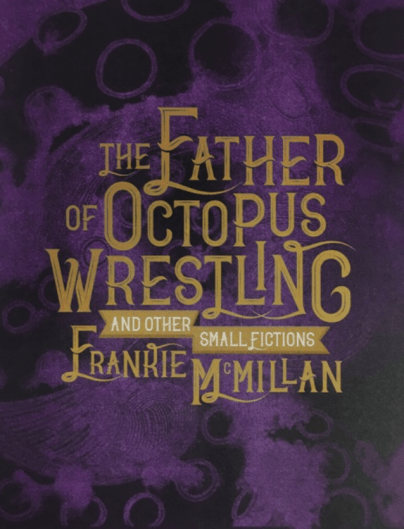
‘The Honking of Ducks’ is a prose poem from Frankie’s new collection The Father of Octopus Wrestling and other small fictions, Canterbury University Press, 2019.


Frankie McMillan is a poet and short fiction writer. She has published five books including My Mother and the Hungarians and other small fictions, long listed for the 2017 NZ Ockham awards. In 2018 she co edited Bonsai best small stories from Aotearoa New Zealand. She has won a number of awards and in 2014 held the Ursula Bethell writing residency at Canterbury University. In 2017 she held the University of Auckland/Michael King writing residency. Her forthcoming book The Father of Octopus Wrestling and other stories will be launched by Canterbury University Press on August 31st 2019.


Canterbury University press author page


Poetry Shelf noticeboard: Anna Jackson’s launch speech for Helen Rickerby’s How to Live


Rickerby_How to Live.jpg


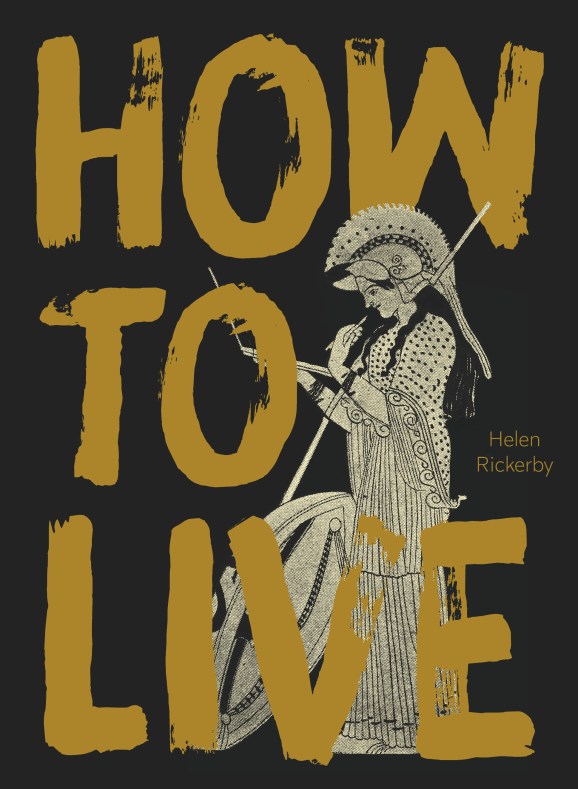
Helen Rickerby, How to Live

 Helen Rickerby’s ‘Notes on the Unsilent Woman, Note 2’: ‘Perhaps the first thing you need to know is that women in ancient Athens didn’t get out much. No dinner parties, no debate, no public life. Unless you were already ruined. Or unless you were Hipparchia.’

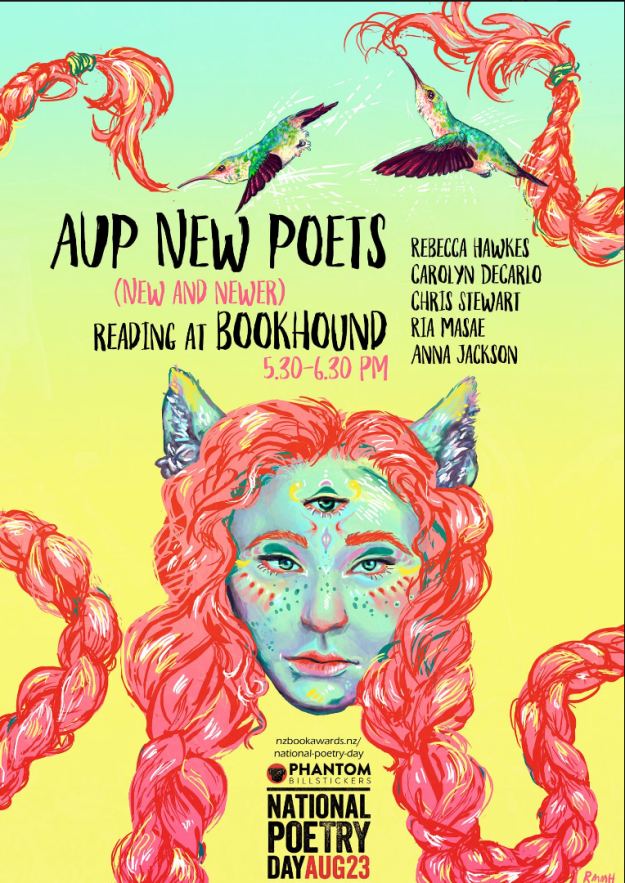
Times have changed – and here we all are – to launch Helen Rickerby’s How to Live alongside AUP New Poets 5.

Before I talk about How to Live, I want to thank Sam Elworthy for supporting my wish to see the AUP New Poets series relaunched, for sharing my enthusiasm for poetry and projects generally, and for all he does for New Zealand poetry. I’d also like to acknowledge Elizabeth Caffin’s role in launching the series of AUP New Poets in 1999, and Anna Hodge’s support of the series under her editorship, and I’d like to thank the whole AUP team for everything they have done to support this beautiful collection of poems I love so much from Rebecca Hawkes, Sophie van Waardenberg and Carolyn DeCarlo. Most of all I want to thank the poets themselves for the extraordinary poetry which is setting this series back in motion.

I first knew Helen Rickerby when we were both fairly new poets ourselves, and I knew her poetry before I met her. I was very taken by her Theodora character in her first collection Abstract Internal Furniture, and the way the whole collection glitters with dark comedy, rapid shifts of scene, and exuberant detail. ‘I think I’ll edit out those long   silences’, she writes in one poem from that book, though even back then she was deciding to ‘leave in some of the shorter ones for effect.’

Now – several books of poetry and many years later – we have the book-length considered take on silence – and outspokenness – of How to Live: book-length because the ‘Notes on the Unsilent Woman’ which opens the book sets up questions and ideas that resonate all through the collection.

Notes on the Unsilent Woman, Note 53:

Hipparchia wrote treatises such as Philosophical Hypotheses, Epicheremas and Questions to Theodorus. Letters, jokes, philosophical refutations. All are lost. (Crates wrote Knapsack and Praise of the Lentil.)

A small note can say a lot, and it is a characteristic Rickerby move to pair the loss of intellectual history represented by Hipparchia’s lost treatises with the pointed addition of the titles of the work of Hipparchia’s more famous philosopher husband, to whose life she typically appears as a footnote, at best. His place in this note, in parentheses, after the main point is made, is just one of the many lightly undertaken total overhauls of intellectual history this book of poetry offers.

Its own title – How to Live – indicates its philosophical reach: this is a book that asks the biggest questions. The title poem references Susan Sontag, Helen Keller, Empedocles, Adorno and other philosophers and writers, alongside friends discussing the big questions in person and on facebook – ‘I am forever putting my friends in’, Helen confesses, and her friends are forever finding themselves caught up in extended conversations that take in the details, big and small, of their own lives.

The collection as a whole takes in questions such as how to choose a good fork or how to choose a house; how to read and how to listen; when we choose to suffer – ‘It all depends on / what the other choice is’ – and the question of what poetry is for, what is poetry? It is an urgent question for a poet constantly questioning her own practice, constantly experimenting with form: about the prose-like appearance of some of these poems on the page, she says, ‘I have long struggled against the tyranny of the line break. Am I afraid that if I let the words leak out, they’ll mix with oxygen and become prose?’

What happens in fact is a collection which rewrites the boundaries of poetry and prose to dazzling effect, as, for instance, the interest in portraiture that goes right back to the Theodora character of her first book now gives rise to entirely new forms of biography – the sharply comic, occasionally personal, often poignant and brilliantly illuminating verse essay on George Eliot, in thirteen numbered sections (with sub-sections); the ‘poem for three voices’ moving between the perspectives of Mary Shelley, Victor Frankenstein and the monster himself; the meditation on the life of Ban Zhao as palimpsest, pillow book and personal essay.

If Helen Rickerby is New Zealand’s most intellectually exciting writer (and I think she is), it is not although but because she writes always as a poet, with a poet’s interest always in form.  And it works just as well to turn the equation around to say she is one of the most formally innovative poets in New Zealand, because her interest in formal innovation is always driven by the intellectual ideas she grapples with.

And she’s funny. For all its formal interest and intellectual brilliance, what I really most love about the book is the voice – but for that, I can do no better than to hand over to Helen herself.


– Anna Jackson, 7 August 2019


DSC_0295-7.jpg


69231481_896457350741162_5031697055056134144_n.jpg


Poetry Shelf Classic Poem: Sugar Magnolia Wilson picks Hera Lindsay Bird’s ‘ Kiss me harder, Abraham Lincoln’


Kiss me harder, Abraham Lincoln


In poems you can do anything you like. You can start fires, or break the law. You can break the law by starting fires. You can set fire to the house of your worst enemy. In poetry, you can have worst enemies. In real life, I’m still working on it. In terms of candidates there’s that dickhead at the salad bar, not to mention the girl who used to ring me up and scream at me, but I’ve got a new phone number now and as much as I hate the salad guy, I’d like to think that I’m a contentious citizen who wouldn’t intentionally try to burn his house down. Besides, I don’t have his address. But I’m totally onto you, salad man! In poems you can make out with whoever you like, even if they died forever ago. In poems you can say, ‘Oh Abraham Lincoln, kiss me harder.’ I have a friend who’s angry at poetry because he says it makes life more beautiful than it really is, which is a dumb reason to hate anything. Hating poetry because it makes life more beautiful is like hating ketchup on your burger because it makes your burger more delicious than it really is, or hating the swans on the lake, for making the lake seem more peaceful. Fuck off swans! How am I supposed to make an accurate emotional assessment of the lake with you gliding around like a toilet paper commercial? Sometimes all I want is a poem that feels like real life. Something directionless and frightened, without any literary subtext, or clever double meanings. Clever double meanings are like those magic eye puzzle. You can get really good at seeing the hidden picture, but in the end you’re still the asshole sitting in the library at lunchtime saying ‘I can’t believe you guys can’t see the dolphins,’ to no-one, because your friends all left hours ago. Sometimes all I want is the poet to come clean and say, ‘I have no idea how to live.’ Sometimes I just want to list some things that I like. That song ‘In the Hall of the Mountain King.’ The names of lipsticks. Poached eggs on a stack of potato cakes. Houses. Flowers. Swamps and the monsters who live in them.  The internet.


Hera Lindsey Bird

The poem originally appeared in Sport 40, 2012 in a slightly different version.


Sugar Magnolia Wilson on ‘Kiss me harder, Abraham Lincoln’

I had a dream a few weeks ago that I asked Hera why she’d changed the line “Fuck off swans! How am I supposed to make an accurate emotional assessment of the lake with you gliding around all serene?” to “Fuck off swans! How am I supposed to make an accurate emotional assessment of the lake with you gliding around like a toilet paper commercial”. The first iteration comes from an issue of Sport back yonky-donks ago, I think 2011 or 2012. So, I assume it was a poem written in her MA year at the IIML. It was the first time I’d read anything by Hera, and I think the first time I’d really read anything by a young New Zealand poet that really spoke to me. In fact, I’m not sure I even knew that people under 300 could have poems published in New Zealand.

I think the toilet paper version is what’s in her book, and I feel like that line got snazzed up, but, I wish it hadn’t been snazzed. I love how not loud this poem is, how it’s almost bored. I read this line in a book once that said all beautiful girls are bored. And I think this is the poem version of that, a beautiful, bored girl. I love how it’s not trying to prove anything big or deep, but at the same time it stands up and says ‘you fucking know what? Poetry can be whatever the hell you want it to be” – it hits right at the heart of what old white dudes have been telling us poetry shouldn’t be since forever. But I’m totally onto you, poetry book guy! I think I took this poem too literally. I literally wrote a poem for my MA manuscript which was JUST a list of things I liked – my friend Ada, miso soup, small glittery things in dusty corners. No one in my class liked it. But I did and it was a confusing time.

I also love that this poem is like Dorian Gray, and Keats is Dead so Fuck Me From Behind is like his bloated painting in the attic. Or maybe this poem is like Charlie Sheen in Two and a Half Men, and Keats is Dead is like his coked-out body lying on a velvet bed with a neon orange party hat on? See? It’s way harder than she makes it seem.

Anyway. It’s one of my all-time favourite classic NZ poems. It’s changed the way I write and I am so grateful to have encountered it when I did. I also love the poem Hooting, but Paula says I’m only allowed to write about one (she didn’t, I’m just too lazy). But read it here


Sugar Magnolia Wilson is from a valley called Fern Flat in the Far North of New Zealand. She completed her MA in creative writing at the International Institute of Modern Letters at Victoria University of Wellington in 2012. Her work has been published in literary journals such as Turbine, Shenandoah, Cordite, Landfall and Sport. She is co-editing an anthology of the new generation of New Zealand poets with Hannah Mettner for AUP. Auckland University Press published her debut collection Because a Woman’s Heart Is Like a Needle at the Bottom of the Ocean earlier this year.


Hera Lindsay Bird is a poet from Wellington. Her debut collection Hera Lindsay Bird was published with Victoria University Press in 2016, and Penguin UK in 2017, and a Laureate’s Choice Pamphlet ‘Pamper Me to Hell & Back’ came out in 2018. She is an Arts Foundation new generation recipient, winner of the 2011 Adam Prize, the 2017 Jessie McKay Prize for Best First Book, and the 2017 Sarah Broom Prize.


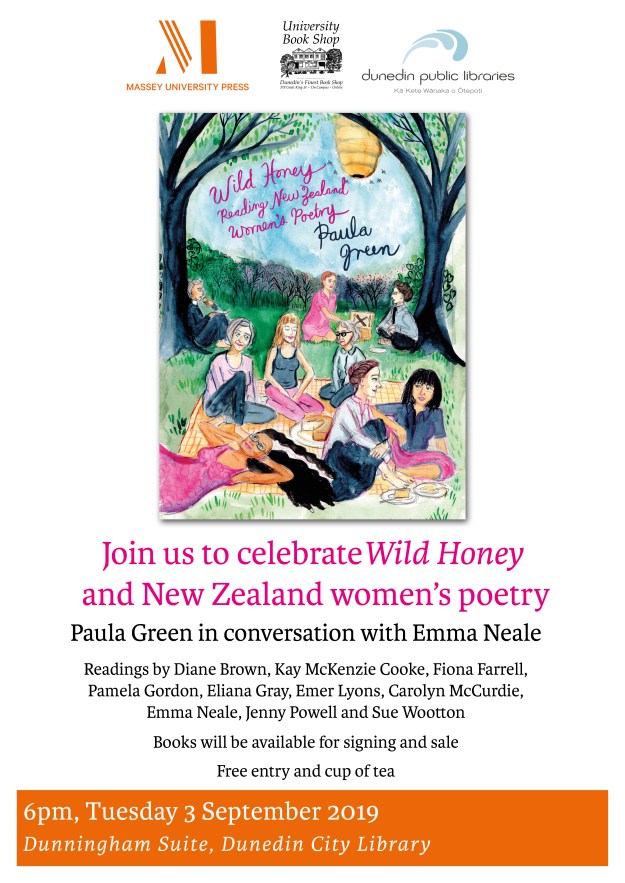
Poetry Shelf noticeboard: Wild Honey Dunedin celebration

Wild Honey_A3 poster.jpg


Karlo Mila’s ‘Moemoea (Composed for Poets for Ihumātao)’


Moemoea (Composed for Poets for Ihumātao)

I have a dream….
Not a Martin Luther King dream
more of a waking life dream
where you’re in a parallel universe movie of your own making.

In my dream,
Jacinda is walking in knee high gumboots
the tall, skinny, expensive kind
you used to have to order from Great Britain
and that I could never pull over my big Tongan calves.

She is wearing a red, red raincoat,
not like a Kathmandu one with a zip.
It’s more of a cape,
fire-truck red, lipstick red, Labour party red.
More of a red-riding hood cape
and it is billowing in the whipping wind.

And the way she struts it could be a Horse Polo ad
but it’s not, cos she and her gumboots
are on the whenua at Ihumātao
and she’s not walking alone,
flanked, either side is Nanaia, Kiritapu, Willow-Jean
and Louisa who has the reddest lipstick of them all.
They all have knee high boots and red jackets
and there is Carmel, taller than the rest,
even though her boots are flat,
who used to rent our family home.
And there is Jenny, with a red flower behind her ear,
who used to be married to my ex-husband.
And there is ‘Anahila, my mate,
with her righteous Tongan afro, and Poto too.
And in my dream the soundtrack is Beyonce playing
“Who rules the world? Girls!”
And behind them is Jacinda’s baby-daddy
pushing Neve Te Aroha in an expensive water proof pram
which is just as well, cos there is thunder and lightning
as these women walk.
And it strikes me that he is the perfect,
mana-ful, woke male.
The lips of all these women are pursed.
Not like in selfies, but like they are purposeful.
And in my dream they are walking in slow mo
and Marama is there in her reggae beanie, laughing,
saying, what took you fellas so long.

In my dream,
Jacinda has read Dr Rawiri Taonui’s article
and as her plane landed on the Auckland tarmac
she thought for the first time
about all the bodies, all the bones, the koiwi
the ancestors who had to give up everything,
a clean awa, their land, kai moana, unpolluted ocean,
who had to give too much to the city of Auckland,
even their graves.

I dream Jacinda truly felt
that this history stinks like sewage
as she drove into the shit-show
that has been the water treatment plant.
And she visibly flinched when she saw the Proclamation
issued by corrupt Governor Grey
with his fake news about dangerous attacking natives
as he coveted Waikato-Tainui having the best land, flour mills, most fertile export businesses,
and imported and gathered 16,000 British imperial and colonial troops
telling the natives to surrender,
or they’d be ejected.

I hope she knows
the archeologists say
this is an OG settlement place
Where to quote Alice Te Punga Somerville
where Māori
“Once were Pacific”
and evolved, over centuries,
Right here,
from us
into them.
And I’m waving a Tongan flag
at this small way that we are connected
and in my dream
Pita Turei is not comparing me to Captain Cook
for doing this, but he’s down there on the atea
saying ‘haere mai’ Jacinda,
and he looks so beautiful,
with his feathers in his hair.

And in my dream, at this very moment
he turns into a bird
and then he is joined by an army of kahu
from Okahu Bay
a whole field full of black hawks
with surveyors pegs in their beaks
and a burning papa kainga in their eyes.
And yeah, maybe, a park for all New Zealanders
is not enough, although it was gifted generously after the occupation of Bastion Point.
And there are overlapping interests here
not just the fact that blood joins
in so many mokopuna,
but cos the kaupapa of Tino Rangatiratanga
is an overlapping interest.
And even Paul Majurey says, tautoko.

And then all the maunga are there,
cos Pihanga led the way
and just like Pania
she’s quite the mountain.
It’s Mana Wāhine on display
and there’s the red line up of women
walking in the mud
and I don’t know where Willie, Kelvin and Peeni are
but it’s my dream and I don’t need to know.
Willie is def not doing the fingers at the crowd
behind the glass doors at Parliament, like I saw him do last week.
Just cos men who have had their children taken by the state heckled him.
And to be honest
I’m sure uplift kaupapa is over,
it’s time for uplifting.

And in my dream, all the boots on those women
are now thigh high and they are all wearing
ei katu of red flowers
made by my friend Ta’i,
cos it’s Cook Islands language week
and cos every woman looks more beautiful in an ei. Everyone.
And they are saying Kia Ora, Kia Orana.
And I am looking at Pania, Qiane, Amiria and the cousins.
Rihanna is singing, shining bright, bright like a diamond,
but not a blood diamond.
And Qiane says: “We don’t speak on behalf of Mana Whenua. We are Mana Whenua.”
And there is a sign in the sky,
not a tōhu but a billboard
and it says,
“Aotearoa, New Zealand. This LEADERSHIP is in dispute.”
And there are one hundred thousand likes on Facebook
and laughing, dancing GIFS and
emoji’s with love hearts in their eyes.

And then suddenly it is silent
and in my dream Jacinda stops
and takes off her gumboots
and is barefoot, skin to land,
and tears stream down her face
and she says, I can hear it,
I can feel the whenua singing.

Once you know it,
you cannot unknow it.

We do not hurt the things we love.

And in amidst that magic,
somewhere online
a give-a-little page
has gone viral
and people are buying back
Ihumātao, square metre by square metre,
and the soundtrack is playing Midnight Oil
and the donations pour in
Asians for Tino Rangatiratanga
the Muslim community
the Tongan church congregations
who give more than they can afford
because that’s how we roll
and the amounts are printed online
and even Don Brash donates because,
no he doesn’t, because not even in a dream!
But nobody cares,
because he is old news
and now girls rule the world.
And Jacinda stands up and says
to the international community
This is a win for climate change.
This is a win for indigenous people everywhere.
This is a win for community.
This is a win for New Zealand.
This is a win for Auckland.
This is a win for the whenua.
The soundtrack is playing ”We are the people”
by Louis Baker.
And even Tina Ngata says,
she did better than Helen Clark.
And on TV
beautiful Kanoa Lloyd
rapturous in red
sits there
queen of the prime time universe
and with a smug side-eye at her colleagues
she interviews Joe Blogs
from the heart of Remuera
about why he gave a little
and then he explains
that after coming to the whenua himself
and taking the tour with Pania
and reading about the history
he finally understood
that the people of Ihumātao
had given enough
to make Auckland great.

And it was time to stop taking.

Or living off the back of benefits
Of unjustly taken land.

It was time to give a little back.
He said. Actually, it was time
to give a lot.

And somewhere,
in Tāmaki
all the birds waiting
with surveyor pegs
in their mouths,
both extinct and living,
spat them from the
choke in their throats
and the black hawks
began to sing.

And all the people everywhere,
who can hear the dawn chorus of the dead,
locked in psychatric wards and prisons cells,
began to hum a happier tune
instead of feeling lament.

And somewhere,
Te Whiti, Tōhu, Te Kooti, Rua, Rewi, Tāwhiao,
Eva, Whina, Ngāneko and all the ancestors,
began to sing.
Knowing now,
the tongues of birds.

And us ordinary ones,
without the gifts of sight or sound,
if you listen carefully
you can catch a fragment
of that waiata,
you can hear it
in the refrain of
Rob Ruha’s new song,
and it
sounds like
freedom.


Screen Shot 2019-08-13 at 9.30.57 AM.png

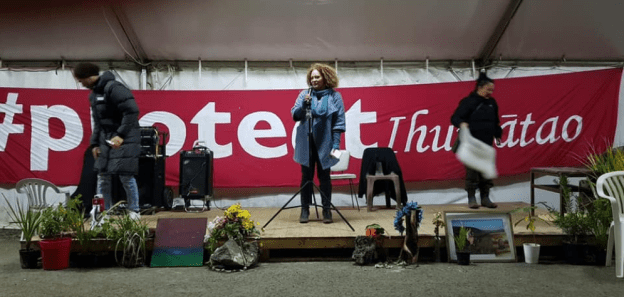
Karlo read this poem last night at Poets for Ihumātao – on the whenua.

Screen Shot 2019-08-13 at 9.33.58 AM.png


Poetry Shelf Monday Poem: Jess Fiebig’s ‘Summer’


Summer 2016


that summer was heavy, thick

I felt myself weighted,

struggling to move through air

it was underwater with open eyes

breathless and pressurised

seeing everything through

the blur and sting

of sea water


my new breasts were tight and hard in my chest,

and I had to sleep on my back for the first time;

my body was an unfamiliar collection of bones,

brittle as shells, and freshly bleached hair.


it was an achingly empty summer,

it was bitten, itchy skin,

damp thighs rubbing on denim,

it was bare chested and freckled,

salt licking new scars


it was the season of lemons

softening in the bowl,

damp fur, and fingernails bitter and green

from tearing and linking

daisy stems


it was clotted black blood, sprinklers,

strawberries and razorblades,

it was warm, long nights alone


it was the summer of the 6 am hate poem,

the first summer the soles of my feet

grew thick and hard

and as I watched shadows stretch

and felt cool wind come off the water,

it was the summer

I fell in love with

myself.


Jess Fiebig


Jess Fiebig is a nationally-recognised poet, educator and performer living in Otautahi/Christchurch, New Zealand. Her writing has featured in journals such as Aotearotica, Catalyst, Landfall, takahē, Turbine, Poetry New Zealand Yearbook and Best New Zealand Poems 2018. Jess was commended in the 2017 and 2018 New Zealand Poetry Society International Poetry Competitions and was highly commended in 2019 Sarah Broom Poetry Prize. Her poetry explores themes such as madness, sex, love, family violence, friendship, drugs and dislocation. Jess teaches creative writing and is a tutor at the Christchurch School for Young Writers.  Jess’s website.


Poetry Shelf noticeboard: Victoria University announces second Emerging Pasifika Writer’s Residency

Victoria University of Wellington’s International Institute of Modern Letters (IIML) is delighted to announce the second Emerging Pasifika Writer’s Residency for 2020.

2 August 2019

The Residency, which includes a writing room and a stipend of $15,000, will run for three months during the first half of 2020. Applications are open now.

Current Resident, playwright Leki Jackson-Bourke says, “Where I come from, writing isn’t really a ‘thing’. Being here at the IIML as the Inaugural Emerging Pasifika Writer in Residence dispels that myth. It has been such a luxury to have extra time, space and resource—and being away from my community has given me time to reflect on how important it is for us to champion and write our own stories. We must tell our truth, before someone else does.”

The Residency is unique in offering the chance to work in a stimulating, established community of writers, with a mentor from the Pasifika arts community. Leki’s mentor, renowned playwright Victor Rodger says, “As well as close involvement with his own writing, the mentorship has given Leki the chance to encounter works which have challenged, provoked and expanded his frame of reference and which, I believe, will help his development as a writer.”


details here