
Horse on the Ice
at first horse and rider rode easily
it was cold and bright across the ice
the frozen lake
we can’t feed you all
you’ll have to go to New Zealand
the next ride was still clear
a little mist hugged the surface
perhaps joinery carpentry building
then a little icy fog formed on the brow
some sort of motorcycle racing
a fall at night and a broken wrist
permanently numb fingers on one hand
now the rider dismounted halfway across
knelt down to get a closer look
if you peered carefully there were fine cracks
a web of spidery blue veins
a small stone bridge in the Lake District
uncle Franks boat accelerating an arc
to test the waterskier
but not last week last month last year
the horse and rider snorted steam
riding faster the crack of hooves on ice
the sure clip of memory
its web of fissures and creaking pressures
he was sure we were sure i was sure
we were all nearly quite certain
it could take the weight
©Stuart Airey
If you were to map your poetry reading history, what books would act as key co-ordinates?
In primary school I loved Louis Untermeyer’s Golden Treasury of Poetry especially the limericks and ‘The Highwayman’. There’s a fair bit of a lull after that until my brother passed away and then I turned a lot to The Oxford Book of English Verse – particularly Thomas Hood’s ‘The Sea of Death’. A few years back I discovered the Bloodaxe ‘Staying Alive’ trilogy which opened up a whole new world of modern poems and poets, particularly shorter ones. (Poems that is). I started writing more seriously about this time. Favourite writers would be Carol Ann Duffy, Wislawa Szymborska, Stephen Dunn and especially Alden Nowlan – a Canadian genius and earthy, accessible poet.
What do you want your poems to do?
I think that first of all I write for myself. I have discovered that quite often the poem is telling me something about myself that I couldn’t get to another way – a sort of self-therapy I guess. If I’m writing about an idea or a feeling it’s a way of turning it over and looking at all the edges. Sometimes it’s the poem that tells me how I’m feeling. After that though I definitely enjoy sharing (mostly) the poem with others and seeing if it touches some vital part of being human. It’s a real kick when others find layers of meaning that I was unaware of or hadn’t really intended. Some are written just to be enjoyed, a bit of a laugh or even more visceral.
A few to provoke though this rarely raises much angst.
Which poem in your selection particularly falls into place. Why?
I find this quite a difficult question. As none of my poems have (yet!) been published I had quite a few to select from for the competition. I have submitted to a few journals and competitions, as yet unsuccessfully, so I found it really hard to gauge which poems I should put in – actually I think I got a little cavalier with the entry. I think ‘Mercury’ fell into place as the last to be picked as it’s one of the earliest poems I wrote and got excited about. I love the word Mercury so much I’ve written several poems all with that title but the one I’ve included is the original.
There is no blueprint for writing poems. What might act as a poem trigger for you?
I’ve found that poems come to me in quite different ways. Usually the best or at least easiest to write is when a first line comes out of the blue, closely followed by the last line. I’m not sure exactly what the prompt in these instances is, whether a scene or a feeling or just a thought. Perhaps a glimpse into someone’s life. Then there are poems that start with an idea or a feeling I want to convey. These are a little harder to write but if the idea or feeling is quite solid they carry through and if they don’t they often morph into something else. I love it when the poem ends with so much more than it started with. I have also written a few poems to a particular theme (one was borders) – these are usually a little slower to start but once momentum kicks in they get there. There’s a lot of polishing that goes on. It’s a real high when a poem is finished.
If you were reviewing your entry poems, what three words would characterise their allure?
So I think you mean if I could detach myself from the poems in a sort of impartial way? In that case variety, accessibility and aftertaste.
You are going to read together at the Auckland Writers Festival. If you could pick a dream team of poets to read – who would we see?
Carol Ann Duffy, Paul Muldoon, Carolyn Forche, Stephen Dunn, perhaps John Burnside. Would have loved to have heard John O’Donohue live but at least we have Youtube.
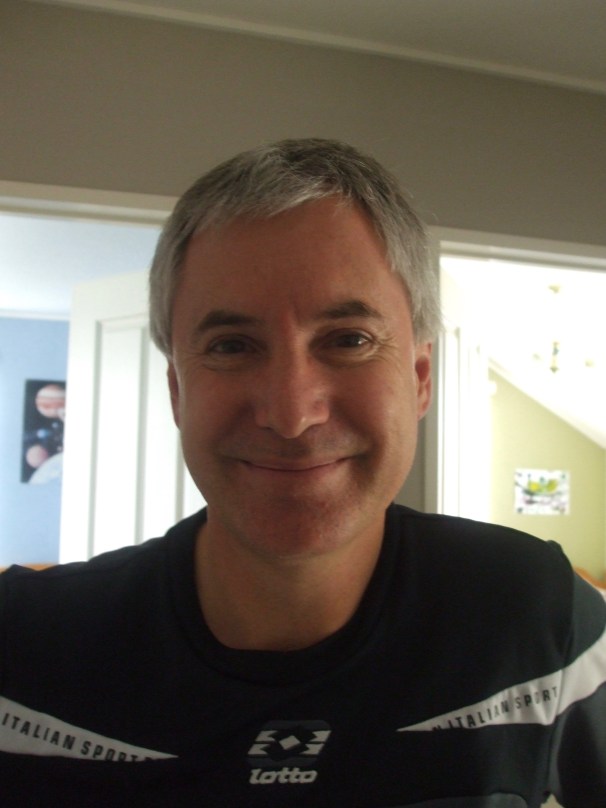
Stuart Airey graduated in Optometry from Auckland University in 1986 and has worked in this role for over 30 years. He also has a post-graduate Diploma in Theology from Laidlaw College. He is married with three children and lives in Hamilton. Apart from dabbling in short stories in high school Stuart began writing poetry more seriously after the Christchurch earthquake which resonated with personal loss in his family. Stuart has enjoyed performing some of his poetry in a series of dedicated evenings featuring a mix of drama, audio-visual, lighting and special effects. His poems are currently unpublished and he feels he is very much on the threshold of an unknown yet inspiring path.
The four finalists will read from their work at the Sarah Broom Poetry Prize event at the Auckland Writers Festival on Sunday 20 May, 3.15-4.15pm.
Sarah Broom Poetry Prize page.
 NZ Poetry Shelf