Monthly Archives: November 2017

Warm congratulations to the Landfall Essay prize winners: Laurence Fearnley and

Landfall Essay Competition winners share prize for radically different topics

Two New Zealand essayists writing on very different topics – life as an army recruit and the power of scent – are joint winners of the 2017 Landfall Essay Competition.

Laurence Fearnley, of Dunedin, and Alie Benge, of Wellington, will share the $3000 cash prize and both will receive a year’s subscription to Landfall.

The judge of the annual award was outgoing Landfall editor David Eggleton.

Of the 64 entries received, the two finalists’ essays proved especially difficult to separate, though their topics and their strategies are very different, he says.

“Alie Benge’s essay, ‘Shitfight’, which is about raw army recruits in Australia being prepared for a theatre of war in the Middle East, has a physicality and dynamic urgency to it that stopped me in my tracks,” says Eggleton.

Whereas he says Laurence Fearnley in her essay ‘Perfume Counter’ makes scents – at once treasurable, resonant, mysterious – synaesthetic emblems of how we perceive the world.

“Her assured and measured writing brings her surroundings alive with sharp, descriptive clarity.”

Their winning entries will be published in Landfall 234, available later this month. Landfall is published by Otago University Press.

There are five shortlisted essays: ‘Gone Swimming’ by Ingrid Horrocks, ‘Reaching Out for Hear’ by Lynley Edmeades, ‘A Box of Bones’ by Sue Wootton, ‘I Wet My Pants’ by Kate Camp and ‘Trackside’ by Mark Houlahan.

For more information about the Landfall Essay Prize and past winners, go to http://www.otago.ac.nz/press/authors/awards/otago065482.html

The winners

Alie Benge is a writer and copy-editor living in Wellington. She has previously been published in Headland and has work coming out in Takehē and Geometry. She is working on a novel inspired by her childhood in Ethiopia.

Laurence Fearnley lives in Dunedin. In 2016 she was the recipient of the Janet Frame Memorial Award and the NZSA Auckland Museum Grant and she is currently researching and writing a book of essays and stories based on landscape and scent. For the past year she has also been co-editing an anthology of New Zealand mountaineering writing with Paul Hersey. This work has been generously funded by the Friends of the Hocken Collections and will include non-fiction, archival material, fiction and poetry and will be published by Otago University Press in 2018.

Laurence has published ten novels and two books of non-fiction, as well as short stories and essays. She was awarded the Artists to Antarctica fellowship and in 2007 the Robert Burns fellowship at the University of Otago.
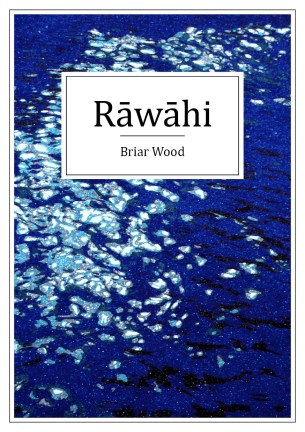
Two poems from Briar Wood’s Rāwāhi

Diptych


We walk the long sea shore to pick

scallop and cockle while she flicks

shells from her pocket

hinged like a locket

where poems appear, like tricks.


A child is quoting limericks

while I search the shore for lyrics.

We sort words—rocket,

pacific,  quick, stich.

Jamie loves tongue-twister music.


Paewai o Te Moana


The sea at night is blacklit,

kikorangi, kōura, topazerine, pango,

a haul of images pouring from nets,

darker than oil underground


at the edge of Parawhenuamea

rave streams, jostling yachts,

brown iris flags, meadowfoam, puka


Tai Timu, Tai Pari, arawhata ki


pocket beaches of pebble shell rock

meaning a joining of waka

across the slanted playing field


virtual beaches on imaginary roads

where poetry and geometry are almost

compatible, wai weld, creolerie,


ocean patter in ngā kupu,

tūātea, ngaru mata, rahopē


moana waiwai, karma moana,

beforeglow and sonar,


like finding


whakaea


©Briar Wood, Rāwāhi   Anahera Press, 2017


Briar Wood’s poetry collection gathers, with a wide embrace, details of travel and living, and as the lived-in world grows on the page, the poems set up all manner of conversations. This book draws upon whakapapa, love, relations, ecology, the past and the present. Its warmth and its empathy are infectious. I love the way you can take two poems, such as these, and listen to the talk across and beyond their bridges.

Briar grew up in South Auckland and has returned to Northland places where her Te Hikutū ki Hokianga, Ngāpuhi Nui whakapapa resonates with ecological concerns.


Rawahi-Front-Cover_high-res.jpg


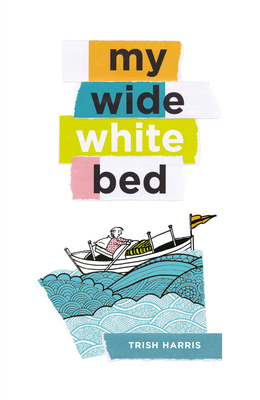
Trish Harris’s My Wide White Bed is an astonishing uplift


large_my-wide-white-bed-front-cover.jpg

The Wide White Bed Trish Harris  Landing Press 2017


Trish Harris spent eight weeks in the Orthopaedic Ward at Hutt Hospital as people – visitors and patients – came and went about her. Someone brought her a journal and that became both her private room and the subsequent resource for My Wide White Bed.

The poetry is airy, with acute observations, luminous things, and an awareness of community experience rather than a single perspective. It is immensely readable; I gobbled it in a flash, loving the sweetly crafted lines, the wit and the reflection.

The sequence comprises untitled poems that begin with the idea of a ship:


The hospital sails

like a tall ship

down the crease of the valley.

I am stabilised

mid-mast

laid out on a wide white bed

head facing east.


The book struck such a cord with me because it took me right back into the thick of hospital stays where intimacy thresholds dissolve, discomfort displaces comfort and walls and windows are unsteady.

This is not a bitter grim read but an essential read in the light of the current state of hospital care. The politics are subtle and various:


They arrive

as elderly women with

broken bones

strained muscles.

Back home

they are the strong ones

caring for senile husbands

sick sisters

dying mothers.

They come to this place

of illness

for a rest.


Trish pulls us into the lives of others as much as she exposes her own story, and that is what elevates the reading experience. Names are changed but the dialogue, the situations and the revelations sound out as vital human truths. This is poetry of connection, of empathetic relations in tough circumstances. Single lines glow:


Merle is doing crosswords.

That’s why she buys the newspaper.

At home her husband grows daisies and dementia.


The book should be in the drawers beside every hospital bed, and in the gift shop, because the book, like the boat with the wind in its sails, is an astonishing uplift. Plus I recommend placing a journal and pen in bedside drawers, so patients can open up their own privates rooms to write or doodle windows and doors and secret sails.


Then again pick up this book for a wet Sunday and savour the rewards. I love it.


All night long I ease

the white blanket over shoulder

across belly and over hip

dreaming of transformation.


In the morning the nurse says

You look like a cocoon.


I smile. The covers bulge

with antennae buds and

the scratching of wings.


©Trish Harris The Wide White Bed

Trish Harris has a BA of Applied Arts (Creative Writing) from Whitireia New Zealand. She has worked with words – editing, writing, creating and tutoring – for over thirty years. In 2016, Escalator Press publisher her memoir, The Walking Stick Tree. Her poetry has appeared in various journals.


Better off Read: Pip Adam talks with Nina Powles


nina-powles.jpg

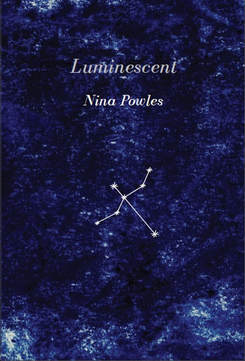
Episode 51: Pip Adam talks to Nina Powles about her new work LUMINESCENT

Listen here.

‘In this episode I spoke with one of my favourite Wellington poets Nina Powles. I first spent time with Nina around Helen Rickerby’s table where a group of us were hand-binding copies of her first collection Girls of the Drift.

Nina is an outstanding poet, non-fiction writer and zinemaker. She is half Malaysian-Chinese, half Pākehā. Nina has an MA in creative writing from Victoria University of Wellington and won the 2015 Biggs Family Prize for Poetry for the first draft of Luminescent. She is the author of the chapbook Girls of the Drift (Seraph Press, 2014) and several poetry zines.

Nina’s new work Luminescent is an extraordinary work.’


Paula: I love this collection so much. Here is my review.


luminescent-cover-low-res.jpg

Courtney Sina Meredith airs new poems at a very good Ladies Litera-Tea – here are two for you


IMG_8173.JPG   IMG_8170.JPG

This year, The Women’s Bookshop hosted two Ladies Litera-Tea events. I didn’t make the first one, but the one on Sunday was perhaps the best one I have been to. The range of voices was inspired programming. I needed toothpicks to hold my eyes up when I left home, but Dame Fiona Kidman had me sitting up listening to the sonnets she wrote for her mother, Kirsten McDougall mesmerised with an extract from the must-read Tess, Heather Kidd showed the diverse creativity and ambitions of rural women (wow!), Michalia Arathimos spoke of the gut-wrenching origins of her debut also must-read novel Aukati, Fiona Farrell’s extract from Decline & Fall on Savage Street had me sitting on the edge of my seat, the sentences were so good (now have a copy!). Hearing how Eat My Lunch came into being from Lisa King underlined the difference one person can make (with help from friends!). 

The first half was a glorious rollercoasting brain-sparking heart-warming delight.

By this stage no vestiges of tiredness. I thought I might flag in the second half but the immune-system boost continued. Wow! Hearing Sue Wootton read poems was a bit like hearing Anne Kennedy read and I just wanted more (please can she come to AWF?), Annaleese Jochems had me gasping every time she read an extract (also now on my table), Diana Wichtel’s account of Driving to Treblinka and her missing Polish Jewish father was so moving I was in awe of her tenacity and ability to bring that story to life on the page, Tina Makereti made abundantly clear why Black Marks on the White Page matters and why this collection is compulsive reading. I actually loved the way – rather than read her own award-winning ‘Black Milk’  – she picked ‘Famished Eels’ by Mary Rokonadravu to read (it had won the 2015 Commonwealth Short Story Prize for the Pacific Region).

We tell stories and we write poems in so many different ways – and that matters.

I came home with four new novels and so much more! Thank you Carole Beu, her team and the authors. I so needed that pick-me-up. Seriously I felt like I had come back from a month at Sandy Bay after reading novels and swimming.

Somewhere in the glorious mix, Courtney Sina Meredith read some new poems – which is no easy thing. I loved hearing her half sing/half speak an early poem,  ‘Brown Girls in Bright Red Lipstick’, and I loved hearing the new poems. There is the same musical lift, the same political undercurrents, the same heart that beats along every line – yet there is also a stepping out, a tasking risks, a renewed self exposure with vital attachments to the world. Courtney kindly agreed to let me post two new poems that make a rather good pairing. Just so you can have a taste. I feel rather lucky as I an read them with her performance voice taking over.

I just adore the way these two poems make conversations with each other.


The poems


How about being a woman?

How about being a young woman?

How about being a young brown woman?

How about being a young brown queer woman?

How about being a young brown queer single woman?

How about being a young brown queer single educated woman?

How about being a young brown queer single educated professional woman?

How about being a young brown queer single educated professional creative woman?

How about being a young brown queer single educated professional woman?

How about being a young brown queer single educated woman?

How about being a young brown queer single woman?

How about being a young brown queer woman?

How about being a young brown woman?

How about being a young woman?

How about being a woman?


I have stolen away into the secret room

mothers build inside their daughters

I am feeding on a dowry centuries old

the bones sucked dry

a feast of bright quiet.


My mother’s dreams are here

beside the red gold river

born of shame and laughter

the shifting bank won’t hold.


Her mother’s wings are here

wild shimmered iridescent

girl to bird to prophet

an angel killing time.


And there is her mother

at the top of the sky ablaze

lighting the islands below

into a string of tears.


©Courtney Sina Meredith