Monthly Archives: May 2016

Tusiata Avia’s book launch gave me the goose bumps

0b1eb042-a027-4f9f-bae5-5ca96dfd4ed5.jpg       IMG_3432

Fale Aitu / Spirit House Tusiata Avia, Victoria University Press, 2016

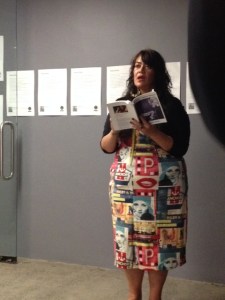
Last night I drove into the city into some kind of warm, semi-tropical wetness —like a season that no longer knew what it ought or wanted to be — to go to the launch of Tusiata Avia’s new poetry collection. Tautai, the Pacific Art Gallery, was a perfect space, and filled to the brim with friends, family, writers and strong publisher support. I loved the warmth and writerly connections in the room. I have been reading Tusiata’s book on planes as poetry now seems to be my activity of choice in the air. I adore this book and have so much to say about it but want to save that for another occasion. I was an early reader so have had a long-term relationship with it.


the launch

The room went dark and an MIT student, bedecked in swishes of red, performed a piece from a previous collection, Blood Clot. Mesmerising.

Tusiata’s cousin and current Burns Fellow, Victor Rodger, gave a terrific speech that included a potted biography. I loved the way he applauded Tusiata not just as a tremendous poet, but as a teacher and solo mother. Her names means artist in Samoan and he saw artist in the numerous roles Tusiata embodies. Writing comes out of so much. He identified her new poems as brave, startling, moving and political. Spiky. I totally agree.

Having dedicated her book to her parents, Tusiata said that it was hard to be the parent of a poet who wrote about family. When she told her mother what she was writing, her mother embraced it. She opened her arms wide. She said the skeletons need to come out. The atua. Tusiata’s speech underlined how important this book is. It is not simply an exercise in how you can play with language, it goes to the roots of that it means to be daughter, mother, poet.  It goes further than family into what it means to exist, to co-exist, in a global family. When a poet knows how to write what matters so much to her, when her words bring that alive with a such animation, poise and melody, it matters to you.

Four poems read. Lyrical, song-like, chant-like, that place feet on ground, that open the windows to let atua in and out, that cannot turn a blind eye, that hold tight to the love of a daughter, that come back to the body that is pulsing with life.

Yes I had goose bumps. You could hear a pin drop.

Fergus Barrowman, VUP publisher, made the important point that these poems face the dark but they also face an insistent life force.

Congratulations, this was a goosebump launch for a goosebump book.


Poetry Shelf congratulates the winner of the poetry category at the Ockham NZ Book Awards

OLYMPUS DIGITAL CAMERA   35

Photo credit:  F. J. Neuman


‘Stone clacks on stone

so creek lizards slither,

runnels slip through claws,

each cloud’s a silver feather.’

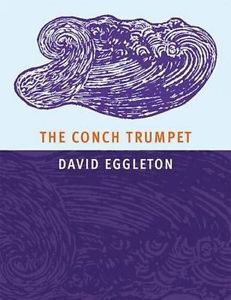
from ‘Raukura’ in The Conch Trumpet (OUP)


I was chuffed to see David Eggleton win the Poetry category for his terrific collection, The Conch Shell.

David did a wonderful interview to coincide with the publication of this book last year. He is a very fine poet who has contributed much to our writing communities.

My hearty congratulations.


from the interview:

These new poems offer shifting tones, preoccupations, rhythms. What discoveries did you make about poetry as you wrote? The world? Interior or external?

My poems like to dwell on the silver wake of a container ship, or the wet sand beneath the upturned hull of a dinghy, or the half-seen, the overheard. Poets re-arrange, but they have duties of care. X.J. Kennedy has pointed out that: ‘The world is full of poets with languid wrenches who don’t bother to take the last six turns on their bolts.’

It’s been five years since my last poetry collection Time of the Icebergs appeared, and one reason my collections have been regularly spaced that far apart is the need for more elbow-grease and line-tightening to get the burnish just so.

The poet’s mind, like anyone else’s is made up of reptilian substrate, limbic empathy and neo-cortical rationality. These shape your reveries and hopefully together lift them out of banality. Our ideas are dreams, styles, superstitions. We rationalise our temperaments, draw curtains over our windows, but poems carry an anarchic charge that reveals the force that through the green fuse drives the flower.

A poet is in the business of the unsayable being said, showing you fear in a handful of dust. A poet is amanuensis to the subconscious ceaselessly murmuring, and indeed to the planetary hum, the gravitational pull of the earth, the wobble of placental jellyfish in the womb — anything alive, mindless and gooey.

the rest of the interview here

Best first poetry book at the Ocklam NZ BNook Awards is


1411440756602.jpg  1411440756602.jpg


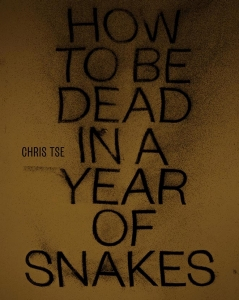
big congratulations go to …. Chris Tse for his very fabulous book .


Here is my review:


How to Be Dead in a Year of Snakes Chris Tse, Auckland University Press

Chris Tse is a writer, musician and actor whose poetry first appeared in AUP New Posts 4 (Auckland University Press, 2011). He resides in Wellington, his home town.

Chris’s debut collection, How to Be Dead in a Year of Snakes, responds to a moment in history not so much by narrating that history but by installing a chorus of voices. He takes an event from 1905 when Lionel Terry went hunting for a Chinaman in Haining Street, Wellington and ended up murdering Joe Kum Yung. Within the opening pages, the chilling event is situated in a wider context where laws proscribe the alienness that situates  Chinese as outsiders. This is what gets under your skin as you read.

The poems draw upon and draw in notions of distance, defeat, guilt and forgiveness. There are the unsettled imaginings of what it is to be home, to be at home and to be out of home to the extent that home becomes difficult and different. Mostly it is a matter of death (and casting back into life) whereby phantoms stalk and cry about what might have been and what is: ‘You spend your thoughts drowning in your family-/ missing from this vista- and contemplate a return with nothing to show/ for your absence.’

The collection harvests shifting forms, voices and tones that promote poetry as mood, state of mind, emotional residue. Yes, there is detailed evidence of history but this is not a realist account, a story told in such a way. Instead the poetic spareness, the drifting phantom voices give stronger presence to things that are much harder to put into words. How to be dead, for example. How to find the co-ordinates of estrangement, of that which is unbearably lost and is hard to tally (family, home, what matters in life). On page four you move from a matter-of-fact representation of the law to page five and the wife in Canton (‘you carry her bones in your body’). Two disparate but equally potent aches.

At times the poems are syncopated, with words stretched over little bridges of silence or white space. It adds an accumulating breathlessness. At times it feels like the intake of breath associated with the silence you grant the dead. When you stop and remember. Thus (as it appears in one poem), it also becomes static: ‘Listen: there’s a hunger in the air. It’s reciting prophecies./ It’s doubled up.’

Many lines sing out and stick as they haunt:

‘to kill a man is to marry a shadow’

‘We must divide the world around us into safety sets or else it splinters/ of its own accord into anarchy.’

‘The world is full of murder and words are usually the first to go’

‘Peace is a loose ideal for the abandoned/ left to sing their songs/ to themselves’

‘there will be voices to say your name/ to clear the way. The rest is up to you.’

There are many vessels of emptiness (the body, the head, the memory, the thing) and in a way each poem is a version of a vessel that becomes provisionally and movingly full. Just for a moment: ‘Now your onus is to surround/ yourself in objects    of your former permanence// a bone flute that stores folk songs and lullabies within,/ chopsticks that remember the taste of every meal.’

This collection shows so beautifully, so movingly, the power of poetry to give renewed presence to history; so that the silent bridges billow with a new awareness of how we get to this point.


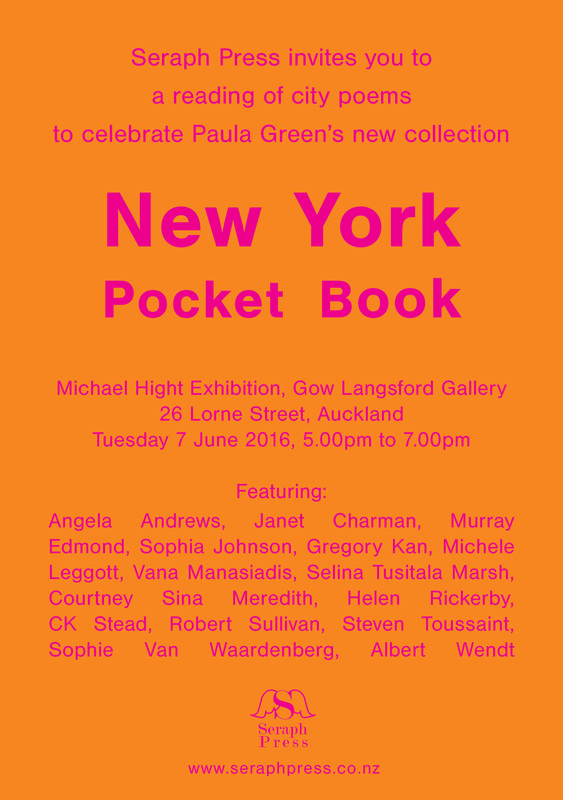
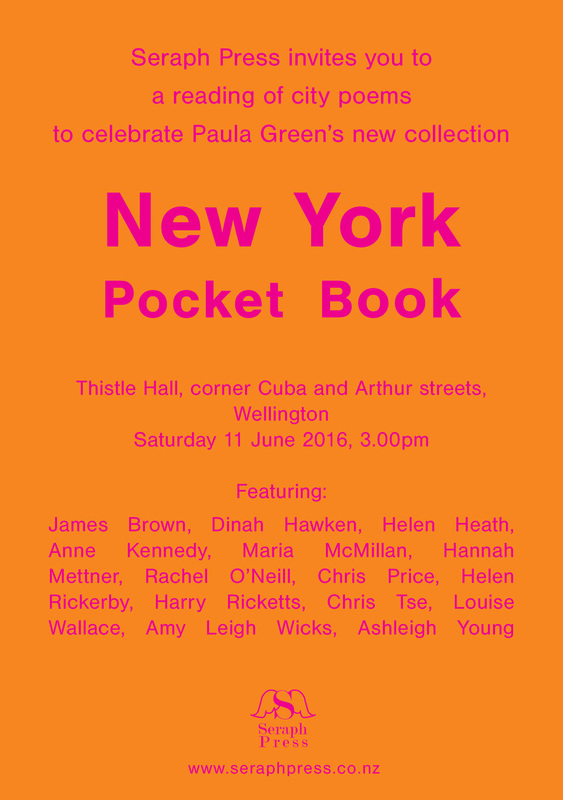
My two poetry readings to launch my new book feature some of my favourite poets

Like so many poets, I loathe people making speeches about me or my work. Much better to stage a poetry reading and celebrate the pull of cities.

My new poetry collection comes out of ten exceptional days I spent in New York with my family awhile ago. So I have invited a bunch of poets I love to read city poems by themselves and others. Big line-ups but it will free flow and leave time for wine and nibbles.

Once I got to fifteen I realised what poetry wealth we have in these places. I could have hosted another 15  in each place easily. That was so reassuring.

If I had time and money, I would have staged similar events in Christchurch and Dunedin where there bundles of poets I love too.

Please share if you have the inclination.

And you are ALL warmly invited!

Auckland:


7601147_orig.jpg


Wellington:


Auckland:2434463_orig.jpg

Tusiata Avia’s book launch on Wenesday

Invitation to Tusiata Avia’s book launch, Wednesday 11 May, 5.30pm–7.00pm, Tautai, Auckland.


0b1eb042-a027-4f9f-bae5-5ca96dfd4ed5

You are warmly invited to the launch of

Fale Aitu | Spirit House

by Tusiata Avia

on Wednesday 11 May, 5.30pm–7.00pm
at
Tautai: Contemporary Pacific Arts Trust
Level 1, 300 Karangahape Road
(Next to Artspace)

Tusiata will read some new poems and sign copies of the book.
Refreshments will be served.

About Fale Aitu | Spirit House
Tusiata Avia is an essential voice in New Zealand and Pasifika literature. In her fearless new collection, she weaves together the voices of the living and dead, the past and the present in poems that are confessional and confrontational, gentle and funny. Speaking from Samoa, Christchurch, Gaza and New York, she combines stories from myth and the everyday, never shying away from pain or wonder.

Sarah Broom Poetry Award Finalists

What a terrific list! My warm congratulations go these three women. If I can get a seat (this is a popular free AWF event!), I can’t wait to hear from your selected poems.


FINALISTS FOR THE SARAH BROOM POETRY PRIZE 2016


We are delighted to announce the shortlist for this year’s Sarah Broom Poetry Prize.

Now in its third year, the prize attracted over 200 entries from New Zealanders across the country and living overseas. This year the judge was Paul Muldoon, one of the world’s leading contemporary poets, secured in partnership between the Sarah Broom Poetry Trust and the Auckland Writers Festival.


The finalists are:

Airini Beautrais: a Whanganui-based poet, teacher, and mother of two young children, the author of three collections, including Dear Neil Roberts (Victoria University Press, 2014).

Amanda Hunt: a poet and ecologist living in Rotorua, whose work has appeared in anthologies of the New Zealand Poetry Society, online, and in newspapers.

Elizabeth Smither: a poet and novelist from New Plymouth, the author of 18 poetry collections, most recently The Blue Coat (Auckland University Press, 2013) and Ruby Duby Du (Cold Hub Press, 2014).


The Sarah Broom Poetry Prize is New Zealand’s most valuable poetry prize and aims to recognise and support financially new work from an emerging or established New Zealand poet through a $12,000 award.

Sarah Broom 1972-2013

The three finalists will each read in a free session at the Auckland Writers Festival on Saturday 14 May from 3 – 4pm in the Upper NZI Room, Aotea Centre, Auckland where Paul Muldoon will announce the winner.

ENDS


Enquiries should be emailed to: enquiries@sarahbroom.co.nz

For more information about Sarah Broom or the Poetry Prize visit www.sarahbroom.co.nz

FINALISTS FOR THE SARAH BROOM POETRY PRIZE 2016


We are delighted to announce the shortlist for this year’s Sarah Broom Poetry Prize.

Now in its third year, the prize attracted over 200 entries from New Zealanders across the country and living overseas. This year the judge was Paul Muldoon, one of the world’s leading contemporary poets, secured in partnership between the Sarah Broom Poetry Trust and the Auckland Writers Festival.


The finalists are:

Airini Beautrais: a Whanganui-based poet, teacher, and mother of two young children, the author of three collections, including Dear Neil Roberts (Victoria University Press, 2014).

Amanda Hunt: a poet and ecologist living in Rotorua, whose work has appeared in anthologies of the New Zealand Poetry Society, online, and in newspapers.

Elizabeth Smither: a poet and novelist from New Plymouth, the author of 18 poetry collections, most recently The Blue Coat (Auckland University Press, 2013) and Ruby Duby Du (Cold Hub Press, 2014).


The Sarah Broom Poetry Prize is New Zealand’s most valuable poetry prize and aims to recognise and support financially new work from an emerging or established New Zealand poet through a $12,000 award.

Sarah Broom 1972-2013

The three finalists will each read in a free session at the Auckland Writers Festival on Saturday 14 May from 3 – 4pm in the Upper NZI Room, Aotea Centre, Auckland where Paul Muldoon will announce the winner.

ENDS


Enquiries should be emailed to: enquiries@sarahbroom.co.nz

For more information about Sarah Broom or the Poetry Prize visit www.sarahbroom.co.nz


Poetry Shelf interviews Cilla McQueen – ‘I’m always listening. It’s a subtle thing, poetry.’


Cilla 2014

Photo Credit: Rhian Gallagher


Cilla McQueen has published 14 poetry collections, has won the NZ Book Award for Poetry three times and was New Zealand Poet Laureate 2009 -11.  Her last collection of writing was  an exquisite suite of little books in a box entitled Edwin’s Eggs and other poetic novellas (OUP, 2014). The book, written during her Laureateship and posted in pieces on the Laureate blog, was a poetic response to pictorial works in the National Library. I reviewed and loved it here.  Reading favourite Cilla poems that other poets picked on an Otago University post sent me flying back to all the poems I have loved, and like Michele, Emma, Ian, Bill and Brian, I would have trouble picking just one. Every book serves a poetry talisman to carry with you. I am currently writing the foundation stones of women’s poetry in New Zealand but I also want to cast a light on several women in the last few decades (small part of a larger work).  I want to explore women poets who are a significant part of the strata upon which we write. Cilla is one of them.

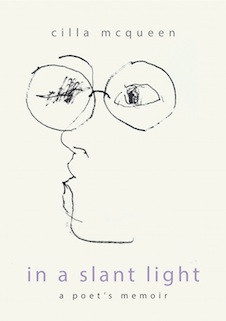
What prompted this interview, however, is the recent release of In Slant Light: A Poet’s Memoir.  This book has affected me on so many levels. It is beautifully written. It takes me back to the unfolding of self and notself on the page when you barely call yourself a poet. That Cilla started writing poetry when most around her were men, and most of the women poets were hiding in the shade, meant that she was ‘daring’ to write.  Or ‘transgressing’ as she also puts it.  The book makes me want to delve back and write my way through Cilla’s poetry. I want to sit in a kitchen and drink tea with her and talk about writing and books and life. Her memoir leaves gaps, and I love that, but it reveals the dimensions of a life that have enriched the dimensions of the poems on the page.

In Slant Life: A Poet’s Memoir  Otago University Press, 2016


The Interview

Did your childhood shape you as a poet? Your new memoir is most definitely the memoir of a passionate reader.

Yes, I’m sure it did. I was fortunate to have parents who knew the importance of reading and who loved all the arts.

Screen Shot 2016-04-30 at 10.37.08 AM

Cilla 1954 Arthur Street School


What did you like to read as a child?

Everything – A.A. Milne, Lois Lenski’s The Little Airplane, lots of fairy stories, adventure stories, myths and legends. Especially stories about going through some portal into another world, for instance Alice in Wonderland and Through the Looking Glass; the Narnia books by CS Lewis; The Door That Wasn’t There by Ursula Horsley Smith, with Rosemary Cosgrove’s illustrations.


Oh yes! I loved those portals too. Did you write as a child? What else did you like to do?

I wrote letters to my aunts, uncles and grandparents overseas, usually to thank them for birthday or Christmas presents. These were a hard task but were insisted on by my mother, who made sure the spelling and writing were up to standard. I wrote poems and stories in cut-in-half exercise books. I thought of these as real books and was pleased with them. I also liked ballet, mime, gymnastics, making up plays.


Did you write in your teenage years? Did you read poetry?

I was very taken with concrete poetry at one stage and had fun chopping up lines of words and putting them in a new order, to make nonsense or a peculiar new sort of sense.


What three words resonate with your time as a teenager?

Eager, curious, self-conscious.


Great words. Fascinating to consider the degree they stick with us. When you started writing poems, were there any poets in particular that you were drawn to?

Shakespeare, Donne, Villon, Dylan Thomas, Prévert; Beat poets; e e cummings; began to read New Zealand poetry after meeting James K. Baxter in 1967.


Your first book appeared in 1982 (Homing In) when not as many women poets were as visible as they are today. How did this affect you as a writer?

I felt shy, unsure, surprised that it was well received. As a new woman writer I felt junior in a mainly male artistic circle. I also felt somehow transgressive, for daring to write.


Do you think it makes a difference when the pen is held by a woman?

It certainly ‘makes a difference’ to the life of the woman holding the pen. And further, to the minds and lives of the women who read her writing.


Your poems are infused with such musicality they sing themselves to life. Yet what makes them matter so very much is the heartbeat — the way a poem will creep deep under your skin as reader because it makes the world matter. What are some key things for you when you write a poem?

A sense of joy in the release of restrictions of everyday language, a feeling that anything goes – I can think, experiment, change, manipulate the language to make it supple and economical. I’m always listening. It’s a subtle thing, poetry. Cocteau wrote that ‘[Poetry’s] modesty consists in masking its own equations’ (Diary of an Unknown).


Do you think your poetry has changed across the decades?

It’s probably better self-edited. I didn’t go to a writing school, so made all my mistakes in public, as it were. The work has gone through periods of change, particularly unruly in the performance poems, but also periods of paring down and stripping, also lyric periods when musicality seemed paramount. Each new poem brings to bear all the language experience of previous poems.


otago291603.jpg  otago291603.jpg


Your new memoir has affected me on so many levels. Partly because I am a poet who also had to find her writing life, who has lived with a painter for thirty years, who spent a long time with another language and who found joy in many of the books and films you mention. But most importantly, because the memoir is so beautifully written and because it raises issues that will have affected many women writing.

What were the joys and difficulties of writing a memoir?

Looking for and finding fresh memories and writing them down; recasting familiar ones, looking around the edges of the familiar; realising one’s place in the past and in present time. Pinning down what happened when, and thinking about the reasons why.


Why poetry and not prose?

Associated memories flood in very fast – I need to use compressed language to retain the feel of them. I find that a fragment of memory is best expressed in poetry because it presents itself not as a narrative but as a simultaneous  display, more like a dream. It seems that poetry can collapse time.


Did you have filters at work as you wrote? A need to conceal for the sake of others and for the sake of self?

No need to conceal, but a natural process of selection operated, and on top of that, the selective forces of poetry. I didn’t feel compelled to lay all bare – what’s the point.


For me, your memoir represents the emergence of multiple, overlapping selves (reader, poet, mother, wife, lover, friend, teacher). What moved me so deeply was the way in which the poet found room to breathe and exist. At one point, in the middle of your life with Ralph Hotere and your daughter, you write: ‘I have to look carefully to find myself amongst all this.’ What tipped you into writing?

I had been writing a journal for several years, just for myself. As I started to read more poetry the language of my daily thoughts was affected; thoughts appeared in chunks and slivers, which I then worked on until the product resembled a poem, or so it seemed to me. When Ralph and Andrea and I spent a few months in Avignon in 1978 I began to write seriously, with their encouragement. I sent an early poem on a postcard to Hone Tuwhare, ‘Saturday Afternoon in Provence’, about the Pont du Gard.


Your memoir, so poetic on the page makes the gaps of telling poignant. What did you most love about this period? What did you find most difficult?

I loved the inspired conversation of creative discovery in a life where the arts were central, 24/7. My difficulties were normal – balancing lives, being teacher, wife, mother and breadwinner until Ralph’s work started to sell.


This is memoir written out of love, and that is infectious, but there are subterranean hurdles. Is writing joy for you, or is it pain, or is it a mix of both?

Of course, it is a mix of both.


You studied and taught French. Did this affect your poems at all?

It gave me practice in thinking in another language, about grammar, vocabulary and syntax. There’s a clarity in French syntax that I find satisfying; through teaching, I learned to see language as a magical, plastic substance.


Music has been a significant part of your life as a poet, particularly in view of your performances. What key things matter in this poem-music collaboration?

The ability to listen. Trust in another performer’s musical ear. Inner hearing of the musicality in words. A sense of time. Delight in shared discovery through improvisation.


The detail in the memoir is so vivid it makes time and place shimmer on the line. It is a way of laying down roots in a poem. Would you write a sequel?

I don’t usually like to do the same thing twice. In fact, in the sequence of my oeuvre, especially in long poems such as ‘Bump and Grind, (spinal fusion)’ in Benzina (1988); the Berlin Diary (1990); ‘The Autoclave’ in Markings (2000), and many Bluff poems, I’ve already traced the progress of my life until now.


What irks you in poetry?

Its difficulty.


What delights you?

Its difficulty.


The constant mantra to be a better writer is to write, write, write and read read read. You also need to live! What activities enrich your writing life?

Gardening, walking, drawing, thinking up imaginary music.


Finally, if you were to be trapped for hours (in a waiting room, on a mountain, inside on a rainy day) what poetry book would you read?

I’d like a Complete Shakespeare, please.


Thanks Cilla.


Otago University Press page

Poets pick favourite Cilla poems

Cilla’s Laureate page

NZ Book Council page

NZ Electronic Poetry Centre page

Te Ara video clip


Edwin’s Egg