Monthly Archives: December 2015

Poetry Shelf, Poet’s Choice: Sarah Jane Barnett’s picks

7485719   cv_the_lonely_nude
This year two collections have really stayed with me. I keep on thinking about them for their content, but also their craft.

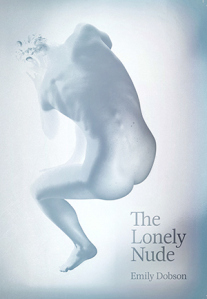
First is Emily Dobson’s second collection, The Lonely Nude (VUP). I reviewed it for Landfall Review Online and it’s a beautifully shaped and paced collection. It follows Dobson’s life as she moves overseas (and then finally back to New Zealand) and the poems gently draw you in, build, and echo. Pure poetic goodness.

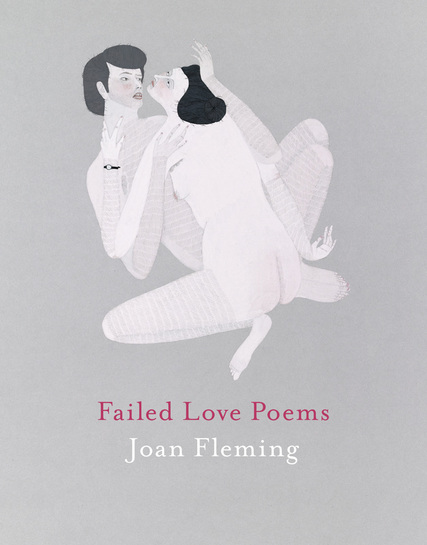
Second is Joan Fleming’s second collection, Failed Love Poems (VUP). I know Joan’s work very well and in this collection she has broken through all sorts of barriers. It’s mature and exploratory and accomplished. It’s unafraid. It’s simply awesome, and the poem, ‘The invention of enough’ will break your heart.

Sarah Jane Barnett

Poetry Shelf, Poet’s Choice: Jack Ross makes a few picks

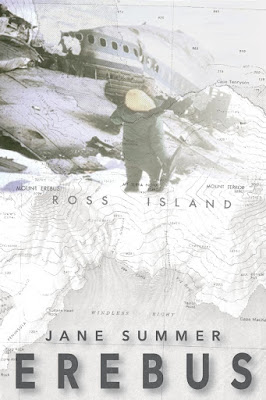
First of all, Jane Summer‘s wonderful poetic memoir Erebus, about the death of her friend Kay Barnick on the ill-fated flight in 1979.

I guess New Zealanders tend to think that we own this particular disaster — and of course there’s the precedent of Bill Sewell’s fine book on the subject — but the personal intensity combined with genre-busting inventiveness of this book-length poem completely absorbed me.

Good on Sibling Rivalry Press of Little Rock Arkansas for spending so much time on the design and layout of this book, and thanks to Jane Summer for sending me a review copy (for PNZ). I might never have come across it otherwise.

Erebus_FRONT     burnthotel

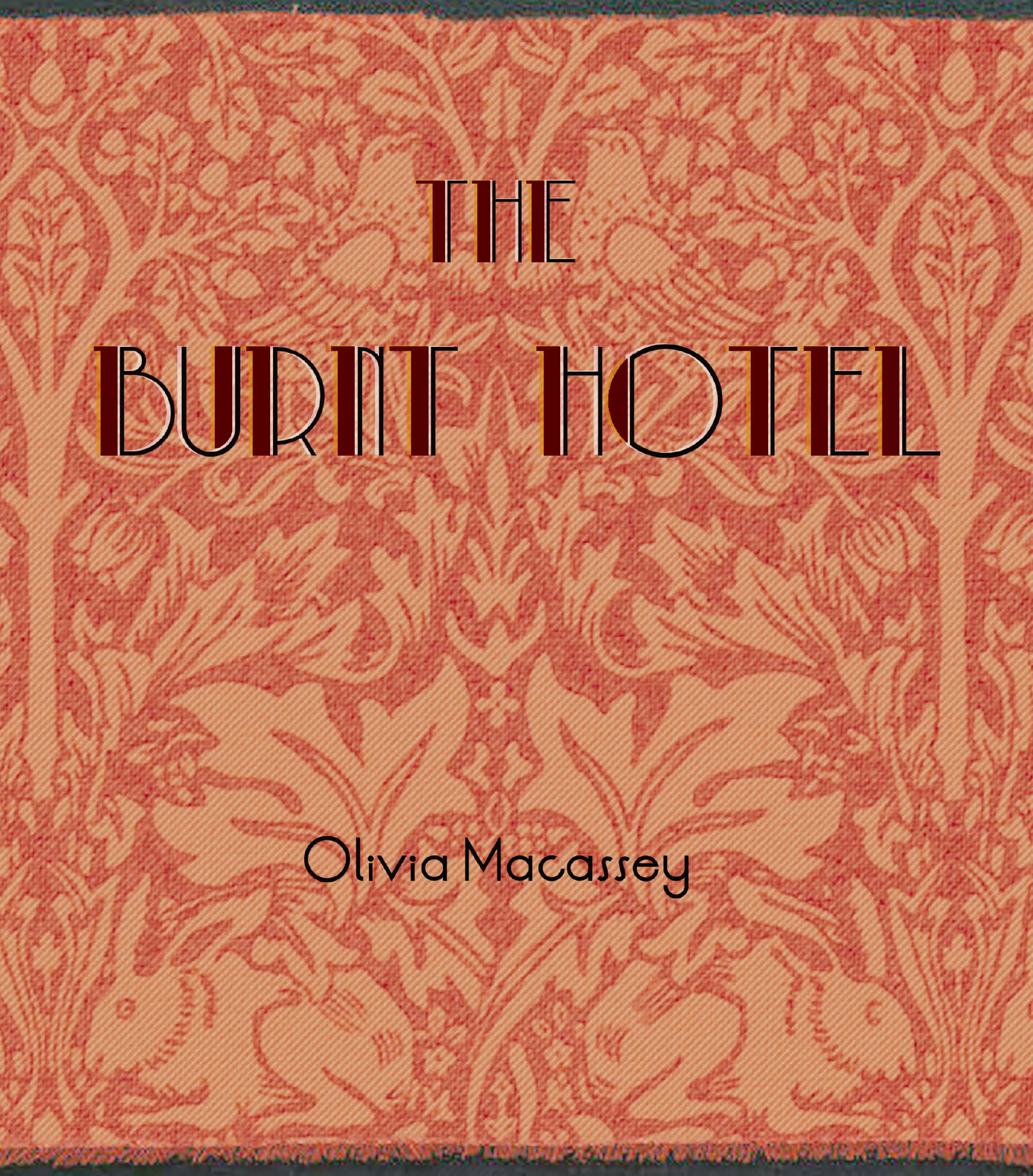
My other favourite book this year is Olivia Macassey‘s The Burnt Hotel (Titus Books, 2015). It’s been far too long since we’ve heard from her, and this book has many old favourites as well as new ones.

The dreamy, lyric, intensely introspective and yet never self-indulgent truth of Liv’s writing continues to enchant in this new book. And Brett Cross and Ellen Portch’s design work on it is really beautiful. Their Titus poetry volumes are now among the most handsome in the New Zealand poetry canon, I think.


Jack Ross

Poetry Shelf, Poet’s Choice: CK Stead makes a pick

1447366508758     1447366508758

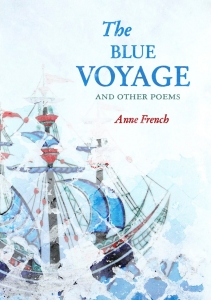
On Wednesday at Auckland University Press I launched Anne French’s new collection, The Blue Voyage. Anne has always been a sailor (a ‘yachtie’) and the sea figures somewhere in all her books. The title sequence in this one is based on sailing in the Aegean, south of Turkey. This gives her both seascapes and landscapes/cityscapes, the flora, and even something of the history and changing politics, of the region. There is an amusing set of poems by Anne’s invented local poet, William Butler Smith who has more than an accidental connection with W.B. Yeats; and by contrast, some translations of exquisitely delicate poems by the Korean modernist, Han Yong-un. Anne has always seemed to me a clever poet who tells things as they are, and as they have been, from a woman’s perspective (remember The male as evader, a few years back?)and that is still the case; but there are gentler notes now, and some very touching elegies, including one for Nigel Cox, one to ‘Uncle Max’, and one (in cricketing terms) to ‘Auntie Paddy’ whose

heart ticked on long after

she’d stopped eating, talking, or looking

forward to anything but the walk

back to the pavilion.


I think maybe the central poem of the book for me is one called ‘Ziran’, where after a rough passage sailing they have emerged into calm seas and she’s ‘leaning back against two sail bags / singing Puccini.’

The Chinese word for ‘natural’ is self-so,

John tells me later: true to its own nature

and the way of the world. Self-so then is this joy

that fills every part of me and lifts me into myself.


The thought of being lifted into, rather than out of, oneself is typical of the small surprises she delivers. This is a book full of Self-so.


CK Stead

Poetry Shelf, Poet’s Choice: Lynn Davidson makes her picks

1423778022214-1   1437428599707 

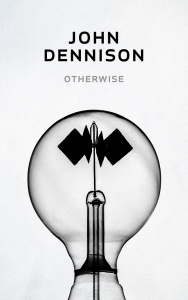
There are so many books to catch up on now the PhD is done and dusted! But of the poetry I managed to read this year, these ones stayed with me. John Dennison’s Otherwise combines really fine crafting with breadth of vision and a deep interest in connectedness, including with other New Zealand writers. From ‘Lone Kauri (reprise)’: ‘So take for starters the surge-black fissure, / the waves which register the lunatic sense / it is all well beyond us.’

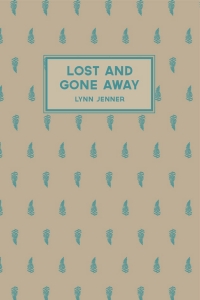
Lynn Jenner’s Lost and Gone Away brings us poetry in prose and the old world in the new: This from a reflection on the sculpture Rudderstone in the Wellington Botanic Gardens where amongst ‘Pacific’blue marble, there are ‘some small, irregularly shaped pieces of black…They are pieces of the Old World that came with us.’

Joan Fleming’s Failed Love Poems are energetically engaged with language and movement and the strange corners and shores of love that can hardly be articulated, but find articulation here: ‘Un-husbanded nuisance fire. Or grovel, or chisel down, chisel down’– from ‘The Invention of Enough.’

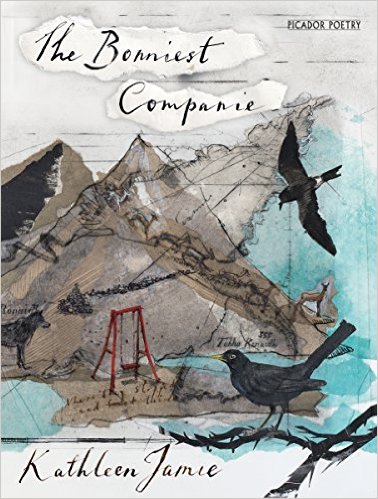
And finally the big excitement for me was a new book of poems by Kathleen Jamie, The Bonniest Company. This from ‘Arbour’:

…May is again pegged out

across the whole northern hemisphere, and today

is my birthday. Sudden hailstorms sting

this provisional asylum. We are not done yet.

Lynn Davidson

7485719 51tMq34EX0L._SX376_BO1,204,203,200_

Poetry Shelf, Poet’s Choice: Lynn Jenner makes some picks and muses on poetry

8507862


Places to talk about poetry with others who love it just aren’t that common. So thanks Paula for making that happen.

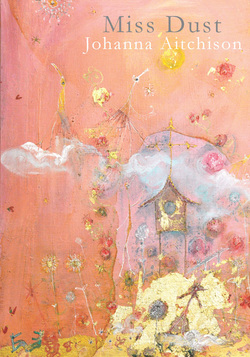
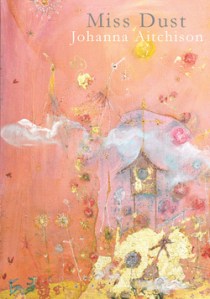
One of the things that happened in my poetry world this year was the RETHINKING PINK event hosted by VicBooks at their Kelburn shop back in October. Mary McCallum from Mākaro Press mc’d a discussion and reading from three books of poetry with pink covers. Poets Nina Powles (Girls of the Drift, Seraph Press) and Annabel Hawkins ( This Must be the Place, Mākaro Press) were there to read and talk about their work and publisher/poet Helen Rickerby of Seraph Press read from Miss Dust on behalf of Johanna Aitchison who was in Iowa.

One point of this story is that Vicbooks and two publishers put on the event, an audience came, poets read their work and talked about it and everyone had a truly wonderful time on a Saturday afternoon. I keep getting reminded that poetry is lovely on the page and in the book, but is even lovelier when it is out loud and shared with an audience and when the audience gets to hear a bit about how and why the poetry is made.

Another point of the story is that I had the opportunity and a nudge to read and think about the poems by Nina Powles and Annabel Hawkins. These two poets could hardly be more different in their consciousness or style. Hawkins’ poems began as a blog, and which she then turned into poems. This is quite a bold thing to do, and I wondered how that could work, given the great differences in diction and rhythm and everything else, but it does. The poems retain a casual vibe as they address topics of everyday life, but they sound like poems. I found myself very drawn to the person behind these words and wanting to know about the way this person experiences the world.

Here’s a few lines from Valey Day, a poem about cleaning up a flat with Janola and Jif on Valentine’s night

‘You look lovely,’ Jimmy says.

And I don’t think about the stain on

my shirt or the grease in my hair for the

rest of the night. We check our phones

and no calls have come. Not surprising,

but still.


You can hear Annabel talking about her poems with Jessie Mulligan.


Nina Powles published Girls of the Drift in 2014. It is in chapbook form and you can see a sample here.

The poems in Girls of the Drift are often about a particular person, the woman at the store, from the Mansfield short story, for example. The poems feel crisp and concentrated, like a Martini. And to stretch the comparison even further, the poems feel artful and slightly austere, qualities we like about Martinis and, in my case, about poems too. In 2015 Powles has completed an MA at the International Institute of Modern Letters. It will be very interesting to see her next collection.


This year I have been doing a research project examining the relationship between the critical and creative parts of the Phd in Creative Writing at IIML. This has given me the chance to listen to graduates, supervisors and examiners talking about the role played by in-depth reading in the development of a big ambitious PhD level creative project.

It’s fascinating to be finding out more about the significance, for writers, of reading and thinking about reading.

For myself, certain writers set off explosions in my writing mind. It might be their choice of language, or their use of form, or even just the topic they choose, but something in their work helps me to open new doors in my own. This week it has been Milan Kundera. This description of a man’s feelings about his lover, from Slowness, published in English in 1996, tells me so much:

‘His beloved’s sensitivity seems to him like a landscape by a German Romantic painter: scattered with trees in unimaginably contorted shapes, and above them a faraway blue sky, God’s dwelling place; each time he steps into this landscape, he feels an irresistible urge to fall to his knees and stay fixed there, as if witnessing a divine miracle.’

One thing it doesn’t tell me is whether this miracle is, in the end, a good thing or a bad thing. Perhaps it will drive the man mad in the end? I like that even-handed treatment.

Kundera’s book ,The Art of the Novel, had explosive qualities for me too, especially the last section in the book called ‘Sixty-three Words’. Here Kundera writes a paragraph or a page about words that have particular significance to him. You could call it an auto-index. Beauty (and knowledge), Being, Central Europe, Central Europe again, Collaborator, Comic, Czechoslovakia, Forgetting, Hat ….etc.

Here is the entry for ‘Ideas’:

Ideas.

My disgust for those who reduce a work to its ideas. My revulsion at being dragged into what they call “discussion of ideas.” My despair at this era befogged with ideas and indifferent to works.

Imagine what your own list might be.

This book about the novel, with sparks flying from its words and sentences and its intentions, might easily end up helping me write poetry.

Every year is a good year for poetry.

Lynn Jenner

Picture    This must be the place cover


Poetry Shelf, Poet’s Choice: Kiri Piahana-Wong makes her picks


cp-How-to-be-dead

Internet poetry sensation Lang Leav has sold 300,000 copies of her three poetry books and has a startling 135k followers on Instagram. Leav is part of a new wave of young poets who reach their audience through social media platforms such as Tumblr, Instagram and Facebook rather than traditional marketing channels. She even has a New Zealand connection: Leav was born in Thailand, but lives here. So why have we never caught her on the usual poetry reading circuits? I decided to check out her third book, Memories, and I’m recommending it. A lot of Instagram poetry is cutesy or trite, but Leav transcends this, managing to be witty, insightful, and ok, a little cute. This may be the poetry equivalent of pop music, but who doesn’t like to dabble on the light side occasionally?

How to be Dead in a Year of Snakes by Chris Tse is my other poetry recommendation. Like the man himself this is an immensely assured and elegant first collection, deservedly long-listed in the Ockham NZ Book Awards.

Other reading: the two novels I read this year that left the greatest impression on me were Hanya Yanagihara’s New York epic A Little Life and Anna Smaill’s beguiling and strikingly unusual dystopian debut The Chimes.

Kiri Piahana-Wong

Poetry Shelf, Poet’s Choice: Steven Toussaint picks a favourite read


1423778022214-1   1423778022214-1   1423778022214-1


What does it mean to be a religious poet in an irreligious age? John Dennison’s debut collection Otherwise (AUP) offers us a generous glimpse. The fixtures of contemporary lyric—domestic eros, urban existentialism, memories of childhood, communion with nature—are renewed under Dennison’s theological gaze. In the astonishing poem, ‘The Immanent Frame’, he recasts the boundary-lines between the secular and the sacred. In contrast to the popular ‘subtraction story’ that frames religion as an ever-diminishing component within the vast horizons of modernity, Dennison intimates a still-vaster transcendent force driving all things, ‘while all the while is carried / through, unsensing each / extra mile which goes / itself.’ Dennison’s poems are enriched by their subtle recourse to the Christian mythos (for C.S. Lewis ‘a true myth’), and are never more impactful than when turned toward social commentary. ‘On Climate Change’ traverses the sham of boundless growth with an elegant parable (When was the last time Balaam’s Ass appeared in a poem this side of David Jones?!). In addition, Dennison is a sure and studied composer, as vigorous in ‘free verse’ as in his peerless pantoums. I detect continuity with distinctively Brittonic voices like Dylan Thomas, W.S. Graham, and R.S. Thomas, even Geoffrey Hill’s playful opprobrium in a poem like ‘After Geering.’ I look forward to reading what comes next from this talented poet.

Steven Toussaint

Poetry Shelf review: Six reasons to pick up Landfall 230


otago178401   otago178401

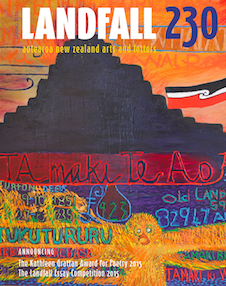
The latest issue of Landfall is a vibrant read. Edited by David Eggleton, it includes the results of the Kathleen Grattan Poetry Award with Emma Neale’s Judge’s report (Michael Harlow was the winner with Hannah Mettner, Elizabeth Morton, David Howard, Nick Ascroft, Alice Miller and Victoria Broome Highly Recommended).

The journal continues to showcase the strength of South Island writers, whilst casting a spotlight elsewhere. It is one of the few journals that include a healthy dose of poetry, fiction and nonfiction, along with book reviews, both in print and online. This eclectic reach is praiseworthy in view of our impoverished discussions of local books in print media.


Six high points in my reading so far:

One: This issue includes the results of The Landfall Essay Competition 2015, along with David Eggleton’s Judge’s comments. The top four are included in this issue.


The winner: Tracey Slaughter

Second: Phil Braithwaite

Third: Louise Wallace

Highly Commended: Therese Lloyd

Commended: Ludmila Sakowski and Bernie Coleman

The winning essay, ‘Ashdown Place,’ is astonishing. It utterly hits the mark for me. Memoir as essay, essay as memoir. It is a high-octane, detail compounding, breathtakingly rhythmed reading experience. It drenches you in time and place and then startles you in its revelations. This woman can write!


Two: Emily Karaka’s painting suite along with her eye-catching cover.

Three: Airini Beautrais’s longish poem, ‘Summer’ with its delicious lyrical narrative flow.

Four: Lynley Edmeades’s ‘Some Bodies Make Babies’ with its pitch perfect loop, simplicity and sharpness. A poet to watch.

Five: Hannah Mettner’s prose poem, ‘Reasons Ross Should Be Happy.’ Want to read more. Hits you on a number of writing levels. Do hope that shortlisted manuscript gets published!

Six: Jack Ross’s provocative nonfiction piece, ‘Is is Infrreal or is it Memorex?’ Jack juxtaposes quotes from Roberto Boleraño with a letter to Leicester outlining literary gossip (a scandalous poetry reading).


Poetry Shelf, poet’s choice; Murray Edmond makes some picks

otago108004      ghost_cover_front__73226.1427153026.220.220


Mais pourquoi entre parenthèses? Four Highly Mentionable Items from the Poetry Year

A long poem, a magazine, a collected poems and a set of translations.


I had the pleasure of giving the champagne-cracking speech to launch Roger HorrocksSong of the Ghost in the Machine (Victoria UP, 2015) in the first half of 2015. This is a single poem of nearly 70 pages. Lovely to read a long philosophical, meditative poem, which pays homage to Lucretius’ De Rerum Natura (first century BC).

The third issue of Ika from the Manukau Institute of Technology Faculty of Creative Arts is edited by Anne Kennedy. It includes prose and fine arts design and photography, but poetry is the mainstay of the magazine. MIT writing students are featured, but you will also find work by Tusiata Avia, Courtney Sina Meredith, Kiri Piahana-Wong, Chris Tse, Anna Jackson, Emma Neale, Kent McCarter, and Michael Steven among a host of others. Attractive production.

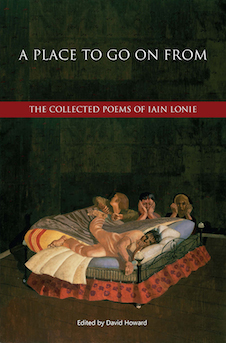
Collected poems tend to go on-line these days (eg. Kendrick Smithyman’s), but David Howard’s editing of the poetry of Iain Lonie (1932-1988) has produced a well-ordered, hard-cover volume from Otago University Press: A Place to Go On From: The Collected Poems of Iain Lonie (2015). There’s a Preface, a Chronology, A Memoir and an Essay to bind the collection together, with Sources and Notes and Indexes of Titles and of First Lines. The layout is generous. Lonie’s output at just under 300 pages was not large and it is here contextualized and clarified by excellent editing.

Pam Brown’s selection of poems Alibis (Societe Jamais-Jamais: Sydney), translated into French by her partner Jane Zemiro, actually appeared in 2014, but I wanted to mention it for Kiwi readers. The poems are selected from four earlier volumes by Brown and include the poem ‘One Day in Auckland/Un jour à Auckland with its lines:


I’ve woken up early

In Auckland,

New Zealand (Aotearoa)

(why bracket that?)


“Mais pourquoi entre parenthèses’ indeed. Nice to read an Australian poet waking us up. There is a Preface from Brown and Zemiro about translation. An earlier version of this Preface appeared in Ka Mate Ka Ora: A New Zealand Journal of Poetry and Poetics, No. 11 (2013) www.nzepc.auckland.ac/kmko/index11.asp

For the poet, the translated poem gives the poet an alibi, ‘slightly displaced,’ having been somewhere else at the time of the translation.

Murray Edmond


Poetry Shelf, Poet’s Choice: Fiona Kidman makes some picks

sweeping the courtyard cover      Being_Here_cover__66009.1423089464.140.215


There have been  many wonderful new books about this year. But isn’t it always the way? You come to the point of saying, this is my pick, and they all come flooding along saying pick me. So, as it’s been a sensational year for South Island poets, perhaps I will make them my point of reference.

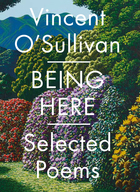
I had the privilege of launching Vincent O’Sullivan‘s Being here:Selected Poems (Victoria University Press). The beautiful hardback satisfies at every level, both from the aesthetic point of view of book production to the selection of poems which is never random, but designed to carry the reader from one place to another, as if all the poems are brand new, and speaking to each other. It includes one of my all time favourite O’Sullivan poems, ”Waikato-Taniwha-Rau” (originally from ‘The Rose Ballroom’ 1982). It begins:

We have a fiction that we live by; it is the river

that steps down, always down, from the pale lake

to the open jaws of land where the sea receives it


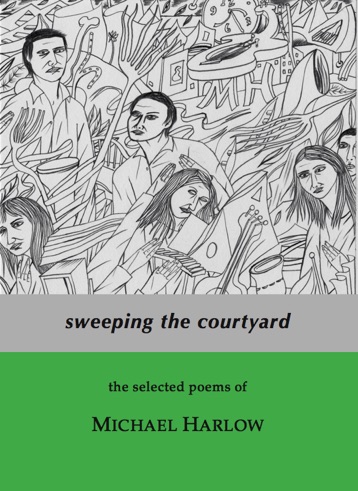
I had equal pleasure from Sweeping the Courtyard, the selected poems of Michael Harlow (Cold Hub Press) (and yes, yes, I grant that I am responsible for some cover comments, but they come from the heart). The music of language has long been a preoccupation of Michael Harlow, and his poems invite the reader to share nocturnes, harmonies and song. Thus,
“Song for two players” commences with the lines:

Are you by any chance a piano key?

she asked, reminding me

in our heart to hand affair, that not

all is black and white –


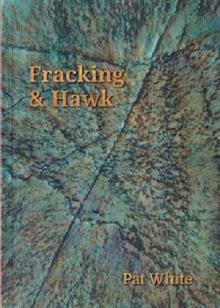
Fracking and Hawk by Pat White (Frontiers Press) is an elegant little book with a powerful voice. White is not afraid to address political issues without losing the tone of a poetic voice. The beauty of the hawk is reflected in the title poem, but also reminds us that time is running out for the earth.

418MHC3lAEL._SX346_BO1,204,203,200_  418MHC3lAEL._SX346_BO1,204,203,200_   418MHC3lAEL._SX346_BO1,204,203,200_   418MHC3lAEL._SX346_BO1,204,203,200_

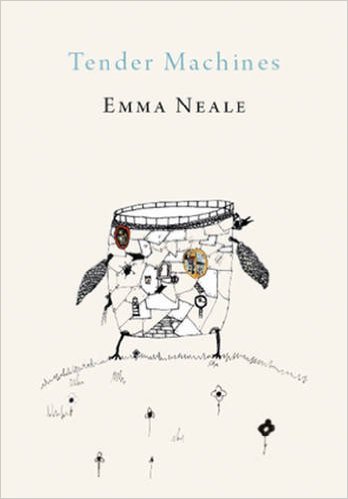
Emma Neale‘s new collection has already attracted so much comment  that there is little left to say, except that I, too, love Tender Machines, (Otago University Press). Her eloquent plangent voice just gets stronger with time.

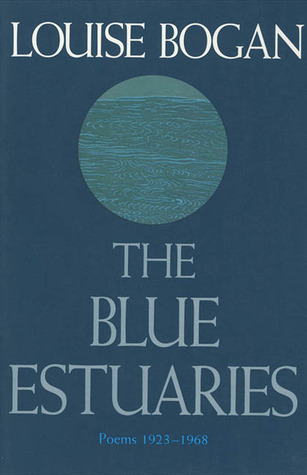
And, just to move outside this, admittedly, rather artificial boundary for a moment, there is  a poet whose work has carried me through six decades of reading poetry. She is the late American writer, Louise Bogan. The Blue Estuary Poems 1923 -1968 collects her finest work. Her poems are about yearning,the lives of women, survival. I read her every year, her work never far from the bedside table.


Fiona Kidman


9780473326364  1522562