
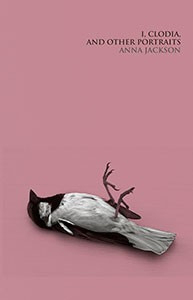
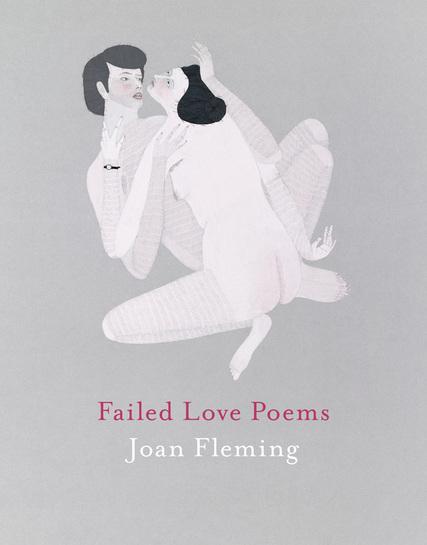
Once again it’s been a thesis-related year of reading. I’m looking forward to catching up on all the great local poetry which has been coming out over the past year. Books I have enjoyed which came out towards the end of last year or early this year include Anna Jackson‘s I, Clodia, Fleur Adcock‘s The Land Ballot, Kerry Hines‘s Young Country and Chris Tse‘s How to be dead in a year of snakes. One of the books I’m most looking forward to reading is Joan Fleming‘s Failed Love Poems. What a fantastic title. I really loved her first collection too.
The giant of my reading list this year has been four translations of the Divine Comedy. The one I liked best so far was Allen Mandelbaum‘s California Dante, partly because it was a beautiful production with amazing, simple ink drawings. Of course there are a whole heap more one ought to read. I think I will have to learn Italian next. I am turning 33 on New Year’s Eve and am conceptualising how I might make a Divine Comedy cake – or maybe a Purgatorio cake with 9 layers.
This obsession was generated by a chapter I was writing on John Kinsella‘s Divine Comedy: Journeys through a Regional Geography (University of Queensland Press, 2008). Kinsella imagines heaven, hell and purgatory as co-existing in modern-day Australia, and politicians are skewered Dante-style. It’s a bold, perhaps over-bold project, but if not compared too heavily to its model, an interesting work in its own right. Kinsella’s anarchist, environmentalist, pacifist politics are evident throughout, as is a sense of wonder at nature but also unease at living in a colonised, modified landscape. I spent a lot of time making tables and mapping Kinsella’s work against Dante – I doubt if anyone else will ever do this, but it was a fascinating exercise.
Airini Beautrais
 NZ Poetry Shelf