Monthly Archives: March 2015

SUE Wootton Wins Caselberg Prize

First prize of $500 in the fifth annual Caselberg Trust International Poetry Prize for 2015 has been won by Dunedin poet Sue Wootton, for her poem ‘Luthier’. Second prize ($250) was awarded to Jessica le Bas, of Nelson, for ‘Four Photographs from a Window’.

Alexandra poet Michael Harlow, who judged the competition, said in his report that ‘Luthier’ was ‘a poem alive in its language’ and ‘a fine pleasure to read aloud’; and he described the second-prize-winning poem as ‘a poem of celebration, accurate to its truth-telling’.

Michael Harlow listed six further entries as highly-commended. The poets are Carolyn McCurdie (Dunedin), Jillian Sullivan (Omakau), Michael Morrissey (Auckland), Karen Zelas (Christchurch), and Pat White (Fairlie).

Around two hundred entries are received each year for the Caselberg Trust International Poetry Competition, from writers working in a number of different countries. Entries are judged ‘blind’, with the judge being completely unaware of the poets’ identities until after the final decisions have been made.

The prize-winning poems and the judge’s report will be published in the May issue of Landfall, and along with the highly commended poems, will be posted on the Caselberg Trust web-site after publication of the journal. Awards will be presented at a function at the University Bookshop Dunedin on Thursday 9 April.

  • 'YAY SUE!!!

SUE WOOTTON WINS CASELBERG PRIZE - press release

First prize of $500 in the fifth annual Caselberg Trust International Poetry Prize for 2015 has been won by Dunedin poet Sue Wootton, for her poem ‘Luthier’. Second prize ($250) was awarded to Jessica le Bas, of Nelson, for ‘Four Photographs from a Window’.

Alexandra poet Michael Harlow, who judged the competition, said in his report that ‘Luthier’ was ‘a poem alive in its language’ and ‘a fine pleasure to read aloud’; and he described the second-prize-winning poem as ‘a poem of celebration, accurate to its truth-telling’.

Mr Harlow listed six further entries as highly-commended. The poets are Carolyn McCurdie (Dunedin), Jillian Sullivan (Omakau), Michael Morrissey (Auckland), Karen Zelas (Christchurch), and Pat White (Fairlie).

Around two hundred entries are received each year for the Caselberg Trust International Poetry Competition, from writers working in a number of different countries. Entries are judged ‘blind’, with the judge being completely unaware of the poets’ identities until after the final decisions have been made.

The prize-winning poems and the judge’s report will be published in the May issue of Landfall, and along with the highly commended poems, will be posted on the Caselberg Trust web-site after publication of Landfall. Awards will be presented at a function at the University Bookshop Dunedin on Thursday 9 April.'

Poem Friday: Airini Beautrais’s ‘The thing is, Neil, you are all of us’ –It is a poem that haunts me, and in that haunting, I keep returning to the lines to reflect upon ‘why.’

2015-02-28 21.01.36


The thing is, Neil, you are all of us


You are the old rocker in skinny jeans

who is mumbling in the corner

you are the punk who fixes bicycles

at two o’clock in the morning.


You are the comic book girl in combat boots

whose breasts are drawn too large

you are the feminine librarian

who wants to go on a rampage.


You are the community gardener

with home-cut hair and knee holes

you are the bespectacled chicken rescuer

the guitar player and the police mole.


You are the tofu thief made to work

for the local Salvation Army.

They throw away about half of their clothes:

take as many as you can carry.


©Airini Beautrais Dear Neil Roberts  Victoria University Press 2014


Author Bio: Airini Beautrais lives in Whanganui with her partner and two sons. She is currently working on a PhD in creative writing through the IIML at Victoria University, on the subject of narrativity and verse form in contemporary long poems. Dear Neil Roberts is her third book.

Author note: ‘The thing is, Neil, you are all of us’ is one of the first parts of the book I wrote, back in 2011. I had known Neil Roberts’s story for some time and it had occurred to me it would be interesting to write a long poem about the incident. One of the things that struck me early on in my research, from reading various anarchist/ libertarian communist web entries, was the sense of ownership amongst these radical left communities for the story. It was as though each person who had re-told the story, while not endorsing Neil’s act, could identify with the way he must have felt. In this poem I drew on my own experience within the Wellington anarchist scene – although not every detail is ‘true’, the characters in this poem do approximate real people, myself included.

Within this poem the ghost of an accentual meter can be heard, and the metrical scheme, while loose, is something near the traditional 4, 3, 4, 3 ballad stanza. And it is off-rhymed, xaxa. Perhaps the ballad was lurking behind the scenes all along. It has been mentioned that Dear Neil Roberts is rhythmically close to prose. I think this is true (as it is for a wide range of contemporary free verse), but I also think that writing to a regular stanzaic shape can lead to some interesting effects. For instance, rhymes frequently occur at line-ends. And there are lines in the book that are straight iambic pentameter. It has to be remembered that poetry is a genre, and can be written in verse, prose, or any combination of the two. Writing Dear Neil Roberts as a poem allowed me to present, juxtapose and interpret information in a different manner, than if I had set out to write an extended essay or a work of New Zealand history.


Paula’s note: Not having read Airini’s note before I wrote this, I didn’t have the back history (which is fascinating!). The poem is placed near the end of her collection, Dear Neil Roberts, and traverses Neil’s story with a foot planted in the realm of invention and another within the scope of research. Forming some kind of arc across—or conversely a simmering stream below—these two choices, is the personal. Airini allows herself, her own history and predelictions, to enter the poems.

What struck me about this particular poem is its ability to move, to raise issues and to offer delight at the level of technique. The parade of chalk-and-cheese characters turns the narrative impulse over and positions you as reader squarely within the frame. The poem now addresses ‘you.’ Yes, you might be any one of these characters that, like Neil, might test boundaries or go to extremes, but there are other issues at work here too. We are all destined, in the main, to occupy the shadows of history (as did Neil) as opposed to being a key player. If there is a potential Neil at work in this parade, there is also the way in which the parade is at work in Neil. We occupy many roles, play many parts, with varying degrees of visibility and attachment. These possibilities move me, as they return me to the complicated, contradictory, and at times unfathomable make-up of what it means to be human.

If the poem flips your placement as reader, the final two lines flip your placement within the poem. Again the resonances are multiple.The cheap clothes. The bag to be filled. The societal waste. Yes we have roles but we always have needs. We are linked by common needs whatever complications are steering our lives: warmth, shelter, food.

You can read this poem as prose-like in its poetic intentions yet, as is so often the case with Airini’s poems, there is more at work here. For me, I was hooked by the aural chords that make different semantic connections. For example, I loved pursuing the ripple of ‘m’s’ (mumbling, morning, feminine, community, home, mole, army, many) and the way they are honey for the ear yet forge a buried story. This poem, as does the book, relishes the white space, the gaps, the ambiguity alongside the more prosaic intent of telling a story, bringing someone closer, circulating ideas. It is a poem that haunts me, and in that haunting, I keep returning to the lines to reflect upon ‘why.’ Marvelous.


Poetry Shelf interviews Harry Ricketts — All I can remember about his poem is that it contained the phrase “curly kale”

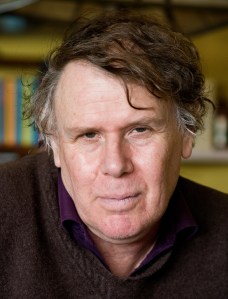
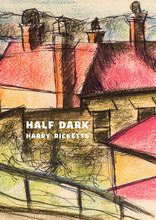
 Harry Ricketts 2011    half_dark_front_small__05477.1417645489.220.220

Harry Ricketts has written over twenty-five books, and while poetry is a primary love, he also writes in other genres. These include literary biography (The Unforgiving Minute and Strange Meetings:The Poets of the Great War), personal essays (How to Live Elsewhere and How to Catch a Cricket Match), and has co-edited a number of New Zealand poetry anthologies (including Spirit in a Strange Land, The Awa Book of Sports Writing and 99 Ways into NZ Poetry). He teaches English Literature and creative writing at Victoria University of Wellington. Half Dark (Victoria University Press, 2015) is Harry’s tenth collection of poems. To celebrate this new book, he recently answered some questions for Poetry Shelf.


Did your childhood shape you as a poet? What did you like to read? Did you write as a child? What else did you like to do?

My yo-yoing childhood certainly shaped me as a person. My father was in the British army, and we moved every couple of years. This has made me see everything as temporary, provisional, also to think of the present as the moving edge of the past. I read novels, the longer the better: Rosemary Sutcliff, Arthur Ransome, C S Lewis, Tolkien, Conan Doyle ‒ and endless comics. Not much poetry, though at school we had to learn poems by heart: “The Highwayman”, “Cargoes”, “Gunga Din”. They had good thumping rhythms which, together with the rhyme, made them easy to memorise. We then had to stand up and recite them in class – quite an ordeal. I still remember some of those poems and others that ‘sing in the head’, and I’m sure that contributes to my enjoyment of poets like James Fenton and Derek Mahon who use metre and rhyme much more subtly. I remember once we had to write a poem for homework. The title and subject were up to us. My effort was feeble: rhymed, of course, complete doggerel – in every sense, it was even about our dog. But one of the other boys was asked to read his poem out loud in front of the class – a great mark of favour. All I can remember about his poem is that it contained the phrase “curly kale”. And that alliterative phrase, so simple, visual and exact, has always stayed with me. Also the sudden feeling I had when he read it out: a mixture of excitement and envy. I knew that he had somehow managed to pull off something quite beyond me, but which I now felt might be possible. But mostly from the age of eight I was mad about cricket.


When you started writing poems as a young adult, were there any poets in particular that you were drawn to (poems/poets as surrogate mentors)?

I started writing poems when I was sixteen. I still thought poems had to rhyme and be metrical, and felt very daring when, trying to copy T S Eliot (whom we were studying), I wrote in what I thought was free verse. I did read quite a lot of poetry: poets were we studying like Wordsworth and T S Eliot, but also Ezra Pound, Wilfred Owen, and Holub and Cavafy (in the Penguin translations that were popular at the time). I particularly liked Cavafy and tried to imitate him.


Did university life (as a student) transform your poetry writing? What kind of discoveries did you make?

Personally university wasn’t helpful as far as writing poetry went, though I came out knowing a bit about a lot of English poetry from the Anglo-Saxon “Seafarer” to Spenser to Marvell to Gray to Byron to Browning to W H Auden. Nothing contemporary – in fact, nothing post-WW2. We had to write weekly essays – last week Wordsworth, this week Coleridge, next week Keats. It was like a whistle–stop tour of poetry’s greatest hits – wonderful in a way, but also intimidating. Sometimes I felt I was turning into a dial-a-quote.

I do remember reading some Sylvia Plath which was edgily thrilling and liking Roger McGough and Adrian Mitchell because they were funny and expressed political opinions I agreed with. I bought and read Ted Hughes’s Crow when it came out. I don’t think I ‘got’ the poems at all, but I enjoyed their dark laughter (though I wouldn’t have put it like that). This was the time when Gormenghast and Catch–22 were obligatory reading, and Bergman’s Seventh Seal and Godard obligatory viewing. We all said things like “really weird”, “far out” and “freaky”. We were terrified of being normal or at least being thought normal. It had a lot to do with the music we were obsessively listening to: Dylan, the Doors, the Stones, the Velvet Underground, Pink Floyd, later Steely Dan. Each new album was like a bulletin from another, more exciting world. We wanted our lives to be like those songs – “Strange days have found us”; “Remember what the dormouse said” – and fantasised that they were. It was very heady, and I don’t regret it, but it didn’t lead to me writing any halfway decent poems, though I did eventually write some lyrics for songs.


What about as a lecturer?

I think initially being a university teacher was another inhibiter because I only ever taught poems from earlier centuries ‒ often wonderful but not much help (at least in any direct way) with trying to write my own poems. More helpful was the only poetry writing course I’ve attended. This was a two–day affair in 1979, I think, at the Lancaster Arts Festival, run by a poet called Gavin Ewart. He was a playful-serious poet, who, like Auden, used poetic form as a starter-motor and could do everything from villanelles to clerihews, from prose poems to McGonagallesque doggerel. His poems were (are) clever, also often funny (a rare gift in poetry).

The workshop was memorable. The first day Ewart got us to write haiku and limericks and one–line poems, and one man soon got stroppy and said this wasn’t poetry and that only the rather pretty girl with black hair was producing anything remotely interesting and then he stormed out – never to return. Personally I found trying to do the forms useful and helpful, partly because it got me away from Romantic ideas of the muse having to strike – I was still very hung up on Wordsworth and Keats and notions of the creative mood, sometimes ‘suitably enhanced’. And I do think the class generally encouraged me to be less earnest, that play was okay. The second day we workshopped poems we’d sent in advance and that was helpful. Ewart was very hot on line-endings and about not being lazy with rhyme (if you used it): every word had to pay its way.

I was teaching in Leicester at the time and, partly as a result of the workshop, I joined a small group of local poets. We’d meet and discuss our work, but it all tended to be too polite, and when one member won quite a big national prize, the group combusted from envy. But I do think of that as the time when I slowly started to take writing poems more seriously. This coincided with having children, and I’d blue-tack drafts of my poems to the walls and think about them as I walked around at night, holding wakeful babies. Sometimes the poems were about my children (I had step–children too), and I think becoming a parent not only made a huge difference to me as a person but gradually also to the poems I was beginning to write. It’s not a coincidence that the first poem of mine I think is any good – “Your Secret Life” written in my mid–thirties – is about my (then six-year-old) daughter and imagining her as a teenager.


Some people want to let their poems speak for themselves while others are happy to offer provisional entry points. What do you think your role is when you ‘teach’ poetry?

I think if you’re giving a reading, it’s a good idea to say something between poems, offer an entry point, but not so as to swamp the poem. It is hard to listen to poem after poem without a break, particularly if you haven’t read or heard them before. (I have been to readings like this.) Teaching others to write poems or at least trying to help them is a different matter. It’s not your poem, so your role is more like that of a facilitator or midwife, perhaps. Sometimes your own experience can be helpful, but it’s mostly attention and encouragement. And urging them to read as much poetry as possible.


Another terrific example of poetic entry points that work is your book on the war poets (Strange Meetings: The Poets of the Great War). To me it was scholarly yet satisfyingly fresh in its approach. Your book opens rather than closes the experience of reading these writers. What did you hope to achieve with this book?

That’s very kind of you. I wanted to write a book that demythologised those WWI poets and restored them to a sympathetic human scale, something closer to the people who actually wrote the poems, who together with the horror of the war, had friendships, fallings-out, tried to find a language adequate to their experience.


We wrote 99 Ways into NZ Poetry together a few years ago. Writing the book was a way of viewing the poetry landscape in new lights for me. What discoveries did you make?

New lights for me, too, and many discoveries. You really helped me to read Michele Leggott, a poet I’ve always found very hard.


I love the way your poems reflect shifting forms, pitch, moods, preoccupations and rhythms, yet there is always a clarity of line, a sharpness of detail, the essential moment. What are key things for you when you write a poem?

That’s difficult to answer. Sometimes I’ll deliberately try to write a poem about some event, occasion or person. More usually, I’ll be doing something else altogether ‒ like writing this for you now ‒ and a word or phrase or maybe a memory will suddenly press itself on me, and I’ll find it prompts a line or another phrase and a sense of excitement. Often things just switch off; nothing more happens. But sometimes I have to keep coming back to it (whatever it is) and have to fiddle away, try this, try that. That’s the best part, don’t you think, being inside a new poem? Nothing better. When it’s finished, or as finished as it can be, you’re back in the cold again.


I like that idea — the best bit is when you are inside the poem. Really, your heart starts beating faster. The outside world fades to black (or light). Harry, you have lived both in New Zealand and Britain (like Peter Bland), but I don’t find a relentless niggling tension between here and there in your poems. It is as though a poem steered by you can lay its roots in either place. Are your poems a way of forging home? Laying roots? Being elsewhere?

That’s very perceptive. Temporary roots, anyway. I think the ricocheting childhood thing. I do think that not quite belonging to where you live can be an advantage to a writer.


I agree. Do you think your writing has changed over time?

Yes, I’m not so inhibited, not so hung-up about perfection, more prepared to try things.


Prompted by Eleanor Catton, this question: Do you think we have a history of thinking and writing about the process of writing poetry in New Zealand? Any examples that sparked you? Have you done this?

Well, there are poets who have written about this (Allen Curnow, James K Baxter, Michele Leggott, Bill Manhire among others). But I think there is a fairly general distrust of seeming to proselytise or sound too arty or up-yourself. Some cultures (France, America) seem to be able to talk about the arts (including poetry) more naturally or with less inhibition. But the rise of creative writing schools has definitely increased some writers’/poets’ ability, and desire, to talk about process. It’s a question as to whether this will help to produce better work. Good if it does, but writers sometimes, even often, write best when they break their own precepts.


What poets have mattered to you over the past year? Some may have mattered as a reader and others may have been crucial as a writer.

The Irish poet Derek Mahon and Auden always matter to me. I constantly read and reread them, and learn from them.


What international poets are you drawn to?

The American poet Mary Ruefle has been a belated discovery.


She is a fabulous discovery for me too! I feel like I want to secretly do some MR poems and see what happens. Particularly the white-out pages. What New Zealand poets are you drawn to now?

In the last year or two? Fleur Adcock’s last two collections ‒ terrific. Ian Wedde’s recent poems.


Ian’s The Commonplace Odes would have to be one of my top NZ picks. Name three NZ poetry books that you have loved.

Jenny Bornholdt’s The Rocky Shore. James Brown’s Lemon. Bill Sewell’s Ballad of Fifty-one.


You write in a variety of genres (poetry, non-fiction, critical writing). Do they seep into each other? Does one have a particular grip on you as a writer?

Yes and no, but poetry is the thing.


What irks you in poetry?

Poems that presuppose a trust they haven’t earned.


What delights you?

Surprises. Also wit.


I was drawn to the title of your new collection (Half Dark) because for me it signals the way poems emerge from and move in and out of the shadows (as opposed to a glass is half full kind of thing). Why this title?

It’s a phrase in one of the poems. As you say, it suggests movement in and out of shadows. It also suggests the mood and tone of many of the poems.


These new poems are like a steaming road with heart, memory, ideas, anecdote, sights rising up and simmering above the surface— poems that steam with life and possibilities. For me this is one of your best books yet. What discoveries did you make about poetry as you wrote? The world? Yourself?

One discovery, as I’ve explained in a note in the collection, was about a form called the triolet. I’d never imagined trying this short form with repeated lines, had shared a fairly common sense of superiority towards the form. But an Australian poet-friend Cath Vidler confessed to having become addicted to the form and suggested I try it. I found she was right; it is addictive. More interestingly, I discovered that though usually used for light verse (which is fine, ‘light’ doesn’t have to mean ‘slight’) in fact you can use the triolet for serious, even heart-breaking, subjects. It’s much more flexible than it looks. And, as poets have done with the sonnet and other rhyming forms, you can empty out the rhyme and just keep the shadowy shape. Discoveries about the world? Well, with the death of friends and family, my world is getting colder, half-dark.


I love your triolets– reading them prompted me to write one myself. I can see why they are addictive. There is a honeyed overlap of repetition and within that echo the subtle nuance of difference. Nuances steered  by shifting juxtapositions. Is there a single poem or two in the collection that particularly resonates with you?

The last poem, “About”, means a lot to me. I started it in 1980 and it’s changed over the years as I have, and I kept losing it and then finding it again. “Noddy” (about a dead university friend) brings him strongly to mind.


I love the blurb on this book. First it references your poem about the phrase ‘Mind the gap’ from the London Underground (that has haunted me too!) and then it introduces the collection as one that ‘addresses the people and places that fill a life and the gaps they leave behind.’ Gaps are so crucial in poems. For me, this entry point heightens my response to your poems. Tell me about the role of gap in this new collection.

It’s all gaps.


Indeed. Is doubt a key part of the writing process along with an elusive horizon of where/when you are satisfied with a poem?

Yes, doubt is key. Also gratitude.


The constant mantra to be a better writer is to write, write, write and read read read. You also need to live! What activities enrich your writing life?

Travel.


Some poets argue that there are no rules in poetry and all rules are to be broken. Do you agree? Do you have cardinal rules?

Rules are to be broken, but it’s worth knowing what they are first. Personally I don’t end lines with words like ‘a’, ‘the’ ‘in’ or ‘of’, unless there is a really good reason.


Do you find social media an entertaining and useful tool or white noise?

A bit of all of these.


Finally if you were to be trapped for hours (in a waiting room, on a mountain, inside on a rainy day) what poetry book would you read?

W H Auden’s Collected Poems.


Thanks Harry!


Victoria University Press author page

NZ Book Council page

Truth or Beauty: Poetry and Biography — a little chapbook of poems

truth-or-beauty-cover

In 2014, Helen Rickerby and Anna Jackson organised a conference at Victoria University entitled Truth or Beauty: Poetry and Biography. It drew poets and scholars from across New Zealand and Australia. Over three days the participants shared readings, papers, panels and informal discussions.

To celebrate the event, the organisers have released a gorgeous chapbook containing poems by the participants that highlight meeting points between poetry and biography, truth and/or beauty.

In the introduction, the editors (Anna and Helen are joined by Doctoral student, Angelina Shroma) suggest that  some of the poems ‘are more straightforward retellings of a life, but most take a poetic twist — are impressionistic, episodic, mythic, abstract or undermine the very idea of being able to know factual truth.’

Seeing the line-up of poets included gives some indication of the stretch and vitality of ideas exchanged along with poetry shared: Jordie Albiston, Airini Beautrais, Amy Brown, Geraldine Burrowes, Zarah Butcher – McGunnigle, Max L Chapnick, Majella Cullinane, Toby Davidson, Joan Fleming, Janis Freegard, Maureen Gibbbons, Helen Heath, Kerry Hines, Anna Jackson, Shari Kocher, Saradha Koirala, Bella Li, Vana Manasiadis, Karlo Mila, Robynanne Milford, Vivienne Plumb, Jenny Powell, Nina Powles, Chris Price, Helen Rickerby, Harry Ricketts, Jack Ross, Erin Scudder, Anna Smaill, Marty Smith, Robert Sullivan, Leilani Tamu, Chris Tse, Jessica Wilkinson, Karen Zelas.

Some of the poems took me back to books I have already loved (Autobiography of a Marguerite, Dear Neil Roberts, I, Clodia, and Other Portraits, Crumple, Girls of the Drift, My Iron Spine, Just Then, Horse with a Hat, How to be Dead in the Year of Snakes, Captain Cook in the Underworld) while previously unpublished poems were miniature temptations of new works to come (Joan Fleming’s ‘New Margins,’ Helen Heath’s ‘Radiant,’ Chris Price’s ‘A natural history of Richard’) and some poems and poets were new to me and are now on my radar now (Shari Kocher, Robynanne Milford). I haven’t read many poems by Erin Scudder but her deliciously inventive word play in ‘Hollywood Hills Woman’ catches at story, character, language, space and life. This was a gem.

This is a beautiful hand-bound book; I got to the end and just wished I had been able to attend the conference. This makes up for it slightly.


Web page here

Copies are available for purchase for NZ$20, plus NZ$5 for overseas postage. Email Helen.Rickerby@paradise.net.nz to order and arrange payment.


About the editors

Anna Jackson, associate professor at Victoria University of Wellington, has published six collections of poetry, most recently I, Clodia, and Other Portraits (Auckland University Press, 2014). The first half of this collection is based on the life of Clodia Metelli, the ‘Lesbia’ who was the subject of the most passionate poetry written by Catullus in late Republic Rome.

Helen Rickerby has published four books of poetry, most recently Cinema (2014), which includes biographical poems about film-makers and her friends. Her 2008 collection, My Iron Spine, features biographical poems about women, many of whom have been neglected by history. She is the managing editor of Seraph Press, a boutique poetry publisher, and is co-managing editor of JAAM literary magazine.

Angelina Sbroma is a doctoral student in English literature at Victoria University of Wellington. Her thesis focuses on children’s fantasy literature.


Poetry On and Off the Page

Where: Victoria University Pipitea Campus, Bunny Street, Wellington

Restrictions: All Ages

Ticket Information:

  • Buy Tickets – 04 463 6556
  • Additional fees may apply

Website here

Submission to Cordite 51: TRANSTASMAN Open!

and
Submission to Cordite 51: TRANSTASMAN Open!

27 February 2015

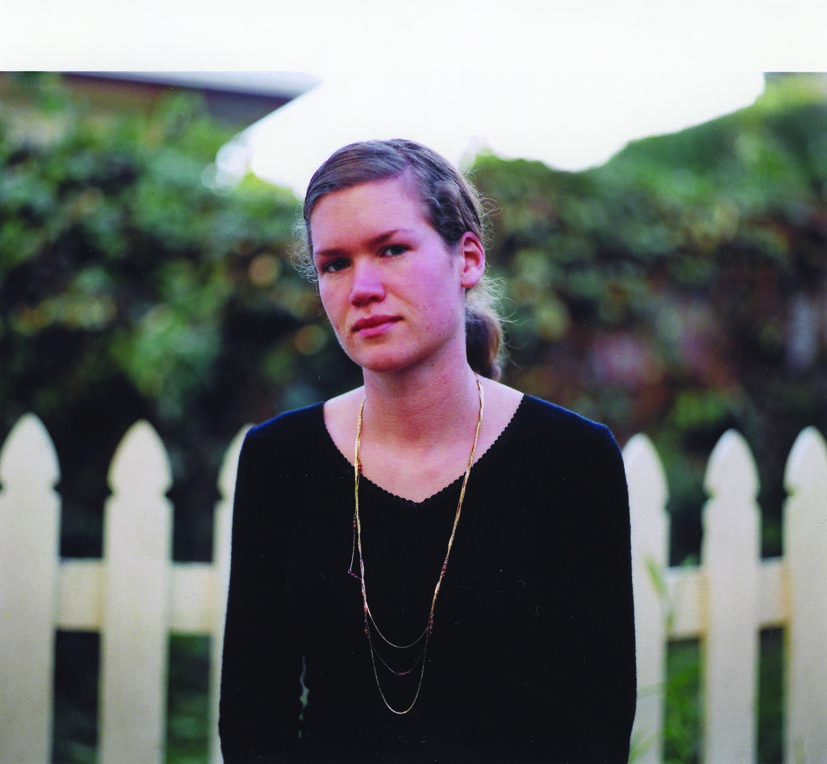
Bonny Cassidy
Photo by Nicholas Walton-Healey

Poetry for Cordite 51: TRANSTASMAN is guest-edited by Bonny Cassidy

I’ll be looking for poems that can swim, fly, float, sail and possibly even skim across the very short and very deep difference between Australia and New Zealand.

Have at the current.


Poems for this issue will be partially by invite and selected anonymously (but we’ll be taking about double the usual number of poetry we do in our issues). Robert Sullivan will also curate an e-chapbook of contemporary Māori poetry. Please submit only once, with a maximum of three (3) poems in one (1) document … but first, please read the submission guidelines

for web page see here

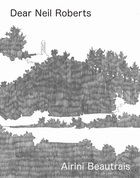
Airini Beautrais’s Dear Neil Roberts: Connections and disconnections forge poetic static that makes that lamp crackle, that bald wire hiss

airini beautrais      dear_neil_roberts_210x165__56483.1408338557.140.215

Airini Beautrais’s debut poetry collection, Sacred Heart was a little beauty and won Best First Poetry Book at the Montana New Zealand Book Awards in 2007. This was followed by the superb, Western Line. Her latest collection, Dear Neil Roberts, explores an inclination to prose-like poetry in a new way. You could say this is a long narrative poem or you could say this is a series of individual poems that contribute to a narrative arc.

Neil Roberts was a real person, an anarchist. In 1982, he blew himself up outside the Whanganui Police Computer Centre in the middle of the night. Airini’s new book has a central thesis at its core: history belongs to the shadows as much as it does to the great men and the great women. In other words, individuals who get misplaced and misremembered in the side lights of the grand historical narratives do have something to contribute to the way we view the past. The poetry is in part surrogate documentary but generic boundaries are blurred as the poet uses tools of invention and imagination as much as she uses tools of research and political inquiry. What gifts the book another fascinating layer is the way the poet steps into the narrative herself. She shows us how time and place and event affect her. This choice is reinforced in the title, ‘Dear Neil Roberts’; this poetry collection is also part epistle. Letter writers leave traces of their own lives as well as addressing the life of the recipient.

The poems draw upon story-telling techniques but these poems are primarily driven by poetic options: white space, building rhythms, terrific line breaks. Together the poem-pieces form a mosaic that you can step back from and view as an intriguing whole (exploring notions of history on one level, and the life of individual on another, along with the effect of an event like a stone rippling through time and place). ‘Time’ sets the scene with keen detail of a historical moment from the Falklands unrest to protests in Poland, from Rocky III to redundant clothing workers. Then, the ironic reference to a newspaper editorial that suggests fireworks will one day be banned.

If this book is a poetic mosaic, it is a mosaic sumptuous in detail and issues raised. Both moving and provocative. In ‘Clean-up’ the body never becomes more than the gory detail to wash away from the street. Or in ‘Monuments,’ testimonies from Pacificism and from war jostle (Norm wrote in jail, ‘What I have done with my spared life/ while better men lie dead?’; or the veteran war pilot, ‘War is useless and achieves nothing.’). Beneath the surface of this poem lies questions on the merits of war, the necessity or war, the cost of the dead. In ‘Investigation’ (this in 1982), the explosives Roberts used dominate the news, while the anarchist, ‘with razor blades in his ears’ and steel-capped boots’ is chiefly missing.

[ .. ] There is a dryness in the news,

like grief has been squeezed out,

As a mosaic, it is a glinting selection of points of view, invented, factual and personal. ‘By way of an explanation,’ for example, is composed of quotes from Senior Sergeant Rob Butler that Airini gleaned from various newspapers of the time. Brought together in the form of a poem they disturb.

He was one of those people whose human frailty

leads them to join a cult or sect like the punk rockers.

They do some very strange and unusual things by our standards.

He did not seem to have any great concern for his own life.

Another example is the poet’s confession to her own line crossing which in turn subtly rubs against the grain of Neil Roberts (in ‘Out the window’):

Here I am, with blond-haired child,

with my rounded belly, in my hand a set of car keys —

the remote-locking kind, which I never would have imagined.

It’s been awhile since I did anything subversive

with a can of spraypaint, with a billboard, with a naked human body,

with anything. But I’ve known Jonah since the days

when I did. I wonder out loud, what it would be like

if you kept living the same life you lived at twenty-one.

Or the way the contemporary writer makes room for different stories from the past in ‘History books’ in a way that recovery is uncertain, dangerous, shadowy, with faulty connections:

Room is made in the present.

The past is just left traces; paper, newsprint, film, tape, silicon.

The old lamp of the past clicks and crackles;

bald wires, an overheated bulb.

Or the way in ‘Waiting for death/ waiting for birth’, as the poet is waiting for the birth of her second child (‘The first time, I thought I was dying’), she retreats momentarily into her history of protest (‘Protests gave me something to exist within’). This complexly moving poem is aching with overlap:

and seeing cyanide pellets, or crossing an overbridge,

hearing trucks roar, thinking, ‘This is my chance.’

I am here because I didn’t take it.

On Pyramid Farm, you found your chance

in the back of a truck: the gelignite

and accessories. To go out with a bang.

Airini’s new book takes risks as it unstitches a sutured wound of the past, of self even, and dares to imagine grey lines, the long reach of historical events, small or otherwise. The poet is boundary crossing as she overlays historical transparencies, blurring this version upon that version upon that version and in that overlay getting deeper into who and how we are (humanity). You can admire the swing and shape of each poem, but the impression that makes the deepest most affecting mark is the book as a whole. Connections and disconnections forge poetic static that makes that lamp crackle, that bald wire hiss. This is narrative poetry at its very best.

Victoria University Press page

Airini’s thoughts On Poetry for Poetry Shelf