Tag Archives: Poetry Shelf Playing Favourites

Poetry Shelf Playing favourites: Cadence Chung

Black Opium

Coleridge wrote his best poems in a poppyseed haze.
I’m not sure about those tiles, he said from my bathtub,
looking up at the ceiling. I had no idea what he was thinking:
my only experience with opium was the YSL perfume, that
pungent amber stuff that always sat on my mother’s dressing table.
And then later, the redesigned Black Opium, an awful
vanilla-sugar thing I wore to class with a scratch on my wrist,
angled and shallow like a cat might have done it. When I came
home, Coleridge was alight. He showed me the poem
he’d written, wet with tap-drip. I know it is but a Dream,
yet feel more anguish than if it were Truth, he told me.
In my own visions, cross-hatched and foggy though they are,
I can still make out the shape of you.

Cadence Chung
Originally published in Cordite Issue 114

I wrote this strange little poem while taking a course on Romantic poetry. In one lecture, we were shown a quote from one of Keats’ letters, describing a conversation he had with Coleridge:

‘I walked with him at his alderman-after dinner pace for near two miles I suppose. In those two miles he broached a thousand things [ . . . ]—Nightingales, Poetry—on Poetical sensation—Metaphysics—Different genera and species of Dreams—Nightmare—a dream accompanied [with] a sense of touch—single and double touch—A dream related—First and second consciousness—the difference explained between will and Volition—so many metaphysicians from a want of smoking the second consciousness—Monsters—the Kraken—Mermaids—Southey believes in them—Southey’s belief too much diluted—A ghost story—Good morning—I heard his voice as he came towards me—I heard his voice as he moved away—I had heard it all the interval—if it may be called so’ (letters, 15-16 April 1819).

My friend Jackson McCarthy and I thought this was the most hilarious little passage, even though I’m sure nobody else in the course did. It made me feel a fondness for Coleridge, an almost jovial sense of camaraderie with him. In my mind, he’d gone from a serious and canonical Romantic poet to a strange uncle, or a messy friend who would text you, drunk, at midnight, with details of the evening’s disastrous escapades. He seemed the sort of man who really could sit in my bathtub high out of his mind. A lot of my poetry interacts with canons in this way; I like to think of all those old poets and characters as my friends.

Talking about opium in the course made me think of my mum’s little bottle of the YSL perfume called Opium, which was a constant fixture in my childhood remembrances of her dressing-table, always in the background while she did her makeup. I don’t think she ever really used it — it was a tiny bottle that I think was genuinely from when the perfume first came out — and it absolutely reeked. I don’t think they make it like that anymore. The 2014 Black Opium is a disappointingly safe shadow of that original concoction; sweet and vanillary and with that unidentifiable chemical undertone that all modern designer perfumes seem to have. I’m sure you could say something there about mass production, evolving beauty standards, unoriginality under late capitalism, etc.

But anyway. The poem took me a while to figure out, especially in terms of what Coleridge would actually say to me. The final sentence was changed around 5 times. Jackson has now taught this poem twice in one of his guest lectures about ways to end poems, as an example of a volta. I’m pretty sure that term traces back to the verb ‘to turn’, but it also reminds one of voltage, to a sudden spark that creates a change. Black Opium is concerned with many things — perfume, dreams, visions — but then suddenly turns to the lyric, to the you that is there in the background of any poem.

Cadence Chung is a poet, mezzo-soprano, and composer, currently one of the resident artists at Te Pae Kōkako – The Aotearoa New Zealand Opera Studio. She has released three books: anomalia (Tender Press, 2022), Mythos: an Audio-Visual Anthology of Art by Young New Zealanders, (ed.) (Wai-te-Ata Press, 2024), and Mad Diva (Otago University Press, 2025). She also edits Symposia Magazine and the New Zealand Poetry Society’s quarterly magazine, a fine line.
Poetry Shelf Playing Favourites: Emma Barnes picks Hana Pera Aoake

I take the two pins and stick them in my eyes and yet I can still see you and I hid in the cave unable to eat until I became dust and only a voice and I can’t keep compromising myself like this and I want to be reborn from the foam of the Moana roughing the shore and from the blood of my beheaded mother and I wanted you to soften the ground from the heights that I fall from but instead my body became an island and in the middle is a mountain where you push a rock up until it falls down and then you push it up again and then it falls down and then you push it up again and then it falls down and then you push it up again and then it falls down and then you push it up again and then it falls down and then you push it up again and then it falls down and then you push it up again and then it falls down and then you push it up again and then it falls down and then you push it up again and then it falls down and then you push it up again and then it falls down and then you push it up again and then it falls down and then you push it up again and then it falls down and then you push it up again and then it falls down and then you push it up again and then it falls down and then it falls down and then you push it up again and then it falls down and then you push it up again and then it falls down and you repeat ia rā ia rā.

Hana Pera Aoake
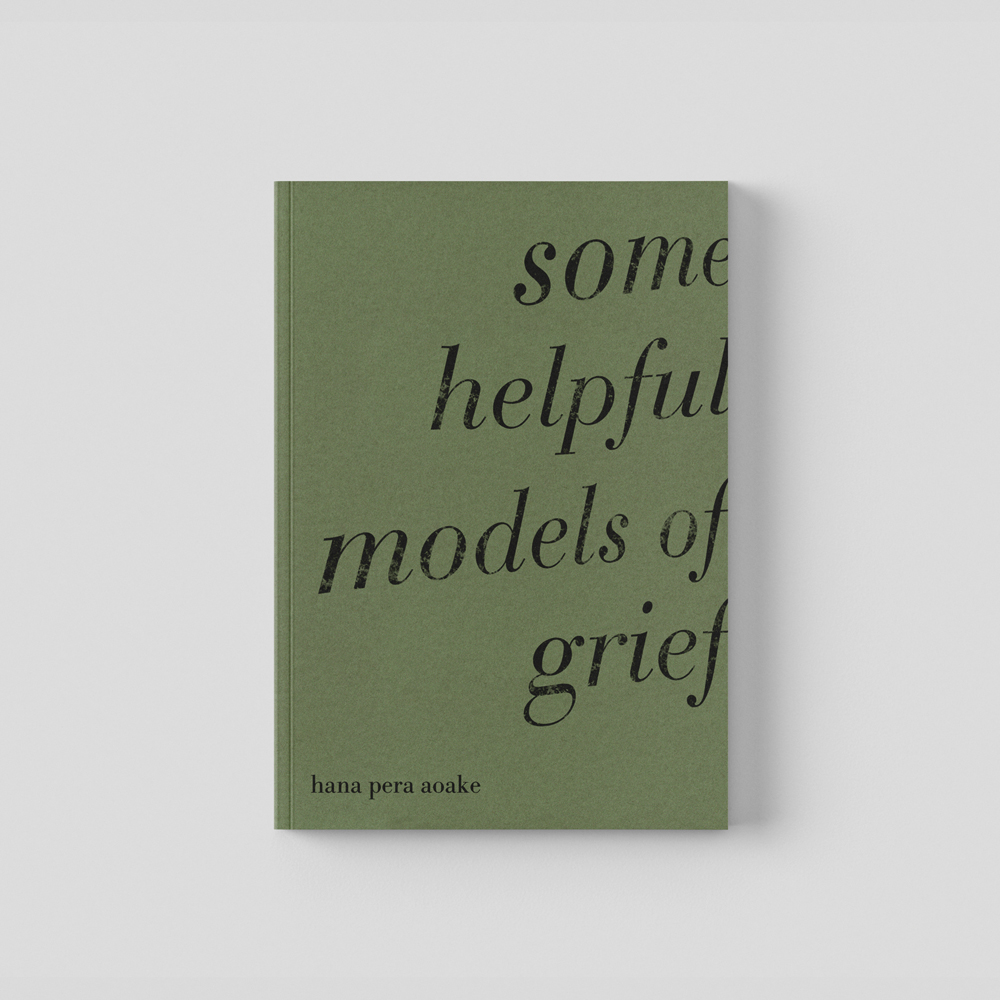
from Act 3 in Some helpful models of grief
Compound Press, 2025

I want to share a poem from one of my favourite writers and encourage you to read their book. The poem itself is the second page of Act 3 in Some helpful models of grief by Hana Pera Aoake (Ngāti Mahuta, Ngāti Hinerangi, Tainui/Waikato) Artist, poet, writer, and curator; author of A bathful of kawakawa and hot water (Compound Press, 2020),  Blame it on the rain (No More Poetry, 2025) and Some helpful models of grief (2025). Hana lives in Kawerau in the shadow of Pūtauaki maunga, and is a PhD candidate at Auckland University of Technology.

I picked this book up in a week when I was finding the world quite a lot, as it is at the moment. I have loved Hana’s work for a while. Their first book was one I enjoyed and have returned to regularly so I had purchased this one and set it aside waiting for the moment I would need it. Many of the things I like about Hana’s work are some of the things I’m often trying to do in my own work, perhaps best described as getting a lot of really big ideas into small spaces. I think we’re all connected as writers and although Hana and I are different in many ways there are also many ways we’re connected and I like seeing that in our poems and books.

In the poem I’m sharing the central piece of it reset my brain on reading, the mesmerising rhythm of the flow of the poem. I have read it out loud to multiple people because it is such a fish hook in my thumb, in a soothing way, as some pains are. The rhythm continues all the way to a beautiful subversion of itself and the release of the ending. I think Hana’s books don’t feel like individual poems to me so it’s not entirely fair to drag this one poem out and separate it from its context. Their work is work I always read start to finish first because there is a shape to it in its context. Here, in isolation, you are missing many words and ideas that lead into this poem. So, I encourage you to head to your local bookseller and get a copy or go straight to Compound Press and order it.  This book comforted me. It reminded me I’m not alone in this messy work of being humans together. And perhaps even more so, being humans together in this messy work of art. A very big thank you to Hana for this poem, this book and their continued mahi and existence.

Emma Barnes

 Hana Pera Aoake (Ngāti Mahuta, Ngāti Hinerangi, Waikato/Tainui) is an artist, writer, educator and curator based in Aotearoa. Hana is a current PhD candidate at Auckland University of Technology where their research explores industrial poisoning, sovereignty, place making and the role of art and cultural production in Māori social and political movements. Hana has published three books: A bathful of kawakawa and hot water (Compound Press, 2020), Blame it on the rain (no more poetry, 2025) and Some helpful modes of grief (Compound Press, 2025). In 2027 A bathful of kawakawa and hot water will be republished with Broken sleep books in the UK. Compound Press page

Emma Barnes (Pākehā, they/them) studied at the University of Canterbury and lives in Aro Valley, Te Whanganui-a-Tara, Wellington. Their poetry has been published in journals including LandfallTurbine | KapohauCordite and Best New Zealand Poems (2008, 2010, 2021). They performed in Show Ponies in 2022 and 2023. They are the author of the poetry collection I Am in Bed with You (AUP, 2021) and co-editor with Chris Tse of Out Here: An Anthology of Takatāpui and LGBTQIA+ Writers from Aotearoa (AUP, 2021). They work in tech and spend a lot of time picking up heavy things and putting them back down again.

Poetry Shelf playing favourites: Ian Wedde picks two Palestine poems

Here are a couple of poems with a location that is important and distressing to me, Palestine, where I had a connection while working in a Palestine refugee camp near Amman in Jordan in 1968/69. The catastrophic situation of Palestinians oppressed by Israel then has become genocidal, and while poems are not going to change that, I have vivid memories of men sitting with coffees in the camp and in the marketplace in Amman, reading aloud to each other from Arabic texts. I assumed these were news updates and in a sense they were, but what I learned from my colleagues and students there was that they were more than likely poems by the likes of Mahmoud Darwish and Fadwa Tuqan. So I share them here in a spirit of empathy and dismay at the plight of the persecuted Palestinian refugees and survivors in their decimated homelands. These are among the different ones in a proposed collection Being Here – Selected Poems 2020 – 2025, currently in a publication queue.

Salaam aleikum!

Ian Wedde

From Palestine Poems 

1. The View from Here

Looking west from our second
floor I see foregrounded the
demurely venetianed
ranks of identical white
neighbourly units with here
and there a barbeque on
the first-floor patio or
a sun brolly with folded
chairs and sometimes
a frugal pot-plantation
of aromatic herbs, and
directly opposite some
bamboo stakes holding up an
early assortment of green
tomatoes – sometimes I can
see the busy outline of
a neighbour in their kitchen
window as they prepare an
evening meal (the sun is just
down beyond the western range)
and cars have begun to nudge
into their lit garages
under welcoming kitchens
with sometimes an ‘I’m home’ toot –
what goes on in those private
neighbourly situations
will only be revealed to
eyes that should know better and
go up to their top floor and
look out west past the ranked roofs
of neighbours and their modest
secrets at the distant grey-
green, back-lit skyline of the
sinuous Waitakeres
as far as the eye can see
across the dim horizon
with sudden shards of late light
reflected from the tranquil
estuary where distant
miniature house-clusters
leave just enough space for these
flashes that ambush me with
nauseating memories
of 1969 and
the Israeli rockets I
saw striking refugee camps
near Amman in Jordan – but
Palestine/Lebanon
is where those missiles have been
directed these past months, they
remind me of Mahmoud
Darwish’s great Diary of
a Palestinian Wound –
‘O brave-faced wound
      my homeland isn’t a suitcase
        and I’m not a traveller.
        I am the lover and the land is the beloved.’

– a far cry from ‘the first-floor
patio’ or ‘skyline of
the Waitakere hills’, or
‘sudden shards of late light’ – but
then not far at all, not a
far cry, but a cry to be
heard over and over in
the in-your-face view from here. 

2: Backfire

This morning as I walk our dog Maxi
through streets silenced not by apocalypse
but by the indulgent early hour of
the summer holiday, a car backfires
making her cower, shake, and press against
my sympathetic leg, so that out of
my early Al Jazeera news items
(forty-six thousand Palestinians
killed in Gaza since that October 7, 2023)
I hear myself utter
the words I heard often on any day
back in 1969, in Amman,
Jordan, a greeting but also a kind
wish for peace, As-salamu alaykum,
and as if cued in by that memory,
Mahmoud Darwish’s Diary of a Palestinian Wound,
his Rubaiyat for Fadwa Tuqan, poet
sister of my friend Fawwaz who didn’t
bother to restrain his tears when reading
the Arabic but quenched while translating
its many verses, starting with this one
that I didn’t know I recalled until
keeping sympathetic pace with Maxi:
We’re free not to remember because Carmel’s within us
& on our eyelashes grows the grass of the Province of Galilee.
Don’t say: I wish we were running to it like the river/
Don’t say this.
We exist in the flesh of our country and it in us.

Ian Wedde

Ian Wedde was born in October 1946 (shortly after his twin brother David) in Blenheim, New Zealand. He and Dave spent much of their childhoods in different parts of the world with their peripatetic parents or else in boarding/education institutions without parents, and Ian continued these travelling ways when grown-up, living in several different places including Jordan. He has published quite a lot of books both fiction, essays and poetry, has been New Zealand Poet Laureate, and was awarded an ONZM for services to literature. He now lives in Auckland, a city he’s very fond of, with his wife Donna Malane and beloved dog Maxi. He has a new book of poetry, Being Here, awaiting publication.

Poetry Shelf Playing Favourites: Megan Kitching on Cilla McQueen’s ‘The Hole’

THE HOLE

Measure a black thread.
Roll one end between forefinger and ball of thumb
to a small knot tangle.
Thread the other, moistened by lips to a point,
through the eye of the needle.
Consider the hole in the heel.
Engage with the sock.
Mercury’s wing would fit.
There is no ironic distance between us, Sock,
for I must remove my glasses
to obtain a microscopic view
of you.

      Is what I perceive as a void,
such as the void in Eridanus that intrigues me,
so from your viewpoint? Do you know
that you have nothing in you –
an unravelling place,
a shirking, Sock, of the looping continuous
cause that defined you, shaped your ideal,
but for the hole,
the void wherein there is no matter, not a skerrick?
I’d like to go to Eridanus when I die.
Meanwhile darn it,
the steel tip needling in and out
between there and not there, defines
edge where there was none, fell whereon
the latticework will be attached,
                                                     as is,
between the gutter and the house,
tautened the pragmatic architecture of spiders.

Cilla McQueen
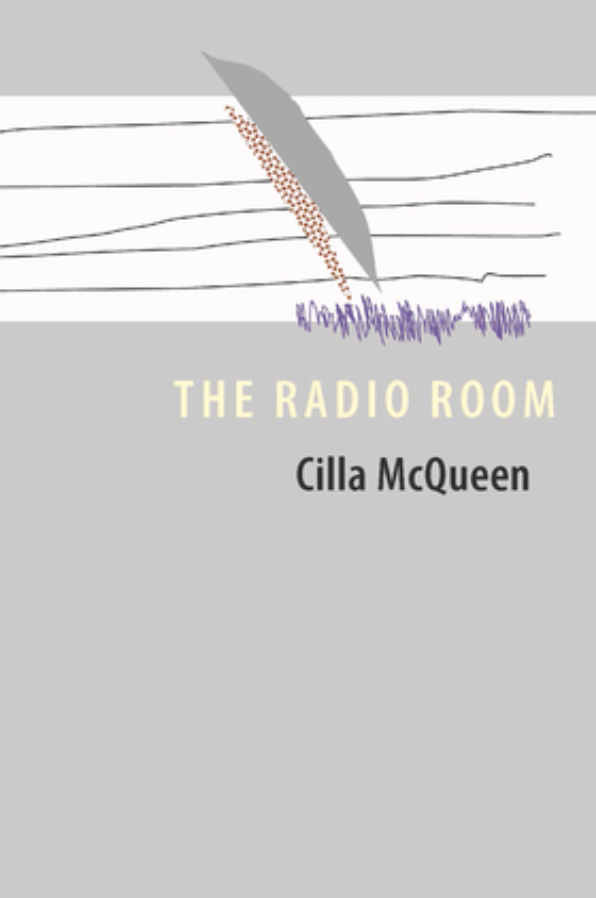
from The Radio Room Otago University Press, 2010 (also in poeta: selected and new poems, Otago University Press, 2018)

I adore poems that peer through ordinary things into the universe. Pull on the threads of this one and fascinating things happen. ‘The Hole’ starts as a poem of instructions. This is how to thread a needle as I remember my mother doing, as I did as a child, squinting with the effort. The poem has me at “Engage with the sock.” The voice sparkles with Cilla McQueen’s trademark humour and intelligence. I love the hint of a combat about to kick off between the speaker and recalcitrant matter. Or rather, the lack of matter: the hole.

One of the reasons this poem remains a favourite of mine is that it still generates questions. I’m not completely sure what Mercury is doing there, patching the gap with his hypothetical wing. But I’m fine with not knowing. That a deity associated with eloquence pops up just then feels right. Engaged with the sock, glasses off, the poet is gearing up for flights of imagination.

Poetry has long been fascinated with the borders of our perception at both ends of the scale, the microscopic and the majestic. The sock’s “void” brings us to the gap in Eridanus, which I learned from this poem is a constellation. I love that we’re prompted to muse on the mysteries of space by considering a sock. A black sock, the opening line suggests, with a black hole in its heel.

Sock is nothing special, a bit lacking. But engaging with Sock in open curiosity takes us vast distances. To me, the two questions at the heart of the poem are as confounding as koans, almost absurdly deep. Can a sock have a “viewpoint”? Of course, I can’t help turning the second-person “you” on myself: “Do you know / that you have nothing in you …?” That could be a lifetime’s meditation. Or it could be poking satirical fun at navel-gazing. Either works. There’s the creative cause with an ideal in mind, and then there’s reality wilfully “shirking” that destiny. There’s the beautiful hope of travelling into the stars after death—then we’re brought back to earth with a pun. I love this bouncing between the playful and the profound. From darning to dark matter.

Sewing becomes a metaphor for poetry or any act of creation at the edge “between there and not-there.” It’s both a daring act, the poem suggests, and one as “pragmatic” as a spider’s web. The closing simile is artfully natural, almost offhand, as if the poet has just glanced out the window. It also ties everything together beautifully. Yet the poem is named for the hole in the fabric of things, and that’s why it keeps bringing me back to wonder.

Megan Kitching 

Megan Kitching is an Ōtepoti Dunedin poet. Her debut collection At the Point of Seeing (Otago University Press, 2023) won the Jessie Mackay Prize for Poetry in the 2024 Mātātuhi Foundation Best First Book Awards and was awarded Best International First Collection in the UK Poet Laureate’s The Laurel Prize 2024. In 2021, Megan was the inaugural Caselberg Trust Elizabeth Brooke-Carr Emerging Writer in residence.

Cilla McQueen MNZM is a poet, teacher and artist, and a three-time winner of the New Zealand Book Award for Poetry. She received an honorary doctorate in literature from the University of Otago in 2008 and was New Zealand Poet Laureate from 2009 to 2011. In 2010 she received the Prime Minister’s Award for Literary Achievement (Poetry). In 2020 she was appointed a Member of the New Zealand Order of Merit for services as a poet. Cilla lives in Bluff, at the southern tip of New Zealand’s South Island.

Otago University Press page