Tag Archives: POem Friday

Poem Friday: Brian Turner’s ‘At What Stage’ — There’s an underlying notion that some things matter very much indeed.

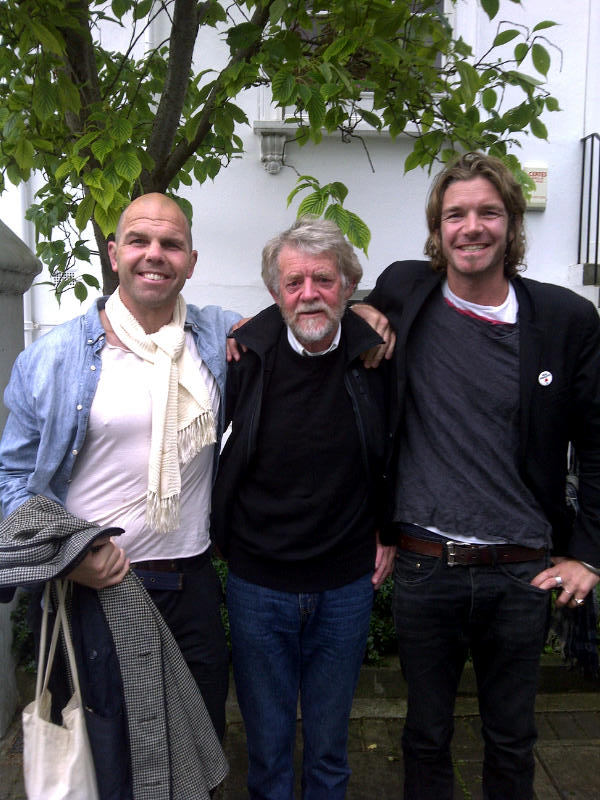
Camden-20110618-00119


At What Stage

Here’s a big question: at what stage
do we ask, not how to live, but for what?
It wasn’t something that troubled you
when you lived in an old wooden house
in North Dunedin in the 1950s, before
puberty thrummed and most of your ilk
walked or rode bikes to school or down
to the river mouth and the wharves to fish
for trevalli and mullet in their thousands.

To many Christ was still our Redeemer
and All Blacks the epitome of manhood
without appearing naked and tanned,
except for tight-fitting jocks, in days
when only academics went on sabbaticals.

Days before you witnessed both men
and women weep, and you’d yet discover
what greed undoes and acquisitions bury,
and you’d still to learn just how destructive
being so-called constructive can be. And
that innocence precedes despair
and what follows comes at you bitter as sleet:
full-frontal foreboding, then fear.


Author’s Bio: BRIAN TURNER is a well-known New Zealand writer and a member of one of his country’s most famous sporting families – his brothers, Glenn (cricket) and Greg (golf), were distinguished sports internationals. I mention this because I think it has given me closer contact with a wider range of New Zealanders and others elsewhere than I would have experienced otherwise. It has allowed me access to a wider world than many writers I know have enjoyed. As a result it has broadened my understanding of my country, my homeplace.

Turner is a former New Zealand hockey player (also captain of Otago and Wellington) and has published best-selling sports biographies (with Colin Meads, Josh Kronfeld, Anton Oliver and Glenn Turner). His many other books include the autobiographical Somebodies and Nobodies: Growing up in an extraordinary sporting Family; Timeless Land (with Grahame Sydney and Owen Marshall); and numerous collections of poetry, including Ladders of Rain (joint winner Commonwealth Poetry prize 1978), Beyond (winner NZ Book Awards for Poetry 1993), and Just This (winner NZ Post Book Award for Poetry 2010). He was the Te Mata Estate NZ Poet Laureate 2003-05.

In 1994-5 he held an Arts Council Scholarship in Letters. He was Robert Burns Fellow at the University of Otago in 1984 and Writer in Residence at the University of Canterbury in 1997. He was awarded the Lauris Edmond Memorial Award for Poetry in 2009 and ‘The New Zealand Prime Minister’s Award for Literary Achievement in Poetry 2009’. He received an Hon D Litt from the University of Otago in 2011. His most recent books are the best-selling Into the Wider World (shortlisted for the 2009 Montana Book Awards) which focuses on his love of and concerns for the future of this country’s natural environment, Just This, winner of the NZ Post Book Award for Poetry in 2010, and a further collection of poems, Inside Outside (2011). A major collection of new and previously published work, Elemental – Central Otago Poems (with photographs by Gilbert van Reenen) was published in August 2012.

Author’s note: Re ‘At What Stage’, hard to answer where poems come from. I’m a product of my roots and my reading. It’s in part ‘about’ where I come from, what life was like back then for me (1940s and 50s) and how much has changed and what I’ve made of it. It’s about our passage from who knows where to whatever follows. I have concluded that humankind has lost the plot, that we’re resolutely ‘shafting the future to serve the present’ (as George Monbiot put it), and that wilful blindness and delusion dominates our thinking everywhere. As Margaret Atwood pointed out we’re using up nature’s capital too fast and nature’s calling in her debt. A considerable proportion of the people who run NZ aren’t leaders, they are followers of that which is failing us and destroying much upon which all things depend. And so on and on…

Paula’s note: Brian has the ability, more than any poet I know, to catch the New Zealand landscape within the economy of a poem. As you read these offerings,  a richness of place unfolds; through light and dark, through the changing seasons. The poem becomes a transcendental point of contemplation. Beauty draws closes. Yet there is so much more to Brian’s poetry than the spectacular lift of Southern landscapes. Place might be fodder for the eye, but there is also that ongoing concern with how we occupy place. How we protect it and how we damage it. Thus amidst the homages you find the political edge across the spectrum of his work that highlights all shades of greed, apathy and ignorance. I love the way this poem reflects the way our relations and engagement with the world makes subtle shifts in our passage from youth to adulthood. The humour. The bite. The underlying notion that some things matter very much indeed.
Poem Friday: Amber Esau’s ‘Analogue’ —

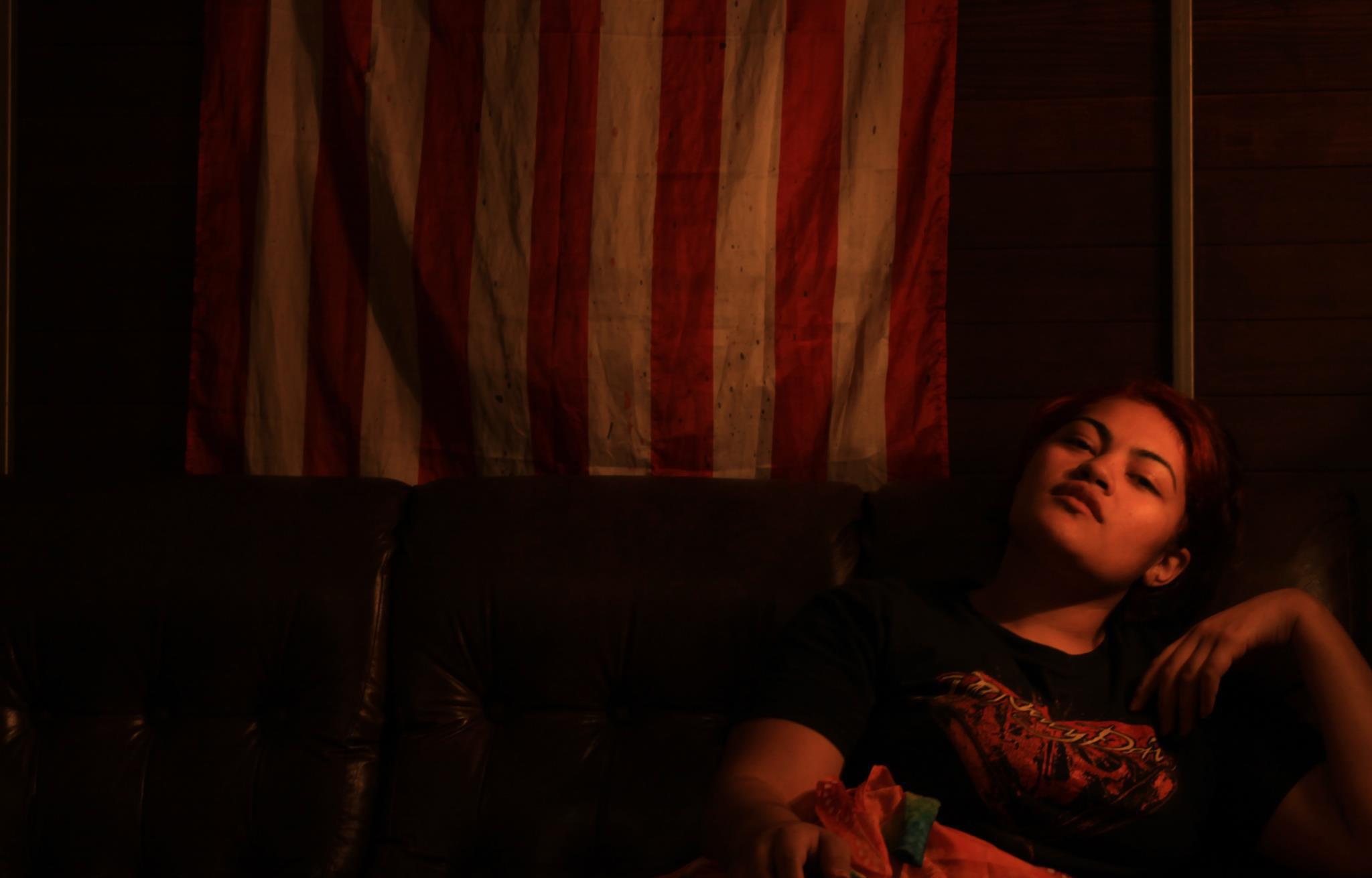
Amber_Esau

Photo credit: Christina Pataialii

Analogue

gravel
; shells

crunch kiss
and leave behind
the echo
in canon.

Road works
pinch at the waist

and I’ve noticed
orange peels
that pray like cracked tar rising.

No one came for me tonight
so I run to them

cigarette chopped between
fingers

smoking moonhair
even if it’s only in streetlight.

I can hear the ocean
in my mouth

as I walk to New(York-Lynn)
in the dark

swishing with va’a jaw
waiting on the rise.
Author’s note: The main road near my street is in a constant state of road works and I became interested in the rubble on a lot of the sidewalks. To me it sounded like walking on shells and in a way it became a sort of suburban sea. The word Va’a means canoe in Samoan and I feel like having a Va’a jaw is about movements between locating and dislocating yourself within your own sense of language as an almost reactionary element of physical location (in New Zealand and the wider world.)

Author’s Bio: Amber is a Samoan/Maori/Irish poet and aspiring novelist doing her final year of the Creative Writing degree at Manukau Institute of Technology. She has been published in the journals Ora Nui, Blackmailpress, ika, Hawaii Review and Landfall and will appear in the Maori poetry anthology Puna Wai Kōrero to be published later this year by Auckland University Press.

Paula’s note: Sound is what first hits you as you read this poem: the pitch, the chords, the beat. There is the way words shimmy together (‘crunch kiss’) and the way words shimmy apart (‘pinch’). A semicolon is carried over like a protagonist in the ambulatory beat — punctuation no longer invisible stitching. This poem brings every lucid detail to walking down the road yet walking down the road is not smooth sailing. I was reminded of Gertrude Stein as I read this and the way she breaks up language and puts it back together in ways that can be disconcerting, disconnecting, reconnecting, reasserting. This is that kind of walk. Amber’s line, ‘echo/ in canon’ resonates in my ear as echoing canon. There is the jarring step from New Lynn to New York. Similes lift and surprise (‘orange peels/ that pray like cracked tar rising’). This a walking poem that startles and cracks and never stops moving. I love it!

Poem Friday: Hera LIndsay Bird’s ‘Everything Is Wrong’ — a voice that hooks and tufts as it repeats and shifts

1779473_722846587735015_2139168024_n


Everything Is Wrong


Everything is wrong, I really mean it Isobel

Everything is wrong and love is wrong

I know you believe me

I know you believe me because I know you know it too

This life is changing me already

Running in the empty field behind the salmon hatchery

I think about you

I think about you and the green star of loneliness

Burning me alive

Isobel this life is a lonely life

& Billy Collins is still undressing Emily

Emily who?

She walked out of this life with white death streaming

She walked out of this life and left us her silence.

Isobel you are my best friend

Because you are teaching me to speak to pain

I thought I was mad at you, but I was mad at life

I thought I was mad at you, but I was mad at life

and what I couldn’t have of it

Oh Emily is gone, we never knew her

She wrote her book in invisible flames

And now the sun is burning and so are we

And the red flowers by the train tracks are burning too

I like to think of you somewhere far ahead

I like to think of you far ahead of me

What I say to you I say to me

I don’t care about subtlety

I don’t care about forgiveness or god

All I care about is looking at things

And naming them

The rocking horse rocking on the banks of the river

Animals in their soft castle of meat

None of us are getting out of here alive


Author Bio: Hera Lindsay Bird lives in NZ with her girlfriend and collection of Agatha Christie video games. She has a MFA in poetry from the International Institute of Modern Letters and can be found online here and here.

Author note: I wrote this poem when I had just moved to a small village neighboring a salmon farm, and was reading a lot of Dorothea Lasky. I’m still living in a small village neighboring a salmon farm and reading a lot of Dorothea Lasky, but a lot of things have changed since I wrote this, although I still dislike Billy Collins. As a general rule I don’t think there’s much value in explaining poetic intent, but I should say the Isobel in the poem isn’t my greatest Isobel, Isobel Rose Cairns. I tried changing the name for her sake, but it never stuck. She doesn’t have a poem yet, but when she does I’ll call it “ISOBEL ROSE CAIRNS” and emblazon it in capital letters across the top of the page. Size 30, Century Gothic. As Dorothea Lasky says: “A name has the residue of the person. So, in AWE, if I loved a person, I used their real name in the poem, because I wanted the residue of their name to carry my love with it.” I believe that, but I also believe Frank O’Hara when he says if you want to talk to someone, just pick up the phone and call them. The Isobels of poetry are very rarely ever being spoken to. Naming is usually a staged intimacy, like whispering all your secrets through a megaphone. Mainly when I think of this poem, I think of what isn’t even there: Billy Collins, standing wholly alone by the upstairs window, holding a suddenly empty crinoline and gaping like an asshole.

Paula’s note: This poem is voice — a voice that hooks and tufts as it repeats and shifts and insists and repeats again on the page. A skinny telephone wire of voice poem that snags and catches others as though it a party line. Catches the woman that may be real or invented; catches that love that may be fractured or tight as though this voice is wanting to strip away the artifice and games to get to the real thing, the intimate thing, the secret thing. I love the way the phrases reach you in rawness and bare bones, and then loop and curl one upon the other to make little flaps and creases where intimacy hides. Pain. Love. I feel like I am eavesdropping. I love the swerve of the final lines, surprising, challenging. Glorious.

Poem Friday: Tusiata Avia’s ‘Wairua Road’ — makes the idea of home sharp and vital

Performance photo Tusiata Avia[1]


Wairua Road

The Spirits love me so much they sent all the people in Aranui to be my friends or my parents.

We all walk the Big Path from Cashmere to the sea.

We run like lawnmowers on each others feet.

The Spirits rise up out of the footpath outside the Hampshire St pub. The space that a bomb took out of the ground walks about on a pair of legs with a ghost looking out.

The Spirits love me so much they turn me into a plastic bag.

I will live in a whale or a shrimp and kill it.

My mother rises up out of the lino wringing and wringing the blood from her hands.

The Spirits love me so much we all sit round to watch the sparklers in my brain, the beautiful sunset, the campfire burning, the jerking of my body.

My father rises up out of the carpet and down I go, like knees, like beetroot juice in the whitest of frigidaires.

The Spirits of the Big Path love me so much they have driven me back up to this house.

If the Spirits didn’t love me, I could live in a dog, in a wife, in a house, in a merivale or on some other shining path, far away from the hungry road.


Tusiata Avia has published two books of poetry, Wild Dogs Under My Skirt and Bloodclot and two children’s books. Known for her dynamic performance style she has also written and performed a one-woman poetry show, also called Wild Dogs Under My Skirt, which toured internationally. Tusiata has held a number of writers’ residencies and is regularly published in international literary journals and invited to appear at writers’ festivals around the globe. In 2013 Tusiata was the recipient of the Janet Frame Literary Trust Award. In October 2014 she will perform as part of ‘New Zealand in Edinburgh’.

Author Notes: Aranui: great path.
Aranui is one of the most deprived suburbs of Christchurch, Hampshire St is one of its most troubled areas.  Merivale is one of the wealthiest suburbs in Christchurch. This poem is published in Takahe 72.

Paula’s Notes: Tusiata’s poem reads like a chant and if you’ve been lucky enough to hear her perform you hear the sound of her voice as you read it. This poem takes you to a specific place — yet it takes you into the way place is a layering of physical and nonphysical things. What you see and feel and what you don’t see and feel. Layered and layering. How this specific place means different things to different people. How this is the place devastated by an earthquake and how people are connected and divided by what they have and have not, by what they have lost and lost not. What happens to love? How does love carry you on its back to the sea? Or the poet carry love? Tusiata’s is a voice on edge, edging you to see and feel the difficulty — clues are laid like tracks to the private and the public pain. It is also a poem that is tongue in cheek (‘If the Spirits didn’t love me, I could live in a dog’). It is surprising and tough and sings out with a joy of words, that makes the idea of home sharp and vital. Like much of what Tusiata writes, it affects me deeply. I am in the grip of this poem, and I adore it.

Friday Poem: Rebecca Palmer’s ‘Dear Grandma’ — now I have read the author’s note the poem shifts slightly on its axis

 OLYMPUS DIGITAL CAMERA

Dear Grandma

Albino, prune like
demoralizing the years
of hard work past,

B flat serenades
chitter chatter through
the teeth of an elephant.

African plains, vast, moonlit,
red eyes glinting –
is it Chopin’s waltz,

or your other love,
Rachmaninoff?

Poised, silent
“Shhh”, you whisper,
“Can you hear the musk deer?”


Author note: I wrote this poem from an exercise about describing a person’s hands in a workshop run by Joanna Preston. It was the beginning of summer, when the sun lingers on your shoulders in the evenings and instills in you a kind of thirst for adventure. The exercise got me thinking about how the world looks to a child and how, through the eyes of the young, the achievements of the elderly are merely fleeting impressions of an untouchable Savannah.

Author bio: Currently studying towards an undergraduate degree in English and Russian at Canterbury University. I have been published in The Fib Review.

Paula’s note: This poem hooked me. I love the surprising juxtaposition of detail and sound effects. Try, for example, writing a poem with a prune, B Flat, a grandmother, the African Plains, elephant’s teeth, the moon. This is an subtle portrait of a moment, a grandmother and a relationship. It reaches out from the intimacy of listening and sharing to the African plains — it is a poem of the wider world and the world at hand. I love the way a phrase (‘years/ of hard work past’) embeds a secret narrative that instils a sense of the buried lives of the elderly. I have used this analogy before, but this poem is like lacework: ethereal, delicate, intricate, as dependent upon holes as it is web. Interesting too how now that I have read the author’s note the poem shifts slightly on its axis. I like the idea of fleeting impressions through the eyes of a child.

Poem Friday: Nicola Easthope’s ‘Standing’ a metaphor that is open and pliable

OLYMPUS DIGITAL CAMERA

Standing

They say I am rock in matters of work

that the holes I dig are smooth-sided and honest

my shovel tip sharp, and handle engraved

with the flank-lines of gneiss, the green hold of forests.


But today I wake as pelvic-pink soapstone

with a ditch to shoulder, my buckling knees

tip me crown to the bottom of this infinite fissure

the litter of night time, the folding of trees.


Author’s note: This poem was fuelled by bare legs on hot concrete, the traditional Japanese garden at Pataka Museum and Art Gallery on Waitangi Day, and my return to full time work. Here, I’m exploring the baffling twin-set self I experienced in the early days of Term 1 last year: the coexistence of my reputation as an authentic, confident teacher, with my private anxieties at meeting 120 teen strangers’ needs – and being liked by them – along with a seemingly unscalable workload. Working out the worry!

Author bio: Nicola is a poet, activist, and teacher of English and Social Studies at Kāpiti College in Raumati, where she also coordinates the Eco Action Group. Her first poetry collection, leaving my arms free to fly around you, was published by Steele Roberts Aotearoa in 2011. She is currently completing her second manuscript, entitled Working the tang.

Links: http://www.creativecoast.co.nz/nicola-easthope-poet

http://www.steeleroberts.co.nz/books/isbn/978-1-877577-57-4

Paula’s note: I loved the gracefulness of each line in this poem. The enigma and the restraint. I loved the contrasting verses and the way image resonates so profoundly. If the images function as metaphor, and indeed they do, they are open and pliable. I love the literal presence of tools that can then ignite the dual sides of self. The title too is enigmatic, potent. I was lead from the place where one stands to the regard of others and then oscillated between these two meanings as the image took me from keenness and capacity to doubt and incapacity.  The final face is striking, ‘the folding of trees,’ and is a perfect, effervescent tablet to leave at the end. It sets the whole poem sparking again.

Friday Poem: Rachel O’Neill’s ‘Almost exactly the love of my life’ Its knots and overlay render me curious

RachelO'Neill


Almost exactly the love of my life

On slow days at the office I wrote love letters to myself from the woman who was almost exactly the love of my life. In these letters I, or she – well, ‘we’ – wrote of our desire for me as a passionate explorer might. ‘Once you bring back footage of the moon’s farside,’ she said, ‘there’s no telling what miracles it will perform on the diseased parts of our relationship.’ In these letters she promised not to leave me and was happy to put our life on hold for a year or two of probing research. ‘Why jump into the next phase with reckless abandon?’ she wrote one week. ‘Just because we broke into seventy six terrible pieces last time doesn’t mean we shouldn’t try again.’ I came to love the heart and mind that wrote me these messages, overwhelmed at times by their quiet and unobtrusive undercurrent of encouragement. Even now I feel bound to this correspondent as if to a great abiding mystery, such as the inexplicable shifts in our planet’s poles that can push ships onto rocks or that can draw whales as if by leashes onto shore.


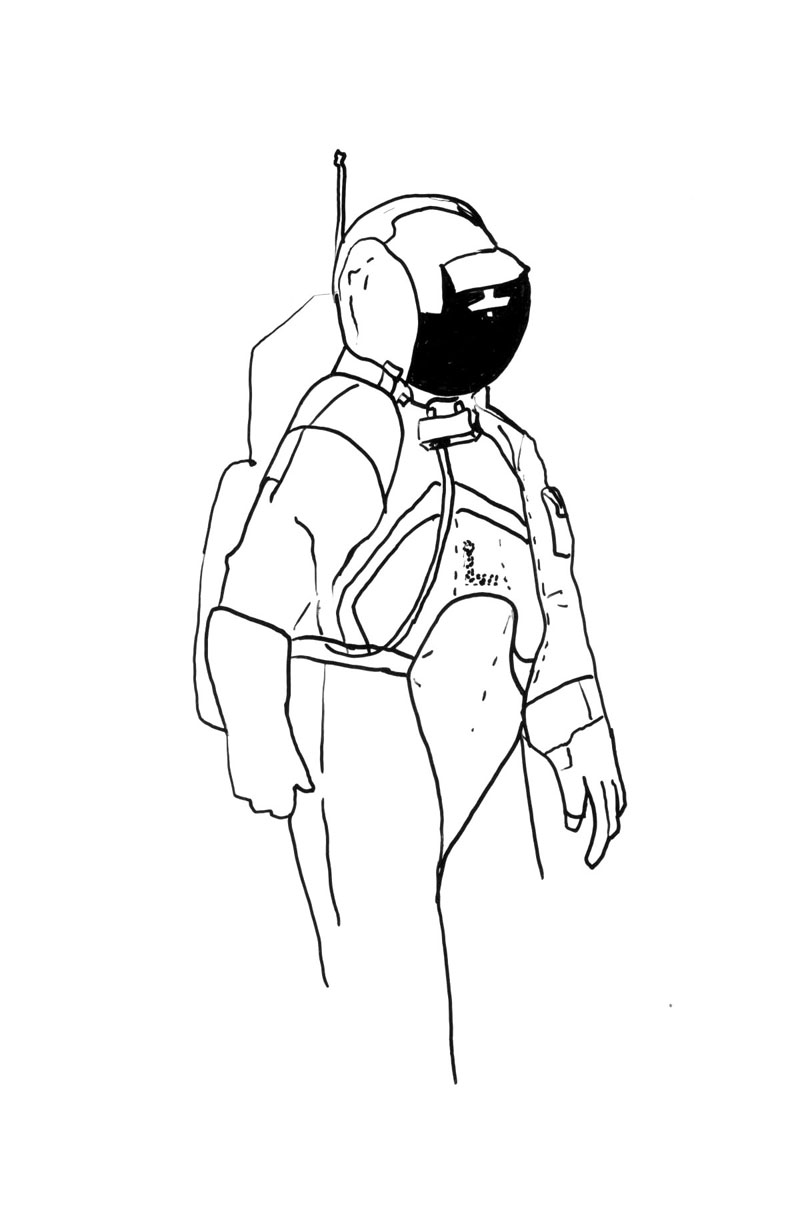
Astronaut sm


Author’s note: This poem is from a series I’m beginning about a character living in an Aotearoa very like ours except that there is considerable Unmanned Moon Exploration activity. The character is engaged in secret work and struggles with not being able to disclose details about the day job to their girlfriend. The character would like nothing more than to debrief, especially about the pressure the team is under to navigate ice fields and bring back soil samples. Over the arc of the sequence the Unmanned Moon Exploration corporation in question goes under and this leads to some disgruntled worker-type protests and raiding of the ‘stationery’ cupboard, which houses pens and pulsating spheres. Oh, and someone frees the Lunar Clones! This poem was recently published in Minarets journal with a host of fantastic poetry by the likes of Hinemoana Baker, Zarah Butcher-McGunnigle and Alex Mitcalfe Wilson. Check it out here. There is so much exciting New Zealand writing coming out at the moment and it’s a pretty inspiring time to be a poet.

Author bio: Rachel O’Neill is a writer, artist and filmmaker who lives in Paekākāriki on the Kapiti Coast. Her debut collection of poetry One Human in Height was published by Hue & Cry Press in 2013. You can find out more about what she’s up to on her blog.

Paula’s note: I am reading this piece in isolation—splintered from the series in which it plays a part, but that makes scant difference. It hums and resonates with a fullness of belly, surrealness, questions (is this human?) and a lightness of touch, along with knots and overlay that render me curious. I see this piece as a stack of tracing-paper figures laid one upon each other until they gain surprising life. They merge and separate; they merge and separate (she she she she she). There is a surety of touch in each line. There is an undercurrent of ideas (the power of greater invisible forces, the impact of the big upon the miniscule, the multiplication of ‘me’ through an inked pen, the love of self and the self of love, the recognition and misrecognition of self, the nurturing, fragmentation). Is this flash poetry? Sharp, sudden, luminous? It’s a delight to read so I am hungry for the sequence. I had no idea about Lunar Clones as I read this!

Poem Friday: Lynley Edmeades’ ‘Imperial’ Sometimes an object in a poem reverberates with such exquisite frisson


s200_lynley.edmeades


Imperial

There goes London with its scattered lights.

Like a bag of marbles spilt out onto concrete,

they’ve rolled towards fissures, pooled together

in conduits. They are the arteries

of this land-bound leviathan.

From the air, I can see it’s almost finite,

and feel the way a child might,

when her marbles have been counted, put away.


Author’s bio: Lynley Edmeades is currently writing a doctoral thesis on sound in avant-garde American poetry, at the University of Otago. Her poems, reviews and essays have been published in New Zealand and abroad. She lives in Dunedin.

Author’s note: I wrote this poem while I was living in Belfast. It was prompted by a conversation with poet Sinead Morrissey, in which she applauded the power of first lines. Put your readers straight in there, she said. No ideas but in things.

Paula’s note: Sometimes an object in a poem reverberates with such exquisite frisson the hairs on your arm do stand on end. In Lynley’s poem, marbles promote a grid of shivers—from the allure of the physical toy to the dips and peaks of childhood. That time of endless summers and wild darings. To overlap the potential of this ‘thing’ with the aerial view of London at night is genius. Magic slips from one to the other. The allure of night. The way a city’s particulars are soaked up into the unknowable dark (or apprehended from a different point of view). The way the city borders are at the edge of psychological unease. Then you get taken back to the moment of the child where the smallest moment can be utterly sharp. The game is over. Fleeting yet intense. What I love about this poem (and indeed other poems by Lynley) is the way ear, heart and mind are in harmony—words are deft on the line, images are fresh, simplicity partners complexity.  And the way, in this example, one word, ‘Levethian,’ can unsettle and add to the subtle discomfort (the engagement with the long-ago child, loss, larger-then-life cities, the unknown). Or the the way the poem catches hold of that child trespassing on the glittering lights of night. The complexities and possibilities of this small poem are enormous. I have barely started.

Poem Friday: Jessica Le Bas’ ‘Aroa Beach’ Its opening lines are effervescent with possibilities

Photo 21


AROA BEACH


            dealing sheep

            the ace of moon


The first night the tiny ants came

like a weak shadow. They drew lines on the wall

In the light that visited with part of a moon

you read their stories


The sun crept in during the night

Had its eyes closed tight, but it was there

never letting the day go. Simmering heat, a chorus of bugs

By dawn the sheets were abandoned


The second night was naked

Limbs cast off from your wet body, sailed ashore

in search of a cool zone. The morning light

came without land


The third night was opened under dusk

And inside, wrapped raw and true was the lightweight relief

of new dreams, and a ‘see through blue’ ocean

as soft as a song.


Bio Note: Jessica Le Bas’s first collection of poetry, incognito (AUP) won the Jessie MacKay Award. Walking to Africa, about mental health in adolescence, was a finalist in the Ashton Wylie Book Awards. She also writes children’s fiction, Staying Home (Penguin), and lives in Nelson

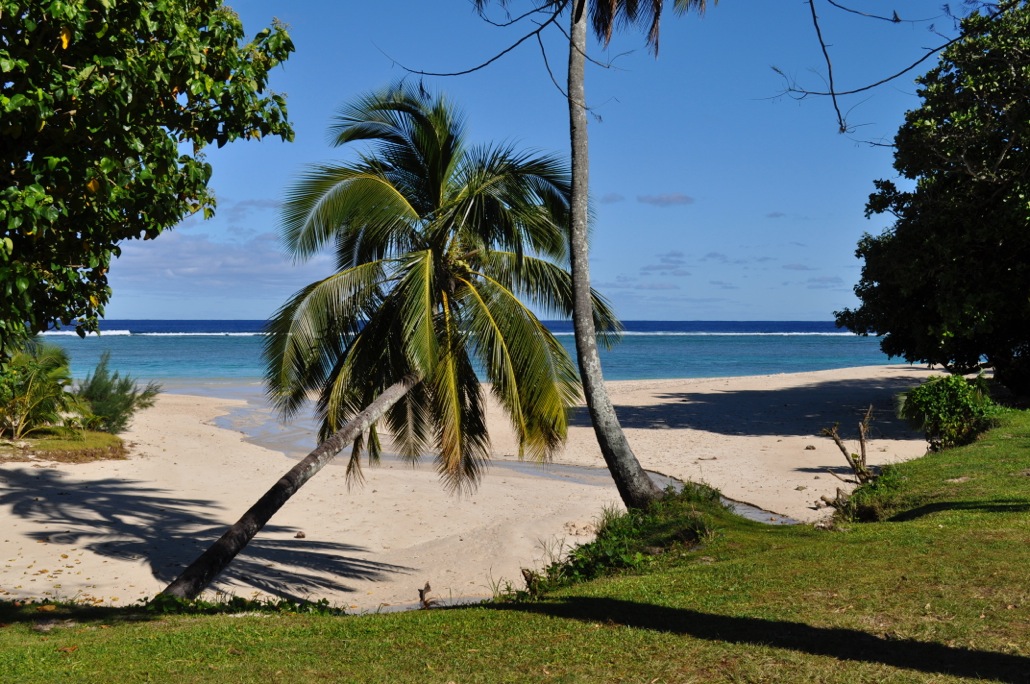
Author’s Note: I recently lived and worked in the beautiful Rarotonga for a year. The week I arrived the temperatures were in the high thirties, with little reprieve at night. I couldn’t sleep, as much from the heat and excitement, as from a fascination with new light and shadows, new sounds, and an army of ants that came nightly to watch over me. It took a while to find the ebb of my new life, at which point it felt like I had been dealt the ace, the top card!

Paula’s Note: Jessica’s poetry has always caught me, whether in terms of lithe sounds or missing pieces or shimmering images. This poem is no exception. There is a delicious movement between a facade of simplicity and a billowing knot of complexity. There is equally delicious restraint. The luminous details represent a world at a slight tilt where everything seems marvellous, strange, significant, legible, illegible. The poem is like a pocket narrative that gains life through its startling images. Its opening lines are effervescent with possibilities—as is the poem. You could move in any direction. That is the joy of poetry. You are led into the blurred edges of night, of a dream state where topsy turvyness (the sun in the night) underlines the relentless grip of heat. Or where dreams, against all odds, lay down (‘the lightweight relief’) the tracks to epiphany. Wonderful!

Auckland University Press page

Blackmail Press poem

Radio NZ interview

Jessica on rhythm for The Nelson Mail

NZETC page


DSC_5977

Poem Friday: Kiri Piahana-Wong’s ‘Kahukeke’ flows down the page like water, honeyed in its fluency

night swimming author pic


Kahukeke

Here at Hikurangi,

the waters pour

down Waitekahu

and into the sea.

On the threshold,

the surf surges up

against the river.

Quietly the water

is absorbed.

Even in flood, the

river is never as

strong as the ocean

it returns to.

Kahukeke used to

kneel here, washing

in the river.


Kiri’s note on the poem: At the moment I am working on my second poetry collection, which has the working title ‘Tidelines.’ The collection is based around the history of the Te Kawerau a Maki people, kaitiaki of the Waitakere Ranges region in West Auckland where I currently live. Other iwi also traversed this area, amongst them Kahukeke, who was the wife of the senior tohunga of the Tainui canoe, Rakataura. In this poem, and others in the collection, I am attempting to inhabit the lives and voices of these early tūpuna.

Author bio: Kiri Piahana-Wong is a New Zealander of Māori (Ngāti Ranginui), Chinese and Pākehā (English) ancestry. She is a poet, editor and publisher. Her first poetry collection, night swimming (Anahera Press), was published in 2013.

Paula’s note: Kiri’s poem flows down the page like water, honeyed in its fluency. Such fluency is addictive; you keep returning to the beginning to fall again into the watery flow. Then, the final image arrests you–the way, in the midst of riveting scenery, and the cyclic and never-ending movement of nature, there is the precise and vital instance of human activity. This image of a figure kneeing is poignant, potent. In such ways, the poem is utterly absorbing.