Later in the year I want to launch a series of Poetry Shelf Live events around the country because I want to get back out in the world, and work offline as much as I do online. In the meantime, assembling poetry readings on Poetry Shelf gives us all a chance to hear poetry off the page. I will be doing more of this over the coming months!
To celebrate National Poetry Day, I offer you a suite of nine readings, not quite the same as being in a cafe or bookshop and getting a live poetry experience, but hearing poets read is such a heart-nourishing treat.
Poetry Shelf offers heartfelt congratulations to our new National Poet Laureate, Robert Sullivan. Robert is a terrific choice. His debut collection Star Waka (1999) was a groundbreaking arrival and the subsequent collections have added extraordinary threads, light and aroha to our poetry kete. Robert is also an anthologist, editor, festival participant in Aotearoa and overseas, currently President of the New Zealand Poetry Society / Te Rōpū Toikupu o Aotearoa and is Associate Professor in Creative Writing at Massey University Te Kunenga ki Pūrehuroa. He belongs to Ngāpuhi Nui Tonu (Ngāti Hau, and Ngāti Manu), and Kai Tahu (Kāti Huirapa ki Puketeraki), with affiliations to Ngāti Raukawa, and Ngāi Tai, and is also of Irish, Scottish and English descent. He lives in Oāmaru on the coastline known as Te Tai o Āraiteuru.
This news is the poetry cream on our national poetry celebrations.
Happy Poetry Day to poetry readers and writers across Aotearoa!
excerpts from Some Helpful Models of Grief (Compound Press, 2025)
Xiaole Zhan
‘{Untitled}’ and ‘Learning the character for soul (靈) contains the character for rain (雨)’
Jackson McCarthy
Three Southern Songs: ‘Punatapu’ ‘Arrowtown’, ‘Kawarau’. Then ‘Happiness’, ‘Song’
Sophie van Waardenberg
‘Self-Portrait as Adolescent Covered in Flour’, ‘Hymn to the Insomniac in Fool’s Spring’ from No Good (Auckland University Press, 2025)
Nadezhda Macey
‘Uranga’, ‘Syntax’ (from Starling Issue 18), ‘Victoria Park’, ‘Capsicum is a New Zealand Word?’
Josiah Morgan
three untitled poems from ‘act three’, in i’m still growing, Dead Bird Books, 2025
Erik Kennedy
‘Individualistic Societies’, ‘Notes Towards a Theory of Fun’ and ‘We’ve All Been There’ from Sick Power Trip, Te Herenga Waka University Press, 2025
Grace Yee
‘with two black dates for sweetness’ and ‘my father was not a gardener’ from Joss: a History, Giramondo Poetry, 2025
Anne Kennedy
‘The Black Drop: My History of Ugly’, from The Sea Walks into a Wall (AUP, 2021)
The poets
Hana Pera Aoake (Ngāti Mahuta, Ngāti Hinerangi, Tainui/Waikato) is an artist, writer, and sweaty milf from Aotearoa. Hana’s first book, a bathful of kawakawa and hot water, was published with Compound Press in 2020. Their second book, Blame it on the rain was published in 2025 with no more poetry (Australia). They just released a third book, Some helpful models of grief with compound press and are also publishing a fourth book of essays, On how to be with Discipline (Australia) in 2026. Hana is edging through a PhD at Auckland University of Technology.
Xiaole Zhan (詹小乐) is a Chinese-Aotearoa writer and composer based in Naarm. Their work features in Auckland University Press’s New Poets 11. They are a 2025 Creative New Zealand Fellowship recipient, a 2025 Red Room Poetry Varuna Fellowship recipient, the 2024 Kat Muscat Fellow, as well as the winner of the 2023 Kill Your Darlings Non-Fiction Prize. Their name in Chinese means ‘Little Happy’, but can also be read as ‘Little Music’.
Jackson McCarthy is a poet and musician from Auckland currently studying in Wellington. He is of mixed Māori, Lebanese, and Pākehā descent. His work has been published in Ōrongohau | Best New Zealand Poems, Landfall, Starling, The Spinoff, and elsewhere, and he serves as an editor at Symposia. You can read more of his work at https://linktr.ee/jacksonmccarthy.
Sophie van Waardenberg is a writer from Tāmaki Makaurau. Her work can be found in Cordite, Starling, Ōrongohau | Best New Zealand Poems, Takahē and elsewhere. Her debut poetry collection is No Good (AUP, 2025).
Nadezhda Macey (she/her) is a student of English Literature and French at Te Herenga Waka. She is also a poet and artist, you can find more @nadezhda.4rt, and in magazines starting with ‘S’: Starling, Salient, and Symposia.
Josiah Morgan (Kāi Tahu, Ngāti Maniapoto) is an interdisciplinary artist based in Ōtautahi. His latest book i’m still growing is out with Dead Bird Books now in all good bookstores. His other books were all released in the United States, including his hybrid text The Texas Chainsaw Massacre, which was performed as a six-hour-long performance artwork in Auckland Pride 2024. He believes in magic and the power of words to transform. He is currently working on a chapbook called Black Window, a new full-length book, and a theatrical adaptation of Faust in collaboration with Hagley Theatre School.
Grace Yee is the author of Chinese Fish (Giramondo), which won the Victorian Prize for Literature in Australia, and the Mary and Peter Biggs Award for Poetry at the Ockham New Zealand Book Awards. Chinese Fish will be published by Akoya in the UK in 2026. Her second book Joss: A History (also Giramondo) was released in June 2025. She lives in Melbourne, on Wurundjeri Land.
Anne Kennedy is a Tāmaki Makaurau poet, novelist and teacher. Awards include the Prime Minister’s Award for Poetry, the NZ Post Book Award for Poetry. Recent books are The Sea Walks into a Wall, The Ice Shelf and, as editor, Remember Me: Poems to Learn by Heart from Aotearoa New Zealand. Anne is the current editor of AUP’s New Poets series.
Today Chris Tse is stepping down from his role as National Poet Laureate, and it felt extremely fitting to acknowledge his vital contribution to poetry in Aotearoa and overseas. He has staged a range of poetry events around the country, drawing in voices, inspiring younger writers, contributing to inspiring poetry conversations in various settings.
Having always been a big fan of Chris’s poetry — from his debut in AUP New Poets 4 (AUP 2011) to Super Model Minority (AUP, 2022) — I decided I would pick one poem from each of his books as a celebration of his tenure. Chris kindly answered a couple of questions from me and contributed a recent poem. To reread my way through his collections was utterly moving: from How to be Dead in a Year of Snakes (2014, AUP), a collection that returns to the tragedy of murdered goldminer, Joe Kum Yung, to his next two, he’s so MASC (AUP, 2018) and Super Model Minority (AUP, 2022). His books navigate sexuality and race, sky and mountain peaks, revolution and imagining, speech and peace. Ah, take the time and spend a long weekend absorbing his extraordinary poetic ink.
Thank you, Chris thank you.
five poems
Dig after Seamus Heaney
Our first back yard hugged the prickled slopes of Kelson.
I watched my father dig and tear his way through bush and clay to find that richer soil.
That spicy scent of gorse, the path he zigzagged.
And beyond him, decades and oceans away, his father stooping to dig gathering ginger and spring onion; dreams of richer days.
•
Between my finger and my thumb the sticks rest.
•
Below the surface lies a history of chopsticks. In the days of new sight we clung to comfort as a sign of success.
Eight treasure soups, the finest teas ivory and bone over wood and plastic.
•
I’ll dig with them.
from Sing Joe, in AUP New Poets 4, Auckland University Press, 2011
•
They peer through me as if I were dead. My hands are tired now, fading to mist.
•••
I’ve held out for luck and fortune like a stony fool,
•••
but sometimes the heart must gracefully accept defeat.
•••
These days it feels like I am digging my own grave.
from How to be Dead in a Year of Snakes, AUP, 2014
Heavy Lifting
Once, I climbed a tree too tall for climbing and threw my voice out into the world. I screamed. I hollered. I snapped innocent branches. I took the view as a vivid but painful truth gifted to me, but did not think to lay down my own sight in recompense. All I wanted was someone to say they could hear me, but he tree said that in order to be heard I must first let silence do the heavy lifting and clear my mind of any questions and anxieties such as contemplating whether I am the favourite son. If I am not, I am open to being a favourite uncle or an ex-lover whose hands still cover the former half’s eyes. I’ll probably never have children of my own to disappoint so I’ll settle for being famous instead with my mouth forced open on TV like a Venus fly-trap lip-synching for its life. The first and last of everything are always connected by the dotted line of choice. If there is an order to such things, then surely I should resist it.
from he’s so MASC, AUP 2018
Wish list—Permadeath
I wish I didn’t feel compelled to write about racism, but there it is patrolling my everyday thoughts like a mall cop drunk with power.
I wish people didn’t ask me how to solve a problem like racism, as if it is a cloud they cannot pin down. I am not an expert spokesman
holding an elusive truth. I wish I could predict when racism would exit stage right to wherever bad things go to die rusty
non-biodegradable deaths, but I can’t predict the death of something with a robust business continuity plan that involves moving from
host body to host body. I am not an exorcist—I am a sympathetic vomiter. Is it predictable for me to write this poem? I suppose so.
What I really want to write about are things with promise, to offer up whiskers on kittens when the outlook is for Nazis on Nazis. I wish
I could sing my way out of this while the man I love applauds from the front row, our adorable Jack Russell terrier Rocket sat by his feet.
I wish I could start a love poem with a line like ‘He thumbs me like the Oxford Dictionary‘ and consider it a job well done. I wish
I didn’t always feel this way—always tired of explaining why I am tired and why writing this poem is more need that want.
I never felt the need to be the gunshot during a knife fight until they told me there was no such thing as ‘let’s finish this once and for all’
from Super Model Minority, AUP, 2022
How to edit a poem
Let the poem approach you first. Don’t point; don’t scare it.
Encircle the poem with broken lines and half-hearted rhymes to reverse any spell that may cause the reader sorrow.
Ask yourself: is the poem merely camouflage for the poet’s desires?
All persons, real or imagined, are questions and aphorisms double-crossing each other in pursuit of a revelation.
Inside this poem there are two poets: one is literal and the other is metaphorical.
Ask yourself: is the poet a secret carried in a whale’s mouth?
Capitalise every word that reminds you of your childhood.
Strike out every verb that will make the reader feel guilty for not living a wholesome and virtuous life.
Inside this poem there are two poets: one tells the truth and theother got away with it.
Ask yourself: when did you last trust a poem?
Interrogate each line as if it were a co-ordinate plucked from a map.
A crooked staircase halfway to the moon. A wolf cries in the dark.
The margins seesaw as you pull yourself into the poem for a better view, to take it all in.
(There is no way out.)
Use the poem as a mirror.
Use the mirror as a sucker punch.
Attack the mirror with a mallet.
Hide the broken shards in the feathers of birds and instruct them to land on rooftops when the night is at its softest.
The townsfolk’s sleep is disturbed by the crackle of crystal rain.
Record their reactions.
Respond, respond, respond.
from Everything I Know About Books: An insider look at publishing in Aotearoa, edited by Odessa Owens and Theresa Crewdson (Whitireia Publishing, 2023)
three questions
What draws you into a poem, whether as writer or reader?
As a reader, I want to get a sense that the poet is writing from a place of curiosity and isn’t afraid to let the reader get a glimpse behind the curtain as they work through their thinking or daydreaming. I don’t necessarily need anything to be resolved – an open end is just as good as any. I try to apply this to my own work as well because a big part of my writing process is to seek understanding about myself or the world. The poem is the result of that exploration.
Have you discovered any poets new to you in the course of your physical or reading travels over past couple of years?
So many! Editing Ōrongohau | Best New Zealand Poems 2023 was a voyage of discovery of new-to-me poets, like John Allison, Isla Huia, Geena Slow and Marjorie Woodfield. This week I’ve been dipping in and out of the 2025 edition of Aotearoa Poetry Yearbook and there are lots of unfamiliar names, so I can’t wait to get to know these poets’ work. I’ve also had the good fortune of working or performing with poets from other countries, either online or in person. Some of the poets whose work I’ve really enjoyed are Hasib Hourani and Panda Wong from Australia, Péter Závada from Hungary, and Amanda Chong from Singapore.
Can you share a couple of highlights from your tenure as Poet Laureate?
For National Poetry Day 2023, I invited students from Te Whanganui a Tara for a day of poetry workshops and activities at the National Library. The poems that the students wrote that day were great and demonstrated how fearless and creative young minds can be. Another highlight was the Poetry International Festival in Rotterdam, where I appeared in an event with Poets Laureates from around the world. It was a really special performance bringing poetry and dance together. I was very proud to be able to represent Aotearoa on stage that night alongside some poetry legends.
National Poet Laureate page Auckland University Press page
1. That morning I read some poems 2. Could not walk far because of my surgery 3. A wholegrain roll I filled with chicken and coleslaw for lunch 4. Thought about the fridge being a silver coffin we carry around 5. Listened to Jim Morrison singing ‘The End’ 6. Thought of tubular bells making a comeback 7. Falling into water then rising up: my heart dipped with the tabla drum 8. …the world, a brief dream under a summer moon 9. Decided on Earl Grey 10. Stood at the window and thought how quiet the street is 11. Wiped sticky fingerprints from the handle of the fridge 12. Stared at the packing cases in the hallway 13. Texted my husband: ‘We had a dream and we made it happen we should be proud of ourselves’ 14. Stared at the pale yellow slipper orchid, newly opened; large and quiet and perfect 15. Read some poems 16. Remembered the one I wrote about cormorants nesting in the huge macrocarpa at Brendan Beach 17. Thought about looking it up but remembered it was packed away 18. Asked Google the question: How long does a stone take to round off in a riverbed? 19. It depends; some take a few weeks and some 100,000,000 years or more 20. Looked up the actor Mandy Patinkin 21. Noticed his wife, Kathryn, looked the same age 22. Wondered if he was still friends with Claire Danes? 23. Marvelled at the trivia I “knew” 24. Thought of my mother dying in the afternoon, falling asleep with a book 25. Glanced at the bed and wondered but lay down anyway.
Wes Lee
Wes Lee lives in Te Whanganui-a-Tara Wellington. She has four poetry collections — her latest, Wearing Today, was shortlisted for The Kathleen Grattan Poetry Award 2023 (Otago University Press), and has been launched this month in Wellington. She has received a number of awards for her writing, including, The BNZ Katherine Mansfield Literary Award and The Bronwyn Tate Memorial Award. Most recently she was awarded the Magma Editors’ Prize 2024/25; The 2024 Free Verse Prize, by the Poetry Society, in London; The Heroines/Joyce Parkes Women’s Writing Prize 2022, in New South Wales; The Poetry New Zealand Prize 2019. Placed in The Plaza Poetry Prize 2025 and The Fish Poetry Prize 2025. She was selected as a finalist for The Fool for Poetry Chapbook Prize 2023, in Ireland (Munster Literature Centre); shortlisted for the Poetry London Pamphlet Prize 2023, and The Alastair Reid Poetry Pamphlet Prize 2024, in Scotland.
The Venetian Blind Poems, Paula Green The Cuba Press, 2025
Later in the year I am planning a number of Poetry Shelf live events to celebrate poetry voices in Aotearoa. This month I have a new poetry collection out but my energy jar and immunity is not quite ready for book launches so I have invented three celebrations for the blog. On Publication Day (August 1st), I posted an email conversation I had with my dear friend Anna Jackson, a conversation that celebrates our shared love of writing and our two new books. Anna’s Terrier, Worrier (Auckland University Press) and my The Venetian Blind Poems (The Cuba Press).
For my second feature, I have created a collage conversation by inviting some of the poets whose books I have reviewed and loved over the past year to ask me a few questions. It gives me another chance to shine light on the extraordinary writing our poets are producing. I have kept the conversation overlaps as I find something new when I return to a similar idea or issue.
It is with grateful thanks to David Gregory, Mikaela Nyman, Cadence Chung, J. A. Vili, Rachel O’Neill, Kate Camp, Xiaole Zhan, Claire Beynon and Dinah Hawken, I offer this conversation in celebration of poetry. You can find links to the reviews below. The conversation has ended up being something rather special for me. I have never experienced anything quite like it! I loved the questions so much. Thank you. Because this is a book of love, I would like to gift signed copies to five readers, whether for themselves or a friend (paulajoygreen@gmail.com).
I also want to share a review Eileen Merriman posted on her blog after reading my book, because she is in the unique position to respond to it as another writer, a haematologist and a close friend. Some things she says struck me and I refer to them when I answer a question by Kate Camp.
I’ve just finished reading Paula Green’s recently published poetry collection, The Venetian Blind Poems in one sitting. This book was an oasis in the midst of a hectic time for me (when is life ever not?); it’s not very often I can be compelled to sit for more than half an hour currently. Yet I connected with this on so many levels: as a writer, as a doctor, as a patient, as a friend, as a human. Green details her experience on the Motutapu ward, the bone marrow transplant/haematology unit at Auckland Hospital, where she received a bone marrow transplant for a life threatening blood disorder in June 2022.
As a haematologist, I know this is one of the most challenging treatments you can put a patient through, bringing someone to the brink of death to save a life. Recovery takes months, sometimes years. The acute phase can be akin to torture, one only the recipient could ever understand. But Paula holds us close, so that we can begin to understand: ‘I return to the pain box in Dune… I am using the box/for when my ulcerated mouth pain is unbearable/last night I held the box/as the mouth pain radiated but/I didn’t put my hand in/I decorated the box/ with seashells instead’. And then we are elevated from the abyss to the sublime, because this is how Green survives, by stacking poems along her windowsill and creating word pictures in her head: ‘Buttered toast and clover honey/marmalade brain and mandarin heart’. And then, time and time again, we are brought back to the world that Green sees, from the confines of her isolation room, peering through the Venetian blinds at the world that sustains her, one second, one minute, one day at a time.
This book had me captivated from the delicious first line ‘Liquorice strips of harbour’, throughout the rough seas, eddies, near-drownings and becalmed harbours of the stem cell transplant, and beyond, right through to that hopeful last line, ‘We will be able to see for miles’. Kia kaha, Paula Green, your inner strength knows no bounds.
Eileen Merriman
me with my daughter’s dog, Pablo
a collage conversation
Every morning I open an envelope and read a poet’s choice inside a greeting card I nestle into the joy of Cilla McQueen’s kitchen table
David Gregory
David: Where do your ideas for your poetry come from? Paula: They fall into my head like surprise word showers, whether from what I see, hear, feel or read. From the world experienced, the world imagined, the world recalled.
David: How do you know when a poem is complete? Paula: It’s a gut feeling. When it hits the right notes and catches a version of what I want to transmit. Poetry can be and do so many things, and I’m a strong advocate for poetry openness rather than limiting and conservative ideas on what a poem ought to be. Paul Stewart from The Cuba Press edited the book and he has a sublime ear for poetry and its range. You couldn’t ask for a better poetry editor.
In the middle of the night the radio takes me to Science in Action and I am listing ways to save the planet and the way dance liberates cumbersome feet
Mikaela Nyman
Mikaela Nyman: These poems emerged out of a life temporarily reduced by severe illness. Yet they’re not limited by the medical circumstances, and not merely a comfort blanket, but seek to connect with the world outside. Did this happen straight away, or is it something you consciously pursued later in the writing process? Paula: I love this question – yes my life was limited physically, not only on the ward but on my long recovery road with a fragile immune system, daily challenges and minute energy jar. But I also saw it as an expansion of life. I focused and am focusing on what I can do, not what I can’t do. On the ward, the world was slipping in through the blinds as much as I was looking out. From the start my writing navigated both my health experience and the world beyond it.
Mikaela: Given the dire circumstances that compelled you to turn to poetry at this point in life – i.e. your personal health struggle as well as the state of the world – how important is it for you to retain hope and offer a sense of wonder in your poems? Paula: I think it ‘s been ongoing, across decades, my impulse to write through dark and light. I think all my books have sources, whether overt or concealed, in patches of difficulty. I was writing 99 Ways into NZ Poetry with Harry Ricketts when I was first diagnosed and I never stopped writing. Maybe writing is my daily dose of vitamins. And that word wonder. Wonder is a talisman word – whether it’s the delight you might find in thought coupled with the delight you might find in awe. It is a crucial aid.
It’s the third day of the poetry season Oh, everyone’s queueing up to read a poem and count falling leaves
Cadence Chung
Cadence: Do you have a particular line/poem you’ve written that you think really encapsulates the collection?
I will meet you at the top of the hill we will be able to see for miles
Cadence: What’s an experience you’ve had lately that has brought you joy? Paula: Ah, such an important question. Every day is a patchwork quilt of joy. Take this day for example. Reading and reviewing a poetry book. Drinking coffee with a homemade muffin with sun-dried tomatoes and paprika. Making nourishing soup for lunch and sourdough with millet flour for a change. Watching the pīwakawaka dance in front of the wide kitchen window as though they are rehearsing for an special occasion. Replying to children who have sent me poems for Poetry Box. Cooking a Moroccan tagine with preserved pears and rose harissa paste for dinner and sharing with my family. Listening to Jimmy Cliff on repeat all day and imbibing the uplifting reggae beat and need to protest.
This morning I got up at 5 am to drive to an early appointment as the full-wow-moon shone in the dark, and streaks of bright colour ribbons hung over Rangitoto. It felt like my heart was bursting. I switched to Maria Callas singing ‘Casta Diva’ from Bellini’s Norma.
Today I feel happiness as solid as a wooden kitchen table with six chairs and a bowl of ripe fruit
Cadence: How does a poem come to you? Quickly and all at once, or more measured and worked out? Paula: Poems linger in my head -as they did on the ward – before I write them in a notebook. Often poem fragments arrive in the middle of the night, or when I am driving across country roads to Kumeū. But there is always a sense of flow not struggle. I love that.
I decide even stories are slatted with missing bits, so I lie still and fill in the gaps of my childhood
J. A. Vili
Jonah: How did your writing flow in the light and dark times, on the good days and bad days of your recovery journey? Paula: It flowed and flows in my head, most days, slowly, slowly. But sometimes, especially in the dark patches, I don’t have the energy to write on paper. I can’t function. Words falter. I compare it to the stream in the valley – sometimes it flows like honey, sometimes it struggles over rocks and debris. When it’s honey flow I write, when it’s not, I do something else. So I pull vegetables from the fridge of garden and make a nourishing meal to share with my loved ones. Or watch Tipping Point on TVNZ! Or listen to an audio book.
Jonah: How much did writing these poems during your personal struggle help in your healing and recovery? Paula: To a huge degree. And it still does. It was and is a crucial aid because it was and is a way of connecting with the world and people, of feeling love though my love of words. It’s a vital part of my self-care toolkit.
Jonah: Since this was such a personal journey for you, what was something new you discovered about yourself and life itself? Paula: How in the toughest experience you can feel humanity at its best – for me the incredible care and patience of the doctors and nurses, no matter how tired or stretched they were (and underpaid). I loved my time on the ward. An anonymous donor gifted me life and that felt extraordinary to me. This miracle gift – it felt like I was seeing and experiencing the whole world for the first time and it was a wondrous thing. And still is (despite the heart slamming choices of certain leaders and Governments). It’s recognising what is important. Cooking and sharing nourishing food (especially Middle Eastern flavours). Watching football. Listening to music on repeat: reggae, Bach, opera, Reb Fountain, Boy Genius, Nadia Reid, The National, Marlon Williams, Lucinda Williams, Billy Bragg, Delgirl, Nina Simone,more reggae. I am hooked on Jimmy Cliff at the moment and the struggle he was singing about way back in the 1960s and 1970s: our half starved world, the Vietnam War, the broken planet, the ‘suffering in the land’. Well we are still singing and writing these same songs of heartbreak and protest.
In the basement of song there are jars of pickled zucchini worn shoes and well-thumbed novels
Rachel O’Neill
Rachel: Where does a poem generally begin for you, and has that changed at any point? Paula: In my conversation with Anna, I talked about the way phrases drift into my head, surprise arrivals in my mental poetry room. I referred to these arrivals as gentle word showers. I have had these arrivals since I was a child. when I was in Year 8 (Form 2) my teacher, Frederick C. Parmee, was a poet! He was the only teacher who saw the potential in me as a writer and I flourished. By secondary school I was shut down as wayward and I failed school. Yet the words kept falling into my mind, and then into secret notebooks (like many women across the centuries), across my years of travelling, living in London, and finding a place in the Italian Department at the University of Auckland. Taking an MA poetry paper with Michele Leggott. Getting a poetry collection published with Auckland University Press. Extraordinary. And still the words drift and fall.
Rachel: Does your new collection speak to dynamics of patience and urgency? Along these lines, what has writing this collection made you appreciate more, or challenged you to move on from? Paula: I think it has amplified my attraction to slowness, to patience, to writing and reading and blogging like a snail, into uncharted territory as much as into the familiar. When you run on slow dose energy, I think urgency is disastrous – I favour slow cooked braises and sourdough bread. Choosing the slow reading of poetry books, so much more is revealed. Yet urgency is both rewarding and necessary for other people, and produces breathtaking results, it just doesn’t work for me. That said, we need to unite with urgency to heal this damaged planet.
The second part of your question is crucial. In a nutshell, I appreciate life, I have had a transplant that has gifted me the miracle of life. Extraordinary. How can this not change the way I am in the world. What matters. Dr Clinton Lewis at Auckland Hospital has made an excellent video for bone marrow transplant patients. He talks about how many patients reassess what matters most. I have drafted a book, A Book of Care, it is not quite ready yet, but it is the manuscript I am most keen to be published. I offer it is as a self-travel guide, a tool kit, borrowing practical ideas that have helped me.
Rachel: In what ways do you think poetry helps us integrate and accept tension or discomfort as part of human experience and living a full life? Paula: I love this question. I have been musing no matter what I am writing, the tough edges of the world, the daily wound of news bulletins find their way in. What difference does it make if we speak of Gaza and the abominable choices our Government is making? I just don’t know, but I do know silence is a form of consent, and that in the time of fascism in Italy, it was strengthening that some people spoke out. Every voice ringing out across the globe, in song or poem or article, every protest march and banner, is a human arm held out, a call to heal rather than destroy, to feed rather starve, to teach and guide the whole child rather than discriminatory parts.
My repugnance at the devastation of Gaza is not eased by the soft light on the Waitākere Ranges or a canny arrangement of summer nouns or Boy Genius on the turntable or even a bowl of chickpea tajine
Kate Camp
Kate: do you ever feel when you are writing about personal experiences – especially intimate ones of the body – that you are invading your own privacy? And once you have written about those experiences, do you find that the poem version overlays the “real” remembered version? Or if not overlays it, then how do they co-exist, how does the personal, private version of the experience alongside the version of the experience as captured in a poem? Paula: I love love this question Kate. Xiaole introduces their reading for a Poetry Shelf feature I am posting on Poetry Day, by talking about oversharing. I know this feeling so well. I feel like I am doing it in this collage conversation! To what extent do people want to hear about illness? About bumps in the road? I started sharing my health situation on the blog because I wanted people to know why I was operating on a tiny energy jar and couldn’t review quite so many books or answer emails so promptly. And most people have been unbelievably kind. I felt so bad when I hadn’t celebrated a book I had loved. And then I would think EEK! And wanted to delete my talk of cancer and transplant experiences and issues. But what I don’t do is go into dark detail. That stays private and personal. Will I have the courage to press ‘publish’ for this collage conversation! Scary.
I found it so illuminating to read Eileen’s review of the book. She writes from her experience as a writer, avid reader, haematologist and my friend. She says things I don’t have running through my head but are important! To read her words made feel so much better about how I am handling my recovery road and my own writing! I don’t use warrior language on my cancer road. I don’t wallow in what I can’t do. I have never said ‘why me?’. But I do have dark patches where I feel I physically can’t function. To hear doctors say a bone marrow transplant is an extremely tough experience is like getting a warm embrace. Recognition.
So yes, I love the idea of a private version and a shared public version – I am a writer that keeps most of my life private – my personal relationships, especially with my partner and our children. I think part of my impulse to write this experience was self-care, as I mentioned to Jonah. Liking drinking water. And how important it is for me to write out of aroha and wonder as much as difficulty. To write as you travel, in the present tense of experience. Once I had spent two years writing the sequence, I wanted to get to get the book published as a gift for doctors, nurses and other people ascending Mountains of Difficulty.
After a night of dream scavenging I open my mouth and out fly stars a garden of leeks and carrots a family of skylarks a track to the wild ocean
Xiaole Zhan
Xiaole: I’ve been thinking a lot about this idea from e.e. cummings: ‘To know is to possess, & any fact is possessed by everyone who knows it, whereas those who feel the truth are possessed, not possessors.’ Did you have any experiences of not knowing or of ‘being possessed’ while working on/ living through your collection? Paula: What fascinating traffic between knowing and feeling! Possessing the facts, being possessed. What slippery territory . . . truth yes, but even facts. Are they ever fixed or certain? Sometimes I think writing is a way of re-viewing an experience, of re-speaking it say, and it is for me an organic process. Never fixed. The versions I tell my consultant, the nurse, my psychologist, my close friends, my family, are tremble stories, never fixed, as I remember and forget and shift the focal lens, the distance finder, the colour filter. It is so very important. I almost feel like venturing to Zenlike thought by saying there is knowing in the unknowing, and unknowing in the knowing.
I lip read the cloud stories and remember the comfort points
Claire Beynon
Claire: I appreciated the absence of ‘explicit’ punctuation in your collection—all commas, colons, semi-colons, full stops are invisible/implicit. The rhythm and cadence of each word, line and stanza work quietly and diligently on their own, as if seeking connection and continuity. They neither ask for, nor require, anything extra in the way of emphasis or embellishment. Did you set out to write the collection this way? Or did you initially include ‘traditional’ punctuation and make a decision to remove it later/during your editing process? Paula: Punctuation is an aid for the poem – for me it is a key part of the musical effect – and it is a guide for the reader – where to take a breath or to pause. I have had many books published and worked with many editors and they have different, and at times, contradictory approaches. I wanted to keep faith with the first section of The Venetian Blind Poems as I gathered it in my head on the ward. Punctuation played more of a role in the second section which I wrote back home. A musical tool. A rhythm aid.
Claire: I wondered while reading The Venetian Blind Poems whether living with a painter—your partner, Michael Hight—influences your way of composing and structuring your poems? I mentioned in my FB post that something about the tone and shape of this collection reminds me of the work of artist Giorgio Morandi. I’ve long admired Michael’s paintings, too—their quiet, contemplative quality, compositional sophistication and attention to detail, the at-times unexpected juxtaposition of objects—and sense between them and your poems a kind of reciprocity or shared sensibility.
Forgive me if I’m projecting here. I don’t mean to speak out of line or to make any assumptions… but, well, I found myself wondering about these things… how there seems to be something deeply simpatico between your work and Michael’s. And it moves me/strikes me as beautiful. Paula: Michael and I are big fans of Morandi! We live very separate creative lives – he doesn’t enter the poetry room in my head and I very rarely walk up the hill to his studio – neither of us talk about work in process with anyone. But I have written about Michael’s work (read a review of his last Auckland show here). We have his art on our walls and it’s uplifting, a vital form of travel. I give him my manuscripts to read just before they go to a publisher! We have two creative daughters and we have shared love of books, movies, music and art. To be in New York together absorbing art, music, literature and food was incredibly special – and Ireland, Barcelona and Lisbon on another occasion – and of course Aotearoa.
Claire: I realised when I reached the last page of your collection that I’d read the book as one long poem—a whole comprised of many parts, yes, but essentially ‘one poem’. I actively appreciated the fact that, aside from the titles at the start of each of the two sections, there are no titles to distract or interrupt the flow of the writing. This allows readers to fall into step with you and walk more closely alongside. On the last page, you seem to confirm this:
Most of this poem is in 1000 pieces in a box on the table
Do you see the collection as one poem? Paula: Yes I do! One poem like a quilt made of many notes, light and dark patches.
A poem might be an envelope to store things in for a later date: old train tickets postcards buttons a map of Rome a bookmark
Dinah Hawken
Dinah: A few weeks ago I found myself asking myself what I most hoped my poems would do now that I’m in the last part of my writing life. My main hope is that a few readers will feel ‘be-friended’ by a poem of mine, in the way I have felt be-friended by the poems of others. Then, in reading your conversation with Anna (Jackson), I came across – with surprise – your idea of ‘poetry as friendship’ and Anna’s of poetry as ‘a short cut to intimacy.’ Do you have more to say about this? Paula: Anna and I have been friends since my first collection Cookhouse was published in 1997, when I had just completed my Doctorate in Italian. Before our slow-paced email conversation, I had never thought of poetry as friendship, but the more I thought of it, the more it resonated as an idea and a practice. I realised my slow-tempo approach to poetry – to reading, writing, blogging and reviewing – is a way for forging connections, of holding things to the light to see from different angles, explore multiple points of view, experiences, hues and chords. Of listening. Our poetry communities in Aotearoa are so active and so strengthening. As this collage conversation underlines.
Dinah: And were you thinking of a particular kind of reader (say someone who had experienced serious illness) when you were writing The Venetian Blind Poems? Paula: No, I wasn’t thinking of a reader at all. Of getting published. I write first out of my love of writing, as a form of nourishment, as a source of joy. So I guess that is selfishly writing for one’s self. Inhabiting the moment. But now that The Venetian Blinds Poems is out in the world, to be able to give copies to doctors, nurses and other people going through difficult health experiences matters so very much. And to other poets! Climbing a mountain can be hard but it can also be a source of beauty, and I am nothing, this book is nothing, without my support crew, particularly Anna Jackson, Harriet Allan, Eileen Merriman, Michele Leggott and all the fabulous doctors and nurses on Motutapu and the Day Stay Ward. All the readers and poets who contribute to Poetry Shelf as both readers and writers. And my dear family. Thank you. My dedication catches how I felt when I had finished writing the book:
for everyone ascending the Mountains of Difficulty and their support crews
David Gregory, Based on a True Story, Sudden Valley Press, 2024, review Mikaela Nyman, The Anatomy of Sand, THWUP, 2025, review Cadence Chung, Mad Diva, Otago University Press, 2025, my review J. A. Vili, AUP New Poets 11: Xiaole Zhan, Margo Montes de Oca, J. A. Vili editor Anne Kennedy, Auckland University Press, 2025, review Rachel O’Neill, Symphony of Queer Errands, Tender Press, 2025, review Kate Camp, Makeshift Seasons, THWUP, 2025, review Xiaole Zhan, AUP New Poets 11: Xiaole Zhan, Margo Montes de Oca, J. A. Vili editor Anne Kennedy, Auckland University Press, 2025, review Claire Beynon, For when words fail us: a small book of changes,The Cuba Press, 2024, review Dinah Hawken, Faces and Flowers Poems to Patricia France, THWUP, 2024, review
The Cuba Press page Paula Green and Anna Jackson in conversation
What if I made up a poem about a house on a hill with views of the sea and passionfruit vines laden, and a woman knitting stories of family connections and sublime epiphanies into socks and scarves and comfort blankets with an abundance of vegetables in garden plots and fruit on the trees and soup simmering whatever the season and how she is always content in her own company but one day she opens a newspaper and it is full of war and plague and bullies and hunger and racism and side-lined histories and abusive relationships, underfunded hospitals and underfunded schools, and she looks at the olive-green sea and she smells
the tomato soup simmering the fresh basil aromatic in the air and she turns on her radio and hears the voice of a young Palestinian student begging the world to listen, begging for freedom for her people and how the relentless bombs trap everyone in houses and how aid can’t get through and how nowhere is safe and how everywhere is under attack, and the woman on the hill tries to imagine the terrified children, the lack of news and power and water, and how the catastrophe goes deep into roots and land and home, and how they cannot pray safely in mosques, and how when Palestinians resist they are terrorists and their resistance is deemed invalid, and the woman on the hill looks
at the patch of blue sky and the free-floating clouds and puts down her knitting with its happy stitching its loving connections and storytelling skeins and tells the olive-green sea that we are all human, and we all need to eat and feel safe, to stand on soil we call home, to speak our mother tongues, tell our grandparent stories, and to feel the depth and caress of peace
Paula Green 20 May 2021
Every Thursday in 2021 I wrote a poem, and now have a manuscript sitting in my drawer called ‘Thursday Poems’. I was flicking back to see what I had written in July but stalled on this one. It felt like I could have written it today. What has changed globally or locally? How have things improved in Aotearoa as the gap between the rich and the poor widens? Our environmental aims deteriorate? As the situation in Gaza is even worse? As peace in the Ukraine is elusive? I recently signed an open letter, along with other writers and publishers, calling for an immediate ceasefire that Mandy Hager organised. I would like to see an open letter addressed to our Coalition Government demanding to see how they will repair our country rather than damage it so cruelly. Nest year we will be voting.
The Anatomy of Sand, Mikaela Nyman Te Herenga Waka University Press, 2025
I often ask poets how what is going on in the world affects their writing, if not their ability to write. Their answers occupy myriad points on a spectrum, from writing as solace to writing as protest. Mikaela Nyman’s new collection, The Anatomy of Sand, draws our environmental relationships into view. It’s a version of holding up protest placards (and we are doing much of this on the streets) by using poetic forms to revisit human impacts upon nature, both good and bad. Mikaela draws upon many sources to furnish and advance her poetic spotlight: scientific research, Finnish myths, the work of other poets, artists, inventors, engineers.
The cover image is as haunting as the collection’s title. The enigmatic glass sculpture by Ellie Field, photographed on a beach setting, is open to multiple readings. I jot down words: fragility, sur-real, melancholy, intense mind and heart concentration. The image sets the title vibrating as the word and idea of “sand” explodes in multiple directions. Hmm. I am standing barefoot on the beauty of beach sand. I’m holding a sand timer wondering if time is running out, recalling the way sand slips through fingers, is dredged and transported elsewhere, is conserved by locals as a vital home for native birds under threat.
I read the first poem, ‘Lonely sailors’, and am again caught in a matrix of melancholy, enigma, physical and historical debris on a fragile shoreline. The final line sticks to me as I read the whole collection: ‘knowing // that we’re sailing too close / to the wind’. We are simply sailing too close to the wind and it hurts.
I shuffle back to the preface quotation by Rachel Carson from Silent Spring and it feels like a lifeline for us all: ‘In nature, nothing exists alone.’ And herein lies a reason to keep writing, to keep connecting, whether for solace or protest and everything in between. I add to that Margaret Mead’s declaration: “Never doubt that a small group of thoughtful, committed citizens can change the world. Indeed it is the only thing that ever has.” And I want to say, clearly and insistently, Mikaela’s precious book promotes the idea that poetry does not exist alone.
Poetry has the ability to be the glass sculpture on the beach, a prismatic form that might be personal, political, philosophical, elliptic, searching, intertextual, rich in narrative, surreal. Pick up the book. Move from the seed collectors to the tree planters, from the separation of metals to the disposal of milk on the land, from the ownership of sand to feeding on Hope Cafe’s sandwiches and leeching on hope. Circle around notions of balance, the sight of shoreline debris, prophesies in a gallery soundscape. Flick back to ‘Cilia’, and revisit the weight of the world, not just today, but across generations (Mormor means ‘mother’s mother’ in Swedish). How this glorious poem catches me:
Unable to heed the warning I carry the world’s worries on my hips. Too late
to tell Mormor I now understand what she was on about, why her hips were so wide you could spread one of her fine embroidered tablecloths over them and invite the whole neighbourhood for a feast.
Mikaela writes with a multi-toned pen, her lines delivering technical information alongside moments of awe, wonder, contemplation. Listen to her read below, listening to the shifting tones of ache and gentleness, jagged edge and lilt, the sonic flurry dancing in the ear, urgently. Oh so urgently. Perhaps we are all standing on the shoreline as we read, as we reconsider our actions and choices, yes absorbing beauty and life, but re-examining how to heal rather than damage the environment. Our environment. In reading this collection, we inhabit the poem, and then, with Mikaela’s visible signposts, we move beyond the poem, mindful of past present future, to the collective power to do and to hope. Thank you.
a reading
‘pear lizard plumage’
‘Mudlarking’
‘Of orfes and alder’
an interview
Were there any highlights, epiphanies, discoveries, challenges as you wrote this collection?This is your first book written in English – how was that?
Someone wise said “every poem is in search of a collection,” which may or may not be true. What is true, is that every poem that elicits a response from someone along the way gives me a boost and strengthens my resolve to stick with the more expansive project. I do become obsessed with certain issues, themes and observations, and tend to follow that enquiry to the end. Sometimes there’s a happy ending. At other times there is no end in sight, so I have to draw a line and say enough. What this means, is that some poems end up being closely linked – in theme, tone, place, imagery, format – as they emerged around the same time. Over time, however, when the focus shifts to new territory, older poems may feel obsolete, or they don’t quite fit in. Just because poems have been individually published or placed in competitions doesn’t mean they should automatically be included in a collection.
And then we have the whole problem of translation. Since I write in both English and Swedish, I play around with words a lot. I don’t always know if a poem sparked to life in English or Swedish. I waste a lot of time translating myself into the other language and back again, continuously polishing it. In the process something alters, it becomes a different beast. With The Anatomy of Sand, I was never sure how much of my own Nordic ancestry, history and mythology to include. Would it even be remotely interesting to anyone else? At one point, all the Nordic elements were taken out. Self-doubt is a constant companion.
I find moving between other languages can create such different music! Along with everything else.What matters when you are writing a poem? Or to rephrase, what do you want your poetry to do?
Each poem is its own contained world, it has to carry its own emotional truth. The aural quality of hearing a poem read out aloud, how the words roll off the tongue, the rhythm and sounds, and how it impacts the listener matter to me.
Are there particular poets that have sustained you, as you navigate poetry as both reader and writer?
I read widely, in several languages. Some of the poets that have sustained me over the past few years include Tua Forsström, Finland’s most celebrated contemporary poet. Like me, she also belongs to the linguistic Swedish minority. Her poetry can be dream-like and moody. Reading her makes me want to row out on a lake at night, light candles in the snow, and watch Andrei Tarkovsky films.
Swedish poet Tomas Tranströmer’s poems tracks the changes of seasons, using surprising word choices and imagery. His poems ooze with nature’s atmospheric beauty and a sense of mystery that fills me with wonder and awe when I read him.
Padraig O’Tuama’s podcast ‘Poetry Unbound’ has steadied my ship and kept me company when I wake up at dawn and wonder if the world is still intact. I’m grateful to Hinemoana Baker for putting me onto Padraig. Hinemoana’s Funkhaus is one of my favourite New Zealand poetry collections.
Ada Limón was the first Latina to be named Poet Laureate of the United States. I wonder how she is faring now… I love how she can pick up some mundane detail and turn it into something astonishing. The way she depicts human relationships with nature evokes an Oliverian sense of gratitude for being alive. I think we need that, more than ever.
We are living in hazardous and ruinous times. Can you name three things that give you joy and hope?
My family, nature, collaboration with generous creative human beings across all art disciplines.
And for me your book! And picking up on poets and filmmakers to return to (Tarkovsky and Limón) in interviews and the poetry books I am reading.
Mikaela Nyman is from the autonomous, demilitarised Åland Islands in Finland and lives in Taranaki. Her climate fiction novel SADO was published by Te Herenga Waka University Press in 2020. Her two poetry collections in Swedish were nominated for the Nordic Council Literature Prize in 2020 and 2024 respectively. Her second poetry collection, To get out of a riptide you must move sideways (Ellips), connects Taranaki and Finland and was awarded a literary prize in 2024 by the Swedish Literary Society (SLS) in Finland. In 2024, she was the Robert Burns Fellow.
Terrier, Worrier A Poem in Five Parts, Anna Jackson Auckland University Press, 2025
“She came upstairs looking more like a cloud than a silver lining.”
Loop: A Review in Nine Parts
LOOP
Anna Jackson’s glorious new collection, Terrier, WorrierA Poem in Five Parts, gets sunlight slipping through the loops of my thinking, reading, dreaming. The collection is offered as a seasonal loop as we move through summer, autumn, winter, spring, summer, and in this temporal movement, the loop regenerates, absorbing and delivering rhythms of living . . . mind and body . . . rhythms of writing . . . nouns, verbs, conjunctions . . . rhythms of thinking . . . and little by little . . . the compounding ideas, the feelings. It’s poetry as looptrack: overloop, underloop, throughloop.
I photographed a floor softly tiled in white and grey and posted it with a quote from Emily Brontë’s diary: ‘Aunt has come into the kitchen just now and said, “Where are your feet Anne?” Anne answered, “On the floor Aunt.”‘
BREAKING THE FRAME
There is a long tradition of breaking the frame of poetry, or let’s say opening the frame, widening, nurturing, reinventing, rebooting, invigorating. And yes, there is sunlight drifting in through the gaps in these poetry weatherboards, lighting up what poems can do or be, both beyond the frame and within the frame. Subject, style, sensation. Anna writes:
Poetry can be a form of refusal as well as openness.
I am reading this poetry book at the kitchen table and it is a loop of ignition points. Anna also writes:
I thought, it tells us something about poetry that when we need to talk to ourselves about something we don’t know we know, we tell it to ourselves when we are sleep, in images we struggle to remember when we awake, and often take more than one reading to fully understand.
PRESENT TENSE
There’s a long black cloud streaking from the west coast to the backyard bush sprinkling salt and pepper rain. Terrier, Worrier is generally written in the past tense, with many stanzas beginning with ‘I thought’, yet for me, curiously, wonderfully, it carries the charismatic freight of the present tense, the sweet fluidity of the gerund, the present participle . . . where be-here-now fluency prevails regardless of gaps, rest-stops, hesitancy. Reading is to be embedded in the moment of the past as reader, so that what happened, and what was thought, becomes acutely present. Dive into the poetry currents in the collection, and along with the writer, you will might find yourself filtering, evaluating, experiencing, valuing, photographing, documenting, thinking. Savouring a moment.
I remember sitting in the car after work, not wanting to turn on the windscreen wipers because I felt like I needed rain on the windscreen to do the work of crying for me.
THOUGHT
Thinking. Yes Terrier Worrier is a poetic record of thought that offers anchors, the cerebral terrain of the philosopher say, an archaeology of ideas to dig for. Where testing the possibilities of what is matters along with what is not, along with everything in between. Poetry forms a thinking loop, a porous border between poem and idea, where meaning is organic, fertilised by nuance and shifting light. Sunlight say. Looping motifs and coiling thinking, like the surprise delight of letting thoughts carry you without planned itinerary. Where meaning ripples and slides. This is what happens as I read Terrier, Worrier.
Anna writes:
I thought, most of the time I, too, am a person not having thoughts but only having sensations, emotions, instincts, memories, anticipations.
Perhaps the poem becomes the vessel for ‘sensations, emotions, instincts, memories, anticipations’.
PRESENCE
Anna’s poetic record of thought (how ‘record’ resonates with the effects of tracks and music) is physically active. Thinking is anchored in a physical world, a yard of hens, a cat, partner, mother, father, daughter, son, friends. A tangible texture of dailiness that grounds the rhythm of thought in physicality. I love this.
Beside my bed there is a painting of a blue fish, floating high above a grey-blue sea, impaled on a grey-blue spike. On the back of the painting are written the words of the artist, my daughter, aged 3: ‘This is the fish. I painted it because it stuck in my mind.’
DREAMING
Dreaming becomes thinking becomes inventing becomes dreaming. Anna holds the idea of dreaming, like a prism on her palm, to question, revisit. Again I’m acutely aware how everything I have already said feeds into what I am saying here, and what I will say. How dreaming is the present tense, looping past and future, how the poet wonders her dream, with dream seeping into life and life into dream, into the threads of a poem in five parts. How do “sensations, emotions, instincts, memories, anticipations” slip into the dream texture, I wonder. Into the making of a poem.
When Amy told me she had dreamed about me, I felt as if my own life were like that dream in which you climb some stairs in your house and discover an additional room, or a whole series of rooms, you didn’t know was there.
SPACE
A word with myriad possibilities. There is space in the reading, in this nourishing process of reading that sends me looptracking and dawdling in a state of dream and wonder. Early in the sequence Anna is (and yes usually I am cautious about attributing the speaking voice to the author, but this book feels utterly personal so I think of the voice as Anna’s) – taking photographs of squares.
There is too the proximity of space and death, especially as both Anna’s parents and sister had had “a turn at death’s door”.
There are recurring motifs of rooms and buildings, and especially this thought:
I thought, every body is a memory palace.
And this:
I thought about the concept of ‘peripersonal space’, the idea that your mental mapping of the self includes the immediate space around you, and what you habitually keep about your person, including for instance your bag, or your falcon.
READING LIST
Lately, I have been reading novels and poetry books that make a writer’s reading history visible. I love falling upon titles to be added to my must-read notebook, across genre, time, location, languages. Anna’s reading list at the back and the titles sprinkled throughout is incredible.
How may times do I return to Virginia Woolf! I must read Jan Morris’s thought-a-day diary, or Robert Wyatt’s irony of doing loads of minimalism, and how I too loved Susan Stewart’s magnificent On Longing: Narratives of the Miniature, The Gigantic, the Souvenir, Olivia Lang’s Crudo, Madison Hamill’s brilliant Specimen, Muriel Rukeyser’s poetry.
SELF LOOP
Worrier, Terrier is the kind of book you can’t put down. I keep giving myself another week to flow along its currents, neither to explain nor pigeonhole, but to embark upon the joys of reading poetry, of reading a book that feeds your mind, that sparks and startles your memory banks, that gets you revisiting your own secret feelings and thoughts. Because more than anything, I hold Terrier, Worrier as a book of self. This book of invigorating return, where you will find yourself expanding with both recognition and discovery. It feels like this is what Anna did as she wrote. Is the poetry a form of coping with the abysmal world, the drift thoughts and non-thoughts, the dailiness, the relationships?
I read another page. Then I reread this, a pulsating heartcore of the book:
Some feelings expand the self like a gas into the world and some condense the self into the coldest matter.
And then this:
I wondered whether I could hear ‘terrier’ as a version of the word ‘worrier’, a worrier being not someone who makes you worry but someone who themselves worries, who worries away at things like a terrier might worry away at a sock. A terrier would be someone who allows themselves actually to indulge in the feeling of terror. I tell myself, ‘I am not okay, but I will be okay’, but maybe I need to stop saying that and release the terror, or maybe the terrier is not myself but represents someone else’s terror that needs to be heard.
Tomorrow I will pick up the book again, and find another gleam and thought spur. I want to sit in a cafe with you all, let our thoughts dream and drift and link, as we empty our coffee cups, pick up our pens, and catch both the dark and the sunlight slipping in . . . as we write through weeping, laughter, longing, with doors ajar and love strengthening. I utterly love this book of wonder.
Anna Jackson is the author of seven collections of poetry as well as Diary Poetics: Form and Style in Writers’ Diaries 1915–1962 (Routledge, 2010) and Actions & Travels: How Poetry Works (Auckland University Press, 2022). She lives in Island Bay, Te Whanganui-a-Tara, and is associate professor in English literature at Te Herenga Waka – Victoria University of Wellington.
Anna Jackson’s website Auckland University Press page
I decided it would be a great idea to share the occasional poetry launch speech. All kinds of things get in the way of attending book launches – distance, time, illness, work, double-bookings! So I thought it would be great to host a series of launch speeches and photos – if you go to a poetry launch and love the launch speech, well maybe the poet and the launcher will give permission to post on Poetry Shelf. Let me know!
First up is Helen Rickerby launching Anna Jackson’s Terrier, Worrier A Poem in Five Parts(Auckland University Press)at Unity Books in Wellington.
Wellington launch speech for Terrier, Worrier
Kia ora kotou. Hi, I’m Helen Rickerby, and it’s an honour to be launching this new book by Anna Jackson – Terrier, Worrier. And lovely to see you all here to help celebrate.
I’ve been a big fan of Anna’s work since I first came across it, back sometime in the dark ages – the late 90s. She was living far away (Auckland) and submitted to a literary magazine I was editing. We got a lot of submissions, but Anna’s really stood out. I accepted it immediately, and that was the beginning of my friendship with Anna’s work.
I got to meet Anna herself not too much later, and then, conveniently, she got a job here in Wellington. She has become one of my dearest friends and her work and her self continue to be a big inspiration to me. She writes poetry that always makes me excited and inspired, which pushes me to be explorative and ambitious in my own poetry.
I know she’s been a great inspiration to many other people too, as a writer and teacher and as a person.
I’ve loved all of Anna’s books, so I don’t say this lightly – and I don’t really want the other books to hear me say this, I mean I don’t want to hurt their feelings and some of them are engraved on my heart – but I think Terrier, Worrier, is my favourite yet.
I got to see this book in various stages – when I read the first draft I remember thinking – and saying – that it was my favourite kind of thing to read. It’s sparky and fun and deep, it’s gorgeously written, with beautiful turns of phrase. It’s also quite educational – I learned a lot of things reading this. It’s like having a really really good conversation with Anna, and getting to watch her think in action.
This book is a thought diary in poem form – a hybrid prose poem form, which is my favourite.
Anna – or perhaps we should really say ‘the narrator’, because it is of course a composed and beautiful work of art; but while recognising that the voice of this poem is in fact a construct and not exactly or completely Anna herself, it also sounds so much like at least one version of Anna herself, that I am just going to call the narrator ‘Anna’. Anyway, Anna implies in the poem and the notes (I want to put in a plug for the notes – which are almost as rich, fun and conversational as the poem itself, and do feel to me like part of the poem itself): Anna says that she doesn’t think she has thoughts, or emotions. It is so clear to me that Anna is full of emotions, and full of thoughts – as proven by this book. I am someone who feels very full of both thoughts and feelings – when she began this project, I thought and felt that recording one’s thoughts would be quite overwhelming – I feel that I have a thought tumbling into another thought followed by another faster than I can even follow – I couldn’t comprehend how you could capture them all. But I’ve come to understand that one difference between Anna and myself is that she has higher standards of many things, including of what a thought is – and perhaps what a feeling is.
This is longish for a poem, but small for a book – however, in this small book there is just so much! A lot of thoughts and ideas per square inch. As well as her own thoughts, she argues with Ludwig Wittgenstein over language and beetles, questions Hannah Arendt over beauty, reads and considers scientific studies about time and perception – but despite all that dense deepness the experience of reading Terrier, Worrier, is easy, light, spacious, fun.
This is thanks to the beautiful, light, clever and funny way it is written.
And it isn’t just jumping from one profound thought to another – it circles back, revisits, reconsiders and sometimes disagrees with itself, makes connections with other thoughts and, aided by the fragmentary nature of this poem, there is space for us the readers to think and make connections too. For me it is the kind of writing that makes my brain spark.
This quote is from early on in the poem:
I heard birds and thought that although I am only hearing them,and I am not having a thought, it still feels like a thought, almost like a thought of my own, or a conversation I am having, or perhaps it is more like reading a poem, where the words, or the movement of the thought, the song of the thought, is given to you rather than coming from you, but still moves through you.
She begins by considering whether hearing is a thought, continues on to the nature of poetry and then you realise it’s doing exactly what it’s talking about – we’re following her thinking and the poem is making us feel like we’re doing the thinking, but then there is the space for us to actually think – if we want to – otherwise we can just go back to watching Anna’s brain.
One thing I love about Anna’s work, and actually about Anna herself, is her complete lack of concern with a hierarchy of culture. She mixes the high – classic and classical literature, philosophy etc – with the ordinary – the domestic space, family life, pets – but also treats both the ‘high’ and ‘low’ as much the same – or at least of equal importance. Or equal-ish – I think the pets might actually be more important than the philosophy.
And pets do make frequent appearances in Terrier, Worrier – mostly hens and also cats, as illustrated on the cover. There’s also a whale on the cover, and there are also whales in the book, but I don’t think even Anna could make a pet of a whale, though you never know.
While in some ways this poem is like a monologue, is really a conversation – as well as being in conversation with philosophers and scientists, she has conversations within the poem – or in fact arguments – such as with Simon about whether it would be better to leave doors open (apparently it is). And it also feels like a conversation with us.
I love how she says:
Whether including conversations counted as cheating was another question. I decided it probably was cheating, because it is almost impossible not to have thoughts in conversation.
I have in fact had conversations where I have had trouble having thoughts, but never with Anna.
As I expect you have noticed, we are living in some pretty weird times. While this isn’t a book that engages directly in a political way, itis the kind of book I think we need in these times – the kind of book that stands in opposition to the values that are prominent right now among some of our so-called leaders.
This is a book that is full of curiosity, empathy with other humans and with animals. It is not interested in hierarchies of status, but in the beauty of all the things, big and small, that make an individual and collective life worth living. It values thinking deeply and is not content with the first knee-jerk idea or black and white solutions. It is a book that values connections and conversations, between ideas, between people and animals, and between people and people. These are the kinds of values that give me hope.
I don’t feel I’ve done this book justice – there are so many things that are wonderful about it, but I hope I’ve whet your appetite for it. And so now I declare Terrier, Worrier launched!
The week of interviews, twenty minutes each to face a panel for my disappearing job.
I went into a shop called Accessory House and bought a flamboyant fabric rose
of the most arresting red as arresting as Liverpool F.C.’s elite Garibaldi red
and pinned it to my black linen jacket. I sat on a chair in the corridor, waiting
wondering what I would say. I had prepared nothing, it would have to be
spontaneous, from the heart, like the rose or the Garibaldi goalkeeper with his gloves
straining for the crossbar of the goal or diving like a salmon in its death throes.
Protect me, rose, I said, as the bell sounded and I walked in, stiff-backed and sat.
Good morning, good morning. We like your rose. Was that a point on the score sheet?
I’m sure I said something foolish. The rose was causing me to relax. I told it
to keep it together. Remember the worm that flies in the night. It settled back
on my lapel and nestled against my cheek In the corridor again I unpinned it
and held it to my nose. A little perfume from my wrist had climbed inside it.
Elizabeth Smither
Elizabeth Smither has just completed a collection of four novellas, titled ‘Angel Train’ which will be published later this year by Quentin Wilson. ‘The interview rose’ is the title of a new collection of poems for Auckland University Press.
AUP New Poets 11: Xiaole Zhan, Margo Montes de Oca, J. A. Vili editor Anne Kennedy, Auckland University Press, 2025
The AUP New Poet series has launched the careers of many poets, consistently showcasing the depth and breadth of poetry in Aoteraoa. Editor Anne Kennedy has drawn together three distinctive writers, whether in view of style, form or subject matter, yet there are also vital connections. For example, the poets – Xiaole Zhan, Margo Montes de Oca and J. A. Vili – acknowledge a history of poetry reading, referencing writers that have nurtured and inspired them. There are recurrent anchors in memory, experience, ideas, politics, the personal, everyday contexts. Above all, there is the contagious transmission of joy. Whether I am entering fields of pain, grief, wonder or philosophy, I am experiencing joy as I read. Absolute delight in what poetry can do.
I have reviewed each section, and followed that with a reading and conversation with each poet.
In the drench, there is a room where my Pākeha grandfather waits beside an upright piano covered in dust. His eyes are milky with illness. Lucius Seneca crouches in the corner, wheezing in and out. The piano has outlived the axe, and the tree, and both men in the room. Like the word heaven.
Xiaole Zhan from Arcadiana
Xiaole Zhan’s hybrid sequence, Arcadiana, resembles an album of navigations; writing that can be claimed as essay, poetry, memoir, prose . . . a suite of cross fertilisations. At its heart, and yes this is a sequence with heart, is the magnetic pull of storytelling. Why do stories matter to us? Does poetry matter?
I want to share some of my readings avenues through ‘Arcadiana’ in order to offer a taste of my delight. I often flag poetry that moves me, but what do I mean by ‘move’? For me to be be moved as a poetry reader encompasses multiple movements, maybe like a sonata might move mind, heart and body. It’s intake of breath and goosebump skin. So yes, I am intensely and wonderfully moved by Arcadiana’.
Xiaole is exploring their memory chambers, hunting out piquant and personal detail that sticks, sometimes unsettling, detail that sets them musing. It’s sights and smells and sounds; it’s childhood and healing strength. It is a storehouse of stories, most especially the thorny depository in the Bible, with its violence, horrors and miracles. Just like fairytales. The cruel Pakehā grandfather, the nasty Pakehā stepfather, reading to the young child. It’s the strengthening mother.
Philosophical threads captivate my hunger for ideas, especially in the open field of storytelling, especially as we navigate lies and belief, how to advance and enhance what we tell. How we might fall upon mourning in music, and music in mourning. This metonymic rubbing, this idea against that experience, that experience against this idea. Ah. The citations from key thinkers/writers, in keeping with the mode of essayist, enriching links to history, culture, intellectual thought, personal experience. And in this open field, reading and writing are both forms of listening.
I love how moisture, drench and stormwater are a recurring motif or theme. I find myself exploring the collection in view of its moistness, whether sweet dew or slam of flood. Colonisation. Racism. I soak up a poem’s reach and possibilities. I discover ‘Arcadiana Op. 12’, is a 1994 composition for string quartet written by the English composer Thomas Adès, with both water and land movements, haunting violin. And here we are full circle. Back to movement. Steeped in poetry joy. I won’t forget this reading for ages.
& the window is open – enough for some sky to spill inwards with a coolness that flows over my arms and Ru beside me who murmurs and sighs, his closed eyes half-moons in the pillow-dark.
The more I remember time the more I press my face to the glass of it the more the outside world seems to vibrate with memory of its own. It whispers through the window’s mouth & in a language I half-understand says look,
Margo Montes de Oca from ‘omens’
As the title suggests, Margo Montes de Oca‘s collection of poems, intertidal, is also a series of movements, but the movement carries you along different currents. Before I started reading, I pondered on the constitution of an intertidal zone, on the idea of ebb and flow, deposit and removal. And then, when I was immersed in the poetry, the first word I jotted down was joy. I felt an incredible brightness, a joy in the natural world, the beach and the river, as the poems embraced sea, time, dream, light, breath, drift, sky.
The physicality of the poems resembles visual buds, detail that opens out a vivid scene, and place simply glows into existence. This is my first love. My second love is the way Margo’s poetry embodies notions of braid, entirely fitting in an intertidal zone. She uses a variety of poetic forms. For example, the poem ‘bajo la luna, un caballo de noche’, is a glosa, a form that braids borrowed lines with the poet’s, in this example Louise Glück (you can hear this poem below). Margo tests out Natalie Linh Bolderston’s invented poetic form, ‘a germination’. Twelve small triplets on the page like a baker’s dozen, poetic buds as much as braids, as the visual layout propels my physical reading in myriad directions. My eyes darting as the poem catches proximity and distance, Mexico and Aotearoa, arrival and farewell, land and light. An intertidal zone. Glorious.
There are also language braids: Spanish nestling alongside English with their different musicalities and heritage, the language of sky, ocean, world, the language of breath . . . all linked to an impulse to read, a compulsion to read the drift of sea or river or cloud. And more than anything, above all, so haunting and evocative, is the braid between ebb and flow, the polyvalent gap. We reach the open window through which the sky spills, the crevice in the floorboards through which the speaker may fall, the fertile gap/movement/bud between today tomorrow, together apart, awake asleep.
A number of poems are written ‘after’ or dedicated to a muse (H. D., Sappho, Louise Glück, Alice Oswald, Virginia Woolf) and again we enter an intertidal zone, because, in a way, we are all reading and writing after the poetry that precedes us, that inspires and nourishes. In reading Margo’s collection, I am ‘setting off into quiet drift’, the poems drawing me deep into the understated and the shadow figures, a mesmeric physicality, the way poetry can be both bud and braid. Glorious.
But I am carved in thought My tongue is kauri My eyes are shells My heart is stone In a graveyard sowed with death I am captured – by how full of life the weeds are.
J. A. Vili from ‘Your Tangi’
What I love about AUP New Poets 11, is way the anthology promotes new poetry as many things. There is zero attachment to the formulaic because the poetry stretches possibilities in view of voice, form, mind and heart. The final poet, V. A. Vili, draws us deep into poetry as ache in his chapbook, Poems Lost During the Void. Many of the poems are dedicated to friends and family, and many of the poems depend upon a bloodline of grief and loss. It is personal and it is poignant. In Vili’s bio, we read that the poet has dedicated some of the poems to his children whose mother died when they were young.
I feel like I am entering a precious clearing, a space for both poet and reader to grieve, to stall upon casket, graveyard, ashes, tangi, mourning; to travel in memory fields and draw closer to the missed and the missing. To reflect and retrieve and perhaps nourish self and loved ones.
Yet this poetic space for mourning is not held at a distance. It is embedded in everyday life and memory, it belongs to particular times and places, where someone dons Karen Walker glasses, wears Chucks, watches rugby league, drinks L & P, listens to ‘Back in Black’, gifts a zodiac oa. We read in the opening poem, ‘Funding Cuts Deep’, of these ‘torrent times’ and that ‘the tūī sings in protest’. We are in the rip and tear of the present. One poem features a chess game, where the moves are tough, and the queen is lost, but where checkmate becomes ‘check on you, mate’, and that is unbearably touching. Poetry itself matters. Reading matters. Going to libraries. Reading Robert Sullivan and Carole Ann Duffy and Thomas Kinsella. Poetry is invested in relationships, making multiple appearances.
Viti’s poems are infused with grief and you carry that with you as you read, but they also, and most importantly, radiats life. The final poem, ‘Your Tangi’, dedicated to his tamariki, so nuanced, so fluent in its telling, is the most moving poem I have read in age (you can hear Viiti read it below). If poems are lost in the void of grief, poems are also recovered, restored, and replenished in the passages of living, in vital relationships with friends and family to whom these poems are dedicated. If we keep asking why poetry matters, herein is an answer, poetry is a lifeline, a love-line, a gift. A taonga.
This anthology makes me want to keep reading and reviewing and writing poetry. A gift indeed.
Xiaole Zhan
Xiaole reads an excerpt from ‘Arcadiana’
Were there any highlights, epiphanies, discoveries, challenges as you wrote this collection?
I began writing Arcadiana with the questions of ‘what is a story?’, and ‘what does a story matter?’ My childhood in a Chinese-Pakeha family, as with many childhoods, perhaps all childhoods when recalled in memory, was one in which the line between myths, stories, secrets and lies were hazy.
Many of the stories I grew up with might be called secrets, or lies—I believed as a child I was a blood descendant of Captain Cook, who I was told was a great explorer and a distant relative of my Pakeha grandmother. My late Chinese father, who was abusive, was kept a secret from me until I accidentally found a photo of him in my aunt’s drawer as a teenager.
I recall in Arcadiana, too, the memory of my mother, when I was fourteen or so, arranging for me to teach Sunday school at the local church where I took piano lessons. I had never attended Sunday school myself; we were not a religious family. When I brought this up as a possible issue, my mother said to me, 宝贝, Darling, it doesn’t matter. Even now, my mother doesn’t see anything particularly grave nor comical about this arrangement. I learnt then: stories and lies mean different things to my mother and to me.
The line between a lie and a story shifts across cultures; it’s common for Chinese families to withhold things like sickness and death from children, or from the sick and dying themselves, until the very last moment, or even indefinitely. Perhaps a lie matters less within a culture where allegiance to family, to holistic social ties, comes before allegiance to individual truth. Perhaps bearing an uncomfortable truth in secret is a burden of love; perhaps being told a lie is being spared.
The line between life and death is blurry, mediated through the haze of health. The line between myth and reality is also blurry, mediated through the haze of memory. I am interested in how language allows us to be submerged in the haziest of boundaries.
What matters when you are writing a poem? Or to rephrase, what do you want your poetry to do?
As a child, I remember running to my mother with a finished story, seeing her nod at words she didn’t understand, and then watching her carry on with washing the dishes. I can’t help but feel now that a story matters less in a childhood where meals were eaten steaming hot and dishes were washed by my mother’s callused hands. My popo, too, never learnt to read or write, or to speak in Mandarin. What does a story matter in the wake of a grandmother speaking in Cantonese to a granddaughter who no longer understands the language?
I remember telling my mother over the phone the other day about an event where I had been invited to share a bit about my life as a guest speaker. A little later in the call she said to me, matter-of-factly, she feels as if she doesn’t have any major achievements in life, that she only has her children. Nervousness for a public speech matters less in the realisation that my mother has led the life more worthy of being shared upon that stage: that her vastness of personhood is as deserving and devastating as anyone else’s.
One of J.A. Vili’s poems in this collection comes to mind, one that I have returned to often, ‘Mother’s Rope’. I admire how Vili’s poems feel as living and breathing as people. Indeed, he describes his children as his “greatest poems”. I realise more and more that what keeps me most tethered to life isn’t art or poetry or beauty or even hope, but people — mothers and loved ones.
I feel as if I’ve answered this question backwards. Perhaps what I’m trying to say is: I find a lot of meaning in allowing things to matter less in the wake of the already-monumental stakes of living, of staying alive, of doing the dishes, of calling mothers, of worrying over daughters, from moment to moment — in the wake of the vastness of other people. So, at the moment, it makes the most sense for me to write from this place of — and I’m not so sure what the right word is here — perhaps, humility — or, perhaps, astonishment — for people, and for life itself.
Are there particular poets that have sustained you, as you navigate poetry as both reader and writer?
I’ve been thinking a lot about this poem by Polish poet Wisława Szymborska, A Word on Statistics. I love that it’s funny, a kind of ironic character study of all of humanity. But I also repeat certain lines to myself, like how out of 100 people, those that are “Worthy of empathy” are “ninety-nine”, even if more than half are “Harmless alone,// turning savage in crowds”. I confess — I often feel ninety-nine is far too high a number! But I’m finding it more and more difficult to condemn individuals—the way I often condemned others confidently, even a year or two ago—living among people, especially family, who are often difficult, most of whom would be ‘cancelled’ for one reason or another if they shared their thoughts publicly. I feel interested in Szymborska’s empathy, in most people being deserving of empathy (perhaps even 99 of 100!), and how empathy is neither condemnation nor absolution, but, perhaps, attention to how every person is irreducible, how condemnation or absolution is always an inadequate shorthand for personhood.
We are living in hazardous and ruinous times. Can you name three things that give you joy and hope?
I have to turn our attention here to Palestinian relief funds, such as the Palestine Children’s Relief Fund. The Palestine Toolkit is also a helpful tool for guidance in taking concrete actions, but each city and locale will have their own communities and targeted action points.
I say I find it more and more difficult to condemn individuals, but when it comes to large-scale systemic violence—such as Israel’s ongoing genocide of Palestinians, and its long history of violent settler colonialism—there is no choice but to condemn these structures as individuals who hope to form a more humane community. The alternative is what forms and sustains structures of systemic violence. There is no choice but to take concrete actions—donating to relief funds, or buying an e-sim, or writing to local MPs, or attending and aiding community protests—these actions give me hope.
Xiaole Zhan (詹小乐) is a Chinese-Aotearoa writer and composer based in Naarm. They are the recipient of a 2025 Red Room Poetry Fellowship, the 2024 Kat Muscat Fellowship. They were also the winner of the 2023 Kill Your Darlings Non-Fiction Prize for their essay-memoir ‘Think An Empty Room, Moonly With Phoneglow’ exploring experiences of racism growing up in a mixed Pākehā-Chinese family, and the winner of the 2023 Charles Brasch Young Writers Essay Competition for their essay ‘Muscle Memory’ exploring music, depression, queerness, and gender discrimination over time. Their name in Chinese is 小乐 and means ‘Little Happy’ but can also be read as ‘Little Music’.
Margo Montes de Oca
Photo credit: Harry Culy
‘Metamorphic’
‘Tuatoru Street’
‘bajo la luna, un caballo de noche’
Were there any highlights, epiphanies, discoveries, challenges as you wrote this collection?
For a while it was hard to write enough poems to fill the gaps in the chapbook. I discovered that a good way to catalyse a poem was to respond to existing work, or to find a form which allowed me to engage with other poems I loved, so that writing felt more like an experimental conversation than a solitary exercise. My favourite form-discoveries were the golden shovel, the glosa, and the germination.
What matters when you are writing a poem? Or to rephrase, what do you want your poetry to do?
I like Anne Carson’s suggestion that ‘to make a mental space memorable, you put into it movement, light and unexpectedness’. I think maybe these things are what I try to put into my poems. I like poems that feel honest about the extent to which our memories or experiences are porous, unpredictable, and shaped by our interactions with everything around us. I also like poems that feel ghosted by something – like writing about the natural that’s ghosted by the preternatural, present ghosted by future or past, thought ghosted by dream. Poetry has a dreamlike intensity and resonance which allows us to reimagine our relationship to time and the non-human. I would like to think that my poems carry some dream-residue.
Are there particular poets that have sustained you, as you navigate poetry as both reader and writer?
(Preter)natural poets like Alice Oswald, Ted Hughes, W.B Yeats, H.D., Elizabeth Bishop. Mexican poets like Amparo Dávila and Homero Aridjis. Local poets like Alison Glenny, Anna Jackson, and Dani Yourukova. Most especially two of my best friends in the world, who have introduced me to so much writing and also happen to be my favourite poets, Loretta Riach and Ruben Mita.
We are living in hazardous and ruinous times. Can you name three things that give you joy and hope?
Being outside, in particular swimming in the sea (my favourite beach is Princess Bay on Wellington’s south coast), or even better being outside with friends or family. It is one of the most important things I can do to remind myself of what’s real around me and of what is worth protecting — that is, people and place. Going to protests. Eating food cooked by my dad.
Margo Montes de Oca is a poet and researcher of Mexican and Pākehā descent, living in Te Whanganui-a-Tara. She holds degrees in English Literature and in Ecology and Biodiversity from Te Herenga Waka Victoria University of Wellington. She was a 2024 Starling writer-in-residence at the New Zealand Young Writers Festival, and her poetry has been published in journals like Starling, Sweet Mammalian, Min-a-rets, Turbine | Kapohau and Mayhem Journal. Her debut chapbook, ‘intertidal’, can be found in AUP New Poets 11 (AUP 2025).
J. A. Vili
‘Sleeping with Bats’
‘Tobruck Road’
‘Your Tangi’
Were there any highlights, epiphanies, discoveries, challenges as you wrote this collection?
A big highlight was that I didn’t rhyme, not even once. I can laugh at it now, but I would have been a great rapper or song writer. I also finally grasped that I had to stop thinking and writing inside my head, just wasting words in a mental space and just to let my pen touch the page. I found out then, that it just starts to move by itself and the verses start flowing. There were two poems I found challenging and decided to leave out. The first was about a child with a terminal illness, which I will attempt to write a children’s book on. The other was about the Mount Wellington Panmure RSA tragedy that occurred in my community, I just couldn’t break the wall for that one. There is a 25-year gap between my poetry, so I thought about what I had achieved during that time and my children were the only thing that mattered. And for what I had lost, well that’s where departed family, friends and “Poems Lost During The Void,” came about.
Someone told me after reading my poems in this collection, “So, you talk to dead people.” I found that quite amusing. I realised it’s plain for people to see that I do, but I’m in a moment of reminisce, just writing poetry freely with no nuance of subjects being alive or not. This was a paradox to me and I wanted to find an answer to try and explain it, and that’s where the epiphany comes into it. It’s like a soldier at war, writing letters home to their loved ones. Telling them how much they missed them, promising them that they will make it back to them. I don’t know if it was memory, or just how I feel about their loss, but it is the answer that best describes why I write, the way I write poems for them. If I was to crossover tomorrow, I would see my old family and friends come to greet me and their first words out of their mouths were, “Welcome home poet(soldier), we got your poems(letters),” and that gives me a sense of peace, like death is just catching up with old friends.
What matters when you are writing a poem? Or to rephrase, what do you want your poetry to do?
I was a teenager when I wrote my first poem which was about a friend’s suicide. The teacher never read it out to the class, like she did the others. I don’t want any poem or subject stifled or put to the bottom of a pile due to one person’s opinion, I want it to be read or heard first before judgement. I started writing again after all these years to console my children over their mother’s death and to give them memories of her. Then I started writing and gifting poems to family and friends at funerals. My poems were never meant to be public, as I always threw them into graves, but due to my friends’ death in his 40’s, my advocacy for suicide prevention reignited and I started selling my poems for gold coins to fundraise for the charities. I want my poems to comfort my children, make them laugh, question and dissect this other side of their father. Also, that maybe the experiences I write about can resonate with others to find a glimmer of light from their loss and grief, or to remember their own fond memories of their departed. That is what I want most from this collection of poetry.
Are there particular poets that have sustained you, as you navigate poetry as both reader and writer?
For some naïve reason (probably the years away from poetry), I thought that maybe if I went to writing school and graduated, I could call myself a true poet, not realising I had become one in my teens, just with no life experience. I was always immersed in old poets in my youth, but it was the wealth of NZ poets that caught me by surprise when I returned to school later on in life. I have always had a fondness for my teachers, all the way back to Primary School, especially English. I may seem biased in my choice, but I have continued learning from them, even a decade after graduation, through their books. I read Anne Kennedy’s Moth Hour last year and that was a wonderful respite from my own writing and contemplating another poet’s tribute to their loved one’s passing was a continuation of the healing process poetry can have. It was revitalizing. Over the new year, I read Robert Sullivan’s Hopurangi – Songcatcher: Poems From The Maramataka. If you were taking a walk together listening to him recite his book, you would not have realized you just walked over a mountain, across a beach and into his garden, as if his words had carried you along the journey. What better textbooks do I need and who better to learn from. These two poets also encouraged me not to quit and to submit my work, so I am grateful for that.
We are living in hazardous and ruinous times. Can you name three things that give you joy and hope?
My children making it through adolescence, becoming young adults and then watching them have children. I truly believe that grandchildren are your second chance to make up for your parental mistakes and bring you even closer to your children later on in life. Things that can’t be forgotten can always be forgiven and I find solace in that and the future looks far more kinder through them.
I am in awe of NZ poetry and writing. The old bards still trailblazing and the young amazing talent coming out from the biggest cities and smallest of towns. The ever-changing voices of the poetic landscape gives me a great sense of pride and I would be quite happy to read only NZ poetry for the rest of my life. That’s what I did during the lockdowns, in books and online, from a school boy to the NZ Poet Laureat, from a farm girl to a MNZM recipient. It was a truly awesome lockdown for me to discover all these special voices, who I know have made a difference in this world.
Aotearoa is a melting pot of culture, especially in Auckland and it is great to have all these ethnic celebrations to experience. The Pasifika Festival is back on with vibrant noise and the food is a celebration in itself, along with the many cultural and fine food festivals around the country. Matariki is a chance to visit local attractions and vistas. Polyfest is still going strong, the Chinese New Year festivities are a spectacle and I still want to experience my first Holi festival. I never seem to miss St Patrick’s Day though, being fellow “Islanders,” and all, even if I’m just celebrating at home. My grass is green.
J. A. Vili is an Auckland-based poet of Samoan descent whose poetry often advocates for suicide prevention and mental illness support. He dedicates poems to friends and to his children who lost their mother at a young age. Vili holds a bachelor of creative writing. His poems have appeared in Ika journal and Katūīvei: Contemporary Pasifika Poetry from Aotearoa New Zealand (Massey University Press, 2024).

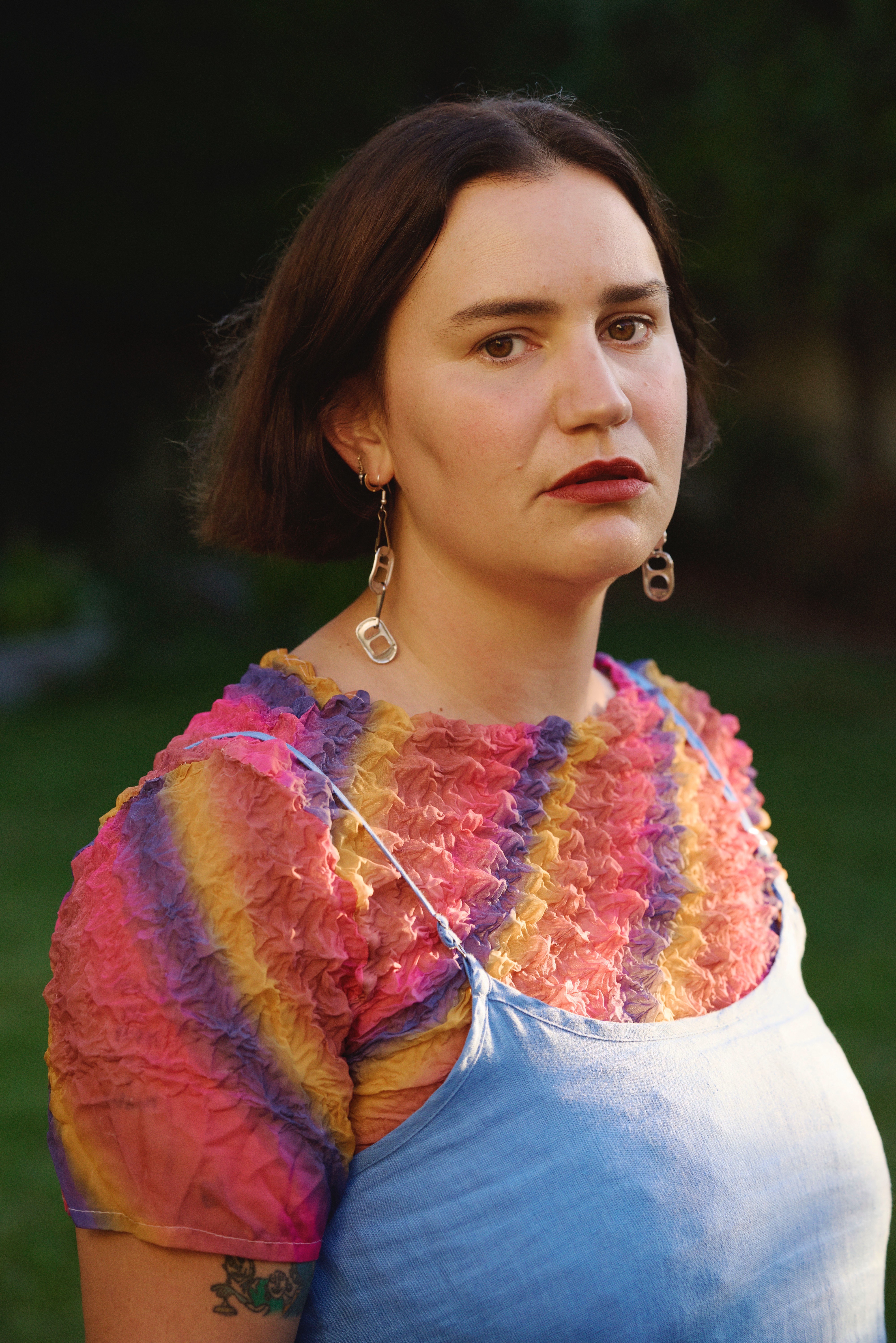
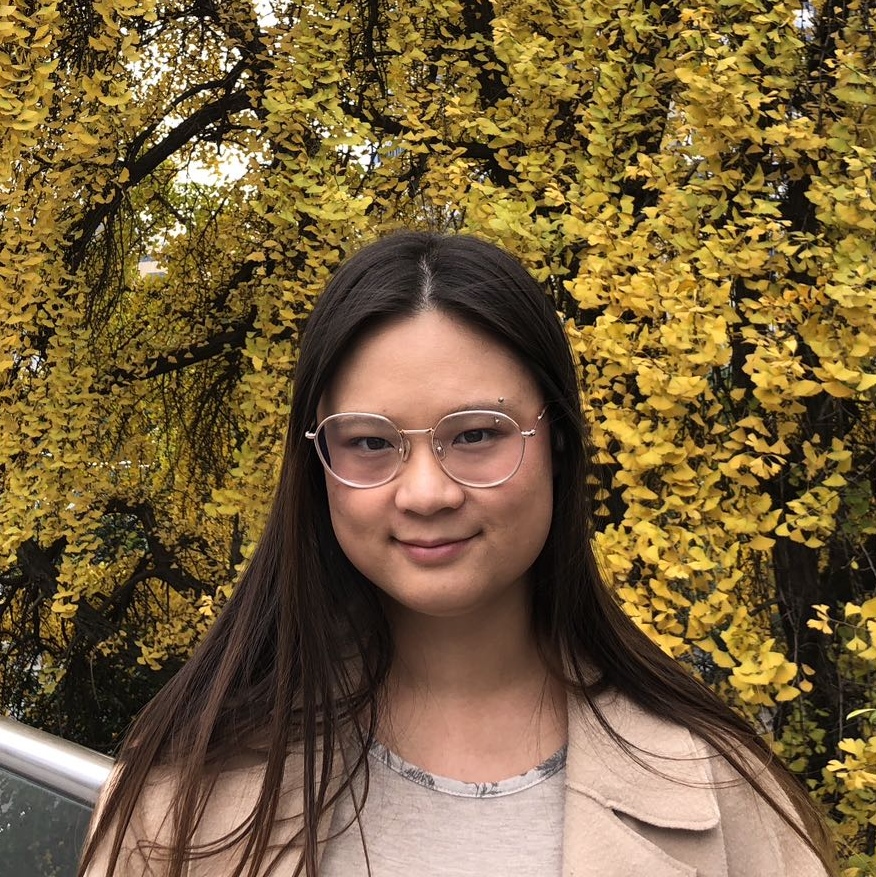
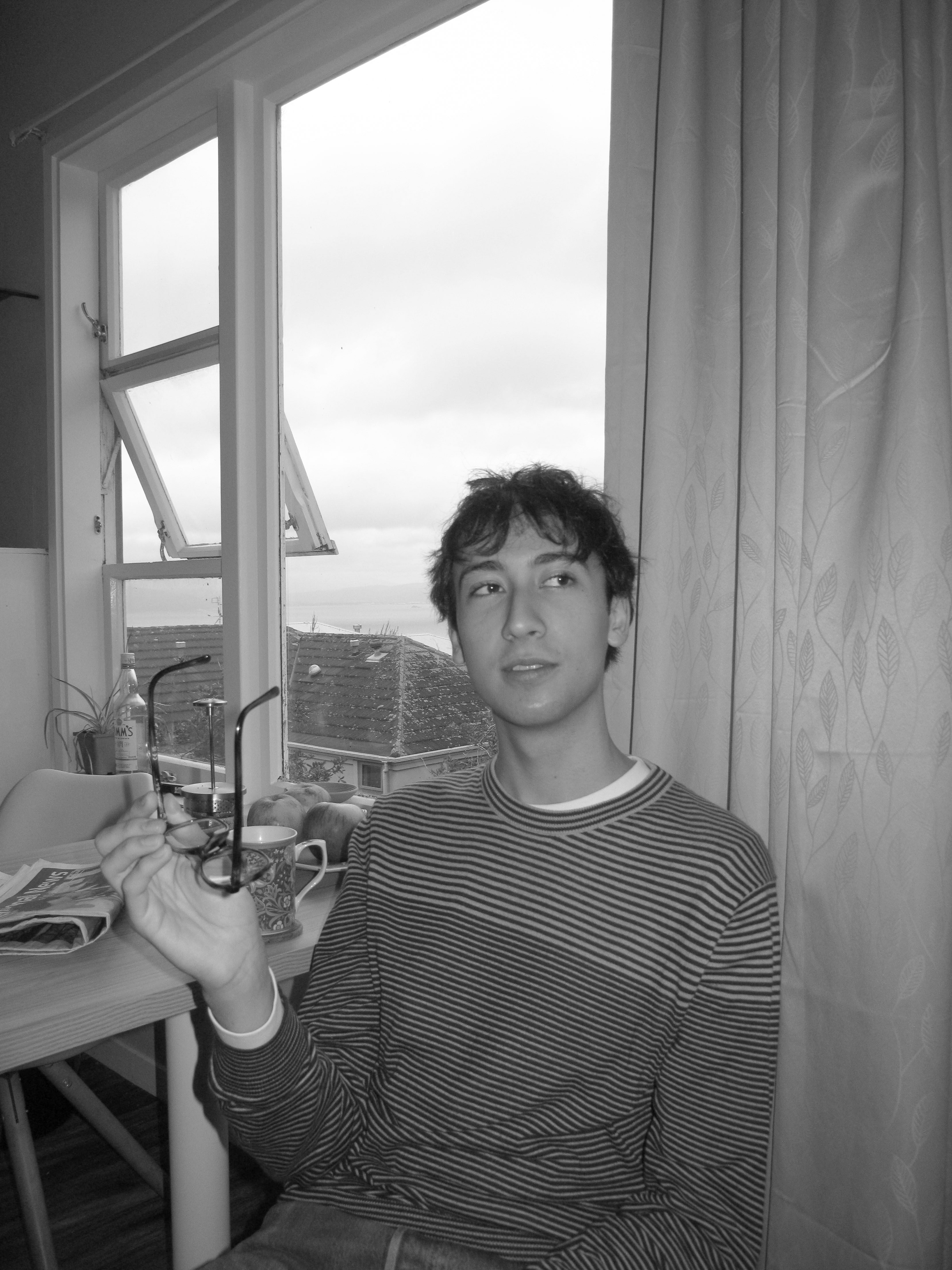
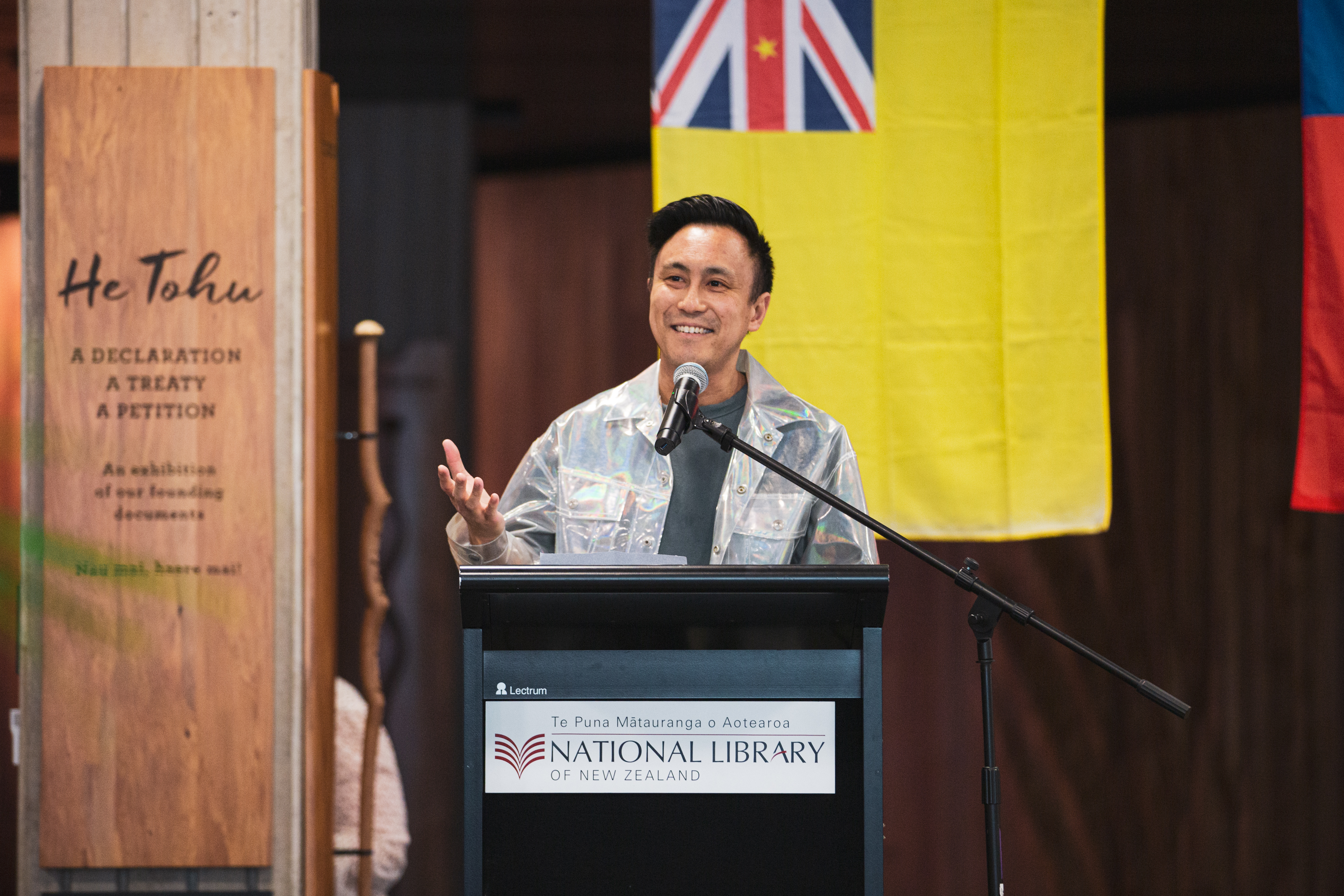
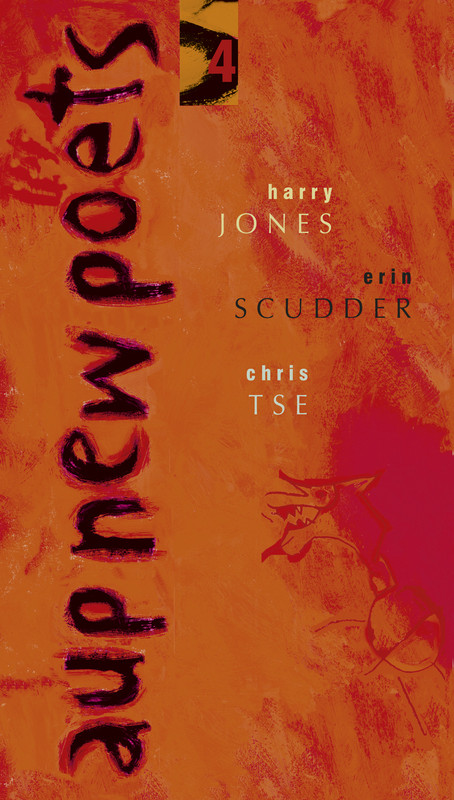
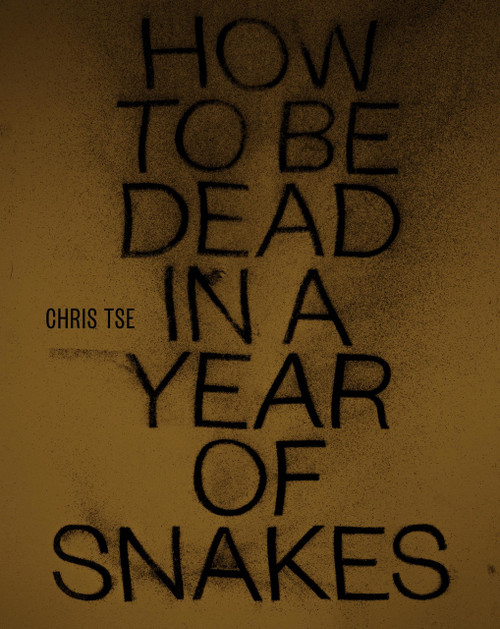
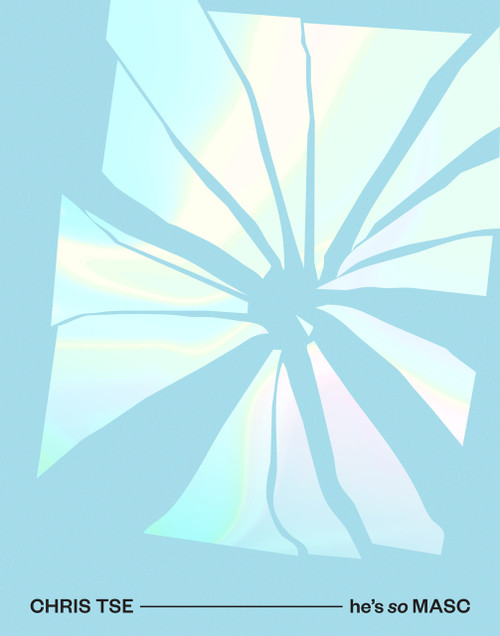
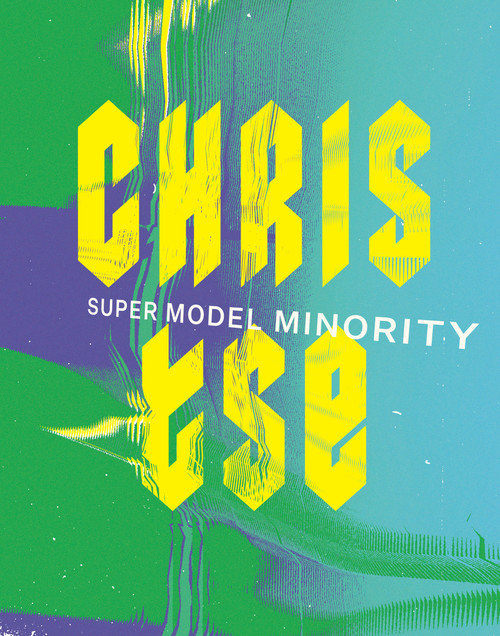

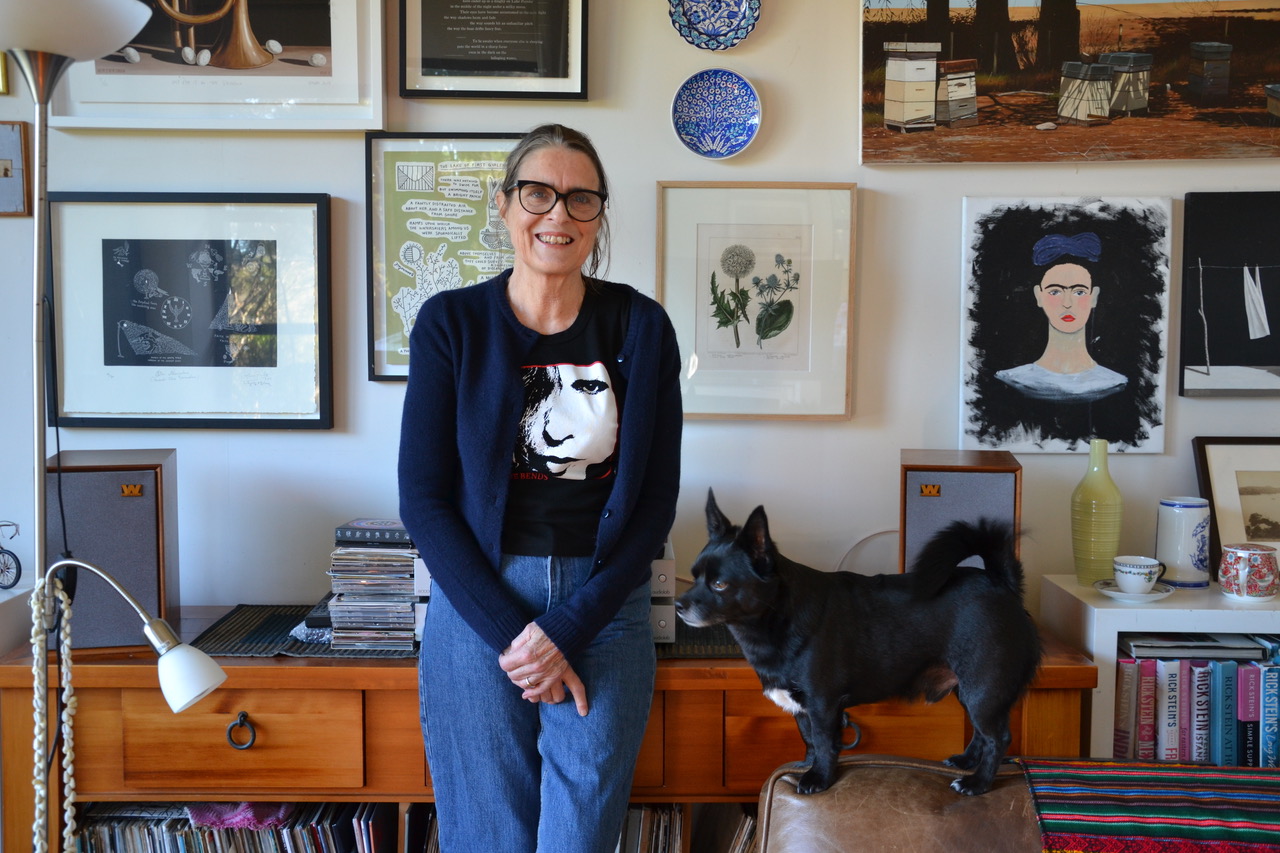


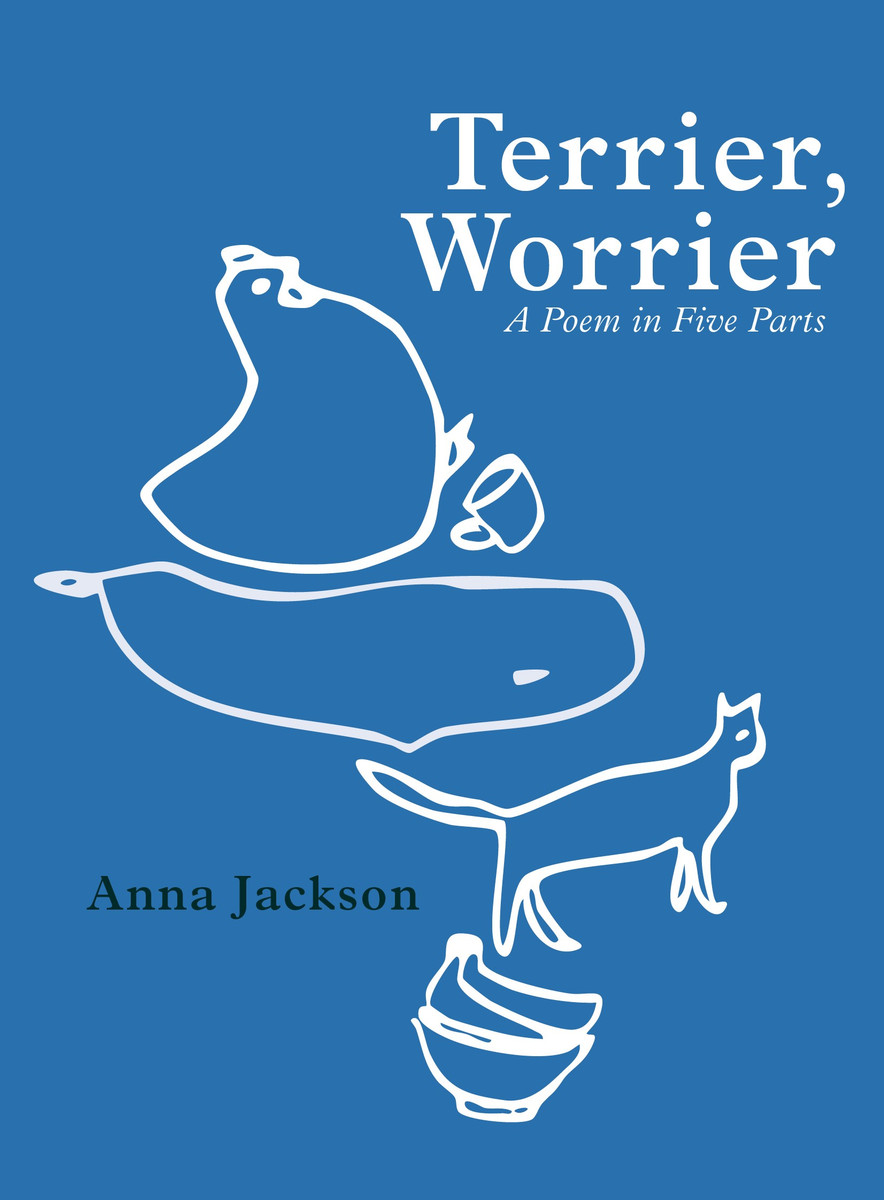
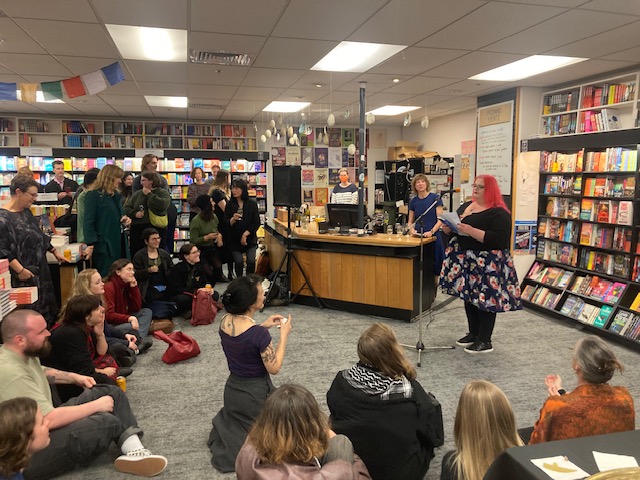
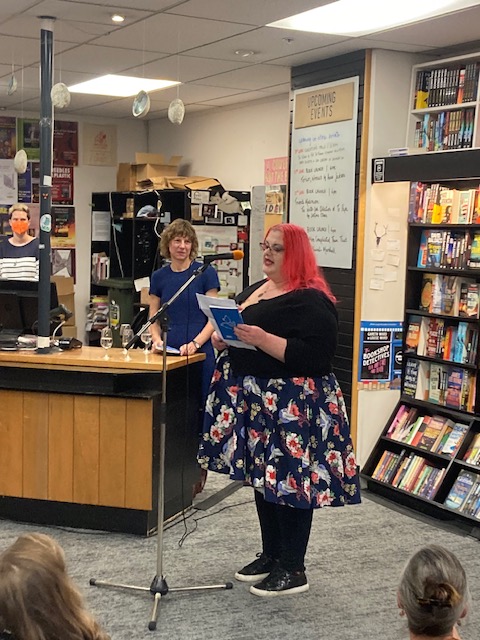
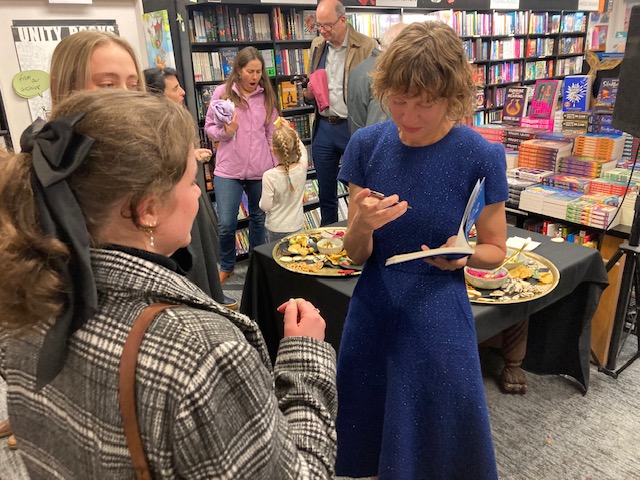

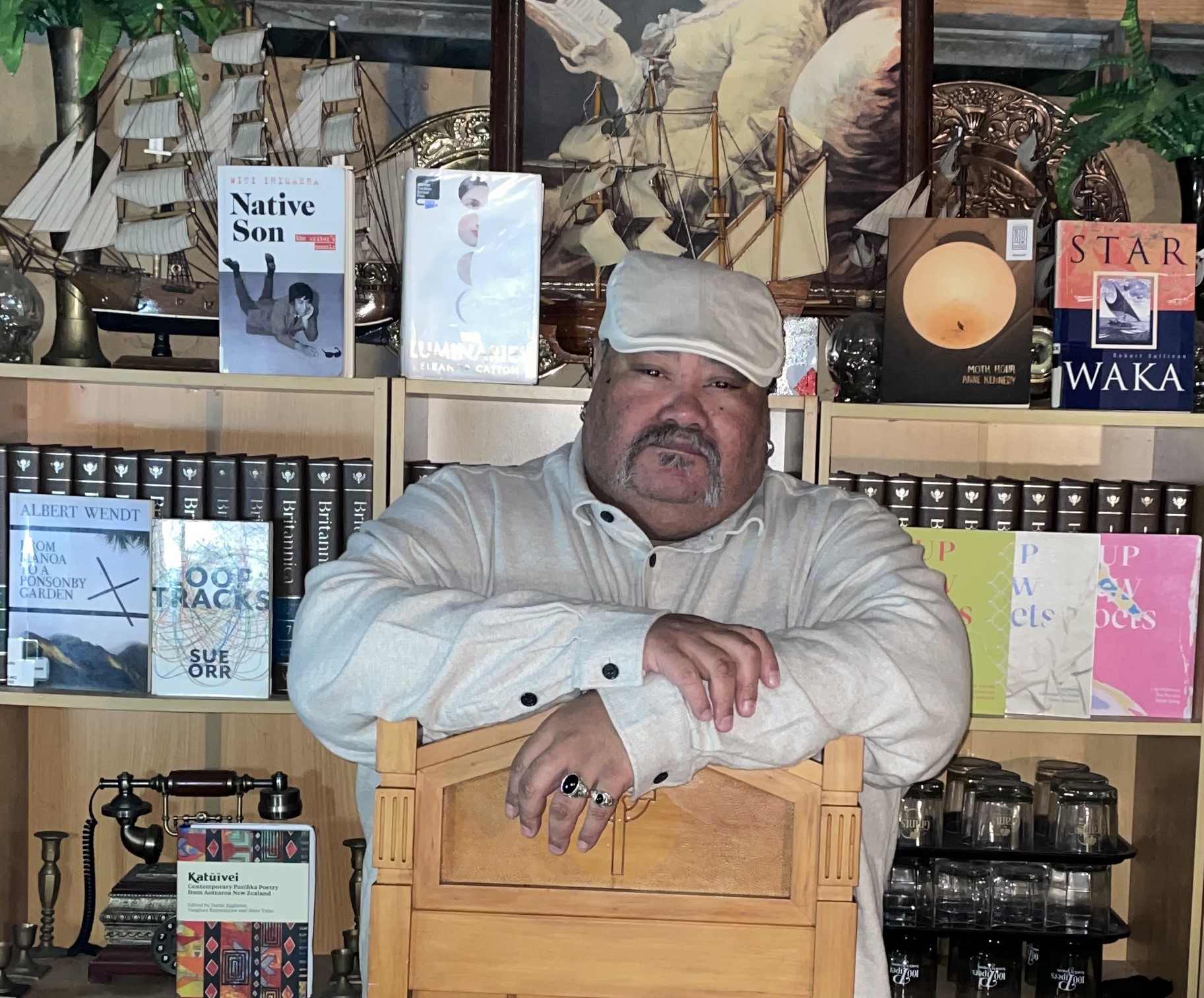
 NZ Poetry Shelf