Tag Archives: Kerrin P Sharpe

Poetry Shelf interviews Kerrin P Sharpe – I want the reader in my poems to be like a pilgrim

Kerrin P Sharpe-Poetry Shelf 2015    

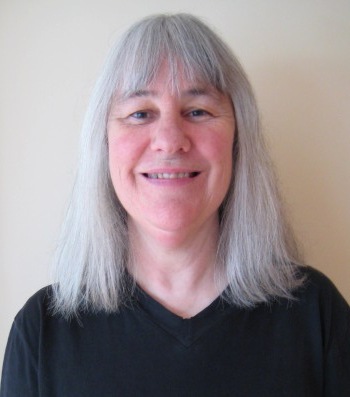
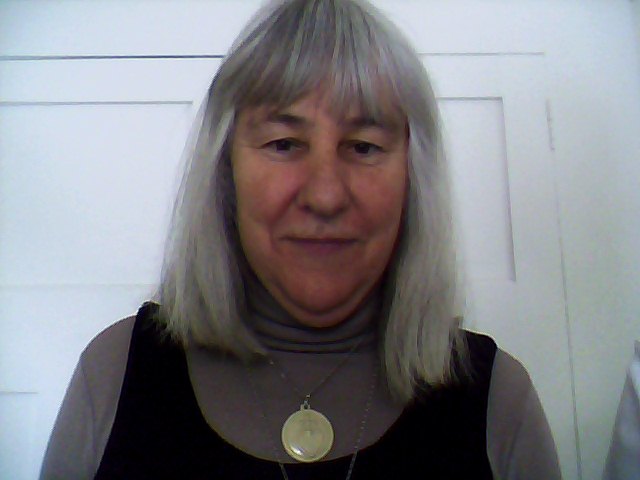
 Kerrin P Sharpe lives in Christchurch where she teaches Creative Writing in schools and at The Hagley Writers’ Institute. In 2008 she was awarded The New Zealand Post Creative Writing Teacher’s Award from the Institute of Modern Letters. She was a student in Bill Manhire’s original writing composition class at Victoria University in 1976. Last year, Victoria University Press launched There’s A Medical Name for This. Her previous collection with VUP was entitled Three Days in a Wishing Well (2012). I gave her latest poetry collection a glowing review earlier this year (link below) — it was one of my standout poetry reads of 2014.


Did your childhood shape you as a poet? What did you like to read? Did you write as a child? What else did you like to do?

As a child I was raised on a rich diet of fairy tales and Enid Blyton stories. I loved Noddy and Big Ears and the stories of the Far Away Tree which my father read to me at bed time. I wrote stories and won a few competitions at school. What else did I do? Like most children I loved riding my bike and helping my brothers build treehouses.


When you started writing poems, were there any poets in particular that you were drawn to (poems/poets as surrogate mentors)?

At Wellington Teachers’ College (as it was then) and at Victoria University I discovered the poetry of Sam Hunt, Gary McCormack and Bill Manhire and they introduced me to a whole new world of words and images that I loved. I was fortunate to be taught at Victoria by Bill Manhire: it was he in the end who was responsible for lighting the poetry writing fire in me. He encouraged what became a lifelong passion for poetry and creative writing and in a way he was and is my poetry writing “hero”. One of the funny, eccentric quirks that I developed around this time (and which my husband still reminds me of) was wearing a special black hat upside down when I was writing poetry. It seemed to work and I did it for many years!


I love the way your poems can be strange and slightly surreal in part but always lay anchors down in an acute realness. What are some key things for you when you write a poem?

When I write I try to ask myself:

  1. What is this poem trying really trying to tell me?
  2. What is the ‘right’ point of view for this poem?
  3. For me every poem has a “trigger”- some idea, story or image or suchlike that triggers the creative process and commences the creation and birth to a new poem. But there is also a point in writing one of my poems that I ask myself, “Is it time now to move on from the ‘trigger’? Where is the life of the poem taking me?”
 

medical_4_7_1__67194.1407673215.220.220   medical_4_7_1__67194.1407673215.220.220   medical_4_7_1__67194.1407673215.220.220   medical_4_7_1__67194.1407673215.220.220


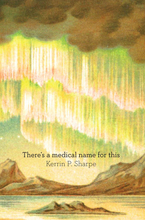
Your latest collection, There’s a Medical Name for This, contains a number of poems that astonished me. Not often I say this! In my review I suggested it wasn’t just a handful of poems that did so, and that it was ‘not in a flaming extravagant way, but in ways that are at more of an alluring whisper. These poems are imbued with little droplets of incident, image, tension.’ Is there a book that has astonished you like this?

Yes there is Anthony Doerr’s The Shell Collector which does just that every time I go back to it. It is a collection of short stories and I feel the characters are always waiting there on standby for me to re-enter their astonishing and enchanting world. All I have to do is to open the collection and read one of the stories and I am back in their world discovering new things I had never even noticed before. It’s wonderful!


Characters are important in these poems. I see them as an amalgam of invention and autobiography and yet more than that. They are shoes to be filled. What did you want the characters to do in the poems? Where did you draw them from?

I believe characters are central to the success of a poem. I keep reminding myself that they want to be heard but their role is always to show, to hint, to suggest, even to foreshadow but never to “tell” – and sometimes I forget that – to my peril!

Often the characters in my poems are drawn from my past, people I knew many years ago who remain alive in my imagination. Sometimes my characters come from people I have read about; sometimes from figures in history (often obscure people whose lives interest and intrigue me). I often write in restaurants and I hear fascinating snippets of conversations that soon pop into one of my poems. I also often meet the most interesting characters in places like MacDonald’s; I’m amazed at the variety of people who come in and the meetings they have there. There are some fascinating characters that I just can’t wait to slip into my poems. They always get changed in the poems of course with different overlays of imagination but the original characters are so interesting.


I finished my review with these words: To read these poems is to be a pilgrim – tasting the sweet and sour bite of the land, feeling the lure of travel and elsewhere, entering the space between here and there that is utterly mysterious, facing a terrific moment of epiphany. Would you agree that this is poetry of movement and that movement highlights both light and dark?

I am so pleased you picked up on the pilgrim motif in many of my poems. I want the reader in my poems to be like a pilgrim, journeying through light and darkness ending up in some curious way like the Godwit in one of my poems, in the place where they originally began their journey but all the richer in experiences from the pilgrimage.


Subject matter is eclectic in this collection (ponies, illness, birds, snow, familial relations). Are there motifs and topics you find yourself returning to, again and again?

I like to steal from myself both lines and motifs and even topics. Themes like injustice and war are important to me. I also find myself returning again and again to the sea, the stars and to the horse.


I particularly loved the earthquake poem at the start of the book. How have the earthquakes affected your life as a writer, your process of writing?

The Christchurch earthquakes were a frightening time for all of us who went through them. They never seemed to stop; one after shock after another. It made me feel so impermanent and I found myself driven for a time to write with great urgency, almost as if every moment was a last chance.


What do you want readers to take away from these new poems?

Sometimes I would like to know why someone walks into a bookshop, picks up my book and reads it. What are they looking for and what do they find when they read my poems?

For me, I would like my readers to take away images and lines from my poems that creep into their minds and suddenly emerge when they least expect it. I would like the images and lines they take from my poems to make important connections with their own lives.


Do you have filters at work as you write? A need to conceal for the sake of the poem and for the sake of self?

With me poems generally spring from an initial “trigger” that gets the creative process going. As I write I begin to fictionalise situations very early on and “flashes of truth” emerge in the poem. Sometimes, as I write, I reverse situations so that they are the opposite of what might initially have triggered the poem. I suppose in a way these are all filters that are at work when I am writing. Some of the filters are consciously applied; others are perhaps more instinctive.


Do you think it makes a difference when the pen is held by a woman?

Men and women often see things differently and no doubt their writing expresses this, but in writing, the differences between men and women in my experience are less significant to writing than the differences that arise from our own unique individual experiences of life.


I gave you a glowing review of your latest book. How do you manage reviews that aren’t so positive (if you have ever had any!)?

Sometimes I think my poetry is perhaps a little unconventional both in the things I write about and my style of writing. I’m a little difficult to pin down and categorise as a writer – perhaps I’m a little eccentric! So it doesn’t entirely surprise me if a reader or critic finds my poetry a little unusual. Generally however reviewers have been very kind to me and that has been very reassuring.


You have taught Creative Writing at a number of age levels. What rewards do you reap from this experience?

I love teaching creative writing and have taught all levels from young children through to adults. Some of my happiest writing experiences have been with young children; we can all be a little crazy and creative together and I find their freshness and freedom with words so exciting. They enter new worlds so easily and with so much trust in a way that only children can do.


I agree! What irks you in poetry?

Sometimes I read poetry that doesn’t seem to be saying anything. It is almost as if it has been written to a formula; it has no inner passion or feeling. Sometimes I also see poems that are too obviously modelled on someone else’s writing – they don’t feel authentic.


What delights you?

I like images in a poem that move, grow and develop as you read further into the poem developing greater layers of meaning and resonance and constantly delighting you as you uncover greater and lovelier insights. Sometimes there are lines in a poem that stand out for you and which you come back to over and over again; they resonate in your mind and you find yourself repeatedly quoting the lines to yourself. It reminds you again of the power of poetry to open the door to a rich inner life where things are different.


What poets have mattered to you over the past year? Some may have mattered as a reader and others may have been crucial in your development as a writer.

I keep coming back to poets like Bill Manhire, Bernadette Hall, Frankie McMillan, Vincent O’Sullivan, Sarah-Jane Barnett, Jenny Bornholdt and Siobhan Harvey. We have a lot of very good poets in New Zealand and many of them like the ones I have mentioned are so encouraging and supportive. Without them I would never have grown as a poet.


What New Zealand poets are you drawn to now?

Over the last year I have especially enjoyed new collections from Caoilinn Hughes, Marty Smith and Chris Tse.


Name three NZ poetry books that you have loved.

Three that spring to mind are:

Lifted by Bill Manhire

There Are No Horses in Heaven by Frankie McMillan

Your own book: Making Lists for Francis Hodgkins by Paula Green


What about poets from elsewhere?

I like:

Ruth Pradel – an English poet and academic who has a great gift for the analysis of poetry

Tomas Transtomer – A Swedish master I admire

Mary Ruefle – an American poet whose powerful imagery is outstanding

Ted Hughes – his interweaving of nature and poetry is still unsurpassed and his poetic craft is superb


Any other reading areas that matter to you?

I like reading about creative writing and how other writers go about writing poetry. I find it fascinating reading about their daily work routines, how they overcome “writing block”, what they think about the world of creative writing — in fact anything that gives me insights into the “secrets of the dark arts” of writing good poetry.

I have found Kevin Brophy’s Creative Writing and Richard Hugo’s Triggering Town two of the best books around and I keep coming back to them.


Some poets argue that there are no rules in poetry and all rules are to be broken. Do you agree? Do you have cardinal rules?

I must admit I regularly break most of the rules! I don’t use capital letters and rarely use formal punctuation. However there are some “rules” I still abide by. I am careful with words that end in “-ing”. I rarely use “but”. I am vigilant about line lengths and line breaks. I still believe that the purpose of a poem is to “show” not “tell”.


Do you find social media an entertaining and useful tool or white noise?

Much to everyone else’s frustration I have no interest whatsoever in social media and I don’t use technology unless I really have to. I continue to handwrite my poems with sharpened pencils and writing journals!


The constant mantra to be a better writer is to write, write, write and read read read. You also need to live! What activities enrich your writing life?

I’m happily married to my best friend and critic and we do a lot together. My four grown-up children and their lives and challenges are a huge part of my life. And of course my creative writing students bring joy and interest to each day.


Finally if you were to be trapped for hours (in a waiting room, on a mountain, inside on a rainy day) what poetry book would you read?

I always take Bill Manhire’s Selected Poems when I’m travelling or waiting somewhere. They keep me inspired and wanting to be a creative writer.


My review of There’s a Medical Name for This

Victoria University Press page


Kerrin P Sharpe’s There’s a Medical Name for This — It is an astonishing book that lurked in the undergrowth of my thoughts for months

medical_4_7_1__67194.1407673215.220.220   Snapshot_20121120_8


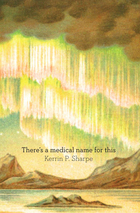
Kerrin P Sharpe There’s No Medical Name for This Victoria University Press, 2014


Last year I posted a poem from Kerrin P Sharpe’s new poetry collection, There’s a Medical Name for This. Finally, after all this time, I have picked up the book to reread and review. It is an astonishing book that lurked in the undergrowth of my thoughts for months with its sachets of strangeness, enigma, acute realness. Just casting your eye down the poem titles is poetry pleasure. Some collections house a poem or two that stand out, where the poet has transcended that which is good to become that which astonishes. In this book, I found countless examples that did that for me. Not in a flaming extravagant way but in ways that are at more of an alluring whisper. These poems are imbued with little droplets of incident, image, tension.

Near the start of the book, a miniature earthquake poem, whose perfect line breaks punctuate the modicum of detail, the deft phrasing (‘the basilica is a waltz of stone’) and the way the final stanza sings you back to the title (‘when gerry thinks of angels he hears their wings’).

Sometimes, oftentimes, the poems step into strangeness surrealness the point of becoming fable. There are no endnotes to provide author-led guy ropes into a poem so it is over to you where you step. ‘[T]here were stars behind him,’ a portrait of an elephant, shifts from an elephant in a photograph with Hemingway to ‘that year the elephant/ became a living lighthouse/ he wore a lamp/ and built a curved staircase.’ Magical. Or, in an even more captivating example (‘in the cart’), a mother, a pie cart, two hats and pastry come together in what might be a bedtime story, an heirloom anecdote, a housewifery lesson.

Rather than talk about what the poems are doing, I keep discovering snippets to share with you. The way the beginnings of the poems catch you by surprise: ‘every poem has a mother/ to feed his house/ the small bones of snow.’ Where to after such a glorious start? An equally glorious ending (I am withholding the middle!): ‘not even his mother// sews such small birds.’

Things aren’t stable in this collection. This becomes that and that becomes this as tropes shift and settle and then shift again. And so ‘a pine that is/ really the breeze/ a fish that is/ really a stone.’ Similes startle and invigorate the lines: ‘her thoughts in the thermal pools/ like fern wrapped sushi.’

These poems draw upon illness, fathers, mothers, sons, daughters, brothers, sisters, twins, snow, much snow, ponies, many ponies, birds and feathers. Whatever the subject matter, there is movement, and out of that movement vibrant, life.

Characters (pilgrims, farmers, surgeons, whistlers, gondoliers) stroll though the poems and it seems to me they wear whiffs of the poet, autobiographical traces, and yet they are more than that. Anyone can occupy these shoes that are like little shoe-stories that get handed down and then tried on for size. They are also, and so often, like fairy tales that take you out of the tedium of daily grind and familiarity and transport you to the magic and mystery of otherness and magical possibility. The poems might have a local genesis but they reach out beyond to the faraway, to Russia, rice plantations, Antarctica. Here or there, everything is in debt to place and that attachment to ‘where’ is one that makes the poems matter (‘the small farmer remains place faithful/ to the dell’). Characters become a way of circulating stories, those traces of anecdote, a forward tang to elsewhere (a turbine// turns my father’). The procession of pilgrims throughout is the poetic glue that tenders physical bearings to an uplift of wonderment. We get to be the pilgrims of the poems. We get to feel the gap, the connections, the arrival at arm’s length.

Some poems surprise in their shifting forms. ‘[S]on’ juxtaposes two definitions — the first stanza prosaic and dictionary-like, the second stanza exemplifying personal portrait as definition. The ‘half the story’ (I adore this poem!) is indeed half a story; it builds a list that builds narrative out of what you might call stream-of-conscious jump cuts.

You need a treasure box to store the adorable phrases and lines: ‘She carries him through the loom/ of fields’ ‘in the long legged darkness’ ‘the beachcomber/ keeps a button box/ a cross section/ of folded years’ ‘my father’s kitchen/ was older than eggs.’

This is a collection of exquisite variety, yet these poems are a snug fit as though for all their differences, they are meant to be together. As I read, my favourite poem was replaced by the one I was currently reading, and then again, and then again. To read these poems is to be a pilgrim – tasting the sweet and sour bite of the land, feeling the lure of travel and elsewhere, entering the space between here and there that is utterly mysterious, facing a terrific moment of epiphany.


VUP page


Sweet Mammalian #2 is sweet indeed – Where do I start? Every click comes up poetry trumps


The journal is here

Screen shot 2015-06-01 at 1.08.57 PM

Friday Poem: Kerrin P Sharpe’s ‘she gets these letters’ — Nouns swell with options

Snapshot_20121120_8          medical_4_7_1__67194.1407673215.140.215


she gets these letters


one moment there

is vodka at

a forest wedding

the next the last

breath of a gun


she watches defiance

secret army draws

a map of Poland

the sweep of ice

fills her throat


this is the plantation

her father was taken to

perhaps this is the pine

he walked towards


as if he spent

his mornings collecting

alpine specimens

and the snow he fell into

pages of white birds


©Kerrin P. Sharpe There’s a Medical Name for This  Victoria University Press, 2014

Author bio: Kerrin P. Sharpe’s first book three days in a wishing well was published by Victoria University Press in 2012. Her work appeared in Oxford Poets 13 (Carcanet). Another book, there’s a medical name for this was published August 2014 (VUP). A third collection rabbit rabbit is in progress with a grant from Creative New Zealand.

Author note: This poem began life after I had watched the movies Defiance and Secret Army. I began thinking about the huge significance of locations and how they are changed forever when terrible crimes have been committed there. This poem was published in the NZ Listener in 2014.

Note by Paula: What draws me to this poem is the enigma and the gap. Without the back story the possibilities are myriad whether as reader you step into shoes that are autobiographical, another persona or a mix of both. There is a jostling of meaning and effect between elements; from title to poem, night to day, life to death, vodka to the last breath of the gun. Nouns swell with options: vodka, forest, the map and the plantation are nouns of elsewhere. The understatement is striking. There is the ominous ring of ‘was taken’ that is amplified by the ‘chill of ice.’ The implications of ‘as if specimens’ seems to mask from what really took place. The final image in the last two lines is utterly potent. The white snow might stand in for the clean white page, the insistence of hope, the threat of war and violence and atrocity, and the magnetic pull of the prospect of peace. For me, the word ‘sweep’ leaps out not just for the ear but semantic rewards (a clean sweep, the expanse of the scene, clearing history, fresh beginnings). This is a haunting poem. Yes, it makes a difference when you know the back story but the gaps are still profound.

Victoria University Press page
Poetry books I have enjoyed in the past year 1/2


As promised, I am launching this blog with a taste of some of the books I have enjoyed in the past year (it is coming in three parts). Part three I am linking to two books I reviewed in The  Herald.

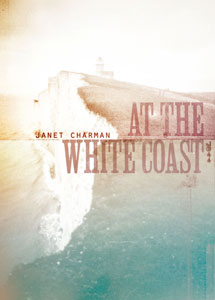
Janet Charman At the White Coast Auckland University Press 2012

cp-at-the-white-coast  cp-at-the-white-coast

An award winning poet, Janet Charman’s new collection is dedicated to her grandmothers and this book does seem like a gift for women. At The White Coast is a collection of travel poems – here, abroad and through the past, whether invented or true. Charman’s continual flair with words translates into enviable lines, sweet rhythms, elastic syntax, experience rendered into economical delights. She moves from bedsits to ferry stops, from trains to social work, from picket lines to boyfriends, from girlfriends to spaghetti-authentico (‘always in besidedness/ more than a couple’). Or ‘i think/ before sailing into orchard and paddock/ she had the breathless crush of metropolis’. This is my favourite Charman book to date – the poems are both moving and marvellous.

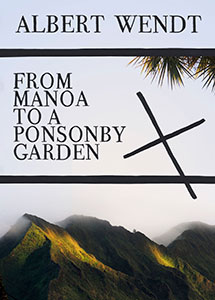
Albert Wendt From Mãnoa to a Ponsonby Garden Auckland University Press 2012

cp-from-manoa-to-a-ponsonby-garden  cp-from-manoa-to-a-ponsonby-garden

Albert Wendt’s latest collection, From Mãnoa to a Ponsonby Garden, is a joy to read. The poems reach out into the stretch of the Pacific with their heart very much in the present. They navigate birthdays, love, death and growth. The terrific sequence of garden poems is like a memoir or diary in the form of a garden narrative; the flowers, the vegetables, the family, the generations, the life cycles are hued with tenderness, vulnerability, strength, humour, wisdom. The love that the poet feels for his partner, Reina, is a poetic drumbeat –essential, moving, steady. These poems come out of quietness, contemplation, experience. Our poetic elder has delivered a masterpiece.

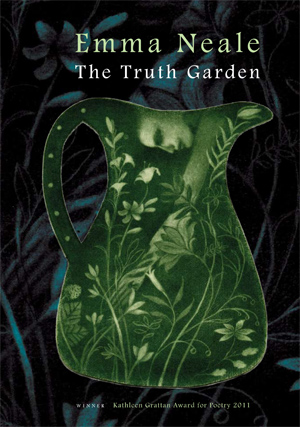
Emma Neale The Truth Garden Otago University Press 2012

Neale 2-1 Neale 2-1

Emma Neale’s collection, The Truth Garden, deservedly won the Kathleen Grattan Award for Poetry in 2011. The book features an exquisite cover image by Kathryn Madill, but I found the small, tight font didn’t do justice to the poems. If Neale’s poetry were a tapestry it would be cast in rich threads – luminous phrases catch your eye repeatedly and make you linger. Poems carry you through family, rivers, cycling, time, night, dreams and musings with tenderness, attentiveness and imagination (‘Night, and the study window burns/ not like a beacon, but as if to warn/ late travellers from some hidden reef/ of thought’). Or ‘how to stockpile time, how hoard its shine/ when time is the very stuff that seeps inside us.’ There is a magnificent sestina on fidelity that, with its repeating rhymes, echoes the tidal flux of trust and love.

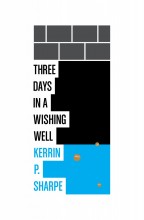
Kerrin P Sharpe Three Days in a Wishing Well Victoria University Press 2012

wishingwell300dpi__97252.1351543335.220.220 wishingwell300dpi__97252.1351543335.220.220  wishingwell300dpi__97252.1351543335.220.220

Kerrin P Sharpe was awarded the New Zealand Post Creative Writing Teacher’s Award in 2008, and now this Christchurch-based writer has released her first poetry collection, Three Days in a Wishing Well. It was one of my top debuts for 2012. Sharpe brings a raft of poetic tools into marvellous play: economy, rhyme, omission, mystery. Reality corkscrews in a fairytale like manner; subjects range wide from hats to monks, from mother to father, from lighthouse keeper to sewing needles. Each poem is utterly flavoursome as it combines music, anecdote and emotional lift: ‘to hug my father was/ to know the sky: the/ voices of soldiers the/ families that squeezed/ him inside.’ Stunning.

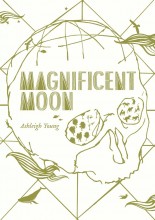
Ashleigh Young Magnificent Moon Victoria University Press 2012

magnificentmoon300dpi__43800.1351470952.220.220  magnificentmoon300dpi__43800.1351470952.220.220  magnificentmoon300dpi__43800.1351470952.220.220

Ashleigh Young, winner of the Landfall Essay Competition, also has a debut collection out (Magnificent Moon). Her poems bring together anecdote, an everyday that is off beat, stretching metaphors, gorgeous rhyme, swooping anecdote and the best found poem I have read in awhile (Buttons). For me it is a vibrant collection, and enough poems stand out to make it stick and flag this writer as one to watch.


James Brown Warm Auditorium Victoria University Press 2012

warmauditorium300dpi__87807.1351542581.220.220  warmauditorium300dpi__87807.1351542581.220.220  warmauditorium300dpi__87807.1351542581.220.220

James Brown lets you into his workspace in his new collection (Warm Auditorium). It’s a great title that stands in for poetry if not life — his auditorium is packed with people, ideas, talk, wit, confession, story, aphorisms, provocations, warmth, sidetracks, playfulness. Brown likes to make things up, break rules, move you, challenge you, divert you. His poetry is so good you want to linger in the dark reading space and lean in towards the light and lift of his lines. As he says: ‘poetry/was running round my head like marbles over linoleum.’

Jeffrey Paparoa Holman Shaken Down 6.3 Canterbury University Press 2012

shakendownmed  shakendownmed  shakendownmed

Jeffrey Paparoa Holman, like Fiona Farrell, has responded to Christchurch’s earthquakes in writing. His thoughtful endnote considers whether poems have any worth in the aftermath of catastrophe. He suggests that ‘a poem can send us back out into this troubled and marvellous world prepared to live more fully.’ A big claim, but his new collection, Shaken Down 6.3, does just that. These fine, troubling, beautiful poems are a window for us all. The photographs are a bonus.