Tag Archives: Jeffrey Paparoa Holman

On the Shelf in October: Poetry Picks by Jeffrey Paparoa Holman, Hera Bird and Paula Green

Jeffrey Paparoa Holman

A poet I have become almost evangelical in promoting since discovering his work in a Paris Review interview in 2005 is the late Jack Gilbert (1925-2012). His Collected Poems (Knopf, 2012) includes The Great Fires (1982), the first of his books I bought, with one of his signature poems, Steel Guitars which ends “The heart in its plenty hammered/by rain and need, by the weight of what momentarily is”. This book is the harvest of a brave life lived deep in poetry; his work impelled me to seek him out on a visit to California, making it literally days before he died on 13 November 2012. This is what I wrote of that visit:

Jack Gilbert: Trying To Have Something Left Over.


I feel in the same way about Gilbert as I did when I came across Pablo Neruda in 1971 – here was a world I could inhabit without exhausting its gifts.

My local love of recent times has been John Pule’s wonderful The Bond of Time (Canterbury University Press, 2014). I was invited to write an introduction and spoke there of “a net of words across the Pacific”, which hardly does this remarkable and precocious epic justice. Pule was only twenty one when he composed the poem in 1985 and this is its third richly deserved appearance. Unique and essential.

Jeffrey Paparoa Holman writes poetry and non-fiction and the occasional Paparoa blog post on WordPress. He is presently working on a memoir, ‘Burning The Libraries’ and another history project to do with German family connections in the Nazi era.


Hera Bird

I never could muster much enthusiasm for the war poets, possibly because most of what we studied in secondary school was from the British canon, which I never fell in love with, and there are only so many tender battlefield reminiscences about the distant fields of the mother country you can read before returning to the New York School for a stiff drink. But I’ve recently discovered Dunstan Thompson, a gay American war poet who faded into obscurity after returning from WWII, taking up Catholicism & renouncing homosexuality. His earlier work is hard to find (although there is a selection of his later, religious poems available online) but his poetry has been criticized for inconsistency – moments of brilliance flaring into tepid endings. But read “Lament for the Sleepwalker” and tell me the half doesn’t overcome the whole:

An excerpt:

I am chilled, as though a star

Of mobs and children came by traitor’s gate

And climbed the water stair to break his neck

On the axe king’s block, all in winter sunshine.

His brain in ice, his guts in melting jelly,

As barefoot fellow bound for high-heel gallows,

Peer of the Presence like a spaniel licks

Cracked lips to ease his vomit back; then stumbles

On the ladder going up to hell.

Dunstan Thompson ‘The Prince, His Madness, He Raves at Mirrors’ in On the Life and Work of a Lost American Master D.A Powell (Pleiades Press, 2010)

The other poet whose work I’m really excited about is Danez Smith, whose book ‘[insert] Boy’ is forthcoming from YesYes Books. Danez Smith is an amazing slam poet from the states whose work I’ve been seeing reposted a lot on the internet  in response to the recent Ferguson shooting, particularly this poem ‘alternate names for black boys.’ Until his book comes out, I’ve been reading bits and pieces from his website:

an excerpt from ‘alternate names for black boys’

  1. smoke above the burning bush
  2. archnemesis of summer night
  3. first son of soil
  4. coal awaiting spark & wind
  5. guilty until proven dead


Paula Green

I know I review books on the blog ( I will be having quite a flurry after my Hot Spot Poetry Tour I promise!), but I just wanted to flag this as it stuck with me. Sugar Magnolia Wilson’s Pen Pal published by Cats and Spaghetti Press earlier this year. It is not so much a book as a paper-fold-out that tucks in your bag and can very neatly fold and unfold in waiting rooms. The poems themselves are letters that fold into poems and poems that fold into letters. I love the idea of the shadowy figure to whom the letters are addressed, unreachable, yet gaining in presence in the light of what the writer chooses to reveal. The letters are surprising. ‘I’ve only just started/ witchcraft so this letter/ includes some hairs.’  The hidden fold may be of magic spells as though these poems are talismans or charms that work some kind of subterranean effect upon you as you read. I love the flashes of anecdote (‘Did I tell you/ in July a meteorite fell?’ whether true or false). Every poem seems off-centre, quirky, surprising, reverberating (‘Yesterday I carried my grief tree/ down to the mailbox/ to be milled by a letter’). The letter-poem-spells come out of a childhood, a mum and a dad, with hurt and ache and back-yard digging. I highly recommend tucking it in your bag to unfold and refold and let the spells take hold.

I write to you from

the witching hour.


He is out in the night

calling to his garden –


he is a big-hearted grasshopper

licked over by the long, red

tongue of sadness.
 

1981892_287549788068665_2082679686_n

Poetry books I have enjoyed in the past year 1/2


As promised, I am launching this blog with a taste of some of the books I have enjoyed in the past year (it is coming in three parts). Part three I am linking to two books I reviewed in The  Herald.

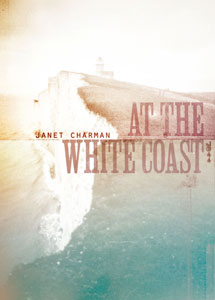
Janet Charman At the White Coast Auckland University Press 2012

cp-at-the-white-coast  cp-at-the-white-coast

An award winning poet, Janet Charman’s new collection is dedicated to her grandmothers and this book does seem like a gift for women. At The White Coast is a collection of travel poems – here, abroad and through the past, whether invented or true. Charman’s continual flair with words translates into enviable lines, sweet rhythms, elastic syntax, experience rendered into economical delights. She moves from bedsits to ferry stops, from trains to social work, from picket lines to boyfriends, from girlfriends to spaghetti-authentico (‘always in besidedness/ more than a couple’). Or ‘i think/ before sailing into orchard and paddock/ she had the breathless crush of metropolis’. This is my favourite Charman book to date – the poems are both moving and marvellous.

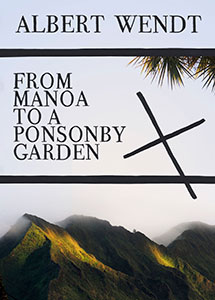
Albert Wendt From Mãnoa to a Ponsonby Garden Auckland University Press 2012

cp-from-manoa-to-a-ponsonby-garden  cp-from-manoa-to-a-ponsonby-garden

Albert Wendt’s latest collection, From Mãnoa to a Ponsonby Garden, is a joy to read. The poems reach out into the stretch of the Pacific with their heart very much in the present. They navigate birthdays, love, death and growth. The terrific sequence of garden poems is like a memoir or diary in the form of a garden narrative; the flowers, the vegetables, the family, the generations, the life cycles are hued with tenderness, vulnerability, strength, humour, wisdom. The love that the poet feels for his partner, Reina, is a poetic drumbeat –essential, moving, steady. These poems come out of quietness, contemplation, experience. Our poetic elder has delivered a masterpiece.

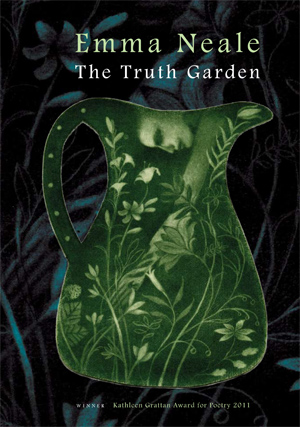
Emma Neale The Truth Garden Otago University Press 2012

Neale 2-1 Neale 2-1

Emma Neale’s collection, The Truth Garden, deservedly won the Kathleen Grattan Award for Poetry in 2011. The book features an exquisite cover image by Kathryn Madill, but I found the small, tight font didn’t do justice to the poems. If Neale’s poetry were a tapestry it would be cast in rich threads – luminous phrases catch your eye repeatedly and make you linger. Poems carry you through family, rivers, cycling, time, night, dreams and musings with tenderness, attentiveness and imagination (‘Night, and the study window burns/ not like a beacon, but as if to warn/ late travellers from some hidden reef/ of thought’). Or ‘how to stockpile time, how hoard its shine/ when time is the very stuff that seeps inside us.’ There is a magnificent sestina on fidelity that, with its repeating rhymes, echoes the tidal flux of trust and love.

Kerrin P Sharpe Three Days in a Wishing Well Victoria University Press 2012

wishingwell300dpi__97252.1351543335.220.220 wishingwell300dpi__97252.1351543335.220.220  wishingwell300dpi__97252.1351543335.220.220

Kerrin P Sharpe was awarded the New Zealand Post Creative Writing Teacher’s Award in 2008, and now this Christchurch-based writer has released her first poetry collection, Three Days in a Wishing Well. It was one of my top debuts for 2012. Sharpe brings a raft of poetic tools into marvellous play: economy, rhyme, omission, mystery. Reality corkscrews in a fairytale like manner; subjects range wide from hats to monks, from mother to father, from lighthouse keeper to sewing needles. Each poem is utterly flavoursome as it combines music, anecdote and emotional lift: ‘to hug my father was/ to know the sky: the/ voices of soldiers the/ families that squeezed/ him inside.’ Stunning.

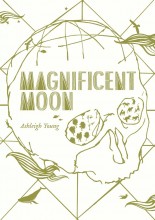
Ashleigh Young Magnificent Moon Victoria University Press 2012

magnificentmoon300dpi__43800.1351470952.220.220  magnificentmoon300dpi__43800.1351470952.220.220  magnificentmoon300dpi__43800.1351470952.220.220

Ashleigh Young, winner of the Landfall Essay Competition, also has a debut collection out (Magnificent Moon). Her poems bring together anecdote, an everyday that is off beat, stretching metaphors, gorgeous rhyme, swooping anecdote and the best found poem I have read in awhile (Buttons). For me it is a vibrant collection, and enough poems stand out to make it stick and flag this writer as one to watch.


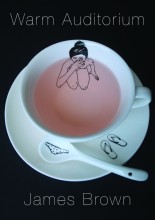
James Brown Warm Auditorium Victoria University Press 2012

warmauditorium300dpi__87807.1351542581.220.220  warmauditorium300dpi__87807.1351542581.220.220  warmauditorium300dpi__87807.1351542581.220.220

James Brown lets you into his workspace in his new collection (Warm Auditorium). It’s a great title that stands in for poetry if not life — his auditorium is packed with people, ideas, talk, wit, confession, story, aphorisms, provocations, warmth, sidetracks, playfulness. Brown likes to make things up, break rules, move you, challenge you, divert you. His poetry is so good you want to linger in the dark reading space and lean in towards the light and lift of his lines. As he says: ‘poetry/was running round my head like marbles over linoleum.’

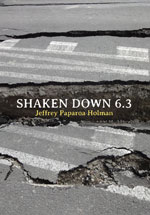
Jeffrey Paparoa Holman Shaken Down 6.3 Canterbury University Press 2012

shakendownmed  shakendownmed  shakendownmed

Jeffrey Paparoa Holman, like Fiona Farrell, has responded to Christchurch’s earthquakes in writing. His thoughtful endnote considers whether poems have any worth in the aftermath of catastrophe. He suggests that ‘a poem can send us back out into this troubled and marvellous world prepared to live more fully.’ A big claim, but his new collection, Shaken Down 6.3, does just that. These fine, troubling, beautiful poems are a window for us all. The photographs are a bonus.