Tag Archives: books

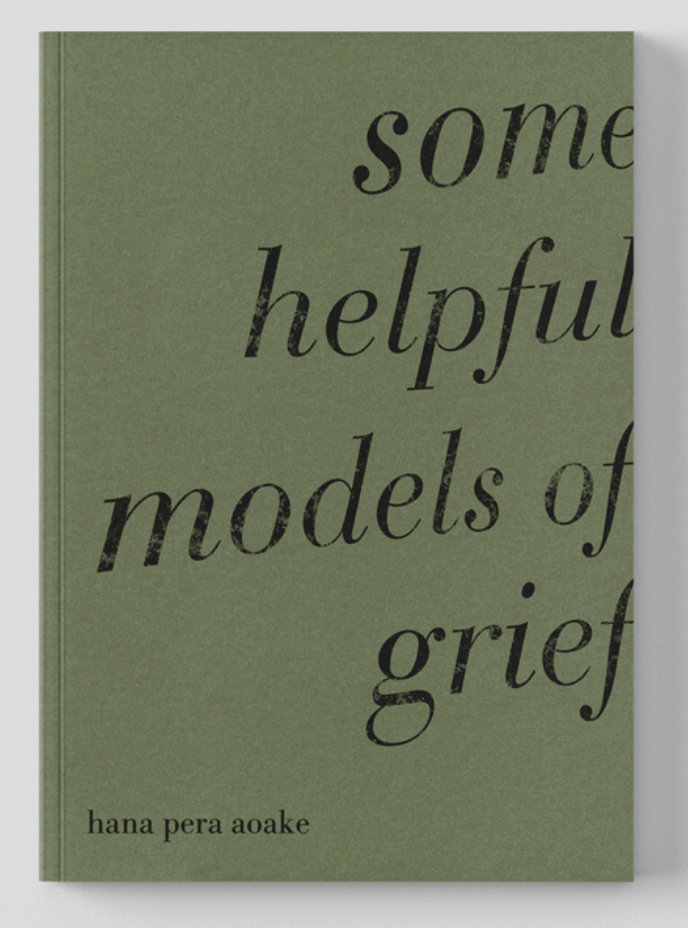
Poetry Shelf reading and review: some helpful models of grief by Hana Pera Aoake

some helpful models of grief, Hana Pera Aoake
Illustrations by Priscilla Rose Howe
Compound Press, 2025

“I stayed up all night and blistered my hands braiding muka into a
rope to slow the sun down just for you.”

Rhythm. I begin with rhythm as I read and slowly reflect upon Hana Pera Aoake’s poetry collection, some helpful models of grief. The rhythm of the line, the rhythm building across the arm-stretch of a poetic sequence. Think heart beat. Think the shifting rhythms of life, illness, love, death. The rhythms of thoughts flooding, speaking to loved ones, sons and daughters. The rhythm that builds as poet puts pen to page, and it is sweet and sharp and sour, these currents of anxiety, epiphany, recognition, searching.

And when I listen to the rhythm, the words spilling and coiling and arching and arcing, I am absorbing the poetry so very deeply.

Here is poetry that moves hand-in-hand with grief, with the sharp and soft edges of desire, aroha, body intimacy, wound, self repair.

“You say you feel understood and that my love of art reminds you why
it matters, but I feel like moss drying in the sun ripped from the moss.”

Here is poetry that navigates and holds close the power and magnetic pull of creating art, beyond and inside the smash of doubt, I too am body struck by Rothko, ache with myriad doubt, and am drawn to the garden, where we might fling our art to burn, and then feed the garden pumpkins with the ash. Ah. The garden, with its ongoing visibility and necessities, might be the fertile earth in which Hana’s poetry is planted. Ah the stories that precede and shape us, whether familiar, inherited, whether myths and legends. And then this: “I think of Martha Stewart saying that if you make a garden you have / a friend for life.”

Here is poetry that interlaces the personal and the political, how can it not in this spiky wounded world. We are standing next to the tourist in Iceland scooping moss that takes hundreds of years to regrow. We are holding Gaza. Grieving. And I am stilled and stalled before the pyramid poem that speaks of our founding document written in te reo Mฤori but signed in translation, those stolen lands, that stifled language, and pyramid poem becomes precious cloak on the page, with its origins, and vital and connecting stitching.

Here is poetry of echo and return. And it’s yes to poetry as echo and return, as the poems luminate past, present and future. The moss a recurring physical political eco marker that activates our senses, touch and smell and sight, that might build a tower of metaphors as we read, with its beauty and function and fragility and presence. Think life. Think nurture. Think care.

And here is poetry that speaks to you, the shifting me I we they you.

This is a sequence, a chronicle that draws upon the words and ideas of multiple writers and thinkers, including Moana Jackson, Keri Hulme, Talia Marshall, Fleur Adcock, Plato, Louise Glรผck, Roland Bathes, Annie Ernaux, Samuel Beckett, Homer, Andrei Tarkovsky, Kathy Acker, Stephen Fry, Freud, Shakespeare, Langston Hughes, Sylvia Plath, Autumn Royal.

And here I am back to the notions of rhythm – so deeply fertilised with experience and invention, with the literal and the figurative, with how poetry is sweet and succulent on our tongues, our speaking tongues, sweet and succulent in our ears, our listening ears, sweet and succulent in our hearts, our feeling hearts. And yes sour and savoury. These rhythms, movements, chronicles. This gift. This book. This poetry.

“I saw the Te Rakanui moon still bright this morning and wondered
whether you could see it in the city. By the time went outside
everything was covered in fog and there was ice on the moss.”

the reading
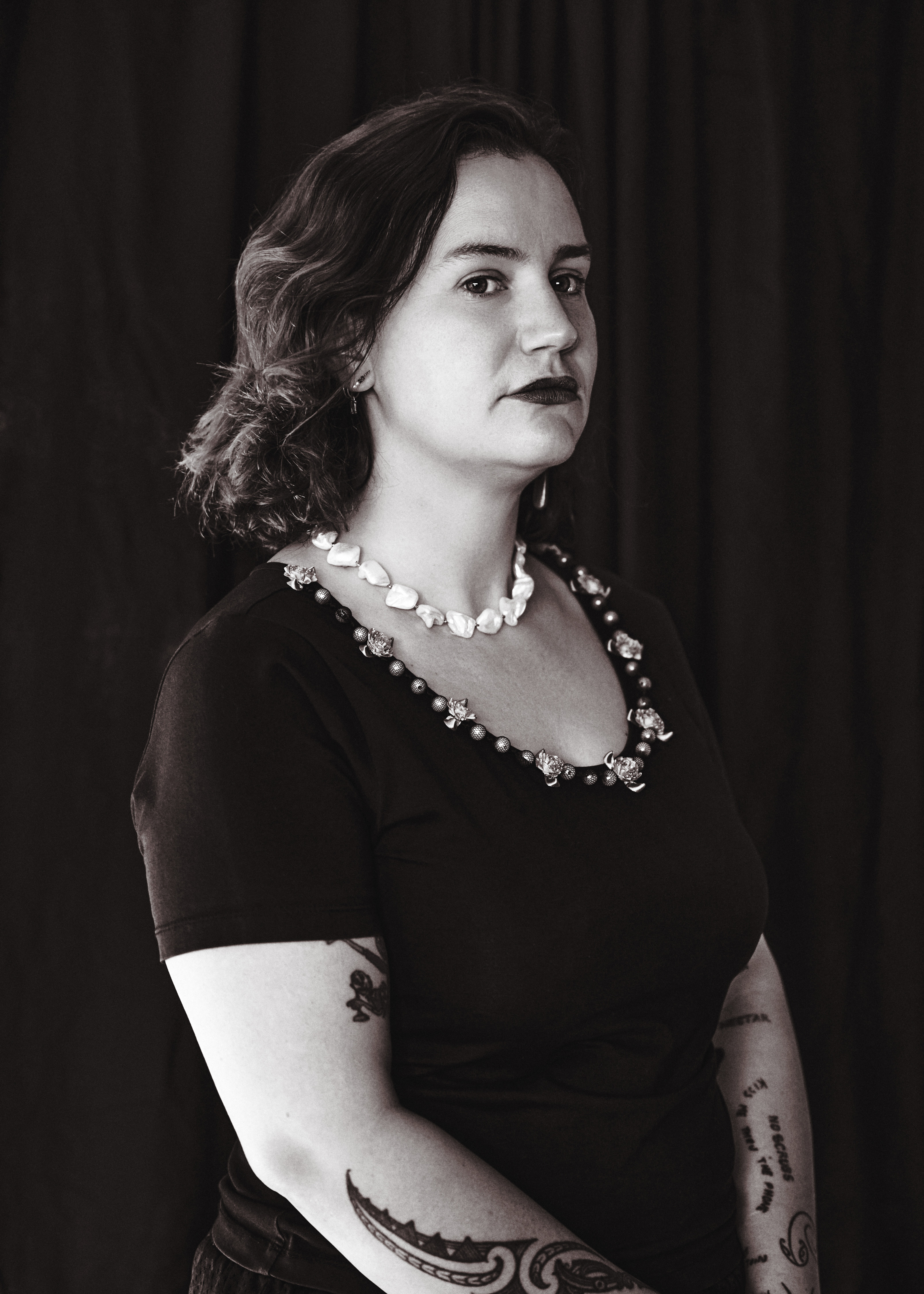
Photo credit: Frances Carter

Hana reads from some helpful models of grief

Hana Pera Aoake (Ngฤti Hinerangi, Ngฤti Mahuta, Waikato/Tainui is an artist, writer, and sweaty milf living at the foot of Pลซtauaki maunga. Hana has published three books, including a bathful of kawakawa and hot water (2020), Blame it on the rain (2025) with no more poetry (Australia) and Some helpful models of grief (2025). They are also working on a fourth book of essays, how to be with Discipline (Australia). Hana is a PhD candidate at the Auckland University of Technology.

Compound Press page
Poetry Shelf review: Dinah Hawken

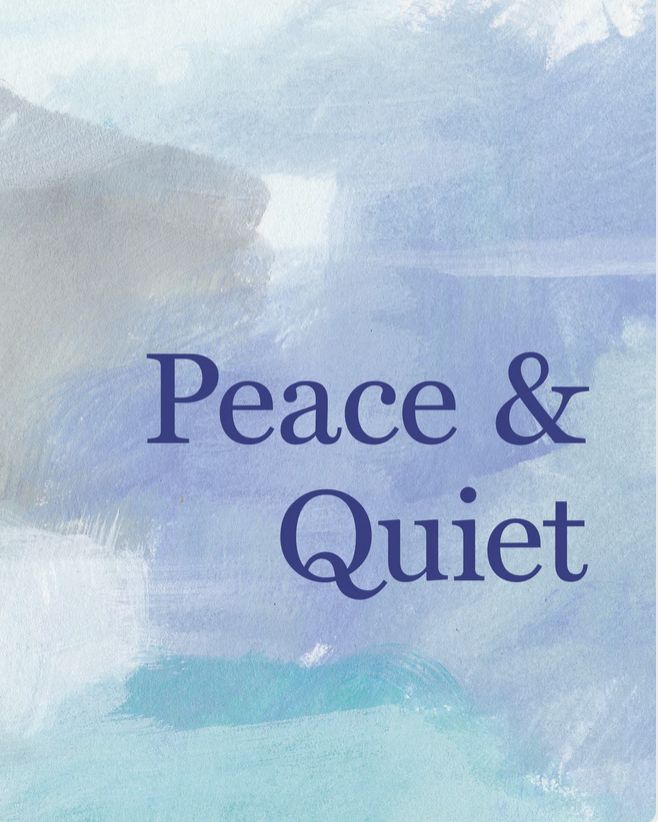
Peace & Quiet, Dinah Hawken
Te Herenga Waka University Press, 2026
cover: Kelly O’Shanessy

Today

turns ashen. The old men are waiting
to drive from the first tee. The poets are waiting
to hit the right note even through
a war and pandemic- in the same warm air –
permit no lyricism and no bright ideas.
A wave comes in. The wind stirs.
How casually we used to fit
into our endless lives.

Dinah Hawken

Dinah Hawken’s new poetry collection, Peace and Quiet, offers a compelling reading retreat, an extended version of Poetry Shelf’s Breathing Room, where you take time out from daily routine and news feeds and jagged edges, and breathe in the joy and delight and skin tingling rewards of poetry. Yet Dinah’s intricate collection is also deeply aware of people and planet issues that we are facing navigating challenging .

We begin in a room, waiting listening waiting, a dark room, mysterious, senses on alert, and this poem, this is poetry where everything, every line and every lithe word sings. We move into the real, beyond real, into fable, beyond fable, into the shifting oceans and sands outside, the appearances and disappearances, the sky, yes a beauty curtain the sky, the infinite possibilities for being, and from this waiting room, from this sweet poetry pause, let’s say contemplation, we step into poetry as song, as uplift.

Poetry as a song cycle where “life is the endless chanting of a choir / that you can join, she said.”

Senses are on alert to life: the dailiness, the quotidian that unfolds and continues upon the beach, the sound of a fire engine’s siren, to where the women who once held themselves back in restraint and hid their inner selves, now leave footprints in the sand, tracing their true nature. Children are born. Or maybe we flick sideways to where the woman in the street has a hidden gun. And back again to “She is listening to his breathing”.

Sea and ocean, and the water is an ongoing current we are drawn to, with its murmurings and welling ups and breathings and light and beauty and murmurings and sheen.

Quietness is to be on the other side of rain and storm, it is not speaking of “the rough and sombre days” they are hiding in between the lines where “beauty in the sheen of the sea / is indisputable.” Observed beauty and the nooks and crannies and wide sky of living. In the way light illuminates “time and place”. This precious moment. This beloved scene. Where old age and death are the ragged edges. And this: “and between waves a monumental second of silence”.

Peace. Holding hands with quiet and we are guided back to Parihaka. To Somme. To Archie Baxter. To non violence. Calling as we do and must and will for “a lull, a truce, // a ceasefire, a prohibition on the use of force.” Remembering “that an island of warfare can, / given time, become a sanctuary.”

There are so many pathways through Dinah’s stunning collection, so many glades to linger in, so many vantage points where you can stand or sit to absorb the shifting moods of sea and sky, so many trails into the rugged war-smashed greedy world, into living and dying, into aging and becoming, into mourning the dead. Into the ocean at fingertips and the mantra meditation. Still becoming. This living. This daily movement. So many hinges upon peace and quiet. On peace ahead of war. On the power and joy and tremble of silence.

I hold this precious book out to you so you may navigate your own pathways though.

June down under

The winter is reluctant to come.
The stacked wood
lies undisturbed, protecting wฤ“tฤ.

The only thing that won’t ice over
on the other side of the world
is the father’s heart.

He is digging in the rubble
with his bare hands
for a small boy.
A small son.

Dinah Hawken

Dinah Hawken is one of New Zealandโ€™s most celebrated poets. She was born in Hฤwera in 1943 and now lives in Paekฤkฤriki. Recent poetry collections include Faces and Flowers: Poems to Patricia France, Sea-light, and There Is No Harbour. In 2025 she received the Prime Ministerโ€™s Award for Literary Achievement.

Te Herenga Waka University Press page
Book interview with Morrin: Lauren Keenen, Dinah Hawken, Ingrid Horrocks
Poetry Shelf Playing Favourites: Morrin Rout chooses Dinah Hawken