There’s no doubt that we’re all a bit swampy. You can smell it in the bog, the wet weeds, the rotted wood, the mud, the fish and the frog eggs, all the muck that lies at the bottom of the pond. Kathryn calls herself a goose. She’s still in love with Birdie Bowers, the way he used to talk with Jesus on the deck of the ship as the world filled up with ice. And so we continue our Socratic dialogue all the way to Springs Junction. Survival, they say, depends on making a list, so here we go: a hand-knitted tea-cosy, a canary water-whistle, glue made from flour and hot water you have to keep stirring or it will go all lumpy, some cut-out paper dolls and a couple of girl-detectives.
Bernadette Hall
Notes: The poem moves from the present to the past. Kathryn Madill and I shared an Antarctic Fellowship in 2004. The list takes me back to the 1950’s when post-war my world felt safe.
As I move towards my 80th birthday, it’s surprising how things from the past come round again. Yesterday at The Piano, the Jubilate Singers performed a poem that was published in my first book, HEARTWOOD, published by Caxton Press in 1989. The composer, Richard Oswin, lives in Christchurch. His interpretation was delicious. I have done a lot of editing, blurbing and launching this year, all good fun. Pakiaka by Gabrielle Huria, published by Canterbury University Press, was a highlight. It’s an exquisite book. Here’s something of what I wrote for it. ‘How gracefully they walk together on these pages, te reo and English. Arm in arm. So proud, so strong. There’s an energy that blitzes. I’ve been waiting for words like these. They take me right down into the roots of this place where I live not far from the sacred mountain.’ These are my values. An edited version appears on the book’s cover.
The door to your room is open to the corridor. Unused. I am alone with you and as flat as a car battery in lockdown. Yet all that is required of this moment is for me to sit by your bedside, hold the space for your leaving. How many ancestors have sat like this for their loved ones after death? Behind us;fear, doubt, grief. And yet still I sit, surrender to love and only my hands are cold.
Philomena Johnson
Philomena Johnson graduated from The Hagley Writers’ Institute in 2017 where her portfolio was short-listed for the Margaret Mahy Award. Her poetry has appeared in The Quick Brown Dog, The London Grip, takahē, Fuego & a fine line; in the anthologies broken lines / in charcoal, Voiceprints 4 and The New Zealand Poetry Society Anthology 2024. Philomena won The John O’Connor First Book Award in 2024 for her manuscript not everything turns away, published by Sudden Valley Press. She lives where the river meets the sea right beside Te Ihutai Avon-Heathcote Estuary where she gets to walk by water every day. Philomena tutors at the Write On School for Young Writers.
Later in the year I want to launch a series of Poetry Shelf Live events around the country because I want to get back out in the world, and work offline as much as I do online. In the meantime, assembling poetry readings on Poetry Shelf gives us all a chance to hear poetry off the page. I will be doing more of this over the coming months!
To celebrate National Poetry Day, I offer you a suite of nine readings, not quite the same as being in a cafe or bookshop and getting a live poetry experience, but hearing poets read is such a heart-nourishing treat.
Poetry Shelf offers heartfelt congratulations to our new National Poet Laureate, Robert Sullivan. Robert is a terrific choice. His debut collection Star Waka (1999) was a groundbreaking arrival and the subsequent collections have added extraordinary threads, light and aroha to our poetry kete. Robert is also an anthologist, editor, festival participant in Aotearoa and overseas, currently President of the New Zealand Poetry Society / Te Rōpū Toikupu o Aotearoa and is Associate Professor in Creative Writing at Massey University Te Kunenga ki Pūrehuroa. He belongs to Ngāpuhi Nui Tonu (Ngāti Hau, and Ngāti Manu), and Kai Tahu (Kāti Huirapa ki Puketeraki), with affiliations to Ngāti Raukawa, and Ngāi Tai, and is also of Irish, Scottish and English descent. He lives in Oāmaru on the coastline known as Te Tai o Āraiteuru.
This news is the poetry cream on our national poetry celebrations.
Happy Poetry Day to poetry readers and writers across Aotearoa!
excerpts from Some Helpful Models of Grief (Compound Press, 2025)
Xiaole Zhan
‘{Untitled}’ and ‘Learning the character for soul (靈) contains the character for rain (雨)’
Jackson McCarthy
Three Southern Songs: ‘Punatapu’ ‘Arrowtown’, ‘Kawarau’. Then ‘Happiness’, ‘Song’
Sophie van Waardenberg
‘Self-Portrait as Adolescent Covered in Flour’, ‘Hymn to the Insomniac in Fool’s Spring’ from No Good (Auckland University Press, 2025)
Nadezhda Macey
‘Uranga’, ‘Syntax’ (from Starling Issue 18), ‘Victoria Park’, ‘Capsicum is a New Zealand Word?’
Josiah Morgan
three untitled poems from ‘act three’, in i’m still growing, Dead Bird Books, 2025
Erik Kennedy
‘Individualistic Societies’, ‘Notes Towards a Theory of Fun’ and ‘We’ve All Been There’ from Sick Power Trip, Te Herenga Waka University Press, 2025
Grace Yee
‘with two black dates for sweetness’ and ‘my father was not a gardener’ from Joss: a History, Giramondo Poetry, 2025
Anne Kennedy
‘The Black Drop: My History of Ugly’, from The Sea Walks into a Wall (AUP, 2021)
The poets
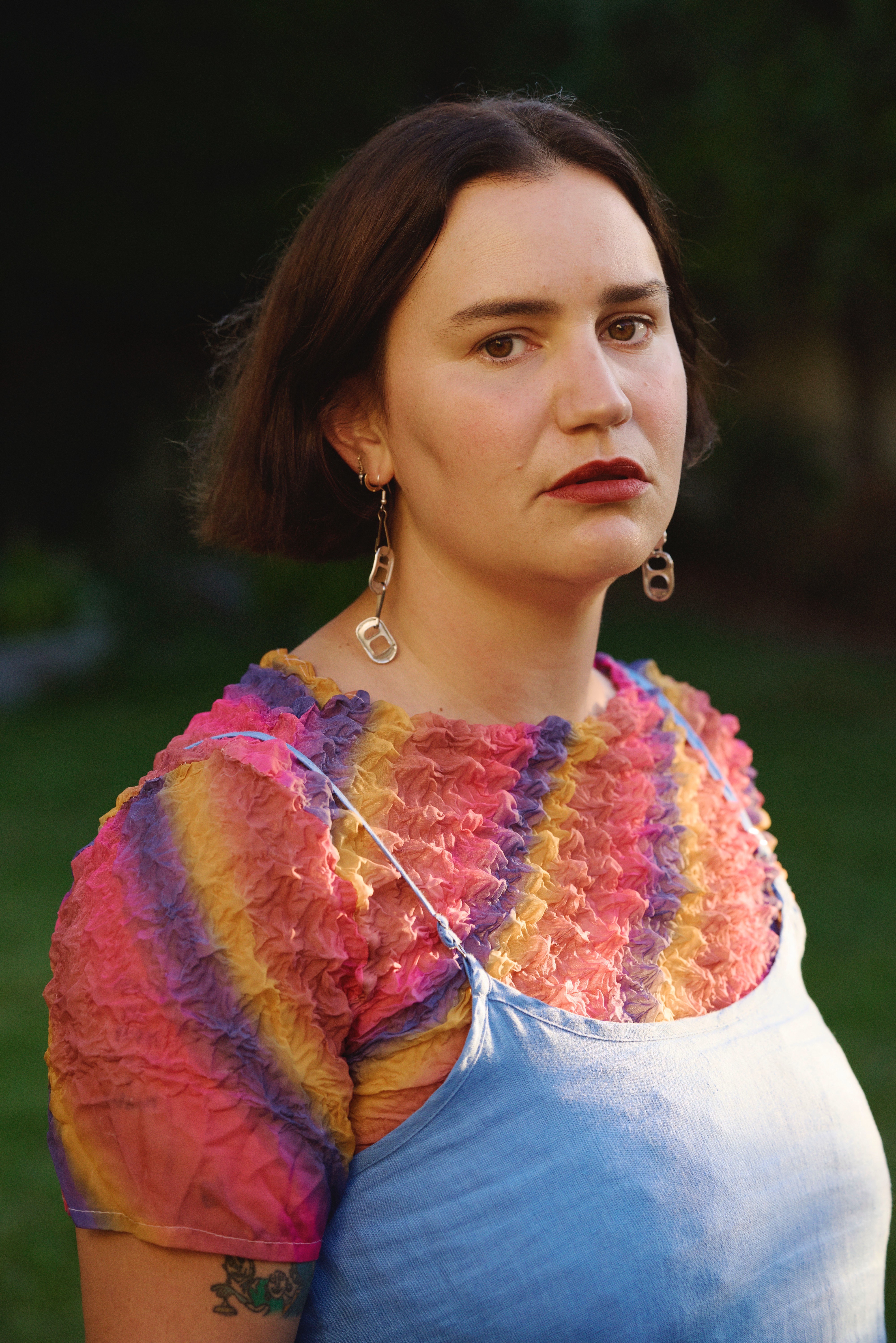
Hana Pera Aoake (Ngāti Mahuta, Ngāti Hinerangi, Tainui/Waikato) is an artist, writer, and sweaty milf from Aotearoa. Hana’s first book, a bathful of kawakawa and hot water, was published with Compound Press in 2020. Their second book, Blame it on the rain was published in 2025 with no more poetry (Australia). They just released a third book, Some helpful models of grief with compound press and are also publishing a fourth book of essays, On how to be with Discipline (Australia) in 2026. Hana is edging through a PhD at Auckland University of Technology.
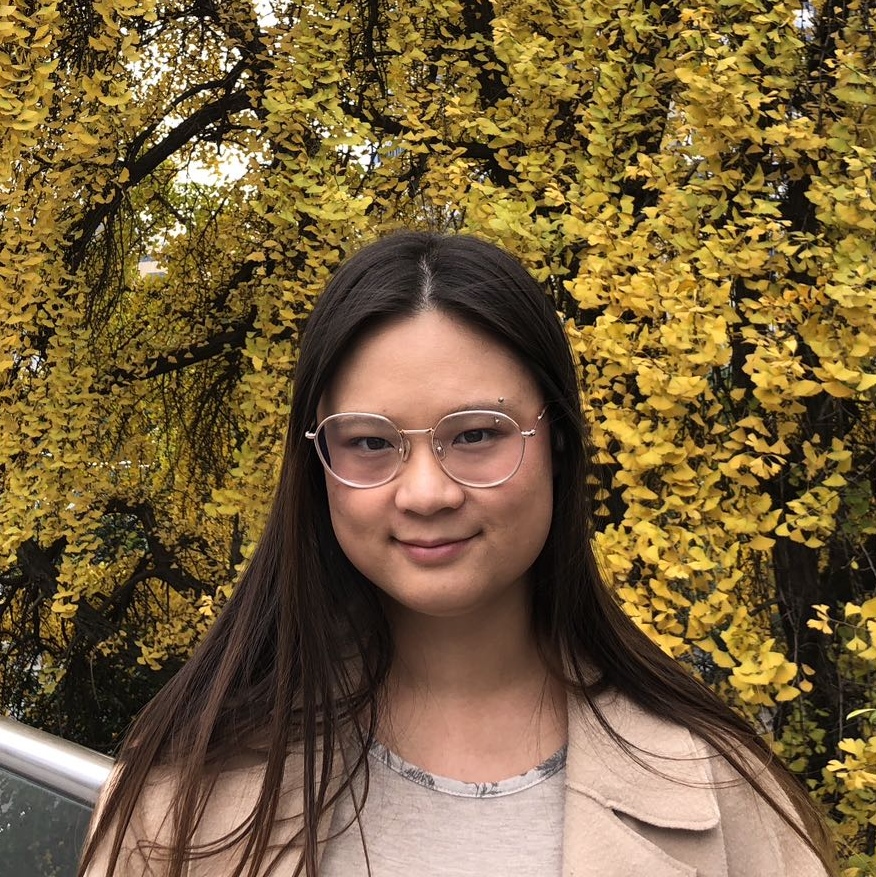
Xiaole Zhan (詹小乐) is a Chinese-Aotearoa writer and composer based in Naarm. Their work features in Auckland University Press’s New Poets 11. They are a 2025 Creative New Zealand Fellowship recipient, a 2025 Red Room Poetry Varuna Fellowship recipient, the 2024 Kat Muscat Fellow, as well as the winner of the 2023 Kill Your Darlings Non-Fiction Prize. Their name in Chinese means ‘Little Happy’, but can also be read as ‘Little Music’.
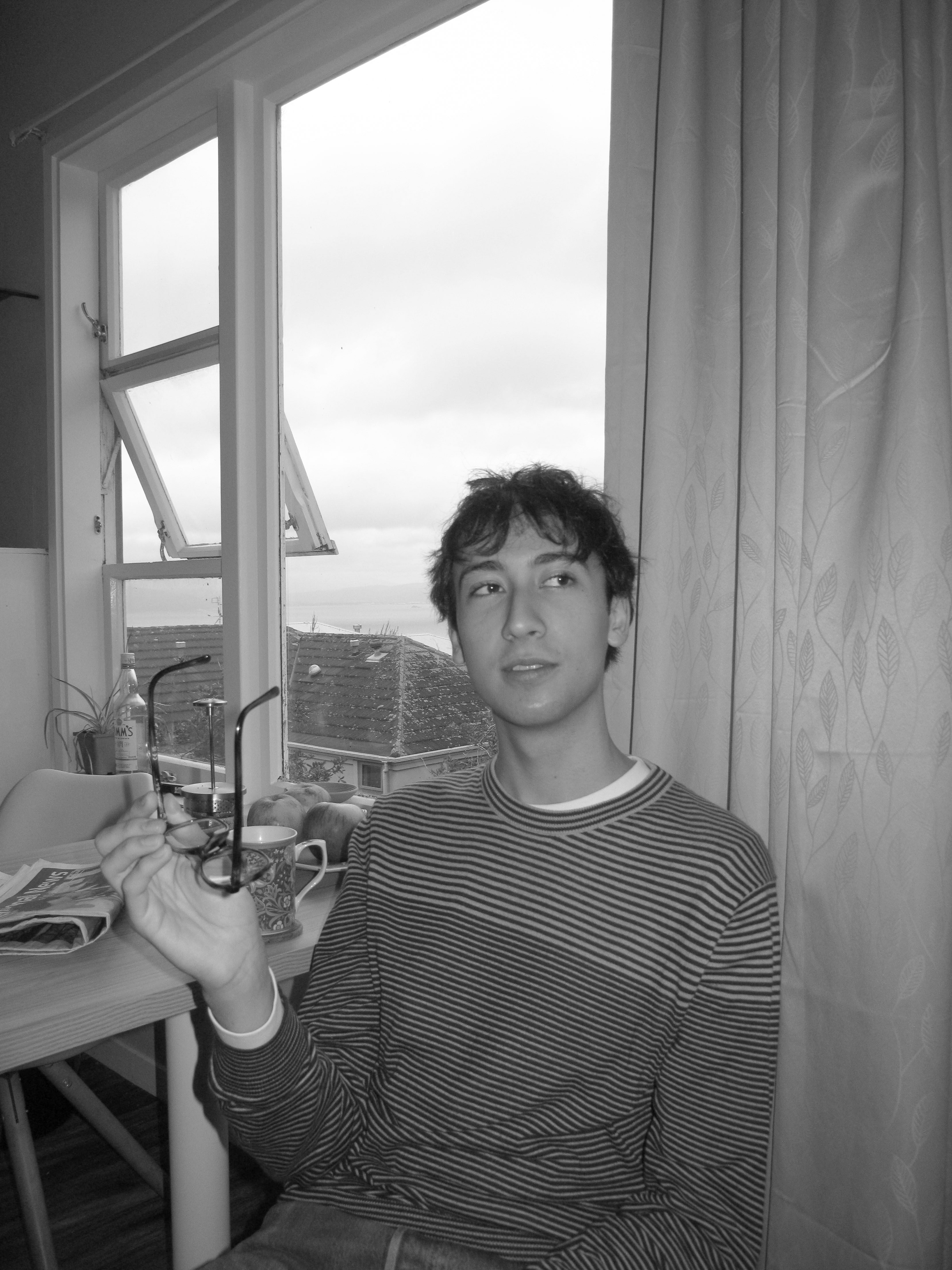
Jackson McCarthy is a poet and musician from Auckland currently studying in Wellington. He is of mixed Māori, Lebanese, and Pākehā descent. His work has been published in Ōrongohau | Best New Zealand Poems, Landfall, Starling, The Spinoff, and elsewhere, and he serves as an editor at Symposia. You can read more of his work at https://linktr.ee/jacksonmccarthy.
Sophie van Waardenberg is a writer from Tāmaki Makaurau. Her work can be found in Cordite, Starling, Ōrongohau | Best New Zealand Poems, Takahē and elsewhere. Her debut poetry collection is No Good (AUP, 2025).
Nadezhda Macey (she/her) is a student of English Literature and French at Te Herenga Waka. She is also a poet and artist, you can find more @nadezhda.4rt, and in magazines starting with ‘S’: Starling, Salient, and Symposia.
Josiah Morgan (Kāi Tahu, Ngāti Maniapoto) is an interdisciplinary artist based in Ōtautahi. His latest book i’m still growing is out with Dead Bird Books now in all good bookstores. His other books were all released in the United States, including his hybrid text The Texas Chainsaw Massacre, which was performed as a six-hour-long performance artwork in Auckland Pride 2024. He believes in magic and the power of words to transform. He is currently working on a chapbook called Black Window, a new full-length book, and a theatrical adaptation of Faust in collaboration with Hagley Theatre School.
Grace Yee is the author of Chinese Fish (Giramondo), which won the Victorian Prize for Literature in Australia, and the Mary and Peter Biggs Award for Poetry at the Ockham New Zealand Book Awards. Chinese Fish will be published by Akoya in the UK in 2026. Her second book Joss: A History (also Giramondo) was released in June 2025. She lives in Melbourne, on Wurundjeri Land.
Anne Kennedy is a Tāmaki Makaurau poet, novelist and teacher. Awards include the Prime Minister’s Award for Poetry, the NZ Post Book Award for Poetry. Recent books are The Sea Walks into a Wall, The Ice Shelf and, as editor, Remember Me: Poems to Learn by Heart from Aotearoa New Zealand. Anne is the current editor of AUP’s New Poets series.
1. That morning I read some poems 2. Could not walk far because of my surgery 3. A wholegrain roll I filled with chicken and coleslaw for lunch 4. Thought about the fridge being a silver coffin we carry around 5. Listened to Jim Morrison singing ‘The End’ 6. Thought of tubular bells making a comeback 7. Falling into water then rising up: my heart dipped with the tabla drum 8. …the world, a brief dream under a summer moon 9. Decided on Earl Grey 10. Stood at the window and thought how quiet the street is 11. Wiped sticky fingerprints from the handle of the fridge 12. Stared at the packing cases in the hallway 13. Texted my husband: ‘We had a dream and we made it happen we should be proud of ourselves’ 14. Stared at the pale yellow slipper orchid, newly opened; large and quiet and perfect 15. Read some poems 16. Remembered the one I wrote about cormorants nesting in the huge macrocarpa at Brendan Beach 17. Thought about looking it up but remembered it was packed away 18. Asked Google the question: How long does a stone take to round off in a riverbed? 19. It depends; some take a few weeks and some 100,000,000 years or more 20. Looked up the actor Mandy Patinkin 21. Noticed his wife, Kathryn, looked the same age 22. Wondered if he was still friends with Claire Danes? 23. Marvelled at the trivia I “knew” 24. Thought of my mother dying in the afternoon, falling asleep with a book 25. Glanced at the bed and wondered but lay down anyway.
Wes Lee
Wes Lee lives in Te Whanganui-a-Tara Wellington. She has four poetry collections — her latest, Wearing Today, was shortlisted for The Kathleen Grattan Poetry Award 2023 (Otago University Press), and has been launched this month in Wellington. She has received a number of awards for her writing, including, The BNZ Katherine Mansfield Literary Award and The Bronwyn Tate Memorial Award. Most recently she was awarded the Magma Editors’ Prize 2024/25; The 2024 Free Verse Prize, by the Poetry Society, in London; The Heroines/Joyce Parkes Women’s Writing Prize 2022, in New South Wales; The Poetry New Zealand Prize 2019. Placed in The Plaza Poetry Prize 2025 and The Fish Poetry Prize 2025. She was selected as a finalist for The Fool for Poetry Chapbook Prize 2023, in Ireland (Munster Literature Centre); shortlisted for the Poetry London Pamphlet Prize 2023, and The Alastair Reid Poetry Pamphlet Prize 2024, in Scotland.
The Venetian Blind Poems, Paula Green, The Cuba Press, 2025
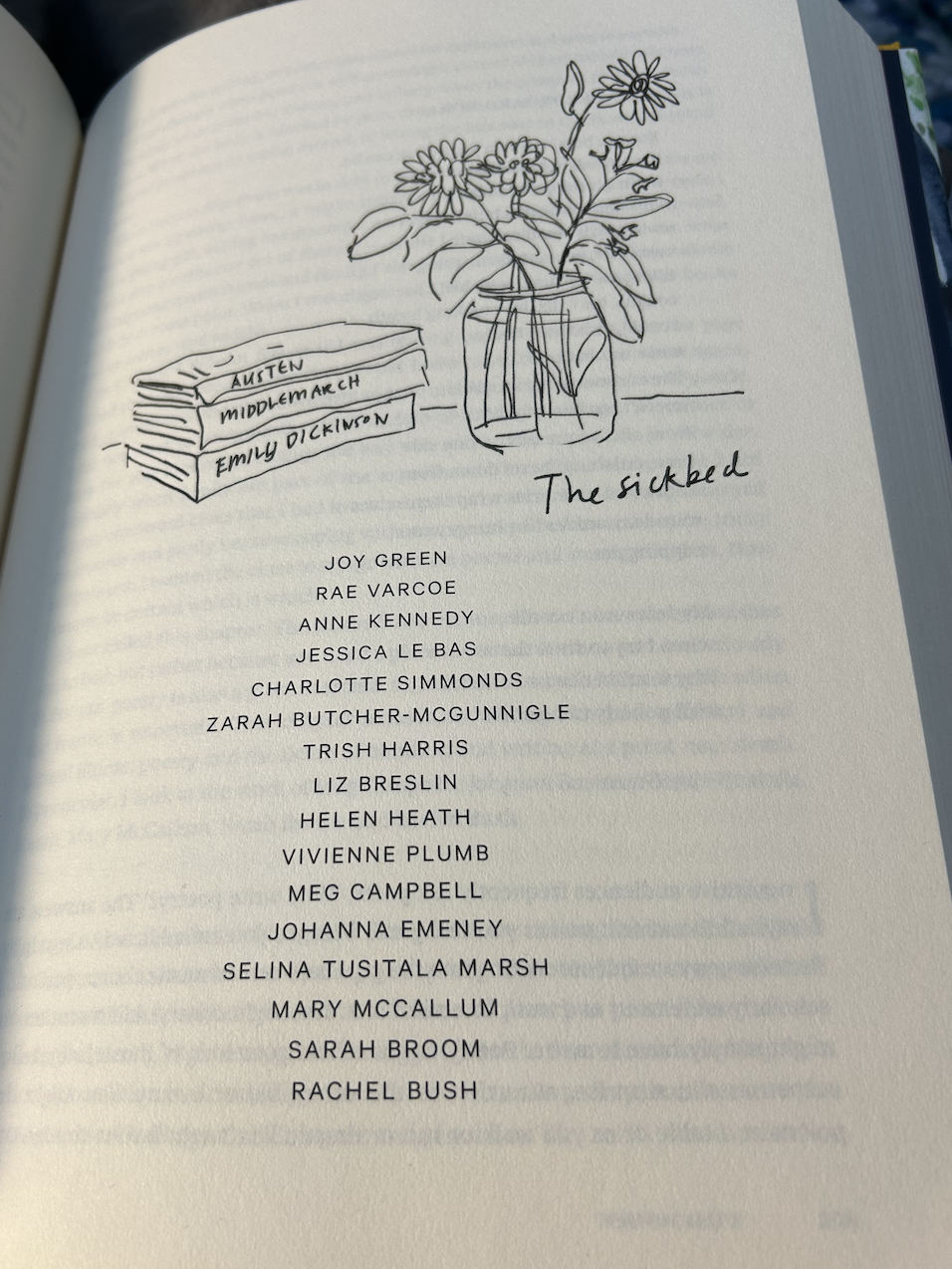
When I wrote Wild Honey: Reading New Zealand Women’s Poetry (MUP, 2019), I built a house, dividing the book into rooms, and then moving through open doors and windows to the wider world. The book was neither a formal history nor a theoretical overview of New Zealand’s women’s poetry but a way of collecting, building recouping valuing the poetic voices of women in Aotearoa. As I moved through the rooms in the house the themes accumulated: politics, poetics, love, the domestic, self, relations, illness, death, location, the maternal, home, voice.
The book came out in 2019, not that long ago, and I was interested to read ‘The sickbed’ chapter again. I began the chapter by saying inquisitive audiences often ask, ‘Why write poetry?’. I still claim the answers are myriad: it makes us feel good, we are addicted to wordplay, we can squeeze writing a poem in between domestic chores, parenting, scholarly endeavour, work commitments. We might crave public attention, awards, good reviews. We might simply have to write. Our poetry might reflect a love of music, storytelling, suspense, wit, surprise, attraction to the unsayable or beauty. We might write poems at the kitchen table, in our head as we walk, run, dream or dillydally. We might favour condensation and pocket size writing or expansion and long sequences. We might write from a sick bed.
My collection Slipstream (AUP, 2010) came out of my breast cancer experience. I refer to it in Wild Honey: ‘poetry was an energy boost, a way to enhance my sense of wellbeing’. As I wrote, at least a year after the experience, I did not feel I was writing poems – nothing on the page earned the label ‘poem’ in my view — but I was conscious that the white space, the juxtapositions, the assembled lists and the melody were reaching for the poetic. I did not want to summon the dark, middle of the night slumps, but rather to show illness can change the way you see the day as well as live the day.
The Venetian Blind Poems is a little different in that I wrote it in the moment, in hospital and then back home on the recovery road. But I recognised similar motivations to write.
My new collection has been out in the world for a fortnight now, and it feels so very special. To be in Motutapu Ward and the Day Stay Ward this week, signing copies for nurses, hearing them read fragments aloud, reminded me that poetry is an incredible way of connecting. I am still in a thicket of appointments as I fine tune the road ahead, but this fortnight feels like like my time in hospital, when so many poets sent me a poem in a card. The emails you have sent me these past two weeks, so thoughtful and caring, have shone fresh light on how and why poetry is a gift. On why we write and sometimes publish poetry. I will treasure your emails for a long time (and reply soon)!
More than anything, The Venetian Blind Poems is a way of saying thank you to the doctors and nurses who have given, and are giving so much. I offer an enormous bouquet of thanks to Mary McCallum and Paul Stewart at The Cuba Press, for the beautiful book, and for inviting such terrific responses to post on social media by poets who have read it.
Now its back to normal transmission! I have new ideas for Poetry Shelf bubbling like my sour dough starter, manuscripts to finish, a treasury of books to review, emails to answer, a few more appointments, and most excitingly, I am ready to get my secret seedling idea off the ground: Poetry Shelf Goes Live. Yes! Soon I will be back in the world organising live poetry events around the country.
A cluster of illness poems
The waiting game
begins with someone calling your name before you wait to have your blood taken in a windowless room. Wait for the stultifying thoughts of red and disease to pass. Wait for the phone call, for relief to wash over you. And while you are waiting I recommend you dance like the memory of sweat easing down his throat; roll open like the drum beat of your limbs in sync; tear through your wildest nights, still lit in hopeful neon; cry like the Christmas you lost your last grandparent; and sing like the forgotten violin slowly coming undone in your muscle memory. If you do not allow yourself to sleep in peace with your worries, you will find yourself awake at the bottom of a very deep, very secret lake.
Chris Tse Turbine, 2014
A Final Warning
I walked past the stars the silence of grandfathers
I was going somewhere but where
I went left at first then right then way off course then back to somewhere
near the middle did this mean I was ready to die
well they’ve been testing me for everything I think I’ve got the lot
Bill Manhire from Honk Honk, The Anchorstone Press, 2022
The Night Shift
I wake on the ward, afloat on ketamine, fentanyl, see sky-blue morphine swifts roost nearby in pleated paper thimbles
and some uneasy instinct tugs my gaze to a scuff mark on the lino floor. Coal-dark, it smolders. I stall.
A voice reassures me it’s just a graze left by the wheel of some routine machine: IV, PCA line, heart monitor screen.
Yet as I ease deep-cut core and leaden legs over the distant side of the high bed I can’t shake this need to stare
not quite in fear: not quite.
For last night, creatures came. They arrived en masse, nodded, swayed, pressed into each dimmed cubicle,
their copper eyes bright-candled, lips pouched over strong, proud teeth, their heads bowed in silent inspection;
marmalade lions with oxen feet, crested birds with antlers, candy-pink teats, all crowded, crowded round each bed
as the window in time was fast contracting, and they wanted us to see before our minds sealed tough with the fibers of logic, denial.
Their fur packed tight as green florets on catkins. Their horns, colossal black spikes, gleamed like grand pianos. Such mass and strength in their embedded weaponry,
yet still, they withheld their crush and maim.
The breath and bunt of their herded skulls said we are the unbroken in you, don’t be afraid, and I saw through the seep of dawn
that soon like guardians they will gather each one of us, our failing forms absorbed into their warm, strong-walled veins
until we too watch each figure on the bed as something invisible shifts in the intricate balance of matter and spirit.
So it is awe, not dread, that asks me to leave the ground undisturbed where they gathered, to skirt carefully the sign one left like a scorched hoof print as if they had stood in fire to show they bear time’s pyre for us,
our wild sentries, our wild sentries.
Emma Neale from Liar, Liar, Lick, Spit, Otago University Press, 2024
(A lifetime of sentences)
Soon, I could leave my body without prompts. The artist’s concept of the birth of a star, or I broke my name until the fibres separated and lost their coats. My thirst for windows kept me indoors. My gaze wandered across the suburbs of childhood, faces stammering with shyness, bodies masquerading as furniture. Initial mass and luminosity determine duration, but my sensibility comes to require an object. Here, the word “system” implies a level of certainty that is unwarranted. Some of those memories were not written by me, so they are memos, at home on my desk, but still authoritative. Now, instead of a pupil, there’s a screensaver. It was late. The room was empty. A lifetime of sentences which at first glance seem superfluous, but whose value is later understood. One thing leads to a mother. Soon enough, a flock of children came running and tapped on the glass. When I reached the bottom of the stares, I looked up.
Zarah Butcher-McGunnigle selected by Kiri Pianaha Wong and was published a fine line and also Best NZ Poems 2011
it is a wedding cavalcade in which I take your day of birth and marry it with ten pink tulips to mine look, behind us on the road sadness and unutterable joy leaping over the rocks how we were those people in the crowd unmindful of everything except stepping along together under our parasols what’s wrong with that? see, the road is still there still ahead and behind losing its mind and leaping over the rocks with its train of clowns who are careless careless careless and will never behave any differently believing themselves arm in arm with all they need to sustain life on a distant planet choogaloo, this is all you need tulips and a parasol to keep off the bigger bits of debris falling out of the sky don’t be sad there is every chance we are just now resident in two minds regarding each other tenderly, quizzically, uproariously as a wedding cavalcade
Michele Leggot from Milk & Honey, Auckland University Press, 2005
What’s the time, Mr Wolff-Parkinson-White?
Press palm against skin feel its breathless sprinting
count 230 beats in a minute count six sibling arguments count four gecko squawks
gulp two glasses of water phone the absent dad three times return to the couch
count 194 beats—and whoah with the flutter of a moth it slows down to a jog
steady rhythm of 75
Fire heart Sea heart Earth heart
Calm waters as a child now more fire than earth chased by a white wolf
Want to feed my child ruby corn raspberries red meat cherry tomatoes pomegranate bursts sugar and acid enough to woo a rebel
The heart heals itself between beats, reassures Elizabeth Smither
Mikaela Nyman
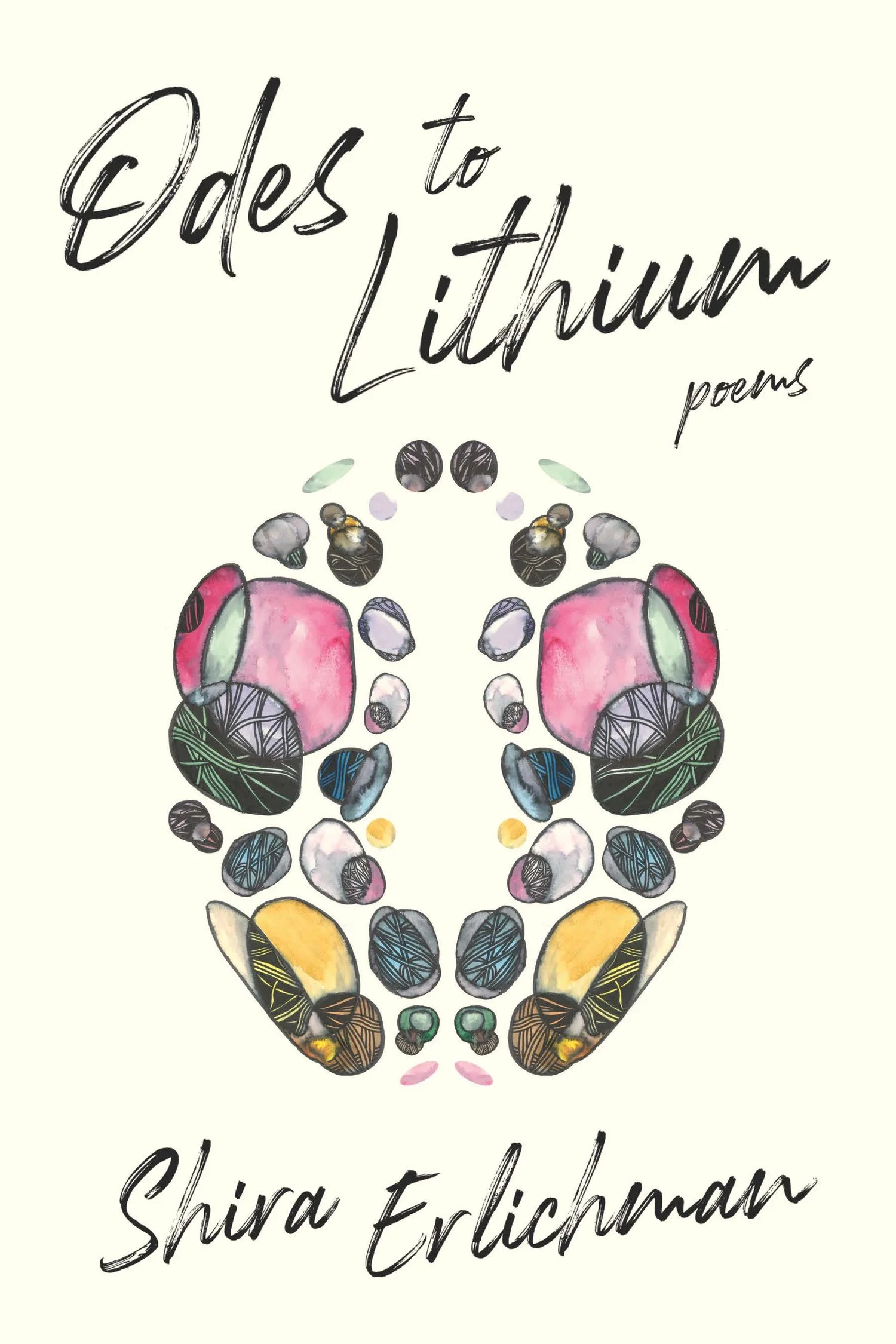
Amy Marguerite picked a poem from Shira Erlichman’s Odes to Lithium, a book I now have on order! But sadly I didn’t manage to get permission to post the poem but you can listen to Shira read it here.
Self-Affirming Mantra
I was searching my symptoms online. Disturbed sleep led to fatigue which led to post-viral condition and also to alcohol abuse and liver disease and unthinkable cancers which all led to conclusions about society and how one operates in it, how someone can be rational and maladaptive at the same time, how resilience is just a word in a PowerPoint, how years of work go into the manufacture of one unit of anxiety (a person), and how each unit, although similar to others in many ways, is unique, the product of a freakish and golden permutation of inputs, which led me back to my usual searches for wars and politicians and racing drivers and recipes and animals and islands and colours.
I went out into the day with my symptoms. The sun made the swans look like harps. I appreciated the silhouettes of buildings. I scrumped apples from over a fence. My symptoms were still with me but also not with me. I was loving them. I was setting them free.
Erik Kennedy from Poto | Short (Te Herenga Waka University Press, 2025)
The Venetian Blind Poems, Paula Green The Cuba Press, 2025
Later in the year I am planning a number of Poetry Shelf live events to celebrate poetry voices in Aotearoa. This month I have a new poetry collection out but my energy jar and immunity is not quite ready for book launches so I have invented three celebrations for the blog. On Publication Day (August 1st), I posted an email conversation I had with my dear friend Anna Jackson, a conversation that celebrates our shared love of writing and our two new books. Anna’s Terrier, Worrier (Auckland University Press) and my The Venetian Blind Poems (The Cuba Press).
For my second feature, I have created a collage conversation by inviting some of the poets whose books I have reviewed and loved over the past year to ask me a few questions. It gives me another chance to shine light on the extraordinary writing our poets are producing. I have kept the conversation overlaps as I find something new when I return to a similar idea or issue.
It is with grateful thanks to David Gregory, Mikaela Nyman, Cadence Chung, J. A. Vili, Rachel O’Neill, Kate Camp, Xiaole Zhan, Claire Beynon and Dinah Hawken, I offer this conversation in celebration of poetry. You can find links to the reviews below. The conversation has ended up being something rather special for me. I have never experienced anything quite like it! I loved the questions so much. Thank you. Because this is a book of love, I would like to gift signed copies to five readers, whether for themselves or a friend (paulajoygreen@gmail.com).
I also want to share a review Eileen Merriman posted on her blog after reading my book, because she is in the unique position to respond to it as another writer, a haematologist and a close friend. Some things she says struck me and I refer to them when I answer a question by Kate Camp.
I’ve just finished reading Paula Green’s recently published poetry collection, The Venetian Blind Poems in one sitting. This book was an oasis in the midst of a hectic time for me (when is life ever not?); it’s not very often I can be compelled to sit for more than half an hour currently. Yet I connected with this on so many levels: as a writer, as a doctor, as a patient, as a friend, as a human. Green details her experience on the Motutapu ward, the bone marrow transplant/haematology unit at Auckland Hospital, where she received a bone marrow transplant for a life threatening blood disorder in June 2022.
As a haematologist, I know this is one of the most challenging treatments you can put a patient through, bringing someone to the brink of death to save a life. Recovery takes months, sometimes years. The acute phase can be akin to torture, one only the recipient could ever understand. But Paula holds us close, so that we can begin to understand: ‘I return to the pain box in Dune… I am using the box/for when my ulcerated mouth pain is unbearable/last night I held the box/as the mouth pain radiated but/I didn’t put my hand in/I decorated the box/ with seashells instead’. And then we are elevated from the abyss to the sublime, because this is how Green survives, by stacking poems along her windowsill and creating word pictures in her head: ‘Buttered toast and clover honey/marmalade brain and mandarin heart’. And then, time and time again, we are brought back to the world that Green sees, from the confines of her isolation room, peering through the Venetian blinds at the world that sustains her, one second, one minute, one day at a time.
This book had me captivated from the delicious first line ‘Liquorice strips of harbour’, throughout the rough seas, eddies, near-drownings and becalmed harbours of the stem cell transplant, and beyond, right through to that hopeful last line, ‘We will be able to see for miles’. Kia kaha, Paula Green, your inner strength knows no bounds.
Eileen Merriman
me with my daughter’s dog, Pablo
a collage conversation
Every morning I open an envelope and read a poet’s choice inside a greeting card I nestle into the joy of Cilla McQueen’s kitchen table
David Gregory
David: Where do your ideas for your poetry come from? Paula: They fall into my head like surprise word showers, whether from what I see, hear, feel or read. From the world experienced, the world imagined, the world recalled.
David: How do you know when a poem is complete? Paula: It’s a gut feeling. When it hits the right notes and catches a version of what I want to transmit. Poetry can be and do so many things, and I’m a strong advocate for poetry openness rather than limiting and conservative ideas on what a poem ought to be. Paul Stewart from The Cuba Press edited the book and he has a sublime ear for poetry and its range. You couldn’t ask for a better poetry editor.
In the middle of the night the radio takes me to Science in Action and I am listing ways to save the planet and the way dance liberates cumbersome feet
Mikaela Nyman
Mikaela Nyman: These poems emerged out of a life temporarily reduced by severe illness. Yet they’re not limited by the medical circumstances, and not merely a comfort blanket, but seek to connect with the world outside. Did this happen straight away, or is it something you consciously pursued later in the writing process? Paula: I love this question – yes my life was limited physically, not only on the ward but on my long recovery road with a fragile immune system, daily challenges and minute energy jar. But I also saw it as an expansion of life. I focused and am focusing on what I can do, not what I can’t do. On the ward, the world was slipping in through the blinds as much as I was looking out. From the start my writing navigated both my health experience and the world beyond it.
Mikaela: Given the dire circumstances that compelled you to turn to poetry at this point in life – i.e. your personal health struggle as well as the state of the world – how important is it for you to retain hope and offer a sense of wonder in your poems? Paula: I think it ‘s been ongoing, across decades, my impulse to write through dark and light. I think all my books have sources, whether overt or concealed, in patches of difficulty. I was writing 99 Ways into NZ Poetry with Harry Ricketts when I was first diagnosed and I never stopped writing. Maybe writing is my daily dose of vitamins. And that word wonder. Wonder is a talisman word – whether it’s the delight you might find in thought coupled with the delight you might find in awe. It is a crucial aid.
It’s the third day of the poetry season Oh, everyone’s queueing up to read a poem and count falling leaves
Cadence Chung
Cadence: Do you have a particular line/poem you’ve written that you think really encapsulates the collection?
I will meet you at the top of the hill we will be able to see for miles
Cadence: What’s an experience you’ve had lately that has brought you joy? Paula: Ah, such an important question. Every day is a patchwork quilt of joy. Take this day for example. Reading and reviewing a poetry book. Drinking coffee with a homemade muffin with sun-dried tomatoes and paprika. Making nourishing soup for lunch and sourdough with millet flour for a change. Watching the pīwakawaka dance in front of the wide kitchen window as though they are rehearsing for an special occasion. Replying to children who have sent me poems for Poetry Box. Cooking a Moroccan tagine with preserved pears and rose harissa paste for dinner and sharing with my family. Listening to Jimmy Cliff on repeat all day and imbibing the uplifting reggae beat and need to protest.
This morning I got up at 5 am to drive to an early appointment as the full-wow-moon shone in the dark, and streaks of bright colour ribbons hung over Rangitoto. It felt like my heart was bursting. I switched to Maria Callas singing ‘Casta Diva’ from Bellini’s Norma.
Today I feel happiness as solid as a wooden kitchen table with six chairs and a bowl of ripe fruit
Cadence: How does a poem come to you? Quickly and all at once, or more measured and worked out? Paula: Poems linger in my head -as they did on the ward – before I write them in a notebook. Often poem fragments arrive in the middle of the night, or when I am driving across country roads to Kumeū. But there is always a sense of flow not struggle. I love that.
I decide even stories are slatted with missing bits, so I lie still and fill in the gaps of my childhood
J. A. Vili
Jonah: How did your writing flow in the light and dark times, on the good days and bad days of your recovery journey? Paula: It flowed and flows in my head, most days, slowly, slowly. But sometimes, especially in the dark patches, I don’t have the energy to write on paper. I can’t function. Words falter. I compare it to the stream in the valley – sometimes it flows like honey, sometimes it struggles over rocks and debris. When it’s honey flow I write, when it’s not, I do something else. So I pull vegetables from the fridge of garden and make a nourishing meal to share with my loved ones. Or watch Tipping Point on TVNZ! Or listen to an audio book.
Jonah: How much did writing these poems during your personal struggle help in your healing and recovery? Paula: To a huge degree. And it still does. It was and is a crucial aid because it was and is a way of connecting with the world and people, of feeling love though my love of words. It’s a vital part of my self-care toolkit.
Jonah: Since this was such a personal journey for you, what was something new you discovered about yourself and life itself? Paula: How in the toughest experience you can feel humanity at its best – for me the incredible care and patience of the doctors and nurses, no matter how tired or stretched they were (and underpaid). I loved my time on the ward. An anonymous donor gifted me life and that felt extraordinary to me. This miracle gift – it felt like I was seeing and experiencing the whole world for the first time and it was a wondrous thing. And still is (despite the heart slamming choices of certain leaders and Governments). It’s recognising what is important. Cooking and sharing nourishing food (especially Middle Eastern flavours). Watching football. Listening to music on repeat: reggae, Bach, opera, Reb Fountain, Boy Genius, Nadia Reid, The National, Marlon Williams, Lucinda Williams, Billy Bragg, Delgirl, Nina Simone,more reggae. I am hooked on Jimmy Cliff at the moment and the struggle he was singing about way back in the 1960s and 1970s: our half starved world, the Vietnam War, the broken planet, the ‘suffering in the land’. Well we are still singing and writing these same songs of heartbreak and protest.
In the basement of song there are jars of pickled zucchini worn shoes and well-thumbed novels
Rachel O’Neill
Rachel: Where does a poem generally begin for you, and has that changed at any point? Paula: In my conversation with Anna, I talked about the way phrases drift into my head, surprise arrivals in my mental poetry room. I referred to these arrivals as gentle word showers. I have had these arrivals since I was a child. when I was in Year 8 (Form 2) my teacher, Frederick C. Parmee, was a poet! He was the only teacher who saw the potential in me as a writer and I flourished. By secondary school I was shut down as wayward and I failed school. Yet the words kept falling into my mind, and then into secret notebooks (like many women across the centuries), across my years of travelling, living in London, and finding a place in the Italian Department at the University of Auckland. Taking an MA poetry paper with Michele Leggott. Getting a poetry collection published with Auckland University Press. Extraordinary. And still the words drift and fall.
Rachel: Does your new collection speak to dynamics of patience and urgency? Along these lines, what has writing this collection made you appreciate more, or challenged you to move on from? Paula: I think it has amplified my attraction to slowness, to patience, to writing and reading and blogging like a snail, into uncharted territory as much as into the familiar. When you run on slow dose energy, I think urgency is disastrous – I favour slow cooked braises and sourdough bread. Choosing the slow reading of poetry books, so much more is revealed. Yet urgency is both rewarding and necessary for other people, and produces breathtaking results, it just doesn’t work for me. That said, we need to unite with urgency to heal this damaged planet.
The second part of your question is crucial. In a nutshell, I appreciate life, I have had a transplant that has gifted me the miracle of life. Extraordinary. How can this not change the way I am in the world. What matters. Dr Clinton Lewis at Auckland Hospital has made an excellent video for bone marrow transplant patients. He talks about how many patients reassess what matters most. I have drafted a book, A Book of Care, it is not quite ready yet, but it is the manuscript I am most keen to be published. I offer it is as a self-travel guide, a tool kit, borrowing practical ideas that have helped me.
Rachel: In what ways do you think poetry helps us integrate and accept tension or discomfort as part of human experience and living a full life? Paula: I love this question. I have been musing no matter what I am writing, the tough edges of the world, the daily wound of news bulletins find their way in. What difference does it make if we speak of Gaza and the abominable choices our Government is making? I just don’t know, but I do know silence is a form of consent, and that in the time of fascism in Italy, it was strengthening that some people spoke out. Every voice ringing out across the globe, in song or poem or article, every protest march and banner, is a human arm held out, a call to heal rather than destroy, to feed rather starve, to teach and guide the whole child rather than discriminatory parts.
My repugnance at the devastation of Gaza is not eased by the soft light on the Waitākere Ranges or a canny arrangement of summer nouns or Boy Genius on the turntable or even a bowl of chickpea tajine
Kate Camp
Kate: do you ever feel when you are writing about personal experiences – especially intimate ones of the body – that you are invading your own privacy? And once you have written about those experiences, do you find that the poem version overlays the “real” remembered version? Or if not overlays it, then how do they co-exist, how does the personal, private version of the experience alongside the version of the experience as captured in a poem? Paula: I love love this question Kate. Xiaole introduces their reading for a Poetry Shelf feature I am posting on Poetry Day, by talking about oversharing. I know this feeling so well. I feel like I am doing it in this collage conversation! To what extent do people want to hear about illness? About bumps in the road? I started sharing my health situation on the blog because I wanted people to know why I was operating on a tiny energy jar and couldn’t review quite so many books or answer emails so promptly. And most people have been unbelievably kind. I felt so bad when I hadn’t celebrated a book I had loved. And then I would think EEK! And wanted to delete my talk of cancer and transplant experiences and issues. But what I don’t do is go into dark detail. That stays private and personal. Will I have the courage to press ‘publish’ for this collage conversation! Scary.
I found it so illuminating to read Eileen’s review of the book. She writes from her experience as a writer, avid reader, haematologist and my friend. She says things I don’t have running through my head but are important! To read her words made feel so much better about how I am handling my recovery road and my own writing! I don’t use warrior language on my cancer road. I don’t wallow in what I can’t do. I have never said ‘why me?’. But I do have dark patches where I feel I physically can’t function. To hear doctors say a bone marrow transplant is an extremely tough experience is like getting a warm embrace. Recognition.
So yes, I love the idea of a private version and a shared public version – I am a writer that keeps most of my life private – my personal relationships, especially with my partner and our children. I think part of my impulse to write this experience was self-care, as I mentioned to Jonah. Liking drinking water. And how important it is for me to write out of aroha and wonder as much as difficulty. To write as you travel, in the present tense of experience. Once I had spent two years writing the sequence, I wanted to get to get the book published as a gift for doctors, nurses and other people ascending Mountains of Difficulty.
After a night of dream scavenging I open my mouth and out fly stars a garden of leeks and carrots a family of skylarks a track to the wild ocean
Xiaole Zhan
Xiaole: I’ve been thinking a lot about this idea from e.e. cummings: ‘To know is to possess, & any fact is possessed by everyone who knows it, whereas those who feel the truth are possessed, not possessors.’ Did you have any experiences of not knowing or of ‘being possessed’ while working on/ living through your collection? Paula: What fascinating traffic between knowing and feeling! Possessing the facts, being possessed. What slippery territory . . . truth yes, but even facts. Are they ever fixed or certain? Sometimes I think writing is a way of re-viewing an experience, of re-speaking it say, and it is for me an organic process. Never fixed. The versions I tell my consultant, the nurse, my psychologist, my close friends, my family, are tremble stories, never fixed, as I remember and forget and shift the focal lens, the distance finder, the colour filter. It is so very important. I almost feel like venturing to Zenlike thought by saying there is knowing in the unknowing, and unknowing in the knowing.
I lip read the cloud stories and remember the comfort points
Claire Beynon
Claire: I appreciated the absence of ‘explicit’ punctuation in your collection—all commas, colons, semi-colons, full stops are invisible/implicit. The rhythm and cadence of each word, line and stanza work quietly and diligently on their own, as if seeking connection and continuity. They neither ask for, nor require, anything extra in the way of emphasis or embellishment. Did you set out to write the collection this way? Or did you initially include ‘traditional’ punctuation and make a decision to remove it later/during your editing process? Paula: Punctuation is an aid for the poem – for me it is a key part of the musical effect – and it is a guide for the reader – where to take a breath or to pause. I have had many books published and worked with many editors and they have different, and at times, contradictory approaches. I wanted to keep faith with the first section of The Venetian Blind Poems as I gathered it in my head on the ward. Punctuation played more of a role in the second section which I wrote back home. A musical tool. A rhythm aid.
Claire: I wondered while reading The Venetian Blind Poems whether living with a painter—your partner, Michael Hight—influences your way of composing and structuring your poems? I mentioned in my FB post that something about the tone and shape of this collection reminds me of the work of artist Giorgio Morandi. I’ve long admired Michael’s paintings, too—their quiet, contemplative quality, compositional sophistication and attention to detail, the at-times unexpected juxtaposition of objects—and sense between them and your poems a kind of reciprocity or shared sensibility.
Forgive me if I’m projecting here. I don’t mean to speak out of line or to make any assumptions… but, well, I found myself wondering about these things… how there seems to be something deeply simpatico between your work and Michael’s. And it moves me/strikes me as beautiful. Paula: Michael and I are big fans of Morandi! We live very separate creative lives – he doesn’t enter the poetry room in my head and I very rarely walk up the hill to his studio – neither of us talk about work in process with anyone. But I have written about Michael’s work (read a review of his last Auckland show here). We have his art on our walls and it’s uplifting, a vital form of travel. I give him my manuscripts to read just before they go to a publisher! We have two creative daughters and we have shared love of books, movies, music and art. To be in New York together absorbing art, music, literature and food was incredibly special – and Ireland, Barcelona and Lisbon on another occasion – and of course Aotearoa.
Claire: I realised when I reached the last page of your collection that I’d read the book as one long poem—a whole comprised of many parts, yes, but essentially ‘one poem’. I actively appreciated the fact that, aside from the titles at the start of each of the two sections, there are no titles to distract or interrupt the flow of the writing. This allows readers to fall into step with you and walk more closely alongside. On the last page, you seem to confirm this:
Most of this poem is in 1000 pieces in a box on the table
Do you see the collection as one poem? Paula: Yes I do! One poem like a quilt made of many notes, light and dark patches.
A poem might be an envelope to store things in for a later date: old train tickets postcards buttons a map of Rome a bookmark
Dinah Hawken
Dinah: A few weeks ago I found myself asking myself what I most hoped my poems would do now that I’m in the last part of my writing life. My main hope is that a few readers will feel ‘be-friended’ by a poem of mine, in the way I have felt be-friended by the poems of others. Then, in reading your conversation with Anna (Jackson), I came across – with surprise – your idea of ‘poetry as friendship’ and Anna’s of poetry as ‘a short cut to intimacy.’ Do you have more to say about this? Paula: Anna and I have been friends since my first collection Cookhouse was published in 1997, when I had just completed my Doctorate in Italian. Before our slow-paced email conversation, I had never thought of poetry as friendship, but the more I thought of it, the more it resonated as an idea and a practice. I realised my slow-tempo approach to poetry – to reading, writing, blogging and reviewing – is a way for forging connections, of holding things to the light to see from different angles, explore multiple points of view, experiences, hues and chords. Of listening. Our poetry communities in Aotearoa are so active and so strengthening. As this collage conversation underlines.
Dinah: And were you thinking of a particular kind of reader (say someone who had experienced serious illness) when you were writing The Venetian Blind Poems? Paula: No, I wasn’t thinking of a reader at all. Of getting published. I write first out of my love of writing, as a form of nourishment, as a source of joy. So I guess that is selfishly writing for one’s self. Inhabiting the moment. But now that The Venetian Blinds Poems is out in the world, to be able to give copies to doctors, nurses and other people going through difficult health experiences matters so very much. And to other poets! Climbing a mountain can be hard but it can also be a source of beauty, and I am nothing, this book is nothing, without my support crew, particularly Anna Jackson, Harriet Allan, Eileen Merriman, Michele Leggott and all the fabulous doctors and nurses on Motutapu and the Day Stay Ward. All the readers and poets who contribute to Poetry Shelf as both readers and writers. And my dear family. Thank you. My dedication catches how I felt when I had finished writing the book:
for everyone ascending the Mountains of Difficulty and their support crews
David Gregory, Based on a True Story, Sudden Valley Press, 2024, review Mikaela Nyman, The Anatomy of Sand, THWUP, 2025, review Cadence Chung, Mad Diva, Otago University Press, 2025, my review J. A. Vili, AUP New Poets 11: Xiaole Zhan, Margo Montes de Oca, J. A. Vili editor Anne Kennedy, Auckland University Press, 2025, review Rachel O’Neill, Symphony of Queer Errands, Tender Press, 2025, review Kate Camp, Makeshift Seasons, THWUP, 2025, review Xiaole Zhan, AUP New Poets 11: Xiaole Zhan, Margo Montes de Oca, J. A. Vili editor Anne Kennedy, Auckland University Press, 2025, review Claire Beynon, For when words fail us: a small book of changes,The Cuba Press, 2024, review Dinah Hawken, Faces and Flowers Poems to Patricia France, THWUP, 2024, review
The Cuba Press page Paula Green and Anna Jackson in conversation
What if I made up a poem about a house on a hill with views of the sea and passionfruit vines laden, and a woman knitting stories of family connections and sublime epiphanies into socks and scarves and comfort blankets with an abundance of vegetables in garden plots and fruit on the trees and soup simmering whatever the season and how she is always content in her own company but one day she opens a newspaper and it is full of war and plague and bullies and hunger and racism and side-lined histories and abusive relationships, underfunded hospitals and underfunded schools, and she looks at the olive-green sea and she smells
the tomato soup simmering the fresh basil aromatic in the air and she turns on her radio and hears the voice of a young Palestinian student begging the world to listen, begging for freedom for her people and how the relentless bombs trap everyone in houses and how aid can’t get through and how nowhere is safe and how everywhere is under attack, and the woman on the hill tries to imagine the terrified children, the lack of news and power and water, and how the catastrophe goes deep into roots and land and home, and how they cannot pray safely in mosques, and how when Palestinians resist they are terrorists and their resistance is deemed invalid, and the woman on the hill looks
at the patch of blue sky and the free-floating clouds and puts down her knitting with its happy stitching its loving connections and storytelling skeins and tells the olive-green sea that we are all human, and we all need to eat and feel safe, to stand on soil we call home, to speak our mother tongues, tell our grandparent stories, and to feel the depth and caress of peace
Paula Green 20 May 2021
Every Thursday in 2021 I wrote a poem, and now have a manuscript sitting in my drawer called ‘Thursday Poems’. I was flicking back to see what I had written in July but stalled on this one. It felt like I could have written it today. What has changed globally or locally? How have things improved in Aotearoa as the gap between the rich and the poor widens? Our environmental aims deteriorate? As the situation in Gaza is even worse? As peace in the Ukraine is elusive? I recently signed an open letter, along with other writers and publishers, calling for an immediate ceasefire that Mandy Hager organised. I would like to see an open letter addressed to our Coalition Government demanding to see how they will repair our country rather than damage it so cruelly. Nest year we will be voting.
In order to widen the reach of new poetry books, Poetry Shelf is posting a series of launch speeches and photographs. Do get in touch if you have had a launch you would like featured.
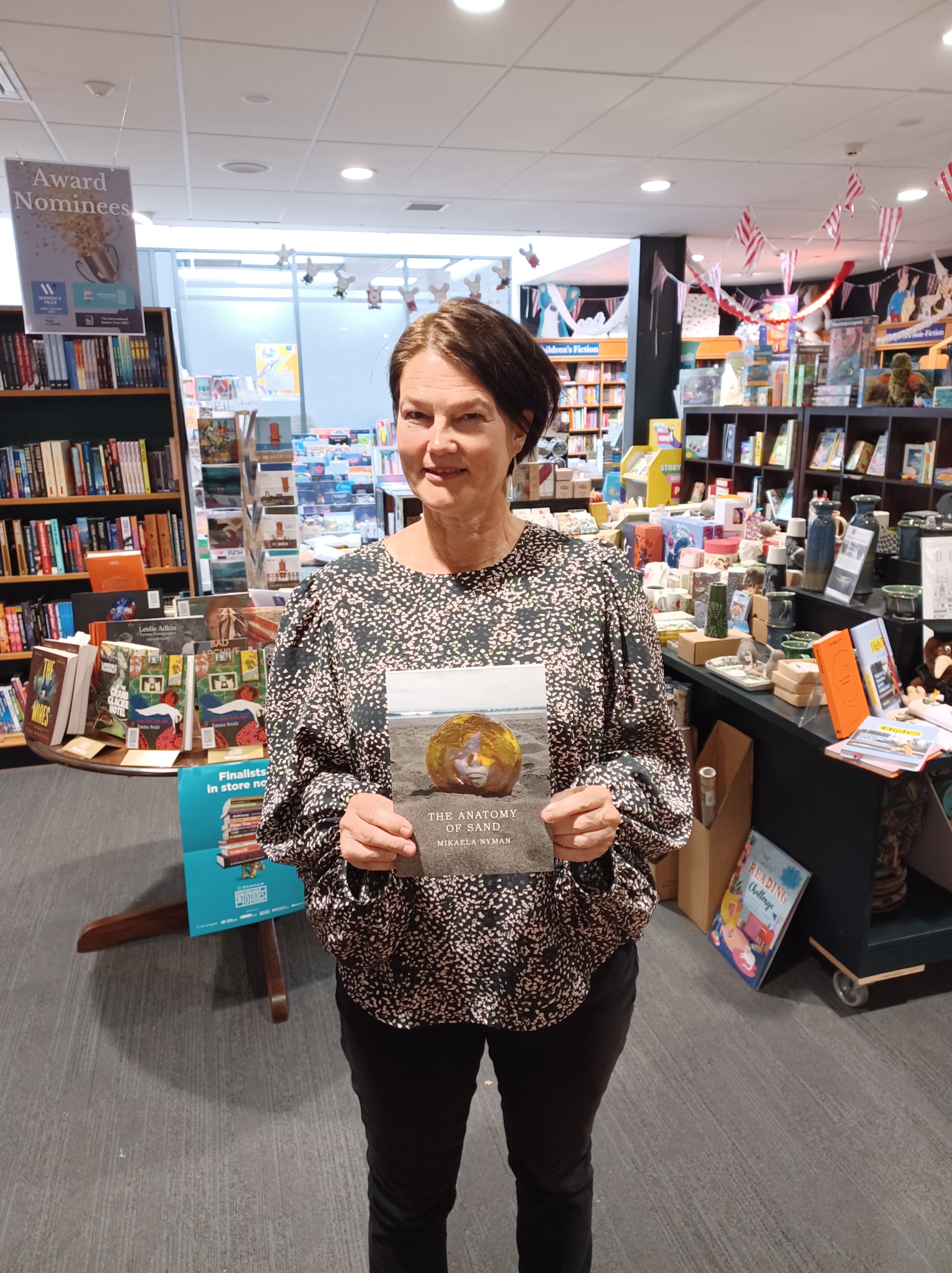
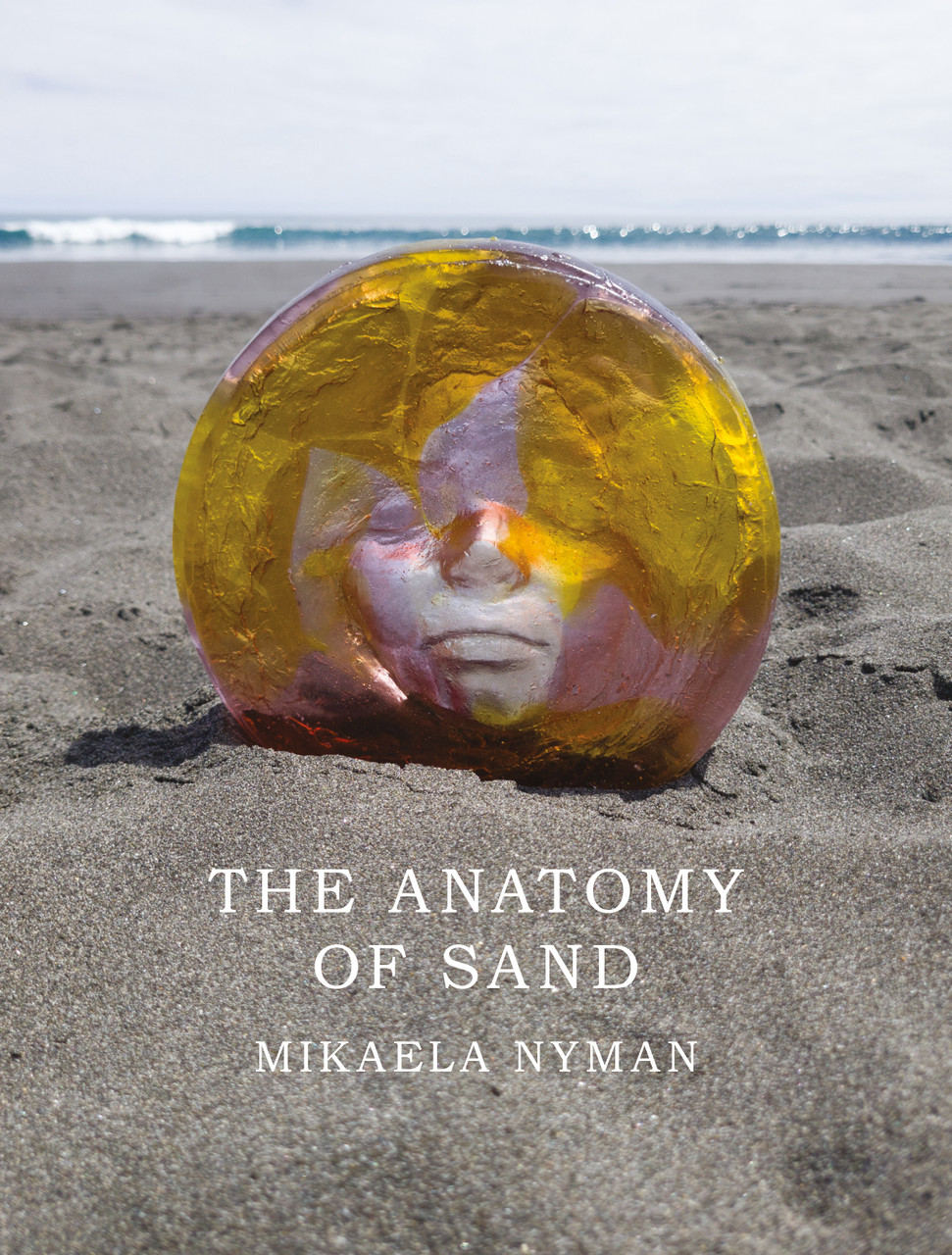
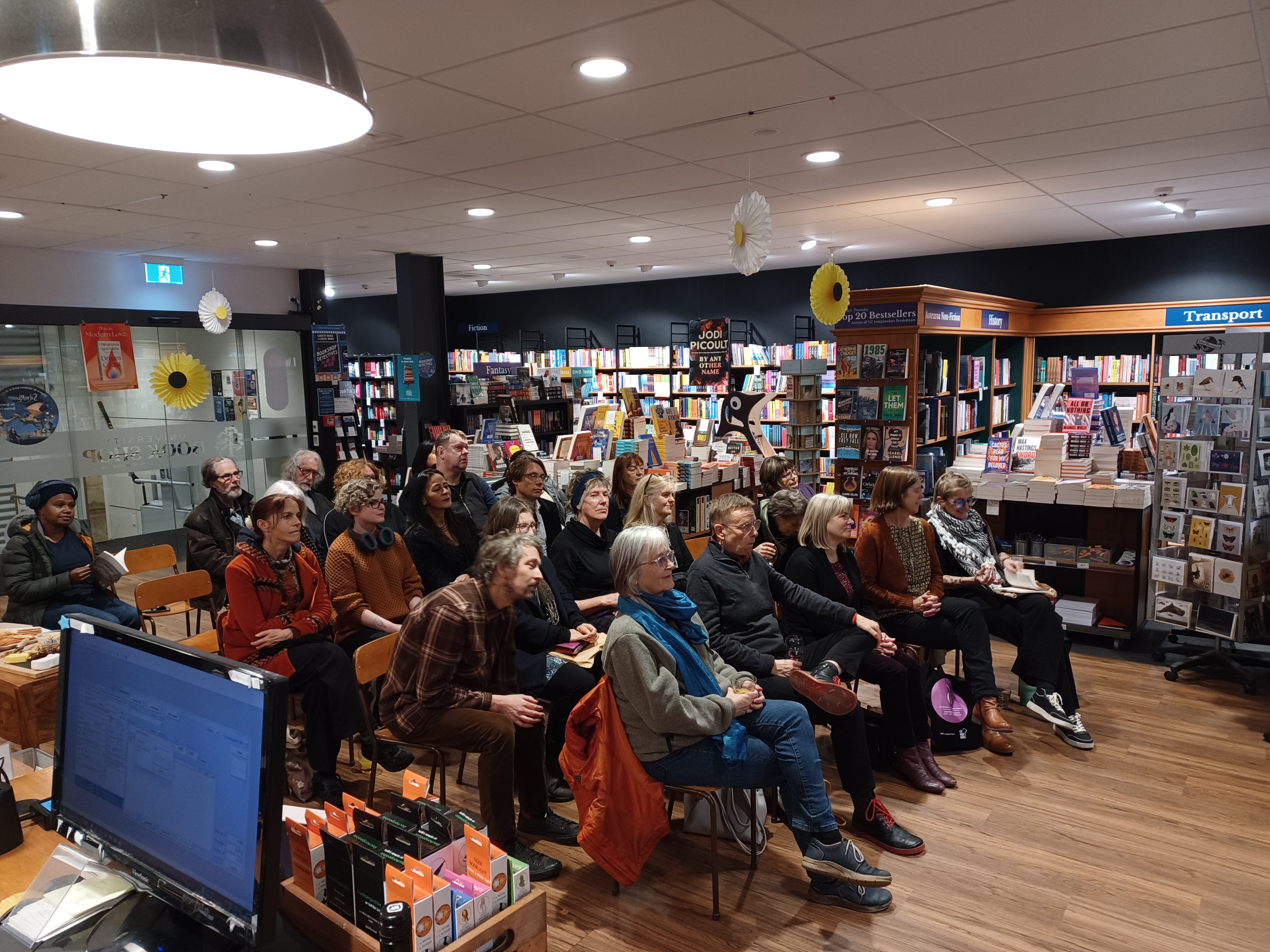
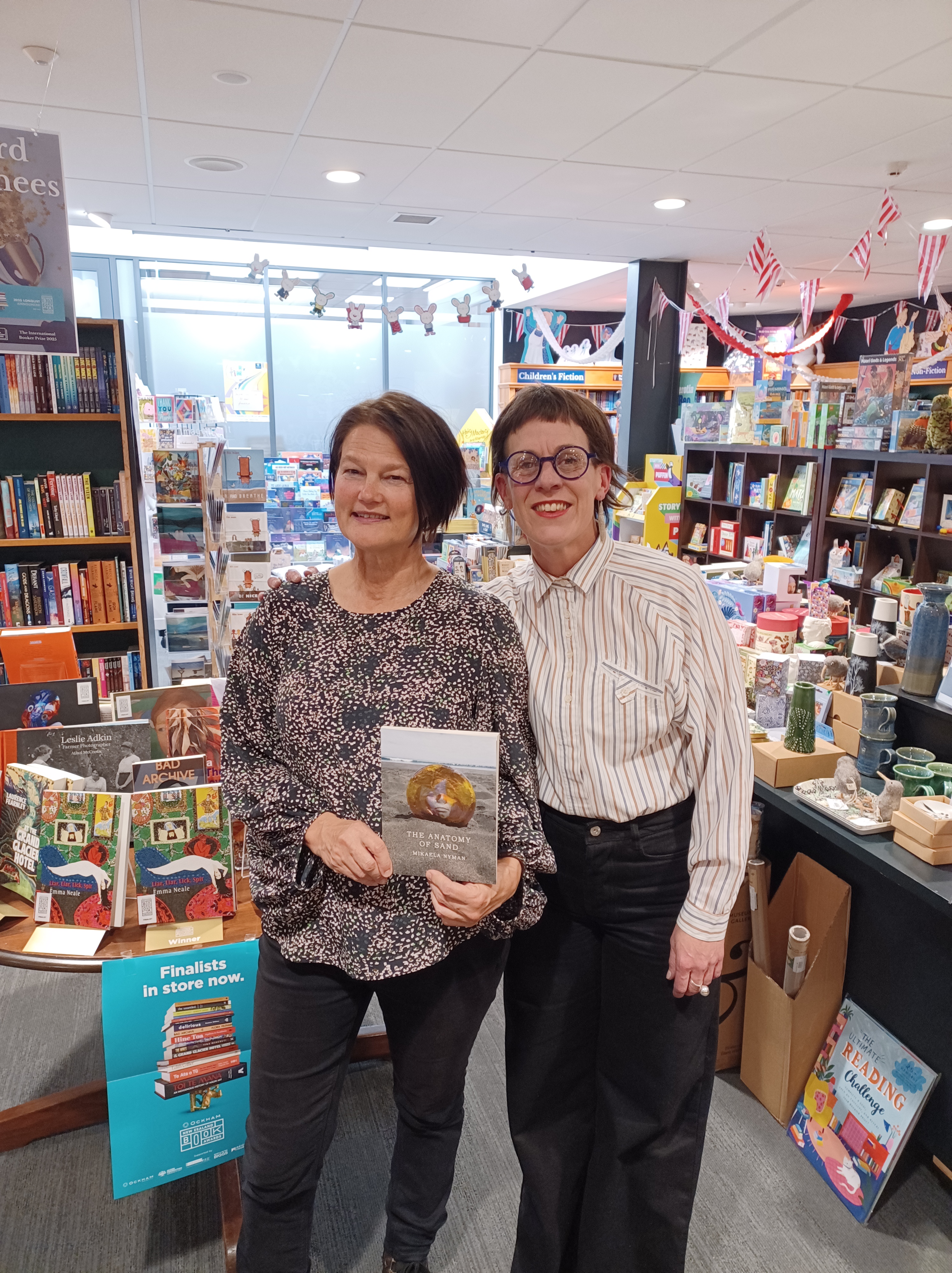
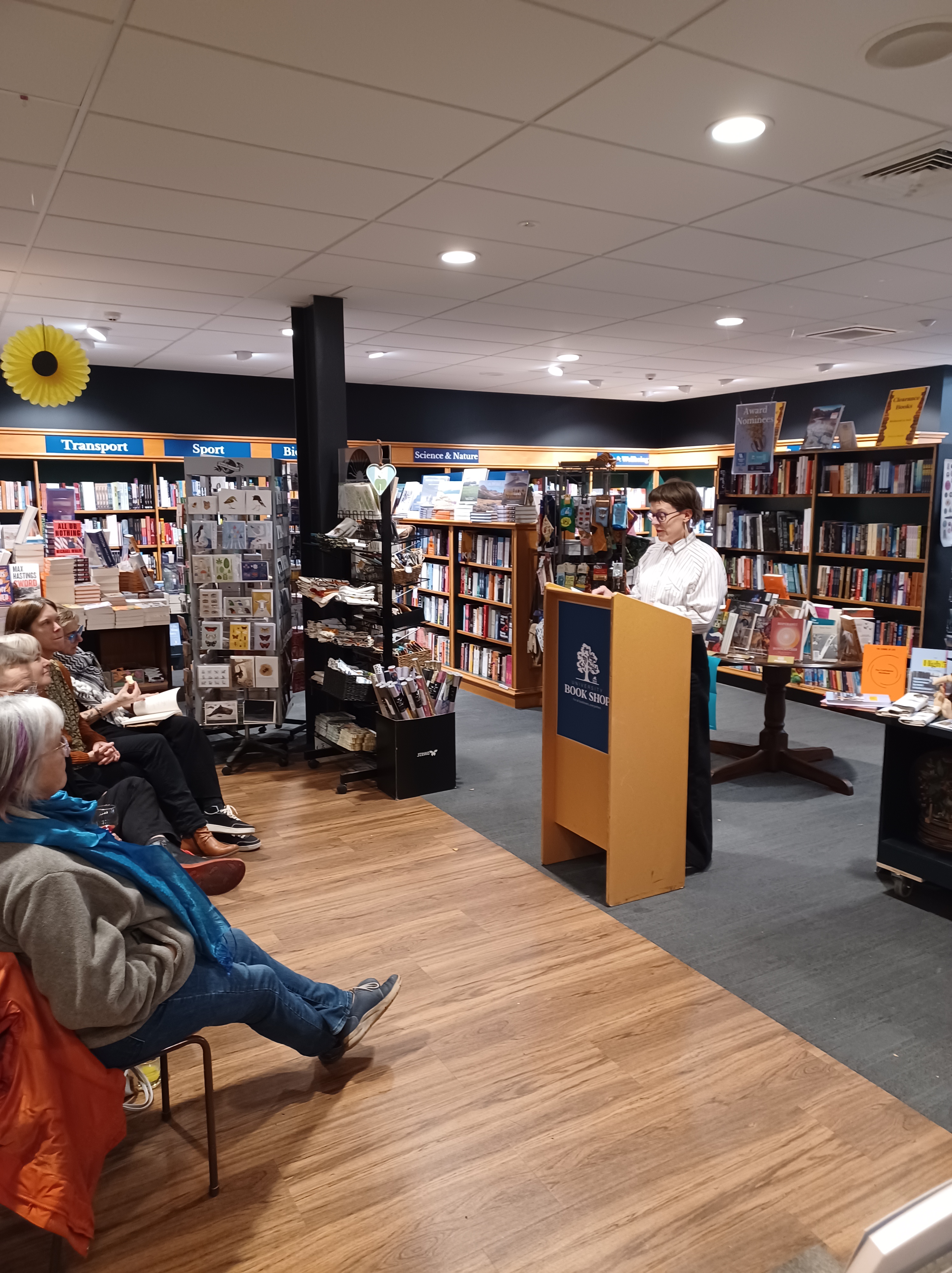
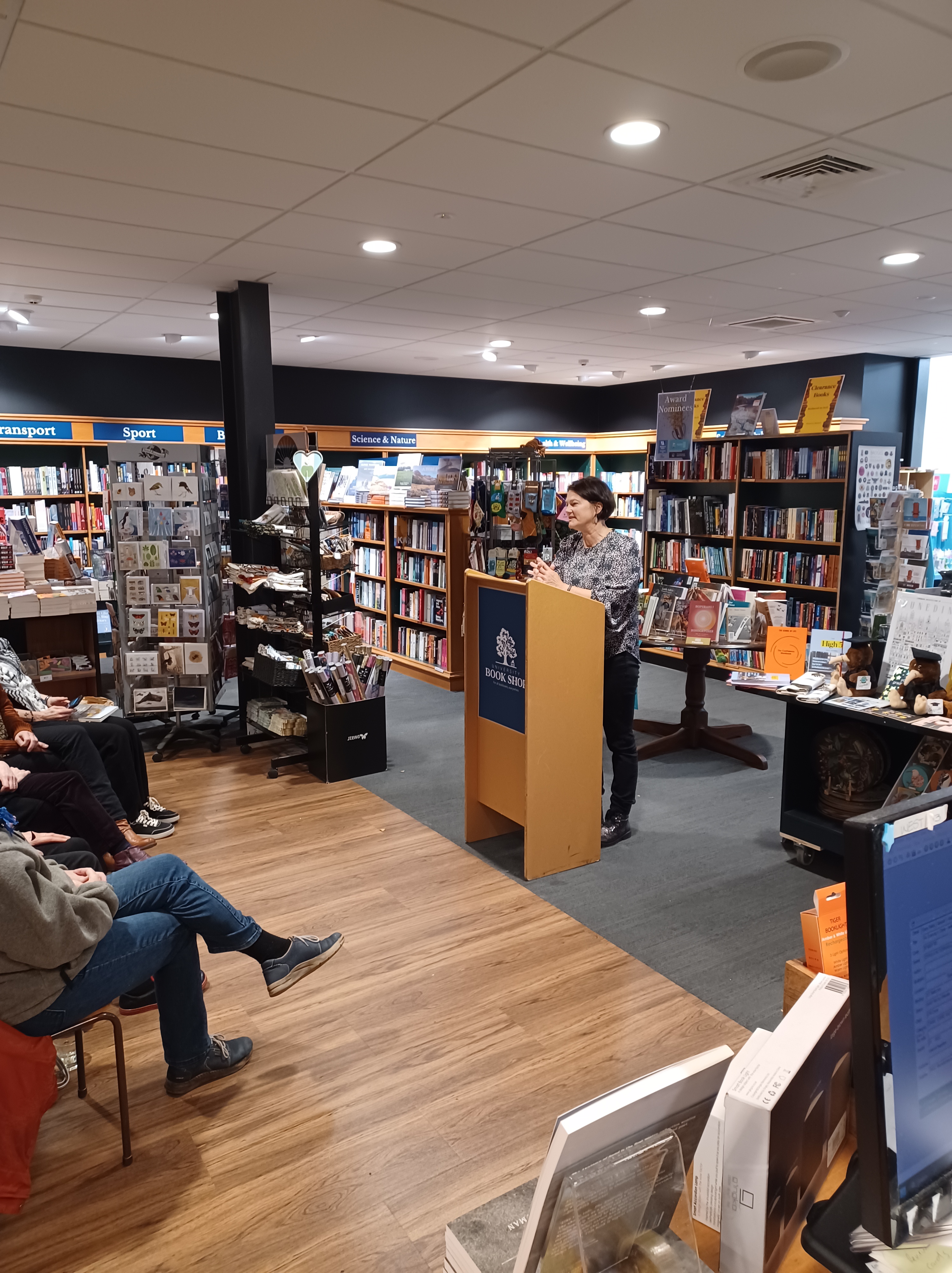
TheAnatomy of Sand, Mikaela Nyman, Te Herenga Waka University Press,2025 (the photos are by Ina Kinski at UBS Otago)
Launch speech for TheAnatomy of Sand by Mikaela Nyman
Kia ora koutou
Thank you so much for this invitation, Mikaela, to launch this new book, The Anatomy of Sand. It’s an honour to be asked. My job, as book-launcher, is to tell you why you should buy and read this book. I’ve got plenty of reasons why you should.
I never tired of reading and rereading this book. It was a joy to read a full collection, to sit down and do that thing many people don’t often get to do these days without distraction, and read a book from cover to cover—to read it’s contours and shimmies, its tilts and turns, its rises and falls. The poet seems to say to us: Look at this, can’t you see how curious it is? And then she goes on to show us. The poet is curious to the world, sensitive to our missteps as humans, but also alive its wonders.
As cliche as it may sound, reading Anatomy of Sand felt like traversing the world with my slippers on. Mikaela takes us so many places, in time and space: as expected (and hoped), we travel to Norway, Finland, and Sweden. But we also visit Nigeria, Palau, and the United Arab Emirates, Western Australia, New Caledonia, Dubai and Cornwall, Jamaica, Nigeria, the Virgin Islands, Bamiyan, and London’s River Thames. But we also flit around Aotearoa, from her home in Taranaki and the surrounding regions of Ōpunaki, Parihaka, Mōkau, we also go to Tokoroa, Porirua, Lake Rotokare, Waiwhakaiho, Mangorei, Mimitangiatua Awa, Whakarewarewa, Ngahoro, and back down here to Ōtepoti where a little bit of Mikaela’s heart remains after having the Burns Fellowship in 2024 (more on that later). Mikaela’s sense of place is immense and the poet never takes her taking up space for granted.
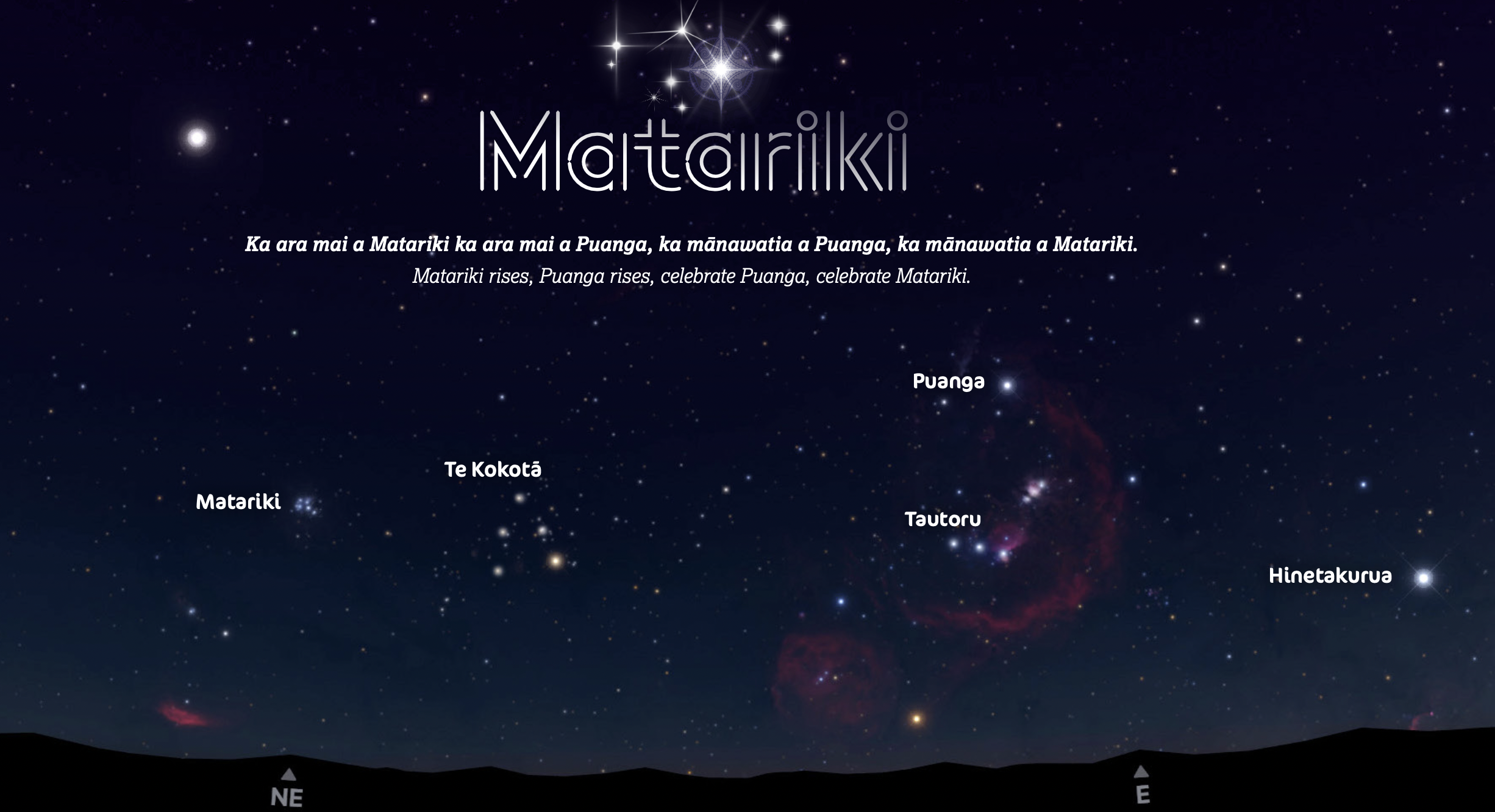
The book is also in conversation with many and provides a very contemporary constellation of voices. Like a great navigator of place and time, of language and culture, Mikaela reaches out to writers and artists, great myths and minds from so many reaches of the globe and somehow, somehow, joins them all in conversation. We meet Lauris Edmond, Michael Smither, Bill Manhire, Ngāhina Hohaia, Ni Vanuatu poet Carol C. Aru, Mary Oliver, Mary Ruefle, Rilke, Gregory Kaan, Andreas Wannerstedt, Maggie Nelson, Paul Celan, Brett Grahame, Sisyphus, and Oppenheimer. But this is not a name-checking exercise—Anatomy of Sand is a tapestry of language, connected deeply with the layers and complexities of our time. One poem, for example, is called ‘Reading Maggie Nelson at Matariki,’ where the poet invites Nelson’s presence into a contemplation of our celebrated winter stars, Puanga and Tautoro, to collectively contemplate the idea that may be what connects all writers and artists across time and space: that we’re all searching for ways to articulate the world. As Mikaela says, so beautifully: ‘Focus on Puanga bright above Tautoru / know that the inexpressible / is contained within / the expressed // We feed our anxieties with that / which eludes us, what can be said / instead—galaxies sugared / and stripped—stuck on verbs that explode a constricted throat.’
This is a generous poetry, a poetics of openness, ‘whose verbs explode a constricted throat’. We’re constricted by our time, our inability to fight against the monoliths of industry that continue to plunder our resources and tip the delicate balance of our environment, the ecosystems that would allow us all to thrive if we just took what we needed to sustain ourselves and nothing more. Mikaela’s poetry is sensitive to these plunders and butcherings, always turning toward the problems—never away from them—as if to say, let’s look at it. Let’s address the absurdities that underly so much of our late-capitalist motivations, the immense madness that is a phenomenon like private property, or, as the poet calls it, the ‘cost of sand.’ In her poem ‘Iron throne, submerged’ the poet tells us about the mineral Vanadium-rich iron ore found off the coast of Taranaki that a company called Trans-Tasman Resources ‘had their eye on’, and that vanadium is used for treating various life-threatening ailments. And yes, that sounds ideal, but the mineral can also be found in ‘space vehicles, nuclear reactors, aircraft carriers, piston and axles, as girders in construction.’ The poem asks, ‘who does the sand belong to anyway,’ and finishes by suggesting that ‘next time you’re held at ransom, why not bargain for sand dollars.’ It’s not too far outside the realm of possibility—stranger things have happened…
Of course, sand is a central feature throughout the book. The poetry is attuned to mineral, geology and the ancient body of earth we call home. But not just the land that we can successfully ‘own’ but also the water, the bodies of oceans that are also the home to so much life. The poet is sensitive to sand as border, porous, sometimes solid, and almost mythical line between land and sea, particularly as she comes from a long line of islanders and nordic seafarers, and has spent much time in the Pacific, particularly in Vanuatu, and with the work she did with ni-Vanuatu poets as co-editor of the excellent book Sista Stanap Strong! The poet seems to at home on and in the sand, as the place of welcome and transition, a porousness and openness to the waves of what comes and what goes.
And perhaps, if we too could hover in that sand-space for longer, we might also come to notice the things the poet is alerting us to. To exist on sand, to examine the anatomy of sand, is to learn of both the sea and the land. It is made up of both, just like the poet now is made up of the Aland Islands of Finland and the islands of Aotearoa, of several languages and cultures. And as such, the poet and the poetry has so much to teach us: as fellow island dwellers, we could really learn a lot from the reach of this poetry, the way it respects the land it is borne of it but is constantly looking out from.
On a very practical level, although I don’t condone googling-while-reading, I would suggest keeping your phone nearby as there is so much to be gained by following Mikaela’s layers of interest to teach you about so many things you’ve heard of, let alone even thought of: we learn about the Global Seed Vault at Svalbard, a secure backup facility for the world’s crop diversity on the Norwegian island of Spitsbergen in the remote Arctic Svalbard archipelago; the epic Finish National creation story, the Kalevala, and how representations of Aino, a mythological character who was the victim of sexual advances of a male counterpart have been rethought in the wake of the #metoo movement; that in 1961, amateur Italian radio engineers recorded what appeared to be a female Russian cosmonaut burning up on re-entry to the Earth’s orbit. I was constantly stopping and looking out the window, thinking: fuck! There’s a wonder in these pages, both of the poet in wonder of the world, but also the wonderment of a poet with the skill to show us her own wonder and to make us, in turn, wonder. I felt myself wondering: how exactly is she doing this? There is a desire to share (not ‘tell’) ideas and information, a generosity that comes, I think, with the poets capacity to see what’s curious and to infectiously share this with us.
This openness is twofold, both in the poetry and the poet, as observed from her time in Ōtepoti as the Burns Fellow in 2024. Mikaela threw herself into our community, forged genuine and what I imagine to be life-long friendships with some of us in the room. Her desire for connection and community is immense and this is illustrated in the poetry too. It forges connections, leads you toward that ‘Aha’ moment, guides you the reader toward new knowledge. It’s a poetics of generosity—a sisterlyness, for people and for the environment.
It’s a generosity that is quite unrivalled in contemporary poetics, I would say. This is poetry that isn’t intersted in the the self, the personal. Yes, it views the world as any subject would, making it subjective, but the poet is so acutely aware of the bigger world, the one in which that subject lives. The beautiful poem ‘Beach Scrabble’, reads:
Drop your phone and concentrate On this complex arrangement of stones and bones for the sake of sanity, beauty and all the things that count yet cannot be measured
Of course good intentions count— but do they suffice?
What are we but petrified symbols standing in for the real thing lost to rising tides
Mikaela’s voice is unlike anything I’ve read in NZ before and we’re lucky to have her, writing about us, writing with us, writing amongst us. She comes from a civilisation eons older than our own and she’s chosen to make a life here, to share the wisdom from beyond, and Anatomy of Sand is a taonga in our literary ecosystem. The work in here offers threads where threads have not been, invisible ties to a world that is not our own, lands and sands beyond our shores, and yet shows us exactly how connected we all are, how undeniable these threads of connection are.
It’s a leap of faith, by the writer, to ask someone who hasn’t read the book yet to launch it and I also took a leap of faith when I agreed to launch Anatomy of Sand before I’d even read it. There’s always that slightly fretful moment of thinking, ‘what if I don’t like it?’ ‘What will I find to say about it?’ Well, I can assure you, I love it (and have obviously got a lot to say about it) and I absolutely know you will too. If you don’t buy this book, you’re missing out.
Dr Lynley Edmeades (she/her) Editor, Landfall Aotearoa Arts and Letters Lecturer | Pūkenga, University of Otago – Ōtākou Whakaihu Waka
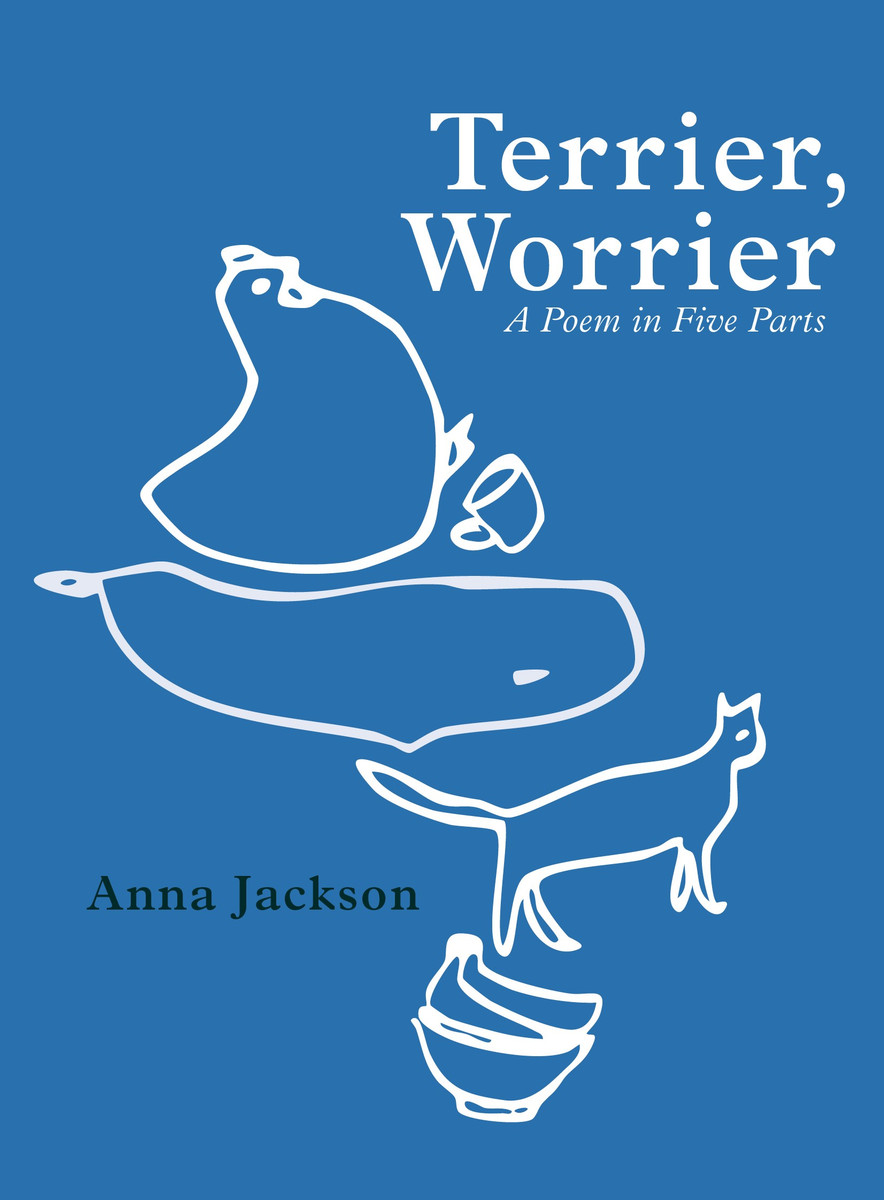
Terrier, Worrier A Poem in Five Parts, Anna Jackson Auckland University Press, 2025
“She came upstairs looking more like a cloud than a silver lining.”
Loop: A Review in Nine Parts
LOOP
Anna Jackson’s glorious new collection, Terrier, WorrierA Poem in Five Parts, gets sunlight slipping through the loops of my thinking, reading, dreaming. The collection is offered as a seasonal loop as we move through summer, autumn, winter, spring, summer, and in this temporal movement, the loop regenerates, absorbing and delivering rhythms of living . . . mind and body . . . rhythms of writing . . . nouns, verbs, conjunctions . . . rhythms of thinking . . . and little by little . . . the compounding ideas, the feelings. It’s poetry as looptrack: overloop, underloop, throughloop.
I photographed a floor softly tiled in white and grey and posted it with a quote from Emily Brontë’s diary: ‘Aunt has come into the kitchen just now and said, “Where are your feet Anne?” Anne answered, “On the floor Aunt.”‘
BREAKING THE FRAME
There is a long tradition of breaking the frame of poetry, or let’s say opening the frame, widening, nurturing, reinventing, rebooting, invigorating. And yes, there is sunlight drifting in through the gaps in these poetry weatherboards, lighting up what poems can do or be, both beyond the frame and within the frame. Subject, style, sensation. Anna writes:
Poetry can be a form of refusal as well as openness.
I am reading this poetry book at the kitchen table and it is a loop of ignition points. Anna also writes:
I thought, it tells us something about poetry that when we need to talk to ourselves about something we don’t know we know, we tell it to ourselves when we are sleep, in images we struggle to remember when we awake, and often take more than one reading to fully understand.
PRESENT TENSE
There’s a long black cloud streaking from the west coast to the backyard bush sprinkling salt and pepper rain. Terrier, Worrier is generally written in the past tense, with many stanzas beginning with ‘I thought’, yet for me, curiously, wonderfully, it carries the charismatic freight of the present tense, the sweet fluidity of the gerund, the present participle . . . where be-here-now fluency prevails regardless of gaps, rest-stops, hesitancy. Reading is to be embedded in the moment of the past as reader, so that what happened, and what was thought, becomes acutely present. Dive into the poetry currents in the collection, and along with the writer, you will might find yourself filtering, evaluating, experiencing, valuing, photographing, documenting, thinking. Savouring a moment.
I remember sitting in the car after work, not wanting to turn on the windscreen wipers because I felt like I needed rain on the windscreen to do the work of crying for me.
THOUGHT
Thinking. Yes Terrier Worrier is a poetic record of thought that offers anchors, the cerebral terrain of the philosopher say, an archaeology of ideas to dig for. Where testing the possibilities of what is matters along with what is not, along with everything in between. Poetry forms a thinking loop, a porous border between poem and idea, where meaning is organic, fertilised by nuance and shifting light. Sunlight say. Looping motifs and coiling thinking, like the surprise delight of letting thoughts carry you without planned itinerary. Where meaning ripples and slides. This is what happens as I read Terrier, Worrier.
Anna writes:
I thought, most of the time I, too, am a person not having thoughts but only having sensations, emotions, instincts, memories, anticipations.
Perhaps the poem becomes the vessel for ‘sensations, emotions, instincts, memories, anticipations’.
PRESENCE
Anna’s poetic record of thought (how ‘record’ resonates with the effects of tracks and music) is physically active. Thinking is anchored in a physical world, a yard of hens, a cat, partner, mother, father, daughter, son, friends. A tangible texture of dailiness that grounds the rhythm of thought in physicality. I love this.
Beside my bed there is a painting of a blue fish, floating high above a grey-blue sea, impaled on a grey-blue spike. On the back of the painting are written the words of the artist, my daughter, aged 3: ‘This is the fish. I painted it because it stuck in my mind.’
DREAMING
Dreaming becomes thinking becomes inventing becomes dreaming. Anna holds the idea of dreaming, like a prism on her palm, to question, revisit. Again I’m acutely aware how everything I have already said feeds into what I am saying here, and what I will say. How dreaming is the present tense, looping past and future, how the poet wonders her dream, with dream seeping into life and life into dream, into the threads of a poem in five parts. How do “sensations, emotions, instincts, memories, anticipations” slip into the dream texture, I wonder. Into the making of a poem.
When Amy told me she had dreamed about me, I felt as if my own life were like that dream in which you climb some stairs in your house and discover an additional room, or a whole series of rooms, you didn’t know was there.
SPACE
A word with myriad possibilities. There is space in the reading, in this nourishing process of reading that sends me looptracking and dawdling in a state of dream and wonder. Early in the sequence Anna is (and yes usually I am cautious about attributing the speaking voice to the author, but this book feels utterly personal so I think of the voice as Anna’s) – taking photographs of squares.
There is too the proximity of space and death, especially as both Anna’s parents and sister had had “a turn at death’s door”.
There are recurring motifs of rooms and buildings, and especially this thought:
I thought, every body is a memory palace.
And this:
I thought about the concept of ‘peripersonal space’, the idea that your mental mapping of the self includes the immediate space around you, and what you habitually keep about your person, including for instance your bag, or your falcon.
READING LIST
Lately, I have been reading novels and poetry books that make a writer’s reading history visible. I love falling upon titles to be added to my must-read notebook, across genre, time, location, languages. Anna’s reading list at the back and the titles sprinkled throughout is incredible.
How may times do I return to Virginia Woolf! I must read Jan Morris’s thought-a-day diary, or Robert Wyatt’s irony of doing loads of minimalism, and how I too loved Susan Stewart’s magnificent On Longing: Narratives of the Miniature, The Gigantic, the Souvenir, Olivia Lang’s Crudo, Madison Hamill’s brilliant Specimen, Muriel Rukeyser’s poetry.
SELF LOOP
Worrier, Terrier is the kind of book you can’t put down. I keep giving myself another week to flow along its currents, neither to explain nor pigeonhole, but to embark upon the joys of reading poetry, of reading a book that feeds your mind, that sparks and startles your memory banks, that gets you revisiting your own secret feelings and thoughts. Because more than anything, I hold Terrier, Worrier as a book of self. This book of invigorating return, where you will find yourself expanding with both recognition and discovery. It feels like this is what Anna did as she wrote. Is the poetry a form of coping with the abysmal world, the drift thoughts and non-thoughts, the dailiness, the relationships?
I read another page. Then I reread this, a pulsating heartcore of the book:
Some feelings expand the self like a gas into the world and some condense the self into the coldest matter.
And then this:
I wondered whether I could hear ‘terrier’ as a version of the word ‘worrier’, a worrier being not someone who makes you worry but someone who themselves worries, who worries away at things like a terrier might worry away at a sock. A terrier would be someone who allows themselves actually to indulge in the feeling of terror. I tell myself, ‘I am not okay, but I will be okay’, but maybe I need to stop saying that and release the terror, or maybe the terrier is not myself but represents someone else’s terror that needs to be heard.
Tomorrow I will pick up the book again, and find another gleam and thought spur. I want to sit in a cafe with you all, let our thoughts dream and drift and link, as we empty our coffee cups, pick up our pens, and catch both the dark and the sunlight slipping in . . . as we write through weeping, laughter, longing, with doors ajar and love strengthening. I utterly love this book of wonder.
Anna Jackson is the author of seven collections of poetry as well as Diary Poetics: Form and Style in Writers’ Diaries 1915–1962 (Routledge, 2010) and Actions & Travels: How Poetry Works (Auckland University Press, 2022). She lives in Island Bay, Te Whanganui-a-Tara, and is associate professor in English literature at Te Herenga Waka – Victoria University of Wellington.
Anna Jackson’s website Auckland University Press page
as our dead rise heading for the stars what if they get snagged on a satellite
will they be caught forever in a rotating purgatory-like state as if stuck on a glaring
disco-blaring merry-go-round that no-one can get off what if they land on the celestial star-link waka –
this is a genuine concern
i imagine a static-y incoming msg from my mum trying to give me her beauty tips
but they’d come in 90 mins apart fits & starts ////// don’t ////// for ///// get
your ////// lip ///// ////// stick ///// and //// re///// member lux//// soap ///// ponds
dry ///// skin //// cream ///// after ///// rins //// ing with ///// cold ///// water
i think i’d prefer ‘te huka mate’ were offline most of the time
Ariana Tikao
The first of the stars
Ask the wind why it howls Ask the storm cloud why it thunders Ask the Living Earthly Things why do they seek shelter from the lashing rains
Little Brother he will answer ‘Kua riri au ki ōku tuākana!’ I am angry with my brothers
You know how brothers are Sometimes they fight like only brothers fight With terrible ferocity
Ask Little Brother ‘He aha koe i riri ai?’ Why are you angry?
Little Brother he will answer ‘Kua hīanga rātou i tō mātou matua Kua hiki atu ki te pōuri kei runga’ They have betrayed our father lifting him to the gloomy darkness above
So Little Brother rages even as his mother weeps and all his brothers fall before him All except one
Ben Brown 2025
Puaka
Set in the blackness of space your glare is a whisper, a glimmer, a sliver, your gleam a loosened feather of flame,
your light a phantasmagorical ghost to haunt our fire-eating solar system through light years that in earthly time measures
four and a half centuries before your light and fire finally makes land as a pre-dawn solitaire
diamond nestled bright in a cushion of dark velvet sky above my door, your gleam as factual
as science, or time and far too real for myth or song alone. Puaka, you are family,
each winter rising again early in our southern sky to blaze blue, singular, easy to locate and kind enough to draw near
as we eat or pray or sing, your appearance so vast, your light so ancient, yet somehow, new and near and small enough to fit my eye.
Kay McKenzie Cooke
NOTE: Puaka (Puanga, sometimes Poaka) Rigel, is the star southern Māori iwi and hapū look to as a harbinger for the Matariki cluster. More information can be found here.
What the stars say
I hear bird bones crack, splinter. I hear offal slosh in a bucket.
Matariki have seen it all before — my star companions remain silent. Have they gone mad?
Yes, mad as a meat axe.
I hear gunshots at the growing wall, I hear laughter at cocktail hour out of mouths as wide as mako shark.
The bleached face of Sirius gives no clue, all are catching a ferry to the Isle of the Blessed.
My ageless self, trapped in a maimai — who knows how temporary?
It seems I am lasting forever, as long as stories repeat.
I blush and quiver to see myself related to this pale imitation of the gods.
Reihana Robinson from Auē Rona, Steele Roberts, 2012
The poets
Ariana Tikao is a Kāi Tahu writer, musician, and curator from Ōtautahi. She was a 2023 Ursula Bethell Writer in Residence at Canterbury University, and was awarded as a New Zealand Arts Laureate in 2020. She has co-written two books Mokorua (2022) and Te Rā: The Māori Sail (2023), and her first poetry collection Pepeha Portal will be published by Otago University Press in 2026.
Ben Brown (Ngāti Mahuta, Ngāti Koroki, Ngāti Paoa) writes children’s books, short stories and poetry for children and adults, general non-fiction, freelance articles and memoir. In 2006 he won Best Picture Book with artist/illustrator Helen Taylor in the NZ Post Children’s Book Awards with their book A Booming in the Night. His poetry has been published in various anthologies here and around the world and Radio NZ and The Radio Network have also recorded him. In 2011 he was the Maori Writer in Residence at the Michael King Writers Centre in Devonport Auckland. His poetry collection Between the kindling and the blaze was shortlisted in the 2014 Nga Kupu Ora Aotearoa Maori Book Awards. In 2021 he was appointed inaugural Te Awhi Rito New Zealand Children’s Reading Ambassador. He was the Te Kaipukahu University of Waikato Writer in Residence in 2024. He is also a father of two, which he considers his best work to date.
Kay McKenzie Cooke (Kāti Māmoe, Kāi Tahu) lives and writes in Ōtepoti. She is the author of four poetry collections. Her first poetry collection Feeding The Dogs won the Jessie McKay prize in 2003.
Reihana Robinson’s latest poetry volume BE THE RISING HUMAN is available from Carson’s Bookshop in Thames, Paradox Books in Devonport and on Amazon and KDP.


 NZ Poetry Shelf