Megan Kitching reads from At the Point of Seeing, Otago University Press, 2023.
‘Headland’
‘Crematorium’
‘Houseplants’
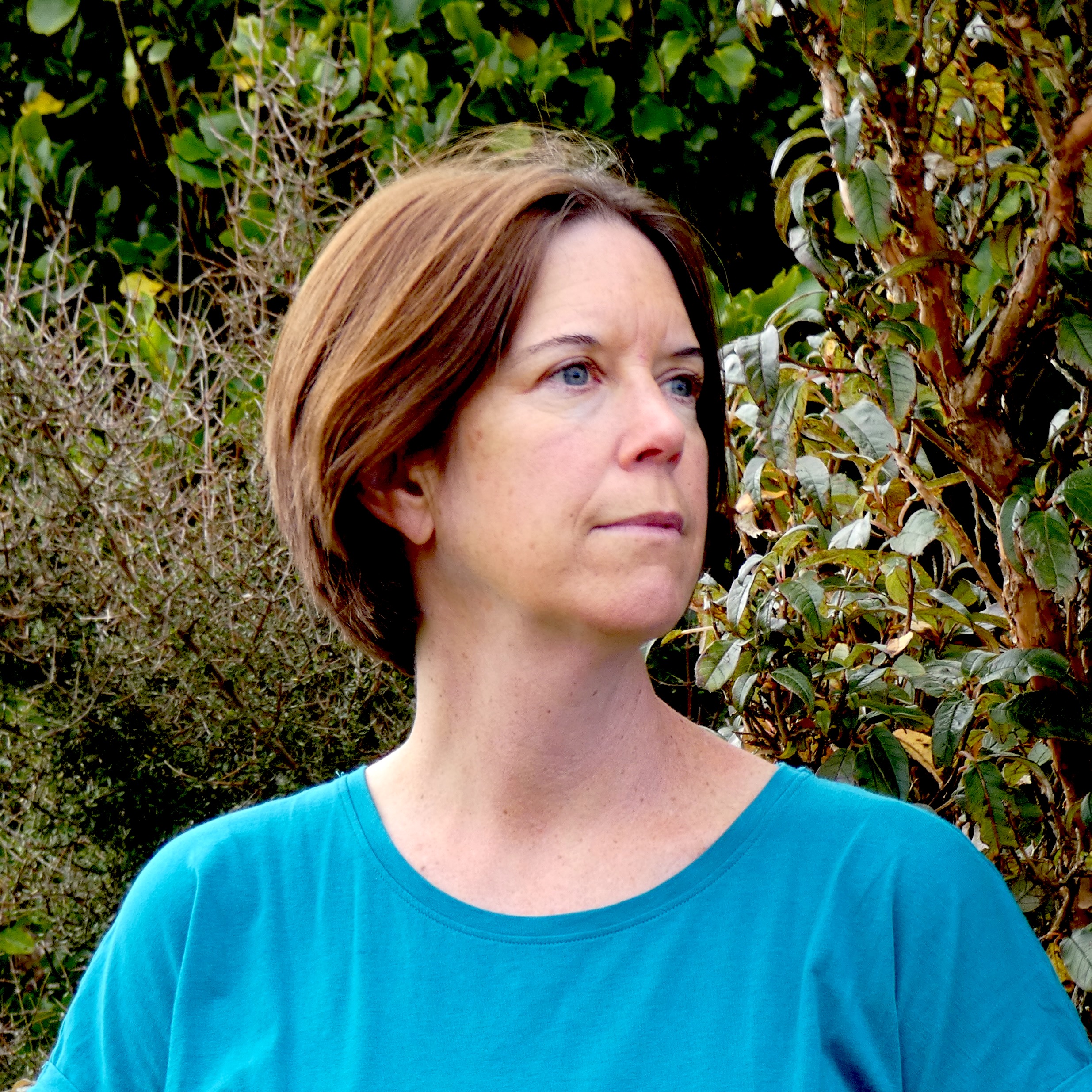
Megan Kitching holds a PhD in English Literature from Queen Mary University of London, looking at the influence of the natural sciences on eighteenth-century poetry. She has taught English and creative writing in the UK and at the University of Otago. Her poetry has been widely published in Aotearoa New Zealand and international journals. In 2021, she was the inaugural Caselberg Trust Elizabeth Brooke-Carr Emerging Writer Resident. Her debut poetry collection is At the Point of Seeing (Otago University Press, 2023).
We walk into the light inside the poem we have become, inside the house of poetry. Your words flying to each other with astonishing ease, a constellation in the world-sky, the moon a perfect accomplice.
Michael Harlow
Michael Harlow has written 14 books of poetry, and was awarded the prestigious PrimeMinister’s Award for Literary Achievement for Poetryin 2018. In 2014 he was awarded the Lauris Edmond Memorial Prize for distinguished Contribution to New Zealand Poetry. He was awarded the Katherine Mansfield Menton Fellowship to France in 1987. He lives and works in Central Otago as a writer, editor, and Jungian Therapist.
oh Frances bright wings at the corner of the barrel vault against a blue Tuscan sky
or that big purple octopus curving along the underside of the pontoon where you wait for the ferry that will bring you to Devonport a big purple octopus for the start of rehearsals wind and weather never looked better
and then there were the summer lunches breezes on the deck cuisine straight from the garden crisp white wine cat monitoring dog then into the car or the swim at Onetangi
island life its purple octopuses and banked tomato plants in cans clear white wine and zucchini fritters surrounded by golden flowers
here
bells pealing from a dark throat in the tītoki
here
sticky white flowers pelting the deck
here
a fantail hopping about in the yellow ginger
I come down the steps counting to fifteen and we make a progress around the garden arm in arm feet cool in the damp grass of the oncoming evening here is Senhor Palm his thick trunk one of two shooting four metres into the sky chinks below him the heliconia almost in flower bright red bract about to unfold two more palms though one is ragged and may have to go pink banana flowers so beloved of birds a leaf the length of my arm torn into soft strips then the four beds of provender wilding coriander basil coming on in ordered rows beans out of control on their towers bull’s horn peppers curling from stalks that can barely hold them three tomatoes from Taranaki seed sweet green shishito peppers for pan-frying feathery thyme clinging to fingertips then the feijoas and the disreputable bird of paradise whose days are numbered but not the cannas waving their red flags in a bundle of green spears the tall ginger plant with ivory flowers yellow and orange on the inside the boxed fig tree branching out tiny fruits on its extremities and the soft new foliage of the tītoki where berries of red and black are forming and the tūī comes to dive for insects in the evening air we circle back across the grass to the steps and ascend listening to water pattering below
Michele Leggott
Michele Leggott’s eleventh poetry collection, Face to the Sky, was published recently (Auckland University Press). Her selected poems, Mezzaluna, was co-published in 2020 by Wesleyan and Auckland University Presses. Earlier titles include Vanishing Points (2017) and Heartland (2014), both from Auckland University Press. She is working on a study of archival poetics, provisionally titled ‘Groundwork: The Art and Writing of Emily Cumming Harris’. Michele Leggott co-founded the New Zealand Electronic Poetry Centre (nzepc) with fellow poet and librarian Brian Flaherty in 2001. She was the New Zealand Poet Laureate 2007–2009 and received the Prime Minister’s Award for Literary Achievement in Poetry in 2013. In 2017 she was elected a Fellow of the Royal Society of New Zealand.
We, the poetry communities in Aotearoa, are heart-smacked, gut-punched, unbearably sad, at the news that Paula Harris is no longer with us. Poets and friends are sharing personal heartbreak and pain on social media. It is a time to remember a woman whose poetry touched us, whose ongoing struggles with depression touched us, who wrote and spoke publicly of her illness, whose wit and sense of humour touched us.
Paula won the 2018 Janet B. McCabe Poetry Prize and the 2017 Lilian Ida Smith Award. Her writing was published in various journals, including Hobart, Berfrois, New Ohio Review, SWWIM, Diode, Poetry NZ Yearbook, The Spinoff and Aotearotica. Her essays have been published in The Sun, Passages North, The Spinoff and Headlands: New Stories of Anxiety (Victoria University Press).
Poetry Shelf is offering some of Paula’s poetry as a tribute. I hold out her words as a way to remember. I am mindful of a need to support each other, to open a space for connection, and it feels like poems have the power to do this. In 2019 I hosted an event at Palmerston North Library, where a bunch of local poets came together to celebrate Wild Honey, and more importantly, the writing of women across decades, across communities. It reminded me that poetry is always a cause for celebration. Even when it is laying down challenges, speaking of tough things, getting complex and difficult, opening up self. It is sound and it is heart and it is interlaced. Paula Harris was part of this poetry embrace. I am remembering this. Today I am holding her poetry close. In grief and in aroha.
everything changing
I never meant to want you. But somewhere between the laughter and the toast the talking and the muffins somewhere in our Tuesday mornings together I started falling for you. Now I can’t go back and I’m not sure if I want to.
from woman, phenomenally
If you love me you’ll buy Bluff oysters and cook asparagus. Even though I don’t like either.
for Kirsten Holst, for feeding me many good things and for Alison and Peter, for their Bluff oysters and asparagus
When I am no longer who I was I can only hope that I will be loved by someone so much that every day during Bluff oyster season they will buy me a dozen Bluff oysters.
Even though they don’t like Bluff oysters they will buy them for me and every day I will exclaim “I can’t even remember the last time I had Bluff oysters!”; they will nod at the extreme length of time it has been.
When I am no longer who I was and when Bluff oyster season is over I can only hope that I will be loved by someone so much they will cook me freshly picked asparagus every day.
Even though they don’t like asparagus they will grow it for me and pick it for me and lightly steam it so that I can relish it served with hollandaise sauce (although some days more lazily served with butter and lemon).
I will eat it with my fingers and let the sauce (or butter) dribble down my chin; no one will mind or tell me to be less messy it will just be moments of edible joy.
In reality I don’t like Bluff oysters (or any oysters) and I can’t stand asparagus (the taste and texture are disturbing); I can only hope that maybe someone will love me enough to buy and cook me the things that I love even though they hate them, even though I won’t remember.
First published on Poetry Shelf
Our House
The roof drips rain beside my bed The shower curtain hangs torn from a ring The gate creaks unprotected from the wind
No drawers in the kitchen A gap in the toilet window A half-painted rainbow on my wardrobe
Our house is beautiful
First published in Spin 31 (1998)
Herakles phones the depression helpline at 1am, exhausted from crying and the inside of his head
it is easier to fold a fitted sheet than to get help from the depression helpline easier to fold a fitted sheet with a partner who doesn’t listen to instructions easier to fold a fitted sheet with one hand easier to fold a fitted sheet made of damp tissue easier to fold a fitted sheet while balancing one-legged on the end of a crocodile’s snout easier to arrange finance and buy a fitted sheet factory and deal with the folding en masse of fitted sheets than to get help from the depression helpline
they tell him to take up a hobby to have a cup of tea to get some sleep
he folds into himself, holding the corner of a sheet in one hand folds into himself and balances one-legged on the end of a crocodile’s snout
The wise woman sits in the shade With stuffing peeping out from her chair, Looking like a watercolour of the writer In her wide-brimmed straw hat Dark glasses And flower-laden dress, While a black kitten plays In her tossed aside straw bag. Watching her through an open window, With bees playing in the lavender bush And spiders weaving their homes, This is where she belongs At the bottom of the garden In full bloom.
today an editor told me that what I write isn’t poetry and so maybe I don’t know how to write a poem but I was thinking about you and wanted to write something; so here is your something
you are the bath filled with green marbles I slip into at night to wash myself
you are the letterbox overflowing with sleeping ladybirds I check compulsively for mail
you are the curtains of pink candyfloss I pull closed after the moon comes up
you are the couch made of turnips I lie on as I wait
you are the carpet made of ripe figs I dance over on summer mornings
none of this makes sense so it’s possibly a poem none of this makes sense so
you are the wheelbarrow full of silver bullets I feed to the garden to make it grow
First published in Leon Literary Review 2020
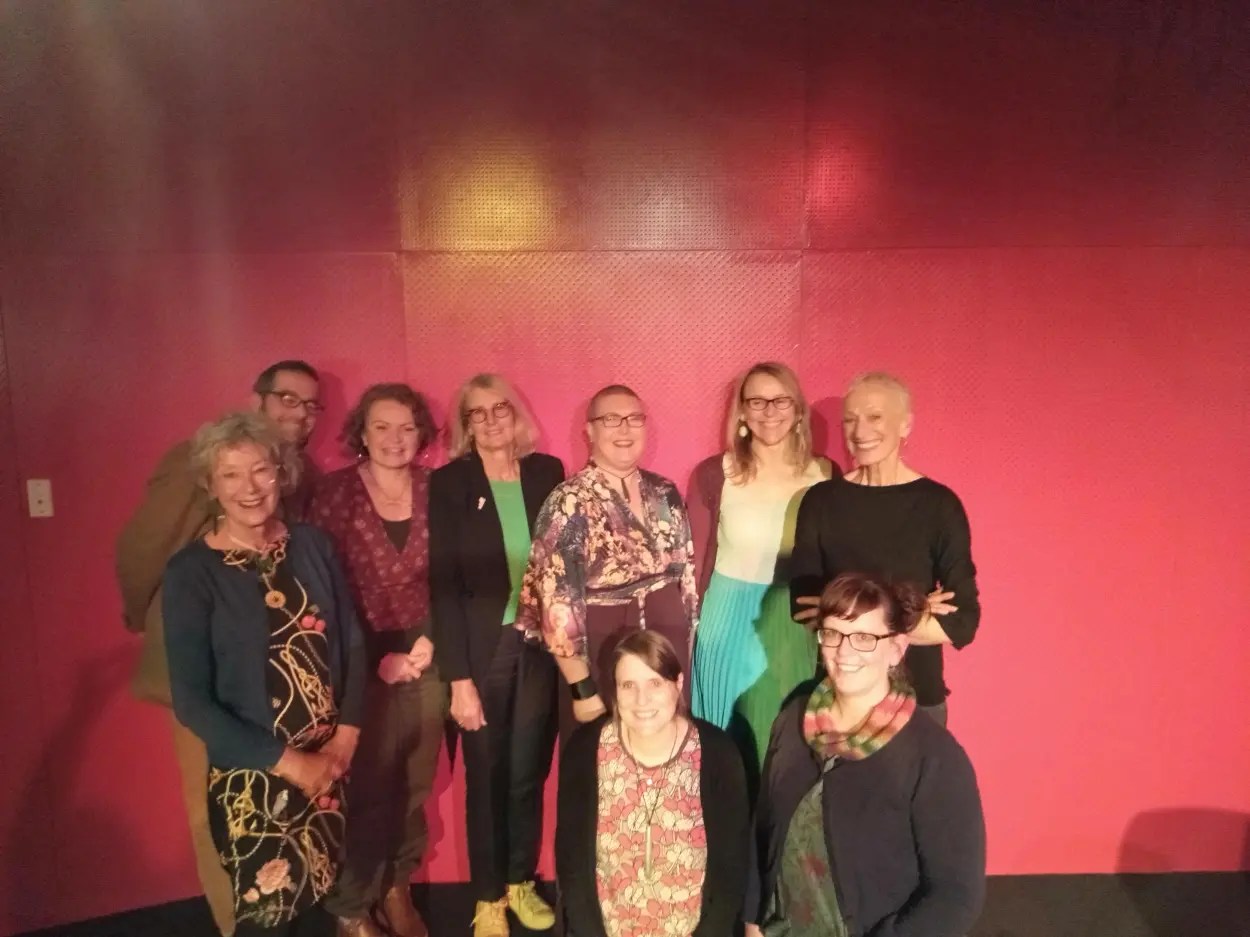
2019 Palmerston North Library and the writers: Johanna Aitchison, Paula Harris, Thom Conroy, Paula King, Helen Llehndorf, Marty Smith, Hannah A Pratt, Jo Thorpe, Janet Newman, Paula Green and Tina Makereti.
2019 Palmerston North Library: Paula Harris, Paula Green and Paula King
sharing the good stuff
my mother always told me i had to save my good stuff keep it for another day
so my prettiest colouring books went uncoloured my toys sat on their shelf
her best dresses stayed in plastic her engagement ring hidden in its box
what my mother never learned was that if you save your good stuff for too long one day there’ll be no one to share it with you
First published in Spin 32 (1998)
chamomile and lemon balm
in need of some healing i drive and drive until i reach a brick pathway lined with lavender gently waving and bobbing as i pass by. i sit on a bench resting my feet on the chamomile floor and i breathe. a honey coloured angel lays her head on my knee while i scratch behind her ears and i breathe. and when i have breathed enough i walk back the sea of lavender parting before me my angel loping behind me and i smile.
First published in Spin 33 (1999) Also published in Poems in The Waiting Room (2012)
The Twelve Lightbulbs of Janet Frame
I saw her in the supermarket driving a runaway trolley that dodged and charged imaginary opponents
I wonder if she was writing, paused in the frozen foods between the chicken legs and the harassed mothers
people want to know – what was she buying microwave lasagna, toilet paper, mouldy French cheese, canned spaghetti and sausages, sugary cereal, green tomatoes?
a dozen lightbulbs was all she had; maybe they were on sale super coupon special, maybe she only buys them once a year, maybe they all just blew at once like mine do
in 1945 Dr Lorand Julius Bela Gluzek of Cleveland, Ohio developed a dolorimeter which could measure pain in grams so maybe the weight I gained on antidepressants wasn’t from sadness and an increased appetite but my organs and glands – thyroid, pancreas, lungs, adrenal glands, ovaries, stomach, hypothalamus – each getting heavier from the consumption of black bile
the weight of the water inside the mouth of a blue whale can weigh more than the whale itself so if I dive into the ocean and convince a blue whale to swallow me I will leave my sadness on its tongue and be weightless
First published in Anomaly 2021
home
even though the sign says there’s still 27 kilometres to go on the horizon i can see a halo at the bottom of storm clouds
through the driver’s window the halo spreads into a line of orange light
closer now until the line becomes disjointed into orange street lights and white house lights and one of those is home
You can find a number of essays by Paula at The Spinoff
Paula’s friend Anna Sophia remembers her extraordinary talent, wit, bravery and heart at The Spinoff.
Read this poem: “when I was fucking a lot of men when I was 19 and 20 (and 18, and 21) I was fully aware that it was partly because I love sex and partly because–having grown up being told I am unlovable–I crave that feeling of being wanted, even for a few hours” at Passage North 2023
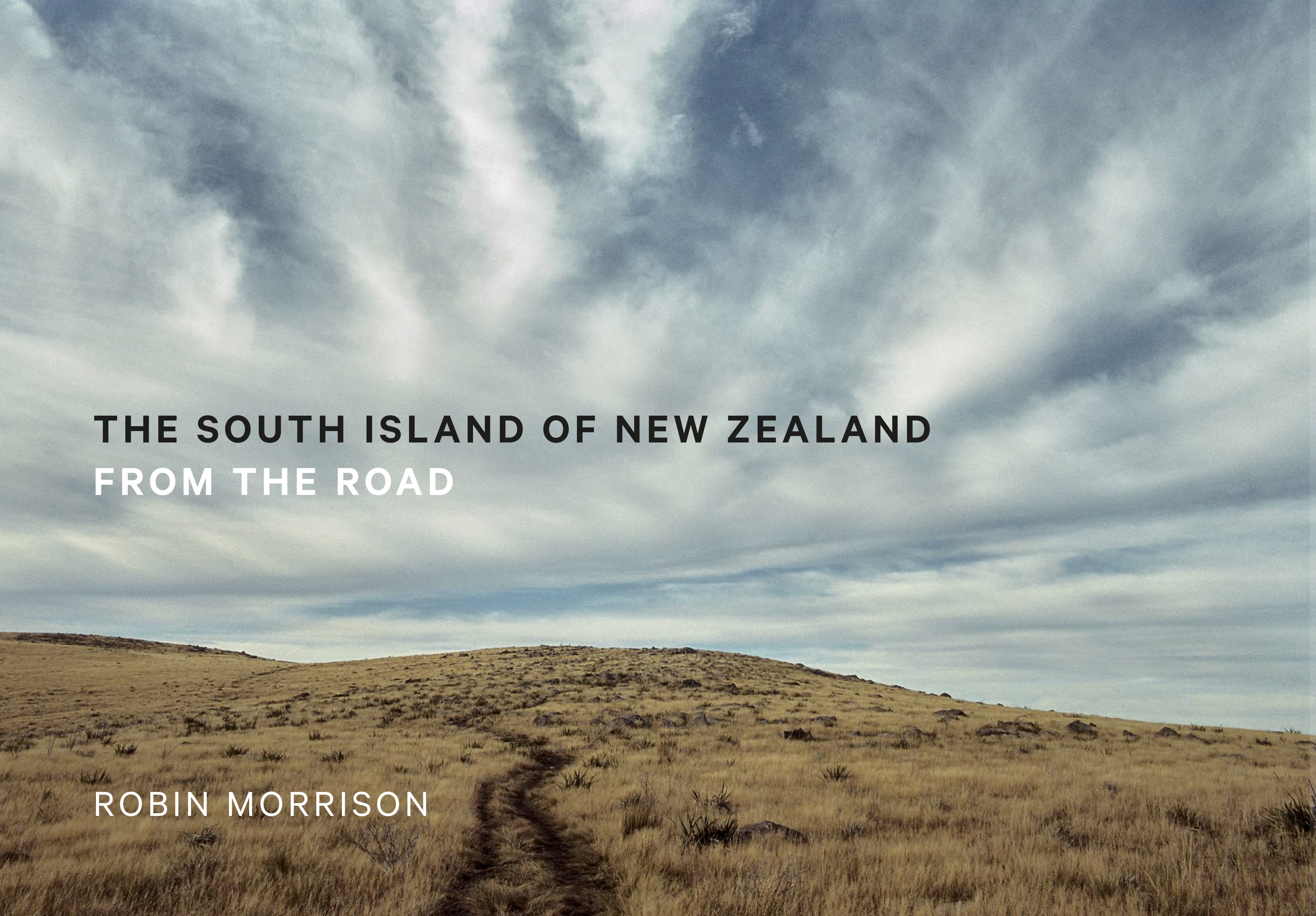
The South Island of New Zealand – From the Road, Robin Morrison Massey University Press, 2023
Road trips take many forms. You can load up the car, check the map (or not), and head off into adventure and discovery, epiphany and delight. Who knows what beauty and mishap will unfold? Road travel is joy. Or you can do the kind of road trip where you swap a novel or an artwork or a photograph for the lure of a physical itinerary. That too offers adventure and discovery, epiphany and delight. Robin Morrison’s The South Island – From the Road offers the reader multifarious travel, retracing physical roads and then setting you within and beyond the photograph frame.
The documentary photographs of Robin Morrison (1944 – 1993) represent New Zealand land and townscapes with varying degrees of human traces and everyday settings. Like the movies of Vincent Ward and Jane Campion, the poetry of Bill Manhire and Anna Jackson, the songs of Aldous Harding and Tiny Ruins, the novels of Catherine Chidgey and Elizabeth Knox, Robin’s photographs have stuck light and dark, the physical and the ethereal, to my heart from the first encounter. To stand before a Robin Morrison photograph is to absorb the transcendental – to be both of the work and beyond the work. It is traversing the ordinary and gatecrashing the extraordinary. You enter the unsayable: how can I convey the uncanny feeling that sits next to flashes of recognition?
In his preface, Robin claims the 1979 project as a ‘personal view of the South Island’: ‘I travelled 18,000 miles with my family into most corners of the South Island but concentrated more on areas that held my eye – in particular Central Otago. We stayed in the holiday houses of friends and enjoyed the sense of space and sense of being on the edge that we so rarely have in the closeness of a city.’
This project resonates on so many levels, especially as I have lived with an artist for over three decades. We travelled much of the South Island as a family, as he searched for beehive ‘paintings’ on the landscape. Our physical road trips, affording beauty views along with the fascinating pull of found objects on the land, have instilled an ongoing relationship with space, the natural world, an inhabited world, the magnetism of elsewhere.
Thus to take road trips courtesy of The South Island – From the Road is both a reawakening of old itineraries and an ignition of the new. It is a form of travelling though time and place where the white bulging cloud hanging over the grey streaked ocean is as important as a reflection in the Post Office window or a snow dusted mountain. It is what the artist/documenter chooses to frame, the light he attends, the colours that have fallen into view, the trust he builds in the people photographed. Herein lies an alchemy of looking where composition meets colour meets light meets hidden narratives. Weather makes a difference. The general absence of people makes a difference. The pervasive presence of people makes a difference. The beekeeping couple standing outside their wooden villa in Blackball. The women with cream handbags at the race track. Traces of human endeavour and architecture make a difference. Interiors make a difference. The tea trolley with lace doilies and a cut glass vase resonates like a poem, the elderly couple framed by knickknacks, the family mementos. Shadows on walls or hills beguile, track marks on paddock or mountain passes divert.
Does it make a difference that Robin harnessed natural light to take the photographs, that he worked without filters and generally used Kodachrome film stock? I am no expert but for me it does. I have no interest in expanding upon what is missing from these South Island photographs – critics have mentioned grit and grime, a Māori presence, the new industries such as vineyards and hydro power stations, or the hubbub of the cities, dwellings that don’t adhere to Art Deco chic or colour palettes. The stream of thought as you look is paramount. I move from the nostalgic to old hierarchies to hand-knitted jerseys and socks on the line, from the kettle on the wood-fired stove to women in aprons and men in gumboots. Beer and cigarettes. Goats and dogs. To what is missing and missed, to what is missing and not at all missed.
To sit and gaze into the width and depth of Robin’s South Island photographs is to stockpile wonder. It is falling upon beauty in the everyday and the accruing stories. It is falling upon the everyday in beauty, and expanding on the way objects and human interventions fade from view, return to view, raise questions. I keep holding a page out to my family and starting up a conversation. We are road-tripping along an itinerary of anecdote, memory, visual images, affecting colours, mood enhancing light courtesy of Robin Morrison’s mesmerising photography. This elegant book is a treasure. No question. It is an extremely diverting road trip.
The South Island of New Zealand – From the Road was originally published by Alistair Taylor in 1981. After a long period out of print, the much loved book has been lovingly re-presented in a new edition by Massey University Press in association with Tāmaki Paenga Hira Auckland War Memorial Museum. The original Kodachrome slides have been digitised using up-to-date technology. There is also a comprehensive essay by Louise Callan, Robin’s friend and fellow journalist, with recollections by Robin White, Laurence Aberhart, Grahame Sydney, Owen Marshall, Ron Brownson, Dick Frizzell, Alistair Guthrie and Sara McIntyre.
Robin Morrison (1944–1993) was one of New Zealand‘s most significant documentary photographers.
When you told me your hands were fish—fuafua or pelepele, to be precise—I was
unmoved. And your neck and shoulders a school of limu fua or trumpeter, I believed
neither you nor the yellows and pinks, the orange afterglow. When you said
your heart was a fish hiding behind a rock, I would have
none of it. Nor that your body was a pool of hapi, hexagon groper, flutemouth
and cornetfish. I could not so much as entertain the thought: your elbows, forearms
and fingers as humu or hafulu or fine-lined bristletooth. At least
not until Sally Lightfoot led me by the mottled hand down the spiralling staircase of
this, her undersea forest her orchestra pit, my washaway.
Avatele, Niue
Gregory O’Brien
Note
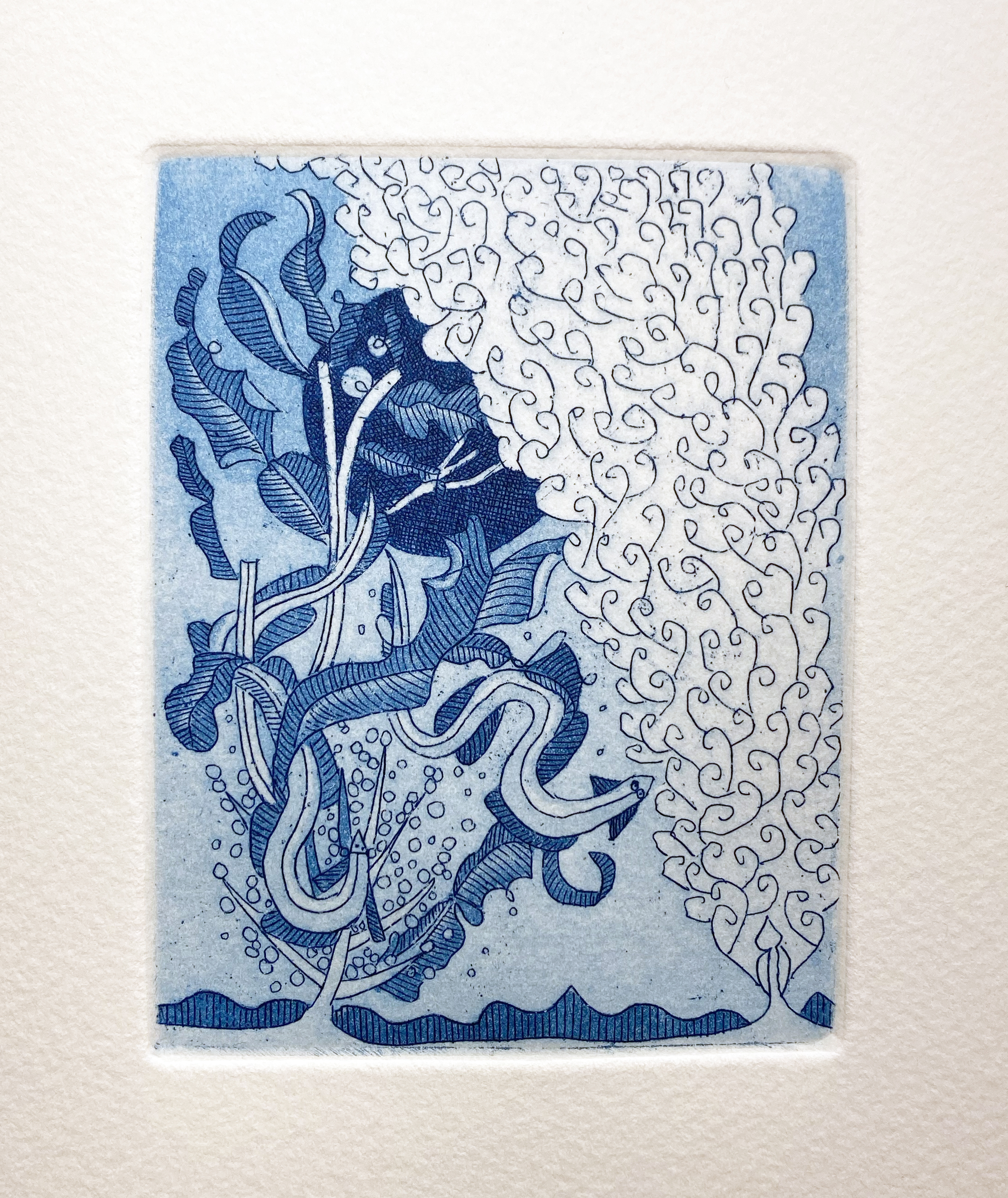
‘At the Washaway’ was written on the island of Niue, where I spent a fortnight in November 2022 making etchings with my long-time collaborator and friend John Pule. With another friend, geographer and academic Robin Kearns, we visited the settlement of Avatele–one of very few sandy beaches on the island. Just above high-water mark, the overgrown remnants of a beach-cafe/bar, ‘The Washaway’, is still standing (but, sadly–post-covid–no long operating). The Washaway was once famous for its ‘honesty bar’. Customers were asked to list on a piece of paper any drinks procured from the self-help bar and then pay cash to someone-or-other before sauntering off into the darkness much later in the evening.
Mid-morning, on the reef at Avatele, I stood knee-deep in the crystal clear water and watched tropical fish dart past. I followed the precise manoeuvres of crabs and various kinds of shrimp. It was in the company of these aquatic species that this poem–a love poem to Moana Oceania–began. You might ask who is Sally Lightfoot, at the conclusion of the poem? As marine biologists will tell you, a Sally Lightfoot is a kind of urchin crab common on Pacific Islands. It was one of these exemplary sea-creatures that, Virgil-like, led me in the direction of this reverie, this poem.
Gregory O’Brien
Gregory O’Brien’s monograph on painter Don Binney is published in October this year. He is presently curating (with Jaqui Knowles) an exhibition based upon his book Always song in the water for the New Zealand Maritime Museum Hui Te Ananui a Tangaroa, where it will be on display from August 2023 until February 2024. A new, much enlarged edition of the book, Always song in the water–an ode to Moana Oceania, is being published by the Museum to accompany the exhibition.
Diana Bridge reads from Deep Colour Otago University Press, 2023
‘Deep colour’, ‘In the New York Public Library’, ‘the candle’ and ‘Accommodations’
Deep Colour is the eighth collection by award-winning Wellington-based poet Diana Bridge. It follows Two or More Islands (Otago University Press, 2019). Bridge’s many accolades include the 2010 Lauris Edmond Memorial Award for Poetry, the 2014 Landfall Essay Competition prize and the 2015 Sarah Broom Poetry Prize. The chief judge, Irish poet Vona Groarke, described her work as ‘possibly amongst the best being written anywhere right now’. The same year, Bridge was the first New Zealander since Janet Frame to take up a residency at the Writers’ and Artists’ Colony at Yaddo in upstate New York. In the Supplementary Garden: New and selected poems (Cold Hub Press, 2016) was longlisted for the Mary and Peter Biggs Award for Poetry in the 2017 Ockham New Zealand Book Awards. Bridge has studied Chinese language, literature and art history and holds a PhD in Chinese poetry from the Australian National University.
Why are you sad? she asked, putting down her pen. The sea is so moderate today, he answered, so suave, even with its gutsful of garbage; and this room is a well-loved place preparing for evacuation.
Dinah Hawken
Dinah Hawken lives in Paekakariki and is presently writing a series of short poems influenced by two poets she has admired for many years, Yannis Ritsos and Tomas Tranströmer. Her ninth collection of poetry, Sea-light, was published by Te Herenga Waka University Press in 2021.
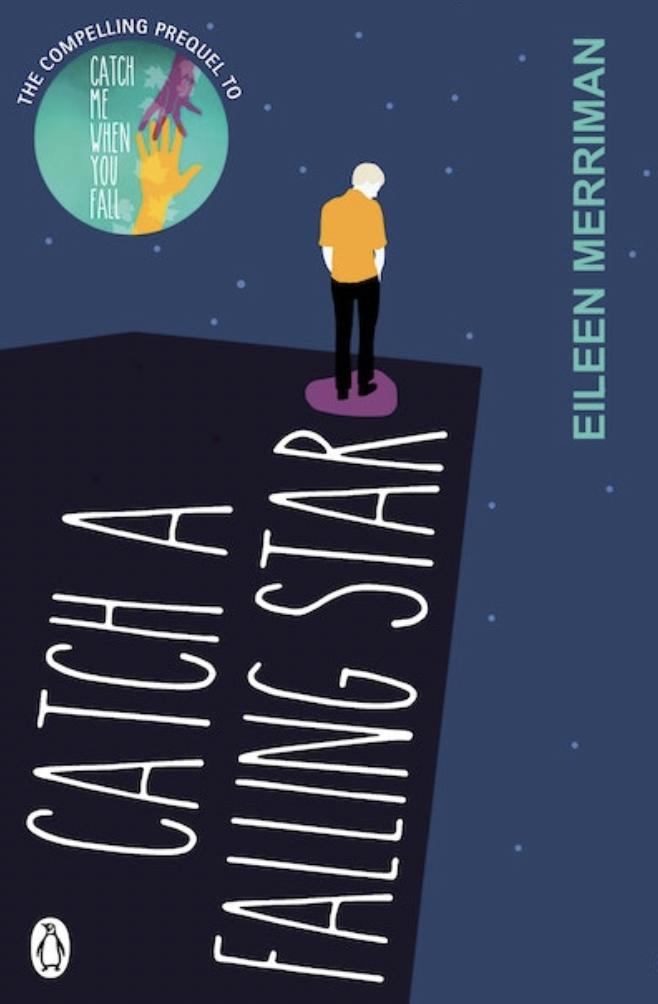
Catch a Falling Star, Eileen Merriman, Penguin, 2023
There is something immensely satisfying when you pick the perfect book from your pile to match your mood and reading needs. I am a big fan of Eileen Merriman’s ability to craft stories and characters, whether medical or dystopian, that carry you out of your everyday rhythms with heart and flair. After a week or so of excessive sleep deprivation, it felt slightly ironic to settle in with a character who is also sleep deprived (way worse than me!). But this stellar YA novel kept me hooked until the final page.
Catch a Falling Star is Eileen’s prequel to the heart-wrenching, award-winning Catch Me When You Fall (2018). In the latter, Alexandria Byrd is a leukemia patient who meets and falls for Jamie Orange, as he does for her. In the prequel, we shift to the voice of Jamie, and trace his bumpy pathway to the clinic where he eventually meets Alex. Much water under the bridge before that point. And that turbulent water is Jamie’s story.
Jamie adores musicals. He is a big reader. His parents are separated. He loathes Maths. He gets the part of the donkey in Shrek. He fancies Frankie who is playing Princess Fiona but she is going out with his good friend. Jamie’s world is crumbling and his head is skew whiff. He is in the thick of teenage messiness where every path exposes tough choices, fractures wellbeing, compromises relationships, dissolves responsibility. The warning signs pierce as you read: the suicidal thoughts, the self doubt, the diminished motivation, severe sleep deprivation.
Why did this novel hit the nail for me so beautifully? It is character rich, the voice of Jamie so gripping, the dialogue on point, the pace of the narrative sweetly judged. On the one hand, you are caught up in heart-in-the-mouth vulnerability and decision making; it makes you care and it gives the narrative depth and complexity of heart. But it is also complex because it is rich in reference. George Orwell’s 1984 is present along with Haruki Murikami’s 1Q84. Jamie attempts to write a novel that mashes 1984 and zombies (he would much rather be novel writing than figuring maths problems). His English teacher draws on a wider scope of educational aims than national standards and offers inspiration. Musicals are listed and quoted from. Phantom of the Opera playing on the headphones offers vital relief. Such complexity anchors the narrative, along with the stretched and essential relationships, in a complex world, a world that draws upon both light and dark. The concern and support of those close to Jamie is another significant comfort-anchor as you read.
At the back of the book is a welcome list of places to seek help: telephone numbers, helplines, key organisations. It is a reminder that mental health issues and suicidal thoughts, mania or depression, affect an individual but they also have a ripple effect upon friends and family. There is also a list of famous and not so famous people who have suffered from manic depression (bipolar affective disorder). The presence of both lists, along with the cradle of relationships in the book, underlines the significance of not being alone, of not feeling bereft of support and lifeboats. I know this as a cancer patient.
Ah. Triple ah. Quadruple ah. Catch a Falling Star is a sad, contemporary, thought-provoking, must-read story that revives you no matter how little sleep you have had! The word I take with me is hope, the image I hold is two teenagers bonding over books and coffee. Utterly riveting! Utterly humane.
Eileen Merriman’s first young adult novel, Pieces of You, was published in 2017, and was a finalist in the NZ Book Awards for Children and Young Adults and a Storylines Notable Book. Since then, a stream of novels for adults and young adults have followed. In addition to being a regular finalist in the NZ Book Awards for Children and Young Adults, Merriman was a finalist in the 2021 Ngaio Marsh Award for Best Crime Novel and Moonlight Sonata was longlisted for the Jann Medlicott Acorn Prize for Fiction 2020. Editions of some of her young adult novels have been released in Germany, Turkey and the UK and three have been optioned for film or TV, including the Black Spiral Trilogy. She works as a consultant haematologist at North Shore Hospital.
OK, so, to set the scene, it’s early afternoon on a random Friday. End of exam period, and I’m so tired, and my flatmate is working on her final essay. Like a tired hamster in a public enclosure, I curl up in a ball in my chair beside her and squint around the library suspiciously. That’s when my phone dings. Cadence Chung’s invited me to a rehearsal with soprano Sarah Mileham and pianist Ameli Lin. (!!!)
So I toodle down the stairs to the NZSM and sit in the corner of a practice room while they rehearse. Cadence has set five of my poems to a song cycle for soprano, mezzo-soprano and piano. Like, with musical transitions and everything. Motifs that carry through? I don’t know, I’m not a musician, but it sounded so considered and comprehensive that I nearly bawled my eyes out.
Most of the poems Cadence used had only been published in one place – like ‘My City’ and ‘What We Owe To Each Other’ on NZ Poetry Shelf – and from a couple of years ago. I still have no idea the time and effort they put into finding these poems and turning them into compositions. It is freakin’ amazeballs!
I sort of can’t describe the feeling of your own poems being performed to you? It’s like a big cloud floating into the room and zapping you in the head with lightning bolts made of your own thoughts. I hadn’t read most of the poems since I’d written them, which was in high school. So it felt like my sixteen-year-old self had broken into the rehearsal to give me a big hug. Yeah, I got teary! It was a gift.
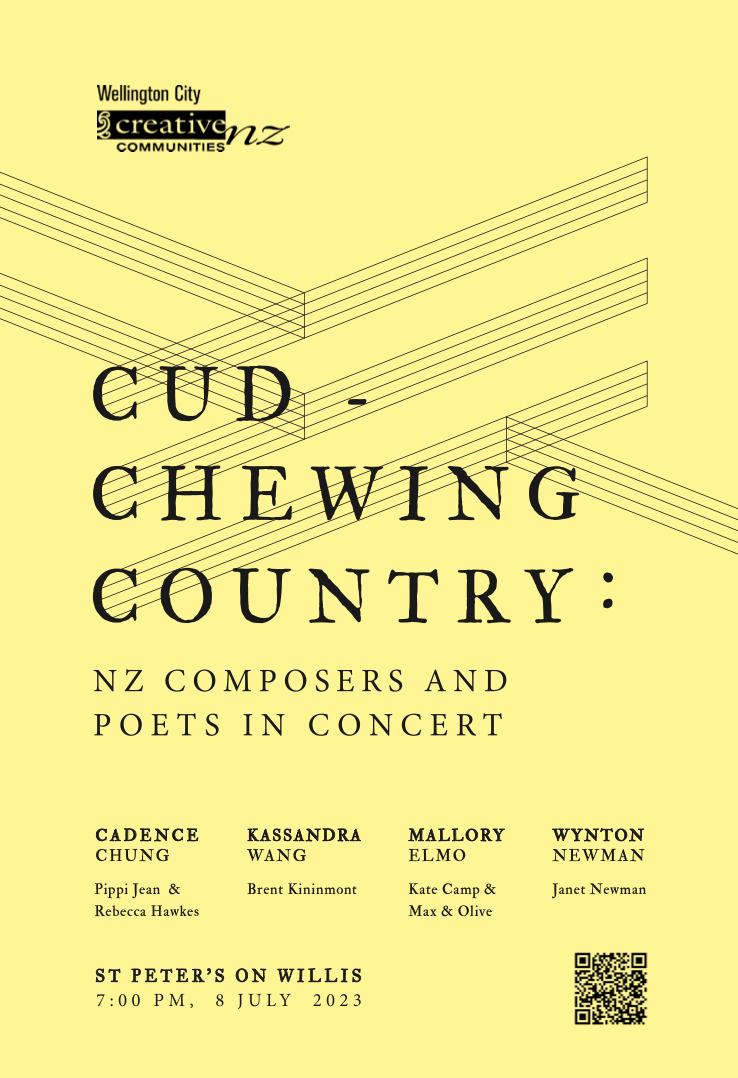
Along with instrumentation based off Rebecca Hawkes’ Poem About (??), Cadence, Amelia and Sarah are rehearsing to perform six original songs. ‘Cud-Chewing Country’ is a concert of original compositions set to contemporary New Zealand poetry. The aim of the concert is to create a collaboration of multi-disciplinary art, or, a conversation between composers and poets. Along with Cadence, composers Kassandra Wang, Mallory Elmo and Wynton Newman are performing their works. Poets whose work is included are Janet Newman, Kate Camp, Loretta Riach, Max and Olive, and Brent Kininmont.
To hint more of the programme, instrumentation includes Kassandra Wang’s unaccompanied SAT vocal quartet, Wynton Newman’s jazz quartet, and Mallory Elmo’s various combinations of mezzo- soprano, piano, violin, electric guitar, and a solo vocalizing cello. Pretty freakin’ rad??!?!?
The concert will take place at St Peter’s on Willis on the 8th of July, 2023. Wellington City Council Creative Communities is the sponsor. SOUNZ Centre for New Zealand Music will be recording the concert. I totally recommend going if you’re based in Te-Whanganui-A-Tara.





 NZ Poetry Shelf