



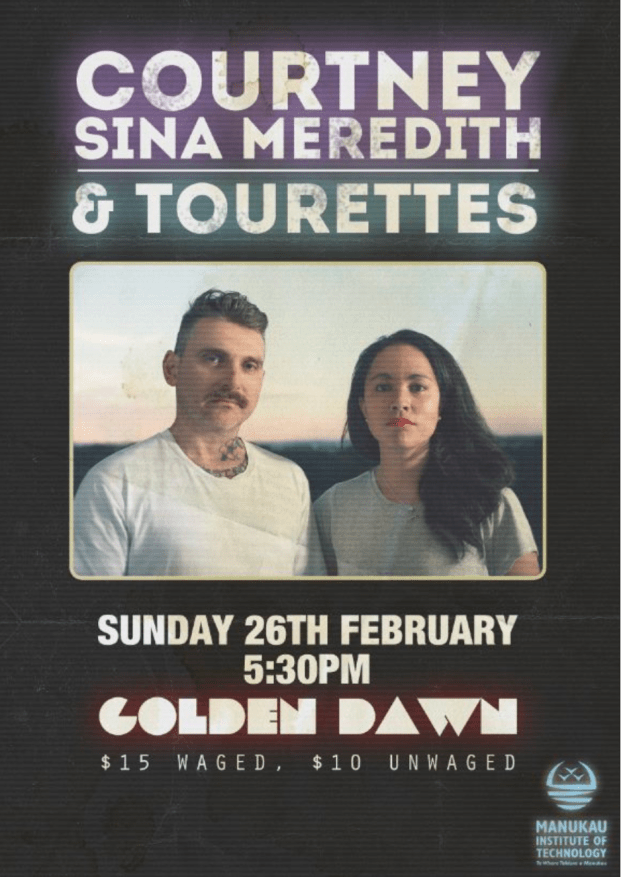
Form-bending writer and 2017 Ockham long-lister for Tail of the Taniwha, Courtney Sina Meredith opens her notebooks to us, from her prestigious 2016 residencies at the International Writing Program, University of Iowa, and at the Island Institute in Sitka Alaska.
an extract:
Iowa City September
Because she was so unlike moonlight
Because the night arranged itself according to height
Because everyone read the same books and said the same things
Because the buses were dependable
Because she settled like dust
Because the days were numbered according to weight
Because she was impatient
For the full journal see here.
Photo credit: Thomas Langdon
Swordfish . . . Far Hotel
That’s me up there cast in plaster
above the wide window
of a coastal pub’s vista bar.
I am the trophy of some forgotten fisherman.
Cigarette smoke fogs my vision
but I still see that day the trophy of my life was taken.
Again I feel. I feel the hook deep within me catch
I feel my anger whip
I feel the tackle tighten
I feel my guts explode
I feel the rainbow strength of colours in me leap
I feel the sky like a mirror smashing
I feel the sun across my dorsal fin get torn
I feel the waves beneath me again and again split open
I feel the blood in the protein church of my heart begin to chant
I feel the hook in my brain burning
I feel the trace against my jawbone cut
I feel time tight as a nylon line almost breaking
I feel the great poem of my life and I know that it is ending.
©Bob Orr Valparaiso Auckland University Press, 2002.
I found myself hesitating between two very different poems I could choose, Janet Charman’s “pin unpin pin unpin pin,” which so vividly recalls the intensity of new motherhood, or Bob Orr’s Hemingwayesque fishing poem, “Swordfish…Far Hotel,” told from the point of view of the fish, now caught and cast in plaster. My reason for choosing the fishing poem is the experience I had of reading it out loud once at a National Poetry Day event at Te Papa, and feeling myself caught on the line of the poem just as it describes the fish caught on the fishing line. It is an extraordinarily taut and powerful poem and reading it was one of the great poetry experiences of my life. It can be found in Bob Orr’s 2002 collection Valparaiso, which is full of favourite poems of mine, including “Eternity” (“Eternity is the traffic lights at Huntly…”), “Remembering Akhmatova,” and “Friday Night…Alhambra Bar,” amongst others.
If we weren’t limited to New Zealand poems, I’d choose “Viewless Wings,” by Mark Ford, the poem which best captures the “lyric strangeness” that Alex Hollis and Simon Gennard have been talking about as what poetry is for, and what poetry needs. It is the poem I would most wish to have written myself, and now am looking for some way to write past.
Anna Jackson
Anna Jackson lives in Island Bay, Wellington, lectures at Victoria University, and has published six collections of poetry, most recently I, Clodia (AUP, 2014). With Helen Rickerby and Angelina Sbroma she quite often runs conferences and other events for talking and thinking about writing, this year a conference on Poetry and the Essay.

The poets are descending on Devonport Library to celebrate the publication of the New Zealand Poetry Yearbook 2017, edited by Jack Ross and published by Massey University Press.
The book is being launched by Devonport’s own Michele Leggott, and the evening will include readings by ten poets, including Yearbook 2017’s featured poet Elizabeth Morton.
Words, wine, smiles …. It will be a night to remember!
Where:Devonport Library, 2 Victoria Road, Devonport
When:Tuesday 14 March, 7.30pm till late
Cost:Koha appreciated
A Devonport Library Associates Event

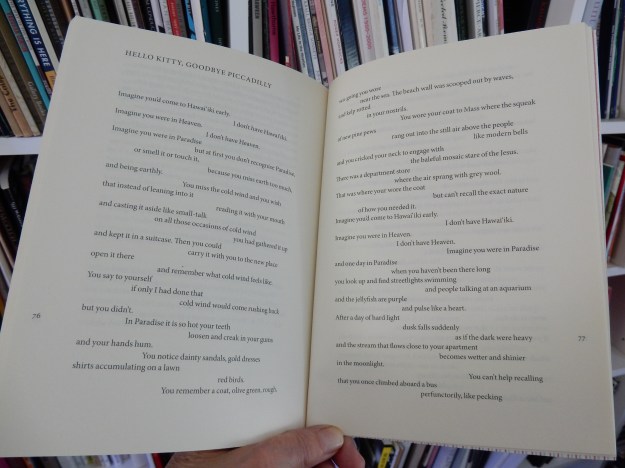
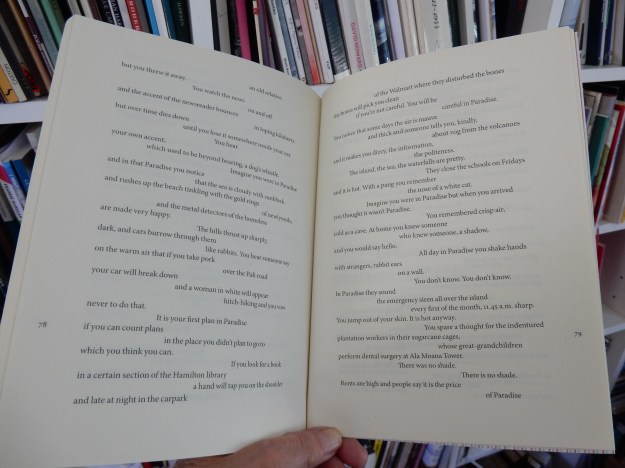
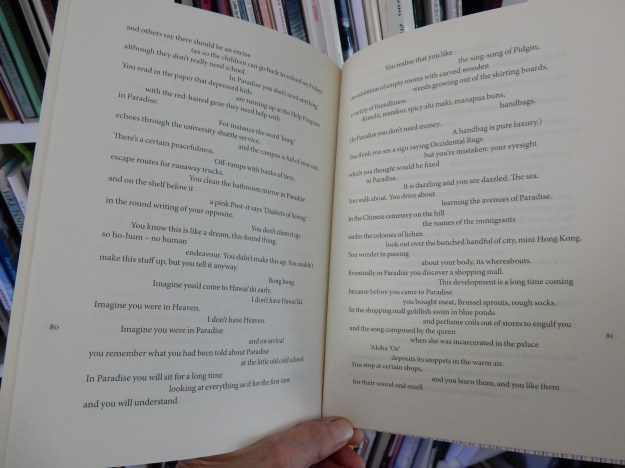
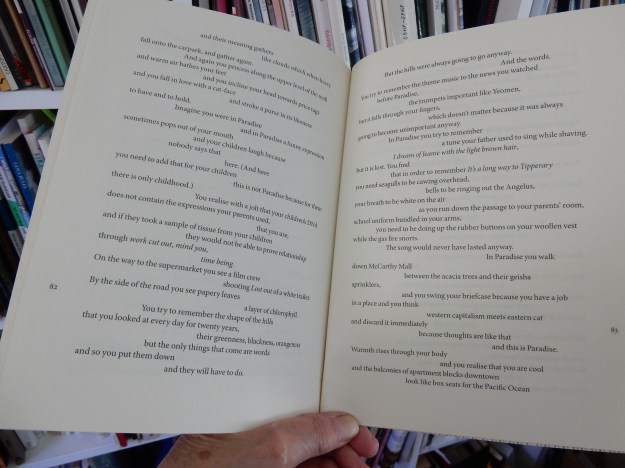
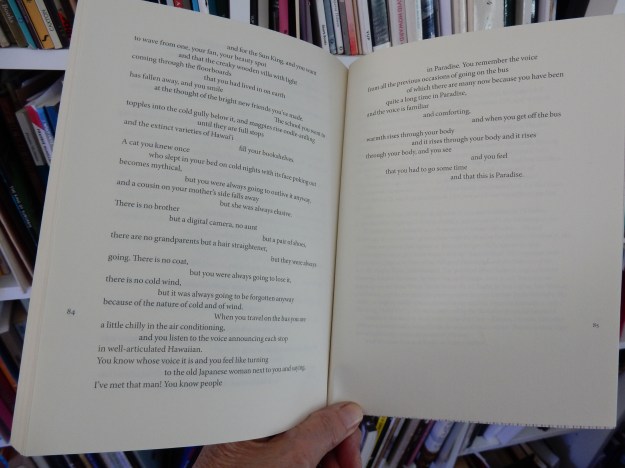
©Anne Kennedy, The Darling North, Anne Kennedy, Auckland University Press, 2012.
Bernadette Hall comments on the poem:
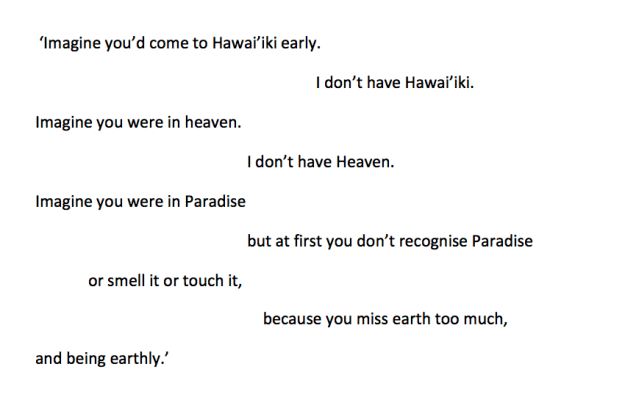
I first read these lines in 2012. Anne Kennedy’s book had just come out. I read the lines and I fell in love with them. I held onto the poem that held onto them as if it was a life-raft. Every time I read that poem, Hello Kitty, Goodbye Piccadilly, (and I read it often) I have the same feeling of home-coming. The thinking is within the same territory I’m fixated on: the tension between the dream places, the places of beginning, of origin, the places that arise from myth. And the materiality of here and now, the stuff that arises from star dust just as our world does and everything including us within it.
On the one hand there’s the ancient dreaming, the naming and the renaming of myth and ritual. Of religion and philosophy. The stuff of the mind, the soul and the imagination. The stuff of desire. And then there’s the solid ground beneath our feet. There’s a collision here surely. How are we to shape a language that it is capacious and mobile and courageous enough to handle collision and complexity?
It’s an ancient curiosity, this, to ask the existential questions : unde? whence? quo? whither? cur? why? Philosophers and theologians are the professionals. But so often their thinking has been disembodied. Maybe it was up to poets to explore the connective tissue between concrete and abstract, to make new alliances between thought and matter. The body, the mind, the heart, the soul. How serviceable the old language was. But how are we to reveal ourselves to ourselves today?
The framework of Hello KittyGoodbye Picadilly is the shift from New Zealand with its theatre of memories to Hawai’i. It’s a move north, away from the cold wind – ‘you wish you had gathered it up / and kept it in a suitcase’ – to a Pacific ‘Paradise’. The kind of place the French sailors with Marion du Fresne thought they’d found in Tahiti. But then they went on and found a Pacific ‘Hell’ when they landed in the Bay of Islands in 1772. (I’m fresh from reading Joanna Orwin’s marvellous novel ‘Collision’ that explores these things with spectacular success.)
What I love about the poem is that it arises out of uncertainty, out of questioning. Out of a sense of what’s missing.
There are those repeated lines, the repeated negatives : ‘I don’t have Hawai’iki’ ‘I don’t have Heaven’. Isn’t this the Socratic method, using negatives to slash away the debris and then see what’s left standing? ‘In Paradise you will sit for a long time / looking at everything as if for the first time / and you will understand.’ So we’re back to the very beginning, in need of language, in need of thinking. But then ‘You wonder in passing / about your body, its whereabouts’. And there’s the female body, the human body, the body, not as something corruptible but as an equal.
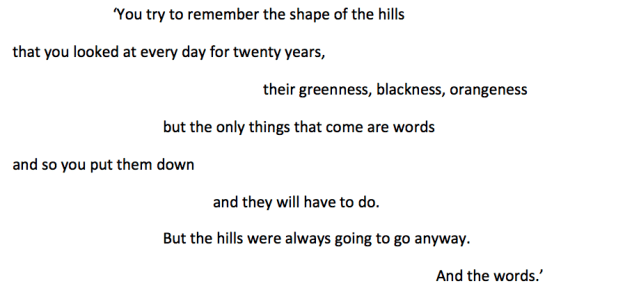
Maybe memory is the cache where everything holds together, where everything lasts:
Almost at the very end of the poem there’s a recounting of losses:
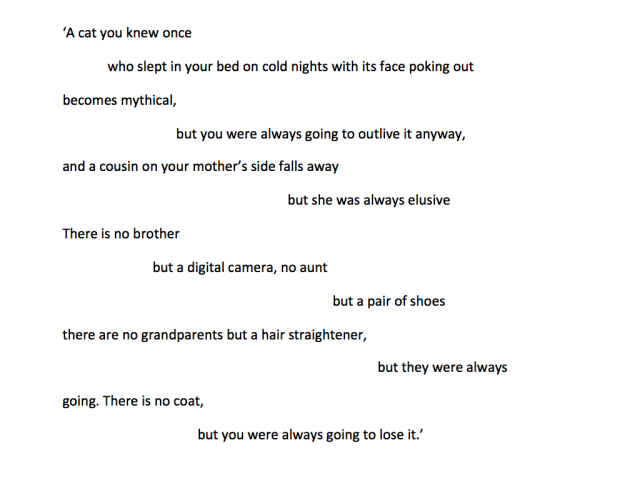
And my heart turns over. I guess these lines just get richer as I age. As the whole question of getting up and leaving the room becomes more present. How is this to be done?
There’s a scene in J. M Coetzee’s novel ‘ Elizabeth Costello’ where the aged academic finds herself at the gates of what we might call heaven. She has to face judges there, she has to answer difficult questions. Her life as a writer, a life spent of making up things, is under scrutiny.
‘Is childhood on the Dulgannon another of your stories, Mrs Costello? Along with the frogs and the rain from heaven?’
‘The river exists. The frogs exist. I exist. What more do you want?’
Indeed, what?
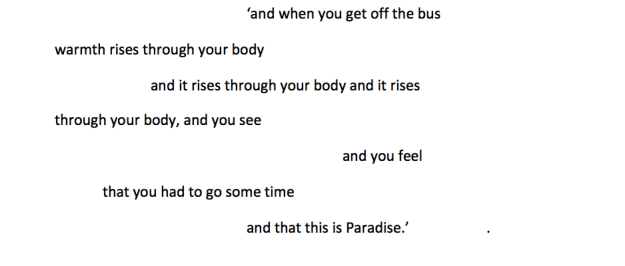
The final move in the poem is from loss to uplift. Once again it’s repetition that’s the key turning in the lock, multiplying the ways to enter the text:
.
I love this kind of thing. The depth and the nourishment I find here. The way Anne Kennedy’s writing, like that of Coetzee, opens up new rooms in my head and in my heart.
Bernadette Hall
Bernadette Hall lives at Amberley Beach in the Hurunui, North Canterbury. She has published 10 collections of poetry, the most recent being Life & Customs VUP 2013 and Maukatere, floating mountain, Seraph Press, 2016. The latter includes drawings by the Wellington artist, Rachel O’Neill. In 2015, Bernadette received the Prime Minister’s Award for Literary Achievement in Poetry. And in 2017, she was invested as a member of the New Zealand Order of Merit for her Services to Literature.
 NZ Poetry Shelf