
the words we use
the words we use

the words we use
the words we use
15.3.19
This poem can hold the sky for you to see
you will fall into the wide blue of hope
and the wide blue of the next day and the day before
and you will see beauty and you will pause
at the sight of the plunging kereru
but this poem is different because it struggles to hold
the surge of grief and the loss of words so so
so poetry feels helpless because
what good a poem in the face of massacre
what good a poem against the home made unsafe
what good a poem in my white skin
what good a poem when my skin is crying
what good a poem when we feel so bad
what good a poem for the bereft families
what good a poem when life’s fabric changes
what good a poem for intolerance
what good a poem against the racist taunt
what good a poem when mothers fathers
grandparents children friends are dead
or when the Muslim family is detained at the airport
or when the young girl in hijab is abused on her way to school
or when a detained Muslim poet shares his dream
or when you are told to go back where you came from
which is here
which is home
which is where
your children
are born
and so and so
this poem is holding out you a fragile pronoun
not knowing who will fit and who will agree
you and you and you and we are in mourning
and so and then
when our children marched for the good of the planet
and when we will all march for the good of the planet
and when we will all march and we will all speak for the good
of the beating heart of the planet which is you and you and we
and I am writing heart and we will keep writing heart
because the heart of the planet depends on
kindness and respect and love and open arms
and in this surge of tears and voices speaking
as we stand and sit and bow and pray in solidarity
and I hear National Radio
and I cannot stop listening
to Mohamed Hassan’s podcasts
and a Sikh taxi driver speaks of human solidarity
and a Muslim looks at his neighbours laying flowers
and they are all lost for words and he speaks
and the white flowers are laid and the family gathers
and the families gather and a nation gathers
and candles are lit and vows are made to
make this place home to make this our home and to
stand against racism and this is yes you and you and your
and we are heart to heart and I am holding out words
yes these words after making salty bread and spreading butter
and trying to move through the day and writing words
like white flowers like a wreath of sadness
like human warmth like human peace like hope for we
Paula Green
Anagram Poems
Like many obsessions, my preoccupation with anagrams began by accident. I am writing my doctoral thesis at the moment, and had been struggling with my topic: alter egos in elliptical poetry. To put it bluntly: all of the alter ego poetry that I was writing for the creative section of my thesis was terrible; not so terrible that it was not even recognisable as poetry, but that uglier low level kind of terrible you get when you’re mining an area that has been all mined out and the work that results is simply boring. So I was on the lookout for inspiration, trawling for ideas that were more interesting than my thesis “starter idea”, when U.S. poet Dora Malech’s latest collection of poetry, Stet (2018), landed on our veranda in an Amazon package. My first thought on reading the poems was, “Huh?”; second thought, “What even is this?”; and then a series of thoughts that tumbled out on top of each other such as, “How does she do this?” “This is amazing!”, and “Wow, I’m so jealous, I wanna write anagram poems, too.”
Stet is a book of poetry which is composed primarily of anagrams, with a side of erasures. Malech states that she is influenced by the German artist and poet, Urnica Zurn, who wrote a series of vivid and disquieting anagram poems in the 1950s, as well as the French school of poetry Oulipo, which uses various restrictive forms to enable creativity, of which the anagram is one.
Thus began my obsession with this form–and the way that you can mine a single sentence or word or, in the case of the third section of Malech’s book, an entire poem (she writes a series of poems which are anagrams of the Sylvia Plath poem “Metaphors”)–and resulting questions (some of which Malech explores in Stet), such as: How can lyric subjectivity survive within such a tight machine? Is this kind of poetry too sterile and fragmented to really connect with a reader? I am at the beginnings of my explorations in this area, so don’t have any firm answers yet. But writing anagram poems (in which, for example, an entire poem may be made out of a single line, re-arranged) is kind of like build-your-own-nightmare. You get to choose the particular brand of nightmare, and that ambit of it, but within very tight parameters. To put it more another way, it’s like performing back flips in a very tight space; but if you pull it off, the thrill is real.
Johanna Aitchsion
Johanna Aitchison is a doctoral student at Massey University, Palmerston North, examining anagrams and erasures in hybrid poetry. Her most recent volume of poems, Miss Dust (Seraph Press, 2015), was described by reviewer Sarah Quigley as “Emily Dickinson for the 21st century”. Her poetry has appeared in anthologies such as Best New Zealand Poems 2008 and 2009, and Best of Best New Zealand Poems (2011). She was a 2015 resident at the International Writing Program at the University of Iowa and the 2012 Visiting Artist at Massey University.
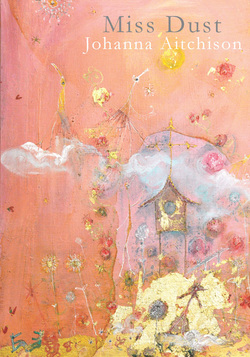
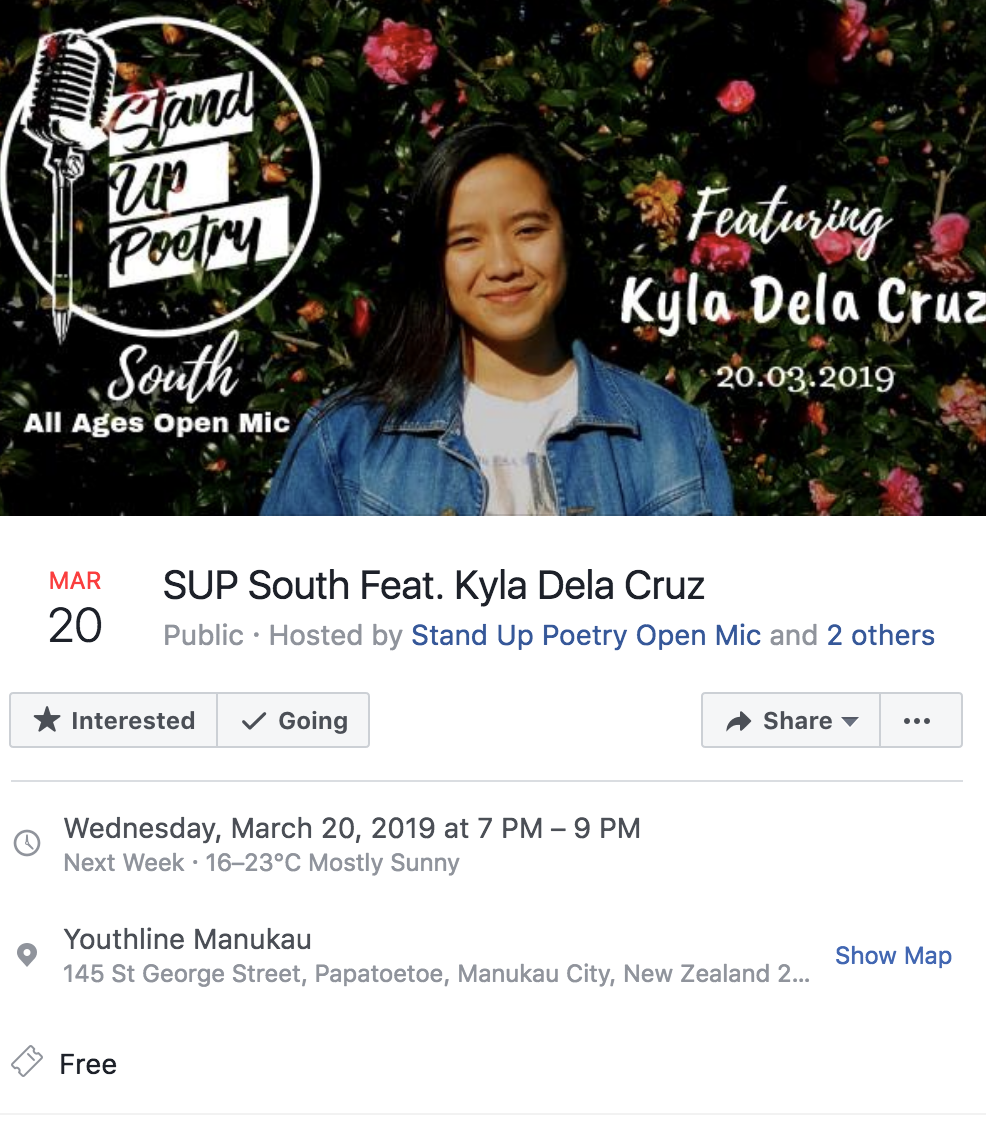

LAUNCH – BROWSERS BOOKSHOP VICTORIA STREET HAMILTON SUNDAY 31st March at 4.00 pm.
All very welcome. Many contributors will read their poems and copies will be available to purchase. Refreshments available.
Find more poetry and the AWF programme here.
I want to congratulate Anne O’Brien for showcasing poetry to such a degree and for always paying attention to New Zealand/ Aotearoa poets and spoken word performers.
Brava!

Anne Michaels – among other things – is currently Toronto’s Poet Laureate, and her latest collection of poems All We Saw has garnered rave reviews.

Hughes’ debut poetry collection Gathering Evidence was similarly feted, winning The Irish Times Shine/Strong Award, and making it on to several shortlists including the NZ Post Book Award for Poetry.

Counting Patti Smith among his fans, poet and performer Luke Wright presents an hour of his best poems, in which he struggles with Brexit, doubt, duty and channels half-cut nights spent shouting impotently at the telly, namely at the BBC’s Question Time.

includes Friday Poem readings, and short poems with sweet cookies from The Receptionist coffee kiosk – all presented by an array of the writing great and good. Join Michele A’Court, Aroha Awarau, Gina Cole, Elaine Castillo, Avi Duckor-Jones, Emma Espiner, Steff Green, Kirsty Gunn, Karyn Hay, Chessie Henry, Dominic Hoey, Jeffrey Paparoa Holman, Chloe Honum, Nathan Joe, Stephanie Johnson, Kelly Joseph, Simone Kaho, Ahi Karunaharan, Erik Kennedy, Renee Liang, Lana Lopesi, Nic Low, Vana Manasiadis, Liam McIlvanney, Courtney Sina Meredith, Karlo Mila, Tze Ming Mok, Emma Neale, Bob Orr, Ruby Porter, Tess Redgrave, Isa Pearl Ritchie, Victor Rodger, Nick Sheppard, Carl Shuker, Damian Skinner, Michael Steven, Tayi Tibble, Jamie Trower, Kirsten Warner, Ian Wedde, Lisa Williams, Annabel Wilson, and Ashleigh Young
a feast of poets in this lot!!
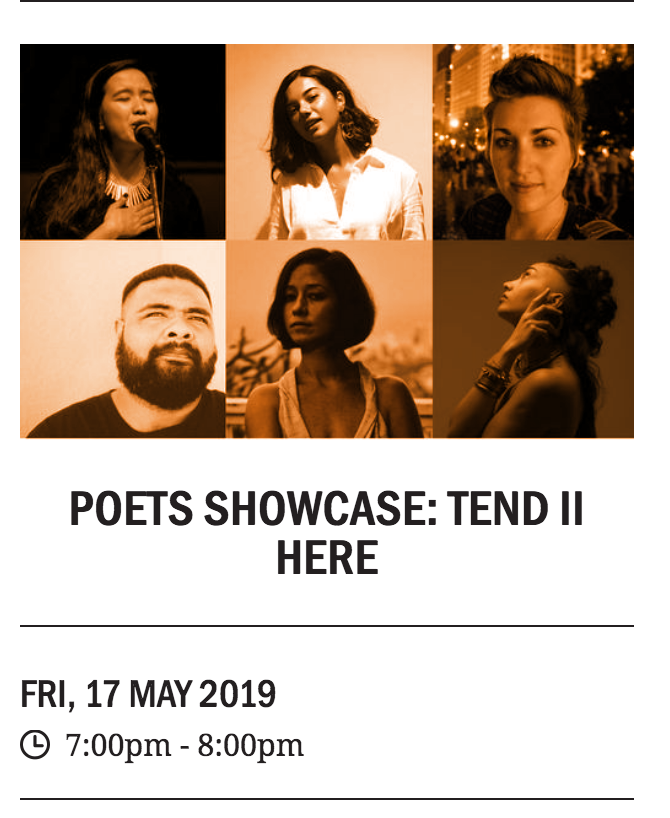
MC’d by Grace Taylor, each poet takes turns to riff off the final line of the previous poem. Featuring Kyla Dela Cruz, Stevie Davis-Tana, Carrie Rudzinski, Dietrich Soakai, and Jahra Wasasala.

Bob Orr and Jeffrey Paparoa Holman
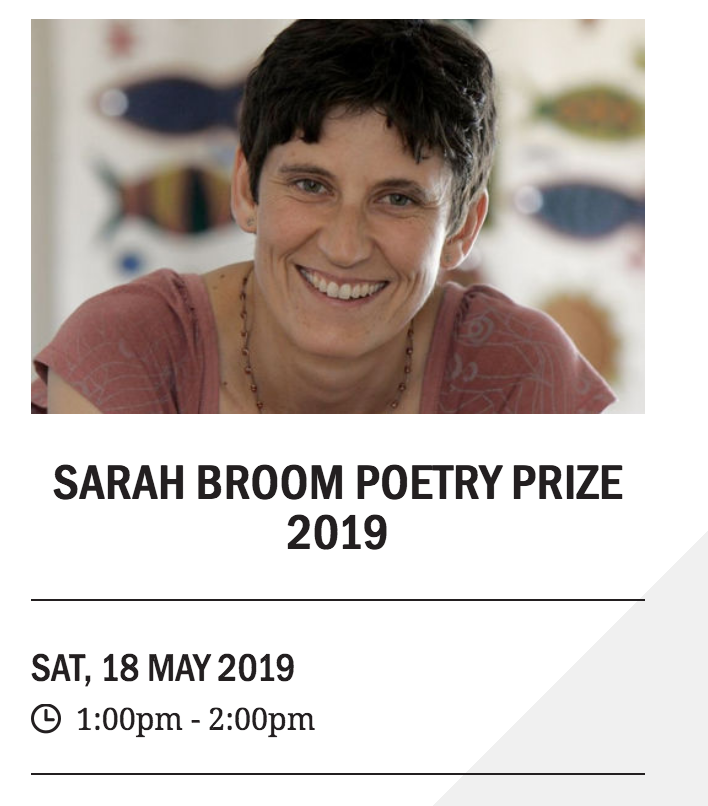
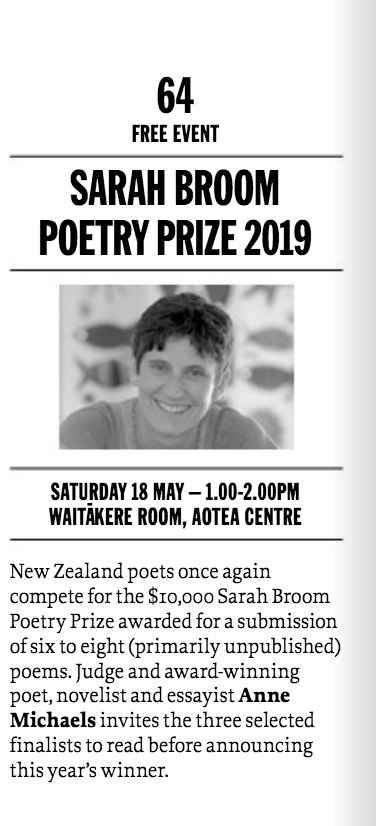
Judge and award-winning poet, novelist and essayist Anne Michaels invites the three selected finalists to read before announcing this year’s winner.

Bruce Ansley (Wild Journeys), Patrick deWitt (French Exit), Gregory Kan (Under Glass) and Ruby Porter (Attraction)

includes Ockham NZ Book Awards shortlisted poet Helen Heath (Are Friends Electric?)

Join US-Filipina novelist Elaine Castillo (America Is Not The Heart) and New Zealanders Isa Pearl Ritchie (Fishing for Māui), Tayi Tibble (shortlisted for the Ockham NZ Book Awards for Poūkahangatus) and Sugar Magnolia Wilson (Because A Woman’s Heart is Like a Needle at the Bottom of the Ocean)

BACK AGAIN BY POPULAR DEMAND! VERSE US 3 LIVE POETRY with Special Guest Daren Kamali Also featuring Fiona Stevens Ivy Alvarez Vana Manasiadis…

Bob Orr will be reading poetry in Kāpiti
Sunday 31 March. It’s 4-6pm, open mic first (one poem each) $5 cover charge.
Robert Harris Cafe, Coastlands Mall, Paraparaumu. New Venue.



 NZ Poetry Shelf