Category Archives: Uncategorized

New Voices: Emerging Poets Competition

New Voices comp

Divine Muses

NEW VOICES – Emerging Poets Competition

The 2014 competition is NOW OPEN

This is the third year of the competition and the winners will be announced at
The Divine Muses X : an evening of poetry
which will be held
at the Gus Fisher Gallery as part of National Poetry Day.

For information and entry form see here


The competition will be judged by Auckland poet, Bob Orr.

For an interview with Bob and Peter Calder in The NZ Herald see here.

For Bob’s NZ Book Council page see here.

Kirsti Whalen makes a moving tribute to Sarah Broom

Kirsti has just posted this on her blog. She has the writing life within her, her mother would be proud, and as she took to the stage on Sunday, it shone out for us all.

In Memory of Sarah Broom

It was with a mild hangover and a brimming heart that I greeted the day following my first writers festival reading. I attended a great many luminous events, but read as part of the celebration of the inaugural Sarah Broom Poetry Prize.

I feel incredibly honoured to have been shortlisted for this very special award, especially alongside such distinguished poets as Emma Neale and C.K. Stead, the winner, to whom I offer my utmost, and sincere, congratulations.

This event held a special significance for me, in so many ways. Before I went on stage, my dad told me to do it for my mum, and to imagine her at the back of the room.

I lost my mum to cancer six years ago. Knowing how short these years feel only makes me more amazed at the courage of Sarah’s family and friends, creating this tribute to her life such a short time after she left it.

My mother was a staunch supporter of my writing, and in the diary I inherited after her death she stressed that she hoped I could find a life in which I wrote, above anything else. When I was informed that I had won the Katherine Mansfield Young Writers Award back in 2006, I remember clutching her hands and jumping up and down in the entrance of our old home, with shared excitement.

The submission that I sent for the Sarah Broom Poetry Prize was titled ‘i’m only here because she isn’t,’ a line from one of my poems. This statement is applicable to my both my mother and Sarah, two women who fought their cancer with incredible bravery, and both, in different ways, left a legacy of language.

See the rest of her blog here.

Eleanor Catton, John Marsden, Grace Taylor at the Auckland Writers Festival

Yesterday I was on stage in the ASB Theatre at the Auckland Writers Festival — today I was in the audience for a couple of the school sessions.

photo

First up Eleanor Catton (now one of most famous authors after winning the Man Booker Prize last year for her novel, The Luminaries) and she was inspirational. I love the way she connected with the audience and wasn’t afraid to show herself, to laugh, to take risks, to talk about things that matter.

She began by telling a story that turned out to be boring and it turned out to be boring because nothing changed in it. Elie said that change is one of the most important things to explore when you write fiction. She said the greatest stories involve the greatest change.

She then drew a cross on a white board (good tip for me if I ever stand on stage again in front of 2,000 students!) and got the students to tell her the four types of action that drive a story: accidents, deeds, discoveries, decisions. She then talked about the way some were inside you and some where outside you; and some were controlled by you and some were outside your control.

Next she wrote down three questions that matter very much to the writer and reader of fiction: How? Why? What next?

The four actions and the three questions need to be balanced. If you miss some out, your story might fall over. It might not matter so much to the reader.

Then she got the audience to help her write a story. It was surprising! She used the questions to help make the story more interesting. If all the audience voted for what next? she used why?

The first sentence someone came up with was: A rock fell on the cave-dweller.

Then after some sentences in between, a student suggested the last sentence: She got super strength from berries.

You had to be there to experience the movement from first to last sentence! It was surprising.

It was a wonderful session that inspired students to think about their writing and reading and gain solid tips on how to make writing interesting and how to give your reader a good time!

photo

Next up was legendary Australian author John Marsden (he is also a school Principal). He started off by telling a story abut the word ‘um.’ It was the sort of story that makes you laugh and makes you think. It was about a boy and a father at the rugby and the father kept getting cross with his son for saying ‘um’ all the time—so many times the boy could no longer talk!

I loved what John said about writing because it is my philosophy too. Language, he said, is infinitely flexible. It’s like play dough, plasticine, triple somersaults, pouring on petrol and setting words alight.

He said it is really important to learn the conventions as you go through school  (like how to punctuate, grammar and so on), but in the end you don’t have to do things if they don’t help your writing. I agree totally.

John told a story about Poetic Licence. When he was at primary school his teacher told him about Poetic Licence and he thought it was a laminated card he could get somewhere that meant he could do what he liked with words. Poetic Licence is the freedom to do what you like when you write a poem (for example). Now John wants to print of millions of Poetic-Licence cards to give people permission to use language creatively.

Language, he said, is all about play (Yes! that’s exactly what I said yesterday!). Language is yours to do what you want with! he said.

He then went on to talk about status—high and low—and what kind of person that makes you and how that can steer your writing. We can find ourselves in all kinds of situations in life and part of it is how we respond, How we react. Are we looking down on everyone around us? Are we respecting people? Are we acting all down trodden? It seems to me he was saying we need a bit of both. We need to be confident about who we are but not ashamed to make mistakes.

I caught the last part of Spoken Word poet, Grace Taylor’s, session. At question time she said she started out as a closet writer until she discovered Def Poetry Jam and was then inspired by the Spoken Word Poets. She loved being asked who inspired her and reluctantly picked out just a few: Selina Tusitala Marsh, Tusiata Avia, Karlo Mila, Albert Wendt, Lemon Anderson, Sonny Paterson (I missed a few I think). Def Jam Poetry presented her with a bunch of ways of delivering poetry, she said, and then she went on to discover her own. She said rhyme wasn’t important but storytelling was. Spoken Word Poetry is all about storytelling. She said she would love to see part of the news delivered in Spoken Word Poetry! She said her strength as a poet is vulnerability. She is not afraid to be vulnerable.


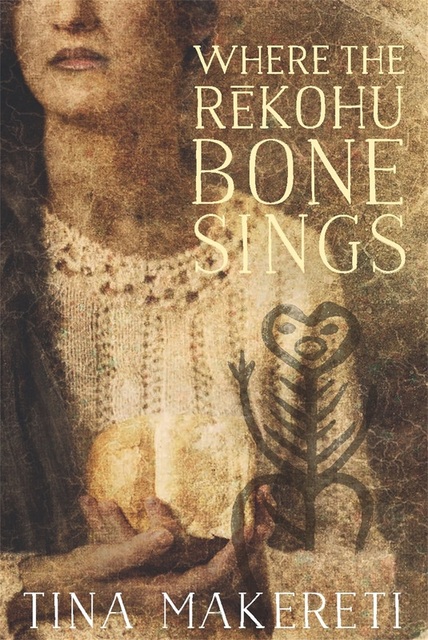
Tina Makereti’s Where the Rēkohu Bone Sings never loses sight of the ability of stories to sustain us

2440916-1

Tina Makereti is appearing at the Auckland Writers Festival in ‘Pieces of History’ along with Kerry Donovan Brown, Lawrence Hill and Fiona Kidman (chaired by Carole Beu). Sunday May 18th, 4 to 4.50 pm, Limelight Room, Aotea Centre. This is a free  event.

I don’t usually write about novels on Poetry Shelf, but I have just finished one that I am so full of, I want to share that fullness. And I am full in a good way. Tina Makereti’s novel, Where the Rēkohu Bone Sings (Random House, 2014), is a novel that emerges from diligent research and thought, yet also draws upon the panoramic experience as a mother, daughter, partner, lover. More than anything, the novel shows how fiction can represent the molecular dance of being human—the strengths, the weakness, the biases—in a way that refreshes your view of things.

The narrative structure resembles three entwined ropes: There is the love story of Mere and Iraia that stretches back to the legacy of their ancestors (he the descendant of slave, she the descendant of Moriori). There is the story of twins, Lula and Bigs who against all odds are different colours (one brown and one white) despite a shared mother and father. They discover a secret that explodes the identity story upon which they were raised. Finally there is the speaking but disembodied voice that seeps into the nooks and crannies of both narratives, and that speaks with a gamut of emotional investment and a growing revelation of belonging. At the heart of all this, are the Moriori people—the novel leads you from Queen Charlotte Sounds to the Chatham Islands/Rēkohu with various other side trips.

Tina’s extraordinary book embraces all manner of loves and strengths but as it faces the challenging and complex effects and behaviours of racism (amongst other issues), it shows too the power of story to delve deep. To take risks. To refract and reflect. We are raised on stories—from the ones our parents and forbears pass down to those that circulate at a wider cultural or societal level. Yet there is the agony of the gap, such as was the case with the Moriori, where the vital stories were mute, smudged, missing.

For me, the pleasure of the reading experience is multi-layered. Every now and then you find a book that satisfies on so many levels. It begins with the sentence—the way each is crafted with such finesse it is like the invisible stitching of fiction (at times though sentences are ambidextrous and are there to promote a visible and audible delight in language as well as to steer the narrative). Then there is the structure the holds the work together beautifully (in this case the entwined rope) along with the characters that gain such flesh and blood you become part of their world and it is a wrench to leave them. Finally there is the way a fictional work can strike you so profoundly, it enters and shakes both heart and intellect. Tina’s book has done all of this.

Yet the questions raised were the crucial gift for me. How to represent history (fictional or otherwise) in the face of all its clashing and volatile versions? How to live when your identity is ‘braided ropes’? How to move forward when these rope strands all bear the strain of unspeakable episodes (crimes against humanity, racism, intolerance, ignorance)? How to look back in order to move forward? How to forge and reforge personal and cultural identities? How to love and how to grieve? How to forgive? How to remember and how to forget?

These are some of the questions that Tina has embedded in her narrative. Not in a didactic or pedantic way but in the bone marrow of her characters. This is what lifts the novel beyond the joy of fiction (and it most definitely provides this) to a renewed engagement with what it means to love and live in the place where you have laid your roots—Aotearoa/New Zealand. Tina has written with such warmth, compassion, daring, empathy, insight and intellectual keenness on issues that matter so very much without ever losing sight of the ability of stories to sustain us, I urge you to read the novel.

http://www.tinamakereti.com/

The academic side of Tina’s PhD in Creative writing is available through Victoria University.

Random House author page

New Zealand Book Council author page

Tina Makereti interviewed by Craig Cliff

Poem Friday: Ashleigh Young’s ‘The bats’ resonates with such clarity

Ashleigh_Young (1)

Photo credit: Matt Bluett

Poetry Shelf now has a new feature. I always wanted to post poems on the site but I wanted to give everything else a chance to settle in first. I was on the judging panel recently for the Sarah Broom Poetry Award and assembled a list of suggestions for Sam Hunt. It seems fitting for an  award that honours such a fine poet as Sarah that I was so invigorated by the range and vitality of local writing from established writers to writers new to me. Moved in fact. I had around 65 names in my notebook under the heading : ‘want to read the book!’ Glorious. But in this tough environment for poetry publishing, I wondered how many would end up getting into print and getting the wider audience they deserve.

Poem Friday (like a sister to Tuesday Poem) is where I get to pick a poem that l have loved in my reading travels and with permission post it (so no submissions please). I am also taking a cue from Best New Zealand Poems and inviting the poet to write a sentence or two about their poem.

I have invited Ashleigh Young to launch the new feature (which seems apt in the light of her recent good news).


The bats

There is a kind of person who locks your shoes

inside of their house, and that is a person who is distracted


and who you see now through the window talking to his wife,

his face a protective shell grown fast around the phone.


The rush of not knowing someone at all lifts you

into the trees with the cicadas, your body too a bright clapping.


These are the situations through which you’ll get older

when you would like to walk home but your shoes are locked


in someone’s house, when you imagine sprinting down a driveway

as your back is pelted with rocks. These are unnecessary situations


because maybe you would have grown older anyhow, and likely

you do not need to cut your heart into two soft slippers to wear;


should need only to blot it with a paper towel as if it were

a bloody nose, all that blood turning to cold breath soon. Notice how


this person’s dog shows its affection by exploding into dangerous

shards in your arms. How much time do we have? None, very little


only some. But let yourself be lifted into the applause of the trees.

Let the applause be in anticipation of the slow motion


of him coming out of the house, quietly as a road cone

placed on a statue’s head at night.


Let his body be held, and graffitied, and prised apart.

Let the applause continue, even when it’s getting dark


even when it is dark

even when the bats come out.


© Ashleigh Young


Ashleigh works as an editor in Wellington and is currently working on a new collection of poetry and also a first collection of essays. Her debut collection was entitled Magnificent Moon. She has just been appointed Editor at Victoria University Press.

Author’s note: I have a fixation with cicadas, specifically with the way cicadas sound at the height of summer. It’s an urgent, panicky, overwhelming sound, always on the edge of total chaos. I was interested in how that sound might translate into a human feeling, and set out to write a scene about one possibility, when a kind of strange personal situation becomes amplified out of all proportion. And the bats? Well, I got to thinking about what the opposite of cicadas might be. I arrived at bats.

Note from Paula: Every now and then you fall upon a poem that fills you with such heart-stopping awe you just have to sit awhile and wait. That’s how I felt after reading this poem. Ashleigh’s poem leads you into the trees with the cicadas—into that glistening moment when the pitch of the cicada hits its summer zenith and all manner of subterranean feelings get to work on you. Yes, it leads you there, but then it leads you, surprisingly, lithely, into the jaw of difficulty. Where things go awry. And this is where the poem is glorious and light—in its movement into the enigmatic shade (an oxymoron I know). Its layers radiate out from the veiled situation, a bad situation you suspect. I love the gaps, the strangeness, the idea of someone locking someone’s shoes in their house. There were lines in this poem I wanted to hold in my mouth until they dissolved because they resonated with such clarity, beauty and deft phrasing (‘your body too a bright clapping’ ‘situations through which you’ll get older’). I also loved the lullaby-like repetition at the end that provided a point of solace along with a point of surprise (the bats).

Poetry Shelf interviews the finalists for the Sarah Broom Poetry Award: Today Kirsti Whalen

IMG_4591

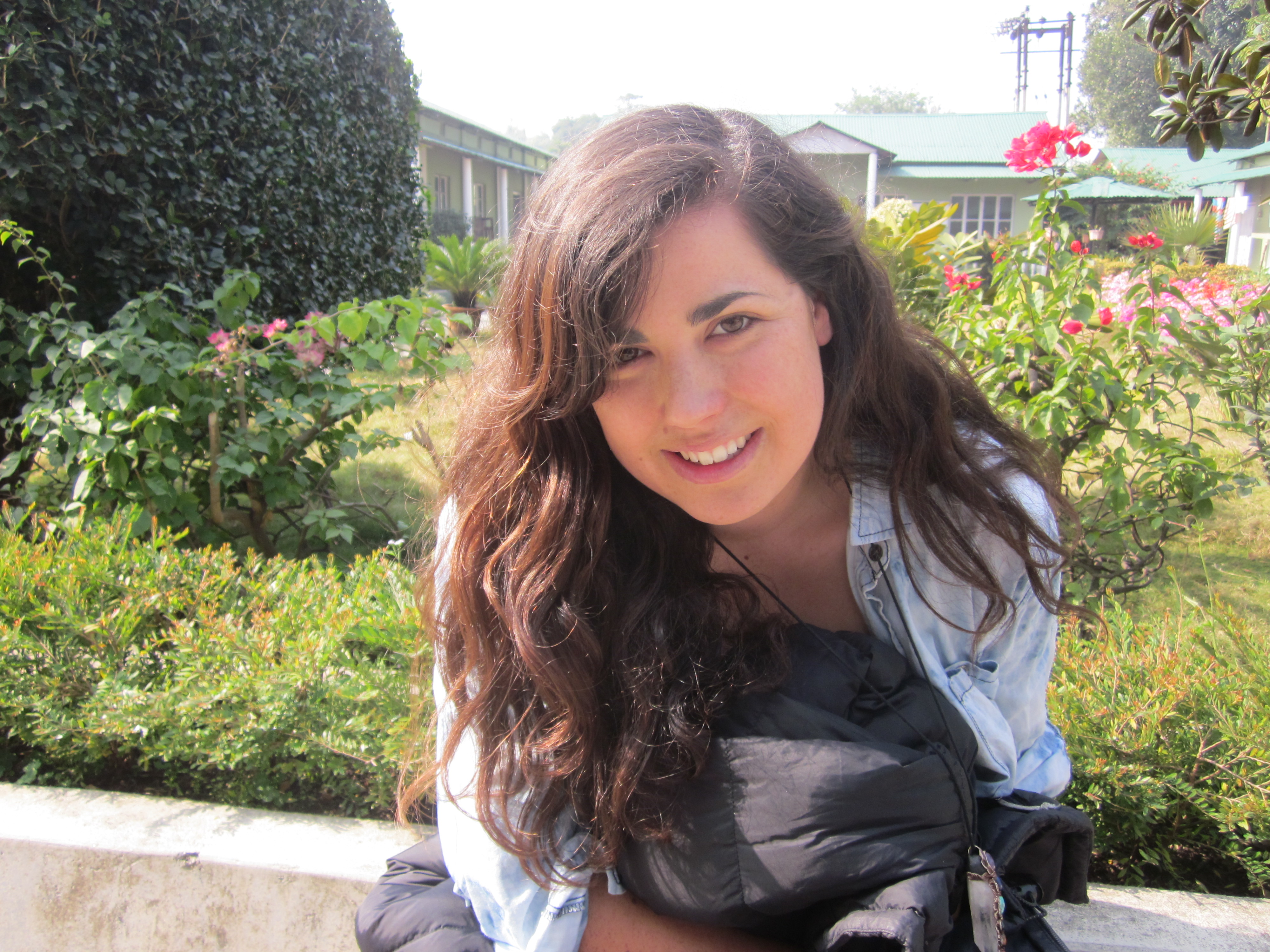
Kirsti Whalen is a poet and disability advocate currently studying Creative Writing at Manukau Institute with Robert Sullivan and Eleanor Catton. She has written and read poetry since she was a child, and has won both the Katherine Mansfield Young Writers Award and the Bell Gully National Secondary Schools Poetry Award. She has published poems in various journals.

My reaction to Kirsti’s poems: ‘Kirsti is a fresh young voice on the poetry horizon line. Her submission indicates she has an astonishing ear for the way sounds soar on a line, the way they dip and fall. Her syntax is bold and on the move, but she is unafraid of neither simplicity nor silent beats. The poems take you into the heart of family from a mother’s x-rays to kitchen dinners to a grandmother’s quince trees. Each poem is brought alive to a startling degree with sensual detail, electric connections, canny ellipsis, judicious repetition. It is a voice that feels original, that is willing to take risks and that exudes a love of writing in every nook and cranny.’


Did your childhood shape you as a poet? What did you like to read? Did you write as a child? What else did you like to do?

I was lucky enough to be part of a writing group from primary school, run first by my principal and then, after he left the school, my mum, who was a teacher. So I was taught from the start that writing is important, and a valid way to be spending one’s time. My parents always emphasized the value of creativity and never questioned my whims, for which I am very thankful.

My grandparents lived on a farm in the King Country, and this was my haven. I spent all the time I possibly could there, even catching the bus on weekends and holidays when Mum wouldn’t drive me. I am, in fact, a prize winning chicken breeder, taking out the pet category at nine years old! I think poetry is the opportunity to study life and the intricate world in one’s own time; I spent many hours a day with the baby chicks, and many more hours with dying cattle, parched with drought, trying to ease them out of this world. I gardened beside my grandmother and ran with the dog pack, rode my horse bareback and swam with eels so old they turned into legends. I baked bread with my grandfather. I made paper and scrapbooked with my mum. I went for pre-dawn walks with my brother, and cracked the ice over the chickens’ water bowls. I picked wild mushrooms and stewed them and I mustered cattle all day with my uncle, who taught me that girls are strong too. A good education in poetry.

And yes, I read. I was a bookish little thing, and started primary school with few friends except those I found in books. The first book I truly obsessed over was Starbright and the Dream Eater, by Joy Cowley, which Mum ended up confiscating so I would read something else, after my twentieth re-read. And from my fifth birthday my parents would buy me a hefty poetry anthology, from which I read my bedtime stories. Poetry was always fiction’s equal, to me.

When you started writing poems as a young adult, were there any poets in particular that you were drawn to (poems/poets as surrogate mentors)?

I fell in love with Janet Frame from an early age, who was introduced to me by my creative writing teacher at high school, Ros Ali. I have always loved her poem ‘Rain on the Roof’ above all others, except maybe ‘High Country Weather’ by James K. Baxter. The first book of poetry I bought with my own money was The Adulterer’s Bible, by Cliff Fell. Probably an odd choice for a young teenager, but I think it taught me a lot about language, risk and experimental work. I have always been fed a healthy diet of New Zealand poets and writers, so my influences tend to be local, though I was also a pretty hard-core Keats fan, and my cat was called Shakespeare.

I love the way your poems take risks. Your syntax is fidgety, your poems have an electric pulse, there is a deep-seated feeling but it is not over-baked, you don’t give everything away. What are key things for you when you write a poem?

Thank you! A key part of my writing process is having just the right song on repeat, to lend consistency to the tone. And I read each work aloud, over and over again, and then examine the structure to see if the punctuation offers the same rhythm. But the most important thing is making sure that the imagery pinpoints my intentions precisely, in a way I’ve never read before. I try to surprise myself. And if I get sick of the poem, I ditch it. A good poem should last forever. And it has to open a door to something bigger, even if it’s only about something small. I imagine poems like rooms, and if I can’t walk through that poem and into an adventure, it’s not working.

What poets have mattered to you over the past year? Some may have mattered as a reader and others may have been crucial in your development as a writer.

The last year has been a big one for my writing as I moved back to New Zealand, with the intention of giving myself the chance to really focus on my work. So the main influences have been my tutors and lecturers, Robert Sullivan, Ellie Catton, Witi Ihimaera and Anne Kennedy. Despite my contention with his politics I’ve read a lot of Ezra Pound of late and have also had a renaissance of my love of Kerouac, who is a heavy, though possibly invisible, influence.

You are studying Creative Writing at Manukau Institute of Technology with Robert Sullivan and Eleanor Catton. What do you take from this experience? Has it changed your writing in any way?

I think the biggest lesson I’ve been taught is that I cannot rest on my strengths. Ellie is a highly perceptive and her influence has forced me to examine what is self-indulgent, and what is necessary for the reader’s experience. I have learnt that fortes must be challenged, and that pushing oneself and being pushed by others can uncover new fortes, which would remain hidden if friends and family continued to tell you how great you are.

I’ve also changed in my approach to my work, treating it as a profession, rather than a hobby. And I am grateful for the highly instructive workshop format of the programme, as well as the gift of such excellent mentors.

What irks you in poetry?

When poetry exists to serve the poet’s ego. Appropriation of stories that don’t belong to the poet. The presence of pity. The presence of the patriarchy. Cliché. Collections that haven’t been edited well.

What delights you?

When poetry exists to serve the reader’s experience of the world. Stories being told by voices that haven’t previously held a platform. The presence of empowerment. The presence of the strength of women and their stories. Originality. Collections so sleekly edited that they hold a better narrative that a young adult novel.

Name three NZ poetry books that you have loved.

There are so many! I love Brown Girls in Bright Red Lipstick by Courtney Sina Meredith, anything by Lauris Edmond and 99 Ways into New Zealand Poetry, which I have found incredibly instructive. I also really love New New Zealand Poets in Performance, which is a spectacular anthology. It really captures the voice of New Zealand’s contemporary poetic scene.

The constant mantra to be a better writer is to write, write, write and read read read. You also need to live! What activities enrich your writing life?

I’ve travelled a lot and lived in Scotland and Australia, as well as working as a camel farmer in Austria, a nudist laughing yoga instructor in the south of France and living with families in Tahiti, Nepal and India. I think being exposed to all kinds of lifestyles and engaging with things that take my breath away for both their beauty and their humanity is extremely important. I also work in the disability world, and am lucky to spend time with kids who see things in a very fresh way. One of my little boys told me my arms were like peaches and his tummy was made of lemonade, because he loved me. That’s poetry!

Some poets argue that there are no rules in poetry and all rules are to be broken. Do you agree? Do you have cardinal rules?

My mentor Robert Sullivan, in the words of Ezra Pound, has drilled my cardinal rule into me, by way of a bright poster on our workshop room’s wall. Make it new! And in the works of Katherine Mansfield: Risk. Risk anything. If I’m doing these two things, and not appropriating anyone else’s story in a way I consider disrespectful, then every other rule is there to be challenged. I don’t really draw a line between poetry and prose, either. I like to think that poetry is more a feeling that a set of rules, though I do like to honour the tradition of poetry, and the challenge of structure, metre and various other devices.

Do you find social media an entertaining and useful tool or white noise?

I find it very distracting! And I think social media has taught us to expect quite instant feedback and gratification, which is somewhat demoralising when working on a project which requires a private, long-term investment, like a book. I wish I was brave enough to leave social media, to be honest, but I also see its importance in terms of engaging with an audience, and building a network of like-minded people. I try to be very careful, however, to promote my work, rather than myself. Social media’s influence can shift this balance to a more ego-based place, so I try to be very careful. I am also careful not to underestimate social media’s influence and infiltration of our collective conscience.

How do you envision your debut book?

I like beautiful things, so I’d like to have a book that someone could hold in their hands, feeing like what they’re clutching is special. I think I have one story I need to tell before I am free to tell other stories. I was my mum’s carer for years during her battle with cancer, and I want to write something that other young carers can read, and feel less alone than I did. And if there’s one line in there that makes someone gasp, as if something has changed for him or her… well, that’s the dream!

That seems to me like an important book to write. I see that commitment to life and to humanity in your writing. What were some key influences in your submitted poems?

The women of my family are the crux of my submission, particularly their strength, and their absence. I’m a feminist, and I hope that my work has subtle echoes of the influence of Marilyn French; Eve Ensler; Kate Millett. I have also spend the last few years engaging with spoken word, and I do write my poetry to be voiced by the reader, so I am influenced by the musicality of poets like Ursula Rucker, and the idea of voice and resonance.

Brava! With overt and covert misogyny still at work, and a culture of bullying still entrenched in our society, it is refreshing to hear young women speak out (like Lorde for example).

Are you happy to talk about what you are currently writing and what you hope to write soon, or do you prefer not to?

I try to keep things close to my chest but I’m a pretty open book and tend to dish too quickly about the things I’m excited about! While I’m an atheist I also have this romantic notion of the universe, and that some things need to be released into the world to be realised. Sometimes speaking to something makes it real. I’m also very lucky to have two best friends, one of whom is a poet in Melbourne and the other completing her MFA at the Michener Center in Austin, Texas, so we talk work a lot!

Do you like performing your work?

I used to. I like reading my work, but I have recently ‘retired’ (at 25!) from performance poetry as a vocation, so to speak. I think that for me, personally, it encouraged complacency. There is something quite dangerous about the immediacy of feedback and the tendency towards cliché that large audiences inspire. I enjoy elements of performance but I’m trying to let the page be the stage, and the words hold the spotlight.

What gives you pleasure when you write and read poetry?

I think all good writing is in pursuit of a definition of what it means to be human. When I can understand that, read that, or write something that makes me feel like maybe we’re all the same, and maybe that’s beautiful, that’s where I find the pleasure in it all.

Do you write in any other genre? Why poetry?

I have a particular penchant for creative non-fiction (which any fiction I ostensibly write actually also is, if I’m honest). I’ve had a lot of strange and challenging things happen to me or around me, sometimes by accident, sometimes by choice. I think as a writer it’s almost a good thing to have a rather difficult life, because it fuels your work. It gives you stories to tell. And I enjoy the intellectual aspect of creative non-fiction, as it allows me to incorporate my readings and discussions into less of an experience, and more of a comment. It challenges me to be a little more perceptive and to think deeply, which I value.

But poetry, to me, is the closest thing I have to prayer. I wish I could say something profound about why I write poetry, but I do it because it doesn’t feel right not to. It’s a discipline: I have to put my poetry hat on daily to ensure that I am training my brain into accessing that other place that some people call a muse. But it comes, and I let it come, because it’s who I am. I wonder what would have happened if I hadn’t been introduced to poetry at such an early age, and instructed in it all through my schooling. I like to think I would have written poetry anyway.

Finally if you were to be trapped for hours (in a waiting room, on a mountain, inside on a rainy day) what poetry book would you read?

Probably Peter Bland’s Collected Poems. It’s a fairly hefty book, so it would keep me occupied, and his writing is so hopeful, somehow, that whatever drab place I might be trapped in would become gently infused with the magic of the every day.


Kirsti on YouTube

On the Shelf: April’s picks by Albert Wendt, Caoilinn Hughes, Amy Brown, Zarah Butcher-McGunnigle

1. Albert Wendt

 Just finished reading Coconut Milk by Dan Taulapapa McMullin (University of Arizona Press).

A beguiling collection: the poems are open, innovative, humourous, and compassionate.

Also Afakasi Speaks by Grace Taylor (Ala Press, Hawaii, 2013).

Vigorous, honest, energetic poetry that wraps you up in its arms and carries you along into complex emotional depths and tensions.

Albert Wendt is one of most New Zealand’s most treasured writers, in both poetry and fiction.


2. Caoilinn Hughes

Bevel by William Letford (Carcanet Press, 2012)

The marketing of this book draws attention to the fact that young Scotsman Letford is a roofer by day. Although that might seem like a bit of a cute hook, the language, labour and sense of humour of being a roofer are central to the tone of Bevel: Letford is just that bit closer than the rest of us to the sky and, though he might be physically kept in his place by the hammers, nails and vernacular of the tradesman culture, he is imaginatively and creatively unobstructed, uplifting. What’s more, the novelty of a roofer-poet is topped by the novelty of the poems. The writing is so rivetingly different! The poems engage in witty repartee with one another and relate a refreshing, funny, honest, sometimes cheeky perspective. I love this book, and have read it a half-dozen times. I subject non-poetry enthusiast friends to recitations from it because he is a poet who, through sheer joy, novelty and humanity—and despite his use of Scottish phonetics throughout—translates. He’s worth checking out on YouTube too, as his performances do justice to the poems. This is my favourite:  http://www.youtube.com/watch?v=zyHWqdIEtb0


Graft by Helen Heath (Victoria University Press, 2013)

Graft is Helen Heath’s debut collection of poetry, and it was the first book of poetry to be shortlisted for the Royal Society of New Zealand’s science prize in 2013. It’s a bit like cronyism to rave about this book (as we happen to be in the same university and share a publisher!), but when I think of poetry books that I really enjoyed over the past couple of years, Graft is definitely up there. The prize nomination is a result of the book’s strong interest in science, as Heath’s parents were scientists and it informs her philosophies, but I recall the relationships portrayed most distinctly. The interactions between people; the meeting points between ideologies. What stands out in this book is the poet’s generosity: Heath lets the reader in, and rewards her—by no means a given in the genre. These poems are accessible, while being finely crafted and finished.

Caoilinn Hughes’ debut collection Gathering Evidence was recently published by Victoria University Press. My review here. You can see her at the Auckland Writer’s Festival on Saturday May 17th 2.30 pm – 3.20 pm in Matters Of Discovery.


3. Amy Brown

Ephemeral Waters, Kate Middleton (Giramondo, 2013)

Kate Middleton is a brilliantly talented young Australian poet, whose recent book (what I would call a contemporary epic poem) took her the length of the Colorado River. What I most enjoy about this book-length meditation, complete with its own tributaries and dams, is its brazen ambition and generosity of attention. In an essay about the writing of Ephemeral Waters, Middleton says, “At a distance, even after the task is done, my faith that the impressions could add up to the poem seems crazy . . . writing this poem has taught me to try impossible things. I wonder, should a long poem always develop with the suspicion that it is unpublishable? Did Ephemeral Waters teach me that I should only try impossible things?” I find this sentiment especially resonant and inspiring.


Phosphorescence of Thought, Peter O’Leary (Cultural Society, 2013)

I confess that Phosphorescence of Thought is still on my bedside table, having just arrived from the U.S. late last week. I wanted to mention it, though, because I have been looking forward to reading it even since Joan Fleming recommended it on this blog last year. As another contemporary epic poem, with enormous empathy for a specific physical environment, I think it will follow nicely from Ephemeral Waters. In a few months I’ll be visiting Chicago, where O’Leary lives, and am tempted to go to Des Plaines, which features in the poem.


Autobiography of a MargueriteZarah Butcher-McGunnigle (Hue & Cry Press, May 2014)

It may seem nepotistic to list here a book that I have edited, but in honesty it is the poetry that I have been most struck by so far this year. Zarah Butcher-McGunnigle’s Autobiography of a Marguerite (another book-length poem) is a unique and indelible reading experience. In its adventurous structure and raw openness, it is comparable to Anne Carson’s Decreation and Beauty of the Husband. If I hadn’t been lucky enough to spend the last few months reading Zarah’s debut, I would be eagerly anticipating its launch this May.

Amy Brown has a cluster of poems in the latest issue of Sport (42) that I love—richly detailed, poignant, evocative. I particularly love ‘Names.’


4. Zarah Butcher-McGunnigle

 Anamnesis, Lucy Ives (Slope Editions, 2009)

I’ve been coming back to this book-length poem since late 2012. The poem uses the repetition of imperatives “Write” and “Cross this out”, inviting the reader to participate in the process of writing the poem. The enactment of revision becomes the poem.


What you did was wrong

Cross this out

What you did was right

You can write again about the tiger that fed itself

A great mystery

The owl that stepped forward one step

Cross out “tiger,” write, “present”

It goes on the cover of another book

What are you so depressed about?

Cross this out


Poemland, Chelsey Minnis (Wave Books, 2009)

This is a book-length poem about writing poems, what a poem is, and what it means to be a poet. There are lots of similes, over-the-top metaphors and exclamation marks as the poem addresses the reader directly, seeming to be sincere and ironic at the same time.


This is supposed to be an independent thought…

But it is just a strained leash…

This is a poem!

You should be able to figure it out alright…

The first theme of it is “old fashioned drinking”…


Zarah Butcher-McGunnigle’s debut collection, Autobiography of a Marguerite, will be published by Hue & Cry Press. This book is being funded through a Pledge Me request. You can pledge here (ends 6th April 14 at 7pm).


Exciting News — A new Book Show for TV but it needs our help


I am delighted to post this news and media release. Graham Beattie and Carole Beu are such dedicated supporters of New Zealand books, literary events and authors.


We are very excited about a new book show on NZ television; and we need your help to make it happen!

Graham Beattie and Carole Beu are collaborating with us, local TV broadcaster, Face TV, to produce and screen THE BOOK SHOW later this year. It will be nationwide and available on Sky TV 83, as well as online.  The weekly programme will feature author interviews, reviews and great reads from both NZ contributors and visiting international book people; presented by Carole and Graham.

We’re making use of the ‘boosted’ crowd-funding website (www.boosted.org.nz)  to raise money to make it happen – and will launch our campaign at the beginning of May: online and at a special event at the Women’s Bookshop.

So, all through May, you can make a tax-deductable donation of any amount over $5 by going to the boosted website, which is run as part of the NZ Arts Foundation.
Watch this space for updates and go online to help out in May!

Deb Faith
PRODUCER| FACE TELEVISION phone + 64  (0) 9 376 5030 Ddi  +64 (0) 9 360 4613
mobile + 64 (0) 27 489 0213
mail address  PO BOX 78-034, GREY LYNN, AUCKLAND, NEW ZEALAND 1245
street address  28 SURREY CRESCENT, GREY LYNN, AUCKLAND, NEW ZEALAND 1021
email deb@facetv.co.nz

Bringing you the best in public service broadcasting Sky Channel 083

Giveaway copy of Marty Smith’s Horse with a Hat

Horse_with_Hat_front_cover__77059-1.1385936731.220.220

Thanks to Victoria University Press, Jack McKerchar will receive a copy of Marty Smith‘s terrific Horse with a Hat.

My review: https://nzpoetryshelf.com/2014/03/20/marty-smiths-horse-with-a-hat-you-get-grit-and-you-get-open-views/

JAAM deadline looming

For this issue JAAM is shifting south, and are delighted that Dunedinite Sue Wootton is our guest editor for our 2014 issue. Sue is probably best known as a poet – she has published three collections of poetry, most recently By Birdlight (Steele Roberts, 2011), and has won awards for her poems. But she’s also an experienced prose writer. Her ebook of three short stories, The Happiest Music on Earth, was published in 2012 and her children’s book, Cloudcatcher, came out in 2010. Sue has twice been a runner up in the BNZ Katherine Mansfield short story awards, has been a finalist in the Sunday Star Times and Royal Society of New Zealand Manhire Prize short story competitions, and has won the Aoraki Literary Festival short story prize.

The theme for JAAM 32 is ‘shorelines’, and Sue welcomes submissions that consider this theme from any angle, loosely, or not at all.

JAAM publishes poetry, fiction, creative non-fiction, essays, photography and other artwork. Please don’t send simultaneous submissions, more than six poems or more than three prose submissions.

JAAM prefers emailed submissions. Send to jaammagazine@yahoo.co.nz, using ‘JAAM submission’ (or similar) in your subject line, so we know it’s not spam. Include your submission(s) in the body of your email. If you have particular formatting, you can also include your submissions in an attachment (.doc, .rtf, .pdf or any image file type is ok for images).

If you don’t have email, you can post submissions to:

JAAM
PO Box 25239
Wellington 6146
New Zealand

Make sure you include a stamped self-addressed envelope for reply.

The deadline for submissions is 31 March 2014, and JAAM 32 will be published in or around September 2014.

JAAM here