Category Archives: Uncategorized

Poetry Shelf Monday Poem: Lynn Jenner’s ‘On joy and other obligations’


On joy and other obligations [1]


If you open a book that has been closed for forty-four years, if dust floats in the sunlight, if the book sold in 1969 for $1.60, and you buy it second-hand for $10, that might be your good fortune. If there is a tiny segmented weevil in the dusty space between the binding and the cover, if the worm lifts its head, if you raise your hand to kill the worm but pause instead, that might also be your good fortune. There is no such thing as a life that means nothing, the worm says in its airy voice.

I see that I disgust you, the worm says. Do what you must. But in the blood, the blood, the stream, the river, I am you and you are also me. Every life contains the memory of countless other lives; lives we knew, deaths we mourn and those behind the door. Perhaps, after all, a cosmos binds and holds us all together, whatever death may report?

Bend your neck, pause long enough to say your own name, and raise your head again. In the presence of the river, of pieces of bone, fish hooks and the skeletons of tiny glassy fish, this movement is required of you. Also, near towns where your ancestors died, take off your sandals so that mud and blood and salt water will soak your skin.

Light will slowly fade as winter comes. Clouds will cover the moon. Winter of earth, winter of sky, winter of hope, winter of loss, winter of exile, winter of silence, winter of anger. Winter of such faint light, winter of waiting, winter of longing. In these short days, people will travel together for safety but will be beaten down by soldiers and armies of words. There is no forgiveness. Rain never stops, rivers run to flood, run underground and swell the sea. To endure is the thing.

Ah, but joy has a new shoot. In the bush, cabbage trees flower and a breeze blows their sweet pink perfume along your path. Someone of ninety makes marmalade, there is a yellow bowl of persimmons and three blackbirds on the table outside. It doesn’t always come back to you, Rilke says, Brasch says, the worm says. Leaves of giant flax rattle and clack. Green is dark and wild. Joy is a single tūī, two fantails, a cloud like a child’s drawing. On your last day, you may see a vermillion sky.

Speak like Auden of human kind in all its endeavours, of all its want and weakness, speak when it seems there may be a new war and everything is advertising and resignation. Pain and love through dark glasses, that is your business. Or, like Blake, go inside the vault of your head to where the visions start. Walk with the dead, hold their hands, dance until you cannot tell them from yourself. Record an image, a young woman stepping down from a bus. Can you call her back? To name, to try, to do, is the thing.


©Lynn Jenner


[1] This poem was inspired by and borrows significantly from poems in Charles Brasch’s collection Not Far Off, Caxton Press (1969), especially ‘A Closed Book’. ‘O lucky man’ and ‘Homage to Rilke’ from Riemke Ensing’s 2009 poetry collection O Lucky Man, poems for Charles Brasch, Otakou Press (2009) and Ruth Dallas’s poem ‘Last Letter, for Charles Brasch, 1909-1973’, in Ruth Dallas Collected Poems, Otago University press (1987), have also left their mark.

‘On joy and other obligations’ is from PEAT, Lynn’s forthcoming book.


Lynn Jenner’s new book Peat, a collection of essays, prose poems and glossaries about the poet Charles Brasch and the Kāpiti Expressway, will be published by Otago University Press in 2019. Lynn’s first book Dear Sweet Harry (AUP 2010) won the NZSA Jessie MacKay prize for the best first book of poetry. Her second book, Lost and Gone Away (AUP 2015), was a finalist in the non-fiction section of the Ockham New Zealand Book Awards in 2016. Lynn has a PhD from the International Institute of Modern Letters. She teaches creative writing and mentors writers. Lynn’s author website


Launch: Anne Kennedy’s The Ice Shelf


42828337_10155586587717301_6125235521489731584_n.jpg

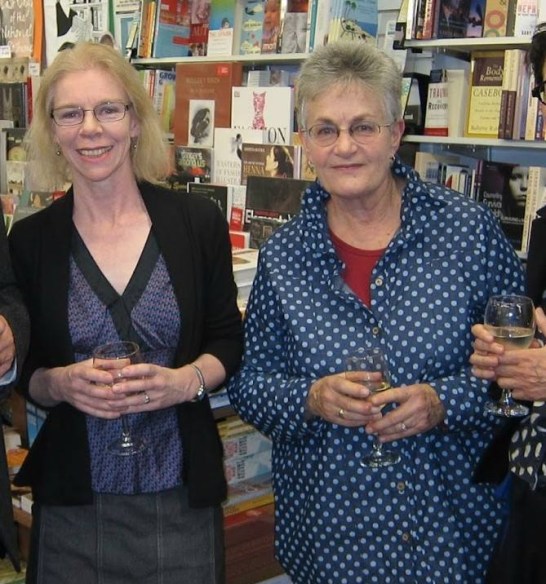
Anne Kennedy with Carole Beu

Tuesday October 16th, 6 pm – 7.30pm
The Women’s Bookshop, 105 Ponsonby Road, Auckland
Please join us for the launch of Anne Kennedy’s novel The Ice Shelf (Victoria University Press) – a satirical look at love, life, writing and winning awards. Anne, an award winning poet, has just released her second novel – hear her read from and talk about the ideas behind this amusing story. All welcome.
see here

Poetry Shelf audio spot: Sugar Magnolia Wilson’s ‘Betty as a Boy’

image1.jpeg


Sugar Magnolia Wilson is from the Far North of New Zealand and has been living in Wellington for six years. She has recently had work published in Turbine | Kapohau and Landfall. She co-edits Sweet Mammalian, a journal of New Zealand poetry, along with Hannah Mettner and Morgan Bach. Her first full-length collection of poetry, Because a woman’s heart is like a needle at the bottom of the ocean, will be published by AUP in March 2019.


Poetry Shelf Monday Poem: an extract from Lee Posna


The problem, everybody’s problem, is myself. Which is neither mine, nor self, but what of that? (I have no self-control: there’s nothing to control.) The more I work at it, the deeper it gets. In this it’s like a hole or a painting. It being me. There’s no law that binds depth to beauty. Some bind it to horror, they shadow me like imperial clouds. Mom’s the concubine. The sky’s like a painting over a hole in which one finds an empty vault steelier than angels. ‘The sky is blue, no?’

The problem gets deeper. I stare at a bald patch of lawn where a black seething mass resists my visual cortex. I bend down toblindside emerge ants = fire. I put out the fire. Then everything’s made of fire (not the logic of a bad dream, but the truth of an ancient fancy). The garrigue burns, the house burns, the urethra burns, the universe pounds with voids so cold they burn like ice on flesh. The twitter of a chaffinch burns in the olive.

I’m calm now. I can reason. The scream barrelled like a train through a dead station. Another won’t be long. Its echo pulls my face a bit, I’m calm now. I can reason. I can reason a little way. I stack my reason upon its twin till it starts to gain some ground from the dust. I’m always screwing around in the dust. This is how all babels are made, one stone upon another. They stretch across the peneplains of hidden hominid. The sky has room enough for every end.

The problem is the solution (like divine speech): death. Not to take the shortest path to it, but rather to fight against traffic up the road leading from it. Just as the litter-bearers of a certain dying pope did summer of ‘64, working toward the holy land:

Pius II set out for Ancona to rouse a late crusade, 200 years after the age burnt out. Deserters filled the road overlapping like ghosts. His men drew the litter’s heavy damask curtains despite the violent heat to spare their swimming head the heartless tableau. He arrived in time to see the late Venetian fleet dock, and soon after died.

A good solution to a bad problem, which always already contained defeat. Defeat is part of the larger plan. What kind of plan is this? Not the right one. And worse, not the wrong.

See how this plays out for a planet, a people, a family, another? A little shoot squeezes through some barren peneplain; the shoot grows into a forest; the forest into a house; the house into fire; the fire into words; the words into swords; the sword like a clock’s hand never stops turning; the clock like a star’s engine–.

While I am my blind spot: for myself I can only infer its operation, as one infers the presence of dark matter. I believe in my defeat – I feel it happening, I see it in my beard, under my eyes, in my way, that is my pattern, in my work, which increases order, a kind of order, whose growth is outpaced by disorder – which makes my reality, giving ground for belief: an elegant feedback loop. What do I believe? What I’m forced to.

I see the end of my life many years from now, or else two, or it may be six weeks from Monday. In the manner of light, which illuminates, but hardly penetrates (at most it reaches a thousand metres into the sea), I see from one end of the universe to the other. I see and note the faces of all who have never lived, and will one day remain unborn, from Eve’s aborted sister until the end of time. I smell the rock, and paint the rock’s sex, and paint the nude’s sky, and render great walls of galaxies to hide your eyes. The matter is limited, and it contains defeat.

He’s not me. The Provencale painter, not me. What is true for you in your private heart is true for all men (thank you 19th century). I bow to the 19th century, I crawl into the 19th century as into my mother’s slack womb, as this fully unfurled genotype starting to decay. I burrow into pillows in the corner of this warm room. I squeeze them to force the door of innocence, to strangle Adam and ride him into the brane of myth. This is neither his voice nor mine, I like to think it’s both (though it’s neither). I make no space for his spicy fire, voice, temper – I’ll tell you about that soon, it’s part of this hateful experiment. I like to think I can undo a gross of years, expiate the omnipotent violence of ‘it was’ and animate Cezanne at thirty-something, year of the hanged man. There’s his corpse, thirty-something years before the decay begins in earnest. He’s sleeping, an empty bottle of Cairanne at the foot of his easel. I slither along the floorboards (we’re in his atelier), shoeless, shirtless, sweating in moonlight. My underwear stinks. The crickets swell the night thick with rosemary. Crouching next to his crumpled beard (where’s his pillow?), his face turned toward me, the miasma of wine, fougasse, tobacco clouds me in rank heat: corruption enters the saint. And so I solemnly open his mouth, which makes a sticky sound, allowing the corpse to speak. That is, my corpse.


©Lee Posna from ‘Completely Supportless Blue’


Lee Posna lives in Wellington and works at Pegasus Books. Books he’s recently enjoyed include Hill by Jean Giono and Difficult Loves by Italo Calvino.


The Victoria University of Wellington / Creative New Zealand Writer in Residence – applications close soon

Writer in Residence

The Writer in Residence is an annual appointment to foster New Zealand writing, with support from Creative New Zealand.

About the residency

Creative New Zealand Logo

The Victoria University of Wellington / Creative New Zealand Writer in Residence appointment is jointly funded by Victoria University of Wellington and Creative New Zealand. It has been created to foster New Zealand writing by providing the appointee with the opportunity to write full-time within an academic environment for the period of tenure.

Applications are invited from writers in all areas of literary activity, including drama, fiction and poetry, New Zealand art, biography, history, music, society and culture, etc. Applicants should be authors of proven merit normally resident in New Zealand or New Zealanders currently resident overseas. There is no restriction on the occupation of applicants, but they should not be employees of Creative New Zealand or Victoria University, or have been employed by Victoria University in the twelve months prior to the closing date.

Applications for the 2019 appointment are now open, with an application deadline of 30 September 2018. A full role description and application is available on the Current Vacancies page of Victoria’s website (position reference 2254. Enquiries can also be directed to modernletters@vuw.ac.nz.

An addition to the 2018 Writers on Mondays series: Kate Camp: Menton, memoir and me

8th Oct 2018 12:15pm to 8th Oct 2018 1:15pm

Soundings Theatre, Te Papa

The International Institute of Modern Letters (IIML) is delighted to announce the addition of this special event to the 2018 Writers on Mondays series.

Kate Camp: Menton, memoir and me:

When poet Kate Camp took up the Katherine Mansfield Menton Fellowship in 2017, it was to write memoir, not poetry.

Memoir writing raises interesting questions – of fact and fiction, ethics and ego, what one remembers, and what one chooses to reveal. In this lecture, Kate Camp examines a more difficult and profound question – who cares? Who could possibly give a damn about the details of someone else’s life?

Drawing on her own work and that of other New Zealand writers, Camp’s lecture is an entertaining, insightful, and at times deeply personal exploration of the ‘point’ of writing memoir.

Originally delivered September as the Frank Sargeson Memorial Lecture, initiated by Waikato University with the support of the Friends of Hamilton Library.

FREE EVENT

Poetry Shelf audio spot: Wen-Juenn Lee’s ‘Prologue’


DSCF9614.JPG


Prologue‘ appeared in Three Lamps, an online journal from the University of Auckland, edited by Paula Morris.


Wen-Juenn Lee edits poetry for the Australian literary journal, Voiceworks. She works and lives in Melbourne, and writes of home and belonging.


For women who signed the petition and the women who step forward


IMG_4390.JPG

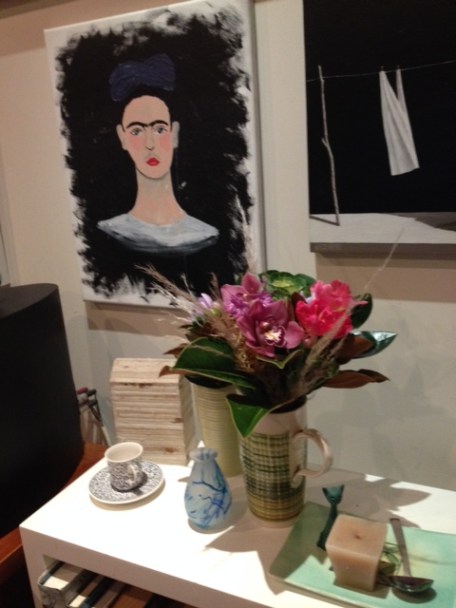
Frida Kahlo by my daughter, Estelle Hight


125 years ago today many but not all New Zealand women got the vote.

I have waited until today to let this sink in and react

I am sitting here at my kitchen table with the grey clouds and a bite

in the air thinking of our early women poets who held hands with

the English suffragettes and risked their words to shape a better

future for all women by writing and speaking out and imagining

an equal life for women without violence and without poverty

and without being spoken over or patronised or ignored

on the grounds women were not men’s equal. I am thinking

this and the way I have a support crew of women who have held

my hand over the past year through difficulty and celebration

and I am wondering how we are risking words to shape

a better future for all women by writing and speaking out

and imagining lives without violence or poverty or denigration

or erasure or inequity and I am thinking of Selina Tusitala Marsh

and Tusiata Avia who have held my hand in this tough year

and who stand tall and proud for all women but especially

Pasifika women and speak out about abuse be it physical

or emotional and who then stand even taller and show

how words can sing and who get young Pasifika

women singing and I can feel the chain of hands stretching

back through a line of women writing to Blanche Baughan

and Jessie Mackay and I can feel the hand of Airini Beautrais

who is brave in her writing and Dinah Hawken who showed

me the tug of war between men and women and the way they

let the rope go and the way Fiona Farrell gave voice to her

broken city and we could hear the small stories of living

and here I am taking stock and giving thanks to the women

who came before me and giving thanks for my vote

and my freedom to choose education and motherhood

but thinking then of my notfreedom within medical systems

that know best and education systems that let children down

and clamp the Arts and the way even now our voices might

be trampled upon when we don’t sing in harmony. I am thinking

we bake bread and we buy bread and we get married and we don’t get married

and we live with women and we live with men and we hang out washing

and soothe the troubled child and we change gender and we go to work

and fold the clothes and get bruised and make the money stretch and make dreams

and try to keep warm and run away and chop the wood and get degrees

and we hold hands and we keep holding hands because there is strength in difference.

This year has almost wiped me out or so it feels but to sit here at the kitchen table and

reflect back on those brave early women who never gave up and who embraced shrill

and loud and forceful puts me back with the wind blowing through the manuka

back to that moment when I wrote a poem for Neve and her parents

and the world felt full of hope because kindness is just as important as strength.


Written in one breath by Paula Green, 19th September 2018, Bethells Valley, Waitakere


IMG_4405.JPG