


Go here for tickets and details

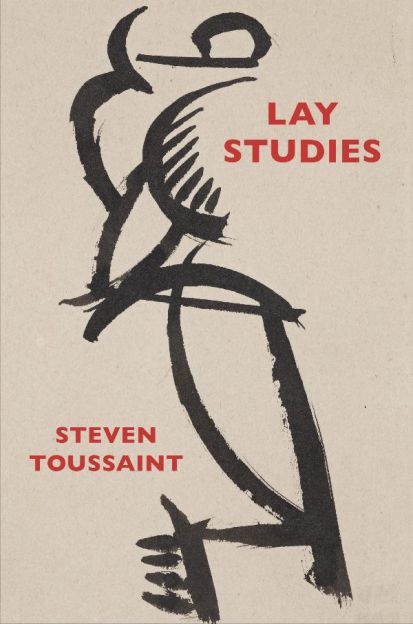
You are warmly invited to the launch of
Lay Studies
by Steven Toussaint
on Thursday 11 July, 6pm–7.30pm
at Unity Books, 57 Willis St, Wellington.
Lay Studies will be launched by John Dennison.
Lisa Samuels reads two poetry increments from a developing poetry manuscript called Livestream: ‘The Other Instinct’ and ‘Like Big Noise’.
Lisa Samuels is a transnational (US/NZ) poet whose recent works include a film version of her book Tomorrowland (2017, director Wes Tank), the anthology A Transpacific Poetics (2017, principal editor; co-editor Sawako Nakayasu), the poetry books Symphony for Human Transport (a Guardian top ten poetry book of 2017) and Foreign Native (2018), and visual art at Studio One Toi Tū (2019). Lisa is Professor of English and Drama at the University of Auckland.
Little words
Dear heart, a word —
which word? Shall we choose something
secret and unexpected?
Don’t say ‘moon’, everyone knows
that code of longing. Don’t say ‘talk’, the running sound
of every banal conversation.
Don’t say ‘bread’ or ‘wine’ or ‘salt’ —
those easy gestures towards
humanity and history.
Don’t say ‘love’ — that hollow ‘o’ so easy to look through.
One might say ‘bird’ or ‘house’ or ‘hand’ —
nearer sounds to the one we are looking for.
There is always ‘silence’
or ‘question’ — don’t say these words,
too large to qualify.
Let us sit quietly.
Let us shape a small word that holds us.
Let that little word
be ‘name’.
Anna Livesey
Anna Livesey is a poet, corporate strategist, stand-up comic, policy analyst, literary curator-at-large, podcaster, shouting yogi and early morning raver. Born and raised in Wellington, Anna studied at Victoria University where she completed a BA in English and an MA in Creative Writing. Anna also holds Masters degrees in Public Policy and Business Administration.
Anna has published three poetry collections to date: Good Luck (2003), The Moonmen (2010), and Ordinary Time (2017). She currently lives in Auckland with her husband and two children.
In New Zealand there used to be a Year 13 exam called Scholarship English. I more or less failed the exam (102 marks out of 200) back when I was at high school and spending a lot of my time in Dunedin’s snooker parlours. Hence it was odd many years later to find myself Chief Examiner for Scholarship English, and able to set essay questions like this:
“Each of the following texts has been published as a poem. Write about all three in order to give your own definition of poetry.”
Not many students chose to answer this question – though a few did, brilliantly – which makes sense when you see the specified poems:
Epigram Engraved on the Collar of a Dog Which I Gave to His Royal Highness
I am his Highness’ dog at Kew;
Pray tell me, Sir, whose dog are you?
*
Goodbye
If you are still alive when you read this,
close your eyes. I am
under their lids, growing black.
*
eyeye
I like all three of these poems, written (in order) by the 18th-century English poet Alexander Pope and the 20th-century Americans Bill Knott and Aram Saroyan. One thing I like is that they have a sense of humour. They aren’t troubled by a sense of self-importance. You can’t miss the mischief in Pope and Saroyan, but it might be harder to find it in Bill Knott’s dark, haiku-like piece. Still, consider this: if you happen to be alive and close your eyes at the point where the poem tells you to, you can’t read the remaining words. Reader and poem are obliged to become co-conspirators in overriding this logical problem. The poem goes on, past its own imperative, and of course we go with it.
One of the problems some people have in trying to fit Pope and Knott and Saroyan into their sense of “poetry”, is that we still tend to give the word a capital P. It makes us a little hushed and breathless, as if we are in the presence of something sacred: Poetry.
We are often taught to regard poems as vehicles for a kind of superior wisdom, more important than anything mere prose can carry, full of feeling and spiritual insight, if perhaps a little bit misty in their phrasing. That is one reason poems seize the floor at weddings and funerals and naming-ceremonies.
“Poetry is the first and last of all knowledge—it is as immortal as the heart of man,” wrote Wordsworth, and many people who sigh over Poetry agree with him. But as often as not they are the very people who are frightened of real poems.
Bill Manhire
Bill Manhire lives in Wellington. Doubtful Sounds, a collection of his essays and interviews, is still available from Victoria University Press.
Yes! It’s a trio of poetry books from me – The Track is out with Seraph Press in July.
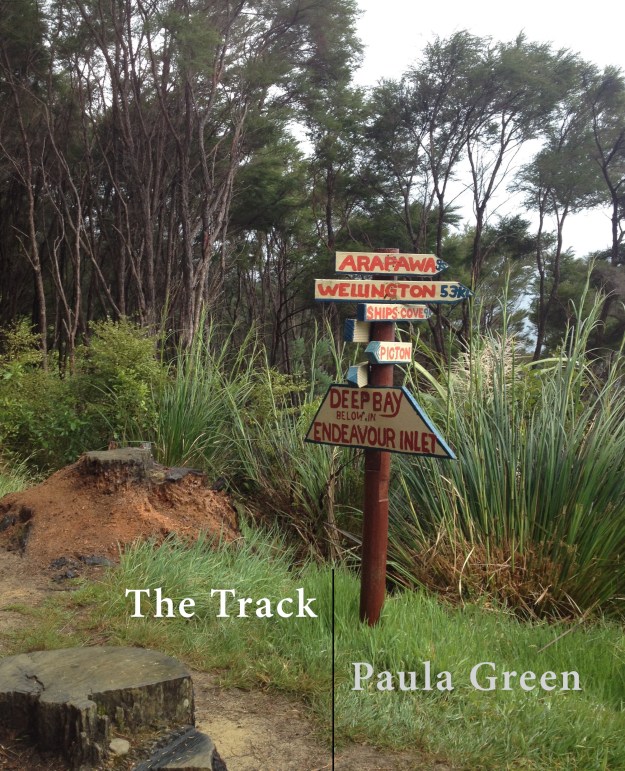
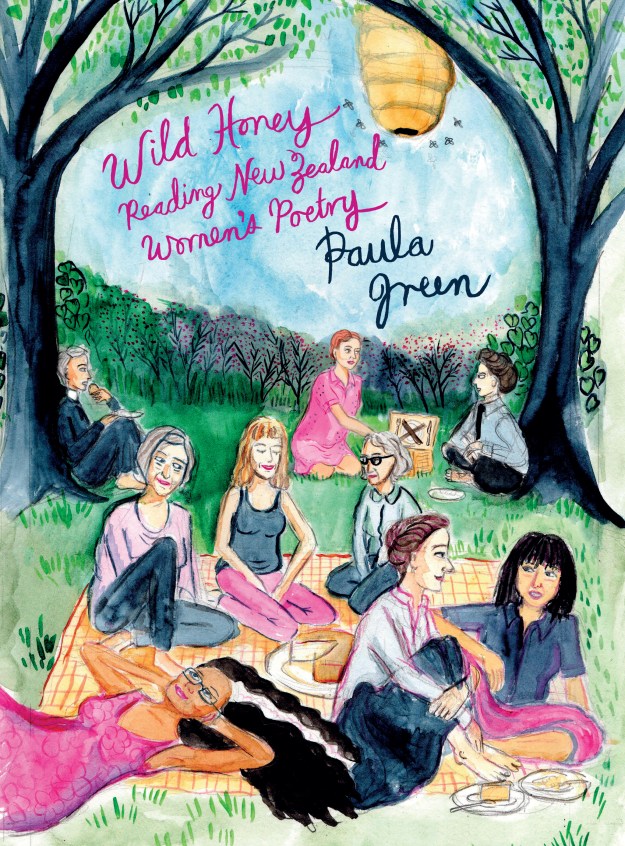
Two book covers posted today! One on Poetry Box for my new children’s collection and the cover of Wild Honey: Reading NZ Women’s Poetry here on Poetry Shelf. Plus I have my new adult poems The Track out in July – so four years of writing activity is arriving in a flurry. So exciting and nerve-wracking all in the same gulp.
Wild Honey is out in August with Massey University Press and we are planning various events to celebrate its arrival. Sarah Laing painted the amazing cover which stretches over onto the back – along with drawings for inside.
The cover features Fleur Adcock Alison Wong Elizabeth Smither Ursula Bethell Jessie Mackay Blanche Baughan Robin Hyde Selina Tusitala Marsh and Airini Beautrais with more poets on the back.
My birthday treat! Two book covers with a third in the wings.
The poem, ‘Snowglobe’, was published in Mimicry 5 and will appear in Jane’s first collection CRAVEN to be published by Victoria University Press in September 2019.
Jane Arthur was the recipient of the Sarah Broom Poetry Prize in 2018, judged by Eileen Myles. She has worked in the book industry for over fifteen years as a bookseller and editor, and has a Master of Arts in Creative Writing from the IIML at Victoria University of Wellington. Born in New Plymouth, she lives in Wellington with her family. Her first poetry collection will be published in September 2019 by Victoria University Press.
I Visited
I visited
the angels and stars and stones;
also, adjectival poets, preferably original.
There was an air of restlessness
an inability to subside, a state of being at attention,
at worst, at war with the immediately beating heart and breathing lung.
I looked then in the word-chambers, the packed warehouses by the sea,
the decently kept but always decaying places where nouns and their
representative images lay together on high shelves
among abbreviations and longlost quotations. I listened.
Water lapped at the crumbling walls; it was a place
for murder, piracy; salt hunger seeped between the shelves;
it was time to write. Now or never. The now unbearable,
the never a complete denial of memory:
I was not, I never have been.
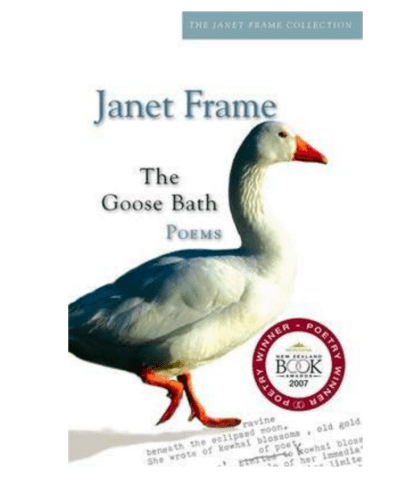
Janet Frame from The Goose Bath: Poems, Vintage, 2006
published with kind permission from The Janet Frame Estate (note in The Goose Bath states that this appeared as a section in a long untitled sequence)
Notes from Elizabeth Morton:
Veni Vedi Veci is a T-shirt-perfect slogan, gloating in its victory of ancient history, and its facility with Latin grammar. As an undergraduate I likely sported such an item of casual alliteration. I may have stood at the fence of Albert Park, smoking a Wee Willem cigarillo, mispronouncing the words to passing first-years and telling a bastardised yarn about Julius Caesar. Janet Frame’s poem, ‘I Visited’ relates a quieter, more tentative conquest – that ends in brute self-nihilation – ‘I was not, I never have been’. This is no Caesar. Here is a concession that our words are things to be borrowed, not usurped. There is a sense of things in flux, things that spill through the gaps in your fingers – ‘decaying places’ and ‘crumbling walls’. There is no pillaging of intangibles. The world of words is a lending library with ‘word chambers’ and ‘high shelves’.
Frame’s poem is gently playful. Through it, I recognise this impossibility of ownership. Words are slippery; words alter to their context; words are shared but never spent. I have supermarket bags full of words – words for ‘angels and stars and stones’, earthly and metaphysical – words like ‘turophile’ and ‘oleaginous’ and ‘eosophobia’ and ‘absquatulate’. They can never be conquests. I visit them. Visito. And I try to shake the dust off the words that have been left for dead. Words are people too, you know – ‘with beating heart and breathing lung’. Frame’s poem captures an excitement, a vitality, and also an humility. Also, ‘salt hunger’ makes me shiver.
Auckland writer, Auckland writer, Elizabeth Morton, is published in New Zealand, Australia, Ireland, the UK, Canada and the USA. She was feature poet in the Poetry New Zealand Yearbook 2017, and is included in Best Small Fictions 2016. Her first poetry collection, Wolf, was published with Mākaro Press in 2017. She is completing a MLitt at the University of Glasgow, usually in her pyjamas.
Janet Frame (1924-2004) published eleven novels, five story collections, a previous volume of poetry (The Pocket Mirror, 1967), a children’s book and a three-volume autobiography. She won numerous awards and honours, including New Zealand’s highest civil honour when she was made a Member of the Order of New Zealand in 1990. In 2003 she received the Prime Minister’s Award for Literary Achievement and was named an Arts Foundation Icon Artist. Pamela Gordon, Denis Harold and Bill Manhire edited The Goose Bath, Janet’s posthumous collection of poems in 2006.
 NZ Poetry Shelf