I was born out of love, or at least half-love necessity-love, only-way-we’ll-get-out-alive sort of love, only half better than wanton. I asked my father if my great-grandmother loved her husband that she didn’t get to choose, and he told me well, they had ten children. Ten children seems to me more like a curse. Ten rips in the skin, ten lives, ten wet tears in the petty space time gives us, your name on their tongues as they cry. I lack a common tongue with my ancestors, but even so I know they ask me to smile. I owe my ancestors happiness. I owe them proof that they did not suffer in vain. I view the sunsets and dive into lakes wearing petticoats just to look at the sky in the opposite of spite, to show them I am doing something with the time they gave me. When I went to an old Chinese settlement, a mother with her kids presented the mud houses, the scrappy shipping-container roofs. People lived here, she said. Her tone was that of a real estate agent, selling them the world, or at least an easy-to-stomach history. I prefer to say it like a prayer, in a soft, lonely rhythm: people lived here. People lived here. People lived here.
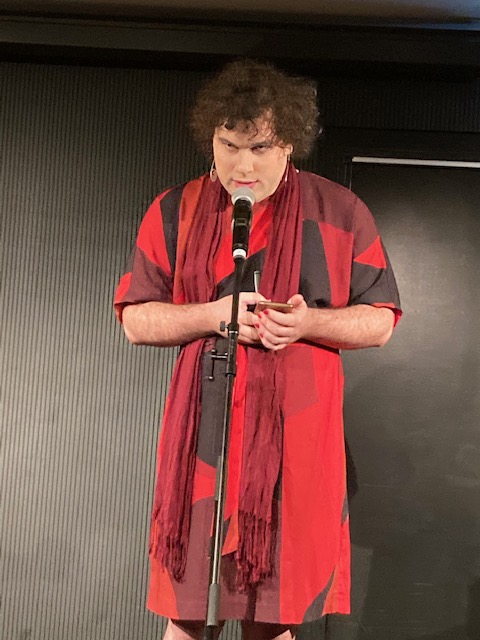
Cadence Chung is a poet, student, and musician from Wellington. She draws inspiration from Tumblr posts, antique stores, and dead poets. Her debut poetry chapbook anomalia is coming out in March/April 2022.
Over summer I have been mulling over what I want Poetry Shelf to do in 2022. I want it to be a connection hub for readers, performers and writers. A place to share poetry we create and poetry we love. A place of reviews, interviews, audio, videos, ideas, features. A regular noticeboard. Whatever takes my fancy.
With the world beyond my rural backdoor feeling crazier and more threatening, I am compelled to get both my blogs up and running as soon as possible. We need the media critiquing the madness and mayhem, but we also need balm, beauty and delight for ears and eyes, hearts and minds.
However, this year is slightly different for me as I have a serious health issue. Doing my blogs and writing books gives me energy and heart. I love doing Poetry Shelf and Poetry Box. I love the way it brings us together. I love the way it runs on a currency of kindness and good will. Delights in words and what they can do.
This year I may not answer your emails, I may or may not review your book, I may not answer the phone. At times there may be radio silence. I definitely won’t be venturing out-into the world because it is just too risky. But Poetry Shelf is a way of forging vital connections beyond the kitchen and garden.
You better marvel while you can – marvel and embrace the present. Brian Turner, AWF 2021
Poetry is a way of allowing me to be me. Karlo Mila, AWF 2021
My ancestors are trailing in a long line behind me like a wedding dress. Tusiata Avia, AWF 2021
In many ways I am not really Egyptian, not really a New Zealander, but 100% both. You create familiarity for yourself in all these places: your work, relationships, writing, and that is what constitutes home. Mohamed Hassan, AWF 2021
Mary and Peter Biggs do a huge amount for New Zealand poetry. They not only support it financially, they actually read it. They walk the talk. They’ve never been a failure at onomatopoeia. They step outside their mansion and they really do the scansion. They’re Mary and they’re Peter, and they dig poetic metre! Bill Manhire, AWF 2021
The world is certainly keeping us on our toes! I for one am grateful that we were able to gather this year, albeit masked and scanned and sanitised. It was a gift to be able to listen to writers talk about their work and their ideas and to get a glimpse into their imaginations. Claire Mabey, VERB newsletter
2021 has been my Extraordinary Year of Reading. So many astonishing books, not just poetry, but fiction, short stories, nonfiction, YA, children’s novels, children’s picture books. Local books, overseas books. I have had endless deliveries and countless sojourns at online journals. I have laughed out loud and I have cried. I’ve been inspired to write secret things and to keep Poetry Shelf and Poetry Box alive. Over summer I will muse on what my blogs will do next but I am keen to review more Aotearoa children’s books on Poetry Box that I love. Most importantly, Poetry Shelf aims to keep New Zealand poetry visible, poets connected and to review the occasional novel or nonfiction book. Here I am at the end of the year with a stack of local books to read and review, and that is always disheartening. But I aim to do a few more over summer when the mood takes me.
I want to thank everyone who has contributed to Poetry Shelf in 2021, who has said no when they need to say no, who has got in touch and responded to things I post, who has shared, commented, supported the blog. It makes a difference. Above all, I want to thank writers, readers and listeners who have helped make poetry communities in Aotearoa so vibrant and connecting.
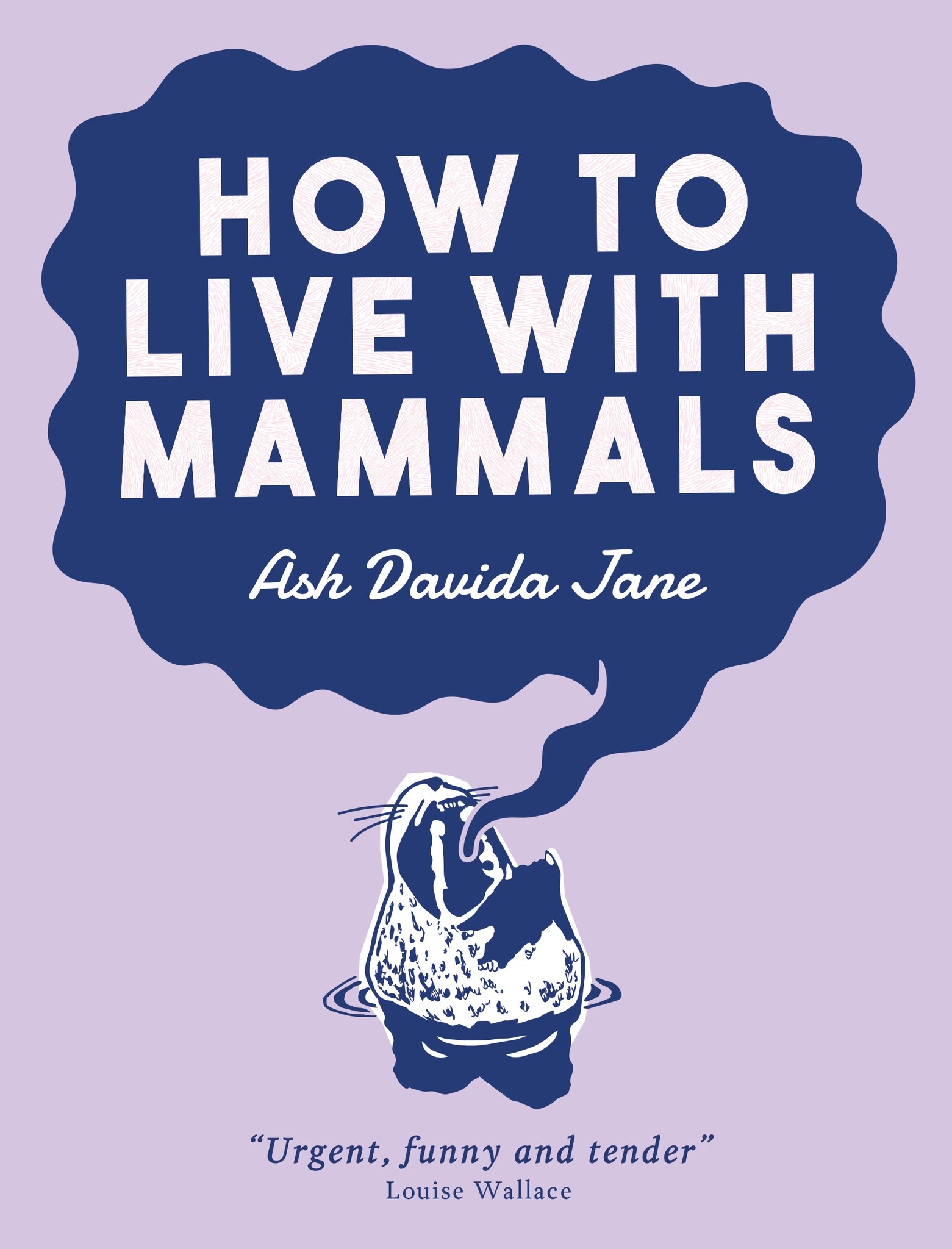
I love end-of-year lists because I get to add must-read, must-see, must-listen-to items to next year’s diary. This year I sidelined my mammoth annual list penned by a mammoth list of poets. Instead I invited some writers (across genres and whose work has astonished me) to pick favourite books plus music, tv, podcasts if they chose. So many more authors than appear here astonished me in 2021. These local books and poems have blown my mind: Rebecca K. Reilly’s Greta and Valdin, Tayi Tibble’s Rangikura, Anne Noble’s Conversātiō – in the company of bees, Michelle Langston’s Times Like These, Ashleigh Young’s poem ‘Jeremy’, Kiri Piahana-Wong’s poem ‘In liminal time’. David Eggleton’s chapbook Throw Net | Upena Ho’olei, Jack Ross’s That Oceanic Feeling, Sam Duckor-Jones’ Party Legend, Courtney Sina Meredith’s Burst Kisses on the Actual Wind. Patricia Grace’s From the Centre: A writer’s life (read this!). Alison Glenny’s Bird Collector, Jenny Powell’s Meeting Rita, Ash Davida Jane’s How to Live with Mammals?, Bernadette Hall’s Fancy Dancing. Eamonn Marra’s 2000ft above Worry Level (my daughter is also a big fan).
Blown my mind! Cleared the despair, gloom, lethargy and doubt and replaced it with resolve, uplift and epiphany.
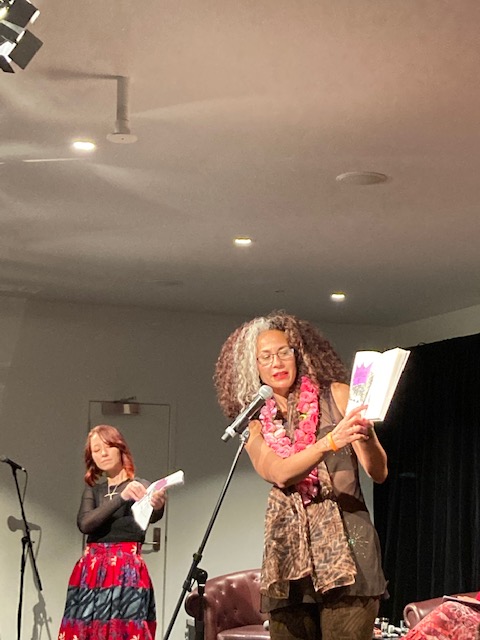
Going to poetry sessions at Auckland Writers Festival this year was also extraordinary. Going out in the world, talking with other writers, buying books from the bookstand. Hearing old favourites and being exposed to new voices. It didn’t seem real but it was a supreme pleasure. I have written about some gold-nugget sessions here. More than anything I welcomed the embrace of Māori, Pasifika and Asian voices, especially through the work of Tautai and guest curators, Ruby Solly and Gina Cole.
So here you go – Poetry Shelf’s end of year celebration. On Monday I am posting a new poem by Karlo Mila because I have carried Goddess Muscle with me all year. And then I am having a little holiday with just the occasional review appearing on both blogs. Happy summer break! Keep safe and dry, and stay kind and strong.
Arohanui, Paula
The 2021 Picks
Bill Manhire
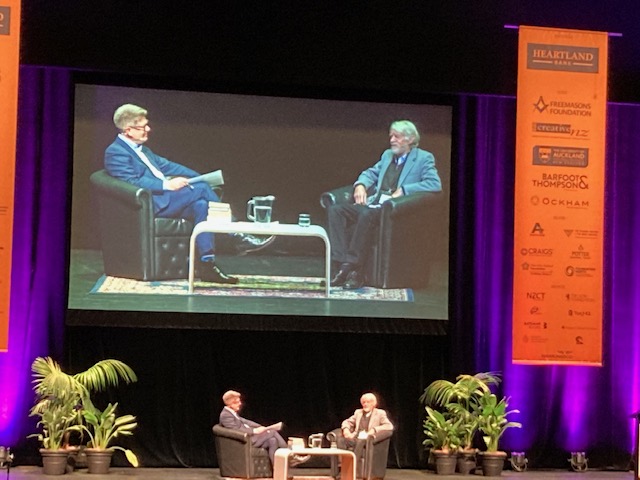
Bill Manhire’s poetry is always a poetry of return for me, especially in challenging times. I was delighted when Kasandra Hart-Kuamoana and Bridget van de Zijpp from Auckland Writers Festival picked Bill’s ‘Hotel Emergencies’ (Lifted, THWUP) as one of their favourite poems. You can read and listen here. Lifted is a book I have returned to in 2021. One of my favourite festival sessions I have chaired was the conversation with Bill and Norman Meehan at Going West – Norman sat at the piano and added melody to our discussions. The session took place the day after Bill, Norman and friends delivered a mesmerising opening night performance, Small Holes in the Silence for the Going West audience. The podcast was made available in March 2021. You can listen here. Paula Green
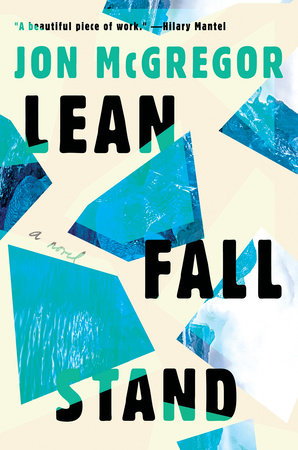
I’ve always been a sucker for poems that are fascinated by language, but this year the text that most dazzled me in that regard was a novel, Jon McGregor’s Lean Fall Stand (Penguin). I started reading it because it promised an Antarctic yarn, but then I found myself involved in an extraordinary narrative about a UK fieldworker who has a massive stroke on the ice, after which the story turns to his troubled attempts, back home in Cambridge, to build a life with a hugely diminished language function. So the book gives us the damaged, uncanny poetry of aphasia, but also explores all the kinds of care involved in caregiving.
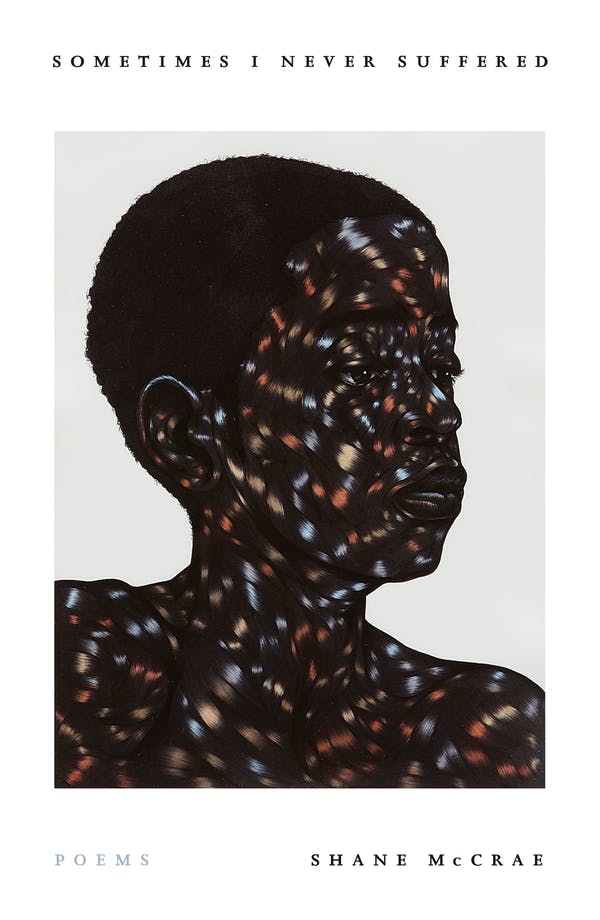
As for poetry, my most exciting encounter this year was with the American Shane McCrae. He has a sort of Elizabethan lyric impulse. His poems reach for tidy, musical form yet are threaded through with agitating surface interruptions – gaps and overlaps, and punctuating slashes – all the while dealing with big, big subject matter, both public and personal.
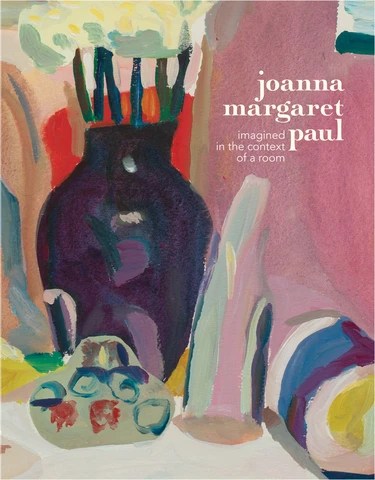
The excitement of opening an envelope has begun to increase for me each time the UK poetry journal PN Review arrives in the mail. Gregory O’Brien is now doing richly charged covers for PNR, maybe as light relief from working on his major book about Don Binney, due next year. As it happens, the book I have in front of me at the moment is an art book, Joanna Margaret Paul: Imagined in the context of a room – over 200 pages of essays and terrific images published to complement the exhibition that first showed earlier this year at the Dunedin Public Art Gallery. It’s almost as good as the show itself. Bill Manhire
Chris Price
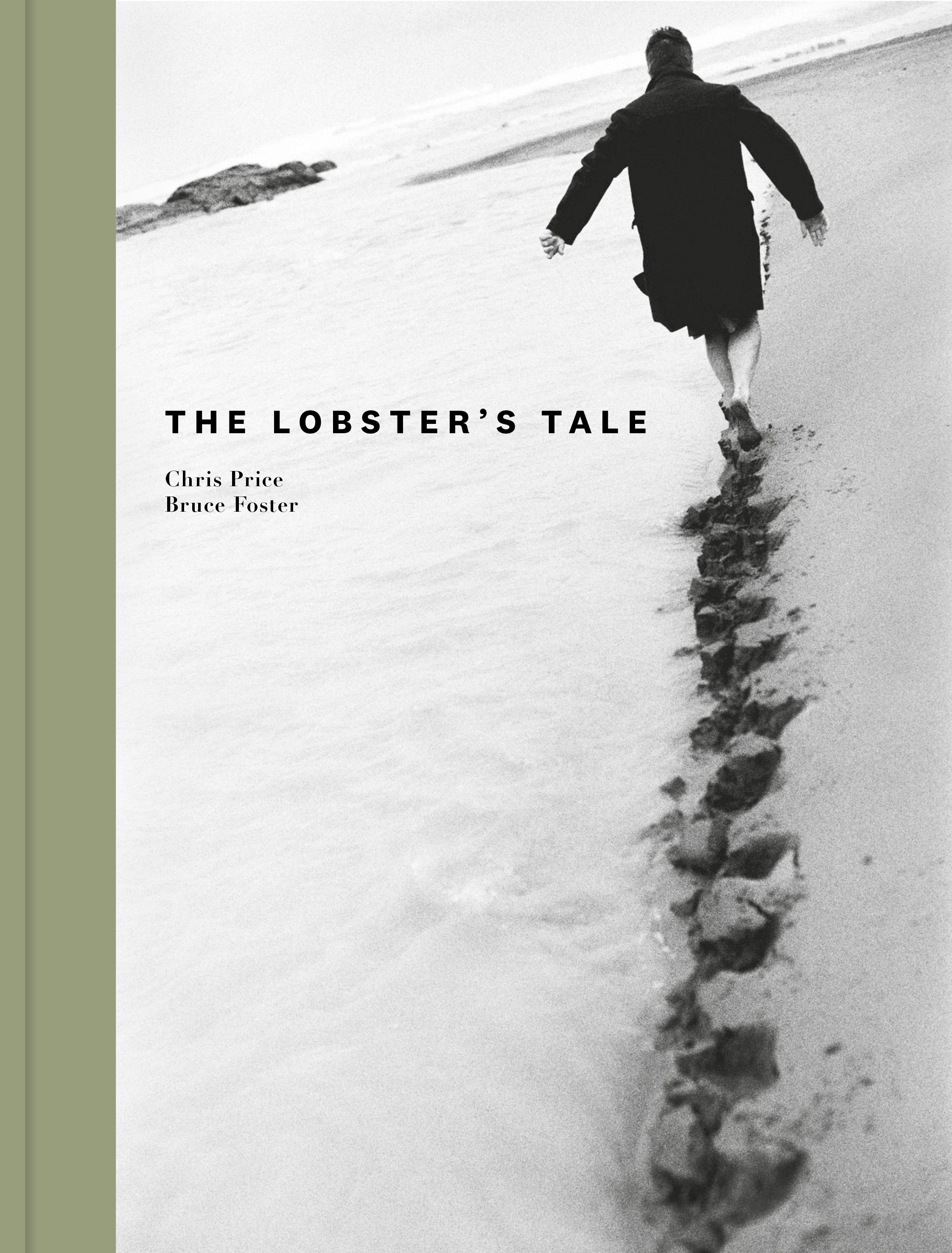
The Lobster’s Tale, with text by Chris Price and photographs by Bruce Foster (Massey University Press), was a stunning arrival this year. Rich in fascinating voyage and possibilities. A sentence threads along the bottom of the page, there are Bruce’s photographs and there is Chris’s text. The photographs track sky water land, imprints of existence. The paragraphs draw upon multiple voices that also navigate questions of being. The final and fascinating leg of the journey is the conversation that emanates from photographs, text and sentence thread. You can hear Chris read an extract here. Paula Green
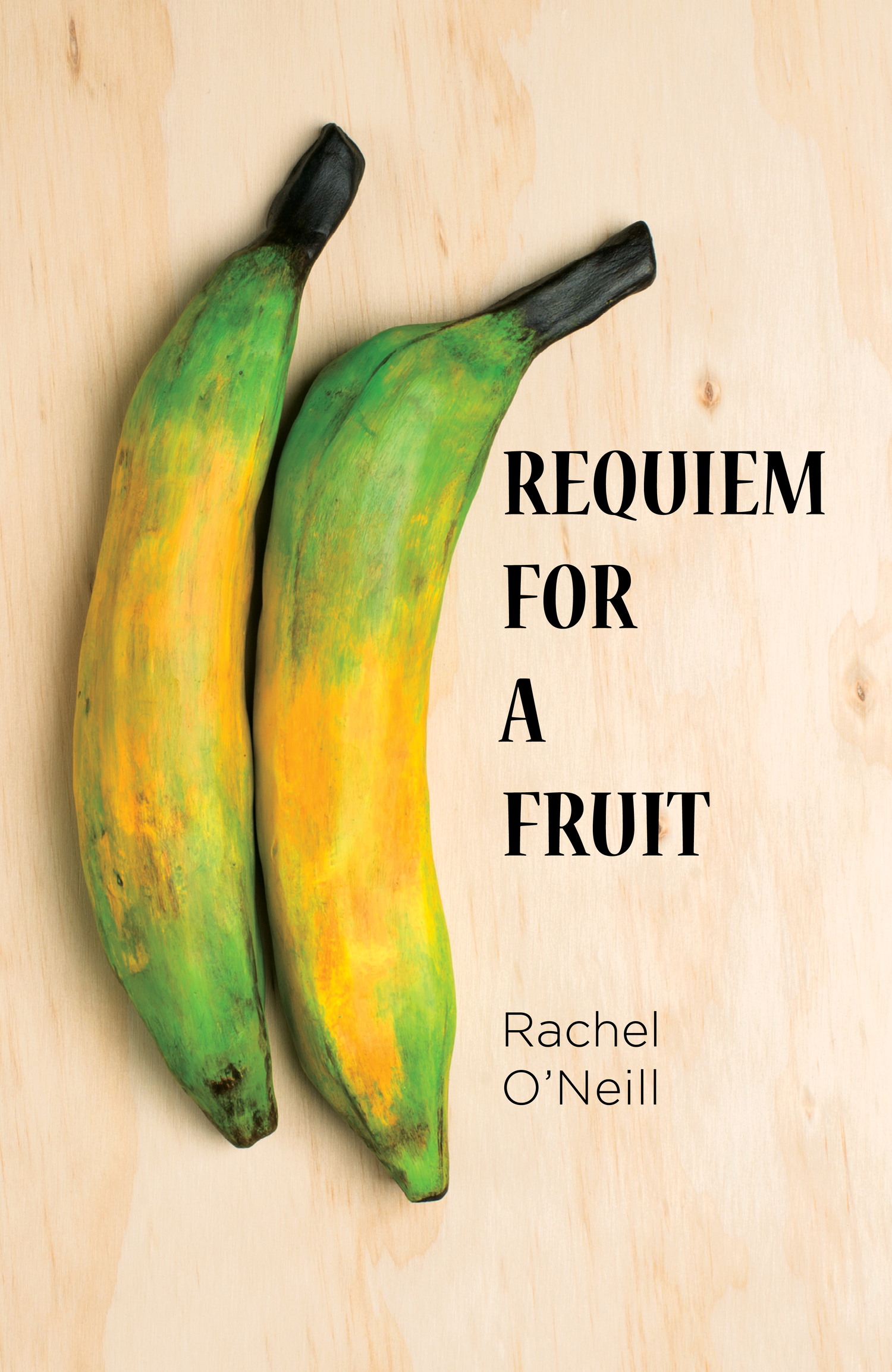
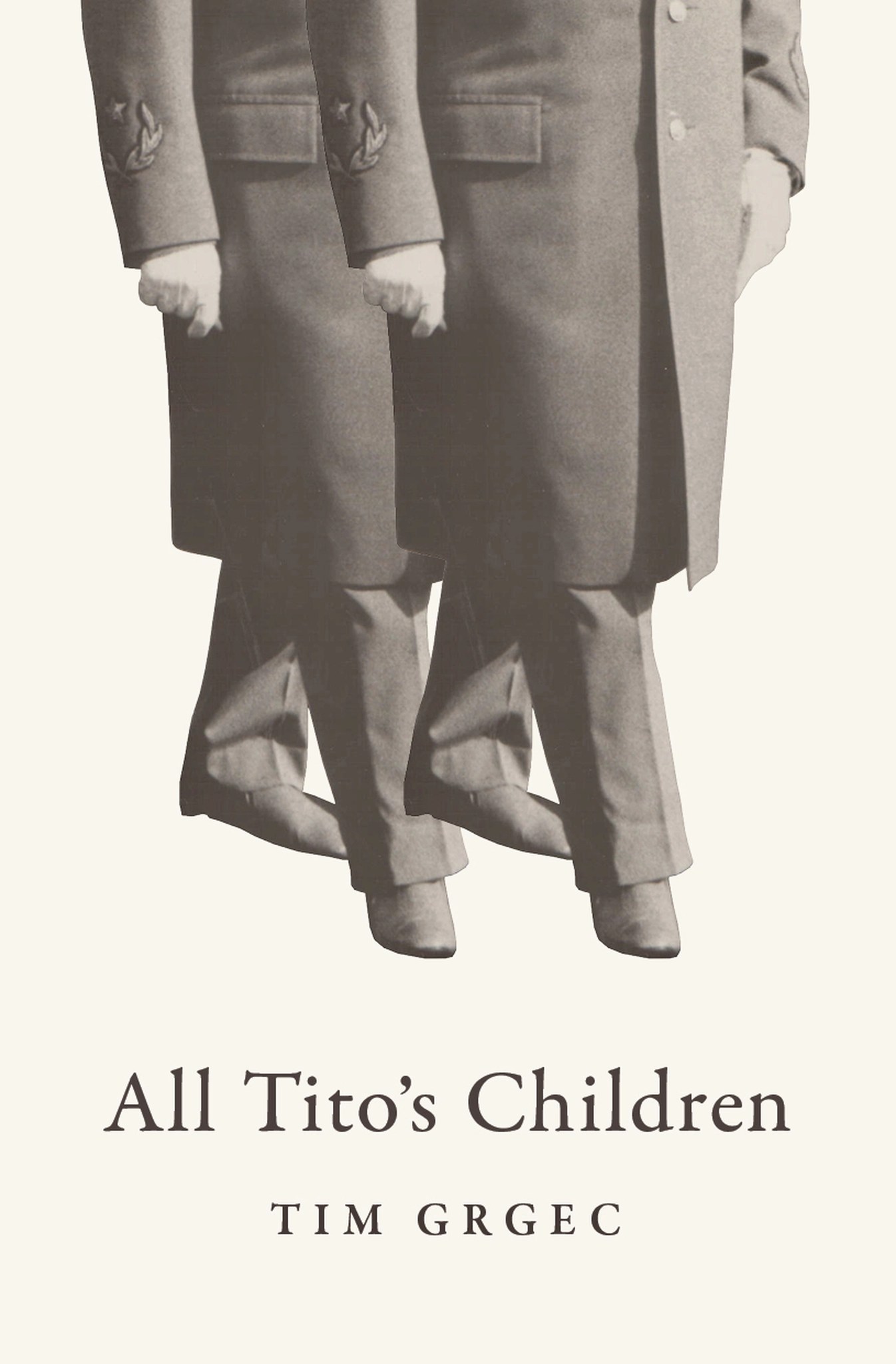
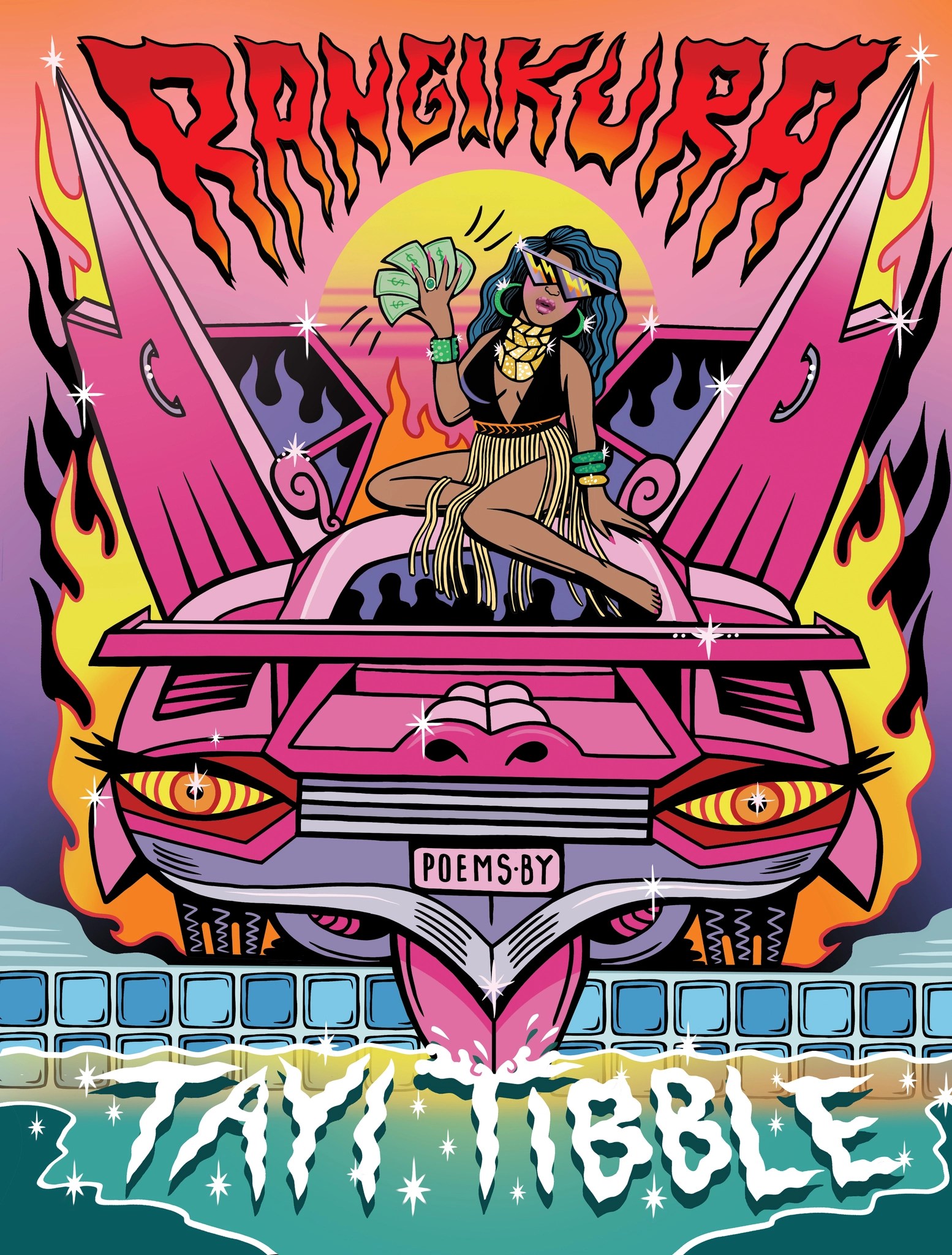
Poetry continues bursting out all over: I don’t envy Best New Zealand Poems editor Kate Camp having to choose just 25 poems for the 2021 edition, and it’s painful to mention only five collections, but here goes. Ruby Solly’s Tōku Papa and Tayi Tibble’s Rangikura (both VUP) are different but equally powerful collections that made me glad the poetry wave is bringing such voices into the world, with forcefield Tibble due to hit America next year. It’s been a good year for prose poetry too: Alison Glenny’s Bird Collector (Compound Press) has strong fin de siècle energy channelled into elliptical poems full of erasures and the flutter of wings, with the bonus of collages by novelist Carrie Tiffany. Rachel O’Neill’s newly released Requiem for a Fruit (We Are Babies Press) shares something of the surreal spirit of prose poetry maestro Charles Simic: its poems will rearrange your brain. Simic spent his formative years in Belgrade before moving to the US: as he remarks, ‘My travel agents were Hitler and Stalin.’ Tito was the travel agent who brought Tim Grgec’s family to Aotearoa in the 1950s, and in All Tito’s Children (VUP),Grgec takes us back to the former Yugoslavia to reimagine the slippery atmosphere of life and language under the authoritarian leader. It brings something new to the ever-expanding range of voices being read, heard, and celebrated here.
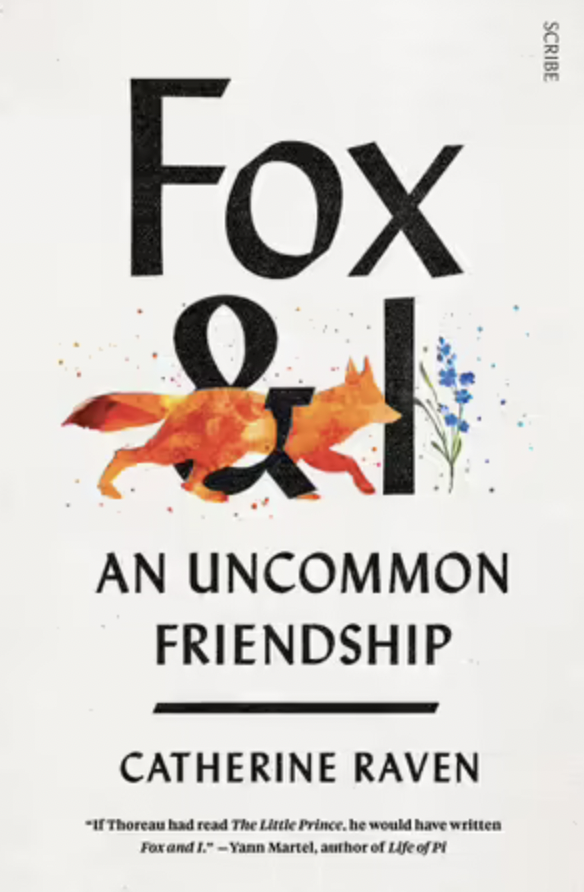
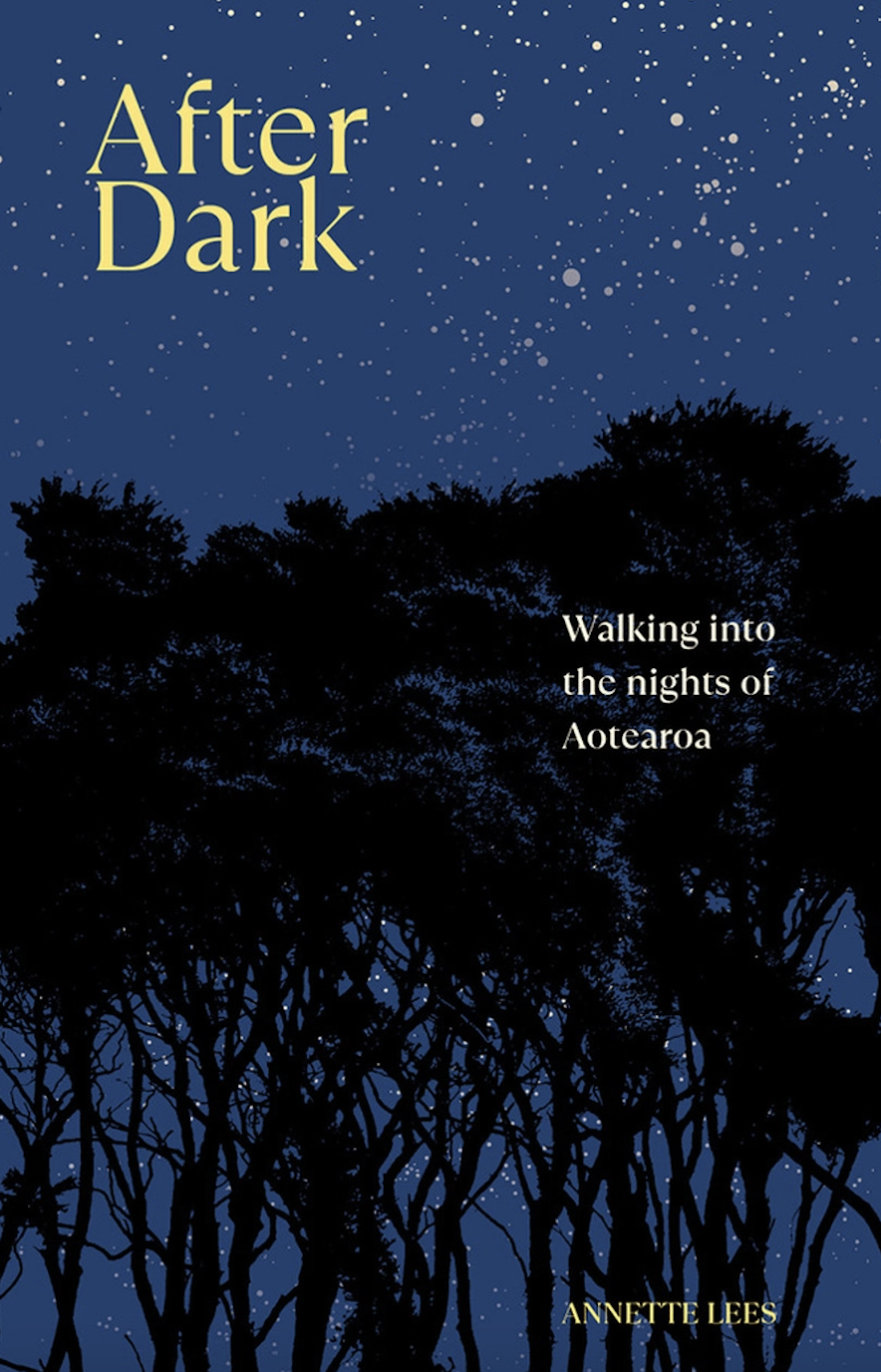
Since I wandered inadvertently into writing the natural world with The Lobster’s Tale, I’ve been reading other creaturely stories, and was captivated by Catherine Raven’s Fox and I (Hamish Hamilton), a memoir of the solitary biologist’s relationship with a fox, in which her opening gambit is to read to him from The Little Prince. I’ve just begun Annette Lees’ gorgeous After Dark: Walking into the nights of Aotearoa (Potton & Burton), a mix of nature, memoir, and social history, which feels like a great book for the summer. On the music front, I’ve been enjoying Reb Fountain’s Iris, the 2021 follow-up to her excellent 2020 album, and the song ‘Force Field’ from talented Cousins lead actor Ana Scotney’s side project Kōtiro, which leapt out and grabbed me by the ears one recent Saturday afternoon on RNZ’s Music101: I just love the arrangement. Some people get all the talents! Chris Price
Chris Tse
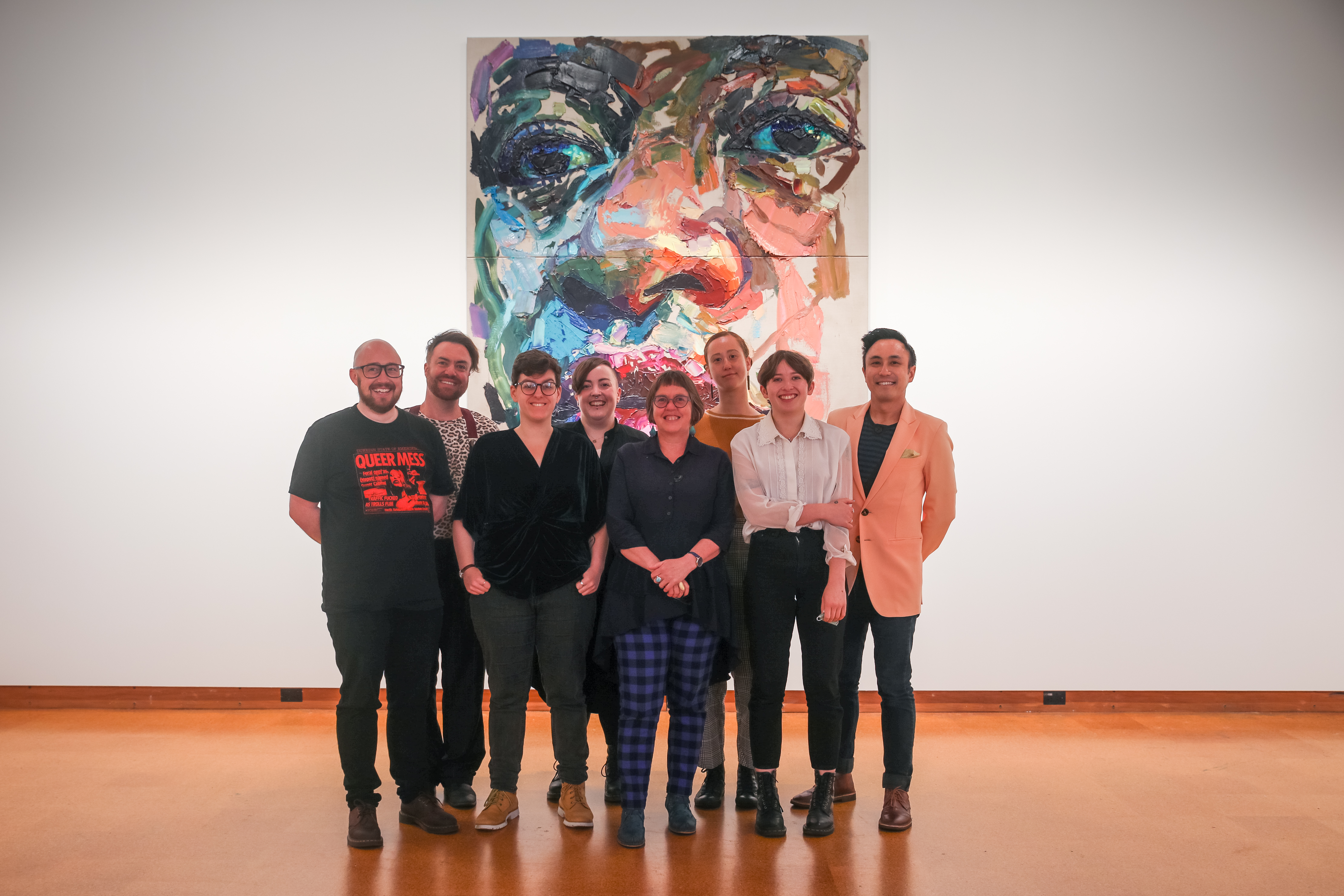
Chris Tseis editor of the Friday Poem at The Spinoff Review of Books. Check out a new poem from Louise Wallace. This site is an excellent aide to the pulse of poetry in Aotearoa. Unmissable. With Emma Barnes, Chris also co-edited my anthology of the year: Out Here: An anthology of Takatapui and LGBTQIA+ writers from Aotearoa (Auckland University Press). Out Here is a significant arrival in Aotearoa, both for the sake of Takatāpui and LGBTQIA+ writers and readers, and for the sake of poetry. The sumptuous and wide ranging anthology feeds heart mind skin lungs ears eyes. It is alive with shifting fluencies and frequencies, and I want to sing its praises from the rooftops, from the moon, from street corners. My review.
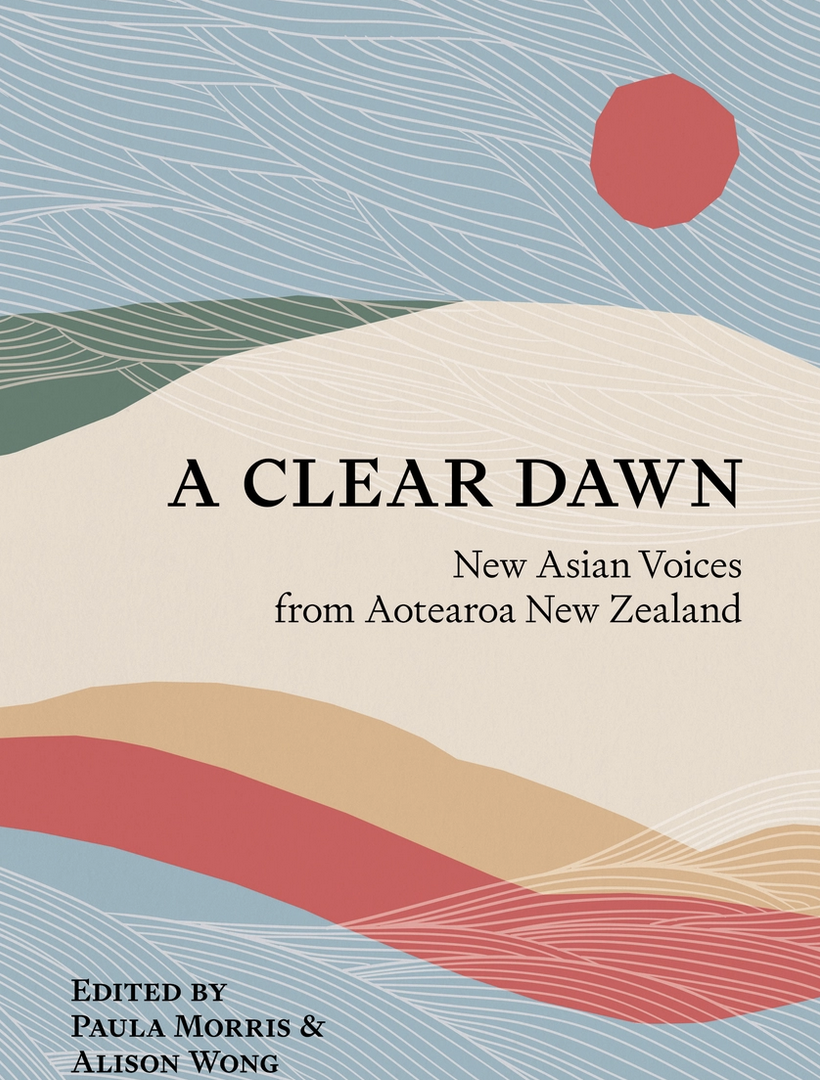
Tough to make this claim though as I also loved A Clear Dawn: New Asian Voices from Aotearoa New Zealand, edited by Paula Morris and Alison Wong (AUP, you can hear nine poets read) and Sista Stanap Strong! edited by Mykaela Nyman and Rebecca Tobo Olul-Hossen (VUP, hear poets read). Both outstanding and significant anthologies. Paula Green
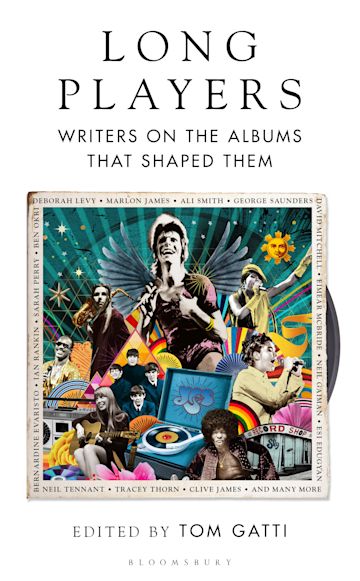
This year more than ever I’ve reached for known comfort, whether it’s rewatching Friends and The Office, or having the same SNL sketches on a loop (Maya Rudolph and Kristen Wiig as the Super Showcase Spokesmodels live rent free in my head). This need for nostalgia and familiarity has been fuelled by the realisation that a staggering number of my favourite albums turned 20 this year. Revisiting them has sent me on trips down memory lane, back to my first year at university and making mix tapes for my Toyota Corolla. Perhaps this retrospection is why I enjoyed Long Players (edited by Tom Gatti) so much. Each of the book’s short essays focus on an album that shaped a writer’s life, charting childhood, teenage rebellion, and the sobering realities of adulthood.
This progression is also explored in Ken Arkind’s moving story ‘A Portrait of My Mother Through Skype’ (published in Stasis), which is a masterful character study and examination of a strained mother–son relationship. “There are four important things that you need to know about my Mom,” Ken writes, layering details upon snatches of memories that build to a final line that stares you in the eyes and dares you not to cry (you will cry).
This control in form and tone is what drew me back to some of my favourite poetry books this year:
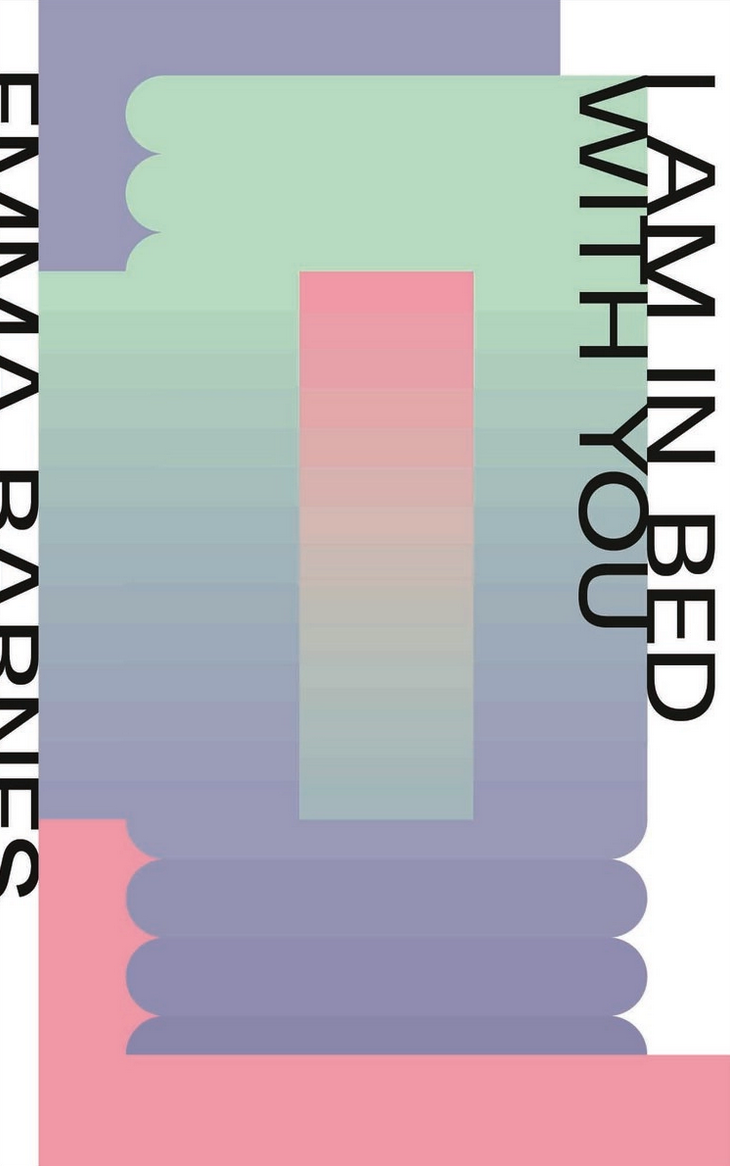
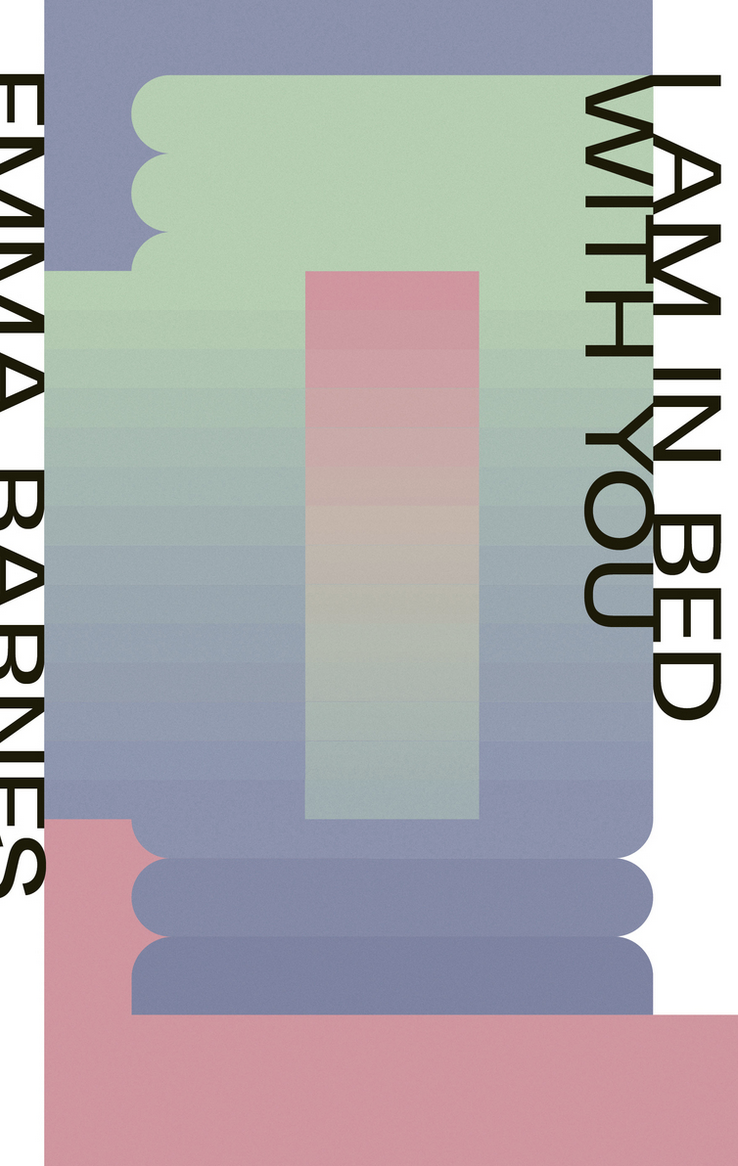
I Am In Bed With You (AUP) by my Out Here co-editor Emma Barnes has been years in the works but worth the wait, particularly to have their famed Sigourney Weaver series collected in one volume. These are tough, inquisitive poems that remind us what it means to desire and be desired in equal measure. They are lucid and undefinable and unnervingly familiar.
Requiem for a Fruit (We Are Babies) is Rachel O’Neill’s delightfully offbeat second collection that I just can’t get enough of. Weird, but never alienating, the poems in Rachel’s book are populated with characters who confront the strangeness of daily life and give in to the curious ideas and thoughts we often attempt to suppress. Proof that they are without a doubt one of Aotearoa’s most unique writers.
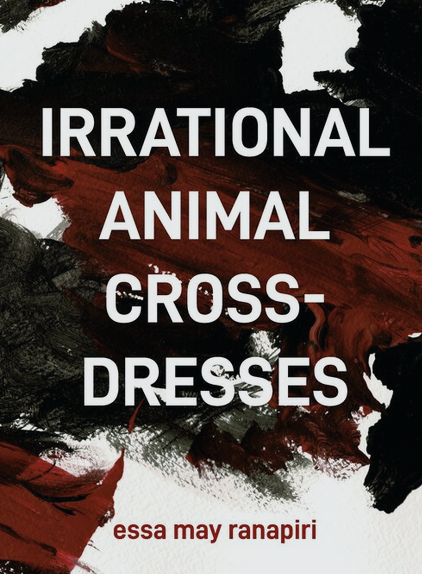
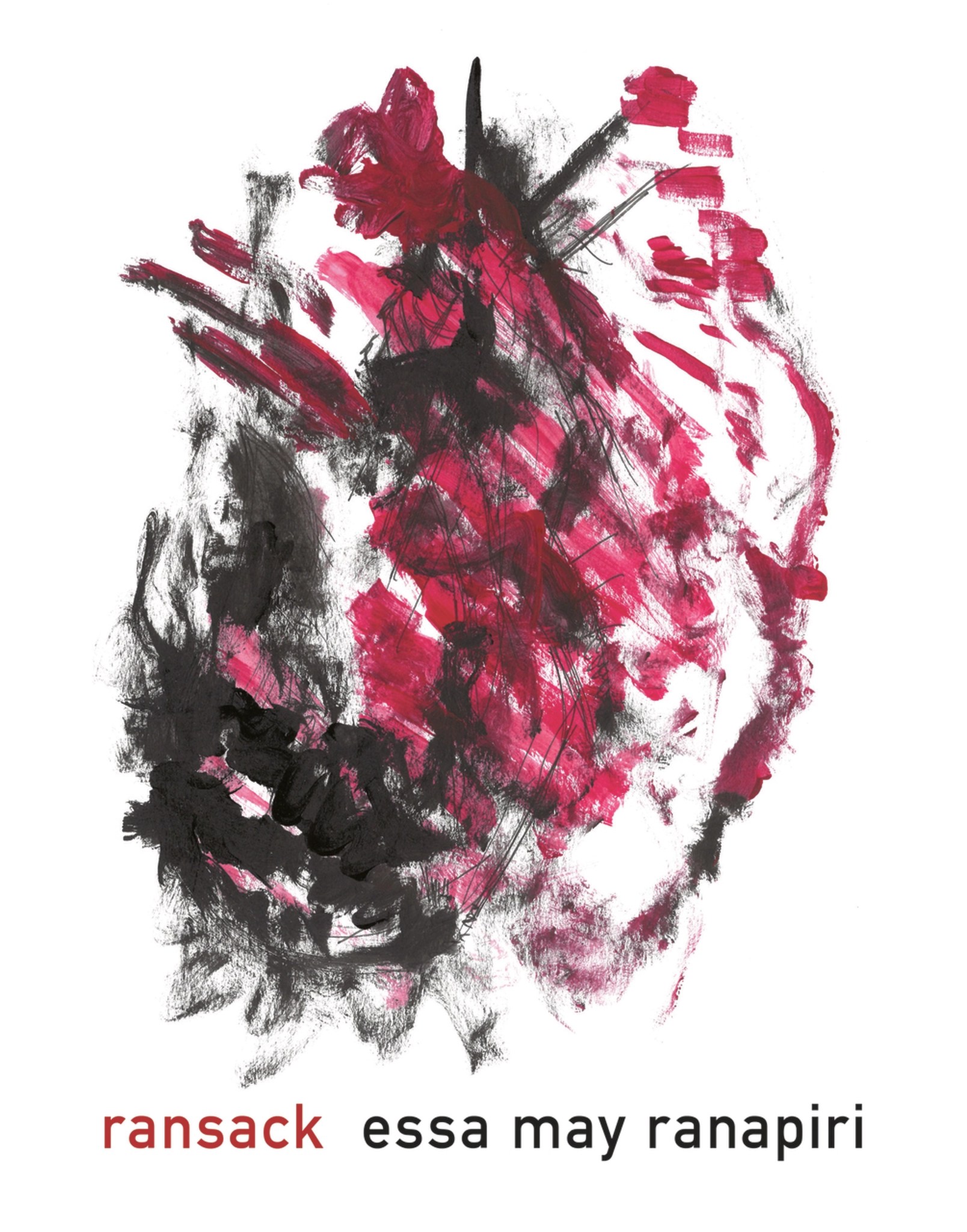
Irrational Animal Cross-Dresses (SP) collects outtakes from essa may ranapiri’s riotous debut Ransack and prepares us for their second collection, which is due in 2022. This slim volume shows off the breadth of essa’s formal experimentation and awe-inspiring ambition. I feel electricity dancing on my skin when I read lines like “I am some strange glittered other in my pākehā world/but I am so much more here”.
This year I’ve been lucky enough to work closely with Ruby Solly on a couple of poetry/music hybrid projects and have been bowled over by her formidable talents in both fields. It’s no surprise that her debut collection Tōku Pāpā (VUP) contains the same generosity of spirit and connection to the natural world that can be found in her music.
And, finally, the poet whose work I’ve gotten to know the most this year is Jiaqiao Liu, who I had the good fortune of supervising while they completed their MA in creative writing at the IIML. I published their poem ‘Dear Alter’ at The Spinoff, which is just a taster of the many amazing things they’ve written over the past year. Chris Tse
Eileen Merriman
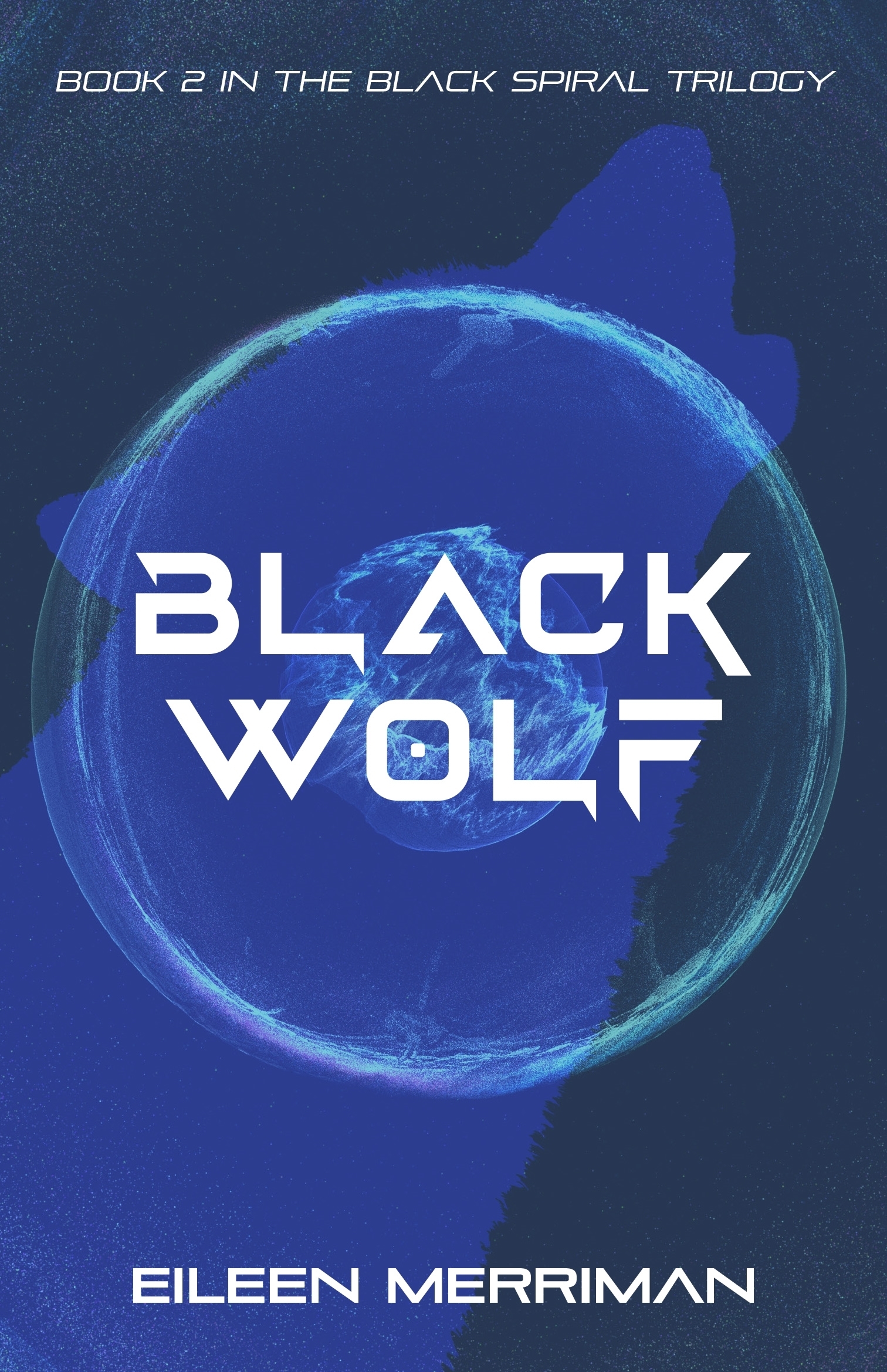
Black Wolf (Penguin) is the second volume in Eileen Merriman’s Black Spiral trilogy. I gobbled up the first book, Violet Black, in two greedy sittings. The book has suspense, gritty characters, vital borders between good and evil, porous ethics, romance. When I closed it I felt bereft – knowing how long I had to wait to read the next volume. The second book again hit the mark. Eileen successfully carries off the point of view of teenagers who navigate contemporary circumstances that challenge both at the level of the personal and an onslaught of ideas and decision making. Dystopian fiction needs to be celebrated far more in Aotearoa. My review. Paula Green
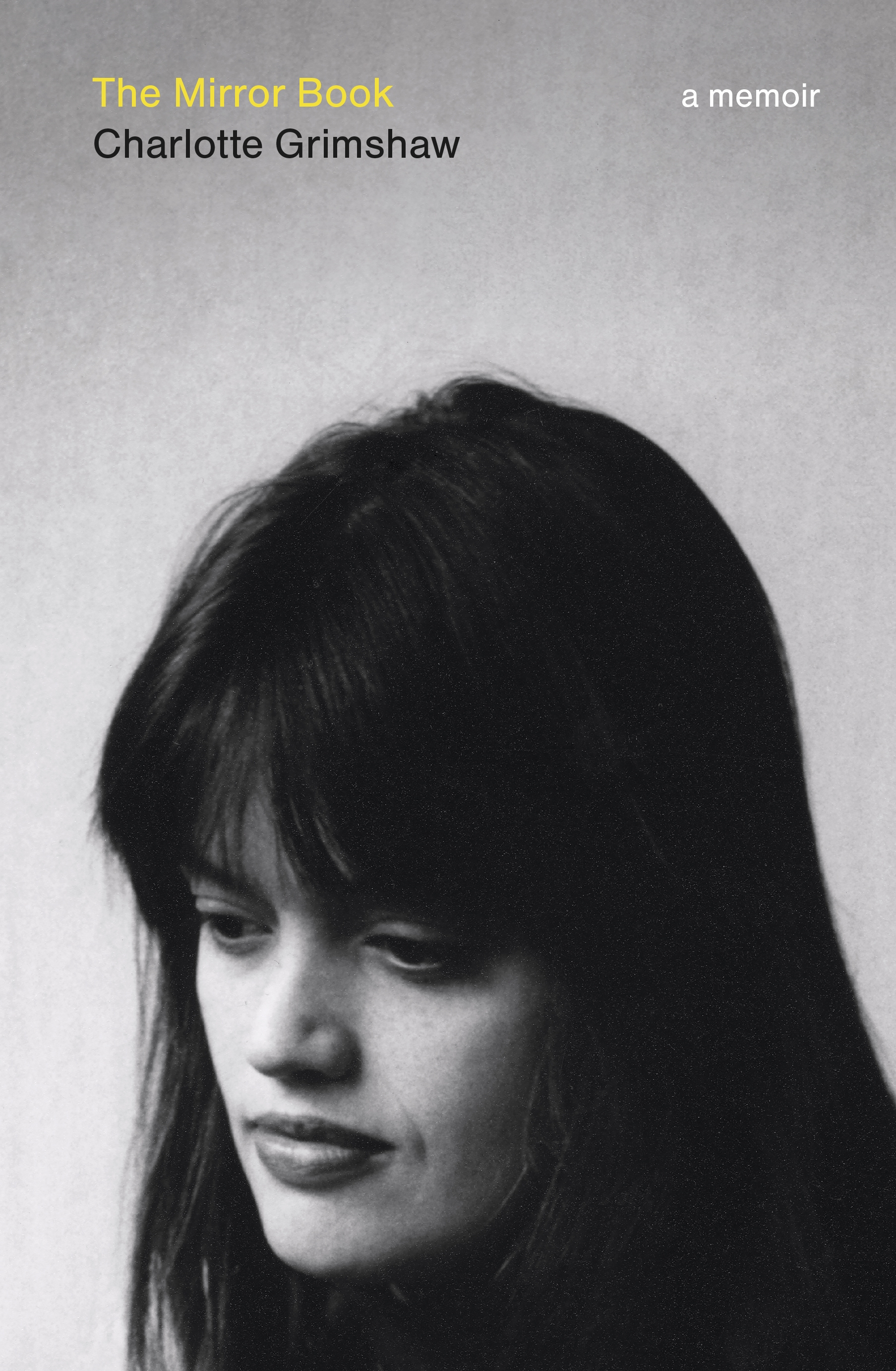
Writing and reading have been my solace during 2021, and have really helped me get through the prolonged Auckland lockdown. You’ll notice that all of my selections are written by New Zealand authors, and while I have also read many books by overseas authors this year, it’s these books that have lingered with me and will demand a re-read at some point. My favourite work of fiction this year was She’s a Killer (VUP) by Kirsten McDougall – clever, funny, dark and surprising by turns; I devoured this in four days. My favourite work of non-fiction was Charlotte Grimshaw’s The Mirror Book (Penguin), which was brave, lyrical, enlightening and apparently nearly caused a punch-up between book stand patrons at the Auckland Readers and Writers’ Festival!
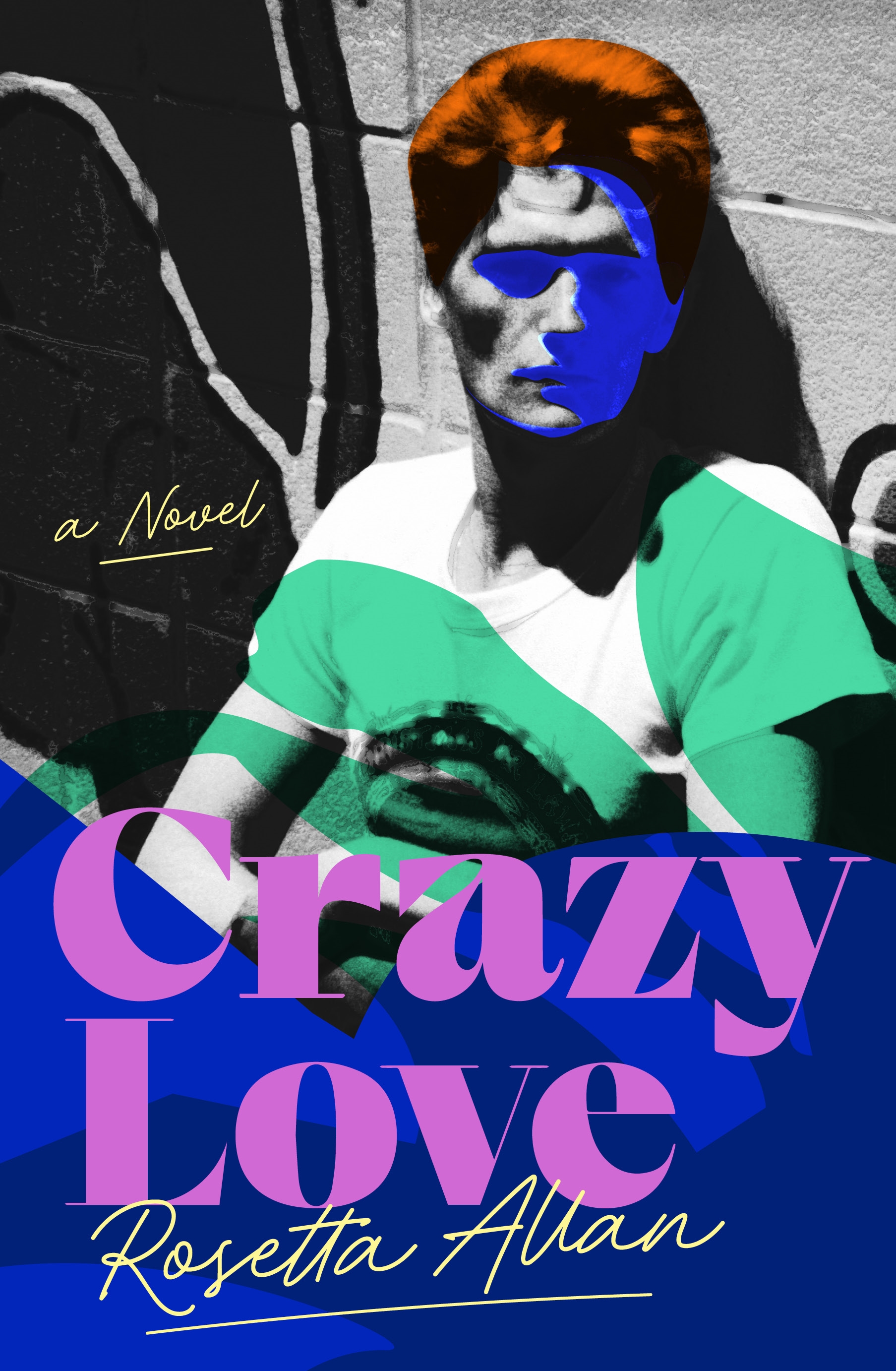
My favourite YA book this year was the first in Lani Wendt Young’s Telesa series, Telesa: The Convenant Keeper (OneTree House) – a fantasy novel set in beautiful Samoa and with crackling energy and romance between the characters – great imagery and plot. Finally, another wonderful work of fiction (or perhaps we should say, creative non-fiction) was Rosetta Allan’s Crazy Love (Penguin) – a brave, beautiful tale of love and perseverance; this is a lockdown release that deserves to soar to great heights. Eileen Merriman
Emma Barnes
I Am in Bed with You (Auckland University Press). Emma Barnes has produced a collection unlike any other I know with its unifying addiction to the sentence, and motifs that go deeper than surface beacons: think age, body expectations, gender, the making of self, the lasting effects of childhood, experiences that bite, disappearing acts, love, desire, more love, more desire. You will meet dreams and demons and epiphanies. Writing is musing, reflecting back, side-drifting, inventing, confessing. You will revel in the joy (and pain) of writing, and yes writing becomes, and yes writing is a form of becoming. Extraordinary. Emma also co-edited the fabulous Out Here (See my Chris Tse entry) Paula Green
For me 2021 has been a somewhat difficult reading and listening year. I read in snatches and pieces. A poem between meetings to find a little of myself again. A poem at the top of a hill. Something to take me out of where I was or bring me back to it. I did as much dancing as I could! I relied heavily on poetry Instagram accounts and writing social media in general (Chen Chen, Aimee Nezhukumtathil, Ada Limon, Statis, Poetry Is Not A Luxury, Dead Bird Books, We Are Babies Press, Starling, Compound Press, Sweet Mammalian and all the NZ writers I follow). I listened over and over to my Spotify Discover Weekly and built a huge playlist. I’ve been an album buyer for years and years but this year I could only do songs. I’ve linked my top tracks from 2021 and you might be able to tell the songs I listened to when powerlifting. I listened to the Lake South song about my street on repeat! I followed poet after poet on social media to see more poetry, everywhere.
The live events I got to see filled me up from Liz Breslin and many other poets at the slam for New Zealand Young Writers Festival to Emer Lyons and Kerry Donovan Brown reading for the little launch we did for Out Here. I could listen to Kerry and Emer all day. I got to hear Anahera Gildea and Jackson Nieuwland read my poems back to me at the launch of my book. A confronting experience I recommend. I love to hear poetry performed or read to me. I didn’t get as many opportunities as I usually do so I read poems to co-workers, to loved ones and asked them to read to me! Please stop me in the street and read me a poem! I read one Bud Smith poem to anyone who’d let me. I shared poem after poem carefully screen-capped off the social media a friend in Germany didn’t use just so she’d see the same poems I was seeing. Somewhere in there I read books. Not many, it felt, but enough. I read and loved AUP New Poets 8, I read and loved collections by Lynley Edmeades, Ash Davida Jane, Alison Glenny, Liz Breslin, Sam Duckor-Jones, Dominic Hoey, Kim Hye Soon, Don Mee Choi, (both of those thanks to Foodcourt Books who hand delivered a bursting package) Ruby Solly, Nina Mingya Powles, Kim Addonizio. I have a stack of poetry books to read over the holidays from Anne Kennedy to Rachel O’Neill to Kirsten Le Harivel to Nicole Titihuia Hawkins. I spent a lot of the year reading and re-reading our selections for Out Here. I’ve read it so much I remember every detail and nothing. I think that book is the one I spent the most time with this year and all the beautiful voices in there between those bright pink endpapers and that lush cover image. Emma Barnes
Alokvmenon ‘What feminine part of yourself did you have to destroy in order to be in this world?’ here Brecon Dobbie ‘Driving Directionless’ here (Instagram) Hannah Mettner ‘Anita’ (Sweet Mammalian) here Khadro Mohamed ‘A Prince Song’ (Sweet Mammalian) here Rex Letoa-Paget In the Winter All I Could Do Was Sleep’ (Stasis Journal) here Emer Lyons ‘Aorta is in Your Chest Your’ (Stasis Journal) here Ronia Ibrahim ‘Mexicano Corn Chip Greeting (Stasis Journal) here essa may ranapiri ‘who weaves the sea?’ (Stasis Jounrnal) here Bud Smith ‘RABID’ (Twitter) here
Non-Poetry Books:
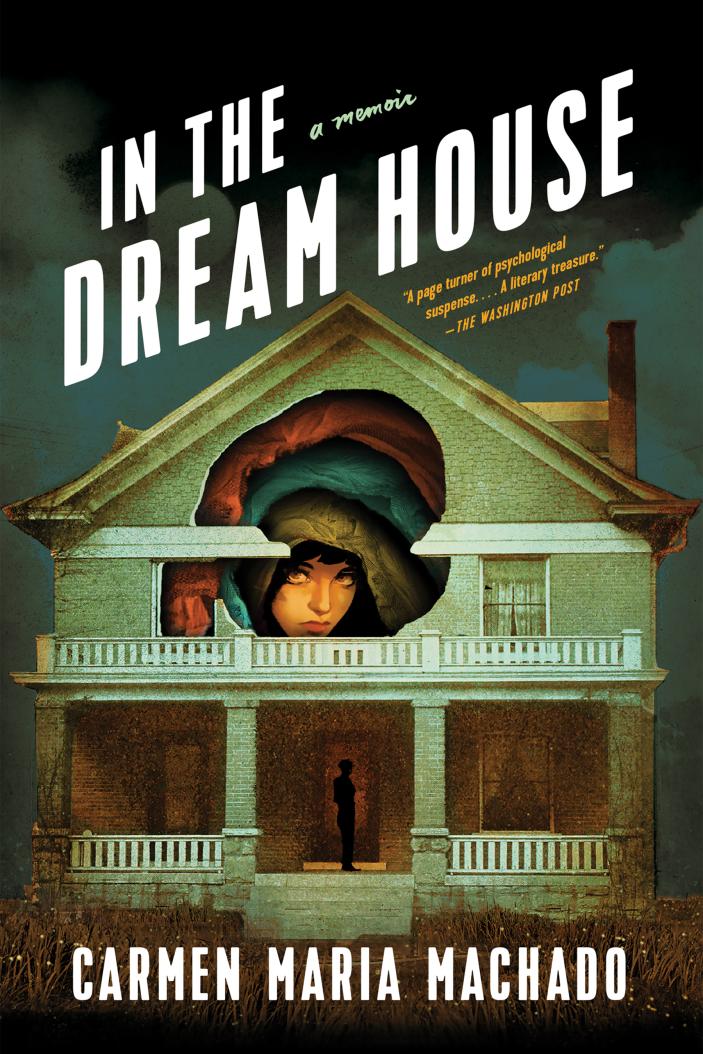
Rat King Landlord Murdoch Stephens Come As You Are: Revised and Updated Edition Emily Nagoski No One Is Talking About This Patricia Lockwood Greta and Valdin Rebecca K. Reilly As Beautiful as Any Other Kaya Wilson In the Dream House Carmen Maria Machado Recollections of my Nonexistence Rebecca Solnit What My Mother and I Don’t Talk About Edited by Michele Filgate Kink: Stories Edited by R.O. Kwon The Galaxy and the Ground Within Becky Chambers Kissing The Witch Emma Donoghue
Emma Neale
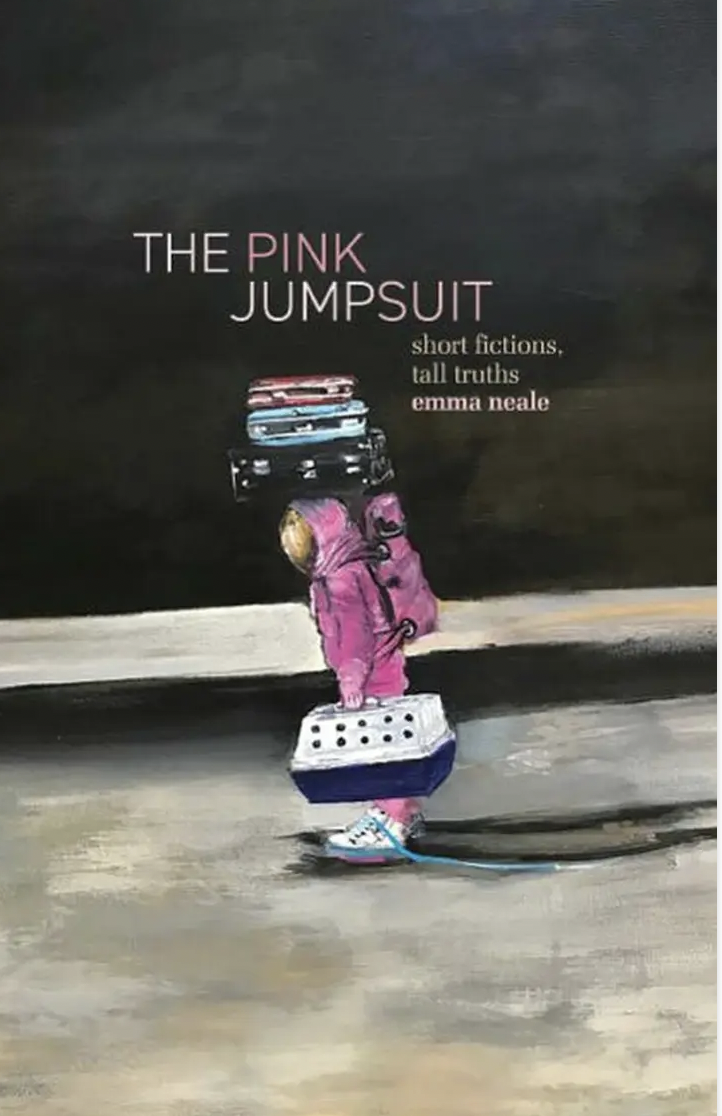
Such a fan of Emma Neale’s The Pink Jumpsuit (Quentin Wilson Publishing). Any book by Emma underlines what a supreme wordsmith she is. At times I stop and admire the sentences like I might admire the stitching of a hand-sewn garment. Like Emma free-falling into memory, sideways skating after looking at ‘Wanderlust’, I am free-falling and sideways skating with this glorious book. I am free-falling into the power of truths, diverted by fiction, the dark the light, the raw edge of human experience, and this matters, this matters so very much. Paula Green
I posted Emma’s picks earlier and you can read them here.
Hana Pera Aoake
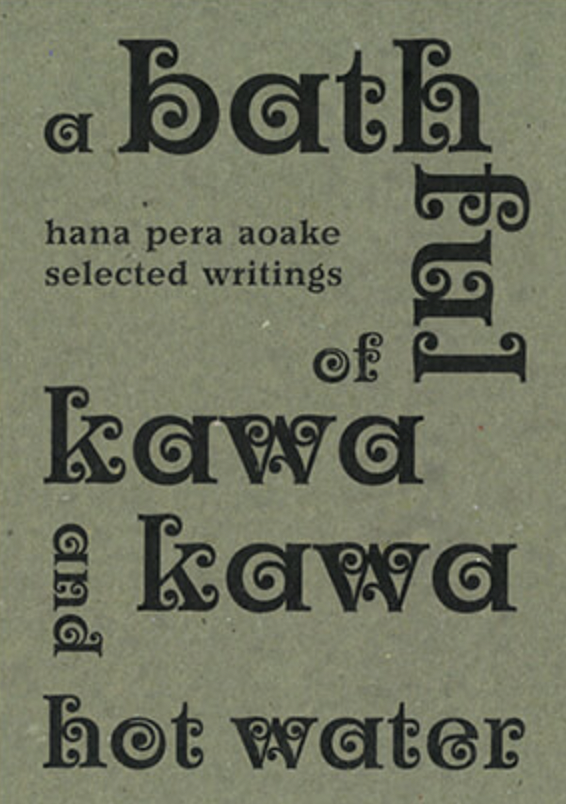
Hana Pera Aoake’s A bathful of kawakawa and hot water (Compound Press), was such a discovery. If this tremendous collection is song, it is also an incisive and vital probe, drawing on reading, ideas, history, the present and the future, challenging Western discourse, asking questions, musing on what ‘constitutes a common’, on the co-option of Maaori concepts by Paakeha, on the inseparability of body and mauri, on the damaged world, on the power of myth. Read my review here. Paula Green
For nine months of this year I was hapū, and with hyperemesis, which is kind of like a permanent morning sickness, and so I spent a lot of time working from home or in my studio. That meant I read widely and watched and listened to hours and hours of television and podcasts.
It’s hard to pick the best books I read, but:
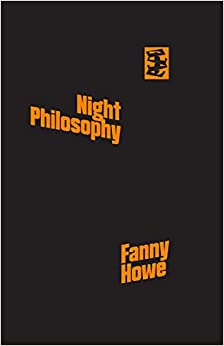
Fanny Howe’s Night Philosophy (Divided Publishing) stayed with me, especially the excerpt of the United Nations Declaration on the Rights of Children. Edited as scraps of Howe’s work the book centres around the figure of the child and uses images of history to circumnavigate notions of power.
In the last few weeks I finally finished Please, Call Me Jesus (Dead Bird Books) by one of the funniest and most brilliant writers in Aotearoa, Samuel Te Kani. Please, Call Me Jesus is a collection of erotic short stories that address and examine the futurities of sexuality through technology.
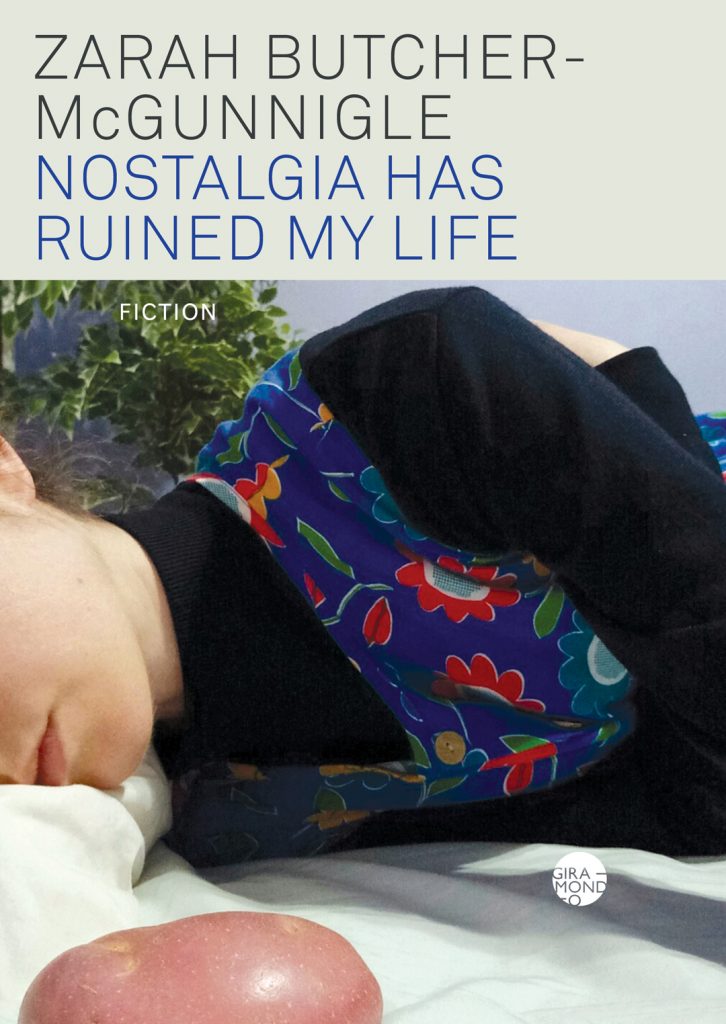
Another brilliant collection is Nostalgia Has Ruined My Life by Zarah Butcher McGunningle (Giramondo Publishing). Nostalgia Has Ruined My Life is a collection of prose-like short stories that are deceptively simple, morose and hilarious. Every vignette is deadpan and relatable but also speaks to the constraints of living under late capitalism, the marketplace of dating and living with an illness while trying to navigate these demands.
Other notable titles that I read this year include: the Earthsea series by the late Ursula Leguin; Sons for the Return Home by Albert Wendt, An Apartment on Uranus by Paul B. Preciado; There Ain’t No Black in the Union Jack: The Cultural Politics of Race and Nation by Paul Gilroy; The Undying by Anne Boyer; and How to Weave a Basket by Jazz Money.
It’s just as hard to pick the best television shows I watched, but highlights were:
Succession, the tragi-comedy centred around a Murdoch-like whānau whose dysfunctional wealth is parts debaucherous, entertaining, and repulsive.
Squid Game. Similar to Bong Joon-ho’s Parasite, Squid Game deals with inequality issues – namely debt – and class conflict – namely labour – within Korean society. Throughout the show references are made to real life worker strikes, the treatment of North Korean defectors in South Korea, the treatment of the elderly, the housing crisis, migrant workers, unemployment, and the toxicity of competition as a condition of living under late capitalism. Squid game is a show that you have to watch in Korean with subtitles, not dubbed in English.
The other show I loved this year was Reservation Dogs. Shot entirely on Muscogee territory, Sterlin Harjo and Taika Waititi’s heist comedy occasionally swerves into the surreal. The show follows four teenagers trying to save money to leave their Oklahoma Reservation for California to honour their friend Daniel who has passed away.
My three favourite podcasts were:
The Red Nation podcast – one of the hosts is Nick Estes (a brilliant writer and thinker from turtle island)
Stuff the British Stole – they stole so many things
Behind the Bastards – The host Robert Evans has a really dark sense of humour which is fitting because this podcast talks about the worst people in history.
For the first half of the year, before my third trimester and before Delta and Omicron I was working between Tāmaki Makaurau and Ōtepoti so I was lucky to see a lot of exhibitions in both cities. I saw so many important exhibitions. In no particular order here are my favourite five:
Emily Karaka is my favourite New Zealand artist and her work in Toi Tū Toi Ora and Rāhui at Visions Gallery is emotional for me to write about. I wrote in depth about Rāhui and some of her other work here.
Fabric artist Ron Te Kawa’s Hīnātore: a love story at Objectspace was joyful. Te Kawa makes the most incredible quilts which examine his whakapapa, matauranga Māori and atua waahine.
New world daughter a sterile sermon on the vile waha of the fuckin Leith by p.Walters at Parasite was a really hectic, but incredible, critical and urgent exhibition that made me think a lot about the commodification and mass production of Māori taonga, what it means to belong to this nation state of ‘New Zealand’ and Lana del Rey and Lady Gaga.
Pōuwatu: Active Presence by John Miller and Elisapeta Heta at Objectspace was honestly one of the most important shows I’ve ever seen. I wrote about it more in depth with Morgan Godfery here
Having the opportunity to see both Toi Tū Toi Ora curated by Nigel Borell at the Auckland art gallery and Ātete (To resist) by Ralph Hotere at the Dunedin Public Art Gallery over and over again from when they opened until when they closed was a huge privilege. Toi Tū Toi Ora was the largest exhibition of Māori contemporary art ever and to spend time with the 300 artworks was not only special, but also necessary. These were both my favourite exhibitions of 2020 and 2021.
Other notable exhibitions I saw this year include: Jamie Berry’s Whakapapa: Algorithms at Papakura Art Gallery, Natasha Te Arahori Keating’s Ngā peka also at Papakura gallery, Arielle Walker’s distance rewoven from the stem at the Blue Oyster art project space and From the shore curated by Ioana Gordon Smith at the Dunedin Public Art Gallery.
THE HIGHLIGHT OF MY 2021 was bringing my sweet little bean Miriama Jean Matauaina Godfery into te ao marama. Hana Pera Aoake
Iona Winter
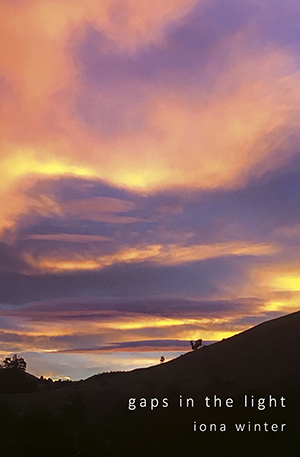
Iona Winter’s gaps in the light (ad hoc fiction) is sublime on so many levels. The collection is dedicated to Iona’s son Reuben (20.5.1994 – 17.9.2020), and the dedication page becomes a pause a prayer a bouquet of sadness before you turn the page. I stalled here. I waited at this border between life and death. And then I entered a peopled glade: characters voices circumstances. Iona lays her own pain and loss beneath the surface of every scene, the hybrid writing stretching delving recovering above the subterranean ache. Writing becomes preservation, connection, ebb and flow, fighting against and fighting for. It is writing as lament and it is writing as meditation. My review. Paula Green
2021 was bittersweet, it marked the first year without my son Reuben, two major surgeries, releasing my latest pukapuka and Reuben’s posthumous album into the world, and the Verb and Katherine Mansfield House & Garden residency where I worked on a new project about suicide bereavement – all of these things (and more) during a pandemic setting.
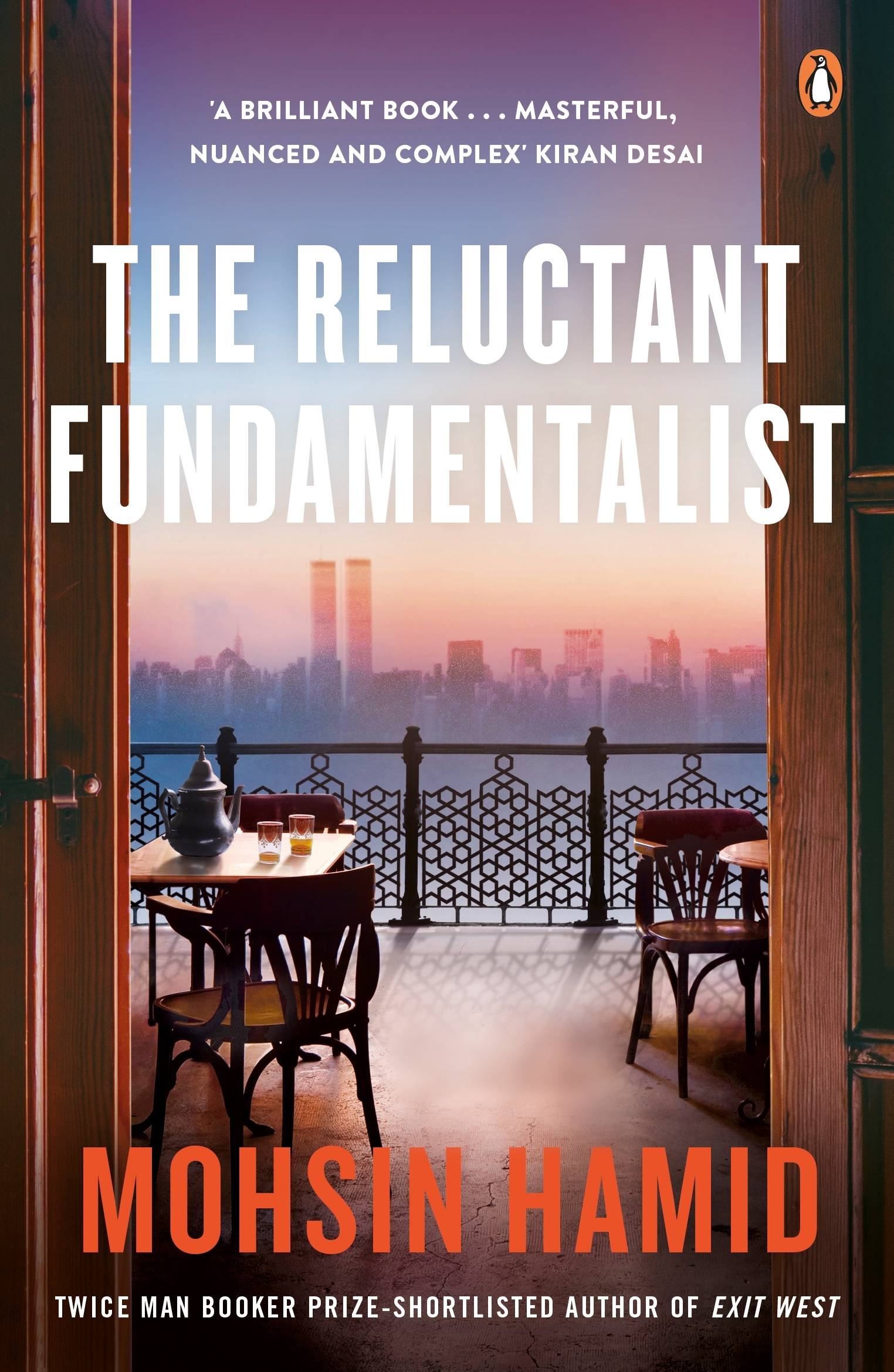
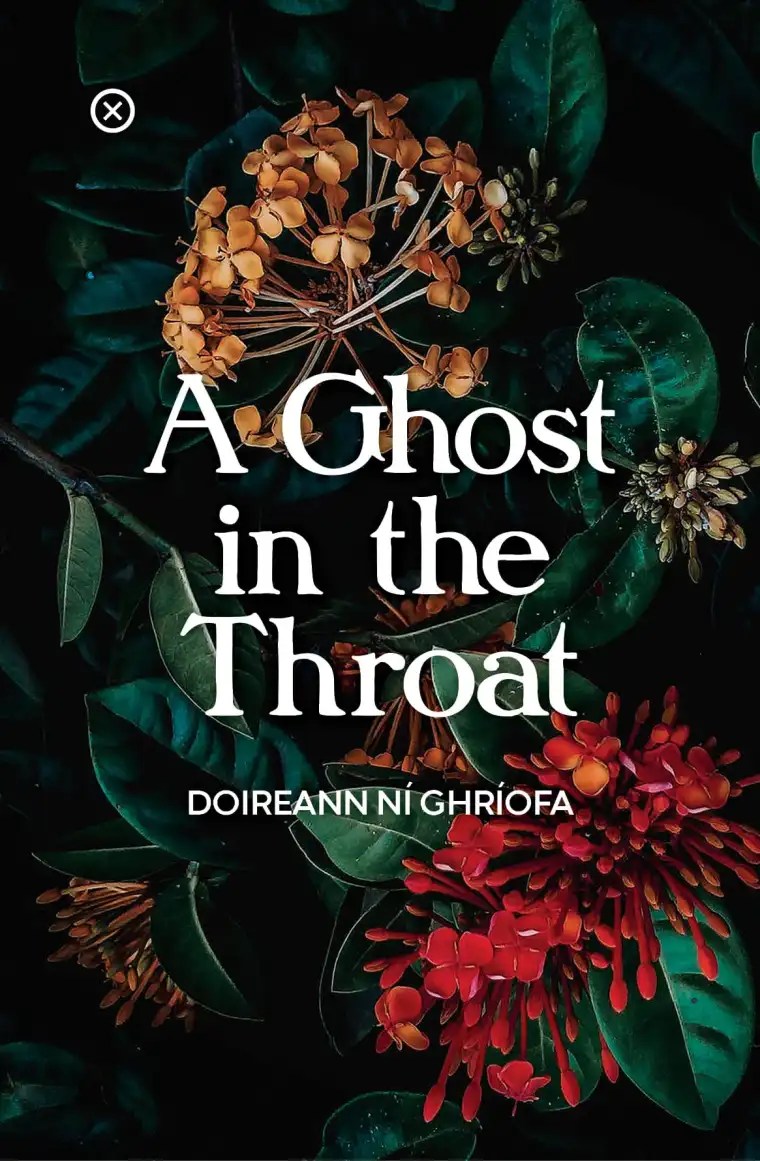
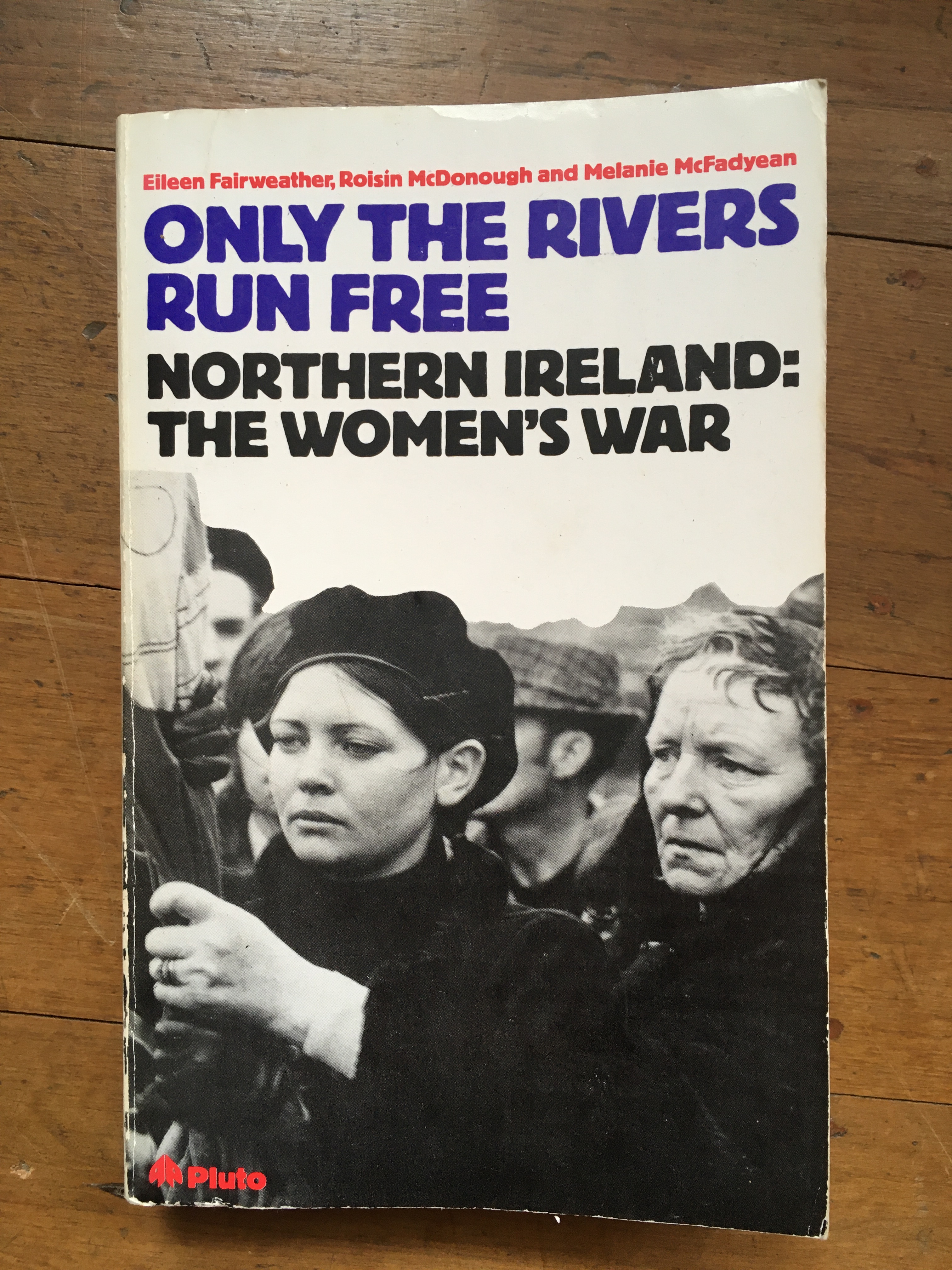
2021 poetry finds (I’m not necessarily a follower of what’s deemed fashionable): Denise Riley Say Something Back Panmacmillan), Poetry New Zealand Yearbook 2021(Massey University Press), Liz Breslin In Bed with the Feminists (Dead Bird Books), Dominic Hoey I thought we’d be famous (Dead Bird Books), and Louise Erdrich Jacklight (holt Paperbacks). 2021 fiction finds: Mohsin Hamid The Reluctant Fundamentalist, Emma Donoghue The Pull of the Stars (set around the 1918 Flu Epidemic and very topical), Doireann Ni Ghriofa A Ghost in the Throat, Tracey Slaughter The Devil’s Trumpet (VUP), Alix E. Harrow 10,000 Doors of January. 2021 non-fiction find was Only the rivers run free. Northern Ireland: The Women’s War by Eileen Fairweather, Roisin McDonough and Melanie McFadyean, which is topical in terms of how we are currently treating one another in the world, and poignant given Reuben’s death and my grief process. Iona Winter
Kirsten McDougall
Kirsten McDougall’s She’s a Killer (VUP) is an astonishing book. Daring, wise, jagged, smooth. I finished it and felt bereft. Fell asleep and then woke up discombobulated. That where am I? Who am I? What I am doing on this godforsaken planet kind of feeling. Every note in Kirsten’s novel (part eco-thriller but so much more) is pitch perfect. Every turn surprising. Every character sharp and faceted and memorable. Don’t go reading reviews that spend most of the time plot and outcome and ideas summarising. Go in fresh. Go in with senses open. It’s the perfect book to read in the time of Covid when we are experiencing all manner of societal splinters and spikes, challenges and catastrophes, goodness and hope. Elizabeth Knox said the book will make you laugh and weep. Yes. It also made me feel self-awkward and despairing, grief-struck. But more than anything, it made me feel utterly alive, and it’s a long time since a book has made me feel this. Maybe since Elizabeth’s equally tremendous The Absolute Book. Genius! Paula Green
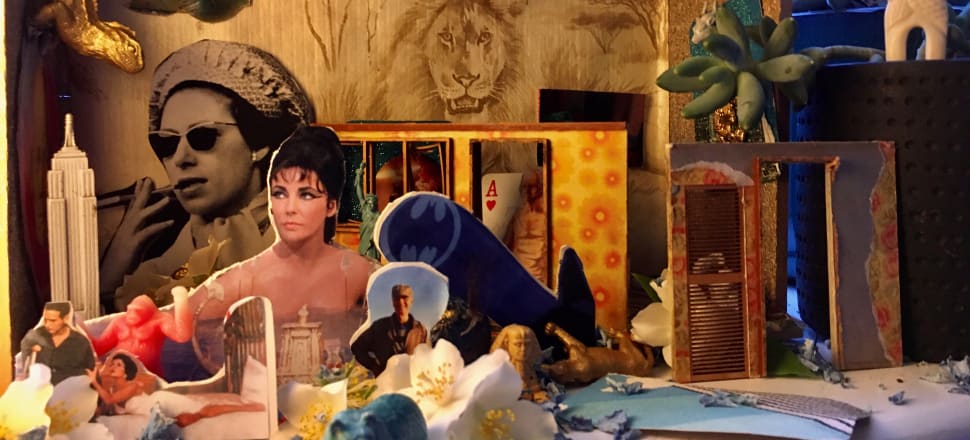
‘Diorama’ by Talia Marshall courtesy of Reading Room
The quality and range of writing being published online and in print on these islands is astounding and I don’t know why the rest of the world isn’t bowing down before us in anticipation to see what we do next. Not that we need that. We know our worth. So many folk have moved, entertained, or taught me stuff this year, but I’m going to focus on three writers I secretly call the three punks – Tayi, Talia and Tawhai.
I love these three writers for their heart, brain and imagination. I also think they’re strong players in the community of writers forging our literature. Brian Eno has this term he calls ‘scienius’ which I like because it dodges the individualised (and paternalistic) idea of the ‘genius’ and recognises that artists and thinkers fuel off each other and while we write in our own quiet corners, we’re also writing to each other and for each other. I thank the three punks for what they’ve given me in the year 2021.
Tayi Tibble’s Rangikura (VUP) is the follow up to her phenomenally successful Poūkahangatus. (Both books have been picked up by Knopf, and I can’t wait to see what she does to America). Rangikura has the same hits that made Poūkahangatus so remarkable, but it’s an evolution as well – the poet has matured and the poems have deepened, hit some raw nerve, gone quieter in parts and louder in others. The poems elide time, the past is woven with always stylish present. (It’s Tayi after all. I work with her and one of my fav things is when she walks in the door and I see what she’s wearing that day.) Perhaps ‘present’ isn’t the right word. Read ‘My Ancestors Ride wit Me’:
‘When I’m out with my mans eating/an expensive hunk of whatever/my ancestors and I share/the same taste and you can see it/in our smile so forceful it splits/the space–time continuum./ Weird flex I know. They taught me that/the entire universe is malleable and mine to mould.’
When I first read Rangikura I felt uncomfortable. (I love it when writing does this.) The information is raw and personal, stylised, and tangled up in the dirtiness of living. In the long poem ‘Little’, about a burgeoning love affair, there’s a description of wait staff staring at the subject, judging, while she eats in a restaurant with her new lover. It’s driving her crazy and she wants to poke her tongue out at the waiter but stops herself. Instead she slays him with a line: ‘He is straining /so intensely to stare that the bones and sinew in his neck are standing to/attention. He looks like a chicken preparing his own neck for the cleaver.’ Wouldn’t want to be that chicken in the way of Tayi’s pen.
I first met Talia Marshall and her writing years ago. She was in a poetry class that Greg O’Brien facilitated, and she was the best poet in that class, the most electric. Then I didn’t hear of her for years until she started publishing her astounding essays online. I think Talia is one of the great brains writing out of Aotearoa right now, writing of its people and art and fucked-up past. She manages to pull personal experience, history, artists and writers, a man called John, and her own eclectic lyricism into the essay form. She’s bold, and honest. One moment she’ll be trying to decide if ‘Bill Manhire counts as a straight white man or a druid priest rattling the long bones at his neck’ and the next she’s asking the reader if ‘Maori ever really give anything away for free, or for just a few beads and blankets? Why would we give away the whenua we belonged to for blankets? Our weavers were the best in the world. We sat on the finest flax mats.’ Read ‘Talia and the Pākehās’ at the Reading Room.
Reading Talia I often feel I’m being rubbed raw with sandpaper (I love it when writing does this), she confronts me and forces me to think differently. She makes me hoot with laughter. I can’t wait to read her book when it comes out.
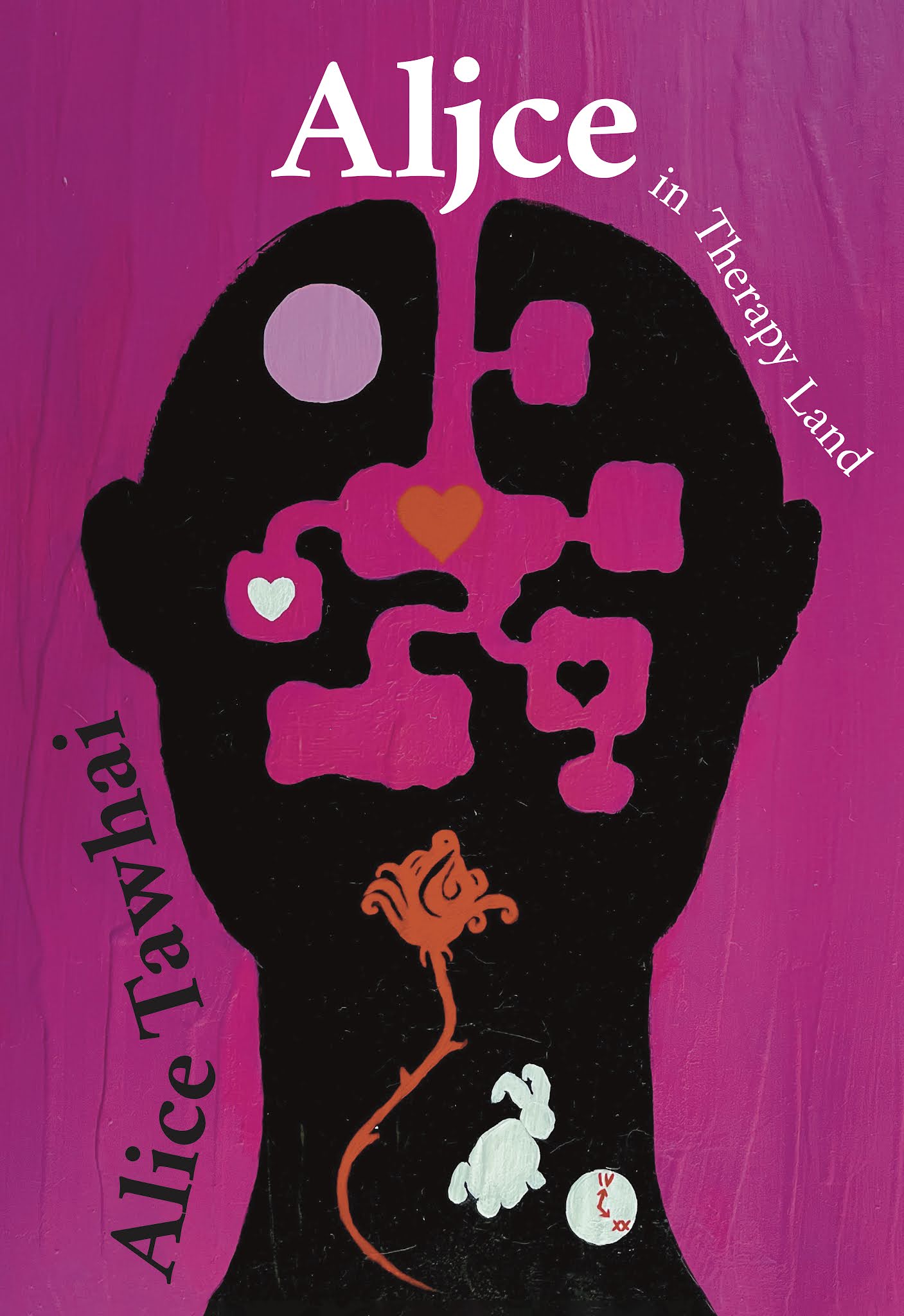
Alice Tawhai’s first novel came out in November. She’s previously published some excellent short stories collected in A Festival of Miracles and Luminous back in the 00s. Aljce in Therapy Land (Lawrence and Gibson) is the story of Aljce, who goes down the rabbit hole to work at The Therapy Hub, where she hopes to attain enough practice hours to become a qualified counsellor. From day one, Aljce’s job at Therapy Hub is a disaster. The boss, Jillq is a classic narcissistic bully, who will smile and pull the rug out from under Aljce while saying, ‘what rug?’ Tawhai’s writing is funny, strange, kind, and reflective about quirks of human behaviour. She also does this thing with time that is part Alice Adventures in Wonderland, and part what I recognise as belonging to Tawhai’s stories where time and our experience of it get all mashed-up, the filters come down and we briefly glimpse the magnificent and inarticulate world in its incomprehensible blinding matter. I love it when writing does this. Kirsten McDougall
BEST TV: Creamerie, Succession, all the Stewart Lee I can find on youtube.
BEST SONG: ‘Montero’ by Lil Naz X.
BEST PODCAST: ‘Story of the Clash’ narrated by Chuck D, and always the Savage LoveCast.
The Creamerie
Lily Holloway
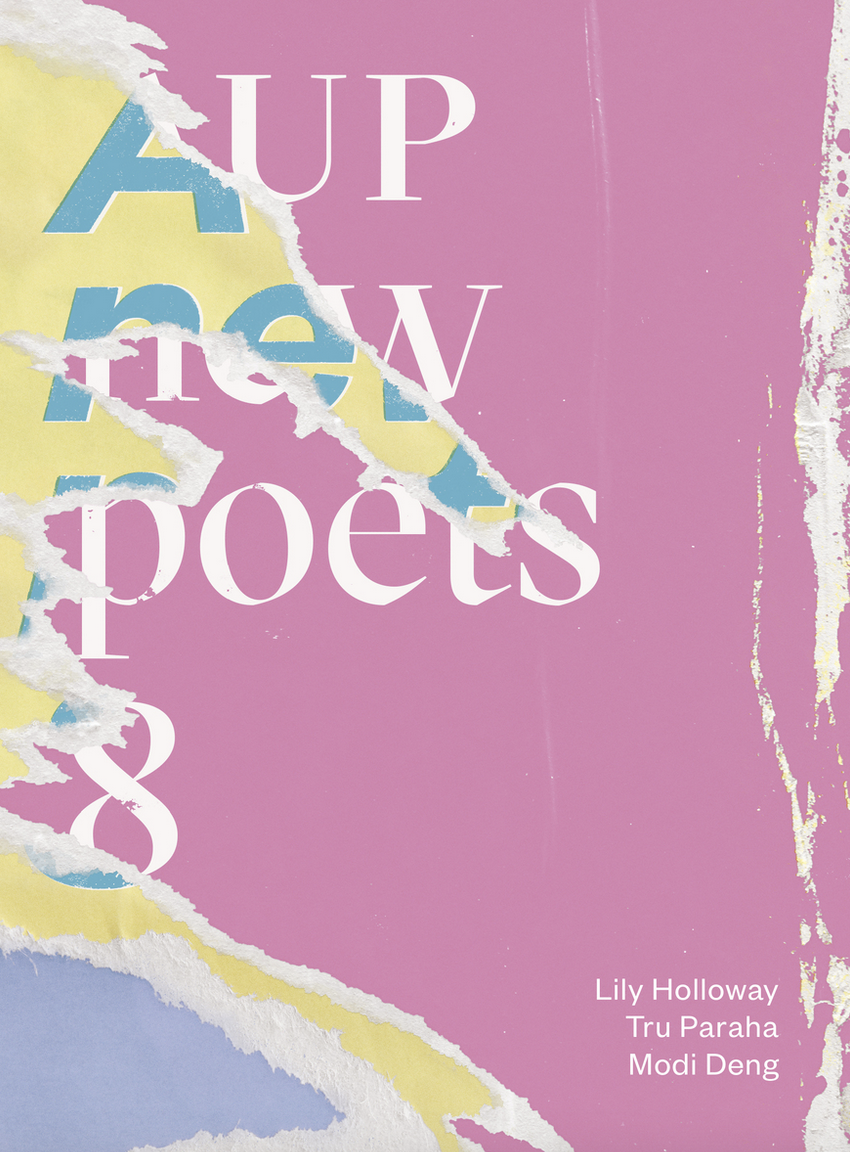
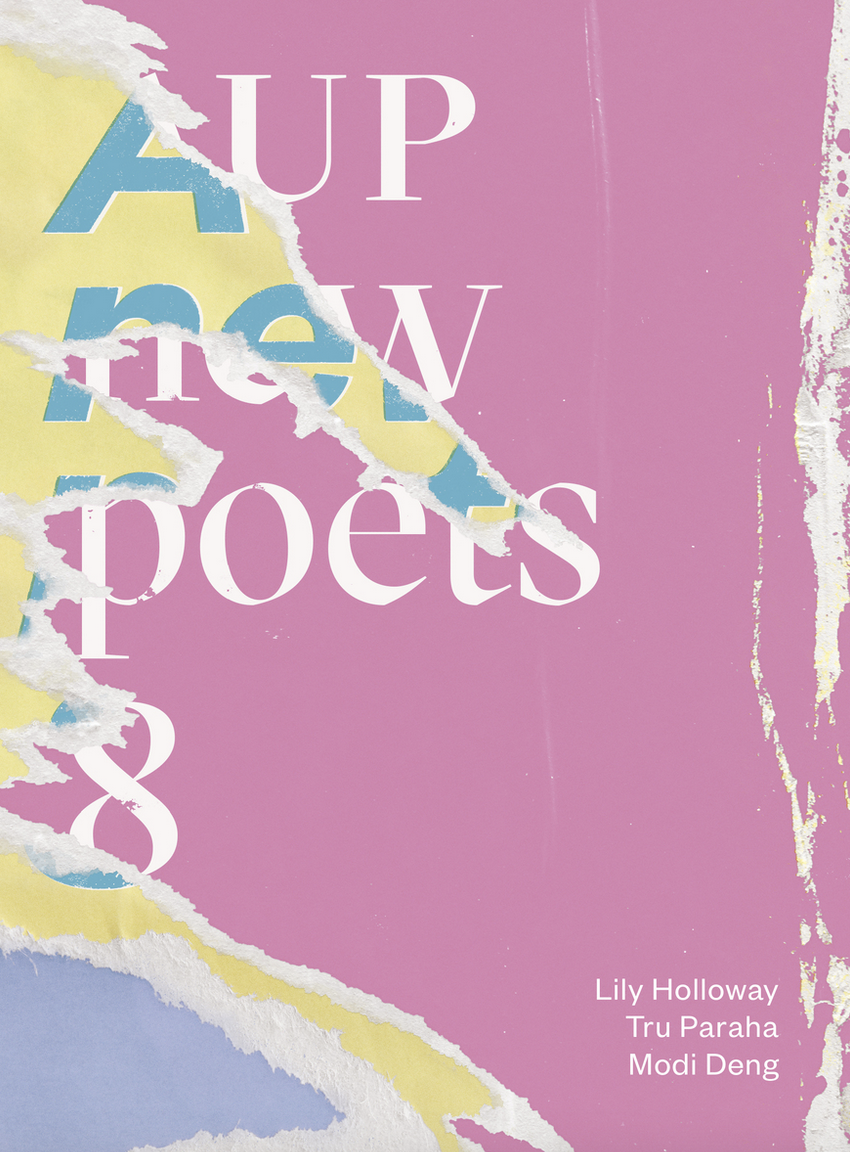
Lily Hollway appears in AUP New Poets 8 (AUP), along with the excellent Modi Deng and Tru Paraha. The series is currently edited by Anna Jackson and is a must-read avenue for emerging voices. At Kete Books I wrote: ‘Holloway is an award-winning writer and postgraduate student who has been published in numerous journals. I have long admired her poetry: her aural and linguistic deftness, the sweet measure of surprise, the variegated forms, the connecting undercurrents, the honey, the bitterness. Her poems run on the rewarding premise that poems don’t need the full explanation, that tactile detail and deft juxtapositions can unmask love, desire, razor edges, self-exposure. Pocket narratives are equally sublime.’ Full review here. Paula Green
I am writing this 2021 reflection in an exhausted daze after handing in my final coursework for the year. 2021 has really done a number on me (as I am sure it has on most people) and I feel like I could sleep through until after Christmas if I really committed myself. Cassius, the attention-seeking neighbourhood cat, is trying to distract me from the task at hand but the pats can wait, dude!
The Books:
One of my top two books of the year would have to be I Am in Bed with You by Emma Barnes (AUP). Each poem demonstrates such a fine-tuned command over language. My copy is covered in marginalia along the lines of sooooo goood! and this right here! Its examination of the body and of being seen/being known makes it a book I wish had been around years ago. The eponymous poem, I am in bed with you, had me with tears in my eyes (something that rarely ever happens to me when reading poetry, that’s how hardcore I am). It was only after reading this collection that the scope of my dissertation, something I had been procrastinating for months, really came into focus. I can’t wait to read it over and over again.
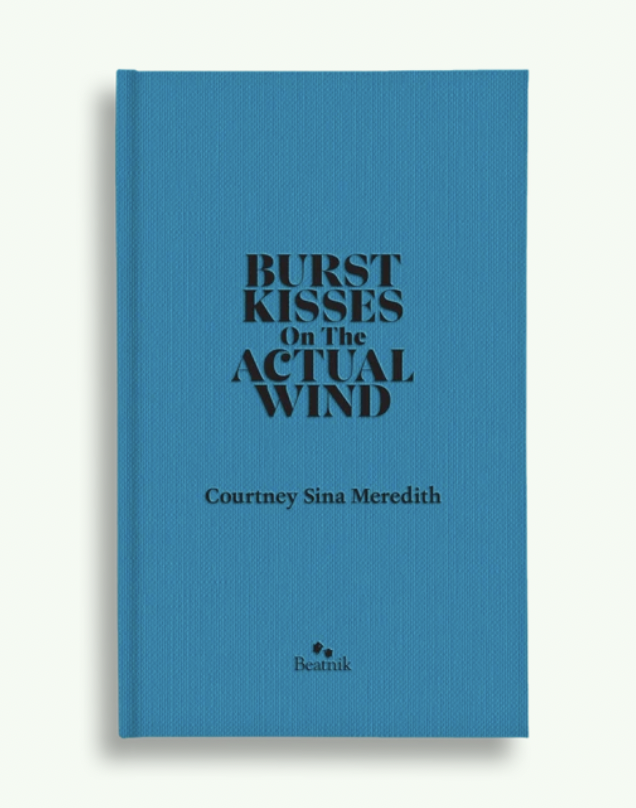
My other book of the year is Burst Kisses on the Actual Wind by Courtney Sina Meredith (Beatnik Publishing). It’s a collection that is overflowing with love and Courtney is such a powerhouse. Her first collection Brown Girls in Bright Red Lipstick was the first book of poetry I ever bought myself. Her use of varied form gives the feeling that the collection is moving around you as you explore it.
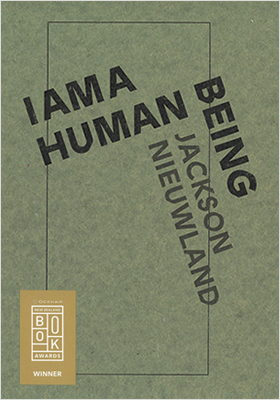
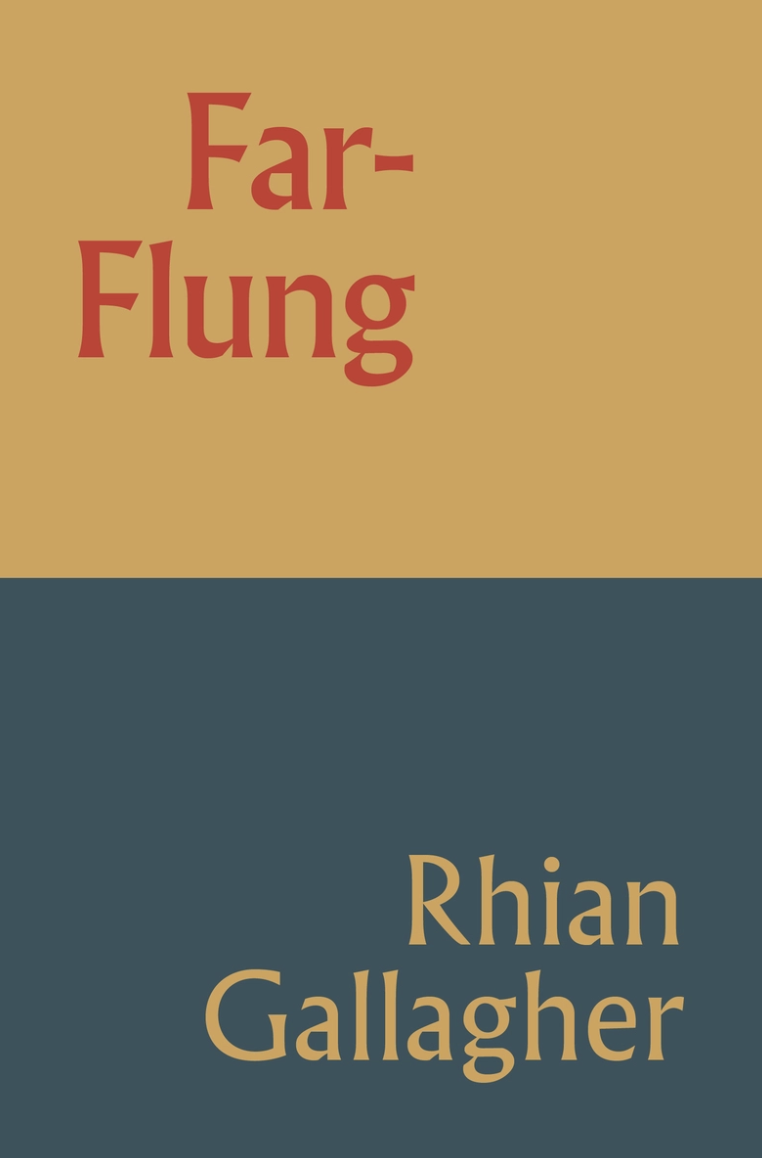
Apart from getting to spend time with I Am in Bed with You, the only positive part about having to write my dissertation was getting to sit for an extended time with Jackson Nieuwland’s I Am a Human Being (Compound Press) and essa may ranapiri’s ransack (VUP). They’re both such rich and well-crafted collections. I wait with bated breath for essa’s second collection ECHIDNA to be published with Te Herenga Waka University Press next year. This year I have also been enjoying reading Rhian Gallagher’s Far-Flung (AUP), Jess Fiebig’s My Honest Poem (AUP), and legit anything by Chris Tse (AUP).
A poem I always come back to is my friend Roman Sigley’s Horsegirl, published in the 10th edition of Starling. I think part of why I like this poem in particular is because it reminds me of my primary school days and the queerness of playing pretend. I also have been loving reading works published by Leah Dodd, Sophie van Waardenberg, and Maddi Rowe. Rebecca Hawkes’ Nepenthes Terrarium (published in Salt Hill) made me go out and buy my first pitcher plant (happy to say that it isn’t dead yet).
This year AUP New Poets 8was published, edited by Anna Jackson and featuring myself, Tru Paraha, and Modi Deng. Since the launch got Covid-cancelled, I would like to take the opportunity to say it’s an honour to sit alongside such talented poets and to have been read with such care by Anna. Reading Vanessa Mei Crofsky’s collection in AUP New Poets 6, was what made me start writing regularly. I wanted to be able to do that. Thank you to everyone who has bought a copy or who has supported the process. It still feels too good to be true.
Other Media:
I get very easily addicted to video games. I have well over 1,000 hours in The Binding of Isaac: Rebirth, a rogue-like rpg shooter about religious trauma and this year, my girlfriend and I played many hours of Terraria together. I also finished the new content introduced in the latest Stardew Valley update. My favourite game franchise of all time, Ace Attorney, released an English translation of The Great Ace Attorney Chronicles, which I am currently making my way through.
Here is an embarrassing confession for you all: This year (ahem, in the last couple of months), as a coping mechanism for life and all that involves, I binge-watched all of Glee. Let me tell you, this show is infuriating. Characters are inconsistent, plot-lines are abandoned at the drop of a hat. Do not be misled, there is little to no glee to be found here. I curse my flatmate, Noah, for having so casually suggested a re-watch. Aside from that nonsense, wonderful writer and friend, Anuja Mitra, and I have been watching a lot of socially-distanced movies together over Teleparty. Thank you for taking me out of my Glee-induced nightmare.
This year, like many years before it, my most listened to album was Supa Dupa Fly by Missy Elliott. There are rumours of a new Missy Elliott album in the works and I can guarantee I will get very Teary Eyed (one of my favourite Missy Elliott songs) the day it is released.
Other:
I have been rewarding myself for doing my university work and replying to overdue emails by buying second-hand clothing off of Trademe, particularly vests and waistcoats. For my birthday, I bought myself a cold-brew coffee maker from Coffee and Tea Lovers and it has been such a luxury. After three tries, I passed my practical motorbike learners licence test.
I am really looking forward to what 2022 is bringing. Rebecca Hawkes, Alie Benge, essa may ranapiri, Chris Tse, (and probably many others who have slipped my mind) all have projects forthcoming. My girlfriend and I are planning to move to Wellington so I can start an MA in creative writing at the IIML.
Lots of love from me (and Cassius)! Wishing you all the best possible end to 2021 and a joyous start to the new year. Lily Holloway
Louise Wallace
I am a huge fan of The Starling: New Writing from Young New Zealanders, founded and edited by Louise Wallace. The site showcases writers under 25 and underlines what vibrant and wide ranging work the younger generation is producing in Aotearoa. Francis Cooke is a co-editor and Tate Fountain, Claudia Jardine and Sinead Overbye have joined the editorial committee. The Starling. This site is a gift. Paula Green
Ash Davida Jane’s collection How to Live with Mammals (VUP) was a highlight for me. It is urgent in its focussed attention on climate change and the natural world, as well as containing some really tender relationship poems. It was a thrill to see Ash’s book place second in the Laurel Prize. I also loved the voices in AUP New Poets 8: Modi Deng, Lily Holloway and Tru Paraha (AUP). There is a lot to celebrate. The gatherings in A Clear Dawn: New Asian Voices from Aotearoa New Zealand (AUP) and Out Here: An anthology of Takatāpui and LGBTQIA+ writers from Aotearoa (AUP) felt like milestone moments in our poetic landscape.
I am in awe of festival organisers this year, and so grateful for their grit and perseverance in extremely challenging conditions to continue to support and inspire this community. I chaired an event for the New Zealand Young Writers Festival in Ōtepoti and Eliana Gray and team had created such a beautiful atmosphere for the festival, I felt grateful just to be there to soak it up. Independent bookstores have continued to be sustaining forces and Good Books, Food Court Books and the University Book Shop Otago have been personal standouts. I recently discovered Craft – a podcast that speaks to writers about the process of creating a particular book or project, and I loved the first episode with Nina Mingya Powles talking about Tiny Moons: A Year of Eating in Shanghai. I am looking forward to the second episode with Chen Chen. Louise Wallace
Nina Mingya Powles
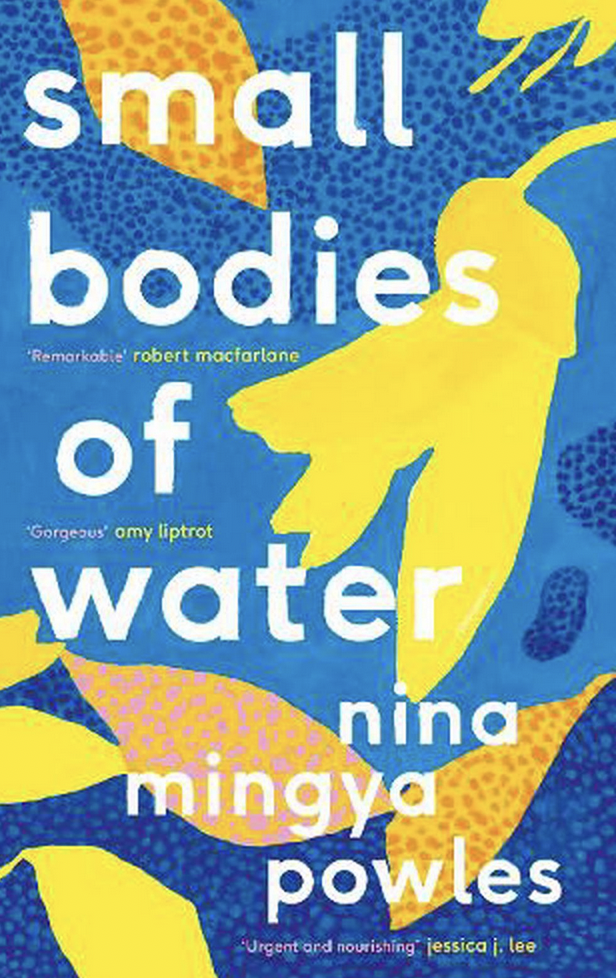
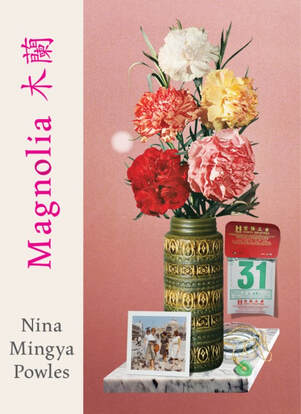
Magnolia 木蘭 arrived in 2020 (Seraph Press). It was shortisted for the Ockham NZ Book Awards, Forward Prize for Poetry Best First Collection, 2020 and RSL Ondaatje Prize. It was launched at Food Court Books when Nina was back in Te a Whanganui-a-Tara Wellington in April 2021. I so loved this collection. I turn to the blurb on the back of the book and see so many of the words that have guided my reading: hunger, longing, home, mixed-race, languages, women, colour, rain. Magnolia 木蘭 is origami poetry – it will unfold in your body as you read. It is miniature-city poetry that will reinstate multiple existences of home. It is rain poetry that will fall as gleaming light and stomach nourishment and tattoo your skin. It is love poetry and disappearance poetry. It is heart poetry and human poetry that, in this extraordinary year, will get you contemplating your own downpours and magnolias, and in those musings discover poetry solace. I also adored Tiny Moons: A Year of Eating in Shanghai this year. Small Bodies in the Water (Canongate Books), a poetic essay collection, is on my must-read summer list. Paula Green
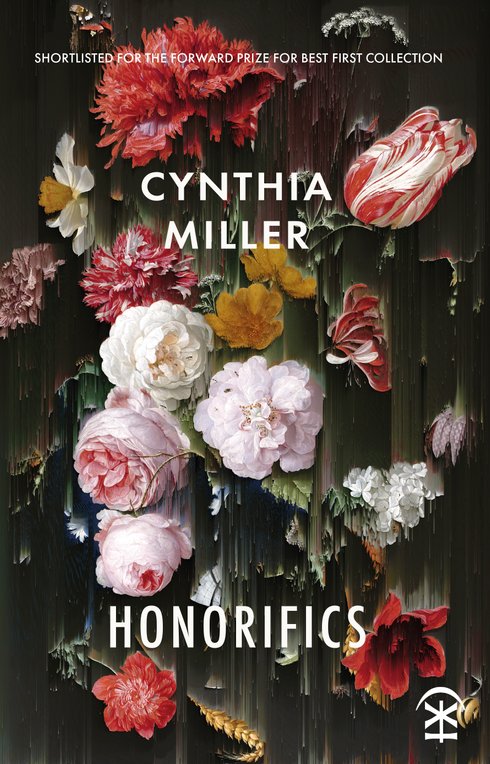
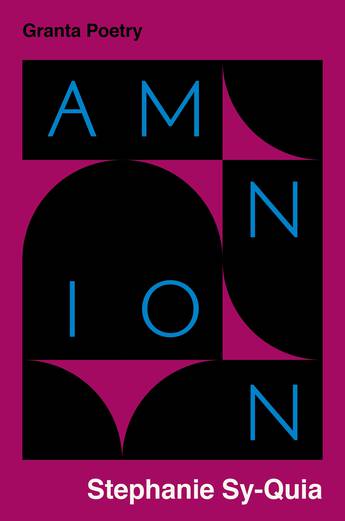
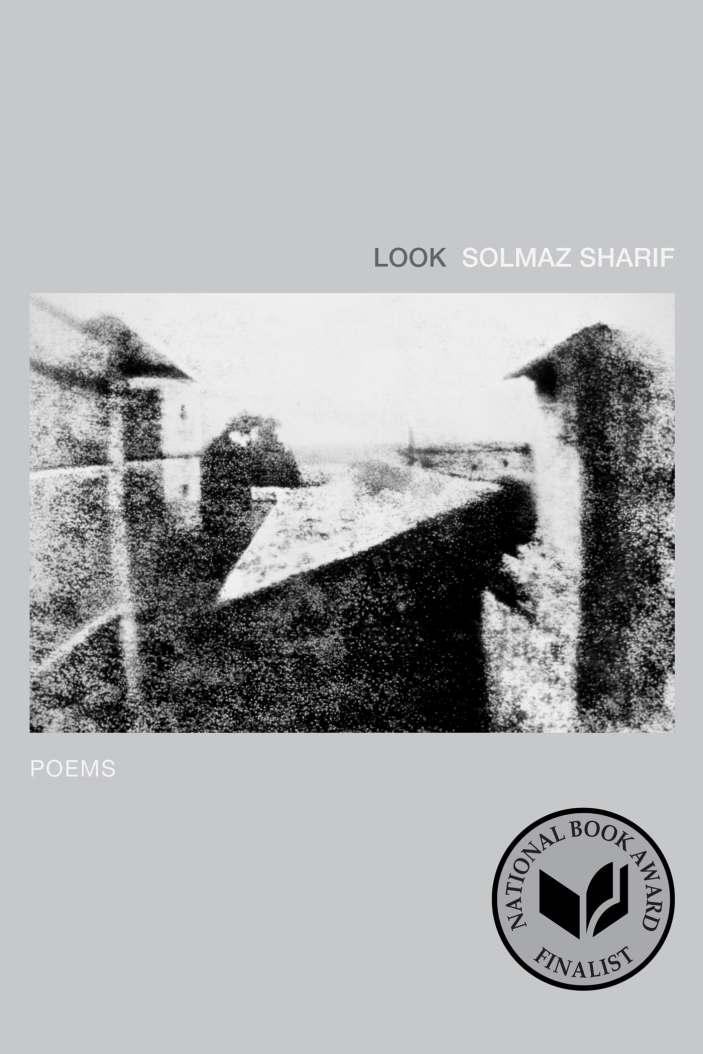
This year I wasn’t able to get my hands on as many new Aotearoa poetry books as I’d have liked; I have a big wishlist for next year! And overall I struggled to sustain much focus when it comes to reading, but I did fall deeply into a few collections. Lookby Solmaz Sharif was published by Graywolf in the US in 2016 but somehow I only just stumbled upon it, and it was staggering. Amnion (Allen & Unwin), a verse novel by Stephanie Sy-Quia, exploded the notion of the epic and is a masterful excavation of multi-generational, multilingual family history. And Honorifics (Nine Arches Press) by Cynthia Miller was a delight and a salve; so many of Miller’s poems about family and language resonated with me. I wanted to hold them close. Nina Mingya Powles
Ruby Solly
Enter a poetry book that catches your heart and every pore of your skin, and you enter a forest with its densities, its shadows and lights, canopies and breaths, re-generations. You will meet oceans and rivers and enter different ebbs and flows, different currents, fluencies. You will reach the sky with its infinite hues, dreamings, navigations, weatherings (storm washed, sunlit, moonlit). You will meet the land with its lifeblood, embraces, loves, whānau, anchors.This is what happens when I read Ruby Solly’s Tōku Pāpā (VUP). Paula Green
I posted Ruby’s picks earlier. You can read them here.
Sue Orr
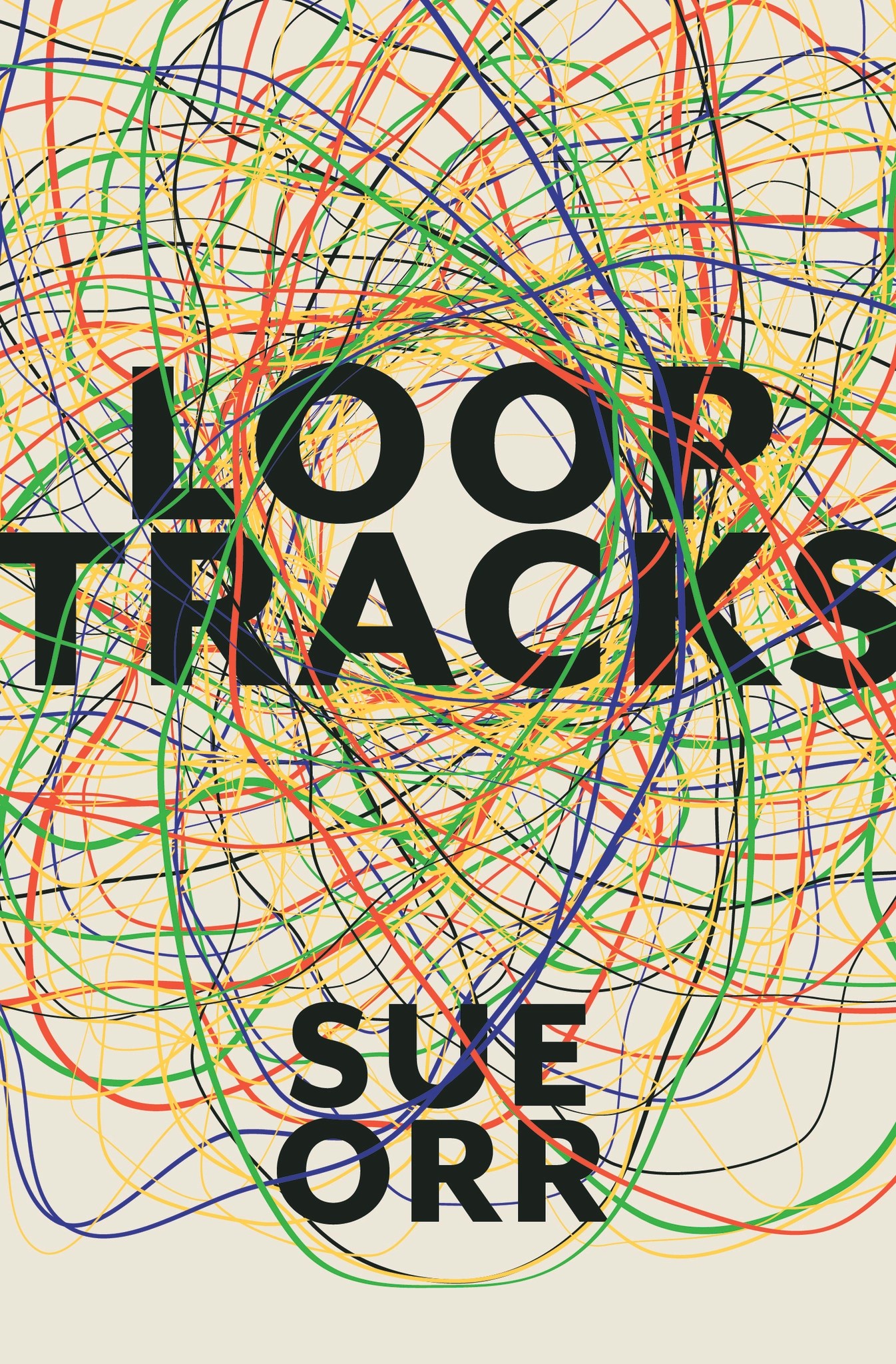
Sue Orr’s Loop Tracks (VUP) is a triumph on so many levels. It is the kind of novel that will touch you profoundly, with its exquisite craft, characters that increasingly matter, its lattice work of vital ideas and issues. I love the loops and overlaps. Covid, Wellington and local politics make an appearance, along with the the central issue of young women in the 1970s struggling to get abortions. Sue rejuvenates what novels can do, and underlines how fiction is an essential tool in broadcasting versions of who we are and who we have been. Paula Green
Two essay collections have captured my attention time and time again this year, perhaps because the essay length is perfect for the pandemic-distracted reader. Where We Swim by Ingrid Horrocks (VUP) is a beautiful exploration of our engagement with seas and rivers and swimming pools, threaded with cross-currents of startling personal and social observations. Festival Days by Jo Ann Beard (Hachette UK) investigates the spectrum of human experience with language that sears and sparkles. Both these collections are addictive — books you can’t stop reading, books you want to never finish. Sue Orr
Tim Grgec
I am such a fan of Tim Grgec’s All Tito’s Children. This is what struck: the land is a constant. Contested yes, stolen yes, and where we stand yes; in our imaginations, in our bones and hearts, across generations. Our now endangered skies, sea, terra firma, have been a constant over centuries of change and conflict and exile. I don’t quite know how to articulate this but the word ‘wonder’ keeps arising. Questions and awe. Questions and awe. In this sequence of haunting dislocation that compels some people to leave as refugees, there are exquisite flashes of wonder. Where the power and the beauty of the land, that beloved homeland, transcend everything. Just for a moment, and in that contemplative brilliance, there resides fleeting hope. Tim’s ability to craft a line with such simplicity, such fluency, beams at you, amplifies the effect of wonder as you read. How I love this book. How this is such a perfect book to read in our own uneven times, where everything comes into question, where freedom is a tested concept, where we need to do better caring for the dispossessed. I hold this book to my heart knowing the best way to seduce you is with Tim’s words, not mine. My review. I am also a big cricket fan! Paula Green
I exhausted my capacity for poetry earlier in the year finishing my first book, so I didn’t read as much as I usually would have. One poem that stopped me in my tracks, though, was “Parking Warden” by Aziembry Aolani. I was lucky enough to hear Aziembry read at Food Court Books, Newtown. His poem is a hilarious and perceptive “day-in-the-life” account of a parking warden (and all the troubling abuse that comes with it). ]Read the poem here.
More than anything else, 2021 proved a great year to be a Black Caps fan. I’ve suffered my entire life following cricket but this year Kane Williamson & co. cemented themselves as the best team we’ve ever had by winning the inaugural World Test Championship. Special mention also goes to Ajaz Patel, who later in the year became only the third bowler in cricket’s 144-year history to take all ten wickets of an innings with 10-119 against India in Mumbai. Such moments make all the pointlessness and late nights worth it.
The contributors
Bill Manhire founded the creative writing programme at Victoria University of Wellington, which a little over 20 years ago became the International Institute of Modern Letters. His most recent book Wow is published by Victoria University Press in New Zealand and Carcanet in the UK. His new collaboration with musician Norman Meehan, Bifröst, is named for the rainbow bridge in Norse mythology whose destruction heralds the end of the world.
Chris Price is the author of three poetry collections and the hybrid ‘biographical dictionary’ Brief Lives. She has also collaborated with NZ physicists (in Are Angels Ok?), and with German poets (in the bilingual anthology Transit of Venus | Venustransit). Chris convenes the MA Workshop in Poetry and Creative Nonfiction at the International Institute of Modern Letters.
Chris Tse’s third poetry collection Super Model Minority will be published by Auckland University Press in March 2022. He and Emma Barnes co-edited Out Here: An anthology of Takatāpui & LGBTQIA+ writers from Aotearoa.
Eileen Merriman’s first young adult novel, Pieces of You, was published in 2017, and was a finalist in the NZ Book Awards for Children and Young Adults and a Storylines Notable Book. She has published another nine novels for adults and young adults. A regular finalist in the NZ Book Awards for Children and Young Adults, Merriman was a finalist in the 2021 Ngaio Marsh Award for Best Crime Novel and Moonlight Sonata was longlisted for the Jann Medlicott Acorn Prize for Fiction 2020. Some of her YA novels have been released in Germany, Turkey and the UK and three have been optioned for film or TV, including the Black Spiral Trilogy. Other awards include runner-up in the 2018 Sunday Star-Times Short Story Award and third in the same award for three consecutive years previously. She works as a consultant haematologist at North Shore Hospital.
Emma Barnes (Ngāti Pākehā, they/them) lives and writes in Pōneke | Wellington. They released their first book in March of this year I Am In Bed With You (AUP 2021). For the last few years they’ve been working with Chris Tse on an anthology of LGBTQIA+ and Takatāpui writing that was released this year, also by AUP. They work in tech and spend a lot of time picking heavy things up and putting them back down again.
Emma Neale, a Dunedin based writer and editor, is the author of six novels and six collections of poetry. Her most recent collection is To the Occupant (Otago University Press). In 2020 she received the Lauris Edmond Memorial Award for a Distinguished Contribution to New Zealand Poetry.
Hana Pera Aoake (Ngaati Hinerangi me Ngaati Raukawa, Ngaati Mahuta, Tainui/Waikato, Ngaati Waewae) is an artist and writer based in Te Rotopaateke, Ootepoti. Hana co organises Kei Te Pai press with Morgan Godfery and published their first pukapuka, A bathful of kawakawa and hot water with Compound Press in 2020. Their work has been exhibited and published widely, including in Granta, Running Dog, Artnow, Wasafiri, and in a number a books including The Material Kinship reader. They are currently a participant in the Regional Arts Australia programme and a māmā to Miriama Jean.
Iona Winter (Waitaha/Kāi Tahu) lives in Ōtepoti Dunedin. Her hybrid work is widely published and anthologised in literary journals internationally. Iona creates work to be performed, relishing cross-modality collaboration, and holds a Master of Creative Writing. She has authored three collections, Gaps in the Light (2021), Te Hau Kāika (2019), and then the wind came (2018). Skilled at giving voice to difficult topics, she often draws on her deep connection to land, place and whenua.
Kirsten McDougall’s previous novels are Tess (2017), longlisted for the Ockham NZ Book Awards, and shortlisted for the Ngaio Marsh Award, and The Invisible Rider (2012). Her stories and nonfiction have appeared in Landfall, Sport and Tell You What: Great New Zealand Non-fiction 2016, and her story ‘Walking Day’ won the 2021 Sunday Star-Times Short Story Competition. She was the recipient of the 2013 Creative New Zealand Louis Johnson New Writer’s Bursary, and a Michael King Writers Centre residency in 2019. She lives in Wellington.
Lily Holloway is a bunch of ladybugs in a trenchcoat. You can find their work at lilyholloway.co.nz or follow them on Twitter @milfs4minecraft.
Louise Wallace is the author of three collections of poetry published by Victoria University Press (soon to become Te Herenga Waka University Press!), and now lives in Ōtepoti. She is the founder and editor of Starling, an online journal for young New Zealand writers.
Nina Mingya Powles is a poet, zinemaker and non-fiction writer of Malaysian-Chinese and Pākehā heritage, currently living in London. She is the author of a food memoir, Tiny Moons: A Year of Eating in Shanghai (The Emma Press, 2020), poetry box-set Luminescent (Seraph Press, 2017), and several poetry chapbooks and zines, including Girls of the Drift (Seraph Press, 2014). In 2018 she was one of three winners of the inaugural Women Poets’ Prize, and in 2019 won the Nan Shepherd Prize for Nature Writing. Magnolia 木蘭 was shortlisted for the 2020 Forward Prize for Best First Collection. Nina has an MA in creative writing from Victoria University of Wellington and won the 2015 Biggs Family Prize for Poetry. She is the founding editor of Bitter Melon 苦瓜, a risograph press that publishes limited-edition poetry pamphlets by Asian writers. Her collection of essays, Small Bodies of Water, was published by Canongate Books in 2021.
Ruby Solly (Kāi Tahu, Waitaha, Kāti Māmoe) is a writer, musician and taonga pūoro practitioner living in Pōneke. She has been published in journals such as Landfall, Starling and Sport among others. In 2020 she released her debut album, Pōneke, which looks at the soundscapes of Wellington’s past, present and future through the use of taonga pūoro, cello, and environmental sounds. She is currently completing a PhD in public health, focusing on the use of taonga pūoro in hauora Māori. Tōku Pāpā is her first book.
Sue Orr’s latest novel, Loop Tracks, was published by VUP in June. It will be published in Australia by Upswell in March 2022. Sue teaches creative writing at the IIML, and in Wellington prisons.
Tim Grgec was the 2018 recipient of the Biggs Family Prize for Poetry. Having failed to achieve his childhood dream of playing for the Black Caps, he now has delusions of becoming a great writer. His first book, All Tito’s Children, is out now with Victoria University Press.
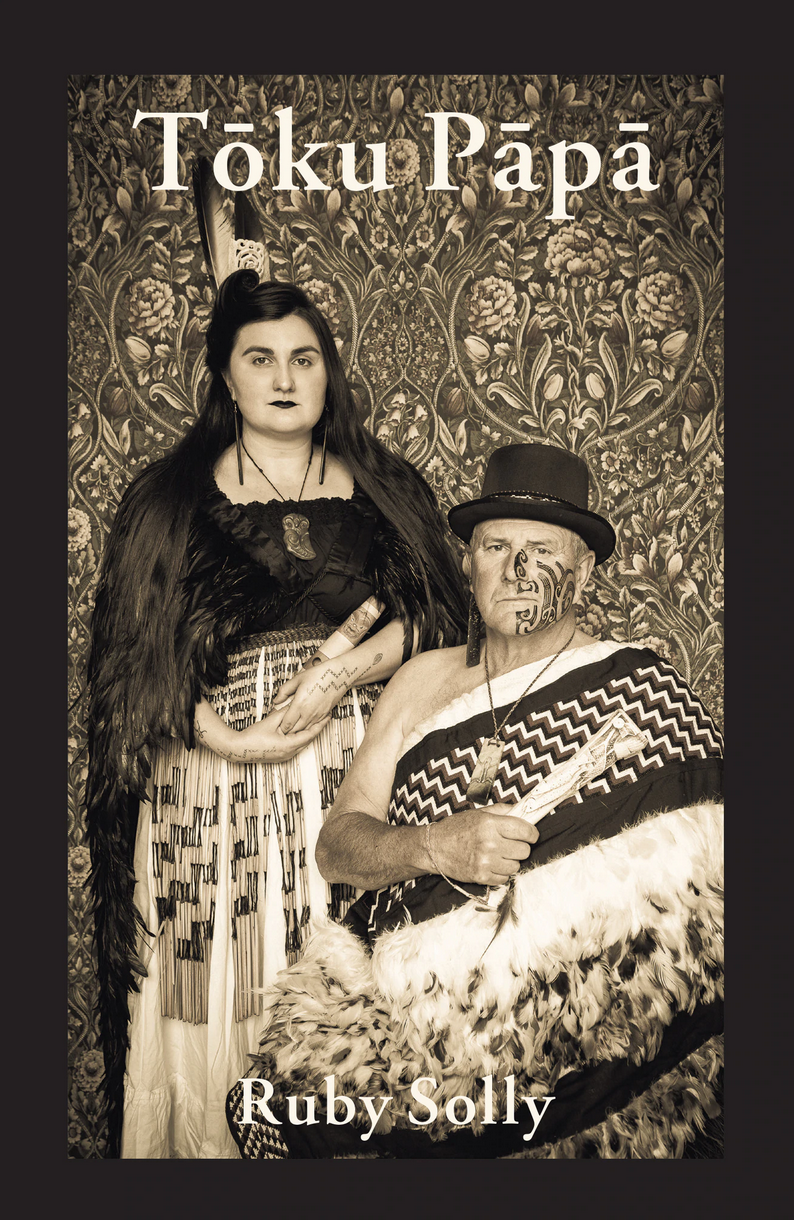
Tōku Pāpā, Ruby Solly, Victoria University Press, 2021
On Friday I am posting book picks (and more) by a group of authors who wrote or produced something I loved this year. I am posting Ruby Solly’s separately as it as a longer piece. Ruby’s debut collection, Toku Pāpā, was one of my favourite poetry reads of the year. In my review I say:
Enter a poetry book that catches your heart and every pore of your skin, and you enter a forest with its densities, its shadows and lights, canopies and breaths, re-generations. You will meet oceans and rivers and enter different ebbs and flows, different currents, fluencies. You will reach the sky with its infinite hues, dreamings, navigations, weatherings (storm washed, sunlit, moonlit). You will meet the land with its lifeblood, embraces, loves, whānau, anchors.
This is what happens when I read Ruby Solly’s Tōku Pāpā.
I have found a phenomenal amount of comfort in books, music, films and art these last several years as many of us have. I was an avid reader as a child and would spend days reading (often bunking school to do so in one way or another, sorry Mum) but in these last few years I’ve seen other people use books in the same way more often. For travel from a still point, understanding, and most importantly, to see themselves reflected. I think of the origins of the word mokopuna; our selves reflected in a spring, fresh and new in the telling.
Perhaps selfishly, the strongest book related memory in my head for this year was the launch of my book Tōku Pāpā from VUP now THWUP. It really showed me why I write; having all my whānau there from all the different facets of my life, and my Dad speaking about how lucky we were to have such a great relationship formed around te ao Māori and te taiao. There were a few points where there wasn’t a dry eye in the house, and I think I would have won the award for wettest face in the whare. It was a real highlight as well to be able to fill Unity Books with the sounds of taonga pūoro, I like to imagine those sounds seeping into all the books, and the space still feels different when I go there now. A book can be healing, a book can be rongoa.
Another top moment was essa may ranapiri reading a poem to a track by taonga pūoro practitioner Rob Thorne at ‘Ngā Oro Hou’ as part of ‘Oro’ at Auckland Writers Festival. Just the way that breathing is so integral to both the music and the words in a way that marries and melds the two. Being there felt like an almost out of body or inter atua experience; I felt like breath personified, Hinepūnui-o-toka.
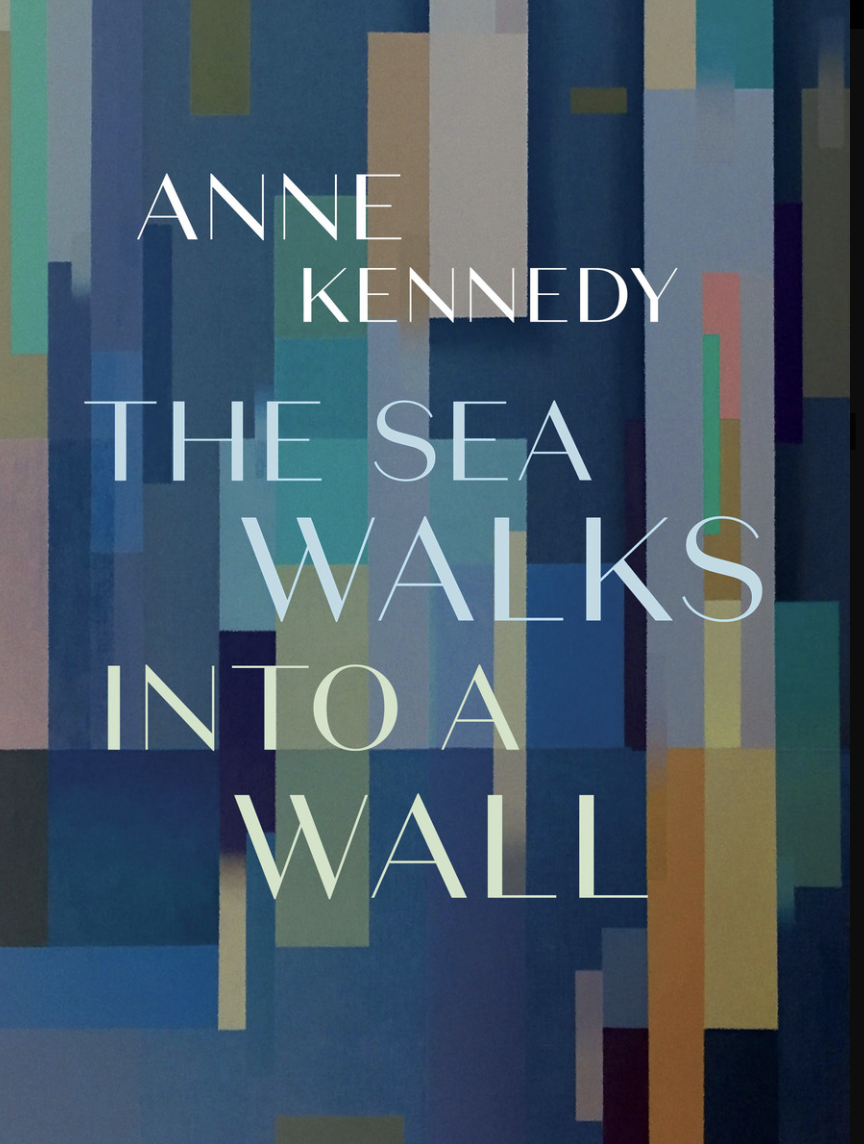
I absolutely adored Anne Kennedy’s The Sea Walks Into A Wall and rushed to get it as soon as it came out from my local, the fantastic Good Books owned by writers Jane Arthur and Catherine Robertson, and staffed by writers such as Eamon Mara and Freya Daly Sadgrove. I don’t think I’ve ever seen anyone look sad in Good Books! Anne’s writing has been a long standing love for me since I read Sing Song in my teens. This new book plays with the written form as the sea plays with shape of the coast; in a skillful way that moves and shapes us new lands to play on.
Greta and Valdin by my humour idol, Rebecca K Reilly, was a major read for me this year. I don’t think I’d ever read a book of young queer Māori who were allowed true happiness, reading a happy ending and a whānau of understanding felt very healing in a way where the healing never got in the way of what is a fantastic story. ‘Rangikura’ by Tayi Tibble served as karakia, as haka, and as whakatauki for me. Prayers wishing for peaceful waters to navigate in astronesian waka, rousing stories to pep us up for battle, and lessons learnt through experiences that Māori readers can now learn in words instead of pain and if they do not learn, Tayi will still be here writing them home to themselves.
The birth of We Are Babies Press is something I’ve found incredibly exciting too, as well as the hub that is Food Court Books. I feel like every year is a good year for the work of Jackson and Caro; Wellington’s writing Fairy God Parents. Going in to Food Court Books to hunt for treasures has been a treat this year, and it’s so beautiful to see Food Court Books and We Are Babies grow.
It surprises me, but even in these times, I feel lucky. I feel lucky to be writing and reading in a time of change, in a time where the affected are who tells the story, in a time where the fight is moving us forward. In a time where there are not only moments of struggle, but moments of joy and fun, because that’s what we all deserve. Moments of peace, moments of joy, and moments of deeper understanding of how we move and relate to the world. Wishing you all a very safe, meaningful, and beautiful 2022, may your pages be turning and your cup always be half full.
Ruby Solly (Kāi Tahu, Waitaha, Kāti Māmoe) is a writer, musician and taonga pūoro practitioner living in Pōneke. She has been published in journals such as Landfall, Starling and Sport, among others. She is currently completing a PhD in public health, focusing on the use of taonga pūoro in hauora Māori. Her first book, Tōku Pāpā was released by VUP in 2021
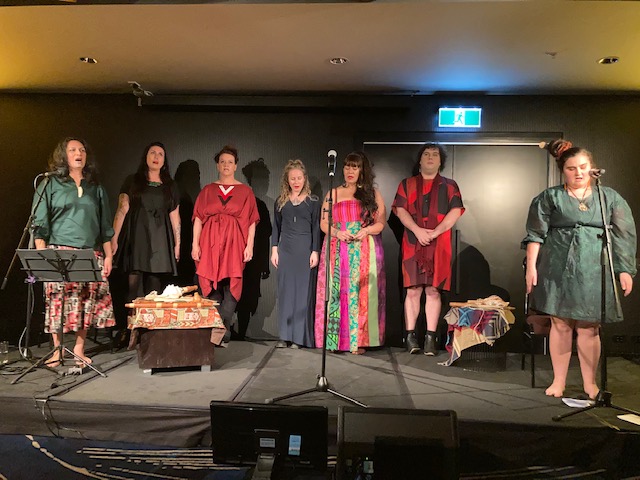
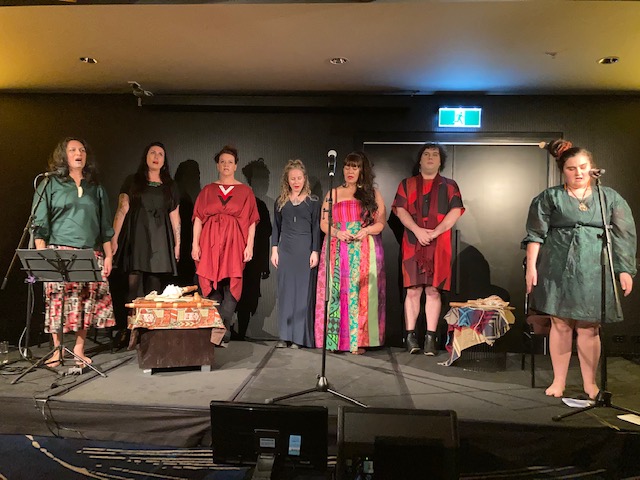
Ngā Oro Hou: The New Vibrations
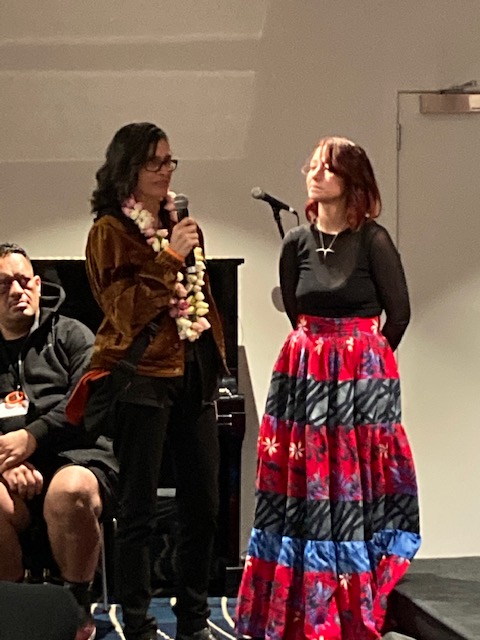
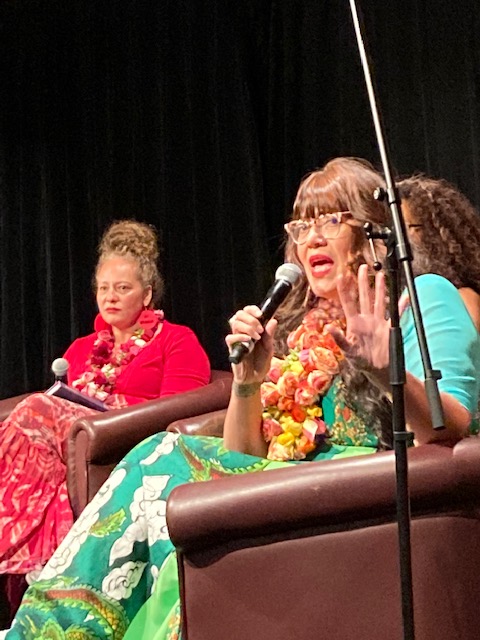
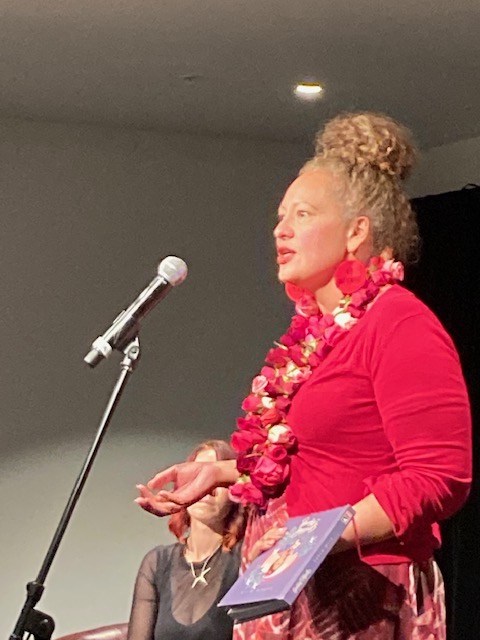
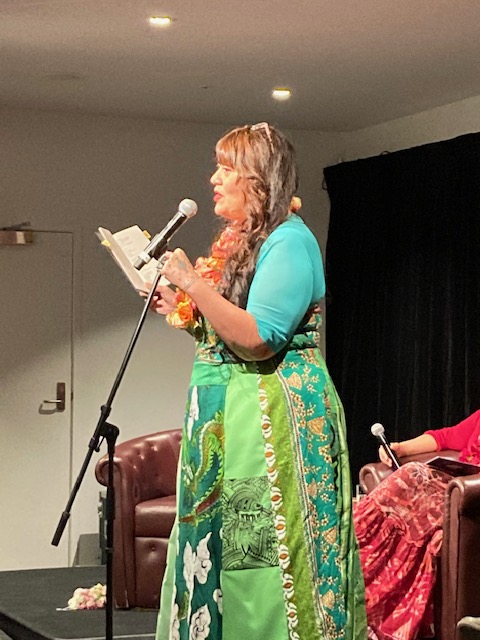
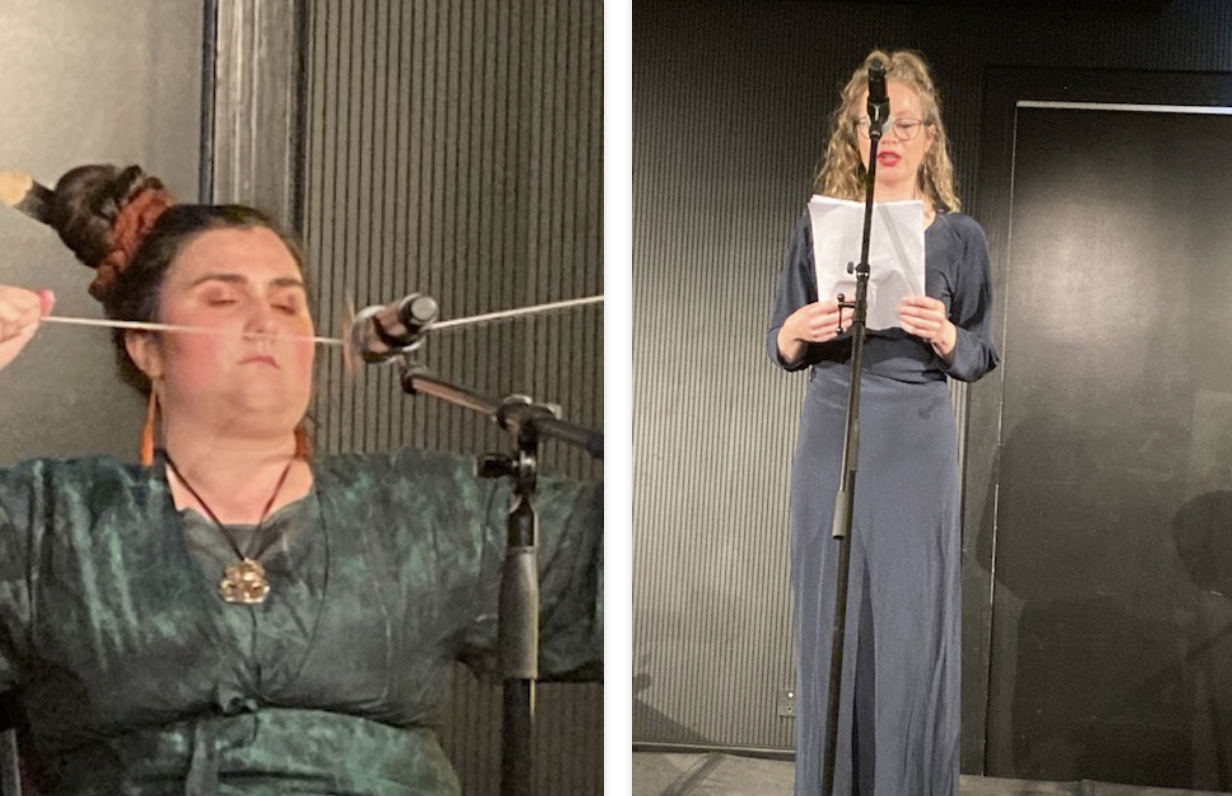
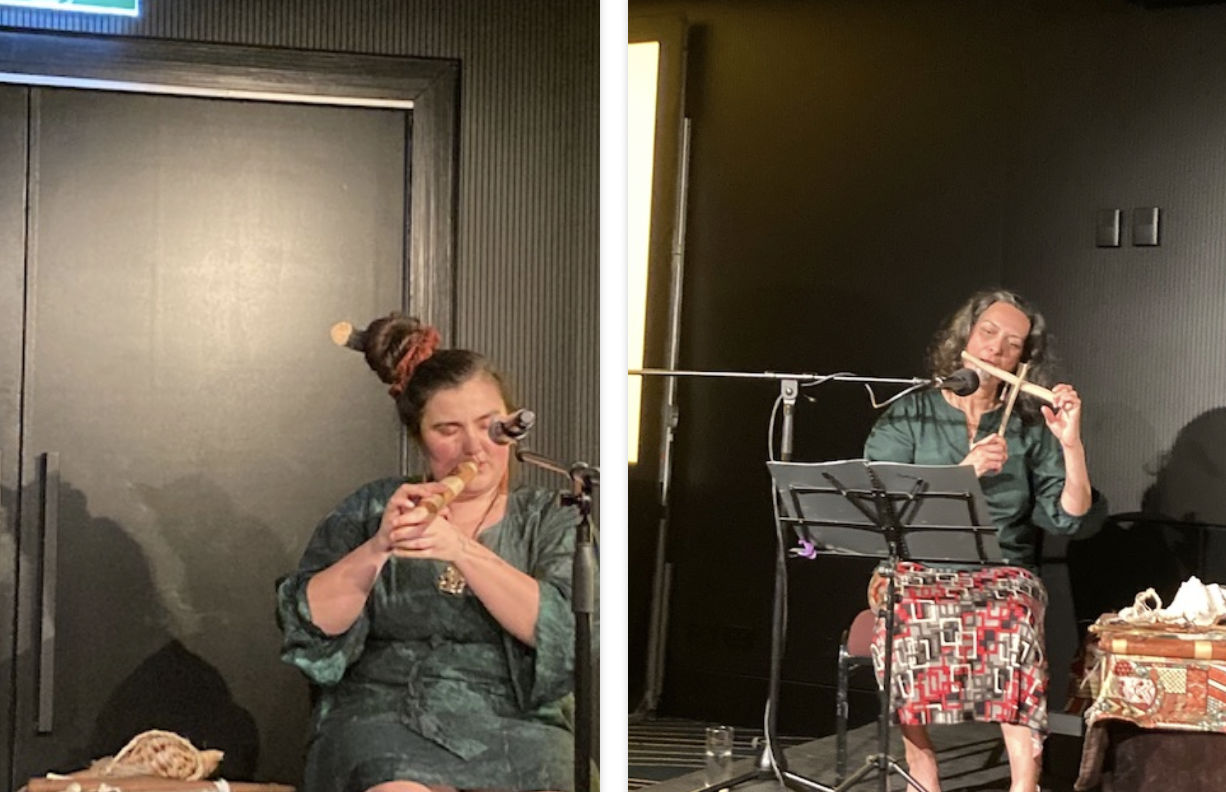
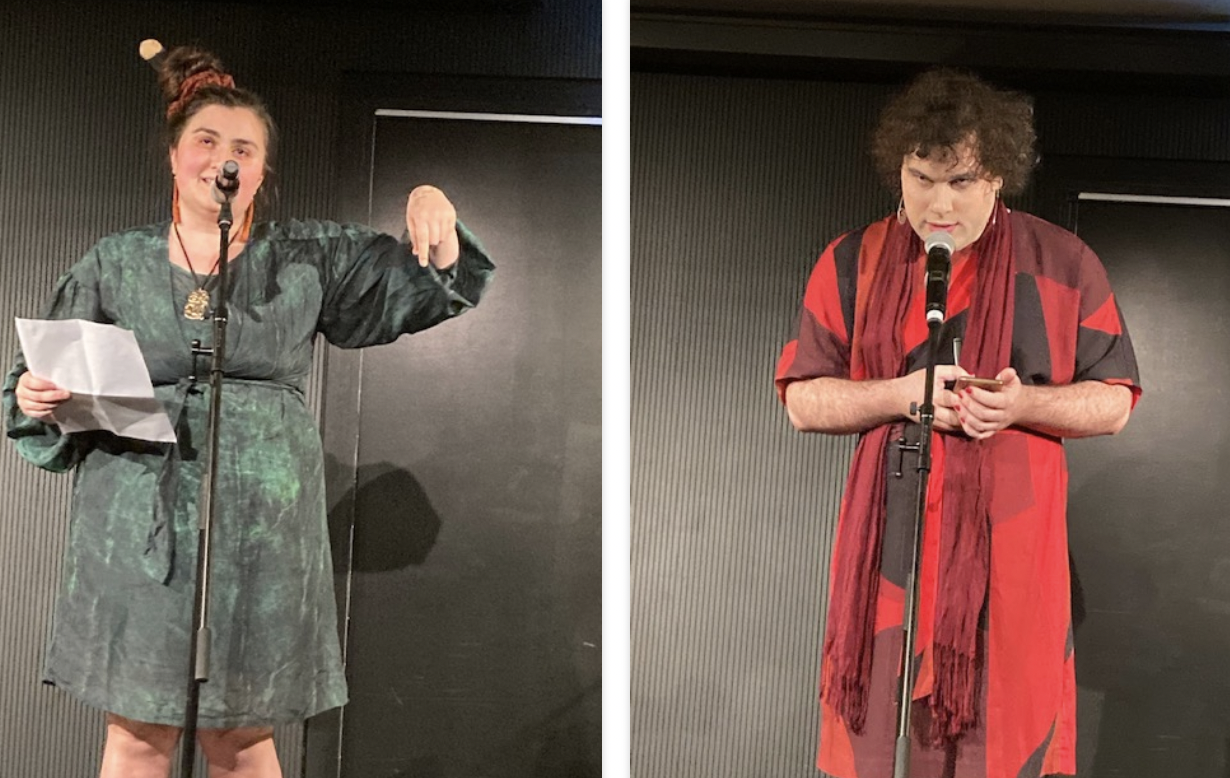
The AWF programme announced this event: ‘An exceptional evening performance that brings together celebrated writers and taonga puroro practitioners in a lyrical weaving of language and song. Writers Arihia Latham, Anahera Gildea, Becky Manawatu, essa may ranapiri and Tusiata Avia joined poet/musicians Ruby Solly and Ariana Tikao. The session was curated by Ruby as part of her Ora series.
“The words were heart penned. I sat in the front row and breathed in and out, slowly slowly, breathing in edge and curve and pain and aroha and sweet sounds. It was like being in the forest. It was like being in the ocean. It was like being wrapped in soft goosebump blankets of words and music that warmed you, nourished you, challenged you. This is the joy of literary festivals that matter. This warmth, this love, this challenge.” Paula Green
It’s been ten days and I have this sense of being mired in time I look at the clock, look away again, for what feels like a long time But when I look back, the hands haven’t moved No time has passed at all between looking away and looking back And yet a world of time has gone by I know that inside me something has blossomed and ended and all the while the hands of the clock are locked while I float in liminal time and yet I keep existing in the world My breath tied to the second hand, tick, tock, tick, tock It’s amazing, isn’t it, how when we fall asleep, we just keep on breathing, almost nothing can stop it
At night, I keep imagining that I am lying facedown in my parents’ fishpond I have an image in my mind, of my long dark hair floating on the water A small part of me that isn’t grief-stricken observes that my Ophelia complex is alive and well, even if my father isn’t I occupy my mind thinking about Ophelia’s father, who was killed accidentally by Hamlet, a man his daughter loved. Who was Ophelia’s father? His actions seem to indicate he cared about his daughter, but he was after a political match. Weren’t they all in those days. Before Ophelia died, she handed out flowers — she gave herself rue. Rue is bitter, but it has the power to heal pain. It signifies regret. She was trying to tell herself something, even if she didn’t know it
At night, there are so many stars I once read that if you have insomnia, you should count the stars until you fall asleep, so I count for a while. I don’t fall asleep, I just lose focus I stare at the stars until I’m falling into them and continuing to look at them hurts too much Because they are bright, and remote, and I am alone
Kiri Piahana-Wong
Kiri Piahana-Wong is a poet and editor, and she is the publisher at Anahera Press. She lives in Whanganui with her family.
Recently I drove into the city and went to the Women’s Bookshop and Time Out Bookstore. Carole Beu was out so I missed walking around the shop with her and getting top reading picks. I scooped up some new books and it felt crazy good to browse. At Time Out I had an inspired book chat with Manon Revuelta, got tips from manager Jenna Todd and came away with novels by Sigrid Nunez, a novelist new to me, and a Nina Simone biography. The following day I watched Carole’s regular video spot on Facebook (I love this ongoing feature) and bought the children’s books she was recommending in an instant (Dragon Skin is also a pick below!). It felt like I was back in the shop browsing with her.
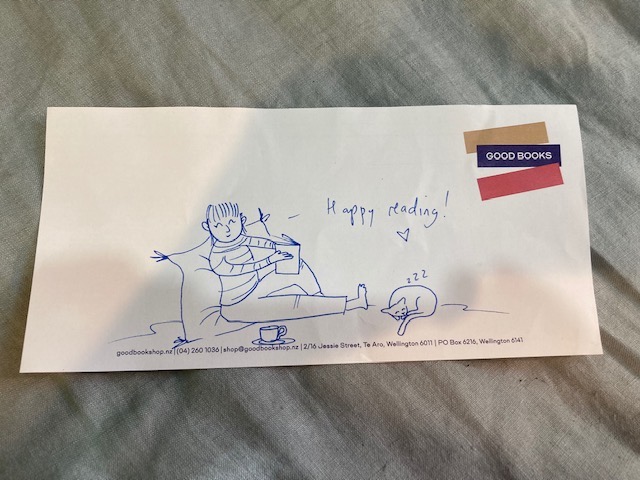
Over the past four months, books, podcasts and tv series have been my ticket out of lockdown gloom and anxiety. Add in cooking, jigsaw puzzles and gardening, along with writing and blogging, well life has been surprisingly good. I have had numerous deliveries from the excellent Good Books in Wellington, and love how they add a message or drawing, plus what the staff member is reading. I can now add Auckland bookshops to my delivery mix again, and risk rare trips to the city. Books have been my anchors, hot-air balloons, sweet escape hatches.
Driving home to the west coast – where we have had myriad places of interest, covid hot spots, gun battles and deaths, devastating floods, local destructive conspiracy theorists – I am amazed by my capacity for happiness. Books are a key thing – the fact I’ve been reading and writing intensely. Usually I post a mammoth list of 2021 poetry picks by a mammoth list of poets but decided that was too much this year. Instead I’ve invited authors who have written or produced something that I have loved to bits to share picks (posting next week).
BUT FIRST: Secondly and selfishly, to make up for missing physical bookshop visits, I invited The Women’s Bookshop, Time Out Bookstore and Good Books to share 2021 picks. Any genre. Any place. Any time. I pictured myself walking down the aisles as they gave me some top tips. As a high risk person whose vaccinations may not work as well, I am so very grateful to my online bookshops – and to your safety measures when I recently visited. Thank you.
The Women’s Bookshop Carole Beu
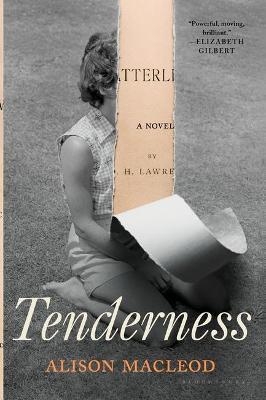
Tenderness – Alison McLeod (Bloomsbury $35) This epic, absorbing novel is fascinating for anyone interested in literature & politics. It’s a book about a book – Lady Chatterley’s Lover and the repercussions down the decades of it being declared an ‘obscene’ book. The important people are all there and are vividly drawn – D H Lawrence & Frieda, Katherine Mansfield &Middleton Murray, Rebecca West, E M Forster – – and Jackie Kennedy thirty years later when Hoover is trying to stop it being distributed in the USA. It’s about imagination and freedom, brilliantly written and full, yes, of tenderness.
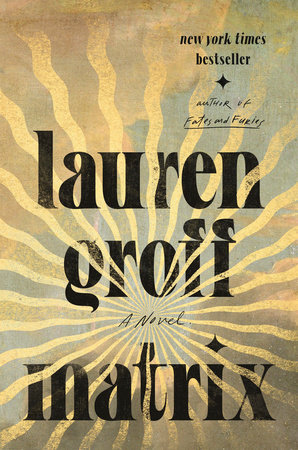
Matrix – Lauren Groff (Penguin Random House $35) Marie, tall, ungainly and wild, is not suitable for the court of Eleanor of Acquitaine. She is banished to a remote, run-down Abbey, which she spends her life transforming. She blossoms into a brilliant leader, eventually becoming the Abbess, fostering the talents, passions and creativity of the women in her care. They become powerful, self-determined, and in our modern terms, extremely feminist! It’s an inspiring and exciting read.
Good Books Jane Arthur
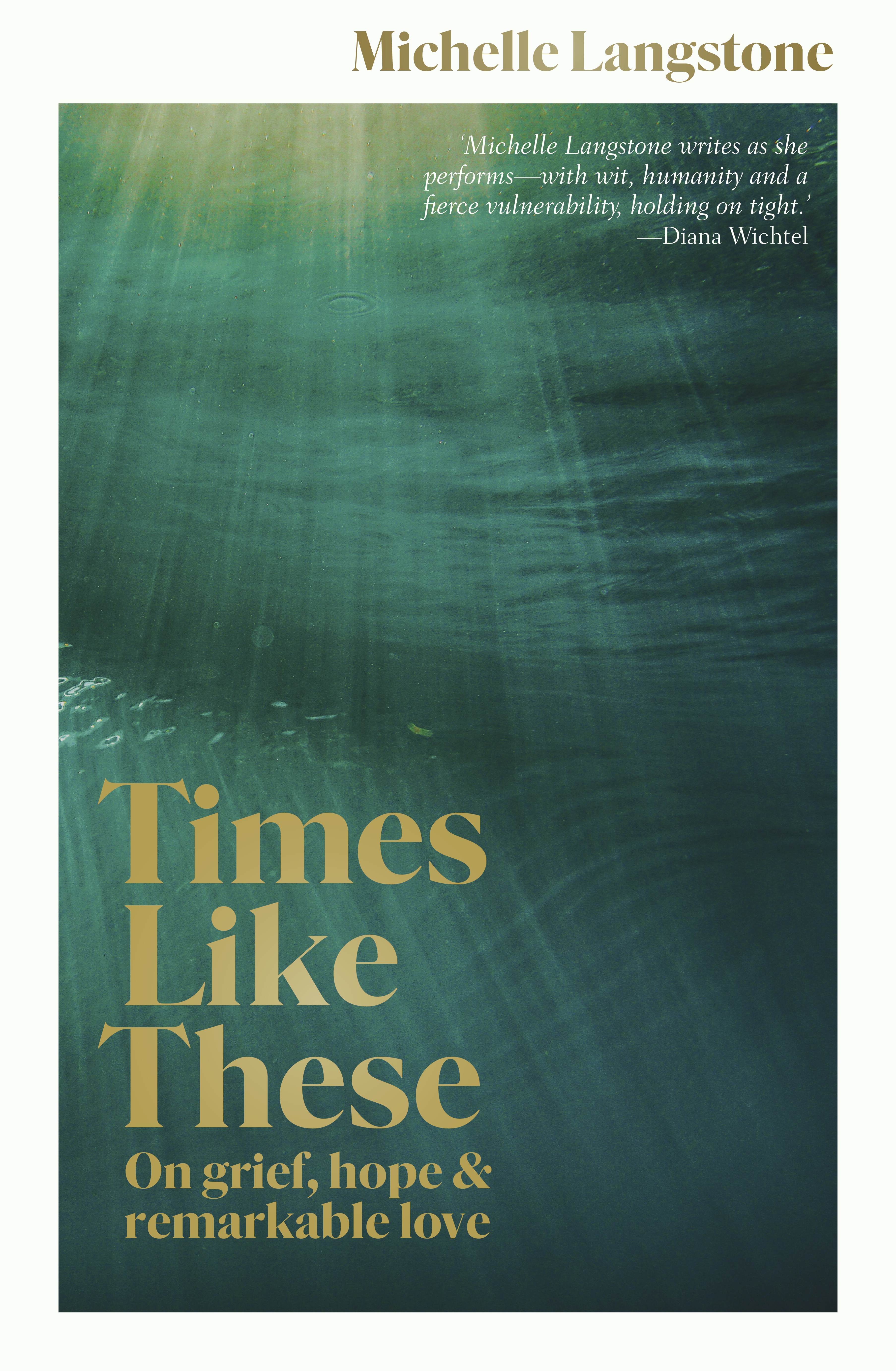
Michelle Langstone’s debut essay collection,Times Like These (Allen & Unwin, $37), is an invigorating, sensitive book that made me look at my world with more wonder. Each time I’ve sold it, I’ve been so excited on behalf of its new reader – and I’ve had terrific feedback from lots of them (including you, Paula!) thanking me for the suggestion, which isn’t something that happens that often. I’m a cynic at heart, but these earnest, loved-filled essays melted even me. I’ve read 50 books since Times Like These so I figure it must be special if it’s still with me this strongly.
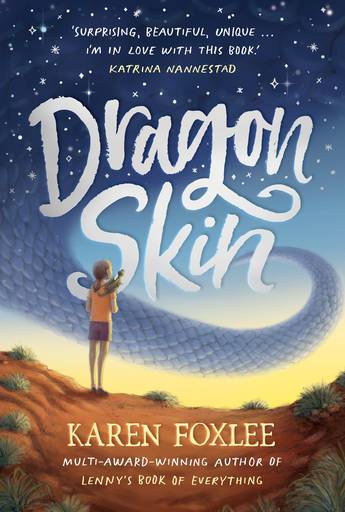
For younger readers, Dragon Skin by Karen Foxlee (Allen & Unwin, $23) is, no exaggeration, a perfect book I reckon. My colleague Freya and I both read it and whenever we talk about it, we clutch at our hearts! It’s gentle and compelling storytelling, about a 10-year-old named Pip, who is dealing with some pretty heavy stuff in her life (family violence, grief, loneliness – but don’t let this put you off; it’s all done with a beautifully light touch). Then she finds a tiny dragon, languishing in the dust of her Australian town. The book could be summed up with a statement like, “Pip saves the dragon but she also saves herself”, but it’s so much more than this and utterly rewarding to read. This is a terrific book to give sensitive eight to 11-year-olds but since it’s probably my favourite book of the entire year, full-stop, if you’re a grown-up like me, you should read it too.
Time Out Bookstore Manon Revuelta
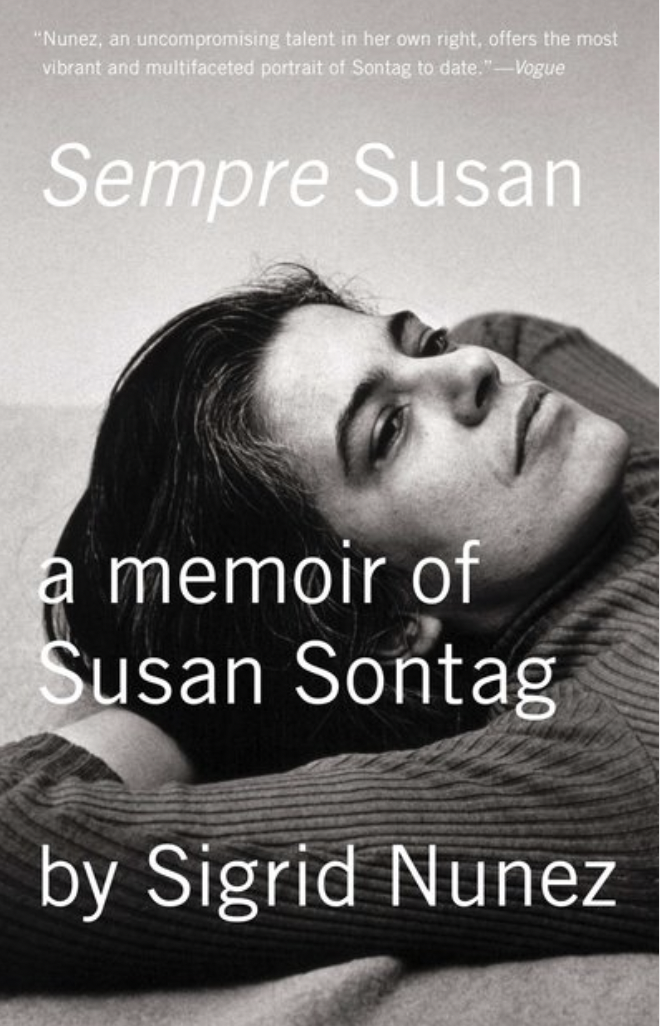
A book that really stood out for me this year was a tiny little memoir called Sempre Susan, by Sigrid Nunez (Penguin, 2015, $26). Nunez became a close friend of Susan Sontag after being hired to type up her letters in the 70s, and was also in a relationship with her son, David Rieff, for several years. They all lived in Susan’s Manhattan apartment together—a weird setup, but an incredible vantage point. Nunez looks back to that time and paints an intimate picture of the Sontag she knew, and in the way of truly interesting memoirs, a multi-faceted person takes shape: at times exasperating, at others endearing. Always dedicated to her work. The observations of her character are so intricate, they can only come from a place of love: some that have stayed in my mind include a particular green coat Susan wore for many years (the holes in the armpit seams were only visible when she hailed a cab from the sidewalk), or a joke she surprisingly found hilarious (“have you taken a bath?” “No, why – is there one missing?”). Banal yet so revealing. By proxy, we get such a lovely sense of Nunez too, from her shy and impressionable youth to her reflective and solitary older self. More than a portrait of a literary icon, this is an inspiring meditation on the art of memoir and memory, gritty love, friendship, and the writing life. I only wish it were longer!
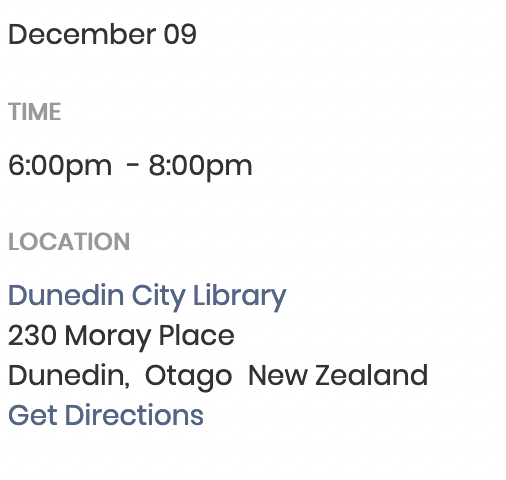
Immerse yourself in the joy of poetry, as we enjoy a late celebration of National Poetry Day, and present the Shape Poetry competition awards.
Our special guests this year include:
Majella Cullinane – Lynley Edmeades – Sophia Wilson – Richard Reeve – Carolyn McCurdie – Emer Lyons – Megan Kitching – Liz Breslin – Emma Neale – Jenny Powell – Kay McKenzie Cooke – Michelle Elvy – Victor Billot
Diane Brown MC
With music by the Bill Martin Jazz trio
Awards presented by competition judge: Carolyn McCurdie
This is a FREE event, but PRIOR BOOKING IS ESSENTIAL
The format of this event has been changed due to COVID restrictions. If you have a ticket to the earlier format of this event, we will arrange for your ticket monies to be refunded to you
Presented by Dunedin Public Libraries in partnership with Otago-Southland NZ Society of Authors and Dunedin UNESCO City of Literature with the support of Phantom National Poetry Day and University Bookshop Otago
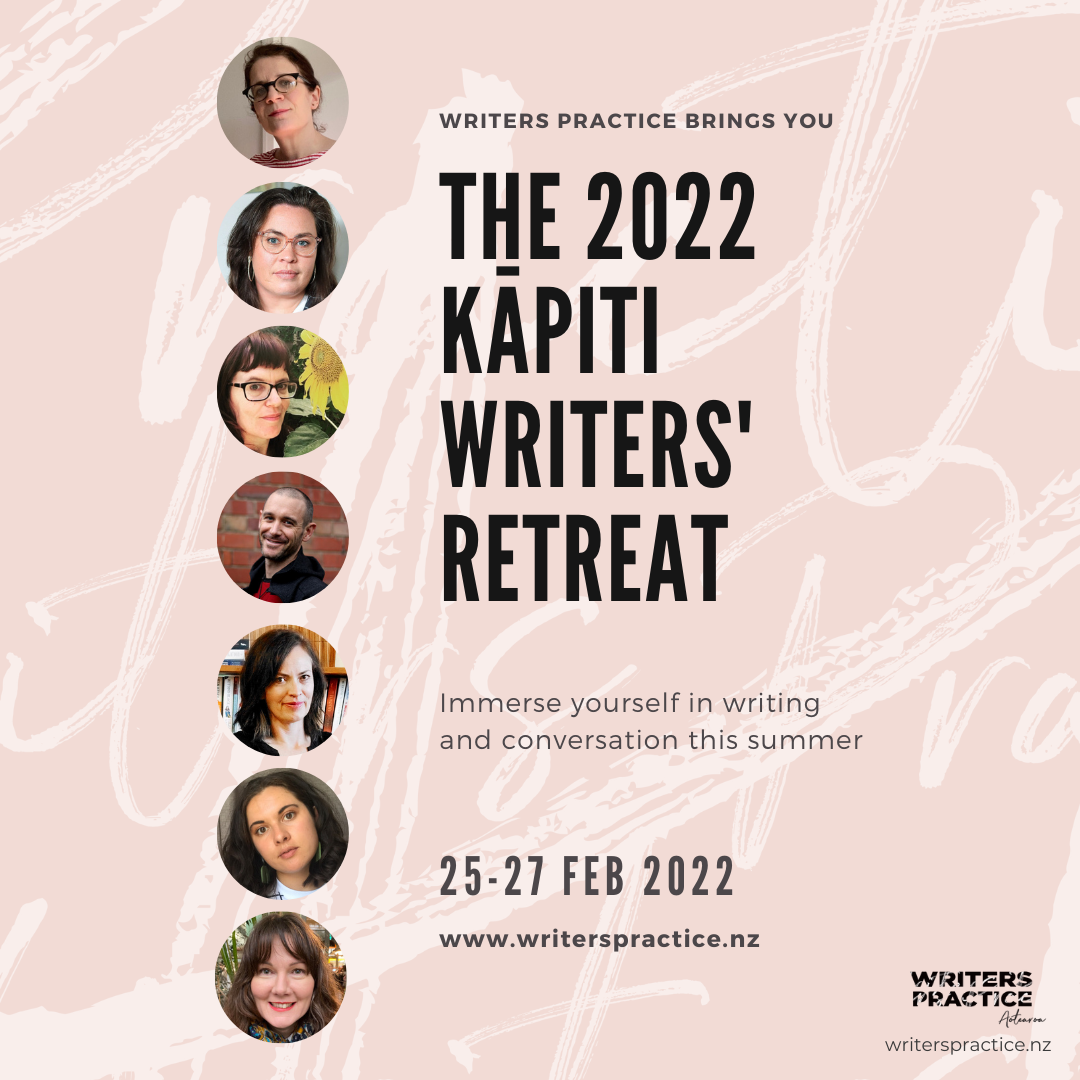
Immerse yourself in writing and conversation this summer. There’s something for everyone–whether you’re new to writing, an established writer, or somewhere in-between.
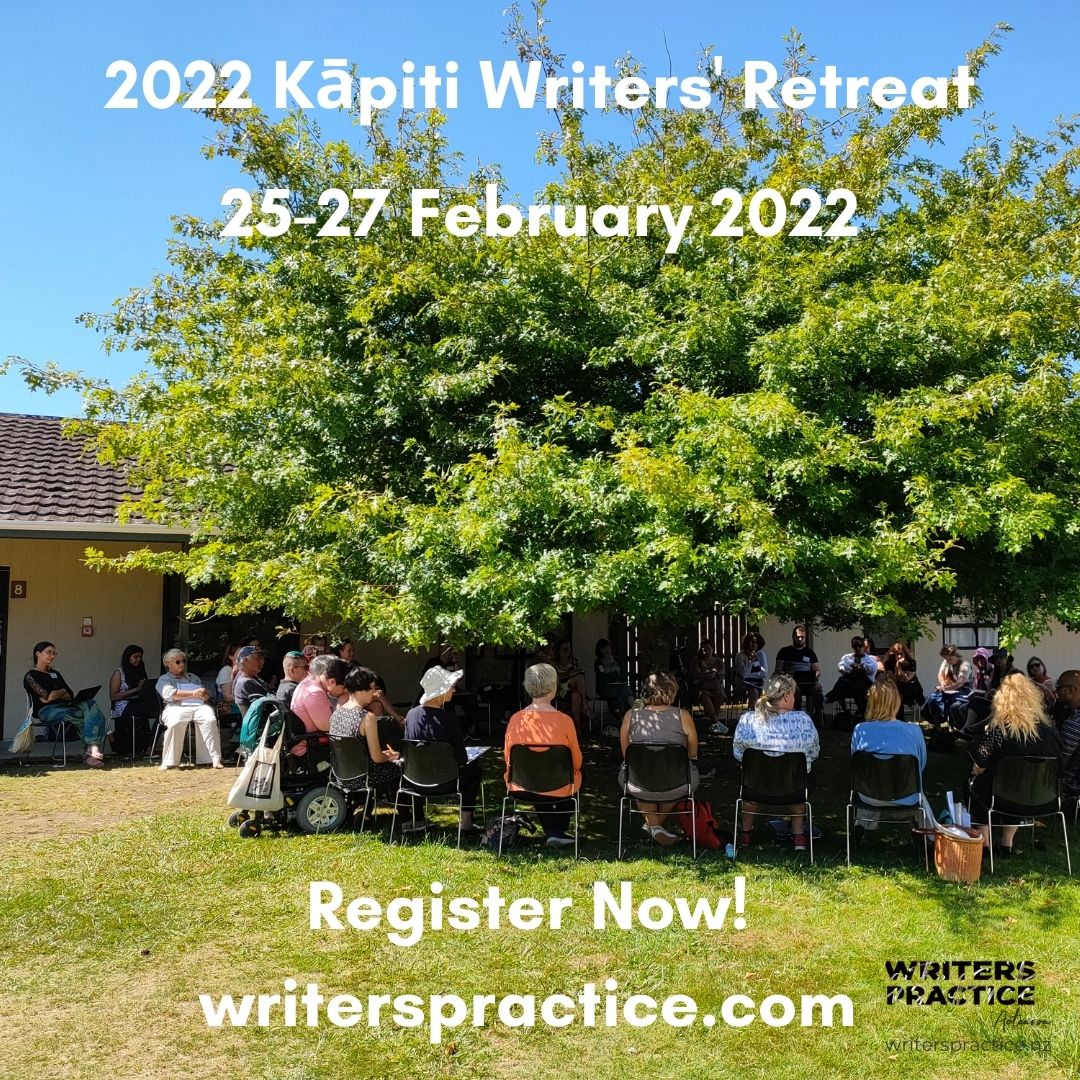
The Kāpiti Writers’ Retreat is happening from 25 -27 February 2022 on the beautiful Kāpiti Coast north of Wellington. This three-day gathering for writers encompasses intensive morning workshops, lively discussions and space to write, relax and engage with topics critical to your work.
Writers Practice is delighted to host leading writers from across Aotearoa – Chloe Lane, Gem Wilder, Helen Lehndorf, Nic Lowe, Rebecca Priestley, Sinead Overbye and Therese Lloyd – at the 2022 Kāpiti Writers’ Retreat. Each writer will teach morning workshops: in fiction, poetry, essay and responding to our current reality. In the afternoons, they will lead discussions on topics pertinent to craft and literature in Aotearoa.
You’ll find community, encouragement, and a safe place in which to take artistic risks.
Parted down the middle, his sharpened cuerpo struts out of a waspish cave in the dark
harakeke, strands bowing under a nosey Tūī eyeing the red beaned flower that’s claw-like
in lazy light. We lock eyes in glass. Feathers and flax. He stares from corners acting coy
but this is k’rd, bruh, a Queen will call you out for not looking long enough. I ruffle
the curls searching silences in the glare knowing? Not quite slow moving but watchful
the manu drops a beak at onyx arrowhead eyes forgetting forward. Down the vague grey
he walks the tui across the winking glass into a powdery afternoon, kicking up silent
dust behind them on the street. They swoop to the top of St. Kevin’s perched for a second before flying off
into the blue thin as the moon of pulotu dragging nails across the fog and Paz.
Amber Esau
Amber Esau is a Sā-māo-rish writer (Ngāpuhi / Manase) born and raised in Tāmaki Makaurau. She is a poet, storyteller, and amateur astrologer. Her work has been published both in print and online.