Category Archives: Poetry

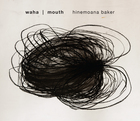
Hinemoana Baker’s waha | mouth: This exquisite collection is not so much a symphony but a set of partitas for solo violin

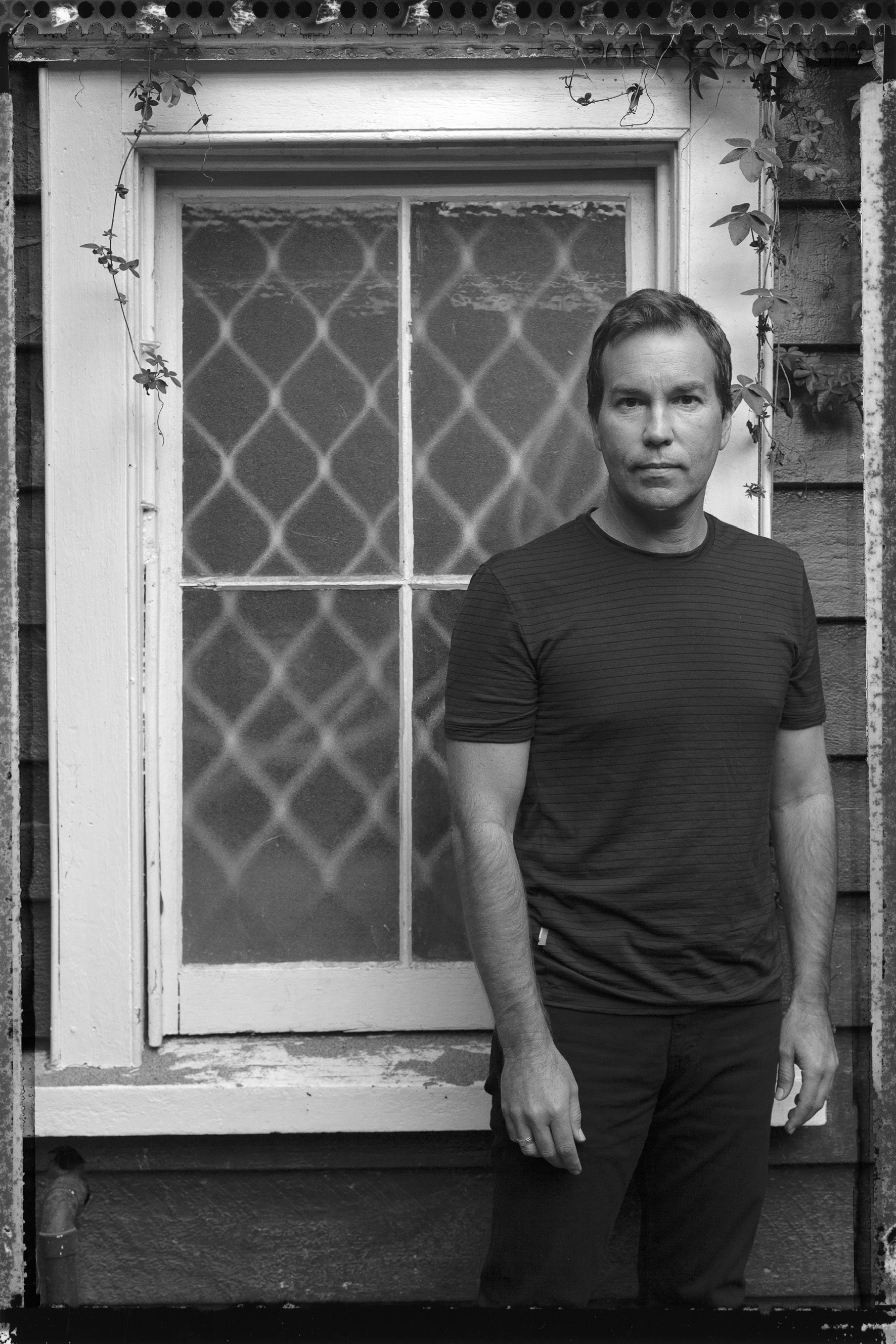
Hinemoana Baker

Photo Credit: Robert Cross

Hinemoana Baker, waha | mouth, Victoria University Press, 2014

(Thanks to VUP I have a copy of the book for someone who likes or comments on this post)

This is the self-penned blurb on the back of Hinemoana Baker’s new poetry collection and it resonated with me far more than the usual blurb content: ‘I’d like to think that opening this book to read is like standing at the mouth of a cave, or a river, or a grave, with a candle in your hand.’
waha_front__71664.1407673414.140.215   waha_front__71664.1407673414.140.215   waha_front__71664.1407673414.140.215   waha_front__71664.1407673414.140.215

This window into reading suggests you might enter the mysterious, dark depths of the cave with its labyrinth of passages, or the pull of a river’s current whether quiet or wild, or the private return to those who have left us. I adore the comparison of the act of reading to holding the light of candle to a poem where something will always remain in the dim shadows, barely sighted, inaudible.

In many ways this book is about the power of words to take hold of us, to connect us in myriad relations, to reproduce us. The first poem, with its mysterious ache and force of a single word, is followed by a family poem. In Nanna’s game, the missing words are adjectives that must be randomly supplied by the players to the gut-wrenching hilarity of all. Word in place — words out of place. In another poem, ‘rope,’ Hinemoana has used a clutch of words from the penultimate sentence of a James Welch novel as a prompt for her poem. It is as though her poem becomes a secret hyperlink that expands a word (or two) — like when you click on a word on a poem online and it opens out. In ‘eclipse,’ where she contemplates ‘his warm, dead right hand,’ individual words are intensified, made special by placing italics. They twitch and vibrate on the line as little memory beacons.

Two poems (‘part 1’ and ‘part 2’) are distorted mirror images of each other. in the splintered glass you enter the family occasion, where things shift and change in the way things shift and change over time, in the mind of this person alongside that person, in this mood alongside that mood. You move from ‘The apricot moon, and a statue, for Valour‘ to ‘The mackerel sky and a steam train.’ I love the way the two parts send a translucent bridge (an arc) over the short prose-like poems that they bookend. These latter poems follow the thematic curvature of the book as they slip from what is familiar to what is not, from being grounded at home to being grounded off shore, from anecdote to striking image. Detail matters.

This exquisite collection is not so much a symphony but a set of partitas for solo violin. Individual notes (words) resonate and linger in the ear as if to make aural chords (connections): ‘a parliament of owls, all palms but mine — bone dry, mouth full of sky and counting.’ In this example, the linking consonants, assonance and near rhyme make chords that register in a subterranean way (sky-mine, mouth-owls, owl-full, parliament-palms, but-bone). Hinemoana’s musicianship extends to the composition as a whole with its shifting tones and pitches.

Many poems stood out for me. I loved ‘there are almost no risks associated’ where the lines are borrowed from a fertility document. The poetic riff heightens the emptiness of repeated medical jargon and narratives, and the way they so often eclipse individual situations, fear and longing. I also loved the final longer poem, ‘magnet bay farm,’ which exemplifies the way Hinemoana’s collection brings together story, acute detail, and divine melody. The poem I have printed off to pin to my wall though is ‘manifesto.’ It reminded me a little of Bernadette Hall’s ‘lacework’ in the way poetry has its roots in mud and muck as much as the moon and stars (a bit like Hone Tuwhare writing poetry from and for the pub and the heavens). It is a poem about poetry with wit and humour where cats get fed and Poetry ‘sniffs at the moon/ and urinates on our suburban garden.’ This I love: ‘In public people stop to say how handsome my poem is, how playful and well-behaved./ ‘Hell that poem’s in good nick,’ they say. ‘What do you feed it?’

Hinemoana’s poems are anchored in the real world yet her poetic melodies remind you that there are other layers of reality embedded here, layers that sing and tremble in the candle light — joy, pain, recognition, trust, narratives that we inherit and carry with us. Tremendous.
LOUNGE #41 WEDNESDAY 22 October: Final event of the year in the series

MEGA-READING AT OGH LOUNGE 22 October, 5.30-7 PM
ALL WELCOME!

LOUNGE #41 WEDNESDAY 22 October
Old Government House Lounge, UoA City Campus, Princes St and Waterloo Quadrant, 5.30-7 pm

Featuring  performances by:

Eleanor Catton
Anand Changali
Wystan Curnow
Doc Drumheller
Ya-Wen Ho
Nicki Judkins
Mel Rands
Sam Sampson
Lisa Samuels
Steve Toussaint

Free entry. Food and drinks for sale in the Buttery. Information Michele Leggott  m.leggott@auckland.ac.nz  or 09 373 7599 ext. 87342. Poster: http://www.nzepc.auckland.ac.nz/events/lounge41_poster.pdf

The LOUNGE readings are a continuing project of the New Zealand Electronic Poetry Centre (nzepc), Auckland University Press and Auckland University English, Drama and Writing Studies,  in association with the Staff Common Room Club at Old Government House.

LOUNGE READINGS #39-41: 6 August, 17 September, 22 October 2014

***
Old Government House Lounge, UoA City Campus, Princes St and Waterloo Quadrant, 5.30-7 pm

Featuring  performances by:

Eleanor Catton
Anand Changali
Wystan Curnow
Doc Drumheller
Ya-Wen Ho
Nicki Judkins
Mel Rands
Sam Sampson
Lisa Samuels
Steve Toussaint

Free entry. Food and drinks for sale in the Buttery. Information Michele Leggott  m.leggott@auckland.ac.nz  or 09 373 7599 ext. 87342. Poster: http://www.nzepc.auckland.ac.nz/events/lounge41_poster.pdf

The LOUNGE readings are a continuing project of the New Zealand Electronic Poetry Centre (nzepc), Auckland University Press and Auckland University English, Drama and Writing Studies,  in association with the Staff Common Room Club at Old Government House.

LOUNGE READINGS #39-41: 6 August, 17 September, 22 October 2014

Sam Sampson’s Halcyon Ghosts: Breathless and breathtaking

SamSampsonJune2014b:w

Photo Credit: Harvey Benge

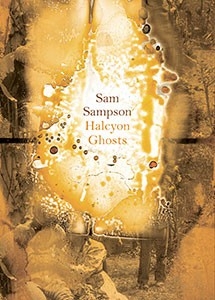
Sam Sampson, Halcyon Ghosts, Auckland University Press, 2014

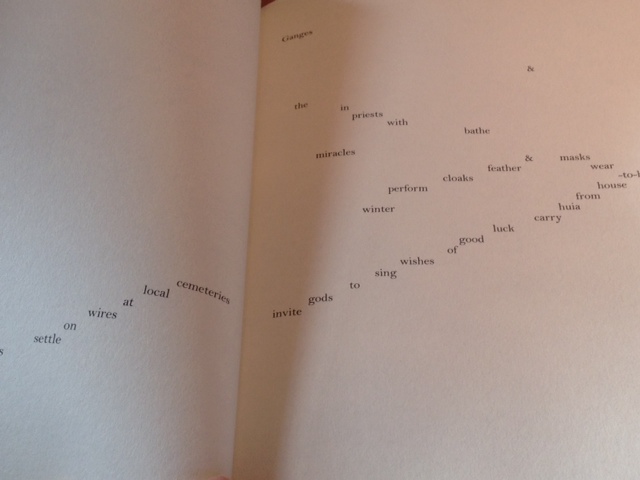
Sam Sampson’s new poetry collection, Halcyon Ghosts, brings together ‘thirteen shapes of knowing.’ It comprises thirteen poems that form various shapes or stamps upon the page. You can trace a bloodline to concrete poetry where the visual mark is as much a protagonist as the poem’s internal movement. You witness debts to the legacy of language poetry and you absorb the lyrical score. These poems are crafted by a poet who is part musician, part philosopher, part documentary filmmaker, part family archivist.

At times the physical detail is luminous — as though capturing the landscape, the living breathing world momentarily (‘white melodious throat’ ‘riparian light/ blinking on a dark field’ ‘ceramic wind chimes/ charred grape seeds’). Or snatches of action and activity whether strange or unsettling (‘picadored green people tethered to years’ ‘ghost moths generate night skermishes’). Words can be snapped in half across line breaks. These are poems caught in half-light, in fragmented sideways glances (‘to seize shadows I grab them by the sleeve’). Words zigzag across the page in discrete phrasing. Making authorial imprints. Stammering and staccato, as though this poet is out of breath, holding back, puffing out poems in little linguistic clouds.

In ‘The Kid,’ it is as though you can hear the click and stutter of Chaplin’s reels as the shifting frames catch light and dark (‘listen in-/tently to that blind/ mazy course/ running wild’). Colons are separated out to prolong the resting spots, the moment of pause (‘a mil    :       ‘). They act as little hinges, pivots in a collection where juxtaposition is a fertile device (‘Circles the expanse       expands dirt’ ‘pin-pricks of the world … name-sakes’). Such pairings provoke an oscillation of mind and eye, a semantic quiver, a visual twitch.

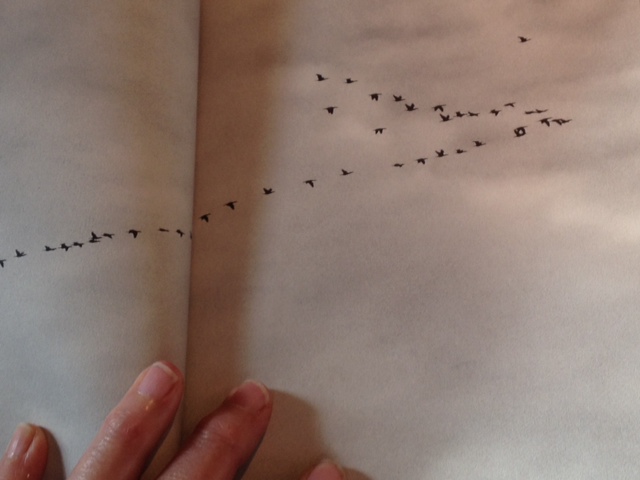
I loved the sequence, ‘Halcyon Ghosts,’ where the poem’s shapes imitate so perfectly the photographs of birds in flight upon the preceding pages. Here the words take pleasure in the measured steps of lift and fall.  These are poems of return, with the flight path etched in your mind ready to accept the swift wing beat of the bird. Glorious.

photo 3

photo 4

Elsewhere a horizon line imprinted on the page breaks a poem in two as though refracting and reflecting. Yes, the poems are visual gifts for the eye, but what instils a deeper imprint is the intellectual and lyrical movement. The language is eclectic and difficult, yet there is heart here. Life. Experience. Contemplation. Surreal twitches. Sam has refreshed the life and expectations of concrete poetry, he has a bloodline back to Language Poetry but has stepped out of its limitations and has composed a symphony in parts where words are substitutes for the musical notes of melody. Breathless and breathtaking.

Thanks to Auckland University Press I have a copy of this book to someone who likes or comments on this post (NZ addresses only).

http://www.samsampson.co.nz/

1404705398088

On the Shelf in October: Poetry Picks by Jeffrey Paparoa Holman, Hera Bird and Paula Green

Jeffrey Paparoa Holman

A poet I have become almost evangelical in promoting since discovering his work in a Paris Review interview in 2005 is the late Jack Gilbert (1925-2012). His Collected Poems (Knopf, 2012) includes The Great Fires (1982), the first of his books I bought, with one of his signature poems, Steel Guitars which ends “The heart in its plenty hammered/by rain and need, by the weight of what momentarily is”. This book is the harvest of a brave life lived deep in poetry; his work impelled me to seek him out on a visit to California, making it literally days before he died on 13 November 2012. This is what I wrote of that visit:

Jack Gilbert: Trying To Have Something Left Over.


I feel in the same way about Gilbert as I did when I came across Pablo Neruda in 1971 – here was a world I could inhabit without exhausting its gifts.

My local love of recent times has been John Pule’s wonderful The Bond of Time (Canterbury University Press, 2014). I was invited to write an introduction and spoke there of “a net of words across the Pacific”, which hardly does this remarkable and precocious epic justice. Pule was only twenty one when he composed the poem in 1985 and this is its third richly deserved appearance. Unique and essential.

Jeffrey Paparoa Holman writes poetry and non-fiction and the occasional Paparoa blog post on WordPress. He is presently working on a memoir, ‘Burning The Libraries’ and another history project to do with German family connections in the Nazi era.


Hera Bird

I never could muster much enthusiasm for the war poets, possibly because most of what we studied in secondary school was from the British canon, which I never fell in love with, and there are only so many tender battlefield reminiscences about the distant fields of the mother country you can read before returning to the New York School for a stiff drink. But I’ve recently discovered Dunstan Thompson, a gay American war poet who faded into obscurity after returning from WWII, taking up Catholicism & renouncing homosexuality. His earlier work is hard to find (although there is a selection of his later, religious poems available online) but his poetry has been criticized for inconsistency – moments of brilliance flaring into tepid endings. But read “Lament for the Sleepwalker” and tell me the half doesn’t overcome the whole:

An excerpt:

I am chilled, as though a star

Of mobs and children came by traitor’s gate

And climbed the water stair to break his neck

On the axe king’s block, all in winter sunshine.

His brain in ice, his guts in melting jelly,

As barefoot fellow bound for high-heel gallows,

Peer of the Presence like a spaniel licks

Cracked lips to ease his vomit back; then stumbles

On the ladder going up to hell.

Dunstan Thompson ‘The Prince, His Madness, He Raves at Mirrors’ in On the Life and Work of a Lost American Master D.A Powell (Pleiades Press, 2010)

The other poet whose work I’m really excited about is Danez Smith, whose book ‘[insert] Boy’ is forthcoming from YesYes Books. Danez Smith is an amazing slam poet from the states whose work I’ve been seeing reposted a lot on the internet  in response to the recent Ferguson shooting, particularly this poem ‘alternate names for black boys.’ Until his book comes out, I’ve been reading bits and pieces from his website:

an excerpt fromalternate names for black boys’

  1. smoke above the burning bush
  2. archnemesis of summer night
  3. first son of soil
  4. coal awaiting spark & wind
  5. guilty until proven dead


Paula Green

I know I review books on the blog ( I will be having quite a flurry after my Hot Spot Poetry Tour I promise!), but I just wanted to flag this as it stuck with me. Sugar Magnolia Wilson’s Pen Pal published by Cats and Spaghetti Press earlier this year. It is not so much a book as a paper-fold-out that tucks in your bag and can very neatly fold and unfold in waiting rooms. The poems themselves are letters that fold into poems and poems that fold into letters. I love the idea of the shadowy figure to whom the letters are addressed, unreachable, yet gaining in presence in the light of what the writer chooses to reveal. The letters are surprising. ‘I’ve only just started/ witchcraft so this letter/ includes some hairs.’  The hidden fold may be of magic spells as though these poems are talismans or charms that work some kind of subterranean effect upon you as you read. I love the flashes of anecdote (‘Did I tell you/ in July a meteorite fell?’ whether true or false). Every poem seems off-centre, quirky, surprising, reverberating (‘Yesterday I carried my grief tree/ down to the mailbox/ to be milled by a letter’). The letter-poem-spells come out of a childhood, a mum and a dad, with hurt and ache and back-yard digging. I highly recommend tucking it in your bag to unfold and refold and let the spells take hold.

I write to you from

the witching hour.


He is out in the night

calling to his garden –


he is a big-hearted grasshopper

licked over by the long, red

tongue of sadness.


1981892_287549788068665_2082679686_n

THE BOOK SHOW ON FACE TV TONIGHT AT 8.30PM includes a bit of poetry

The Bookman teams up again tonight with bookseller Carole Beu for another session of author interviews, book reviews and news.

Face TV is Sky Channel 83. If you don’t have Sky or miss the show then it will be linked here and here tomorrow morning. The show also screens on Thursday October 2nd at 12.30pm on Face TV.

This week Graham Beattie is talking to crime fiction author Paul Thomas while Carole chats to poet/author Paula Green.

Launch of Puna Wai Kōrero: An Anthology of Māori Poetry in English and Gregory O’Brien talks with Kim Hill

10495298_10154534174320467_8458658329711822373_o

Launch of Puna Wai Kōrero: An Anthology of Māori Poetry in English Edited by Reina Whaitiri & Robert Sullivan  (Auckland University Press)

Where: Monday, September 29 at 5:30pm

When: Waipapa Marae at The University of Auckland. Auckland.

Listen to Gregory O’Brien in conversation with Kim Hill about the book.

Visiting Gladstone School … The winning Auckland School

Gladstone School was the Auckland winner of The Third Fabulous Poetry Competition. So I am spending today and tomorrow at the school. Thanks to The Nw Zealand Book Council for supporting this competition and helping me pick the winners.

First up the Year One and Twos. Here are the poems we made up. They sat for a whole hour and were hooked on poems.

Gladstone Road Shoes

Rubber shoes
Slipper shoes
Velcro shoes
Sore Shoes
Sparkly shoes
Monkey shoes
Basketball shoes
Broken shoes
Running shoes
Dinosaur shoes
Blue shoes
Yellow shoes
Lightning shoes
Shoes are cool!

Lily

My Russian blue cat
scratches all the time
like a tiger,
sleeps and purrs
tricks,
frisky cat.

My cat likes
to eat tuna
lasagna
and cheese,
scrumple scrumple.

My cat likes
to sleep in my bed
on the sofa
on the cushions
on the table.

She does a somersault.
She brushes my tail.

My Kite

Rainbow kite
Kite flies
Fairy kite
Kite swishes
Disco kite
Kite twirls
Golden kite
Kite glazes
Butterfly kite
Kite races
I love my kite.

Three Chords and the Truth: an evening of music and poetry for grownups (The Adulterators starring Cliff Fell and John Newton)

10405635_811211578923559_549709540417482450_n
The Adulterators (Cliff Fell & John Newton) w/ Mahoney Harris
Wed Oct 8 at 7:30pm to Thu Oct 9 at 10:00pm
The Dog’s Bollix in Auckland, New Zealand

Three Chords and the Truth: an evening of music and poetry for grownups

Poem Friday: Daniel Mathers’ ‘Chain’ a sense of detachment, emptiness, time-standing-still invades its very core

SAM_0252

Chain

Bright but distant lights shining faintly from a prison
Stars in the sky as though trapped in a prism
Not a car for days and days, nothing to be seen
Long strip of short-cut grass, splotchy brown and green
Letterboxes down the street draw a wandering eye
Trees bending in the wind, way up in the sky
Lying on the road at night, breathing in the air
Nothing else to see or hear, I am all that’s there.

Bio: Daniel Mathers is a 15 year old, Year 10 student from Lincoln High School. Originally born in Melbourne, Australia, he has been living in New Zealand for the last 10 years and currently resides in Rolleston, Christchurch. His hobbies include the likes of playing video games, spending time with friends and family and making short films for his YouTube channel.

Author’s Note: I hadn’t really written any poems before I wrote ‘Chain.’ Well, I mean not any that I had put any effort into. I did write the occasional poem in English class but those were just because I had to. My inspiration for ‘Chain’ came to me on the night of my 12th Birthday. I was bored and so my friend and I walked up my driveway to the road I lived on. It was so peaceful, there were no cars around and very little light. It was so peaceful. That memory stayed with me for a very long time until I was able to finally share it through my poem, ‘Chain.’

Paula’s note: I did a workshop with a group of students at Lincoln High and I was really struck with the mood of this poem. The way a sense of detachment, emptiness, time-standing-still invades its very core. The detail that aches with both fullness and vacancy. There are the musical chords that are slightly off key (prison/prism, bending/breathing, nothing/splotchy, stars/grass). It almost felt like a sonnet cut short. And at the heart, the poet absorbed in the moment. I like the enigma of the title. The way things are linked and continuous. The way things are linked and prison-like. That whole sense of entrapment in routine and the deeply familiar. It’s a haunting and evocative poem.