
Category Archives: Poetry
Winner of Kathleen Grattan Award for Poetry 2013

Congratulations to Siobhan Harvey who is the winner of the 2013 Kathleen Grattan Award for Poetry. She was one of ninety entries. This year’s judge was Christchurch-based poet, Jeffrey Paparoa Holman. Siobhan receives $16,000. Here is the Radio NZ piece from Arts on Sunday.
New Zealand Book Council Page
Siobhan Harvey’s profile on the Random House website
Lost Relatives on Steele Roberts’ website
Siobhan Harvey on the The Poetry Archive (U.K.), featuring audio recordings of her work
Selina Tusitala Marsh’s Dark Sparring: this collection takes you to the sun and the moon and the clouds
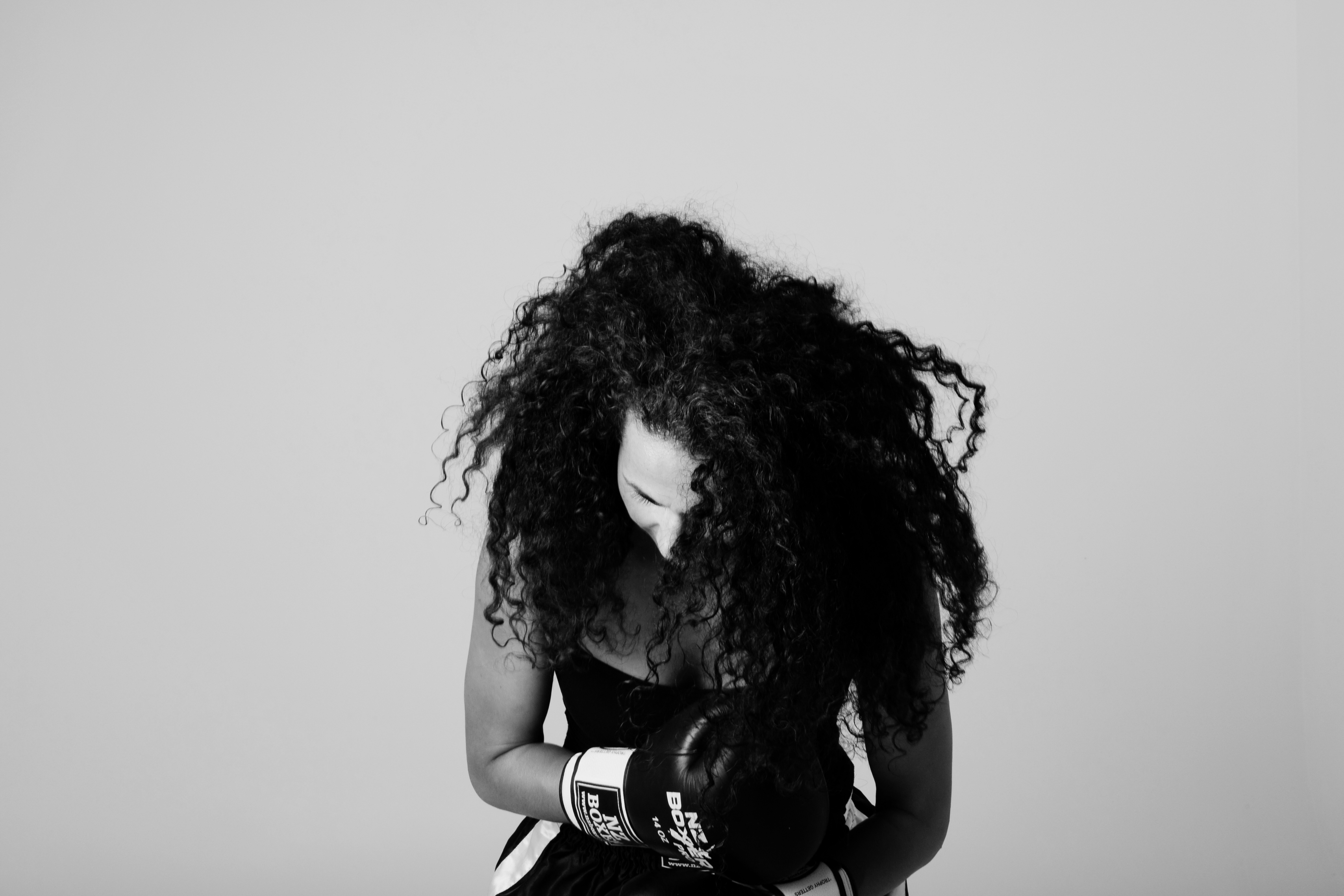
Selina Tusitala Marsh, Dark Sparring, Auckland University Press, 2013 photo credit: Emma Hughes Photography
Selina Tusitala Marsh is of Samoan, Tuvaluan, English and French descent and teaches at The University of Auckland. She was the first Pacific Islander to graduate from its English Department with a PhD. Her debut poetry collection, Fast Talkin’ PI, was awarded the Jessie MacKay Award for Best First Book of Poetry in 2010. She represented Tuvalu at the London Olympics Parnassus event in 2012.
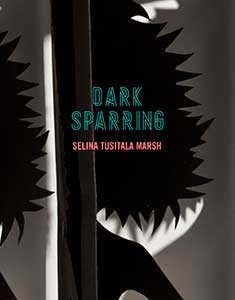
Selina’s second collection, Dark Sparring, lifts off from her debut in extraordinary ways. The poems embrace a variety of subject matter and forms, but they are held together by a voice that has grown in both strength and lightness. Selina writes out of two experiences that might seem opposed but that are equally linked both in life and on the line — the death of her mother and her adoption of Muay Thai kickboxing.
I have heard Selina perform these new poems twice in the past week or so. On each occasion, the strength of the poetry resonated in the air. At her launch, Selina was accompanied by Tim Page’s musical layerings, and she interrupted a kickboxing poem with a round or two of sparring in the room. The music and words fed upon each other with infectious energy, and the kickboxing was like a trope for the poems — graceful, startling, strong. Her performance was energised and entertaining (a definite wow factor). On the second occasion, Selina read at the Ladies Litera-Tea without musical accompaniment and without a round or two of sparring. What struck me about this performance was the way silence was a significant part of the poetry palette. The little and longer pauses heightened the emotional, personal and political kick.
The poems in this new collection embrace both the personal and the political; the former reaches out and draws you in close to private moments (a poetry of intimacy) while the latter is a voice that probes and exposes (a poetry of conscience). Both are fueled by Selina’s ear; by her attentiveness to the musicality of the line.
In the terrific opening poem, ‘Matariki,’ the poet is guiding a young writer named Matariki (who has no idea of the constellation and its meaning) in a writing workshop. The poet’s response on what to write serves as a perfect gateway into the book: ‘write what you remember/ write your lost and found/ write the toiling of the year’s grief/ write the seeding of new ground.’
Sound is always paramount. In ‘Chant from Matiatia to Orapiu,’ the words are like present-participle, daisy chains between the two locations with rhyme building the linking stems. The words zigzag down the page like bird flight or like an autobiography of movement. Then there are the single lines, without rhyme and without present participle that check you momentarily. Selina’s fondness for the present tense (a kind of be-here-now philosophy) accentuates the moment and movement.
The political poems (as with Selina’s first book) explore notions of identity, representation, genealogy, tradition, ethnicity and so on. There is always an acknowledgement of the line of writers (mostly women) from which Selina writes. Albert Wendt is there in ‘Emailing Albert.’ There is the poem about the Somali refugees that make words ache and rebound in new ways in the poetry workshop. This poem’s structure is handled beautifully so that it becomes an occasion for both poetry and politics with elegance and a sharp edge. There is the poem, ‘NZ, the Lucky Country,’ that is like a homage to here, unblinkered, incantatory, thankful. It is like a breath of fresh air.
The poems that centre upon the death of her mother, are deeply personal, utterly moving, and stall you, but they have a touch of the grace and strength of the kickboxer. These poems are highly original as Selina has moved about her boxing ring falling upon different shapes and forms to house her experience. The titles suggest this terrific movement; ’30 ways to Look at a Mother,’ ’13 Ways of Looking at Mourning,’ ‘To War with Story,’ ‘On Plagarism’ (which is after Bill Manhire and is all for killing off cancer and breaching copyright). ‘Genesis’ is like a biblical tale or parable on the origins of cancer, on cell warfare. These poems tug at you, stop you, soothe you, make you laugh out loud, and they feed empathy. In ‘A Formal Dinner,’ Selina moves you from smiling at the need to provide so much food at the funeral to a heart twinge at the absence of the table setter. These poems work as glorious symphonies of sound on the page but they also work as acute and tender tributes to a beloved.
In the debut collection, ‘Fast Talkin’ Pi,’ became a vital mantra for Pacific-Island women and women in general. In this second collection, Selina has returned to the poem by way of ‘Kickboxing Cancer’, but now the poem opens it arms wider to take in all women and a more personalised, particular woman. And then the poem holds its arms close in an intimate hug as this is a poem that comes out of love and death and loss.
Selina’s second collection lifts you out of your senses. She lifts her grief out of her body and translates it into word music on the page and in the air (there is A CD in the back). Reading this collection takes you to the sun and the moon and the clouds, and then returns you to your own patch of ground to grieve and celebrate and challenge. I adore it.
Thanks To Auckland University Press I have a copy of this book to someone who likes or comments on this post or either of the two interviews. Thanks AUP!
Poetry Shelf Interview
Auckland University Press page
nzepc page
New Zealand Book Council page
Radio NZ interview
Best New Zealand Poems here
Blackmail Press page
A poetry of reading: Pip Adam’s I’m Working on a Building
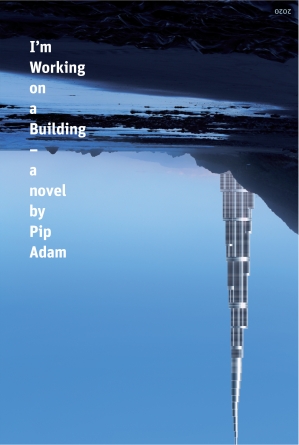
Poetry Shelf is not adverse to looking sideways and finding poetry in unexpected things: a building, an experience, a novel. Thus, I want to talk about reading Pip Adam’s new novel, I’m Working on a Building (Victoria University Press, 2013.
Within the first few sentences I was transported momentarily to Italo Calvino’s Invisible Cities. This is a book where Marco Polo diverts Kublai Khan by describing the numerous wondrous cities to him (as though they are the cities of his exotic travels). What makes these extraordinary cities even more so is the fact that they are versions of the same place. Each story is a story of Venice, reinforcing the notion that place is in the eye of a beholder, and even then, place is on the move.
Pip has not recast Italo’s fictional flower bud (each city an overlapping petal) within her own context and structure, but her novel has absorbed a ‘Calvino’ sensibility. Pip’s novel is a novel of flux, not just in the shifting, fracturing, and at times smashed cityscapes, but also in the shifting, fracturing and smashed relations. As Italo did on so many occasions, Pip has shifted and cracked the very act of reading.
The novel commences at the story’s end and then makes its way in episodic leaps to the story’s beginning. In Pip’s narrative structure, I fell upon a poetry of reading. The rhythm of story shifted in its inversion so that it became unsettling, dizzying. It was a bit like following water down a plug hole from full bath to empty bath. Yet while such an analogy might describe the initial reading experience (I always find the movement of water a little disconcerting), it does not fit the whole. The rhythm of the reading altered the revelation of character and thus the emotional, psychological and narrative effects.
Usually (and we do seem so literary-model dependent), a narrative produces an accumulation of detail and revelation that develops character, setting, themes and cultural contexts across a narrative arc. So if we proceed in the opposite direction, will that also produce character development (along with all else)? Or is it a denuding; a striping back to an early version of protagonist? Is it flower-bud fiction, where we get to see various versions of a protagonist and his or her sidekicks reflecting and refracting ( a bit like life, really)?
What I loved about this Calvinoesque reading experience was the way it imitated the way we get to know people (even our parents, especially our parents); the way we move back in time as they reveal different versions of themselves (our parents slowly reveal the versions that existed before us). Each revelation smudges and shifts the one before and then the one after.
I have used the word ‘poetry’ to signal the delight I took in this reading experience, but I could also have used the word ‘architecture’ or even ‘engineering’. Buildings, as the title suggests, play a big role in the book. Evocative buildings such as the Pompidou Centre in Paris or Dubai’s Burj or a building about to collapse in an earthquake in Wellington. Both architecture and engineering resonate in the light of the building of self; self as edifice with foundations, fortifications and points of vulnerability. Yet the building and the act of building are also to be enjoyed outside the enriching life of the trope. Pip’s novel explores how a life is built, but also how buildings come into being and are part of the lifeblood of cities. Thus the architecture of this novel (and therefore the reading of this novel) is one of complexity.
At one point a character declares, ‘It’s an empty city anyway.’ Nasif responds, ‘It’s what you think.’
This novel is not an empty city, but like the overlapping versions of Italo’s Venice, it both confounds you and astounds you. There is poetry in its reading.
Victoria University Press page
NZ Booksellers review
National Radio interview
NZ Society of Authors page
NZ Arts Foundation page
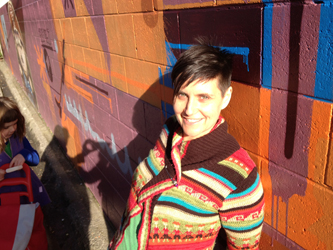
Give-away copy of One Human in Height given away
Thanks to Hue & Cry Press I put all the likes and comments of my review in a hat and pulled out Sarah Laing. Thanks for the book Hue & Cry!
My review of Rachel O’Neill’s One Human in Height here.
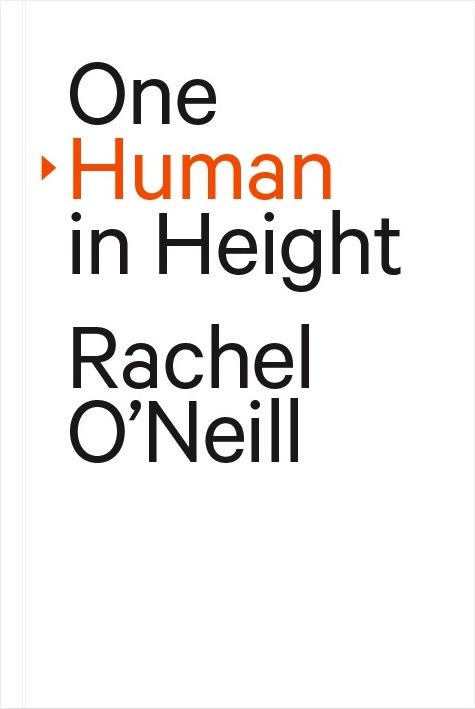
Jenny Bornholdt’s A Book is a Book is the loveliest book I have read in years

Sometimes a book arrives in the world and you know that it is a very special thing. It is a book you want to give everyone for Christmas and for birthdays and on days when you just feeling like giving someone a book.
A Book is a Book by Jenny Bornholdt (one of my favourite New Zealand poets) with illustrations by Sarah Wilkins is one such precious thing (Whitireia Publishing and Gecko Press, 2013). It is a little, hardcover book with a paper-dust jacket and exquisite drawings. It feels like it is from another age, perhaps the 1960s, so it takes me right back to when I was a young girl and I loved the magic of a new book (I still do!).
As the title tells us, this book is all about books — about reading books. Each page only has one or two sentences, but each page shimmers with wisdom, humour and truthfulness (I kept thinking that is so exactly right as I read!). Such a mix means that it is a very happy book! To sit down with a book that is so HAPPY it makes you feel HAPPY which is a very good thing.
To be honest, I couldn’t bear to finish this book for ages (in fact I left a little bit for today); like a box of chocolates I wanted to go on and on. Every page is a favourite page, but here is one I love:
‘If it’s Sunday and it’s raining,
a book is the perfect thing.
Even a small book, because
boredom can be very big.’
You will find places to read books, what to do if you don’t have a book, what’s inside books, about a -glow–in-the-dark book, games you can play with books …
… but as soon as I start to describe what the book describes, I know I have to stop because all Jenny’s word magic is gone.
This, my number-one-book-I-have-read-in-a-very-long-time book, you just have to read for yourself, and then get another copy to give your best friend. Because it is the perfect book to read when you want to feel good about life.
Thank you Whitireia Publishing and Gecko Press for the gorgeous production, thank you Jenny for the terrific words and thank you Sarah for the delicious, little paintings that are just perfect.
To celebrate my love of this book that has filled me with such book joy, I am going to host a three-week READING FESTIVAL on NZ Poetry Box starting on Monday with all kinds of prizes and surprises. If you want to paint a picture of your reading life as a child in 500 words or less let me know. paulajoygreen@gmail.com http://nzpoetrybox.wordpress.com
Rachel O’Neill’s One Human in Height: Sent me searching for a new word to signal the kind of writing that takes flight
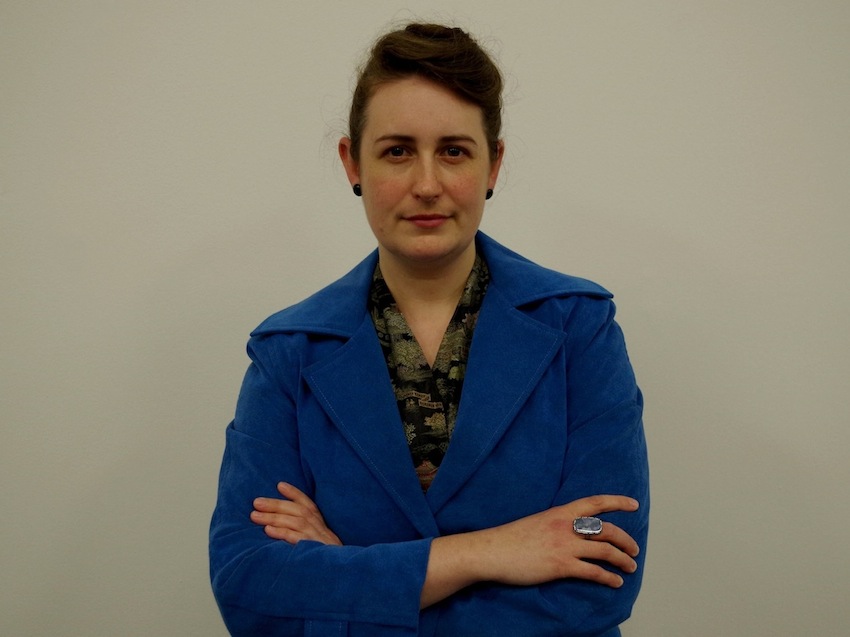
Rachel O’Neill, One Human in Height, Hue & Cry Press, 2013
Rachel O’Neill‘s debut poetry collection sent me searching for a new word to signal the kind of writing that takes flight within its pages. Yes, this is poetry that finds life in sentences, so you fall upon little prose poems (like embroidered pocket handkerchiefs on the page), but that seems barely adequate. Yes, these exquisite sentences have toes in the surreal, but again that falls short of the way each piece pivots upon an axis of the real. I think I have opted for poetry prisms.
I was reminded of an extraordinary mix of things as I read: Anne Kennedy’s debut novel, 101 Traditional Smiles, Lyn Hejinian’s sentences, Fanny Howe’s sentences, Richard Brautigan, Gertrude Stein, Gregory O’Brien’s early poetic slants with magical drops, Gianni Celati’s Narratori delle pianure (for a start).
These poems are poetry prisms because they are shape-shifters (not on the page as they maintain the uniformity of squares and rectangles). They are kaleidescopic, anecdotal, twisty, askew, stream-of-consciousness-like, uncanny, colourful, incantatory, shiny. Each poem shifted in the light as I read, so the anecdotal world became less settled, more surprising, yet never loosing its anchorage in the real.
One of the first poems, ‘Waking early in the marigolds,’ is the perfect entry into the book. The poet takes an idea and then playfully jams with it in slightly off-beat ways (the poem is about waking up in surprising places — ‘I came into the world with nothing bar a capacity for waking in unexpected places.’). It is almost (oh, at a stretch!) a metaphor for how these poems work; as perhaps these poems awake in surprising places, a little to the left of right of expectation. I loved the ending, where the poet yearns to be lying in bed ‘with some authority despite being out of my depth.’
The collection’s subject matter seems to be driven by both real life and the imagination, by a poet who is mindful of the world about her, but who is willingly to filter that world through imaginative excursions. Thus, you get transported from behind the eyelids of a man to what you tell and don’t people to someone arriving at a family reunion by parachute to a compass that is dropped and multiplied 200 million times.
Rachel’s sentences have a pitch perfect economy (‘The sea’s pale back’) that generate musical tones. The quirkiness, the off-beatness, the flashes of the surreal, however, are not embedded in skewed syntax or word choices but in the anecdotal revelations (fictional or otherwise). For me, Rachel’s graceful language heightens the narrative twists and turns.
Endings can be the ruination of a poem, but Rachel has a light touch, a surprising touch. She concludes ‘My father’s memories’ with this: ‘He shunted past me muttering, “My father’s memories,” as if every year he bore them on that stretcher down to the water.’ Rachel’s beginnings are equally nimble and fresh: ‘She sits down at the kitchen table to wait out the remainder of April.’
This is a glorious debut. These poems show the way you can hold any occasion, object, person or place in your mind and, like a prism, watch it shimmer and shine with little stories that hook tufts of truth and fabrication, self and knowing, illusions and strange kinks, and everyday bric-a-brac. I am in love with this book.
Thanks to Hue & Cry I have a copy of this book to give to someone who likes or comments on this post.
On Poetry: Emma Neale pushes against the glass walls of form
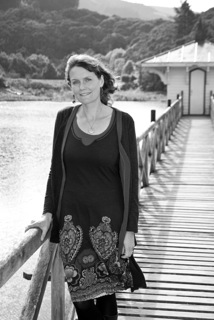
Photo credit: Graham Warman
Emma Neale has contributed this piece as part of an occasional series (On Poetry) from New Zealand writers. Emma is a Dunedin-based poet (four collections published), novelist (The Fosterling is a terrific read), teacher, mentor and anthologist. She has a PhD in English Literature from London’s University College, received the inaugural Janet Frame Memorial Award for Literature (2008), the Kathleen Grattan Award for Poetry (2011) and was the 2012 Robert Burns Fellow at the University of Otago. Her poetry is steered by a deft pen, a pen that embraces family as much ideas, and music as much tropes. She writes out of empathy for the world (both universal and particular) and her poems divert the intellect and hook the heart. Her poetry to date cannot be aligned solely with family preoccupations, but her family poems are some of the best I have read. This line from ‘No Time Like the Present’ could also be a cue to her poetry writing: ‘No present like time/ to follow thought’s curving rivers.’
On writing a villanelle
When I teach a second-year poetry workshop at the University of Otago, I try to set the students at least two exercises each semester that are new to me, too, to keep my teaching fresh, and to put myself back in the hot-seat: a writer is only as experienced as the new form they’re trying, and I think it’s important to remind myself just how daunting composing-to-deadline can be – not to mention the process of having a first draft read in public.
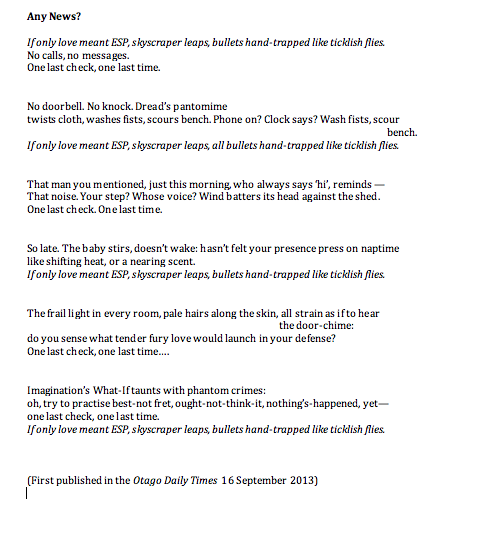
This year, one of the classic forms I set was the villanelle. I’ve read dozens, but had never tried to write one. The students turned up some good examples, ranging from comic commentaries on poetry itself (Nicola Thorstensen) to whimsically lovelorn (David Cooper). For many of them, it seemed as if writing within these strict constraints actually altered their work for the rest of the semester: it clarified and tautened even their attempts at free verse and/or concrete and in one case, digital, form. It was a prime example of the way form and structure actually give energy to the ideas and words, rather than binding them too tightly. As we might hear the drives of the wasp trapped in the jar more clearly than if the jar weren’t there: the force of the emotion or argument pushes hard against the glass walls of form.
When I started to tackle a villanelle, I initially wanted to write about a fictional character with OCD, based on a young girl I saw in a documentary years ago. I thought the repetitive structure would be useful to capture that stuckness, that inescapable treadmill of obsession. There’s only a skerrick of that in the poem still. It very quickly took on a real world anxiety, about a specific event, rather than being about a psychiatric disorder as such. (Although I’d like to try it again for that purpose.)
Initially I found it hard not to try to work in a kind of narrative progression: but soon saw that the stasis — even in the closure — would be a much better expression of anxiety than writing in a point of release, relief, uplift, psychological shift (even worst-fears-realised) would have been.
The technicalities of finding rhyme or half-rhyme gave the process an unexpected buoyancy: it’s like a kind of verbal orienteering, a happy, almost spatial problem solving. I knew I was meant to repeat two refrains and really wanted to stick with ‘one last check, one last time’ – only to belatedly realise that ‘time’ has a very limited range of potential rhymes. It also meant I had to cheat a little, and use assonance instead of perfect end rhyme, or even half rhyme, for the first and third lines… can we call assonance quarter rhyme?!
The title was a bugbear. I’ve already published a poem called ‘Traveller Overdue’ which is about separation, fear of loss, and a loved one at risk, although it’s in open form and uses mimetic typography — rather than refrains and rhyme — as its way of trying to embed presence into the white void of the page. ‘Overdue’ kept coming back, like an unpaid fine addressed to the wrong person, and I had to keep sending it away again. I tried about 8 different options: all yuck yuck yucketty yuck. Finally, hooray, when imagination’s account is in the red, along come the rich funds of Roget’s Thesaurus – and the phrase ‘Hold the Line’ seemed to arrive with a slap to the forehead. The reference to the phone line, the life line, the poetic line, all seemed perfect: but then I realised that friend and colleague Sarah Broom’s posthumous collection Gleam contained a sparse, moving lyric called ‘Holding the Line’. The loss of Sarah to poetry, and the publication of her collection, both seemed too recent for me to have a similar title, even as a tribute to her. I needed a title that would still evoke a sense of expectation, suspense: without falling either way. Although ‘Any News?’ loses the reflexivity of the other choice, perhaps the fact that it’s also more demotic helps to get that sense of visceral dread more, once you’re into the cyclical doubts of the poem.
I think when I try the form again, I’ll work harder at getting that separate aphoristic quality into the two refrains. When they repeat so often, it would seem logical to make them rich, complex, mysterious, perhaps, so that revisiting them is endlessly compelling. (Although monotony may sometimes be the mood the poet wants, of course, if the subject matter is about endurance.) There’s a much closer relationship to song than the sestina and pantoum, the other closed forms I’ve most enjoyed writing before. Even though I knew that intellectually, from reading other villanelles and reading about the villanelle, there is nothing like moving the mind around within the architecture of a poetic form for us to really know the possibilities of its psychological space and aesthetic effects.
Emma Neale’s blog
New Zealand Book Council page
University of Otago Press page
Steele Roberts page
New Zealand Electronic Poetry Centre page
Interview with Emma Neale published in The Listener, April 26-May 2 2008 Vol 213
Emma Neale’s Random House profile
Feature in Otago Daily Times
Selina Tusitala Marsh talks to Poetry Shelf (Part 1): It is my voice as woman, kickboxer, and Pacifican
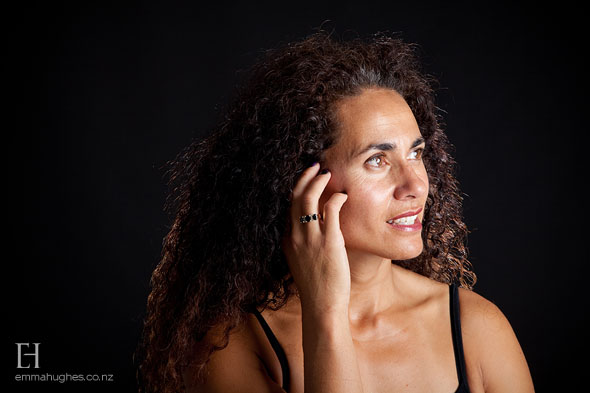
Selina Tusitala Marsh is of Samoan, Tuvaluan, English and French descent. The first Pacific Islander to graduate from the University of Auckland with a PhD in English, she now lectures in the Department. Her debut collection, Fast Talkin’ PI (Auckland University Press, 2009), won the Jessie MacKay Award for Best First Book of Poetry at the NZ Post Book Awards. Selina represented Tuvalu at the London Olympics Poetry Parnassus event. Her second collection, Dark Sparring (Auckland University Press, 2013), is to be launched in Auckland tonight. Selina is a strong role model for emerging poets and writers in our Pacific communities, through the poetry she pens, the courses she teaches, the ideas she circulates, the writers she mentors and the schools she visits.
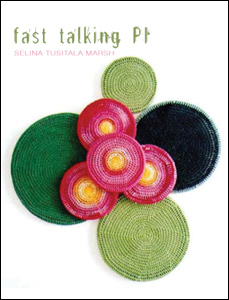
Selina’s first book has two lives — on the page and in performance. For some poets, one is a dilute form of the other, but with Selina the strength in one is the strength in the other. Her voice is, as her poetry underlines, a voice in a long line of women writing, and in particular Pacific-Island women writing. She acknowledges her literary forbears. Her voice is sweetened with musical honey, but it is also unafraid to bite as she questions her place in the world. The long poem, ‘Fast Talkin’ PI,’ has captured the ears and hearts of festival goers around the world as she pulls us into the thick of what it means to be human. This list of what a woman can be and do (in debt to Anne Waldman) is a song in the ear, an infectious beat and rhyme momentum and an act of liberation from straightened stereotypes — and it gets under your skin. Selina has the courage to speak out, and her ideas are not veiled beneath hint and allusion, but as she speaks, you get the textured delights of poetry. Like several New Zealand women, Selina is showing that Performance Poetry (or Spoken Word Poetry) is a vital part of our poetry culture. It exists in a spectrum of subtly, passion, politics, heartbreak, musical chords, love, connections, word play, autobiography, body dance, tradition and experimentation.
In celebration of her new book, Selina kindly agreed to be interviewed by Poetry Shelf. I will post a review of Dark Sparring next week. The Photo Credit is Emma Hughes Photography. Thanks to Auckland University Press, I have giveaway copy of Selina’s new book for someone who likes or comments on this post or the review I will post next week.
The Interview:
Did your childhood shape you as a poet? What did you like to read? Did you write as a child? What else did you like to do?
I’ve never mentioned this before but when I was young my dad, who worked in a stainless steel factory, made us kids a stainless steel slide. My favourite past time was to lie, tummy down, on the slide and peer into the warped face staring back. I’d also stare at the reflected warped sky, birds, trees, other people, but mostly this face that was mine and not mine. Then I’d sing and chant to this other self. I think, without getting too psychoanalytical, that those endless hours went some way to being conscious of me as other, and of my words as potentially independent of myself. Something that exists beyond my body and is emitted through another body that looks somewhat like me but isn’t me. That duality continues through life. I’m an incredibly social person and yet, need time alone, and enjoy deep one-to-one friendships. I also used to while away entire Saturdays reading books in bed, pretending the backyard fence was a horse (and riding it), and got really good at Galaga at the corner takeaways.
Did university life (as a student) transform your poetry writing? Theoretical impulses, research discoveries, peers?
Undoubtedly yes. Because it gave me books, books from all over the globe and introduced me to the world of post colonial theory where marginalised voices were recognised and given space to flourish. It gave me a lens with which to view the gaping absence of voices like mine – Pacific, political, raw, performative. In terms of being exposed to New Zealand poetry, it was Hone Tuwhare’s gutsy voice and concrete grindings of the line that got me excited, as well as Sam Hunt’s embodied lyricism and bardish behaviours! These poets thrilled me because they made poetry relevant to my way of being. Yet, I didn’t write in response to anyone else’s poetry, that is, it didn’t feel as if poetry with a capital ‘p’ belonged to me until I met the words of black American women poets like Maya Angelou and Audrey Lorde. And coming across the black feminist theory of bell hooks was also a game changer. Suddenly the right to write and claim space was not only an option, it was a responsibility, not only to one’s perceived community, but one’s self.
When you started writing poems as a young adult, were there any poets in particular that you were drawn to (poems/poets as surrogate mentors)?
The earliest poem I can remember being enamoured with was ‘The Highwayman’. It simply stunned me and I became obsessed with its drama, sacrifice, violence, and redemption, along with its haunting clip clopping rhythms. I had an illustrated book of poems and its picture also haunted me. All the other poems in the book were babyish in comparison. This was adult and therefore, a real poem!
Your poems are as alive on the page as they are when you perform them. They draw upon a passionate engagement with life (there is heart at work), but they also have a political edge. Plus of course there is the vitality of sound — from repetition to rhythm to rhyme. What are key things for you when you write a poem?
I guess it begins with movement, like, something has to move me emotionally, intellectually, spiritually. And then it has to fit right in my mouth, which doesn’t necessarily mean it must rhyme, but that the words must be able to mill about together on the tongue. Fitting in the mouth and on the tongue often means that the words dance with each other, shadowing each other’s rhythms. Juxtapositions are important in order to disrupt expectation and widen the reading audience. For example, what happens when Muay Thai kickboxing, a traditional Tuvalu dance, and grief move together in the same space, on the same page? And then a poem has to move someone else. The most gratifying response to a poem I’ve received lately was when I penned the long poem ‘Kickboxing Cancer’ on the walls of the old Waiheke Police Station holding cell (converted into the Waikare Maori Art Gallery). It’s four walls became the four sides of a boxing ring. Janine, the curator, told me about a couple of tourists who came to see the exhibition. The husband couldn’t get his wife to leave. For a good half hour she sat in the cell reading and weeping. That’s gratifying.
What PI poets might not have come to our attention that you would recommend?
Grace Teuila Taylor launches her first collection, ‘Afakasi Speaks’, published by *, in Hawai’i. She is a stunning Niu poet able to bridge the page with the stage and back again. She co-founded the South Auckland Poets Collective, gives back to the community, is sensitive, strong and humble. I love Grace and her work. She really demonstrates how poetry can be an emancipatory vehicle in so many ways.
Do you think your writing has changed since your startling debut with Fast Talking PI? For example, how does your new collection link back to that? And then move away from it?
The signature poem in Dark Sparring is ‘Kickboxing Cancer’ and is a distant cousin to ‘Fast Talking PI’. They both echo Anne Waldeman’s ‘Fast Speaking Woman’ – the bones are there in both. End line repetition, its chant aesthetic, the reclaiming ‘I’ – it’s all related and ‘Kickboxing Cancer’ is a return to the woman- centred focus Waldeman began with. Its Pacificness is less overt, which isn’t a bad thing. It’s more implicit in the tone, mood, and empowering politics of the piece. Subtle references to Tangaroa (Maori God of the Sea) and Tagaloa (Samoan Supreme Being) are made but a Pacificness pervades the entire piece – it is the centre, not the margin – it is my voice as woman, kickboxer, and Pacifican!
Auckland University Press page
nzepc page
New Zealand Book Council page
Radio NZ interview
Best New Zealand Poems here
Blackmail Press page
The winner of Lousie Wallace’s Enough, thanks to VUP
Thanks to Victoria University Press, Poetry Shelf has randomly selected Emma Neale to receive the giveaway copy of Lousie Wallace’s Enough.
For my review see here.
More giveaway copies of new NZ poetry books coming up in next few weeks as I post reviews.
 NZ Poetry Shelf