Author Archives: Paula Green

Poetry Shelf celebrates the Ockham NZ Book Awards Poetry Shortlist: Nafanua Purcell Kersel picks some favourite things

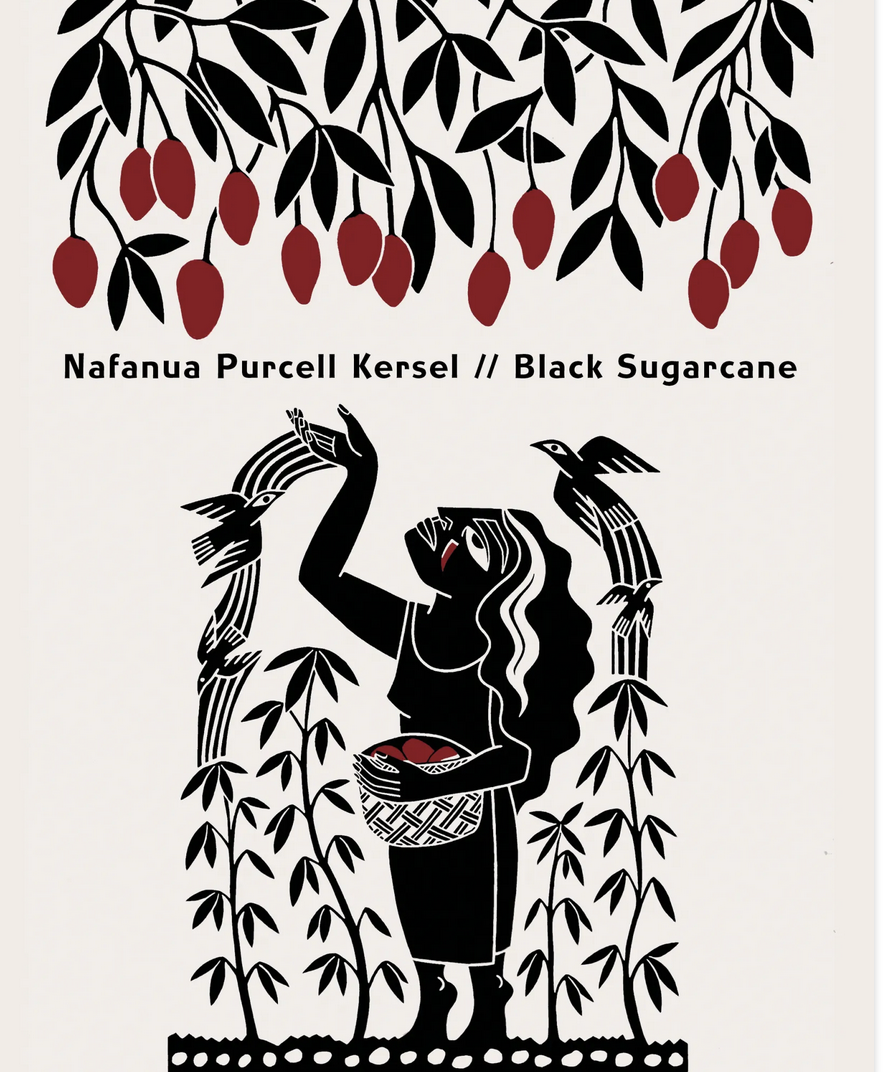
Black Sugarcane, Nafanua Purcell Kersel
Te Herenga Waka University Press, 2025

“Let me say this. There is no shortage of poetry books published in Aotearoa this year to love, to be enthralled and astonished by. We need this. We need these reading pathways. Sometimes I love a poetry book so much I transcend the everyday scene of reading (yes those bush tūī singing and the kererū fast-swooping) to a zone where I am beyond words. It is when reading is both nourishment and restoration, miracle and epiphany . . . and that is what I get with this book.”

Paula Green, Poetry Shelf, 2025

To celebrate placement on The Ockham NZ Book Awards poetry shortlist, I invited the four poets to choose some favourite things. Second up Nafanua Purcell Kersel.

Nafanua Purcell Kersel chooses favourites

Four photos
(a favourite object, place, book cover, album)
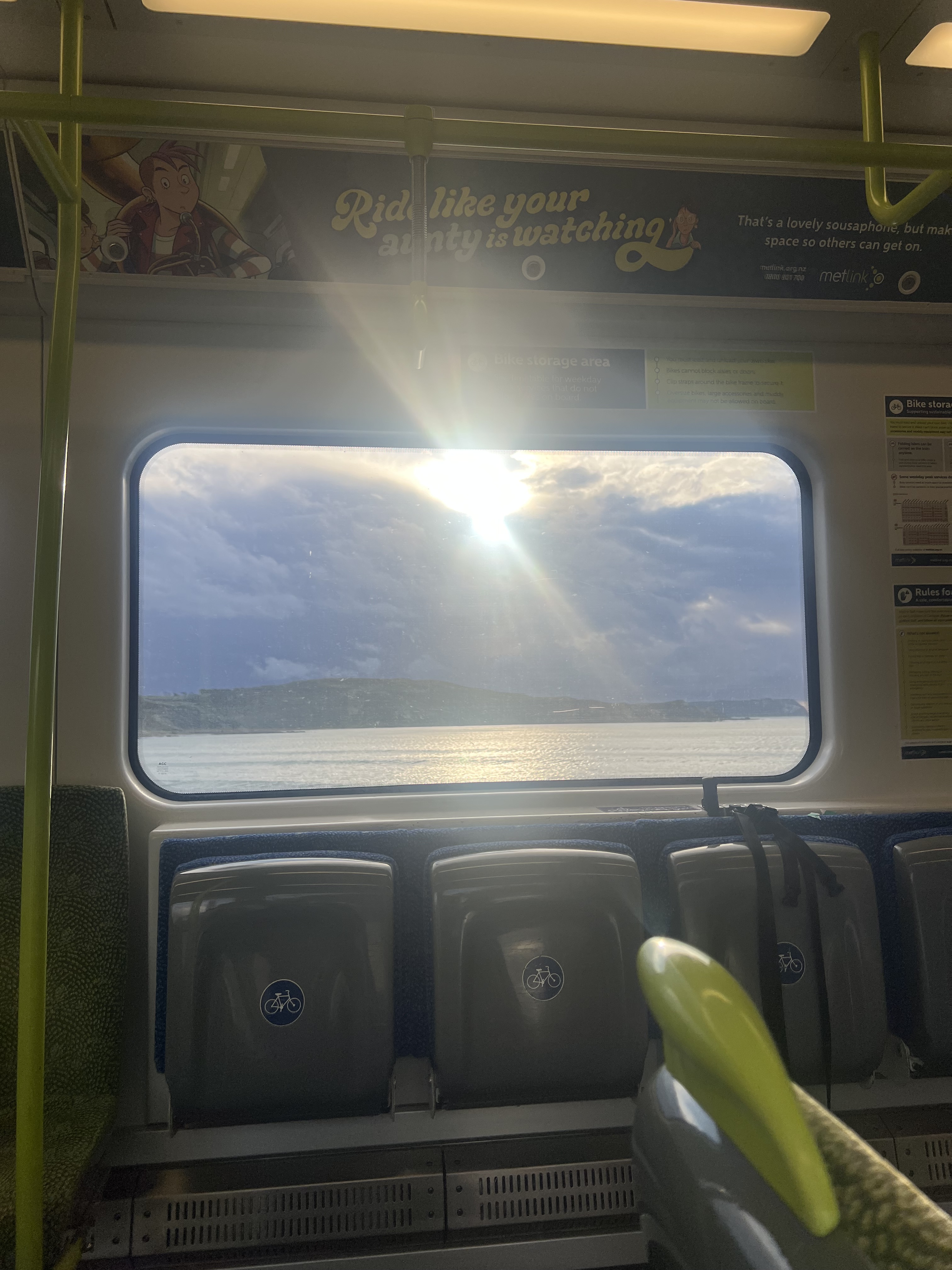
A favourite thing is a seat with a view
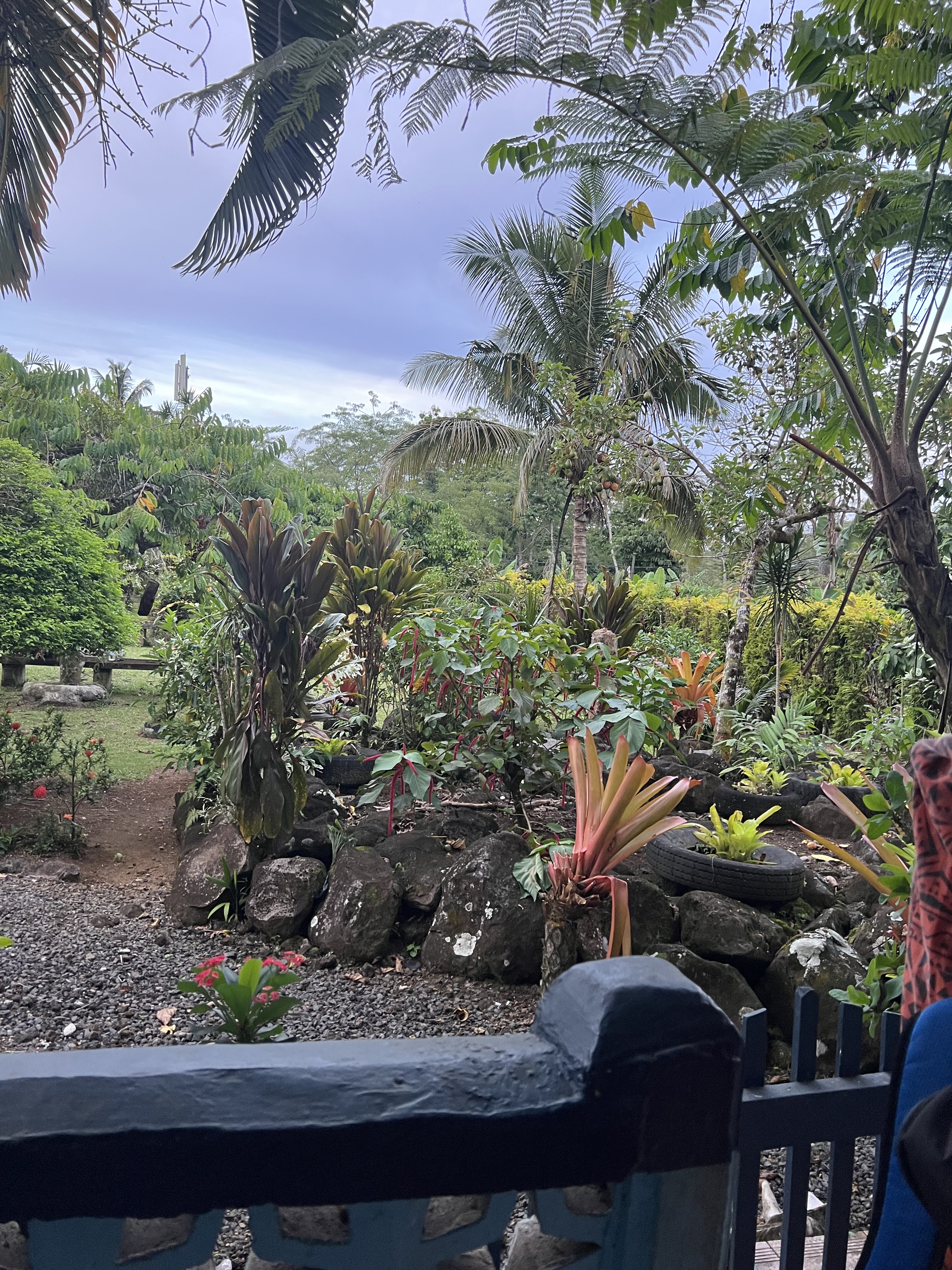
A favourite place is the ‘blue corner’, our family coffee spot on my Mum and Dad’s front porch in Sāmoa.
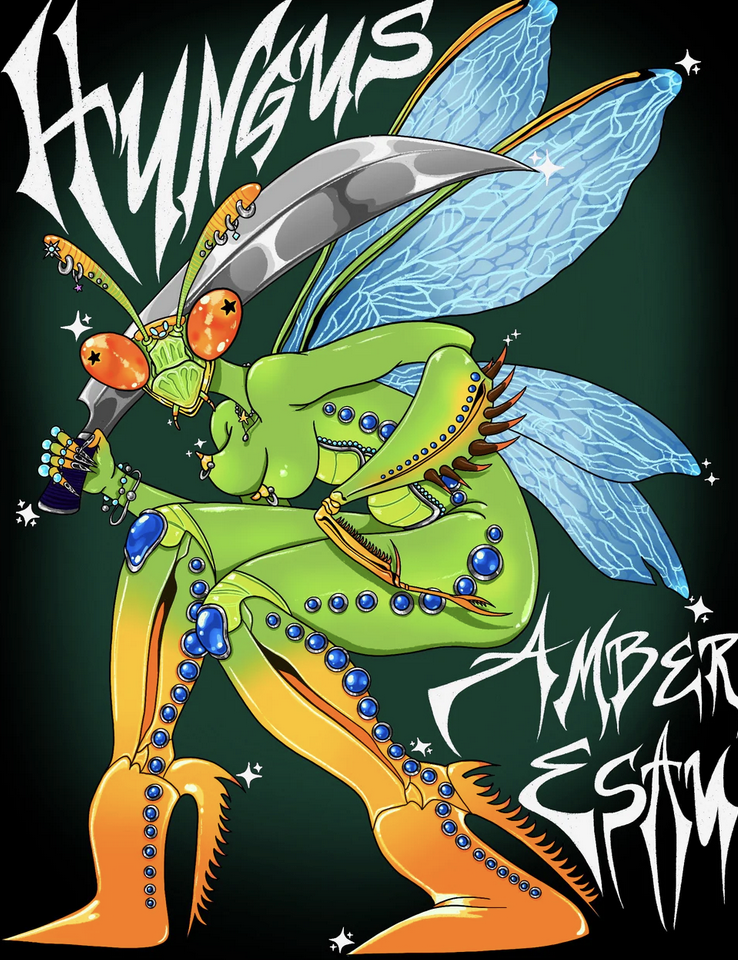
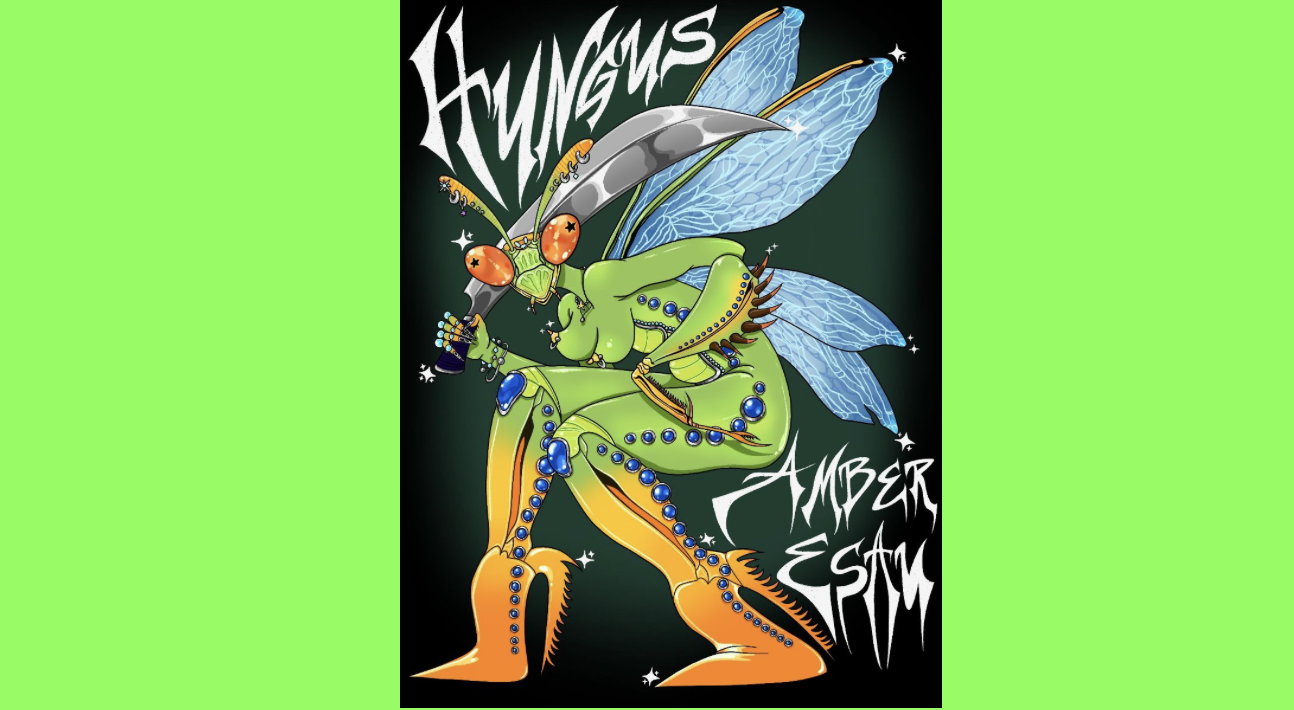
Current favourite poetry book is Hungus by Amber Esau, one of the smartest, slickest poets in Aotearoa
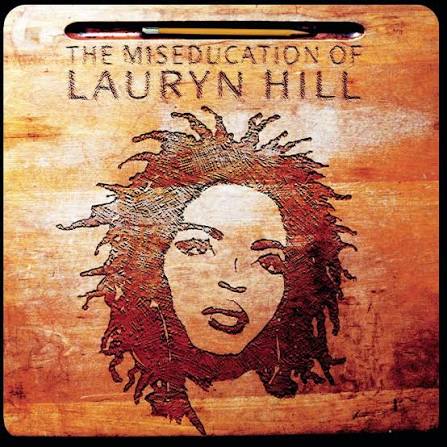
Fave album: All the xennial girlies know

Three sets of three

Three favourite words in your poetry toolkit

A/a – small, sharp/round and very useful.
Place – I’ve been learning to see each poem as a place which helps me nest in and focus.
Mana – I try to ask myself, where does the mana sit?

Three things that matter to you when you read and write poems (just a sentence for each)

Rhythm: how does it sound and flow, what’s the pace and where can these be interrupted?
Structure and shape: concentric patterns of structure and shape in a line, stanza, poem and collection.
Simplicity: As much as possible (unless it’s impossible) I try to use plain language, easy or interesting shapes, blank spaces. 

Three poets who have inspired you

Tusiata Avia
Amber Esau
M. NourbeSe Philip

One question:  Why or how does your poetry book matter to you?

It mattered to me to have something to pass on to my children, something they could hold with our family names and stories in it. 

One poem 

Family video call
15 March 2019

On screen our faces are
like clay, about to crack.

We listen for Dad
to splinter the distance between us—

tatou tatalo,
let us pray for those poor families
in Christchurch,
with their loved ones taken.

We must stay aware,
keep safe
and never forget.

We had felt almost safe before this,
thought it was okay to be loud with our brown selves

thought we were free,
but we had only forgotten

that blackbirding and dawn raids
were hatchets roughly buried

and for decades we had let
tiny red flags sneak past us,

let our guards
slip off to sleep.

Now we are reminded
that we are minor.

A migrant shadow follows me to bed,
slips in heavy beside me

steals my comfort
warmth
dreams
prayers

Nafanua Purcell Kersel

Nafanua Purcell Kersel (Satupa‘itea, Faleālupo, Aleipata, Tuaefu) is a writer, poet and performer who was born in Sāmoa and raised in Te-Whanganui-a-Tara, Aotearoa. Her poetry has been widely published. She has an MA from the IIML at Te Herenga Waka—Victoria University of Wellington and won the 2022 Biggs Family Prize in Poetry for Black Sugarcane, her first book. She lives in Te Matau-a-Māui Hawke’s Bay.

Te Herenga Waka University Press page

Listen to Nafanua read here

Poetry Shelf review
Poetry Shelf noticeboard: Amber Esau poetry launch

Join us next week to celebrate a dazzling new voice in New Zealand poetry!

 Thursday 26 March, 6pm
Rocketman bar, 8 Roukai Lane, Auckland Central
 Free entry – all welcome!


The book will be launched by Courtney Sina Meredith and we’ll have three amazing artists – @dam_dandan@make.aotearoa.native.again, and the book’s cover artist Katrina Steak – in the house with us for mini makeki styles. Books will be for sale thanks to Unity Auckland.

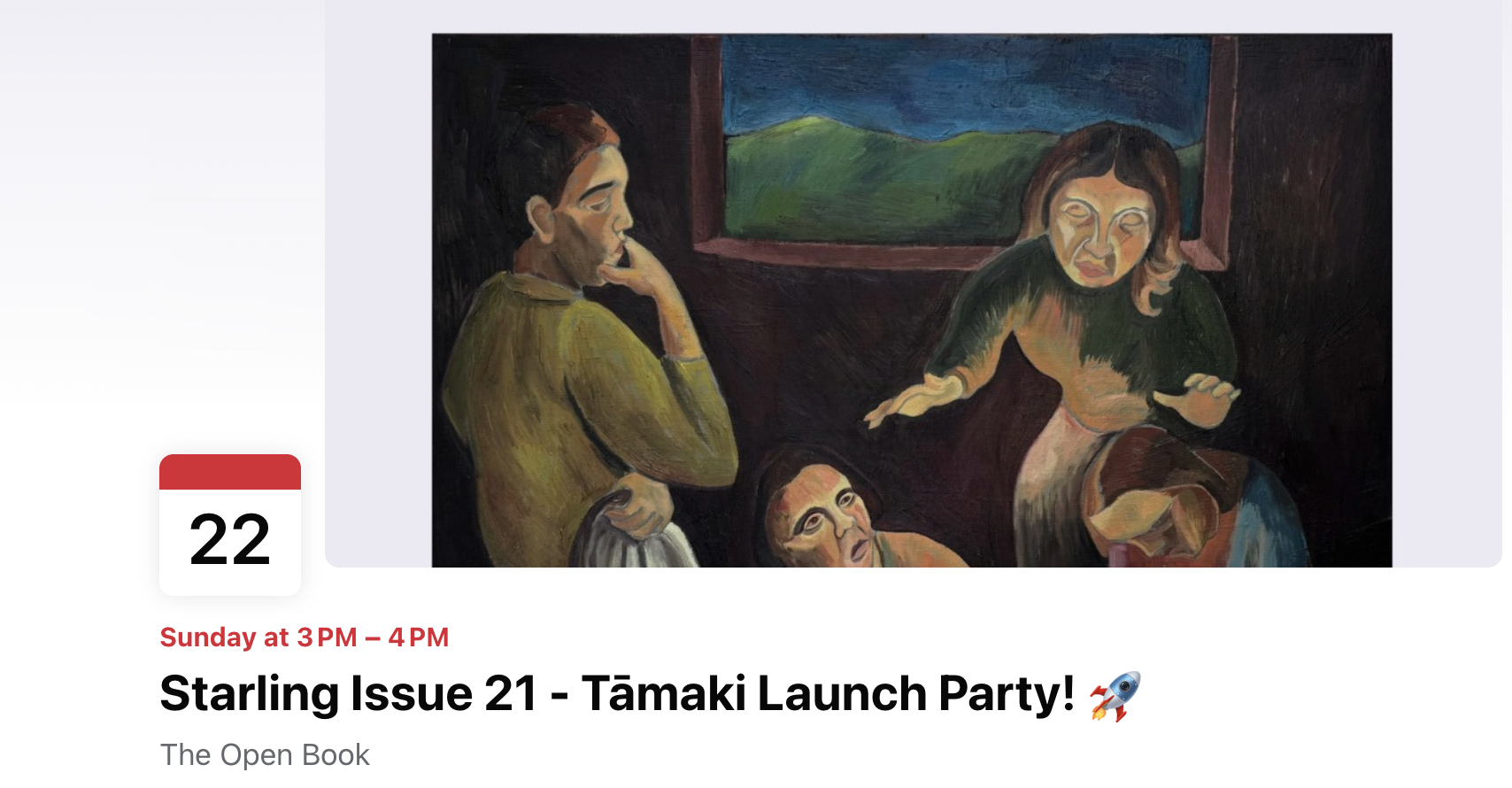
Poetry Shelf noticeboard: Starling Tāmaki launch party

Starling Issue 21 is here, and we’re very happy to be holding our Tāmaki launch party with our friends at The Open Book (201 Ponsonby Road) from 3pm on Sunday 22 March!

Come and hear exciting new writing from young Aotearoa authors, browse the Open Book shelves, and celebrate the latest issue of Starling.

We’ll have readings from Issue 21 authors Lily Wright and Amelia Aratangi, alongside Starling favourites Elise Sadlier and Sherry Zhang, with editorial committee member Ruby Macomber on hosting duty.

It’s set to be a smash – we look forward to seeing you there!

The Poetry Shelf Breathing Room: A Life by Kiri Piahana-Wong

A Life

The late afternoon
finds you seeking
clarity in a book
of Rilke poems, a
shortbread biscuit,
and a cup of lemon
tea—with a dash
of honey.

The honey swirls
down through the
tea, and biscuit
crumbs fall into
the book, lodging
in the spine. The
fading sun slants
across the page.

Today, you decide,
you are truly content
to call your life a
great song. Or even
a small song.
A lullaby. Something
to sing your child to
sleep.

Kiri Piahana-Wong
from night swimming, Anahera Press, 2013


Kiri Piahana-Wong is a poet, editor and publisher living in Tāmaki Makaurau.

The Poetry Shelf Breathing Room: A place to enter and pause and take a long slow breath and then another, as you absorb the beauty movement joy wonder stillness of a poem.

The Poetry Shelf Breathing Room

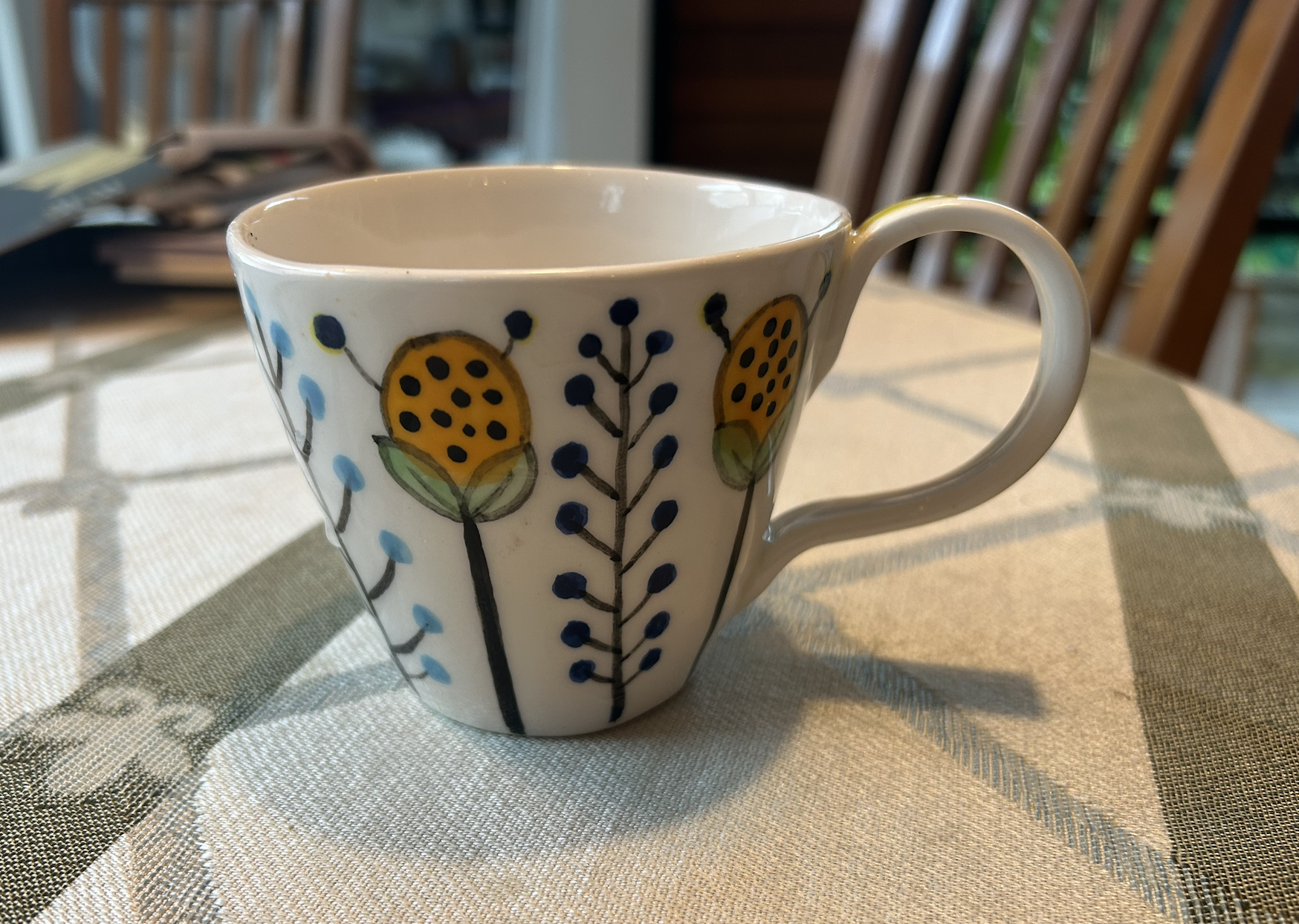
my poetry cup by Rebecca Jean Harris

Last year Poetry Shelf dedicated a number of posts to protest poems. Especially Gaza. Especially the preservation of Thomson Gorge in Central Otago. These days my news feeds are flooded with issues I want to challenge, to speak out against. Choices, for example, our current government is making, whether in health, education, land care, flora and fauna care, water care, the homeless, the hungry, Te Tiriti o Waitangi, speaking te reo Māori, diverse cultures, racism, sexism, genderism, the Arts, then Sciences, and so much more. Or whether it’s the heartbreaking toll on human lives, homes, communities in the Middle East where men, women and children are bargain chips. And where some people, especially aid workers, are working against all odds to heal and mend rather than destroy and barter.

What matters?

What matters to us when each day is a patchwork of light and dark, hope and despair. When helplessness can be a contagion with both personal and global infusions.

Poetry Shelf will continue to protest and speak out in the form and voice of poems.

But I am now offering you The Poetry Shelf Breathing Room. Each week I invite you to enter a poem as breathing space, a slender moment to recharge, a solace device. A place to enter and pause and take a long slow breath and then another, as you absorb the beauty movement joy wonder stillness of a poem.

The poem becomes a temporary breathing room. A miniature act of self care. Art can do this. A painting or photograph or sculpture can do this. Music can do this. Music can most definitely do this. I am mindful that we would all select different poems to stand in for the breathing room, but over the coming months, I invite you to enter the room and recharge your mind and heart.

Just for a slender exquisite gentle meditative moment.

Poetry Shelf Playing Favourites: Peter Ireland picks The Postman by Gordon Challis

The Postman

This cargo of confessions, messages,
demands to pay, seem none of my concern;
you could say I’m a sort of go-between
for abstract agents trusting wheels will turn,
for censored voices stilled in space and time.

Some people stop me for a special letter;
one or two will tell me, if it’s fine, that I
have picked the right job for this kind of weather.
A boy who understands life somewhat better
asks where postmen live – if not our office, why?

The work is quite routine but kindnesses
and awkward problems crop up now and then:
one old lady sometimes startles passers-by
claiming she is blameless as she hisses
at people in her reminiscent ken;

she startled me as well the other day,
gave me a glass of lemonade, and slipped
me a letter to deliver – ‘Don’t you say
a word to anyone, it’s no concern
of theirs, or yours.’ Nor no more it was, except

here was this letter plainly marked ‘To God’
and therefore insufficiently addressed.
I cannot stamp it now ‘Return to sender’
for addressee and sender maybe One. The best
thing is burn it, to a black rose He’ll remember.

Gordon Challis
from Building, Caxton Press, 1963

It is February as I write this and New Year’s resolutions whether conscious or otherwise have bitten the dust, though as always, my intentions were good. One of those was to write more letters. I bought a nice pad at Whitcoulls, I’ve envelopes and stamps, a collection of postcards found in an op shop and my Pelikan fountain pen, and to my credit I did write and post some letters over the holidays.

So, when looking through Jenny Bornholdt and Greg O’Brien’s anthology of New Zealand poetry for a favourite poem I stopped at ‘The Postman’. A nicely turned and gentle poem and reminder of the age of post men and women which I fear is drawing to a close.

I particularly like the question put to the postman, asking where postmen live? For a moment, I saw a barracks, with uniforms neatly folded on the end of bunks, and whistles hung within easy reach. Nearby, a shed for bikes and other paraphernalia of the postal era. If this sounds like pure nostalgia for the heyday of letter writing and posties, that is exactly what it is.

Peter Ireland

A fan of the letter, Peter Ireland works at the National Library, where he helps with the Poet Laureate.

Poet Gordon Challis (1932-2018) was born in a Welsh family in Birmingham, England. He arrived in New Zealand in 1953 and worked as a postman in Wellington and studied psychology and social work at Victoria University. After some years working as a psychologist in Australia and New Zealand, he retired in 1988 and moved to Nelson and Golden Bay.

Four Gordon Challis poems at The Spinoff
Cliff Fell obituary at NZ Books
Best NZ Poems, ‘walking an imaginary dog’

Poetry Shelf Playing favourites: Cadence Chung

Black Opium

Coleridge wrote his best poems in a poppyseed haze.
I’m not sure about those tiles, he said from my bathtub,
looking up at the ceiling. I had no idea what he was thinking:
my only experience with opium was the YSL perfume, that
pungent amber stuff that always sat on my mother’s dressing table.
And then later, the redesigned Black Opium, an awful
vanilla-sugar thing I wore to class with a scratch on my wrist,
angled and shallow like a cat might have done it. When I came
home, Coleridge was alight. He showed me the poem
he’d written, wet with tap-drip. I know it is but a Dream,
yet feel more anguish than if it were Truth, he told me.
In my own visions, cross-hatched and foggy though they are,
I can still make out the shape of you.

Cadence Chung
Originally published in Cordite Issue 114

I wrote this strange little poem while taking a course on Romantic poetry. In one lecture, we were shown a quote from one of Keats’ letters, describing a conversation he had with Coleridge:

‘I walked with him at his alderman-after dinner pace for near two miles I suppose. In those two miles he broached a thousand things [ . . . ]—Nightingales, Poetry—on Poetical sensation—Metaphysics—Different genera and species of Dreams—Nightmare—a dream accompanied [with] a sense of touch—single and double touch—A dream related—First and second consciousness—the difference explained between will and Volition—so many metaphysicians from a want of smoking the second consciousness—Monsters—the Kraken—Mermaids—Southey believes in them—Southey’s belief too much diluted—A ghost story—Good morning—I heard his voice as he came towards me—I heard his voice as he moved away—I had heard it all the interval—if it may be called so’ (letters, 15-16 April 1819).

My friend Jackson McCarthy and I thought this was the most hilarious little passage, even though I’m sure nobody else in the course did. It made me feel a fondness for Coleridge, an almost jovial sense of camaraderie with him. In my mind, he’d gone from a serious and canonical Romantic poet to a strange uncle, or a messy friend who would text you, drunk, at midnight, with details of the evening’s disastrous escapades. He seemed the sort of man who really could sit in my bathtub high out of his mind. A lot of my poetry interacts with canons in this way; I like to think of all those old poets and characters as my friends.

Talking about opium in the course made me think of my mum’s little bottle of the YSL perfume called Opium, which was a constant fixture in my childhood remembrances of her dressing-table, always in the background while she did her makeup. I don’t think she ever really used it — it was a tiny bottle that I think was genuinely from when the perfume first came out — and it absolutely reeked. I don’t think they make it like that anymore. The 2014 Black Opium is a disappointingly safe shadow of that original concoction; sweet and vanillary and with that unidentifiable chemical undertone that all modern designer perfumes seem to have. I’m sure you could say something there about mass production, evolving beauty standards, unoriginality under late capitalism, etc.

But anyway. The poem took me a while to figure out, especially in terms of what Coleridge would actually say to me. The final sentence was changed around 5 times. Jackson has now taught this poem twice in one of his guest lectures about ways to end poems, as an example of a volta. I’m pretty sure that term traces back to the verb ‘to turn’, but it also reminds one of voltage, to a sudden spark that creates a change. Black Opium is concerned with many things — perfume, dreams, visions — but then suddenly turns to the lyric, to the you that is there in the background of any poem.

Cadence Chung is a poet, mezzo-soprano, and composer, currently one of the resident artists at Te Pae Kōkako – The Aotearoa New Zealand Opera Studio. She has released three books: anomalia (Tender Press, 2022), Mythos: an Audio-Visual Anthology of Art by Young New Zealanders, (ed.) (Wai-te-Ata Press, 2024), and Mad Diva (Otago University Press, 2025). She also edits Symposia Magazine and the New Zealand Poetry Society’s quarterly magazine, a fine line.

Poetry Shelf Monday poem: The little bird sings to me by Bernadette Hall

The little bird sings to me

sometimes I have to talk
like this out of both sides of my mouth
            rio rio rio

sometimes you are light
like harakeke, the whisper of it
            rio rio rio

sometimes you are heavy
like the blood oath of pounamu
            rio rio rio

I sit in silence at the top of the tree
angry voices rise up all around me
            rio rio rio

I can see you standing in the middle of the field
you are ankle deep in mud
                                               you are blowing on a whistle
            rio rio rio

Bernadette Hall

This is a new poem, a bit of a surprise to me. I have been working more in prose recently. On March 17 at the City Art Gallery in Ōtautahi Christchurch, my YA short story ‘The Girl Who Was Swallowed by Ice and Snow’ will be launched. It is a collaboration with the Dunedin artist, Kathryn Madill,  1,800 words from me and 17 paintings from her. Set in an Antarctic dreamscape, it explores the phenomenon of silence, the kind of silence the young can vanish into. To save themselves. As I did when my dad died in front of me when I was 16 years old. His Irish heart giving out. So it has taken me 22 years to make this artwork. How wonderful to celebrate the making now with Kathryn.

The launch of The Girl who Was Swallowed by Ice and Snow, Bernadette Hall and Kathryn Madill collaboration, March 17th.

Poetry Shelf noticeboard: NZPS International Poetry Competition

𝐖𝐞 𝐚𝐫𝐞 𝐨𝐟𝐟 & 𝐫𝐮𝐧𝐧𝐢𝐧𝐠!! 𝐎𝐮𝐫 𝐩𝐨𝐩𝐮𝐥𝐚𝐫 𝐚𝐧𝐧𝐮𝐚𝐥 𝐩𝐨𝐞𝐭𝐫𝐲 𝐜𝐨𝐦𝐩𝐞𝐭𝐢𝐭𝐢𝐨𝐧 𝐢𝐬 𝐨𝐩𝐞𝐧 𝐟𝐨𝐫 𝐛𝐮𝐬𝐢𝐧𝐞𝐬𝐬. 𝐓𝐡𝐞 𝐜𝐨𝐦𝐩𝐞𝐭𝐢𝐭𝐢𝐨𝐧 𝐫𝐮𝐧𝐬 𝐟𝐫𝐨𝐦 𝐌𝐚𝐫𝐜𝐡 𝟏𝟓 𝐭𝐨 𝐌𝐚𝐲 𝟑𝟏.

Go to our website to find out about the judges, the categories you can enter, and the prize money. (Did we mention there are cash prizes?!).

Winners & placegetters in the four categories (Open, Open Junior, Haiku, Haiku Junior) are automatically included in our equally popular anthology. This year’s editor is Anne Kennedy!! Anne will also select poems for inclusion in the anthology.

So there are heaps of reasons to enter!

If you have any questions about the competition, email us info@poetrysociety.org.nz