
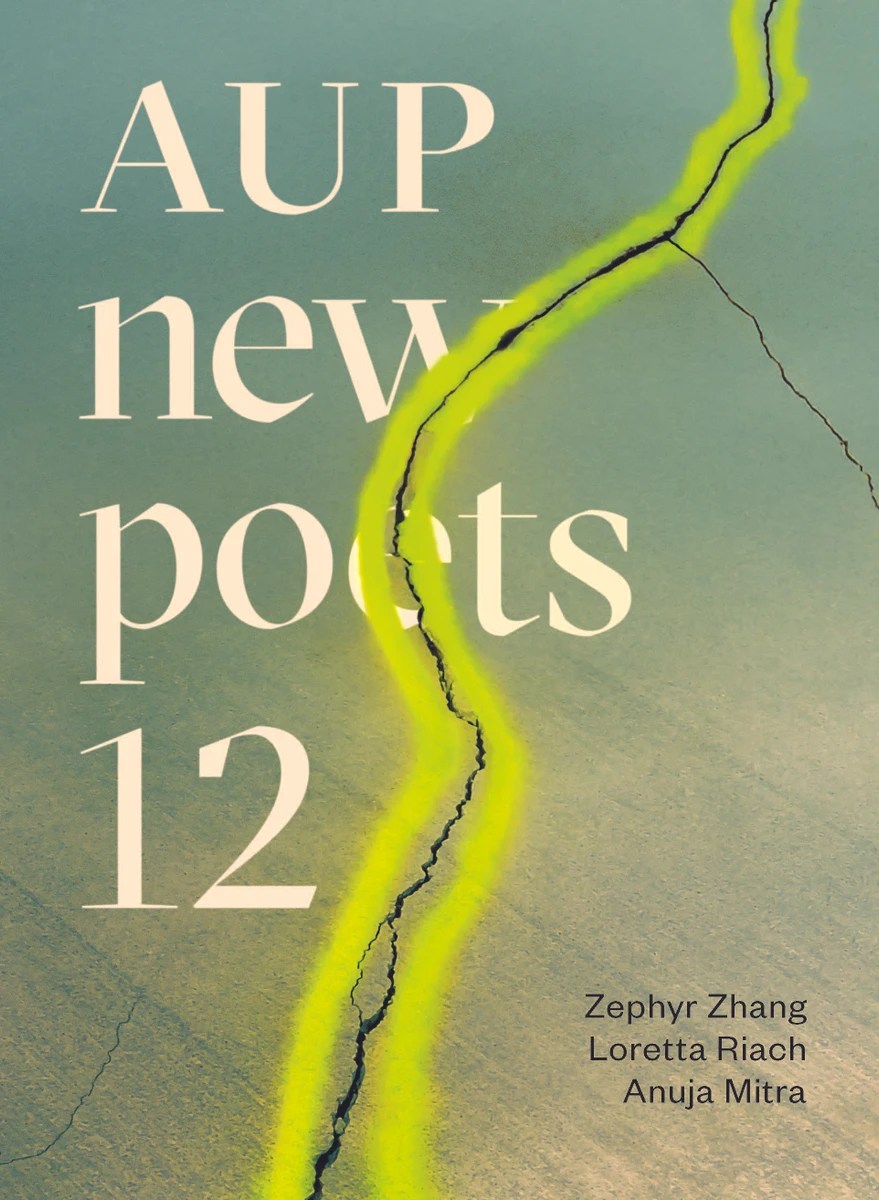
AUP New Poets 12
Zephyr Zhang, Loretta Riach, Anuja Mitra
editor Anne Kennedy
Auckland University Press 2026
AUP New Poets 12 page
roots | 漂叶无根
my mum lays out succulent
cuttings like severed limbs
she is always restless
for the low thrumb of the plane
that will take her elsewhere
we will drift, as leaves
in the wind, never settling
Zephyr Zhang
It is so beautiful to be here in this life.
Everything is meaningful,
even when the meaning is a terrible let-down.
I want to make something out of this,
even when it is hard
and I feel far away from anything gentle,
like the roadkill possum I pass on my bike,
still warm and animal in its halo of blood.
Every poem has a possum inside of it,
and I have to poke it with a stick
to make sure it’s really dead.
Loretta Riach
from ‘Retired from Art, New Career in Sandwiches’
now you are a whole bruised history
wrapped in a girl, and I am running
behind your train, arms raised like an augur,
offering my handkerchief to the wind.
remember me when you reach the skies
on the other side of childhood: that place
we go to never come back, only to find ourselves
circling familiar tracks.
Anuja Mitra
from ‘Bruised history’
AUP New Poets 12 is a terrific addition to a series that was launched by Auckland University Press in 1998. Current editor Anne Kennedy has selected three charismatic poets that offer distinct directions but that also enrich our reading experience with captivating links and echoes.
Poetry of a particular time doesn’t need to be pigeonholed into trends with particular tics and fancies. Every book I have read this year amplifies the surprise of where poetry might take me – whether the first-line launch pad or the opening poem. AUP New Poets 12 is no exception. For me, this is a poetic voyage of surprise with each chapbook unique, while also offering links and echoes.
I jotted down the word ‘intimacy’ – drawn to the way each poet translates intimacy within poetic forms. The recurrent tug of remembering, of becoming, of lilypad hopping different points of view, whether self or trolley or dog. This captivating anthology got me musing on what poetry can be and do and this is what keeps me hooked into reading, writing and reviewing poetry.
moonlight circuit Zephyr Zhang
Zephyr’s chapbook offers an eclectic and electric rendition of being and becoming, of moving in and out of character, and yes, rich and enriching characters, whether a trolley or an air noodle, whether watching ghosting violencing, whether sketching shadows, loving self, signalling notself unself besideself. There is the poignant drift and attachments of mother child child mother. There is angst and there is a mise en abyme of heart-catching poetic possibilities, holding prismatic self to light and dark, letting life jar and jag, raise doubt and questions, epiphanies. If there is a sublime moonlight circuit, we move in and out of the shadows and light, the loops of beauty and existence. Love!!!
Possum, Loretta Riach
Again I am drawn deep and movingly into patterns of existence, along syncopating lines, along honeyed lines, with surprising image leaps, little poetic startles that catch my heart and ear, I’m moving and moved, as I travel between here and there, here home elsewhere home, with mountains and darkness and heirloom tomatoes, with touch and intimacy a vital pulse that carries me, with acute feeling a poetic beat alongside the admission the poet “might never know where this feeling goes / but at least i can make something from it”, and as we read and travel, the glorious poetry builds bridges to transform the gap, the enigma, the shadows. Love!
Bruised history, Anuja Mitra
I absorb the light, so sublimely, because here poetry is a way of regaining the light, of transcribing recomposing redeeming the light, in the tangleweed grief ache for the poet’s father, with lines fracturing syncopating, the fracture a crevice down the middle of a poem, or the running helter skelter, or the shifting rhythms of place family history self, face to face with racism, the poet favouring diverse forms, and the gap, yes again the gap, an impetus to reach for poetry pen, and as the addictive detail assembles, the visual and aural go hand in hand, each enhancing electrifying the other, and it’s precious gift for both ear and eye, a shimmer slowing to sweet andante, an inhaled exhaled ode to existence.
I invited each poet to read three poems and answer five questions.
The poets
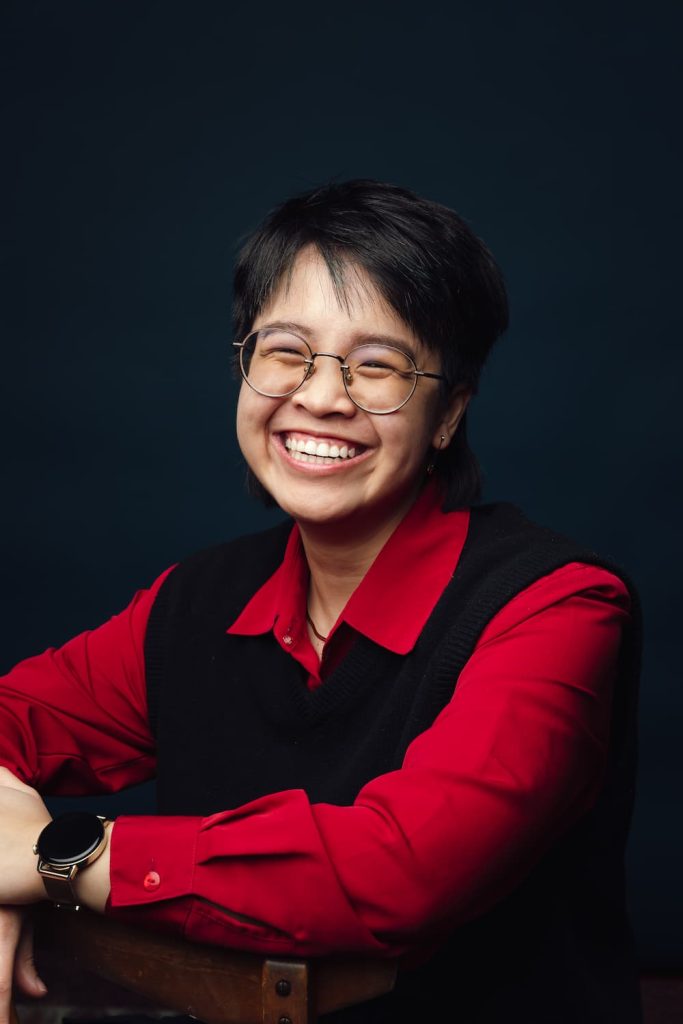
Zephyr Zhang
3 poems
‘please push me’
‘push me I dare you’
‘i dump my car for a horse and regret it for the rest of my life’
5 questions
Name five words that matter to you when you are writing a poem.
Transformation, excavation, intimacy, attention, delight.
Can you share a few poets whose poetry boosts you as a writer?
Here are some poets who make me giggle and think about gender: Jiaqiao Liu, Always Becominging, Emma Barnes, Dani Yourukova.
Writing can be a process of discovery, illumination. Did you surprise yourself as you wrote? Make discoveries?
I love reading other poets’ collections, especially if they’re by people I know IRL. This is mostly because I am nosy, but also because I don’t think I ever truly ‘get’ someone until I see a corpus of their art. A poetry collection is a poet’s obsessions, anxieties and juicy vagueposting disguised as literature.
Sometimes I meet a person and I think, ‘Huh, you could be much kinder to yourself.’ They don’t yet know that self-compassion would solve all their problems. This is something they might discover if they wrote 100 poems and then tried to arrange them into a collection.
All this to say, I never know what I’m actually writing about until I’ve written a bunch of poems. Reading them all at once makes me realise that I can only talk about my feelings through inanimate objects, and that riding horses as a child left an indelible impression on me.
Is there a poem that particularly matters to you in your chapbook?
The opening poem, ‘roots | 漂叶无根’, about the restlessness of my immigrant mum. When Anne Kennedy first read the manuscript, she noted that it seemed almost like an epigraph. In a way it serves the same function – it sets the context for the rest of the chapbook.
Why poetry? Why poetry in this tumultuous world?
When everything feels bleak, it’s still fun to share poetry with friends and psychoanalyse all the poets around me.
Zephyr Zhang 张挚 is a queer writer, developer and ex-geotechnical engineer based in Tāmaki Makaurau. Their poetry can be found in various literary crevasses including Starling, Cordite, Landfall and Ōrongohau | Best New Zealand Poems. Their debut chapbook, moonlight circuit, was published this year in AUP New Poets 12. They are nocturnal.
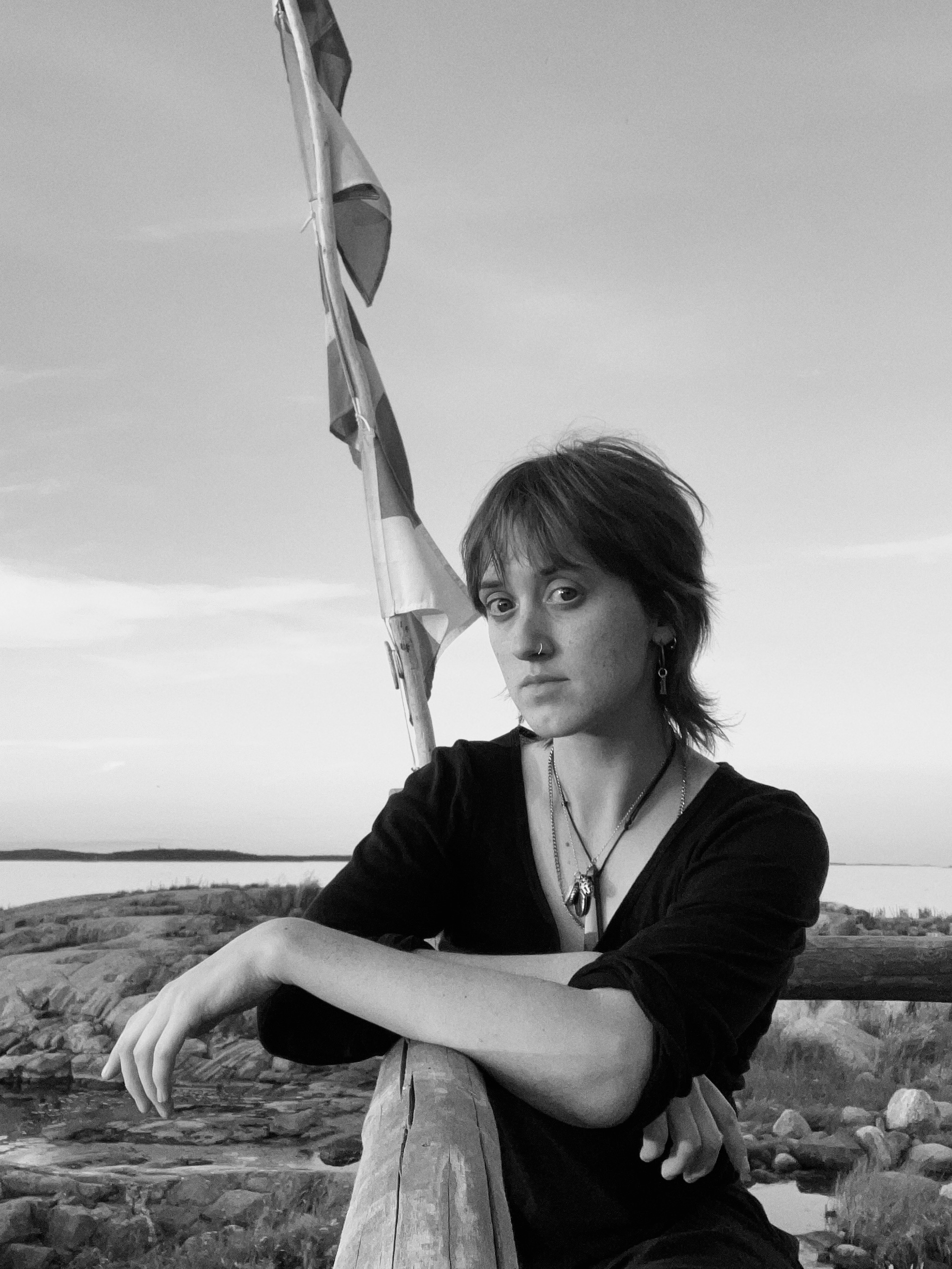
Loretta Riach
3 poems
‘Kitchen for Tharushi’
‘Daisy, 1994’
‘The Night Shift’
5 questions
Name five words that matter to you when you are writing a poem.
Shape, attentiveness, nerve, sounds, horses.
Can you share a few poets whose poetry boosts you as a writer?
I was very lucky to start writing poetry in Te Whanganui-a-Tara, where there are countless poets, whose invention and generosity made poetry seem like something that I could do too- Margo Montes, Ruben Mita, Freya Daly-Sadgrove, Ash Davida-Jane, Rebecca Hawkes, to name a few- there are so many wonderful others. Other poets who I turn to for courage are Eileen Myles, Evelyn Araluen, Bernadette Meyer, Sophie van Waardenberg, Patricia Lockwood, Hana Pera Aoake, Emily Dickinson.
Writing can be a process of discovery, illumination. Did you surprise yourself as you wrote? Make discoveries?
One of my fine arts lecturers said to me once that the process of making art is like having to both invent and solve the same puzzle simultaneously, which I really relate to in my poetry; writing constantly feels like discovery to me, primarily because I’m always a bit surprised to find that I’m doing it, that the words are there. The thing I love about this is finding the form of the poem and the connections in language as they come together on the page (screen, really, I type my poems)- building the poem from within itself. Through writing this collection I realised my tendencies and reliances on different images, phrases, jokes- it’s been really interesting having the space to observe the patterns I follow when constructing a poem.
Is there a poem that particularly matters to you in your chapbook?
Yes, the poem ‘The Crossing’. The whole chapbook is laced with an aggressive strain of nostalgia that has run rampant through my early twenties and has been somewhat of a curse. I may never fully cure myself of this, but this poem is one that I am proud of for articulating that ache, and for being so located in the moment it was made. It marks a big change in a relationship, and the move from home to overseas. All of the poems in the collection are about this one way or another, but this is my favourite.
Why poetry? Why poetry in this tumultuous world?
What else is there! Poetry allows your one human mind to struggle feebly against all the language it has ever experienced, which teaches humility, connects you to the living breathing world, and makes you more impervious to being swallowed up by machines. It takes the tumult and translates it into something less numbing (even if still morbid), using bad jokes and references that only your friends will care about. It’s a ridiculous career path, but it’s better than no poetry. You can take it anywhere, especially on public transport.
Loretta Riach is an artist and writer from Aotearoa. Possum, as part of AUP New Poets 12, is their first chapbook. They have written a lot of love poems, and a lot of poems about rocks, which can be found in publications including Starling, Sweet Mammalian, Takahē, Minarets, Poetry Aotearoa Yearbook, and Ōrongohau | Best New Zealand Poems. In 2025, they were an artist in residence on the island of Klovharun, Finland, and they are currently based in Naarm.
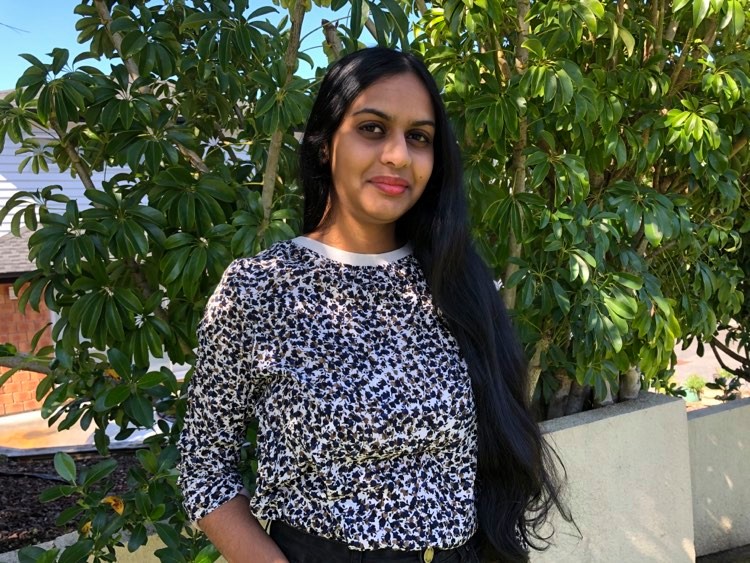
Anuja Mitra
3 poems
‘Wintergarden, June’
‘At the vets there is language / for pain’
‘Private cinema’
5 questions
Name five words that matter to you when you are writing a poem.
Rhythm, play, image, impact, flow. I regret that this sounds like some kind of corporate motto but I guess these are things I have in mind subconsciously when trying to create something readers enjoy engaging with as much as I enjoyed writing it. I’m a bit of a neurotic editor and working on self-censoring less to achieve more of that spontaneity and play when drafting. Spontaneity is often where the best stuff comes from!
Can you share a few poets whose poetry boosts you as a writer?
I’m definitely boosted by many talented people in the Aotearoa poetry scene and have to shout out my Tāmaki Makaurau writing group, especially Holly, Hebe, Laura, Grace, Elliot and Gemma. And I’m boosted in the ‘writer self-esteem’ sense by this quote a friend shared with me years ago from a poem titled “Berryman” by 20th century American poet W.S. Merwin (who has also influenced my writing), where Merwin asks the successful poet John Berryman “how can you ever be sure / that what you write is really / any good at all” and he replies:
you can’t you can never be sure
you die without knowing
whether anything you wrote was any good
if you have to be sure don’t write
Vague though it sounds, I like to say I’ve been inspired by any poet whose poem(s) I’ve enjoyed. Sometimes before I sit down to write or when I feel stumped mid-writing session I look up a journal, say Poetry Magazine (published by the Poetry Foundation) and just read a bunch of poems to get the creative cogs turning.
Writing can be a process of discovery, illumination. Did you surprise yourself as you wrote? Make discoveries?
In assembling the chapbook I was surprised to find links between the poems, which were written at different times over a span of years. I could never really articulate what the recurrent ideas in my work were but after Bruised history I know I tend to return to themes of memory, place, childhood, connection and loss.
Is there a poem that particularly matters to you in your chapbook?
“Notes on a city with no identity” was my first foray into the ‘essay poem’ / ‘poetic essay’ form which I’d long admired, and it’s the longest and most ambitious poem I’ve penned yet. Though it’s written in second person and the speaker isn’t synonymous with me, it threads together a lot of personal topics I haven’t necessarily addressed directly in my writing before — arising from me thinking my city of Tāmaki Makaurau was too boring to write about despite spending most of my life in it, and then wanting to interrogate that. The warm reception to the poem so far has been encouraging and led to me wanting to return to that form and experiment more with the (illusory) boundary between poetry and prose.
Why poetry? Why poetry in this tumultuous world?
I think to be any kind of artist you have to believe that art is a constant and a comfort. There’s the oft-quoted (probably too oft-quoted) line from Bertolt Brecht about how even in dark times there will be singing because the singing will be about those dark times. The world has always been tumultuous but poetry has always survived. It’s a curious way of looking at and trying to make sense of the world and there have been great communities built around sharing that. As for why I myself write poetry — because poems are usually short but always challenging!
Anuja Mitra lives in Tāmaki Makaurau. Her poetry and prose have been published widely in Aotearoa and also some places overseas, including Landfall Tauraka, Cordite, takahē, Poetry Aotearoa, Turbine | Kapohau and several anthologies such as A Clear Dawn: New Asian Voices from Aotearoa New Zealand and No Other Place to Stand: An Anthology of Climate Change Poetry from Aotearoa New Zealand. Her debut chapbook, Bruised history, was published in AUP New Poets 12.

