Tag Archives: NZ Poetry review

Poetry Shelf review: Michele Leggott’s Heartland–these poems settle beneath your skin

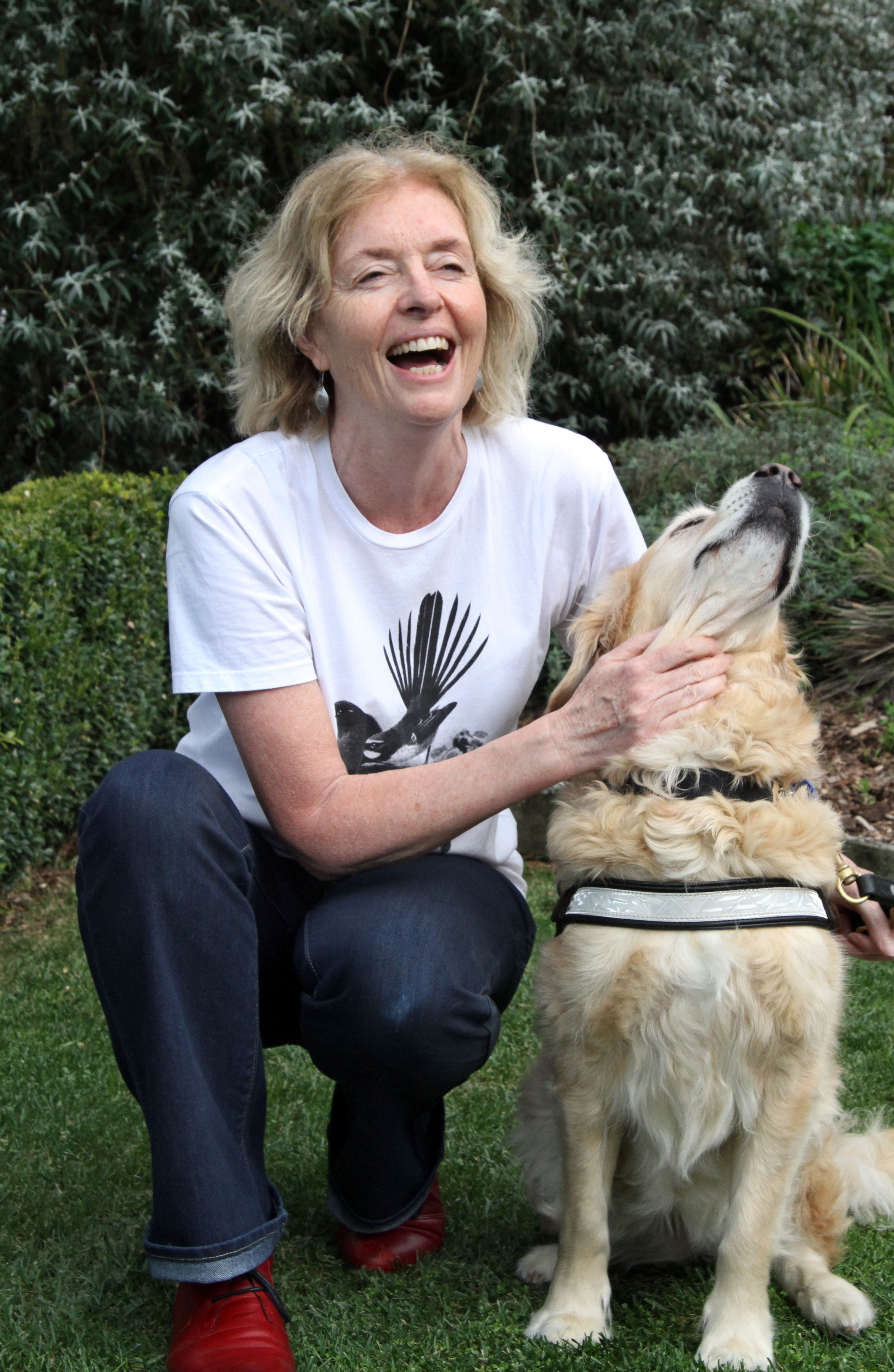
leggott-michele-2014-cTim-Page

Photo credit: Tim Page

Michele Leggott was the inaugural NZ Poet Laureate under the National Library scheme (2007), was made a Member of the New Zealand Order of Merit for her services to poetry (2009) and last year received The Prime Minister’s Award for Literary Achievement in Poetry. She is an award-winning poet, was a founding director of the New Zealand Electronic Poetry Centre and is currently a professor in The University of Auckland’s English Department. She has published several anthologies (including the substantial edition of Robin Hyde poems). She has contributed much to New Zealand poetry, not just in the books she writes, but through the work she does in the wider, poetry communities.

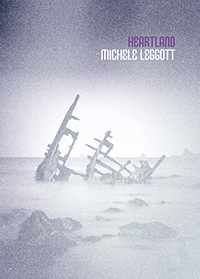
cp-heartland   cp-heartland  cp-heartland

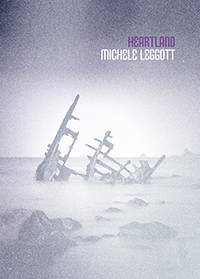
Michele’s new collection, Heartland, is a companion to Mirabile Dictu—same shape (marking a departure from the landscape format of her previous books) and same preoccupations. These two new books are inextricably linked to the poetry that comes before, but there is a shift in the way the poetry opens out to you. Her previous work was linguistically difficult, musically fluent and offered semantic lacework that drew you to sources signposting an astonishing range of reading and interests. These early collections have been amongst my all-time favourite poetry experiences in the New Zealand context. The difficulty was a lure for me, and once you entered the mesh of poetic possibilities, the rewards were immense. Her new books exhibit the same delight in language, a keenly tuned ear and an ability to stroll through worlds both physical and cerebral, and absorb points of fascination.

The blurb suggests ‘Heartland steps on from Mirabile Dictu, tracing the idea of family as a series of intersecting arcs, some boat-shaped, others vaults or canopies, still others vapour trails behind a mountain or light refracted through water.’ However family is shaped and traced by the poet, this book draws family from the shadows to centre stage—into the heart of the matter. Familial stories become the vital substance of a poem. Mythological sidetracks, traces of poet forbears, intellectual musings deliver the reader back to the intimate family fold. This is arms-open-wide poetry, that then draws you in close to the stories and legends  that form and sustain a family (families). Voyagers, settlers, husbands and wives, men who went to war, women who stayed behind, missing relatives, rediscovered relatives, close family, extended family, the loving husband, the sons.

Yet, as with any poetry collection by Michele, the moment you begin to say it is this, is the moment you recognise it as more than this. What makes these poems settle beneath your skin is the way Michele writes the world. The critical role of the ear is evident, not just in the aural honey generated in each line but in the way the poet listens to the world. Poems arrive differently it seems, in the dark, before they become light. The very first poem leads you to the ear: ‘my friend you are a voice/ against a dark red wall.’ In a number of poems Michele is travelling, both at home and abroad, back in time, through the poetic lines of others, and as a traveller, she is highly attuned to sound of things, to dialogue, to the pitch of weather and the rhythm of an anecdote. Her poems are, in part, resonant soundtracks of the travelled world: ‘the grass ghosts singing/ in our ears,’ ‘black wings crying,’ ‘dog snuffling,’ ‘swans clattering/ into the sky,’ ‘soft sound of light on stone’ ‘shattering glass,’ ‘a museum flicking past my inattentive ear.’ Her poems are also traces of the visible world filtered through memory, and the eyes and archives of others: ‘the joker in the orange vest,’ ‘a line of fish skeletons at our feet,’ ‘late light on the cliffs,’ ‘the valley fell away/ in a green tilt,’ ‘hello to the brick veneer.’

Then there is the elegant beauty, that sweet aural treat, in the bare bones of the line, where sounds lift and connect as melody: ‘thick drift of leaves,’ ‘blood red or pitch black because of the ash cloud,’ ‘to look at heaven from the end of a dark wharf,’ ‘begin the talk that catches its tail.’ Repetition is like a refrain in several poems (‘experiments [our life together]’ and ‘talking to the sky’), where the repetition produces song and/or a sumptuous list poem. Rhythm shifts and settles like the moveable rhythms of the traveller in the magnificent sequence, ‘Many Hands.’   Line breaks hold you back at times, and then produce little startles with a shift in expectation. There are the abundant caesurae (takes me to Louise Glück and her love of interruption)—little pauses in the line that stall you or that signal tremors and trembles of the narrating self, and the self that has stepped into the shoes of others, of extended family. A moment of inward breath, breath held.

The rewards of these poems are multiple—from the acute observation to the infectious musicality and the internal beating heart. And to that you need to add wit and humour. You fall upon little jokes or wry twists on a line, surprisingly, wonderfully (the names of the train-wreck couple , or the dogs for example). There is, too, the open debt to the poets who have nourished her. Michele goes hunting for the graves of poet Lola Ridge’s parents, and, in that hunt, brings Lola to our attention again. Michele gets to see the statue of Henry Lawson, but there is no statue of Lola. Ah, that long line of invisible women. Michele is always ready with her torch.

The collection is replete with standout poems, poems that force you to stay awhile because you hit that spot where poetry is a conduit to joy—the way place is as evocative as people. ‘Olive’ is a poem that particularly resonated for me. The poem interlaces two events linked in time but that produce myriad connections. On the day of the Greymouth mine explosion, the delivery of Michele’s guide dog, Olive, is postponed. It is an utterly moving poem—poignant on so many levels. The subterranean terror and blackness is alongside the poet’s lack of vision; the guide dog that is a lifeline is alongside the tenuous hope of the outside world; lost in the dark reverberates both ways; the song that lifted from the valley alongside the song that is this poem, sits alongside the song that guides the poet’s heart, her ink and drive to write.

from ‘Olive’

my dog how can you move with such grace

through these days   pulling sea and sky along

with you under the red-flowering trees     mixing it

up and down the road with all comers     this is not peace

but motion   ten thousand people looking up

the valley to a dip in the ranges while someone sings

You’ll Never Walk Alone not peace but motion

what is her name they ask me and I say

she has been here since the start       her name is Olive


Michele’s new collection is testimony to the powers of a poem to move and catch you in ways that can be as plain as day and as mysterious as night. You are caught on the musical coat tails of a line, lifted into the heart of what matters, taken outside and inside, into the slipstream of family, along the contours of home and nothome, within the beating pulse of story. This is a terrific reading experience.


nzepc page

New Zealand Book Council page

Auckland University Press

My review of Mirabile Dictu

Rachel Blau duPlessis on Heartland


Siobhan Harvey’s Cloudboy—You read these poems and something in you shifts

photo

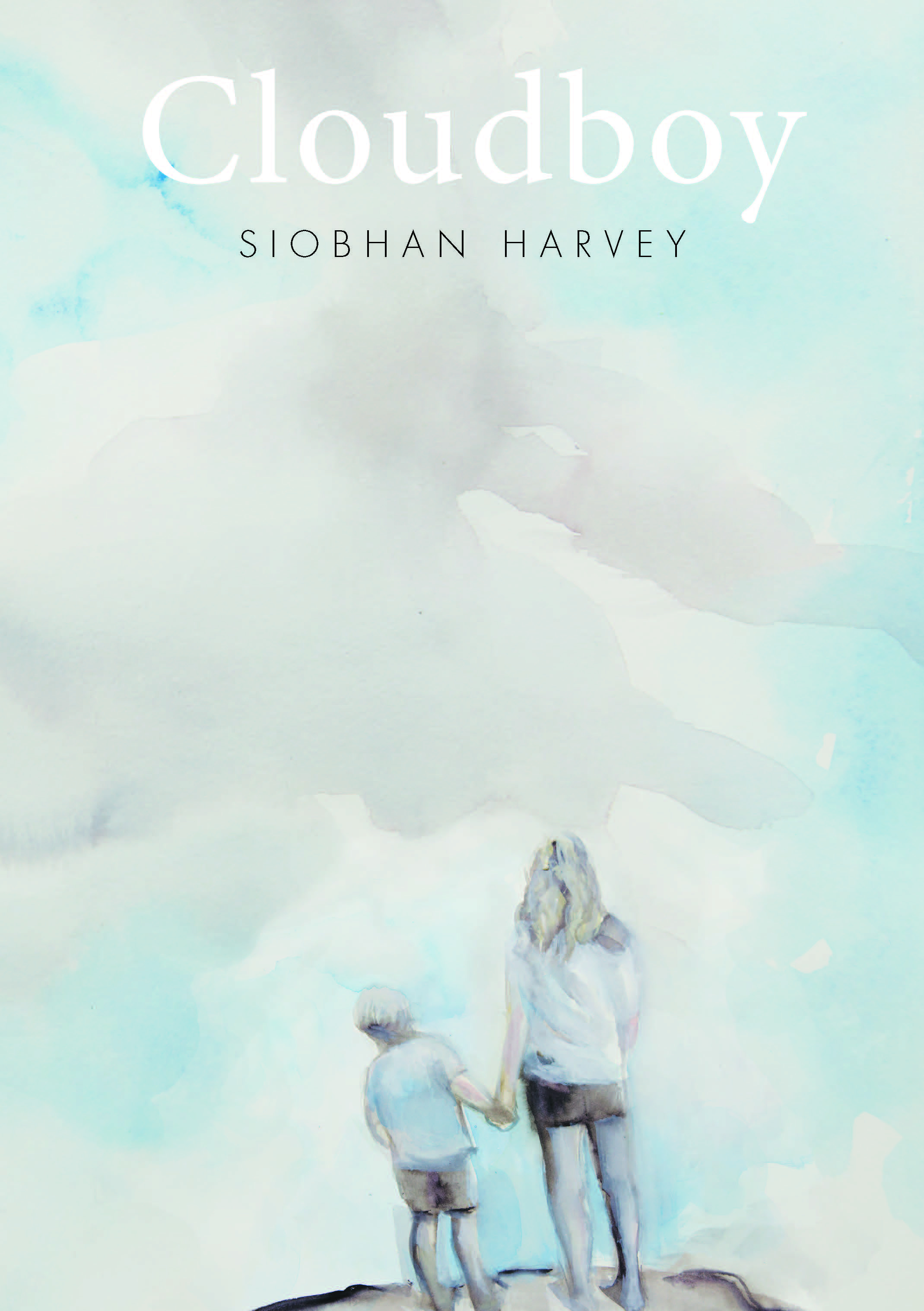
Siobhan Harvey’s new poetry collection, Cloudboy (Otago University Press, 2014), won the Kathleen Grattan Award for Poetry in 2013. The collection navigates Siobhan’s experience as the mother of an autistic young son. Without knowledge of this governing theme, the title of the collection summons something fablesque, fairytale-like and wondrous and conjures an ability to read clouds as well as exist in the clouds. Either way, the title is a magical entry point. With knowledge of the book’s genesis however, the title is even more resonant. Poignant. There is a sense that the tough, earthy detail is going to be tempered by threads of the ethereal. The beautiful cover painting by Allie Eagle was painted specifically for the book.

harvey_cover-1    harvey_cover-1

When I think of clouds, I think of the ephemeral, but that notion slips into a fertile chain of thought—to an ability to be full, to add beauty to an ever changing skyscape, to cast shadows, to release life-sustaining water. The first section of poems is entitled ‘The Autistic Child Considered as a Cloud,’ and it is as though the boy is filtered thorough these cloud attributes (or clouds are filtered through the boy’s attributes). The poem ‘Stratus’ brings together acute personal detail: ‘Just out of our reach is the Cloudboy, we know,/ who dances in heavy rain, wets himself, mutters/ complaints like madness, and is a bogeychild/ other mothers warn their darlings about.’ This is real. This is uncomfortable. This is at a distance from most of us. It is as though he is aloft with ice crystals forming about him.

Sometime the collection feels like a survival kit for the mother as she writes into and out of her son and her patience—he, fathomable, unfathomable, close, distant, complicated, much and ever loved. The poetry seeps and grows and amasses what it must be like to be the anchor, to be constantly motivated by care and concern. How then to translate such an experience into poetry? These poems offer insights into the autistic experience, yet it is not a matter of judging the autistic condition or the choices the poet made in how to represent it. As John Marsden said in his stimulating presentation to school students at the Auckland Writers Festival—we need to learn ‘to throw rule books up in the air and to find the way that suits us as writers,’ to be marvellously creative and not depend upon paradigmatic choices or models that constrain (are we becoming more and more regulated at every educational turn and less able to take risks in writing endeavours at any level?).

Siobhan offers poetry—a multi-pronged engagement with her subject matter—that unsettles and resettles rhythms, images, juxtapositions, syntax, motifs, stable ground. Tropes radiate out from the son. Each poem has a white-hot heart that grips you tight and shifts the way you see things. There is the lyrical lift of line and the difficult narrative thread. This, a musical tapestry (yes ear and eye hooked!) at the beginning of ‘Arcus’:

‘Arcus is a coal-lick Cloudboy slinking its way

back to the nights its mother, pregnant

with being, prowled from cold bed

in dead of dusk to drop before bunker, hands clasped

to dark gold, her lap-lap-lapping drawing out

tastes of liquorice, truffle and salty balsamic

beneath the comfortless cry of morepork and moon’

Siobhan shows us the ability of poetry to take you deep into human experience that is fugitive, unrepresentable, unfathomable. You read these poems and something in you shifts; the way we face both the difficult child and the mother of the difficult child. The way we exist within systems that encourage us to conform, contain, confine, manage and control. The way we have notions of the child as a platonic ideal; ever unattainable, this perfect version, in the swamping dark. Cloudboy, like the sky itself, is changeable and hard to grasp; he doesn’t fit here but he fits perfectly there. He knows this and misses that with his ‘hungry mind.’ He frustrates and confuses and absorbs. He becomes more than an idea (the austistic child), he comes aching real through the vital detail Siobhan gathers: ‘On day one, he sits in a chiton, of white tape/ reading Republic.’ ‘His hair was a hat shaped/ from the fleece of karakul sheep.’ ‘Studying Aberhart, Cloudboy takes up a camera, empties land/ of everyone except his mother’ ‘These are the rare days/ when the child is quiet and compliant,/ when there’s no translation of Russian/ or Sanskrit, no constant questioning, no/ forceful negotiations at the dinner table/ (I only eat broccoli at weekends …) no devouring soap,/ being Superman, writing acrostic poems’.

The poems move through experiences that demand the fortitude of the mother, but there are also moments of joy. Touchingly so: ‘the sound of Cloudboy singing will be more/ than enough to lay down the lines of this poem.’ Siobhan’s new collection is a collection that takes daring and necessary flight in order to lay down loving anchors, and it reminds me why poetry matters. There are a thousand ways this experience could be transformed into poetry. This is just one of them and it moved me profoundly.


NZ Book Council page

Poetry Archive page

Otago University page

Otago University Press page


A perfect little parcel from Cilla McQueen– it dazzles, it lifts, it sets you loose in the theatre of the past and amidst the heavenly electricity of words


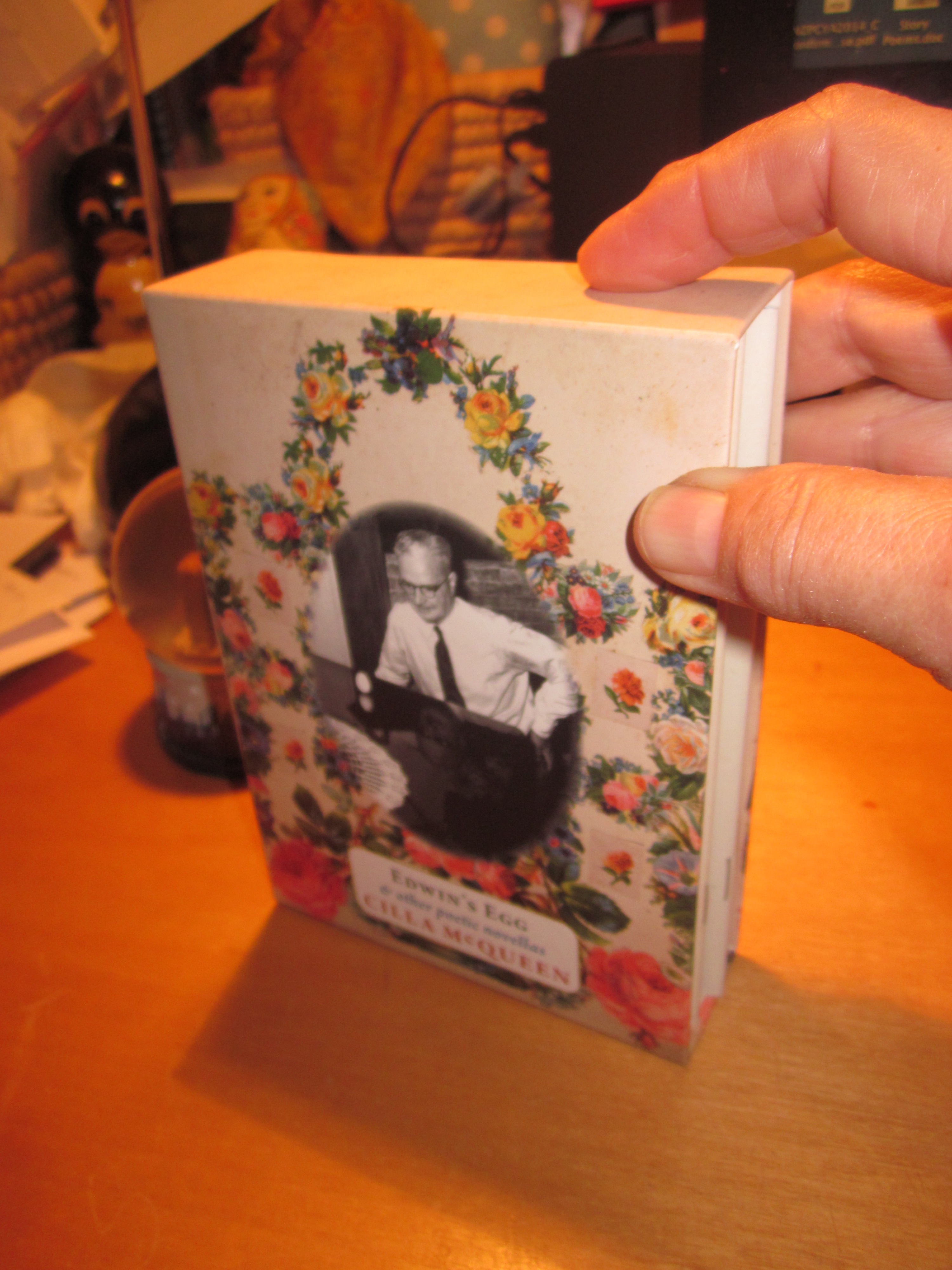
IMG_4576  IMG_4576

Cilla McQueen, Edwin’s Egg & other Poetic Novellas Otago University Press, 2014

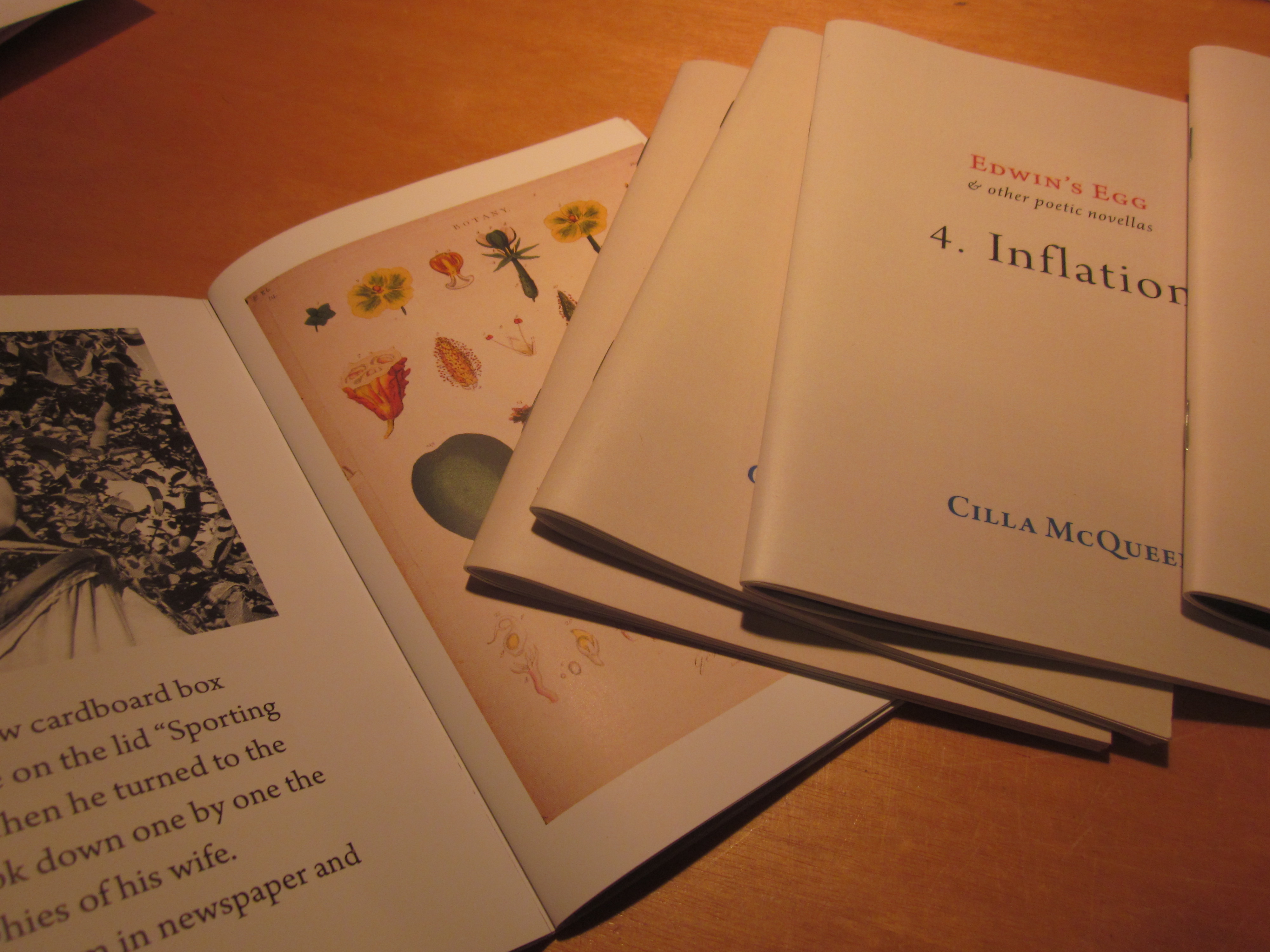
When this little parcel arrived in the post I oohed and I aahed at the sheer delight of it. Cilla McQueen, who has a track record of very fine poetry, has written eight little novellas and Otago University Press has placed the eight beige notebooks in a gorgeous little box. Exquisite. Heavenly. You could read these in a flash but I have savoured and lingered and dawdled, and now that I have finished, I still don’t want to let go.

Novellas, yes. But also poetry, as every single line resonates in aural honey and semantic wonder. You track a narrative thread that buckles and hitches and loops and leapfrogs. The connections gather, the disconnections give joy and the gaps are beautifully fertile.

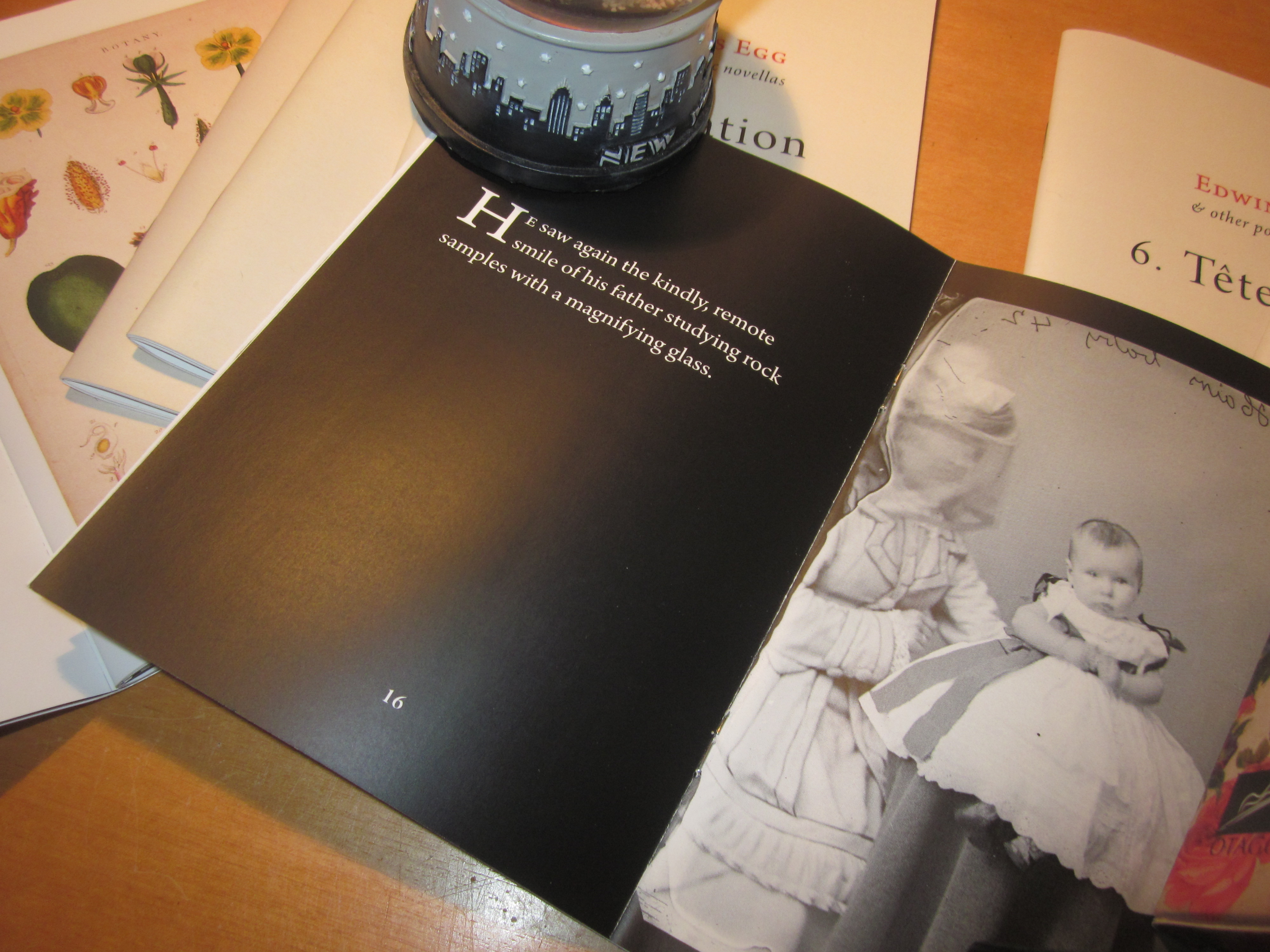
Each page of text is accompanied by a photograph from the National Library archives and each photograph acts as a springboard for the writing. The images are acknowledged in the back of each booklet. You can see what a haven the archives were for Cilla as these archival images are startling, witty, beautiful, nostalgic, astonishing.

You can read the booklets in four key ways. You can read the images, you can read each individual page of text (like a mini prose poem), you can read the whole sequence of novellas and absorb the connections, disconnections and gaps, and finally you can move back and forth across the luminous bridges between image and text. The latter is particularly rewarding. You are leapfrogged to your own private storehouse (memory theatre) of preserved anecdotes, objects vividly clear, snippets of conversation and memory shards. As you gather momentum in this extraordinary reading experience, it all builds to a magical, other-wordly narrative, bith visual and textual.

Cilla has not embarked upon a literal transcription of a framed scene into poetry or narrative. There are subtle and varied links, rebounding motifs and themes (especially the egg), humour, wit, economy. Sometimes it is like a jump-pad for free association but there is narrative glue at work here. These novellas holds together in a porous, elastic, lithe kind of way (if that makes sense!).

I like the way characters keep making appearances as though walking in from stage left or stage right: Edwin, Beryl, Eric, Doris, Digby. I love the way they spark with and away from the images and lay the seeds for their own, staccato threads.

I want to quote everything, but here are a handful of sentences that stalled me:

The more imagination grasps at an idea the greater the void created.

A man is so sudden , she thought.

He looked up at the sky’s blue eyelid, sealed by day and opening at night.

His yolk was warm amber in a white crucible.

Edwin gloomily sorted through the remains of his marriage.

No chance with this hip, Doris thought.


The novellas were part of the project Cilla undertook as NZ Poet Laureate (2009-2011) and were published in chapters on the Laureate website as ‘Serial.’ See here for details. Edwin’s Egg is unlike anything I have read in New Zealand literature– it dazzles, it lifts, it sets you loose in the theatre of the past and amidst the heavenly electricity of words.

IMG_4573  IMG_4571

Otago University Press page

NZ Book Council page

NZEPC author page

Poetry Archive

NZ Poet Laureate page


Nick Ascroft on CK Stead’s The Yellow Buoy at Landfall Review Online– this review is sizzling!

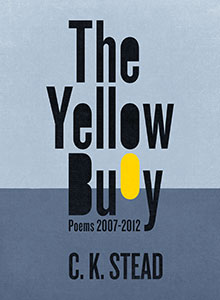
cp-yellow-buoy

Landfall Review Online is one of the best sources of poetry reviews currently available to us. Here, a reviewer gets to write in depth on a single volume of poetry, taking whatever style or manner of critiquing they like. Not all books get reviewed (understandably) but those that do get reviewed well. Nick Ascroft has just written a sizzling review on CK Stead’s most recent poetry collection. If someone were to write about my work with this keenness of engagement and propulsion of ideas I would be utterly flattered — whatever they thought of the my poetry. This is the sort of review that raises fertile questions but that also sends you to the most important thing at hand, the poetry itself. It is an exhilarating and stimulating read. Thank you!

I have posted a brief extract with a link to the full review below:

The Yellow Buoy: Poems 2007–2012, by C.K. Stead, (Auckland University Press, 2013), 144 pp., $27.99

The poems of C.K. Stead ‘get poetry’. If I could choose any archetype for all budding poets to emulate it would be he who is perhaps the last of the double-initials-and-surname poets. The kind of adjectives one attaches to his style sound unflattering: honest, sturdy, reliable, unembellished, intelligible, sober, unfestooned, humble, un-baroque-or-rococo. Words are used artfully, but not deferred to or privileged above sense. The sound of words is not forgotten, but the poems are never in search of euphony. Images and metaphor abound, but again are precisely observed. Nothing seems exaggerated; nothing tries overtly to be or seem impressive. The subject has been selected because the poet knows it is interesting as is. Avoid ambition, poets. Avoid – ugh – flash. Avoid post-modernism. Embrace discipline. Stead’s durable archetype is of a poet like a plumber, no self-importance attached, just another well-functioning toilet at the end of a day’s work.

But there is no one ‘poetry’ to ‘get’ of course. Instead, it comes in many forms, equally as deserving of the word ‘poem’, and is equally admired – by opposing groups of readers, often. Every attentive reader has a set of poems they have read and admired: a set of ‘poems that get it’. A set of poems they are prepared to promote and defend. To me this is what a critic does, defending as one braying voice in the wilderness, clutching a poem ‘set’ and asserting an opinion. I admire critics that speak to their vision of the truth. I think their judgements, often more sharply drawn and decisive than our own, help us to shape or frame our own thinking. We may vehemently disagree, and perhaps even be hoodwinked by rhetoric to agree when perhaps we shouldn’t, but either way the conversation shapes us. The best critics to my mind are both curmudgeons and creeps: challenging the reader all the way. Accordingly, I have defaced my way through Stead’s latest collection, The Yellow Buoy: Poems 2007–2012, drawing creepy and curmudgeonly faces in the margins.

Review here.

Helen Rickerby’s Cinema: an aperture into the magically fizzing world we inhabit

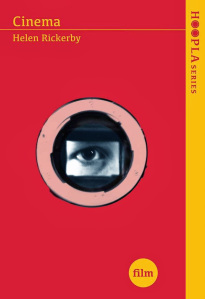
cinema-front  cinema-front

Helen Rickerby, Cinema, Mākaro Press, 2014 (part of the Hoopla Series)

‘With a whirr and a click/ we’ve conquered distance and memory’

There is an anecdote that the Italian film directors, the Taviani brothers, saw a movie when they were adolescents that rebounded a version of their world back to them (the constellation and collision of worlds that we know as Italy) and they dramatically said, ‘Cinema or death!’ Such boldness in the light of this shared epiphany.

Helen Rickerby’s terrific new poetry collection takes you into the world of cinema. Fittingly, the first poem is entitled ‘When the Lights Go Down.’ I immediately stalled on the title and pondered on the shared experience of reading poetry and watching a film. Even in the public space of a cinema, there is something intimate and private about your immersion in the cinematic world. It is comparable to entering a splendid poem and letting the world fade to pitch black along with the barking dog and the wet laundry— it’s just you and the poem.

In this book, ‘cinema’ is a thematic glue that gives the collection cohesion, but it is also the ingredient that animates at the level of detail. If you love film, and you have a history of film viewing, then this collection offers abundant rewards.

An early poem, ‘Revolutions,’ leads you into various meanings of the word from the click and whirr of the camera and the projector to the daring work of pioneer filmmakers. And so it is with the poems– the poetic effects are various, whether humorous, confessional, inventive, challenging, insightful, quirky.

There are a series of wry poems that re-imagine the life of a friend or Helen herself as directed by a particular filmmaker (Ken Russell, Sergio Leone, Quentin Tarantino, Stanley Kubrick, Jane Campion, and so on). ‘Chris’s life, as directed by Ken Russell’ is particularly witty. When Chris awakes to find ‘an anteater on my chest/ tearing at my throat’ it is , as Ken says, ‘the anteater of self-doubt.’

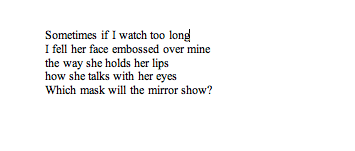
There is the way cinematic life has the ability to seep into and become saturated in your own (or vice versa) as the title of one poem suggests (‘Impressionable and impressed’). Thus the last verse of this poem hooks you:

Screen shot 2014-04-29 at 11.35.27 AM

What these poems do, too, is capture the magical, mysterious pull of cinema where there is a physical interplay between light and dark that then shifts beyond the material to an interplay between intellectual and emotional levels. Light and dark’s electric connections become the connections between life and death, desire and indifference, ghosts and humanity, real life and fantasies. In ‘Camera’ there are numerous such ripples —and the opening lines signpost the burgeoning magic: ‘There are lots of different stairs to be climbed/ each with a different kind of railing.’

The collection has an intermission! As though we can make our way out of the dark to collect popcorn or ice cream. I have never thought of this before, but I feel like I install a miniature intermission after each poem I read (if it is any good!) in order to absorb the poetic complexities or savour the poetic simplicity.

I love the way Helen’s collection pulls you into a poetic mis-en-abyme—into layers and levels of translucence, symbols, self exposure, tangible details, ephemeral details and above all a contagious love of film. Not that it’s a terrifying vortex! It is just deliciously complex.

Several longer poems stood out for me. I love the glorious ‘Two or three things I know about them’ which carries you along the white-hot tension between Jean-Luc Goddard and François Truffaut, and their different approaches to making a film. I also particularly loved ‘Symbols that make up the breaking up girl,’ a lush poem in parts where each part exudes a joy of language.  Then there is the wonderful density and intensity of detail, with shifting tones and fitting repetition, in ‘A bell, a summer, a forest.’ I also delighted in ‘Nine movies,’ a sequence of poems that filter love and personal life through somebody else’s movie plot, incidents and discoveries.

Each poem in this collection is like an aperture into the magical world of cinema which in turn is an aperture into the magically fizzing world we inhabit—in all its shades of light and dark. And this then becomes poetry. As a big cinema fan, I loved it.

photo

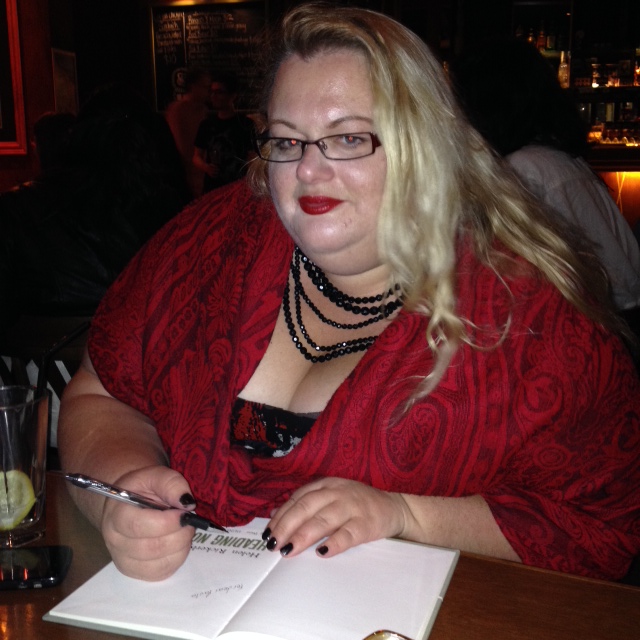
Helen is a poet, publisher and public servant with three previous poetry collections to her name. She runs the boutique Seraph Press and is the co-managing director of JAAM. Along with Anna Jackson and Angelina Sbroma, Helen is organising Truth or Beauty: Poetry and Biography, an upcoming conference at Victoria University. Details here.

Mākaro Press website Hoopla page

Helen Rickerby’s Seraph Press

Helen’s blog Winged Ink

An interview with Helen


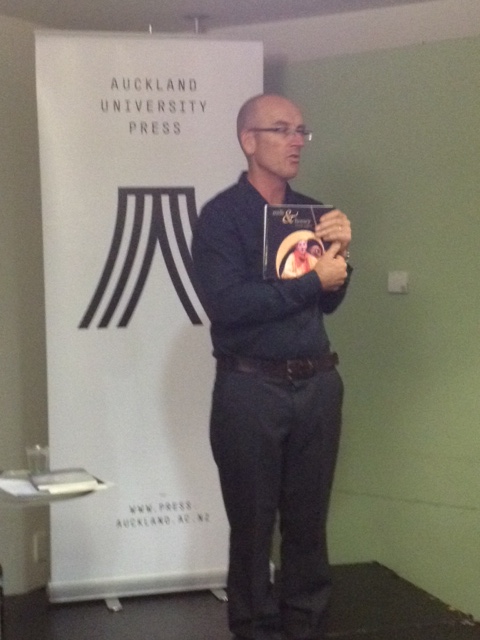
Michele Leggott’s book launch– Heartland drew us in close

cp-heartland  cp-heartland

Michele Leggott, Heartland, Auckland University Press, 2014

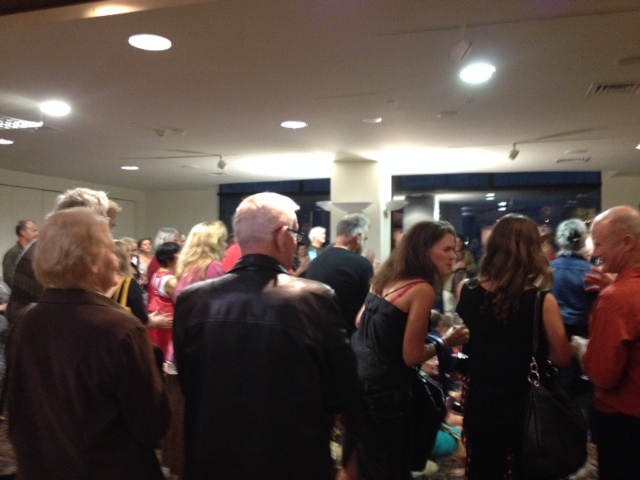
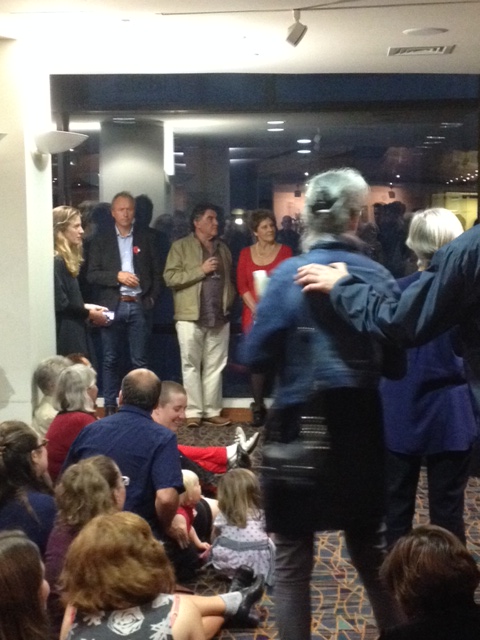
It was a feisty storm in Auckland but a good crowd turned out to help Michele Leggot launch her new collection, Heartland, at Auckland Central Library last Thursday.

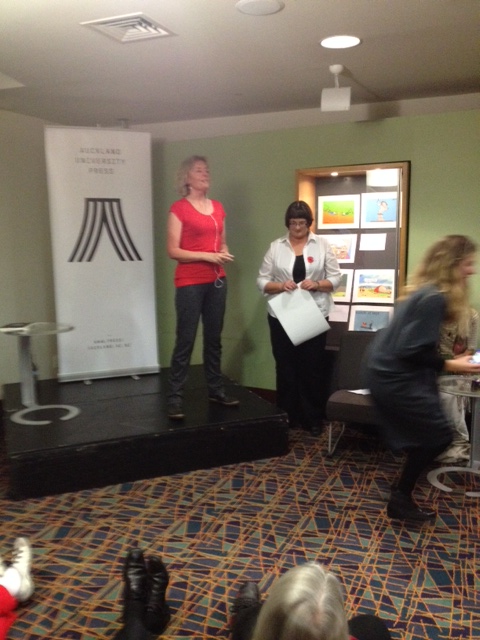
John Newton took us on a tour of the shapes of Michele’s books and reminded us how they have shifted from landscape to portrait, and how that physical shift also saw a shift in other ways. The poems have become more transparent, have embraced narrative to a greater degree and have employed a less fragmented syntax. John also suggested, and I think this is the case for many poets, that Michele’s body of work is like one long poem in installments (perhaps the landscape poem and now the portrait poem).

As John was talking, I went off on a train of thought. I feel that Mirabile Dictu and now Heartland have opened themselves wider to the words and narratives in the world that is close at hand. These books draw in family in way that is close, intimate and touching in both semantic and linguistic choices. And then it is as though these books are held open for family, so these loved ones may gain entry as readers.

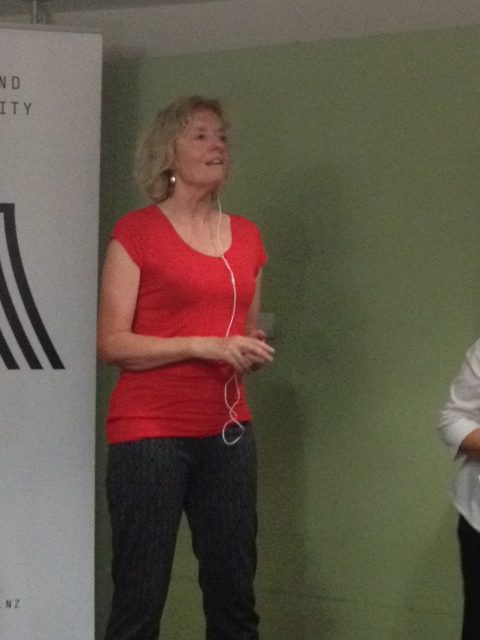
Michele read three short poems using her listening device rather than the book. It was just wonderful to hear her voice lift the words from the page. I was particularly taken with this comment: ‘Every book should have a way of stepping out of it—by stepping into what’s coming next.’ In this case the Matapouri poem in the book. I am fascinated by the way certain geographical locations have white-hot resonance. Having grown up in Whangarei and spent most summers on the Tutakaka coast (and still do) that physical landscape triggers all kinds of poetic responses in my secret writing life. I can’t wait to see where Michele is heading next.

photo photo 1 photo 2 photo 1

photo

Gregory O’Brien in conversation with Kim Hill (on Alan Brunton) Just wonderful!

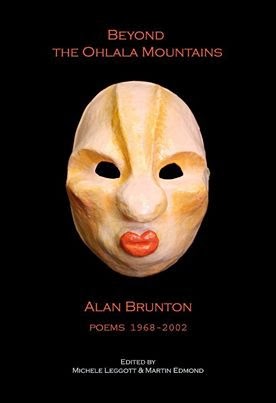
This is a wonderful discussion — Kim Hill and Gregory O’Brien talking about Alan Brunton and Alan’s new book, Beyond the Ohlala Mountains. It was terrific hearing archival material of Alan reading on the show. You can hear more of that here. You can also catch up with the splendid book launch here.

BEYOND THE OHLALA MOUNTAINS

Poetry with Gregory O’Brien: Alan Brunton  here.

Discussing the poems of Alan Brunton, as collected in Beyond the Ohlala Mountains: Alan Brunton Poems 1968-2002 (Titus Books, 2014) edited by Michele Leggott and Martin Edmond.

From Saturday Morning on 05 Apr 2014

Alice Miller’s debut poetry collection liberates a way of reading that defies limits

IMG_8526    THE LIMITS_CONCEPTS_01


The Limits, Alice Miller (Auckland University Press, 2014)

Alice Miller, an award-winning author, has just published her debut poetry collection both in New Zealand (Auckland University Press) and in Britain (Shearsman, due May). Alice’s awards indicate the eclectic stretch of her writing: a Creative New Zealand Louis Johnson Bursary, the BNZ Katherine Mansfield Premier Award for Fiction, the Landfall Essay Prize and the Royal Society of New Zealand Manhire Prize. She was the Glenn Schaeffer Fellow at the Iowa Writers’ Workshop and graduated from the International Institute of Modern Letters at Victoria University with an MA with Distinction. Alice has also worked as an historian, studied music and taught creative writing. She held the recent Summer Residency at the Michael King Writer’s Centre in Auckland. She usually lives in Vienna where she is Associate Editor of The Vienna Review.

The Limits is a slender volume (37 poems) with widespread possibilities. The poems are quiet, spare and luminous. Each poem is like a marvellous vista—it is as though you keep returning to the same spot on a hill to contemplate a view because that view is in a glorious state of flux. Always on the move, sustaining, transcendental. This is what it is like to read an Alice Miller poem.

The poems sit in mist or silence or enigma, or puzzling and then rewarding fragments. This is not prosaic writing, the plain everyday lilt we find in much of our local poetry (nothing wrong with that!). If there is a story to be told, it is told in a poetic manner (but not ornate lines that strive for the Romantic or the Baroque). If there is a story to be told, it is told though the poetic art of concealment, of ellipsis: the white space on the page, the silent beat in the rhythm and the fertility of the gap. This shifts the manner of reading—no ambulatory beat here. Instead, as reader, you stall and you ponder, you concentrate and you backtrack. Most of all, and this is what I love about these poems, you drift in the poetic space, feeding both intellect and heart.

Alice also embraces the abstract. As you move through a poem, it is as though you are moving through the surreal, the unreal, the unearthy, a dreaminess that is one step back from the grit and grimy edge of the real, of everyday life with its bumps and hollows. Yet Alice does something extraordinary—she gives life to the philosophical, the dreamlike, the mist beyond limits and within limits. Enigmatic detail compounds. Things may be things and nothing more or they may shimmer and shine as metaphor or symbol.

The collection is divided into four parts: Skin, Steps, Earth, Body. It is fascinating to link these governing entities back to the title of the book; the way there are borders (inside/outside, corporeal/heavenly, containment/limitlessness), the way there is implicit movement and travel (the earth on its axis, the steps) and the way all roads lead back to what it is to be human (are there limits?).

Sometimes single lines leap out and then you leap with them:

‘Still the spaces keep growling for something.’

‘I may wander but my wonder’s still.’

‘You’ll always have life instead of art.

‘Tonight a scrunch of air between fingers/ what more do you expect?’

‘You are locked/ in the wing/ of history/ with blood still/ stuck in your veins.’

‘I look out, and the terms are still sloshing/ by our window, past cobwebs nestled/ in hedges like fog.’

‘I fashion some antlers/ to guard my brain.’


Alice’s poems are so beautifully crafted. ‘Apple’ is an earthquake poem and it is the strand of verbs that constitute a shudder and aching ripple through the poem (cracked, reaching, brush, crane, caress, wrench, rip, split, shudder, broke, tore). These verbs create a moving ripple effect through the poem that heightens the intensity and is matched by the shifting placement of lines upon the page. To me Alice’s poetic choices get to some kind of poetic essence (is this possible?) and then breaks out visually, semantically, emotionally to wider effect.

At times the syntax and vocabulary are fluent and reachable; at other times they seem deliciously out-of-kilter, quirky even. ‘In Season’ is a superb example of the latter. There are the trademark gaps, the points of ellipses, the dense accumulation of detail. It might be an unexpected verb choice: (‘Listen to waves mutter/ as sun butters the water’ or ‘A couple/ of boots stroke the road’). The overall effect, in my view, is a finely crafted stream-of-consciousness (yes, an oxymoron).

There are other ways to enter these poems. You can follow the deeply grooved tracks of love (poems are often addressed to a mysterious ‘you’ and the love felt is palpable). You can also follow in the steps of the historian and re-enter historical or mythical moments and figures (Troy, Caesar, Rome’s Senate, war, Brahms, Picasso).

Alice’s debut collection liberates a way of reading that defies limits, that poses limits and that makes dazzling connections. Each poem takes you to the top of the hill where you sit to behold the view, a view that shifts and settles, shifts and settles, in countless extraordinary ways.


See my interview with Alice here.

Alice Miller website

Auckland University Press page

Shearsman UK page

On Antarctica on New Zealand Book Council page

Alice Miller’s poetry duets — The Red Room page

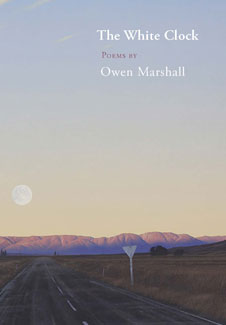
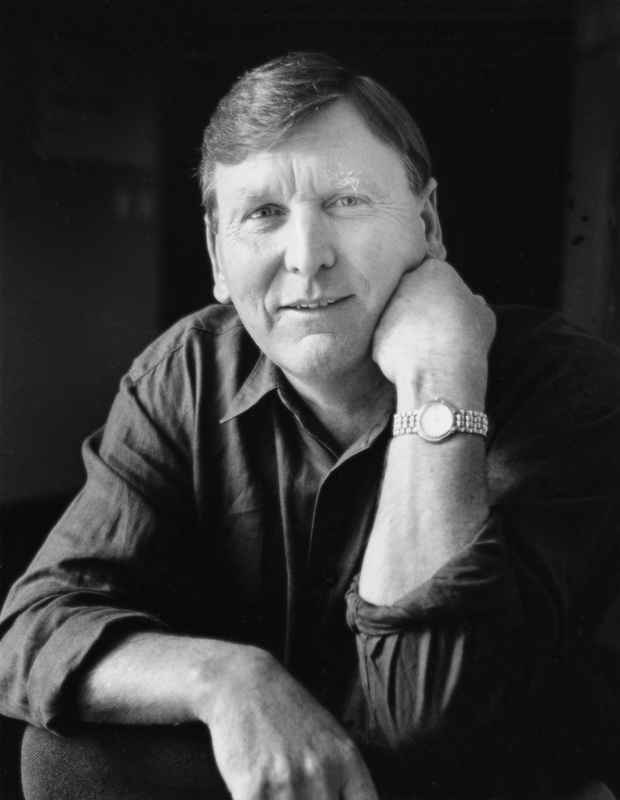
Owen Marshall’s The White Clock provides a frame for shimmering contemplation

otago065671   3378992_orig

Owen Marshall, The White Clock, Otago University Press, 2014

In Owen Marshall’s third poetry collection, The White Clock, poems provide a frame for contemplation—for reflecting back into the hills and dales of memory and for musing upon the physical and metaphysical currents of the world and of living. The adept fiction writer is at work here, with his trademark economy and grace, but so too is the roving mind of a philosopher. There is also the bird watcher (I should say life watcher) as Owen trains his figurative binoculars upon detail that renders his lines lucid and vital. Not all poems work for me, but those that do (the majority), dig and delve into the essence of humanness. There is humour (wry and infectious) and there is tenderness. As a whole the collection provides lovely contours of thought and feeling.

The title poem takes us in all directions—from the ‘multi-limbed Leonardo man’ to the idea that ‘Time writ this large is discomforting.’ This sway between the transient and the concrete, the hard to pin down and the readily held, is a terrific vein throughout the book. Thus ‘Freeze Frame’ observes the fleetingness of time. The opening line, ‘In the spool that is my life,’ makes a nice link to the way photographs also share ‘the stabbing sadness/ of glimpsed transience.’

Owen embraces playfulness. ‘Dog Winds’ does just that. He links a season to a wind and that season to a dog.

Winter wind is the starving bitch

heeding no one’s whistle, baring

cold, white teeth if faced, with ribs

of adversity and a muzzle-up howl.


Or he returns to the fable of the tortoise and the hare and resists favouring the tortoise that is ‘commensurately wise’ and endures ‘an eternity of slow vegetative mastication.’ Instead:

Better a mad March dance before

a lover, the sprint with wind in

your hair, the ultimate exhilaration

within the headlights’ glorious flare.


In ‘Watcher on the Shore,’ Owen (or narrating voice) confesses he prefers ‘Brueghel’s/ trivial and persistent cruelties’ to ‘transcendent, uplifting paintings.’ Is the last line then a cue for us to see the darker line of thought in the collection?

Like old Jacques I find more sustenance

in melancholy than any other humour.


Sometimes the humour, though, is laugh out loud. When the poet-narrator is about to talk about ‘narrative point of view/ and psychic distance’ he looks into the crowd and spots a woman asleep. Disconcerting, hilarious:

[  ] Golf balls could

have been dropped into her mouth

and there was nothing I could say

that would add to her contentment.


What I particularly love about this collection is the way the poet opens himself up for inspection—through what he observes, experiences and thinks. It imbues the poems with an acute truthfulness (which goes against the grain of poetic game play and irony). One black coat (now a little shabby) was purchased in Menton and conjures up past memories in ‘Habit.’ It is the last verse that shows Owen at his perceptive best:

[   ] We

are a fit, and I cannot bear its

replacement with any companion

less familiar with my life and form.


The White Clock, like the Graeme Sydney image on the cover, provides a frame for shimmering contemplation.


Otago University Press page

New Zealand Book Council page

Owen Marshall web page

Christchurch City Library interview

Random House author page

Marty Smith’s Horse with a Hat– you get grit and you get open views

good one 7 cat

Marty Smith, Horse with a Hat, Victoria University Press, 2014

Marty Smith’s debut collection, Horse with a Hat, is a gorgeous book. The lush and evocative collages by Bendan O’Brien draw you in close, in a way that is both haunting and intimate. His cover collage replicates the way a poem can lead you to a wider picture (the ocean and its lure of voyage) and the catching detail (the pattern on a shell, the way a horse holds its head in anticipation). Heavenly!

The book itself is equally captivating. Horse with a Hat revels in poetry as a way of tracking a life, of harnessing an anecdote. The poems delve into relationships, previous generations, magical moments, pockets of history and, while they exude warmth and joy, Marty is unafraid of darker things, earthier things (violence, the threat of violence, grease and oil, bad tempers, men at war).

Marty was raised on a remote hill country farm between Pahiatua and the ocean so ‘bands of wild horses moving like wind patterns’ is as familiar to her as putting ‘the bloody thing [the lamb] out of its misery.’ Having learnt to ride, read and love horses from an early age, the animal is lovingly tended in the poems. Early on, the autobiographical and poetic motif is set when the father teaches the daughter how to ride bareback (‘Dad’s horses’). The emotional ripples—of a young girl trying to hold on tight with knees or keep up with the distant dot of her father—are poignant. So too is the poem’s lyrical beginning:

Dad’s horses

darken out the sun

I am at their knees looking up

at the lode star of the stirrup

and my four-storey father.

Horses are a nostalgic and potent link back to the author’s past, but they also connect the reader to the exhilarating movement of the poems (as though you are riding them bareback, wind in your hair so to speak). Poems are both reined in (diligently crafted) and set free (open to intuitive turns).

There is a sweet lyricism at work in these poems—from exquisite musical phrasing to biblical overtones to the pleasure of plain language in the service of narrative to gutsy dialogue. Here are some of my favourites:

‘I hide in the chook shed/ under a tin cold sky, thin bitter wind.’

‘It’s a demon—no it’s Dad, down in the dark/ sparks arcing off the grinder’

‘who flatten, who scatter’

‘I lived in the library. I was a child outside/ and I did not look up.’

‘He stays home with the slow slouch of cows’


There is terrific detail that adds vibrant life (yes, these poems are lived in!):

‘There are wasps all over the jam/ in the kitchen.’

‘the radio static fizzy, and raspberry biscuits.’

‘a heavy blur of rice’


And finally there are tropes that catch your eye:

‘My grandmother wore God like a glove/ to church’

‘the planes of light in the room’

‘bright flowers surprised to a standstill’


Marty’s collection takes you back to the child, to mother and father, and to country life, and in doing so you travel through sumptuous lines and layers. This is no rose-tinted memoir—you get grit and you get open views, you get life’s awkwardness and you get empathy. It is a fine debut.

Marty Smith teaches at Taradale High School, but she has also worked as a track-work rider in New Zealand and in England.

Horse_with_Hat_front_cover__77059.1385936731.220.220  Horse_with_Hat_front_cover__77059.1385936731.220.220  Horse_with_Hat_front_cover__77059.1385936731.220.220

Thanks to Victoria University Press, I have a copy of Horse and Hat for someone who likes or comments on this post.


Marty Smith’s website

Victoria University Press page

Blackmail Press multimedia performance and the stunning poem ‘Radar’

Marty Smith on Modern Lettuce