Tag Archives: NZ poet

Bob Orr’s book launch at Grey Lynn Library was packed out

P1000542

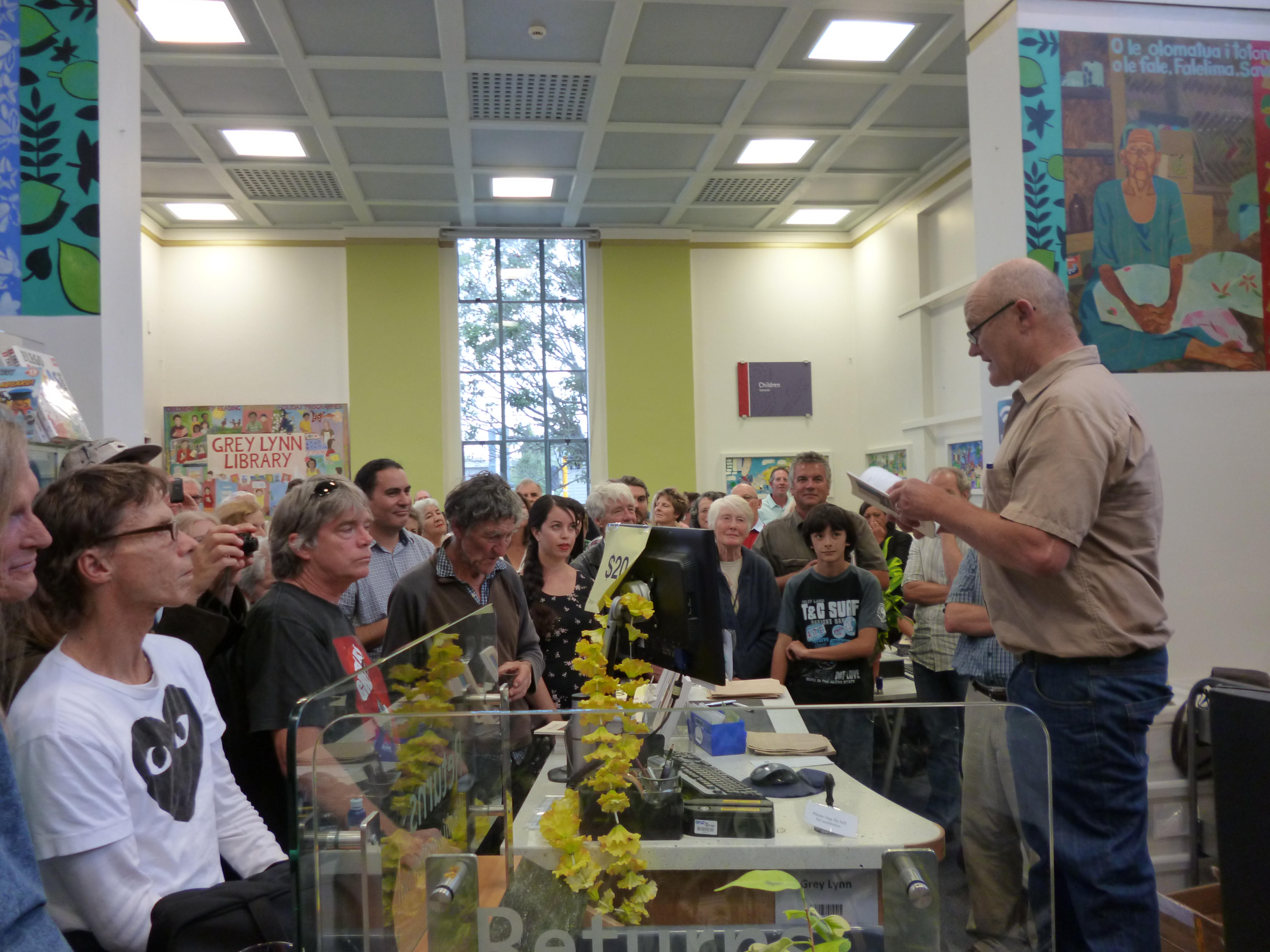
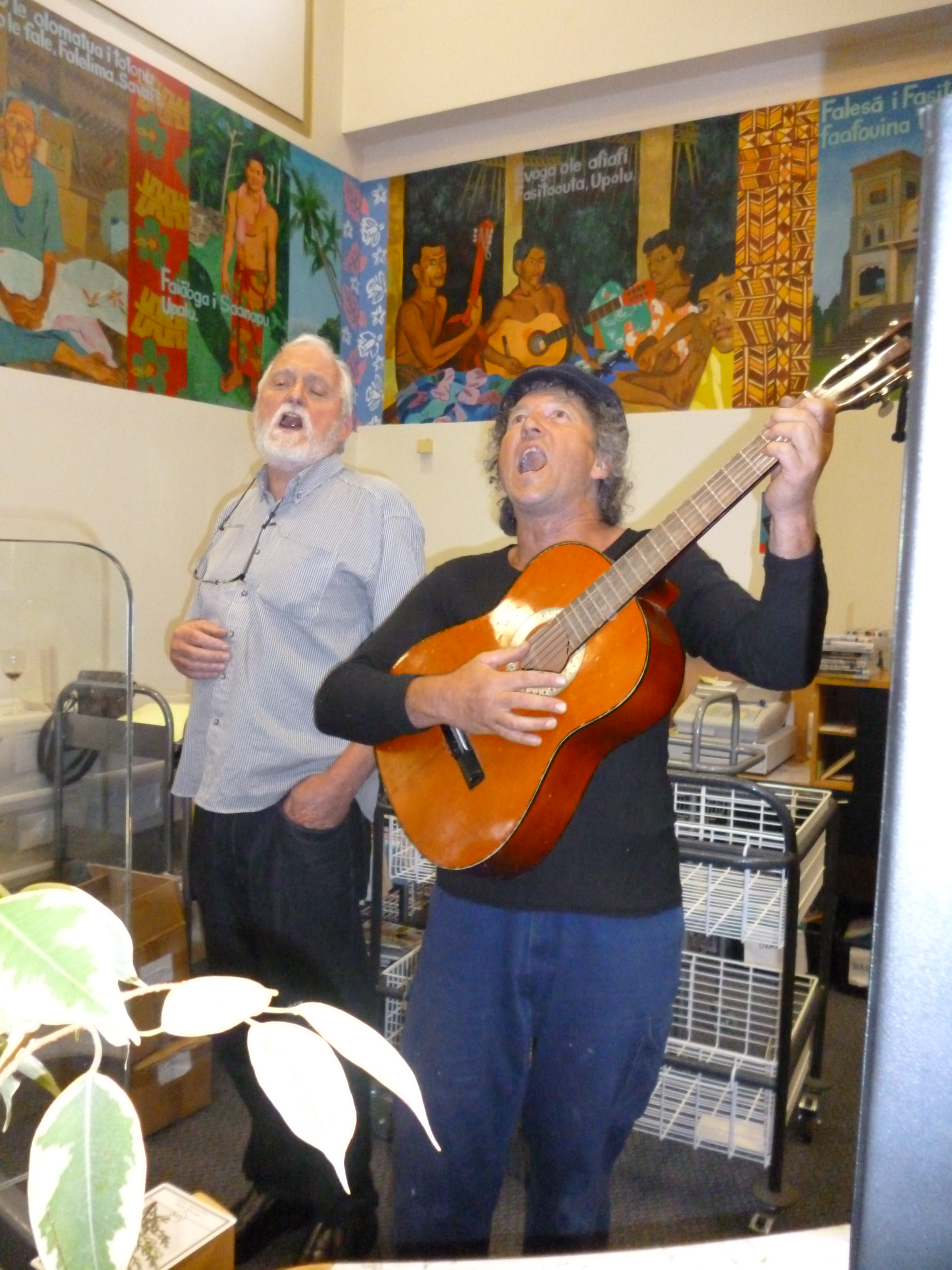
Grey Lynn Library was packed to the brim (I am talking as squished as sardines here) with poets, fans of poetry and Bob’s friend to celebrate the launch of his new collection, Odysseus in Woolloomooloo (Steele Roberts, 2014). The crowd was testimony to how much we love Bob’s poetry as I don’t recall seeing so many poets supporting an Auckland launch before. Grey Lynn Library is a beautiful old building and a superb place to launch a book. The photo only shows the left-hand side of the crowd (there was also the middle and the right-hand side!). Roger Steele sang a waiata with Brian Potiki.

P1000552

Lovely to see these kind of events in libraries! Roger Steele kicked off with a impassioned introduction and Bob read some poems that had the audience whooping with delight.

Here are my speech notes:

I am delighted to launch Bob’s new poetry collection. It is the eighth collection from a poet who was an active figure in 1960s and 70s poetry scene in Auckland and who has been writing ever since. [Roger picked me up for saying Bob is an underrated treasure on NZ’s literary landscape but I was suggesting this, not in terms of his extensive fan base, but other spotlights that miss him!).

This stunning new collection is that of a seasoned traveller — not just the harbours and seas of his working life, but also the harbours and seas of poetry (along with dreams, memory, city streets and so on). His poetry always takes you to far-off places with names and details that make your feet restless.

On the back of one of my favourite books of his, Valparaiso, he writes: ‘When I wrote this book, each poem was the beginning of an adventure.’ I am sure it is the same with this book.

I will declare from the outset that I love this book. This is what I love about it.

Travel, voyaging, the seas, foreign places have often featured in Bob’s poetry — the ocean is his personal seal upon a poem — but Bob shows so terrifically that poetry never renders any subject redundant.

I walk along the black sand at Te Henga early most mornings with lines of poems flicking in and out of my mind. I fell upon these of Bob’s with delight:

‘the broken blue urn of a east coast beach’

‘down an iron sand creek that glitters to the sea’

I love the way detail becomes gold nugget in the poems and the eye of the traveller is not immune to the details of home. Place names chart routes (KRd, Surrey Crescent, CircularQuay, Ithaca, the other side of Saturn). And then there are the juicy pockets of food: melons, apricots, nectarines, sandwiches. I love the way each poem is full of quite surprising turns. In ‘Foodhall Sutra’: ‘Jane from Thailand wonders if I’m a “rich man”/ How can I tell her/ that after eating a dish of Hainan chicken/ I feel that I most likely am.’

It is as though Bob as a poet has the ability to pause the clang and clatter of life and absorb a moment — and then leave traces of that clang and clatter (and life) in his poems.

Some poems are dedicated to other writers — holding and reading this book I get a sense of a poetry family: David Mitchell, Cilla McQueen, Martin Edmond and so on.

In one poem, Bob says, ‘I have no odyssey worth mentioning,’ as though the past is shadowy and hard to grasp. But, then, in the next poems, he steps into the shoes of Greek heros and heroines, smudging past and present to shine a different light on both. In one poem you get a Waikato farm, The NZ Women’s Weekly, a one-eyed giant as tall as an oak. Marvellous.

As a collection, Odysseus in Woolloomooloo, is tender, meditative, witty, measured, finely crafted, intimate, moving, lyrical. So many standout poems — from the understated narrative and emotional kick of ‘Afghanistan’ to the gentle confession to Cilla McQueen in ‘The South Island’ to the reflective turns in the title poem to the spare and haunting lyricism of the last poem, ‘After Villon.’

And from that final poem: ‘I’ve only got left the roads of this year/ catching their breath for the future.’

Reading this book is a way of catching your breath. Congratulations Bob!


Thanks to Bob and Steele Roberts I have a copy of the book to give to someone who likes or comments on this post.

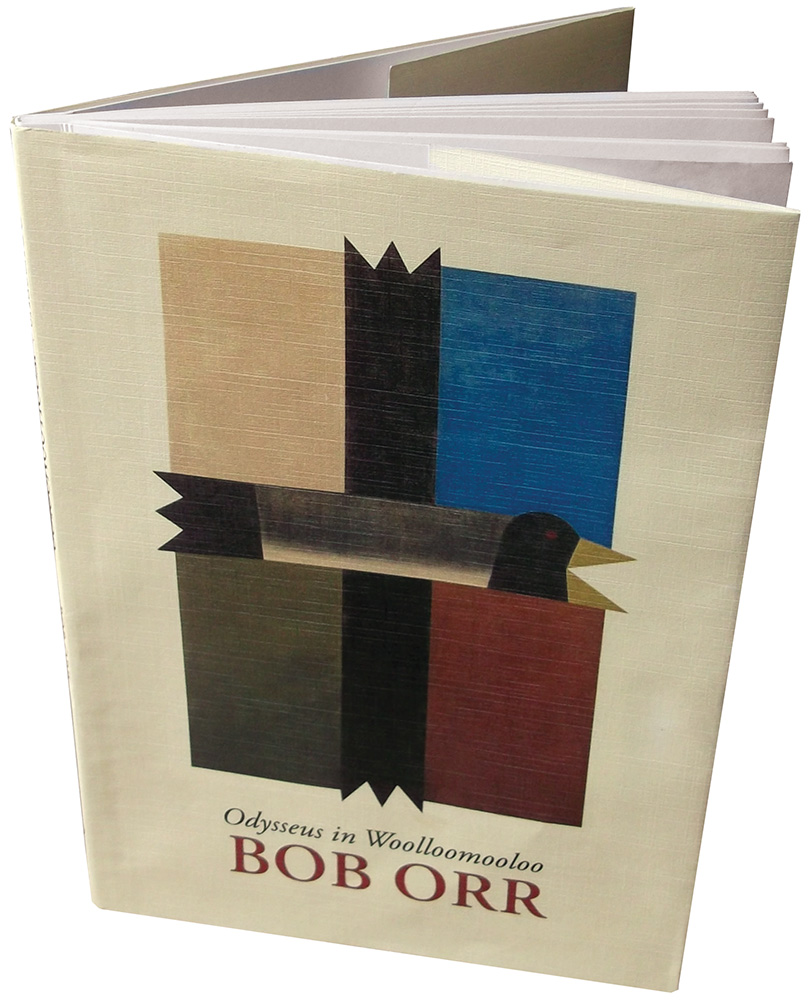
bob orr cover   bob orr cover

Bob Orr’s Odysseus in Woolloomooloo book launch

thumb_213.333333333213.333333333226234240Profile

Bob Orr has published seven collections of poetry that have gathered fans the length and breadth of New Zealand. I am delighted to be launching his eight collection, Odysseus in Woolloomooloo (Steele Roberts) tomorrow evening. The poems take you travelling — not just along Bob’s trademark oceans but down local streets and across the seas of poetry. The eye of the traveller-poet is not immune to the details of home, so this fine and tender collection is a treat for your heart as much as it is your wanderlust feet.

Book Launch details:

Grey Lynn Library 474 Great North Road (Next to St Joseph’s Church)

Tuesday 4th February 6.30 pm to 7.30 pm


bob orr cover  bob orr cover

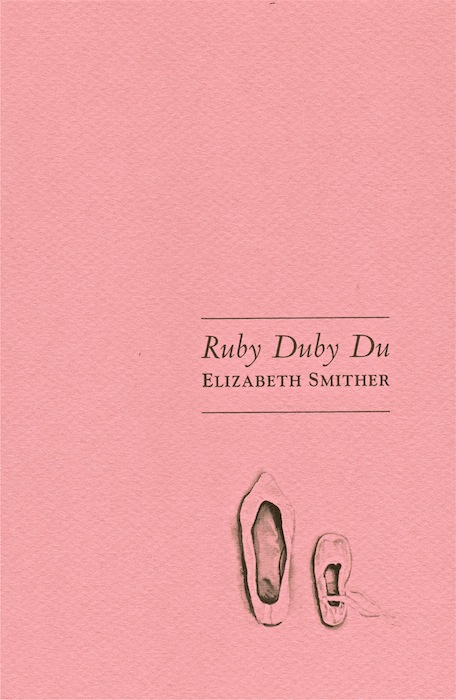
Elizabeth Smither’s Ruby Duby Du deserves to be under the pillow of every new mother and father

IMG_6152

Elizabeth Smither, Ruby Duby Du, Cold Hub Press, 2013

Elizabeth Smither is an award-wining poet and novelist. She was named New Zealand Poet Laureate in 2002 and was awarded the Prime Minister’s Award for Literary Achievement in Poetry in 2008. On the back of her new book, Ruby Duby Du, Elizabeth says, ‘None of these compares to being a grandmother.’

9780473268305 cover 9780473268305 cover 9780473268305 cover

This delightful book signals the burgeoning output of small presses –- handcrafted books with smallish print runs, scope for new poets to emerge, and established poets to publish miniature gems or take sidestepping risks. Elizabeth’s book, published by Dunedin’s Cold Hub Press, is a gold nugget of a book and deserves to be under the pillow of every new mother and father, and in the gift box of every newborn child. It is an utter delight from curling fingertip to wriggling toe.

The new collection, with delicate illustrations by artist Kathryn Madill, is a book of poems dedicated to Ruby (born 2011) from her grandmother, Elizabeth. It begins with the announcement of a pregnancy, and ends with Ruby in her father’s arms and the counting of stars. Love is both the movement and the anchor that holds Elizabeth’s poetry in warm embrace. These poems are intimate, personal and captivatingly real.

I was taken back, convincingly, mesmerisingly to the birth of my daughters — to a time when the world moves into acute and breathtaking focus (as though you have a new pair of glasses). To a time when certain things matter so much less and fade into pale.

Each poem resonates with a particular moment — measuring Ruby in the womb (‘the height of a tall vase/ a blue iris’); cleaning windows for Ruby’s visit (‘Your grandmother/ had clean windows for her first granddaughter/ and everything glowed from then’).

There is tenderness and charm, but there is also wit running through the veins of these poems — the cheekiness of the grandmother along with the deep love. In ‘The grandparents intervene’ (a terrific poem!) the grandparents await news of the birth in their separate houses (‘In two separate houses broken sleep/ and then you broke into the world, Ruby’). The poem ends on the two clocks (his ‘from a ship’ and hers ‘from a shop that sold antiques’). The clock is resonant of time to come and time past but is also enriched by these divergent origins.

Elizabeth’s wit is sparkling in ‘Ruby and the mock-rivalry.’ The baby (that can’t yet speak) tells the grandfather she wants to captain an ocean liner. The grandmother knows the only reason Ruby might want to go to sea is ‘to write a book in which case/ the breath of the sea might come in handy.’

More than anything, these poems are songs to Ruby. Elizabeth has drawn upon her craft as a poet, found the music in a line, the detail that you want to hold onto and share (let’s take a photograph and preserve this moment), the way the movement in a new life can generate delicious movement in a poem (what poem can survive without this). There is thought (the way some occurrences can be slipped through a philosophical filter) and there is heart (the way some things are steered by gut and intuition, along with love).

In ‘Ruby and the vegetable rockery,’ Elizabeth aligns silver beet and Ruby (‘Though they are unacquainted at present/ each is pulling itself up by the roots’). I have never read a poem where a baby and silver beet are poetic companions, but Elizabeth’s collection is full of surprises. The poem, like the book as a whole, is layered like the vegetable rockery – the poet has planted herself and Ruby in every nook and cranny, and you will brush against the sheer joy of new life. Elizabeth shows that poetry can put the world (in this case, Ruby) in loving focus. It is a gift to read. It is a gift to share!


New Zealand Book Council author page

University of Auckland author file

Auckland University Press author page

Hamesh Wyatt review of The Blue Coat

Caitlin Sinclair review of The Blue Coat

Bernadette Hall’s Life & Customs– such readerly movement is a like a breath of fresh air

IMG_1396

Bernadette Hall, Life & Customs, Victoria University Press, 2013

Bernadette Hall is an award-winning poet, mentor and anthologist living on the coast north of Christchurch. She has published numerous collections of poetry including the terrific The Lustre Jug (2009). She edited Like Love Poems: Selected Poems of Joanna Margaret Paul and The Judas Tree: Poems by Lorna Staveley Anker (see my review of the latter here). She has held a residency in County Cork, Ireland and has visited Antarctica courtesy of Antarctica New Zealand. Both those experiences have found their way into her poetry. You can read my interview with Bernadette here.

life_and_customs_front__40765.1372036384.140.215   life_and_customs_front__40765.1372036384.140.215   life_and_customs_front__40765.1372036384.140.215   life_and_customs_front__40765.1372036384.140.215

Bernadette’s latest book, Life & Customs, is a substantial collection that draws upon the layers of the world with such poetic finesse it is impossible not to fall in love with it. The book is in two parts with a ballet interlude. Bernadette opens with a quote by Wallace Stevens (this bit stood out for me: ‘Life’s nonsense pierces us with strange revelation’). It seems the perfect epigraph for the collection, as the poems enact moments of ‘life’s nonsense’ (you could say — strangeness, surprise) along with those ‘revelations’ (also unexpected, nourishing).

This is a book of home, of shifting geographies and roots laid down, of memory flashes and of loving attachments (‘this is all part of the long slow plunge into memory’). So it is no surprise the first poem, ‘how lovely to see you,’ is like a welcome mat. More than any other book I have read in an age, Bernadette welcomes you into a nook of poetic warmth. This book exudes warmth, there is no extravagant game playing or showing off – instead you get led into the heart of living and life. Such readerly movement is like a breath of fresh air.

The first joy of this collection is the simplicity. I am not going to use the word plainness but opt instead for a word that registers beauty, stillness, contemplation, attentiveness and a zen-like deportment. Take these lines for example: ‘the sea comes in and kisses my feet/ then it goes back out again.’ This line appears after a small list of strange and not so strange things (like kinks in the day): ‘the little boy has swallowed/ a sadness bean.’

The second joy is the music, something that I have written of before in my appreciation of Bernadette’s poetry. Take any poem in this book and you will discover its musical contours – the way each line is pitch perfect in its undulating sounds and tones (‘We don’t need the pucker and slip of a tablecloth’). There is delicious assonance (tick clicky kids drift); there is heavenly rhyme (father/ harbour); there are words that coo on the ends of lines (plunge Mamaku); there are sharp words that sound off key (fatal); there is silence breaking into a line; there are sounds scattered like aural glitter or glue (‘m’ sounds in ‘The view from the lookout’).

The third joy is the humour. There is chuckle and body mirth in many of these poems. In ‘The day Death turned up on the beach’ the narrator invites Death over for scones with jam and cream. There is the book you can borrow but you can’t open to read. ‘In Search of Happiness’ humour mixes together with the surreal in a fablesque poem. There are two islands – one goes up in smoke and one drowns.

The fourth joy is the use of memory that takes you to and fro in nostalgic movements. ‘The Grinder’ takes you back to ‘way back when’ and there you are winding wool and making mince out of cold roast meat. There are things we take for granted that suddenly pulse on the page.

As I read the ballet interlude, I wondered who could turn this into ballet, but as I read, I choreographed the lines into a visual feast in my mind.

Bernadette writes with the poetic poise and insight of Dinah Hawken. To read these earthy and heavenly attachments is to fill with joy at what poetry can do. This is a marvellous collection.

Thanks to VUP, I have a copy of the book to give to someone who likes or comments on this post.

Victoria University Press page

New Zealand Book Council page

New Zealand Electronic Poetry Centre page

Canterbury University Press page

Best NZ Poems edited by Bernadette Hall here

My review of The Lustre Jug in The NZ Herald

Rachel O’Neill’s One Human in Height: Sent me searching for a new word to signal the kind of writing that takes flight

OneHumaninHeight_RachelO'Neill

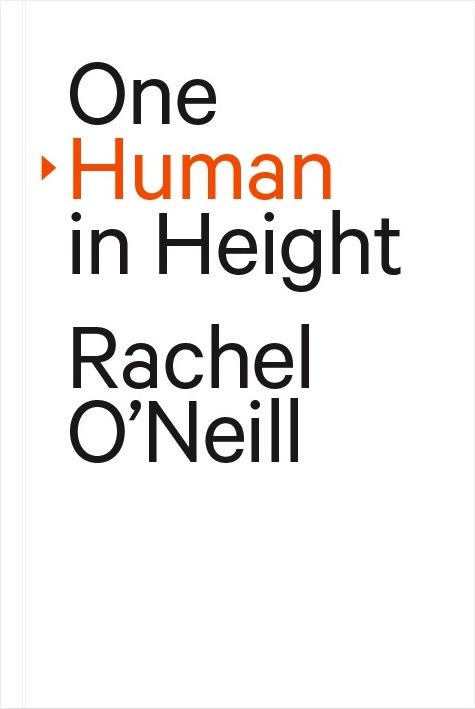
Rachel O’Neill, One Human in Height, Hue & Cry Press, 2013

Rachel O’Neill‘s debut poetry collection sent me searching for a new word to signal the kind of writing that takes flight within its pages. Yes, this is poetry that finds life in sentences, so you fall upon little prose poems (like embroidered pocket handkerchiefs on the page), but that seems barely adequate. Yes, these exquisite sentences have toes in the surreal, but again that falls short of the way each piece pivots upon an axis of the real. I think I have opted for poetry prisms.

OneHumanInHeight_cover   OneHumanInHeight_cover  OneHumanInHeight_cover

I was reminded of an extraordinary mix of things as I read: Anne Kennedy’s debut novel, 101 Traditional Smiles, Lyn Hejinian’s sentences, Fanny Howe’s sentences, Richard Brautigan, Gertrude Stein, Gregory O’Brien’s early poetic slants with magical drops, Gianni Celati’s Narratori delle pianure (for a start).

These poems are poetry prisms because they are shape-shifters (not on the page as they maintain the uniformity of squares and rectangles). They are kaleidescopic, anecdotal, twisty, askew, stream-of-consciousness-like, uncanny, colourful, incantatory, shiny. Each poem shifted in the light as I read, so the anecdotal world became less settled, more surprising, yet never loosing its anchorage in the real.

One of the first poems, ‘Waking early in the marigolds,’ is the perfect entry into the book. The poet takes an idea and then playfully jams with it in slightly off-beat ways (the poem is about waking up in surprising places — ‘I came into the world with nothing bar a capacity for waking in unexpected places.’). It is almost (oh, at a stretch!) a metaphor for how these poems work; as perhaps these poems awake in surprising places, a little to the left of right of expectation. I loved the ending, where the poet yearns to be lying in bed ‘with some authority despite being out of my depth.’

The collection’s subject matter seems to be driven by both real life and the imagination, by a poet who is mindful of the world about her, but who is willingly to filter that world through imaginative excursions. Thus, you get transported from behind the eyelids of a man to what you tell and don’t people to someone arriving at a family reunion by parachute to a compass that is dropped and multiplied 200 million times.

Rachel’s sentences have a pitch perfect economy (‘The sea’s pale back’) that generate musical tones. The quirkiness, the off-beatness, the flashes of the surreal, however, are not embedded in skewed syntax or word choices but in the anecdotal revelations (fictional or otherwise). For me, Rachel’s graceful language heightens the narrative twists and turns.

Endings can be the ruination of a poem, but Rachel has a light touch, a surprising touch. She concludes ‘My father’s memories’ with this: ‘He shunted past me muttering, “My father’s memories,” as if every year he bore them on that stretcher down to the water.’ Rachel’s beginnings are equally nimble and fresh: ‘She sits down at the kitchen table to wait out the remainder of April.’

This is a glorious debut. These poems show the way you can hold any occasion, object, person or place in your mind and, like a prism, watch it shimmer and shine with little stories that hook tufts of truth and fabrication, self and knowing, illusions and strange kinks, and everyday bric-a-brac. I am in love with this book.

Thanks to Hue & Cry I have a copy of this book to give to someone who likes or comments on this post.

On Poetry: Airini Beautrais relishes the fulfilment of intent

secretheart.9780864735416__29659.1347922938.140.215       westernline.9780864736499__89622.1349055507.140.215

Airini Beautrais is currently enrolled in a PhD in Creative Writing at the International Institute of Modern Letters, where she is exploring Australia and New Zealand narrative poems. Airini has a background in ecological science and has worked as a secondary-school teacher. Her debut poetry collection, Secret Heart, was awarded Best First Book at the Montana Book Awards in 2007. Her second, standout collection, Western Line, filled me ‘with joy – through what words can do and through the avenues poetry makes available’ (my NZ Herald review).  The initial sequences of love and charm poems took miniature, imaginative leaps, trailed footprints in the everyday, relished musical lifts and were unafraid of humour. As I said in my review, there was no other New Zealand collection quite like it: daring, fresh, agile.

Airini has generously agreed to contribute to the ongoing series of small pieces ‘On Poetry.’

Here is a quote I came across recently:

“Poetry is the fulfilment of intent; what dwells in the mind is intent, what comes forth in words is poetry. Emotions move in the core of one’s being and take form in words. When speaking them does not suffice, then one sighs them or chants them; if sighing and chanting do not suffice, then one sings them; if singing them does not suffice, then unconsciously one taps them out with the hands, dances them, treads them and stamps them

Emotions come forth in sounds, and when the sounds fulfil patterns they are called musical tones. The musical tones of an age of peace are tranquil and incline to joy; their regulation is harmonious. The musical tones of an age of disorder are dissonant and incline to anger; their regulation is perverted. The musical tones of a kingdom in ruins are mournful and incline to nostalgia; their people are suffering. Therefore, to keep order in success or failure, to move Heaven and Earth, to touch the feelings of ghosts and spirits, nothing can approach poetry.”

This was written in the 1st century AD, in a preface to the Shih Ching anthology of Chinese poetry. It is attributed to a writer named Wei Hung. The translation above is by Dore Levy, and I found it in her book on Chinese narrative poetry.

The first thing that struck me about this passage was the statement “Poetry is the fulfilment of intent.” I had never thought of it like that, but the idea made sense. We do bring our intent forth in words – for better or worse. Intent is the beginning of the poem – but where might a poem end up? What work will it do? Moving heaven and earth, touching the feelings of spirits; these are no mean feats. Would we attempt such things?

Recently I have been thinking a lot about the work of poetry. Largely based on my own experience, I have a suspicion that as poets we have a tendency to make too many rules for ourselves, or to internalise the rules we interpret from what we read. Often these rules seem to involve the work poetry may or may not do. Such as: poetry may involve clever word-play. It may be obscure. It may be unintelligible. It may be funny. It may confess. It may not articulate an opinion. It may not teach. It may not preach, prophesy, challenge, condemn, tell, etc.

Maybe these are what have been my rules. I like to tell people I only have one rule in my poetry: Never write about cats (a rule I am of course prepared to break if the right occasion arises). But underneath are the bigger rules. In my work at the moment, I am staring them down, and it terrifies me. I am terrified of two things: If I break those rules, I will never be a poet. If I don’t break those rules, I will never be a poet.

I am not a chanter or a dancer. I write with a page, and silent reading, in mind. If I write anything that stamps, it will be in a metaphorical sense. But I do, in spite of my rules, have intentions. Are they honourable? I’m not sure. I feel that poetry needs a 1980’s bumper sticker: Poetry can do anything!

Victoria University Press page

Twenty-three love poems

Poetry With Airini on National Radio

On Tuesday Poems

Otago Daily Times review

NZ Books review

IIML student page

Bernadette Hall talks to Poetry Shelf: All I know is that I’m more in love with poetry, whatever it is, than ever

IMG_1396

Bernadette Hall is an award-winning poet, editor and teacher living at a beach north of Christchurch. She has published numerous collections of poetry, but is one of those poets who gives more to the community than just her marvelous poems. Bernadette co-founded the Hagley Writers’ Institute in Christchurch and has continued to mentor young writers. As editor she has placed two New Zealand women poets under a welcome spotlight. She edited Like Love Poems: Selected Poems of Joanna Margaret Paul (2006) and The Judas Tree: Poems by Lorna Staveley Anker (2013). Both are terrific additions to the local, poetry landscape.

With a new collection about to be launched by Victoria University Press on November 1st, it seemed the perfect time to interview Bernadette. I will post a review of Life & Customs at the beginning of November.

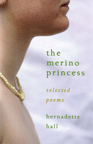
Bernadette’s poems are lyrical havens, where musical chords are words that chime and where rhythms shift in undercurrents of beat. As you read, your body unwittingly absorbs the music, the delicious flecks of assonance, alliteration and rhyme. Her poems lead you back out into the world, to the detail that makes the poet’s experience shine not just at a physical level but at a level where things less easily put into words take root (beauty, love, grief, despair, doubt, intuition, compassion, kindness, thought). She is not afraid to use similes and when she uses them they refresh the poem (‘The rain is like mice scrabbling in the ceiling’ and ‘It’s like walking into a room that’s full/ of McCahons, you know, the way the air changes’). Sometimes a poem is a home for anecdote (much came from her six-month residency in Ireland for The Lustre Jug). Sometimes it is a home for sights and sounds and information that the poet with her eyes and ears open to the world has gleaned (a little like a poet-magpie). If you haven’t yet discovered the luminous attractions of Bernadette’s poems, her collection The Lustre Jug (VUP, 2009) is the perfect place to start (find a hammock, add The Ponies (VUP, 2007) and The Merino Princess: Selected Poems (VUP, 2004) and you will be set!).
merinoprincess.9780864734921__44356.1347922881.140.215   ponies.9780864735522__14453.1347922920.140.215   lustrejug.9780864736086__91830.1347922534.140.215

The interview:

Dear Paula

Here’s a little something, a sort of reply to your questions.

I haven’t really got a lot to say about poetry at the moment. I think the teaching gene has finally been extinguished in me.  I’m not so sure about things that I used to be sure of a year or so ago.  I have to think that this is a healthy state of affairs.

All I know is that I’m more in love with poetry, whatever it is, than ever.

Bernie

My mother loved language.

Her conversation sparkled with word play and old sayings from Central Otago and from her Irish family. These sayings were rich and dangerous, they had everyone laughing. There was a sharp wit and scathing irony in them. If we complained about a petticoat that hung down a little or a spot that had turned up on our chins just before we went up town with our friends, she’d say ‘A blind man on a galloping horse wouldn’t see that.’ An expression of high praise from her sister, my aunt, was ‘Why you’re the girl your mother forgot to drown.’ Haha, it was outrageous and dangerous  and full of affection.  Heehee, saying one thing and meaning another, isn’t that supposed to be a definition of poetry?

My mother’s mother had a few words of the Irish. My two sisters and I have inherited an affection for what we call the Irish gift of charming, scurrilous repartee. ‘My arse to you and that’s behind me’ my grandmother would say, apparently.  But never to her grand-children.  My mother would quote her if we were playing up, digging our heels in.  ‘Oh, bum through the letterbox,’ she’d say. And that was that. It might have been an acknowledgement of being rendered speechless but it was also a declaration of authority. There were to be no more arguments or protestations. We’d have to laugh but we’d also have to do what we were told.  Even more so after my father died, felled by a heart attack, right in front of me, I’d just arrived home from school and I was sixteen.

To be grief-stricken. To speak to no-one in my family, not my mother or my sisters, for a year                 ( something I’d ‘forgotten’ until one of my sisters reminded me and then I was amazed that something in my own inexplicable private life as I had experienced it, had had an impact on someone else, that it had been visible when all that time I had thought I was invisible.)  To be so angry.

At Holy Name School in Dunedin ( site now of the Students Union, only a huge walnut tree remains)  I learnt language as mystery in the Latin Mass. I learnt musical rhythms in the repetitions of the Litany of the Saints many of whom had the most remarkable names, Cosmas and Chrosogynus for example.  Ora pro nobis, we’d chorus, ‘pray for us.’  And if two saints were invoked in the same breath, we’d use the plural orate pro nobis. Not one word of Maori passed our lips but plenty of the language of the Roman Empire, of civilisation and theological sureties.

We performed poems in a poetry choir conducted by Miss Molly Randall.  ‘I must go down to the sea again / to the lonely sea and the sky’ and ‘one of them two of them three of them four of them / seabirds on the shore.’ We copied out poems by Rupert Brooke, Scottish ballads (so marvellously tragic), Milton on his blindness and Elizabeth Barrett Browning on love.  Eileen Duggan was a Catholic so of course we learnt her poems. I loved especially her lines about the little silver consecration bell ringing in the untamed darkness of the New Zealand bush. Now it’s her doubting poems that I admire.

Belief and unbelief, the tension between them being a virtue, I have been told, in the poems I wrote in response to the sculptures by Llew Summers,  the Stations of the Cross, which remain sound but imprisoned in the destructed Catholic Cathedral of the Blessed Sacrament in Christchurch. Anthony Ritchie has written a symphony for full orchestra and solo soprano in which he uses words from these poems. The work will be premiered in Christchurch on February 22, 2014.

As a child, I wrote poems for my friend Annette. She set me a topic and paid me a penny and I gave her a poem.  On things like Dogs ( I was passionately in love with dogs, desperate to have one but I don’t think we could have afforded one) and Spring and The Circus.  I wrote a long essay on The Sea.  It delighted Mother St Joan and got me a straight A. But the real pleasure was in sitting at the little table in the window of the spare room, looking out at the poplars and the willows and the river, the Leith.  Being solitary and absorbed. Silent, lost to myself and fully alive. It wasn’t until I was in my mid-forties that the desire for this kind of internal ‘room of my own’ awoke in me again.

I always loved the sea. My dad and I were the bravest when it came to swimming. He’d float on his back, going up and down on the waves. I played tennis. I played the cello, in the King Edward Tech orchestra conducted by Mr Waldon Mills. Later on I was in the Otago University orchestra led by Bill Southgate. Music and Latin and freedom.  I climbed trees with my friend Nicki. I ran wild along the track to the Gardens, I spent hours puddling around in the Leith, catching cockabullies and tiny weedy lobsters. I planted flower seeds – I was born to do manual work, to be a gardener, digging, pruning, lugging, mulching, turning the compost heap, raking the little pebble paths that go for grass out here in the droughty Hurunui. I can remember my Dad’s mother, a little Northern Irish migrant, a farmer, a prohibitionist, running out onto the road in Leith Valley behind the milkman’s cart.  I helped her shovel up the horse’s droppings to feed the pansies in the garden.

I have spent a lifetime immersed in the language of poetry and plays as a high school teacher, specialising in English, Latin and Classical Studies. The poet, Iain Lonie, tried to teach me Greek. His poetry and he himself, transfigured by his love for Judith, were more successful in teaching me ‘to prize what is of value’ than anything else.  John Dickson’s presence, the way he reads his poems, the fact that like Geoff Cochrane, he makes poetry visible and desirable in his very being, the fact that in conversation with these two and with Joanna Margaret Paul, I felt/feel myself getting nourishment for that sometimes hidden part of my life, the way, by my given nature, I tend to hide what I treasure the most.

When I read essays by Adrienne Rich, Seamus Heaney and Nuala Ni Dhomnhaill, poems by Wallace Stevens and Michele Leggott, John Berryman and  Hone Tuwhare, I am often going around the same traps but each time I find something new, something that I need, something that changes the work I am doing at the time.

I admire the poems that Tusiata Avia is writing at the moment. ‘The beauty of the husband’ by Anne Carson and The Big Music by Kirsty Gunn.  Novels by John Coetzee, Nigel Cox and Janet Frame. The Bath Fugues by Brian Castro. I have just started on Jorge Luis Borges, better late than never.  Max Gate by Damien Wilkins and The Luminaries by Eleanor Catton are on my to be read list. Time and again I read Dia by Michele Leggott,  The Rocky Shore by Jenny Bornholdt and The Palm at the End of the Mind by Wallace Stevens.  This week I’m in love with some wonderful, edgy poems written by a student I’m currently mentoring, they make me laugh out loud. And with a few lines from Thomas Merton’s ‘Book of Hours’ – a book which was given to me as a rather surprising gift :

‘No matter how simple discourse may be

     it is never simple enough.

     No matter how simple thought may be,

     it is never simple enough.

     No matter how simple love may be,

     it is never simple enough.’

That’s how I want to write this week, with simplicitas. Next week it might be all about elaborations.

When I was a teenager I worked in the school holidays in Buntings Brush Factory, operating machines that made toilet brushes and hair-curlers. I was very happy working there.  The mix of people was a real eye-opener   For some of the workers, Buntings offered the safety and respect of a sheltered workshop.  On my last day in the December just before I turned eighteen, before I headed off to university in the following year because I didn’t want to work in a bank as the Career Adviser who visited our school had advised, a gentle older man called Bruce gave me a copy of Allen Curnow’s The Penguin Book of New Zealand Verse (1960) as a farewell present. I still have it. There’s a poem there that said everything I could have imagined at the time about love and sex and longing.

‘Beloved your love is poured to enchant all the land

         the great bull falls still the opossum turns from his chatter

         and the thin nervous cats pause and the strong oak-trees stand

         entranced and the gum’s restless bark-strip is stilled from its clatter.

from ‘Flow at Full Moon’ by R. A. K. Mason.

The poem spoke to me and for me. It was like a voice from another planet.

When I write a poem, I want to break through. To be completely lost. So that the words aren’t mine, so that the flow is automatic. It’s like flying if it’s going well and that’s just the first flush of it. That’s when the best, the strangest lines make their appearance. But the whole usually takes more time and patience, allowing everything and then letting it all settle and find itself.  The aim being to make something that’s truthful and brave and beautiful. I like to give myself a bit of a fright, to push out beyond what I’d thought was possible. Poetry is the ground on which I can let myself go.  I can throw myself away and hope in a mad kind of way that I’ll be found and how liberating is that.

Victoria University Press page

New Zealand Book Council page

New Zealand Electronic Poetry Centre page

Canterbury University Press page

Best NZ Poems edited by Bernadette Hall here

My review of The Lustre Jug in The NZ Herald