Tag Archives: NZ poet

Poem Friday: Tusiata Avia’s ‘Wairua Road’ — makes the idea of home sharp and vital

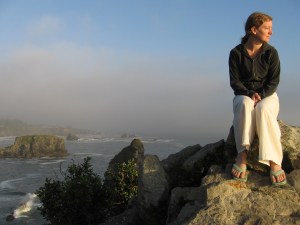
Performance photo Tusiata Avia[1]


Wairua Road

The Spirits love me so much they sent all the people in Aranui to be my friends or my parents.

We all walk the Big Path from Cashmere to the sea.

We run like lawnmowers on each others feet.

The Spirits rise up out of the footpath outside the Hampshire St pub. The space that a bomb took out of the ground walks about on a pair of legs with a ghost looking out.

The Spirits love me so much they turn me into a plastic bag.

I will live in a whale or a shrimp and kill it.

My mother rises up out of the lino wringing and wringing the blood from her hands.

The Spirits love me so much we all sit round to watch the sparklers in my brain, the beautiful sunset, the campfire burning, the jerking of my body.

My father rises up out of the carpet and down I go, like knees, like beetroot juice in the whitest of frigidaires.

The Spirits of the Big Path love me so much they have driven me back up to this house.

If the Spirits didn’t love me, I could live in a dog, in a wife, in a house, in a merivale or on some other shining path, far away from the hungry road.


Tusiata Avia has published two books of poetry, Wild Dogs Under My Skirt and Bloodclot and two children’s books. Known for her dynamic performance style she has also written and performed a one-woman poetry show, also called Wild Dogs Under My Skirt, which toured internationally. Tusiata has held a number of writers’ residencies and is regularly published in international literary journals and invited to appear at writers’ festivals around the globe. In 2013 Tusiata was the recipient of the Janet Frame Literary Trust Award. In October 2014 she will perform as part of ‘New Zealand in Edinburgh’.

Author Notes: Aranui: great path.
Aranui is one of the most deprived suburbs of Christchurch, Hampshire St is one of its most troubled areas.  Merivale is one of the wealthiest suburbs in Christchurch. This poem is published in Takahe 72.

Paula’s Notes: Tusiata’s poem reads like a chant and if you’ve been lucky enough to hear her perform you hear the sound of her voice as you read it. This poem takes you to a specific place — yet it takes you into the way place is a layering of physical and nonphysical things. What you see and feel and what you don’t see and feel. Layered and layering. How this specific place means different things to different people. How this is the place devastated by an earthquake and how people are connected and divided by what they have and have not, by what they have lost and lost not. What happens to love? How does love carry you on its back to the sea? Or the poet carry love? Tusiata’s is a voice on edge, edging you to see and feel the difficulty — clues are laid like tracks to the private and the public pain. It is also a poem that is tongue in cheek (‘If the Spirits didn’t love me, I could live in a dog’). It is surprising and tough and sings out with a joy of words, that makes the idea of home sharp and vital. Like much of what Tusiata writes, it affects me deeply. I am in the grip of this poem, and I adore it.
Friday Poem: Rebecca Palmer’s ‘Dear Grandma’ — now I have read the author’s note the poem shifts slightly on its axis

 OLYMPUS DIGITAL CAMERA

Dear Grandma

Albino, prune like
demoralizing the years
of hard work past,

B flat serenades
chitter chatter through
the teeth of an elephant.

African plains, vast, moonlit,
red eyes glinting –
is it Chopin’s waltz,

or your other love,
Rachmaninoff?

Poised, silent
“Shhh”, you whisper,
“Can you hear the musk deer?”


Author note: I wrote this poem from an exercise about describing a person’s hands in a workshop run by Joanna Preston. It was the beginning of summer, when the sun lingers on your shoulders in the evenings and instills in you a kind of thirst for adventure. The exercise got me thinking about how the world looks to a child and how, through the eyes of the young, the achievements of the elderly are merely fleeting impressions of an untouchable Savannah.

Author bio: Currently studying towards an undergraduate degree in English and Russian at Canterbury University. I have been published in The Fib Review.

Paula’s note: This poem hooked me. I love the surprising juxtaposition of detail and sound effects. Try, for example, writing a poem with a prune, B Flat, a grandmother, the African Plains, elephant’s teeth, the moon. This is an subtle portrait of a moment, a grandmother and a relationship. It reaches out from the intimacy of listening and sharing to the African plains — it is a poem of the wider world and the world at hand. I love the way a phrase (‘years/ of hard work past’) embeds a secret narrative that instils a sense of the buried lives of the elderly. I have used this analogy before, but this poem is like lacework: ethereal, delicate, intricate, as dependent upon holes as it is web. Interesting too how now that I have read the author’s note the poem shifts slightly on its axis. I like the idea of fleeting impressions through the eyes of a child.

Emily Dobson’s The Lonely Nude — The collection allows the imagination to corkscrew slightly, leaving the poem ajar for other things.

cv_the_lonely_nude                 IMG_2664

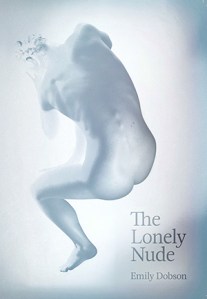
Emily Dobson, The Lonely Nude Victoria University Press, 2014

Emily Dobson’s debut collection, A Box of Bees, gathered much critical praise and was named as one of The New Zealand Herald’s Books of the Year in 2005. That same year she took up the Glen Schaeffer Fellowship in Iowa.

Emily’s new collection, The Lonely Nude, is a collection to read as a whole as much as it is a collection to read in pieces. Like a symphony in parts, or a poetic memoir that doesn’t reside solely in self-confession, experience or anecdote. The collection allows the imagination to corkscrew slightly, leaving the poem ajar for other things. Connections, disconnections, vulnerabilities, epiphanies, fantasies. It is as though the poet’s pen is driven by the real and outsidethereal. Musings, sidetracks, daydreams, anxieties. The seven sections establish thematic clusters as the titles suggest: ‘Prehistory,’ ‘The Lonely Nude,’ ‘A Holiday in Mexico,’ ‘Fall in America,’ ‘Winter,’ ‘Spring,’ ‘Going Home.’ These titles suggest an arc of living and travelling, yet the book title underlines the fragility of movement. Yes, the poet has posed as a life model (and there are poems on this topic), but there are various other nudities rippling through the lines. Scandalous gossip stolen from a women’s magazine in ‘Rude Jude goes nude.’ Or the nightmarish scenario of a house being blown away while showering in ‘Unfamiliar weather.’ (‘Foreignness is just things we’ve forgotten/ ways we could have been.’)

These new poems share the restraint and elegance of a Jenny Bornholdt poem. The line breaks are exquisite as though the poems are breathless. As though the poet has slowed the reading right down to snail’s pace so we can stall and ponder. This is nowhere more evident than in the perfect little poem, ‘Hotel Mexico.’


Hotel Mexico

The bedspread is red

like ink

in the room

with small breezes

we’re sprawling

and a few small drops

of rain are falling

on the dust

on the concrete

small buds

are opening

in our lips

spreading carelessly


These new poems shift and settle on the page in myriad ways, with or without punctuation, with or without hesitancy. At times there is a spark of humour. Often there are lines that Emily acknowledges as ‘stolen’ in her detailed footnotes. These poems emerge out of reading the world and merge into a world of reading. There is an anchor in daily life, yet the poems float and fly like a poet’s mind on the move without limitation. Lyricism is the ink in the pen. So too are the shifting forms. The ability to catch just the right modicum of detail to make a moment shine. As James Brown said of Emily’s first book, these poems are a joy to read.


I want to end with another poem that caught me:


The house

The house faces south

and we are couched in the dark side of a hill.

The grass is long and always wet.

We envy the hill opposite: we long for its sun.

There are holes in it, tunnels,

like a pencil has been poked through.

The two pines are always black as pitch.

A guitar in the corner keeps creaking.

At night the little train all lit up inside

rattles briefly around the hill,

in and out of the tunnels.


Victoria University Press page

New Zealand Book Council page

Cliff Fell’s The Good Husbandwoman’s Alphabet This gorgeous sequence holds you within its frame

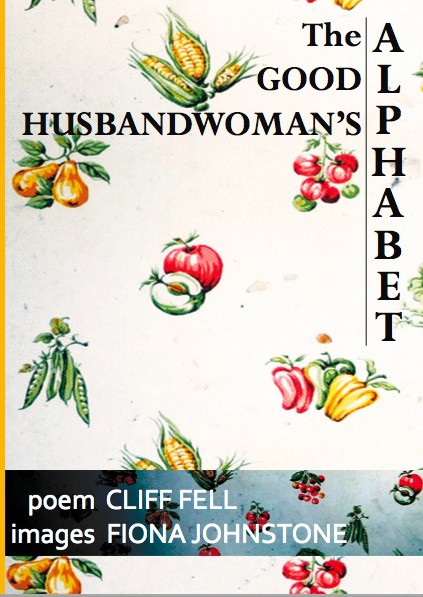
TGHWA cover for Paula     TGHWA cover for Paula

Cliff Fell, The Good Husbandwoman’s Alphabet, Last Leaf Press, Motueka, 2014


Cliff Fell has published two previous poetry collections, The Adulterer’s Bible (Victoria University Press, 2003) and Beauty of the Badlands (Victoria University Press, 2008). His debut book gained the Adam Prize in Creative Writing and the 2004 Jessie Mackay Prize for Best First Book of Poetry. He currently lives on a farm near Motueka and teaches at Nelson Marlborough Institute of technology.

His new book, The Good Husbandwoman’s Alphabet is a team effort, as Cliff has worked in conjunction with artist, Fiona Johnstone and photographer, Ivan Rogers. The book is both slender and aesthetically beautiful. The images are alluring hooks that can either be read as self-contained visual poems or as part of an alternative narrative thread that forges subtle connections with the arc of Cliff’s text. Exquisite.

The poem takes the alphabet as its framing device. Each letter pirouettes upon the possibility of words, the power of words, the shimmering vulnerability of words. The voice of the husbandwoman gives us glimpses, only ever glimpses as we discover in ‘G,’ yet she accumulates, piece by piece, in the relations she unveils. Signals of self in ambiguous traces. You get to the end and hold a trembling portrait that flips and twists to become a portrait of the husbandman. Or is it. The ‘he’ and the ‘you’ slip and slide so you are not sure where husband ends and adultery begins (this poem has its origins in The Adulterer’s Bible).

This gorgeous sequence holds you within its frame. The mysterious code on the final page sends you back to see the portrait in a new light. An intense and aching light and I am not spoiling the hit of the revelation by speaking of it here. The lines are deft and bereft (ah the ache) and befit the narrating woman. Little pockets of confession, reflection and quiet. It is a joy to read.


Bridle

These words: throat-lash, brow band, bit—

how a horse gets broken in.

Each night I am unbridled.

Never try to understand a marriage.

It’s beyond the knowing of all but the finest

gentleman: how the bridle’s said to fit the bride.


NZ Book Council page

Victoria University Press site

NMIT page

Friday Poem: Rachel O’Neill’s ‘Almost exactly the love of my life’ Its knots and overlay render me curious

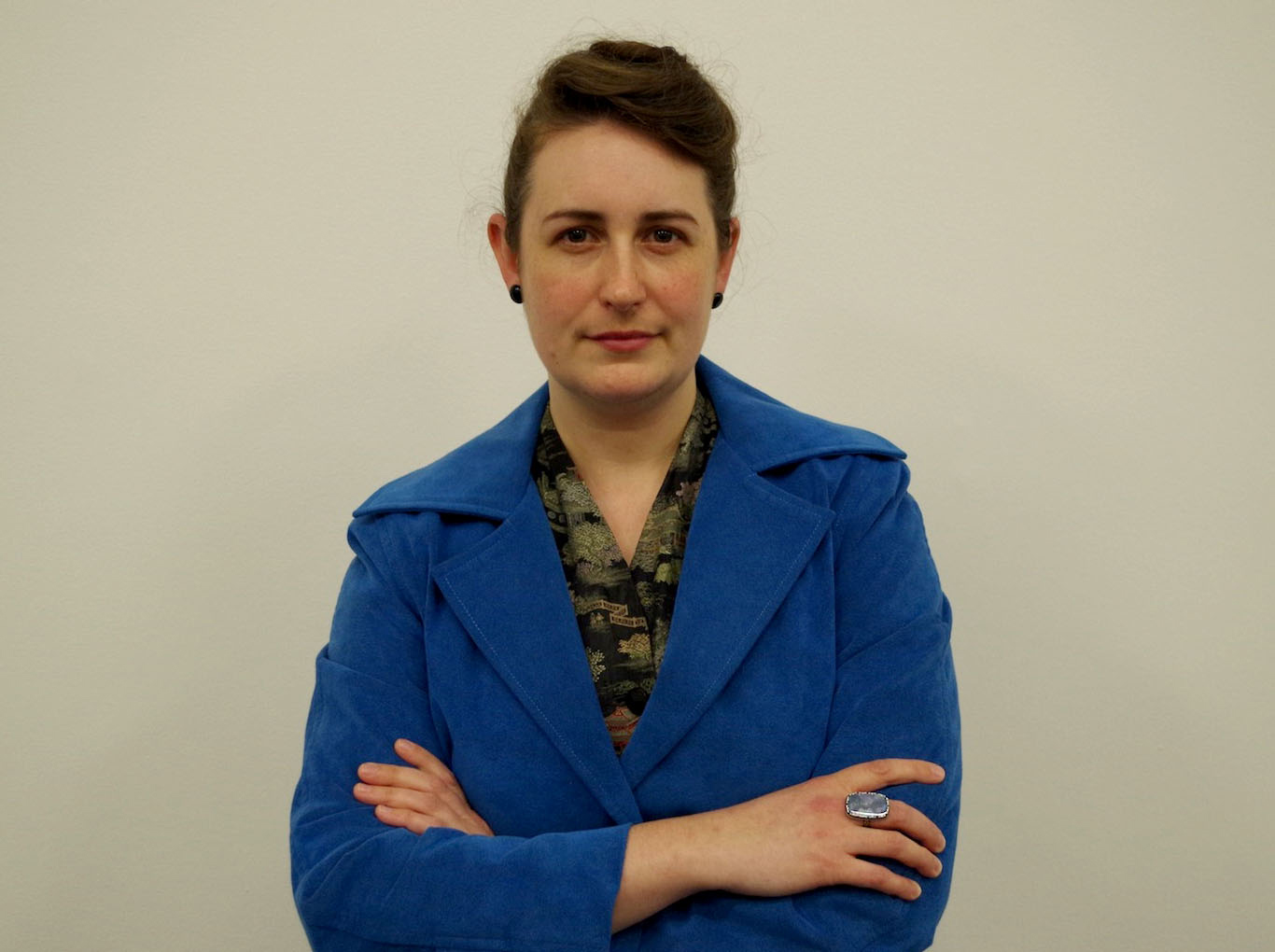
RachelO'Neill


Almost exactly the love of my life

On slow days at the office I wrote love letters to myself from the woman who was almost exactly the love of my life. In these letters I, or she – well, ‘we’ – wrote of our desire for me as a passionate explorer might. ‘Once you bring back footage of the moon’s farside,’ she said, ‘there’s no telling what miracles it will perform on the diseased parts of our relationship.’ In these letters she promised not to leave me and was happy to put our life on hold for a year or two of probing research. ‘Why jump into the next phase with reckless abandon?’ she wrote one week. ‘Just because we broke into seventy six terrible pieces last time doesn’t mean we shouldn’t try again.’ I came to love the heart and mind that wrote me these messages, overwhelmed at times by their quiet and unobtrusive undercurrent of encouragement. Even now I feel bound to this correspondent as if to a great abiding mystery, such as the inexplicable shifts in our planet’s poles that can push ships onto rocks or that can draw whales as if by leashes onto shore.


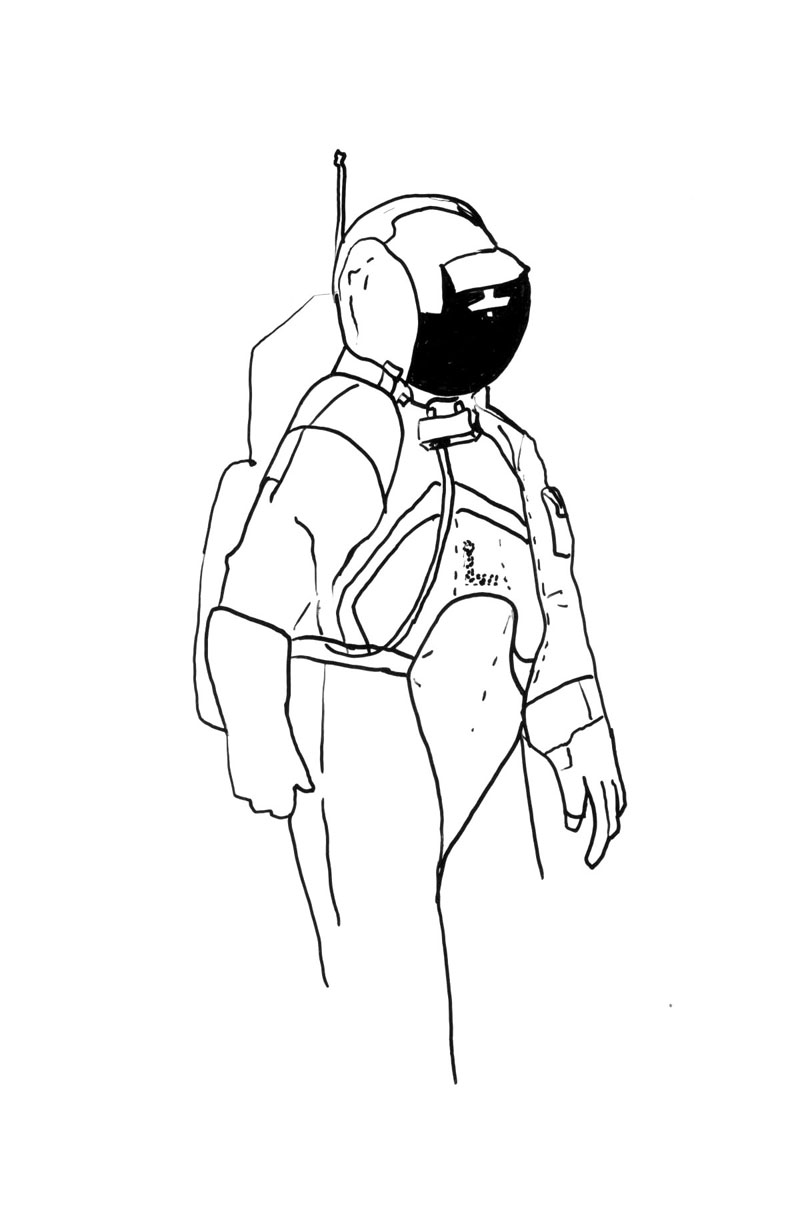
Astronaut sm


Author’s note: This poem is from a series I’m beginning about a character living in an Aotearoa very like ours except that there is considerable Unmanned Moon Exploration activity. The character is engaged in secret work and struggles with not being able to disclose details about the day job to their girlfriend. The character would like nothing more than to debrief, especially about the pressure the team is under to navigate ice fields and bring back soil samples. Over the arc of the sequence the Unmanned Moon Exploration corporation in question goes under and this leads to some disgruntled worker-type protests and raiding of the ‘stationery’ cupboard, which houses pens and pulsating spheres. Oh, and someone frees the Lunar Clones! This poem was recently published in Minarets journal with a host of fantastic poetry by the likes of Hinemoana Baker, Zarah Butcher-McGunnigle and Alex Mitcalfe Wilson. Check it out here. There is so much exciting New Zealand writing coming out at the moment and it’s a pretty inspiring time to be a poet.

Author bio: Rachel O’Neill is a writer, artist and filmmaker who lives in Paekākāriki on the Kapiti Coast. Her debut collection of poetry One Human in Height was published by Hue & Cry Press in 2013. You can find out more about what she’s up to on her blog.

Paula’s note: I am reading this piece in isolation—splintered from the series in which it plays a part, but that makes scant difference. It hums and resonates with a fullness of belly, surrealness, questions (is this human?) and a lightness of touch, along with knots and overlay that render me curious. I see this piece as a stack of tracing-paper figures laid one upon each other until they gain surprising life. They merge and separate; they merge and separate (she she she she she). There is a surety of touch in each line. There is an undercurrent of ideas (the power of greater invisible forces, the impact of the big upon the miniscule, the multiplication of ‘me’ through an inked pen, the love of self and the self of love, the recognition and misrecognition of self, the nurturing, fragmentation). Is this flash poetry? Sharp, sudden, luminous? It’s a delight to read so I am hungry for the sequence. I had no idea about Lunar Clones as I read this!

Poem Friday: Lynley Edmeades’ ‘Imperial’ Sometimes an object in a poem reverberates with such exquisite frisson


s200_lynley.edmeades


Imperial

There goes London with its scattered lights.

Like a bag of marbles spilt out onto concrete,

they’ve rolled towards fissures, pooled together

in conduits. They are the arteries

of this land-bound leviathan.

From the air, I can see it’s almost finite,

and feel the way a child might,

when her marbles have been counted, put away.


Author’s bio: Lynley Edmeades is currently writing a doctoral thesis on sound in avant-garde American poetry, at the University of Otago. Her poems, reviews and essays have been published in New Zealand and abroad. She lives in Dunedin.

Author’s note: I wrote this poem while I was living in Belfast. It was prompted by a conversation with poet Sinead Morrissey, in which she applauded the power of first lines. Put your readers straight in there, she said. No ideas but in things.

Paula’s note: Sometimes an object in a poem reverberates with such exquisite frisson the hairs on your arm do stand on end. In Lynley’s poem, marbles promote a grid of shivers—from the allure of the physical toy to the dips and peaks of childhood. That time of endless summers and wild darings. To overlap the potential of this ‘thing’ with the aerial view of London at night is genius. Magic slips from one to the other. The allure of night. The way a city’s particulars are soaked up into the unknowable dark (or apprehended from a different point of view). The way the city borders are at the edge of psychological unease. Then you get taken back to the moment of the child where the smallest moment can be utterly sharp. The game is over. Fleeting yet intense. What I love about this poem (and indeed other poems by Lynley) is the way ear, heart and mind are in harmony—words are deft on the line, images are fresh, simplicity partners complexity.  And the way, in this example, one word, ‘Levethian,’ can unsettle and add to the subtle discomfort (the engagement with the long-ago child, loss, larger-then-life cities, the unknown). Or the the way the poem catches hold of that child trespassing on the glittering lights of night. The complexities and possibilities of this small poem are enormous. I have barely started.

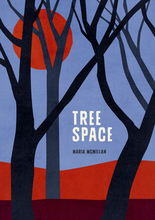
Maria McMillan’s Tree Space: a treasure trove of poetic connections—combinations that continually jumpstart the reader

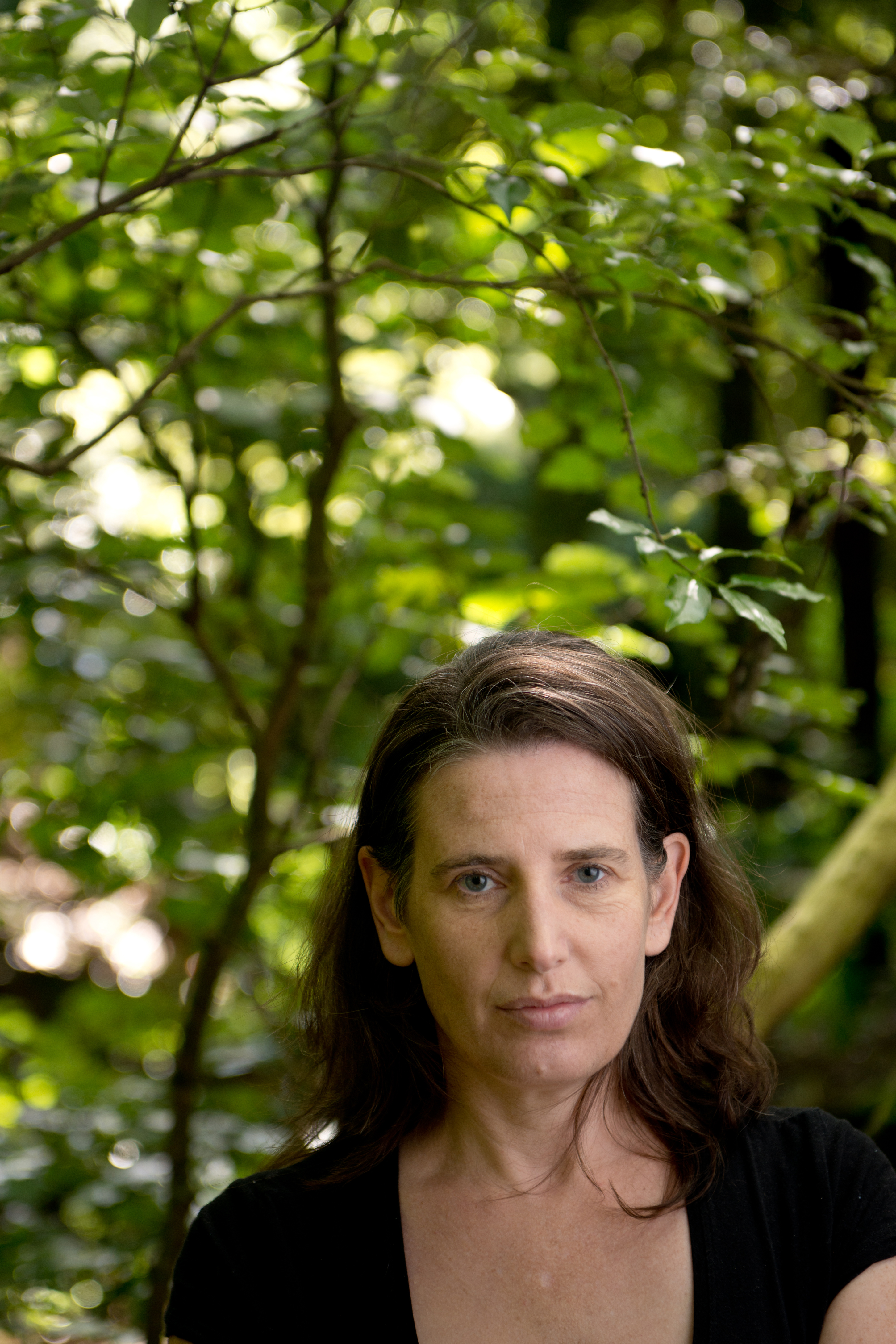
Maria McMillan     TREE_SPACE__40939.1398819236.220.220    TREE_SPACE__40939.1398819236.220.220

Maria McMillan, Tree Space, Victoria University Press, 2014

(Thanks to VUP I have a copy of the book for someone who likes or comments on this post)

Maria McMillan’s biography tag on the back of her new book, Tree Space, fascinates me: ‘Maria McMillan is a writer, activist and information architect who lives on Kapiti Coast.’ Fascinating in the way these four key elements rub against each other.

Maria’s debut poetry book, The Rope Walk, was published by Helen Rickerby’s Seraph Press in 2013. It was a terrific arrival, and the sorts of joys that I fell upon there have been carried through into her new collection. As I wrote in my review for Poetry Shelf:

‘The poems are observant, musical, reflective and measured. The collection signals the craft and joy of small poems, words that are gathered together in a minor key where time stalls and you relish a moment. Maria knows how to write with the perfect degree of emotional seasoning and revelation (I will tell you this, but I will not tell you that). There was a sense of hide and seek for me as I read (and indeed there is a poem called ‘Hide and seek’).’

Tree Space is Maria’s first full poetry collection, and the poems have been written over more than a decade. Yes, there is a range of subject matter, style and inclinations, yet there is also a satisfying degree of cohesiveness. The poems step out from diverse starting points, yet frequently that starting point is a pivot for meditation. To me the poem provides an opportunity to delve deeper, to sidetrack and to offer slithers of anecdote.

What binds this book more than anything (although the deft ear comes close) is the way these poems, as poetic space, host relations. One of the delights of poetry is the way a poem reproduces and produces a series (‘set’ is too limiting a word here) of relations—whether aural, semantic or via tropes. There are relations amongst sounds, images, ideas and feelings. Some poets want to activate movement amongst all, others less so. You might fall upon relations between the real, the cerebral and the imagined. Relations between people, places and things. In my view, Tree Space is a treasure trove of poetic connections—combinations that continually jumpstart the reader.

The collection opens with ‘Song.’ An opening that is punctured, punctuated, startling. An opening that links sparrow to poet, the voice box to breath, the voice box to concealment (‘a parcel’) and revelation (anatomic). Pronouns tremble with ambiguity. Whose heaving chest? Hidden in the crevices is the ability to sing, the yearning to sing and the doubt ‘she’ can sing. And thus we enter the collection that sings.

The starting point as a pivot for poetic excursions is beautifully realised in the poem ‘salt marsh and tidal inlet.’ These words caught the poet-reader’s eye while ‘The other words get/ sucked back into the paper.’ It is as though the poet daydreams and we are caught up in her reverie, the words folding back upon each other, the nostalgic trip wires, the little spotlights on where you are and where you’ve been. Glorious!

In ‘Hairy Star,’ it is the breathless wonder at seeing the comet that the poet wants to preserve and remember for her sleeping child that hooks me, and the stepping stone between that sleeping form and the poet’s own little self. The own self: ‘Or my own self, carried to the steps by the back door/ to see a hedgehog. Milk in the saucer. Small noises.’ The sleeping child: ‘You were. In bed covered in pen marks and plum./ Sleeping. Outside your closed curtain/ half-painted trellis.’

I love the way the teapot in the poem, ‘In the very middle,’ transports you to all things strange, and the way ‘a polished cake spoon’ can show you yourself as ‘monsterish and wary.’ Again the pivot, the relations and the meditations.

There are so many poems that stand out for me (perhaps a tiny cluster at the back that don’t)—poems that generate myriad notes in my notebook. Maria is able to capture the luminous instance, a moment in time that becomes imbued with heat or longing or youthfulness. A moment that might be autobiographical or on the other hand invented. She steps into the shoes of others as adroitly as into her own.

‘Paradox’ finds  truth in the way sunflower seeds are both fast and slow growers and the way pumpkins are both heavy and light (and more examples). Maria’s poems are like that paradoxical pumpkin—exuding a tantalising simplicity of form and line yet embracing space that is sweetly fertile. Her poems are quick to the ear and a slow release to the mind. You save the room to move and the detail that sticks. These poems take exquisite flight whilst keeping toes in the soil. I loved this collection.

Victoria University Press page

Seraph Press page

VUP interview

Maria’s blog

Poetry Shelf interview with Maria

Interview with Janis Freegard

Best First Book – Poetry winner has been announced

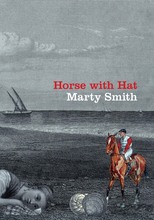
good one 7 cat     Horse_with_Hat_front_cover__77059.1385936731.220.220

The Best First Book Award for Poetry at The New Zealand Post book Awards goes to Marty Smith and her stunning debut, Horse with a Hat.  The book has beautiful illustrations by Bendan O’Brien and is published by Victoria University Press.

Warm congratulations to Marty and all involved. Well deserved accolades.

Earlier on Poetry Shelf I reviewed the book:

Marty Smith’s debut collection, Horse with a Hat, is a gorgeous book. The lush and evocative collages by Bendan O’Brien draw you in close, in a way that is both haunting and intimate. His cover collage replicates the way a poem can lead you to a wider picture (the ocean and its lure of voyage) and the catching detail (the pattern on a shell, the way a horse holds its head in anticipation). Heavenly!

The book itself is equally captivating. Horse with a Hat revels in poetry as a way of tracking a life, of harnessing an anecdote. The poems delve into relationships, previous generations, magical moments, pockets of history and, while they exude warmth and joy, Marty is unafraid of darker things, earthier things (violence, the threat of violence, grease and oil, bad tempers, men at war).

For my full review see here.

Best First Book -Fiction: Tough by Amy Head  (VUP)

Best First Book Non-fiction: Tragedy at Pike River Mine by Rebecca Macfie (Awa Press)

Poem Friday: Frankie McMillan’s ‘My father, the oceanographer’ — its poetic co-ordinates set for some form of truth

2012-10-11_16-06-33_689 (6)

My father, the oceanographer


knew the language of whales

yet tripped over the sound

of his own name


They say the cure for death

is drowning and for a lisp

a bucket of salt water


*

In white gumboots he entered

the stomach of a whale

sat brooding under the great arched bones

of a church


invoking the mantra of LFA sonar

whale fall

and echolation


stripped to his underwear,

so great was the heat, and

blubber he said


now there was a word to make you weep


Author’s note: I’m never sure how a poem is ‘made’ but once I have a good opening line it gives me the courage to explore the possibilities. It’s a hit and miss method and out of the many poems I attempt only a few survive. I think this poem may have echoes of the biblical story, Jonah and the whale. The fact my father hardly talked to me as a child may also have informed the poem. Or then again, I’d seen the film, ‘The King’s Speech’ which might have worked its way in with whales. I imagine a lot of poets work in this subconscious fashion.

Author’s bio:Frankie McMillan is the author of The Bag Lady’s Picnic and other stories, and a poetry collection, Dressing for the Cannibals. In 2005 she was awarded the Creative NZ Todd Bursary. In 2008 and 2009 her work was selected for the Best NZ Fiction anthologies. Other awards include winner of the New Zealand Poetry Society International Competition (2009) and the NZ National Flash Fiction award (2013). This year she is a co – recipient of the Ursula Bethell writing residency at Canterbury University. Her next book of poetry, There Are No Horses in Heaven is to be published by CUP in early 2015.

Paula’s note: I loved the way the words looped and slipped over each other in this poem as though embarking on little ventures into echolocation. Each shifting phrase becomes a way of locating yourself in the poem — in its mysterious seams and lyrical folds. In the first verse, we get a magnificent yet miniature portrait of a father, of a man who is adept on one level, yet not on another. That delicious irony sets off the first ripple through the poem. The second ripple extends from the width of water to drown in to the single word that induces tears. This poem is like an ode, a sweet tribute to a father, but it is also like a tribute to the power of language to skid and skate, to conceal and spotlight. I loved it for its tenderness, its humbleness and its poetic co-ordinates set for some form of truth.

Poem Friday: Kiri Piahana-Wong’s ‘Kahukeke’ flows down the page like water, honeyed in its fluency

night swimming author pic


Kahukeke

Here at Hikurangi,

the waters pour

down Waitekahu

and into the sea.

On the threshold,

the surf surges up

against the river.

Quietly the water

is absorbed.

Even in flood, the

river is never as

strong as the ocean

it returns to.

Kahukeke used to

kneel here, washing

in the river.


Kiri’s note on the poem: At the moment I am working on my second poetry collection, which has the working title ‘Tidelines.’ The collection is based around the history of the Te Kawerau a Maki people, kaitiaki of the Waitakere Ranges region in West Auckland where I currently live. Other iwi also traversed this area, amongst them Kahukeke, who was the wife of the senior tohunga of the Tainui canoe, Rakataura. In this poem, and others in the collection, I am attempting to inhabit the lives and voices of these early tūpuna.

Author bio: Kiri Piahana-Wong is a New Zealander of Māori (Ngāti Ranginui), Chinese and Pākehā (English) ancestry. She is a poet, editor and publisher. Her first poetry collection, night swimming (Anahera Press), was published in 2013.

Paula’s note: Kiri’s poem flows down the page like water, honeyed in its fluency. Such fluency is addictive; you keep returning to the beginning to fall again into the watery flow. Then, the final image arrests you–the way, in the midst of riveting scenery, and the cyclic and never-ending movement of nature, there is the precise and vital instance of human activity. This image of a figure kneeing is poignant, potent. In such ways, the poem is utterly absorbing.