Sarah Ross and I have contributed to an article on the Sarah Broom Poetry Award for Booknotes Unbound (the New Zealand book Council online magazine). It includes a poem by each of the finalists.
Booknotes Unbound here

Sarah Ross and I have contributed to an article on the Sarah Broom Poetry Award for Booknotes Unbound (the New Zealand book Council online magazine). It includes a poem by each of the finalists.
Booknotes Unbound here
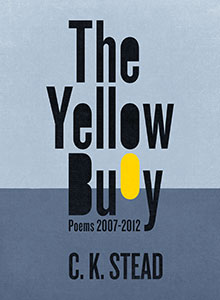
Landfall Review Online is one of the best sources of poetry reviews currently available to us. Here, a reviewer gets to write in depth on a single volume of poetry, taking whatever style or manner of critiquing they like. Not all books get reviewed (understandably) but those that do get reviewed well. Nick Ascroft has just written a sizzling review on CK Stead’s most recent poetry collection. If someone were to write about my work with this keenness of engagement and propulsion of ideas I would be utterly flattered — whatever they thought of the my poetry. This is the sort of review that raises fertile questions but that also sends you to the most important thing at hand, the poetry itself. It is an exhilarating and stimulating read. Thank you!
I have posted a brief extract with a link to the full review below:
The Yellow Buoy: Poems 2007–2012, by C.K. Stead, (Auckland University Press, 2013), 144 pp., $27.99
The poems of C.K. Stead ‘get poetry’. If I could choose any archetype for all budding poets to emulate it would be he who is perhaps the last of the double-initials-and-surname poets. The kind of adjectives one attaches to his style sound unflattering: honest, sturdy, reliable, unembellished, intelligible, sober, unfestooned, humble, un-baroque-or-rococo. Words are used artfully, but not deferred to or privileged above sense. The sound of words is not forgotten, but the poems are never in search of euphony. Images and metaphor abound, but again are precisely observed. Nothing seems exaggerated; nothing tries overtly to be or seem impressive. The subject has been selected because the poet knows it is interesting as is. Avoid ambition, poets. Avoid – ugh – flash. Avoid post-modernism. Embrace discipline. Stead’s durable archetype is of a poet like a plumber, no self-importance attached, just another well-functioning toilet at the end of a day’s work.
But there is no one ‘poetry’ to ‘get’ of course. Instead, it comes in many forms, equally as deserving of the word ‘poem’, and is equally admired – by opposing groups of readers, often. Every attentive reader has a set of poems they have read and admired: a set of ‘poems that get it’. A set of poems they are prepared to promote and defend. To me this is what a critic does, defending as one braying voice in the wilderness, clutching a poem ‘set’ and asserting an opinion. I admire critics that speak to their vision of the truth. I think their judgements, often more sharply drawn and decisive than our own, help us to shape or frame our own thinking. We may vehemently disagree, and perhaps even be hoodwinked by rhetoric to agree when perhaps we shouldn’t, but either way the conversation shapes us. The best critics to my mind are both curmudgeons and creeps: challenging the reader all the way. Accordingly, I have defaced my way through Stead’s latest collection, The Yellow Buoy: Poems 2007–2012, drawing creepy and curmudgeonly faces in the margins.
Review here.
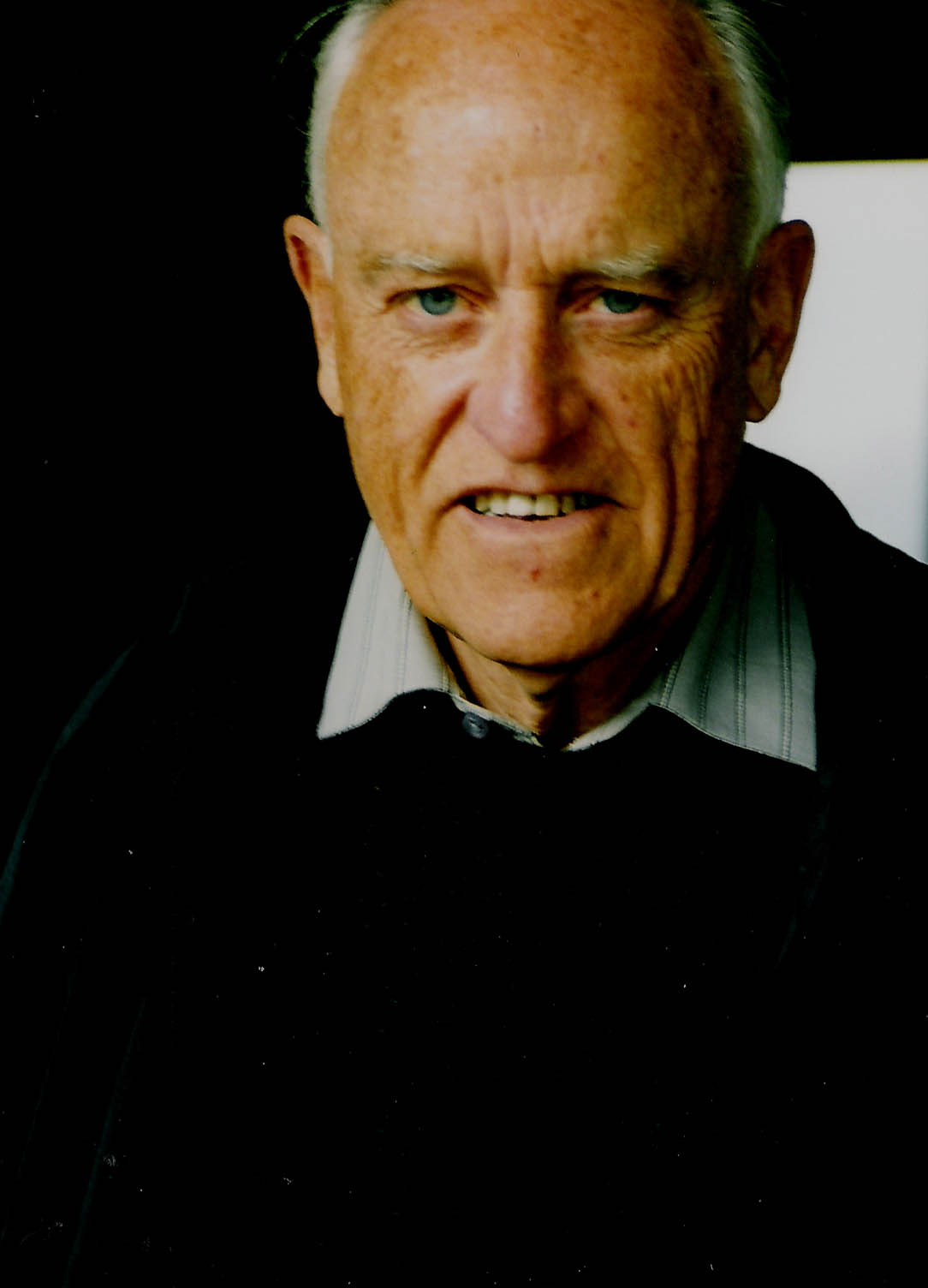
Photo credit: Marti Friedlander
To celebrate the inaugural Sarah Boom Poetry Award, Poetry Shelf has interviewed each of the finalists. First up is CK Stead.
Karl has published over forty volumes of poetry, fiction, memoir and criticism. Along with New Zealand’s highest honour (the Order of New Zealand), he has received the 2009 Prime Minister’s Award for Fiction, a 2009 Montana Book Award for his Collected Poems and the esteemed Hippocrates Prize for Poetry and Medicine in 2010, amongst numerous other awards. Karl’s latest collection is The Yellow Buoy (published by Auckland University Press in New Zealand and Ark in the United Kingdom).
My reaction to his poems: ‘Karl’s poems embrace a vision that welcomes both an intellectual life and an everyday life along with a joyful attentiveness to sound. There is the characteristic wit, reflection and irony, but there is also tenderness, empathy and acute insight. Karl’s poems radiate such a contoured experience for the reader through their layering of ideas, self-confession, musical agility and location within a history of reading and thought. The subject matter shifts from the intimacy of a love poem to his wife, Kay, to a cheeky eulogy to Derrida (‘the enemy of plain sense’) to a hilarious case of mistaken identity. These poems have an unwavering strength to pull you back again and again to fall upon new discoveries.’
Did your childhood shape you as a poet? What did you like to read? Did you write as a child? What else did you like to do?
Who said ‘the child is father to the man’? Wordsworth, probably, who has a lot to say about the shaping of the sensibility in childhood. Poetry itself didn’t figure much at all in my childhood; but I think the poetic sensibility was shaped in relation to the natural world – the bush, the beaches, the out-of-doors, the cousins’ farm at Kaiwaka where a lot of holidays were spent: a very NZ childhood.
When you started writing poems as a young adult, were there any poets in particular that you were drawn to (poems/poets as surrogate mentors)?
At the age of 13 or 14 my sister was given the poems of Rupert Brooke which I borrowed from her and never returned (and still have). He was the first poet I read seriously, and began at once to write poems more or less in imitation I suppose. That started me.
Your poems are delightfully complex packages that offer countless rewards for the reader—musicality, wit, acute intelligence, lucidity, warmth, intimacy, playfulness, an enviable history of reading, irony, sensual detail, humour, lyricism. What are key things for you when you write a poem?
It has to be a meeting of words and feeling, in which the words are at the very least equal in importance, and the feeling can be of any kind, not just one kind. I like wit, think laughter can be tonic, but of course it doesn’t fit all occasions.
There were a number of significant poets in NZ from the 1940s onwards and you have interacted with many of them (Curnow, Mason, Glover, Baxter and so on). Were there any in particular whose poetry struck a profound chord with you?
Curnow was always the most important for me. But when I was young Fairburn’s lyricism seemed very attractive; Glover at his rare best (the Sing’s Harry poems); Mason likewise (‘Be Swift O sun’); Baxter – especially in his later poems: they have all been important to me.
Do you think your writing has changed over time? I see an increased tenderness, a contemplative backward gaze, moments where you poke fun at and/or revisit the younger ‘Karls,’ a moving and poetic engagement with age, writerly ghosts and death. Yet still there is that love and that keen intelligence that penetrates every line you write.
You are very kind! I certainly feel ‘older and wiser’ in the sense that things don’t matter so much, one accepts the fact of human folly and one’s own share in it. Indignation doesn’t stop, but there is a kind of weary acceptance, and laughter. I still feel embarrassment – especially when looking back – but I recognize that as not only a safeguard against social mistakes, but also as another manifestation of ego, as if one feels one should be exempt from folly.
There have been shifting attitudes to the ‘New Zealand’ label since Curnow started calling for a national identity (he was laying the foundation stones that we then had the privilege to use as we might). Does it make a difference that you are writing in New Zealand? Does a sense of home matter to you?
When I was young I was a literary nationalist. Now I regard nationalism as a form of tribalism and the result of genetic programming no longer suitable or safe in the modern world. So I have changed a lot. But I still recognize regional elements as important, even essential, in the poetic process. I think Curnow himself became more a regional poet and less a nationalist one; but the arguments that had swirled around all that had had the effect of committing him to positions which he didn’t want to resile from, so he remained the committed nationalist, perhaps after the need had passed.
What irks you in poetry? What delights you?
I suppose any kind of excess, of language or of feeling; and solemnity – especially the sense that poetry is taking itself too seriously and asking for special respect.
There are many kinds of delight in poetry, but almost all of them involve economy. If an idea or an experience or a scene or a personality or whatever can be conveyed as well in 10 words as in 20, those 10 words will be full of an energy which the more relaxed and expansive version lacks. They will be radio-active.
Name three NZ poetry books that you have loved.
Singling out living poets might be invidious, but here are three by poets now dead: You will know when you get there (Curnow); Jerusalem Sonnets (Baxter); Pipe Dreams in Ponsonby (David Mitchel).
What international writers are you drawn to? Now and over time? A variety of writers make an entry in your most recent book, The Yellow Buoy.
I grew up at a time when T.S. Eliot was the dominant figure both as poet and critic, so my mind was partly shaped by his, though never in the sense of being a slavish follower – and in fact my temperamental differences, and intellectual distance from Eliot, have always been clear. Yeats was always important. Pound I came to an understanding with a little later. Wallace Stevens was an influence. Philip Larkin, a little closer in age, was admired, though his limitations were always recognized. But these are all 20th century poets. I have always read widely among the poets from Shakespeare and Donne through to the present. Among living poets I am now pondering Anne Carson (Canadian) with interest, admiration and sometimes impatience. I keep up a lively correspondence with Mike Doyle in Canada – a New Zealand poet for a period of 10 or 15 years – and we exchange and comment on one another’s poems. Similarly with Alan Roddick in the South Island. I read recently in London and Oxford with Fleur Adcock and Kevin Ireland and felt with them the kinship of more or less exact contemporaries.
The constant mantra to be a better writer is to write, write, write and read read read. You also need to live! What activities enrich your writing life?
In no particular order, interaction with family (Kay, our 3 children and 7 grandchildren – and a large extension beyond); friends and former colleagues; movies, swimming (almost daily through 7 or 8 months of the year), music (including opera where possible), travel abroad (France and Italy especially, London always); the bush at Karekare, politics… The on-going party that life is, and that I’ll be sorry to leave.
Some poets argue that there are no rules in poetry and all rules are to be broken. Do you agree? Do you have any private cardinal rules?
There are a few rules, none unbreakable. If you choose to write a sonnet you choose a rule and then may observe it strictly or loosely or in such a way as to make the nominated choice only ironic. Poems do not succeed or fail by observing rules.
Eleanor Catton recently suggested there is no reviewing culture in New Zealand in The Guardian. Do you agree?
No, I don’t think I do agree – but it’s not like the UK where if one paper gives you a tanning for sure the next will tell you you’ve written a work of genius. The papers that review here are too few and consequently each counts for too much. And there is not a strong sense of literary critical practice here; a kind of authoritative back-up (behind the reviews) of informed opinion such as the universities used to provide. Now (but this is probably typical of everywhere) we have breathless academic devotees of Mansfield or Frame or Hyde or Curnow (safe options), and… Creative Writing! Neither of these amounts to what I would think of as distinguished literary criticism.
In your entry letter you stated, ‘Poetry has been my life, and all the other literary endeavours, criticism, scholarship, fiction, circle around and out from it.’ Poetry is like your gold nugget. I love this notion, particularly as your endeavours in these other areas have been so strong. Take your wonderful novel, My Name Was Judas for example. What were the satisfactions in writing this daring and utterly engrossing work?
I do feel that any success I’ve had as a critic has been from understanding the creative process at its fundamental level, in having written poetry. Fiction has a range of possibility, narrative and sociological, beyond what poetry permits – so my novels have been (as A.S. Byatt says they are) ‘a poet’s fictions’. My Name was Judas was a novel that took me by surprise and was really an attempt to retell a story we all know, the Jesus story, in a way that made it intelligible and believable to a modern persona such as myself, apprised of scientific facts, which have encroached so far on religious faith that there is, in truth, no room left to share. But I wanted my Judas (who incidentally does not betray Jesus but does not believe he is divine and tries to save him from himself) to have an extra dimension beyond ‘fact and reason’ and he has that in being a poet – so I was able to mix whatever skills I have in fiction and poetry in a single book.
Is there a particularly poetry book of yours that matters more than the rest?
Usually the most recent is the one I like best. But looking back I think Geographies is one that comes at a good time in my life when I was beginning to shake off the pressures of being a University Professor, and range about the world both physically and intellectually – and I think that shows in the poems.
Do you find social media an entertaining and useful tool or white noise?
At 81 I come to these things rather late, and sceptically. White noise mainly.
Finally if you were to be trapped (in a waiting room, on a mountain, inside on a rainy day, waiting for a decision) for hours what poetry book would you read? Actually I think the context would affect which book to a large degree!
I might just resort to the poetry in my head – there’s a lot – I’ve always had that kind of memory, so there’s a bit of everything from Shakespeare and Donne, through Wordsworth, Coleridge and Keats, on up to Yeats and Gerard Manley Hopkins.
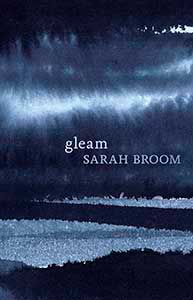
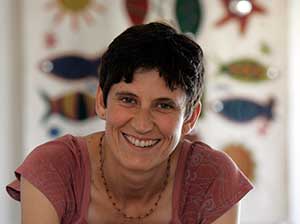
Photo credit: Shane Wenzlick/Fairfax Media
The Sarah Broom Poetry Award aims to provide recognition for an emerging or established poet, and to provide financial contribution to support their work. The prize was established in 2013 in honour of New Zealand poet Sarah Broom (1972 – 2013), the author of Tigers at Awhitu and Gleam (published by Auckland University Press).
In 2014 the judging panel included Sarah’s husband Michael Gleissner, Sarah Ross, Paula Green, and guest Head Judge, the much loved poet, Sam Hunt.
The inaugural Sarah Broom Poetry Competition attracted around 300 entries from throughout New Zealand. The submissions included established poets, emerging poets and poets at all stages between, and clearly reflected a writing landscape that is in very good heart. The entries demonstrated a stunning range of complexity, subject matter, tone, style and form. The quality and breadth of submissions created a tough job for the judging panel with at least thirty poets deserving a spot on the shortlist. The selected finalists will read in a session at the Auckland Writers Festival where Sam Hunt, will announce the winner (Sunday 18th May, 1- 2pm, Upper NZI Room ).
The three finalists are:
Emma Neale
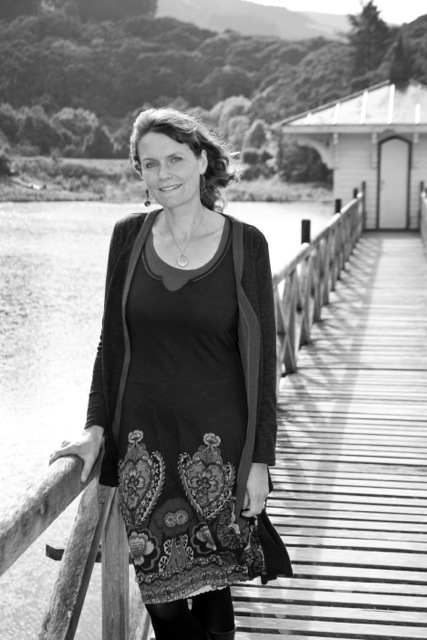
Photo Credit: Graham Warman
Emma is a Dunedin-based poet (four collections published), novelist, teacher, mentor and anthologist. She has a PhD in English Literature from London’s University College, received the inaugural Janet Frame Memorial Award for Literature (2008), the Kathleen Grattan Award for Poetry (2011) and was the 2012 Robert Burns Fellow at the University of Otago. She was the Summer Resident at the Pah Hometead in 2014 (supported by Sir James Wallace Arts Trust/ University of Otago). Her latest collection is entitled The Truth Garden.
Emma’s poems often find a starting point in her domestic life—with her exquisitely tuned ear and her roving mind producing lines of singing clarity. The musicality is enhanced by a sumptuous vocabulary, by single words that stand out in a line and a rhythm that gives each poem startling breath and movement. What struck us particularly is the way each poem is made more complex—through an unfolding pocket narrative, meditative strains of thought, aching confession, political sharpness, the rollercoaster ride of maternal feeling. These were definitely poems with an aftertaste that kept you wanting more.
Emma: ‘I wonder if the rhythms of everything from nursery rhymes to an old tape of Yehudi Menuhin playing Mendelssohn violin sonatas, which I used to listen to obsessively as a teenager, are as deeply embedded in my sense of poetic music as my love of certain poems.’
CK Stead
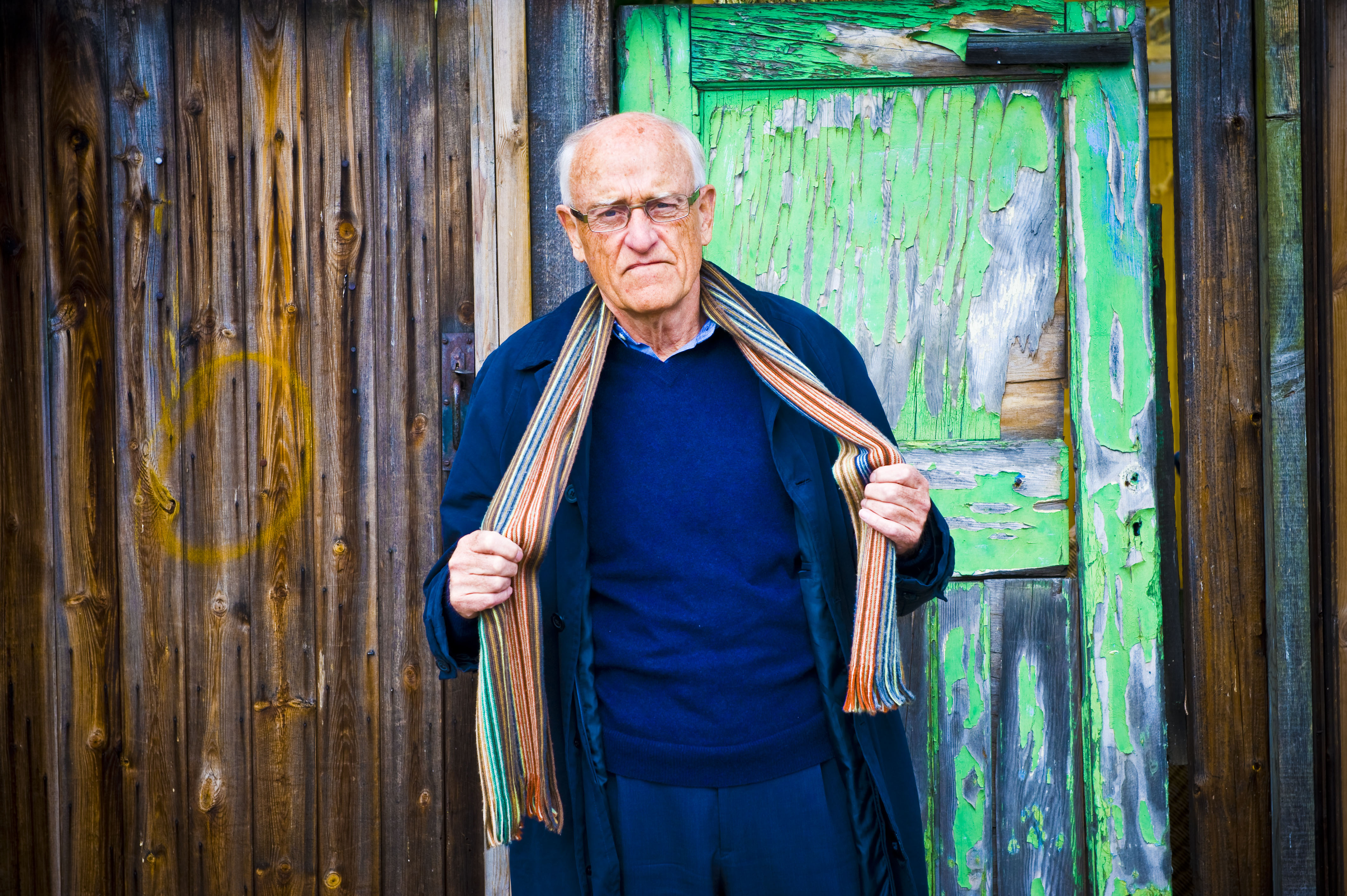
Karl has published over forty volumes of poetry, fiction, memoir and criticism. Along with New Zealand’s highest honour (the Order of New Zealand), he has received the 2009 Prime Minister’s Award for Fiction, a 2009 Montana Book Award for his Collected Poems and the esteemed Hippocrates Prize for Poetry and Medicine in 2010 amongst numerous other awards. Karl’s latest collection is The Yellow Buoy (published by Auckland University Press in New Zealand and Ark in the United Kingdom).
Karl’s poems embrace a vision that welcomes both an intellectual life and an everyday life along with a joyful attentiveness to sound. There is the characteristic wit, reflection and irony, but there is also tenderness, empathy and acute insight. These poems radiate such a contoured experience for the reader through their layering of ideas, self-confession, musical agility and location within a history of reading and thought. The subject matter shifts from the intimacy of a love poem to his wife, Kay, to a cheeky eulogy to Derrida (‘the enemy of plain sense’) to a hilarious case of mistaken identity. These poems have an unwavering strength to pull you back again and again to fall upon new discoveries.
Karl: ‘Poetry has been my life, and all the other literary endeavours, criticism, scholarship, fiction, circle around and out from it.’
Kirsti Whalen

Kirsti is a poet and disability advocate currently studying Creative Writing at Manukau Institute with Robert Sullivan and Eleanor Catton. She has written and read poetry since she was a child, and has won both the Katherine Mansfield Young Writers Award and the Bell Gully National Secondary Schools Poetry Award. She has published poems in various journals.
Kirsti is a fresh young voice on the poetry horizon line. Her submission indicates she has an astonishing ear for the way sounds soar on a line, the way they dip and fall. Her syntax is bold and on the move, but she is unafraid of neither simplicity nor silent beats. The poems take you into the heart of family from a mother’s x-rays to kitchen dinners to a grandmother’s quince trees. Each poem is brought alive to a startling degree with sensual detail, electric connections, canny ellipsis, judicious repetition. It is a voice that feels original, that is willing to take risks and that exudes a love of writing in every nook and cranny.
Kirsti: ‘I have been working to tell the story of my family, which is about women’s resilience and the ways of winning the most subtle and internal of wars.’
Award website: http://www.sarahbroom.co.nz/poetry-prize.html
 NZ Poetry Shelf