
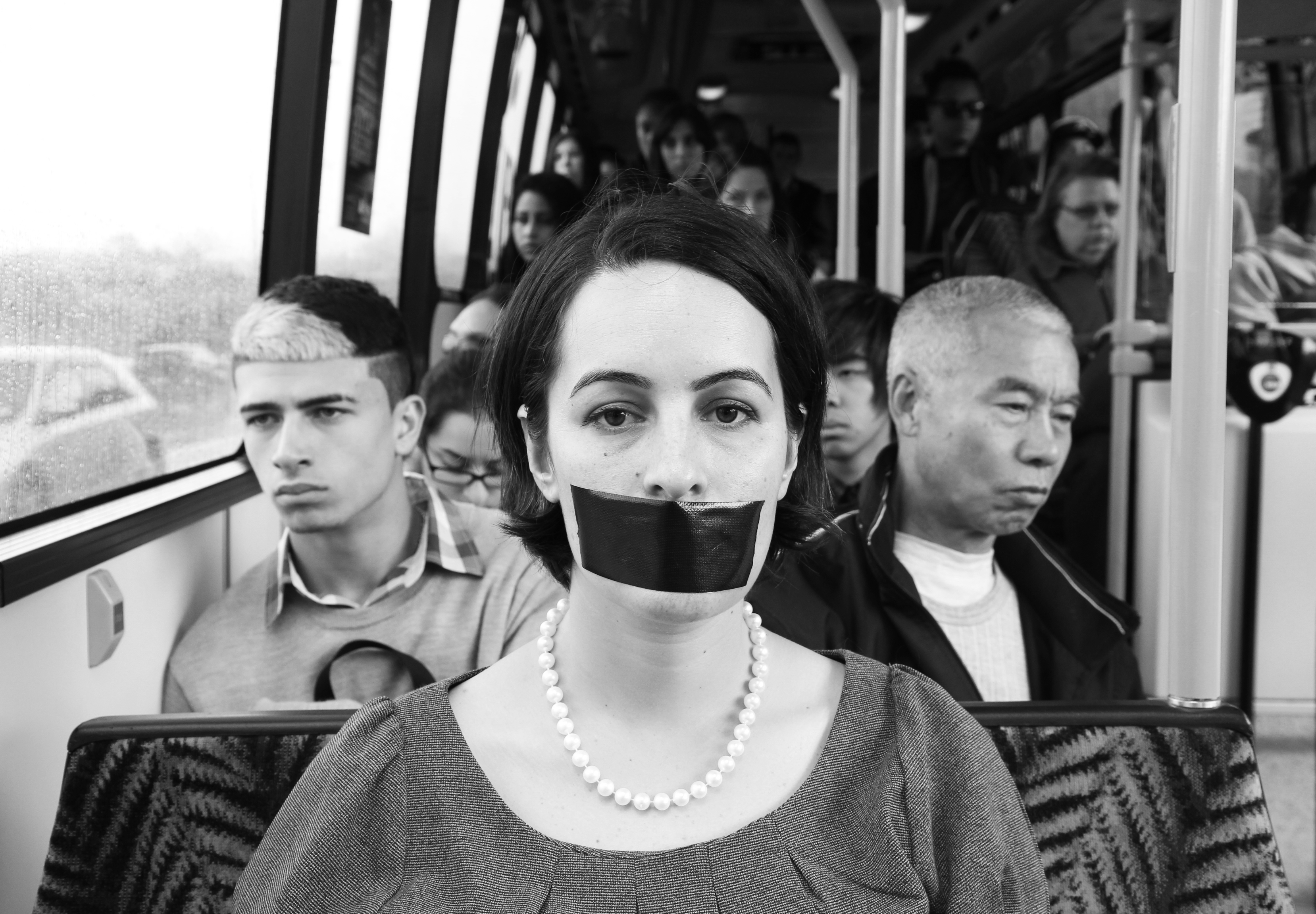
Photo credit: Janet Lilo
Mouths Wide Shut
it was while I was boarding
the early morning bus
with my mouth taped shut
that I came to understand
silence
her pale eyes watching me
she didn’t know what to do
or how to react
to the challenge
of my impertinent act
not golden but ashen
she seemed to be shaken
not wanting to deal
with my rage or passion
her mind was made up
who cared about the reason
why my mouth was taped
shut? her role was not
to question or get involved
let alone make a fuss
coz it’s not her problem
if someone wants to make
a statement on board
the public bus
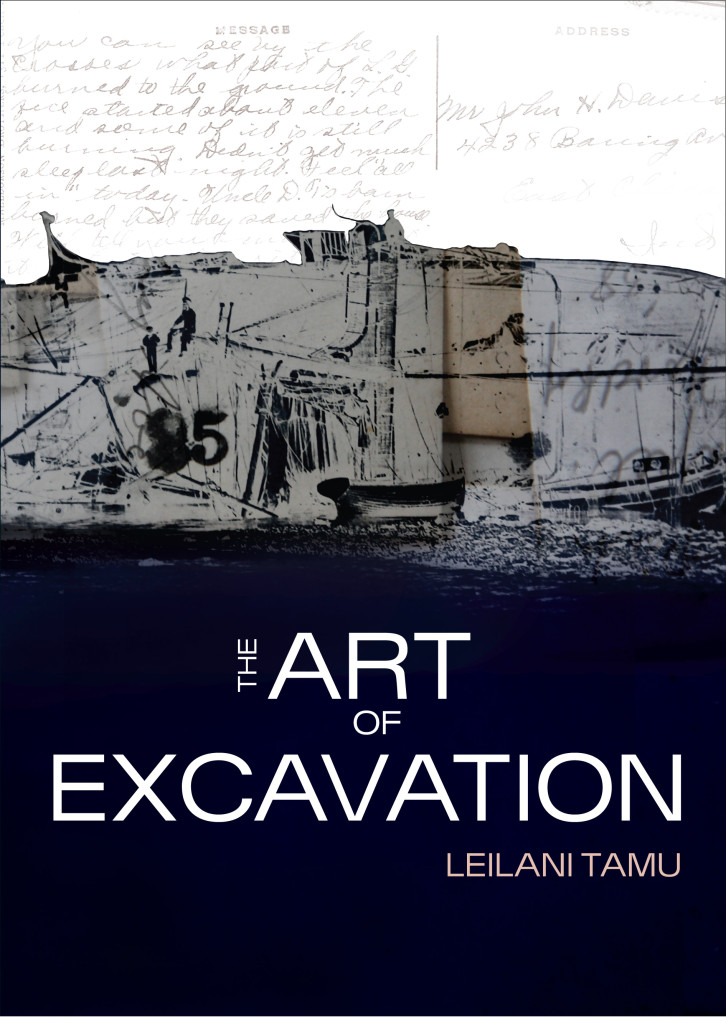
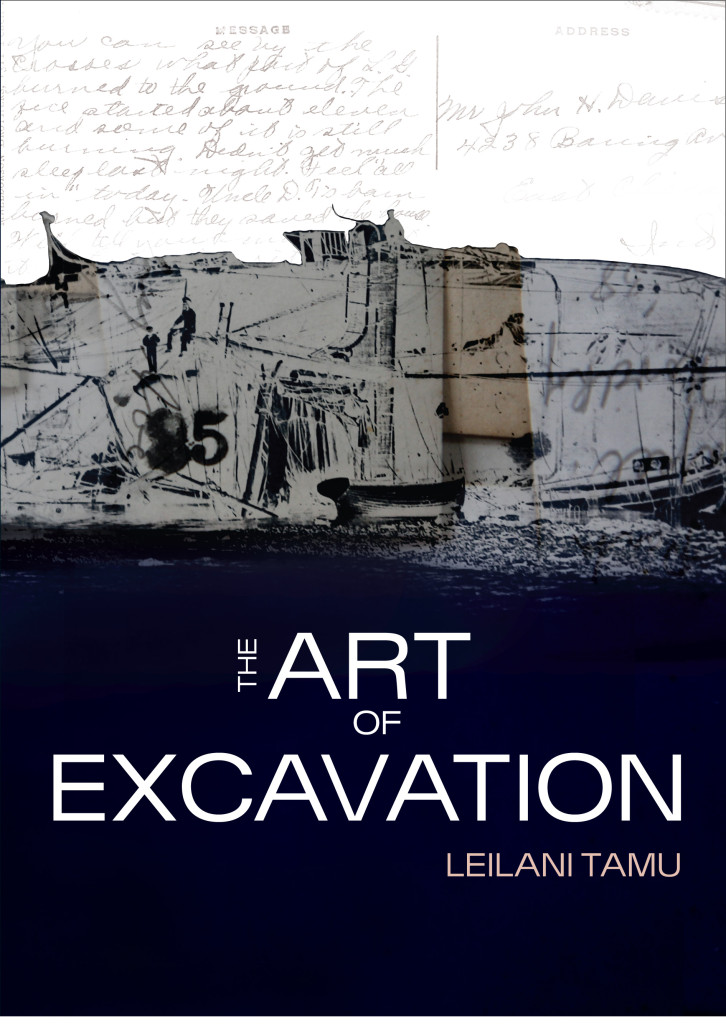
© Leilani Tamu, The Art of Excavation Anahera Press, 2014
Leilani’s note about the poem:
In 2012, I wrote an article for Metro magazine called ‘Mouths Wide Shut’ which tackled the issue of racism in New Zealand. The article focused on the implications, both personal and public, of choosing to remain silent, or do nothing, when confronted with racism. After writing the piece, I collaborated with artist Janet Lilo to stage a social / artistic intervention whereby Janet took photographs of me boarding a public bus in Auckland with my mouth covered with black duct tape. We rode the early morning bus from Avondale to Point Chevalier and during the trip not one person asked us what we were doing. People seemed to feel more comfortable ignoring us and most people looked uncomfortable. It was this experience and the subsequent photographs that inspired the poem.
The original article can be read online here
Author bio:
Leilani Tamu is a poet, social commentator, Pacific historian and former New Zealand diplomat. In 2013 she was the Fulbright / Creative New Zealand Writer in Residence at the University of Hawai’i in Mānoa. Leilani’s work has appeared in a diverse range of anthologies and her debut book of poetry The Art of Excavation was published in August 2014.
Paula’s note about the poem:
I had no idea about the genesis of the poem when I first read it but it really struck me. Stuck with me. I love the mesh of surprise and political bite. The title and the phrase, ‘mouth taped shut,’ were the initial hooks. It first brought to mind Rosa Parks refusing to give up her seat to a white man on a bus in 1955. Leilani’s title is an oxymoron yet it makes sense as the closed mouth of the title speaks volumes. It is a little cipher to carry through the poem. By being ‘sentenced’ to silence, willfully or otherwise, the taped mouth is both potent and resonant. It cuts into your state of ease. For me, it caught hold of centuries of thought, loose conversations, anecdotes and theory on women speaking and women silent, that reach back as far as Aristotle’s ‘A woman’s crown is her silence.’ The poem suggested to me that subject isn’t yet dead and there is still much to be said on the matter. Who is silence? Why is she silence? How is she silenced? Does it matter that she is a woman?
Yet this poem isn’t just issue based. It is vital, vibrant and rich with possibilities.
When I hit the word ‘silence’ in its own pillow of white space, I was tugged in a completely different direction. Now I was lead to the notion that you can observe and absorb and thus understand the world so much better if you are quiet (like the chatterer in the bush doesn’t get to experience the bush beyond the filter or screen of talk).
Then you reach the poem’s passenger and her distance. This returns you to the title and the poignant phrase. The passenger’s stance ignites thoughts on how we navigate difference and how difference is so often held at arm’s length because it is threatening, unfathomable, confusing. The notion that you can observe and absorb and thus understand the world so much better if you are quiet is tilted, flipped on its head. You get to observe, absorb and understand the world more through interrogation, through conversation. The poem is both the public bus and the public performance and it is over to us to draw close and raise questions. I love the way this poem is both understated and packs a punch. I have barely begun to pick at its threads.
Maybe you get to observe, absorb and understand the world by both silence (observation) and engagement (questioning).
Anahera author page here
My review of The Art of Excavation here
 NZ Poetry Shelf