
A slack-jawed shifting spanner
A yellow tape measure
that pulls out stiffly
and won’t retract
A small white pill
A fishing knife, stain-blotched wood,
line of triangular fangs
A piece of heavy wire bent into a hook
The key to a long-lost lock
Pliers and wire-cutters,
red vinyl grips worn dull
by years of hands
A seven-sided Irish silver coin
dating from the year I left home
A wrench
whose name I don’t know
A World War Two Australian penny,
verdigris film on wide brown disc,
an unshot kangaroo, the head
of a long-dead king
A new set of screwdrivers,
square-heads, sealed
in their blister pack
A sturdy green-handled Phillips …
The Honeymoon Screwdriver!
(Did little me name it?)
Translucent golden resin handle
fifty-years-later smooth
Nothing in this torn carton
will help me dig out the stubborn screw
inside his left-behind closet,
release the mildewed shelf
I have to get in a man
with corded forearms
like my father
used to have
Jackson
First published in Westerly
Jackson lives in Ōtepoti Dunedin. In 2021, they moved to Aotearoa from Australia, where Recent Work Press published their fourth poetry collection, A coat of ashes, based on their award-winning PhD thesis. In New Zealand, their poems have appeared in takahē, A fine line, Poetry Aotearoa Yearbook and other journals. They are on the committees of the New Zealand Poetry Society and Dunedin’s monthly poetry reading group Octagon Collective.
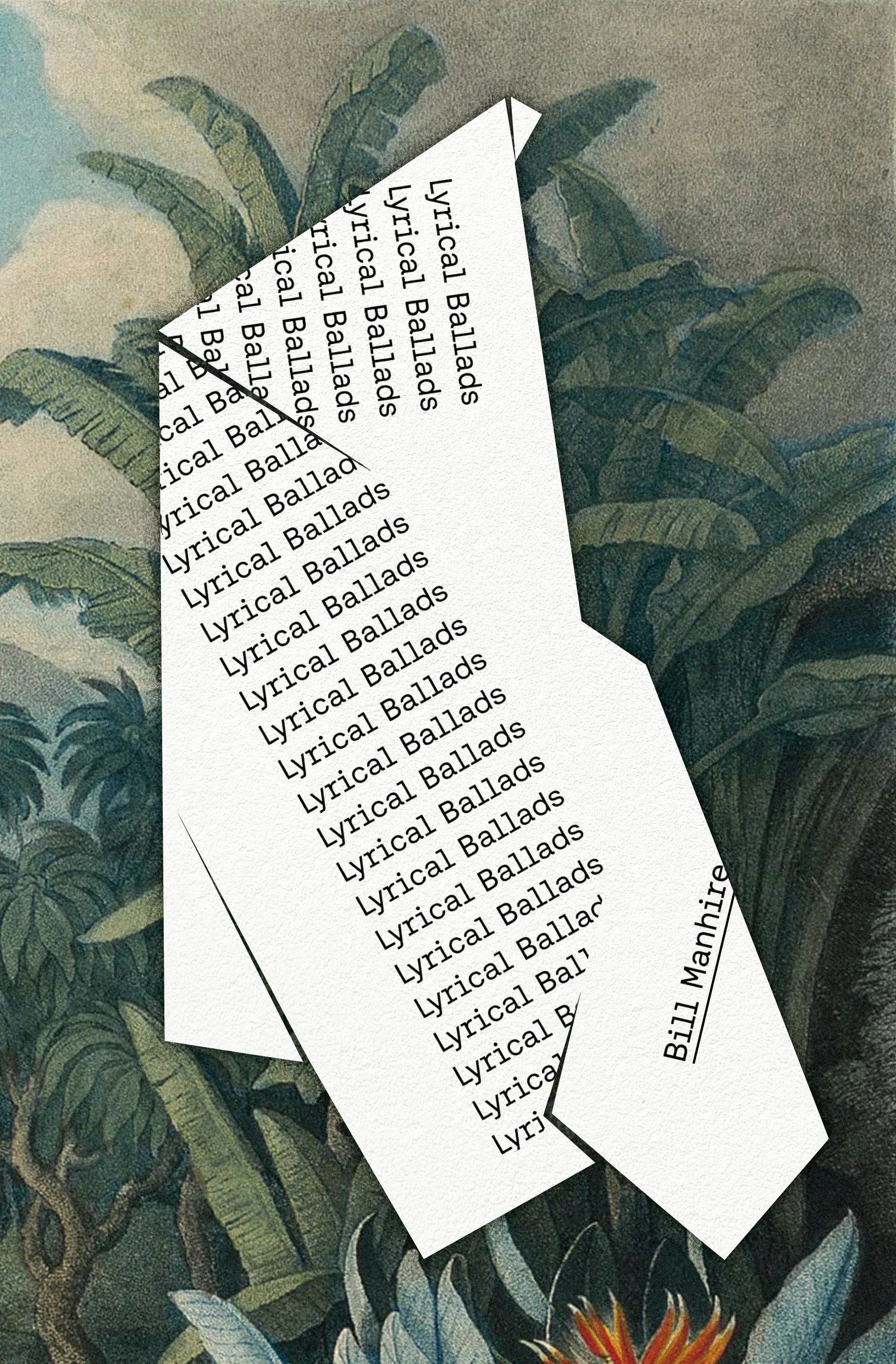
Lyrical Ballads, Bill Manhire
Te Herenga Waka University Press, 2026
Lyrical Ballad
I bought a bend in the river. It was a good,quiet bend.
You couldn’t see around the corner and after a few
steps you could. The water flowed round the bend, which
is essentially what you want. Everything else was doing its
thing. The Lost Hills were there in the distance. The river
was slow as it entered the bend, and maybe just a little
faster after that, I don’t know why. For a while I wondered
about getting a little boat, maybe a raft, but it was walking
around the bend that really made me happy. I liked the
reliable surprise. It’s gone now anyway, that bend, washed
away in the last big rains. Now it’s just a patch of land: a
channel and some structural damage. I suppose I should
sell it, but I can’t quite make myself. It was everything I
ever wanted.
Bill Manhire
In 2017, I chaired ‘Words and Melody’, a session with Bill Manhire and Norman Meehan at Going West. We discussed their collaboration, Tell Me My Name, and how they worked together to reach a place where, to quote Bill, “the music doesn’t overpower the words; but neither does it defer to them”. You can listen to the podcast here. And yes, there was music in the room. The best session I have chaired ever.
Bill has now written a collection of lyrical ballads dedicated to Norman. One part of me wants to hold the book out to you all, and simply say read this glorious collection, find a cosy reading nook and snuggle into the poetry to read in one slow and sweet sitting. Then put the book to one side for a few days before reading it again, even more slowly. I would stay on a hooked on poem, read it a number of times before turning the page.
But that said, I want to find a few words that will catch specks and glimmers of why I love this book so much. Last year I read all of Bill’s collections before writing a paragraph on his poetry to go in a new book and decided he was my Desert Island poet. His writing, over the course of decades, has offered everything I love about poetry, what makes me want to write poetry, read poetry, and yes review poetry. A word that has lifted to the surface in my week of roaming and reflecting within and beyond Lyrical Ballads, even above the beloved musicality and surprise arrivals, is “openness”. Poetry in Bill’s care, foregrounds the open poem. Dump prescriptions, formulae on the compost heap where they might transmute into open settings.
So here goes. The cicadas are at late summer screech. The west coat wind is nipping. The coffee is waiting. I want to write my way in and out of Bill’s glorious collection without closing windows and doors, paths and bridges for you, you the potential reader.
The first poem, ‘Come On In’, is an open invitation. We are invited into a room, “the kissing room”, and the four-couplet poem forms a labyrinth of possibilities. The poem (the room) might be a miniature narrative, anecdote, postcard from elsewhere or a home doorstep, an invention or a confession. A fable. A song. A lyrical ballad. It’s an open invitation to fill in detail with coloured pencils, if we so desire. Here is the room (the poem) that fills with talk and maybe heartbreak, braveness and maybe recitations.
When I roll the word “open” about in my mind, it picks up on ambiguity, the way a poem might swivel meaning, favour cloudy edges. The cast of characters feeds into this, relishing ambiguity and openness, along with Bill’s characteristic wit. We get to meet Mr Crimson from the Ministry of Health, Mr Doormat, Mungo, a girl called Daffodil Paddock (wow!!!) who wanted to be a character in a Margaret Mahy story, the recurring Alexander and Raewyn. This assembly of characters augments the ballad, advances the accumulation of story, the openness of story, as we get to picture and imagine, and add our own details. More than anything, the awkwardness, the ragged edges of existence, the difficulties (and ease) of fitting in and not fitting in, sing out.
Part of the joy of openness in poetry, is the way it promotes travel, and that is a significant and satisfying feature of the collection. We encounter roads and rivers and canals and bridges. We contemplate beyond, ins and outs, distance and proximity. It may be the known, it may be the unknown. It might be softening edges. Tough climbs. Watching the dawn or the dusk. Moving into older age. And wonder, yes above all wonder. I am reminded of the poetry of Vincent O’Sullivan where a poem infused with his ink might be an occasion of being there/here, or as one of Bill’s title says, “Getting There’.
After a time
After a time, my writing began to take a new direction.
Left after you cross the bridge, and then down what people
used to call the stumble-path – steps cut in the bank,
occasional big stones – to the water’s edge. You go down in
daylight and wait till it’s dark and there’s absolutely no one
there. After a while you aren’t there either. You feel truly
alone, fully neglected. I write all that down – you know,
in my head – then start on the difficult climb, no moon,
back up to the road. I need badly to return to the house,
even though it is empty now, windows open and curtains
billowing, still the place where everybody sits up waiting.
Ah. So many things to hold out to you in delight. I now want you to read the poem ‘Some Other Words They Sang’, where we are walking in the same direction as the insects when they sing in the night.
Some Other Words, I Think They Sang
Insects singing in the night.
We were all walking in the same direction.
Be careful. Be strong. Be kind.
That’s what they sang.
Sing when the world is worn away.
Some other words I think they sang.
Insects singing in the night.
We were all walking in the same direction.
Or read and re-read, and hold close Bill’s Gaza poem that has already moved us so deeply. Many of us are struggling with how to write within a matrix of global and local catastrophes, and abominable leaderships, climate change. How to live.
I am drawn to the talisman words and mantras I might carry in my pocket through the day (a bit like the words of the insects singing). I loved what the student took away from the History lecturer’s blackboard covered in difficult language: “‘It’s not the facts,’ he / said. ‘It’s what we do with the facts.'”
And of course there is the ink steeped in music, with rhyme and repetitions, loops, the exquisite lyricism that audio-marks each ballad. My dream is to sit in the Titirangi hall again and listen to Bill read us the whole book as we sit spell bound, before moving to the side room to the spread the locals have put on, to return with plates of food balancing on our knees, and to talk poetry and life until our voices are hoarse.
Is it possible to consider this collection in the light and possibilities of tracing paper, where each poem is a set of overlaid sheets, where story is overlaid upon song, which is overlaid upon the personal, which is overlaid upon philosophy and contemplation, and where every layer is embued with humanity, what it means to be human and humane, kind and caring, and every layer is shining through and adding myriad possibilities. What will the insects sing next? What will I hear in the kissing room? What do I picture when I picture the bend in the road?
In the acknowledgement page Bill thanks several people for their “encouragement, wisdom and rescue”. These words strike deep with me just as this book does. It feels like the poetry gives me encouragement, offers wisdom and rescues my frozen pen. There you go, I am holding this book out to you, so that you too may find your own gleams and shimmers.
Bill Manhire’s previous books include Wow (2020), Some Things to Place in a Coffin (2017), Tell Me My Name (with Hannah Griffin and Norman Meehan, 2017) and The Stories of Bill Manhire (2015). He has won the New Zealand Book Award for Poetry five times, and was New Zealand’s inaugural poet laureate. He founded and directed the International Institute of Modern Letters at Te Herenga Waka—Victoria University of Wellington. He has edited major anthologies of New Zealand literature, including, with Marion McLeod, the now classic Some Other Country: New Zealand’s Best Short Stories (1984). In 2018 Bill was awarded an Icon Award Whakamana Hiranga from the Arts Foundation.
Te Herenga Waka University Press page

 A Pōneke Poetry Showcase
Pōneke poetry lovers rejoice! Our new Poet Laureate, Robert Sullivan (Ngāpuhi, Kāi Tahu) welcomes poets including Arihia Latham (Kāi Tahu, Kāti Māmoe, Waitaha), Matariki Bennet (Ngāti Pikiao, Ngāti Whakaue, Ngāti Hinerangi, Amber Esau (Ngāpuhi / Manase), Jordan Hamel, Nick Ascroft, Rebecca Hawkes, Anne-Marie Te Whiu and more to the stage to demonstrate the unmissable power and beauty of poetry in live performance.
Sunday 8 March, 2pm (NZSL Interpreted event)
Tāwhiri Warehouse, Newtown
 Tickets on sale now at festival.nz/writers
Writers Double Take Pass: Enjoy 20% off when you book two or more events in a single transaction!
Kia ora,
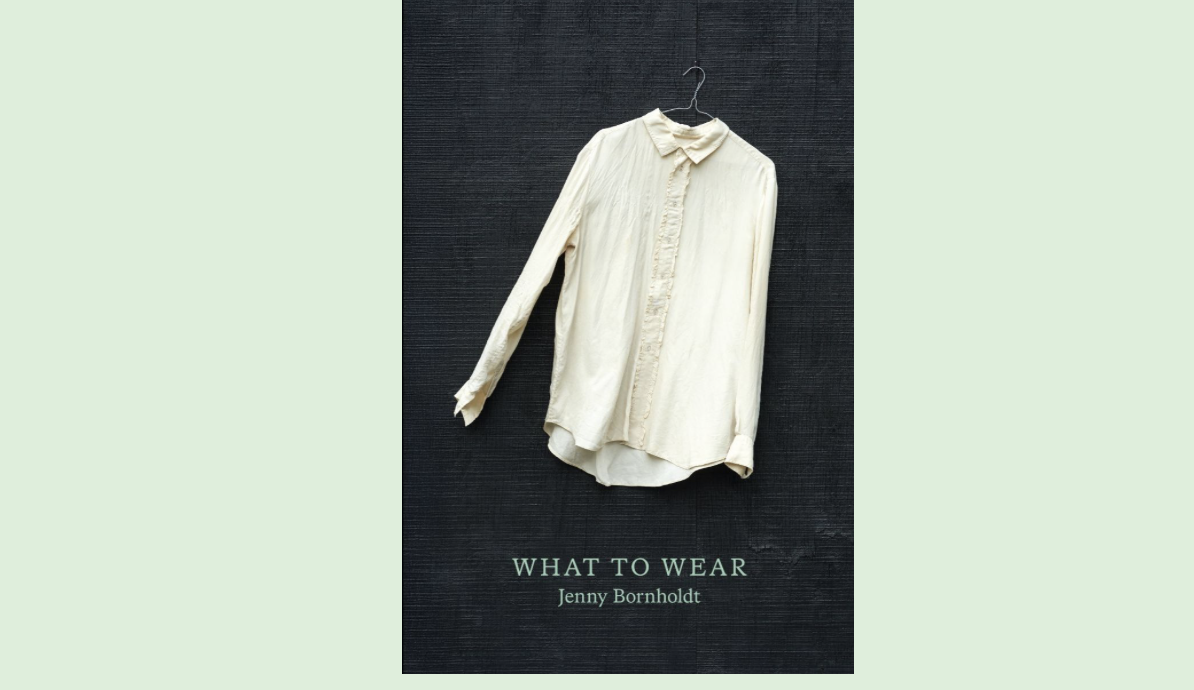
Join us next week for an Auckland celebration of Jenny Bornholdt’s new poetry collection, What to Wear. A wise and beautiful collection from one of New Zealand’s most beloved poets.
Thursday 26 February, 6pm
Lamplight Books, 100 Parnell Road, Parnell
All welcome!
Parking is available in nearby side streets, with two car parks close by on Garfield Street and Heather Street.
View more info on our website.
The poems in What to Wear observe that life means doing ordinary and marvellous things, like going to Bunnings, falling asleep on the train, losing and finding poems, losing and dreaming of our mothers, loving, dying, and deciding what to wear.
🪡 🪡 🪡
‘Mischievously joyful, like being in on the very best in-joke. Jenny Bornholdt reveals the strange magic of the everyday. Some of these poems move like a heat-seeking missile set to the heart.’ —Louise Wallace, author of Ash and This Is a Story About Your Mother
‘Bornholdt has never been so spare, so stark and wise.’ —Jake Arthur, author of Tarot and A Lack of Good Sons

| Jenny Bornholdt has published over a dozen books of poems, including Lost and Somewhere Else (2019), Selected Poems (2016) and The Rocky Shore (winner of the Montana New Zealand Book Award for Poetry, 2009). She has edited a number of anthologies, including Short Poems of New Zealand (2018), and has worked on numerous book and art projects with artists including Annemarie Hope-Cross, Pip Culbert, Mary McFarlane, Noel McKenna, Mari Mahr, Brendan O’Brien and Gregory O’Brien. In 2018 she was the co-recipient, with Gregory O’Brien, of the Henderson Arts Trust Residency and spent 12 months in Alexandra, Central Otago. She was New Zealand’s poet laureate in 2005–2007, and in the 2014 New Year Honours she was appointed a Member of the New Zealand Order of Merit for services as a poet. |
 |

Season Tickets are available now for Poetry in Performance March 2026!
We’ve got 4 unforgettable Thursdays of powerful poetry, featuring four acclaimed guest poets from across Aotearoa alongside an exceptional line-up of Ōtautahi talent and our always awesome open mic featuring the talents of the local poetry scene.
Buying a season ticket (4 nights for the price of 3 + Zoom link) is the best way to support local poetry and ensure you don’t miss a moment. Every dollar goes toward future CPC events and grassroots literary initiatives in Canterbury.
THE LINE-UP:
– 5 Mar: Richard Reeve, Annabel Wilson, Jenna Heller
– 12 Mar: Tim Jones, Megan Clayton, Dietrich Soakai
– 19 Mar: Sophie van Waardenberg, James Norcliffe, Regan Kupu Stokes
– 26 Mar: Kiri Piahana-Wong, Dominic Hoey, Best of the Open Mic
Where: Ara Imagitech Theatre, 130 Madras Street, Christchurch
When: Every Thursday in March at 6:30 PM sharp
Tickets: $10 per night | $30 season ticket (4 nights for the price of 3)
Tickets available at the door (cash, Eftpos, PayWave) or online via Humanitix
Each night includes an open mic – arrive early to sign up, connect, and grab a great seat.
Thanks to our venue sponsor Ara Institute of Canterbury and to everyone who
supported our 2024 Boosted campaign – this season exists because of you!
Photo: (top row, l to r) Dominic Hoey, Tim Jones, Kiri Piahana-Wong, Richard Reeve; (middle row, l to r) Regan Kupu Stokes, James Norcliffe, Jenna Heller, Annabel Wilson; (bottom row, l to r) Megan Clayton, Dietrich Soakai, Sophie van Waardenberg

Poetry. Dear old poetry. Your rusty relics groan on forgotten shelves of secondhand bookshops – Wordsworth and Shelley bearded with cobwebs,
Spenser dispensed with, the pages of both Brownings gone brown. Look,
there’s an abridged Longfellow leaning for support against a broken-backed
Bracken. But no, it’s not over. It’s never the end. Poetry lives on. Its voice
is stuttering within us all. A waitress smears mist from a restaurant window and seizes the day in a heartbreaking haiku.
Poetry. Yup, poetry. Musical emotion. Seraphic utterance. Precise notation
of our hearts’ desires. The phantom Muse floats high above city chimneys.
Anguished zealots spy her, exclaim, leap madly at her ankles. A few even
succeed and are borne briefly aloft, clinging to the Muse’s toes and warts
and corns, singing loudly down to the rooftops that our lives are noble and
signify.
Poetry. Sweet poetry. It’s a contagion, let me warn you, an epidemic. The
whole city’s at it. There are sonneteering plumbers out there, lyrical clerks
and romantic drain diggers. Classicist butchers are chopping up trochees
and iambs with their tripe and lamb. Wharfies wail oceanic epics. Sad-eyed
masseuses devise Buddhist mantras in Thai. The Nuns jabber limericks. An
elegiac taxi driver honks past with a carload of rowdy symbolists.
Poetry. Wow, poetry. What a comfort, what a blessing, what a boon, for
those of us who can’t jog, juggle, sew, whistle, turn cartwheels or make
money, who topple from tightropes and sing like cats caught in a
dishmaster, whose thuggee fingers maim any instrument they touch. Words
– words are all we have. And they escape our needy grasp like startled eels.
Iain Sharp
from ‘The Poets’, in The Singing Harp, Earl of Seacliffe Art Workshop, 2004
Iain Sharp (1953- 2026), librarian, writer, poet, performer, reviewer, lover of books, was born in Glasgow, and arrived in New Zealand in 1961. He ended up settling in Nelson with his beloved wife, Joy. He studied English at the University of Auckland, before enrolling at library school at Victoria University Wellington. He worked at the Sylvia Ashton-Warner Library at the Auckland College of Education and as a rare books assistant at the Grey Collection, Auckland Public Library. In 1982, he completed a PhD at Auckland University (Wit at several weapons: a critical edition, 1982), that considered the 17th century comedy by the Jacobean playwright and poet Thomas Middleton and William Rowley.
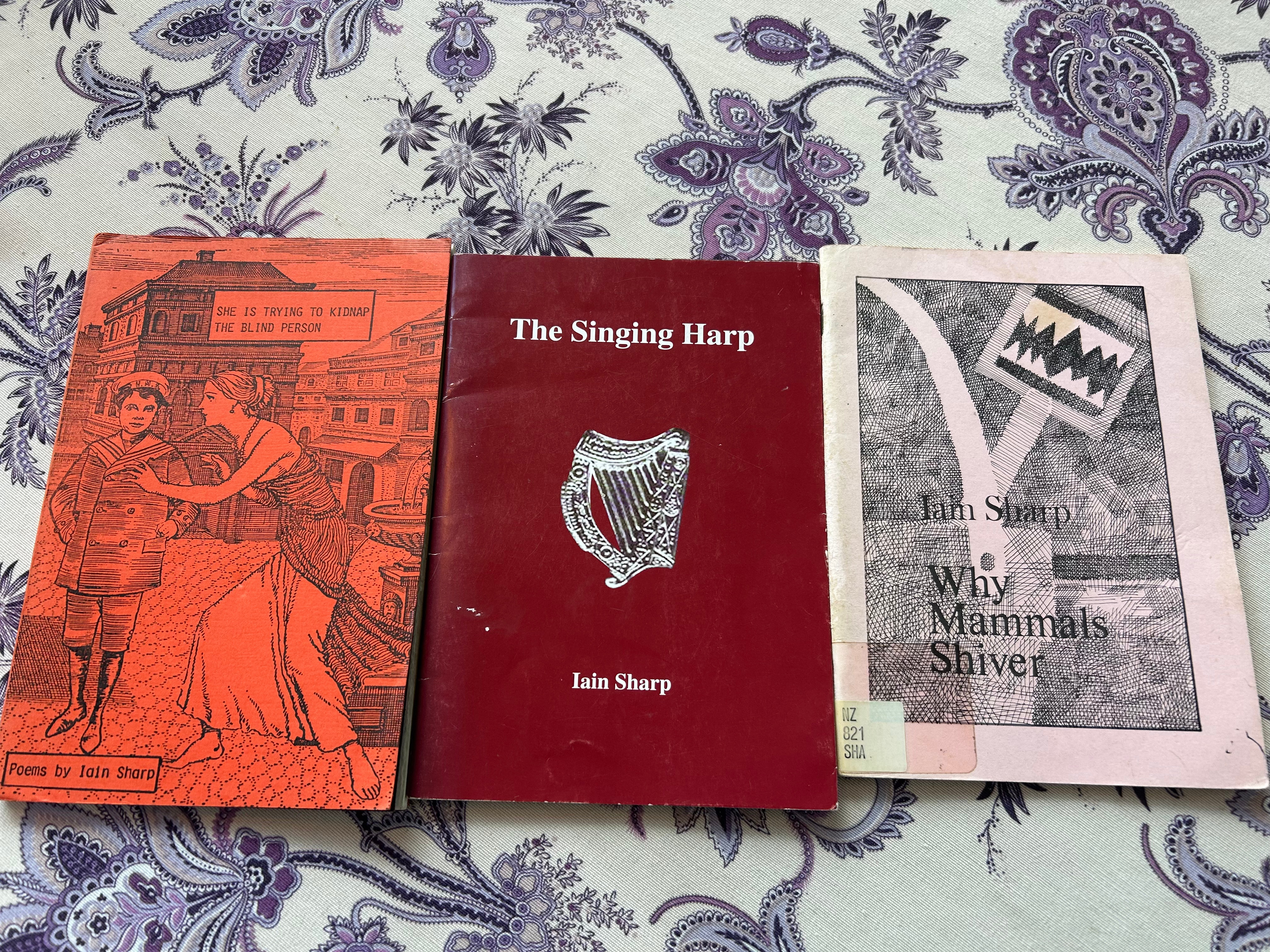
As a nonfiction author, he wrote Sail the Spirit (Reed 1994), a book on Auckland City Libraries treasures: Real Gold (2007) and a book entitled Heaphy (AUP, 2008). His poetry collections include Why Mammals Shiver (1981), She Is Trying to Kidnap the Blind Person (1985), The Pierrot Variations (1985) and The Singing Harp (2004). Along with poets such as Dave Mitchell, Michael O’Leary and David Eggleton, he performed his poetry at the Globe Tavern in the late 70s and early 80s, and the Shakespeare Tavern in the 1990s.
Reading Iain’s poetry again, is to get his incredible wit singing in my ear, to savour the intoxicating amalgam of music, surprise, love, living and reflecting in the moment, writing and performing in the arc and loops and riffs of what poetry and life can do. I am moved and I am inspired. Utterly. I so loved reading Iain’s piece on Bill Manhire published in Quote Unquote in 1996. Iain highlights Bill’s wit and ability to surprise, his humanity, humbleness, his lyricism, his cool. Iain writes: “When I was young, I wanted to write poems that sounded just like Bill’s: enigmatic, poised, deeply ironic, simultaneously lyrical and subversive. I never came within cooee of success.” I smiled in recognition. And yes, here I am bringing similar words to Iain’s sublime poetry. As Iain says in ‘The Poets’, the poem posted above, poetry can be such a blessing, a ‘wow’ unfolding.
Iain was writing poetry on his laptop, feeding on the nourishing strengths and blessings of poetry until his final days. Joy has included one of these poems, ‘Breakfast in Hamilton’ after her first pick. I have included one, ‘Blood Cancer Blues’, at the end of the tribute so that we may hold his voice close, gathering as we are here in this time of sadness, to read his poetry and share stories together. And yes, let’s embrace poetry as a blessing.
To celebrate the poetry of Iain Sharp and assemble a wee tribute, Poetry Shelf invited a few of Iain’s friends to select a favourite poem and write a few sentences. Donald Kerr has written a terrific tribute for The University of Otago that is a must read (go here). You can listen to Iain read here.
I offer a warm bouquet of sweet and salty ocean air from Te Henga to friends and family in this time of sadness, and especially to dear Joy. Thank you for helping create this special tribute.

the poems
Joy Sharp
The Reckoning
Life is improvised like Charlie Parker.
Sure, you can rehearse a few routines
but you never know in advance
how they’re likely to go down —
too rigid and they’re bound to snap
too loose and they won’t sustain
your weight or anyone’s interest.
Some nights nothing works
in spite of deft fingers
impeccable breathing
a wonderful shirt or hat.
Other nights are magical
but you can’t explain why
though you think hard for years . . .
like the beauty of your lover’s face
as she knelt to light a white candle
in Saint Patrick’s cathedral
the night you entered the church
only because it was raining.
In the end that’s what we’re left with . . .
shards of inexplicable magic
but while you’re waiting for them
instead of just pining for your brain
to become a rainbow or for the breaks
in every surface to heal, why don’t you
step outside and do something useful
such as extolling the stars?
Iain Sharp
The Singing Harp, Earl of Seacliff Art Workshop, 2004
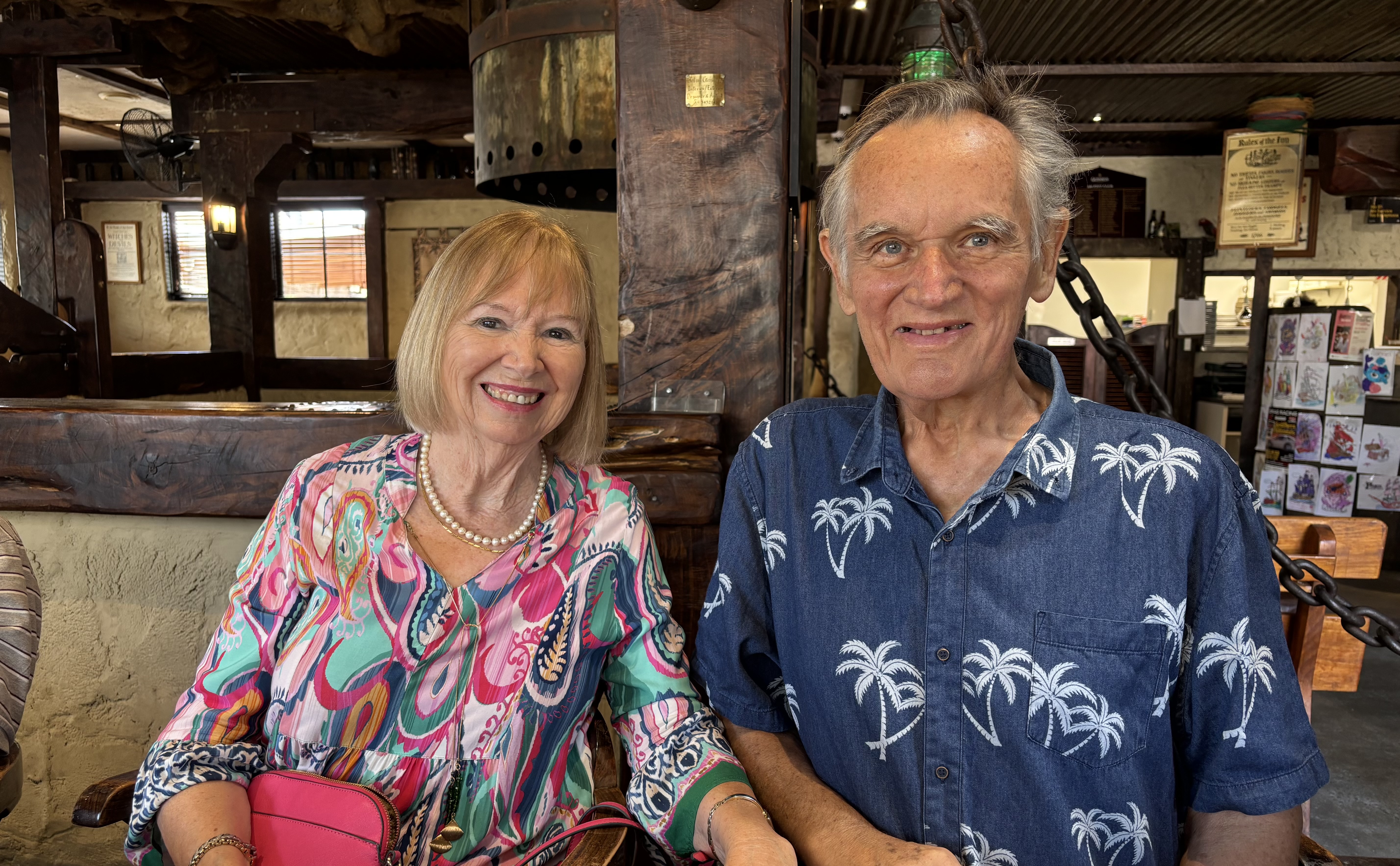
This poem brings back a wonderful memory of the two of us dashing into the church seeking shelter from the rain. It was Iain’s poetry that drew me to him over 30 years ago, and poems like this will continue to sustain me. Iain was lovable, kind, intelligent, witty and fun to be with. We were blissfully happy living together in Nelson. He was my dearly-loved husband and my best friend. I miss him terribly but am grateful for his unwavering love and the life we shared.
Joy Sharp
Breakfast in Hamilton
Skittering along Clarence Street,
Hamilton, not long after dawn,
I’m feeling virtuous to be up
and walking and headed for
Pak ‘n’ Save for breakfast victuals
while back in our motel bed
my darling sleeps blithely on
and, having already completed
a circuit of Hamilton Lake,
my lumbago is easing up
and though the fierce morning glare
plays havoc with my ageing eyes
I’m congratulating myself
on my new athleticism
when I spy a big sign outside
the tax-reckoners which seems
to ask in comics sans serif:
“Are you praying too much?” —
and, taken aback, I wonder
“Can this be possible?
Is the universe ruled by
a god of limited patience
who wants us all to shut the eff up
so He can hear Himself
or She can hear Herself think?” —
like that moment this morning
when I heard by the sedges
the shrill peep-peep-peeping
of an adolescent pukeko
whose mother had had enough
of the incessant needfulness
and was dashing on tiptoe
to a remote part of the lake —
and then, pausing to rub my eyes,
I see the word in fact is “paying”
and, heck, I’m on the lowest rung
of middle-class remuneration
and en route to the supermarket,
so of course affirmative, of course,
but that other phantom question
gnaws at me still as I tote
yellow bags bulging with fruit
back to Ashwood Manor,
where Joy, just woken, requests
a cup of tea of decent strength—
and I pray for more days like this –
another skittering decade,
or half a decade at least,
with more dawns with Joy beside me,
more walks with most of myself
still more or less functional,
more encounters with pukeko,
more misread signage,
more libations of decent strength,
more Pak ‘n’ Save holiday breakfasts
in – for God’s sake – Hamilton
Iain Sharp
Serie Barford
THE NEVERTHELESS INCREDIBLY HAPPY POEM
Well, here it is at last, folks, the nevertheless
incredibly happy
poem, done in prose. Yes, happy. Remember? There might
be worms in the
apples, blood in the gutters, crumbs in the bed, cracks in
the globe,
black holes in the cosmos, guilt and acne and egg all over
our disgusting
faces, but things will work out, the end will be wholesome
heartwarming
fun for all the family, all creatures that on earth do
dwell chuckling
together and slapping their gleeful knees beneath a hunky-
dory sunset.
Trust me. Step down from your kitchen chair and return the
noose to your
bottom drawer. Throw away those toasted deathcap toad-
stool sandwiches.
Take the bullets from your pistol and the pistol from your
head. Smile.
Dance. Rouse your rump. Jive your jelly. Boogie your
booty. Flamenco
your flab. Immerse your caboodle in delirious optimism. A
new dawn is
coming. Summer is coming. The calvary is coming. The
millennium, apocalypse,
and Second Coming are coming. I know. I’ve had word right
from the top.
As I was traversing Albert Park after a few litres of
cognac with the
Earl of Seacliff, lo and behold, the deity peeked out from
behind a puff
of white cloud and spake unto me saying, “Hi there, Sharpie,
you daft
drunken bugger. Chin up, old son. Taller mercies are
beaming your way. Be
incredibly happy!”
Iain Sharp
The Globe Tapes Vol 1, 1985
I chose this poem from The Globe Tapes (Vol. 1), a collection of two booklets and two cassette tapes that recorded 42 poets who frequented Poetry Live at the Globe pub in Auckland, 1985. I vividly remember Iain reading this poem with his warm, distinctive voice cutting the smoke-filled room with a Glaswegian inflection and dramatic gestures. The Globe was run down but welcoming. Poets were rowdy and drawn from varied backgrounds. I visited The Globe several times before I garnered enough confidence to read a poem I’d written. I realised the stage was truly a public forum when a taxi driver rushed in one night, elbowed his way through the crowd and poured his heart out without using a microphone. He read a hastily jotted poem about his wife and memorable passengers, then charged back outside to his cab. Iain encouraged me to read that night. He always supported fledgling poets. Iain displayed an inquiring mind, a keen sense of humour, sarcasm toward ignorant and arrogant gatekeepers, gentleness and empathy toward the vulnerable. He was ‘a scholar and a gentleman’ in rumpled clothes with a big smile and will be missed by many.
Serie Barford
Gregory O’Brien
The Restoration
The sea coughs out
its bits of skeleton.
We put them back in.
There’s really no alternative.
We stand on the capstans
and throw bones
far into the harbour
while fog surrounds us
like a grey sigh.
Iain Sharp
For a few years, in the mid 1980s, Iain was a close friend and collaborator in various ventures, including the short-lived journal Rambling Jack (1986-7). Around the same time I was producing illustrations to accompany Iain’s column, ‘The Sharp End’, in New Outlook magazine. In his early 30s, Iain was firing on all cylinders. He was funny, noisy, bookish, and incredibly learned across a huge range of topics–yet it was also in his nature to be iconoclastic and acerbic. He really, really hated being bored–and if anyone crossed that line, he would get his back up. I remember the entire corpus of 19th century New Zealand poetry being given a serious take-down in his instantly notorious review of The New Place: Poetry of Settlement in New Zealand 1852-1914.
Iain was working as a librarian at the Epsom Training College Library, less than a kilometre from where I was living in a bedsitter. My friend Jane Coombs, Iain and I cooked up Rambling Jack together, with some input from Mark Williams,then residing in Hamilton. Iain’s poem ‘The Restoration’ was in the journal’s first issue; he took over as Editor-in-Chief for the second.
Joining Iain for morning coffee, en plein air, on the library steps, I would often be accompanied by my son (Rambling) Jack-Marcel, who was zero at the time. On good days the baby in the pram would sleep through the high-level literary discussion that was taking place around him.
One small thing I remember apropos of Iain and his inescapable Scottishness: Whenever Iain ran into Hone Tuwhare (and I witnessed this at least twice), Hone would come racing over to him and administer a serious hongi, with intensity and great feeling. The reason, Hone once elaborated, was that he and Iain both had the same Scottish ancestry (a fact Hone made quite something of). Iain was whanau and, accordingly, Hone’s greeting was the appropriate one.
I didn’t see Iain anywhere near as much as I would have liked after moving to Wellington at the end of that decade. I felt this as a loss. And now he is gone. Time rolls on. The baby in the pram (Jack-Marcel) turned 40 on Christmas eve. I’m left thinking how lucky we are when we fall into truly good company. Iain was certainly that. I’m left eagerly awaiting the publication of an expansive, miraculous, indispensible compendium of Iain Sharp’s poetry, short poetic prose-pieces and maybe some of his critical writing, collages and miscellanea.
Gregory O’Brien
Donald Kerr
Four o’clock. Five. The afternoon
slithers by on its broken ribs.
I linger awhile in city parks
wishing I’d learned the names of trees.
A woman who thinks I might want her
studies my palm in a coffee parlour.
Her words are swarms of winged insects
buzzing, buzzing beyond my grasp.
At Vulcan Lane a man I once knew
tells how his face has grown so heavy
He keeps falling forwards. I nod.
I buy him a shot of brandy.
The city is a huddle of oblongs.
Though I search for the hem of the sky
to lift the greyness from this life
there’s nothing my nails will go under.
Iain Sharp
published in Echoes 3, 1984.
“A lover of words and puzzles, he regularly tackled crossword puzzles, wordle, sudoku. He had an ability to remember weird facts and details on the strangest things. Indeed, his knowledge was encyclopaedic, and he was a very welcome team member on pub quiz nights. One fact needs mention: he was not showy, pompous, or arrogant with his learning. He was modest and quiet to the nth degree, exhibiting a demure reserve. Importantly, he was encouraging to others entering the literary world. New, younger poets, or older writers who wanted feedback on their works were met with the same patience and understanding and fairness.
The second and last items that feature in Real Gold concern Charles Heaphy (1820-1881), soldier, painter and colonial surveyor: ‘Plan of the town of Auckland’ (1851) and a pen and washing drawing of ‘Neche Cove, Nengone Loyalty Islands’ (c.1850). Heaphy obviously appealed to Iain’s sensibilities because in 2008 his Heaphy appeared, published by Auckland University Press. It is a superb biography that reflects his scholarship and his usual demand for accuracy in tracking down obscure facts about his subject. It is a very readable book. He must have been pleased with it.
Contemporaries in the world of letters in New Zealand have already remarked on this very sad occasion, the loss of such a good man: clever, witty, unassuming, never loud, and very kind. He was a consummate gentleman. His family will miss him greatly: Joy, his wife; Marion, his sister and her children Kyle and Rhiyen; and Don, Andrew and Tim, to whom Iain was a much-loved step-father. Vale.”
Donald Kerr, full tribute here
Dunedin, February 2026
Stephanie Johnson
Watching the Motorway by Moonlight
We sit on the viaduct
dangling our toes
in mid-air.
A truckload of turnips
heads towards Auckland
followed by
a carload of nuns
all eating hamburgers.
You close your eyes.
Your thoughts become
the night sky
the mist around the moon.
I nudge you gently.
Look love at the white moths.
An angel’s wing is moulting.
Iain Sharp
The Pierrot Variations (Hard Echo Press, 1985)
I chose this poem because Iain very kindly granted me the use of the first verse in my 2021 novel ‘Everything Changes’ and it brings him back to me. The character reading the poem asks himself ‘Did I ever the meet the poet? Was he the dapper young Scotsman?’ In the writing world, Iain was a rare bird – kind, gracious, erudite, humble, clever. We first met at the Globe in the early eighties. He was a poet the crowd hushed for, partly to listen to his lovely Scots accent but mostly to listen to his great poems. If only we could time travel back to those days and listen to him again.
Stephanie Johnson
Johanna Emeny
The Ponsonby Strut
First you go downtown and you get half-cut.
You climb College Hill when the taverns shut,
find an open party and talk some smut
or politics or art or God knows what.
Smoke in your eyes and cheap wine in your gut —
that’s how you do the Ponsonby Strut,
whoa-ho-ho the Ponsonby Strut (yeah).
Now here’s the hoop-la — the cast’s all present:
the drunks the punks, the poets, the peasants,
the incoherent, the incandescent,
the refugees from Boyle Crescent,
the drugged, the bugged, the insipid, the incessant,
the fresh-from-rehab semi-convalescent,
the unhappily unhugged, the plain unpleasant,
and Herman (the world’s oldest adolescent),
who boasts to his hosts he’s still tumescent.
There’s an implant down his urethra, but
it doesn’t impede the Ponsonby Strut,
whoa-ho-ho the Ponsonby Strut.
On the porch by the flowering quince
in fake black leather the Dark Prince
trills of his talent, tries to convince
Rhiannon with the raspberry rinse
that he’s the tastiest morsel since
lasagne added cheese to mince.
Rhi just yawns; the rest of us wince
beneath the moon’s wan aquatints.
Distant galleries lure us, but
we keep on doing the Ponsonby Strut,
whoa-ho-ho the Ponsonby Strut.
In the hall beneath the gilt chandelier
Hollywood Lorna strives to make it quite clear
she inhabits the wrong hemisphere.
She’s a born star, she says. Did you see her last year
in the outdoor production of King Lear?
But even while Lorna is bending your ear
Con, the red-nosed Trotskyite pamphleteer,
clutching fresh pamphlets attacks from the rear.
You look for a nook in which to disappear.
You just popped in, after all, for the beer
and whatever else you could souvenir.
The cost some evenings is too great, but
short of emigrating to Lower Hutt,
what else can you do but the Ponsonby Strut?
whoa-ho-ho the Ponsonby Strut.
Well, first you get sloshed as a halibut,
then swim up College Hill with your eyes half-shut.
Cursing yourself for being such a slut,
you crash another party and say God knows what.
Martian canals in your eyeballs, cardboard wine in your gut;
that’s how you do the Ponsonby Strut.
Iain Sharp
The Singing Harp
Only Iain Sharp could create such memorable characters as priapic Herman and amateur thespian Lorna in a poem constrained by only four end-rhyming sounds throughout.
“The Ponsonby Strut” swings along as jauntily and humorously as a local wag dishing the dirt on the area’s other inhabitants — “the drunks the punks, the poets, the peasants.” The language is naughty, taut, and clever. Who else would have thought to use “souvenir” as a verb?
In addition to being a gifted poet, Iain was always generously available to write a review or to help with research. He was a genuinely charming and beautifully mannered man. Beannachd leat, Iain.
Johanna Emeny
Anne Kennedy
WALKING THE inch arp WAY
A blue saxophone. A suggestion of cymbal. Doop-wah ffftt. Then a drum roll, a symphonic surge. inch arp walks down the road.
Yes, inch arp (dadaist) is walking down the road. Down the road walks arp. arp’s active. He’s proceeding. Talents must be nourished. Encouraged. A phantom crowd whistles and thumps.
arp trots. He nomadizes by. Compact. Authoritative. Stately, plump. Walking. Going public. In his tam o’shanter. In his eyebrows and wide trousers. With decorations to brighten the home.
He’s good at it. He’s holding his own. He knows what he’s about. He’s walking. Down. Great South Road. South of the equator. Penrose. Past dark fumes and smelly mills. Loving it. Loving the peripatetic method. Left foot right foot left. The most effective timing of the arms and legs has been a matter of controversy for some years. arp favours the two-beat crossover kick. Eyes front. Back straight. Sweep up from the hip with a relaxed lower leg and ankle
Dugongs must have flippers. Ducks have rubber webs. Frogs leap high and frogs leap low. arp walks. He walks down the road. That’s what ‘staying on the ball’ is.
Describe him. Describe his walk. Describe the angles his teeth make relative to his spinal curvature. Cite the latitude of the street. The composition of the asphalt. The height of the kerbstones above sea-level in centimetres. The distance from Mercury. Io. The nearest civilized star. What proportion of arp’s soles have been worn away by friction? How many molecules does he contain? How many parasites? List any perceptual problems, clinical manifestations, minor neurological signs. Comment on the isobars. The aphasiological context. If you were the government of the day how would you improve this scene?
The road is being walked down by arp. It feels his impress. Steady, inch. Don’t get overexcited. Remember the day in the freightyard.
inch ambles. He paces himself. He’s a flexible mover. Agile. Awake. Coming back from the market. Collecting visual information.
That outline’s the Bombay Hills. The ocean must be out there too. Somewhere. Distant buoys and lightships blinking. Left foot right foot. Look before crossing. Look up when you can. Bits of sky, whole stretches, cold and pure as white chrysanthemum. Nascent shimmers near the horizon. 350 A.D. The Pope invents Christmas. 1986. arp’s walk. Doop-wah. Wah-doop. ffftt.
Iain Sharp
First appeared: Rambling Jack 2 (Miracle Mart Receiving, 1986)
This was, I think, the first piece of creative writing I read by polymath Iain Sharp – who I already knew from his daring writing on books and literature. I remember being dazzled. Forty years later, I still love this flash-fiction, am amazed by its inventiveness, humour and – no other word – profundity. And importantly its relevance to today.
I remember a bit of background about this piece, from bumping into Iain and his future wife Joy – who were a picture of happiness – in cafes in Auckland. As people who knew Iain will know, he maintained his lovely Scottish accent, and therefore (I guess) noticed New Zealand accents. To his ear, people around him pronounced his name, ‘Inch Arp’.
The flash-fiction ‘Walking the inch arp way’ packs so many things into its economical form, riffing and extemporizing like Jazz. First of all, of course, it calls on the Dadaist artist and poet, Jean Arp, who I seem to recall was having a bit of a resurgence in the 80s. (Or was that just in cafes in Auckland?) Like Dadaism, Iain’s poem is absurd and aching at the same time. Hilarious and political. The speaker, inch arp, navigates the world with both puffery (‘a drum-roll, a symphonic surge’) and self-deprecation (‘arp trots’), in itself a kind of loping gait. Sharp finds myriad connections between the self and everything-else – from the body (‘his eyebrows and wide trousers’), to animals, to outer space. In so few words, Sharp drills down through ‘dark fumes and smelly mills’, ‘the freightyard’, bureaucracy-speak to find an underlying dystopia. ‘If you were the government of the day how would you improve this scene?’
Like Jazz, Iain’s attuned ear makes ‘Walking the inch arp way’ sound so good. The vowel chimings, the found phrases, the rhythmic walk. In the end, the beautiful juxtapositions of tossed-offness and refinement carry us along while we absorb a representation of being.
Thank goodness we have Iain’s legacy of writing.
My deep condolences to Joy and Iain’s wider family.
RIP Iain Sharp.
Anne Kennedy
Ian Wedde
The Ian Sharp Poem
Iain Sharp is a fat parcel
of mixed groceries
tied with a clumsy knot.
Iain Sharp is a black kite
adrift on changeable winds.
Iain Sharp is a pile of scoria
drifting softly to the sea.
Whenever I peep in mirrors
Iain Sharp frowns back at me.
It’s terrifying.
Iain Sharp is a runaway tramcar.
Iain Sharp is a chunk of moonrock.
Iain Sharp is nine letters wrenched
from the Roman Alphabet.
Look there and there!
Bits of bright confetti blow
from chapel to chapel.
I chase them with outstretched hands.
They might be Iain Sharp.
Iain Sharp
Yes it was heartbreaking to hear of Iain’s death. I loved his wry, self-effacing tone, picking an example results in protracted indecision! One of my favourites is given away by its droll title, it’s ‘The Iain Sharp Poem By Iain Sharp’. So many fleeting moments that yet convey an observant, genuine sensibility, and perhaps an invitation.
Ian Wedde
Blood Cancer Blues
When mild anaemia
becomes leukaemia
that’s not good news.
Blood cancer blues.
Though some last for years
with cells shaped like tears,
you don’t get to choose.
Blood cancer blues.
Quite at ease, then whup!
Someone’s number’s up,
but precisely whose?
Blood cancer blues.
Leaving my sweet life
and my lovely wife
and our ocean views.
Blood cancer blues.
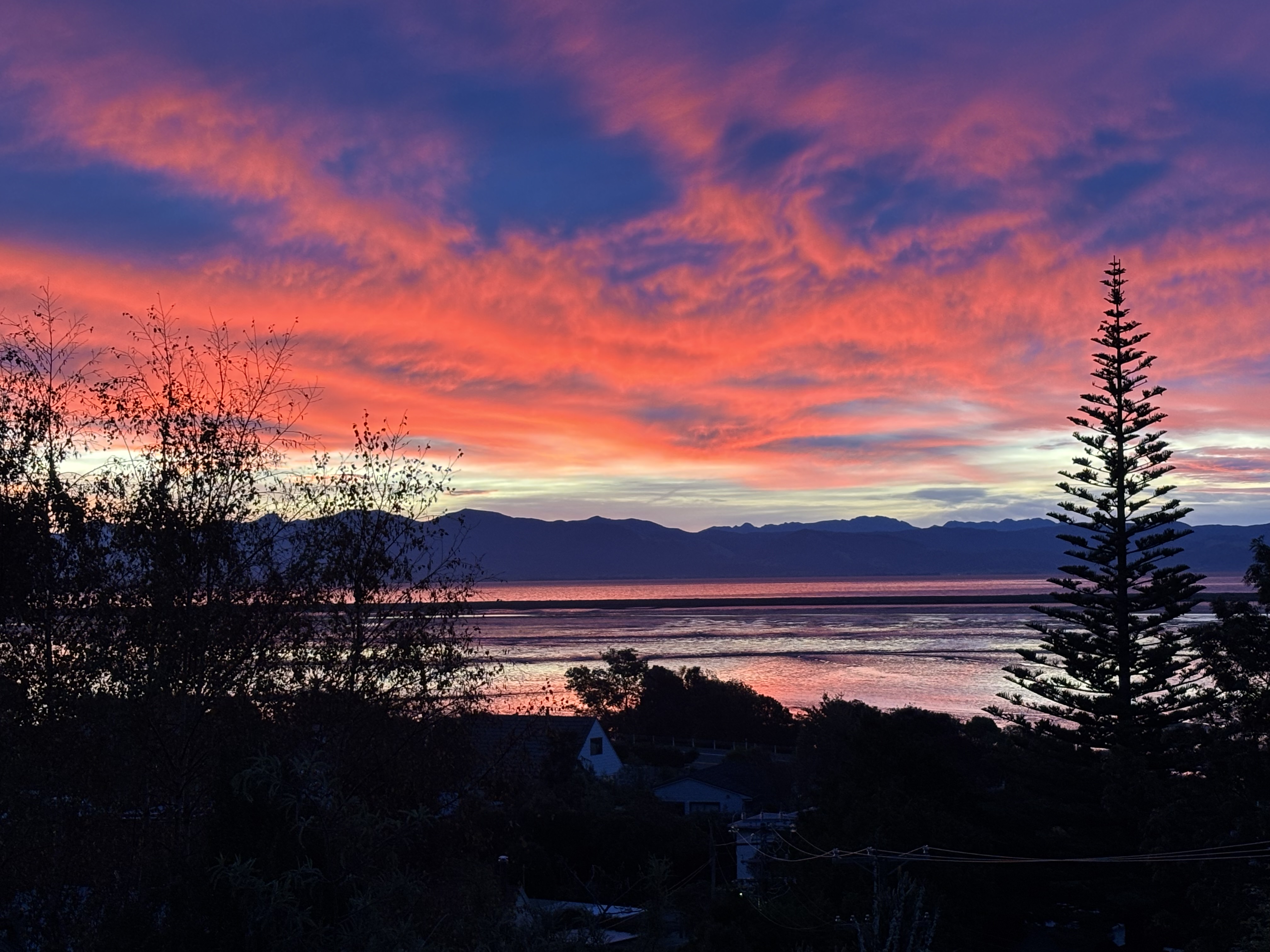
Watching the sun sink
peach and coraline pink,
cerise and chartreuse.
Blood cancer blues.
Let me apprehend
blessings till the end
amidst darker hues.
Blood cancer blues.
Iain Sharp
Yadayada, or Don’t Worry, It all Adds Up
(Feb 17th, then)
The bunting and cicadas cleared, The Herald having sailed
the middle island for the natives’ trade in blankets for curly iron gall,
I snuggled into the basement with rats and worms, snails
sliming my finest parchment (historians only mention the rats
but I know the rest.) I had been nuzzling and gnawing
muzzles in the far north, and in the King Country I purged
my mind of all sovereign thoughts of a beautiful crown
as my pillow was smoothed by whiskery rat down.
Oh for a koauau to share this basement with. I am bent down
with worry, and hunger. Low, small. A worm. A crawler.
Me down. The governor up. These words echo like a dreamt
inferno. I trusted my treasured words to hate! I promised
feasts for all, with open hearts and flowing wine! I played
sly, turned my new in-laws into dogs thinking
I’d fly with the birds. But now I am a moth eaten by moths.
I am a rag for a strop designed to pacify, and closely shave, hell.
Robert Sullivan
Robert Sullivan is Aotearoa New Zealand’s 14th Poet Laureate. He belongs to Ngāpuhi (Ngāti Manu, Ngāti Hau / Ngāti Kaharau) and Kāi Tahu (Kāti Huirapa ki Puketeraki) iwi and is also of Irish descent. He has won many literary awards. His most recent books are Hopurangi / Songcatcher (AUP) which was shortlisted for the Mary and Peter Biggs Award at the 2025 Ockham Book Awards, Koe: An Aotearoa Ecopoetry Anthology coedited with Janet Newman (Otago University Press 2024) and a collection of essays coedited with Anna Jackson and Dougal McNeill, Te Whāriki: Reading Ten New Poets from Aotearoa (AUP 2025). Robert is Associate Professor in Creative Writing at Massey University. He lives in Ōamaru.
To launch Poetry Shelf 2026, our current Poet Laureate Robert Sullivan has written a sequence called “Tidbits of Te Tiriti”. He wrote these Te Tiriti Tidbits in the voice of Te Tiriti o Waitangi. There will be one published each day for this Waitangi Day weekend, and then a fifth one today, on Feb 17th, which is the day his Ngāti Manu tūpuna signed Te Tiriti.
The luminous blue
You will find it in the icy sky of daybreak
above the marine light of waves
in the pages of the books of the dead
poets: Vincent who some would call
Voss, Lauris, Brian, Glover and Campbell,
I loved them all more or less
the pub and the drinks, the banter
until evening and swearing blue murder
blue, the word blue although to read
them you could be forgiven for thinking
it is a word they couldn’t bring themselves
to use, as if every day blue was too ordinary
a betrayal of the imagination, a carpet
of flowers to trample, yet if you search deep
in the end you will find it, the irresistible
blue rain beyond the blue and round
the lake so blue the visible blue dark
they came to it sooner or later.
You will find
it too in the dark luminosity of navy
on the mountain ranges at nightfall.
Fiona Kidman
Fiona Kidman has been writing for the past sixty or so years, her life’s vocation. Her work includes fiction, poetry and memoir, although for a long time her income came from screen writing. Her work has been published internationally and she has received a number of prizes, most recently the Jann Medlicott Ockham new Zealand Book Award for Fiction for This Mortal Boy. Her latest publication is The Midnight Plane: Selected and New Poems (Otago University Press 2025). She is a Patron of the New Zealand Poetry Society and of the Randell Cottage Writers Trust.
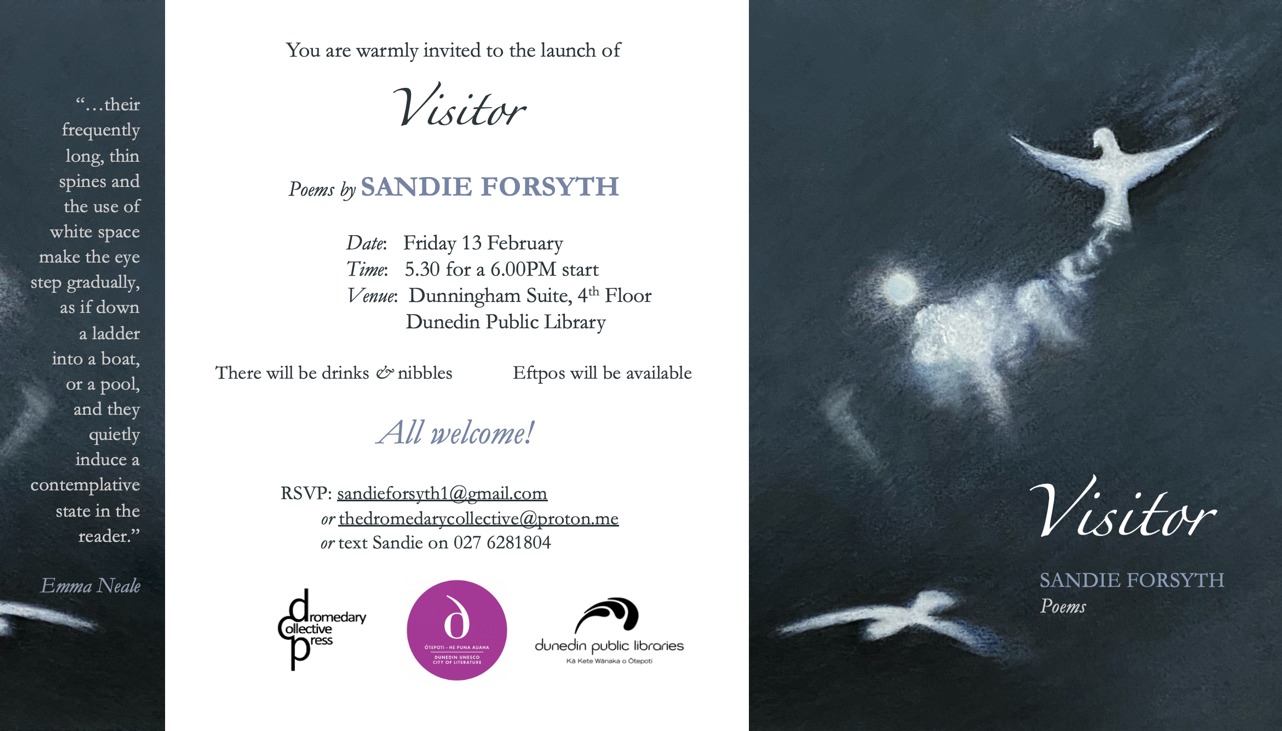
Enjoy this inspiring kōrero between Jeff Harford and Sandie Forsyth in celebration of Sandie’s first published collection, ‘Visitor’.
Sandie talks about her work and shares a reading.
‘Visitor’ will be launched TONIGHT at the Dunedin City Library 5.30pm.
All Welcome!
 NZ Poetry Shelf