I am inventing my weekly newsletter as I go. It will include links to the posts from the week, a particular musing (this week the NZ Poet Laureate role), and a poem that has struck me. This week it is a poem by Vaughan Rapatahana that I had missed when I was offline for four months. It haunted me this week, especially as I have been assembling the tribute gathering for John Allison. I am keen to post a poem from a new collection that catches me – but poetry charisma might surprise from anywhere. My recovery road is rocky and challenging at times, and my energy jar miniature, but doing the blog is nourishing. I cannot manage an open submission policy for poems, but I welcome books from publishers.
Tuesday: Ockham NZ Book Award Feature: Bill Nelson
Wednesday: Review of Wok Hei – recipes in the year of the Wood Dragon
Thursday: Thoughts on Ursula Bethell’s ‘October Morning’
Friday: A tribute for John Allison with readings, poems, photographs, homages Launch for Manuali’i by Rex Letoa Paget, Saufo’i Press
A poem
Now that I am dying
now that I am dying it’s probably best you learn from me.
please do not credence gossips, ghouls, gainsayers & their inevitable ostensions about what I was, what I felt.
now that I am dying, it’s waaaay past time to avow my aroha for you.
mahal kita.
please, now let me pass in peace.
[mahal kita – I love you – Tagalog]
Vaughan Rapatahana
Vaughan Rapatahana (Te Ātiawa, Ngāti Te Whiti) is a poet, novelist, writer and anthologist. With David Eggleton, he has co-edited Katūīvei: Contemporary Pasifika poetry from Aotearoa New Zealand (Massey University Press, 2024). With Trevor M Landers and consultant editor, Ngauru Rawiri, Vaughan has co-edited Ngā Pūrehu Kapohau: A literary homage to Pātea, Waverley, and Waitōtara (Lasavia Publishing, 2024).
A weekly musing: The Poet Laureate
Song
For the first time in a long time there is sun making sunshine, the heart sings which was once sighing, for the first time in a long time.
Now the world is the world without trying: the line releases the next line and the next line, the next line — for the first time, for the first time,
Bill Manhire, from What to Call Your Child, Godwit Press, 1999
I have been musing on how vital the NZ Poet Laureate role has been over the past decades, and how with all the current cuts and losses, I hope the role continues.
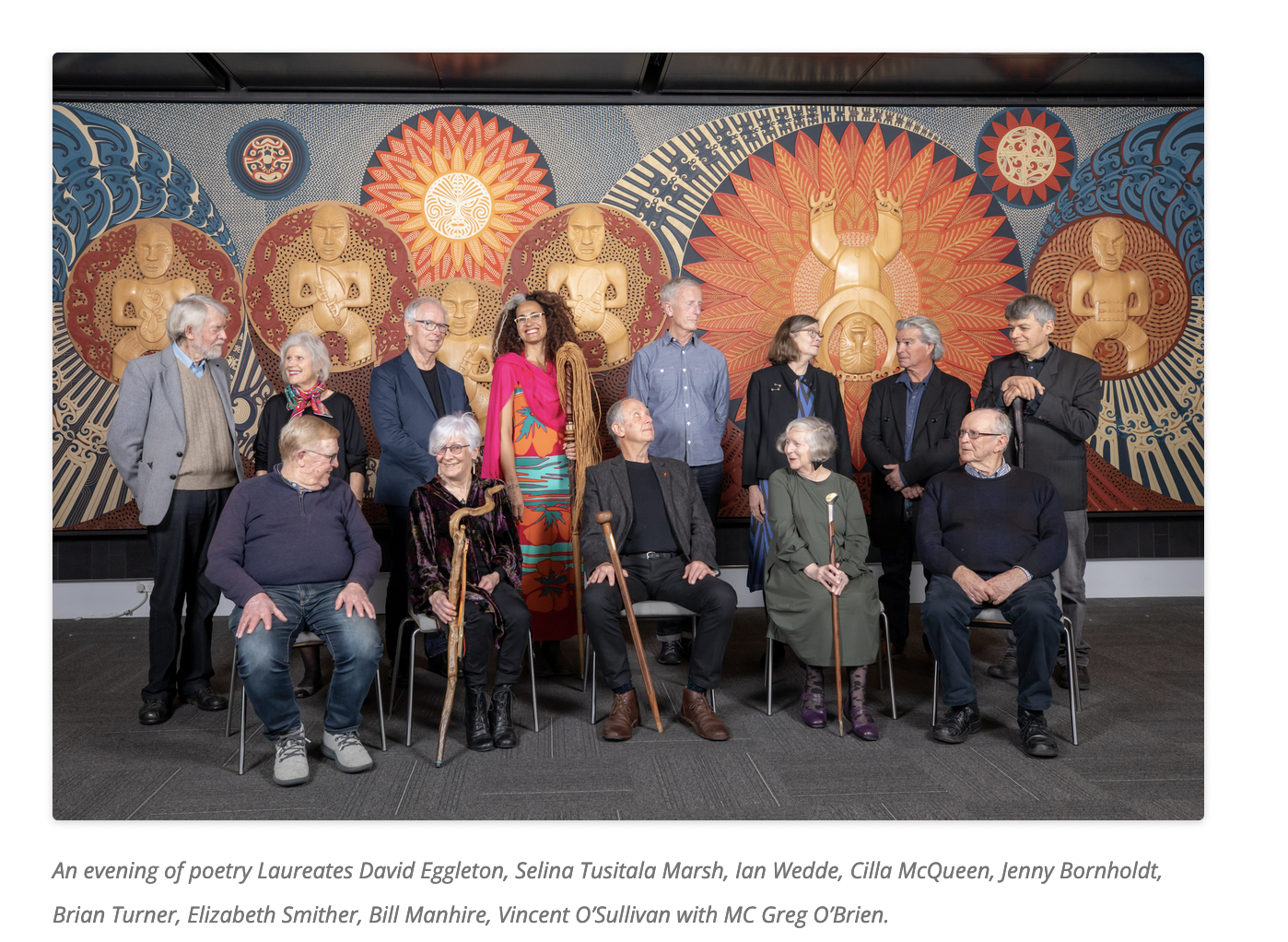
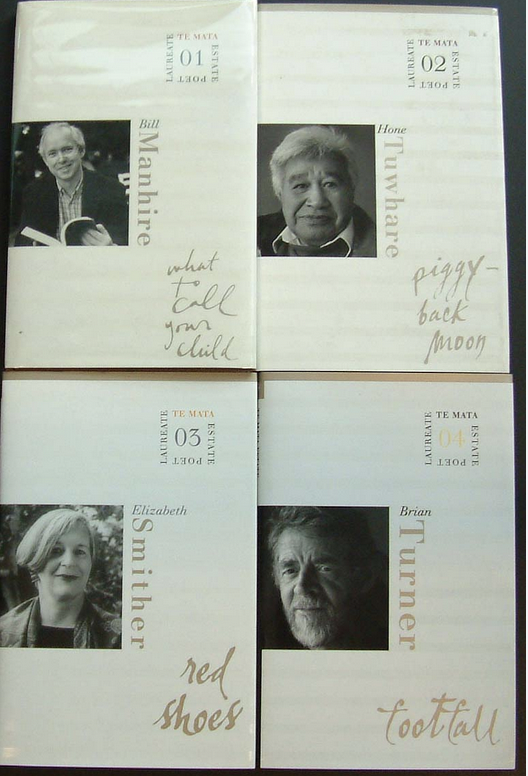
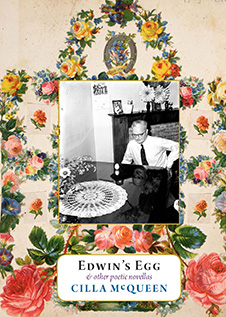
In June 2007, The National Library of New Zealand took over the administration and funding of the New Zealand Poet Laureate Award from Te Mata Estate Winery, with diligent nurturing from poetry enthusiast Peter Ireland. When I look back over the list of Poets Laureate I am reminded how each person has made the role their own, whether in a Laureate collection they penned, posts they have published on the National Library Laureate blog, events they have hosted, workshops they have run with both children and adults. Selina Tusitala Marsh,a charismatic performer on page and live, particularly inspired young writers across the motu, especially the Pasifika community. David Eggleton, also a charismatic performer, took to the road with infectious poetry energy and published a collected works. that catches his live charisma. Michele Leggott had us drawing poems on pavements, reciting reading and loving poetry in all nooks and corners, and also published a sublime collection (as did many others). Vincent O’Sullivan shared the blog space with other poets, Cilla McQueen used the blog to post Serial, a novella inspired by images in the National Library collection that was then published as a darling boxed set (see image below), Chris Tse, our current Laureate, is hosting events, carrying out workshops, promoting the pleasure of poetry widely. I sang his praises last week.
Each Laureate has received a generous stipend, some Te Mata wine, and a tokotoko especially carved for them by master carver Jacob Scott. The new Laureate is celebrated with the tokotoko, food, warm welcomes, invited friends and family, poetry readings over a weekend at Matahiwi marae near Clive in Hawkes Bay. NZ Poet Laureate blog.
But I turn to the inaugural Poet Laureate, Bill Manhire, who accepted the role and continued his stellar advocacy for poetry written, published and performed in Aotearoa. And of course wrote terrific poems, some of which appeared in the inaugural Laureate collection (What to call Your Child, Godwit, Random House, 1999). I invited Bill to share some thoughts on the Poet Laureate role, and have also included a list of the Poets Laureate to date.
Today I toast our fabulous Poets Laureate.
Te Mata Estate Winery Poets Laureate:
Bill Manhire
Hone Tuwhare
Elizabeth Smither
Brian Turner
Jenny Bornholdt
New Zealand Poets Laureate:
Michele Leggott
Cilla McQueen
Ian Wedde
Vincent O’Sullivan
CK Stead
Selina Tusitala Marsh
David Eggleton
Chris Tse
A Poet Laureate
It must have been some time in 1996 when Brian Phillips got in touch to ask if we could have a drink to discuss a project he had in mind. Brian was a well-known figure in the New Zealand book trade. At the time he was co-owner of Godwit Press, and would soon be managing drector of Random House NZ. Also at the pub, when I got there, was the wine writer Keith Stewart who – at that time, I think – had been advising Te Mata Estate on ways in which they could mark their approaching centenary. Brian and Keith wondered if I could give them some informal feedback on a proposal that Te Mata establish and fund a Poet Laureate position in New Zealand. I don’t recall the details of the discussion, but I know that at that time the plan was for a one-year appointment, and there was a notion that Godwit would publish a collection of the laureate’s work at the end of their term. Te Mata would supply a small honorarium and a crate of wine, a sort of equivalent of the English butt of sack. I was positive about the idea, and no doubt in some respects fairly opinionated. For example, I told them that it would be great to give New Zealand poetry a public dimension of this sort, but the silliest thing about the UK Laureate scheme was the expectation that poems be written to mark the births and deaths of the British Royal Family. I hoped that anything like that would be ruled out. Maybe it was at that point that they interrupted my flow and said that they had got me there under false pretences. The chief thing they wanted to know was whether I would be willing to accept the position if John Buck of Te Mata Estate were to ring me up about it.
I suspect they had had me in mind because I was fairly well known as someone who was good at talking poetry up in various ways. I had started doing regular conversations about poetry with Kim Hill on RNZ’s Nine to Noon show, and was contributing a monthly column to the bookstore magazine Quote Unquote. Among other things, I’d published a prizewinning anthology 100 New Zealand Poems with Godwit in 1993; and had helped bring Laura’s Poems into the world in 1995. There was also the creative writing course at Victoria. So I was a well published poet, but I was also known as a teacher and poetry advocate – and there was an expectation that writing and advocating would both be important elements in the laureate position. The thing was to be a kind of cultural ambassador, finding ways to make the wider public aware of just how good New Zealand poetry was. I don’t think anyone at any point saw the laureateship as a reward for long service.
Anyway – surprise, surprise – I said yes. Before I had even started, the appointment became a two-year one – partly because very few poets could produce a book good enough for publication in the space of twelve months. For me, the tokotoko, carved by Jacob Scott, was the most astonishing and distinctive thing – far more than the honorarium ($2,000?) or even the gift of wine. I took my tokotoko to America a couple of years later and showed it off to the then US laureate, Robert Pinsky. Jacob Scott is still carving them for each new laureate.
If there was a small element of marketing in the creation and publicity that surrounded the announcement of the laureate position, John Buck was much more personally caught up in its life. He developed genuine friendships with all five Te Mata laureates, and worked hard to make sure that laureate readings and events would take place throughout the motu. I even betrayed my own pronouncements and produced a poem for him, an adaptation of one by the Russian writer, Alexander Pushkin. It appeared in the book, What to Call Your Child, published by Godwit in 1999 after my term as laureate ended. In a nice piece of circularity Jacob Scott carved the words of the poem on a tokotoko that was presented to John by Te Mata when he retired last year.
GRAPES after Pushkin, and for John Buck
But who can feel sadness for the roses? The spring goes, and they fade
just as the grapes I love begin to ripen on the vine, climbing across
the slopes above the house, day after day until at last they stand
in all the valleys and the golds of autumn . . . where now they are long and slender
and the light shines through them as through the fingers of a young girl’s hand . . .
After five of us – me, Hone Tuwhare, Elizabeth Smither, Brian Turner, Jenny Bornholdt – and with much more substantial funding initiated by the late Michael Cullen, the laureateship passed into the safe and often entrepreneurial hands of the National Library, where it has been very well cared for. As well as an advocacy position, it is now very much a literary fellowship. The connection with Te Mata remains. They manage the creation of each new tokotoko, and also – of course – continue the gift of wine.
Look at the light dancing on the waves I say to Martha. She is five years old. Sunlight is so hard to catch, she says but it catches everything in the whole
wide world. She sings a song. I ask her if she has learned it at kindergarten. I’m making it up just now, she says it’s what the sun is singing to the sea.
And runs off dancing her songlines of sun and sky and wind and sea elated all the way across the sand into the wide open arms of everything.
John Allison from A Long Road Trip Home, Cold Hub Press, 2023
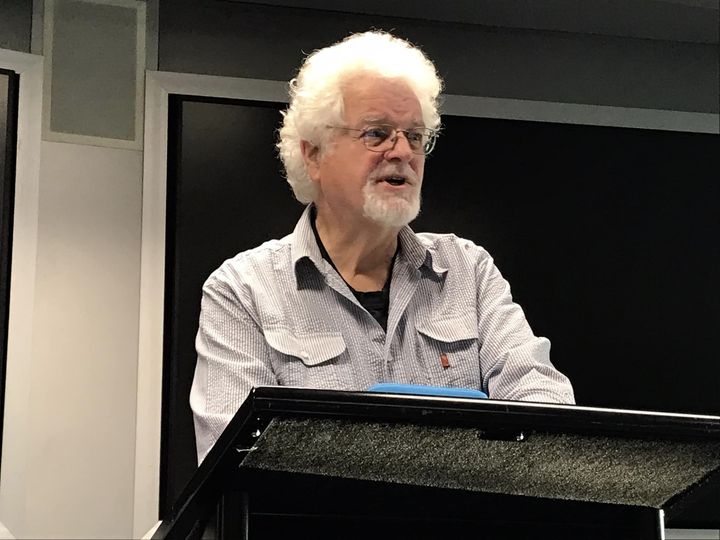
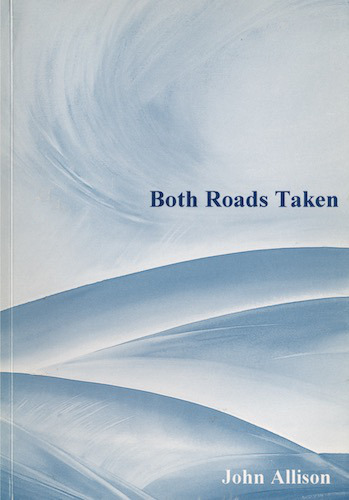
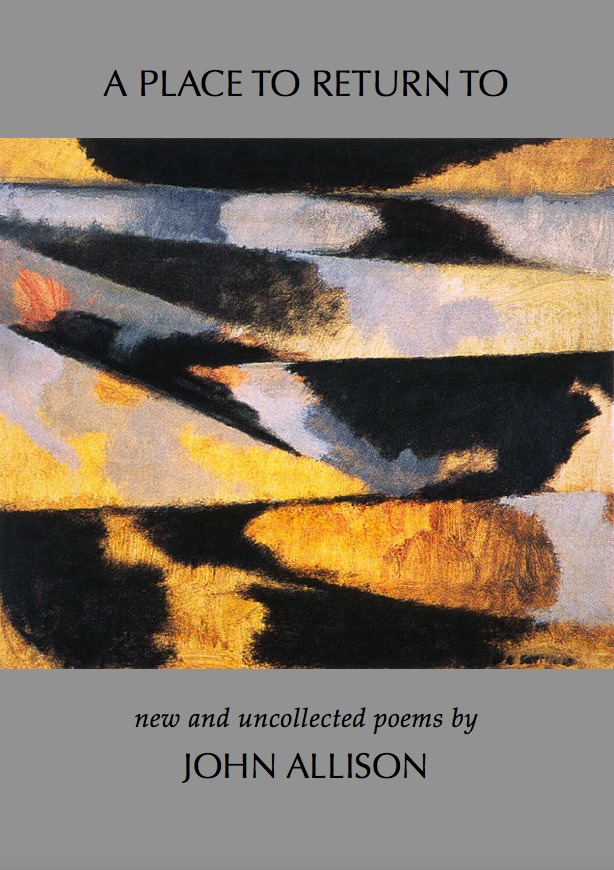
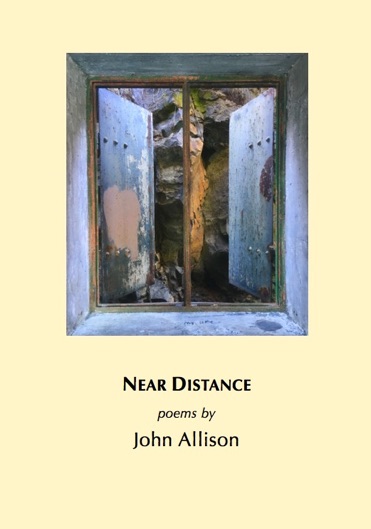
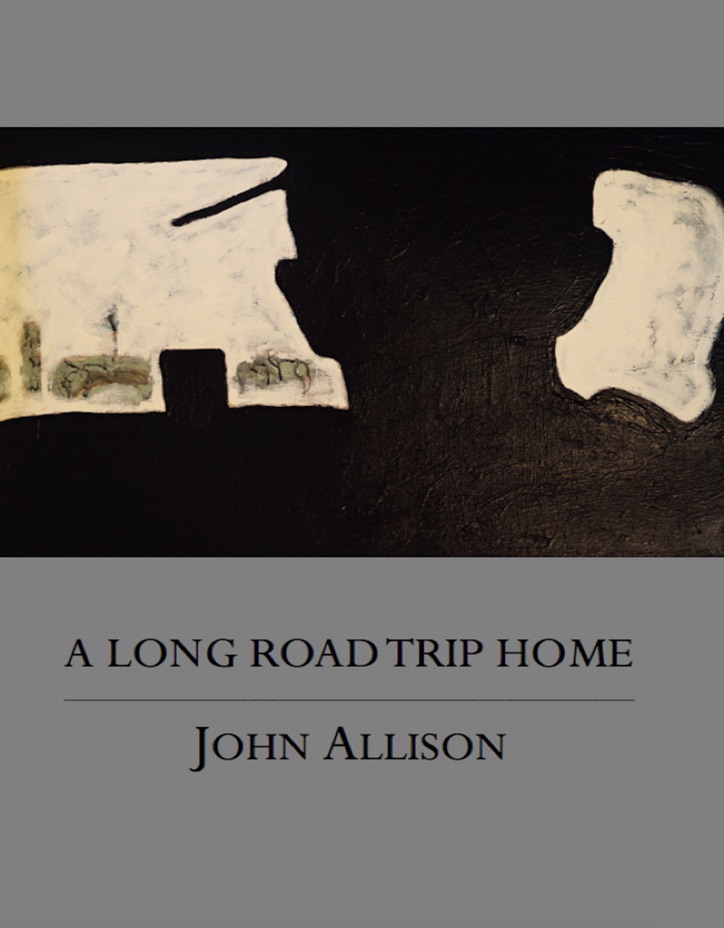
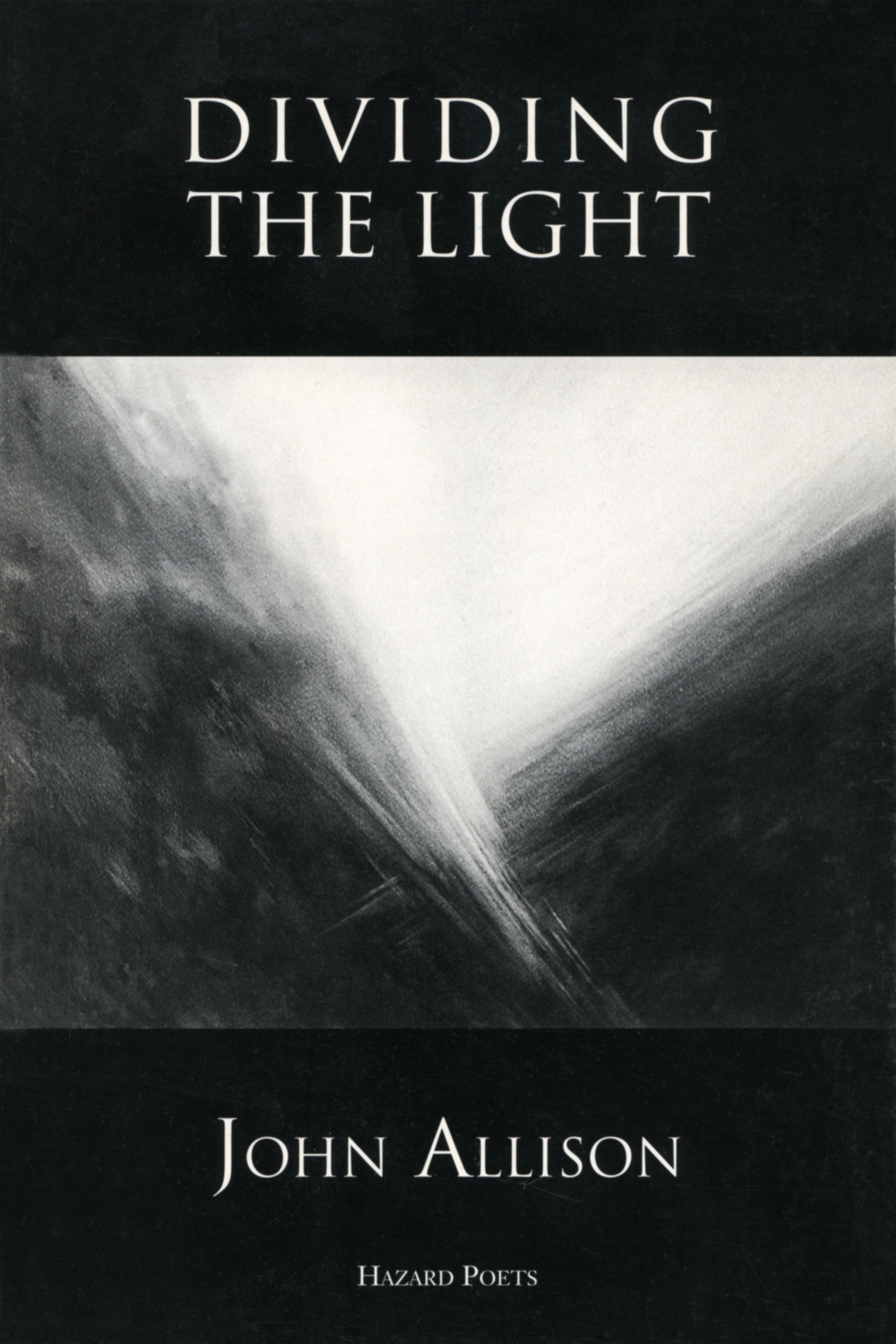
The recent death of John Allison (1950 – 2024), has touched local writing communities. Poet, musician, teacher and mentor, John published seven collections of poetry: from his debut, Dividing the Light in 1997 (Hazard Press), a number with Sudden Valley Press, Balance: New and Selected poems (Five Islands Press, Melbourne, 2006), and several with Cold Hub Press, including final collection, Long Road Trip Home (2023). He taught for several decades at The Rudolf Steiner School in Christchurch, co-founded Sudden Valley Press and was a key member of the Canterbury Poetry Collective. He was the featured poet in Poetry NZ 14.
To celebrate the life and poetry of John, Poetry Shelf has gathered written tributes, some readings of his poems, included some of his own poetry and reviewed his final collection. This is a special gathering, a meeting place with multiple clearings and poetry benches we can return to, to meditate, mourn and above all, celebrate.
Sudden Valley Press, The John O’Connor First Book Award page Cold Hub Press page ‘Corona Contemptible’ on Poetry Shelf ‘Whitianga Testament’ on Poetry Shelf ‘Father’s axe, grandfather’s machete’ ŌrongohauBest NZ Poems 2020
Thank you to the contributors, and special thanks to David Gregory, Roger Hickin and James Norcliffe for helping me choose some of John’s poems and creating a list of people to contribute.
Go well, go gently.
AReview of A Long Trip Home
Of Bread
After all these years I’ve been making bread again, remembering that way your hands worked the lumpen dough (who was it joked, the proles also needed to be pummelled into shape before they would rise?)
We were young, comrade and our politics were too casual. Later we settled for the word companion meaning to share bread together. And now after all these years I’ve learned I cannot live by bread alone.
I become your hands.
John Allison, from A Long Road Trip Home
If you travel through John Allison’s seven published collections, the word ‘travel’ resonates deeply, both in his poetic fluency, the threaded and recurring motifs that range from the colour blue to the travelled road, from beloved artists to a rock pool, from the ever-present light to salty air, from the dead to the living, from listening and looking at the world to the anchor of home. Always ‘the long road home’; each poetry collection establishes sublime contemplation points on the long road home.
John’s final poetry collection, A Long Trip Home (Cold Hub Press, 2023), begins with a poem about baking bread. It’s hands on, evoking images of domesticity, fermentation, dailiness, the drifting thoughts as the dough is kneaded, the surfacing memories of the addressee, his ‘comrade’. The poem’s endnote refers us to Peter Kropotkin’s The Conquest of Bread (1892) and its vision of a society based on ‘mutual and voluntary cooperation’. The presence of the word, ‘companion‘, draws us deeper into what matters, into thoughts of companionship, and yes this haunting collection is poetry about what matters.
Turn the page and the poem ‘How to go on’ introduces this: ‘The ways back to reality / after the oncologist’s news’. Death is a companion we travel with as we read, whether John’s cancer diagnosis and his view of the world, the flickering arrivals of his horizon line, the planet at risk, recollections of those no longer with him such as in the poem ‘What is lost’, or in the eulogy to a friend, ‘the send-off’. A cancer diagnosis refines what matters and, out of that vital movement, John has written poetry that nestles under the skin.
More than anything, and as this tribute page underlines, people matter. Many poems are dedicated to loved ones, friends, other writers. He draws in his love of art and books; Colin McCahon, Vincent Van Gogh, Joseph Beuys, Roger Hipkin make appearances. He never forsakes his love of music, it is there on the line, sounding in your ear as you read. He is singing to friends, he is singing with the world, and the song invests what matters with finely crafted melody. In one poem, John is in a waiting room with a young girl drawing in blue, ‘in this waiting room where blue means something else’:
The girl glances up at us, and laughs: You and my Daddy should make a song. And she hums and she doesn’t stop the blue yes, she hums and doesn’t stop the blue.
from ‘Singing the blues’
And yes, the blue reverberates with multiple meanings, as do so many of his words and motifs, and it haunts and it hurts and it uplifts, like music, like art, like the power and strength of poetry to nourish, and delight, and travel, and to remind us to open the window, to hold our arms wide, and to breathe in deeply what matters. This book is precious.
Paula Green
Tributesand Poems
For John Allison
The river of voice runs on, even as breath is stilled.
John, John, the muses’ son, breathed his breath
and away has gone.
Jeffrey Paparoa Holman
Jeffrey Paparoa Holman reads his poem ‘For John Allison’
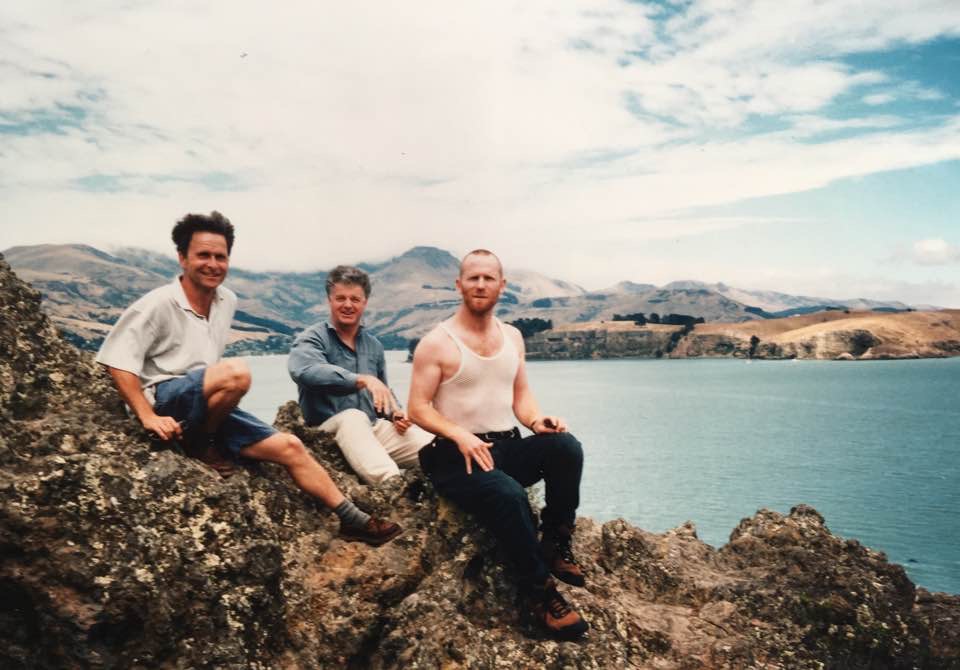
John Allison with David Howard and David Gregory, Banks Peninsula 1996
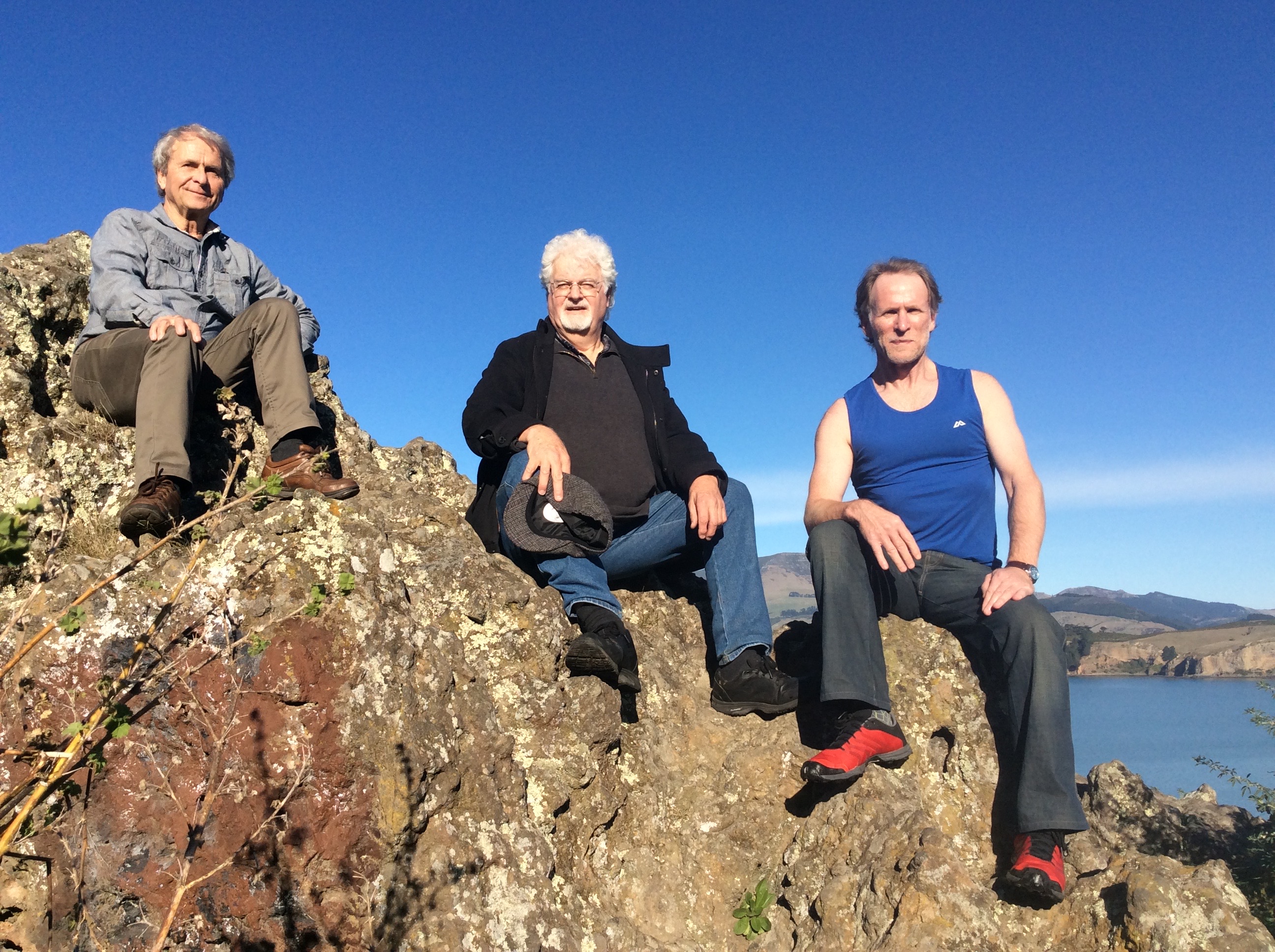
June 2019, same site on Banks Peninsula
David Howard
In his later years I saw John as a fresco painter on his way to the monastery. I imagined him sizing up a moist plaster wall. He would brush his colourful images into the surface.
As the wall dried, as its plaster set, every pigmented line John put there would join the lime and sand particles, becoming part of the structure rather than a surface decoration. His artistry made things more solid.
Skimming Water
these words are just the sounds of
a smooth white stone skittering
across the surface of a pond
inscribing a brief archipelago
of intersecting lucent rings
arcing over darkness
the stone sinks
inside the final
o
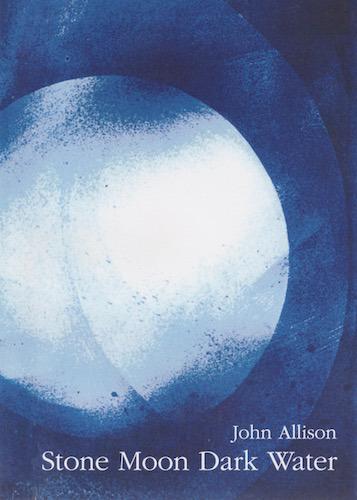
John Allison, from Stone Moon Dark Water, Sudden Valley Press, 1999
Singing the blues
She grips the felt-tip pen with that kind of determination you’d never argue with, hunched over the table and her drawing: I’ve gotta finish the blue before we go!
It’s the only thing that’s being said here in this waiting room where blue means something else: this feeling you have for instance after getting the results of your latest blood test; of the evident anxiety of the young pregnant mother with colourful headgear and yellow-grey pallor; or the sadness of an older couple bent and folded in towards each other waiting between specialists, weighted by the prospects; or this grizzled old bloke wheezing as he works a finger round his gums, a sound more like a punctured tyre than a tune you’d ever recognise.
But the girl with the blue felt-tip pen colours and hums, and her father hums as she colours, and looks out the window at dark clouds and their promise of rain:
Yep, he says, it’s always a blue sky day even though all of the clouds are grey . . . Yes, I say, we’ve got to finish the blue before we go, out of the blue it comes, then into the bright blue yonder we’ll go.
The girl glances up at us, and laughs: You and my Daddy should make a song. And she hums and she doesn’t stop the blue yes,she hums and doesn’t stop the blue.
John Allison, from A Long Road Trip Home, Cold Hub Press, 2023
extract from Of rocks and other hard places
1.
Rocks are slow stories carefully thought out a friend has told me. Well it could be so . . . Certainly these rocks I’m sitting upon
are quite reliable, content it seems to be right where they are, grounded in that reality we subscribe to, resistant to change
except through aeons and earthquakes. Those are distinct eventualities, but in between we find rocks usually sit tight.
They stay in touch. Gravity burdens them yet they bear it all without complaint. Like the dead they seem to be quite silent
(though like the dead, unless you lean close to listen, you will not ever hear them). Chatter is not their predilection. Ah, but
those opportunities for the big statement . . . Knowing time inevitably is on their side they do not want to waste their breath.
John Allison, from Near Distance, Cold Hub Press, 2020
Passage: a Closer Reading
Your book is in my hands. I carry it around all week, unopened. Proximity, however, makes us intimate; the book begins to change. The binding softens, then the pages wilt. On the third day I feel the words dissolve. I’m not immune; the images absorbed like mercury though fingertips, their syntax aching in my wrists, your poems make their way virulent towards the lexis of the heart.
John Allison, from Dividing the Light, Hazard Press, 1997
A poem based on a painting based on a poem
Two or three years ago John wrote a poem called ‘the door’, the last poem in his final collection, A Long Road Trip Home. It is based on a small painting of mine he’d recently acquired––Devant la porte un homme chante (In front of the door a man is singing)––in which a door in a white wall is evoked by a swipe of black paint. The title is a line from a Pierre Reverdy poem.
John spent the last difficult ten or so years of his life acutely aware of that door that opens to the place that must be entered in order to arrive at what we are not. And he kept singing. To the end. Which might also be a beginning.
As he wrote (sounding just a little Sam Beckettish) in ‘the door’:
‘what is there to do until it opens/ but to sing’ . . .
Roger Hickin
John at the launch of A Long Road Trip Home at Scorpio Books, 14 September 2023
Claire Beynon
During John’s last weeks, it became difficult for him to participate in written exchanges. I took to sending him short voice notes, recordings of nature, for instance (birdsong on a forest walk and the like) and at some point, started reading his poems back to him. These recordings I sent via FB Messenger or direct to his phone via his regular mobile number. I have recorded two favourite poems from his last collection: ‘It can be lost just when you notice it’ and ‘Breathing the Open’.
In August 2022, John sent me a screenshot of an early draft of ‘Breathing the Open’. “My remaking of a Rilke sonnet…”, his accompanying note said. He’d positioned it amongst a series of photographs he’d taken while out walking beside the estuary near his home in Heathcote. He had a special fondness for kōtare/kingfishers and kōtuku/herons. I was in Cape Town at the time. We’d been having a lengthy discussion about Barry Lopez’s last book, Horizons, each of us attempting to articulate the complicated gift of having more than one geographical home, more than one tūrangawaewae.
And here, I quote John, “It is an extraordinary time… I should have added mention of my ongoing reflections on his [Barry Lopez’s] words about imagination as that power through which a boundary is transformed into a horizon: “The boundary says ‘here and no further; the horizon says ‘welcome’”…. To be in our birthplace is to be once more held by that boundary, that holding environment; and simultaneously aware of that first horizon, our facilitating environment…”
A few ‘take-away’ instructions from John—
Every ‘away’ is also a ‘towards’.
Never forget that boundary that is sanctuary.
Answer the call to venture beyond—ever further, knowing you will be welcomed
Live simultaneously in centre and periphery.
Wonder at Mystery
Claire Beynon reads ‘It can be lost just when you notice it’, John Allison, A Long Road Trip Home (Cold Hub Press, 2023)
Claire Beynon reads ‘Breathing the Open’, John Allison, A Long Road Trip Home (Cold Hub Press, 2023)
Jan FitzGerald
John was that rare breed. The real poet. It was in his bones. He had his own voice, found his own way, and even sitting on that edge between life and death, he made us look at things … and then look harder. He showed us how darkness could be light, sunshine could be shadow, that even “the rocks and the dead are good companions.” He worked with meditation, music, woven into the quiet dance of his words as he walked the unseen and physical world with an open heart and ready camera. John left us his final words, and in his words we find much wisdom. And “what it is just to be…”
John Allison with Sandra Arnold and David Howard
Ariana Tikao
I didn’t know John Allison for long. I just moved back to Ōtautahi last June, and started attending a series of poetry events by the Canterbury Poets Collective. John was one of the people who came up to me after I first read, and complimented me on my contribution. He was really thoughtful like that.
Then, I was asked to be a guest reader at Hester Ullyart’s Common Ground Poetry events in Lyttelton late last year. John Allison and Isla Huia were the other two guest poets, and John reached out with a proposal to read some lines in his poem Mountain, River, People which I believe is about all of us sharing this land, and how we can live and work alongside one another. It was a gesture of goodwill for him to share this poem with us, and for us (Isla, me, and my cousin Karuna Thurlow) to read together. Initially when the request came through, I admit it felt ‘slightly’ like an imposition, but I am really glad that I embraced the opportunity as I know that John was sincere and deliberate in his actions, as he was with his words on the page.
The poetry event was very special, and I read some new poems I had written about the genocide that was unfolding in Gaza. John and his partner Annette – the painter referred to in the poem I have recorded of John’s ‘a woman like Syria’- came up to me after my reading, thanking me for talking about the situation in Palestine. We all had a connection over caring deeply about this kaupapa. This is one of the reasons I have chosen this poem to read in my tribute. I honour the poet and the man, John Allison, and send my thoughts of aroha to all his family and friends. E te rakatira o te toikupu, moe mai rā.
Ariana Tikao reads ‘a woman like Syria’, published online in Love in the Time of Covid: A Chronicle of a Pandemic, October 31st 2022
Joanna Preston
Joanna Preston reads ‘Why we fish’, first published in Poetry NZYearbook 2020, and then reprinted in Voiceprints 4 (Sudden Valley Press, 2023)
Jenna Hellar
John Allison was my poetry mentor and a very dear friend. For a while, we would meet every few weeks over coffee or a walk around the Southshore Spit and we’d talk about words, about letting a poem breathe, about what an object is really saying, what you as a poet are really saying, about line breaks and the use of ampersands and slashes, about whether to use commas at the end of a line or not, about the importance of whittling a poem by taking words away until maybe you’ve gone too far and then bringing back only a handful of the ones that are truly necessary so that the poem says something in both the words that are left and the ones that are absent. Every conversation with John was a prose poem. When we weren’t talking about poetry, we would talk about the thrill of foraging, the geology of a landscape, the grace and draw of special places, the love and trouble of humanity, the importance of looking and looking again, and again still, in order to try and understand what exactly the thing you are looking at is saying. I feel so lucky and grateful to have had John in my life and I am thankful that his words and our poetic conversations live on in me, in others, and of course, in and through his poetry.
Jenna Hellar reads ‘Epilogue’ from A Place to Return To (Cold Hub Press,2019)
John with Claire Beynon and Catherine Fitchett, 6 October 2021
Memories of John Allisonby Sandra Arnold
I first came across John in the early 1990s when he sent in a short story to Takahe, a fiction and poetry magazine David Howard and I had started a couple of years earlier. Soon after that we met him at a PEN meeting in Christchurch and he invited us and a group of other writers to his home in Lyttleton. Thus began many Lyttleton gatherings and a friendship that lasted ever since.
My husband Chris and I visited him after he’d moved to Melbourne to live in a beautiful house in the Dandenong Ranges with his wife Bettye. When we saw Bettye there she was very ill with cancer. After Bettye died John returned to Christchurch to live near his family. We saw him frequently at his house and ours as well as at book launches. What I will always remember about John is his passion for poetry, the beauty of the language he used to write it, and the many conversations we had about writing.
The last time we saw John was at his home in Heathcote Valley when he was in the last stages of cancer. He was very thin and pale, but he still had his sense of humour, his acceptance of death and his interest in writing. Just a couple of weeks later we received the phone call to tell us John had died. Even though I had been expecting this, I felt a sense of disbelief.
At his funeral the community centre was packed with John’s many friends from different areas of his art, writing, music and education life. Everyone placed a sprig of rosemary on his coffin and watched the hearse drive him away.
Sandra Arnold
Gail Ingram
Hey John,
I miss your poetry at CPC, the way you read, the space you took. I miss your photos of our shared skyline and the Ōpawāho, the kōtare watching us, the light you captured. I feel your absence, passing your house especially, neighbour, your wild lawn now shaved, and all the flowers gone, and insects too, I miss your bluster, your large view, John, I miss you.
Gail Ingram
John Allison with Fiona Farrell and Jane Simpson, 9 October 2019
Fiona Farrell
What do I remember of John? I remember the man I met many years ago, the very tall man in the very small cottage in Lyttelton and his great kindness when I was lost, new to the city on the university writing fellowship and separating from a long marriage. I remember John talking. He was a great talker. He knew stuff. He was a born teacher. I remember him telling me about Plutonic rock formations on the peninsula. I remember walking with John over Godley Head. He was a great walker. John playing music. John reading poems, his own and others, and his ready response to beauty, and to what was funny or absurd. John telling me about the scientists who visited the volcano that exploded from the sea off Iceland and how they went to see what would be the first life-form on this new earth, not noticing that it was themselves. I remember the grief for his sister that lay at his heart. He was a good man and a deeply serious poet.
John Allison: an appreciation
On entering John’s cottage you were immediately aware that he was a cultured man. His bookshelves were laden with poetry and interesting non-fiction titles. His musical instruments were on display and there were paintings on his walls, many by friends. I always thought John’s cottage was beautiful.
As well as being a fine poet, John was a talented musician: he played the lute and the oud. He loved the New Zealand landscape; he walked in it, photographed it and wrote about it.
John was a big bear of a man. When I visited him I was always met with a hug and a smile. He consciously adopted a positive attitude to life: he was interested in his own life and he tried to live it fully. He was an intelligent, thoughtful, decent man. He was a good man.
Nick Williamson
A poem for John
of a pale white page for John Allison
I already miss John’s familiar tallness, his softly spoken lilt, that warm, glittered gaze.
I will miss his heroic improvised poems, wild – really, dipping into a deep tundra, a vision of fire and beauty that sang to him from somewhere else.
No more coffee collisions on banks peninsula, sharing the mountains, the sun. No more kind words in restaurant doorways.
But I will not miss him. For luckily, he’s still right here conjured in the raising of a pale white page, and the outline of light, or a man, walking a silhouette through the leaves, in the wind the hills, raining, blazing, softly, softly at dawn, in summer, in fall, in the shadow of dusk, and the beauty of it all.
Hester Ullyart
Hester Ullyart reads ‘Ingrid at Tyresö’ from Balance: New and Selected poems, Five Islands Press,Melbourne, 2006
Hester Ullyart reads ‘Entrances’ from Balance: New and Selected poems, Five Islands Press,Melbourne, 2006
Jenny Powell
My memories of John are those of an explorer, open to new possibilities in any dimension of experience, including the spiritual. John’s location of an essence or centre, or shard of it, was often translated and shared through his brimming creativity, but not before the final results were forged, tempered, shaped, smoothed, sung, or said.
John’s deep understanding of poetry and music allowed him entry into multiple worlds. He was fascinated by intersections and overlaps of experiences, by external and internal states of being, and by underlying poems where the sung and unsung converge. John and I collaboratively explored interpretations of music and poetry in ‘Double Jointed’ (2003).The three poems written with John are reinterpretations of music. I continue to marvel at his willingness to investigate and push beyond the usual. ‘Symphonie Fantastique’ by Berlioz, Mozart’s ‘Sonata No. 6’ and a new composition, ‘High Country Raga’, were starting points for our combined efforts. In the last stanza of ‘Playing Mozart 1’ John wrote:
He is in the room, dancing in the centre of his melody, pirouetting allegretto for a moment just before the final coda then that silence afterwards, refracting …
Jenny Powell
Erik Kennedy – A poem for John and a reading
The Foraging Poem For John Allison
John showed me one of his private coastal foraging spots. I felt like he should have blindfolded me and taken me there in the back of a van at three in the morning. I am so bad at keeping secrets.
But he was trusting like that, knowing that, because he asked it, I wouldn’t tell anyone— not one of you— where it was, because some little pleasures are infinite but far more are finite.
Erik Kennedy
I hope it’s okay if the words I contribute to the John Allison memorial post are a poem. I’ve wrestled with what to say—vacillating to and fro between personal memories and little appreciative close readings and reflections on his empathy and impact in the community—and nothing I wrote really hung together. Instead I’m turning to a different kind of language. I wrote a poem on the day of his funeral. I’m not sure it’s profound or powerful, but it does do something important, to me at least: it tries to show the way John could make you feel, the loyalty and goodwill he could conjure up. Anyway, maybe this is the place for it?
Erik Kennedy reads ‘the send-off’ from A Long Road Trip Home, Cold Hub Press, 2023
envoi
living seems more complicated now than dying
taken off death row and given life and then parole
some day to be called back in to face the fact
for it’s a sentence with a determined predicate
however I will live as though indeed I were living
laughing it off like anyone else with a conviction
still there are times when it becomes quite shaky
now for instance wanting to say the unsayable
my house of words is creaking in the wind tonight
yet poetry is all there is when nothing else makes sense
John Allison, from A Place To Return To, Cold Hub Press, 2019
You’re all warmly welcomed to join us for this special celebration to launch Rex Letoa Paget’s debut poetry collection, Manuali’i. In this dreamy debut, Rex Paget will have you reminiscing on past loves; dancing in the rain; and appreciating the depth and range of human emotion and connection.
Rex will be signing books on the night! All welcome.
‘All clear, all clear, all clear!’ after the storm in the morning. The birds sing; all clear after the rain-scoured firmament, All clear the still blue horizontal sea; And what, all white again? all white the long line of the mountains And clear on sky’s sheer blue intensity.
Gale raved night-long, but all clear, now, in the sunlight And sharp, earth-scented air, a fair new day. The jade and emerald squares of far-spread cultivated All clear, and powdered foot-hills, snow-fed waterway, And every black pattern of plantation made near; All clear, the city set, but oh for taught interpreter, To translate the quality, the excellence, for initiate seer To tell the essence of this hallowed clarity, Reveal the secret meaning of the symbol: ‘clear’.
Ursula Bethell
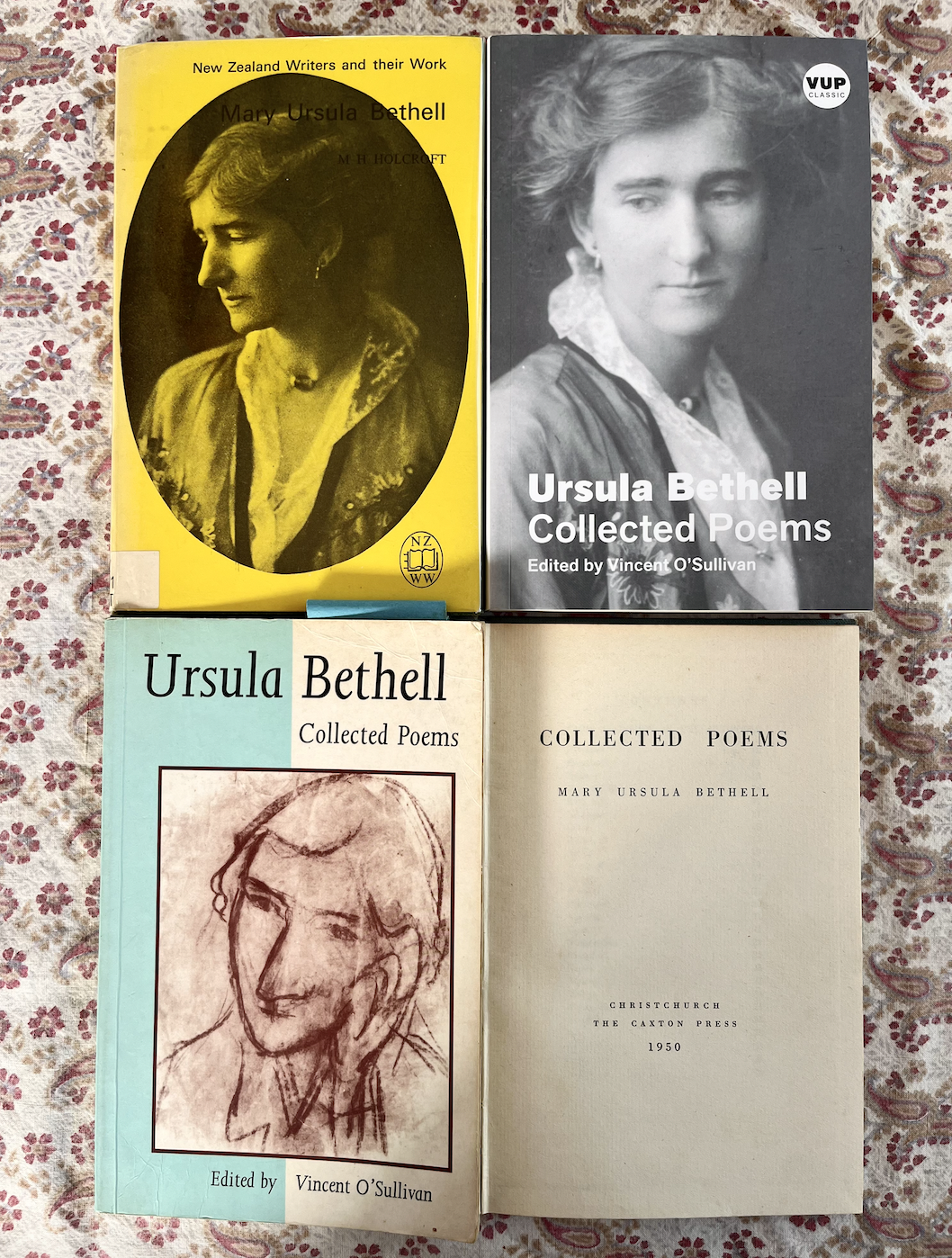
from Day and Night, Poems 1924 – 1935 (Caxton Press, 1939). However, this version appears in Vincent O’Sullivan’s Ursula Bethell: Collected Poems (Victoria University Press, 1997, reissued 2011, 2021). Vincent explains in his endnote why the 1997 anthology includes corrections. The poem also appeared in Ursula’s Collected Poems (The Caxton Press, 1950).
Someone recently told me a garden poem might be just the medicine I need for the day, especially when steamrollered. So I picked up my Ursula Bethell books and fell into the delight of her poetry. She writes of seasons, weather, mountain ranges, the sky. She writes of gardening, and she writes of love, and then in the last years, after losing her beloved partner, Effie Pollen, writes of death. She also writes of the darker depths of humanity.
Like so many other people, the weight of the world rests upon my shoulders, the hunger, the poverty, the violence, the racism, the gender phobia, the injustice, the foolish decisions our Government and other world leaders are making, the utter inhumanity. It is unbearable. Yet it is a time, as it has been at other crucial moments in the past, when we need to voice our concerns, to register our protest, to speak together.
How does poetry fit with global and local catastrophe? What good is a poem? It can be a form of protest and it can be balm, and everything in between for both reader and writer.
And so I turn to Ursula Bethell, a poet who listened. She listened to the world and transcribed it into the word on the line, to a rendition of place, beauty scenes that were dear to her, from the distant horizon line to the garden she lovingly tended. I wrote about her aural attentiveness in Wild Honey, her ability to transport us through the arrival of both the musical and the physical.
In ‘October Morning’, I am reminded how I become embedded in her scenes, whether garden or wider view from a backdoor step. How I can smell, hear and feel place to the point reading the poem is a form of meditation, stillness, awe. And yes, this happens as I read ‘October Morning’, the words connecting musical notes and traces of intense beauty. Yet the poem also, fittingly, moves into the unease I feel as I write. How we move between storm and calm. How we translate versions of the world, whether it’s the ‘sky’s sheer blue intensity’ or the ‘powdered foot-hills’ or the resonant and slippery notion ‘clear’?
Ursula offers poetry, rich and resonant, for us to find our own routes through, our own clearings to linger within and beyond, our own ways of holding a poem as talisman, as poetry of darkness and poetry of light.
Paula Green
Ursula (Mary) Bethell (1874-1945) was born in England, raised in New Zealand, educated in England and moved back to Christchurch in the 1920s. Bethell published three poetry collections in her lifetime (From a Garden in the Antipodes, 1929; Time and Place, 1936; Day and Night, 1939). A Collected Poems appeared posthumously (Caxton Press, 1950). She did not begin writing until she was fifty, and was part of Christchurch’s active art and literary scene in the 1930s. Her productive decade of writing was at Rise Cottage in the Cashmere Hills, but after the death of her companion, Effie Pollen, she wrote very little. Vincent O’Sullivan edited a collection of her poetry in 1977 (Collected Poems, Oxford University Press,1985).
Garibaldi Club, 118 Tory St, Te Aro, Wellington 6011, New Zealand
Join us for an enthralling and illuminating literary event with The Cuba Press!
Get ready to dive into the worlds of Tihema Baker (Turncoat), Tim Jones (Emergency Weather), Jennifer Lane (Miracle) and Kate Mahony (Secrets of the Land) as they unravel the threads of their captivating novels
They’ll be joined by publisher and novelist Mary McCallum as they delve into the politics, events and personal experiences that breathe life into their stories and shape them into compelling narratives.
Novelists, bring your burning questions!
Friday, 19 April, from 5:30 pm to 7 pm at the Undercurrent.
Wok Hei: Aphrodisiac poems and recipes in The Year of the Wood Dragon editor Renee Liang, Intro Chris Tse Monster Fish Publishing, 2024 contact: docrnz@gmail.com
whatever’s lacking or lost, you’ll find among the ginger and the spring onion
Chris Tse, from ‘Warming’
Wok Hei: Aphrodisiac poems and recipes is a slender chapbook edited by poet Renee Laing, introduced by Poet Laureate Chris Tse, and published with the support of National Library of New Zealand Te Puna Mātauranga o Aotearoa.
Like Renee and Chris, I love cooking and I love writing poetry. Can we lay claim to the power of both food and poems to nourish heart and body? Poetry certainly activates my reading taste buds. Both food and poetry might have roots in tradition and tendrils in innovation. And I embrace that wholeheartedly.
In his introduction Chris writes: ‘Like poetry, food is best when it is shared with others, whether they’re new friends or family. I love reading about food as much as I do cooking and eating it. I love learning about other people’s family traditions and recipes, and tracing the history of how different foods and cuisines traverse the globe and evolve over generations.’
Renee introduces the practice of ‘wok hei’: ‘Wok hei translates a breath of the wok: a method evolved by cooks in Southern China to bring out the aromas and natural flavours of ultra-fresh ingredients.’ She then makes a connection between bringing out the taste and flavours of super fresh ingredients and writing poetry: ‘In many ways, this is what a poet does too: selecting the best words by applying their knowledge of its properties; marrying harmonious flavours together; balancing textures’.
The chapbook includes recipes (almond cookies, claypot rice, crispy roast pork, steamed whole fish, tong sun fun, cocktails) alongside poems that are steeped in flavour. The contents page is a menu, indicating the reading will be a form of meal. I am picturing the shared table, my taste buds pop as I read.
Ah. I am picturing a suite of chapbooks like Wok Hei that draw upon the food and poetry of the various cultures and homes of Aotearoa, that we may sit and share recipes, traditions, the flavour of words along with the comfort of cumin, the tang of verbs alongside the sweetness of honey. This book is a satisfying meal indeed.
afternoon sun spills in lighting the faces around the table all of us here because of these two, enjoying the last crumbs of fortune cookies for the day, the golden sky.
Renee Liang, from ‘Fortune Cookies’
Note from Renee
The poets are: Chris Tse, Lynda Chanwai-Earle, Cadence Chung, Nathan Joe, Maddie Ballard, Lee Murray, and myself.
The chefs are: Sam Low, Jennifer Yee Collinson, Shirley Ng, Eddie Lowe and Geoff Ngan. Cover design by Eric Ngan.
Chris didn’t just write the introduction, he was also my sounding board for the curation and also personally helped assemble the books in the basement of the National Library before the reading (!), along with Lynda Chawai-Earle and her daughter.
We deliberately decided to include poets of Chinese (not Pan-Asian) descent – in line with the poets assembled by Chris for a reading at the National Library to celebrate the Chinese New Year of the Dragon, the most auspicious year of the 12 year cycle. I felt this occasion couldn’t go by without a permanent object so this sparked the idea to make the book. The reading was on the 14 February, midway into the two week celebration period, but since it was also Valentine’s Day I decided to use the theme of love – which in Chinese culture is often expressed through the making of special dishes.
The chefs represent generations of diasporic food makers – Shirley Ng for example ran multiple restaurants in Akl in the 1970s-90s, as did Eddie Lowe in Chch, while Jennifer Collinson and Sam Low are well known food commentators currently and known for their ‘translational’ work. The cocktails are from Tim Soh whom I met at a party making cocktails for fun for us – he is a ‘keen amateur’ but very much in the tradition of fusion and relationship to tradition and family. Geoff Ngan is a well known Wellington restauranteur but chose to gift us a humble family recipe because that was the one most important to him.
Likewise the poets were chosen to represent different ‘generations’ of the arts community with Lynda being an established rangatira, myself, Lee, Chris and Nathan being mid career, and Cadence, Maddy and Vera rising stars. They are also chosen to represent different regions ( Nathan- Chch, Vera – Northland ). And we are all from slightly different migration waves ( Chris and Nathan are multigenerational from Southern China, I am second generation from Hong Kong, Vera is a recent migrant from mainland China and wrote her poem when she was visiting family back there).
Of course, as happens with tight knit communities there are many lines of connection between the participants. Two literary ones you might be delighted by: Kim Lowe, Eddie’s daughter, did the cover design for Lee Murray’s Fox Spirit on a Distant Cloud ( just released from Cuba press). And Chris and I first worked together when I took my first play, Lantern, to Wellington back in 2005
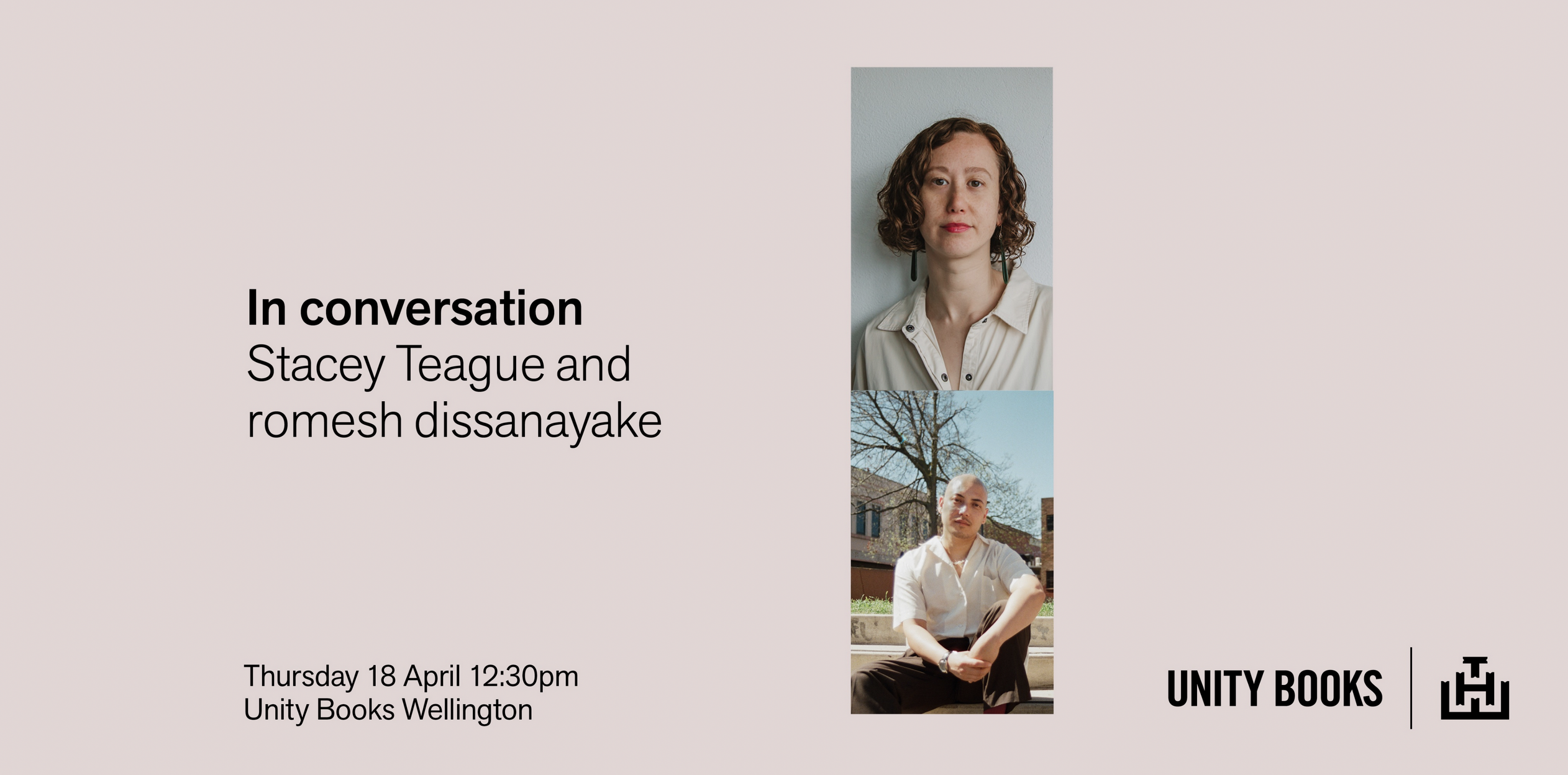
All welcome to a Unity Books lunchtime event this Thursday. A conversation between Stacey Teague and romesh dissanayake about writing and their latest books. Come along at 12:30pm! Celebrate two 2024 books from Te Herenga Waka University Press.
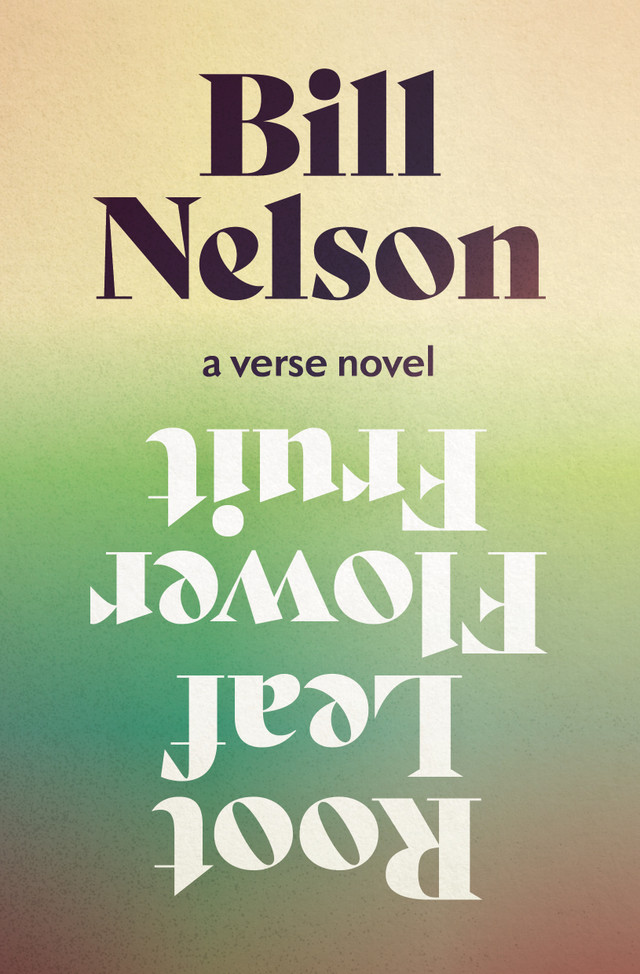
To celebrate the inclusion of Root Leaf Flower fruit by Bill Nelson (Te Herenga Waka University Press, 2023) on the Ockham NZ Book Award Poetry short list, I am reposting a reading Bill did for Poetry Shelf from his collection, the review I wrote, and an excerpt from the book. The book continues to haunt and move and delight me. The awards will be announced at an Auckland Writers Festival Event on May 15th.
The poemexcerpt
The agent. A slim grey suit, his ankles showing, white shirt, neatly parted hair, I specialise in niche properties, he says. Don’t worry too much about the garden, people like a project. He flicks his hand, without looking, toward the fields. The soil is what people are here for. Put that out front. He presses a card firmly into my hand.
Last week she heard her husband on the phone dismissing the carer, and she rolled her eyes. Don’t tell me you’re not happy, he said, you called her a bitch and an f’ing c-word, I can’t deal with that anymore, but she liked doing that, screaming and swearing, it felt good, but she could see that he felt bad so that he had to let the carer go, and now he felt bad that he felt good when she was gone, as if he enjoyed the pain, the struggle, an old hermit with a sick wife, holed up, locked in, and now after dinner he reads her the paper, avoiding the stories about road deaths and child violence, and when he accidentally starts to read one about a baby tortured by its parents, her whole body curls up, he notices and puts the paper aside, How about we go
for a walk to the top paddock, he says, she doesn’t answer and he lifts her quietly into the wheelchair, her head lolls to the side, she is getting lighter all the time, she can feel that too, how he seems able to lift her with less effort, like with every step she takes closer to death he’s getting stronger, younger, here in the top paddock, where the soil is hidden by weeds, where she remembers all the work she did, the aching and the dirt and falling into a deep sleep after, waking renewed and fertile, and now, the field overgrown, magnificent, luscious weeds reaching for the sky, fuelled by beautiful soil.
The roller door slaps loudly against the stops and I fumble for the light switch. Neon tubes flicker and then catch, and there it is, squat and industrial, green mudguards, green wheels, green engine cover, KUBOTA embossed proudly on the side. Smaller than I remember. At eight years old, climbing it, struggling to reach the first step, pulling the levers, pushing pedals, buttons, dials, no idea what they did. I search old boxes of mechanic’s tools, heavy and worn, rifle through a cupboard, a box of pamphlets. Manuals. One for the tractor, a couple for classic cars. I flip past the safety warnings, the specifications, straight to ‘Getting Started’. The brake pedals, one for the left wheels, one for the right, clutch and gears, throttle lever, speed-lock lever, emergency brake, others to operate the attachments, and lastly how to slide the seat forward. The keys in the ignition. I wiggle the gear lever
turn the key – preheat – start. Nothing, no whine, no stutter. A page on jump-starting. I nose the car into the garage and open the engine cover. I connect the leads and leave the car running. I turn the key, again, nothing. The manual, nothing. I get out my phone and start typing, tractors for noobs, tractors for beginners, Kubota tractor won’t start, and finally, Kubota B6100 won’t start, tractorbynet.com, eight pages of replies. The clutch pedal needs to be pressed. I try again, the engine turns, a slow raspy bark, over and over, and finally, a chug of life, but then a splutter, a spit, a fading hiss, and then it dies.
Bill Nelson, excerpt from Root Leaf Flower fruit
Bill Nelson, Root Leaf Flower Fruit, Te Herenga Waka University Press, 2023
The reading
Excerpt from Root Leaf FlowerFruit
The review
On reading a poetry collection or verse novel: first pick up the book and savour the title. Secondly, if you want to chart your own routes and sidetracks, read the blurb when you have finished the book. Maybe even reviews. Maybe even this review. That way reading becomes open and surprising travel. If you are reading Bill Nelson’s new verse novel, Root Leaf Flower Fruit, you will need to rotate the book to read the title, and that head spin is the perfect start to an affecting and inspiring read.
Such a tactile sensation as I begin reading – muddy and gritty and foaming – so mysterious with a ‘foreboding’ storm rolling in, with ‘no memory of what happened’. Pace and rhythm, this is what I jot down first. The way Bill deftly pulls you into the rhythm of the line, and how as you move along the currents, whether sweet or sour, it offers all manner of uplift, from the physicality of the poetry, to the cadence of music, to the tang of confession, to the anchor of everyday detail, to the shimmer of the gap.
This is poetry that builds a bridge between the land and family, the seasonal cyclic movement of both inhabited land and its inhabitants. Plough and spade and harvest. Feet in the earth. Compost and windbreaks. Hands planting seeds. A grandson returns to his grandmother’s farm to tidy up the house and land for auction as she is now in a rest home, his partner and children back home. The title triggers the calendar as gardening almanac, and we move into the idea of land as inhalation and exhalation, the acts of care and arranging, trimming and planting, along with the almanac ascension and waning of self.
This is also poetry as eulogy, the grandson is slowly unraveling a prismatic portrait of his grandmother. I want to talk about this extraordinary woman with you but I don’t want to spoil the unfolding portrait, your open road travel. Ah. But this is the woman who cared for her body as she cared for the land, so lovingly, so nourishingly. This is the woman who learned the value of lightness and lift. This is the woman who listens to what is not right. Ah, this is the woman who has taken up residency in my heart. This is the meeting of poetry and story, story and bloom.
This too is poetry as recognition of self. The grandson is recovering – ah I am agonising over what to tell you – but here is the gap, the impulse behind the narrative jumpcuts – he is recovering from a brain injury, fingertips barely grasping the accident. Floating, drifting, dreaming, aching.
Root Leaf Flower Fruit draws us deep into the heart of experience, fracturing and continuous, observational and reflective, imagined and lived, utterly refreshing the page of being human. It has a wow ending, the layered impact endures, and I wanted to start reading it again, instantly. Importantly for me, this sublime book, exquisitely crafted, fertilised with profound love and connection, is giving me routes back into my own writing. This is a book I simply must read again. Thank you.
Paula Green, September 2023
Bill Nelson is the author of Root Leaf Flower Fruit (2023) and Memorandum of Understanding (2016). His poems have appeared in Best New Zealand Poems, Sport, Landfall, Hue & Cry, Shenandoah, The Spinoff, Minarets and The 4th Floor, as well as in dance performances and art galleries and on billstickers. In 2009 he won the Biggs Family Prize in Poetry from the International Institute of Modern Letters, and he is a founding editor of Up Country: A Journal for the NZ Outdoors. He lives in Te Whanganui-a-tara Wellington with his partner, two children and his dog, Callimachus Bruce.
You were the other. You had hands and feet like a prose poem.
When you stretched I was moved by movings of denim, the morning light of jeans on the floor.
Nights were jacketless and starched, everything moved with the logic of poetry, everything moved so
slow. That new blue perfume never lasted more than an hour. I thought about buying better-tasting lipgloss.
Not everything feels like everything else. Your mouth in mine was no more than an accidental rhyme, a slip
of speech. Coffee on Tuesday was nice. We were civil, friendly, like the month after a divorce. I
didn’t say anything about anything. I used my jacket to shield our heads from the rain.
I miss you like a paperclip in a back pocket. I miss you like anything at all.
Cadence Chung
Cadence Chung is a poet, mezzo-soprano, and composer, currently studying at the New Zealand School of Music. Her nationally-bestselling chapbook anomalia was released in April 2022 with Tender Press. She also performs as a classical soloist, presents on RNZ Concert, and co-edits Symposia Magazine, a literary journal for emerging New Zealand writers. In 2023, she was named an Emerging Practioner by the Fund for Acting and Musical Endeavours. She likes to sing Strauss, write art songs, and buy overpriced perfume.








 They’ll be joined by publisher and novelist Mary McCallum as they delve into the politics, events and personal experiences that breathe life into their stories and shape them into compelling narratives.
 Friday, 19 April, from 5:30 pm to 7 pm at the Undercurrent.
 Drinks and nibbles available, Koha entry