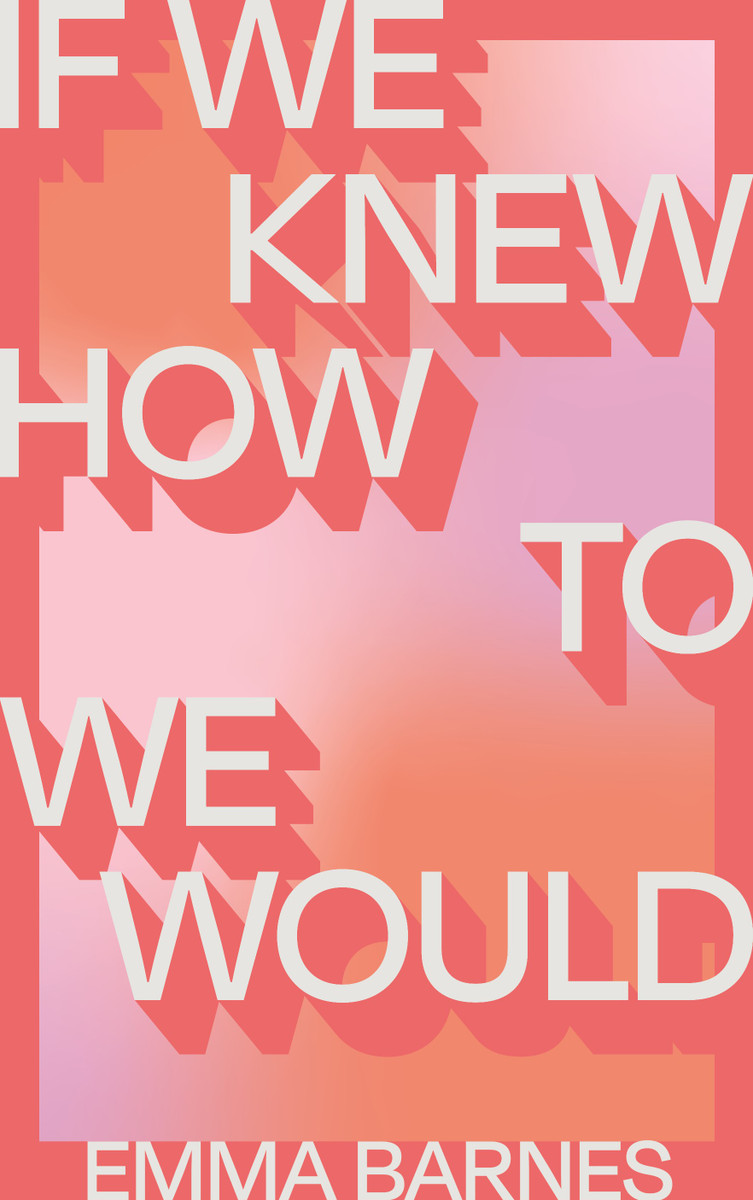
‘Kate Camp reads the words of grownupchild Kate of 1986 – achingly funny, arch and louche, often shocking, always clever. And all of it threaded through with such pain and sadness and unsettling darkness, such yearning to be loved . . . I’ve often wondered about Kate Camp: how did she get to be so fearless, so peerless, so bold? The answer is in these pages.’ —Tracy Farr
As a child I hated the silvertop milk and its cream plugging the shaft of the bottle. The milk below was watery. Now I go out of my way to find the bottles which expire on Feb 6th.
Robert Sullivan
Robert Sullivan is Aotearoa New Zealand’s 14th Poet Laureate. He belongs to Ngāpuhi (Ngāti Manu, Ngāti Hau / Ngāti Kaharau) and Kāi Tahu (Kāti Huirapa ki Puketeraki) iwi and is also of Irish descent. He has won many literary awards. His most recent books are Hopurangi / Songcatcher (AUP) which was shortlisted for the Mary and Peter Biggs Award at the 2025 Ockham Book Awards, Koe: An Aotearoa Ecopoetry Anthology coedited with Janet Newman (Otago University Press 2024) and a collection of essays coedited with Anna Jackson and Dougal McNeill, Te Whāriki: Reading Ten New Poets from Aotearoa (AUP 2025). Robert is Associate Professor in Creative Writing at Massey University. He lives in Ōamaru.
To launch Poetry Shelf 2026, our current Poet Laureate Robert Sullivan has written a sequence called “Tidbits of Te Tiriti”. He wrote these Te Tiriti Tidbits in the voice of Te Tiriti o Waitangi. There will be one published each day for this Waitangi Day weekend, and then a fifth one on Feb 17th, which is the day his Ngāti Manu tūpuna signed Te Tiriti.
Double Book Launch: Bill Manhire and Jenny Bornholdt
11 February, 6pm, Unity Books Wellington A joint launch of Lyrical Ballads by Bill Manhire and What to Wear by Jenny Bornholdt will be held at Unity Books Wellington. Two extraordinary poetry collections from two of Aotearoa’s most beloved former poet laureates, launched by Robyn Marsack – not to be missed! Free entry, all welcome.Please note: this is a changed date from the one advertised in our December newsletter!
Join us to celebrate the launch of My Bourgeois Apocalypse, a new poetry collection by Helen Rickerby.
Friday 13 March 7pm
The Guest Room, out the back of the Southern Cross Garden Bar Restaurant 39 Abel Smith Street Te Aro, Wellington
The book will be launched by Anna Jackson, with a reading by Helen.
In the spirit of the collection’s hybrid collage-essay-memoir form, this is a launch-cum-dance party, with music featured in the book playing throughout the night (mostly from the 80s). So bring your dancing shoes!
Books will be available for purchase on the night thanks to Unity Wellington.
3pm – Poetry Reading: Love Actually Open to the public. Perhaps every poem is a love poem, including Dr Karlo Mila’s recent political poetry. Karlo will read some favourites and speak to how love poems have propelled her creative practice.
1pm – Creative Workshop: Re-membering ourselves through poetry Registration required. How does place shape and create us? In this workshop, we’ll write a poem grounded in place, memory and personal identity. We’ll reach into the past in a multisensory way, generating a poem that we can return to again and again and remember who we are, and why. Places are limited. For ages 14+. Bring your laptop/tablet/notebook. Registration required. Please email: events.waiword@gmail.com. Please wait for confirmation.
Dr Karlo Mila MNZM Karlo Mila is a New Zealand-born poet of Tongan and Pākehā descent with ancestral connections to Samoa. She founded the leadership programme Mana Moana and has authored three books of poetry: ‘Dream Fish Floating’ won NZSA Jessie Mackay Best First Book of Poetry Award; ‘A Well Written Body’ with Delicia Sampero; and ‘Goddess Muscle’, all with Huia Publishers. For more about the author: www.karlomila.com
Wairarapa Word Wairarapa Word has been offering a monthly literary programme since 2012. To receive our e-newsletters, please email: events.waiword@gmail.com
This 2-part programme is presented by Wairarapa Word, with support from Carterton Library, Huia Publishers, Almo’s Books and Wairarapa Events Centre.
I felt cheesed off by the oral hearings about me. I felt a little deracinated to borrow a French word from Rimbaud who wrote Un saison en enfer—deracinated to see my innards unravelled, to stamp on my first second and third clauses and even the spoken spiritual one. So I bought myself the lovely drip coffee maker with the timer in the Briscoes sale to wake with a cuppa in the morning.
Robert Sullivan
Robert Sullivan is Aotearoa New Zealand’s 14th Poet Laureate. He belongs to Ngāpuhi (Ngāti Manu, Ngāti Hau / Ngāti Kaharau) and Kāi Tahu (Kāti Huirapa ki Puketeraki) iwi and is also of Irish descent. He has won many literary awards. His most recent books are Hopurangi / Songcatcher (AUP) which was shortlisted for the Mary and Peter Biggs Award at the 2025 Ockham Book Awards, Koe: An Aotearoa Ecopoetry Anthology coedited with Janet Newman (Otago University Press 2024) and a collection of essays coedited with Anna Jackson and Dougal McNeill, Te Whāriki: Reading Ten New Poets from Aotearoa (AUP 2025). Robert is Associate Professor in Creative Writing at Massey University. He lives in Ōamaru.
To launch Poetry Shelf 2026, our current Poet Laureate Robert Sullivan has written a sequence called “Tidbits of Te Tiriti”. He wrote these Te Tiriti Tidbits in the voice of Te Tiriti o Waitangi. There will be one published each day for this Waitangi Day weekend, and then a fifth one on Feb 13th, which is the day his Ngāti Manu tūpuna signed Te Tiriti.
The slump of cliff, a fierce drop into the estuary slumbering deadstill the muddy brown
A group of gulls gawping and squawking wings outstretched in now silent flight a strangely muted ocean, its soundtrack purring
It’s the smell of salted seaweed it’s the beat of andagio sea it’s a trail of weathered footprints
A woman crouches to photograph the gulls a solitary surfer gazes at the waves the stranded log sits like a beached whale amid storm debris
You shut your eyes to the rain-drenched memory eyes settle upon the present tense even the muffled voice of the dog walker is in harmony with the thrum of the scrolling waves
Paula Green
Haere mai. Welcome to Poetry Shelf 2026.
In 2026 Poetry Shelf will celebrate poetry in Aotearoa, old and new, with features, reviews, themes, audio, interviews, special seasons, and poetry news.
Monday Poem will be back. Playing Favourites will be back (poems and books we love). A much loved feature, Cafe Readings, will be back. I will review new books, but I am also reviewing a few books from 2025 that I missed because my energy jar was precariously low.
In the next weeks some of the poets on The Ockham NZ Book Award for Poetry long list will do cafe readings. I am also posting a special feature to celebrate the poetry of Iain Sharp.
Do send me poetry news to post, especially events. Do send me books to review (I cannot promise to review every book sent).
To launch Poetry Shelf 2026, our current Poet Laureate Robert Sullivan has written a sequence called “Tidbits of Te Tiriti”. He wrote these Te Tiriti Tidbits in the voice of Te Tiriti o Waitangi. There will be one published each day for this Waitangi Day weekend, and then a fifth one on Feb 13th, which is the day his Ngāti Manu tūpuna signed Te Tiriti.
When I interview poets I often ask poets to choose a few words that matter as writers. I asked myself that this morning, as a writer yes, but more importantly as the creator of this site. I went into a field of glorious possibilities. How I want Poetry Shelf to connect, celebrate, advocate poetry that challenges, delights, intrigues, soothes, inspires, that advances myriad connections. I want Poetry Shelf to offer both balm and protest banners in these calamitous times. I am sitting here thinking we often don’t know the inner worlds, the struggles and the illuminations, of the person writing and performing next to us. I am thinking this as I pull together a feature to celebrate Iain’s poetry. I want to listen. I want to learn. I want to love. My word is love.
Inside the city a house Inside the house a room Inside the room a cupboard Inside the cupboard a drawer Inside the drawer a box Inside the box a necklace Inside the necklace a story Inside the story a city hope
Some years I invite you to share your favourite reads of the year, especially poetry, especially when poetry doesn’t get much attention in the end-of-year lists and book stacks that we are seeing across all forms of media. This year has sizzled and simmered and shone with local poetry: new collections along with live performances. So many collections document and explore tough stuff: illness, heartbreak, despair, suicidal thoughts, global wars and inhumanity, our government inflicting more and more damage on planet and people. And so many collections deliver love, a multi-stranded love and a deep love of what words can do, whether exuberant or sweetly nuanced.
Every poetry book I have picked up, lingered over and reviewed (see photos below in the side bar and you will discover my reviews), I have utterly loved. Sadly for me, there is still a stack of books on my desk I’m itching to get to (see photos below), books by poets I love, books by poets new to me. This week I made the hard decision to return to reviewing these books after Poetry Shelf and I have rebooted, after we all get through the busy season where it is hard to read more than shopping lists.
I want to share a couple of highlights with you, but first a wee update. I am standing at a fairytale door, a threshold onto my new road. What specialists call my new normal, not the normal I enjoyed when I was travelling all over the country, visiting schools, doing events and author tours, reading and writing all day long. I have had a bone marrow transplant that has gifted me the miracle of life, thanks to an anonymous donor and an incredible medical team, but it comes with scars. Looks like I will always have to use my energy jar carefully, to manage my daily physical challenges with various aids. But I sure in heck find enjoyment and delight in every day.
Poetry Shelf has made such a difference in year that I have tagged both my worst and best. So many poets contributing, so many poetry fans reading and sharing. So many thoughtful caring emails, especially those responding to The Venetian Blind Poems, especially those responding to features and audio that have resonated with you. Poetry Shelf is nothing without you, without readers and writers connecting across generations, cultures, the length and the breadth of the country.
Creating three new series this year has been a special highlight for me. I have included links to one of them, Poetry Cafe Readings, because hearing these poets read has been such a gift. This will be back next year, along with the Speaking Out ( check out the Gaza poems) and Playing Favourites series, plus some new ideas. I have included a link to the fabulous Te Whāriki anthology where some of the contributors selected a favourite poetry book of 2025. And to a handful of special moments on the bogs.
Thank you so much everyone for your incredible support.
Some Special Poetry Shelf Moments
Celebrating the poetry of Brian Turner (1944- 2025)
Celebrating Dinah Hawken, winner of Prime Minister’s Award for Poetry
Feature on Te Whāriki: Reading Ten New Poets from Aoteatoa, edited by Anna Jackson, Dougal McNeill and Robert Sullivan (Auckland University Press, 2025)
Poetry Shelf Cafe and Summer readings Poets read and talk poetry for around twenty minutes
Write name in side bar and check out my review Many of the books I reviewed included readings
Books on my must-read pile
I often ask poets in interviews what words matter to them as they write – but today I am asking you what words matter as you live each day. I am thinking: kindness, self-care, connections, hope and joy. Over the next month or so I am going to read novels, watch movies, listen to music, tend the vegetable garden, and bake and cook.
Sending aroha to you all along with a huge bouquet of sweet and salty Te Henga ocean air.
Junction Box
sitting here at the junction box of war and peace and flowing waters hearing the soundtrack of bush haven hearing the dawn bugle the flyover the kōrero the silence searching in the manukā for remedy cables mourning every raised weapon every sacrifice every empty stomach displaced refugee every cruel act the weasel words from weasel politicians jamming our children in square learning boxes slamming our hospitals in low voltage budgets cramming our planet in polluted circuits extinction coils feeling in this breaking dawn the connecting calls for peace picturing protest placards holding voices of resistance past and present picturing aid workers risking life to nurse and feed and shelter picturing a global jigsaw puzzle of greed and smash and grab for how long have we imagined peace have we called for peace for how long have we imagined blue sky transformation today we are standing here holding our currents of hope and yes today we are joining in calls for peace calling calling calling
25 April 2025 Paula Green
widening the gap
in the wild night of storm the wind is widening the gap or is it the roar of a government hellbent on building
a ravine between the rich and the poor Māori and Pakeha in every choice they make. A school curriculum has lost
sight of the prismatic stories that shape us, sums that include x-factor joy, and I am stuck on this freight train
in the widening gap because I see no end to damage and despair and I’m filling an ocean with tears crying over lessons that slam the door
in the face of poverty or another language or the tangata whenua and this rumble gap is the distance between sick earth and well earth
between building roads and restoring our hospitals and schools and here I am holding my fragile torch to the widening gap
in my sodden socks no idea where to shine the light next yet except maybe on all those protestors from the 1960s who are stomping
in the streets even louder now with their dreams our dreams where women are heard where Māori are heard my bones breaking and I am blowing
all around to resist persist hope dream begging to fill this gap with precious care to build glorious people-friendly bridges out of knowledge and foresight.
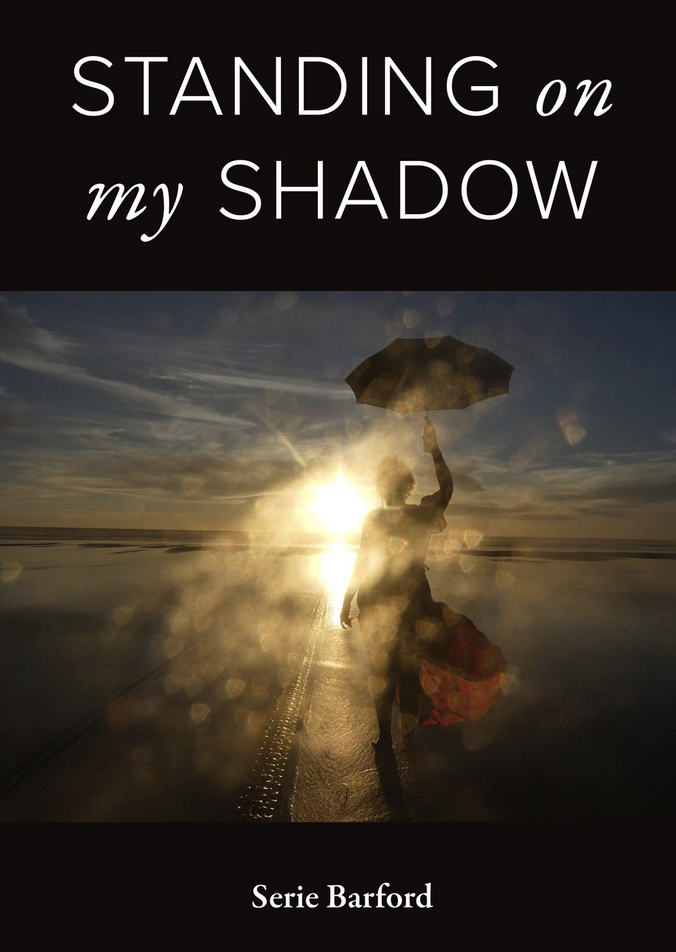
STANDING on my SHADOW by Serie Barford Anahera Press, 2025
Serie Barford and I have been travelling cancer roads for a number of years, so to both have poetry collections out this year resonates deeply. Especially when 2025 has been challenging for both of us, and especially when Serie is now in hospice care, knowing this may be her last summer. I hold this sad news to my heart. We all do – friends, our poetry communities, family.
I have been rereading Serie’s book over the past fortnight in the gaps of appointments. Writing down single words and phrases in my notebook. Musing on how poetry, whether we write or read it, can be so nourishing, so connecting.
Serie’s collection is divided into five parts, offering poetry that is embedded in the somersault effect on body and mind when navigating cancer. She is standing on the rim and guts and wings of all kinds of shadows. Think death. Think life. Think uncertainty. Think aroha.
The opening section, ‘The Exclusion Zone’, draws us to the Chornobyl Exclusion Zone in Ukraine, where there are signs of rejuvenation in the devastation. The first poem, ‘Picture this’, does exactly that, invites us to picture the scene. It is physical, it is elsewhere, on the the other side of the world, with ‘a blue wooden church’, with flowers tumbling from hanging baskets, Sisters of Mercy feeding the hungry. And the poet is asking us to picture her with her notebooks of cancer jottings. And then the final stanza. This is it. This is a poetry collection where the physical detail of the world, whether at home or away, is luminous. Where all senses operate under a heightened awareness, reminding us that tough health diagnoses sometimes intensify what is important, what offers bridges to joy and delight. Here is the final couplet:
Picture sun on my face. A cobbled street. An outside table. Glistening red borscht for lunch. Delight.
In the next poem, ‘Chornobyl Cinderella’, an abandoned shoe is spotted, a shoe that is a repository for story, for unbearable loss and tragedy, and it feels like our lives are peppered with abandoned shoes, with narratives that arrive in wisps and slants. The what is not said and can never be said alongside the what is said and must be said. The kind of border a poet might struggle with as she writes poetry out of an experience that is sometimes unspeakable.
I begin with the exclusion zone. I picture the exclusion zone, and it is both Chornoble and a personal experience. It is precious life and it is precarious life. Ah, how I connect with this book. In the second section, ‘Bitter chalice’, the physical detail of the world is still vital, as the poet goes to Building 8 for chemotherapy, as she deciphers percentages and oncology talk.
The writing draws upon light as much as dark, mapping bridges between tenderness and toxicity. Think the toxicity of nuclear waster echoing through the toxic impact of chemotherapy upon body and mind. Think tatau on the skin of others, connecting generations, ancestors, mana. Think the poet’s uninked skin now bearing the tattooed dot associated with radiotherapy. Think the tapu head and hair, the missing hair, the woman donating hair, the hair now silver.
Picture this. Imagine this. Feel this.
The fifth section draws us to ‘The green line’. The title poem follows the hospital’s green line to get to Radiology, but the collection offers us a weave of green lines. We might move from the Ukraine to Tāmaki Makaurau, moving from a stretched health system to alternative therapies, from the coordinates of cancer to the coordinates of whanau. The mother prepares breakfast esi. The grandmother dries esi seeds. The mother nudging her family to eat well. Here from ‘Eating esi’:
Mum nudges Dad: You too. East esi. Get well. Stay well. Don’t die before me. Don’t you dare!
Follow the green line and you are following a voice sensitive to the contours of illness, to the jags and spikes and science of health challenges, to the experience of the patient next to her. She is both speaking and writing, busting the exclusion zone, her words lithe on the line, inked with angels anxiety grace. This from ‘Egyptian ink’:
Same old same old.
Chemotherapy is this century’s Egyptian ointment. A spin on arsenic paste.
Black ink pools on papyrus.
Here and there
the vomiting mouth.
The final word of the collection is ‘aroha’. The final image drawing us back to the infusion of toxicity and delight we picture at the start of the collection. Here I am, personally attached to this personal record of an utterly challenging time, and I am brimming with sadness and recognition, joy and connections. Read the final paragraph from ‘The grace of a stranger’, order this book, and gift it to a friend.
Yesterday I was miserable. Overwhelmed by side effects. Lay on the floor, heart flailing, sunlight rippling through French doors, guarded by anxious cats. Birds were singing. Clocks ticking. I thought about Chornobyl, the Exclusion Zone, the trumpeting angel memorial to lives lost. Waited for ancestors to appear. Fetch me. But it wasn’t my time.
Today I’m visiting an oncologist in Building 8. Facing this tricky business of living. Talking about celestial beings. Feeling uplifted by the grace of a stranger.
Aroha.
Serie Barford was born in Aotearoa to a German-Samoan mother and a Palagi father. She is one of New Zealand’s leading voices in contemporary poetry and has been a pioneer for Pasifika women poets since the late 1970s. She has published five previous collections of poetry. Sleeping with Stones was shortlisted for the 2022 Ockham New Zealand Book Award for Poetry. She was a recipient of a 2018 Pasifika residency at the Michael King Writers Centre. Serie promoted a Ukrainian translation of her poetry collection Tapa Talk at an international book festival in Kiev in 2019.
Anahera Press page Serie in conversation with Emile Donovan on RNZ Serie selects some books at The Spin Off Sophie van Waardenberg review at Aotearoa NZ Review of Books Hebe Kearney review at Kete Books