lift-off among the quiet houses a scent of mint in steam coming off potatoes rolled in butter evening tilts shadows across the deck warm air knocking the blind chicory leaves and the benrina slicing fennel or witloof into the huge bowl lifting a paw the bear sails on the bowl of the sky barely there stars coming out comet Atlas passing far to the south beyond light pollutants beyond the astronomers sitting on hilltops citizens parked up with their naked eyes and tripod cameras all of them rolling words like perihelion coma and apparition sixty Moons) across the sky imagine that imagine this subtending the truly extraordinary houses by the sea houses between hills smokes ascending steam rising over pots and bowls blackberry Atlas into the maw of the cosmic oven what have you what would you where with all the slicing and dicing rolling and knocking sixty moons across the sky one drop of dew falling tears flowing backwards forever uplifted an endless assent the minty breath of heaven on earth a pot of new potatoes
*
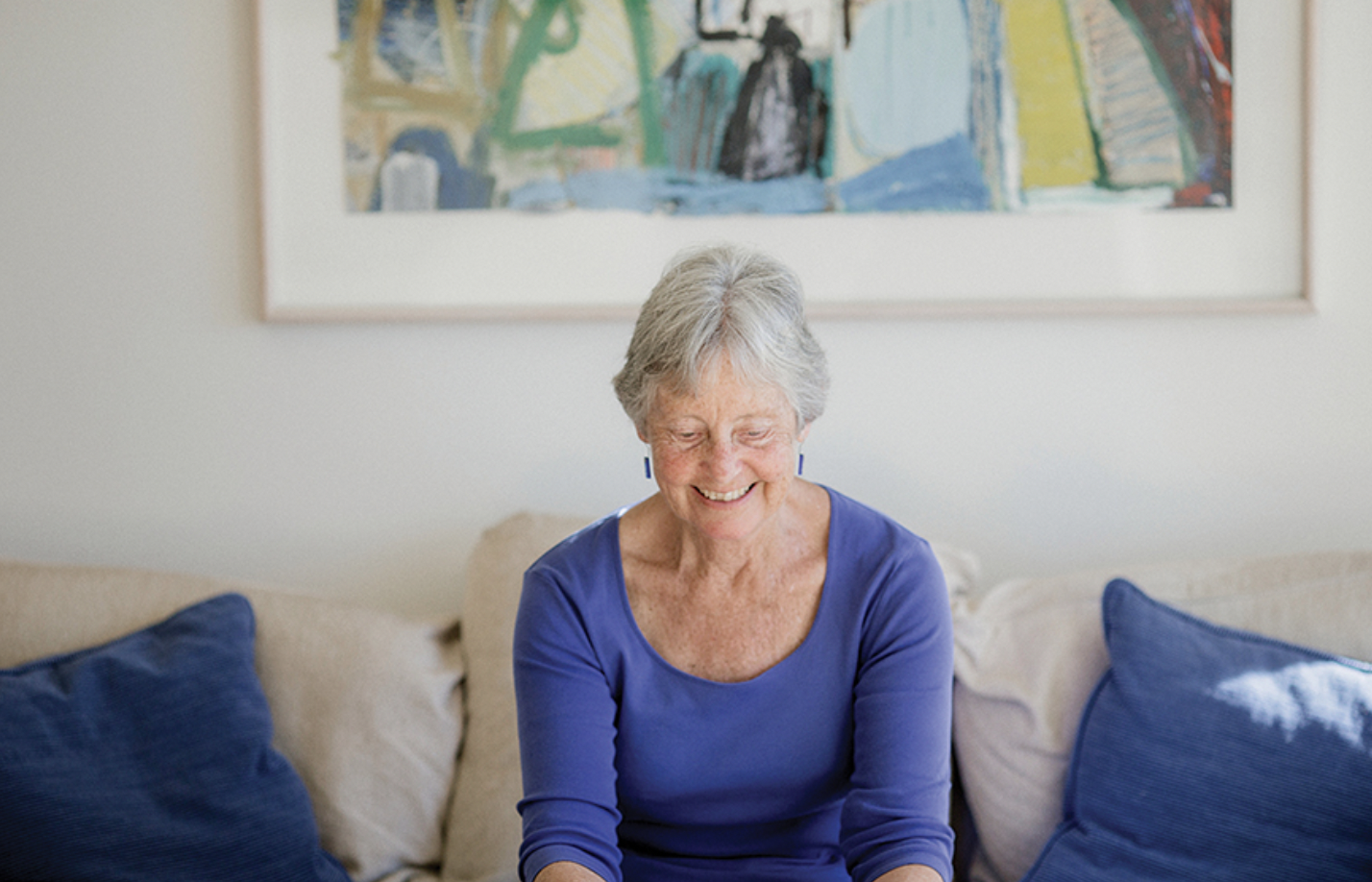
Michele Leggott
Michele Leggott was the New Zealand Poet Laureate 2007-09 and received the Prime Minister’s Award for Literary Achievement in Poetry in 2013. Recent collections include Mezzaluna: Selected Poems (2020) and Face to the Sky (2023).
Symphony of Queer Errands, Rachel O’Neill Tender Press, 2025
‘Dress us, Oh Errands, in mellifluence, as we are honey flowing, effortless, unbroken.‘
from ‘Chant for Queer Errands’
Rachel O’Neill’s new collection, Symphony of Queer Errands, is a book that takes you by surprise. It is mysterious mesmerising memorable. How to lay my engagements on the screen for you without smashing or corroding the reading effect? This book, that traverses the wide stretch between predictability and obscurity, between resistance and embrace, is akin to a transposition of the creative process, of life itself. We are drawn into the interlaced polyphonic collaborative composition of a symphony, with instruments, musicians, rehearsals, trials, suggestions, score sheets. And everything strange, incredibly and wonderfully strange.
I am thinking this morning how these incomprehensible toxic times that we inhabit can infect slant intensify what and how we read. So this astonishing book, in this utterly vulnerable point in time, becomes fablesque, dystopian, surreal, hyperreal. And then, here I am in the heart and thick of the creative process. The heart and intricacy of love and life and how that matters so very much.
This is a book of first lines, of beginnings. It is a book of a guitar’s open tunings, say, where the chords shift and splice. We are listening to arrivals of the intangible, to energy and ether, to suspension and tendency. Or to ‘the ash of silence’. Listening. Listening. I cannot stop listening. And the musical key moves, and the wardrobe arrives with its physical store of clothes and dirt and flies. It’s personal effects and intimate affects.
Ah the lines that ring out as solo instruments: ‘all the voices yet to reach us’. ‘We who lavender time / are more essential than oils’.
Ah the queer instruments: for example, The Cathedral, The Wave, Bass Narcissus, and The Hard Soft Revolt. The latter is a pianoforte made of revolting parts that are neither plucked nor strummed but guillotined.
Old women are best. Generations matter. Pronouns matter. Tremulous holes matter. Sampling. Stolen land matters. Colonisation. Queer matters.
Queer errands are the sonic visual philosophical physical and deeply personal arrivals that score this symphony, this long-form poem. Queer errands that might be musical instruments or vital notes of gathering protest rally disobedience hotness dialogue collaboration . . . and yes, heart.
Symphony of Queer Errands is a sensory prickling, heart-and-idea stirring, body rippling, queer read, and I absolutely adore it. Thank you.
a reading
‘The Hard Soft Revolt’
‘The Wave’
‘Anti-gaslighting Bowls’
four questions
Were there any highlights, epiphanies, discoveries, challenges as you wrote this collection?
While Symphony of Queer Errands is curious about the intersection of poetry and music, I increasingly feel that curiosity for collaboration shapes the experiential energy of the book.
Contrapuntal poems, and poems inspired by contrapuntal music feature in the book. Contrapuntal poems involve bringing two distinct texts together to create another entire poetic experience out of their conversation. Contrapuntal music involves distinct melodies playing at the same time and interacting harmonically. Throwing in some creative licence here, I feel both point to an elsewhere through and beyond binary relationships.
Sound and language operate vertically and horizontally, as noise and silence, knowably and anonymously, yet in collaboration become multi-dimensional.
It’s a risky business. Collaboration involves trust and uncertainty, a deep understanding of oneself and other people and an openness to not knowing or knowing the least and needing to learn the most, it requires repair from failure, celebration, grieving, laughter and joy.
For me collaboration is a practice. Alongside a suspension of false hierarchies of human worth, we breathe life into alternative realities together, embodying these in the present.
What matters when you are writing a poem? Or to rephrase, what do you want your poetry to do?
Over the last year or so I’ve been experimenting with ‘audial’ poems by recording sounds in my immediate environment and making sound design works that become the seed for a new poem or sequence. My friend Andy Hummel invited me to open at his gig last year and I held a listening party, sharing some of the sound design works and reading poems inspired by them. While some poems are irreverent—Alexander the Great getting therapy in the afterlife; a poet planning to propose marriage to a melody; a music journalist conducting interviews as you would an orchestra—others reflect how, for me, writing through sound enables me to unlock potent emotions and memories. I want to continue to deepen and expand this practice.
Are there particular poets that have sustained you, as you navigate poetry as both reader and writer?
Right now I’m relishing reading local poetry and fiction, including Manuali’i by Rex Letoa Paget, Amma by Saraid de Silva and Slanted by Alison Glenny. Other recent highlights include Chinese Fish by Grace Yee, All That We Know by Shilo Kino, Hine Toa by Ngāhuia te Awekōtuku, A Breed of Women by Fiona Kidman and The Raven’s Eye Runaways by Claire Mabey.
A recent book that continues to be revelatory to me due to its deep articulation of repair is when I open the shop by romesh dissanayake. In my journal I wrote that in addition to the sometimes strange emancipations of grief, the liminal zones of keeping promises and forgiving human mistakes, and the empathy and humour of the writing, I really appreciated the open celebration of friendship/chosen family. I was reminded of the friendships in which I receive unconditional love and how grateful I am to friends who give generously, are accepting and whose manaakitanga comes in many forms, from cooking to laughter, listening and dancing.
On the local music front, some forever favs are Brown Boy Magik’s Trans Pacific Time, Mo Etc.’s Buoys, and albums by Te Kahureremoa and JessB.
We are living in hazardous and ruinous times. Can you name three things that give you joy and hope?
Composers from Aotearoa really fill my cup—Salina Fisher, Victoria Kelly, Gillian Whitehead, Elliot Vaughan, Ruby Solly, Ariana Tikao, Al Fraser, Rob Thorne, Tabea Squire and Jerome Kavanagh. I really enjoy going along to STROMA events and the Pyramid Club to hear contemporary works.
It was a real privilege to collaborate with local composer and musician Lucky Pollock recently. They premiered a new piece at the launch of Symphony of Queer Errands inspired by a poem from the book about a riotous piano called The Hard Soft Revolt. Lucky reprogrammed a keyboard with metallic samples and synths and played Chopin’s Tristesse. It was brilliantly bombastic!
Participating in collective movements is galvanising and nourishing. I’m grateful to human rights activists and connective organisations like ActionStation Aotearoa for keeping us all grounded and empowered across the various stages of reaction, response and repair involved in organising change.
Walking is also my happy place. Composer Torū Takemitsu said ‘my music is like a garden… I am the gardener. Listening to my music can be compared to walking through a garden and experiencing the changes in light, pattern and texture.’ I enjoy the simple sensory pleasures of letting one’s atoms merge with other atoms, dissolving into a moment, hopefully without tripping on a heap of sand, seagull or silicone mannequin head washed up on the tide (true story).
I think it’s also important to grieve what needs to be grieved. Not everything can be replaced or recovered. Grief points to what you care about, which helps you commit to the fight to protect what you love. Having some rituals to move through the snotty, raw and thorny parts of the process can help a lot.
Rachel O’Neill is a filmmaker, writer and artist based in Te Whanganui-a-Tara, Aotearoa. They are Pākehā, queer and non-binary (they/them/she/her). Their debut book One Human in Height (Hue & Cry Press, 2013) was followed by Requiem for a Fruit (Tender Press, 2021). Rachel was the 2023 Creative New Zealand Randell Cottage Writing Fellow. For more, visit their website.
International Writers’ Workshop NZ Inc (IWW) is delighted to announce that Te Whanganui-a-Tara / Wellington poet Anna Jackson has accepted our invitation to judge The Kathleen Grattan Prize for a Sequence of Poems in 2025. The competition, with a first prize of $1000 for the winner, is for a sequence of completely unpublished poems with a common link or theme.
Anna has written seven collections of poetry, most recently Pasture and Flock: New and Selected Poems, and a book about reading poetry, Actions and Travels: How Poetry Works.
She was editor of the AUP New Poets series from 2019 – 2022 and teaches poetry courses at Te Herenga Waka / Victoria University of Wellington where she is an Associate Professor. A new book, Terrier, Worrier: A Poem in Five Parts, will be published by Auckland University Press in June 2025.
The Kathleen Grattan Prize for a Sequence of Poems, which has been made possible by a bequest from the late Jocelyn Grattan in memory of her mother Kathleen, has been run by IWW since 2009 for its members. The competition is free for IWW members to enter, and it is very easy for aspiring poets and writers to join IWW by the third Tuesday in June (17 June 2025) to be eligible to enter the competition.
Anna will host a preparatory one-hour Workshop on Zoom on the morning of Tuesday 6 May, 2025. This Workshop is also free for IWW members, but non-members are welcome to attend the Workshop for $10. Email iww-writers@outlook.com to register.
The competition opens for entries on 1 September 2025 and closes on 7 October 2025. The winner will be announced on 18 November 2025
The rules for the Prize, past judges and winners, details of how to join IWW, meeting times and other activities of the Workshop, are available from the IWW website.
hands are for holding, for heeding, for helping | for knitting blankets and weaving stories | for signing our voices, for lifting and praying | and hands are for caring
a parent’s and child’s, the curve of my mother’s fingers hovering | and mine, now untangling, my thumb feeling F and finding the chord
news from this land shatters accord dread notes dominating | a new disregard for human life | people mis-handled, removed from homes | greed fixing on friends and
distant places: Greenland and Ukraine squeezed by aggressor hands | and even Heard Island residents on the list | so world markets plunge but penguins
stand tall while streets fill with people with hand-crafted signs | reaching each other, in this heady week, this week of a record-breaking speech
on the Senate floor, momentum building – but will they stretch hands across the aisle, find the right chord | protests flare while billionaires golf | we are calling
for our world to be in better hands | and now, a new week | I am walking in an airport gallery with brightly woven panels: the ‘Welcome Blanket – stitching together the
fabric of our nation’, tangible proof of shared humanity | and there: ‘staple drawings’, intricate and floating | both saying what hands can do, both hands on hope
My Margaret Mahy Award Lecture (delivered Sunday April 6th, read here and will be a video coming) was a collage on writing poetry with and for children (and adults too really). It was both personal and political, and was inspired by the patchwork quilt I create each morning to get through my daily challenges. Little patches that give me strength and joy. Like writing. Like blogging. Like reading. Like reviewing books. Like gardening and cooking and listening to music and audio books. Like watching UK detective programmes in the afternoons! Or cricket. Or football.
On Poetry Box, I am posting a series of happy review bundles to celebrate some of the terrific children’s books published in 2024, both in Aotearoa and overseas. Children’s books can be such a source of delight. Along with adult books of all genres.
I am also keen to post some comfort spots on Poetry Shelf.
The key aim of Poetry Shelf is to celebrate local poetry – books, events, initiatives, connections. But now and then, I want to share a book that offers comfort diversions. Like a zillion other readers, I am a big fan of Richard Osman’s detective fiction, both The Thursday Murder Club series and the new one, We Solve Murders. Richard writes intriguing who-dunnits that are sweetly crafted, with nuanced characters, humane underthreads, rich detail. I am currently listening and loving Graham Norton read Holding – he aces the range of Irish accents, his characters and the sotry!
I have finally got around to reading The Bookshop Detectives: Dead Girl Gone by Gareth Ward and Louise Ward (Penguin, 2024). And now I can’t wait to read the second one that has just come out: Tea and Cake and Death (Penguin).
Louise and Gareth own the Wardini bookstores, with branches in Havelock North and Napier. I didn’t know they were both coppers in the UK before moving to Aotraroa. Louise has an English Literature degree and taught Shakespeare to inner city children, while Gareth is the author of a number of books. Perfect background experience to write a detective novel together.
A mysterious parcel arrives at Sherlock Tomes, Garth and Eloise’s bookshop in Havelock North. And yes, there are little similarity dazzles that add to the delight of reading. The ex-copper booksellers are intrigued by a trail of old-case clues and get set to solve the case of a missing school girl.
The novel ticks all my detective novel boxes: nuanced characters, twists and surprises, enriching detail, fluent writing, hooks and ideas, engaging voices, and heart. What lifts the novel to a zone of ultra reading comfort is the way literature is like a semi-protagonist. Loads of delicious literary references! It is almost like I’m in Wardini Books and having books recommended to me . . . and yes the new Catherine Chidgey is on my must-read list.
So it is a big warm toast to Louise and Gareth, to Wardini Books, and to excellent local detective fiction! Bravo! Here’s to comfort reading!
Gareth and Louise Ward are the real-life owners of independent bookshop Wardini Books, with stores in Havelock North and Napier, New Zealand. Louise is known among the staff as Fearless Leader and Gareth as a bit of a dick; he is, however, the author of the Tarquin the Honest and The Rise of the Remarkables book series, as well as being the bestselling and award-winning author of The Traitor and the Thief and The Clockill and the Thief. Gareth and Louise met at police training college in the UK and are both ex-coppers. Louise has one murder arrest to her name, is an English Literature Graduate and as an ex-teacher inflicted Shakespeare on inner-city twelve-year-olds. She regularly reviews books on RNZ. Both are obsessed with their rescue dog Stevie, avoid housework and gardening, and live in the cultural centre of the universe that is Hawke’s Bay, Aotearoa New Zealand. The Bookshop Detectives is Gareth and Louise’s first book together.
DANZ Children’s Book Award 2025 shortlists announced
I am delighted to see Eileen Merriman makes the YA shortlist with her novel To Catch a Falling Star (Penguin, 2023). The book, with both nuance and complexity, navigates tough issues. Aged fifteen, Jamie Orange participates in school musical productions, is secretly in love, but faces persistent and crippling mental health challenges. The story and the characters are utterly moving. The novel is an unforgettable, thought-provoking read, so I am pleased to see it get this recognition.
In my Poetry Shelf review I wrote: “Ah. Triple ah. Quadruple ah. Catch a Falling Star is a sad, contemporary, thought-provoking, must-read story that revives you no matter how little sleep you have had! The word I take with me is hope, the image I hold is two teenagers bonding over books and coffee. Utterly riveting! Utterly humane.”
The DANZ Children’s Book Award, launched for 2024, stands for The Diversity in Australia and Aotearoa New Zealand Children’s Book Award and has been created to recognise, award, and celebrate diverse children’s fiction. This means a children’s book published in Australia or New Zealand which pushes boundaries, challenges stereotypes, and celebrates diverse and marginalised people and communities.
The 2025 shortlists for the Australian School Library Association (ASLA) DANZ (Diversity in Australia and Aotearoa New Zealand) Children’s Book Award have been announced.
Niamh lying in the sun on the grass and it’s all a small-town café in my heart. I idle through another lukewarm day like a conversation with a new friend. People are in rooms far from me, near to me. People are breathing in these rooms. Their breathing like footsteps. Their footsteps like song.
Cadence Chung
Cadence Chung is a poet, composer, and singer currently in her Honours year at the New Zealand School of Music. Her nationally-bestselling chapbook anomalia was released in 2022 with Tender Press, and her anthology of young artists, Mythos, was released in 2024 with Wai-te-ata Press. Her next book, Mad Diva, will be released in April 2025 with Otago University Press. She also performs as a classical soloist, presents on RNZ Concert, and co-edits Symposia Magazine, a literary magazine for young New Zealanders.
little paper dragon, poised on the shelf in the room painted green, tucked in its cave below Struwwelpeter and Madeleine, Janosch and Kipling, scuffed satin ballet shoes and chalk portraits of boys long dead hanging on the wall
six neat squares of quilt sewn nearly a century ago, pinned above the cedar chest, keeping leather baby shoes, curled with age, and knitted bicycle sweaters: momentum of childhood a thing you can’t miss in this sunlit room this dragon
made by small nimble hands, the precise folds shaping its wings, lifting, spreading, waiting, its yang energy waking from winter, soaring upwards, inviting change, its heat its power: the fire miraculous, carried so gently in its little paper heart
Air
the scent of blooming things
hyacinth sweet pea peony bursting on a day we crave
good news, wafting from gardens along sunny streets and the sweet
sweet aroma of magnolia their pink hue particularly assertive
in the Smithsonian garden the yin of them needed
outside this window my mother’s creamy camelia bouncing softly
in the breeze fruity fragrance gliding in oh how
a thing unseen hops a gentle ride
rises on glossy air
Water
on the radio, a young harpist, following in the steps of Alice Coltrane and
Margaret Bonds and Samuel Coleridge-Taylor playing muted tones of Troubled Water, sensing a long history
of rivers and swamps, people moving slowly towards a more open world, the harpist growing up
with African American spirituals, desires for liberty hidden behind metaphors, water a symbol of freedom
Earth
cherry trees / spaced / along wide city streets / announcing spring / in this urban metropolis / these trees, gifted in 1912 / a token of friendship from Japan // our friendships delicate these days / taking energy and more / perhaps holding despite / the odds against them // here, look / smaller trees sturdy and familiar / not as showy but fruitful / American holly, redbud, flowering dogwood / native to the eastern seaboard / trees in bloom / roots reaching / sustaining / year after year / softly minding / their own business / flowering and seeding, flowering and seeding / the quiet understory that might endure