Poetry Shelf Cafe Readings: James Brown

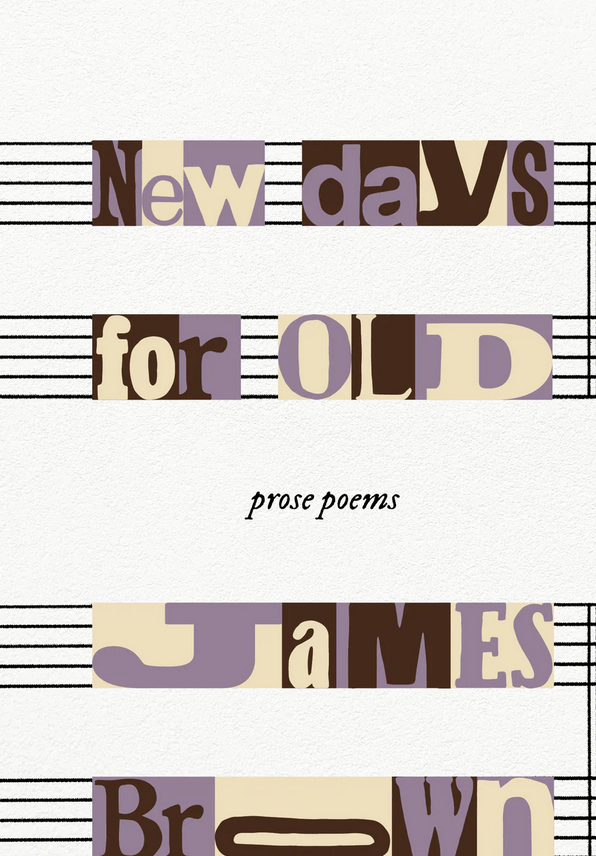
New Days for Old: prose poems, James Brown
Te Herenga Waka University Press, 2026

To celebrate the publication of his new poetry book, New Days for Old, James Brown talks poetry and reads from the collection.

‘How does James Brown do it? Every page in this book is my favourite.’
Bill Manhire

“First up, I love the feel, shape and look of James Brown’s new poetry collection. Secondly, I love the title: New Days for Old. Thirdly, I love the choice of genre: a sequence of prose poems. And finally I love the opening quotation: ‘Much of the greatest art, I find, seeks to remind us of the obvious.’ (Patrick Bringley, All the Beauty in the World: A Museum Guide’s Adventures in Life, Loss and Art).
I tip the quotation on its heels, borrow the word beauty, and get caught in a thinking whirlpool of beauty and wonder, the obvious and the ordinary. I am sidetrailed into musing on the small in the large as much as the large in the small. Nothing like a glorious poetry eddy to get your senses tingling.”
Paula Green (from forthcoming review)

James reads from New Days for Old

James Brown describes himself as ‘a Sunday poet who fell in with the wrong crowd’. His poetry collections are New Days for Old (2026), Slim Volume (2024), The Tip Shop (2022), Selected Poems (2020), Floods Another Chamber (2017), Warm Auditorium (2012), The Year of the Bicycle (2006), which was a finalist in the Montana New Zealand Book Awards 2007, Favourite Monsters (2002), Lemon (1999), and Go Round Power Please (1996), which won the Best First Book Award for Poetry.

James has been the recipient of several writing fellowships and residencies, including the 1994 Louis Johnson New Writers Bursary (1994) and a share of the 2000 Buddle Findlay Sargeson Fellowship, the Canterbury University Writer in Residence (2001). He edited The Nature of Things: Poems from the New Zealand Landscape (Craig Potton, 2005), the literary magazine Sport from 1993 to 2000, and Best New Zealand Poems 2008. In 2002, as Dr Ernest M. Bluespire, he published the useful booklet Instructions for Poetry Readings (Braunias University Press). In 2018, James created what he calls ‘a transcribed poem’ out of Herbert Morrison’s famous radio commentary of the Hindenburg disaster: ‘Hindenburg: A transcribed poem’, and also produced the small booklet Songs of the Humpback Whale. In 2019, Alan Gregg, formerly of the band the Mutton Birds, turned two of James’s poems (‘Shrinking Violet’ and ‘Peculiar Julia’) into songs.

James works as an editor and teaches the Poetry Workshop at the International Institute of Modern Letters at Te Herenga Waka—Victoria University of Wellington.

Te Herenga Waka University page

Poetry Shelf Noticeboard: Poetry at AWF 2026

Here are five poetry events on offer at AWF 2026 along with The Ockham Book Awards event where the poetry winner will be announced.

Check full programme here

Mary and Peter Biggs Award for Poetry: Nafanua Purcell Kersel (Satupa‘itea, Faleālupo, Aleipata, Tuaefu); Sophie van Waardenberg; Erik Kennedy; Anna Jackson

📚

2026 Honoured Writer Bill Manhire

A short programme blurb can’t do justice to Bill Manhire’s immense contribution to the country’s literary landscape.

He was Aotearoa New Zealand’s inaugural poet laureate, has won the Ockham NZ Book Award for Poetry five times, and founded and directed the International Institute of Modern Letters at Te Herenga Waka — Victoria University of Wellington, from which countless of the nation’s finest writers have emerged.

We are thrilled to be recognising Manhire as the Festival’s 2026 Honoured Writer, and have him join a list of luminaries including Witi Ihimaera, CK Stead, Patricia Grace, Joy Cowley, Fiona Kidman, Anne Salmond and Gavin Bishop.

While Manhire is unable to attend, Fergus Barrowman will lead a wide-ranging session about Bill’s extraordinary life in letters and his major new collection, Lyrical Ballads.

📚

Masterclass

Emma Neale is one of our most celebrated poets. She was awarded the Lauris Edmond Memorial Award for a Distinguished Contribution to New Zealand Poetry in 2020 and her sixth collection Liar, Liar, Lick, Spit won the Mary and Peter Biggs Award for Poetry at the 2025 Ockham NZ Book Awards.

In this practical and engaging workshop, Neale will help you find your way into a poem – and how to stay on course once you’ve begun.

Through guided writing exercises, you’ll generate first drafts, before turning to the art of self-editing, learning about common pitfalls that Neale encounters as an editor.

You’ll gain insights into how to craft poems that truly lift – and truly land.

📚

Dreaming for the Ocean in Us: Tangata Moana Writers and Desire

A bold, intimate conversation exploring Pacific writing beyond expectation and what writers are reaching for when they choose desire as a compass. Tusiata Avia, Amber Esau, and Danielle Kionasina Dilys Thomson with Ruby Macomber.

📚

Hot Takes, Sharp Lines: A Spoken Word Round Table

Poetry, mischief and unforgettable storytelling featuring poet baddies Dominic Hoey, Mr Meaty Boy (Ngāti Porou, Ngāpuhi), Liam Jacobson (Kāi Tahu), Amber Esau (Ngāpuhi, Manase) and Michael Pedersen.


📚

Love Won, Love Lost, Love Burned Up in Flames

Hearts soaring, hearts broken and everything in between. Seven writers tell intimate, passionate, uplifting, devastating stories of love. Including Matariki Bennett and Michael Bennett.

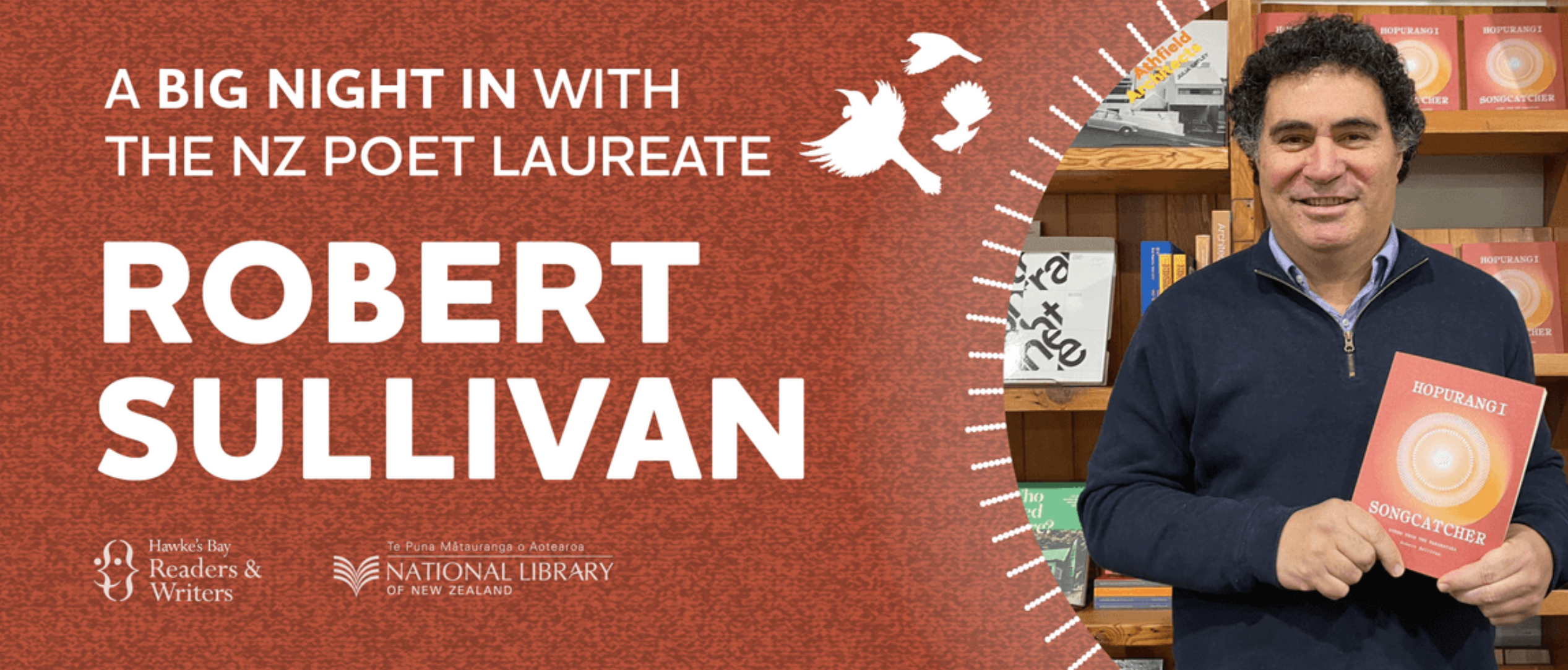
Poetry Shelf noticeboard: Big Night In with the NZ Poet Laureate Robert Sullivan

Big Night In with the NZ Poet Laureate is our chance to celebrate the new Laureate, hear some of Aotearoa’s strongest poetic voices and enjoy a relaxed, powerful night of live performance here in Heretaunga Hastings.

Join us for a wonderful evening of words with New Zealand Poet Laureate Robert Sullivan and his guests Amber Esau, Kiri Piahana-Wong and Ariana Tikao.
An evening not to be missed!

We’re thrilled to welcome 2026 Ockham finalist and local poet Nafanua Purcell Kersel as MC for the evening.

Tickets are a mere $10 (plus fees) from Eventfinda or Hastings i-site

Poetry Shelf noticeboard: Taratahi Carterton Peace Festival

19/3 BLUES AND POETRY with Ron Riddell and friends – info here

20/3  ¡ HAIKU !  – a workshop in English and Spanish with Ron Riddell and Saray Torres de Riddell – info here

21/3 HUMANKIND – a gathering of several poets and activists, including Adham Harash, a Palestinian–New Zealander activist from the Galilee in Palestine.

Marilyn Garson and Rick Sahar will speak on Palestine. Poet-peace activist Ron Riddell will speak and read, and Saray Torres de Riddell too.

HUMANKIND will also feature Adrienne Jansen of Landing Press with their latest book: POTLUCK – Poems about Food – we’ll have contributor Robin Peace and others.

Info here

Poetry Shelf Playing Favourites: Emma Barnes picks Hana Pera Aoake

I take the two pins and stick them in my eyes and yet I can still see you and I hid in the cave unable to eat until I became dust and only a voice and I can’t keep compromising myself like this and I want to be reborn from the foam of the Moana roughing the shore and from the blood of my beheaded mother and I wanted you to soften the ground from the heights that I fall from but instead my body became an island and in the middle is a mountain where you push a rock up until it falls down and then you push it up again and then it falls down and then you push it up again and then it falls down and then you push it up again and then it falls down and then you push it up again and then it falls down and then you push it up again and then it falls down and then you push it up again and then it falls down and then you push it up again and then it falls down and then you push it up again and then it falls down and then you push it up again and then it falls down and then you push it up again and then it falls down and then you push it up again and then it falls down and then you push it up again and then it falls down and then you push it up again and then it falls down and then it falls down and then you push it up again and then it falls down and then you push it up again and then it falls down and you repeat ia rā ia rā.

Hana Pera Aoake
from Act 3 in Some helpful models of grief
Compound Press, 2025

I want to share a poem from one of my favourite writers and encourage you to read their book. The poem itself is the second page of Act 3 in Some helpful models of grief by Hana Pera Aoake (Ngāti Mahuta, Ngāti Hinerangi, Tainui/Waikato) Artist, poet, writer, and curator; author of A bathful of kawakawa and hot water (Compound Press, 2020),  Blame it on the rain (No More Poetry, 2025) and Some helpful models of grief (2025). Hana lives in Kawerau in the shadow of Pūtauaki maunga, and is a PhD candidate at Auckland University of Technology.

I picked this book up in a week when I was finding the world quite a lot, as it is at the moment. I have loved Hana’s work for a while. Their first book was one I enjoyed and have returned to regularly so I had purchased this one and set it aside waiting for the moment I would need it. Many of the things I like about Hana’s work are some of the things I’m often trying to do in my own work, perhaps best described as getting a lot of really big ideas into small spaces. I think we’re all connected as writers and although Hana and I are different in many ways there are also many ways we’re connected and I like seeing that in our poems and books.

In the poem I’m sharing the central piece of it reset my brain on reading, the mesmerising rhythm of the flow of the poem. I have read it out loud to multiple people because it is such a fish hook in my thumb, in a soothing way, as some pains are. The rhythm continues all the way to a beautiful subversion of itself and the release of the ending. I think Hana’s books don’t feel like individual poems to me so it’s not entirely fair to drag this one poem out and separate it from its context. Their work is work I always read start to finish first because there is a shape to it in its context. Here, in isolation, you are missing many words and ideas that lead into this poem. So, I encourage you to head to your local bookseller and get a copy or go straight to Compound Press and order it.  This book comforted me. It reminded me I’m not alone in this messy work of being humans together. And perhaps even more so, being humans together in this messy work of art. A very big thank you to Hana for this poem, this book and their continued mahi and existence.

Emma Barnes

 Hana Pera Aoake (Ngāti Mahuta, Ngāti Hinerangi, Waikato/Tainui) is an artist, writer, educator and curator based in Aotearoa. Hana is a current PhD candidate at Auckland University of Technology where their research explores industrial poisoning, sovereignty, place making and the role of art and cultural production in Māori social and political movements. Hana has published three books: A bathful of kawakawa and hot water (Compound Press, 2020), Blame it on the rain (no more poetry, 2025) and Some helpful modes of grief (Compound Press, 2025). In 2027 A bathful of kawakawa and hot water will be republished with Broken sleep books in the UK. Compound Press page

Emma Barnes (Pākehā, they/them) studied at the University of Canterbury and lives in Aro Valley, Te Whanganui-a-Tara, Wellington. Their poetry has been published in journals including LandfallTurbine | KapohauCordite and Best New Zealand Poems (2008, 2010, 2021). They performed in Show Ponies in 2022 and 2023. They are the author of the poetry collection I Am in Bed with You (AUP, 2021) and co-editor with Chris Tse of Out Here: An Anthology of Takatāpui and LGBTQIA+ Writers from Aotearoa (AUP, 2021). They work in tech and spend a lot of time picking up heavy things and putting them back down again.

Poetry Shelf Noticeboard: Narrative Poetry Workshop with Anne Kennedy

What makes a poem a narrative poem — whether long or short? In this masterclass, Anne Kennedy explores how character, story, and voice can shape narratives within poetry. Through close reading and discussion of selected poems, participants will see how narrative poems are built, before experimenting with guided writing prompts to develop narrative in their own work.

Event details

Sunday 22 March
1:00 pm – 3:30 pm
Shadbolt House, 8 Arapito Road, Titirangi

$30 / $25 (students, seniors, unwaged)

Find out more at goingwestfest.co.nz

Anne Kennedy is a Tāmaki Makaurau poet, fiction writer and teacher. Recent books are The Sea Walks into a Wall and The Ice Shelf and, as editor, Remember Me: Poems to Learn by Heart from Aotearoa New Zealand. She is the current editor of AUP’s New Poets series. Awards include the Montana Book Award for Poetry and the Prime Minister’s Award for Poetry.

Poetry Shelf noticeboard: Wes Lee shortlisted for The Keats-Shelley Poetry Prize

Wes Lee, has been shortlisted for The Keats-Shelley Poetry Prize 2025 – 2026, in London.

The Keats-Shelley Prizes (£4000 prize pool) were established in 1998 by The Keats-Shelley Memorial Association in London. This year’s judges for poetry are Professor Deryn Rees-Jones and Will Kemp.

The theme of The Keats-Shelley Poetry Prize was chosen to mark the 200th anniversary of Mary Shelley’s The Last Man, on the subject of either “Dystopia” or “Utopia”.

The six shortlisted poems were chosen by Professor Deryn Rees-Jones and Will Kemp, and can be read on The Keats-Shelley website.

The winners will be announced at The Keats-Shelley Awards 2025 – 2026, on April 23rd in London, by the chair of the judging panel, author, journalist and critic, Rupert Christiansen.

‘The Keats-Shelley Memorial Association was founded in 1903, based in London, the charity supports the Keats-Shelley House in Rome, where the English poet John Keats died in 1821. The house was purchased by the charity in 1906. Over the past century, the first-floor apartment has been transformed into a museum and library dedicated to the Romantic writers, above all those – Keats, PB and Mary Shelley, Lord Byron – with strong attachments to Italy.

The charity is also responsible for maintaining the graves of Keats, Percy Bysshe Shelley, Joseph Severn and Edward Trelawny in the non-Catholic Cemetery at Testaccio.’

Poetry Shelf playing favourites: Ian Wedde picks two Palestine poems

Here are a couple of poems with a location that is important and distressing to me, Palestine, where I had a connection while working in a Palestine refugee camp near Amman in Jordan in 1968/69. The catastrophic situation of Palestinians oppressed by Israel then has become genocidal, and while poems are not going to change that, I have vivid memories of men sitting with coffees in the camp and in the marketplace in Amman, reading aloud to each other from Arabic texts. I assumed these were news updates and in a sense they were, but what I learned from my colleagues and students there was that they were more than likely poems by the likes of Mahmoud Darwish and Fadwa Tuqan. So I share them here in a spirit of empathy and dismay at the plight of the persecuted Palestinian refugees and survivors in their decimated homelands. These are among the different ones in a proposed collection Being Here – Selected Poems 2020 – 2025, currently in a publication queue.

Salaam aleikum!

Ian Wedde

From Palestine Poems 

1. The View from Here

Looking west from our second
floor I see foregrounded the
demurely venetianed
ranks of identical white
neighbourly units with here
and there a barbeque on
the first-floor patio or
a sun brolly with folded
chairs and sometimes
a frugal pot-plantation
of aromatic herbs, and
directly opposite some
bamboo stakes holding up an
early assortment of green
tomatoes – sometimes I can
see the busy outline of
a neighbour in their kitchen
window as they prepare an
evening meal (the sun is just
down beyond the western range)
and cars have begun to nudge
into their lit garages
under welcoming kitchens
with sometimes an ‘I’m home’ toot –
what goes on in those private
neighbourly situations
will only be revealed to
eyes that should know better and
go up to their top floor and
look out west past the ranked roofs
of neighbours and their modest
secrets at the distant grey-
green, back-lit skyline of the
sinuous Waitakeres
as far as the eye can see
across the dim horizon
with sudden shards of late light
reflected from the tranquil
estuary where distant
miniature house-clusters
leave just enough space for these
flashes that ambush me with
nauseating memories
of 1969 and
the Israeli rockets I
saw striking refugee camps
near Amman in Jordan – but
Palestine/Lebanon
is where those missiles have been
directed these past months, they
remind me of Mahmoud
Darwish’s great Diary of
a Palestinian Wound –
‘O brave-faced wound
      my homeland isn’t a suitcase
        and I’m not a traveller.
        I am the lover and the land is the beloved.’

– a far cry from ‘the first-floor
patio’ or ‘skyline of
the Waitakere hills’, or
‘sudden shards of late light’ – but
then not far at all, not a
far cry, but a cry to be
heard over and over in
the in-your-face view from here. 

2: Backfire

This morning as I walk our dog Maxi
through streets silenced not by apocalypse
but by the indulgent early hour of
the summer holiday, a car backfires
making her cower, shake, and press against
my sympathetic leg, so that out of
my early Al Jazeera news items
(forty-six thousand Palestinians
killed in Gaza since that October 7, 2023)
I hear myself utter
the words I heard often on any day
back in 1969, in Amman,
Jordan, a greeting but also a kind
wish for peace, As-salamu alaykum,
and as if cued in by that memory,
Mahmoud Darwish’s Diary of a Palestinian Wound,
his Rubaiyat for Fadwa Tuqan, poet
sister of my friend Fawwaz who didn’t
bother to restrain his tears when reading
the Arabic but quenched while translating
its many verses, starting with this one
that I didn’t know I recalled until
keeping sympathetic pace with Maxi:
We’re free not to remember because Carmel’s within us
& on our eyelashes grows the grass of the Province of Galilee.
Don’t say: I wish we were running to it like the river/
Don’t say this.
We exist in the flesh of our country and it in us.

Ian Wedde

Ian Wedde was born in October 1946 (shortly after his twin brother David) in Blenheim, New Zealand. He and Dave spent much of their childhoods in different parts of the world with their peripatetic parents or else in boarding/education institutions without parents, and Ian continued these travelling ways when grown-up, living in several different places including Jordan. He has published quite a lot of books both fiction, essays and poetry, has been New Zealand Poet Laureate, and was awarded an ONZM for services to literature. He now lives in Auckland, a city he’s very fond of, with his wife Donna Malane and beloved dog Maxi. He has a new book of poetry, Being Here, awaiting publication.

Poetry Shelf noticeboard: Apirana Taylor at ONEONESIX

Apirana Taylor is making his way to ONEONESIX on the 31st of March to recite his poems to our community. Please support this amazing poet. the event details and tickets here

POETS@ONEONESIX, Wednesday March 25, 5.30pm share your poetry here. 116 Bank Street Whangarei.

Be sure to check out john geraets ruby cabinet tray 4 www.johngeraets.com/with Arthur, Rustum, Piet, Liv and John, plus a few other northerners.

The latest Live Encounters special Aotearoa edition features several Northland poets and writers, Lauren Roche, Lincoln Jaques and Piet

Peter Bakowski will be our guest on April 15 at POETS@ONEONESIX. 

Poetry Shelf noticeboard: Stars of Pasifika Poetry

Get your free tickets here

Stars of Pasifika Poetry is back for another gathering of award-winning poets, published authors and mic-dropping spoken word artists. We’re excited that it’s a weekend daytime event this year, so mark it in your calendars and see you there!

Doors open at 3.45pm.

Light kai provided.

Ample free parking at the rear of the building.