Two poems for the preservation of Thomson Gorge, Central Otago
I Dunstan Daybook
The undescribed moth The unrecorded native daisy The unsung rowanberries The unheeded bidibid The unimpeded lacebark The unrecognizable cushion-plant laid down on its gravel sofa The unapologetic Spaniards The unsuspecting blue tussock browsing the false dawn The unrelenting South Copper Tussock The unassuming Woolyhead Hence to me, Molly Gray, Low creatures of the Thomson Gorge Road!
II. Rise & Shine Gully
There is a dancer in the gully. In Cromwell-broom and hard-tussock, in blue wheat grass. In the unrehearsed choreography of falling rock, shadow of passing bird, cloud drift. Switch off the hydrometer and rock-hammer, the stamper and pounder. Quiet the hydraulic shovel and excavator. Allow us this zig-zag stream, its curvaceous body, our handknit, our matagouri. And Mount Aspiring an otherworldly tent pitched on the horizon. There is a dancer in the gully, and the first synchronized bulbs of rumoured spring. And this her last dance. Everything disguised as every other thing: elusive lizard skin, bejewelled rockface, speargrass. The blue thread of our crooked stream. The earth on its axis. There is a dancer in Rise and Shine Gully, and humanity adrift on its own star.
Gregory O’Brien
A brief note on poetics and politics
Poetry can be political, but politics is rarely poetic. These days, on the national as well as the world stage, spoken and written language has been reduced, denigrated and dragged through the mud. Luxon. Bishop. Shane Jones. Seymour. A sign of the times, maybe: this assault on language has been accompanied by a cold-blooded, hard-hearted approach to life in the broader human sphere and in relation to the natural world beyond. –
In recent months, photographer Bruce Foster and I have been completing a commissioned book about Central Otago (Tailings, Ugly Hill Press, forthcoming in 2026). Our many-facetted view of the region has now had to accommodate the advent of the Santana Mining Corporation’s plans to destroy a truly remarkable location in Central Otago. Bruce and I have both lived in that region and, like the local people, we know what there is to lose.
Central Otago is not a ‘mineral reserve’ (Shane Jones’s monstrous phrase), it is our collective body and our soul.
There is no up-side to mining. You only need to look around you. I have spent time every year since the 1980s in the Waihi district. Gold-mining has wrecked that town. The place never boomed, the population never thrived, as we were told it was going to. Occasionally entire houses collapse into sink-holes left by previous mining misadventures. When you stand at the edge of the open cast mine and stare down into it, you don’t see hundreds of happy, well-paid, skilled workers—you find yourself staring into The Void. No one is there. There might be two or three oversized vehicles groaning beneath the weight of earth piled into them. Waihi lost its soul. It’s the same story wherever you find a gold mine. The town of Palmerston, the nearest ‘centre’ to the gigantic, open cast mine at Macraes in Otago, has gone backwards or, at best, weirdly sideways.
At the present time, it is hard to think about ‘poetics’ as distinct from the rest of life. In this era when the powers-that-be are intent on replacing ‘education’ with ‘training’, and we are expected to put all else aside in the interests of Unregulated Progress—the ‘Fast Track’ / ‘Quick Buck’ / ‘Drill Baby Drill’ mentality that stalks the corridors of power and is poisoning our public life. As Henry David Thoreau once wrote: ‘A few are riding, but the rest are run over.’
Gregory O’Brien
Gregory O’Brien’s recent books are House and Contents (AUP, 2022) and Don Binney–Flight Path (AUP, 2023). Recent activities have been focussed on the wider Pacific region (he is currently working on a book of poetry and art with John Pule) and Central Otago. Last year Gregory was made an Honorary Geographer by the New Zealand Geographic Society. A short film of Greg reading ‘Thomson Gorge Road Song’ (text published on Poetry Shelf last month) can be viewed here:
Also filmed in Thomson Gorge, October 2025, the ‘dancer in valley’ can be seen in situ here:
Thanks to Bruce Foster for shooting both videos. Acknowledgements also to Sue Healey, Richard Harvey and Jen Bornholdt.
Save the date… Sweet Mammalian’s twelfth issue is almost upon us! Join us for readings from the new issue of Aotearoa’s most hot-blooded lit mag, and general merriment to follow.
This event is free to attend. We will provide light victual refreshment and beverages are available at your leisure from the bar.
The disappeared, the totalled, those who ain’t there; whether hollow, solid, reinforced, bolted or cemented to a pedestal, nothing is as invisible as a monument, until you turn the spotlight on it; as ghostbusters prepare to topple another statue.
The past may be best understood as the bust on a tottering plinth of a complete unknown being wheeled away; a once majestic face on currency and buildings torn down and cast into the oubliette of a long time ago.
Let them who are without sin take up the correction chisel, to hammer, smash, throw down in a puddle of blood, sweat and tears, the unwanted; surplus to requirements of the present; to cast out the decapitated, sink them at sea.
There are multitudes in the cancelled lines, depedestalled saviours awaiting de-installation, deconstruction, decolonisation, defenestration. They raise a monument to replace a monument. Statues of different sizes await comeuppance. Each bust gone bust and busted down to size.
Those once approved of are now torn out of book pages; disambiguated, declassified deselected, renumbered, and deported; certain to have gone for a burton; at one with the thrown shoe, the thrown stick, the thrown bomb, the torn-off limb, the over-thrown world we live in.
David Eggleton
David Eggleton lives in Ōtepoti Dunedin and was the Aotearoa New Zealand Poet Laureate between August 2019 and August 2022. The Wilder Years: Selected Poems, was published by Otago University Press in 2021, and Respirator: A Laureate Collection 2019 -2022 was published by Otago University Press in 2023. He is a co-editor of Katūīvei: Contemporary Pasifika Poetry from Aotearoa New Zealand, published by Massey University Press in 2024. His poetry chapbooks include Mundungus Samizdat (2024), and his most recent poetry collection Lifting the Island was published by Red Hen Press in Pasadena, California in September 2025.
Poetry Shelf offers a bouquet of warm congratulations!
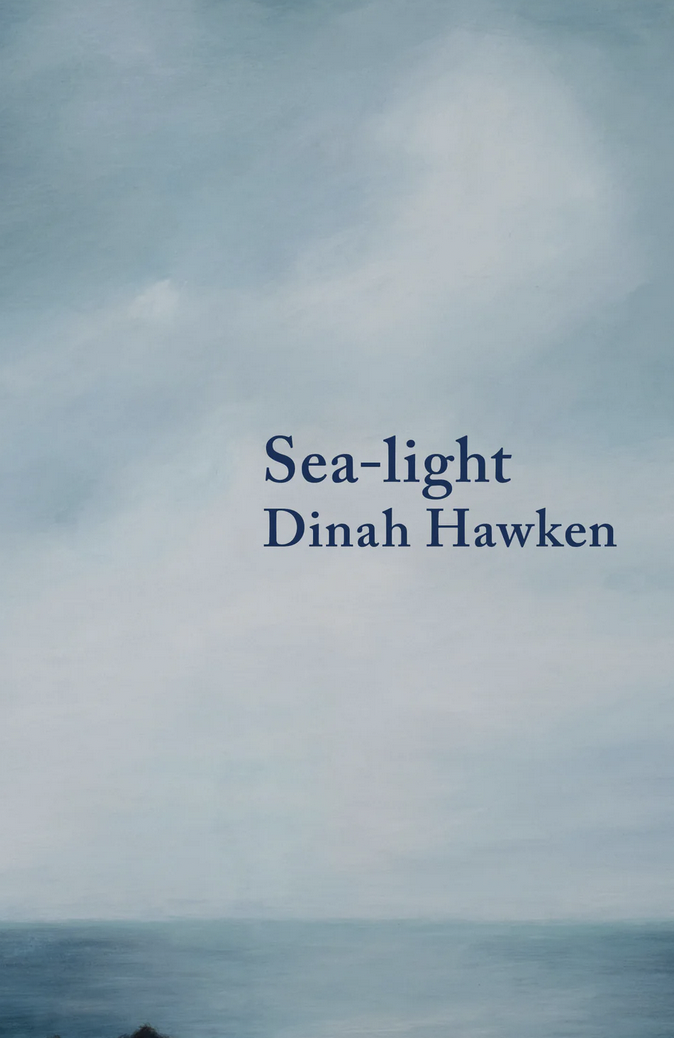
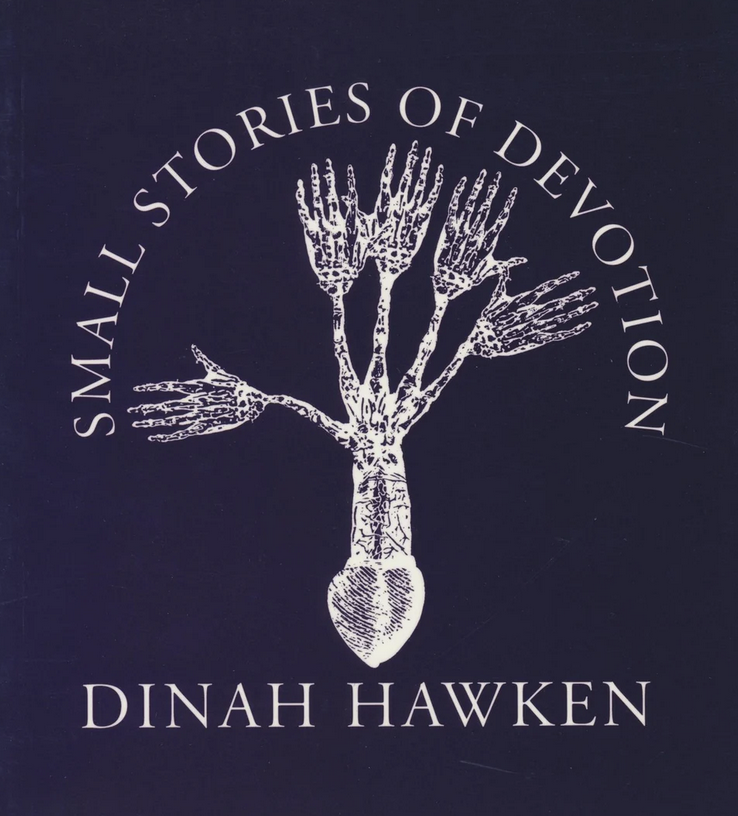
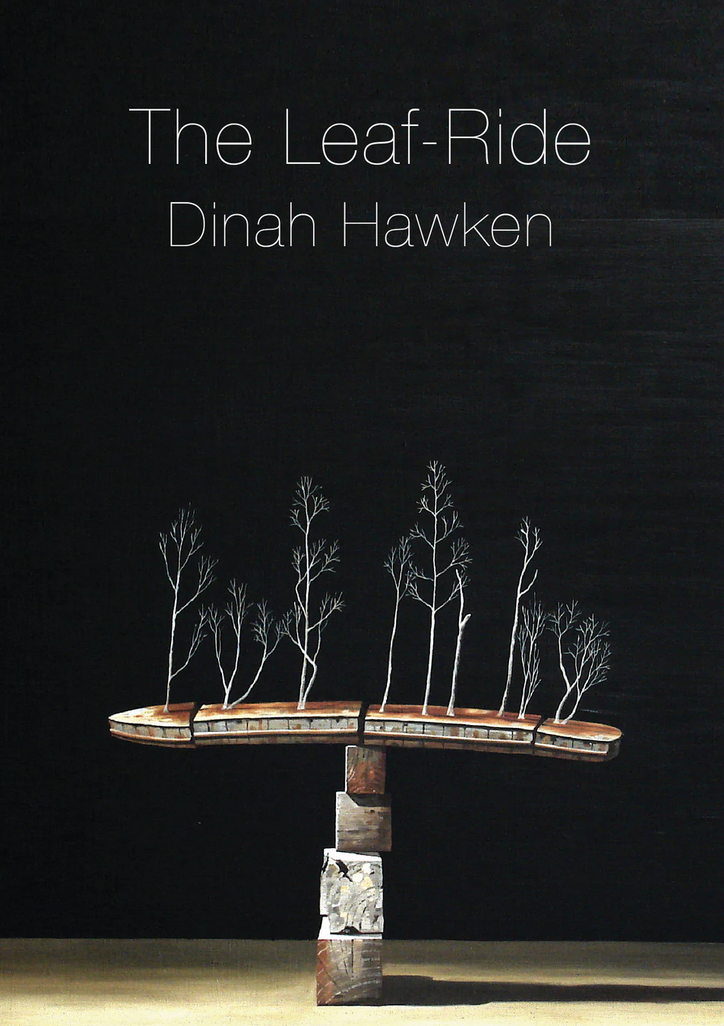
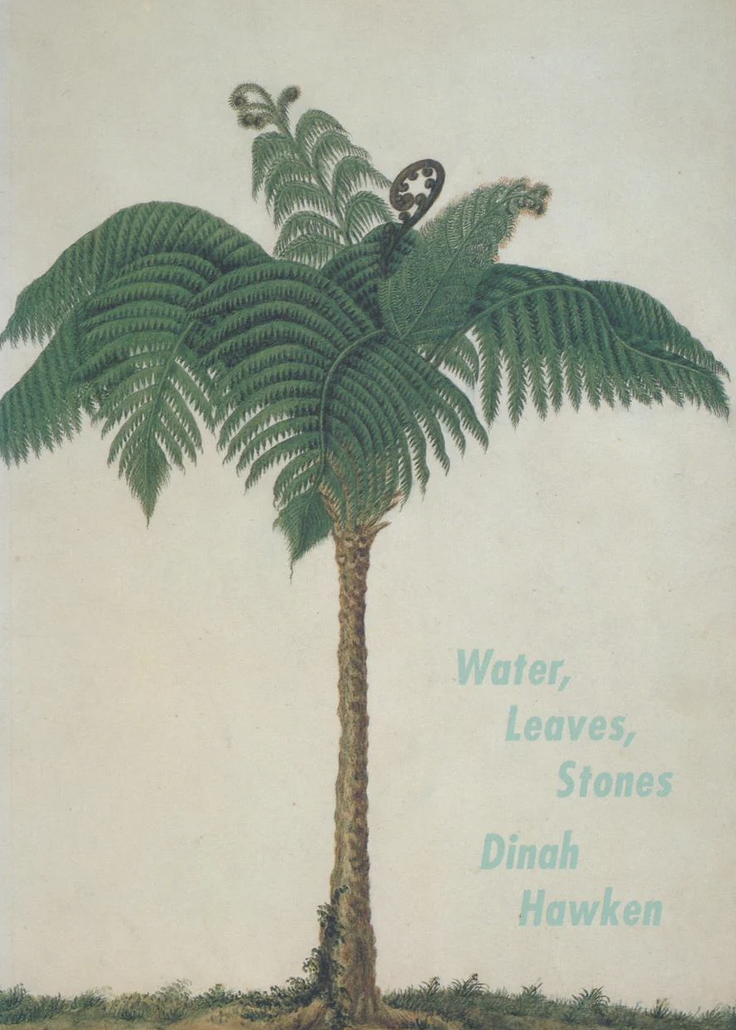
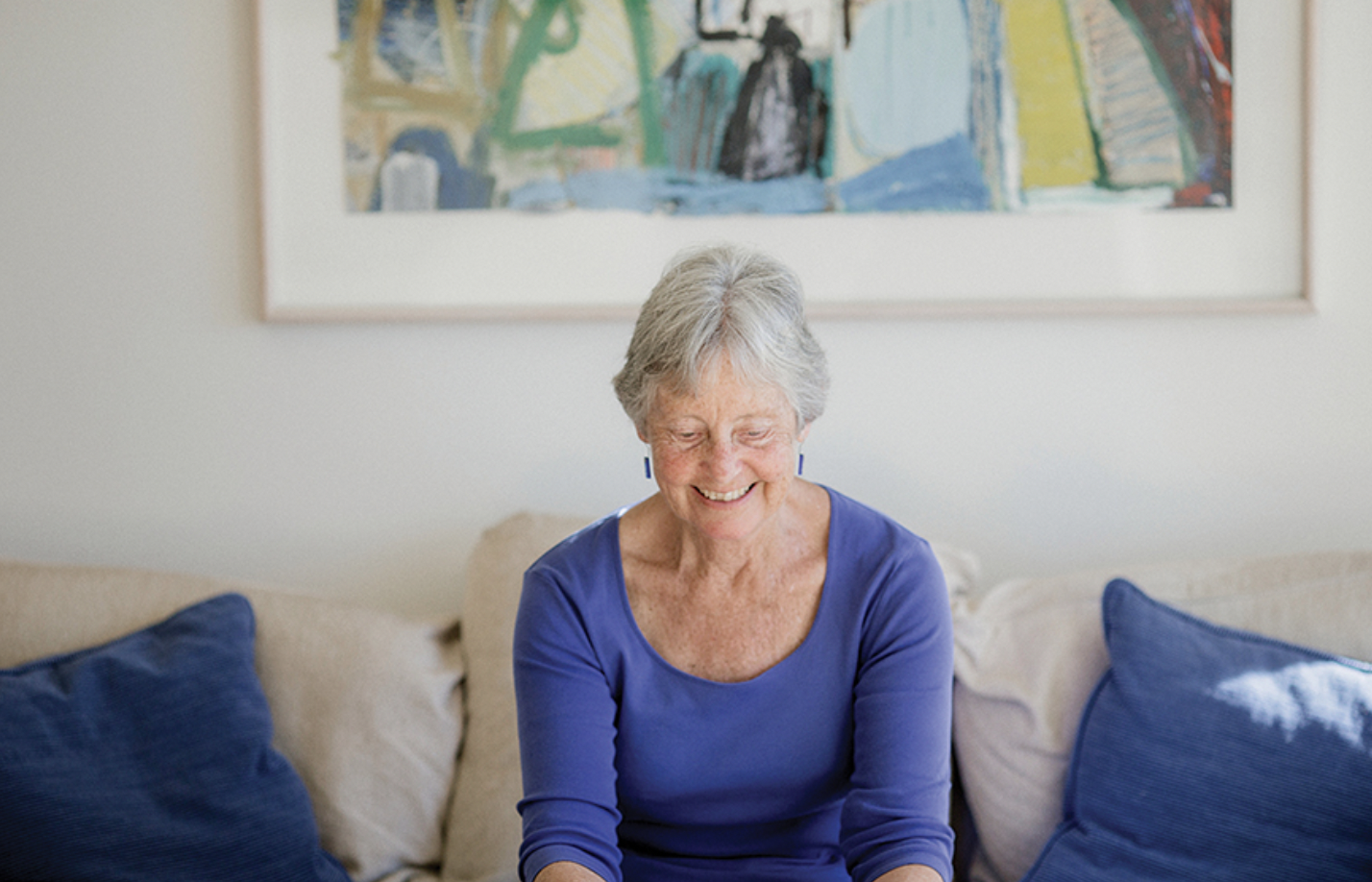
To celebrate Dinah Hawken as the 2025 recipient of the Prime Minister’s Award for Poetry, I am reposting a poem she picked from Small Stories of Devotion (Victoria University Press,1991) with her comment (Playing Favourites), an audio of her reading from Sea-light (Victoria University Press, 2021), and an extract from Wild Honey: Reading NZ Women’s Poets (Massey University Press, 2019).
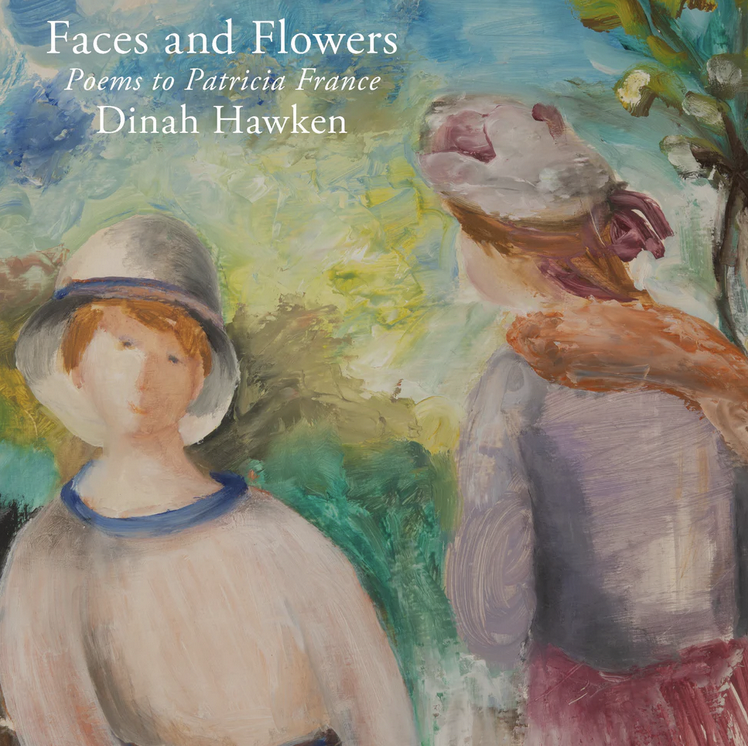
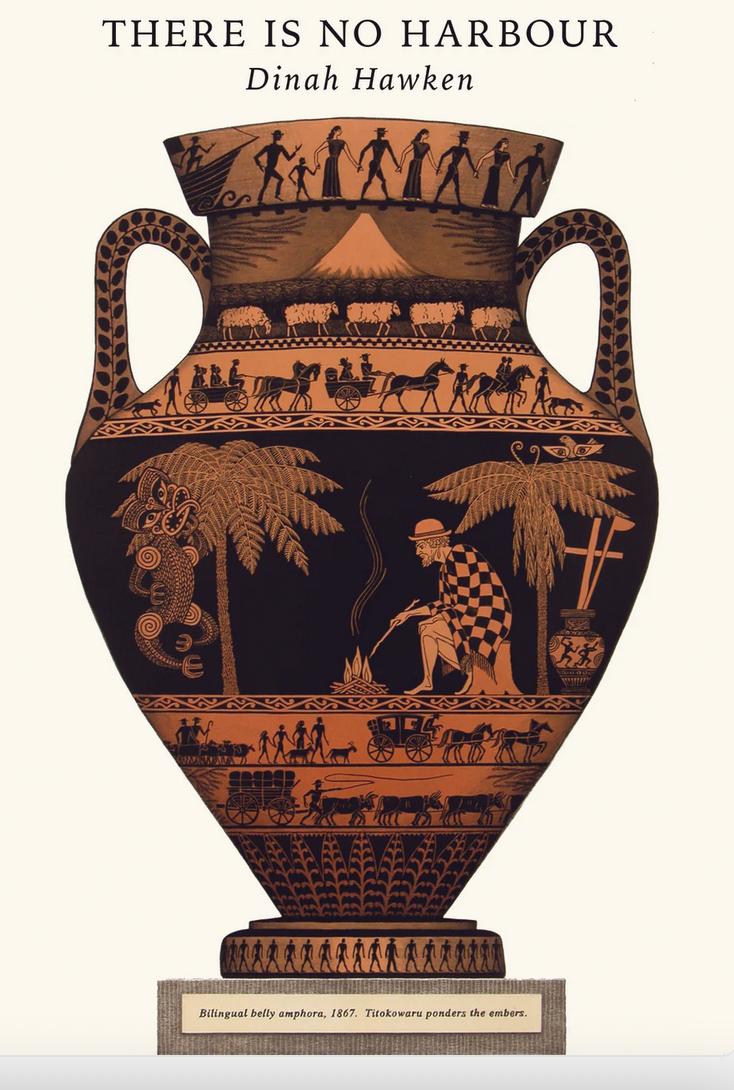
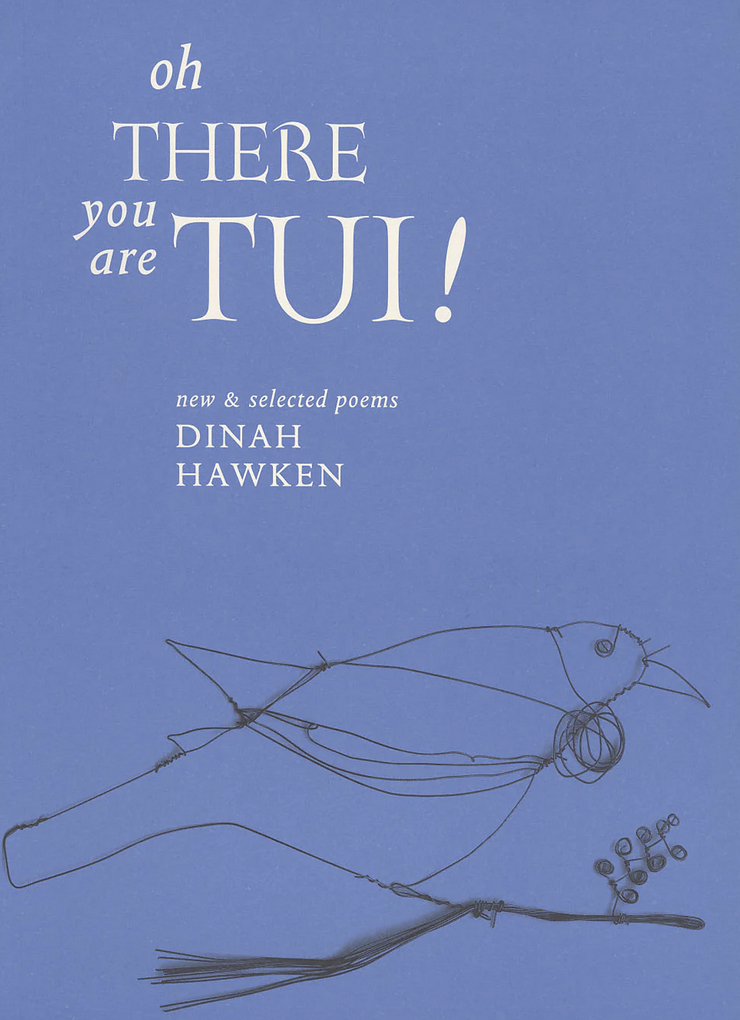
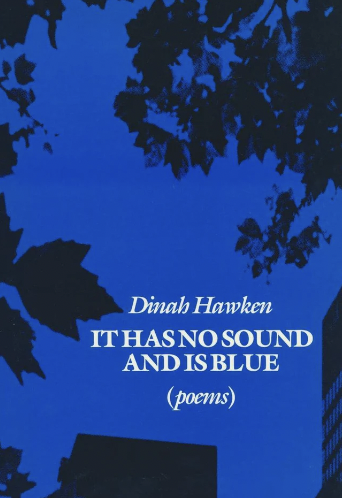
Dinah Hawken is one of New Zealand’s most celebrated poets. She was born in Hāwera in 1943 and trained as a physiotherapist, psychotherapist and social worker in New Zealand and the United States and has worked as a student counsellor and writing teacher at Te Herenga Waka—Victoria University of Wellington. Of her ten collections of poetry, four have been finalists for the New Zealand Book Awards. Her first book, It Has No Sound and Is Blue (1987), won the Commonwealth Poetry Prize for Best First Time Published Poet. Her latest poetry collection is Faces and Flowers: Poems to Patricia France (2024), and other recent collections are Sea-light (2021), longlisted for the Ockham New Zealand Book Awards, There Is No Harbour (2019), and Ocean and Stone (2015). In 2007, Hawken received the Lauris Edmond Award for Distinguished Contribution to Poetry; and her new book of poems, Peace and Quiet, is to be published in 2026. Dinah lives in Paekākāriki.
The harbour is hallucinating. It is rising above itself, halfway up the great blue hills. Every leaf of the kohuhu is shining. Cicadas, this must be the day of all days, the one around which all the others are bound to gather.
The blue agapanthus, the yellow fennel, the white butterfly, the blue harbour, the golden grass, the white verandah post, the blue hills, the yellow leaves, the white clouds, the blue book, the yellow envelope, the white paper. Here is the green verb, releasing everything.
Imagine behind these lines dozens and dozens of tiny seed-heads whispering. They are a field of mauve flowers. What they say is inexplicable to us because they speak another language, not this one written from left to right across them, made up of distinct and very subtle, ready-to-burgeon sounds.
Dinah Hawken from Small Stories of Devotion (Victoria University Press,1991)
Note on Poem
‘The harbour poems’ come from my second book of poetry, Small Stories of Devotion. It’s a book I’m very fond of, not least because the book itself is a beautiful shape, on beautiful paper and with unique images by the New Zealand artist Julia Morison. It is also a unique book in my poetry backlist since it is a narrative made up of mostly prose poems, and prose poetry in 1991 was unusual on our shelves. Looking back 30 years I see it is the book amongst my collections with the most faith in the imagery of dreams, and with my preoccupation with the Sumerian myth of Inanna, one of the earliest stories ever written. The epilogue of the book contains 36 6-line poems and it is the first three, written above Wellington harbour, I have included here.
Dinah Hawken
Dinah reads from Sea-light
Dinah Hawken reads ‘Haze’, ‘The sea’ and ‘Faith’ from Sea-light, Victoria University Press, 2021
In my review of Dinah’s collection, Sea-light I wrote: “reading her deftly crafted poems is akin to standing in an outside clearing and reconnecting with sky, earth, water, trees, birds, stones. It is personal, it can be political, and it is people rich”.
Extract from Wild Honey
I fell in love with the poetry of Dinah Hawken, particularly her collection Small Stories of Devotion, published in 1991, when I was writing my Master’s thesis on the Italian novelist Francesca Duranti and her myriad narrative movements.
As much as I was enjoying stepping into another language at that time, Hawken offered a different direction: she inspired me to write poetry. I have always thought of Hawken as a sky poet because she leads me to a state of contemplation; to see beauty, strangeness and disquiet.
Hawken’s collection It Has No Sound and Is Blue won the 1987 Commonwealth Poetry Prize for a debut book of poems.13 Mostly written in New York, the poems record Hawken’s intricate relationships with the city — the homeless, the leafless trees, the fierce cold, the lack of balance, the unwarranted deaths, the points of neglect — as well as reflections on New Zealand.
In these poems, Hawken zooms in on the way miniature details can lead to larger ideas, and the way she could find connections to stillness and quiet amid the clatter of a major city. The poems both delay and promote movement; she deliberates on things, branching out in a range of directions with physical attachments and floating ideas. In ‘Writing Home’, a long sequence of sonnets in couplets, a slow contemplation of the city is important to Hawken:
Since you left the trees have been standing against the snow making those small inexplicable gestures
children make in their sleep. Today they were strictly still. They gave nothing away, as if
they themselves were the dead of winter.
from ‘Writing Home’ (It Has No Sound and Is Blue, VUP, 1987)
Hawken is ‘acutely aware of [her] human breathing’ as she stands next to trees that are barely alive. This description of such a sensation is a hallmark of her poetry: keen to absorb intricate patterns, especially from nature, she produces poetry that abounds with life.
Hawken’s poetry favours space as though she wants room for her poems to breathe: on the white page, in the pause at the end of the line, and in the way both poet and reader have room to move in the poem. But the physical world is equally important. She is fascinated by surfaces and depths, and the way the physical world ignites all senses: ‘Stay in the physical world you say. / Take your boots and socks off.’15 The poem ‘Stone’, for example, delights in a stone’s physicality as well as in attributes that are much harder to discern:
Plain the call of a noun
of balance and beauty.
Stone.
from ‘Stone’ (Ocean and Stone, VUP, 2015)
Hawken conveys the plainness of objects with a plainness of words, and she often returns to the same object to uncover new revelations. If you hold a stone in your mind as a poet surprising connections rise to the surface:
Stony this, stony that. They are cold today, these stones on the desk. Stone cold. Stone blind. Stone deaf. Heart, reception, stare, silence. They remember the slingshot.
from ‘Stone’ (Ocean and Stone)
For Hawken, ‘[w]riting, at least, is going somewhere’; to write is to take risks, to ponder and to feel:
To write is to live on a balcony: the outlook is great, the air is still, roads are not yet taken.
The air is unpredictable. The elements are downright dangerous.
from ‘How far’ (The leaf-ride, VUP, 2011)
Hawken’s movement between the physical world and drifting thought might be a way of travelling through time and across the land, among people and within herself: ‘We try reading between the pages, the stars. / We’re attached to a planet of ocean and stone.’ Her poetry is people-dependent, and she is as attentive to strangers as she is to people she knows. Sometimes her pronouns are personal. In ‘Welcome’, the grandfather, for example, holds his smiling granddaughter in his arms; in ‘Sixteen months, co-creation’, ‘[s]he is the question and / the answer and the question again’. At other times, her pronouns move beyond the personal to belong to anyone. Humanity is always under scrutiny. It bothers her that we live surrounded by digital screens, for example; they limit life and induce loneliness. When she considers a tree, she confronts another concern that we must face:
[. . .] It reminded me I had a family and the company of friends. It reminded me I had a home by a heavy and beautiful sea. It told me that we live in a world of treeless, make-shift cities, cities that are flickering and maybe drowning.
from ‘A screen is a screen’ (Ocean and Stone)
If Hawken’s poetry is entrancing in its musicality, mystery, physicality and space, speaking out about the state of the world is equally significant to her:
If we live in the light or the dark too long, being human, we go blind. We are suspects, all of us, in a cruel climate. Is it ok to speak out in this world-wide room?
from ‘The question of cruelty’ (The leaf-ride)
Small Stories of Devotion features the meandering, looping threads of a woman writing, dreaming and loving. The poems keep repeating: ‘she wants me to talk simply and to reach you’. Feminine motifs flourish in a sequence that is divided into the four quarters of the moon, and feed a narrative that explores women’s friendships, rape, death, birth, cancer, Sumerian goddesses, muted woman, the outspoken woman, academic thinking, history, love, subtle politics, blatant politics, gardening, mourning, this language, another language, stones, the ocean, flowers, a hallucinating harbour, low clouds, small ponds, the struggles between men and women, hands, bodies, hearts.
After twenty-five years of reading Dinah Hawken, I am still finding fresh reading tracks in her work. Phrases that blaze in multiple directions still catch my eye:
‘Oh let’s recognise the silence so composing her’
from ‘Memory’ (Small Stories of Devotion, VUP, 1991)
Hawken’s ‘her’ might reference the silence of ‘the friend who has died’ or the recurring refrain of women who have been misheard, ignored, shut down, mistranslated, spoken over. Across a lifetime of writing Hawken has given ‘her’ a kaleidoscopic voice:
Who is she? She is trimming the smallest fingernails, she is threading honeysuckle through trellis. She is the context, the swell, the breathable air. She is singing, she is swinging the boy on the swing in the park. She is fluent and steady and unpaid.
from ‘She is Kissed Three Times’ (Small Stories of Devotion)
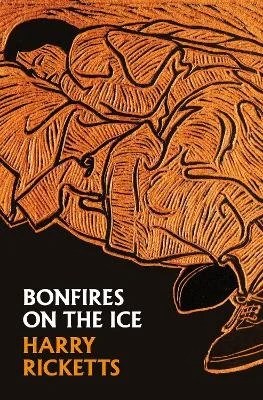
It’s getting colder as the flames rise from the bonfires, real and virtual. See how they flicker in the darkling air.
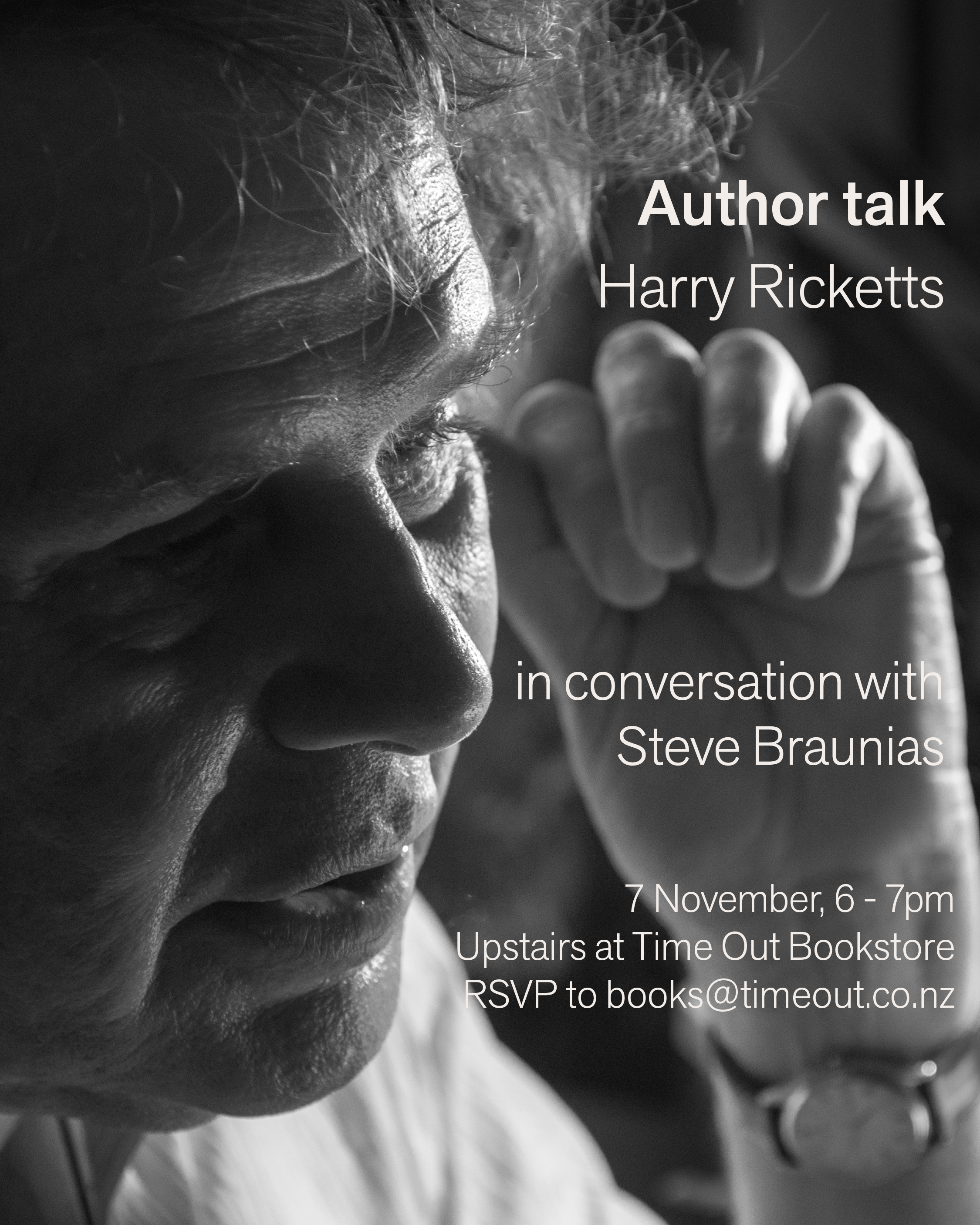
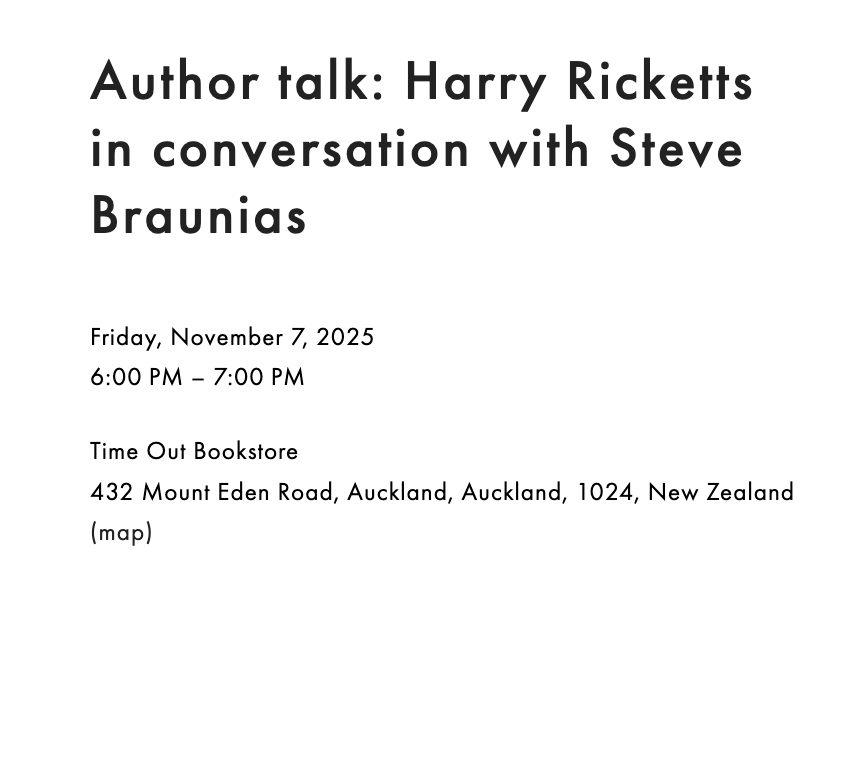
What is happiness in a suddenly unfamiliar world? What happens to us once the old connections spark and disappear? In this new poetry collection, with his characteristic humanity, intelligence and humour, Harry Ricketts writes of youth, hope, books and writers, and the friendships through which we come to know ourselves. Included in this book are poems about finding one’s way through a world altered by loss, and the magical thinking that sustains us.
Harry Ricketts is a poet and literary scholar and has published around 30 books. He has lived in Wellington, Aotearoa New Zealand, since 1981. Until his retirement in 2022, he was a professor in the English Programme at Te Herenga Waka—Victoria University of Wellington. His books include the internationally acclaimed The Unforgiving Minute: A Life of Rudyard Kipling (1999) and Strange Meetings: The Lives of the Poets of the Great War (2010). Recent poetry collections include Winter Eyes (2018) and Selected Poems (2021). With historian David Kynaston, he is the co-author of Richie Benaud’s Blue Suede Shoes: The Story of an Ashes Classic (Bloomsbury, 2024). His two most recent books with Te Herenga Waka University Press are the memoir First Things (2024) and the poetry collection Bonfires on the Ice (2025).
Steve Braunias is a multiple award-winning author, columnist, journalist and editor. He writes for the New Zealand Listener, serves as the literary editor of Newsroom, and is the author of 14 books. Steve was part of The New Zealand Herald reporting team who won Best Coverage of a Major News Event at the 2025 Voyager Media Awards for their coverage of the Polkinghorne trial.
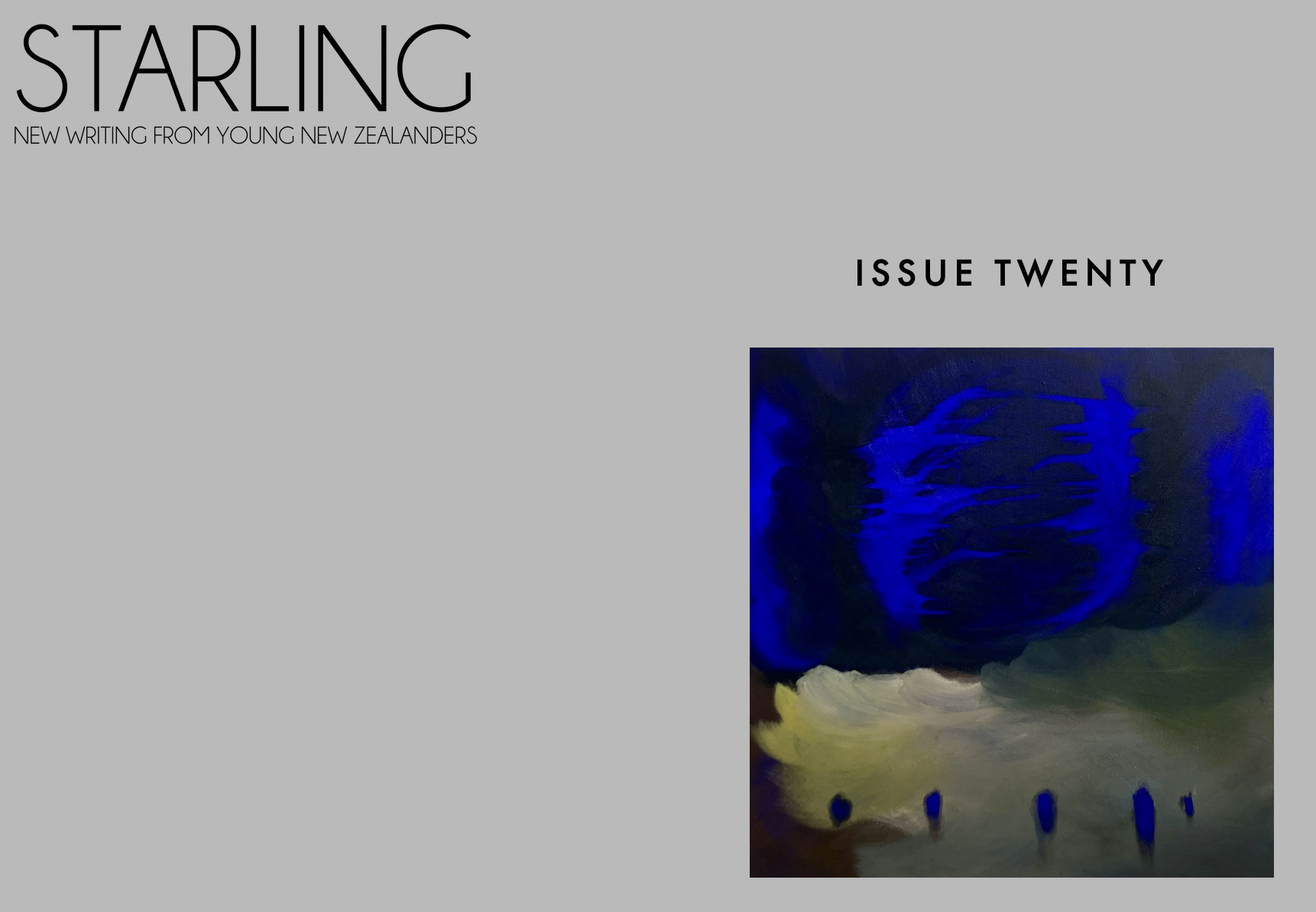
Starling is a go-to online poetry space for writers under 25: wide-ranging in form, voice, subject matter, mood. It’s vibrant, essential reading. Plus there’s the bonus of a featured writer (latest issue is Sophie van Waardenberg). To celebrate the tenth anniversary and the selection of two new editors, I invited the the co-founders, Louise Wallace and Francis Cooke, along with the two writers now at the editorial helm, Maddie Ballard and Tate Fountain, to select a poem from Starling‘s past decade and write a note to explore why the poem has stuck with them.
Poetry Shelf offers a bouquet of congratulations to the editors and participants, and looks forward to Starling‘s finger on the pulse of new writing.
Starling was established in 2015 by us (Louise Wallace and Francis Cooke) as a literary journal for authors under 25 to publish their work and read writing by their peers. At the time we hoped could give space to a community of young writers that we knew were often not given their own platform in the broader Aotearoa literary landscape. Over the decade that’s followed we’ve been very fortunate to see how much the writers of Starling have taken up the journal and made it their own – it’s been more than we’d even hoped for, and we’ve been lucky to be a part of the start of the publishing career of so many incredible authors who’ve entrusted us with their work. As we approached the ten-year mark, it seemed like the right time to hand over the reins, and so we were very happy to announce this September that Tate Fountain and Maddie Ballard would be taking over as Starling editors, ably assisted by the Starling editorial committee, currently made up of Joy Holley and Ruby Macomber. Tate, Maddie, Joy and Ruby are all past Starling writers who have now stepped into the role of shaping the journal for its next era, and we’re very excited to read the 21st issue, which they’re currently crafting, and all the issues to follow. We hope that Starling will be around for as long as young writers need it, and we can’t wait to see what’s to come.
Louise Wallace and Francis Cooke
four poems
Driving Directionless
It happens like that sometimes, stranded in the carpark in Mt Eden Village, and your car battery is dead because you couldn’t sit with the silence. The rain has been sweeping in from the horizon all day, in and out, in and out, and you’re so much younger
than you thought you were. Nothing has been constant, lately, but things must come to an end. I thought I knew that, I really thought I did. And Circus Circus is so warm. The cheesecake sweet, and we talk like we’re seventy. I went to a sushi train for lunch, plates
travelling around a circuit. The jumpsuit I bought was expensive, but money is money. It was like trying on my own skin. There, I say to my reflection, there you are. And as we approach the red light, I don’t think about placing my foot gently on the brake. I
don’t think about switching lanes, or how my hands automatically flip off the indicator after a turn. Instead, I think about tomorrow and the colour of your eyes and the rising inside me. The words stuck, gathering at the heart. How do you translate a feeling? How
do you wash yourself clean? I want to be wanted. I want to see where we are all going to land at the end of all this. In the passenger seat, you listen patiently. A reminder that you are not the enemy. I don’t know who is. The sunset is so different every day. A cloud rears up in front
of my windscreen like a tidal wave, puffy, and peach-coloured, and astounding. I want to remember, want to keep it all with me. Time is unsteady. Today, is today and you finally noticed.
Brecon Dobbie
On Brecon Dobbie’s ‘Driving Directionless’(from Issue 12)
The first time I read this poem I was overcome with envy! Partly because of its wonderful final line and partly because of how well it does sincerity, a quality I think it’s really hard to write well. I love that it’s about being a new driver in Tāmaki. I love that it mentions the cheesecake at Circus Circus. I really love that it couches its existential moments (‘How do you translate a feeling? How / / do you wash yourself clean?’; ‘you’re so much younger / / than you thought you were’) amid sushi trains and car batteries. Isn’t that exactly how life is? All the big things squeezed up against the little ones. I’ve returned to this poem several times over the years because I love the speaker’s voice so much: wise and sad and hopeful and observant of peach-coloured clouds. I hope to read lots more from Brecon in the future.
Maddie Ballard
loss
mum went to bed for months. got up only for using bathroom with red toilet seat & sitting on step outside pink back door, smoking, saying i love you without her eyes.
moving truck got stuck under opawa’s overbridge & my baby brother was born just a red mess onto a matted towel. one of those things no one talked about.
family came to visit. nana picked me up from school, aunty slept, floor of my room, & made a sticker chart so i could be Good.
in doorways i stood peering around corners to see mum’s supine form or curve of her spine as she sat outside, puffing.
her room seemed grey i wanted to say: what did i do?
but more than anything i wanted to lose my first tooth; to have a broken grin; to tongue empty space.
mum got better suddenly – woke up one day & darkness had gone away, ran out to lawn in her underpants, cheering & dancing.
i lost a tooth eventually & then, oh, so much more.
I am a huge fan of ‘quiet poems’ and Hebe Kearney is very good at them. I think they are the hardest poems to get right, and it’s also hard for them to jostle for space in a journal selection process, up against loud, funny, bold poems. But when quiet poems work, they sing – like Hebe’s piece here.
First up, if you’re looking for an example of ‘show, don’t tell’, the line “saying i love you without her eyes” hits that mark perfectly. We understand that something is off, there’s something distant about the mother – the reason she’s gone to bed “for months” – without the poet needing to spell the specifics of the situation out. I can see the “supine form or curve of her spine” as I read – Hebe offers those shapes to me.
Towards the end, things become brighter – the mother seems to miraculously recover and the speaker loses a tooth just as she had hoped – which makes the uppercut of the last two lines hit even harder. We remember the title, ‘Loss’, and feel that emotional impact at the end.
Louise Wallace
Any Machine Can Be a Smoke Machine If You Use It Wrong Enough
Circe likes to live comfortably. The island, the private jet – does putting everyone else between Scylla & Charybdis make this worth less? Hardly. Circe is moulding you in her fingers like soft wax – here, amorphous
child of Morpheus, are you comfortable? Circe takes her tax, she is a circular saw coaxing sap from a slack veiny tree & in her menagerie the sad lion is left to starve & chew his stately mane for comfort. She will destroy your planet to live comfortably, but oh! she is compelling –
for instance, she claims she’s only anti-vaccination insofar as she is against the continuation of the existence of this human race, the world’s worst disease, abominations bombing nations, laughing lesions of senseless flesh celebrating their own unsubtlety, the syrupy pus of which
she collects in a glass & holds to her lips. Bemused charmer of every snake, she has taken men to space and yet has not succeeded in getting them to respect it. She has fought a thousand wars for you and your right to say that war is bad, although there is a comfort in it. Knowing who your enemy is. Circe leaves a thick slick of spit
on the panther’s taut haunch, sends him off with a resounding slap and when his whispering ear is gone she advises you sincerely to cultivate your loneliness, make your silence violent, remember a woman’s first blood doesn’t come from between her legs but from biting her tongue. Circe says
to treat comfort ephemerally, like a fleecy faery-circle of ringworm on the skin of your inner thigh, a sick unscratchable itch you don’t want to show. If you admit that you need something that badly then it can be taken away from you. Circe instructs you to become blood diamond, smoky topaz, hard-edged undesiring object of destructiveness
& self-destruction internalised by all as desire, as comfort, as Circe’s white dandelion-floss cat who flows down the street on his way to eat or sleep or fornicate with the mouse he doesn’t keep at home instead silently stealing out to play with her garnet heart among the liquorice-scented ferns.
Rebecca Hawkes
On Rebecca Hawkes’ ‘Any Machine Can Be a Smoke Machine If You Use It Wrong Enough’ (from Issue 1)
Sometime in 2015, Ashleigh Young wrote on twitter (this was back when twitter was, mostly, good) ‘One of my students has written a poem called ANY MACHINE CAN BE A SMOKE MACHINE IF YOU USE IT WRONG ENOUGH. It’s great.’ I remember reading it and thinking that I’d love to read it someday. A few months later, going through the pieces we’d received for the first issue of Starling – I remember the day exactly, it was 14 November and I was reading submissions before heading out for the second ever LitCrawl – I picked up a set of poems by a writer named Rebecca Hawkes, and there it was.
One of the best parts of editing Starling are the moments where you get absolutely smacked in the face discovering brilliant writing by someone who, until that moment, you’ve never heard of, and realise ‘oh, wait, we’re going to get to publish this?’. Rebecca’s poem was one of the first of many moments like that – I remember reading ‘Any Machine….’ and being blown away by how expansive and luxurious it was in its language, heightened and apocalyptic while still undercutting itself at the right moments with a pitch-black humour (Circe stating that “she’s only anti-vaccination / insofar as she is against the continuation of the existence / of this human race” is a particular stand-out).
Rebecca’s poem has a lot of the themes that she’s fleshed out further in her writing since, as she’s become one of my favourite poets working in Aotearoa – a merging of classical themes and very distinctly New Zealand pastoral imagery, a very physical and sensuous love of the natural world while also being enmeshed in our modern, technology-driven present. She’s throwing it all into the pot here, and I’m sure if she looks back on this early piece now there are things she might want to change or edit out, but I hope she still recognises that at the heart of the poem is a true show-stopping line – “remember a woman’s first blood doesn’t come / from between her legs but from biting her tongue” – that still hits home a decade later. It’s been a privilege to get to follow Rebecca’s writing, and the work of so many other great authors who published some of their first writing with us, since I first read this poem, and it’ll always be a special one for me because of that.
Francis Cooke
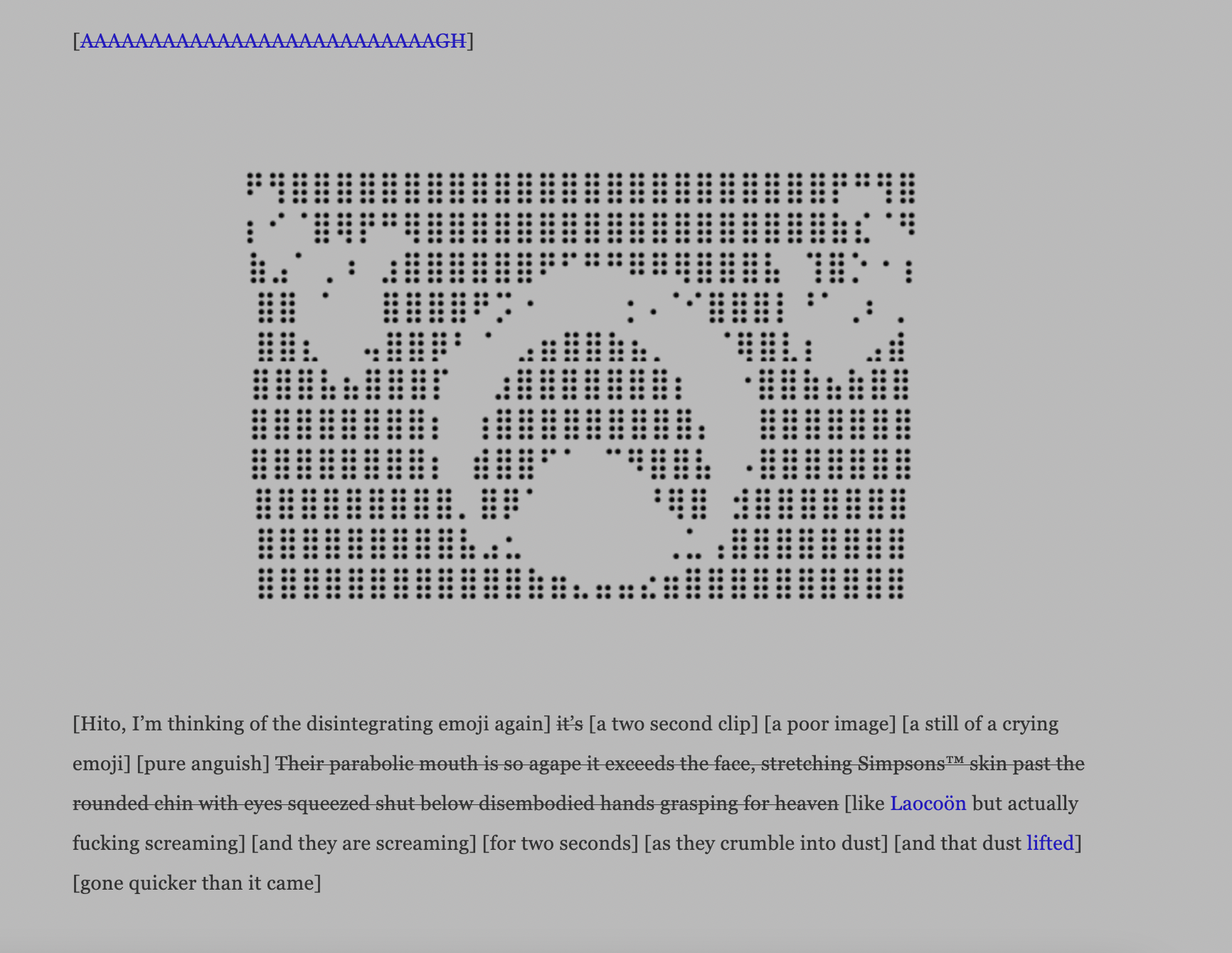
Extract from ‘UNTITLED’ by Matthew Whiteman for complete poem, visit here
On Matthew Whiteman’s ‘UNTITLED’ (Starling, Issue 17)
To highlight any single Starling poem from the past ten years is a daunting task. I vividly remember so many poems that struck and compelled me in my early days as a reader and contributor to the journal: Aimee-Jane Anderson-O’Connor’s ‘(Instructions)’ in Issue 6; jane tabu daphne’s ‘K–A–R–O’ and Van Mei’s ‘On Beauty’ in Issue 7; Sinead Overbye’s ‘The River’ in Issue 10 (to name only a few!). Likewise, I could list off countless poems that have made me put a hand to my heart, or pump my fist, or cheer while reading submissions during my time on the editorial committee. One of the great gifts of Starling is the range of work and of stylistic and poetic approaches that we get to read twice a year – no better job.
On this occasion, I’d like to spotlight Matthew Whiteman’s ‘Untitled’ from Issue 17. Dedicated to German artist, filmmaker, and writer Hito Steyerl – addressed directly to, and referencing,her throughout – this is a go-for-broke, abundant, ekphrastic, pointedly intertextual poem that grabbed me immediately on the first read. Framed within an illustrated and progressively disintegrating – well – ‘disintegrating emoji’, Whiteman contextualises this ‘two second clip’, this ‘poor image’, and its silent or elongated variations, within a larger relational and arthistorical web: Steyerl’s ‘How Not to be Seen: A Fucking Didactic Educational .MOV File’ (2013), the iconic classical statue group of Laocoön and his sons; even The Simpsons, briefly, gets a look in. We are all scaffolded by our references, clear or opaque, and what I am so drawn to about this poem is that, stacked up and arranged in this form, it really could have only come from one person.
Matthew’s ‘Untitled’ seems to bend so many poetic conventions: the fact of the title, intentionally ‘Untitled’ or else by necessity, speaks so well to the perhaps-futile search for meaning outlined in the poem itself. ‘I want to tell you what it means,’ he writes, ‘but I’m not sure I even know, Hito.’ The arrangement of the text, in square brackets and struck-through, likewise reflects this: everything is couched in erasure, something hiding even as it’s visible, or drawing from the form of emojis as textualised (as Matthew points out, ‘[‘disintegrating emoji gif’]’). The closest we get to the text outright engaging with its meaning is within the collage of this framing. It’s perhaps not an ‘easy’ read, but one that allows a few different paths for engagement, a few methods by or levels at which it might be read. (The links! The gorgeous electric blue links to give you the chance to experience the full web Matthew is pulling from!)
I can get quite defensive of visual poetry – I never want people to think the ‘conceit’ or aesthetic identity of an effective poem nullifies or overpowers its content at line level. (In the same vein, I’m not overly interested in internet poems for internet poems’ sake; there needs to be something that grounds or further substantialises the work.) Any form can be a great act of assemblage, but the writing still has to stand out. And that’s something I love so much about this poem – that even if you stripped away all the rest of the work it’s doing, there would still be descriptions like ‘a poor image’, ‘pure anguish’, a ‘parabolic mouth is so agape it exceeds the face’, ‘disembodied hands grasping for heaven’. You would still have the immediate internal assonance of ‘Simpsons™ skin’ and ‘rounded chin’, the inbuilt, square-bracketed/struck-through pace shift of ‘[it bothers me] that lost scream [because that felt real] [wasn’t it] [someone’s scream] that then [became image] then [language]’. You would still have the closing lines to settle any of the destabilisation of what’s come before; the calm (characteristically struck-through, occasionally bracketed and linked) sentence function: ‘On Twitter [X] people just signal it like that. I want to tell you what it means but I’m not sure I even know, Hito. I think it may be a kind of speechlessness, the kind that calls you offscreen. I think you follow the scream elsewhere.’
I just love this poem. I’m drawn to its singularity, its stretching of form, its tone and the inherent line-toe of sincerity in a broadly comedic set-up; I’m compelled by its finding of art everywhere, its determination of meaning and its existential search, its deep thought. I feel really honoured, too, that it found its way to Starling and that we had the chance to publish it, especially as part of a longer intertextual poetic/artistic sequence within Issue 17.
He is a man carved from witness wood and tonight they will cut him open.
Whispers ate his tongue and people failed to ask after him.
As they tear at his flesh to let in borrowed light his body splinters and edges its way under their nails.
No men with warmth in their fingers or an inkling of privacy, no women with a shred of public sympathy.
They fling his body open. They dismantle him with effortless crime.
Behold the human mess inside cue a surgeon’s wail. Blood-and-bone strokes warped beyond recognition.
What ages he has lived through what ruinous tides have claimed him not unlike the waters that claimed the SS Ventnor.
And having cast off the grain of his years into hallowed seas he traded fear for a nightmare of snakes.
Inside he could be dancing his feet as light as music. Inside he could be snow.
Extraction after extraction there is no consensus on who will keep his soul, who will keep his bones.
When their cruel exercise is over when they have retrieved what they never needed
what remains is a man of a thousand regrets. The insects bury themselves in his swollen dark.
Chris Tse Published in How to be Dead in a Year of Snakes (AUP, 2014).
It’s around this time 20 years ago that I was putting the final touches on my thesis for the MA in Creative Writing at the International Institute of Modern Letters. My thesis was split into three sections, one of which contained the earliest versions of poems that would eventually become my first book, How to be Dead in a Year of Snakes. Some of these poems made it into the final version of the collection untouched, but that first go at telling the story of Joe Kum Yung only scratched the surface of the themes I’d ultimately explore.
‘(Biopsy)’ wasn’t written during that period – it came along much later and was prompted by an unlikely source: the television series Desperate Housewives. In episode two of season seven, Bree Van de Kamp’s contractor and love interest Keith Watson shows her some timber that he wants to use as panelling for her study. “Feel it,” he instructs her. “You know what they call this? Witness wood, ’cause it’s seen so much history.” I’d never heard the term ‘witness wood’ before; later I learned that it specifically refers to salvaged and repurposed wood from structures that were present during significant events. You never know when you’ll see or hear something that’ll give you the start of a new poem. I certainly didn’t expect that watching the melodrama and sexual tension unfold on Wisteria Lane would also give me the start of one of Snakes’ key poems.
Having spent some time revisiting my first book over the past couple of years, to mark its 10th anniversary and to prepare for the audiobook recording, I see the beginnings of themes and concerns that continue to pop up in my later work. ‘(Biopsy)’ is one of my first attempts at untangling the complications of writing about history and the power imbalance that goes with it. In some ways ‘(Biopsy)’ is a small meta moment in the collection that comments on the writing of the book itself and the use of Joe Kum Yung as a source of trauma to drive the narrative forward. Lionel Terry used Joe Kum Yung to make a point about ‘the Yellow Peril’ – as writers, how do we navigate our own biases and motivations when it comes to writing about other people and historical events, even if we’re doing so with the best intentions?
Chris Tse
Chris Tse is a poet and editor based in Te Whanganui-a-Tara | Wellington. He is the author of three poetry collections published by Auckland University Press: How to be Dead in a Year of Snakes, HE’S SO MASC, and Super Model Minority. He and Emma Barnes edited Out Here: An Anthology of Takatāpui and LGBTQIA+ Writers from Aotearoa. In 2022, Chris was named New Zealand’s 13th Poet Laureate and completed his term in August 2025. He was a 2024 fellow of the University of Iowa’s International Writing Program Fall Residency and a 2025 Nederlands Letterenfonds writer in residence.
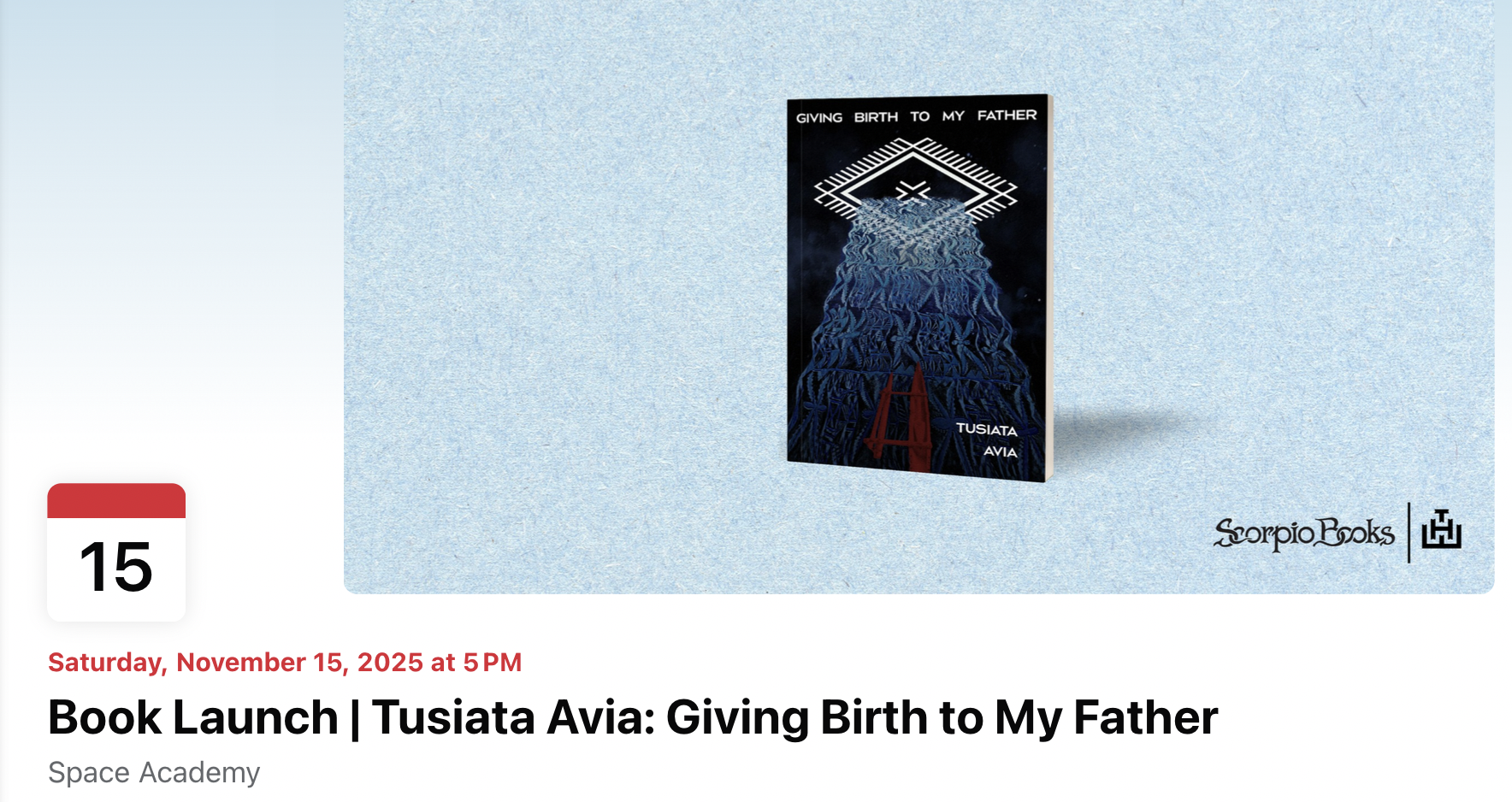
Join us to launch a new book of poetry by the incredible Tusiata Avia.
Saturday 15 November, 5pm Space Academy: 371 St Asaph Street, Christchurch Books will be for sale with thanks to Scorpio Books Kai and refreshments provided
Giving Birth to My Father is about learning to live with a loss that seems simply too heavy to bear.
First, Tusiata Avia tells the imagined story – the one of how things should go – followed by the story of what really happens. As her father travels through his last days and into the arms of his tupu’aga, transformed, the family gathers around him with their love and raw need, and their suffering turns to storm clouds.
For Avia, his death is a beginning. Parent and child have switched places as the river carries them downstream, and she sees her father with new eyes. But this is also a time of not knowing to whom she belongs and where she will be welcome now.
This is an extraordinarily rich poetic work about grief and renewal that will rearrange its readers. Giving Birth to My Father takes in a world of family and memory, including a sequence of poems about a much-loved brother as he faces a life-threatening injury. It is a book about ways of holding one another even after we are gone.
Tusiata Avia is the award-winning author of Wild Dogs Under My Skirt (2004; also staged internationally), Bloodclot (2009), Fale Aitu | Spirit House (2016), The Savage Coloniser Book (2020; winner of the Mary and Peter Biggs Award for Poetry and also staged nationally) and Big Fat Brown Bitch (2023). Tusiata has held the Fulbright Pacific Writers Fellowship at the University of Hawai‘i in 2005 and the Ursula Bethell Writer in Residence at University of Canterbury in 2010. She was the 2013 recipient of the Janet Frame Literary Trust Award, and in 2020 was appointed a Member of the New Zealand Order of Merit for services to poetry and the arts. In 2023 she was given a Distinguished Alumni Award at Te Herenga Waka—Victoria University of Wellington and a Prime Minister’s Award for Literary Achievement.


 Saturday 15 November, 5pm
 NZ Poetry Shelf