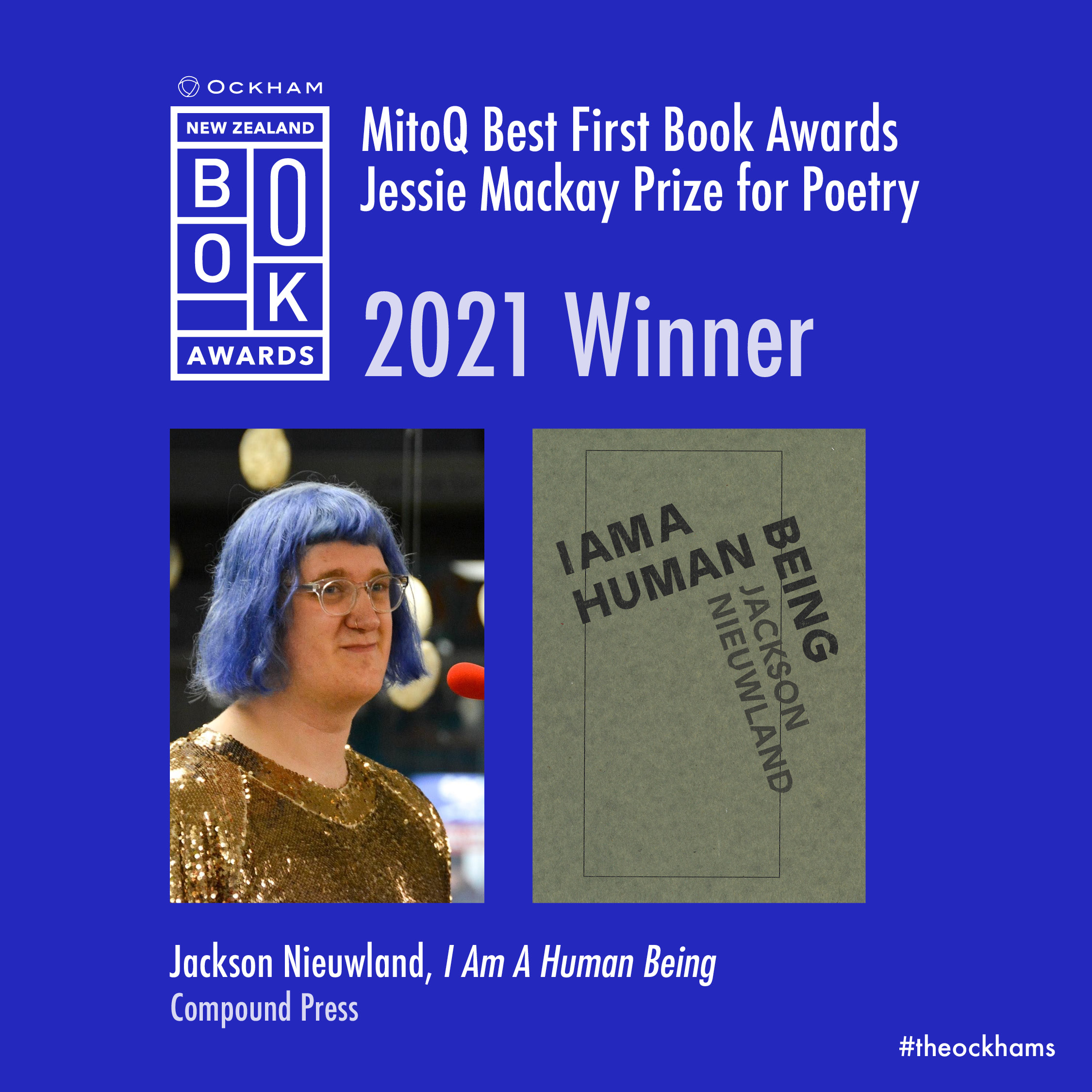
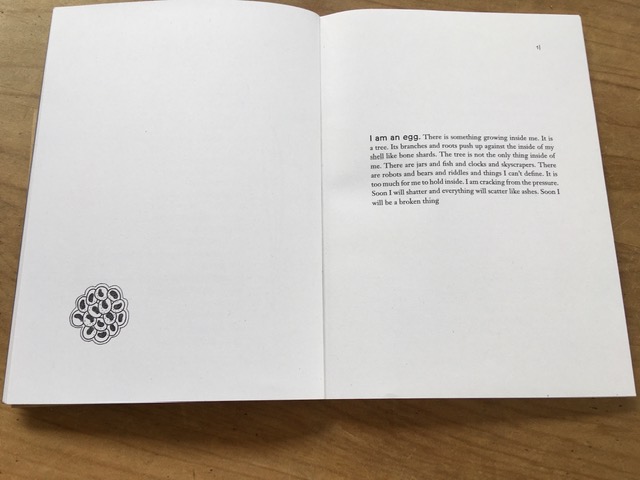
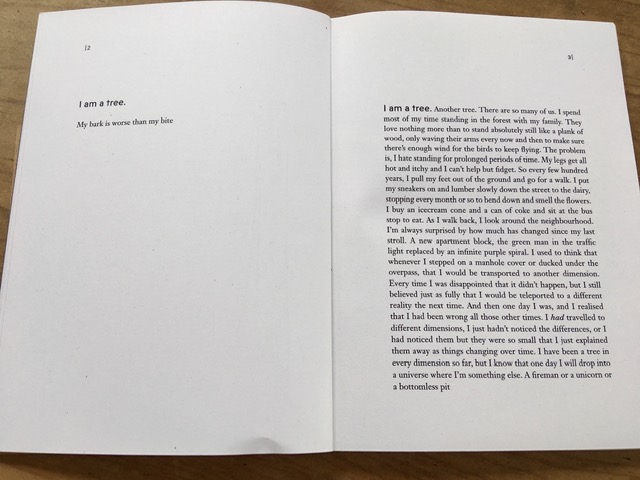
Sometimes you pick up a poetry book and you know within a page or two, it is a perfect fit, a slow-speed read to savour with joy. That’s how I felt when I started reading Jackson Nieuwland’s I am a human being. I love the premise embedded in the title, that in turn generates a sequence of poems that form a secret title list poem (I am an egg, I am a tree, I am tree, I am a beaver, I am a bear, I am a dog, I am a bottomless pit, and so on).
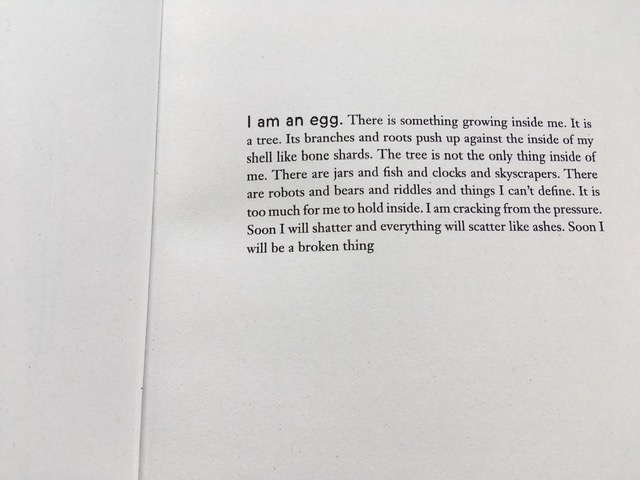
The opening poem offers an image that, in its exquisite and heart-moving detail, underlines the range of the book: physical, metaphorical, fable-like, metaphysical, autobiographical. In one poem the speaker suggests they are not quite sure who they are yet, that there is no single word that adequately defines them (‘agender, genderfluid, trans …’). This book, so long in the making, lovingly crafted with the loving support of friends, with both doubt and with grace (think poise, fluency, adroitness), this book, in its lists and its expansions, moves beyond the need for a single self-defining word.
Instead we are offered the image of the egg – and the way we hold a universe of things inside us, and that sometimes we might break.
This is intimate poetry. This is slowing down to observe the quotidian, the daily comings and goings, the things you see and feel when you stop and reflect and imagine, that then tilts to surprise. There is uplift and there is slipstream.
This is contoured poetry because it ignites so many parts of you as you read. You will laugh out loud as you read. You will feel the poignant witty wise delightful magical joy. The shifting melodies. There are keyholes to light and keyholes to dark. The speaker speaks of outsiderness, of what it is to fit, and what it is to not fit.
Sometime you will turn the page to a glorious pun.
Sometimes the vulnerability is a sharp ache above the surface of the line. This from ‘I am version of you from the future’:
Your past self looks at you with sympathy.
They pull you into a tight hug.
You begin to sob
releasing years of tears
that had been held inside
due to the conditioning you received
from a patriarchal society
and the overload of testosterone
pumping through you body.
As you sink into your own embrace,
the two versions of you merge into one,
and you begin again
given a chance to do it all over
but differently this time,
with an open heart
like quadruple bypass surgery.
The risk of death is high
but what other choice do you have?
I am a version of you from the future.
This is just the beginning—
I am a human being was one of my favourite poetry book of 2020. I like the addition of Steph Maree’s line drawings. I like the way the poetry stretches in its imaginings to draw closer to an interior real that is never fixed. I like the way the poetry is both anchor and liberating kite. I like the acknowledgement that, in order to know who you are, you need to embrace many things. I love this book so very much from first page to last. In the endnotes, the page where the poet gives thanks, I read the best acknowledgement ever:
And thank you for reading
this book. I’ve gone back and
forth with myself for years
about whether these words are
worth anyone’s time. It means
the universe to me that you’ve
read all the way to the end. I
hope you found something that
meant something to you.
Jackson Nieuwland is a human being, duh. They are a genderqueer writer, editor, librarian, and woo-girl, born and based in Te Whanganui-a-Tara. They co-founded the reading/zine series Food Court. This isn’t even their final form.
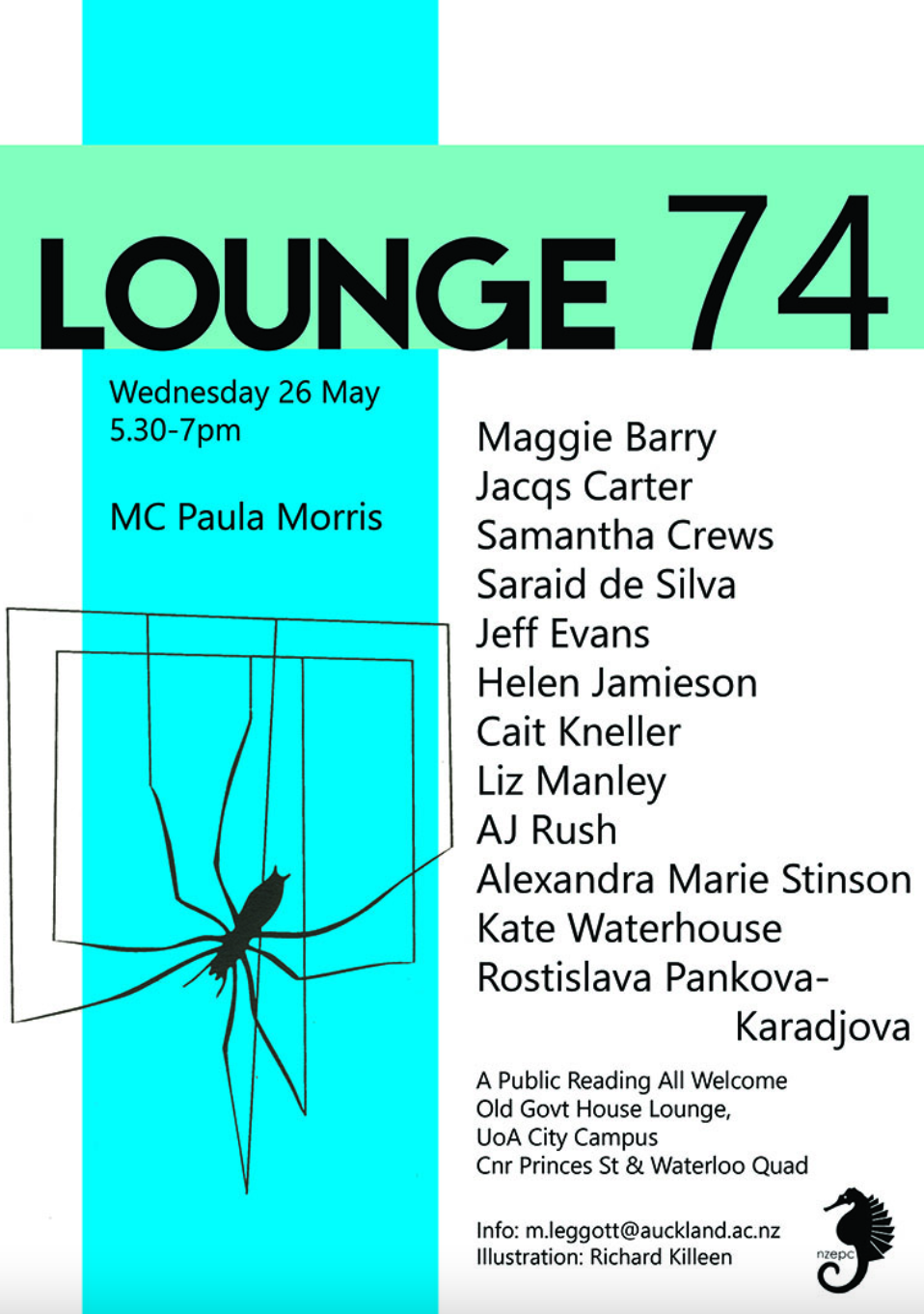
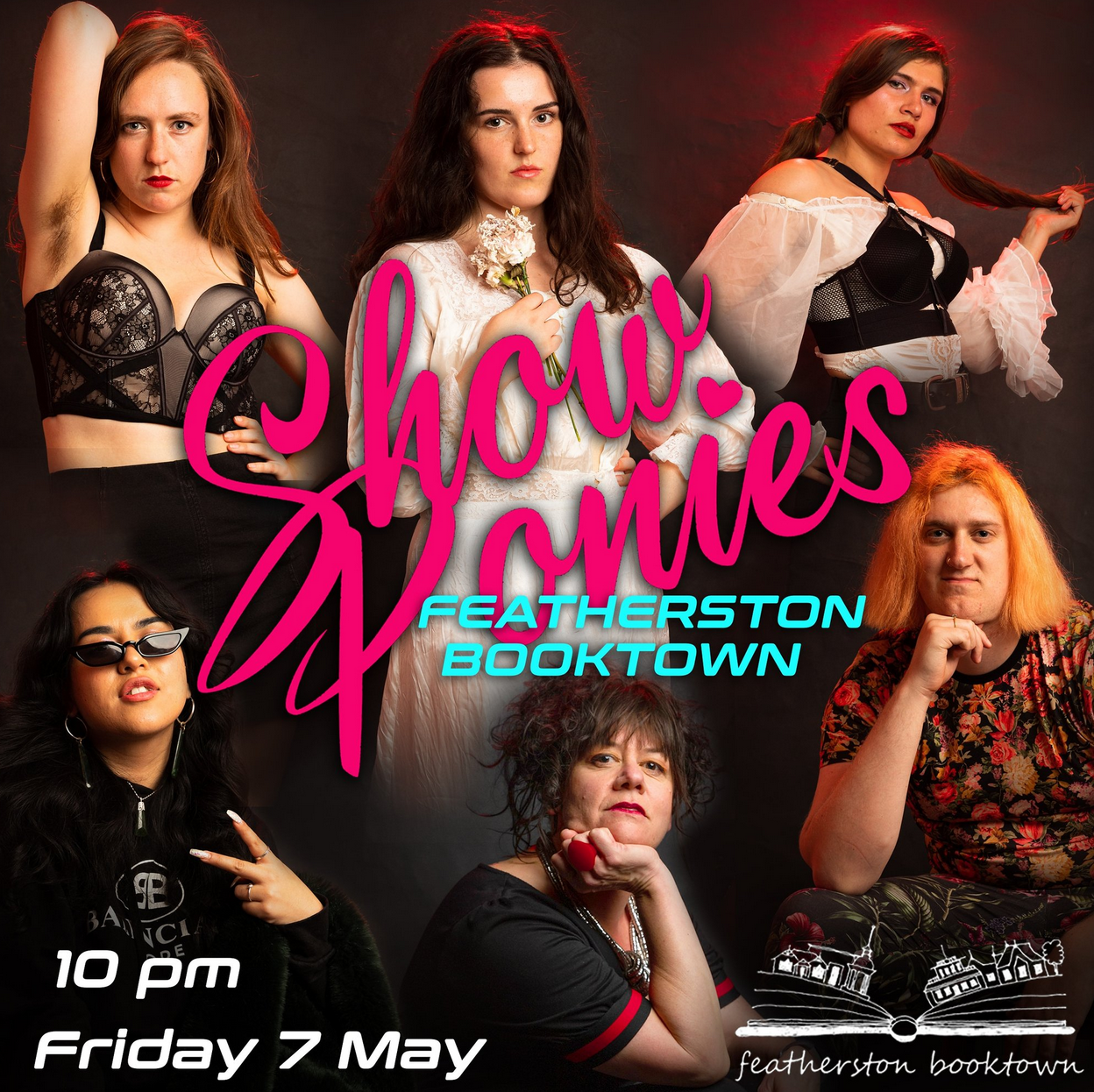
Welcome back to the Pegasus Books poetry reading series, warming your autumn evenings with Te Whanganui-a-Tara’s finest wordsmiths. Come along and soak in some literary lushness this Friday, 14th May, at 6.30pm.
Our first session for the year will feature the ethereal Nikki-Lee Birdsey, Ellen Morgan Butler, Chris Tse, and Sam-Duckor Jones (reading a sneak peek from his new collection Party Legend which will launch from VUP in June!).
New Zealand poet Sophia Wilson has been shortlisted in one of the categories of the FPM-Hippocrates Poetry Prizes (The Health Professional Prize).
Poets from 37 countries have entered for the 2021 Hippocrates Prize for Poetry and Medicine. With an awards fund of £5500, this is one of the highest value poetry awards in the world for a single unpublished poem.
The judges – from New York, London and Delhi – have agreed a shortlist of 4 poets for the top places in the 2021 FPM-Hippocrates international Open Awards and a shortlist of 6 poets for the top places in the 2020 FPM-Hippocrates Health Professional Awards.
The International Hippocrates Prize is awarded in three categories:
– a £1000 first prize, £500 second prize and £250 third prize in the FPM-Hippocrates Open category, which anyone in the world may enter. There are a further ~20 commendations in the Open category
– a £1000 first prize, £500 second prize and £250 third prize in the FPM-Hippocrates Health Professional category, which is open to Health Service employees, health students and those working in professional organisations anywhere in the world involved in education and training of health professional students and staff. There are a further ~20 commendations in the Health Professional category
– a £500 award for the Hippocrates Young Poets Prize for an unpublished poem in English on a medical theme. Entries are open to young poets from anywhere in the world aged 14 to 18 years. There are further commendations in the Young Poets category. There is no entry fee for the Young Poets prize.
Gaps in the Light uses form in innovative ways to express deeply the experience of loss and joy in ways I can’t remember reading anywhere else. Nothing is binary here – everything feels multidimensional, so perfectly complicated, like echoes off multiple surfaces. It’s simply astounding! ~ Pip Adam, author of Nothing to See, The New Animals, I’m Working on a Building, and Everything We Hoped For
To read this work is to enter the forest as an elemental being, and then feel the loss of that forest. The lover, the bereft and the broken are here. It’s a journey of close attention, pain, rage and truth revealed as the path is taken. Gaps in the Light is compassionate, deeply chanted music. ~ Kirstie McKinnon, author of Songs from the Water
Gaps in the Light burns with fierce emotion; multiple voices float in and out until the whole text becomes hypnotic and taut … revealing the depths, nuances and complexities of love in all its forms with an utterly-earned intensity. Iona Winter asks you to stare directly into her eyes … be warned, she won’t blink first. ~ Helen Lehndorf, author of The Comforter and Write to the Centre



 RSL Ondaatje Prize Shortlist
 NZ Poetry Shelf