Category Archives: Uncategorized

Poetry Shelf Occasional Poems: Gail Ingram’s ‘Give women the vote: Flowers for women’s suffrage’

Give women the vote: Flowers for women’s suffrage

Green Jewel (Griselinia littoralis) –   
       here is a leaflet
       for you and you
       and you

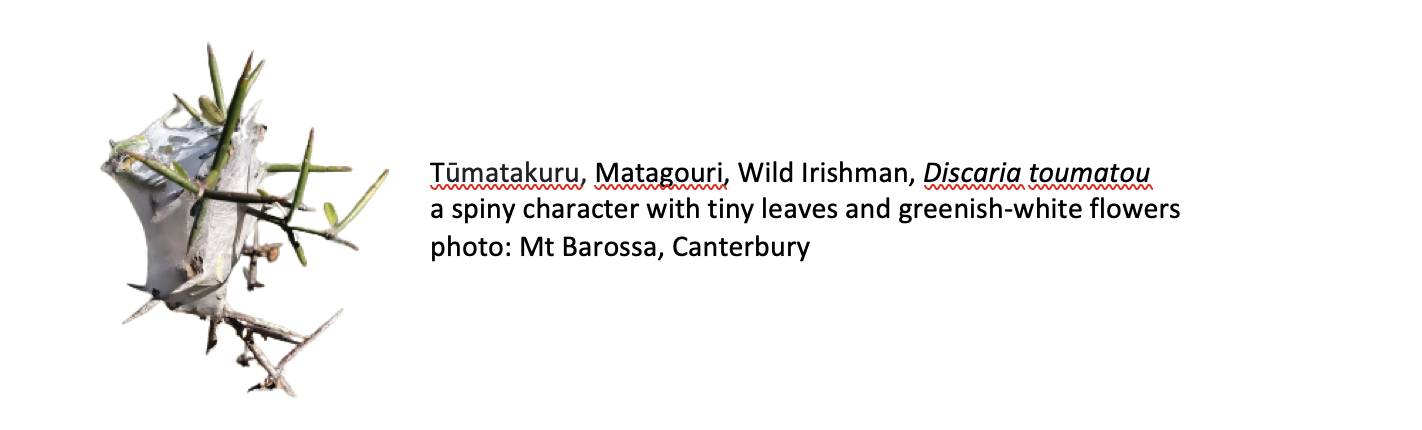
Wild Irish(wo)man –   
       forget the white flowers
       stay prickly, take
       no prisoners

Viola (mountain) – 
       conditions are rugged
       you will not be thanked
       by those drunken men
       falling in the River Avon
       but you are on the money

Gail Ingram

Gail Ingram writes from the Port Hills of Ōtautahi and is author of Contents Under Pressure (Pūkeko Publications 2019). She won the Caselberg International Poetry Award 2019 and the NZPS International Poetry Competition in 2016. Her work has appeared widely across Aotearoa, and in Australia, UK, Africa and USA. She is editor for a fine line and Flash Frontier: An Adventure in Short Fiction. Website 

Poetry Shelf Occasional Reviews: Roger Hickin and Peter Olds – A Town Trod by Poets

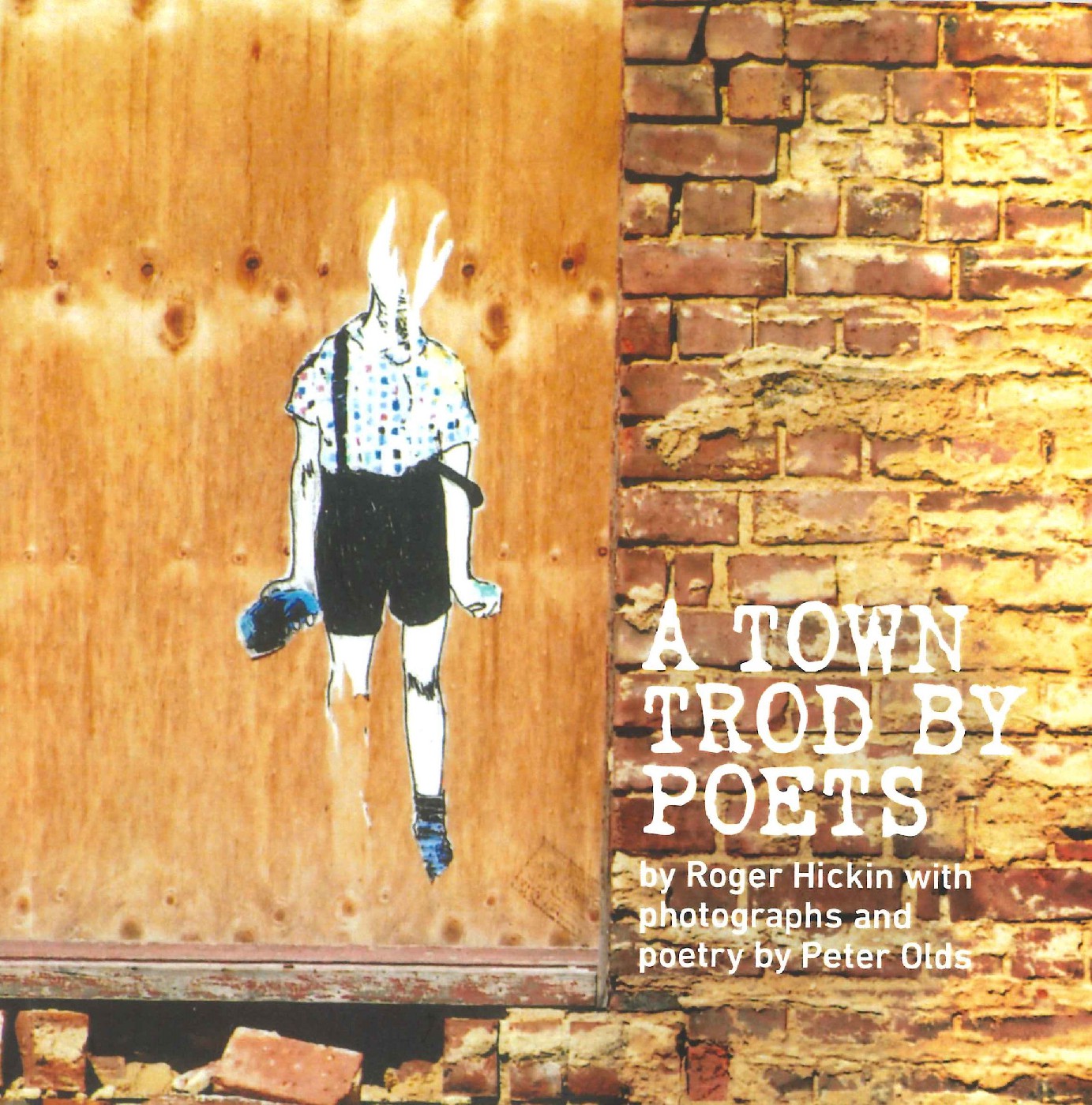
A Town Trod by Poets, by Roger Hickin, photographs and poetry by Peter Olds

On writing

That great ‘W’ of sparkling gulls
adrift in the blue heaven;
I wonder if they see me
down here in the dark yard
hanging out my washing,

and do they struggle too
for a descriptive line?

Peter Olds, from You fit the description, Cold Hub Press, 2014

This gorgeous wee book fits in the palm of your hand which is perfect because you could think of it as a miniature travel guide. A Town Trod by Poets is a map of Ōtepoti Dunedin in words and images. It is published by Ō He Puna Auaha Dunedin UNESCO City of Literature. Poet and publisher, Roger Hickin, gathers and comments upon poems with links to the city, while Peter Olds has supplied poems along with photographs of city graffiti he spotted in 1990s Ōtepoti. There is also a Rogelio Guedea poem, ‘Conversación con Peter Olds’, translated by Roger.

I love the chapbook’s title and I love the idea of different ways of mapping a city. I am keen to see other cities producing city palm guides with images and poems. I started jotting down names for Tāmaki Makaurau: CK Stead, Karlo Mila, Robert Sullivan, Michele Leggott, Serie Barford, Ian Wedde, Courtney Sina Meredith, Kiri Piahana Wong, Selina Tusitala Marsh, Allen Curnow. Walking and poetry is such a lure. Grounding poetry in place is such an anchor. The geography of place can be mapped in so many different and distinctive ways, so many town layers or hints within the lines of a poem.

Poetry forms the tread. The poem is walked into being.
The town forms the tread. The town is poemed into being.

Years ago I got to curate Poetry on the Pavement for Tamaki Mākaurau – poems painted on the footpath in the central city created a fascinating inner city walk. I once saw a couple of Irish tourists reading the poem I had picked for Kitchener Street (was one of mine), and when I told them I had written the poem, they slapped their knees, shrieked with glee, and said ‘What a city of culture!’

Poetry frees the personal stories!

Roger Hickin has assembled a stellar Ōtepoti-gathering of poets: Janet Frame, Ruth Dallas, David Howard, James K Baxter, Iain Lonie, Bill Sewell, Ian Wedde, Charles Brasch, Brian Turner, Hone Tuwhare. Some locals, some visiting guests. The town poems speak of weather, people, other writers, smashing seas, buildings – think houses, galleries, bookshops – land and sky, panoramic and microscopic views. It is documentary, it is description, it is confession. It is gap, it is presence.

Peter Olds captivates with poems that are as much about being as they lay down the co-ordinates of place. There is a vital present tense: I am exquisitely in the moment as reader, in the scene and the anecdote.

I am so inspired by this gift of a book, I want to get on down to Ōtepoti and walk the city, palm book in hand. Stand at the top of the steepest street, stand by the art gallery in the Octagon. But I am also tempted to host some city gatherings on the blog so watch this space. I can’t do physical travels yet, but I can definitely travel in the imagination and virtual zones. Gathering the way younger generation poets are treading the towns and cities is a drawcard. How we poem tread our towns will keep me musing all day. Glorious.

I am writing this from
the top of the world’s
steepest street:
Baldwin.

There’s a cold wind
blowing, and all I can
see in the dark (apart
from this page) are

the receding tailights
of cautious cars

from ‘Nostalgic’ in Graffiti, Earl of Seacliffe Workshop, 2008

Dunedin City Library page and Ō He Puna Auaha UNESCO City of Literature book offer

Poetry Shelf Occasional Poems: Louise Wallace’s ‘delaying tactics’

delaying tactics

in one sentence
how do you get a book deal?

if you removed as many responsibilities as possible
what kind of things would you write?

when people ask what’s your favourite movie
what criteria do you use to narrow it down to just one?

on a scale of one to ten
how productive are you during episodes of insomnia?

how many times would you say
you need to test pool water?

how far into summer is too late
to start reading your holiday novel?

would you rather only be able to invite strangers
to dinner parties for the rest of your life

or have to listen to radio segments about protein
for an hour every day?

how can you get a very expensive ring back from a sibling
when you gave it to them as a gift?

after a chain of terrible dates
what happens to your breathing?

let’s say you’re curious
what’s the ideal age to try stripping?

what options are there
for an elaborate wax job?

Louise Wallace

Louise Wallace is the author of three collections of poetry published by Te Herenga Waka University Press, with her next book forthcoming in May 2023. She lives in Ōtepoti | Dunedin with her husband and their young son, and she is the founder and editor of Starling.

Poetry Shelf Occasional Poems: Courtney Sina Meredith’s ‘Keep the diamonds Keep the pearls’

Keep the diamonds Keep the pearls 

I want sweet marrow bracelets
I want leathered threaded innards
Womb flowers is what I call them 
Give me ripe tumour florets 
Give me righteous hot growths
I can take it a whole river of it 
I can grow it a whole field of it 
Keep the ease Keep the quiet 
I want childhood dandelion 
And common black-eyed Susan
Found along the roadside 

Courtney Sina Meredith

Courtney Sina Meredith is a distinguished poet, playwright, fiction writer, performer, children’s author and essayist, with her works being translated and published around the world. A leading figure in the New Zealand arts sector, Courtney is the Director of Tautai Contemporary Pacific Arts Trust, an organisation committed to championing Oceanic arts and artists. Courtney’s award-winning works include her play Rushing Dolls, poetry Brown Girls in Bright Red Lipstick, short stories Tail of the Taniwha and children’s book The Adventures of Tupaia. Burst Kisses On The Actual Wind is Courtney’s new collection of poetry, the book was released in 2021 by Beatnik Books. 

Poetry Shelf Occasional Poems: Jane Arthur’s ‘Autumn’

Autumn 

When autumn hits here, 
the leaves tend not to fall. 

They cling and quiver in the wind 
like our disappointment in them  

and the few that fall go slippery and annoy us. 
The light, though, thaws our cold hearts 

and we don’t even care we’re being cheesy 
for a moment or so. Who needs  

a new cliché? Not us, not 
when there are bigger things to worry about – 

and not when it’s still possible to put them aside 
to look at the low shadows, the glow 

of the evening sun across the branches 
of the trees that refuse to be anything but green. 

Jane Arthur

Jane Arthur lives in Pōneke, where she is manager and co-owner of a small bookshop. Her first poetry collection, Craven, was published by Te Herenga Waka University Press (then VUP) in 2019 and won the Jessie Mackay Award for best first book of poetry at the 2020 Ockham New Zealand Book Awards. A second collection will be published in 2023.

Poetry Shelf review Fleur Beale’s The Faraway Girl

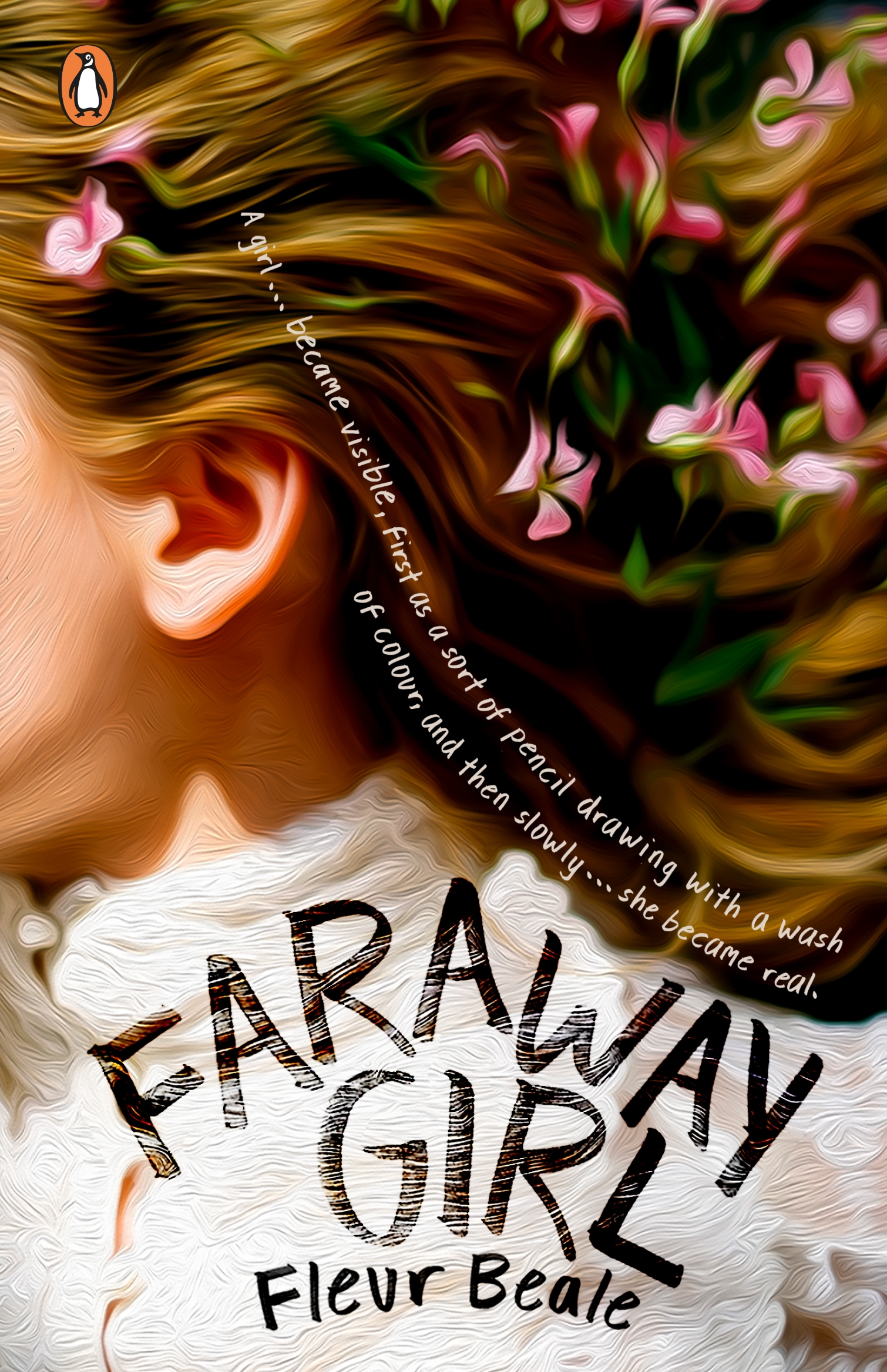
The Faraway Girl, Fleur Beale, Penguin, 2022

Without planning it, I have been reading a bunch of Aotearoa children’s and YA ghost novels. And so far they have been excellent! Fleur Beale’s The Faraway Girl is a YA ghost story that works on so many levels. It underlines why I am a devoted book fan. Novels can divert, amuse, entertain. They can challenge you at the level of feeling and of ideas. They might reflect parts of the world back to you – in ways that are refreshing, transformational, revealing. Things you have forgotten, things you never knew.

Fleur’s novel is so very satisfying. It is action plus, heart-in-the-mouth paced, character rich, dialogue smart. I love the ghost story but I also love the way I engage with both our contemporary time and with 1869. The key issue: what is it like to be a girl or a woman in England 1869 and in Aotearoa 2019. I become the eavesdropping ghost amassing rekindled despair at how it was for women in 1869 – how they were owned and shared, were without rights and chattels, were straitjacketed under corsets and awkward clothing, how they could seldom speak their minds as their minds were consistently denigrated, how they were baby factories. Fleur layers such piquant detail the misogynistic world is bitingly real.

But I am also musing on how things are for women and girls now. So much has changed, our lives are so much better and freer, and more independent. Yet no way are we there yet. Look at how our Prime Minister is treated compared with how men Prime Ministers are treated. If the All Blacks had been playing in a World Cup tonight, the Herald would have been full of it – instead it’s half a page for the Black Ferns. Not forgetting the curious and disturbing responses to men treating women badly, in law courts and politics. We still do not have equity.

Today a brilliant ghost novel got me re-viewing women’s issues, issues that I explored at university, in the theses I wrote, and in the anthologies I have edited.

I love Fleur’s book so much. Every teenager should read it. Get thrilled by a ghost story tugging you to the last page, and muse upon how we need to work harder to remove gender bias, privilege, hierarchies, ignorance. We cannot hold white men as the norm, the standard, the voice of authority.

I hold this sublime book to my heart. It is both entertaining and an essential challenge. Novels like this underline the power and value of books. A glorious reading day.


Fleur Beale is the author of many award-winning books for children and young adults — she has published more than 40 books in New Zealand, as well as in the United States and England. A former high school teacher, Fleur was inspired to write her acclaimed novel I Am Not Esther when one of her students was beaten and expelled from his family for going against their religious beliefs. Fleur is a leading advocate for New Zealand authors, and home-grown literature for children and young adults.

Penguin page

Poetry Shelf Occasional poems: Khadro Mohamed’s ‘saffron’

saffron 

//

there is a fire
cloud in the air
crawling up the 
side of her 
forearms & mixing 
with the smell of 
onion & olive oil 
that makes the 
entire house sweat
like it’s the 
middle of a
hot african summer

i’m never sure 
what she’s making
it always feels 
like a secret.
but i trust 
that it will 
somehow remind me 
of something i 
thought i have 
forgotten & tucked 
away 

she’ll say: 
the most important 
ingredient in somali 
cuisine is deep 
set curiosity & 
a sharp tongue 
she’ll say:
you have to 
get used to 
the zest of 
a lemon chopping
through the centre
of your lips 
& the deep 
orange stain of 
saffron that lingers
on the tips 
of your fingers 
like a light 
henna stain 
pressed delicately
on the night 
before eid 

& i smile 

& i believe her

because it’s easier 
that way 

Khadro Mohamed

Khadro Mohamed is a writer based in Wellington. Her work has appeared in various online magazines and websites including: Starling Magazine, Sweet Mammalian, Pantograph Punch, The Spinoff and more. Her newest body of work We’re All Made of Lightning published by Poneke based press We Are Babies, can be found in all good bookstores across the motu. 

Poetry Shelf Occasional Reviews: Michael Harlow’s Renoir’s Bicycle

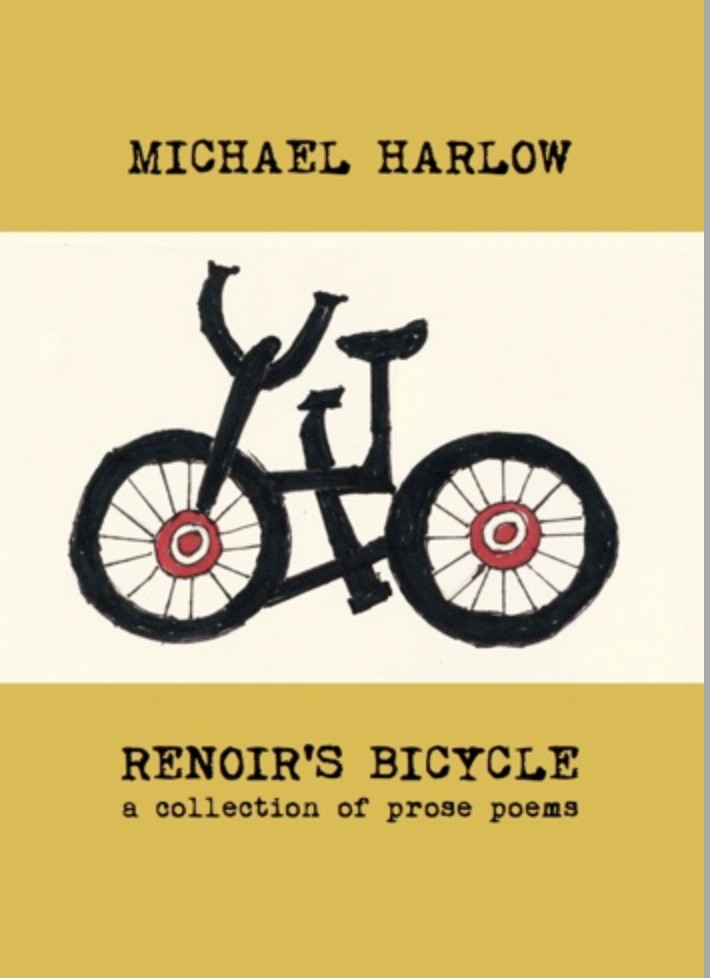
Renoir’s Bicycle: a collection of prose poems, Michael Harlow, Cold Hub Press, 2022

Michael Harlow’s new collection delivers a poem grove of contemplation. I keep sinking into individual poems and taking up residency. There is sweet alchemy between the visual and the aural. Repeating motifs form threads that offer connections, enhance a rich gathering. I am thinking of light dark love death life song. The notion that poetry becomes song, and stands in as musical score is important. You could say the poetry becomes love light dark death life. There is an insistence of song, the audibility of music, the stretchiness of chords.

The collection gets me thinking about poetry as both maker and made, as dreamer and dreamed: ‘Poems live / beyond where dreams were born’ (from ‘the living girl’). It’s poetry as protagonist. How poems live on the page – in the ear, in the mind, in the pen – promotes endless speculation.

Michael has created a poem grove where the abstract dwells alongside the tangible. Hands, names and water are as important as the unspeakable, the knowing, the speakable. The ideas are philosophical rather than political, although I say that hesitantly, knowing there is a political edge to everything. But I am jamming on a notion; unknowing becomes not knowing and then I opt for beknowing. Playfully. I am investing the poem grove in variations of becoming: beseeing, be-ending, bebeginning, bespeakable.

This is the joy of poetry. Who knows how it becomes you?

We enter a peopled grove: Dante Alighieri, Jean Renoir, Mary Oliver, Sappho, Gertrude Stein, President Lincoln. Such arrivals suggest the collection can also be experienced as narrative with beginnings, middles, endings, scenes and settings, incident and epiphany, turning points and story arcs.

Renoir’s Bicycle is a satisfying read on so many levels. One niggle: I do advocate for larger fonts (there is a trend at the moment to go tiny) because those of us with impaired vision find small fonts difficult to read. That said, I loved spending prolonged time within the rich rewards of Michael’s poem grove.

      Out of the rondeaux of astonishments the dark
sea and the green sea, starfish blooming at your wrist;
on the dark road under star-fall pools of far light
more near, out of the loneliness the cold touch of
loneliness; alone and not alone in the known world.
      The descending dark with its haunting shadows,
how death makes living, makes loving more loveable;
out of the canticles of the poetry of song, and the song
of poetry everywhere in the natural world, the swell
of joy and laughter, cloud cast moments that make light
and dark a wonder.

from ‘Mary Oliver, Poet’

Michael Harlow has published twelve books of poetry, including Cassandra’s Daughter (2005, 2006), The Tram Conductor’s Blue Cap (a finalist in the 2010 New Zealand Book Awards), Sweeping the Courtyard, Selected Poems (2014), Heart Absolutely I Can (2014), Nothing For It But To Sing (2016, winner of the Otago University Press Kathleen Grattan Award) and The Moon in a Bowl of Water (2019). Take a Risk, Trust Your Language, Make a Poem (1986) won the PEN/NZ award for Best First Book of Prose. Residencies he has held include the Katherine Mansfield Memorial Fellowship and the Robert Burns Fellowship. In 2014 he was awarded the Lauris Edmond Memorial Prize for Distinguished Contribution to New Zealand Poetry, and in 2018 he received the Prime Minister’s Award for Literary Achievement in Poetry.

Cold Hub Press page

Poetry Shelf Occasional Poems: Anne Kennedy’s ‘The Slumber Pin’

The Slumber Pin

The Hawthorn bought at the garden supermarket
on an ordinary day. Commoner of the Woods
it said on the label. Don’t you love that, commoner?
Against the tall fence it grew all beautiful.
The white blossoms ate the young leaves,
the exquisite berries ate the autumn air.
The internet said it would bring good things,
love and babies in the warm spring. It would grow
into a hedge and under the hedge would be
the entrance to the fairy world. Don’t you love
the mythology? Like if you pricked your finger
on a Hawthorn spike you’d fall into a deep sleep
and wake up in a new place. So yeah, never
do that. And it was bad luck to harm a Hawthorn,
so never do that either, don’t harm the common tree.
You’re a commoner and proud of it, you love your
mythology and all that. And under the hedge
are settler ghosts who came on the ship because
why wouldn’t you? Under the hedge they
set up shop because why wouldn’t you.
In the end you do prick your finger, in fact
you’d already pricked your finger, you had
previously pricked your finger
on why we are here. 

Anne Kennedy

Anne Kennedy is an Auckland poet, novelist, script consultant and teacher. Recent books are The Sea Walks into a Wall (AUP) and The Ice Shelf (VUP). Awards include the 2021 Prime Minister’s Award for Literary Achievement and the Montana NZ Book Award for Poetry. Anne has taught creative writing at the University of Hawai`i and Manukau Institute of Technology. Remember Me, an anthology of NZ poems to learn by heart, edited by Anne, is forthcoming from AUP in 2023.