Category Archives: Uncategorized

Poetry Shelf Monday Poem: Joan Fleming’s ‘7 Mistakes’

7 Mistakes

The salt sting nights we were two cuts       
            in a tongue that licked December.

Not how the falsely boasted flavour hurt ourselves,
           but how it hurt others.

Certain telephone calls that shone with a doggish fidelity
           as if unafraid.

The well-aimed lighting rig we called radical honesty,
            and all the acts we saw there.

Our sweet, multiple forgivings:
           a peace with a torn hem.

Telling him the reason wasn’t
            love running out.

The completion of
            this poem.

Joan Fleming

Joan Fleming’s latest book is Song of Less (Cordite Books, 2022), a verse novel exploring ritual, taboo and the limits of individualism in the ruins of ecological collapse. She is the author of the poetry collections The Same as Yes and Failed Love Poems (Te Herenga Waka Press), and the pamphlets Two Dreams In Which Things Are Taken (Duets) and Some People’s Favourites (Desperate Literature). Joan is a lecturer in creative writing at Massey University, and lives in Te Whanganui-a-Tara Wellington. 

Poetry Shelf favourites: Lynn Jenner’s ‘ZL4BY’

ZL4BY

‘This is ZL4BY . . . ZL4BY on the air . . . ’ my father would say

Then there might be squeals
rising and falling in pitch
a long patch of silence
maybe a low animal noise like a cow
giving birth, or static so bad
I could hardly bear it

My father would turn the dial towards
the very centre of the pain, trawl
through it over and over and inside
there might be a man’s voice
clear as a bell

The man
might be the only person awake
in a town in Northern Saskatchewan

My father and the man
would exchange first names
report on each other’s signal strength
and say something about the weather
in each country. That seemed
to be enough

Sometimes
responding to a different urge
my father would just turn on his receiver
and listen

According to my father,
unacknowledged signals circled the earth
until someone received them properly

If my father heard one of these signals,
and he often used to – often – at the new moon,
and when low in spirits – all he had to do
was say the person’s call sign
and then say,

            ‘ZL4BY, receiving.’

That was enough.

Lynn Jenner
from Dear Sweet Harry (Auckland University Press, 2010)

In the 1960’s my father was what was called a ‘ham radio operator’, and ZL4BY was his callsign. From his shed in the garden he used to talk to people in other parts of the world about very ordinary things. You just talked to whoever was ‘on air’ when you turned on your receiver. This poem was written in 2008 and forms part of my first book Dear Sweet Harry.

Lynn Jenner is based in Te Tai Tokerau, just west of Kerikeri. She writes poetry and non-fiction and has a particular interest in hybrid genres Lynn also mentors other writers.  Lynn has published three hybrid genre books. More about her books and other poems can be seen on her website.

Poetry Shelf Favourite Poems is an occasional series where I have invited poets to pick a poem from their own backlist.

Poetry Shelf Favourites: Chris Tse’s ‘Midnight, somewhere’

Midnight, somewhere

The night remembers how I made myself smaller
every time I left a mess trailing behind me—
running from the obsessive thoughts I couldn’t evade
even at midnight when I donned my counterfeit
mask to dodge my ghosts and monsters. I folded,
shrunk and compressed to fit into those slow hours
hoping it would allow me to step into joy without
being throttled by a cold open—the Previously on…
that prefaces all my terrors. I should’ve introduced
this poem with a disclaimer: Based on true events.
Any resemblance to real persons, living or dead, is purely
intentional. Then maybe I’d forgive myself for making
a montage with all the memories I’ve deliberately
dissected and over-analysed so I can’t return them
while they’re still warm and lit by a blood moon
while I have the time and space to worry myself sick
while I stare at my reflection and see only the past.
Sometimes the past is us watching the ‘Blank Space’
music video and me telling him I want to be that horse.
(Now I see this fantasy meant I wanted to be an accessory
to someone else’s power.) Other times the past is playing
‘Treacherous’ on loop for a week straight because he
wouldn’t return my calls. I wanted so badly to ask
the million-dollar question knowing all too well
any answer would leave me broken. It’s always
close enough or not enough when you’re constantly
running late for a rehearsal for the worst night
of your life. I like to eat alone, or go to the movies
on my own and not have to fret about having opinions
or critical thoughts to share while the credits roll.
I imagine this is the kind of thing my popular twin
would be very good at—knowing what insightful
things to say to make everyone in the world fall in love
with them. Instead I’m the sad song you only listen to
when you need a good cry in the colourless dark.
Night won’t always let me let go, but it also reminds me
of other brighter fevers: karaoke in Portland, hands
clasped under the table at Vegie Bar, the waves crashing
outside our window in Mataikona. He tried to wake me
to watch the sunset from our bed but my head was
in knots, counting down the days we had left.
Not everything gets clearer with the lights on or when
the sun comes up. It’s always midnight, somewhere.

Chris Tse

Written for Around Midnights, a seminar featuring responses to Taylor Swift’s Midnights. The seminar was organised by Victoria University of Wellington Senior Lecturer Dougal McNeill (School of English, Film, Theatre, Media and Communication, and Art History).

Chris Tse is New Zealand’s Poet Laureate for 2022-24. He is the author of three collections of poetry published by Auckland University Press: How to be Dead in a Year of Snakes (winner of the 2016 Jessie Mackay Award for Best First Book of Poetry), HE’S SO MASC, and Super Model Minority. He and Emma Barnes edited Out Here: An Anthology of Takatāpui and LGBTQIA+ Writers from Aotearoa (AUP, 2021).

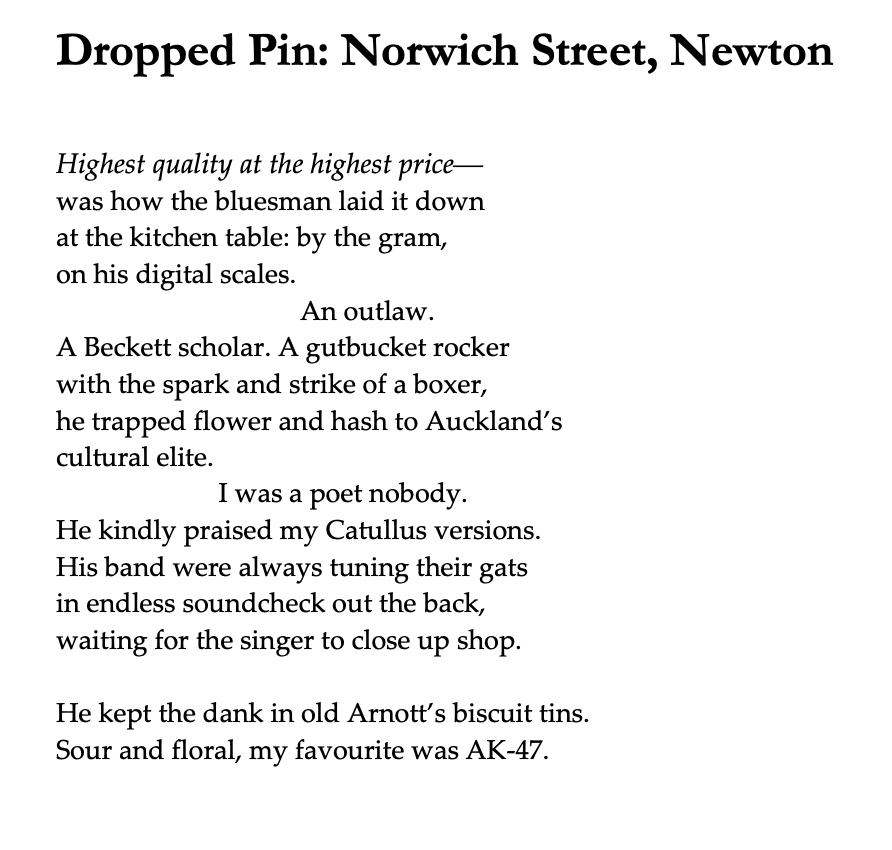
Poetry Shelf Monday poem: Michael Steven’s ‘Dropped Pin: Norwich Street, Newton’


                             — in memory of Rick Bryant

Michael Steven

Michael Steven lives and writes in the Waitākere region of Tāmaki Makaurau. 

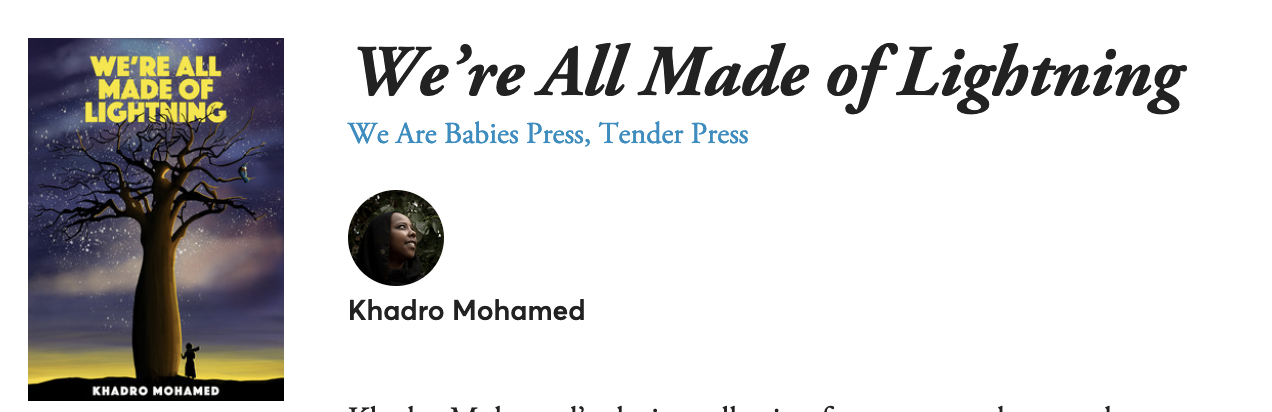
Poetry Shelf poem: ‘Maghrib’ by Khadro Mohamed and Ronia Ibrahim

Maghrib

//

cotton tassels, soft in between the space of my toes
i’m carrying rosewater pearls in my belly.

            inhale,
                        exhale,

unravelling like lilac tissue
cheeks the colour of scorched chilli

inhale,                        
                       exhale,

the thin veil of night
spreads like butter over the hills

surah Al-fatiha, like a whisper

                                     it floats on an eyelash,         
                                     skims past my fingers

            inhale, exhale,

ٱلْحَمْدُ                                            


Khadro Mohamed and Ronia Ibrahim

This poem attempts to highlight the strong presence that Islamplays in our  personal lives, but also in the lives of Muslims in Aotearoa. While our families were not directly affected by the attacks on the 15th of March, 2019, the aftermath was felt by all of us across the motu. We hope that Muslims everywhere continue to use their relationships with Islam as a source of inspiration, strength and something to always be  proud of. 

Poetry Shelf Monday poem: Michaela Keeble’s ‘all the eels’

all the eels

*

we took the chook fat
to the creek
spooned the gloopy food
into the shallow wash

soon you came out to us

twenty or fifty of you
showed your teeth
and snapped at wooden spoons

fifty or more of you
thrusting up the creek
to claim the fat

with your single
perfect muscles
like dancers’ thighs
you never hurt us

*

does it help
to be specific?

*

to build the road
they have to leash the river

drain the swamps
stop the banks
build the bunds

they redirect the water

in come the ecologists
to fish the tuna
trapped in sediment

jet black skins
eyes blue like humans

tuna tall as me
tall as you

*

all the amphibians
and all the birds
who travel beneath
and all the eels
unite

certain kinds of water snake
gannets and shags
and all the eels
unite

from all the hidden places
at the margins of everything
everywhere

and all the eels

Michaela Keeble

Michaela Keeble is a white Australian writer living in Aotearoa with her partner and kids. Michaela’s first full-length collection of poetry, surrender, was published by Taraheke | BushLawyer in May 2022. She has a children’s book, co-authored with her son Kerehi Grace and illustrated by Tokerau Brown, forthcoming from Gecko Press in 2023. Watch out for Paku Manu Ariki Whakatakapōkai

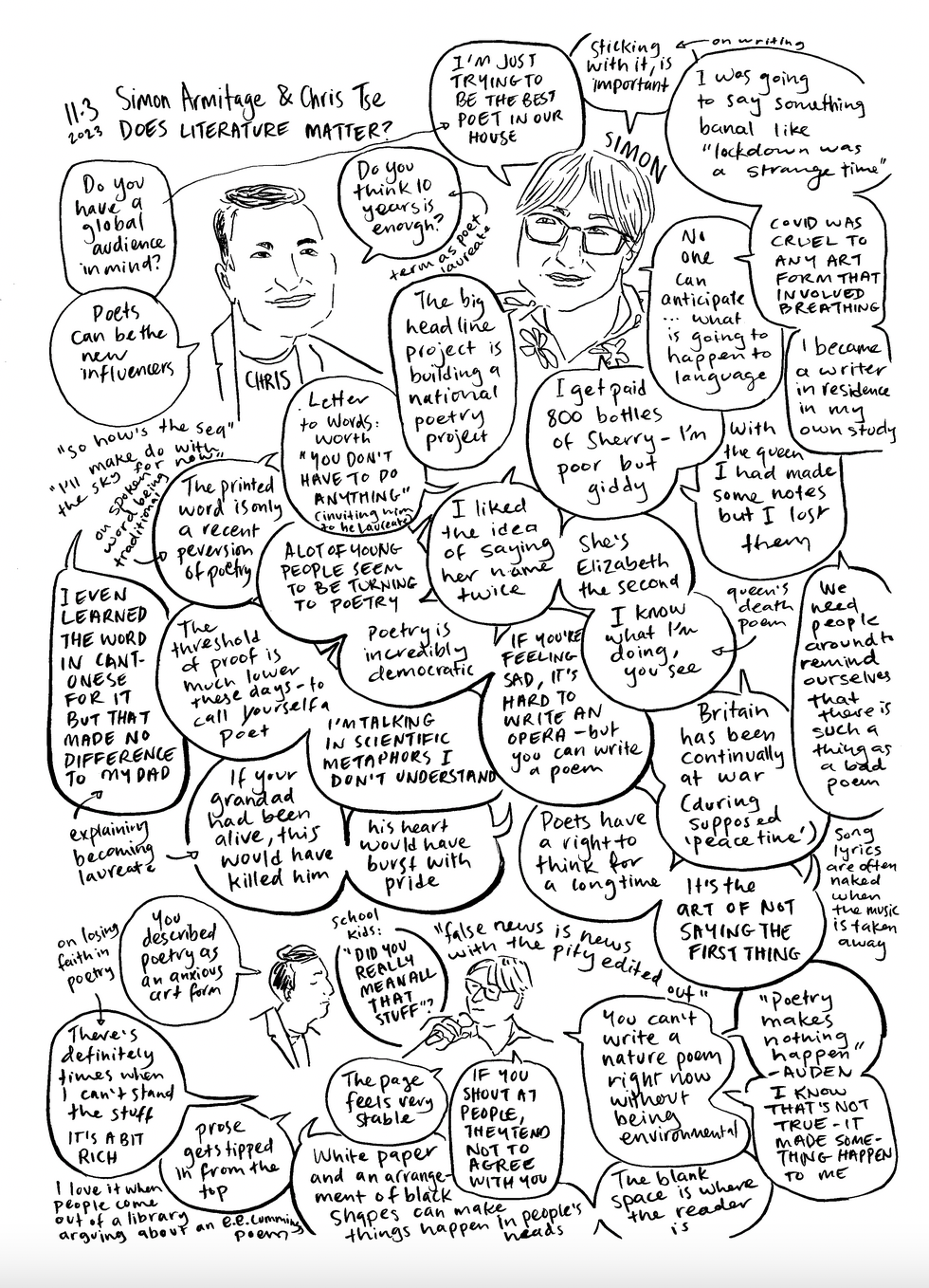
Poetry Shelf events Tara Black draws Simon Armitage with Chris Tse

UK Poet Laureate Simon Armitage has done a number of excellent events in Aotearoa (with VERB), in a conversation with our Poet Laureate Chris Tse. Here is a taste thanks to artist extraordinaire, Tara Black. You can visit her Substack site here.

Poetry Shelf review: Simone Kaho’s Heal!

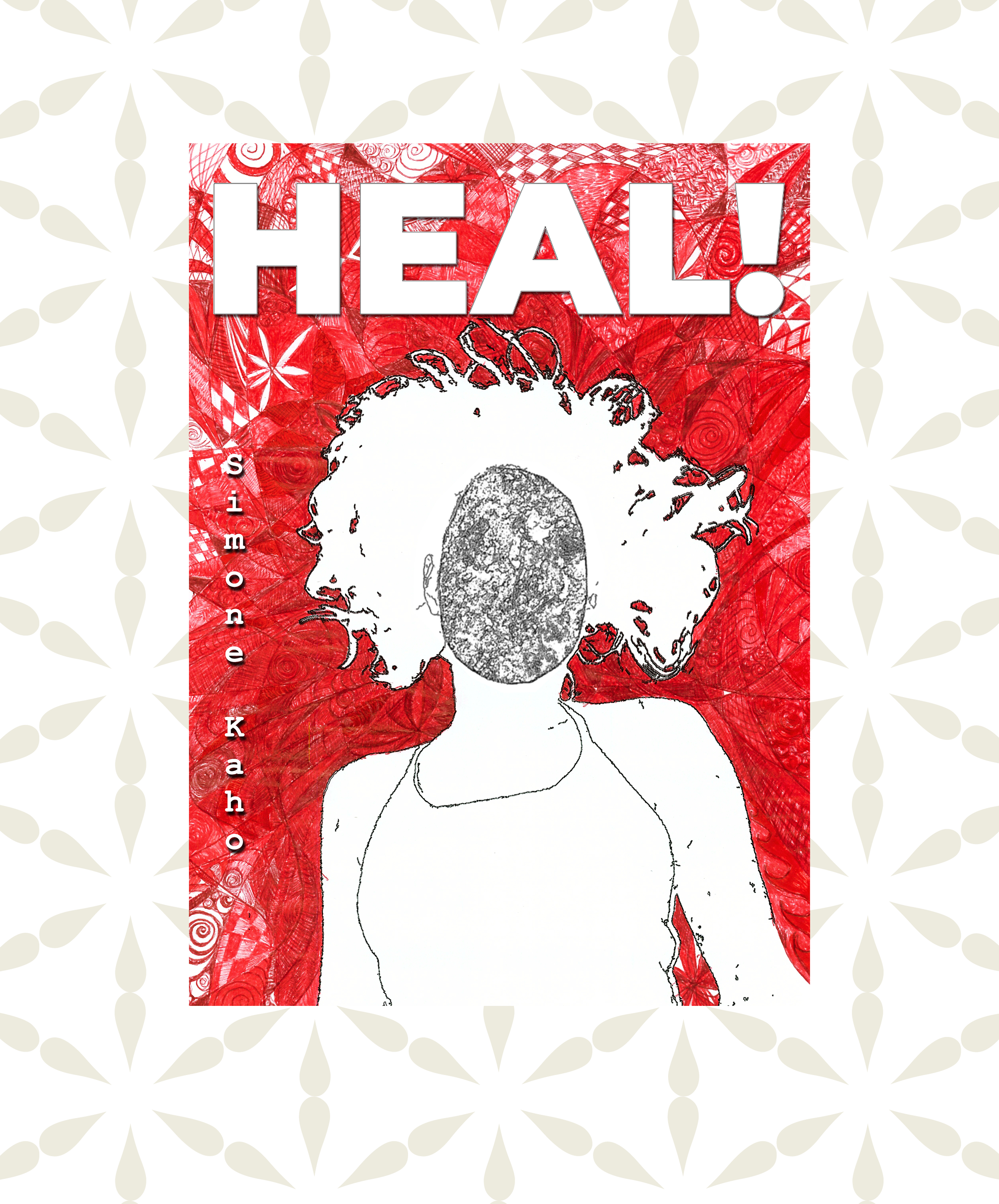
Heal! Simone Kaho, Saufo’i Press, 2022

If you read the blurb, you will discover Simone Kaho’s new poetry collection, Heal!, comes with guidance: the poetry navigates sexual violence, assault, PTSD, self harm, suicide. The blurb also offers terrific reactions from three esteemed poets: Karlo Mila, Anne Kennedy and essa may ranapiri. Karlo writes: “I read this book in one sitting. Paralysed by the beauty, purpose and pungency of the writing.” I don’t usually read blurbs or reviews before I read a book, but when the book recently missed out on a longlist placing in the NZ Book Awards, to the surprise and consternation of many readers, I found I had absorbed traces of the book before I started reading it.

I am holding the book close before I begin reading and it raises questions. How do we write the unspeakable, the unsayable, the unutterable? Sometimes, somehow, someone finds a way to do so because they must, no matter how difficult it might be. And that becomes a gift for us as readers. For any number of private or public reasons.

Simone’s extraordinary collection begins with a smell, an unidentifiable smell, it is “somewhere between a food and flower smell. The source is not clear. It’s not the dash of orange flowers whose nectaries are nice to suck, not the yellow poison berries that broke up one of her mother’s children’s parties.” After listing the things the smell is not, the poet achingly concludes:

You see how life goes on?

The entire collection is alive to smell, to sight and touch. It is rugged terrain and it is hoed ground, it is dead bird and tended insect, it is wound and it is self care. Like Karlo, I am reading Heal! in one sitting, then I sit with the door wide open, hearing a crescendo of autumn crickets, wondering how I will write my reading experience.

Simone guides us into the intimate revelations of a traumatic event, to the acute ripples etching skin and heart, and the afterwards (afterwords) needing to carry on as if life is normal. She moves back and forward, in this house and that house, from this treasured father memory to that treasured father memory, from this partner to this friend. She’s releasing spiky revelations and then turning her eye to a thing of beauty, think  smashed face with sunglasses to sweetly scented flower. I am reminded of the exclamation mark that accompanies the title of the book, and the way my eye moves from flower petal to beloved bee, to wound to scar to a mother’s bedtime stories.

In every photo I’ve taken of spring blossoms the sky behind is blue.
But I’ve seen blossomed trees in storms.
Afterwards, I go look at the battered litter of colour.
New flowery faces thrust out of twigs as if bearing no relation to the fallen below.
Sex is a natural thing, like a river or tree.

The writing inhabits the page in various settings, forms, movements, fluencies, just like thinking might do, especially thinking about hard subject matter. Thinking about traumatic and tough experience involves different patterns of thought, feelings, reckonings. I enter the open, the half closed, the hidden, a need to be safe. At one point the poet remembers planting kūmara with her father, and it gets me musing that Simone’s writing is a way of planting self in the ground, in the soil of living.

There is mint in this garden, comfrey, dandelion, silverbeet, puha. In this garden.
However, there are more weeds than anything else.

His eyes are the colour of soil, hers are too.

This morning she sees herself, arms crossed on her chest, round and complete as
a kūmara, earth embracing her, eyes closed, growing, her breath slow as light
moving across the field, drawn through nutrients in soil, held in her lungs, so
rich, sweet at the back of her throat, seeping onto her tongue, nerves above her
soul prickle, how complete a leaf is, and she, all to herself, in soil soft as clouds,
soft as sea, soft as sky.

Some reading paths might suggest Heal! is a catalogue of pain, and to a degree it is, but it is also a planting of precious life in the abundant detail, both sweet and sour, of living. It considers the who and how of self, whether writer, friend, lover, daughter, woman. Simone’s exquisite artwork adds a piquant visual layer. The cover so very striking, is a poem in its own making. This is a book that is facet rich, like a diamond striking you with light and edge, full of beauty and ache. I have barely touched its surface or depths, but I love it dearly. Thank you for sending Heal! into the world Simone, we are so very grateful.

Simone Kaho is a Tongan and Pākehā poet, creative non-fiction writer, and director. Her first poetry collection Lucky Punch was published in 2016. She has a master’s degree in poetry from Te Herenga Waka—Victoria University of Wellington’s International Institute of Modern Letters (IIML) and was awarded the IIML 2022 Emerging Pasifika writer in residence. Simone directed the 2019 web series ‘Conversations’ for E-Tangata and now works as a writer/director for Tagata Pasifika. She is an active voice in Alison Mau’s #metooNZ project.

Saufo’i Press page

Poetry Shelf favourite poems: Bill Manhire’s ‘The Prayer’

The Prayer


What do you take 
away with you? 

Here is the rain, 
a second-hand miracle, 
collapsing out of Heaven. 

It is the language of 
earth, lacking an audience, 
but blessing the air. 

What light it brings 

with it, how far 
with it, how far 
it is. 

I stayed a minute 
& the garden 
was full of voices. 


I am tired again 
while you are crossing 

the river, on a bridge 
six inches under water. 

Small trees grow out of 
the planks & shade the water. 

Likewise, you are full of 
good intentions 
& shade the trees with your body. 


Lord, Lord 
in my favourite religion 
You would have to be 
a succession of dreams. 

In each of them  
I’d fall asleep, 

scarred like a  
rainbow, no doubt, 
kissing the visible bone.

Bill Manhire
from The Elaboration (Square & Circle, 1972, with drawings by Ralph Hotere)

Note

I’ve always loved ‘The Prayer’, I think because it manages to seem fairly straightforward while maintaining a resistance to paraphrase. Or maybe it’s because the poem’s so plainly concerned with mystery and miracle. I think I was 23 when I wrote it. It was in my first published book of poems (The Elaboration, 1972) and also appears on Ralph Hotere’s Song Cycle banners. It’s been in my mind lately because the first section has found new life as the opening movement of Victoria Kelly’s Requiem, which is about to be presented at the Auckland Arts Festival. You can hear Victoria’s glorious setting of Sam Hunt’s contribution to the text here. The other contributing poets are Ian Wedde, Chloe Honum, and James K Baxter. It’s a good feeling, being resurrected in a requiem!

Here’s a little note I wrote on the Requiem text for the CD booklet:

Lost for Words 

Before it is music, it is words – texts from five writers brought together to make a single poem. 

The poem tells us that we are among the perishable things yet it also makes us feel better about this difficult truth. 

Poetry, some people have said, aspires to stop time, but these words are on the move. They ghost each other, reach out a little, and then reach further out. 

The smallest words evoke cosmic dimensions: light and sky echo and rhyme their way from page to page. 

There are also stars. 

At the very centre are the great horizons – earth and sky, sea and sky – which remind us of our own great longing to touch and be touched. 

On each side are particular deaths, while the work as a whole begins with the mīharo of the natural world and ends with the surrender that awaits us. 

Five separate voices – touched by wonder and strength and grief and frailty – brought together in a single work, which now adds a chorus to gather us all in.  

Sometimes poems (and poets) end up lost for words. 

They tiptoe towards silence. 

On the other hand, here come the singers and musicians.

Bill Manhire

Bill Manhire‘s last collection of poems, Wow, was published in 2020, and was a Poetry Book Society Selection. An interview subsequently appeared in PN Review. A recent collaboration with Norman Meehan and others, Bifröst, has been released by Rattle.

Poetry Shelf is hosting a series where poets pick a favourite poem from their own backlist.

Poetry Shelf noticeboard: Ockham NZ Book Award Poetry shortlist

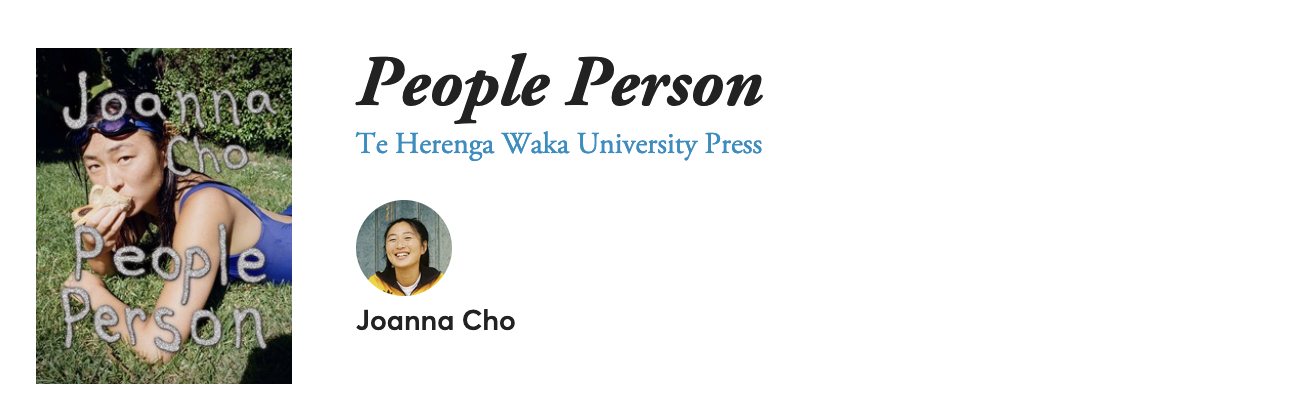
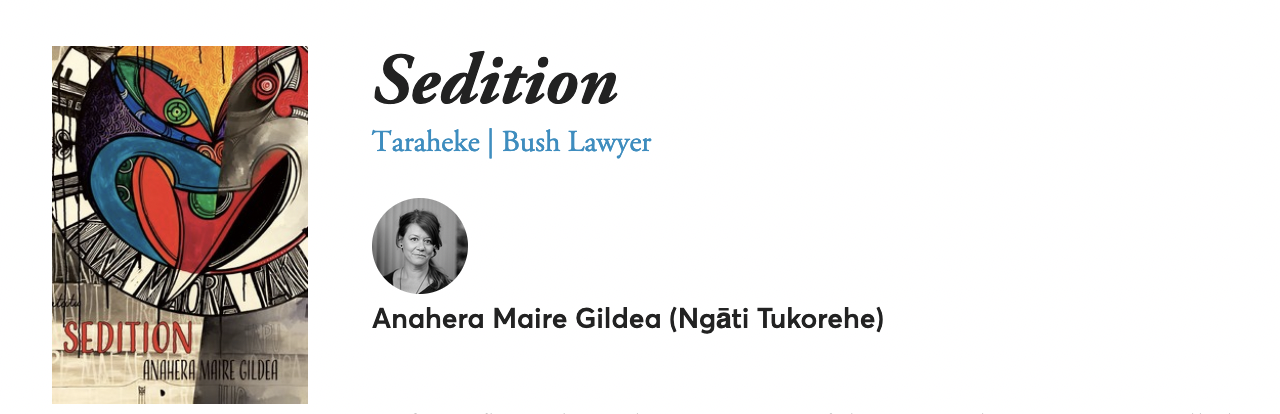
Full details and other categories here

Congratulations to all the deserved finalists, I have loved all these books. Poetry awards are a time for joy and whoops for some, and slump and self doubt for others. I never forget this. I always say that good books attract readers and good books endure, regardless of awards. As a writer, it is the writing that matters – I loved the poets that missed out on a shortlist spot – and please do not let this damage your faith in your own writing.