Elizabeth Morton is a poet, yarn teller, and researcher of the noggin. Her writing has been published in the likes of Landfall, Takahē, Poetry Aotearoa, and also in overseas journals such as the Moth Magazine, Rattle, Narrative Magazine and Smokelong Quarterly. She is always the bridesmaid, never the bride, as is evidenced by twice placing second in the Sunday Star Times Short Story Competition and also second in the Sargeson Prize. She has four poetry collections, the latest being Incident Report (Otago University Press, 2026). She likes humming David Bowie hits while walking the streets.
It is Thursday morning and there are five monks on the dais. I cannot understand a word they are chanting but I get the gist
And Mr Oh as supplicant and translator He fights with two swords as is the local custom You were his best student in a long time
‘I view her as my sister’ he says ‘I will make an altar for her in my house.’
And my nephews at my shoulder, ‘Shall we do a haka here uncle?’ It’s tempting but I’m not sure what the Buddha would make of it
This is the first of your funerals in absentia at Chalong in a temple with you on the first leg home via Bangkok where you will lie for one day alone in a city of 10 million reincarnations before flying Emirates
Five monks wish you appropriate karma. They do not care much for the body in these parts. They have more concern for the travel of the soul
We should not linger near the site of your collision but there are offerings by a mango tree and so, we must
.
We haka by a lake as fish and birds and turtles are released and you are left to dream of your first pro fight yours in the third round TKO with ten elbows brutal magnanimous rire rire hau pai mārire
The good and gentle wind. Some of the ancestors thought it made them bulletproof. Uncle Taka wants your photo for the Whare at Pōhara
You are tupuna now
There’s a nice one of you in braids and fighting strip You look strong resolute calm Or the one when you were ten holding the giant rabbit you saved from drowning in the flood of 82
Same look
And as I reminisce a man trips over his own dog right outside my window I wonder what the monks would say about that
In Memoriam Ariana Brown 1972 – 2016
Ben Brown, 2016 from This Imperfect Light, Dead Bird Books, 2026
Ben Brown (Ngāti Mahuta, Ngāti Korokī, Ngāti Pāoa) is an award-winning children’s author, poet and freelance writer. He has written over twenty children’s books as well as short stories for children and adults, general non-fiction, memoir, freelance articles and reviews. His poetry has been published in various anthologies around the world, and in May 2021 he was made the inaugural Aotearoa Reading Ambassador for Children – Te Awhi Rito. He is also a father of two, which he considers his best work to date.
Reading her and now, beyond, a thrush descants and warbles, in next door’s monumental elm, scattering waves of seeds. The blue world sighs yet will not mourn.
Just once, an honour: our interview, for a festival you could not be, in person. My notes told me of all you cited: Pablo Neruda, Dante and Yeats, the great Anne Sexton,
deep experience. Even so, you came to Blackball. Even so, you held the floor, you hushed the room. I wish I had your Gaelic now – moe mai rā, e hine!
I think I would have failed if it were not for my dear bird, who talked unceasingly, his cage upon my shoulder. By the sea were miles of grassy dunes; no shade. The lot of all our worldly goods my husband got into a heavy swag; the pots for tea, our bedding and our clothes. Strapped onto me my son was bundled like a native tot. The week-long walk it seemed that every wind on earth was passing here – a constant threat. My body sheltered boy and parrot both. The sand abraded me till I felt skinned alive. Come evening, we’d make camp, and with a stick I’d dig up grubs to feed my pet.
Airini Beautrais from Whanganui River Poems, VUP
This poem is from Flow: Whanganui River Poems, a book-length sequence in three parts. The third part of the sequence is written in various sonnet forms, in the voices of different characters from the ancient to recent past, fictional and real. The Fields were a real family who travelled from Wellington to Whanganui, up the coast, in the 19th century before roads were built. Anyone who knows this coast will know it is wild, windswept, and involves a lot of river crossings, some of which claimed lives in the days of foot and horse travel. The diction in this poem is deliberately dated, and perhaps jarring to a modern ear, but I wanted the whole collection to feel suffused with the voices of ghosts. The thing I like the most about this story is that they did this week-long walk with their pet parrot, which Mrs Field carried in a cage. I don’t know what kind of parrot it was. I think I made up the part about the grubs. There is a beetle, the sand scarab, that lives in the sand as a larvae, and is quite easy to find if you dig.
I realised recently that there is a lot of wind in my poetry, and that it always signifies some kind of ominous mood or emotional disturbance. I find wind irritating and always feel anxious when there are strong gales blowing. I think that underneath the story of Mrs Field, there is also the emotion of the writer. I was going through some challenging life events at the time of writing this collection, and a lot of my sonnets were about shipwrecks. There was something cathartic about writing about history in poetry, using the sonnet forms, and exploring the raw emotional potential behind these stories.
Throughout this section, which is called ‘The Moving Sand’ I wanted the feeling of disembodied voices, washed up like driftwood on the beaches of Castlecliff and South Beach at the mouth of the awa. In the first part of Flow, I focused on Pākehā settlers appropriating Māori land and cutting down native forests: it was people against environment. In this section, the environment shapes people. In the future, we will have to reckon more and more with the forces of nature as extreme weather events intensify. Some of the other poems in Flow deal with climate change and an increase in the likelihood of devastating floods. Nature is all about balance: when we push nature too far, nature pushes back.
Before you are out you are in me like breath, in me like wind and sea.
With an opening too small for exit, I will hold you in my lightness.
Jenny Powell
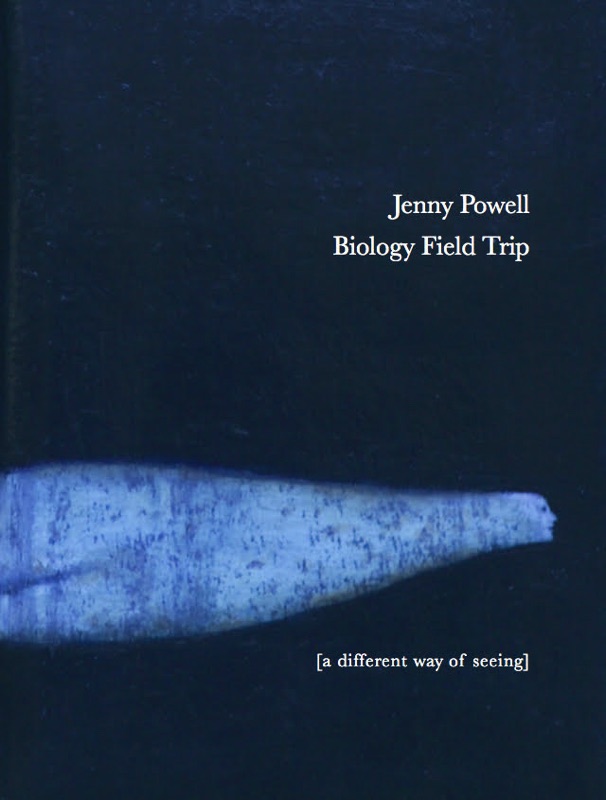
Jenny Powell’s new poetry collection, Biology Field Trip, is a lyrical gathering, an ebb and flow symposium, word by precious word, with light and shadows, with vision and envisioning, certainty and uncertainty, blind spots and beauty scenes, with the power of verbs, the doing and being, the gifts of nouns, the physicality of place and occasion. As the title of one poem suggests: ‘No seeing but in closeness’. And we are drawn in close, we are drawn in very close to experience this terrific collection.
A reading
‘Optic Nerves’
‘Rafters’
‘A Different Way of Seeing’
A conversation
Under mountain divides under dammed rivers under mounting debt under hard labour under worked to your bones under bankruptcy under overworked flocks of undertakers under social upheaval under critical protest under secret surveillance under constant reprisals under circling cyclonic anxiety under spewing volcanic uncertainty under landslide delays under floods of dismay
underneath the unbuttoning of us our grief
Jenny Powell from ‘Unbuttoning’
Paula: Your new collection is an extraordinary navigation of “a different way of seeing” and it moved me immensely.
Before I explore what I love about your book, a key question: What matters to you when you write a poetry book? When you write a poem?
Jenny: To write a poem I need an initial jolt or spark. Something has to matter enough to trigger my imagination and thinking. The ‘spark’ arrives in many forms, such as hearing that Hoiho (little blue penguins) arrived at their colony in rafts. My visual imagination flicked to wooden rafts at sea navigating the waves. How did the rafts stop for penguins to get on? Was it like a bus stop, where small groups gathered and signalled the paddlers to slow down for entry? And so it went on.
In Biology Field Trip some events were a matter of happenstance, such as the arrival of a Weddell seal, just down the road from where I live. When Kay McKenzie Cooke and I were reading poetry in Southland, a Sperm whale had washed up along from Aparima Riverton. We went to visit it.
Biology Field Trip, and previously Meeting Rita, have definite themes. If I write this kind of collection my creative consciousness seems to be on alert, picking up possible material as I go about my everyday life.
Paula: What is important to you when you read a poem by someone else? What poetry books have travelled with you, vitally, essentially?
Jenny: Ah. I have just finished the ‘Poetry and Music’ course at uni. There were many poems of wonder in the course, but my current favourite is ‘The Last Quatrain of the Ballad of Emmett Till’ by Gwendolyn Brooks. On the surface it is a quiet, reflective poem. In reality it definitely isn’t. There is nothing flashy or overwritten, yet whole lives, endless love, and political chaos are contained in this wonderfully constructed short poem.
I tend to hold dear the work of people rather than specific volumes. Hone Tuwhare’s poetry has remained with me since teenage years. My aural memory bank responds to the rhythmic lilt of Dylan Thomas. I keep at hand Pascale Petit, Blanca Castellón, Alejandra Pizarnik, Ted Hughes, Anne Carson. There are too many to mention.
royal jlly vnom wax propoli
from ‘Without Bees’
Paula: Did anything in particular spark the arrival of this collection?
Jenny: My son said to me that he didn’t think the world would still exist by the time his daughter was an adult. This is an unbearable thought. I know he is not the only person to suffer such anxiety. As a mother and grandmother, a poet and person, I had to respond in the best way I knew. Generally, I’m quite introverted and look inwards (too much), but during the writing of Meeting Rita I developed a different way to see the outside world, to write about the detailed view she was depicting in her art. This focused external gaze, combined with my own way of seeing and interpreting, formed the base for Biology Field Trip.
This way of seeing offered in the collection is also my responsive gift, acknowledging people who, during my life to date, have shown me unexpected kindness. I wanted to encourage the importance of this. I recall a bus driver who once who gave me a free ride and conversation when I most needed it. In my twenties I was generally broke. Someone I knew turned up one day and gave me $500. No strings attached. Then there was a lovely person who sorted out transport and carried my suitcase when a taxi failed to arrive. Such kindnesses can be as simple as standing beside someone when it matters. Human acts of interconnectedness sustain us, just as particular people do. Interconnectedness of our whole ecological system sustains us, literally and emotionally.
paper boats whirling in wind
rainforest cloud of blue-winged moths
fish leaping through hooks of light
shower of thoughts written in shorthand
from ‘Drizzle of Birds’
Paula: I am drawn into the unpacking of vision and visibility, that is at times misty misted mysterious. It feels like an utterly inventive way of getting political, of moving through uncertainty and shadows to grief and concern at endangered nature, whether birds or bees or swans. Tell me about getting both political and poetic in this collection. And maybe personal.
Jenny: It is my version of political, although I didn’t notice it until the collection was complete. As a species we survive through interconnectedness with our natural world. How is the necessity to sustain this not immediately apparent to our leaders? My protest rises from darkness in the first poem and ends with an albatross blessing in the final poem; an actual message delivered out of the blue.
I tried to reflect the diversity of wildlife through varied poetic form. I remained open to all possibilities when writing. There was a time when I became stuck with where to go. I had just seen the white ballet swans in Christchurch but couldn’t decide if I would write about them. What could be left to say? During a poetry lesson I asked a class of Year 9 students why the swans were called Mute swans. Their verbatim answers form part of the swan poems. That diversity of answers, for me, illustrates the necessary future diversity of thinking to keep us all on track. Compassionately.
I was initially worried that the wealth of writing opportunities presenting themselves around Dunedin would give the collection a ‘regional’ label. The intended reach of the poems is wider than that.
Paula: Your agility with words is symphonic. I love the repetitions, the lyricism, there is beauty in the lines that echoes the beauty in nature. Tell me about the musicality of the poems.
Jenny: When I left school I studied music, so it is not surprising that I hear poems in my head as I write. The older I become the more intensely it happens. In the process of writing a poem I read it aloud many times to establish a rhythmicality. In terms of structure there is quite a musical organisation of sections in a poem like ‘Every Particle Attracts Another’.
Paula: Living in West Auckland, with its history of devastating floods, was an acute point of connection for me to the floods in the book. I jotted down that word – connection –because the poems are rich in connections – amongst each other and with tendrils out in the world. It serves as a way of reconnecting. I have been musing on how motifs in the book are connection rich. Take mask or blind spot or an eye in a jar or the track or the stream. So many ways to speak of these. Do you have any key motifs? Connections?
Jenny: There was always going to be a recurrent strand of eyes and seeing. I didn’t plan other connections. They arrived like gifts. Young people’s different way of being. The water, and more water. Birds. Whales. Sea-life visitors to the city. Although I was trying to avoid wildlife death, during the years of writing Biology FieldTrip it naturally occurred in life cycles and through human actions. I wrote about both as they happened.
Home, my little feather cloud, is here.
Cradle of land before the sky, nest of learning before the sea.
Today we begin with the language of wind slant of its talk, pitch of its call shout of temper.
from ‘Nest of learning’
Paula: I keep asking poets this question and it seems especially vital alongside your book. What matters to you in this ravaged and tilted world with its precious glints of hope?
Jenny: I think we must be sustained by hope. It might involve a different way of seeing for some people. In practical terms, focusing on a single leaf, is enough to begin the process of opening the shutters of the self. Our own reverent responses to the world around us do make a difference. And small kindnesses to others may seem irrelevant in the big picture, but they have the capacity to be repeated and increased until perhaps this humane practice of caring becomes our expectation in personal and political life.
Paula: Choose a poem from the collection for the reader of our conversation to linger on. Why this poem?
Jenny: I choose ‘ Different Way of Seeing’. It is a poem that thoroughly embraces a different way of seeing from the poet and the human subject. If the man on the couch hadn’t bothered to phone DOC about the creature he noticed when checking a surf camera, we would never have developed our knowledge regarding the world’s rarest whale. As the man on the couch said in a local newspaper interview, he thought DOC would already have known about it, and he didn’t want to annoy them. There were many things going on for the man but in the end as he said, “I actually put my big kid pants on and rang it in.” What a hero. I’ve recorded the poem so you can hear its chant, its language consideration, and it is my homage to the man and his different way of seeing.
A DIFFERENT WAY OF SEEING
A whale washed ashore at the place of shining water could be the world’s rarest. A whale washed ashore at the place of shining water could be a male, spade-toothed. The whale washed ashore at the place of shining water was first seen by a man on a couch, sipping his tea, yearning for the sea.
‘World’s rarest whale found by man having cuppa on couch.’
Words trouble the whale unable to write or type alterations. Anatomy of flippers ill-equipped for holding a pen or cup of tea. Or coffee. The whale’s dictation too advanced for artificial intelligence. Or people.
The place of shining water or shining river, also known as the place of spring tides, also known as Taieri Mouth, once known as Taiari, is where the whale was first seen by the man, and the whale, having a cuppa, raises the question: why he would surface for comfort on a fabric couch?
The man on the couch, sipping his tea, yearning for sea, has noticed, at the place of shining water or spring tides, seagulls looking like surfers, surfers looking like boats, logs like dolphins, porpoises like whales and the man on his couch unsure of what he was seeing, reported the possibility of a porpoise, or a whale.
‘The Dunedin man was checking a live stream of swell in hopes of going out for a surf.’
Mouth of the Taieri River is not a stream. Life gathered from inland basins, active faults, upfolds, downfolds, ranging ridges, gorged valleys tributary lakes, jostles onwards in gravity’s urge until bodily contents surge in suicide, fresh water identity lost to ocean’s liberty.
No wonder the whale has trouble with words.
Dead in the water before he arrived, beaked spade-toothed whale Was, on social media not dead but unalive. Unalive, as if a softness encompassed the trauma to his head. Unalive, as if it absolves us from any connection with death.
Dead Sea, lowest part of Earth’s surface now unalive. Below sea level, we are not dead certain of measurement, we are unalive certain. Dead heat in a high jump final, dead heat in Olympic freestyle, dead heat in the Great Northern Steeplechase dead heat in the Oxford Boat Race dead heat in the polls all null and void. Invalid.
‘A breakthrough in the study of the world’s rarest whale was found by a Dunedin man.’
At the place of shining water or spring tides where Taieri River surges to sea, the man on the couch did not locate a breakthrough in a study, did not intend any momentary fame, did not knowingly discover the world’s rarest whale and did not forecast such interest in life through death.
A whale washed ashore at the place of shining water was the world’s rarest. A whale washed ashore at the place of shining water was a male, spade-toothed. The whale washed ashore at the place of shining water was first seen by a man on a couch, yearning for the sea.
Jenny Powell
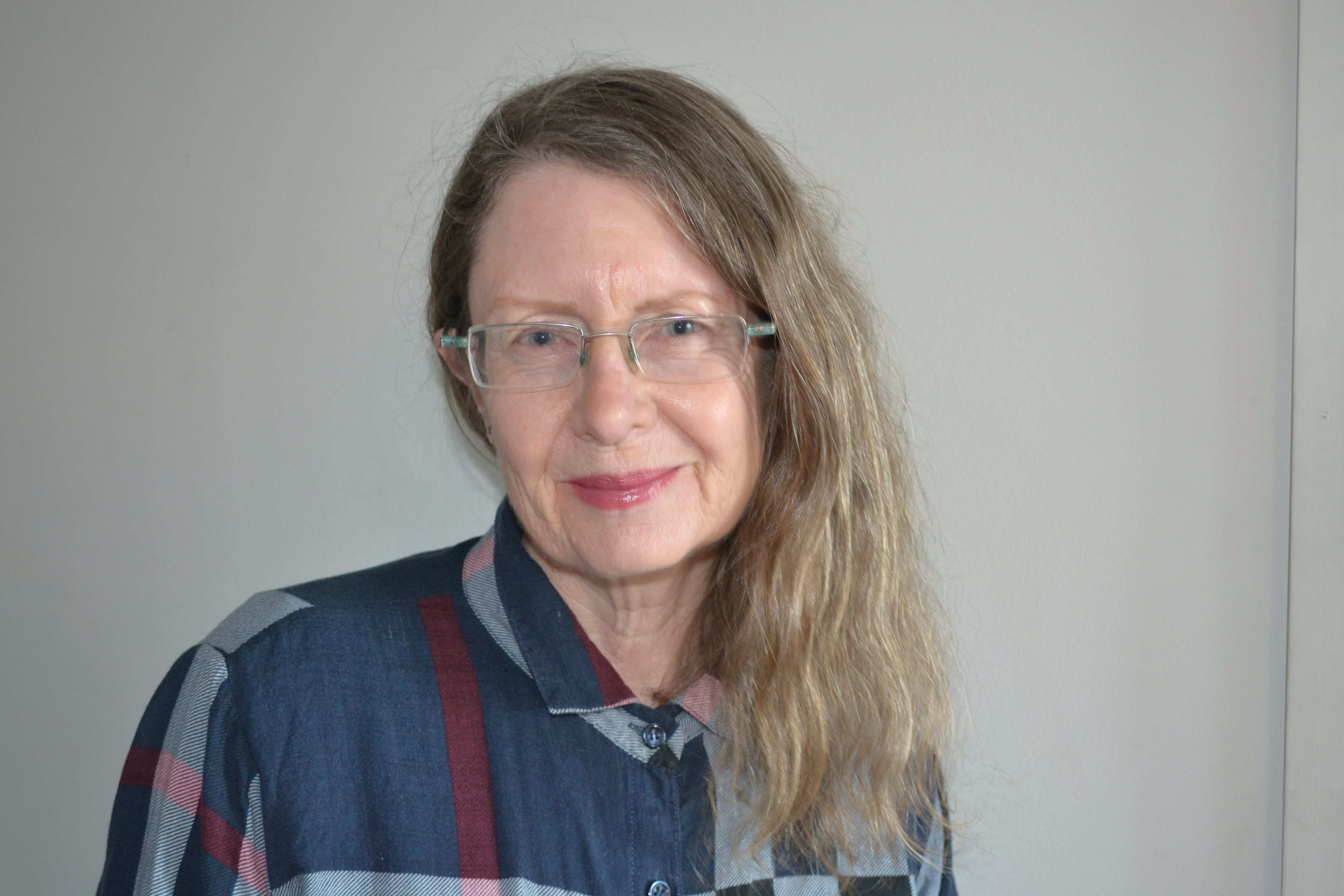
Jenny Powell lives and writes in Ōtepoti Dunedin. She is well published nationally and internationally. Her poems have been finalists in the Aesthetica Creative Works Competition, the UK Mslexia Poetry Competition, the UK Plough Poetry Prize, the Wales Poetry Prize, the Lancaster monologue competition, the Dunedin Theatre Awards and has work has been nominated for the Pushcart Prize and the Best of Net Prize. .
Powell is the City of Literature South D Poet Lorikeet. In this role she facilitates and promotes poetry projects and workshops throughout the community. . Outcomes have included posters, decals and a series of vibrant community publications in conjunction with the City of Literature.
Biology Field Trip [a different way of seeing] is her latest poetry collection and is published by Cold Hub Press.
we laugh like we used to. before the kids. before the house.
back when debts were settled with two coloured cats eye marbles and my only pokémon card i bought with my lunch money off my rich palagi mate.
when ceilings were creaking floorboards humming girl power anthems and ain’t that just the way that life goes down down
down down. like mike splitting free throw lines. i wanted to be the paekākāriki express.
chipping and chasing wild watercress shotgunned under rooftops of punga eels who sheltered clay soil paths dad spent a summer digging.
he carved our names into tree roots staircased to a creek where we’d wash our legs scraped with blackberry.
we ran through maize he grew chasing mystic moon views rising at the edge of his green thumb.
he planted his seeds with bootstraps calloused hands and we don’t need no education.
survived in motor oil whiskey breath rothman cigarettes.
half his mates didn’t survive asbestos or asphalt.
a few sit round his lounge now broken boned road workers fingers twisted in carpal tunnel gifting bags of greenery.
cancer scares cancer skin four hundred dollars a week in pension.
gettin up getting high gettin down gettin no-no-nowhere.
i sit across a table in remuera where white collars popped discuss what to do with their third property.
i stare at perfect crooked teeth dipped in italian red wine gnawing chipped paint off their beach house in a town
they can’t even pronounce.
reclined in a railroad home dads bones rattle and radiate we throw our hands up to celebrate him eating the first solid thing in weeks.
Time spins on a record player our wishes crackle into dust. can we pause for a moment? can we go back to the start?
i missed my favourite part.
i visit dry creeks wishing for the same thing. sandalwood burns through hallways and yeah
ain’t that just the way that life goes down. down. down. down.
Rex Letoa Paget from Manuali’i, Saufo’i Press, 2024
This poem is from my debut collection, Manuali’i, published by Saufo’i Press. At the time this poem came about, I was helping to look after my dad near the end of his life. One of my best friends introduced me to Thich Nhat Hanh’s Four Mantras of Presence, which inspired the four poems that open the Elysian Plains chapter in Manuali’i. This poem is one of my favourites of the four. It was sparked by Lutricia McNeal’s Ain’t That Just TheWay, a song my older sister used to play on all our summer road trips. It reminded me of childhood innocence, dreams not realised, and what it means to survive a system that is never on your side. I wanted to shine a light on the broken capitalist mentality around what hard work means and who benefits most from the labour of the working class. Rex
Rex Letoa Paget (Sāmoan/Danish) is a crafter of words born in Aotearoa, now living on the unceded lands of the Wurundjeri people. A keen observer of the world around him as well as the world inside of him. His poetry and storytelling are his compass through space and time. His first collection of poetry, Manuali’i, published by Saufo’i Publishing Press, was awarded the 2025 Jessie Mackay Poetry Prize for best first book of poetry at the Ockham New Zealand Book Awards. His offerings are lessons, learnings, and acknowledgments for the timelines and traditions of yesterday, today and tomorrow.
The most-asked question is do your cocktails have umbrellas in them? It’s true that here we have learned to make Pineapple Bombers. But no. That thing on the rim of the glass is the sun going down on America. When I first looked out from Waikiki I thought I was seeing the Pacific Ocean for the first time. People think we lie under umbrellas at the beach all the time,
but no. Mostly life goes on just the same. I am still planning my book, Talking Loudly: A Self-Help Guide for Better Communication Between the Members of Rock Bands. Seeing a need which has not diminished with distance. I am reading narrowly just as I always did, a sharp point under which there is no shade.
Anne Kennedy from The Darling North (AUP, 2012)
‘About Work’
I wrote this poem, which is part of a sequence of sonnets, when we were living in Hawai`i in the late-2000s. I hoped I was writing a diary-esque account of how, when big stuff happens – when people are suffering in the face of oppression and corruption – most of us continue with our tiny little lives.
Worth noting: the ‘sun going down on America’ bit isn’t just metaphorical. It really does go down last on Hawai`i.
About the form: I was quite new to poetry when I wrote this, and I was experimenting – which sounds odd when talking about the sonnet, and is! I grew to love the idea of tipping contemporary ideas and words into an archaic form (although of course, it’s a more modern version). As a person who mostly writes by the yard, I found the concise form, its parameters and turn, helped me shape what I wanted to say. I realized, oh, that’s what poets do.
Anne Kennedy’s most recent books are The Sea Walks into a Wall, The Ice Shelf and, as editor, Remember Me: Poems to Learn by Heart from Aotearoa New Zealand. She is the current editor of AUP’s New Poets series. Awards include the Prime Minister’s Award for Poetry, the NZ Post Book Award for Poetry and the Montana Book Award for Poetry. Anne lives in Tāmaki Makaurau.
at thy feet, in the bonds of love ground control to ranginui e tū iho nei i’m done guarding the pacific star it reeks like praying to politicians or noticing that waitī is looking like cowshit in my hautapu
hear our praises left choking on the oil drip, how desperate we are to say thank you for something worth thanking more than rugby my guts are clogged with residential developments with names like westwood heights or the dale
god of nations by whom i mean hinepūtehue from the shafts of gourd please play us a new song now, in their language if you have to, in whatever code they’re switching, hi-vis harikoa in the meadow fonterra boys promoting clean waterways on tv is making me wanna say every creed and every race but their one, and i wish tall poppies on them, and i wish all the children of the ngahere on us
asking thee to bless this place by whom i mean tāne who pushed apart his parents like a kid being uplifted and he meant for light and he meant for this to be un-hinged and what he got was economic growth and what he got was fast tracked 102 billion dollars in savings but not to be spent on saving us, still rationing the queens veges and asking for a refund
the cost of saying land back is the same price as a karakia when you have to ask for it, god defend our free wheeling and dealing god defend us all from the politicians who don’t want to pay and god defend the damaging pests that we don’t have the budget to control and god defend the politicians who are also the damaging pests and
god by which i mean papa defend anyone who’s looked extinction in the eye and said why are you looking at me like that
Isla Huia from Āta, Dead Bird Books Publishers, 2026
This poem is from my latest collection, Āta, which has just been released by Dead Bird Books. I think this poem still resonates strongly for me because the kaupapa is so relevant to our current situation, nationally, in the lead-up to the election. I was so taken by Mohamed Hassan’s poem of the same name, and the way he captured the ironies and contradictions between our political messaging and our treatment of Papatūānuku. I hope that my own version can put words to the feelings so many of us are reckoning with, and can do justice to Hassan’s original. Isla
Isla Huia (Te Āti Haunui a-Pāpārangi, Uenuku) is a kaituhi based in Ōtautahi. Her debut collection of poetry, Talia, was released in May 2023 by Dead Bird Books, and was shortlisted for the Mary and Peter Biggs Award for Poetry at the Ockham New Zealand Book Awards. Her second collection, Āta, has just been released. She has been published in journals and anthologies across Aotearoa including Ōrongohau Best New Zealand Poems,Takahē, Catalyst and Short | Poto. Huia is the current recipient of a Te Tumu Toi Arts Foundation Springboard Award, under the mentorship of inaugural Commonwealth Poet Laureate Selina Tusitala Marsh.
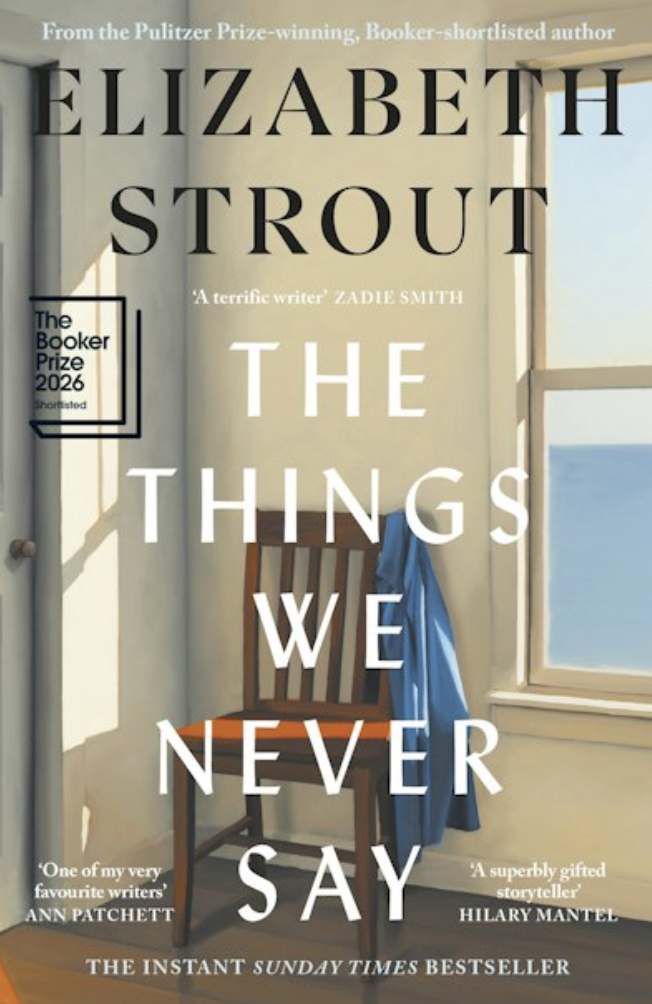
Dance Floor Romance, Chris Tse, AUP, 2026 The Things We Never Say, Elizabeth Strout, Random House, 2026
My Labour Day plans to have a café phone catch up with Anna, assemble blogs for the week, and watch a few things, flew out the window when our area lost broadband for most of the day! My family was away at a wedding so I found myself doing something I have never done before – moving between two books: a poetry book, Chris Tse’s Dance Floor Romance and a novel, Elizabeth Strout’s The Things We Never Say, shortlisted for the 2026 Booker Prize. I couldn’t have made a better choice. These electrifying reads make mind-enhancing partners.
I will be posting a review conversation with Chris to celebrate his stunning book over the coming weeks but in the meantime check out ‘Search history’, a poem from the new collection, I managed to post early yesterday! It got so much love.
Let me share a few thoughts on the most incredible novel I have read in ages. I wanted to weep and sing and dance as I read. I am full of ice chill and I’m full of human warmth. The book is a symphony of wisdom and humanity and is, in my view, written by a woman with her finger on the pulse of the world.
I don’t want to spoil it for you by giving away the folds and surprises but I do want to say that this book reminds me to listen to the person next to me, to their ills and woes and loves, to listen to myself, to my ills and woes and loves, to remind myself what is good for our students, our families, our friends, our planet. And I am reminded — especially in the light of my multiple degrees in Italian — of how an insidious and evil leader can hijack a nation but how some people maintain vital forms of resistance.
I am reminded of the gaps in our knowledge – how important it is to connect with history, whether that of the world or of our kin – of how we need the stories of parents and grandparents and beyond. I mourn the gaps in understanding who and how my mother and father were.
The protagonist, Artie Dam, is one of my all time wow expand-my mind-and-heart characters – a history teacher, a father, husband, friend, a mesh of complications as we all are . . . a meeting ground of jagged edges and healing grace. The tears are welling again as I write these lines.
I love this book so much. I love that it speaks not preaches, that it shows the simple within the complicated, the complicated within the simple. I have placed it on the table for my family to read because this book is a gift of hope. It is a gift of connection and listening and upholding ways to do good and yes it furnished the best Labour Day I have had in years.