Monthly Archives: March 2025

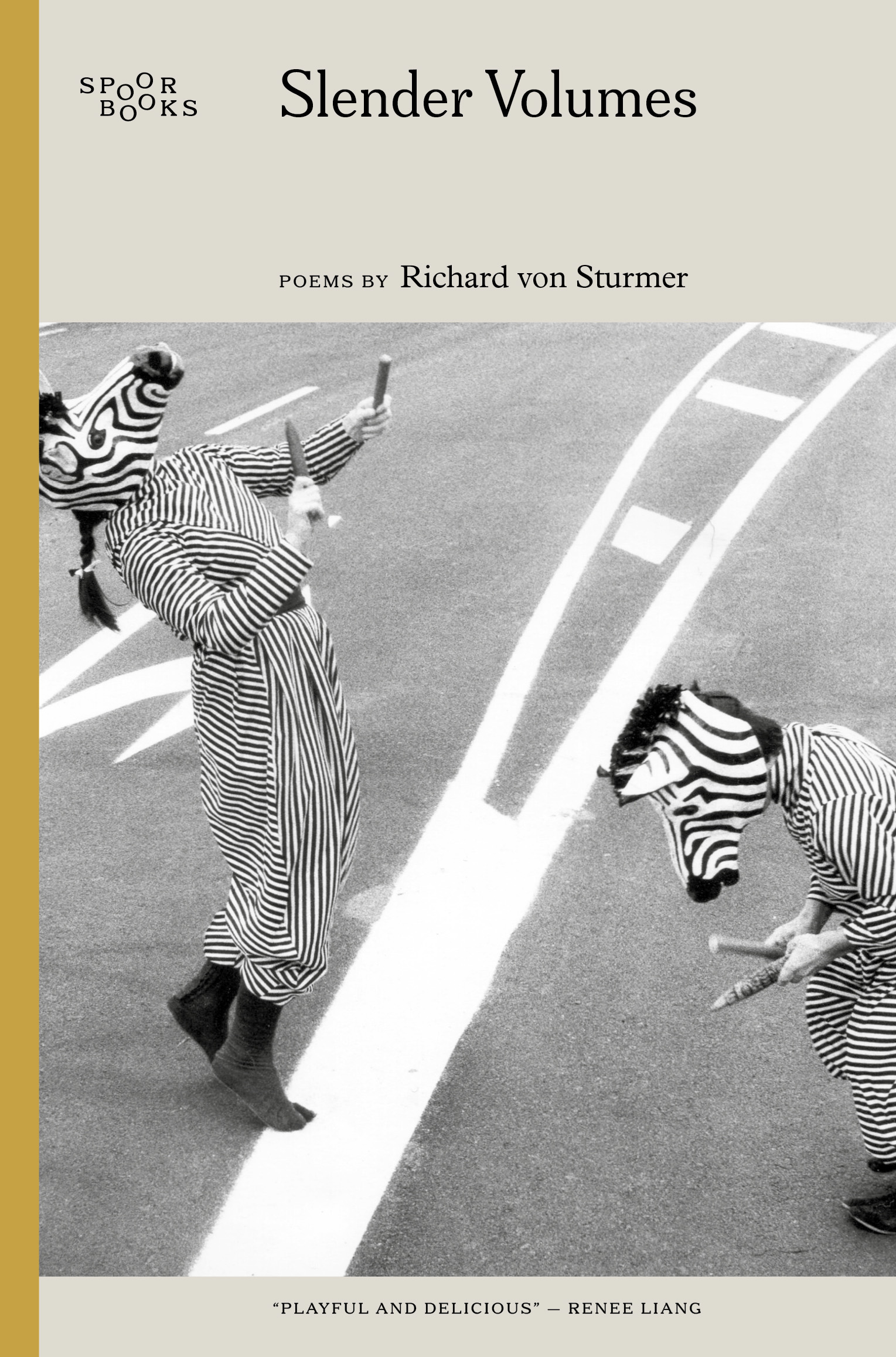
Poetry Shelf celebrates Ockham NZ Book Award Poetry shortlist: Richard von Sturmer

Slender Volumes, Richard von Sturmer, Spoor Books, 2024

To celebrate the four collections on the Ockham NZ Book Award Poetry Short list I invited the poets to answer a handful of questions, and to select a favourite poem from the book and by another NZ poet.

Reading this collection is to savour the gift of slowness, a slowing down to absorb the world, the things we hear see smell feel, back in the past, here in the present. And yes, it becomes a form of slow travel, reading these 300 poems, strengthening feet on the ground, hearts and minds set to uplift. Yes. Reading this exquisitely crafted collection is to travel with roadmap still in the pocket, to fall upon egg-whisk clouds in the sky hot water bottle Buddha Plutarch Dante a washing machine coffee with a drop of milk. It is to travel to Bologna Sydney New York Venice Poor Knights Islands Honolulu Auckland Mount Wutai Yumen Gate.

For me it is neither source nor destination but the travel itself. I am falling into the utter joy of writing and reading as travel. As discovery surprise wonder. A world in ruins and a world in repair. Richard is translating the koan within his own time and place, his own narrative, and I find myself doing this I read.

And that is what poetry can do. This book. These poetic vibrations, these wisdoms. Openings. Autobiography. Meditations. Poetry as an intimately and intricately woven cloth of both experience and imagining. Personal. Resonant. Anchored and anchoring.

Were there any highlights, epiphanies, discoveries, challenges as you wrote this collection?

Just to let everything drop (thoughts, expectations) and to see what appears.

Is there a particular poem in the collection you have soft spot for?

As there are 300 poems it changes. At the moment:

Linji Sees Huangbo Reading a Sūtra

Linji believed that a true Zen master should ignore the written word. But didn’t he know that The Lankavatara Sūtra states: “Things are not as they seem, nor are they otherwise”? The clouds read the wind, and their shadows read the fields. The large clock in the hall of the railway station reads the moving escalators. Waves scroll across the surface of the sea. And in their caves and crevices crabs turn over pages of seaweed, deciphering each grain of sand.

What matters when you are writing a poem? Or to rephrase, what do you want your poetry to do?

To open a door.

I would find this impossible to narrow to one example, but is there a poem by a poet in Aotearoa that has stuck with you?

The Darkness

My father had a plan to float down
part of the Waikato River
on a lilo
through the darkened canyons
seeing things
that you could never see
from up above

The plan was for my mother
(They were newly courting
not yet married
Junior Hospital
House Surgeons
in Hamilton)
to let him off at one reserve

then drive downriver
& pick him up
at the other end
She drove downstream
& waited
for hours
(it seemed)

She worried that he might have fallen off
The airbed gotten tangled at a bend
When he finally floated
out of the darkness
he was soaked to the skin
chilled to the bone
“I don’t remember anything about it”

“No, but I do,” she says to him

Jack Ross
A Clearer View of the Hinterland: Poems and Sequences 1981-2014 
(Wellington: HeadworX, 2014)

Are there particular poets that have sustained you, as you navigate poetry as both reader and writer?

Rainer Maria Rilke

We are living in hazardous and ruinous times. Can you name three things that give you joy and hope?

Getting out of bed each morning, sunlight, the company of a beloved.

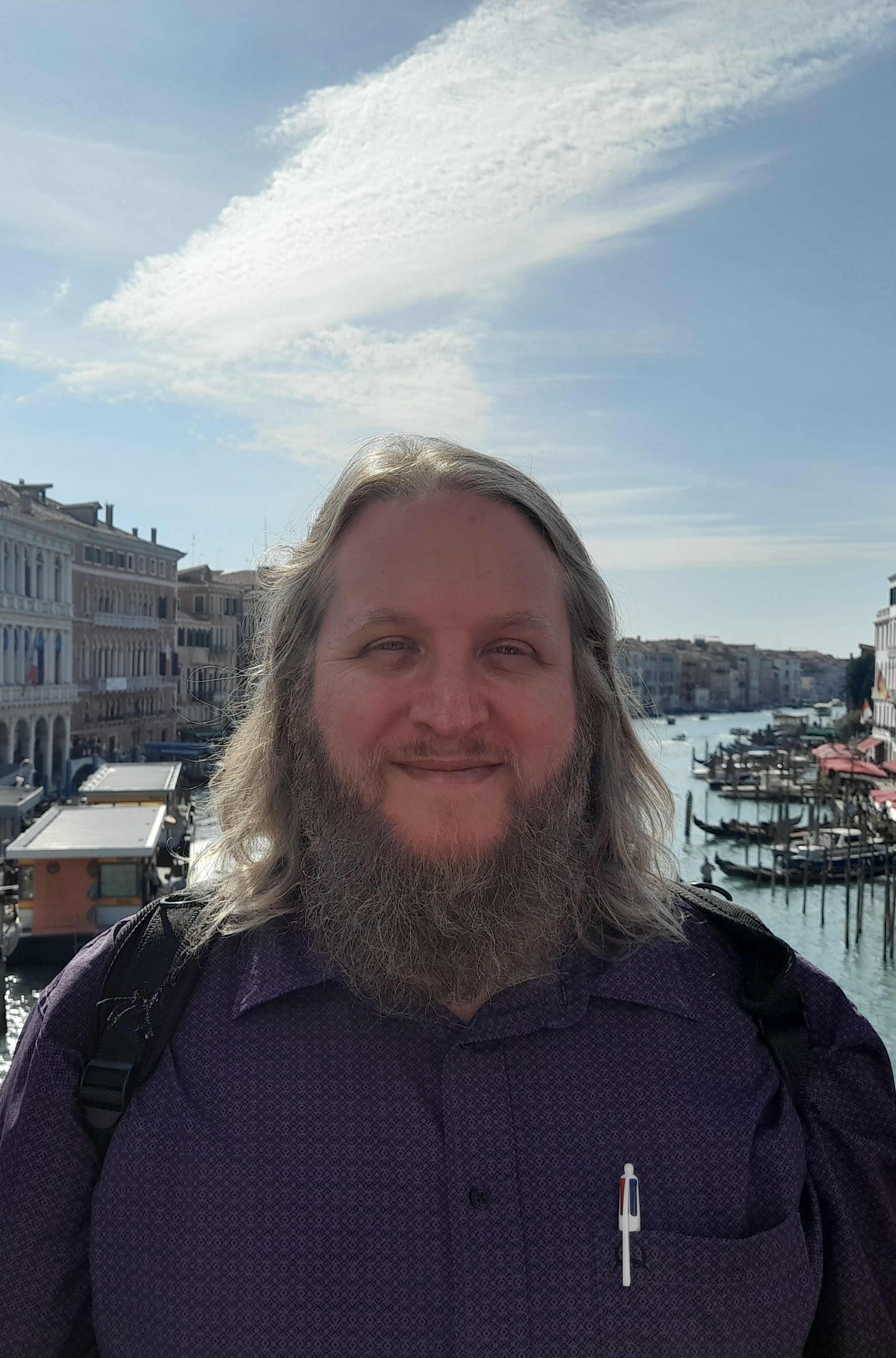
Richard von Sturmer is a writer, performer and filmmaker who is well known for having written the lyrics to Blam Blam Blam’s “There is No Depression in New Zealand”. He is a teacher of Zen Buddhism and the co-founder of the Auckland Zen Centre. Slender Volumes is his tenth collection of writings.

Spoor Books page

Richard von Sturmer is a writer, performer and filmmaker who is well known for having written the lyrics to Blam Blam Blam’s “There is No Depression in New Zealand”. He is a teacher of Zen Buddhism and the co-founder of the Auckland Zen Centre. Slender Volumes is his tenth collection of writings.

Spoor Books page

Richard reads several poems here

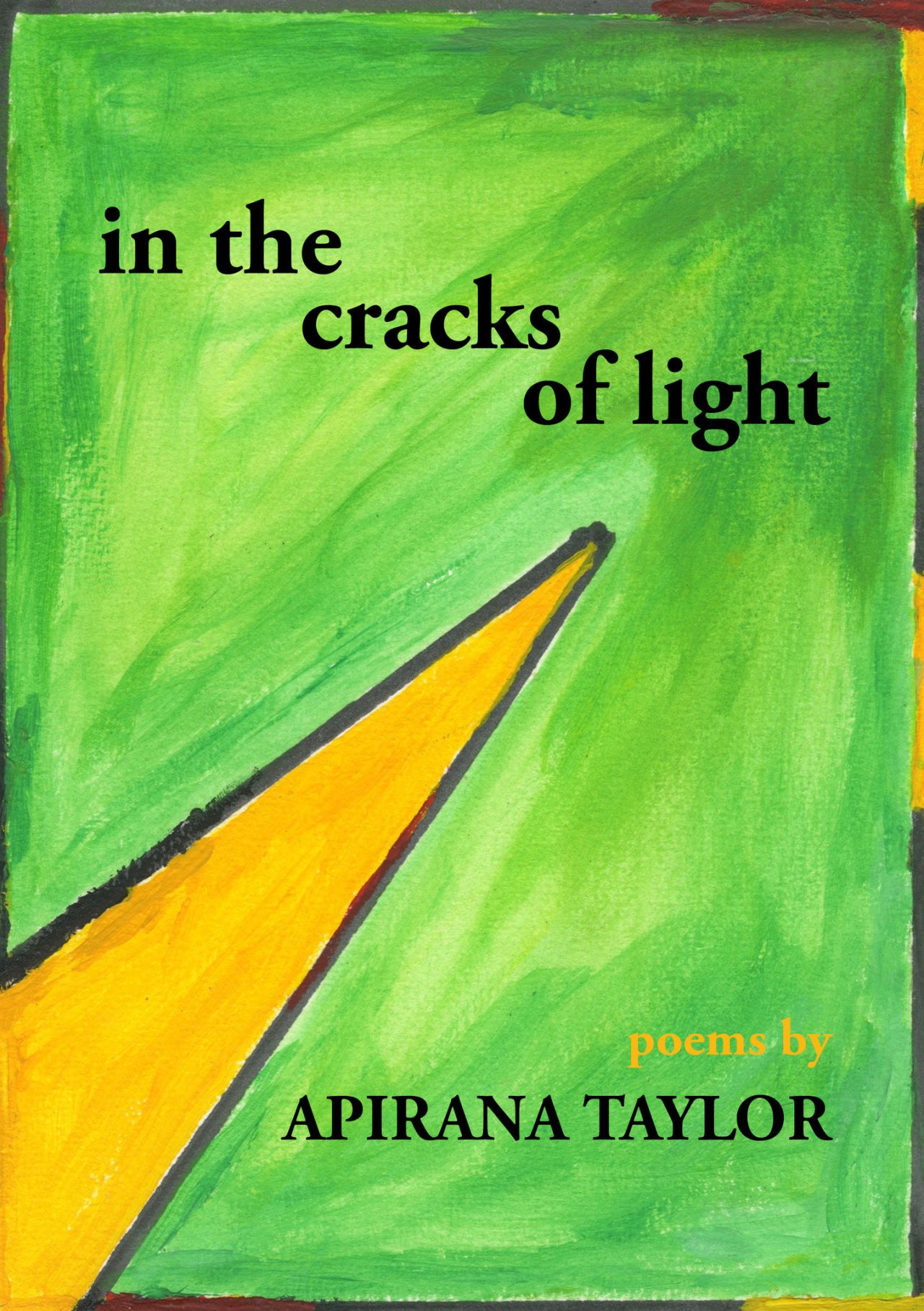
Poetry Shelf Review: in the cracks of light by Apirana Taylor

in the cracks of light, Apirana Taylor
Canterbury University Press, 2024

bud

the poet tree
buds forever


Apirana Taylor


in the cracks of light is an apt title for Apirana Taylor’s collection of poems, a book that begins with the idea that poetry is born out of light and dark. It is a perfect book to pick up this week, when life itself clings desperately to cracks of light, when words, against all odds, are a way of building light across the globe.

Apirana begins with a wahine’s call on the marae, with the welcoming ‘karanga mai, karanga mai’, and I am hearing that call. I am hearing that call with everyone together.

the people weave the light
from threads of memory
stories stitching weaving
everyone together with laughter tears and kōrero


from ‘karanga’

This is a collection of wonder, acknowledgement, aroha, home, descendants. It is a book of protest and it is a book of plantings. It is a book of the land and the people, of listening looking reflecting.

Apirana’s lyrical craft exemplifies the way spareness on the line can open out into a lingering richness. The poems, some short, some longer, become song. A flower that slowly opens as we read. A poetic bloom. An album in the key of hope.

I am musing on how the stories we carry with us over generations shape us, from times of protest and challenge to the time of planting kūmara, fingers in the life-enriching soil. Sharpness and edge, tenderness and wisdom.

Think too of this book as a handbook, a guidebook on writing. The poet is ‘raining poems’. He will write of rivers, mountains, lakes, seas, the land, the poor, ‘for that is the dream’ (‘to write’). He will write of beauty and wonder (‘microscope’), and I am wondering, let’s say wandering, into the realm of miniature detail in the wide expanse of a view.

Pick up Apirana’s sublime collection and like me, you might weep, feel and celebrate the power of words connect, heal and pay attention. This collection, penned in the key of love, is a gift, a taonga.

catch the wind


oh poem

raise your sail
catch the
wind


Apirana Taylor

Apirana Taylor was awarded the 2024 Prime Minister’s Award for Literary Achievement in Poetry. He is a poet, playwright, novelist, short story writer, storyteller, actor, painter and musician. His prose and poems have been translated into many languages and are included in many nationally and internationally published anthologies. Api travels to schools, tertiary institutions and prisons throughout New Zealand to read his poetry, tell his stories and take creative writing workshops. He has now published seven collections of poetry, three collections of short stories, two novels and three plays. Api is of Māori and Pākehā descent, with proud affiliation to Ngāti Porou, Te Whānau-ā-Apanui and Ngāti Ruanui.

Canterbury University Press page

Poetry Shelf noticeboard: Michael King Writers Centre 2025 Australian Residency 

for more details and online form

Michael King Writers Centre 2025 Australian Residency 
Monday 20 October to Monday 17 November 2025
Applications are Now OpenThe Michael King Writers Centre in association with Varuna, The National Writers’ House in Katoomba, NSW, Australia is pleased to announce for the fourth time, a residency in Australia for New Zealand writers.  
This four week residency is open to mid-career or established writers who have had a book published in the last two years.
The writer awarded the residency will receive return economy airfares to Sydney, accommodation with all meals included, plus the opportunity to present their work at the Blue Mountains Writers’ festival.

Applications close on Monday 31 March and the selection is expected to be announced in May.

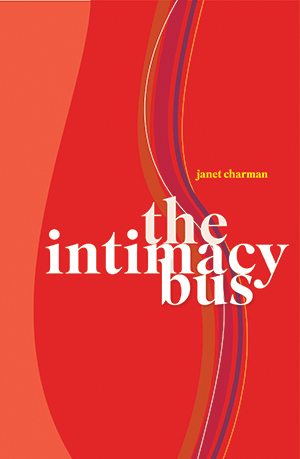
Poetry Shelf noticeboard: Janet Charman launch

Invitation from Otago University Press

Join us to celebrate the launch of The Intimacy Bus, a new poetry collection by Janet Charman.

6:00pm–7:30pm
Thursday 13 March 2025
The Women’s Bookshop
105 Ponsonby Road
All welcome!
Please RSVP to publicity@otago.ac.nz for catering purposes

ABOUT THE BOOK:
In The Intimacy Bus, award-winning poet Janet Charman reckons with some of life’s heaviest traffic: bereavement, grief, ageing, loneliness, gender, sexual identity, power and inequality. Along the way, the collection gathers up encounters with friends and strangers, and reflections on matters as various as Korean telenovelas, classic films, personal memories, ‘modern life’, real estate, ‘sex treats’, companion animals, a favourite hairdresser, finding joy, a grandmother’s politics and the rapper Psy.

Shorn of sentiment, direct and uncompromising, Janet Charman’s The Intimacy Bus arrives as an irrepressible affirmation of love, life and lesbian desire.

ABOUT THE AUTHOR:
Janet Charman is one of New Zealand’s sharpest and most subversive writers, described by Anne Kennedy as ‘a complete original in voice and content’. The Intimacy Bus is Charman’s tenth collection of poetry. In 2008 she won the Montana Book Award for Poetry for Cold Snack. In 2009 she was a visiting fellow at the International Writers’ workshop of Hong Kong Baptist University. In 2014 she appeared as a guest reader at the Taipei International Poetry Forum. Her most recent poetry collection, The Pistils (Otago University Press, 2022) was longlisted for the Mary and Peter Biggs Award for Poetry in the 2023 New Zealand Ockham Book Awards.

Facebook event page

About The Intimacy Bus

Poetry Shelf Monday Poem: ‘Kailua Crystals’ by Selina Tusitala Marsh

Kailua Crystals

(for Sinavaiana, tragically taken too soon)

I walked into Kailua
Crystals, thinking of you,

The stones and essential oils
You packed, along with your

Yoga mat, for our work trip
To Savai’i, a small apothecary

In your beach fale, and I had
A heavy head and you said

‘Come, darling, come’ and rubbed
Frankincense on my pulse points

Fingers cooing in soft circles,
‘There, darling, there’ and we sat

By the ocean, sipping niu and crunching
Salty potato chips and later walked

Out to the blow holes at
Taga i Savai’i and your

Spirit animal, the matu’u,
A moon-silver reef heron

Landed on a rock before you
Calling ‘See you soon, sister, see you soon.’

Selina Tusitala Marsh

Selina Tusitala Marsh is a poet, scholar and author-illustrator of the award-winning series Mophead. She is this year’s Katherine Mansfield Menton fellow.

Poetry Shelf celebrates International Women’s Day

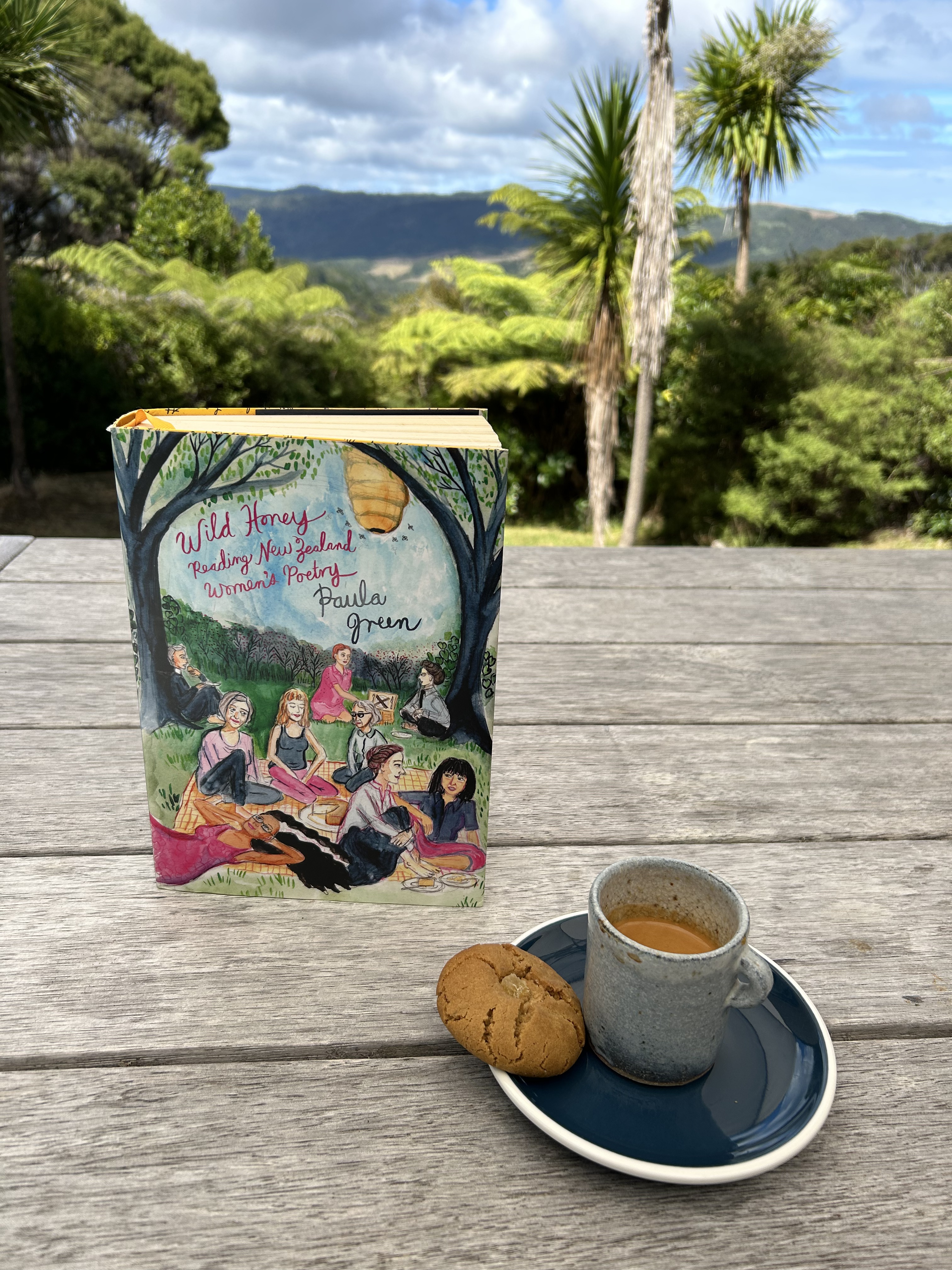
Women have published poetry in Aotearoa for 150 years, but many slipped from public view, were not paid the honour due to them in their lifetimes. Many found it difficult to break the literary hierarchy in order to be published and to write what and how they wanted. In 2019, Massey University Press published my major work, Wild Honey: Reading New Zealand Women’s Poetry. Publisher Nicola Legat welcomed my proposal with open arms and worked tirelessly to help bring the book into the world. I picked up the book today and was immediately returned to the joy of research and discovery, the need to open rather close women’s writing, to assemble a wide range of voices across time, place, age, culture, subject matter and style. Honestly, with my tiny jar of energy stretching to its limits to nourish my blogs and work on my own writing projects, I don’t know how I managed to research and write this book.

Today I will share a few morsels from it. Sarah Laing did gorgeous artwork for the Wild Honey cover, a group of poets picnicking. On the front: Selina Tusitala Marsh, Alison Wong, Ursula Bethell, Elizabeth Smither, Fleur Adcock, Airini Beautrais, Jessie Mackay, Blanche Baughan and Robin Hyde. On the back: Tusiata Avia, Hinemoana Baker, Michele Leggott, Anna Jackson and Jenny Bornholdt.

The early women, such as Jessie Mackay, Blanche Baughan, Eileen Duggan and Ursula Bethell, paved the way for the poets to come. These women communicated with each other, and with other women interested in literature and politics. A bit like we do today. A bit like the cover of Wild Honey. Today when I review books, I am delighted to read in the acknowledgements pages that women continue to draw strength from other women poets.

So today on International Women’s Day, I firstly toast four early women poets, and then include a poem from Amy Marguerite’s debut collection, over under fed (Auckland University Press, 2025). It feels perfect to post a poem from this brand new book, this sublime arrival, with its layerings of hungers and intensities, hauntings and recognitions. I will feature Amy and her new book in the coming month or so.

I have three copies of Wild Honey I would like to sign and give away. Leave a comment here or my social media pages if you would like one. Maybe name a poetry collection by a NZ woman poet you have loved.

Jessie Mackay

The Pearl of Women — strong and free;
Great as the coming woman, she.
Deep learn’d and read in student lore;
A mind enlarged to grasp at more.

from ‘The Pearl of Woman’
The Spirit Of Rangatira and Other Ballads
George Robertson, 1889

To enter the ‘feminine’ is to enter a risky label that might limit, stereotype or conversely enrich how we view women. Mackay cannot be pinned to either side: in her writing she is unafraid to represent beauty or challenge beastliness. She unafraid to speak out, and if you consider that feminism is a matter of of making women visible, of giving presence and possibility to women, of expanding options, then Mackay was a feminist.

                                                (…)      Hers
Was a keen taste in little things ; she loved
That trivial, intimate, long-drawn-out talk
Of daily happenings, in-and-out details,
And chance of new-old changes, by whose help
Women in villages make shift to weave
Some kind of colour’d arabesque as fringe
To Life’s web, hodden-gray.

from ‘Reuben’
Reuben and Other Poems, Archibald Constable, 1903

I view Baughan’s collections not in the light of a settler-poet inventing a way to forge a poetry-home and failing at every turn, but as a journey to recognise and find peace within her invented and reclaimed self. Her writing cannot be pigeonholed within poetic genres or colonial narratives without losing sight of the woman writing. This is a story partly told. There are many tracks through Baughan’s poems. I have used her skeleton biography to stake a provisional route. Other critics have examined the way Baughan’s poetry grapples with the challenge of writing within the slow and thorny genesis of an emerging New Zealand poetry. The ink in the woman’s pen is not undercut by a lack of vocabulary or pioneering syntax. There are ways we can repack our knapsacks and absorb and feel her poems.

Eileen Duggan

We are the wheat self-sown
Beyond the hem of the paddock,
Banned by wind from the furrows,
Lonely of root and head

from ‘New Zealand Art’,
Poems, NZ Tablet Co, 1921

Duggan wrote as a way of anchoring and liberating the physical and spiritual contours of home, and that home was resolutely New Zealand. Her poetry embodied New Zealand. Just as New Zealand was a form of poetry for her. Yet for decades Duggan’s poetic choices rendered her version of home mute. She is our pioneering songbird.

Ursula Bethell

But then these stinging sun-roused messages
tossed hither salt-cold from the pacific sea;
those foremost, dawn-dyed, rose-red eminences,
those snow-fast, soon-to-be-incarnadined strongholds beyond …..

from ‘July 9. 1932. & A.M.’
Collected Poems, Caxton Press, 1950

The more I read Bethell’s poetry and letters, the more I move beyond her characteristic reserve, the more I feel that this is a woman to whom I could devote an entire book. She is a knotty mix of reticence, acute intellect, acerbic advice, crippling heartbreak and poetic dexterity. Bethell rightly countered M. A. Inne’s claim in her 1936 Press review of Time and Place that ‘the poet knows no school mistress but her garden’ with the point that ‘the garden was a brief episode in a life otherwise spent’.

Amy Marguerite

home to you

cate le bon wrote a song called
what i called this poem it’s
4.13 i want a beer and paul’s
celebrating his graduation
at the bar i’m invited and that’s
so nice. it’s usually a bad sign
when i just want to drink
alone. it wasn’t usually bad
until claudia i got so ill then
better again when she went
to england and stayed there.

a week before i moved to melbourne
i told helen that i had fallen
in love. she said that’s usually
what happens and i nodded
at the screen like it had
happened before. it’s maybe
like finally writing the poem
for the first time like finally
telling that difference to matter.

tonight i’ll put on james salter’s
reading of ‘break it down’
wait as i usually do for the old shirt.
i don’t dread the endings of
things i’m going to have to
leave that somehow unlearn
autumn and get a job. but
my desire is not entirely over
in this place i’m still unleashing
pathetic furniture stopgaps for
when the beer fails and it does that
a lot up half the night without you.

i think so many stories are
flights we forget to run for
bridges we can’t drape across
the feeling only ever properly
borrowed if i never give
it back. i’m sick of the torch on
everything. that’s always
not mine. hung up on all that
true pretending like an unrequited
apparition old shirt without
ever actually calling it old and
there’s the usual design. i’m
not incapable of it just unfit
to adequately adore it compromise
the corporeal sconce how it
makes me real. are you as well
drinking alone with ungood thoughts.
reimagining that home to.
that home
too.

Amy Marguerite
from over under fed, Auckland University Press, 2025

Amy Marguerite is a poet and essayist based in Tāmaki Makaurau. She completed an MA with distinction in creative writing at the International Institute of Modern Letters in 2022. Her poetry has appeared in anthologies including Spoiled Fruit and white-hot heart and has featured in literary journals, magazines and publications including Starling, Turbine and Sweet Mammalian. Her essay on the new generation of Aotearoa poets appears in Auckland University Press’s forthcoming anthology Te Whāriki.

Blanche E. Baughan (1870-1958) was born in Surrey England. She graduated from the University of London and was its first student to gain a BA (Hons) in Classics. A poet, nonfiction writer, social worker, prison reformer and suffragette she was initially published in England. She travelled to New Zealand in 1900, eventually settling on the Banks Peninsula in Canterbury. Blanche published several poetry collections, along with books of prose pieces (Brown Bread from a Colonial Oven, 1912), travel writing (Studies in New Zealand Scenery, 1916) and articles on prison (People in Prison, 1936). In 1935 she was awarded the King George V Jubilee medal for her services to social work. Damien Love edited a selection of her writing in 2015.

Ursula (Mary) Bethell (1874-1945) was born in England, raised in New Zealand, educated in England and moved back to Christchurch in the 1920s. Bethell published three poetry collections in her lifetime (From a Garden in the Antipodes, 1929; Time and Place, 1936; Day and Night, 1939). She did not begin writing until she was fifty, and was part of Christchurch’s active art and literary scene in the 1930s. A Collected Poems appeared posthumously (1950). Her productive decade of writing was at Rise Cottage in the Cashmere Hills, but after the death of her companion, Effie Pollen, she wrote very little. Vincent O’Sullivan edited a collection of her poetry in 1977 (1985).

Eileen Duggan (1894-1972) of Irish ancestry was born in Marlborough, and grew up in Tuamarina, near Blenheim. Duggan graduated from Victoria University with an MA First Class Honours in History (1918). She briefly taught as a secondary school teacher, and as an assistant lecturer before devoting herself to writing full time. She wrote essays, reviews, articles, a weekly column for the New Zealand Tablet (from 1927) and published five collections of poetry. Three collections were also published in the United States and Britain to international acclaim. She left a substantial body of unpublished material which Peter Whiteford drew upon for Eileen Duggan: Selected Poems (1994). She was awarded an OBE (1937) and was made an Honorary Fellow of the Royal Society of Literature (1943). She lived most of her adult life, with her sister, in Wellington. 

Jessie Mackay (1864-1938) was born in the Rakaia Gorge, Canterbury, to Scottish parents. After training as a teacher at Christchurch Normal School, she taught at Kakahu Bush School (1887-1890) and Ashwick Flat School (1893-1894). She then worked as a journalist, writing a fortnightly column for the Otago Witness from 1898 and then as Lady Editor at the Canterbury Times, and as a freelance writer. She was an active member of the National Council of Women and strongly supported the suffragette movement. She published six collections of poetry. In 1936 Mackay was granted a life pension of £100 for her contribution to New Zealand letters, and in the year of her death, PEN organised the Jessie Mackay Memorial Prize for verse.

Poetry Shelf review and reading: Doc Drumheller’s Hotel Theresa

Hotel Theresa, Doc Drumheller, Cold Hub Press 2024

‘I planted my root in the hills like a hermit’

from ‘The Second Coming’

Doc Drumheller’s latest collection of poems was inspired by a visit to Hotel Theresa in Harlem, New York. An iconic hotel where legends such as Josephine Baker, Duke Ellington, Malcom X and Muhammad Ali stayed. The resulting poetry navigates multiple travels and multiple belongings. A dual citizen of USA and Aotearoa, Doc has also spent time in Asia, Europe and Central America. The poems themselves are seasoned travellers, having appeared in a terrific range of international journals.

What draws me deep into the collection, where home is as vital as a captivating elsewhere, is the way travel is a mesh of experience. Each poem is a set of seven couplets. I felt like I was on board a train with its mesmeric beat on the tracks, a visual beat say, that carries a sequence of fascinations. Every time you look into, and out of the window of the poem, the physical detail and musings resonate. If the poem is an excellent vehicle for travel, and yes it is, it includes foraging, shimmering, transforming, planting. There is suffering and there is singing. There are eulogies and there are odes. There are history markers and childhood memories.

I love the feel of this book in the hand, the paper stock and the internal design, and especially the nostalgic hotel postcard on the cover. I love how I travel from a lollipop man reciting poetry to a two-legged carrot and vegetable waste in the supermarket. You move from traces of the Christchurch earthquake to the legacy of slavery and of war, and to the final resonant poem, where the word you carry away with you is kindness. And that matters, in this collection that draws personal musings and belongings, local whanau and distant family, close.

‘You said to me: “Poetry is the shadow
cast by our streetlight imaginations.”‘

from ‘Via Ferlinghetti’

The readings

‘Via Ferlinghetti’

‘Hotel Theresa’

‘Viva la Vida’

Doc Drumheller is an award-winning poet, musician, dramatist, and has published 11 collections of poetry. His poems are translated into more than 20 languages, and he is the editor and publisher of the New Zealand literary journal Catalyst. He was elected to represent New Zealand on the Executive Board of the World Congress of Poets, and is the editor in chief of the World Congress of Poets literary journal Fuego. He has represented New Zealand at poetry festivals all over the world, and widely throughout NZ. His latest collection is: Hotel Theresa, Cold Hub Press, 2024.

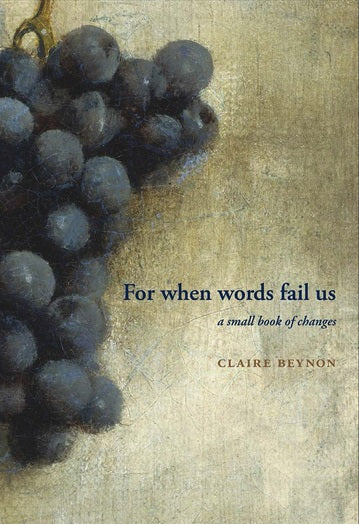
Poetry Shelf review: For when words fail us by Claire Beynon

For when words fail us: a small book of changes
Claire,Beynon, The Cuba Press, 2024

They agree, it’s not so much
that we put down roots
in a place.

It’s that a place
puts down roots 
in us.


Claire Beynon
from ‘Scrambled eggs & straw for the fire’

One of the many joys of poetry is how it is an open field of possibilities: how we score a poem’s music, interlace its subject matter, play with its form, reveal and conceal, draw upon other genres, invent and philosophise. As poets we become so many things. In Claire Beynon’s haunting new collection, poetry enters the terrain of memoir, narrative, travel, conversation, imagination. It is a book of here, and a book of there, a book that sends me back to the poetry of Pablo Neruda, Keith Jarrett’s extraordinary Köln Concert, Lewis Hyde’s The Gift.

A woman meets a man at an exhibition opening in New York, she from New Zealand, he an American, and their conversation continues online over the ensuing decade. They talk about paintings, poems, writing, books, sharing here and there by emails, over the internet. But a visit to New Zealand, and what lies under the skin of conversation, becomes more unsettling.

The shifting fonts in the sections of the book reflect the shifting seasons, the way the narrative refracts, prism-like, to touch upon different states. Trust, obsession, estrangement, entanglement, jealousy, storm, gentleness, the unrecognised, the unspoken.

Certain words are crossed out, making the internal editing process of the poet deliberately visible, as though we are shadow-tracking the poet’s need to find enough clarity to write knots fractures schisms epiphanies. To speak of the movement between his ‘beloved’ and his ‘obsession’.

(..) She’s grateful to the oceans
and continents for defending defining
the distance between them


from ‘Scrambled eggs & straw for the fire’

In her endnote, Claire tells us the book is ‘a work of memory and the imagination’, that the anonymous man is real, and some of his words are included with his permission. As I read slowly, I am haunted by the way the poetry is navigating distance and gap, yes the space between USA and New Zealand, but also between man and woman, knowing and unknowing, attaching and detaching, repairing and restoring. Perhaps I read this as bridge writing. Between the sections, Claire quotes a stanza from ‘The Waking’ by Theodore Roethke, and includes a mirror image of the stanza. And here I am gain, musing on how a poem might be a means of refracting experience, seeing it in multiple surprising lights. And if I return to Theodore’s poem, writing a poem might also be: ” I learn by going where I have to go.’

This gentle, slow-paced reflective collection is both leaving and arriving, holding close and letting go. A haunting of bridges indeed.

All that remains is this—
this concentrate of poems
drawn tight around the heart.


from ‘What falls away is always’

Claire Beynon is an artist and writer living in Ōtepoti Dunedin. Her poetry, flash fiction and short stories have been widely pub-lished and anthologised in Aotearoa and abroad. She has been a runner-up in the Sunday Star Times Short Story Competition and in 2002 was the winner of the NZ Poetry Society’s International Poetry award. In 2021 her poem ‘Today’s Sky’ was awarded the Takahē Monica Taylor Poetry Prize.  Claire combines the contemplative rhythms of writing and art-making with a range of interdisciplinary collaborations. Two summer research seasons in Antarctica continue to inform her work. Her first collection was Open Book: Poetry & ImagesWebsite

The Cuba Press page

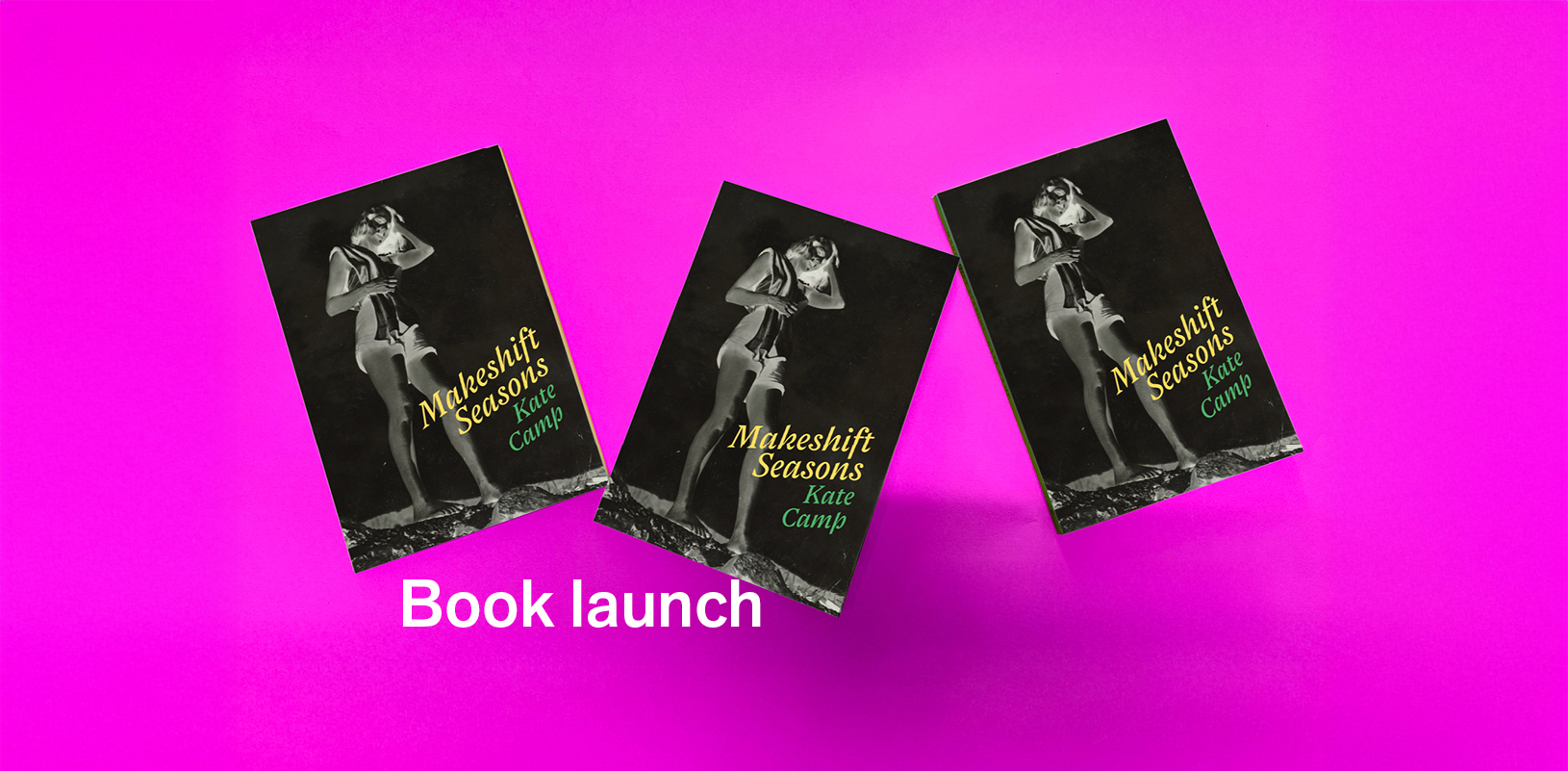
Poetry Shelf Noticeboard: Kate Camp launch


Please join Te Herenga Waka University Press for the launch of Makeshift Seasons, an extraordinary new poetry collection by Kate Camp. An avid sea swimmer, Camp sets many of her poems at Wellington beaches. The launch event will feature a reading of sea-centred poems, including a number featuring her local swim spot, Island Bay. There will be refreshments, poetry, and an optional evening sea swim!

Thursday 20 March
6pm

Island Bay Marine Education Centre, Wellington
View more info on our Facebook page.

All welcome!

The failings of the body
can be a form of company
a trapped nerve ringing in the night
like music.

Kate Camp’s poetry has been described by readers as fearless, affable and ‘containing a surprising radicalism and power’. In her new collection, she is ever alert to the stories unfolding all around us and inside our own bodies. As she is striding away from hope, she is also holding on tightly to the promise of morning. The poems move between distant planets and Chappies Dairy, between Mont-Saint-Michel and the lighthouse in Island Bay, with every moment, every feeling, every conviction on the edge of becoming another.

Like the plumber who can hear water running deep underground, Makeshift Seasons is a book of extraordinarily sharp sensing and knowing.

Author photo: Ebony Lamb