
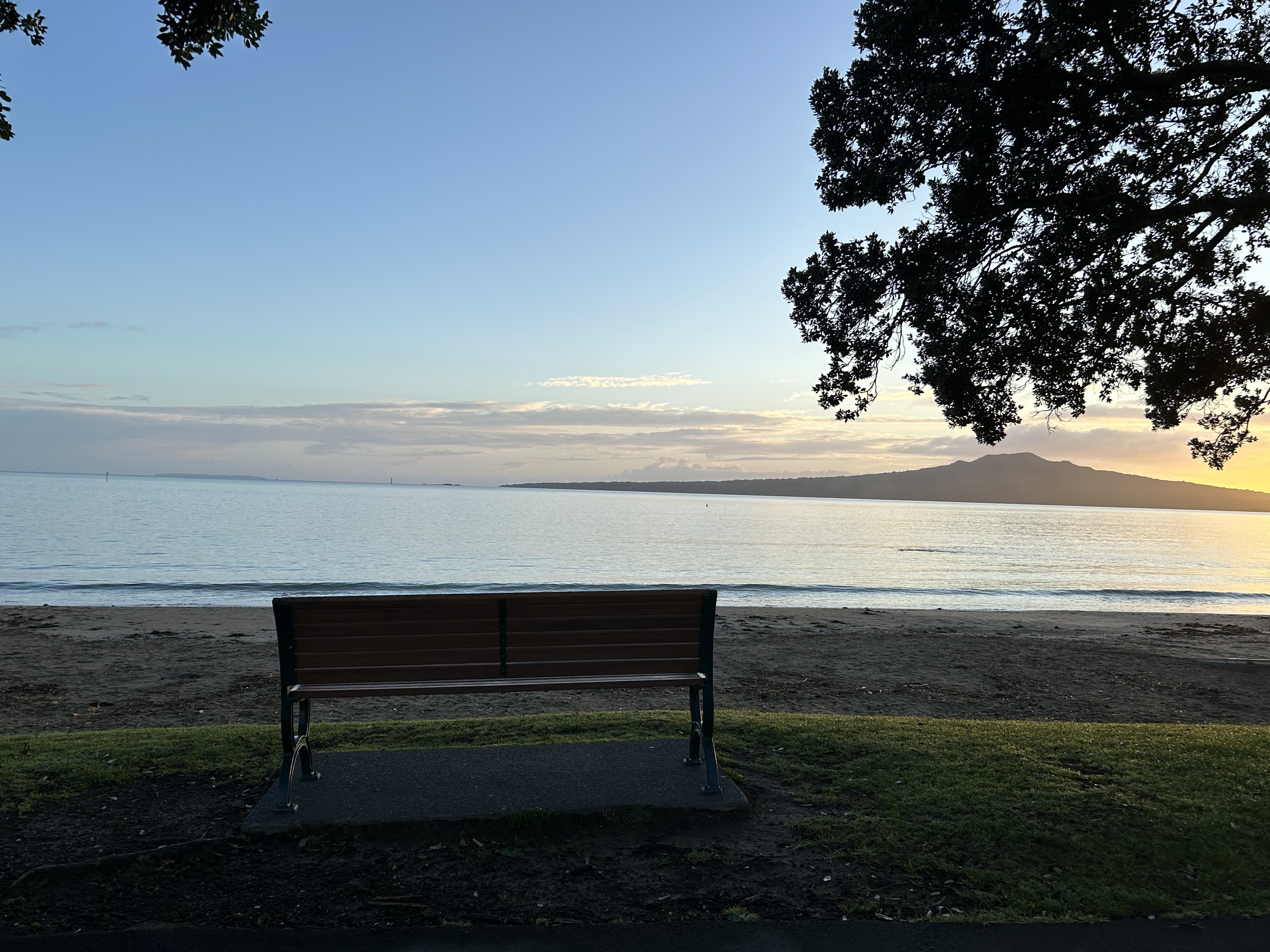
The final theme in this series is harbour.
I am drawn to all kinds of harbours: harbours that offer beauty, that keep us safe, that are mirages on a horizon, havens we invent for both mind and body in this challenging world of clamour and catastrophe. The way harbour can be a gathering, a meeting place for birds or water, ideas or conversation. And yes, poetry as harbour. Harbour as poetry.
I find myself holding this suite of poems to the morning light as I read them again, these miniature word prisms. With each subtle turn a different harbour catches my attention. This I love. The way a poem can deliver different things, the way it catches the world, whether the world imagined or the world experienced. Just for a moment, for one glorious heart-diverting moment and then, in the case of much poetry, sticks to you.
And now, this weekend, I begin a second series, slowly reading through my poetry shelves, fortified by a cluster of new themes in my notebook.
The poems
The Sea
The sea is coming out of the haze
with a smooth insistence
It’s as if it is having an idea.
An idea it will certainly fulfil.
Dinah Hawken
Sea-light, Te Herenga Waka University Press, 2021
Kororareka
On the morning
of New Year’s
Day we catch a boat across
the gleaming bay
The first thing we see as we land
is a café next to the beach
Surely this
is my spiritual homeland
We eat pancakes next to the stony shore
and I remember letting
these same pebbles
run through my fingers
on the holiday
with my grandmother
where I sang from the back of the car
all summer, all the way from Ninety-Mile Beach
to Fiordland
We walk around the town and out
to the streets where people live
and before lunchtime
we’ve decided
this will be our new home
Visiting the church, the house where
the French missionaries tanned leather
and made bibles, the museum
the community noticeboard
I’m looking for ways to fit
myself in
ways to live
here
And as we caught the ferry back
I never dreamed it would be so long
before we’d return
Helen Rickerby
Heading North, Kilmog Press, 2010
Reading the Bar
Whakatane Harbour
Such a liquid language
lisping between the headlands
with a slight disturbance of syntax
over the rocks, fresh and salt;
the river knuckling under.
Read the slurred waves.
Air as braille
against the skin, hair;
always more episodes of driftwood.
An interrogation of gulls
demand their living
off the backs of water.
The sea is not
contained by adjectives
– sullen, playful, unforgiving –
the insult of ignorance
has a sure response.
A woman stands alone
literate in grief.
David Gregory
Based on a True Story, Sudden Valley Press, 2024
Interlude
On my first swim of the summer
The tide is out
The mud sticks to my feet
I float in water as deep as my thighs
As warm as the sun on the grass
The sky above me an open book
As wide as my arms
gathering myself up in my towel
laughing at the mud in my hair,
streaking my legs
After my swim,
I need to swim again.
Kiri Piahana-Wong
Tidelines, Anahera Press, 2024
red lake
For days we cross the highest plane.
I think of sea borders far from these stretches
of dust. This country’s edge invisible as a trip line
or culture—a snag, a sudden immersion.
I long for a river to swim in
but we pass quickly into night with a crackle
of water-like light sliding over rocks
the sandy colour of peeled peaches.
By morning, my wet clothes hung to dry
in the window have frozen solid. The women
in my room have fine rivulets of blood running
from the softly steaming heat of their breath.
My cold skin is translucent; a blue hue in it
could be the stain of movement or a bruise.
Still it’s home to me, like the remembered burn
and tickle of dusty carpet in the sun, small mammal
howls, a forest along the sill, a window
to sit in. Framing is everything,
is the paint on my nails, turning feet from slugs
to sirens and the maraca
of my pulse, the invisible line behind me
and that wide red lake turning into sky
as birds rise and I part these rows
of bones to tell someone where I’m from.
Morgan Bach
Middle Youth, Te Herenga Waka University Press, 2023
The Inner Harbour
The pigmy blue whale comes by, off-shore.
The dwarf minke whale comes by, off-shore.
The pigmy right whale comes by, off-shore.
They make their way into the inner harbour,
past the pear trees, the hills and the houses,
past where King Shag commands the view,
past where the twisted rata flowers on cliff-tops;
as saltwater flows into the channels of the harbour,
as ribbons of kelp sway in the crystal of the harbour,
as white seabirds hover over the oyster-grey harbour;
till all is swept up on the coastal high tide,
before each whale floats out on the coastal ebb-tide,
swimming away from the seaweedy harbour;
and a tsunami’s faint ripples finally arrive
from far-flung Vanuatu, west of Fiji,
across Te Moana-nui-a-Kiwa, the great ocean of Kiwa;
and silvery beams of moonlight waver on waves.
See the sky brushed thick with stardust,
see the stars, tapu stars, little star eyes of Matariki,
the whetū marama, the whetū moana,
all the stars in the sky without number,
the large stars, the small stars, the stars red and yellow;
all the bright stars of Rangi the Sky-father;
see the bright stars, against the Void of Te Kore.
David Eggleton
Respirator: A Poet Laureate Collection 2019-2022 (OUP)
Fish
The spook and the crater lake.
The fish in the wine goblet.
A shadow on the house.
Putting the book over your nose
so that you are of it, breathing
in a very small space until the air
is hot and wet and doesn’t fill you.
I am sick of being clever in the dark.
I am sick of feeding the fish, the fish-
feeding, the Sisyphean fish-feeding.
The giant goldfish in my dream
was the colour of a ripening peach.
It put me in its mouth.
It had such a saintly countenance.
When I poured myself into the glass,
I floated upside down, not a body but
a lack of one, or of light, altogether.
Jake Arthur
A Lack of Good Sons, Te Herenga Waka University Press, 2023
Waiheke
Not for the lives that are lived here
nor the stammering footage
of the black and white
harbour, gulls
like opening credits over
Matiatia Bay. Elsewhere
the autumnal typography
of swans – shadows
trailing their reflections
across a shining floor.
Against the grey ceiling we kick
the white ball.
Gregory O’Brien
Afternoon of an Evening Train, Auckland University Press, 2005
spell to erase and replace
press a shell to your chest / so that it can hear the ocean /
listen to music that makes you grow lighter / speak across
rooms / sleepless in your baby doll dress / move the colour
wheel in your head / make new names for everything you see
/ Me is tree / He is plume / You is wave
Stacey Teague
Plastic, Te Herenga Waka University Press, 2024
as the tide
i am walking the path
around hobson bay point
nasturtiums grow up the cliff face
and the pitted mud has a scattering
of thick jagged pottery, bricks
faded edam cheese packaging
and a rusty dish rack
all of the green algae
is swept in one direction
i am aware of the blanketed crabs
only when a cloud passes overhead
and they escape in unison
into their corresponding homes
claws nestling under aprons
my dad talks about my depression
as if it were the tide
he says, ‘well, you know,
the water is bound to go in and out’
and to ‘hunker down’
he’s trying to make sense of it
in a way he understands
so he can show me his working
i look out to that expanse,
bare now to the beaks of grey herons,
which i realise is me
in this metaphor
Lily Holloway
AUP New Poets 8, Auckland University Press, 2021
The Quiet Place
I cannot set a colour against it
or rest it on my knee.
The sound of a glove pulled on a hand,
amber, through a glass, through a tapestry,
the quiet place opens like water.
As I look into greyness, as the children
look under the stones for light,
as the tongue of the bells mid-week
calls to a ship or a wedding.
The quiet place.
After the song ends,
after the chemistry – a cooling sky.
As if I were listening to miles
slowly. It’s where I outstay my time,
the small boat tied,
the mother ship anchored in the bay.
Rhian Gallagher
salt water creek, Enitharmon Press, 2003
The poets
Dinah Hawken is one of New Zealand’s most celebrated poets. She was born in Hāwera in 1943 and trained as a physiotherapist, psychotherapist and social worker in New Zealand and the United States and has worked as a student counsellor and writing teacher at Te Herenga Waka—Victoria University of Wellington. Of her ten collections of poetry, four have been finalists for the New Zealand Book Awards. Her first book, It Has No Sound and Is Blue (1987), won the Commonwealth Poetry Prize for Best First Time Published Poet. Her latest poetry collection is Faces and Flowers: Poems to Patricia France (2024), and other recent collections are Sea-light (2021), longlisted for the Ockham New Zealand Book Awards, There Is No Harbour (2019), and Ocean and Stone (2015). Dinah lives in Paekākāriki.
Helen Rickerby lives in a cliff-top tower in Aro Valley, Wellington. She’s the author of four collections, most recently How to Live (AUP 2019), which won the Mary and Peter Biggs Award for Poetry at the 2020 Ockham Book Awards. In 2004 she started boutique publishing company Seraph Press, which mainly published poetry. In 1995 she was part of the group that founded JAAM literary journal, of which she was co-managing editor, with Clare Needham, from 2005 to 2015. She has co-organised conferences and events, including Truth and Beauty: Poetry and Biography (2014), Poetry and the Essay: Form and Fragmentation (2017) and the Ruapehu Writers Festival (2016). With Anna Jackson and Angelina Sbroma, Rickerby edited Truth and Beauty: Verse Biography in New Zealand, Canada and Australia (Victoria University Press, 2016).
David Gregory moved with his family from the UK to New Zealand in 1982. Something in the air awoke a dormant zest for poetry, and since then he has been widely published within NZ and overseas. A founder member of the Canterbury Poets Collective, and one of the two co-founders of Sudden Valley Press, David has been an integral part of the development of poetry in Canterbury for over forty years. He has worked on coastal environmental issues for most of his working life, and lives with his wife Ann in Ōhinetahi Governor’s Bay.
Kiri Piahana-Wong, (Ngāti Ranginui) is a poet, editor, and the publisher at Anahera Press. Anahera has worked to uplift and promote toikupu by kaituhi Māori since 2011, and the press has also published Pasifika/Moana poets. Kiri is the author of two full-length poetry collections, Night Swimming (2013) and Tidelines (2024). She is co-editor of the Māori literature anthology Te Awa o Kupu (Penguin NZ, 2023), and co-editor of Short! The big book of small stories (MUP, forthcoming in 2025). Kiri lives in Whanganui.
Morgan Bach lives in Te Whanganui-a-Tara and has published two collections of poetry with Te Herenga Waka University Press, Middle Youth (2023) and Some of Us Eat the Seeds (2015). Some of her recent work appears in Turbine, The Spinoff and Best New Zealand Poems. In 2014, with Hannah Mettner and Sugar Magnolia Wilson, she co-founded the online poetry journal Sweet Mammalian. She was the recipient of the 2013 Biggs Family Prize in Poetry. She is about to embark on a PhD in Creative Writing, and is looking forward to the summer of reading ahead.
David Eggleton, of Rotuman, Tongan and Pākehā heritage, former Aotearoa New Zealand Poet Laureate, lives in Ōtepoti. The Wilder Years: Selected Poems (Otago University Press) was published in 2021, and Respirator: A Laureate Collection 2019-2022 (OUP) in 2023. He is co-editor of Katūīvei: Contemporary Pasifika Poetry from Aotearoa New Zealand (Massey University Press, 2024). His collection The Conch Trumpet (Otago University Press, 2015) won the 2016 Mary and Peter Biggs Award for Poetry at the 2016 Ockham New Zealand Book Awards. He also received the 2016 Prime Minister’s Award for Literary Achievement in Poetry. David was the Aotearoa New Zealand Poet Laureate from 2019 to 2021.
Jake Arthur is a writer and teacher living in Pōneke, Wellington. His first collection of poems, A Lack of Good Sons, was published in 2023 and his second collection, Tarot, is out now, both from Te Herenga Waka University Press. He also writes fiction and was recently awarded second prize in the Sargeson Story competition for his entry, ‘On Beauty’.
Gregory O’Brien is a writer, painter and art curator. Alongside his poetry and painting, he has written major books on New Zealand art and artists including Lands and Deeds: Profiles of Contemporary New Zealand Painters (Godwit Publishing, 1996), A Micronaut in the Wide World: The Imaginative Life and Times of Graham Percy (Auckland University Press, 2011). His poetry collections include His book Always Song in the Water (Auckland University Press, 2019) is the basis for a major exhibition at the New Zealand Maritime Museum, Auckland. Gregory O’Brien became an Arts Foundation Laureate and won the Prime Minister’s Award for Literary Achievement in 2012, and in 2017 became a Member of the New Zealand Order of Merit and received an honorary doctorate from Victoria University of Wellington.
Stacey Teague (Ngāti Maniapoto/Ngāpuhi) is a poet, publisher, editor and teacher is a poet and teacher living in Te Whanganui-a-Tara. She has a full length poetry collection, ‘takahē’ (Scrambler Books, 2014, out of print), a chapbook, not a casual solitude (Ghost City Press, 2016) and a chapbook, hoki mai (If A Leaf Falls Press, 2020). She is currently a publisher and editor at Tender Press. She is the former poetry editor for Scum Mag and Awa Wahine. In 2019 she completed her Masters in Creative Writing at the International Institute of Modern Letters. Her latest book ’Plastic’ was published by Te Herenga Waka University Press in March 2024.
Lily Holloway is a powerlifting enthusiast and third-year MFA candidate in the creative writing programme at Syracuse University. They are a 2024 winner of the Griffith Review Emerging Voices competition, a hopeless romantic, and a pain in the neck. You can find their work published or forthcoming in various places including Black Warrior Review, Sundog Lit, Ōrongohau | Best New Zealand Poems, Peach Mag, and Hobart After Dark. Their chapbook was published in 2021 as a part of Auckland University Press’s AUP New Poets 8. Follow them on Twitter and Instagram @milfs4minecraft.
Rhian Gallagher’s first poetry book, Salt Water Creek, was published in London (Enitharmon Press, 2003) and short-listed for the Forward Prize for First Collection. In 2007 Gallagher won a Canterbury History Foundation Award which led to the publication of her book, Feeling for Daylight: The Photographs of Jack Adamson. She also received the 2008 Janet Frame Literary Trust Award. Her second poetry collection Shift, (Auckland University Press 2011, Enitharmon Press, UK, 2012) won the 2012 New Zealand Post Book Award for Poetry. Freda: Freda Du Faur, Southern Alps, 1909-1913 was produced in collaboration with printer Sarah M. Smith and printmaker Lynn Taylor in 2016 (Otakou Press). Rhian was the Robert Burns Fellow in 2018. Her third poetry collection Far-Flung (AUP) appeared in 2020. Gallagher lives in Dunedin.
 NZ Poetry Shelf
Pingback: Poetry Shelf review: Faces and Flowers Poems to Patricia France by Dinah Hawken | NZ Poetry Shelf