

AUP New Poets 10, edited by Anne Kennedy
Auckland University Press, 2024
Auckland University Press page
Anne Kennedy is the new editor of the AUP New Poets series. Anna Jackson edited the collections from issue 5 (2019) until issue 9 (2023), and captivated our attention with the work of poets such as Rebecca Hawkes, Claudia Jardine, Vanessa Crofskey, Ria Masae, Modi Deng, Sarah Lawrence, harold coutts, Arielle Walker. In her debut issue, Anne brings together three distinctive and engaging voices, poets who are unafraid of the personal or of ideas, of writing poems that represent the physical, signpost the felt, the withheld, the unsayable, that expose tough circumstances and difficult feelings, that offer diverse music and linguistic flair. Arresting voices indeed. AUP New Poets 10 is a triumph that I have lingered with for weeks. I’m delighted to post an interview with Anne, along with a set of readings and my reviews.
The Editor
PG: There is no single recipe, but what do you find gives poetry charisma?
AK: Two things: message and voice. These are obviously very broad categories, but for me, when a poet has something to say that feels unstoppable, and they say it with conviction, that makes a poem fly. This has nothing to do with specific topics or style, it’s to do with the poet’s appeal to the reader – as Aristotle’s Rhetorical Triangle theorized back in the day.
PG: You use the words ‘freshness’ and ‘newness’ in your Foreword. What were some of the qualities in these three terrific debuts that prompted this response?
AK: Each poet shows their world and ideas in a distinct way, and that’s what invites us in as readers. What grabs me about these three writers is that they use language – turn of phrase, metaphor, image, all that lovely stuff – in ways that we’ve never seen quite like that before, even though they write within poetic conventions. It’s that quality of newness that makes us listen to what they have to say.
PG: I also loved your suggestion that this is ‘urgent work that allows us to perceive our contemporary world in ways that we would not have otherwise’. I have been thinking a lot about the place of poetry in global catastrophe and the incomprehensible leadership in Aotearoa. How do we write? What do we read? Do we need comfort or challenge or both? Thus my ‘5 Questions’ series’.
AK: It’s interesting that in these stark times, people turn to literature to analyse, lament and in some cases take comfort. Those famous dystopian novels are getting quite an airing these days, because they ring true like nothing else. They’re like touchstones, a kind of shorthand for how we organize ourselves, how we think. It’s worth remembering that the writers of those works were responding to their world.
In that way, new writing is essential to our times – it always has been, but especially when people are suffering. The New Poets 10 poets are writing into a volatile world that is unfolding before them, just as their writing forebears did. You can see that in the various ways each poet presents these strange times through their refined and special vision. It’s a brave thing to do, an uncertain thing to do. We can take comfort from that, because in the end, imaginative vision does influence how societies think.
Anne Kennedy is the author of three novels, a novella, four books of poetry, and many anthologised short stories. Her first book of poetry Sing-song was named Poetry Book of the Year at the 2004 Montana New Zealand Book Awards. The Darling North won the 2013 New Zealand Post Book Award for Poetry and Moth Hour was a poetry finalist at the 2020 Ockham New Zealand Book Awards. Anne has also won the BNZ Katherine Mansfield Short Story Award and has held fellowships at the University of Auckland, the IIML, and at the University of Hawai‘i at Mānoa. She has taught creative writing for a number of years in Hawai‘i and Auckland. Most recently she edited Remember Me: Poems to Learn by Heart from Aotearoa New Zealand.
The Poets
Tessa Keenan

Tessa: I love poetry that, on its face, talks to you straight up. Poetry that has the rhythm and fluctuation of an ordinary conversation, and the words to match. But then when you look closer the words that are coming out of the person’s mouth are jumbled a bit, or are too repetitive, or do not sound real. Still, the words get at something so real and otherwise untouchable. I feel like I’m doing a bad job of explaining this. Maybe it’s like a poem that anxiously laughs the whole way through. Until that one last line that stabs you in the heart.
from ‘5 Questions ‘on Poetry Shelf
Tessa reads ‘Taranaki’ and ‘Mātou’
a review
Tessa Keenan’s chapbook is entitled ‘Pukapuka mapi / Atlas’, a fitting title for a suite of poems that generate lyrical poetic mappings. I am immediately drawn into the steady and surefooted rhythm of writing, the sweet carwheel hum of travel. Poetry can do this. Poetry can render the rhythm of ideas and heart so necessary, so refreshing, your skin tingles. In focusing upon an object or place or person, Tessa produces a series of foldings and unfoldings, the physical world at hand and an ethereal world captivating.
Take the breathtaking poem, ‘Ōākura Beach’, for example. Think of it as an occasion. Think of it as an occasion of startle wonder delight. I adore how the opening lines hook and hold my attention: ‘That space asks for something to enter it. / I imagine people walking with clean washing / towards the sea.’ This poem replays the pulse of both presence and absence, drawing us across bridges between place, mood, space. The lure of possibilities. If I adored the opening stanza, I adored the closing one even more:
The wind tucks its fingers into the space
between an ocean and a home.
I see it slide through the people I’ve imagined.
It whispers an imperative.
Tessa’s poetic mappings are also a form of self anchor, the poem as surrogate grounding. At the core: whanau, the tupuna, the pā, the urupā. Every poem lyrically deft, with a refreshing turn of phrase, the shift of searching eye. One poem begins: ‘These days we are a photograph’. Another begins: ‘I’ve been told to map myself.’ I find myself anchored and then soaring within the folds and unfoldings of writing.
This is eclectic travel, and that adds to the delight and wonder of reading. In a self portrait, ‘Permission to Hate’, the speaker admits they hate ownership, money and colonisation, as they list things they were obliged but hated to do when young. Or take ‘Scurvy Girls’ – another list poem – that begins in a lecture on climate change and then side splinters to humorous pocket anecdotes on the attendees and other characters. The poem again epitomises Tessa’s genius skill with opening lines: ‘in the middle of a lecture about climate change and the Suez Canal, / Sophie realised she must be a pirate.’ The impetus to keep reading is strong. Here’s one of the character’s anecdotes:
‘When Janhavi is embarrassed about spending money she orders a filter coffee.
There is a small person inside her that enjoys watery things.’
Tessa’s poetry underlines the strength of words to map internal movement and conversation, as much as they might ground the reader in a vital and resonant sense of place. I feel physically located, enriched by her voice, her sensitivity, her awareness, embraced by her writing, by the inherent aroha, by the way writing is a matter of relationships (I have tucked this away as a fertile topic to muse upon further). When Tessa participated in my ‘5 Questions’ series, her responses resonated deeply, her poetry now equally so. Here are the final three stanzas from ‘Ōākura Beach’ because this is a poem to have on replay:
This is the first day of my lonely spell.
Seagulls are locked above like cut-outs.
There is nobody around, really. Extinction
is the only thing on the beach.
The wind tucks its fingers into the space
between an ocean and a home.
I see it slide through the people I’ve imagined.
It whispers an imperative.
Tessa Keenan (Te Ātiawa) is from Taranaki and is now based in Pōneke. You can find her writing in various Aoteroa publications including AUP New Poets 10, Starling, and Pūhia.
romesh dissanayake
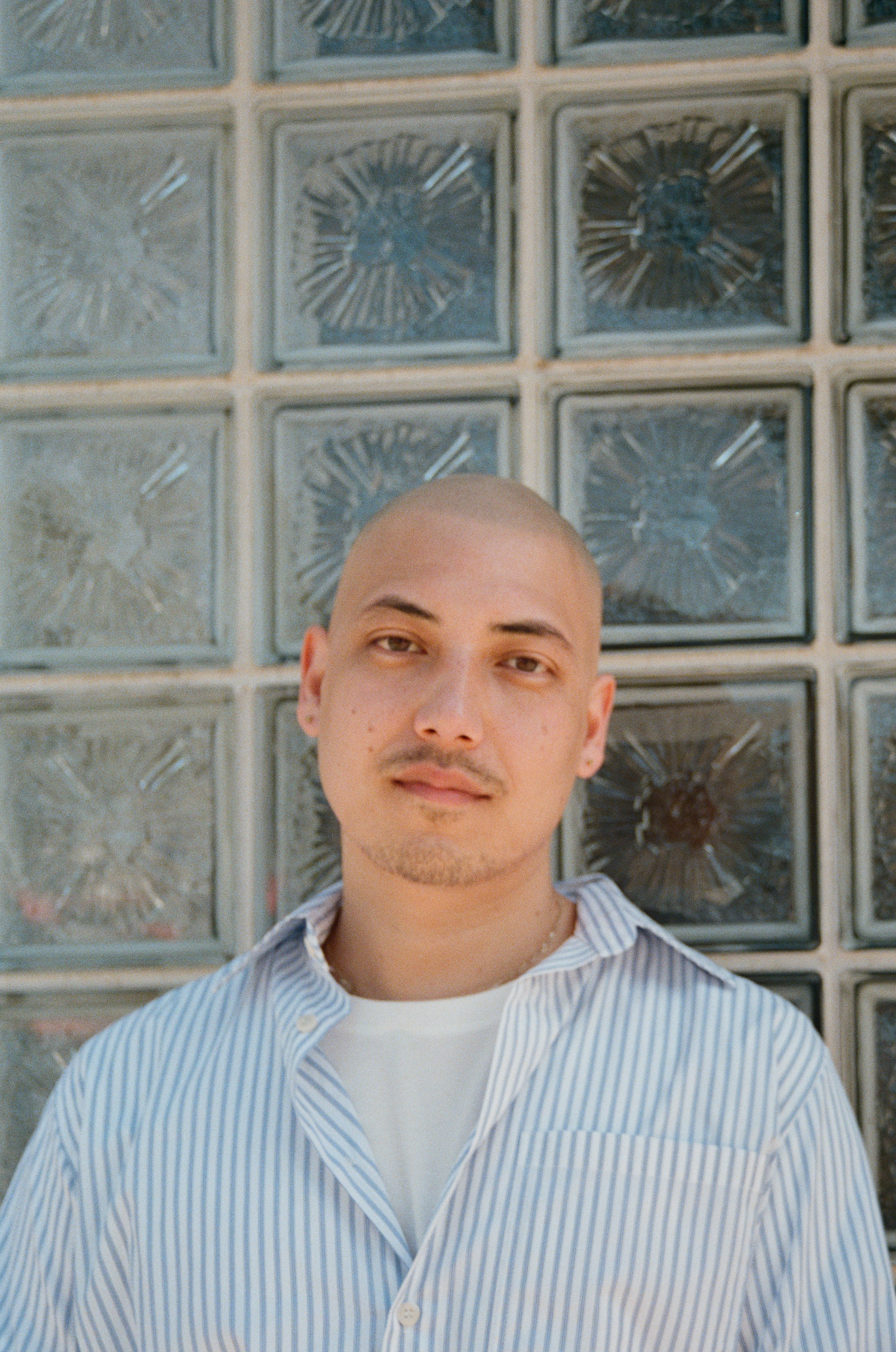
a reading
‘Walnuts’
‘Still cheers’
‘Eating a peach in the sun i wonder’
a review
romesh dissanyake has titled his chapbook ‘favourite flavour house,’ and it is a flavoursome house of poetry. At the collection’s hub, a restaurant embeds the physical presence of food: the sizzling caramel, the diced kūmara, the parsnip stock sieved, the truffle ravioli awaiting the simmer pot. But the food latticework radiates across the poems to include fenugreek stew with green mangoes, the plums and walnuts that hui brings the poet from the orchard, the succulent summer peach brought to breakfast lips.
Yet the delight of savouring food infused in the poems, extends beyond taste buds. The broken walnut shells in ‘Walnuts’, prompt a moving riff on brokenness, with the line on liberating identities striking a particular chord:
i expect my body to break like they break
i expect power structures to crumble upon my return
i expect to set free all the guilt i thought i had made
i expect to set free babula’s pelmini
so that she knows she didn’t die in vain
i expect to set free all those identities living within me
The voice of the poet pulls you in, pulls you into the revelations, intimacy, rifts. The way, for example, writing a poem is as necessary as letting ‘the garlic sizzle’ or the ‘tumeric leave stains’ in the airbnb, and that writing is not a matter of pleasing the ‘house-lords upstairs’, but a matter of writing in and from your own skin:
we can do what we damn please
because this is our poem
about being on holiday
just try and catch us and
like free roaming stray dogs
we’ll duck out stage right
whenever we like
from ‘Natasha says we shouldn’t heat our curries too high
in the microwave’
For me, the sequence has multiple hearts; food yes, the favourite flavoursome workplace yes, but there is also the pulsating heart of family, especially in the memory rich ‘Six a.m. in Colombo / Cinnamon Gardens’. The poem arcs from childhood to adolescence, from complicated, prismatic, signals of what’s important and what’s not, to the sublime ending, the utterly poignant, squeeze-the-heart ending.
I keep drawing upon the idea of heart, as romesh’s poems are in debt to heart, to the vulnerable, generous steady life blood of writing. Not a poetry exercise, not ‘cute little poems to please white people’, but a glorious liberation of both words and self. On each occasion of reading, I find different pulls, always the food yes, but the self recognitions, the yearnings, the fallibilties, the attention to what writing poetry might mean to the poet, build an inspirational tempo of insistence:
think of every line you’ve ever sat on
every time you’ve sat to shit
every tyre-kicking foreign ending
stanky, roachy, chuckling
well-worn slipper lips
donut sugar lips
a tortoise breakdancing breakneck
backspinning
that’s what poetry means to me
from ‘Tay has stans’
romesh dissanayake is a Sri Lankan and Koryo Saram writer, poet and chef from Te Whanganui-a-Tara Wellington. His poetry, fiction and essays have appeared in various print and online publications. His first novel, When I open the shop, was the winner of the 2022 Modern Letters Fiction Prize and is published by Te Herenga Waka University Press. His chapbook poetry collection, ‘Favourite Flavour House’, is featured in AUP New Poets 10 published by Auckland University Press.
Sadie Lawrence

a reading
Sadie reads ‘Puppy’, ‘Ode to the Autism Diagnosis Report’ and ‘heartbreak (living next to the kindergarten)’
You can read Sadie’s poem ‘Aphantasia’ here
a review
Sadie Lawrence’s poetry is both overlap and underlay, an extraordinary evocation of wound and repair, of teenage girls and childhood scrapes, of nightmare hauntings and internal demons. Like the other chapbooks in AUP New Poets 10, the writing pulls me back in, again and again, to explore the nooks and crevices afresh. Her chapbook is entitled, ‘Like Human Girls / all we have is noise’.
The first attraction is aural because Sadie writes with linguistic flair and agility. She weaves shifting tones and melodies, sweet repetitions, and elastic syntax. Nouns and verbs resettle on the line to kindle an image, an idea, a moment, to deliver an arresting voice:
‘We barefoot the grass.’
‘Summer fizzled / against the canine bite in the air.’
The second attraction is the way individual lines delight and stockpile in my imaginary room of reading wonder.
‘I discovered myself in the elbow of the tree.’
‘I am epiphany bathing.’
‘(…) and the egg yolk of the night slipped / down the back of our necks with a chill’.
‘Love took me in its jaws like a weary dog.’
Move in deeper, still carrying the joy of poetic music and individual lines, and I reach the rippling arrival of wound, whether scraped knees, nose bleeds, broken heart, autism, slit throats, violent dreams, the elusiveness of normalcy. Here is the overlap and the underlay, the way skeletal references cut sharp as I read, and the echoes and missing bits are both poignant and vital. And how, embedded within this poetic ripple of difficulty and suffering, is the possibility and the signs of self repair, the girl friendships, the stitchings.
Individual poems, as is the case with romesh and Tessa, are like constellations: sparking and sparkling with possibilites. This is a book to take to a cafe poetry club and talk through the recognitions and pleasures you gain as you read. How you want to weep and laugh and grimace. How you feel the love, you most definitely feel the love of writing. How you want to celebrate the power of words to reveal myriad versions of who we are and who we can be. Sadie’s poetry does exactly this, and I am all the better for having lingered in and loved its exposures, within and beyond the poem frames. I am leaving you with the second stanza of ‘Leaving home’:
If there is an absence, it is a tangible thing
that lives, like cockroaches, in the depths of the pantry –
in food arranged by inexperienced lovers.
If there is independence, it is a stray
feeding on the plum carcasses
that stop the shed door shut.
If these are hands, then praying is second nature;
if they are not, the dusk feeds on my cold body,
jaws snapping like an impatient hound.
This is not growing up.
there must be an alien thing
deep in the chasms of me
that I am growing around.
Sadie Lawrence is an undergraduate university student of creative writing and media studies. Her collection in AUP New Poets 10, ‘Like Human Girls / all we have is noise’, was written from ages seventeen to nineteen. Her autism screening was inconclusive.
 NZ Poetry Shelf